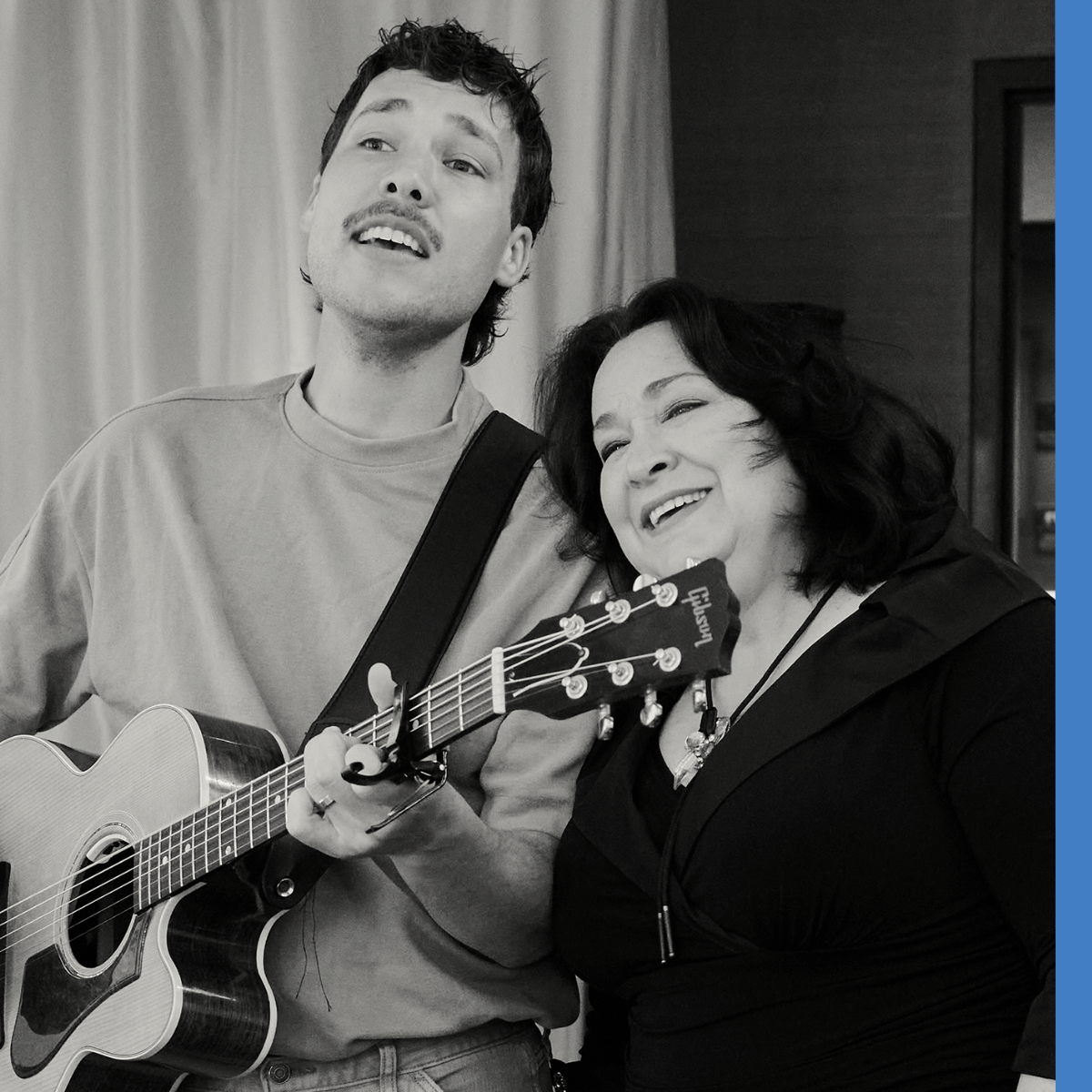
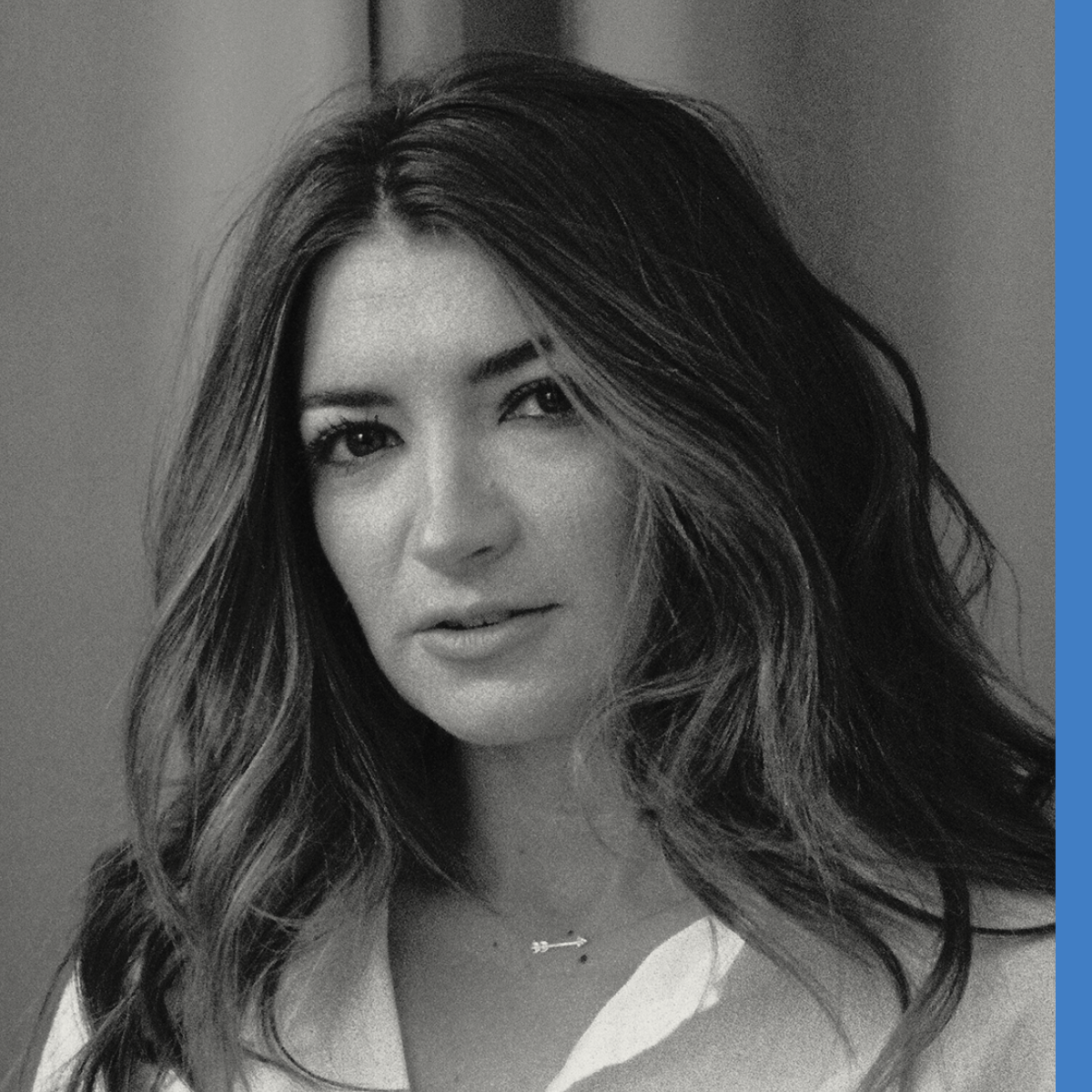
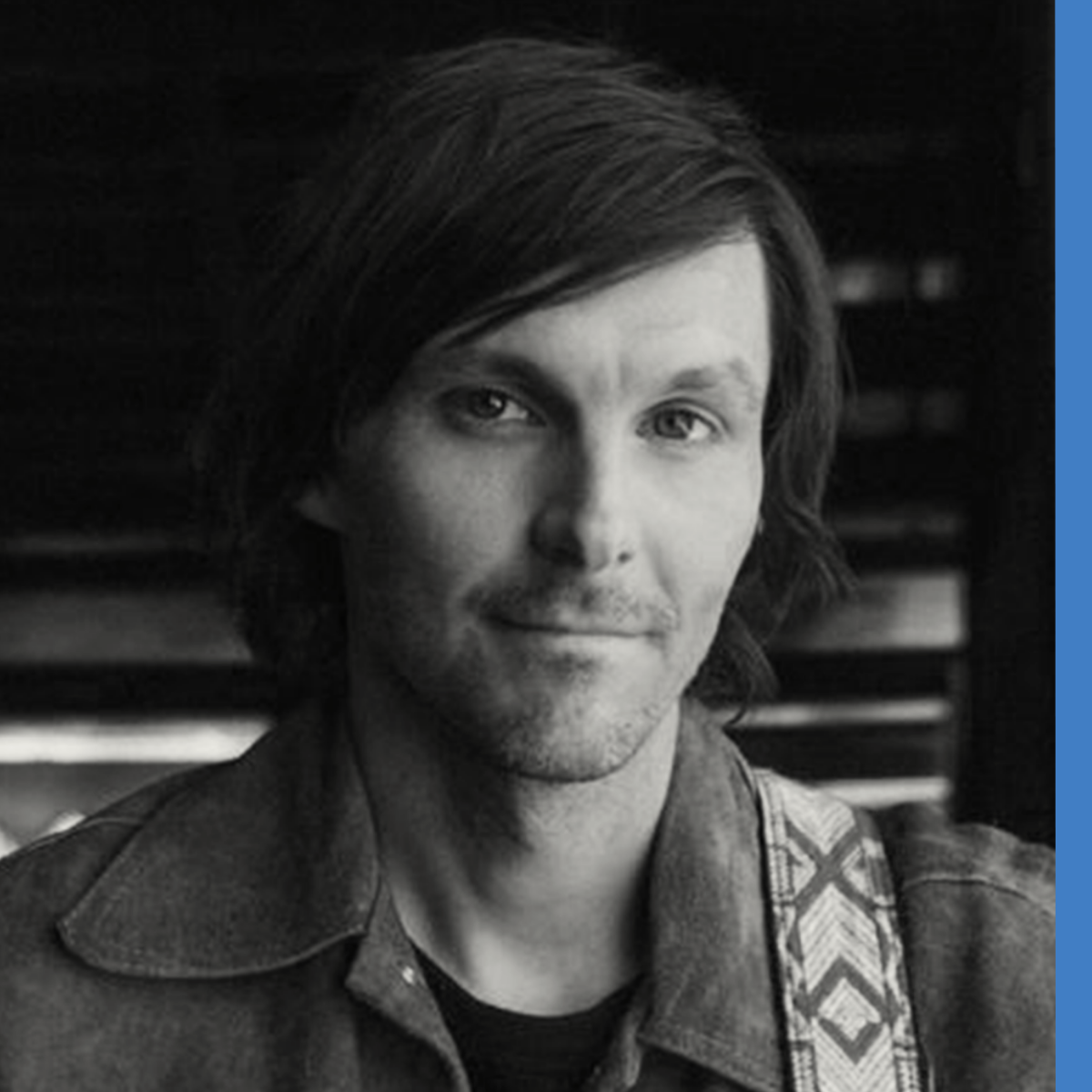
When mother and son Suzanne Cox and Brandon Ratcliff first began posting vertical videos to social media singing harmonies and cover songs together, they were just doing it for fun. Virality hadn’t entered their minds at all. In fact, Ratcliff had almost sworn off the internet, or using social media to advance his artist or songwriting endeavors anymore. Meanwhile Cox had been asking herself, “Am I retired? Does anyone want to hear me sing?”
From their very first videos, the answer was an obvious and resounding yes. The denizens of the internet were apparently starved for Cox’s voice – but of course they were, haven’t we all been? – and were ravenous in their discovery of Ratcliff’s own talents in musicianship and songwriting. Song after song, clip after clip racked up thousands of likes and views, dozens and dozens of new followers (including quite a few celebrities), and built an organic momentum neither artist had ever seen in their music-making careers so far.
Cox, in her late 50s, and Ratcliff, in his early 30s, have both enjoyed numerous successes and accomplishments in roots music. The Cox Family won GRAMMY Awards and IBMA Awards and appeared on the iconic O Brother, Where Art Thou? soundtrack, and are routinely named as one of Alison Krauss’s major influences in bluegrass and harmony singing. They are legends. Ratcliff has had record deals, prominent co-writes, his own solo releases, and been on the Nashville singer-songwriter hustle for more than a decade. But the energy behind their mother-son partnership has been unlike anything either have experienced before.
It’s no surprise, though, viewing their many popular videos or listening to their debut EP, Mother/Son Volume 1, released back in April. There’s something special here that can’t just be attributed to blood harmonies or genetic predisposition or God-given talent or “right time, right place.” There are aspects of each of these inputs throughout their current sky-bound trajectory, but the end result is certainly greater than the simple sum of its parts. And it’s landed them on the Grand Ole Opry, while continuing to garner even more views/followers Looking toward the future with excitement, they still let their inspirations and their audience guide them.
BGS sat down with Cox and Ratcliff at a coffee shop in Bellevue, Tennessee, on an afternoon dotted with sprinkling rain to talk about letting go of expectations, where they’re at now, where they’re headed next, and how badly the roots music world had been missing the inimitable voice of Suzanne Cox.
@therealbrandonratcliff I am weary, let me rest #obrotherwhereartthou #gospelmusic #acousticcovers #family #harmony @Suzanne Cox ♬ original sound – brandonratcliff
I wanted to start by going back to the beginning. Making music has been a lifelong thing for y’all. Your exposure to the music of your family, it being a part of the household. It’s a little bit like “chicken or the egg.” Obviously, y’all singing and being together and making music together would be a part of your family since forever. But I imagine there was a transition point when it went from being like, “We’re mother and son and we sing together,” to being, “Oh, there’s something here that maybe we should pursue.”
Suzanne Cox: I’ll have to let you tell that, ’cause you tell it very well, what happened.
Brandon Ratcliff: Thank you. When we started this really, none of [the business side of things] was on our minds. I keep telling people, “This whole thing has been a happy accident.” This has been a rare thing for me, and I don’t know if this is the same thing for Mom and them [the Cox Family], ’cause it was a different time. But for me, everything I’ve done in Nashville – for the most part, in the business – has felt a little bit like my dad always says, “Pushing a rope up a hill.” [Laughs] It’s like I’m putting so much effort into making something happen. And this [duo] thing kinda felt, for the first time ever, like we were constantly playing catch-up to what was reacting just naturally. Which has been very fun and has made us move very fast.
SC: Oh, it’s like we cannot keep up.
BR: We put something out and all of a sudden it starts working incredibly well and the next thing you know we’re like, “We gotta go record this. What are we doing? We’re late already.” That has been very exciting, fun, refreshing. The other thing is, too, having this kinda direct-to-consumer thing, where you post a video online and it resonates with people – which by the way, just even that was a surprise to us. Mom and I have talked for years about doing a project together or something. But it was mostly just for us. It was just for fun.
SC: “Someday.”
BR: “Someday we’ll do this thing. One day…” [It started when] I was back home for the holidays and we were together anyway, and singing and hanging out like we always do. I was like, “Hey, if we’re gonna sing anyway, we should just post some of these online.” Like, why not? And again, totally not thinking about the outcome. Never once considering–
SC: He was kinda done with TikTok for a little while.
BR: I was holding on loosely with the internet in general at this point. I told Mom right before, “Look, I’m not giving up on the internet, but I’d kinda let the idea that the internet would be my path to success [go].” I was like, I’ll still post, but I’m gonna try not to think about if this is gonna make my career. This was the first time I was kinda letting go of that outcome situation, and then we posted – the first thing, it was a song I was singing on the way over to her house. And it was [sings Roger Miller’s “King of the Road”], “Trailers for sale…”
SC: We were probably in Louisiana.
BR: “King of the Road.” I was singing it while I was riding the roads back there. And it did pretty well [online]. Better than most videos I had posted at that point. I was like, “Oh, this is cool,” but nothing gangbusters. But then the next one we did was a song that Mom sang on the O Brother, Where Art Thou? movie, “I Am Weary (Let Me Rest).” Yeah. We just got out there, started singing it.
SC: In front of an old vintage truck.
BR: Sang it five times in front of this old drilling rig truck. I posted it, forgot about it. My daughter’s third birthday party was later that afternoon, so I had to rush back over, get set up. All of a sudden family starts showing up and I’m getting texts from my cousins and people at the house are going like, “Dude, your video’s going viral.” I got no service out there in Louisiana.
It’s like I’m off the internet. Once I post, I’m done. So I get back on there and, sure enough, I’ve never gotten flooded with so many [notifications]. I open my phone up and it’s about to crash. It’s 400,000 views, 500,000 views. And I’m like, “What the…? This is crazy!” So then I tell Mom shortly after that, I gotta go back to Nashville.
And this, to your point, is where it starts going, “Oh wow, this is something.” This is resonating. There was one week where Rosie O’Donnell and Joe Jonas followed me and started reposting my videos. And it just keeps coming, all these people – Emily Ann Roberts, Ashley McBryde. It just kinda kept growing. Then it was immediately obvious to us and then everybody we were working with – like my producers and songwriter friends – something’s happening. The whole thing’s been like this, just accident after accident–
SC: [Smiling] Which I don’t believe is an accident.
BR: No, it’s divinely orchestrated, for sure. Very divine. The hand of God is all over this stuff.
SC: Brandon’s been at this [a long time], I [have been] for 52 years. And not really doing as much [lately], really at a point in my life where I’m trying to figure out what I’m doing in this new season. And even in prayer: “God, I’ve had a great career.” And I just thought, “Is it a time where I’m just a wife, a mother, and a grandmother?” Which is the best job. I love it. No regrets on that. No regrets. I was at a point before this all happened of just trying to figure out what my new season is. “Does anybody want to hear me sing anymore?” Still love to sing, but just had a lot going on. I had a real hard time. My husband got really sick in 2021. … And it put a lot of age on us both.
BR: Honestly, I think for us both, this season really came [while] we were both in a season of surrender. This openness – “What could happen? What God may do…”
SC: We answered quickly.
BR: It made the soil fertile for this real, raw passion – a just-living-life kinda thing. And I think it came from that season of surrender.
SC: And I was totally fine with that. I felt a calmness in that.
I hear you both communicating not a sense of giving up, but of letting go. Of realizing, “Maybe this isn’t something I need to clutch so tightly anymore.” And there is a freedom in that letting go.
SC: Yep. I agree. And also for it to be such a connection with other people. And that it resonates with people. And I love – I wasn’t reading any of the comments or anything and finally they called me and said, “Mom, you need to read these. You need to see some of this.” It’s just been such a wonderful thing to read what people say. Even if it’s, “My mamaw’s favorite song.” Or, “I bet you she can cook some good meals.” “Can I be adopted?” I just love that.
I think what stood out to me immediately is there’s something here that feels totally distinct from the Cox Family. Fresh and bright and sparkly in so many ways. But also, I was there on TikTok, y’all were on my FYP when that first video blew up. And I, like so many people who grew up with your voice, Suzanne, realized in that moment how starved I was for it. And then to see the world, all of us who did grow up with your singing have that same reaction – and then so many people who didn’t, too, have that moment of, “Who the hell is this?!” That was special to watch happen, even from the outside. Would you have ever believed people were waiting around for you to “come back”?
SC: No, I would not. And like I was telling you, a lot has gone down the pipe since then. It was a lot of heartache that I’ve gone through. We lost our dad in 2019 – so a lot of different issues. So yeah, at some point I was just thinking, “Does anybody ever even want to hear me singing?” I did. I went there. “Do I wanna hear myself sing anymore?” It wasn’t that bad, it wasn’t like I’m bawling in the bathroom or anything.
But we all have those thoughts.
SC: But we do! And it can get to your confidence, because you think that’s something in the past. For me, it was a good run [back then], and it’s been quite a gift for me to hear [the response now].
@therealbrandonratcliff I feel like I’m in a creaky old pew right now #sunday #hymns #hymnfortheweekend #motherson #familyharmony @thesuzannecox ♬ original sound – brandonratcliff
There’s something encouraging in how you’re speaking about yourself, because, to me, to somebody on the outside – you’re one of Alison Krauss’s favorite vocalists of all time! Suzanne Cox has the same sort of existential doubt that anyone might have. “Does my voice matter? Does the music I make matter?” And if we could all remind ourselves that’s just being human, we all have that ebb and flow.
SC: That’s right.
I think for so many of the hundreds and thousands of us, we never would have imagined that you would have that sort of doubt.
SC: It’s a little different these days. A lot of people have said, “Is she in retirement now?” I don’t know! Am I? I didn’t say it, but just life happens. As women, too, we wear just as many hats as a man does–
Even more.
SC: You’re a mother, and you’re a grandmother, and you’re fixing problems. I wasn’t heartbroken. I had a life that was good and felt good, I felt a peace about it. But I am delighted to be able to have a new song in my heart.
BR: And for me it wasn’t a shock, of course, because like you’re saying–
SC: Yeah, he’s always been so encouraging– him and his brothers.
BR: I grew up hearing mom sing and always knew she had a world-class voice. I used to hear mom all the time growing up, and me and dad would talk about it. I’d talk about it with my brother. It was like, “If anybody could hear this…”
SC: This might be when you were clueless. [Laughs]
BR: If anybody could just hear Mom singing around the house! And this kind of points to what we’re talking about again, this free space. If you could hear her sing just around the house, when she’s just messing around, you’d be like, “This woman is insanely good at singing.” It’s amazing, and almost even better than anything you hear on a recording.
SC: I feel so uncomfortable with y’all saying that. [All laugh]
BR: But to your point, though, this is a universal thing. I think this is true of a lot of us. That “dance like no one’s watching” mindset. When you don’t care, and you loosen up–
First take magic.
BR: Yes!
SC: If you’re like my sister, there was a lot of them that she did was her scratch vocal. One take!
BR: I tell Mom this all the time, and you learn this over and over with the internet, because posting online, there are diminishing returns the more you polish it. … We do have a tendency as creative people, as performers, to be perfectionists. Nothing’s ever good enough. We’re our worst critics. We all have a little bit of deep insecurities or impostor syndrome.
One of the things I love most about roots music – whether bluegrass or country or Americana or folk – is it’s always asking us to let the imperfections be. That’s why this music is so good. Because you can’t ever get a banjo in tune. Because the music has pocket. Because when you’re singing harmonies with somebody, maybe sometimes you are singing a dissonant note, or you’re singing a flat seven instead of something that’s diatonic, because “that’s how it goes.” Even though it’s got a little ugliness in it. The internet wants everyone to be perfect, but roots music is never perfect.
SC: Yep. Never perfect. Like you said, that’s what makes it really special.
@therealbrandonratcliff Can’t wait for @unclebsdamnedoleopry with @heyuncleb and the gang! April 28th we are honoring #continuum with some insanely talented artists and musicians by singing through some classics from the goat @johnmayer #motherson #cover #harmony #johnmayer @thesuzannecox ♬ original sound – brandonratcliff
I love how you guys are making cross-generational music in so many ways. But one of the ways that evidences itself is that I think this is some of the more “outside” or progressive music I’ve ever heard you sing, Suzanne. You’re really playing with genre in a really interesting way. Whether you’re singing a John Mayer cover or it’s “Far Side Banks of Jordan,” I love seeing how these sort of modern, more pop sensibilities are coming into the music. Then you also how the Cox Family vocal stylings have always had a modern crispness, modern licks, runs, and turns of phrase. How are you thinking about genre and playing with that?
SC: I don’t know. I’ve told Brandon this, I’ve never been one of those [tradition hardliners]. I know you say our sound [was traditional], but Daddy, from the get-go, we were doing [all kinds of styles]. He was very open. We started out old traditional country. We used to do old hayrides before we went into the bluegrass scene. But he introduced us to Don Reno & Red Smiley, plus Merle [Haggard] and Loretta Lynn. I’m getting a lot of people saying [I sound like] Loretta Lynn. She was a hero of mine, so I see that. Of course, Dolly [Parton] and Patsy Cline. But [Daddy] was really open to [different styles], so I was already at a point where I love what I love.
If I can make it sound like me, that’s what I wanna sing. So [the Cox Family] opened up for the Counting Crows. And did Eagles songs and “Blue Bayou.” We listened to classical and anything that we liked – Kenny Loggins, Loggins and Messina. … I’ve done Marvin Gaye, on that last album… It was good that he encouraged us to be able to be open.
BR: I feel like for me – and again, I wouldn’t have probably said this five years ago. I would’ve probably taken some real credit for this and been like, “I think it’s ’cause of me!” I’m young, whatever. But I think that, now, as I get older and I kinda look at the context of my life and what they did and everything, and how she raised me growing up, I kinda think it’s a natural downstream effect. Outside of just how she raised me on music, I grew up in the late ’90s, early 2000s, so I grew up listening to everything. She raised me listening to everything, like Songs in the Key of Life by Stevie Wonder, Hall & Oates, all the stuff she grew up on. But then Backstreet Boys and the rock groups of the ’90s, Sugar Ray – it was just all over the place.
SC: And Don Reno & Red Smiley. [Laughs]
BR: There’s still a box set of Merle Haggard in my truck right now. I’ve listened to all these kinds of things. I grew up with a very diverse listening, and then I was in the iPod generation, so there was the shuffling music. …
I think when we sing something, even as off the beaten path as it is, I think you just innately are you, and I am innately me. It’s fate, we’re mother-son. We kinda have similar tendencies, to notes and a choice of a run here or not there. I think that’s kinda what gives it that common thread. You can take a hard rock song or you can take an old country song, and as long as it’s me and you singing it…
SC: Sometimes it’s a challenge, too. In a good way! …
BR: But whenever I blend with Mom, it’s like I’m learning how to take the thing that I do that’s really distinct and interesting about myself, but also shed some of the other solo stuff to match with her. Because it’s me and Mom, it kinda changes the alchemy of the song a little bit in a really cool way.
One practical impact of you both being at this point in your careers – Brandon, you have already done two or three or four laps around Nashville, trying to get into the scene in the same way most folks do. Suzanne, you had this vibrant career and were asking yourself, “What now?” So, for both of you to then be able to be like, “Actually, we know we don’t have to do it the ‘Music Business’ way. We know we can just do it the way that we’re gonna do it.”
SC: Exactly. I told Brandon, “I’m 59 this year. And at this age you start relaxing a little bit more.” I could relax a little bit more, my son would say. [Laughs] But I’m learning so much, and I don’t think you can [avoid that]. I don’t think people give up. And I feel like I can still learn a lot. I’m learning from my child, I’m learning from this industry. But we always want to be unique.
BR: That’s one of the cool dynamics about being mother-son. We found a niche, I believe, too. … I’ve seen both sides. In the 12 years I’ve been here, it was the old world one minute and then everything was new. I’ve kinda gotten acclimated to this. And I’m always telling Mom, “It’s really funny we share these stories.” ‘Cause there’s stuff to learn from both eras. I’m always telling Mom, “That thing that you see as messy or weird or, ‘Oh, that was embarrassing,’ I go, ‘That’s when I and everyone else see you shine. You’re funny, you’re smart, you’re incredibly talented.'”
That’s something about this new world, the internet world, that is so different from whenever they were coming up. Where everything was kind of media-trained and scrubbed and, “Let’s shave the edges off.” Whereas now I’m telling Mom, “No, that is the goal.” When you are just yourself and I happen to catch it, that’s the thing that people light up for.
In a world where more and more, when you go on the DSPs and you hit shuffle, you might be hearing AI music, having those moments of real humanity are so important. Maybe it’s imperfect, but it’s real and it’s raw. You see so many videos online that are like three singers in a kitchen harmonizing together “impromptu.” You go to the comments and everyone’s saying, “We can hear the auto-tune.” Audiences know what’s real and what’s fake.
SC: Which is fascinating that you say that, because a lot of people have said, “Oh, there’s no way this is just in your backyard.” [Both laugh]
BR: TikTok has a great reverb, if you only knew.
SC: I think it’s funny.
I want people to think I’m tuned when I’m not!
BR: Exactly. [Laughs] I think people are jaded. I think they’re paranoid – to your point about they’re getting fed so much phony stuff. They don’t know what’s real anymore. That’s one of the encouraging things about the world we live in, I think it is increasing the demand for real human authenticity. That is a positive side of this pendulum swinging. People are fed up with this “sounds too perfect” trend. It’s indiscernible from a robot.
Even to the point that there was a girl who commented on this video we did, I posted a backstage video of us at the Opry. She said, “There’s no way this wasn’t studio-recorded before.” I’m sitting here going, “I’ll take it as a compliment.” ‘Cause I felt like I was all over the place in that video! But thank you for thinking that.
I think people are telling on themselves with a lot of the hand-wringing over what to do about AI. Of course I agree, we should be very careful with how we’re proliferating this technology and protect creators’ rights, but also AI is never gonna be able to do what Suzanne Cox’s voice does, right? And I’ve not yet heard a convincing AI bluegrass banjo player. I don’t think it’s coming for our jobs! I hope that what we’re all doing is real and human enough that AI will never come for these jobs.
SC: When they’re all in the coloring book, inside the lines, we’ll color outside … and the rest of us. We’re gonna color outside the lines. …
BR: I’ll say, I think the one thing I’ve learned from this whole experience is there are no rules.
SC: Yeah, exactly.
BR: This whole idea that you gotta post this many times, you gotta do this, you gotta do that… Blah, blah, blah. People will tell you, whether you’re talking about the internet or anything else, they’ll tell you there’s a certain math to it. I’m like, “Man, I don’t know anything about what I’m doing.” My guesses have gotten better, but I’m still clueless. The only thing I can tell you for sure is that you have to follow the pace of your inspiration. As soon as you start doing it because you feel obligated, you’ve already lost.
Photo Credit: Chase Hentges