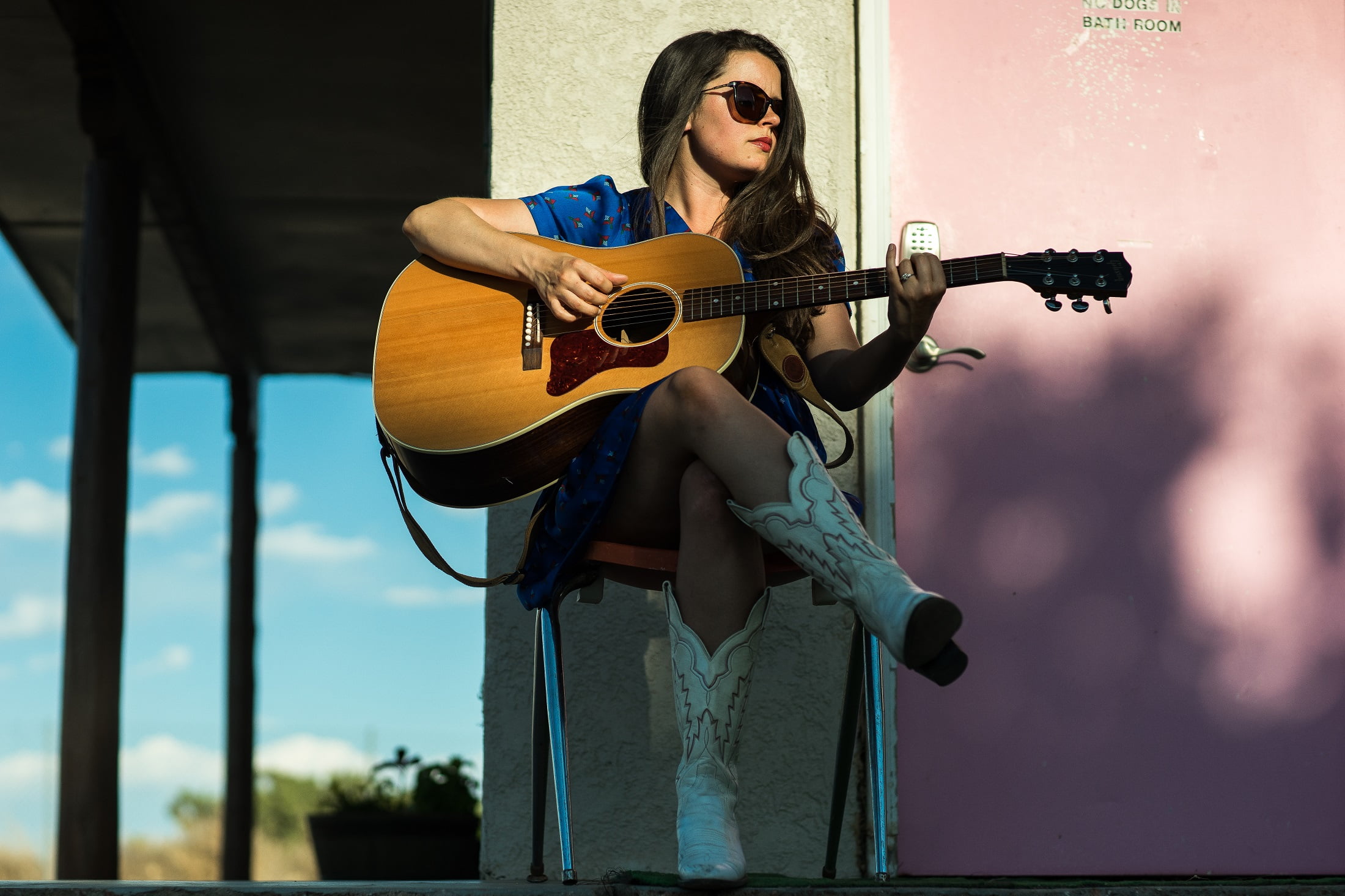
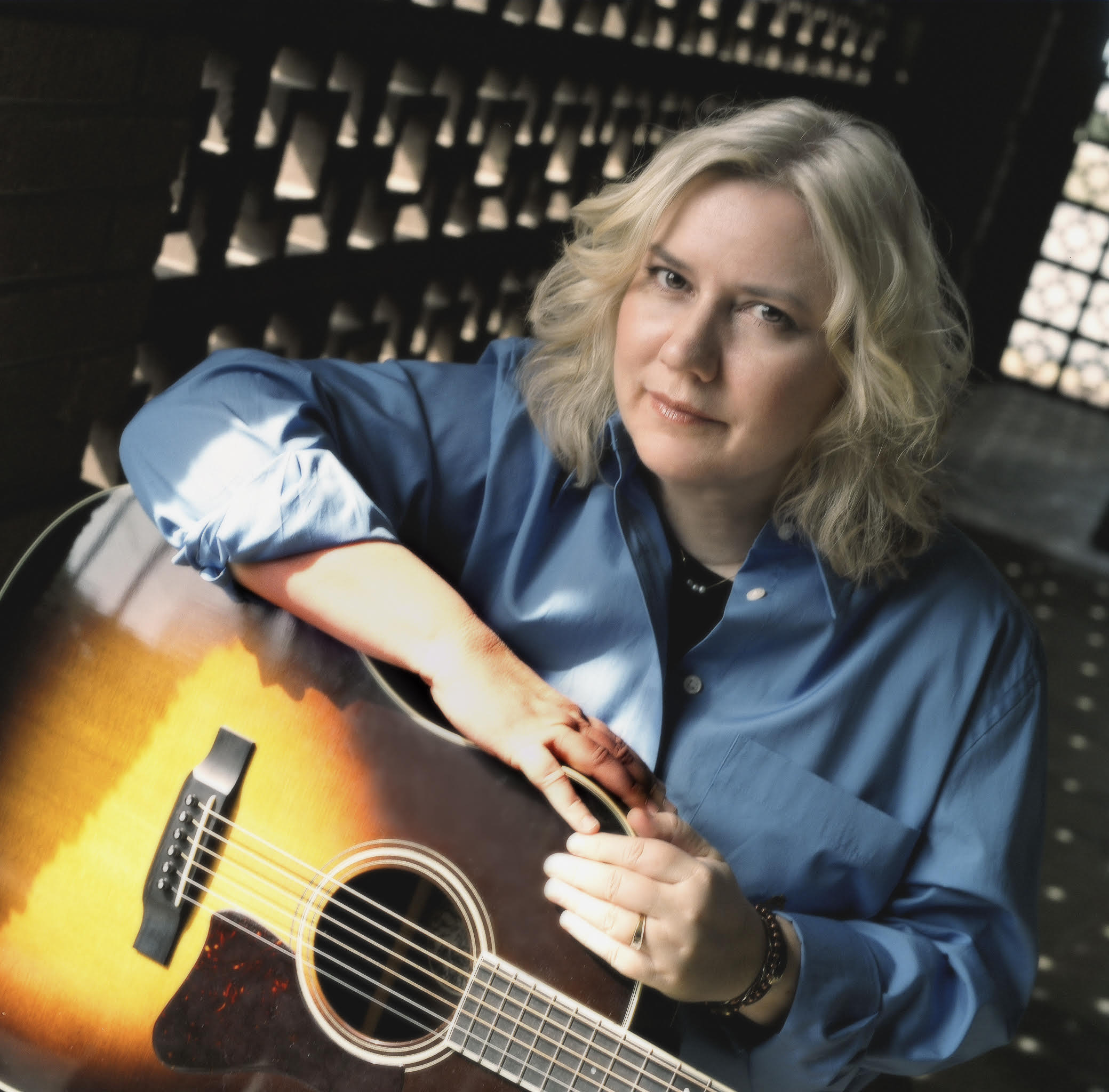
The Show On The Road – Robbie Fulks

This week Zach talks to Chicago-based troubadour Robbie Fulks. They talk about how he’s made his own brand of sharp-tongued country music for over three decades, and how he considers Hank Williams the Shakespeare of American Music. They also discuss how he’s become more fearless and less embarrassed to confront heartbreak and the darkness always lurking in America as he’s grown older.

LISTEN: APPLE PODCASTS • STITCHER • MP3

Song: Alabama At Night

A Minute in D’Hanis, Texas, With Jamie Lin Wilson

Welcome to “A Minute In …” — a BGS feature that turns musicians into hometown reporters. In our latest column, Jamie Lin Wilson takes us through D’Hanis, Texas.

Folks ask me all the time why I live in such a small town. Why not Austin, or some other major city in Texas with a better music scene? Well, the short answer is because it’s nice to live around family, especially when raising your own. The long answer has a lot to do with the fact that I’d rather have to dodge goats and donkeys in the road than sit in traffic. The population of D’Hanis (pronounced by the locals as Dee-Hennis) is around 550, but Roy and I are doing our part in upping that number. We just welcomed our fourth baby, a boy, born right here in our house. Since there’s not a whole lot to see here, I’ll show you what I love so much about this town.

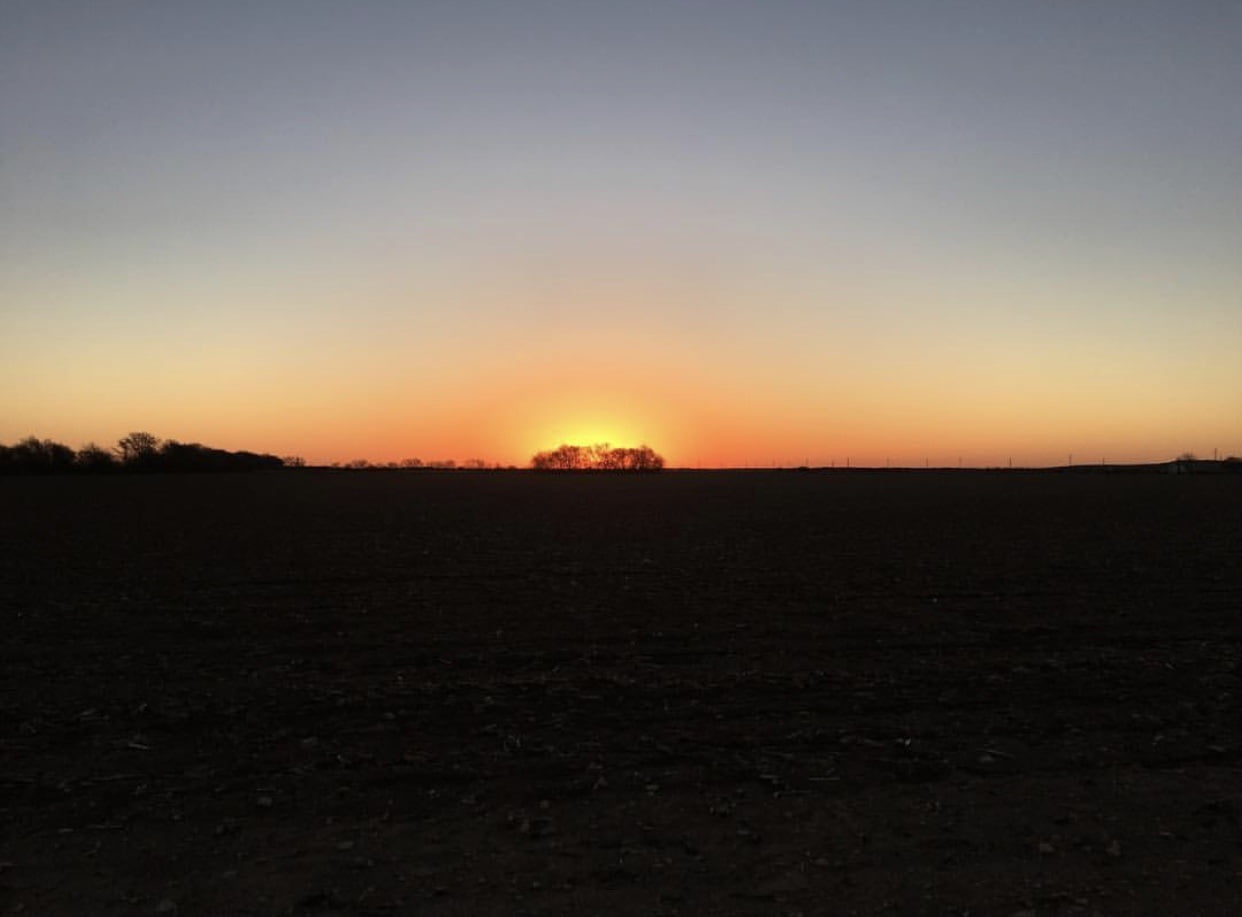
Sunsets/Sunrises: I like to walk early in the morning around what Roy’s family calls the Van Damme block. It’s about a two-mile walk around the perimeter, surrounded by farmland that is now or has been farmed by the Van Damme family. If a picture taken with a phone is this good, imagine what it looks like in real life.


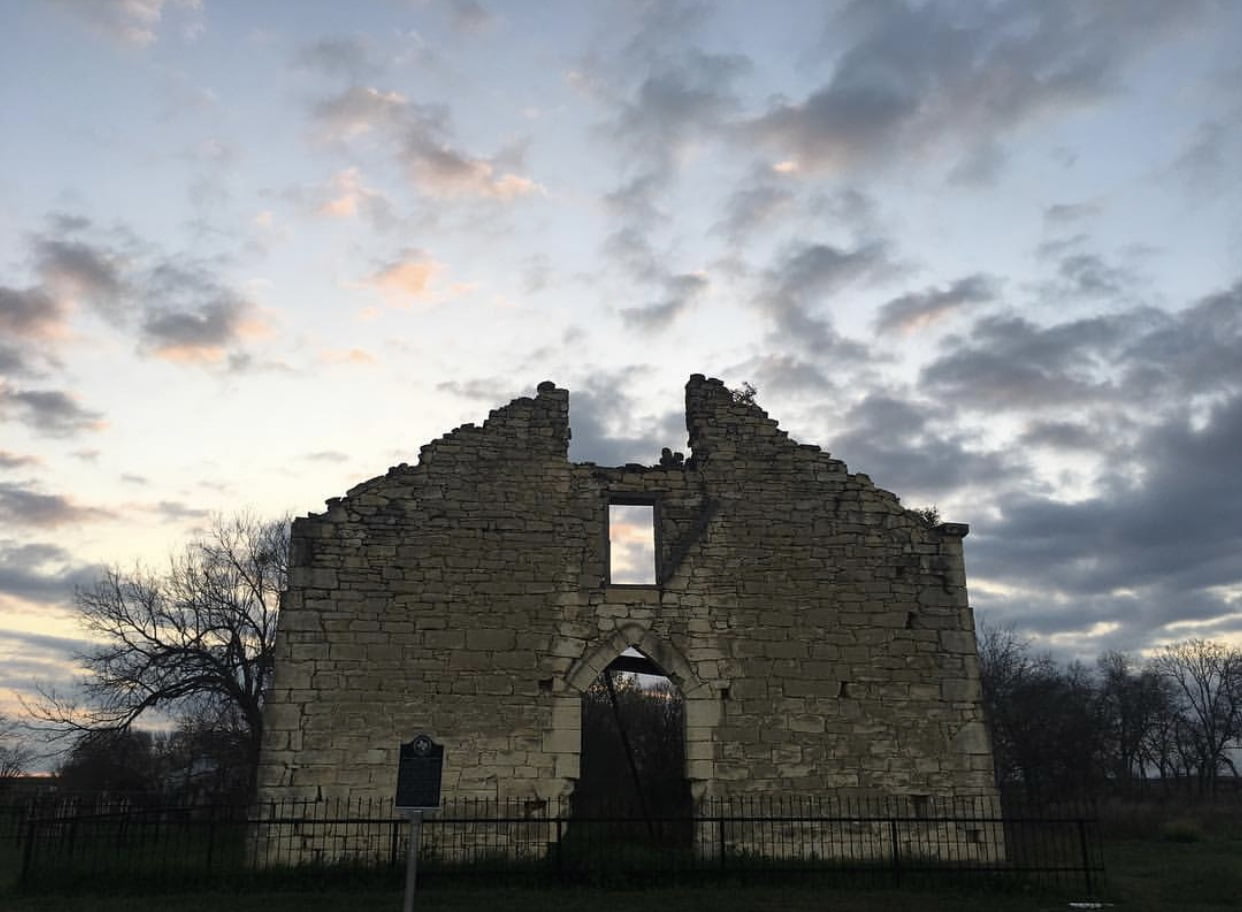
St. Dominic Church Ruins: I live in the area of town called Old Town, where the settlers first came. In the 1850s, they formed St. Dominic Church and this structure was built. In the early 1900s, the railroad came through and the town center moved a couple miles west. This church was abandoned and eventually destructed. It sits behind Roy’s aunt’s house, and just around the corner from ours. There’s an old cemetery next to it with graves from as early as the 1830s. My kids love to go read the stones–a history lesson in our own backyard.


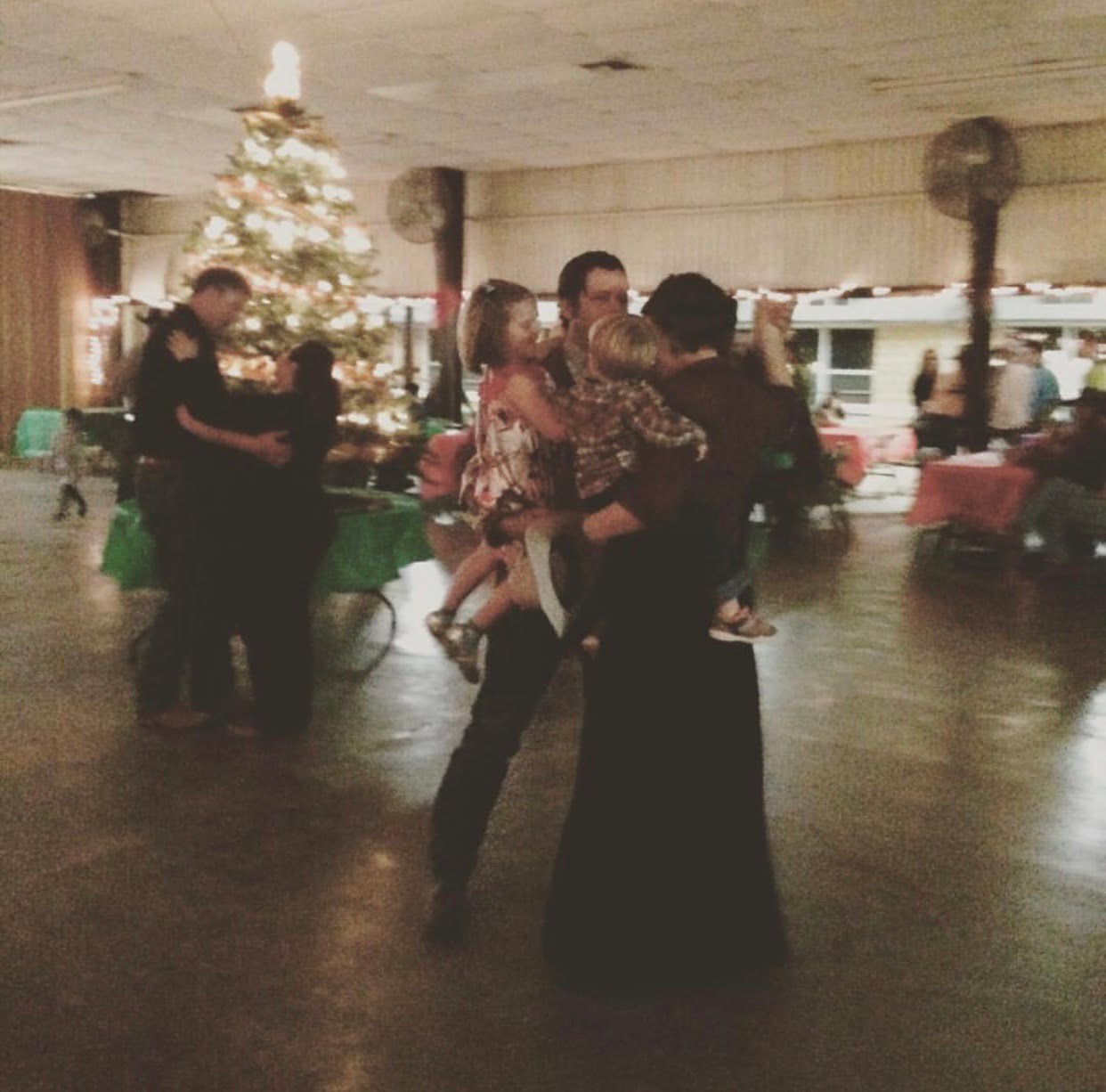
Parish Hall/Catholic Church: There is one church in D’Hanis and it’s Catholic. Most activities in town revolve around the church grounds. The Little League plays at the baseball field there (the only field in town), the soccer teams practice in the church yard, and prom and other school dances are held at the parish hall, along with other various fundraisers like the $100 raffle ($100 a ticket includes a steak dinner and you could win $5k!). This photo is of my family dancing at the annual Christmas Dance. On Christmas night, everyone brings their family out and dances to a local band playing old country music. It’s BYOB and they sell set-ups. The kids fall asleep under the tables with visions of sugar plums and parisa (see next photo) dancing through their heads.


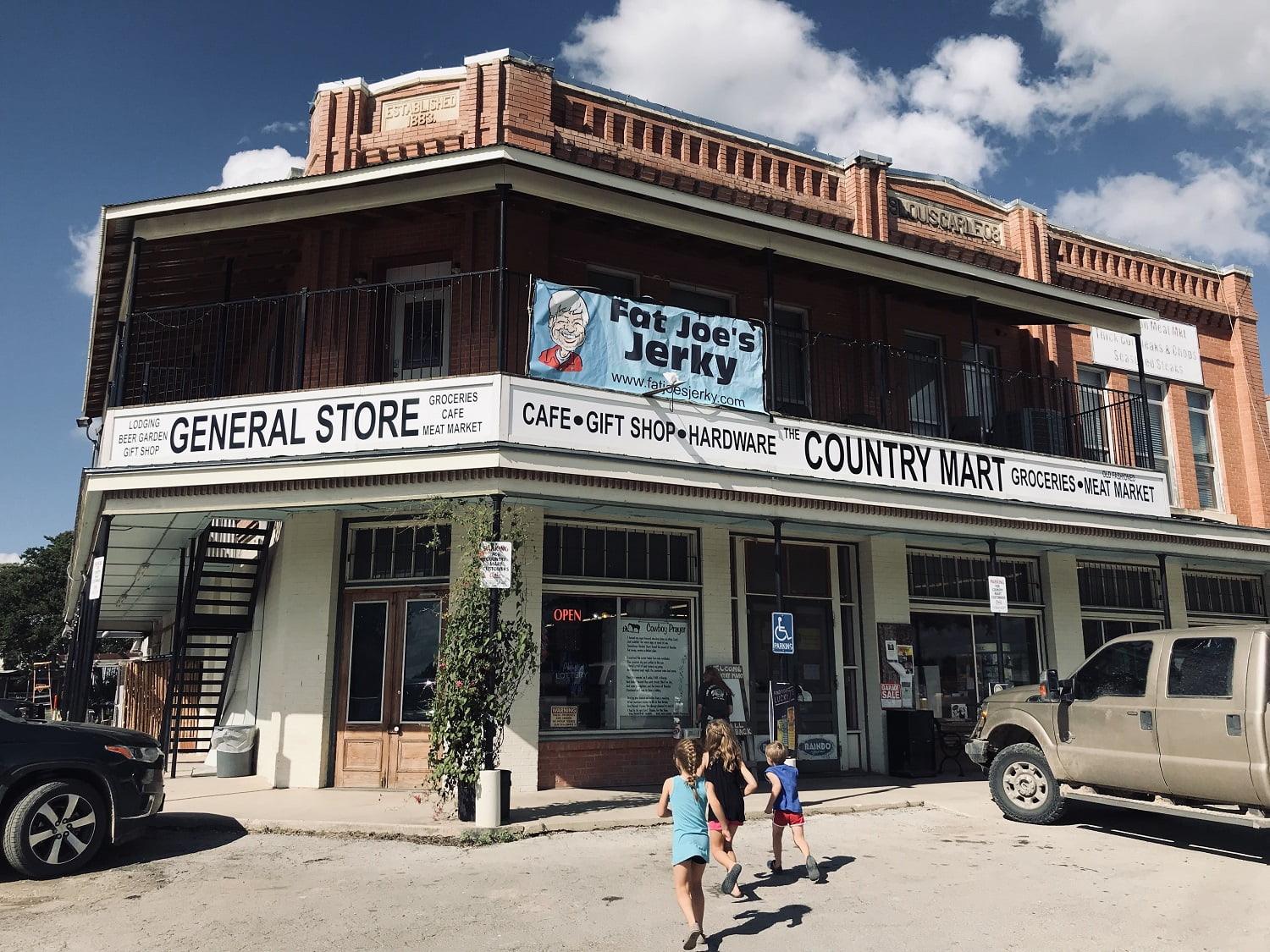
The Country Mart: If there was a hub of D’Hanis, this would be it. You can find pretty much anything you could need in here, and it’s open all the way till 7 pm. They have the best meat market around, selling steaks (especially for Tuesday and Friday open-pit night), ground meat, and parisa — an Alsatian dish that is basically lime juice-cured raw meat with onions, peppers, and cheese mixed in it. You eat it over crackers. It’s actually delicious. In the last few years they’ve started selling burgers and other daily specials at lunch. But get there either before 12 or after 1, because the high school kids have open campus.


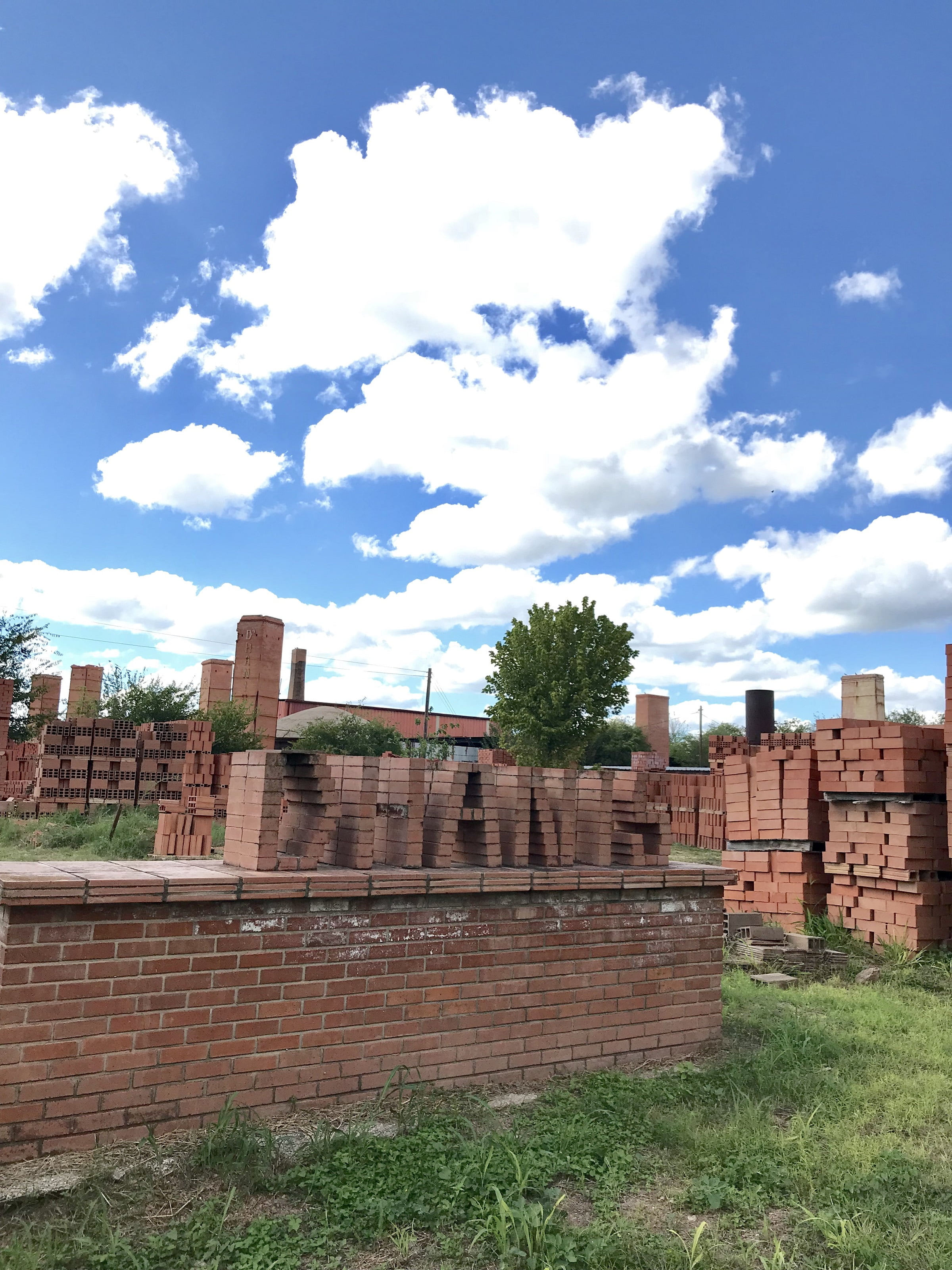
Brick Yard: We can’t talk about this area of Texas without mentioning the D’Hanis brick. You’ve probably seen one and wondered what that word was pressed into the side. They started producing bricks here in the 1890s and now I think they just make specialty orders. But you can’t drive around a block without seeing a house made of D’Hanis structural tile (it’s bigger than a normal brick, but smaller than a cinder block). It’s a beautiful orange clay color, and a great insulator. We lived in a tile house for nine years. If the house isn’t made of that, there’s at least a kitchen or bathroom floor with the 10- or 12-inch tiles. That’s what we have now.


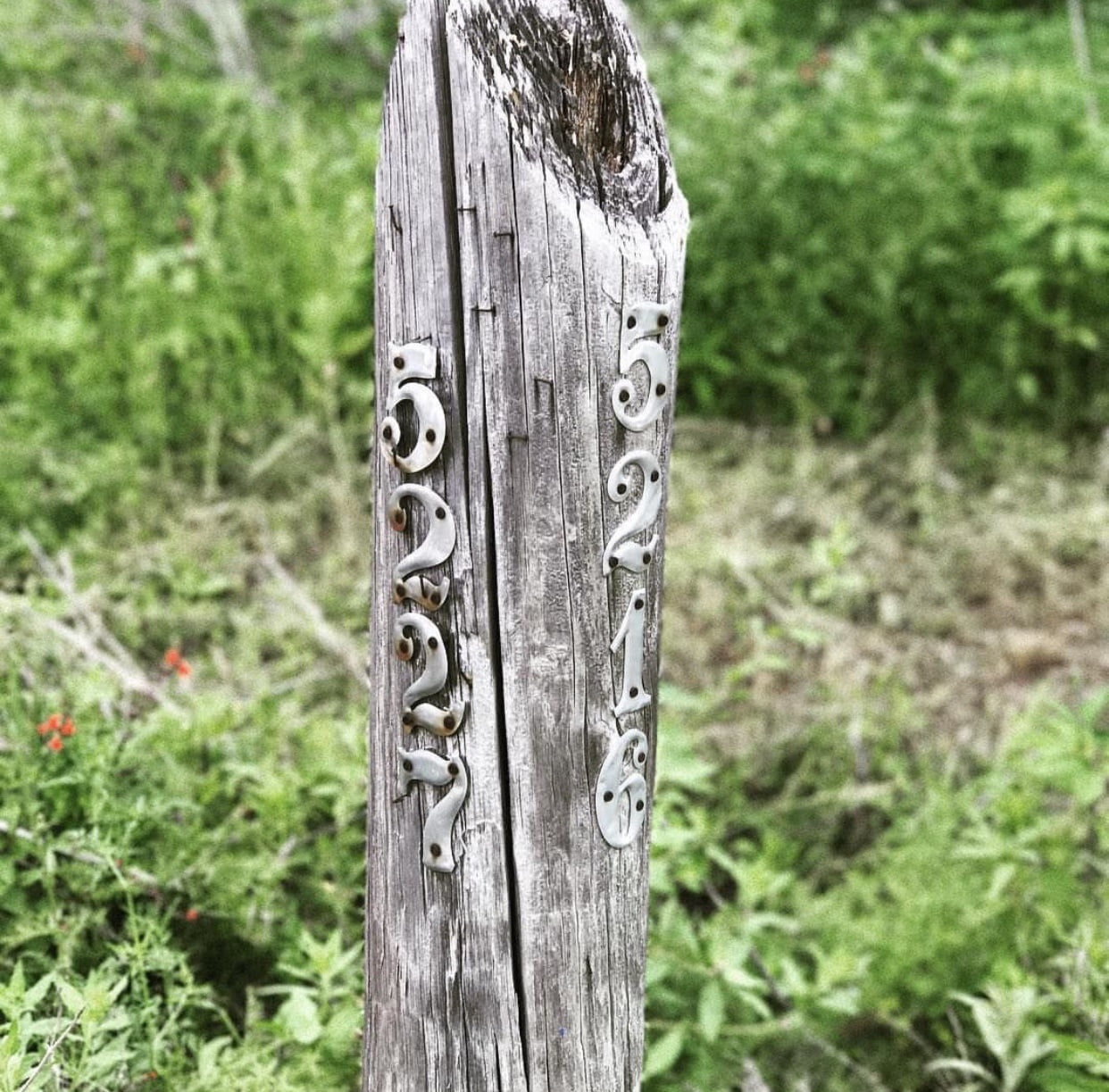
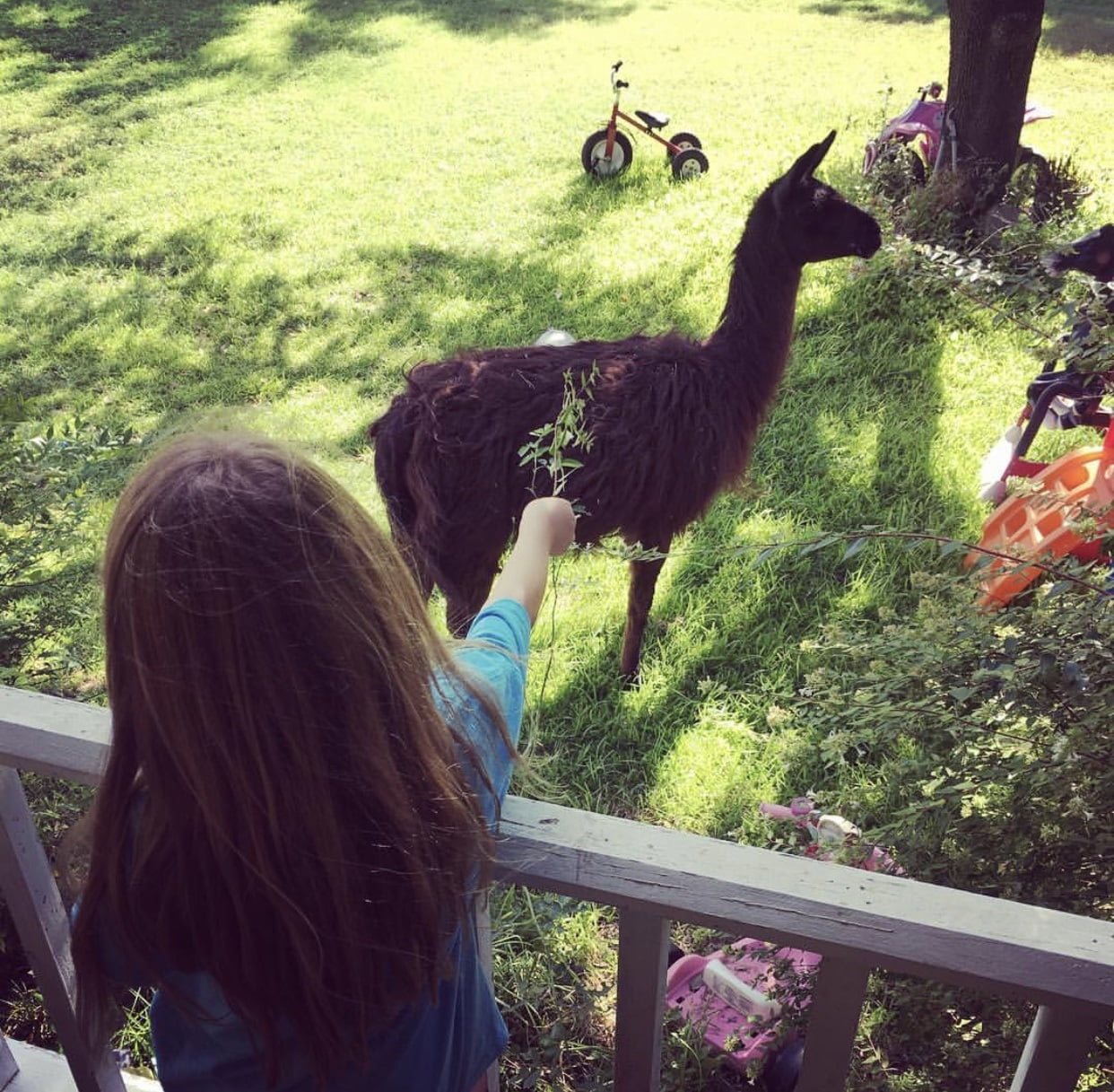
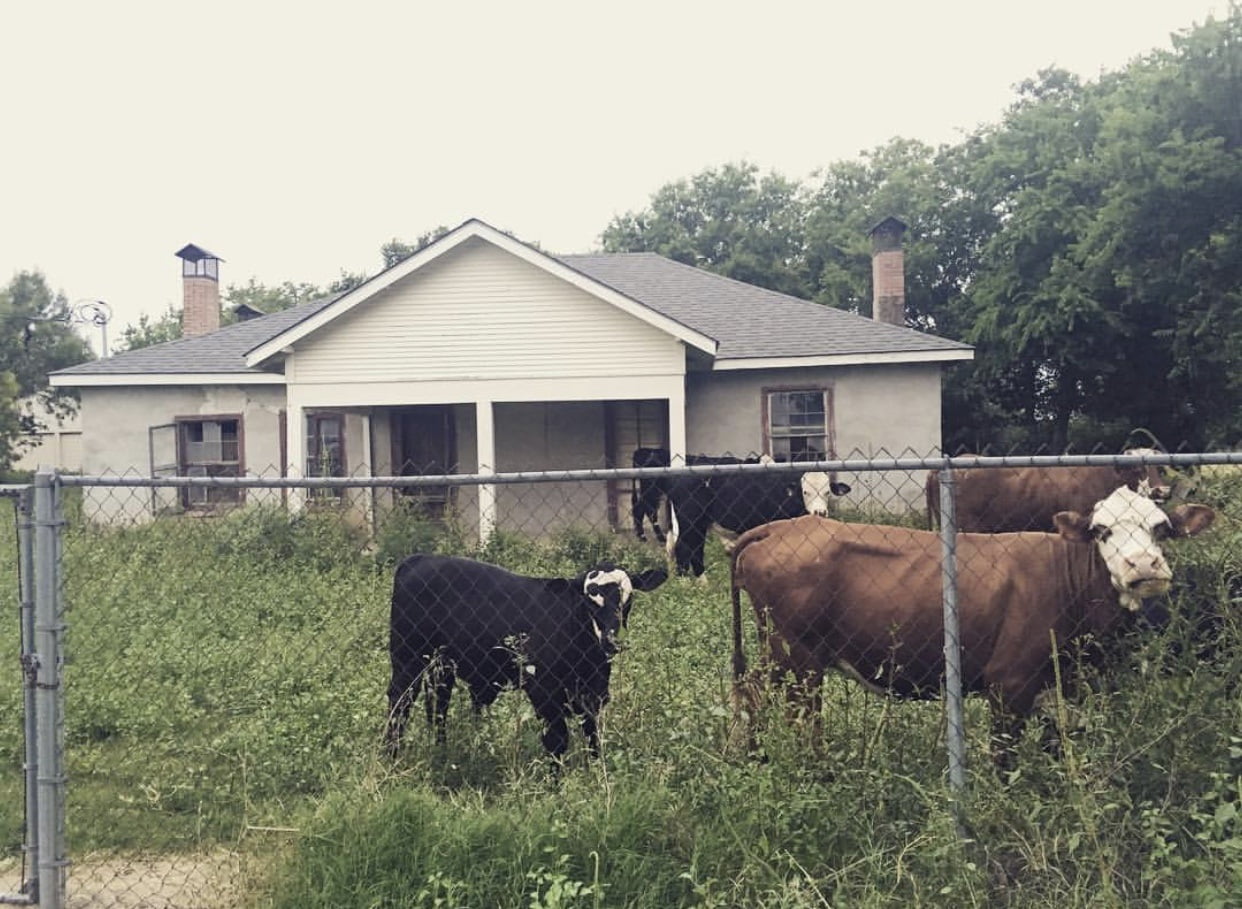
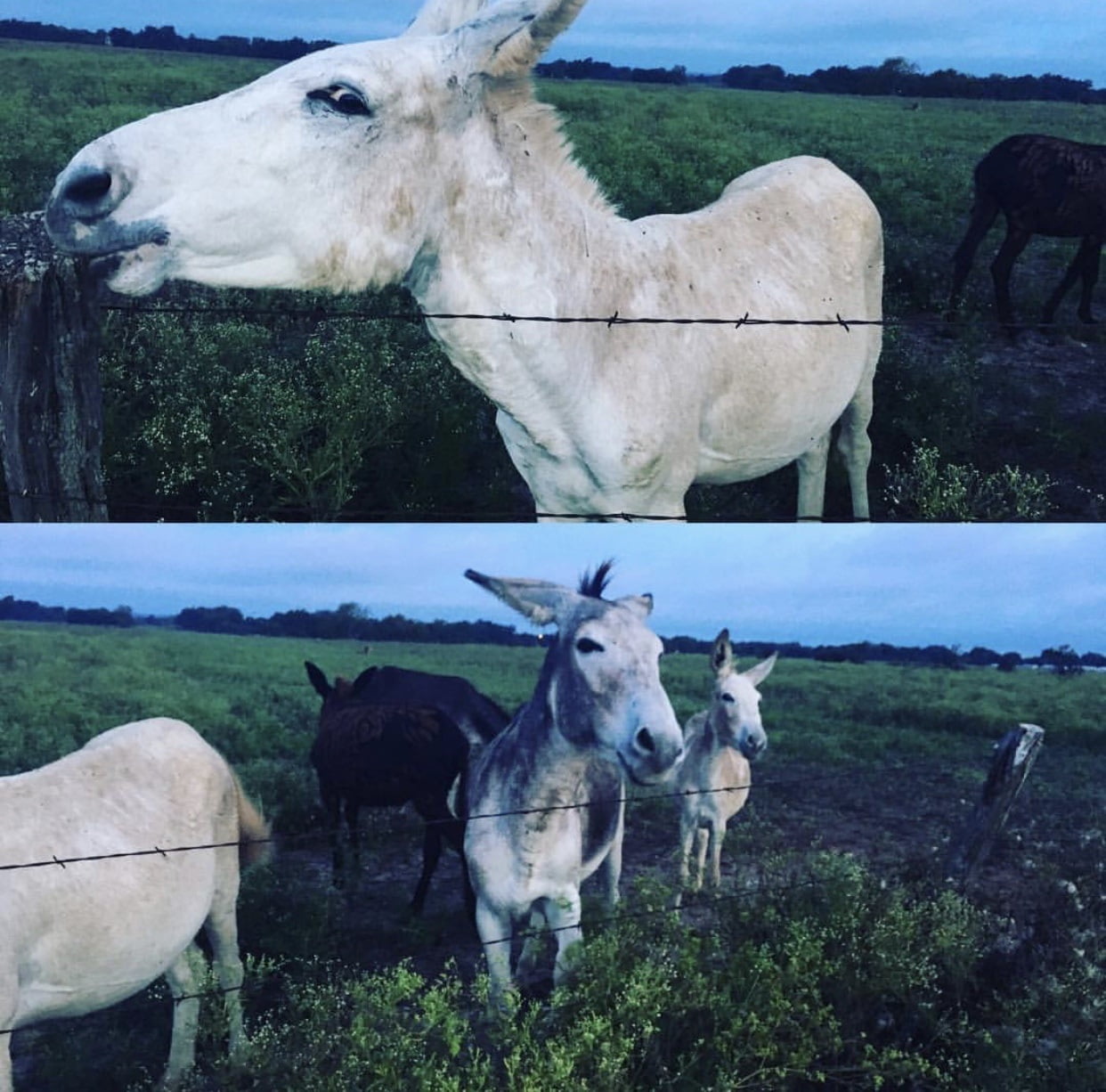
Neighbors! There’s a lot more about this little town that I love. If you’re interested in this little life we live out here, you can follow #realhousewivesofdhanis on Instagram. Here’s a quick look at some of our fun neighbors within walking distance of our house.


All photos: Jamie Lin Wilson

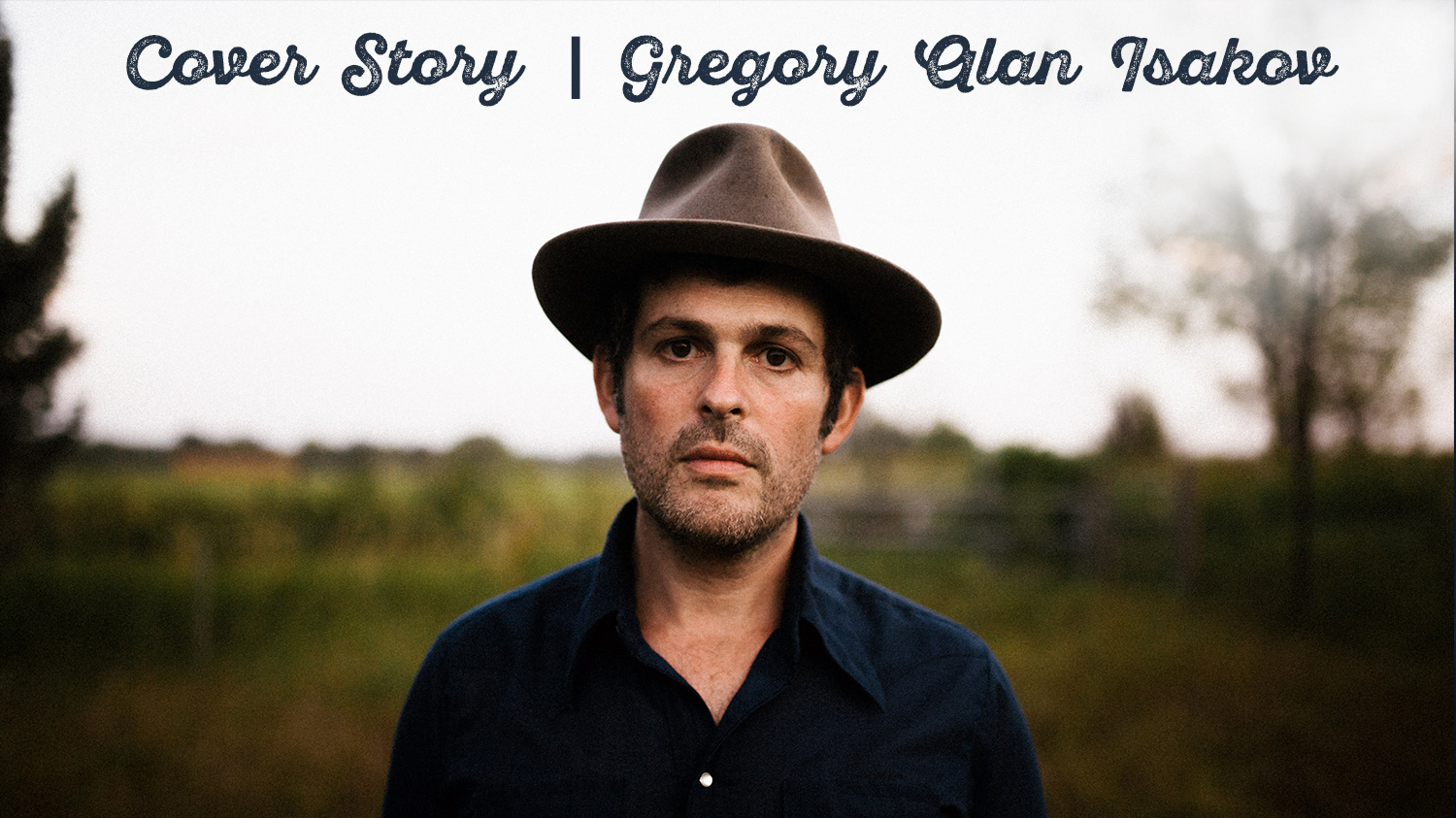
An Otherworldly Landscape: A Conversation with Gregory Alan Isakov

You could call it an epiphany of sorts. Gregory Alan Isakov was riding an elevator with the rest of his band when the doors slid open and a woman got in. She noticed their instruments and asked the question musicians dread. “What kind of music do you play?”

Isakov chuckles. “I never know what to say to that question, you know? So I said, ‘Oh, like, sad songs about space.’” It was, the band immediately agreed, as perfect a genre definition as Isakov could have given.

The singer-songwriter’s new album, Evening Machines, is undeniably dark and cosmic. Atmospheric, opaque, and layered with texture, its electronically accented folk-rock is a departure from the spare, intimate sound Isakov has favoured in the past. And while he is perfectly upbeat today, looking out from his kitchen window onto his four acres of Colorado fields and handful of sheep, he admits that his latest music came from “a pretty dark birth.”

On the face of it, Isakov’s life was going great. But even as he had just fulfilled one of his most fantastic career goals – orchestrating his work for the Colorado Symphony – he was beginning to suffer from a debilitating physical anxiety. “When you’re touring, and trying to figure out how to put out records, you forget about peace and quiet for long periods,” says Isakov, who admits to being a natural introvert. “You’re just hustling all the time. I did that for so long I forgot how to unplug. And it caught up to me in a way I’ve never experienced before.”

And then, on the plane home from Scotland after a six-month tour of Europe, he heard the news that Donald Trump had won the presidential election. “I’ve never had a sense of overwhelming darkness and anxiety like I had that year. You can’t ignore it on an emotional level, whether you read the news or not. And it does make it into the landscape of music or anything that you’re doing. You’re going to feel that stuff. It’s part of being alive.”

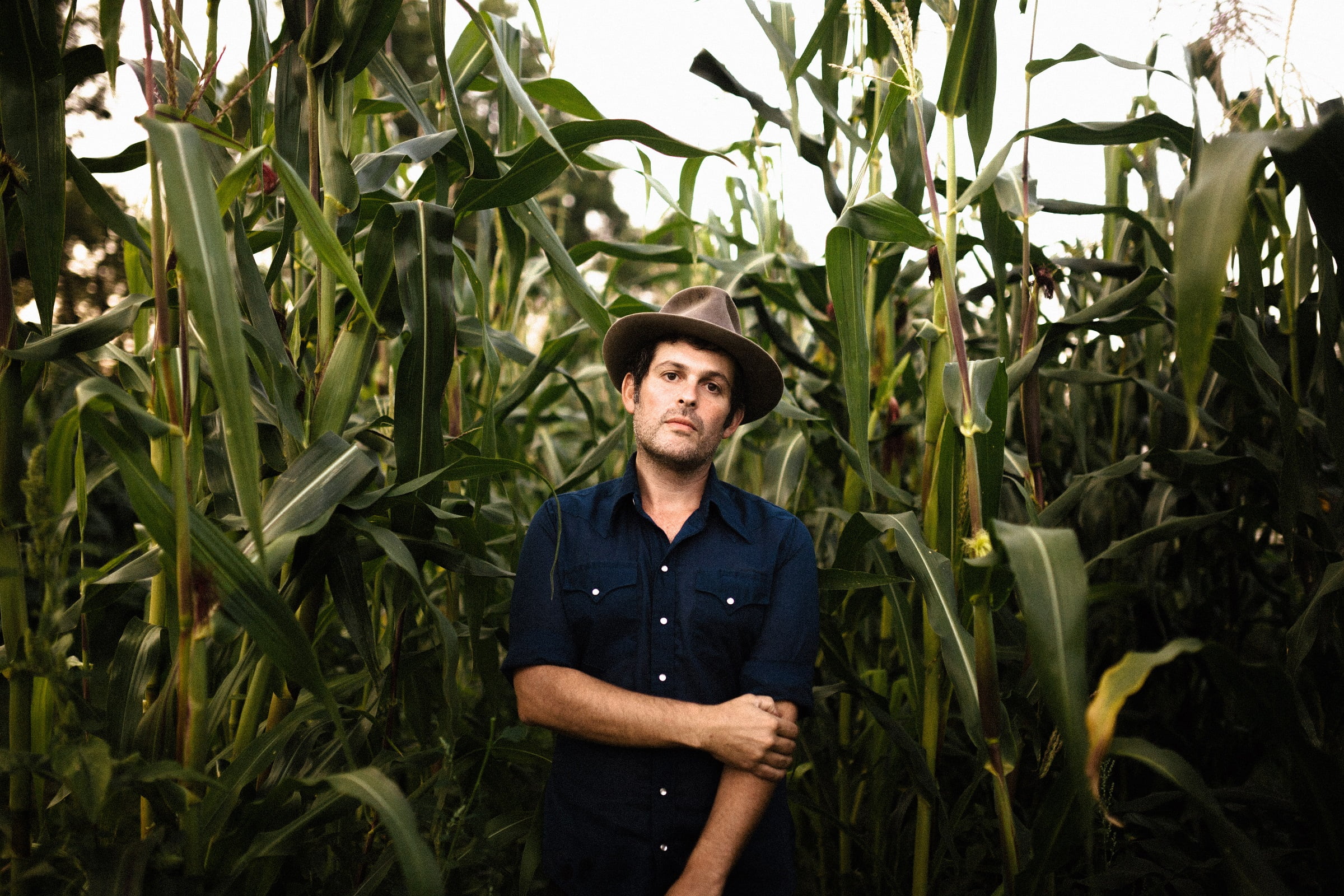
Songwriting was a focus and a release; it was also, he says, a reminder that he was someone who needs space and quiet built in his life. Hence the sheep. Isakov took 12 months off from touring and immersed himself in the life of the land he has been working for some years now, supplying vegetables to restaurants and markets. When Isakov was not in his recording “barn” with engineer Andrew Berlin, he was out in the fields, planting salad greens, turnips, and cucumbers, feeding and watering his 10 sheep. “They’re great, they have good vibes when you want to chill,” he smiles. “They’re so easy to look after.”

While the songs on the album draw from what Isakov calls an “otherworldly landscape,” the farm itself is a very real character in his recording process. Apart from the live symphony recording, every album he has released has been made in his own home – “because I really don’t like studios,” he laughs. “I don’t like the glass, I don’t like going into another room to listen, I like to have the words to the songs up everywhere, and all the stations ready to go.”

For Isakov, the key factor is speed: the ability to capture, as quickly as possible, the emotions and sensations he is exploring. Evening Machines, it turns out, is full of first takes. “To maintain whatever feeling you’re having is really important. In the moment you say, ‘This is just an idea, but later I’ll do this good,’ you know? And then I’ll come back to it and something’s different and I can never get back that initial emotive, ineffable something.”

So Isakov developed his own mantra – “sketch to keep” – and created a working space nimble and nearby enough that he could to capture inspiration whenever it struck. The ‘evening machines’ of the title are actually the blinking lights of his electronic equipment, which he visited mostly at night. By the time he came to create the record, he had more than 40 tracks to choose from.

The songs that made the final cut – the ones that felt, to Isakov, to “live together” – share a common, haunting feel. Images return in numerous songs, stars and weightlessness, gunpowder and bullet holes, while the sounds of the machines – a Juno synth from the ‘80s, a compressed drum kit, an Orcoa pump organ that sounds like a toy – provide an unnerving and ethereal backdrop. It is a sound far heavier and, dare one say, dirtier than Isakov’s previous albums. And yet the lyrics remain fraught with the fragility of human essence.

Some, like “Powder,” read off the page like poems – “were we the hammer/were we the powder/were we the cold evening air” – which pleases Isakov to hear. “That’s the goal!” he laughs. “Powder” in particular was inspired by one of Isakov’s favourite poets, Billy Collins. “I bring his poems out with me on the road because I tend to slow down whenever I read them.” And if meaning can feel mysterious in Isakov’s songwriting, it’s not only obscured to the listener: Isakov says he often doesn’t know what his songs are about until after he’s written them.

Take “Berth,” which he wrote with his brother Ilan – a film score composer and “one of my all-time favourite songwriters.” The pair often spend the summers together, engaged in all-night-co-writes. “We start after dinner, and this time I had a melody in my back pocket, that crooked piano part, and I went to one end of the building and he went to the other and we wrote as many verses as we could and then met back up, and mixed them together. The original song was 17 minutes long!” It was only when they edited it down to its final version that they realised what they’d written. “And then we were like: I think this is an immigrant song. We didn’t see that coming.”

Isakov was born in South Africa at the heart of the apartheid era – “a pretty rough situation” – and his family emigrated to the U.S. when he was a young child. For the first couple of years, he lived in a one-bedroom apartment with his parents, his granny, and his two brothers. “A lot of friends I made growing up were immigrants and I really connected to their families a lot. They had a different vibe to the American kids I knew.

“Even now – in no way is our country somewhere that feels safe all the time, or going in a good direction at all – but, man, we are lucky to be in a place where we can have a sense of freedom and be able to work and create whatever we want. That doesn’t exist hardly anywhere and it’s a nice perspective to have.”

His upbringing also created a close bond with his brothers, who would play instruments together in the basement: “I was always excited to get back home from school to play with them. That was the fun part of my day.” Not that music has made any of them any less introverted, Isakov admits. “When we’re hanging out, we don’t even talk,” he laughs. “One of us will ask, ‘Who’s he dating now?’ and the others will be like, ‘I don’t know, we don’t talk about that.’”

But then, Isakov is happy to live with uncertainty. It’s a principle that’s central to his creativity. “I’ll read an interview with another artist saying ‘I wanted to write a song about this or that,’ but that’s never happened to me,” he says. “I never set out to write a song about anything.

“I feel like I’m sort of holding on, not even driving. You just hope you can get it all. Sometimes you do, and when you do it’s the greatest feeling, you’ve struck gold or something. But there’s plenty of times I don’t get it. My trash can’s pretty big.” It makes him reluctant, he says, even to take credit for his songs – and even more so to imbue them with too much narrative. For instance, “Was I Just Another One” can sound to the unknowing ear like a simple love-gone-wrong story. “To me that song’s about a relationship with someone on heroin but it never says that. And it’s not interesting what I think it’s about.”

His fascination with roots – from jazz and blues standards to the old-time clawhammer banjo he learned to give him a break from guitar – has not left him. “Some of the traditional songs that are so relevant today, stuff like Mississippi John Hurt, you can listen to it and they could have been written right now.” And now that his own dark period is, happily, over – “I’m so lucky to be on the other side of that” – the lighter tracks he recorded over the past year will be repurposed into a new, more country-influenced collection. If this record has taught him anything, however, it’s never to assume. “Songs have minds of their own,” he laughs. “And I’m just following them along!”


Photos of Gregory Alan Isakov: Rebecca Caridad

WATCH: Missy Raines, “Allegheny Town”

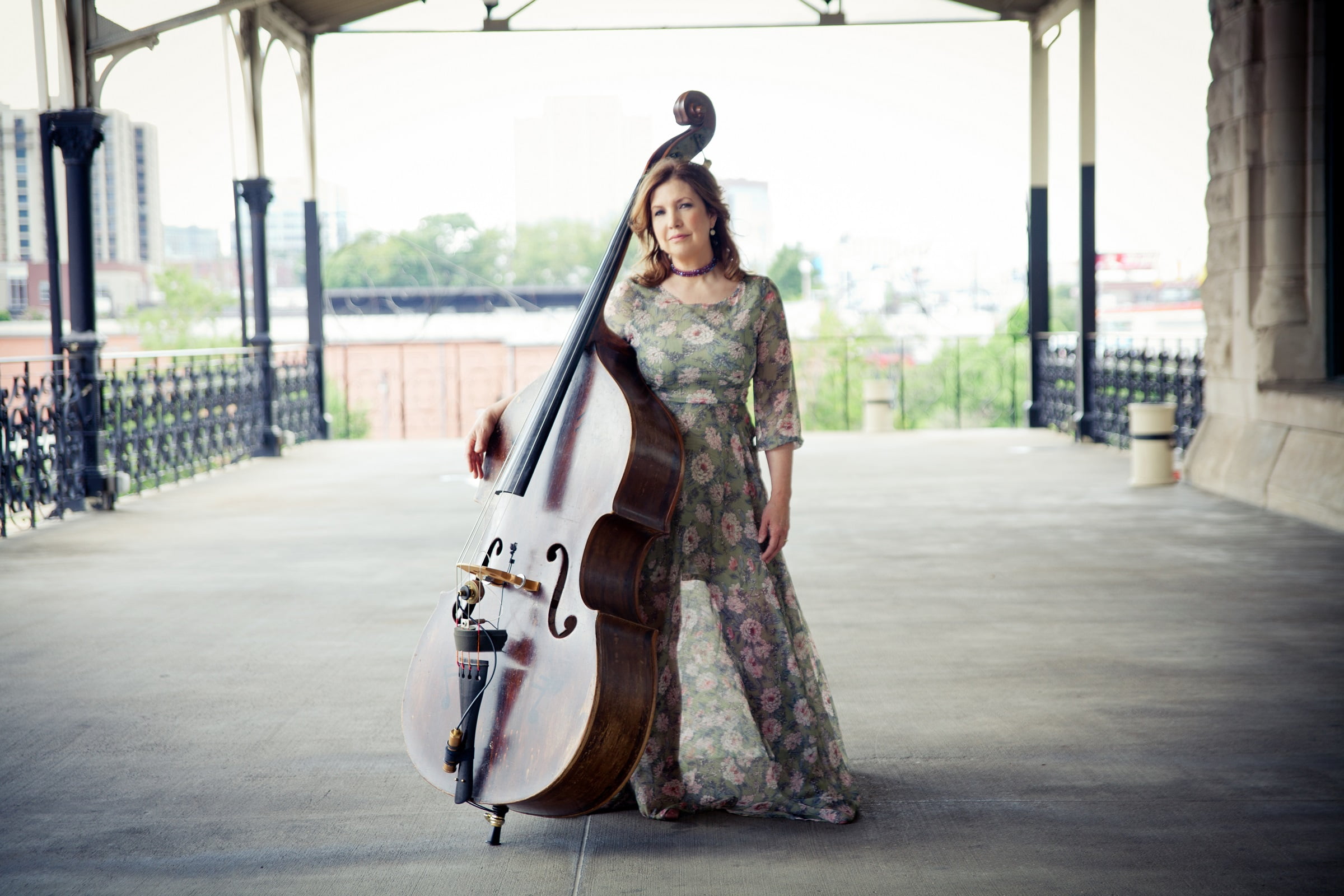
Artist: Missy Raines
Hometown: Nashville, Tennessee
Song: “Allegheny Town”
Album: Royal Traveller
Release Date: October 5, 2018
Label: Compass Records

In Her Words: “I grew up in the Allegheny mountains of West Virginia, leaving home at 18 to follow my dreams. I didn’t realize then the cost of time away from loved ones – time you never get back. I wrote this song ‘Allegheny Town’ for my family, for those who went searching and perhaps more importantly, for those who stayed behind. This video offers a personal glimpse into my life from long ago with scenes and people who are no longer with us. ‘And I can hold you up, against the eastern sky, and we can try our luck, to never say goodbye.’” –Missy Raines


Photo credit: Stacie Huckeba

LISTEN: Emily Scott Robinson, “Westward Bound”

Artist: Emily Scott Robinson
Hometown: Greensboro, North Carolina
Song: “Westward Bound”
Album: Traveling Mercies
Album Release Date: February 22, 2019
Label: Tone Tree Music

In Her Words: “The opening track for my new record carries all the hope of moving somewhere new and starting over. Every time I drive west through Texas and New Mexico, I take the original U.S. highways. I like little towns with 100-year-old brick courthouses and family-run breakfast spots that only take cash. Small-town America is mostly going about its business, getting a little dusty and bent-over, finding it harder to make a living these days. There are folks out there with great stories to tell, but if you take the interstate, you’ll miss them.” –Emily Scott Robinson


Photo Credit: Neilson Hubbard

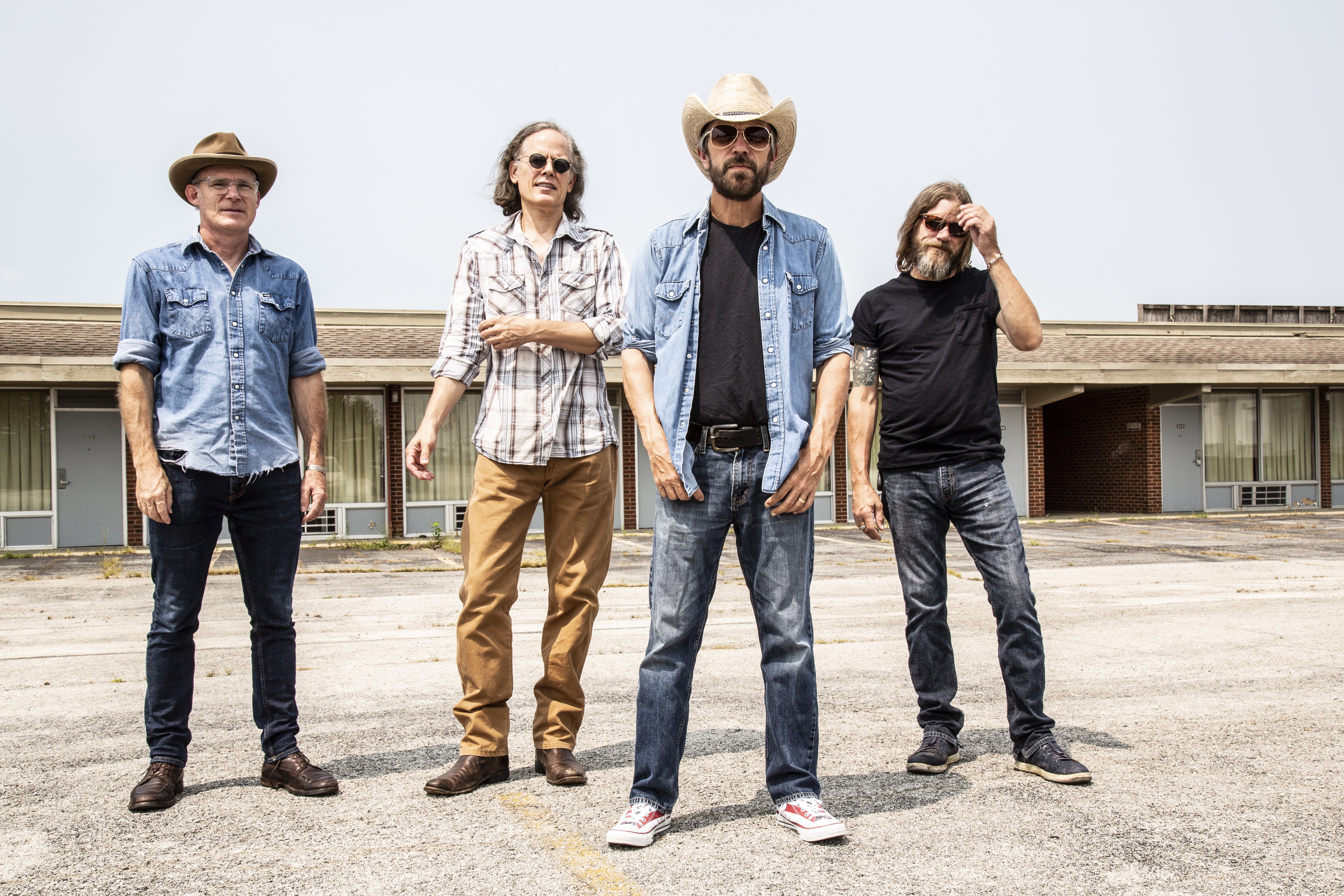
LISTEN: The Bottle Rockets, “Maybe Tomorrow”

Artist: The Bottle Rockets
Hometown: St. Louis, Missouri
Song: “Maybe Tomorrow”
Album: Bit Logic
Release Date: October 12, 2018
Label: Bloodshot Records

In Their Words: “‘Maybe Tomorrow’ is a personal favorite song of mine, because of the way it was born. I was trying to write a song all day long. Nothing materialized. Around midnight I gave up. Posted about my failure on Instagram, when I read back what I posted, I made this whole lyric out of the hashtags of my post. At midnight I was a failure. This song was completed by 12:15…” –Brian Henneman


Photo credit: Cary Horton

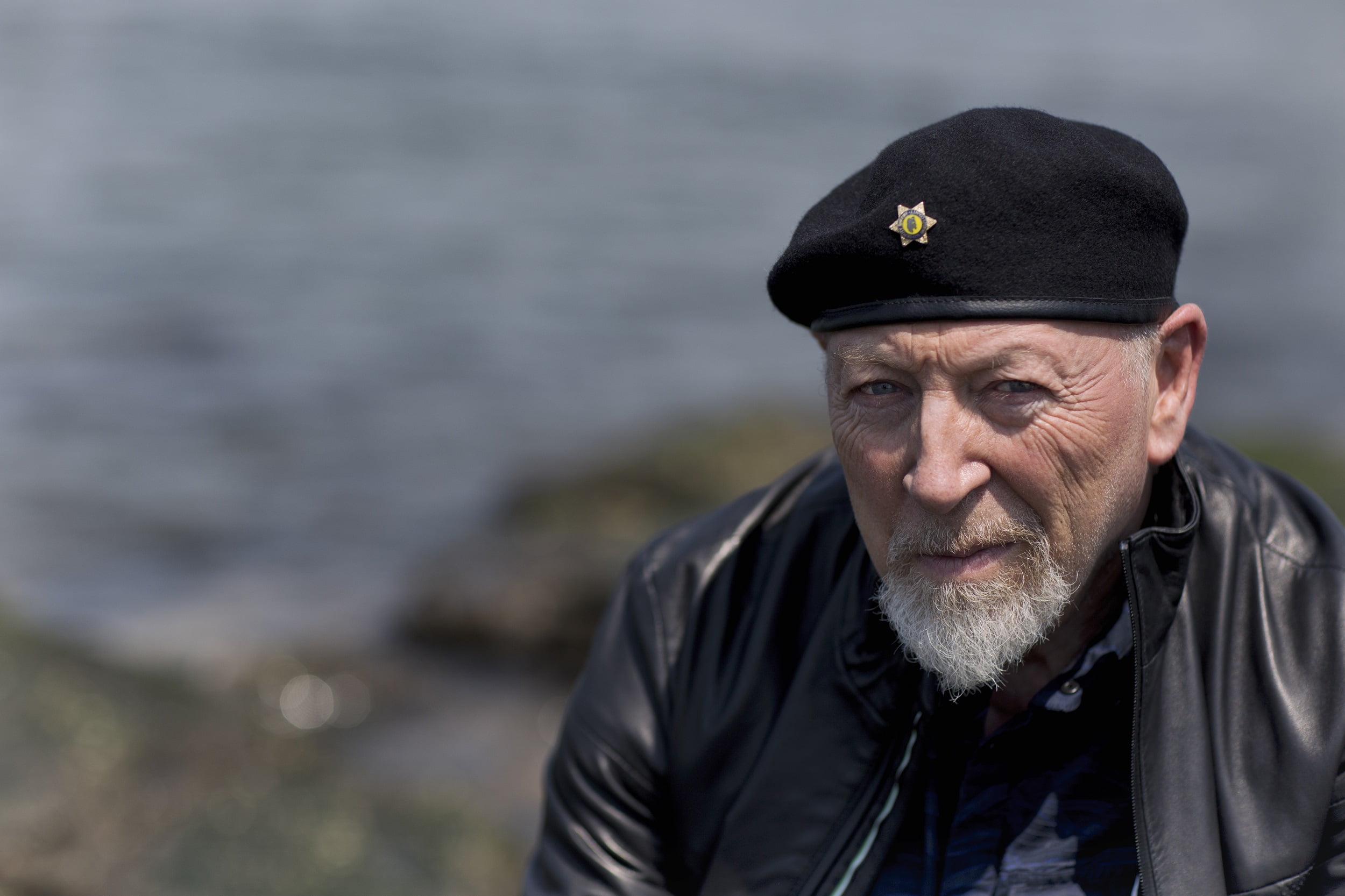
Richard Thompson Lets the Songs Guide ‘13 Rivers’

Richard Thompson’s new album contains 13 tracks and is called 13 Rivers, which suggests an intriguing metaphor regarding music and bodies of water. These are songs as rushing currents, as tributaries cutting through the landscape with unstoppable force; they can be dammed but not contained, their power harnessed but not diminished. Or perhaps they are obstacles to be crossed, either by swimming against dangerous rapids or by devising elaborate feats of engineering. It is any wonder that songs have bridges?

Thompson admits he didn’t think too hard about it. “It’s just a convenient title, and I liked the way it sounds,” he says with a chuckle that sounds both self-deprecating and possibly curious about the idea. “I’m not sure how deep it is or if it stands up to intellectual scrutiny. I guess songs and rivers can be fast or slow, straight or meandering. They have a beginning or end. You should make of it as much as you can. The more you make of it, the better I sound.”

He doesn’t need me or anyone else to make him look smart, but let’s go ahead and make too much out of that metaphor. Thompson’s catalog is full of raging rivers, most with rock rapids and treacherous oxbows, some stretching for miles and miles or years and years. He’s been navigating them for more than half a century, ever since he strummed his first notes as the guitarist and occasional songwriter for the famed London outfit Fairport Convention. That band helped to electrify folk music in the late 1960s, adding drums and Stratocaster to centuries-old rural ballads about maidens and knights, before Thompson went solo to emphasize his own songwriting.

For years he was merely a cult artist in the States, his early records available only as imports, at least until 1980’s Shoot Out the Lights—written, performed, and recorded with his then-wife Linda Thompson—established him as an insightful chronicler of the challenges of commitment and contentment, a songwriter who is neither blandly optimistic nor cynically dismissive, but somewhere right between bitter and sweet.

And, of course, he is a guitar player whose resourcefulness somehow dwarfs his technical virtuosity. A teenager in the late 1960s, he was too young to be as enamored with American blues as other players were, which means he was never a contemporary of Eric Clapton, Jimmy Page, or Jimi Hendrix. Instead his playing is grounded in folk music, aligned with the experiments and excursions of Bert Jansch, John Renbourn, and Davy Graham. Like them, he has significant range, incorporating a range of styles and sounds: African desert rock, urban punk, country & western, Indian ragas. His solos change shape constantly; listening to him play, you never know where he’s going but you know he’s going to get there.

While many of the players listed above have either died or all but retired, Thompson continues to make relevant music in the 2010s, both as a songwriter and as an instrumentalist. “The most important thing is the song—the particular batch of songs you find yourself with. That dictates so much about the way the record sounds,” he says. “The songs are going to tell you how they want to be shaped, how they want to sound in the end. They tell you if they want to be acoustic or electric; they tell you if they want to be simple or complex. If you’re listening to what the songs are saying to you, then making the record should be a fairly easy task.”

The batch of songs that comprises 13 Rivers stemmed from what he calls a “difficult time in my life,” although he declines to discuss the specifics of those difficulties. Still, it’s possible to gauge the general nature of them based on songs like “Rattle Within” and “Shaking the Gates,” which suggest a feisty relationship with the idea of mortality. Writing them, however, is not necessarily a conscious effort to address certain events or predicaments. “It’s a semi-conscious process. You’re not always thinking about the big picture. You’re just kind of floating sometimes. You’re almost allowing yourself to switch off some of your critical faculties in order to write. And once you’ve written it, you think, okay, here’s this song, now what does it mean? But you’re not thinking about that meaning while you’re writing it.”

Take the opening track, “The Storm Won’t Come.” A low, brooding number with a worried vocal and a searing solo, it reverses the typical storm metaphor, casting the thunder and rain as something other than destructive. Especially opening the album, it almost sounds like an invocation by an artist waiting for inspiration to strike like lightning. “That’s not what I had in mind, but that sounds great! I was thinking more than sometimes in life, you can feel stymied and you long for change. Sometimes if you try to change it yourself, it doesn’t work. You have to wait for the world to do it to you,” he says.

One storm arrived just after he had assembled this batch of songs: The producer backed out of the project, leaving Thompson to ponder its fate. Thankfully, pragmatism won out. “I thought, well, the studio is booked, the musicians are booked, we’ve got the material, so I’ll just produce it myself. I’ve done it before. It’s always nice to have the contrast of working with other people, but it can be good to do it yourself. You can get more into the nuts and bolts of what you really intended to find in the songs.”

Perhaps that’s why so many songs have a raw-nerve friction to them, lyrically and musically. After a handful of solo acoustic albums, including 2014’s Still, produced by Jeff Tweedy, Thompson put together a very tight, very agile rock and roll combo to give these songs a jittery energy. He’s worked with bassist Taras Prodaniuk and drummer Michael Jerome for years, “so I know them a bit—what they’re likely to come up with.” They worked quickly in the studio, learning the songs just enough to pound them out but not enough to pound them life out of them. “I try to not get too embedded in learning the song. We just give it a couple of listens at rehearsals,” he says. It’s a way to avoid what Thompson calls “overlearning” the song, to allow room for happy accidents and to keep the possibilities wide open.

When the song goes out into the world, those possibilities shrink dramatically. The song becomes settled, more or less. “What the song is now is public domain. It becomes a kind of public property, and the audience won’t let you change it, even if you want to. I’ve got songs where I’ve snuck in the odd word change, but to change a verse or even a line is just asking for trouble.”

Being the song’s creator doesn’t mean he determines that meaning for anyone else. In fact, his interpretation is only one of so many. “It’s always amazing to hear other people’s ideas of what a song is about. I may have written it as a satirical song or a very pointed song, and people will say, ‘Oh that’s about Bob Dylan’ or something. How did they reach these bizarre conclusions? But I’m glad they can find their own meaning in it.”


Illustration by: Zachary Johnson
Photo by: Tom Bejgrowicz

LISTEN: Philippe Bronchtein, “I’m a Runner”

Artist name: Philippe Bronchtein
Hometown: Nashville, Tennessee
Song: “I’m A Runner”
Album: Me and the Moon
Release Date: Oct. 5, 2018

In His Words: “I wrote this song shortly after returning home from a long run of shows. Despite being gone for several months, I realized that some of the personal turmoil I’d left back home wasn’t resolving itself as much as it was just moving on without me. The song is just a quiet reflection on what it means to always be on the leaving side of things. When we were recording it, the arrangement didn’t feel complete until Anna Hoone came and lent her beautiful harmonies on the choruses.” — Philippe Bronchtein


Photo credit: Laura Partain

WATCH: Ben de la Cour, “Face Down Penny”

Artist name: Ben de la Cour
Hometown: Nashville, Tennessee
Song: “Face Down Penny”
Album: The High Cost of Living Strange
Label: Flour Sack Cape

In Their Words: “Written with Olivia Rudeen, really the only co-write I’ve ever done. It takes more than one broken spoke to stop a face down penny from rolling on, and it’s never too late or too early to give up hope. A strange fever dream of bad luck gone right, of embracing the long odds and playing them anyway… of playing the long odds BECAUSE they’re so long, of laughing in the face of despair and then inviting her in for a nightcap.” — Ben de la Cour


Photo credit: Stacie Huckeba

WATCH: Kate Campbell, “Long Slow Train”

Artist: Kate Campbell
Hometown: Sledge, Mississippi
Song: “Long Slow Train”
Album: Damn Sure Blue
Release Date: September 21, 2018
Label: Large River Music

In Their Words: “‘Long Slow Train’ comes from a phrase you hear from people who have been involved in the struggle for equal rights all these years. The one bit of hope is — ‘It’s a long, slow train, but it’s still moving.’ You have to be involved. You still have to be present to win. It’s not going to be magic and happen instantly. You have to hang in there. No change is gonna just be magic. It’d be nice if it was, but it’s not always that way. In writing about race and what I see happening in our country right now, hopefully, I’ve learned some things about myself, and speaking up, and and doing the best I can to have a conversation.” — Kate Campbell


Photo credit: Michael Wilson