Since the very beginning of the cowboy genre, cowboy songs and cowboy poetry have been closely related. Many of the best-known traditional cowboy songs started out as poems and many cowboys have recited song lyrics as poetry. The first man to collect cowboy songs was a New York-bred cowpuncher named Jack Thorp. As Thorp observed in his book, Pardner of the Wind: “Cowboy songs were always sung by one person, never by a group. I never did hear a cowboy with a real good voice; if he had one to start with, he always lost it bawling at cattle, or sleeping out in the open, or tellin’ the judge that he didn’t steal that horse.”
That old-time cowboy singing was mostly done a cappella, as there were not many guitars to be found on the trail drives or in the cow camps. It also seems that there was a fine line between “singing” and “reciting.”
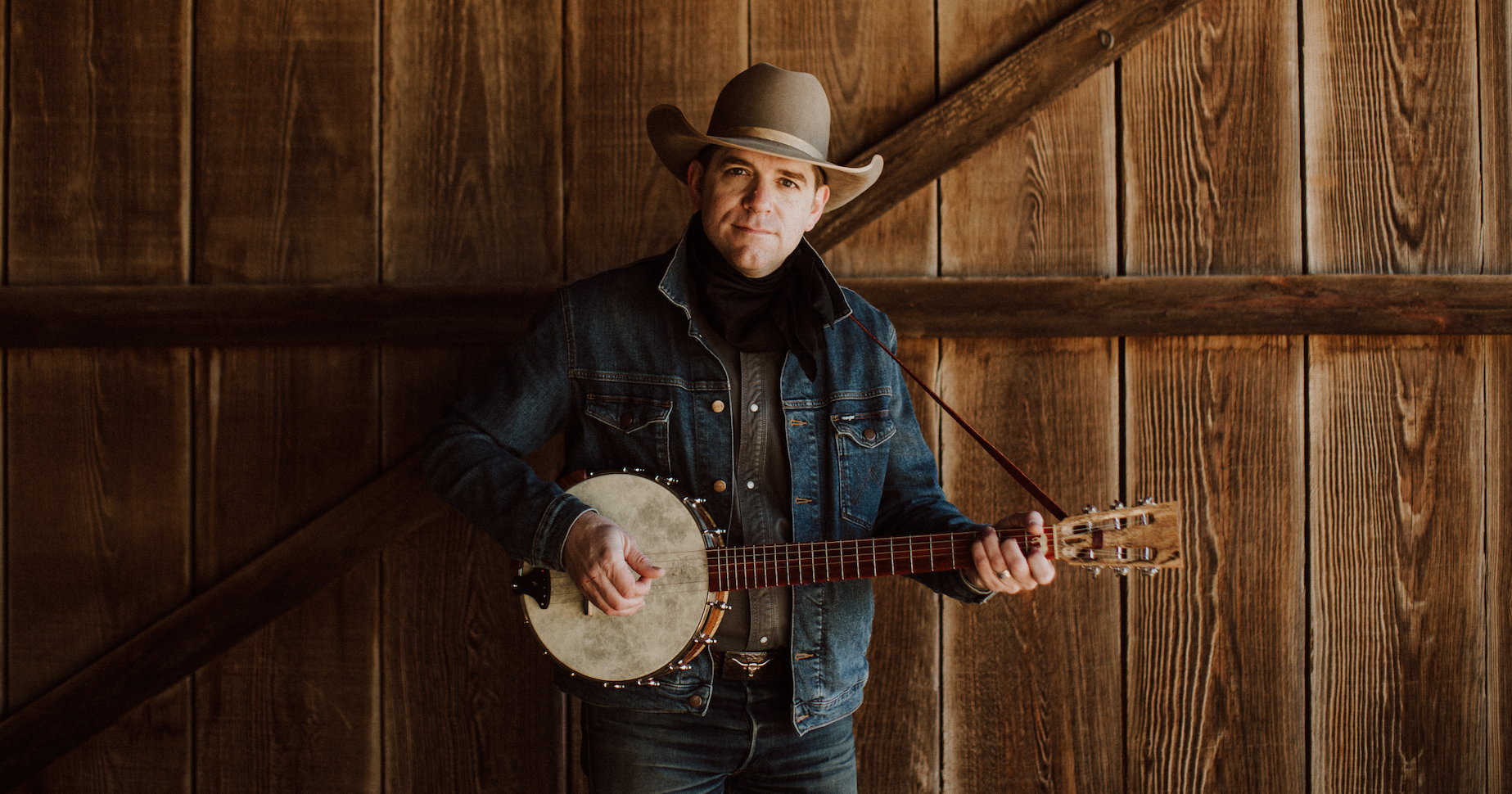
This tradition of setting cowboy poems to music has continued to the present day. My old friend and mentor Don Edwards was master of this. He taught me that if you find an old poem or a set of lyrics with no music, then you just make up your own tune and make your own song out of it. That’s part of the cowboy songster tradition. – Andy Hedges
“The Strawberry Roan” – Harry Jackson
This is the most famous of all bronc ridin’ songs and one of the most famous of all cowboy songs. It was originally written as a poem by Curley Fletcher in 1914. The original title was “The Outlaw Broncho.” Rumor has it that Fletcher wrote the poem about a bronc ride made by the legendary cowboy artist and writer Will James.
Even though the poem became one of the most recorded cowboy songs of all time, Curley Fletcher never made a dime off of it due to unscrupulous copyrighters and publishers. This recording by Harry Jackson is a great example of the old-time unaccompanied style of cowboy singing.
“Sierry Petes” – Gail Steiger
“Sierry Petes” was written as a poem by Arizona cowboy Gail Gardner in 1917. It’s been set to music many times and is better known as “Tying Knots in the Devil’s Tail.” Many folks have failed to give proper credit to Gail Gardner and have also failed to get the words right. This is the original version recited by Gail Gardner’s grandson, Gail Steiger.
“Sierra Peaks” – Ian Tyson
A fun version by the great Ian Tyson with a corrupted title, some incorrect words, and a modern beat. Ian Tyson revitalized cowboy music in the 1980s with both his versions of traditional cowboy songs and his original compositions.
“The Dixie Cowboy” – Taylor’s Kentucky Boys
Montana cowboy D.J. O’Malley published a poem entitled “After the Roundup” in the Miles City Stock Grower’s Journal in 1893. It became known as “When the Work’s All Done this Fall” and a 1925 recording by Carl T. Sprague sold over 900,000 copies. I’ve always loved this obscure version by Taylor’s Kentucky Boys with an alternate melody.
“The Long Road West” – Don Edwards
Henry Herbert Knibbs was a poet, novelist, hobo, and owner of a violin repair shop. He never earned a dime as a working cowboy, but his poetry entered the oral tradition of working cowboys. “The Long Road West” speaks to the kinship between cowboys, hobos, and sailors. It was set to music by the great Don Edwards.
“The Old Cowman” – Andy Hedges & Brenn Hill
In his book Classic Cowboy Songs, Don Edwards tells the story of how he fell asleep reciting this poem one night and woke with the melody in his head. This song is more relevant now than when it was written, over 100 years ago. I recorded this version with my pard Brenn Hill for my 2023 album of cowboy duets entitled Roll On, Cowboys.
“Spanish is the Lovin’ Tongue” – Michael Martin Murphey
Originally written as a poem entitled “A Border Affair” by Charles Badger Clark. I think that Michael Martin Murphey plays the definitive version of this song. And it was also the first song that Murph sang onstage at the National Cowboy Poetry Gathering in Elko, Nevada, when he showed up at one of the early gatherings. It always reminds me of All the Pretty Horses by Cormac McCarthy.
“The Westerner” – Andy Hedges
I found the “The Westerner” in Charles Badger Clark’s 1915 book Sun & Saddle Leather. The poem speaks to the values of folks who live in the rural West. I hope that my melody does it justice. It is the title track of my new album.
“Shadow on the Cutbank” – Trinity Seely
This is a modern-day poem set to music – the poem by horseman, cowboy, and poet Joel Nelson, and the melody by horsewoman and singer-songwriter Trinity Seely. The poem is Joel Nelson’s answer to the historians who have written the cowboy off as a vanishing breed.
“Hitting the Trail Tonight” – Buck Ramsey
“Hittin’ the Trail Tonight” was a signature song for the late great Texas cowboy singer and poet Buck Ramsey. Originally written as a poem by classic cowpuncher poet Bruce Kiskaddon, folklorist and musician Hal Cannon set this one to music sometime in the mid-1980s. I asked Hal about this piece and he told me that he “always felt there is something about Kiskaddon’s words that feel good in the mouth as they come out.” This one will have you singin’ along.
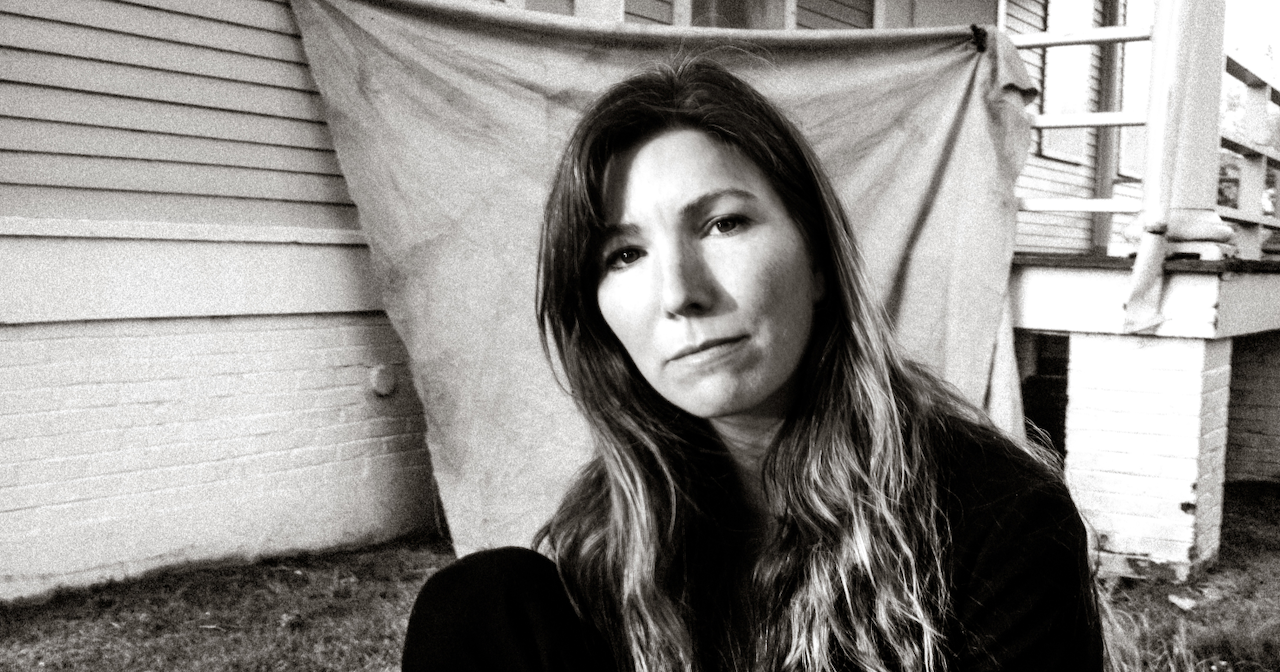
Courtney Marie Andrews’ story begins in Phoenix, Arizona. An only child raised by her mother, she found solace and an outlet for her creativity and imagination in music. She planted her music roots in a self-described “feminist punk band” and began touring while in her teens. Along the way, she recorded a number of albums – best known are Honest Life (2016), GRAMMY-nominated Old Flowers (2020), and Loose Future (2022) – lived in a number of cities, and worked and toured with a number of musicians, including rock band Jimmy Eat World.
Andrews eventually made her way to Nashville, where she now resides. There, she creates music and other art, fueling her soul and inspiration with long walks and her love of animals, bonding with friends’ dogs, and feeding an assortment of “porch animals,” mostly cats, who take up residence outside her door.
In addition to music, Andrews expresses herself through painting and poetry. She has published two collections: 2021’s Old Monarch (2021) and the recent Love Is a Dog That Bites When It’s Scared. Her music, writings, and artwork explore a broad scope of emotions and experiences: loss, grief, fearless love, deep darkness, pure joy, and acceptance of the entire spectrum.
These outpourings are at the essence of her new release, Valentine (out January 16 via Thirty Tigers). Written in the throes of anticipatory grief, the album plummets into the vortex of her trajectory. While the message is raw, the recording is anything but. Valentine is an unfiltered look into Andrews’ heart, filled with waves of sounds and layers of instrumentation.
Among the numerous instruments she plays on Valentine, Andrews is featured on an assortment of guitars and basses, including a 1973 Martin D-28, 1968 Gibson B-45 12-string, 1970s high-strung Japanese Epiphone, Gibson J-45, Epiphone Casino, 1972 Fender P-Bass, 1960s Kay K5915 bass, and 1960s Teisco six-string bass. Longtime friend and colleague Jerry Bernhardt joins her on various instruments, with drummer Chris Bear rounding out the trio. The album was recorded by Michael Harris at Valentine Recording Studios in Los Angeles and produced by Bernhardt and Andrews.
BGS reached Andrews via Zoom for an Artist of the Month conversation.
Has Nashville changed you as a songwriter?
Courtney Marie Andrews: I thought it would deeply shift everything for me, but if anything, it made me want to do other things as well, maybe subconsciously. I started painting and focusing on poetry. But that core sense of self, that songwriter self, will always be with me wherever I go. It’s hard to say how it has shaped me until I’m looking back on my life 20, 30, 40 years from now.
But I will say the community I’ve found here is profound. I’m a Western girl. I’ve lived in Arizona and Seattle up until pretty much my 30s, and I didn’t realize how lonely the West can be. I think that’s apparent in my early work as a songwriter. That subject is throughout the work. When I moved here, I was almost overwhelmed by how much people wanted to hang out. It took a while to adjust and now I can’t imagine it any other way, not having that community to feel into and understand this work, because it is a strange career. So I think more [that] it has affected me personally, but I’ve always continued to write and been on this journey on my own and in my own time.
This is a stripped-down album – only three musicians, including you, and one of them is also your co-producer. Did you know, when the songs were written, that this is how it needed to be done?
I completely funded this album on my own, so if I’m being frank, it was an economical choice. Originally, we would have loved to have a band, but in hindsight, ultimately it created the record it created and I wouldn’t have had it any other way. There’s some power to it being a very condensed group of people, because the focus is a little bit more zoned in, and it becomes a vibe if it’s coming from a few core people, rather than everybody adding their stroke to what you’re doing – which I think is also valid. But looking back, it was probably the best thing we could have done, having Jerry and I playing all the instruments and Chris Bear, of course, on drums.
You played a number of guitars on Valentine. Do the songs determine the guitar, or does the guitar sometimes direct the song?
The songs ultimately lead the way on feeling and vibe. Jerry and I wanted to layer the record. There are a lot of different layers of guitars. We would varispeed one guitar up, so it’s super-high, and then we’d varispeed one guitar lower, so it’s super-low, to create the rounder sound, especially if you’re listening in headphones or on a high-definition speaker system.
But it’s definitely song-driven, whatever the feeling. “Best Friend” is just my guitar and Jerry’s twelve-string. We didn’t go much further than that, because the song was meant to be a bit sparser as far as the depth goes.
“Everyone Wants To Feel Like You Do” is about a certain type of misogyny where it’s, “I do whatever I want and I don’t care about the consequences, nor am I held accountable for the consequences.” The song was written with that feeling, and I thought it would be funny if I played guitar like that, where I didn’t care, so I over-distorted my guitar and played as crazy as I could to assert my power.
How do songwriting, poetry, and painting each fulfill a different side of your artistry and emotions? Is there ever some cross-pollinating?
I wanted to tell the same story with a different perspective, so there is cross-pollinating in terms of the source of the material, where it’s coming from, where I’m at in my life, whatever darkness or lightness I feel. It all sources from the same well of emotion and experience. But there are different ways of telling the same story. I found that when I was songwriting exclusively, I would write the same song over and over again. Whereas if I take a step back, do a different medium, and come back to songwriting, I feel fresher.
Ultimately and forever, I’ll always identify and feel the deepest connection with songwriting. That’s the first thing I fell in love with. It’s the thing I understand the most. But the mystery of these other mediums has really flourished.
There’s a natural through-line between poetry and lyrics. What about painting? Do lyrics sometimes inspire a painting? Does something you create on canvas ever become words in one of the other mediums?
There’s not a lot of crossover. I don’t look at painting like I would look at a page or a song. Painting is, for me, a place to describe emotions that are unexplainable. That’s why painting is so cool. It’s almost equivalent to jazz; it’s more of a feeling that you can’t describe. That was enticing to me. To express myself as a word person who ultimately values words so much, it was important to think outside of the box a little bit. Painting allows that. To not be confined by words is really interesting.
Tell us about your recent Artist in Residence at the Iowa City Songwriters Festival. You performed and did a reading from your new book, but what does “artist in residence” mean at this particular event?
Because Iowa City is a UNESCO World Heritage City of Literature, there’s a heavy college-funded element. I’m not sure if that was their direct funding, but they definitely have more of a collegiate approach to an artist in residence. I’ve done some residencies where they don’t want anything from you. They just say, “Come up and write whatever you want. We don’t care.” But this one was definitely a bit more mentorship-driven. I led a class, a songwriting workshop. I also had one-on-one mentorships with young songwriters, people who are just getting started. They had a packed schedule for me, but it was so lovely.
I think their ultimate goal is to prop up songwriting among the other literature of the world, having songwriting classes in college, and having it there with poetry, fiction, nonfiction, memoirs, memoir writing, and all that. I think that’s ultimately what they’re trying to attain with the residency program. So it was great.
I’ve found that I really love to talk about songwriting in that way. I think that, in our culture, it’s a dying thing, at least from where I’m sitting, to seek out opportunities to learn from elders, from people who’ve been doing it a long time. The more we can do that in our culture, the better off we’ll be. It’s an incredible festival, and I would highly recommend people going. The people who run it are just wonderful.
When you lead workshops and do one-on-one mentoring, is it as much a learning experience for you as it is a teaching experience?
Absolutely. I think to teach is to be a constant student. The moment you feel like you’ve figured it all out … I don’t know if that’s a good thing. Even as I speak about songwriting, I say things that open doors all the time to myself. It’s good to be endlessly curious.
Do you think being an only child contributes to your storytelling ability through songwriting and poetry? Living inside your head, escaping into your own head, in a way that might have been different if you had been surrounded by siblings?
Oh yeah, absolutely. Because I was a latchkey kid, I spent a lot of time alone. If I didn’t have a friend to play with, I had to go into the inner landscape of my mind. That was my way of communicating in a deeper way that I couldn’t quite get in my home life if my mom wasn’t home. I can attribute a lot of my childhood to that. I was a deeply imaginative kid and would create stories all the time. So I think the loneliness also fueled what I do now.
Do you draw from those past emotions when expressing what you’re currently experiencing?
How it manifests is that it’s like a period of reckoning when I’m writing songs. I’m generally alone. I find it very hard to write if I know somebody is even in the next room. I’ve had weird moments in my life where I wrote at soundcheck and stuff, but when I listen back to those things that I’ve written around people, it’s not as dialed in. So when I’m writing, I’m alone and reckoning with the life that I’m leading, or the life of others. It feels like this very quiet thing that needs to happen.
Are you an old-school pen-and-paper writer or have you gone the way of voice memos?
I do both. I exclusively use a green book to write in. It doesn’t matter what color green. They all are green, though, green-colored notebooks, generally the Moleskine variety or that look. I have plenty of them in a pile. [And] I love Micron, the ballpoint art pens. I really don’t like the standard DMV pen. I’m a little bit bougie when it comes to my pens. I like the flow of a Micron. I write and then voice memo. Generally, once I’m done writing a song, I try and always get it down in its unproduced form. I think it’s important to have that, and the phone happens to be the easiest way.
Is playing guitar, just playing, as much a part of songwriting as writing lyrics?
Oh, yeah. I love the guitar. I love open tunings. I love acoustic guitar music, Hawaiian slack key, and classical Spanish-style guitar on a nylon. I love to play and try and emulate that style. And so in certain works, it’s the first thing that happens. There’s many ways to come to a song, but one of them is [to] play a chord progression I like and sing gibberish, and that sometimes leads to a song. In that case, absolutely I need the guitar. But yeah, the instrument can definitely lead the way. It just depends.
When you spoke earlier about adapting to the Nashville community, it brought up the thought that growing up as “an only” maybe affects our social skills to a degree. It can make community something new, as opposed to something you’re used to having around you.
Yeah. I feel that. I have a hard time with small talk for this reason. I want to go immediately for the jugular, as far as intense conversations. I go from zero to a hundred. It’s really hard for me to be like, “Hey, how are you doing?” I feel like such an actor in those circumstances. Of course I’ve learned to do it by way of being a musician – you have to talk to new people every day. But small talk doesn’t do it for me. I have a hard time going in a simple, surface level.
In the bio accompanying this album, you said, “I was in one of the darkest periods of my life and songs were the only way I could reckon with it. I felt cursed and the only mental cure felt like songwriting and painting.” Have you always felt that darkness?
Obviously, as a teenager, I went through a pretty wild part of my life where I felt dark, but I think I actually denied my darkness for a very long time. I lived in a haze of denial and hope, which is a beautiful thing. It can do wonderful things for your mental health. But you also can’t really grow if you’re living in that state.
When I was younger, especially in my early twenties, I always had this hope – “Oh, one day things are going to change.” That denial, that hope, kept me in this holding place, which for a time was really nice, and as a matter of defense and self-preservation, I stayed there for a long time. It wasn’t until I started therapy that I realized I always had this underlying darkness. When I had that, we worked on that, and real things started to happen. Things in life that are so hard that happen to all of us – it became deeply dark and profound to experience that in a more awake state.
How did that help with writing this album?
During a lot of writing this, I was caretaking for my family member who was terminal. If you’ve ever been in that situation, it is all-consuming. The only way I could turn my brain off from that was to write. It wasn’t “I need to write an album.” It was “I need to get back to myself for a moment.” I wouldn’t say it was a conscious decision. It was just I know how I am, and I know that songs are my only way of regulating in these crazy times.
You once said you felt embarrassed by the vulnerability of your songwriting. Where do you draw the line, or do you draw one, between what needs to be said for yourself and what needs to be said for listeners for whom you are the voice? How do you do this and protect your mental health when performing these songs every night?
I’ve always said that once the song is written, it’s not mine. It also transforms for me as I sing it. There are songs I wrote fifteen years ago that I still perform, that have taken on completely new meaning and feel different to me when I sing them. I honestly can’t remember the headspace I was in when I wrote them, or the origin of them, or who I was thinking about, to a strong degree, but I feel differently about them.
As far as what needs to be said, ultimately I try to relate to people, or first myself, and then you put the song out and it becomes a different thing. I try, in an artistic space, to be as true to myself as possible. I try not to put up any walls in that space. As far as my life where I’m not playing music, that’s a different thing. But music is a safe space to say whatever the hell I want to say. That’s the reason it’s such a powerful thing. It’s a safe place for me to communicate. Whatever walls are up in a song are walls that I have up with myself. That’s always very apparent when you write a song. It’s not quite clicking and you’re like, “I’ve got some walls up to my subconscious, clearly.” So the extent to which the boundaries, the walls, are up is truly only the stage at which my heart is at in that moment.
Did that happen with Valentine – the walls, maybe the fear of the vulnerability? It’s deeply personal and powerful, going deeper and deeper into those emotions as your journey is sequenced.
I hate to say it, because I don’t want to sound trite, but making albums, making bodies of work like this, fear is the last thing on my mind. Obviously, natural fears come up: Is it going to be what I wanted, what I envisioned in my dreams? But as far as songwriting and being vulnerable in a song, that’s not the fear. In fact, if I got very close to the heart in a song, it’s generally the ones that I’m like, “That’s a good one. I got there. I got to the essence of this thing I was feeling.”
Being vulnerable in life can be really hard in my personal life, in some ways, and I think that is more where the fear is. But, for whatever reason, the way I direct it is okay in a song, and I’ve made up my mind for that to be true. I don’t know why; I guess it just makes sense to me. Human emotion makes the most sense to me in the backdrop of music.
As far as sequencing, Jerry and I argued quite deeply about the sequencing, but ultimately it did go to a place where once we got the sequence, it was undeniable. Side A and Side B are completely different frames of minds. Side A, you’re fighting for love and you’re desperate. Side B is a resignation – this is how it is, this is how it’s always been, and this is my childhood. By the end, in “Hangman,” you’re just “This is how it is, and you can fight for it or you can walk away.” So the sequencing was purposeful. I wanted it to be a journey. I think records should be like that. They shouldn’t be all one color or palette the whole way through.
Explore more of our Artist of the Month content featuring Courtney Marie Andrews here.
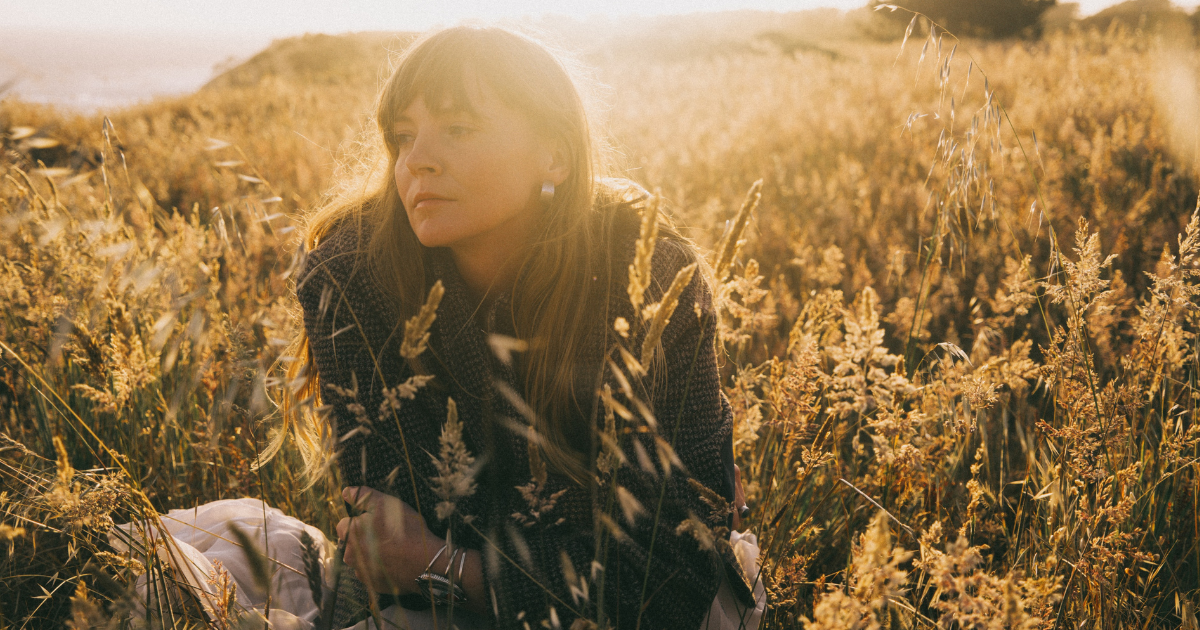
There is something woodsy and nature-rooted about Anna Tivel’s songwriting. It calls to mind mountain hiking, tall pines, mushroom foraging. The clink of a water bottle against a caribiner. The gentle tiptoe sound of dew dropping from treetops. Maybe it’s Oregon that’s seeped into her bones. Maybe it’s just the way her intrinsic poeticism steers things.
Listening to Tivel’s music tends to conjure the words of other writers. Consider some of the final lines from Barbara Kingsolver’s Prodigal Summer:
“Solitude is only a human presumption. Every quiet step is thunder to beetle life underfoot; every choice is a world made new for the chosen.”
Or, consider the poetry of Wendell Berry or Mary Oliver or Andrea Gibson. Each seemed to have plucked their pieces from shrubs and vines – or at least from the air around their foliage. Indeed, some of these names came up in our recent conversation with Tivel about her new album, Animal Poem, which drops August 29 on Fluff & Gravy Records.
Much like a walk through the woods, Animal Poem offers listeners a pathway toward retaining their humanity in a world that can feel inhumane. Though Tivel notes she began writing this album two years ago, she was conscious of the shifting geopolitical landscape and the way the chaos in the news might – or might not – echo into people’s private lives.
In the end, she suggests that life is mostly made of small moments between people who are guided by love and who are trying to understand one another. Those are the moments of dissonance where our commonalities have the best chance of prevailing. To hear Tivel tell it, that is the basis of her job as both poet and songwriter.
With so much going on in the world geopolitically, so many people are struggling with how to make art and why to make art and, of course, feeling compelled to continue to make art. But there’s this existential part of it that I feel like you’re addressing on this album. Maybe also in the creation of this album, which I’m guessing was recorded well before what’s happening today, and will be different from what will be happening when we publish it.
So, when you think about this album now, and what you were working through with these songs in that moment, how has it aged in your mind?
Anna Tivel: That’s funny, I was thinking today how, in this particular year so far, I’m having trouble [writing songs]. I’m having a lot of trouble finding the core of what I mean. I always feel like writing is this search for something a little beyond your understanding. You’re just moving through the world kind of trying to express what you see and what you’re learning and what you’re reaching for. And I’ve been finding, in this particular moment, it’s just so loud and it’s so tangled. I’m writing a lot of angry things that I will never play, [about] not understanding and not even knowing what to reach for to try to understand.
This album was all written like two years ago now, in a state of the world not dissimilar from this one. I was reading a lot of Wendell Berry and just thinking about big, overarching systems and how impossible it is for those to stay about people. [I was thinking] about the earth and kind of thinking about how these smaller communities … function and how things ripple outward. But, the really small things, like your family or your neighborhood. Power lies in these very mundane but magical lives we’re living. How we’re touching the person across the street from us or how we’re figuring out our own hearts, and how powerful that is in the overarching, huge system that [can] become very inhumane so easily.
I think there’s a lot of that there – a lot of love and immense, wild power. All these things are coming out of the technological wavelength that we’re on. And then things like love [that] just can’t be snuffed out.
As you were talking about what we’re reaching for, and the small things, I kept thinking about this image at the end of this record, in the song “Meantime.” The swing set that nobody used and this family that, maybe there was abuse, but the dad built the swing set. Nobody went out to play on it, and they left, and the swing was still there, blowing in the wind.
A swing doesn’t know what it’s reaching, but it’s always there to lift you. What a beautiful thesis that it is for this record, coming as it does, at the end. Can you talk a little bit about that song, “Meantime,” and your decision to place it second to last? Does it feel to you like that’s what this record was reaching toward? I’m always interested in how sequencing tells the story.
Sometimes [sequencing] is really just meaning-based, or it’s sort of sonically based. I really liked the idea of this record kind of starting with this song that expands as much as the whole country. And then going all the way down to the last song, [which] is just very quiet, about love between two people, or what it is to build the language of love with the people nearest to you. I like there to be some kind of journey on a record, where you’re taken through different stories and different lives, for there to be some sort of arc.“Meantime,” to me, feels [like] that’s what I’m trying to say, but it takes place in a very small image. It’s one neighbor. There’s always a lot of neighbors in my music. [I’m a] very voyeuristic neighbor, probably.
There’s this feeling on the record, I think, that we hold all these things and we’re contributing to all these things – such pain and also such beauty. And we’re all sort of trying to separate ourselves from each other [and] from these big forces.
You can recognize yourself in everything, both the good and the bad. But inside of me is so much love and there’s so much cruelty and so much confusion. And becoming part of a family or a community – or a global community – it’s almost like the deeper you [go,] the more you recognize that you are just like everybody. You hold all those things and they hold all those things, even if they feel ugly or small or huge or powerful, they’re in there.
You’re reminding me of the poem by the late, brilliant Andrea Gibson. When I first heard their line, I actually thought of you. And then listening to this album, it came back to me.
The line is, “Do you know how many beautiful things can be seen in a single second?” It’s from the poem, “In the Chemo Room…” It’s thoughts from chemo, which is such a hopeless, awful thing, theoretically. And yet, all of Andrea’s work is so full of hope. I feel like that is so true to what this album conjured for me. I’m wondering if you have any kind of relationship with their poetry or if you were even aware of that parallel.
Yeah, I wish. I wanna take it in, because my good friends in Portland were just telling me to go read their work. I haven’t yet, but I resonate a lot with that. Like, you can just look all around you and see horror upon horror. [But] we are stunningly alive. Full of love and mystery, all at the same time. You’d die if you couldn’t hold that. You can kind of lean in either direction, or you can kind of like just sit there in all directions at once. That’s the journey of the whole thing.
While I’m bringing up poets, you mentioned Wendell Berry. One of my other favorite lines is from him: “Be joyful though you’ve considered all the facts,” Right? Like, this whole idea that we are animals among animals on this planet. Everything’s brutal – and there’s joy. And there’s love, you know. This is such a vital part of what every poet says, right?
There’s a song on here called “Animal Poem,” but the fact that you chose that phrase as the title of the album seemed to resonate. What was it about, to you, to choose those two words as the title of this project?
It’s exactly that. I feel very much like I want to be another being on the earth [who is] trying to express all those things at once, that everybody’s feeling, going through, and finding ways to say to each other.
There’s so many ways that we hold the word “animal”: Wild, untethered, maybe dangerous, maybe instinct[ive], maybe disturbing. … A poem is such an intentional, beautiful way to capture a small part of being. I like the idea that maybe this whole thing is just [us] running around confused, trying to find a little beauty, in what often appears to be utter chaos.
But where is the line, in your mind, between poetry and music? Is there any difference? Is it something intrinsic to the piece? Or, how do you decide what gets music added and what stays a poem?
Yeah, maybe I just think it all comes from the same place – the raw urge to express something. The way that music, or any art form, allows you to express it a little more honestly, because it’s not so straightforward.
When you can live outside the exact facts and use all the colors and the sensory details and emotion of a thing, sometimes that feels more true than being like, “Ted went to the store and bought an egg.” You know? There’s all the other things that happened in that moment that informed the way Ted’s heart was moving, that can be more readily got-at with art. There’s all these ways that people do that.
Ted’s egg was actually quite an experience for him.
Yeah, I mean, why did he go for just one egg? That’s my question.
There’s only one egg left. Poor Ted.
Logistically, when it came to making this record, you noted that it was a group of people in a room just kind of playing together. Was there rehearsal? How many times did everybody else hear these songs? And what was the creative process in that circle?
It was really free. I loved making this record. It felt, to me, like a bunch of freedom. Hearts in a room, just having our thing. Some of us had toured together a little bit, so we played some of these songs in various ways. Some were new. We sort of just sat and played together for a day or two beforehand. We tried really hard not to make parts. [We were] really trying to at least get comfortable with the forms, so you know where the bridge lives, so it doesn’t surprise you. But [we didn’t do] so much that people settled into things.
Then we just sat in a circle. We didn’t wear headphones, which I loved, and we put my voice through a little monitor in the middle of the room. I’m fairly quiet, so everyone could at least hear the words. We mixed ourselves and just played music in the room together. There was no turning yourself up in the headphones or adding reverb. It just was what it was.
That felt really free. It felt like we forgot we were making a record. Just trying to feel the thing in the moment. I love this group of people. I’ve done a lot of touring with [them] over the years. [I’ve] known them a long time and really respect their musicality, but also their spirits.
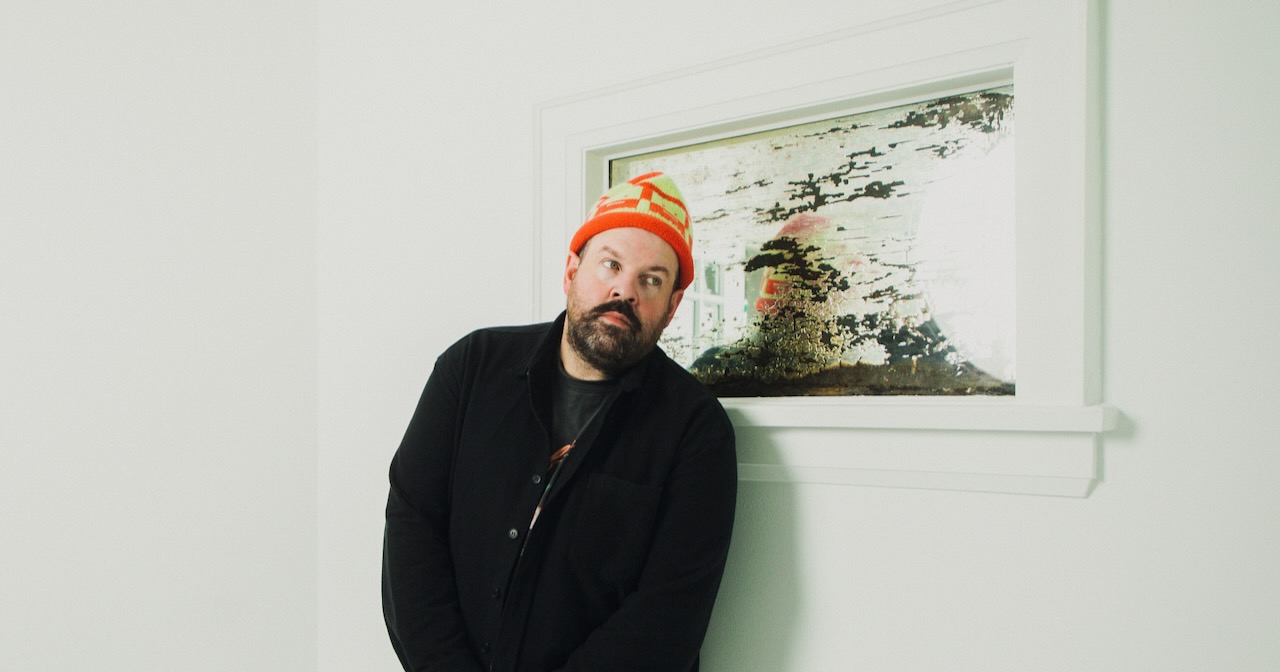
Donovan Woods is not really the solid, secure man you might think you know through his thoughtful, deceptively soothing songs.
But he’s working on it.
“A lot of my songs are much more magnanimous than I am in real life,” said Wood, 43. “So I often am wrangling with that feeling of people thinking that I’m a very morally superior person, when in fact, the reality of me is not very close to that.”
Woods, a burly, bearded, soft-spoken Canadian who has been consistently releasing quality albums and touring since 2007 (except for the COVID years), recently released his new album, Things Were Never Good if They’re Not Good Now. It’s a typically solid offering from a writer who writes deeply personal songs, some of which work as mainstream country hits, like “Portland, Maine” for Tim McGraw.
Though modest and self-depreciating, Woods knows he’s come up with something special with “Back for the Funeral,” a song on the new album that captures the stage of life when the only time you see old friends is when one of them has died.
“After the service we’ll all meet up at the bar,” he sings. “Where my dad used to drink, now he just drinks in the yard/ And we’ll laugh about all the young dumb dreams we had/ And we’ll pretend we’re all only sad/ Because we’re back for the funeral.”
The song, written with Lori McKenna, is one of those that doesn’t seem like a new one. It feels familiar, like it’s always been there. McKenna had the title and it turned out Woods lived through the experience a few months earlier, when he returned home to Ontario to attend two funerals.
“Not all those details are exact, but I’m trying to get at that weird feeling of when you go home and you’re able to see it all at 30,000 feet for some reason, because you’re in the throes of grief,” he said.
In our exclusive BGS interview, we spoke about grief and mental health, poetry and Music Row songwriting, and more.
So I understand the new songs were influenced by therapy you underwent for your mental health. Is that true?
Yes. I’m as liberal as they come, but I think I still have this toxic masculinity in me. I do think that expressing need threatens my masculinity and it’s such a deep, ingrained thing in me. It’s embarrassing to admit, but I still do have those hang ups.
What kind of therapy did you have?
I had probably what would be considered a midlife crisis. … I felt like I was losing touch with my life slightly. I was unwell and I could tell [it was true] by the reaction of people in my life who weren’t particularly thrilled with me. I did some addiction therapy, I did some standard stuff and I did some couples therapy with my wife.
Like a lot of men, I wasn’t admitting when I was sad or when I was upset or when I was unhappy, because we love this image of this stoic individual that we’ve all grown up adoring — this unaffected, unflappable man. You’re trying to be that, because you think that’s the right thing to be for your family. I let that get away from me. I had become two guys, my internal self who knew that I was upset or hurt or I need something, and then this forward-facing person that I created, which was sort of a lie. I had to reunite those two things again, and I found it really difficult.
Your rather gentle singing sometimes belies the depth and the hurt in your lyrics. Is that an artistic choice you’re making?
That’s kind of just how my voice is. In the days before microphones, I don’t know that I would have been able to have this job. I don’t talk that loud or sing that loud, either. Singing is more like self-soothing to me than it is communication. I do it because I like it. It makes me feel good. When I’m stressed, I do it. It’s like being nice to myself.
Your lyrics are effective even separated from the music. Have you done any poetry or prose writing?
I appreciate that. My heroes are the people who are actually singing poets, like Paul Simon and John Prine. I feel like that’s what a singer-songwriter is at the core. … I will write poetry for myself now and then. I have tried to write short stories and I’m not good at it. I don’t know how to do long things. The idea that it can be anything is terrifying to me.
You must like Mark Cohn too, based on your cover of his “Don’t Talk to Her at Night” on the new album.
He’s kind of a high-water mark in songwriting for a lot of writers, especially men. There’s an elegance in his writing that is so unreachable to me. His American earnestness is not available to me as a Canadian. I always think I have to be self-deprecating or not showy in my writing. I think it’s just like the mindset of a Canadian. My dad is a big fan, and I have listened to him my whole life.
Do you have a family background that pointed you toward becoming an artist?
I grew up in a really working class town [Sarnia, Ontario], where everybody’s dad works in these petrochemical plants around the border of Michigan. My dad worked in construction estimating jobs. … My friends all work in petrochemical plants, or they work in adjacent fields to those plants. One of them is a chiropractor, which actually is adjacent to the petrochemical plants too, because everybody has a bad back in the entire city. … I was not a wonderfully artistic kid. I was given a guitar by my mom and I took like, four or five months of lessons. I just really enjoyed writing songs, and did it for myself for a decade before I ever did it publicly.
Is it true your dad named you after the folk singer Donovan?
I am. He’s one of my dad’s favorite singer-songwriters, along with Fred Eaglesmith. I got to tell [Donovan] that once, too. I’ve never seen anybody be less interested in something.
Do you still live in Canada with your family, or have you moved to one of the music industry cities in the states?
I have three kids. I have one ex-wife and my wife that I’m married to now. I live in Toronto mostly, and I’m in Nashville sometimes to write.
Do you do the Nashville writing thing where you have appointments and try to write hits with other writers?
I still have a publishing deal in Nashville, so I’m there writing sometimes with other people. I do it less than I used to, but I still enjoy that very much. I love other songwriters. It’s pretty rare that I don’t like a songwriter. So I enjoy that, that afternoon of trying to finish something.
And that’s worked out for you sometimes with hits, right?
There’s a song called “Grew Apart” that was a hit for Logan Mize. When somebody else wants to record one of your songs, that’s about as good of a compliment as you can get as a writer. It’s always really flattering. I hope [more of] that happens. … I mostly fail at writing Nashville songs. I fail like about 95% of the time.
You’ll be heading out on tour this fall to promote the new album. Are you looking forward to that?
I am always on the road more than I would like to be. But I’ve had much worse jobs. I enjoy 85% of it.
Photo Credit: Brittany Farhat
This website uses cookies to improve your experience. We'll assume you're ok with this, but you can opt-out if you wish.AcceptRejectRead More
Privacy & Cookies Policy
Privacy Overview
This website uses cookies to improve your experience while you navigate through the website. Out of these, the cookies that are categorized as necessary are stored on your browser as they are essential for the working of basic functionalities of the website. We also use third-party cookies that help us analyze and understand how you use this website. These cookies will be stored in your browser only with your consent. You also have the option to opt-out of these cookies. But opting out of some of these cookies may affect your browsing experience.
Necessary cookies are absolutely essential for the website to function properly. This category only includes cookies that ensures basic functionalities and security features of the website. These cookies do not store any personal information.
Any cookies that may not be particularly necessary for the website to function and is used specifically to collect user personal data via analytics, ads, other embedded contents are termed as non-necessary cookies. It is mandatory to procure user consent prior to running these cookies on your website.