The Mythology and Alchemy of Thomm Jutz

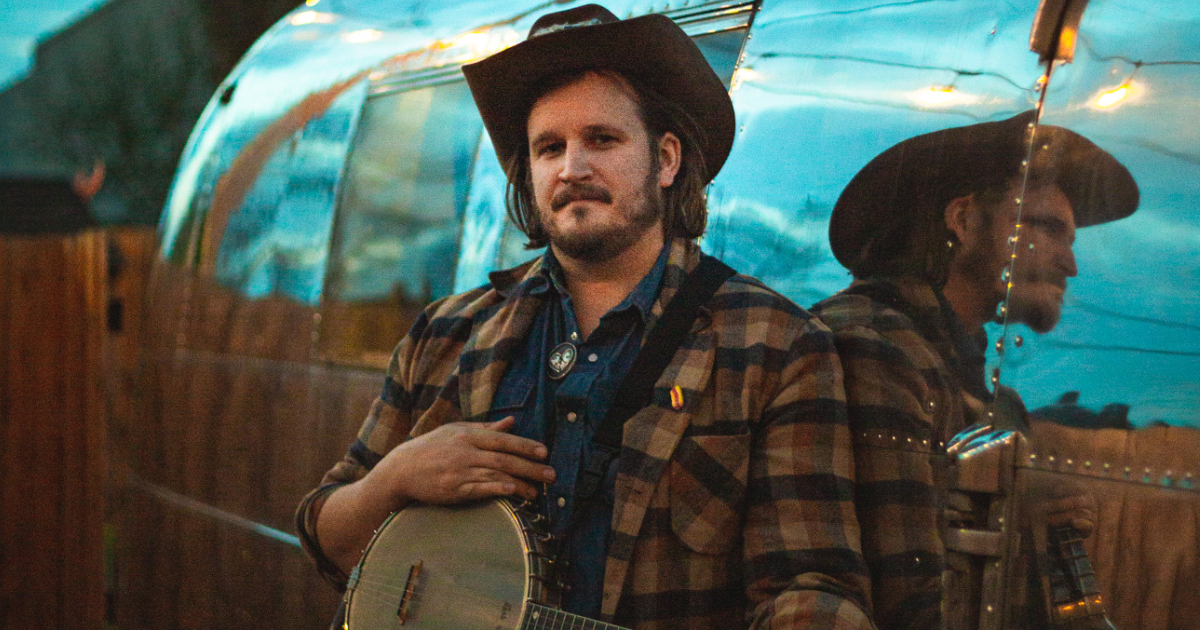
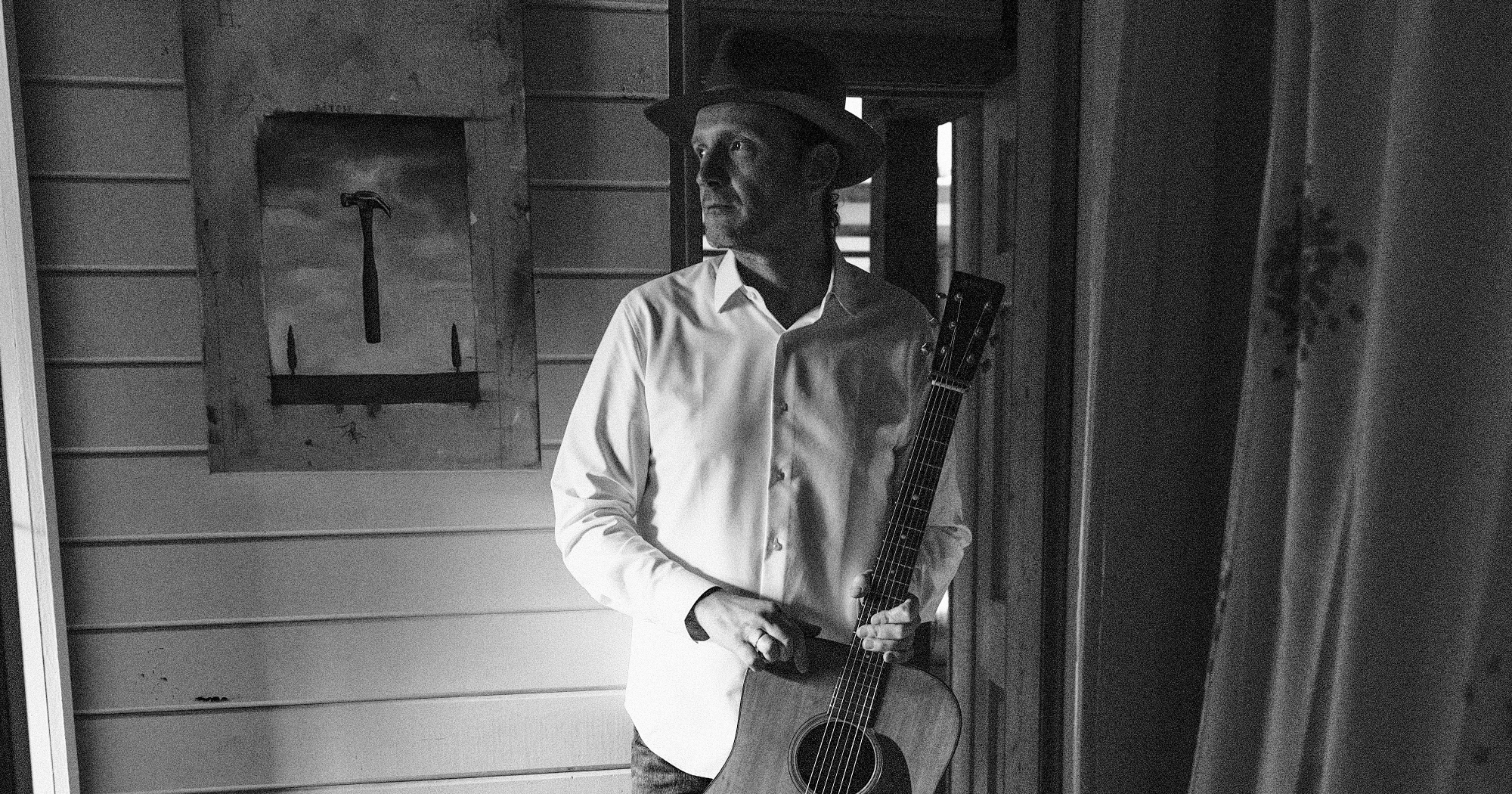
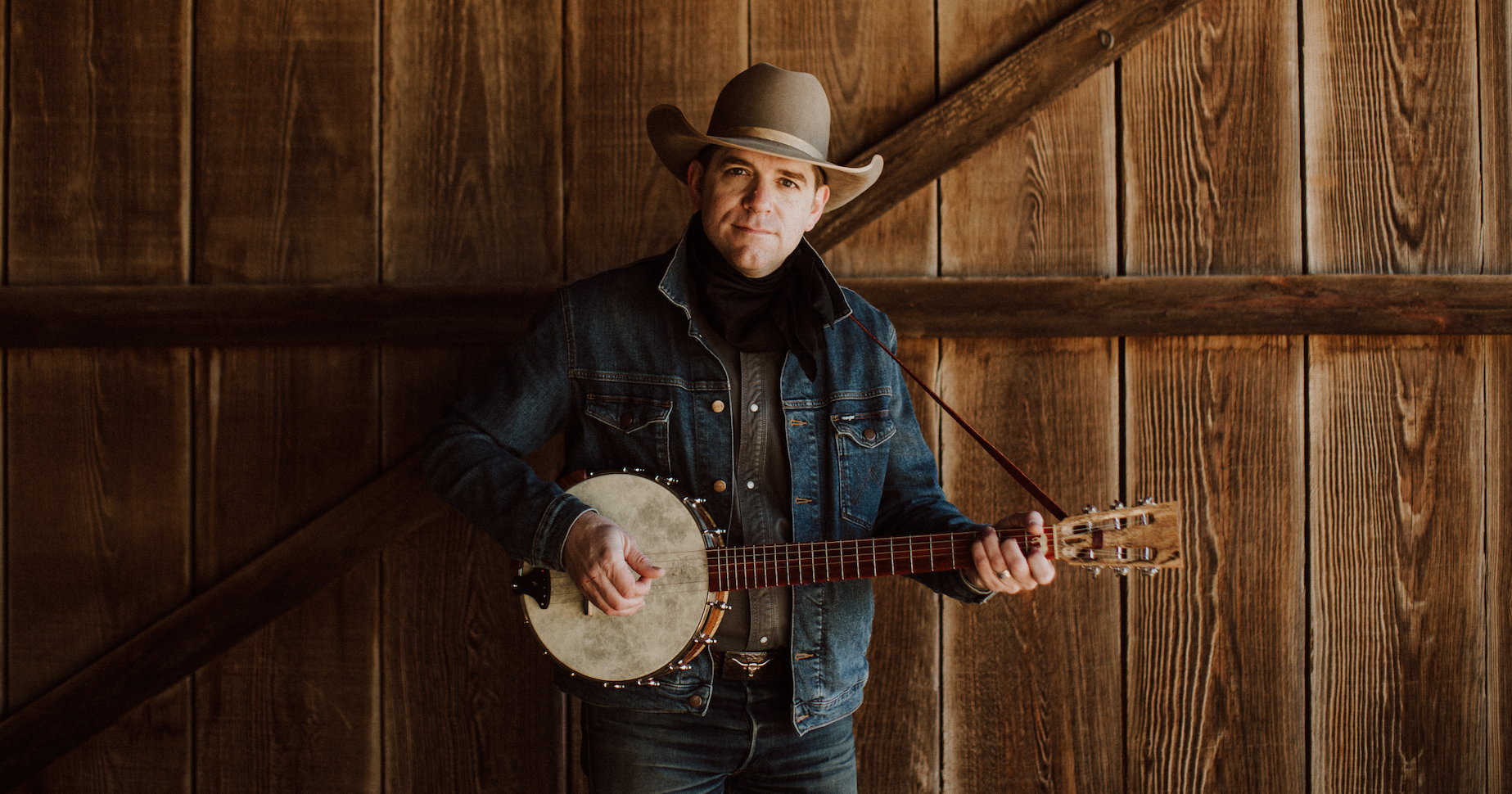
Thomm Jutz has worked with a wide cast of characters since moving to Nashville in the early 2000s – John Prine, Nanci Griffith, Todd Snider, Billy Strings, and the SteelDrivers’ Tammy Rogers. But on his latest record, Ring-A-Bellin’, he strived to capture each song with the smallest musical unit possible.

The result of the 18-track album, released April 3, is a distinctly timeless vibe that feels just as much rooted to the present day as it does the mid-1900s or Civil War era, due to its recurring themes of history, mythology, and working with your hands. From self improvement (“Sharpen Your Knife”) to using natural disaster as a metaphor for perseverance (“Holy Mother Mountain”), the mastery that comes with time (“The Hammer And The Anvil”) and becoming more grounded in yourself (“Settle Me Down”), the GRAMMY-nominated transplant from Germany waxes philosophical and takes listeners back to a period long before we walked the Earth.

According to Jutz, the approach – recording with only a small group of people all in the same room not wearing headphones – is his way of replicating the process for how musicians would’ve recorded a century ago.

“This is how I want to make music right now,” he declares. “I don’t want to make a layered record – not because there’s anything wrong with that, it’s just not what I’m feeling at the moment. It’s like saying I don’t want to use red in my paintings right now, because I’ve used enough of it already.”

During a lengthy conversation with BGS at his Belmont office on Music Row, Jutz spoke about his concept of home, how psychology and mythology informed Ring-A-Bellin’, and a companion book that takes listeners even further into the world of his 18 new songs.

You’re releasing this album with a companion book. Tell me a little about what’s inside and why you decided to adopt this approach?

Thomm Jutz: It’s more and more important to create some kind of parallel narrative to the music nowadays. Vinyl has seen a resurgence over the last couple years, but it is not practical for me to take on my one trip to Europe every year. Because of that, I wanted to create something that was still a larger format, fun to hold, and had all the liner notes present without being something so small it’s hard to read.

I’ve also always enjoyed writing and reading – especially during my last 10 years as an instructor at Belmont – so I wanted to articulate some of those thoughts as they relate to the songs on this record in a longer form. When I got to working on it I quickly realized I was in over my head with the graphic design aspect of it, so I consulted my friend Gina Meredith. I just told her what I wanted artwork for and commissioned various folks to create pieces for each song. But rather than tell them what to make, I just sent them the music and had them use the songs as their creative prompts. Because of that I don’t always see the linear connection between the songs and the graphics that were made, but that’s also my favorite part.

A lot of my thoughts on this record revolve around analytic and Jungian psychology, alchemy and things like that, which are difficult to talk about in a tiny CD booklet, so I wanted to do something that allowed for a more longform format.

Overall, this record has a timeless feel – it could be (and is) from 2026, but if I didn’t know any better I wouldn’t second guess if someone told me it was from the mid-1900s or Civil War era as well, especially songs like “Sharpen Your Knife” and “The Hammer And The Anvil.” What are your thoughts on the vibe you were able to conjure up here?

I’m a traditionalist at heart, so everything I do is always trying to bring something new to the way I perceive what came before us, whether that’s lyrically, thematically, or in the recording process – which in this case was mostly all done live. I just think there tends to be more mystery with that music. There’s new music that does that too, but it’s easier for me to find that in old music because the cultural context can be studied since it’s not as close to my own lived experience. No matter how much I listen to or read about Charley Patton, I’ll never understand what he fully experienced because I was never there.

Regarding the songs you mentioned, both talk about people working with their hands, but they’re also metaphors for working on yourself – like you are the hammer, you are the anvil, you are the iron that’s being forged. Those mantras are rooted in human thought and analytical psychology, which is something I’ve dealt with and thought about a lot over the last 15 years. Particularly in terms of how mythology and history go together, and how understood the former is.

On one hand, some people think a myth is a lie and others say a myth is a fact, but both are wrong. A myth is a metaphor and must be understood as one. These songs are an effort to create a mythological framework that is a mirror image of my development as a person and artist. If you ever want to develop as an artist, you must develop as a person first.

With so much of this record wrapped up in concepts like history, psychology, and mythology, what’s the timeline for bringing the 18 songs on it to life?

These songs came from a period of about three years, but when I started I wasn’t setting out to make a record – I just wanted to experiment with a couple things. I had a few songs that I co-wrote with my friend Adam Wright that I wanted to test out with only me singing and playing and Mark Fain on bass. And it worked out really well. As I got fascinated with that process I began looking through my catalog and noticed that the songs which spoke to me the most were all ones that formed a narrative arc.

However, it’s not an autobiographical record that says, “I was born here,” “I did this,” and “This is how it made me feel.” But more so, one that explores spiritual development. I’m not interested in autobiographical songwriting. I find it very claustrophobic how you have to spell everything out to the listener. When you do that you’re shutting them out with nothing to do, which has me opting for a more open approach. A song is only ever truly finished when the listener interprets it for themselves, not with what the person who wrote it intended.

One of the songs on Ring-A-Bellin’ that is tied to more recent events is “Holy Mother Mountain,” which was inspired by the fallout of Hurricane Helene, specifically in Western North Carolina. But it’s also a metaphor for overcoming adversity. Care to explain?

That song is a good example of how writing with someone else – in this case Mando Saenz – can profoundly shape an idea. I remember Helene happening and having this line “Holy Mother Mountain” appear to me out of nowhere. From then on I couldn’t stop thinking about it, so I brought it to a writing session with him and said I didn’t know what to do with it. Then the co-writing dance ensued, with him taking the lead, followed by me for a bit, until it started becoming much clearer that there was no way to move forward without it being about Hurricane Helene somehow.

While it was inspired by that, the song is also about overcoming adversity and understanding that it’s going to happen again. Just because you live through Helene doesn’t mean there’s not another storm coming right behind it. If that storm showed us anything, it’s that perceived climate safety in Appalachia is not true. Also, “mother” and “mountain” are not just a nice alliteration, but there’s also a feminine quality about a mountain. An inverted mountain is a valley – or a place you can seek refuge in – and if you go on top of a mountain, you might find yourself closer to some kind of spiritual awareness.

The song is much more a collection of images that relate to the archetypal images of mother and mountain. Maybe even the word “holy” in the title has something to do with the fact of how little modernity treats nature with respect. Maybe that’s what we need to do – not bring offerings, but bring out attention to it instead of riding around and abusing it like crazy.

On “Too Many Walls” you sing about the idea of home. Given that you moved to the states 25 years ago from Germany, what is “home” to you?

Home and time are two of the biggest themes we write about, and it’s longing that connects the two – longing for home, longing to belong somewhere, longing to live in a different period of time, longing to get over something. Over the last couple years, I’ve also started thinking more about how strange a thing it is to build a house, because you’re just enclosing space that’s been there all along. You’re building and calling it something that wasn’t there before, but the land was always there. It’s a strange construct, and at the same time we need shelter.

From an early age I didn’t feel at home where I was because I longed for a place where music was part of the everyday lived experience. But in Germany after 1945 that was completely out of the picture, because the Nazi regime had completely and absurdly abused any sense of folklore. Since I was longing for an environment where people played music, I went to Ireland for the first time with my wife when I was 18 since it was much closer than coming [to the United States], which we couldn’t afford at the time. I was amazed by the music coming out of the pubs there – it felt so natural, like it was rising out of the Earth.

That fascination carried over into my love of American roots music. In that sense, “home” is where I feel connected to a place through music since that’s my main way of expressing myself. Additionally, southwestern Appalachia and the Black Forest that I’m from in Germany can look astonishingly similar sometimes, so when I go back to visit my parents I occasionally feel like I’m navigating the mountains around Johnson City, [Tennessee]. When I’m in Johnson City I sometimes imagine I’m back in Germany. But Appalachia has more importance to me now because it’s where I live and long to be. If it weren’t for all the writing I do in Nashville and my work at Belmont, I’d be in Appalachia fulltime, because it just speaks to me. When I haven’t been in a while I can start feeling something deep inside me – it’s not a heaviness, but a feeling of “I just really wanna fucking go.” [Laughs]

What has bringing this record to life taught you about yourself?

It’s taught me that I know nothing about graphic design and should always let someone else handle that instead. [Laughs]

In all seriousness, it has taught me that while I don’t consider myself a great singer, I can still enjoy the way I deliver a song if I do it correctly. It’s also taught me that while I have great deficiencies as a guitar player, I do enjoy the way I play guitar and this record, where I’m keenly aware of everything wrong with my playing. Even Tony Rice said that about his playing.

It’s not a sense of having completed my journey as a guitar player, but quite the opposite. It’s more like I’m aware of what’s missing. It’s also taught me that staying on the path of creating and writing a lot. You have to be in it for the long game in today’s environment and be doing it for the right reasons or you’ll run yourself ragged. I already understood that a little bit, but now I understand it even better. Maybe that’s what it’s all about – gaining a little awareness and moving on.


Photo Credit: Don VanCleave
Andy Hedges’ Favorite Cowboy Poems Turned Into Songs

Since the very beginning of the cowboy genre, cowboy songs and cowboy poetry have been closely related. Many of the best-known traditional cowboy songs started out as poems and many cowboys have recited song lyrics as poetry. The first man to collect cowboy songs was a New York-bred cowpuncher named Jack Thorp. As Thorp observed in his book, Pardner of the Wind: “Cowboy songs were always sung by one person, never by a group. I never did hear a cowboy with a real good voice; if he had one to start with, he always lost it bawling at cattle, or sleeping out in the open, or tellin’ the judge that he didn’t steal that horse.”

That old-time cowboy singing was mostly done a cappella, as there were not many guitars to be found on the trail drives or in the cow camps. It also seems that there was a fine line between “singing” and “reciting.”

This tradition of setting cowboy poems to music has continued to the present day. My old friend and mentor Don Edwards was master of this. He taught me that if you find an old poem or a set of lyrics with no music, then you just make up your own tune and make your own song out of it. That’s part of the cowboy songster tradition. – Andy Hedges

“The Strawberry Roan” – Harry Jackson

This is the most famous of all bronc ridin’ songs and one of the most famous of all cowboy songs. It was originally written as a poem by Curley Fletcher in 1914. The original title was “The Outlaw Broncho.” Rumor has it that Fletcher wrote the poem about a bronc ride made by the legendary cowboy artist and writer Will James.

Even though the poem became one of the most recorded cowboy songs of all time, Curley Fletcher never made a dime off of it due to unscrupulous copyrighters and publishers. This recording by Harry Jackson is a great example of the old-time unaccompanied style of cowboy singing.

“Sierry Petes” – Gail Steiger

“Sierry Petes” was written as a poem by Arizona cowboy Gail Gardner in 1917. It’s been set to music many times and is better known as “Tying Knots in the Devil’s Tail.” Many folks have failed to give proper credit to Gail Gardner and have also failed to get the words right. This is the original version recited by Gail Gardner’s grandson, Gail Steiger.

“Sierra Peaks” – Ian Tyson

A fun version by the great Ian Tyson with a corrupted title, some incorrect words, and a modern beat. Ian Tyson revitalized cowboy music in the 1980s with both his versions of traditional cowboy songs and his original compositions.

“The Dixie Cowboy” – Taylor’s Kentucky Boys

Montana cowboy D.J. O’Malley published a poem entitled “After the Roundup” in the Miles City Stock Grower’s Journal in 1893. It became known as “When the Work’s All Done this Fall” and a 1925 recording by Carl T. Sprague sold over 900,000 copies. I’ve always loved this obscure version by Taylor’s Kentucky Boys with an alternate melody.

“The Long Road West” – Don Edwards

Henry Herbert Knibbs was a poet, novelist, hobo, and owner of a violin repair shop. He never earned a dime as a working cowboy, but his poetry entered the oral tradition of working cowboys. “The Long Road West” speaks to the kinship between cowboys, hobos, and sailors. It was set to music by the great Don Edwards.

“The Old Cowman” – Andy Hedges & Brenn Hill

In his book Classic Cowboy Songs, Don Edwards tells the story of how he fell asleep reciting this poem one night and woke with the melody in his head. This song is more relevant now than when it was written, over 100 years ago. I recorded this version with my pard Brenn Hill for my 2023 album of cowboy duets entitled Roll On, Cowboys.

“Spanish is the Lovin’ Tongue” – Michael Martin Murphey

Originally written as a poem entitled “A Border Affair” by Charles Badger Clark. I think that Michael Martin Murphey plays the definitive version of this song. And it was also the first song that Murph sang onstage at the National Cowboy Poetry Gathering in Elko, Nevada, when he showed up at one of the early gatherings. It always reminds me of All the Pretty Horses by Cormac McCarthy.

“The Westerner” – Andy Hedges

I found the “The Westerner” in Charles Badger Clark’s 1915 book Sun & Saddle Leather. The poem speaks to the values of folks who live in the rural West. I hope that my melody does it justice. It is the title track of my new album.

“Shadow on the Cutbank” – Trinity Seely

This is a modern-day poem set to music – the poem by horseman, cowboy, and poet Joel Nelson, and the melody by horsewoman and singer-songwriter Trinity Seely. The poem is Joel Nelson’s answer to the historians who have written the cowboy off as a vanishing breed.

“Hitting the Trail Tonight” – Buck Ramsey

“Hittin’ the Trail Tonight” was a signature song for the late great Texas cowboy singer and poet Buck Ramsey. Originally written as a poem by classic cowpuncher poet Bruce Kiskaddon, folklorist and musician Hal Cannon set this one to music sometime in the mid-1980s. I asked Hal about this piece and he told me that he “always felt there is something about Kiskaddon’s words that feel good in the mouth as they come out.” This one will have you singin’ along.


Photo Credit: Gabrielle Watson

Courtney Marie Andrews Doesn’t Fear Vulnerability

Courtney Marie Andrews’ story begins in Phoenix, Arizona. An only child raised by her mother, she found solace and an outlet for her creativity and imagination in music. She planted her music roots in a self-described “feminist punk band” and began touring while in her teens. Along the way, she recorded a number of albums – best known are Honest Life (2016), GRAMMY-nominated Old Flowers (2020), and Loose Future (2022) – lived in a number of cities, and worked and toured with a number of musicians, including rock band Jimmy Eat World.

Andrews eventually made her way to Nashville, where she now resides. There, she creates music and other art, fueling her soul and inspiration with long walks and her love of animals, bonding with friends’ dogs, and feeding an assortment of “porch animals,” mostly cats, who take up residence outside her door.

In addition to music, Andrews expresses herself through painting and poetry. She has published two collections: 2021’s Old Monarch (2021) and the recent Love Is a Dog That Bites When It’s Scared. Her music, writings, and artwork explore a broad scope of emotions and experiences: loss, grief, fearless love, deep darkness, pure joy, and acceptance of the entire spectrum.

These outpourings are at the essence of her new release, Valentine (out January 16 via Thirty Tigers). Written in the throes of anticipatory grief, the album plummets into the vortex of her trajectory. While the message is raw, the recording is anything but. Valentine is an unfiltered look into Andrews’ heart, filled with waves of sounds and layers of instrumentation.

Among the numerous instruments she plays on Valentine, Andrews is featured on an assortment of guitars and basses, including a 1973 Martin D-28, 1968 Gibson B-45 12-string, 1970s high-strung Japanese Epiphone, Gibson J-45, Epiphone Casino, 1972 Fender P-Bass, 1960s Kay K5915 bass, and 1960s Teisco six-string bass. Longtime friend and colleague Jerry Bernhardt joins her on various instruments, with drummer Chris Bear rounding out the trio. The album was recorded by Michael Harris at Valentine Recording Studios in Los Angeles and produced by Bernhardt and Andrews.

BGS reached Andrews via Zoom for an Artist of the Month conversation.

Has Nashville changed you as a songwriter?

Courtney Marie Andrews: I thought it would deeply shift everything for me, but if anything, it made me want to do other things as well, maybe subconsciously. I started painting and focusing on poetry. But that core sense of self, that songwriter self, will always be with me wherever I go. It’s hard to say how it has shaped me until I’m looking back on my life 20, 30, 40 years from now.

But I will say the community I’ve found here is profound. I’m a Western girl. I’ve lived in Arizona and Seattle up until pretty much my 30s, and I didn’t realize how lonely the West can be. I think that’s apparent in my early work as a songwriter. That subject is throughout the work. When I moved here, I was almost overwhelmed by how much people wanted to hang out. It took a while to adjust and now I can’t imagine it any other way, not having that community to feel into and understand this work, because it is a strange career. So I think more [that] it has affected me personally, but I’ve always continued to write and been on this journey on my own and in my own time.

This is a stripped-down album – only three musicians, including you, and one of them is also your co-producer. Did you know, when the songs were written, that this is how it needed to be done?

I completely funded this album on my own, so if I’m being frank, it was an economical choice. Originally, we would have loved to have a band, but in hindsight, ultimately it created the record it created and I wouldn’t have had it any other way. There’s some power to it being a very condensed group of people, because the focus is a little bit more zoned in, and it becomes a vibe if it’s coming from a few core people, rather than everybody adding their stroke to what you’re doing – which I think is also valid. But looking back, it was probably the best thing we could have done, having Jerry and I playing all the instruments and Chris Bear, of course, on drums.

You played a number of guitars on Valentine. Do the songs determine the guitar, or does the guitar sometimes direct the song?

The songs ultimately lead the way on feeling and vibe. Jerry and I wanted to layer the record. There are a lot of different layers of guitars. We would varispeed one guitar up, so it’s super-high, and then we’d varispeed one guitar lower, so it’s super-low, to create the rounder sound, especially if you’re listening in headphones or on a high-definition speaker system.

But it’s definitely song-driven, whatever the feeling. “Best Friend” is just my guitar and Jerry’s twelve-string. We didn’t go much further than that, because the song was meant to be a bit sparser as far as the depth goes.

“Everyone Wants To Feel Like You Do” is about a certain type of misogyny where it’s, “I do whatever I want and I don’t care about the consequences, nor am I held accountable for the consequences.” The song was written with that feeling, and I thought it would be funny if I played guitar like that, where I didn’t care, so I over-distorted my guitar and played as crazy as I could to assert my power.

How do songwriting, poetry, and painting each fulfill a different side of your artistry and emotions? Is there ever some cross-pollinating?

I wanted to tell the same story with a different perspective, so there is cross-pollinating in terms of the source of the material, where it’s coming from, where I’m at in my life, whatever darkness or lightness I feel. It all sources from the same well of emotion and experience. But there are different ways of telling the same story. I found that when I was songwriting exclusively, I would write the same song over and over again. Whereas if I take a step back, do a different medium, and come back to songwriting, I feel fresher.

Ultimately and forever, I’ll always identify and feel the deepest connection with songwriting. That’s the first thing I fell in love with. It’s the thing I understand the most. But the mystery of these other mediums has really flourished.

There’s a natural through-line between poetry and lyrics. What about painting? Do lyrics sometimes inspire a painting? Does something you create on canvas ever become words in one of the other mediums?

There’s not a lot of crossover. I don’t look at painting like I would look at a page or a song. Painting is, for me, a place to describe emotions that are unexplainable. That’s why painting is so cool. It’s almost equivalent to jazz; it’s more of a feeling that you can’t describe. That was enticing to me. To express myself as a word person who ultimately values words so much, it was important to think outside of the box a little bit. Painting allows that. To not be confined by words is really interesting.

Tell us about your recent Artist in Residence at the Iowa City Songwriters Festival. You performed and did a reading from your new book, but what does “artist in residence” mean at this particular event?

Because Iowa City is a UNESCO World Heritage City of Literature, there’s a heavy college-funded element. I’m not sure if that was their direct funding, but they definitely have more of a collegiate approach to an artist in residence. I’ve done some residencies where they don’t want anything from you. They just say, “Come up and write whatever you want. We don’t care.” But this one was definitely a bit more mentorship-driven. I led a class, a songwriting workshop. I also had one-on-one mentorships with young songwriters, people who are just getting started. They had a packed schedule for me, but it was so lovely.

I think their ultimate goal is to prop up songwriting among the other literature of the world, having songwriting classes in college, and having it there with poetry, fiction, nonfiction, memoirs, memoir writing, and all that. I think that’s ultimately what they’re trying to attain with the residency program. So it was great.

I’ve found that I really love to talk about songwriting in that way. I think that, in our culture, it’s a dying thing, at least from where I’m sitting, to seek out opportunities to learn from elders, from people who’ve been doing it a long time. The more we can do that in our culture, the better off we’ll be. It’s an incredible festival, and I would highly recommend people going. The people who run it are just wonderful.

When you lead workshops and do one-on-one mentoring, is it as much a learning experience for you as it is a teaching experience?

Absolutely. I think to teach is to be a constant student. The moment you feel like you’ve figured it all out … I don’t know if that’s a good thing. Even as I speak about songwriting, I say things that open doors all the time to myself. It’s good to be endlessly curious.

Do you think being an only child contributes to your storytelling ability through songwriting and poetry? Living inside your head, escaping into your own head, in a way that might have been different if you had been surrounded by siblings?

Oh yeah, absolutely. Because I was a latchkey kid, I spent a lot of time alone. If I didn’t have a friend to play with, I had to go into the inner landscape of my mind. That was my way of communicating in a deeper way that I couldn’t quite get in my home life if my mom wasn’t home. I can attribute a lot of my childhood to that. I was a deeply imaginative kid and would create stories all the time. So I think the loneliness also fueled what I do now.

Do you draw from those past emotions when expressing what you’re currently experiencing?

How it manifests is that it’s like a period of reckoning when I’m writing songs. I’m generally alone. I find it very hard to write if I know somebody is even in the next room. I’ve had weird moments in my life where I wrote at soundcheck and stuff, but when I listen back to those things that I’ve written around people, it’s not as dialed in. So when I’m writing, I’m alone and reckoning with the life that I’m leading, or the life of others. It feels like this very quiet thing that needs to happen.

Are you an old-school pen-and-paper writer or have you gone the way of voice memos?

I do both. I exclusively use a green book to write in. It doesn’t matter what color green. They all are green, though, green-colored notebooks, generally the Moleskine variety or that look. I have plenty of them in a pile. [And] I love Micron, the ballpoint art pens. I really don’t like the standard DMV pen. I’m a little bit bougie when it comes to my pens. I like the flow of a Micron. I write and then voice memo. Generally, once I’m done writing a song, I try and always get it down in its unproduced form. I think it’s important to have that, and the phone happens to be the easiest way.

Is playing guitar, just playing, as much a part of songwriting as writing lyrics?

Oh, yeah. I love the guitar. I love open tunings. I love acoustic guitar music, Hawaiian slack key, and classical Spanish-style guitar on a nylon. I love to play and try and emulate that style. And so in certain works, it’s the first thing that happens. There’s many ways to come to a song, but one of them is [to] play a chord progression I like and sing gibberish, and that sometimes leads to a song. In that case, absolutely I need the guitar. But yeah, the instrument can definitely lead the way. It just depends.

When you spoke earlier about adapting to the Nashville community, it brought up the thought that growing up as “an only” maybe affects our social skills to a degree. It can make community something new, as opposed to something you’re used to having around you.

Yeah. I feel that. I have a hard time with small talk for this reason. I want to go immediately for the jugular, as far as intense conversations. I go from zero to a hundred. It’s really hard for me to be like, “Hey, how are you doing?” I feel like such an actor in those circumstances. Of course I’ve learned to do it by way of being a musician – you have to talk to new people every day. But small talk doesn’t do it for me. I have a hard time going in a simple, surface level.

In the bio accompanying this album, you said, “I was in one of the darkest periods of my life and songs were the only way I could reckon with it. I felt cursed and the only mental cure felt like songwriting and painting.” Have you always felt that darkness?

Obviously, as a teenager, I went through a pretty wild part of my life where I felt dark, but I think I actually denied my darkness for a very long time. I lived in a haze of denial and hope, which is a beautiful thing. It can do wonderful things for your mental health. But you also can’t really grow if you’re living in that state.

When I was younger, especially in my early twenties, I always had this hope – “Oh, one day things are going to change.” That denial, that hope, kept me in this holding place, which for a time was really nice, and as a matter of defense and self-preservation, I stayed there for a long time. It wasn’t until I started therapy that I realized I always had this underlying darkness. When I had that, we worked on that, and real things started to happen. Things in life that are so hard that happen to all of us – it became deeply dark and profound to experience that in a more awake state.

How did that help with writing this album?

During a lot of writing this, I was caretaking for my family member who was terminal. If you’ve ever been in that situation, it is all-consuming. The only way I could turn my brain off from that was to write. It wasn’t “I need to write an album.” It was “I need to get back to myself for a moment.” I wouldn’t say it was a conscious decision. It was just I know how I am, and I know that songs are my only way of regulating in these crazy times.

You once said you felt embarrassed by the vulnerability of your songwriting. Where do you draw the line, or do you draw one, between what needs to be said for yourself and what needs to be said for listeners for whom you are the voice? How do you do this and protect your mental health when performing these songs every night?

I’ve always said that once the song is written, it’s not mine. It also transforms for me as I sing it. There are songs I wrote fifteen years ago that I still perform, that have taken on completely new meaning and feel different to me when I sing them. I honestly can’t remember the headspace I was in when I wrote them, or the origin of them, or who I was thinking about, to a strong degree, but I feel differently about them.

As far as what needs to be said, ultimately I try to relate to people, or first myself, and then you put the song out and it becomes a different thing. I try, in an artistic space, to be as true to myself as possible. I try not to put up any walls in that space. As far as my life where I’m not playing music, that’s a different thing. But music is a safe space to say whatever the hell I want to say. That’s the reason it’s such a powerful thing. It’s a safe place for me to communicate. Whatever walls are up in a song are walls that I have up with myself. That’s always very apparent when you write a song. It’s not quite clicking and you’re like, “I’ve got some walls up to my subconscious, clearly.” So the extent to which the boundaries, the walls, are up is truly only the stage at which my heart is at in that moment.

Did that happen with Valentine – the walls, maybe the fear of the vulnerability? It’s deeply personal and powerful, going deeper and deeper into those emotions as your journey is sequenced.

I hate to say it, because I don’t want to sound trite, but making albums, making bodies of work like this, fear is the last thing on my mind. Obviously, natural fears come up: Is it going to be what I wanted, what I envisioned in my dreams? But as far as songwriting and being vulnerable in a song, that’s not the fear. In fact, if I got very close to the heart in a song, it’s generally the ones that I’m like, “That’s a good one. I got there. I got to the essence of this thing I was feeling.”

Being vulnerable in life can be really hard in my personal life, in some ways, and I think that is more where the fear is. But, for whatever reason, the way I direct it is okay in a song, and I’ve made up my mind for that to be true. I don’t know why; I guess it just makes sense to me. Human emotion makes the most sense to me in the backdrop of music.

As far as sequencing, Jerry and I argued quite deeply about the sequencing, but ultimately it did go to a place where once we got the sequence, it was undeniable. Side A and Side B are completely different frames of minds. Side A, you’re fighting for love and you’re desperate. Side B is a resignation – this is how it is, this is how it’s always been, and this is my childhood. By the end, in “Hangman,” you’re just “This is how it is, and you can fight for it or you can walk away.” So the sequencing was purposeful. I wanted it to be a journey. I think records should be like that. They shouldn’t be all one color or palette the whole way through.


Explore more of our Artist of the Month content featuring Courtney Marie Andrews here.

Photo Credit: Wyndham Garnett

Finding Lucinda: Episode 3

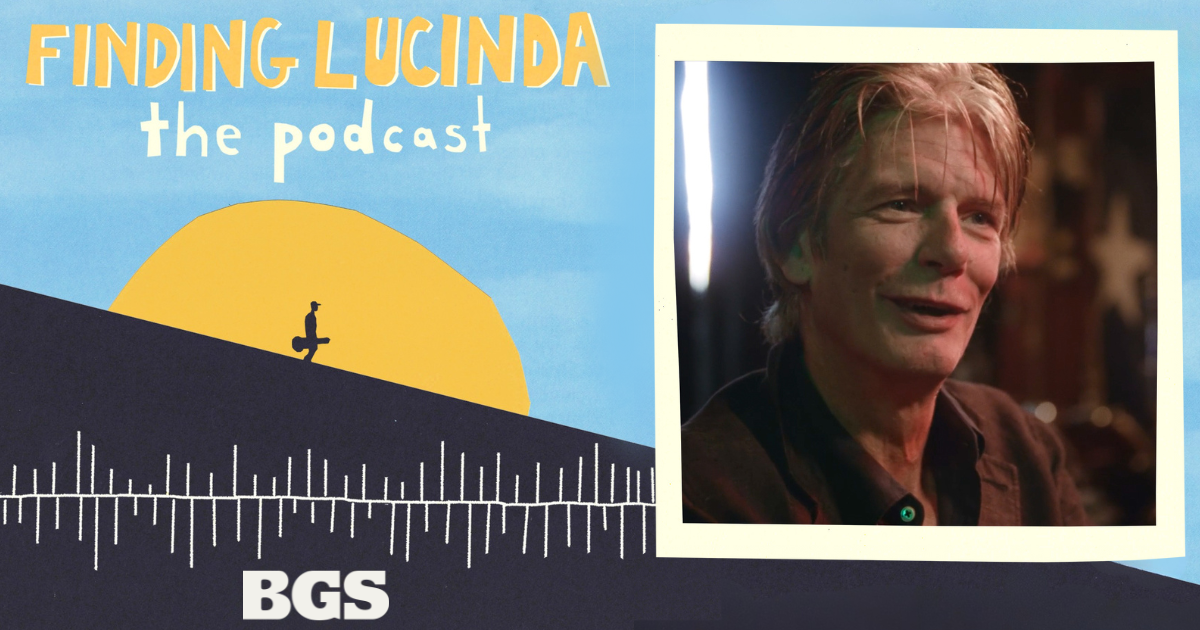
Ismay visits cornerstone music venue The Hole in the Wall in Austin to interview Charlie Sexton, the producer and songwriter who’s best known as a guitarist for Bob Dylan. They discuss Charlie and Lucinda’s first gig together in 1979 when he was just a kid. Charlie shares insights into Lucinda’s remarkable songwriting, as well as the emotional struggles musicians face with self-doubt.

LISTEN: APPLE • SPOTIFY • AMAZON • MP3

Produced in partnership with BGS and distributed through the BGS Podcast Network, Finding Lucinda expands on the themes of Ismay’s eponymous documentary film, exploring artistic influence, creative resilience, and the impact of Williams’ music. New episodes are released twice a month. Listen right here on BGS or wherever you get podcasts.

Finding Lucinda, the documentary film that inspired and instigated the podcast, is slated for release in the fall. Both the film and podcast showcase never-before-heard archival material, intimate conversations, and a visual journey through the literal and figurative landscapes that molded Lucinda’s songwriting.

Credits:
Produced and mixed by Avery Hellman for Neanderthal Records, LLC.
Music by Ismay.
“Sundays” written by Lucinda Williams.
Artwork by Avery Hellman.
Music Supervisor: Jonathan McHugh
Austin, Texas recordings at The Hole in the Wall.
Sound recordist: Rodrigo Nino
Producer: Liz McBee
Director: Joel Fendelman
Co-Director: Rose Bush
Special thanks to: Mick Hellman, Chuck Prophet, Don Fierro, Jacqueline Sabec, Rosemary Carroll, Lucinda Williams & Tom Overby.


Find more information on Finding Lucinda here. Find our full Finding Lucinda episode archive here.

Finding Lucinda: Episode 2

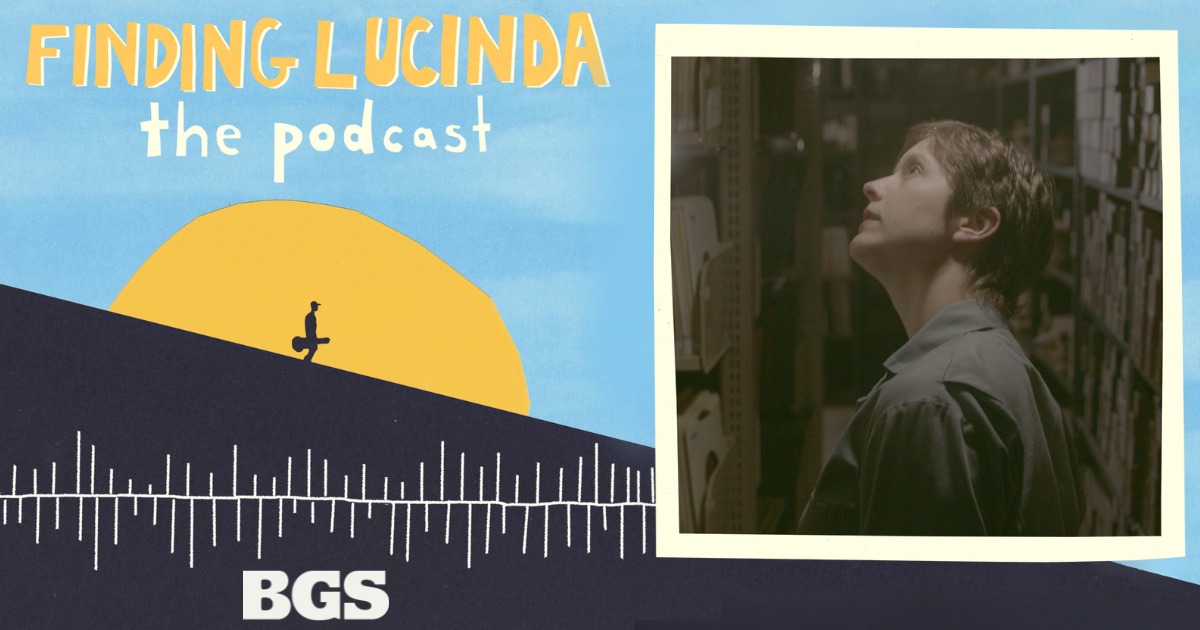
Ismay arrives in Austin, Texas to dig through the Collections Deposit Library at the University of Texas in order to understand the life of Lucinda Williams’ father, Miller. A poet and teacher, Miller Williams overcame setbacks to become a prominent writer. Ismay discovers his personal writings, letters, and photographs, highlighting his mentorship and the artistic community that shaped Lucinda’s career.

LISTEN: APPLE • SPOTIFY • AMAZON • MP3

Produced in partnership with BGS and distributed through the BGS Podcast Network, Finding Lucinda expands on the themes of Ismay’s eponymous documentary film, exploring artistic influence, creative resilience, and the impact of Williams’ music. New episodes are released twice a month. Listen right here on BGS or wherever you get podcasts.

Finding Lucinda, the documentary film that inspired and instigated the podcast, is slated for release in the fall. Both the film and podcast showcase never-before-heard archival material, intimate conversations, and a visual journey through the literal and figurative landscapes that molded Lucinda’s songwriting.

Credits:
Produced and mixed by Avery Hellman for Neanderthal Records, LLC.
Music by Ismay.
Artwork by Avery Hellman.
With recordings from The Collections Deposit Library at UT Austin, and records from The Harry Ransom Center.
Sound recordist: Rodrigo Nino
Producer: Liz McBee
Director: Joel Fendelman
Co-Director: Rose Bush
“The Caterpillar” and “Of History and Hope” appear courtesy of Rebecca Jordan Williams.
Special thanks to: Mick Hellman, Chuck Prophet, Jonathan McHugh, Jacqueline Sabec, Lucinda Williams, and Tom Overby.


Find more information on Finding Lucinda here. Find our full Finding Lucinda episode archive here.

Basic Folk: Loudon Wainwright III

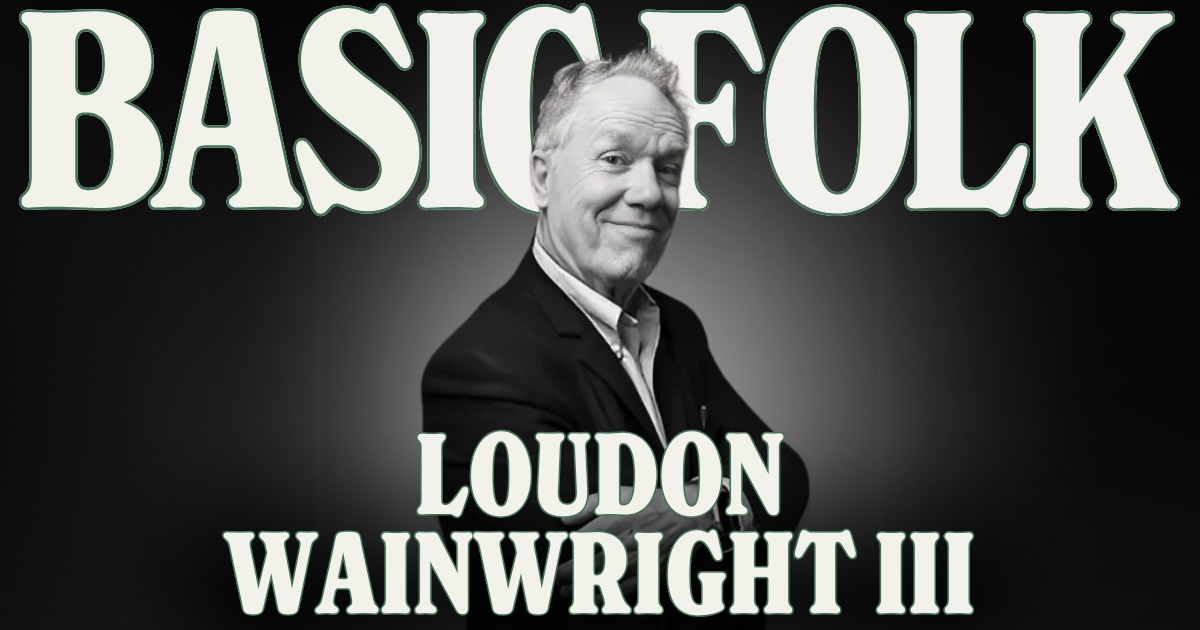
The legendary Loudon Wainwright III, whose career has spanned over five decades, is known for his deeply personal songwriting and sharp wit – and oversharing. The patriarch of the Wainwright folk dynasty (which includes Rufus, Martha, their late mother Kate McGarrigle, as well as Lucy and her mother Suzzy Roche), Loudon reflects on the balance between oversharing and maintaining privacy in his music in this episode of Basic Folk. He candidly discusses the lines he draws when writing about family and how his experiences with grief have shaped his art. I’m proud to say that I think we found a line he would not cross in our conversation! Listen in to hear history in the making.

LISTEN: APPLE • SPOTIFY • AMAZON • MP3

We also discuss his latest live album, Loudon Live in London, and his unique ability to unsettle and surprise his listeners during performances. We talk about his late father and namesake, Loudon Wainwright Jr., the famous writer for LIFE Magazine, who is present in everything LW3 does. We dive into his early days, including insights on his debut album thanks to a recent essay by Morrissey that highlights its significance. Moz points out that Wainwright has “the pep and readiness of someone who knows we will all soon be skeletons.”

After reading Loudon’s very detailed memoir, Liner Notes, I had to ask him about his relationship to memory and also his reputation for memory. Loudon also touches on his acting career, revealing how roles in popular films – especially Big Fish and Knocked Up – have introduced him to new audiences. Elsewhere he reveals that he was at the 1965 Newport Folk Festival where Dylan went electric and shares his memories of that fateful day.


Photo Credit: Lloyd Bishop

Willi Carlisle Is a Lyric Poet In the Most Classical Sense

The first time I saw Willi Carlisle was in Buffalo, New York, in the tiny basement of an old protestant church that Ani DiFranco bought. There couldn’t have been more than thirty or so people there – a queer couple or two holding hands, a mom and a dad plus their kid, a cluster of 20-year-olds too hip for their own good. I see twenty or so shows a year – neighborhood guitar pulls, little club gigs, shows in big theaters, and every so often an arena. Willi was world class, one of the best I’ve seen. He told stories in between the songs, tracing an anti-Vietnam song well into the 17th century, or talking about Mexican ballads and the power of the concertina, or about how a hometown story is both archetypal and plain, universal and contained to a very specific time and place.

As the Buffalo concert suggested, Carlisle is at his best when limning complex networks of historical figures, news, what is called “traditional music,” contemporary poetics, and the natural world. He is a lyric poet, in the most classical sense.

This fact could be seen especially in a track from his new album Critterland, “Two-Headed Lamb.” It’s an adaptation of a Laura Gilpin poem, which Carlisle translates and extends. I’ve always thought that the poem was a bit too glib, a bit too self-assured of its own moral ending.

Carlisle talks about the whole cycle of growth, how it is not a singular freak birth in a generic field, but how the freakish quality of a two-headed calf and the weirdness of that birth functions within a cycle: The farmer who finds it, persimmons growing out of season, a coyote picking at the corpse of a ewe, even “robins singing in an old growth tree.” As a creator, the song becomes an act of interpretation – a poem becomes a song, a song not quite a cover, a critique of a poem that might not work, but the working of the poem depends on an audience.

When asked about the poem, Carlisle responds:

As I explored Gilpin’s poem with friends and strangers, it’s been no surprise that “Two-Headed Calf” seems well-known in both rural and trans communities and their significant cross-section. And why not? It’s a poem about a creature too beautiful for this world, [whose] magisterial dimorphism and tragic death conjures real-world magic. Someone born feeling as if they have no gender, two genders, the wrong gender, might feel this magic themselves. So would someone who’s pulled an ailing calf from the womb of their beloved milk cow with a rope or their bare hands.

That’s a generous reading, a reading done in community – one that expands what an audience could mean, one that is as cyclical and as wide as open as could be. It’s generous to Gilpin, as well.

This whole act of semi-translation also explains the concept of Critterland, which Carlisle describes in our wide ranging conversation as a place where “…we have to dismantle the house, make something different. I think what we inherit (our bodies, songs, tools, houses) makes us the living proof of the suffering of our forebears. We’ve got their noses, their colonial holdings, their drinking problems.”

In a culture, we take and hold onto what is useful for us and the results of that taking we try to build more carefully.

In the list of animals that Willi names in the title track – “Yeah, the sparrow on the wing taught mе to find you/ And the opossum knows his own mind more than I do” – there is hope in being able to craft houses and buildings like the scuttling of everyday creatures. If the possum and the sparrow can (and may I add, the racoon, the crow, the squirrel, every city or country creature) then we can, too. Which is why the best of Carlisle’s songs are ones which mention small spaces – a mother singing “In the Sweet By and By” in the kitchen, or the devastating song “The Arrangements,” with its complex, sometimes compassionate, sometimes ruthless processing of a father who drank too much and loved too little, or in “The Great Depression,” a verse that limns Carlisle’s ancestors:

From the needle-prickin’ mothers who were never taught to read
To the barefoot hungry soldiers that enlisted at 16
Oh in my dumb debasement, I still find great relief
That on the lam and on the dole they counted themselves free…

Those are local examples, small, and there is some argument within them. Like some great folk singers, Carlisle’s sense of local spaces, his skill at deep readings of landscape, is a primary example of his excellence. I think of him as an Arkansas singer, but he has to earn a living – part of that possum life. Carlisle travels constantly, touring half the year or more to make enough money to be somewhere he feels home.

He explains it thusly: “One of the hard facts about touring so hard is that I haven’t really lived in Arkansas for more than a few months a year in six or seven years now. Hell, currently I’m living in southwest Missouri, just over the border. I don’t feel excluded from my life back home, usually, when I’m on tour. “

It’s another network, a cycle of creation, and intimacy. In a song called “Higher Lonesome,” is there something monastic there? Setting up lonely feelings to a higher power? Is he quoting the 1950s Texas technicolor film? Is it a song about drinking?

It’s all of those things and none of those things. He mentions his community and where they are in the world:

…By the time the ride is over, I’m sure I’ll ask to ride again
See the snowfall in Wyoming, strung out on Johno’s coke
Keep a mailbox in Nebraska, so I know the Lord knows
She can write a letter once a year and say that we’re still close
I can put my cents on Benjamin hear the songs he wrote…

The privacy of this song marks the depth and complexity of another, the last work on the record “The Money Grows On Trees.” It’s a 10-minute recitation, a story told in intense, Appalachian Gothic detail, about corruption and a young drug dealer gone wrong.

If any texts could be considered lonely, even in the midst of Carlisle’s careful noting of connections, these are. For example, when in another song, he sings to a “Jaybird” – another of those scuttering creatures, that eats off what is left. He says to the jaybird, that “he’s doing just fine, his head is a wreck and his chest is on fire.” This line, with neither denial nor irony, is a kind of Beckettian notice about continuing on despite the ongoing, struggling moments.

The whole album speaks of a (dis)regulation of feelings, slipping into the natural ebbs and flows of the titular Critterland so the work can continue. In the album, and in his live shows, a cobbling together happens as a kind of hope, but a hard-won kind.

Or, to give Carlisle the last word:

I don’t believe in despair – it would make me hate things, and I cannot bear to do that. So, alas, that means the only other option is the hard one: hope. Here in the first world we have unimaginable resources and power, so much more than we need. We could, realistically, reduce climate change, enshrine human dignity, end global poverty, and celebrate untold freedoms in our lifetimes. Why wouldn’t we? I’m naive, surely. Maybe I’m an idiot, and maybe I’m just obsessed with getting “what’s mine.” Music is a business, after all.

The work is the thing – to pay the mortgage, to tell stories that need to be told, to adapt stories that have been forgotten, to cry or laugh, to mourn, to change people’s minds politically, to seduce or to be seduced.

Carlisle’s practice, in an aching two-step, does this with tradition. There’s a reason why he’s a square dance caller, and there’s a reason why, for him, the dance goes on.


Photo Credit: Jackie Clarkson

BGS 5+5: Julian Talamantez Brolaski

Artist: Julian Talamantez Brolaski
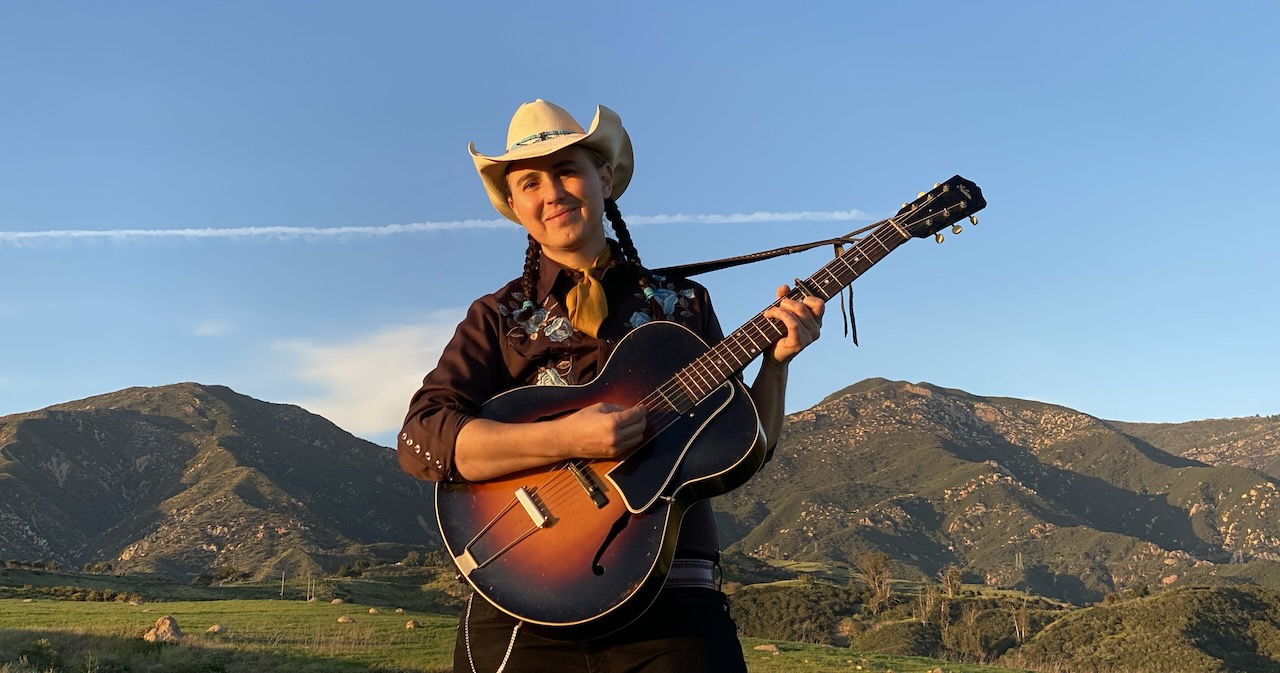
Hometown: Goleta, California
Latest Album: It’s Okay Honey
Personal Nicknames (or rejected band names): Julian & the Knockouts

Which artist has influenced you the most … and how?

JTB: Probably the poet William Shakespeare. I know that sounds cliché to say. I love the way he combines words which have their roots in Old English with words of Romance origin, like his line: “The multitudinous seas incarnadine / making the green one red.” He drank deep from the fount of English, and I’m grateful for what he gave us — language that sings.

What other art forms — literature, film, dance, painting, etc. — inform your music?

Poetry, in both its written and oral forms. I think of folk music as a kind of oral poetry. And I love to see the trajectories of the way songs are passed down, change, and mutate, like a game of Telephone. The song “In the Pines,” for instance, or “Wildwood Flower.” There are so many versions of those songs, and stories around them, wayward histories, misheard and remade lines. I like to think of my songs as operating in that tradition, rhyming and stealing, dressing up old songs in new clothes. My song “Goodbye Brother,” for example, is a rewriting of the Carter Family song “Lula Walls.” And “Covid-19 Blues” is basically a ripoff of “Long Gone Lonesome Blues” by Hank Williams.

What rituals do you have, either in the studio or before a show?

I do these vocal warmups before I sing that a teacher in Philadelphia taught me. They’re very annoying sounding, like a bratty baby crying, and then like a whining witch, and so I get kind of self-conscious doing them, but it really makes a difference. I meditate and try to get myself into a calm place, and focus on my intention to really be there with the songs, to sing them with my heart, and to give my all for the audience.

What has been the best advice you’ve received in your career so far?

My grandmother Inés told me whenever you are speaking or singing, always do it from your heart. Over the years, I came to understand that that is not a metaphor, that the feeling is actually quite literal, and bodily. So I try to feel that heartspace physically, and to remember to direct my songs from there. I think that’s a good piece of advice for life, too.

Which elements of nature do you spend the most time with and how do those impact your work?

I live near the ocean in Goleta, California, near Santa Barbara. I love to sit and feel my toes in the sand, walk along the cliffs, smell the enmineralated air. I go to the ocean whenever I feel upset, and it always helps me. Sometimes, I write poems down there, or I bring my guitar and sit on my tailgate and watch the water. It’s very meditative to be in the water, too, swimming or surfing, and it’s humbling and exhilarating to feel the ocean’s power. I always get ideas in the water — if someone could invent a wetsuit with a zipper pocket for a waterproof notebook, that would be amazing.


Photo Credit: Owen Duncan

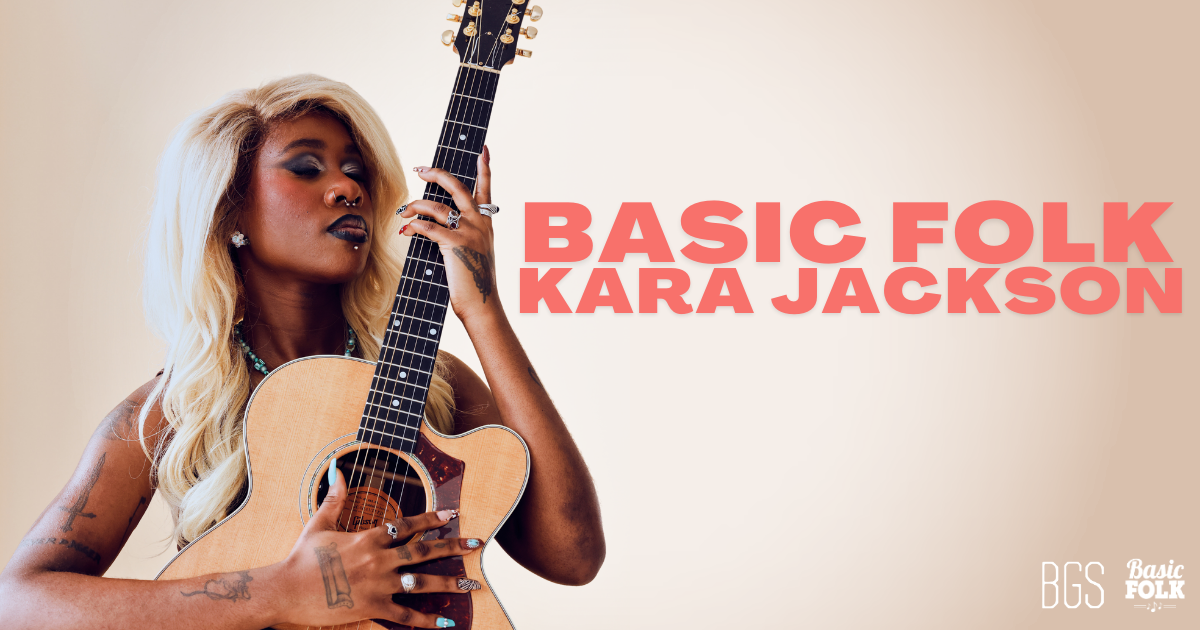
Basic Folk – Kara Jackson

Kara Jackson has a mind like a diamond and a voice like maple syrup. She has always been drawn to music as a medium, but you probably first heard of her as the National Youth Poet Laureate. Cutting her teeth as a performing poet gave Jackson a huge public platform as well as a sense of how form can be a foundation for expression.

LISTEN: APPLE • SPOTIFY • STITCHERAMAZON • MP3

Now, at the ripe age of 23, Jackson has released her stunning debut album, Why Does The Earth Give Us People To Love. As the title suggests, this album reflects on love and loss. Kara has some fantastic insights about how embracing grief, and sharing it with others, can lead us to a healthier culture. She also shares about how her parents’ political convictions have influenced her concept of an artist’s role in the world.

One of my favorite moments in my conversation is where Kara articulates how she sees her work in conversation with Black artists who came before her. What a gift, to hear a brilliant young artist speak so clearly about how their creativity fits into a bigger tradition. We cannot wait to see what she does next.

Editor’s Note: Lizzie and Kara talked about Kara’s poem “anthem for my belly after eating too much” at the top of the interview. Read it here.


Photo Credit: Lawrence Agyei

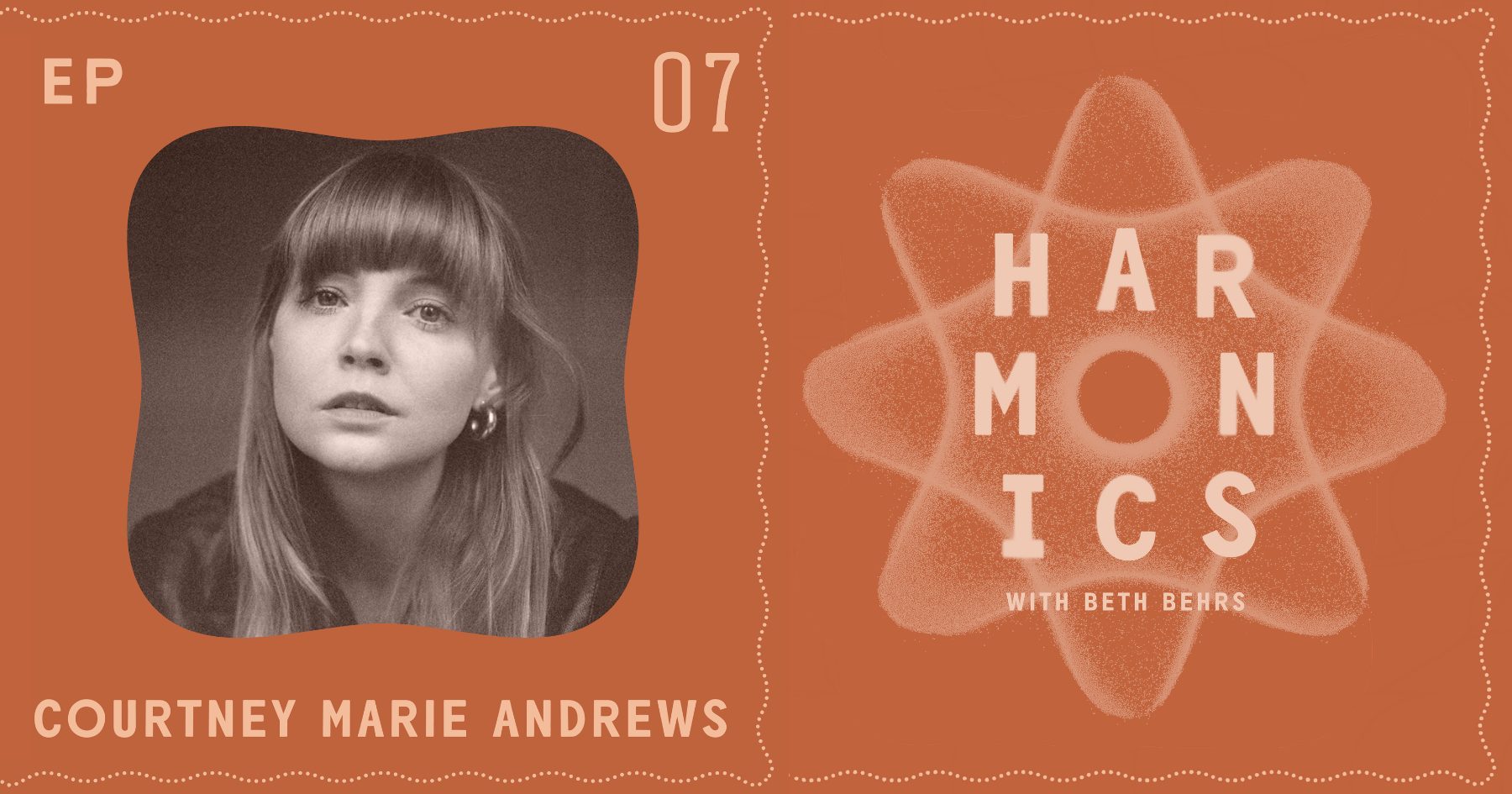
Harmonics with Beth Behrs: Courtney Marie Andrews

This week, in the final installment of our Americana April series here on Harmonics, host Beth Behrs speaks with folk singer-songwriter Courtney Marie Andrews, who has just released Old Monarch, a beautiful collection of poetry, and her very first of its kind. Beth’s own deep love of poetry makes for a perfect pair in this episode.

LISTEN: APPLE • SPOTIFY • STITCHERAMAZON • POCKET CASTS • MP3

On top of her songwriting and poetry, Andrews also had a deep passion for painting, and she and Beth discuss the difference between various artistic outlets and how she moves through a creative block, as well as the joy of creating art simply for the sake of creating art, not necessarily as something to be shared with the world — or with anyone, for that matter.

Growing up in the Sonoran desert of Arizona, Andrews has been influenced by the beauty and vastness of the desert since a young age, and the desert and nature in general continue to inspire her art and spirituality to this day. And as we will never know the answers to the major questions of the universe in this realm, she finds comfort in embracing the beauty in the mysteries of life, rather than in the answers.

Andrews discusses the feeling of recently playing her first live show to an audience since the pandemic began, reads us some poetry from Old Monarch, and so much more on this episode.

Also check out our first two installments of Americana April featuring Fiona Prine and Margo Price.


Listen and subscribe to Harmonics through all podcast platforms and follow Harmonics and Beth Behrs on Instagram for series updates!

This episode of Harmonics is brought to you by BLUblox: blue light blocking glasses, backed by science. Reclaim your energy and block out the unhealthy effects of blue light on your mental and physical health. Take 15% off your order with code “HARMONICS”