Since the very beginning of the cowboy genre, cowboy songs and cowboy poetry have been closely related. Many of the best-known traditional cowboy songs started out as poems and many cowboys have recited song lyrics as poetry. The first man to collect cowboy songs was a New York-bred cowpuncher named Jack Thorp. As Thorp observed in his book, Pardner of the Wind: “Cowboy songs were always sung by one person, never by a group. I never did hear a cowboy with a real good voice; if he had one to start with, he always lost it bawling at cattle, or sleeping out in the open, or tellin’ the judge that he didn’t steal that horse.”
That old-time cowboy singing was mostly done a cappella, as there were not many guitars to be found on the trail drives or in the cow camps. It also seems that there was a fine line between “singing” and “reciting.”
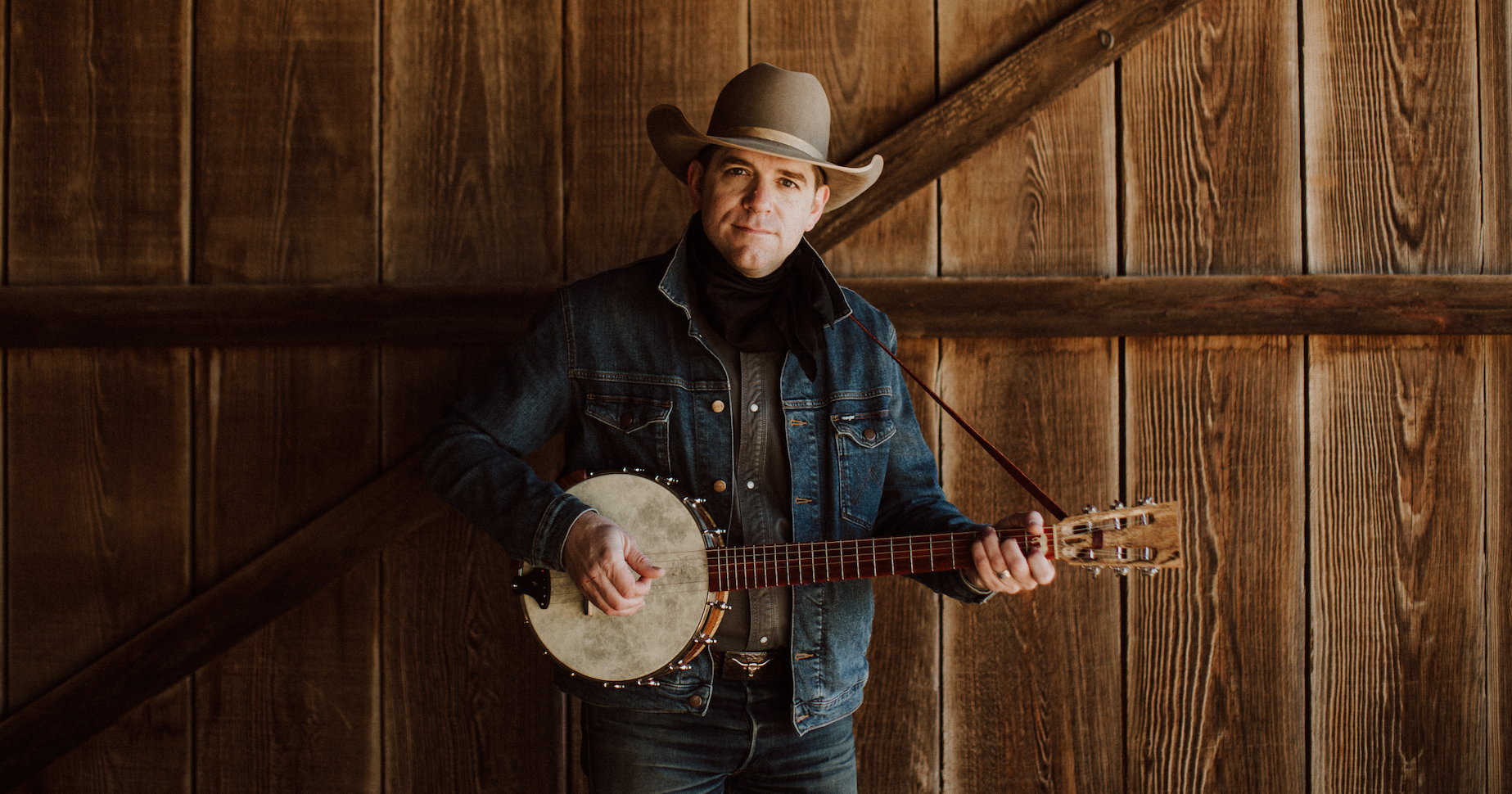
This tradition of setting cowboy poems to music has continued to the present day. My old friend and mentor Don Edwards was master of this. He taught me that if you find an old poem or a set of lyrics with no music, then you just make up your own tune and make your own song out of it. That’s part of the cowboy songster tradition. – Andy Hedges
“The Strawberry Roan” – Harry Jackson
This is the most famous of all bronc ridin’ songs and one of the most famous of all cowboy songs. It was originally written as a poem by Curley Fletcher in 1914. The original title was “The Outlaw Broncho.” Rumor has it that Fletcher wrote the poem about a bronc ride made by the legendary cowboy artist and writer Will James.
Even though the poem became one of the most recorded cowboy songs of all time, Curley Fletcher never made a dime off of it due to unscrupulous copyrighters and publishers. This recording by Harry Jackson is a great example of the old-time unaccompanied style of cowboy singing.
“Sierry Petes” – Gail Steiger
“Sierry Petes” was written as a poem by Arizona cowboy Gail Gardner in 1917. It’s been set to music many times and is better known as “Tying Knots in the Devil’s Tail.” Many folks have failed to give proper credit to Gail Gardner and have also failed to get the words right. This is the original version recited by Gail Gardner’s grandson, Gail Steiger.
“Sierra Peaks” – Ian Tyson
A fun version by the great Ian Tyson with a corrupted title, some incorrect words, and a modern beat. Ian Tyson revitalized cowboy music in the 1980s with both his versions of traditional cowboy songs and his original compositions.
“The Dixie Cowboy” – Taylor’s Kentucky Boys
Montana cowboy D.J. O’Malley published a poem entitled “After the Roundup” in the Miles City Stock Grower’s Journal in 1893. It became known as “When the Work’s All Done this Fall” and a 1925 recording by Carl T. Sprague sold over 900,000 copies. I’ve always loved this obscure version by Taylor’s Kentucky Boys with an alternate melody.
“The Long Road West” – Don Edwards
Henry Herbert Knibbs was a poet, novelist, hobo, and owner of a violin repair shop. He never earned a dime as a working cowboy, but his poetry entered the oral tradition of working cowboys. “The Long Road West” speaks to the kinship between cowboys, hobos, and sailors. It was set to music by the great Don Edwards.
“The Old Cowman” – Andy Hedges & Brenn Hill
In his book Classic Cowboy Songs, Don Edwards tells the story of how he fell asleep reciting this poem one night and woke with the melody in his head. This song is more relevant now than when it was written, over 100 years ago. I recorded this version with my pard Brenn Hill for my 2023 album of cowboy duets entitled Roll On, Cowboys.
“Spanish is the Lovin’ Tongue” – Michael Martin Murphey
Originally written as a poem entitled “A Border Affair” by Charles Badger Clark. I think that Michael Martin Murphey plays the definitive version of this song. And it was also the first song that Murph sang onstage at the National Cowboy Poetry Gathering in Elko, Nevada, when he showed up at one of the early gatherings. It always reminds me of All the Pretty Horses by Cormac McCarthy.
“The Westerner” – Andy Hedges
I found the “The Westerner” in Charles Badger Clark’s 1915 book Sun & Saddle Leather. The poem speaks to the values of folks who live in the rural West. I hope that my melody does it justice. It is the title track of my new album.
“Shadow on the Cutbank” – Trinity Seely
This is a modern-day poem set to music – the poem by horseman, cowboy, and poet Joel Nelson, and the melody by horsewoman and singer-songwriter Trinity Seely. The poem is Joel Nelson’s answer to the historians who have written the cowboy off as a vanishing breed.
“Hitting the Trail Tonight” – Buck Ramsey
“Hittin’ the Trail Tonight” was a signature song for the late great Texas cowboy singer and poet Buck Ramsey. Originally written as a poem by classic cowpuncher poet Bruce Kiskaddon, folklorist and musician Hal Cannon set this one to music sometime in the mid-1980s. I asked Hal about this piece and he told me that he “always felt there is something about Kiskaddon’s words that feel good in the mouth as they come out.” This one will have you singin’ along.
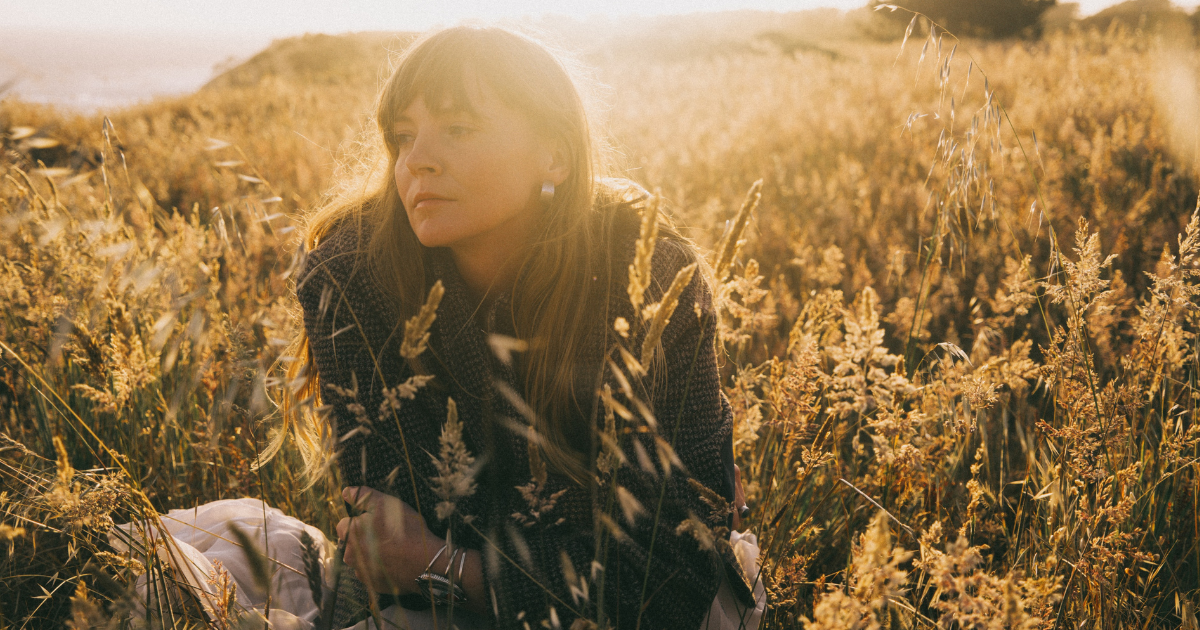
Courtney Marie Andrews’ story begins in Phoenix, Arizona. An only child raised by her mother, she found solace and an outlet for her creativity and imagination in music. She planted her music roots in a self-described “feminist punk band” and began touring while in her teens. Along the way, she recorded a number of albums – best known are Honest Life (2016), GRAMMY-nominated Old Flowers (2020), and Loose Future (2022) – lived in a number of cities, and worked and toured with a number of musicians, including rock band Jimmy Eat World.
Andrews eventually made her way to Nashville, where she now resides. There, she creates music and other art, fueling her soul and inspiration with long walks and her love of animals, bonding with friends’ dogs, and feeding an assortment of “porch animals,” mostly cats, who take up residence outside her door.
In addition to music, Andrews expresses herself through painting and poetry. She has published two collections: 2021’s Old Monarch (2021) and the recent Love Is a Dog That Bites When It’s Scared. Her music, writings, and artwork explore a broad scope of emotions and experiences: loss, grief, fearless love, deep darkness, pure joy, and acceptance of the entire spectrum.
These outpourings are at the essence of her new release, Valentine (out January 16 via Thirty Tigers). Written in the throes of anticipatory grief, the album plummets into the vortex of her trajectory. While the message is raw, the recording is anything but. Valentine is an unfiltered look into Andrews’ heart, filled with waves of sounds and layers of instrumentation.
Among the numerous instruments she plays on Valentine, Andrews is featured on an assortment of guitars and basses, including a 1973 Martin D-28, 1968 Gibson B-45 12-string, 1970s high-strung Japanese Epiphone, Gibson J-45, Epiphone Casino, 1972 Fender P-Bass, 1960s Kay K5915 bass, and 1960s Teisco six-string bass. Longtime friend and colleague Jerry Bernhardt joins her on various instruments, with drummer Chris Bear rounding out the trio. The album was recorded by Michael Harris at Valentine Recording Studios in Los Angeles and produced by Bernhardt and Andrews.
BGS reached Andrews via Zoom for an Artist of the Month conversation.
Has Nashville changed you as a songwriter?
Courtney Marie Andrews: I thought it would deeply shift everything for me, but if anything, it made me want to do other things as well, maybe subconsciously. I started painting and focusing on poetry. But that core sense of self, that songwriter self, will always be with me wherever I go. It’s hard to say how it has shaped me until I’m looking back on my life 20, 30, 40 years from now.
But I will say the community I’ve found here is profound. I’m a Western girl. I’ve lived in Arizona and Seattle up until pretty much my 30s, and I didn’t realize how lonely the West can be. I think that’s apparent in my early work as a songwriter. That subject is throughout the work. When I moved here, I was almost overwhelmed by how much people wanted to hang out. It took a while to adjust and now I can’t imagine it any other way, not having that community to feel into and understand this work, because it is a strange career. So I think more [that] it has affected me personally, but I’ve always continued to write and been on this journey on my own and in my own time.
This is a stripped-down album – only three musicians, including you, and one of them is also your co-producer. Did you know, when the songs were written, that this is how it needed to be done?
I completely funded this album on my own, so if I’m being frank, it was an economical choice. Originally, we would have loved to have a band, but in hindsight, ultimately it created the record it created and I wouldn’t have had it any other way. There’s some power to it being a very condensed group of people, because the focus is a little bit more zoned in, and it becomes a vibe if it’s coming from a few core people, rather than everybody adding their stroke to what you’re doing – which I think is also valid. But looking back, it was probably the best thing we could have done, having Jerry and I playing all the instruments and Chris Bear, of course, on drums.
You played a number of guitars on Valentine. Do the songs determine the guitar, or does the guitar sometimes direct the song?
The songs ultimately lead the way on feeling and vibe. Jerry and I wanted to layer the record. There are a lot of different layers of guitars. We would varispeed one guitar up, so it’s super-high, and then we’d varispeed one guitar lower, so it’s super-low, to create the rounder sound, especially if you’re listening in headphones or on a high-definition speaker system.
But it’s definitely song-driven, whatever the feeling. “Best Friend” is just my guitar and Jerry’s twelve-string. We didn’t go much further than that, because the song was meant to be a bit sparser as far as the depth goes.
“Everyone Wants To Feel Like You Do” is about a certain type of misogyny where it’s, “I do whatever I want and I don’t care about the consequences, nor am I held accountable for the consequences.” The song was written with that feeling, and I thought it would be funny if I played guitar like that, where I didn’t care, so I over-distorted my guitar and played as crazy as I could to assert my power.
How do songwriting, poetry, and painting each fulfill a different side of your artistry and emotions? Is there ever some cross-pollinating?
I wanted to tell the same story with a different perspective, so there is cross-pollinating in terms of the source of the material, where it’s coming from, where I’m at in my life, whatever darkness or lightness I feel. It all sources from the same well of emotion and experience. But there are different ways of telling the same story. I found that when I was songwriting exclusively, I would write the same song over and over again. Whereas if I take a step back, do a different medium, and come back to songwriting, I feel fresher.
Ultimately and forever, I’ll always identify and feel the deepest connection with songwriting. That’s the first thing I fell in love with. It’s the thing I understand the most. But the mystery of these other mediums has really flourished.
There’s a natural through-line between poetry and lyrics. What about painting? Do lyrics sometimes inspire a painting? Does something you create on canvas ever become words in one of the other mediums?
There’s not a lot of crossover. I don’t look at painting like I would look at a page or a song. Painting is, for me, a place to describe emotions that are unexplainable. That’s why painting is so cool. It’s almost equivalent to jazz; it’s more of a feeling that you can’t describe. That was enticing to me. To express myself as a word person who ultimately values words so much, it was important to think outside of the box a little bit. Painting allows that. To not be confined by words is really interesting.
Tell us about your recent Artist in Residence at the Iowa City Songwriters Festival. You performed and did a reading from your new book, but what does “artist in residence” mean at this particular event?
Because Iowa City is a UNESCO World Heritage City of Literature, there’s a heavy college-funded element. I’m not sure if that was their direct funding, but they definitely have more of a collegiate approach to an artist in residence. I’ve done some residencies where they don’t want anything from you. They just say, “Come up and write whatever you want. We don’t care.” But this one was definitely a bit more mentorship-driven. I led a class, a songwriting workshop. I also had one-on-one mentorships with young songwriters, people who are just getting started. They had a packed schedule for me, but it was so lovely.
I think their ultimate goal is to prop up songwriting among the other literature of the world, having songwriting classes in college, and having it there with poetry, fiction, nonfiction, memoirs, memoir writing, and all that. I think that’s ultimately what they’re trying to attain with the residency program. So it was great.
I’ve found that I really love to talk about songwriting in that way. I think that, in our culture, it’s a dying thing, at least from where I’m sitting, to seek out opportunities to learn from elders, from people who’ve been doing it a long time. The more we can do that in our culture, the better off we’ll be. It’s an incredible festival, and I would highly recommend people going. The people who run it are just wonderful.
When you lead workshops and do one-on-one mentoring, is it as much a learning experience for you as it is a teaching experience?
Absolutely. I think to teach is to be a constant student. The moment you feel like you’ve figured it all out … I don’t know if that’s a good thing. Even as I speak about songwriting, I say things that open doors all the time to myself. It’s good to be endlessly curious.
Do you think being an only child contributes to your storytelling ability through songwriting and poetry? Living inside your head, escaping into your own head, in a way that might have been different if you had been surrounded by siblings?
Oh yeah, absolutely. Because I was a latchkey kid, I spent a lot of time alone. If I didn’t have a friend to play with, I had to go into the inner landscape of my mind. That was my way of communicating in a deeper way that I couldn’t quite get in my home life if my mom wasn’t home. I can attribute a lot of my childhood to that. I was a deeply imaginative kid and would create stories all the time. So I think the loneliness also fueled what I do now.
Do you draw from those past emotions when expressing what you’re currently experiencing?
How it manifests is that it’s like a period of reckoning when I’m writing songs. I’m generally alone. I find it very hard to write if I know somebody is even in the next room. I’ve had weird moments in my life where I wrote at soundcheck and stuff, but when I listen back to those things that I’ve written around people, it’s not as dialed in. So when I’m writing, I’m alone and reckoning with the life that I’m leading, or the life of others. It feels like this very quiet thing that needs to happen.
Are you an old-school pen-and-paper writer or have you gone the way of voice memos?
I do both. I exclusively use a green book to write in. It doesn’t matter what color green. They all are green, though, green-colored notebooks, generally the Moleskine variety or that look. I have plenty of them in a pile. [And] I love Micron, the ballpoint art pens. I really don’t like the standard DMV pen. I’m a little bit bougie when it comes to my pens. I like the flow of a Micron. I write and then voice memo. Generally, once I’m done writing a song, I try and always get it down in its unproduced form. I think it’s important to have that, and the phone happens to be the easiest way.
Is playing guitar, just playing, as much a part of songwriting as writing lyrics?
Oh, yeah. I love the guitar. I love open tunings. I love acoustic guitar music, Hawaiian slack key, and classical Spanish-style guitar on a nylon. I love to play and try and emulate that style. And so in certain works, it’s the first thing that happens. There’s many ways to come to a song, but one of them is [to] play a chord progression I like and sing gibberish, and that sometimes leads to a song. In that case, absolutely I need the guitar. But yeah, the instrument can definitely lead the way. It just depends.
When you spoke earlier about adapting to the Nashville community, it brought up the thought that growing up as “an only” maybe affects our social skills to a degree. It can make community something new, as opposed to something you’re used to having around you.
Yeah. I feel that. I have a hard time with small talk for this reason. I want to go immediately for the jugular, as far as intense conversations. I go from zero to a hundred. It’s really hard for me to be like, “Hey, how are you doing?” I feel like such an actor in those circumstances. Of course I’ve learned to do it by way of being a musician – you have to talk to new people every day. But small talk doesn’t do it for me. I have a hard time going in a simple, surface level.
In the bio accompanying this album, you said, “I was in one of the darkest periods of my life and songs were the only way I could reckon with it. I felt cursed and the only mental cure felt like songwriting and painting.” Have you always felt that darkness?
Obviously, as a teenager, I went through a pretty wild part of my life where I felt dark, but I think I actually denied my darkness for a very long time. I lived in a haze of denial and hope, which is a beautiful thing. It can do wonderful things for your mental health. But you also can’t really grow if you’re living in that state.
When I was younger, especially in my early twenties, I always had this hope – “Oh, one day things are going to change.” That denial, that hope, kept me in this holding place, which for a time was really nice, and as a matter of defense and self-preservation, I stayed there for a long time. It wasn’t until I started therapy that I realized I always had this underlying darkness. When I had that, we worked on that, and real things started to happen. Things in life that are so hard that happen to all of us – it became deeply dark and profound to experience that in a more awake state.
How did that help with writing this album?
During a lot of writing this, I was caretaking for my family member who was terminal. If you’ve ever been in that situation, it is all-consuming. The only way I could turn my brain off from that was to write. It wasn’t “I need to write an album.” It was “I need to get back to myself for a moment.” I wouldn’t say it was a conscious decision. It was just I know how I am, and I know that songs are my only way of regulating in these crazy times.
You once said you felt embarrassed by the vulnerability of your songwriting. Where do you draw the line, or do you draw one, between what needs to be said for yourself and what needs to be said for listeners for whom you are the voice? How do you do this and protect your mental health when performing these songs every night?
I’ve always said that once the song is written, it’s not mine. It also transforms for me as I sing it. There are songs I wrote fifteen years ago that I still perform, that have taken on completely new meaning and feel different to me when I sing them. I honestly can’t remember the headspace I was in when I wrote them, or the origin of them, or who I was thinking about, to a strong degree, but I feel differently about them.
As far as what needs to be said, ultimately I try to relate to people, or first myself, and then you put the song out and it becomes a different thing. I try, in an artistic space, to be as true to myself as possible. I try not to put up any walls in that space. As far as my life where I’m not playing music, that’s a different thing. But music is a safe space to say whatever the hell I want to say. That’s the reason it’s such a powerful thing. It’s a safe place for me to communicate. Whatever walls are up in a song are walls that I have up with myself. That’s always very apparent when you write a song. It’s not quite clicking and you’re like, “I’ve got some walls up to my subconscious, clearly.” So the extent to which the boundaries, the walls, are up is truly only the stage at which my heart is at in that moment.
Did that happen with Valentine – the walls, maybe the fear of the vulnerability? It’s deeply personal and powerful, going deeper and deeper into those emotions as your journey is sequenced.
I hate to say it, because I don’t want to sound trite, but making albums, making bodies of work like this, fear is the last thing on my mind. Obviously, natural fears come up: Is it going to be what I wanted, what I envisioned in my dreams? But as far as songwriting and being vulnerable in a song, that’s not the fear. In fact, if I got very close to the heart in a song, it’s generally the ones that I’m like, “That’s a good one. I got there. I got to the essence of this thing I was feeling.”
Being vulnerable in life can be really hard in my personal life, in some ways, and I think that is more where the fear is. But, for whatever reason, the way I direct it is okay in a song, and I’ve made up my mind for that to be true. I don’t know why; I guess it just makes sense to me. Human emotion makes the most sense to me in the backdrop of music.
As far as sequencing, Jerry and I argued quite deeply about the sequencing, but ultimately it did go to a place where once we got the sequence, it was undeniable. Side A and Side B are completely different frames of minds. Side A, you’re fighting for love and you’re desperate. Side B is a resignation – this is how it is, this is how it’s always been, and this is my childhood. By the end, in “Hangman,” you’re just “This is how it is, and you can fight for it or you can walk away.” So the sequencing was purposeful. I wanted it to be a journey. I think records should be like that. They shouldn’t be all one color or palette the whole way through.
Explore more of our Artist of the Month content featuring Courtney Marie Andrews here.
The winter season reverberates with deep nostalgia, often based around sensory memories of music and food. Songs and recipes are passed down from generation to generation, allowing people to live in the same sounds and smells as their parents and grandparents. Bluegrass has always had a deep appreciation for a great meal, from “Hot Corn, Cold Corn,” to “Keep My Skillet Good and Greasy.” It’s such an established relationship, we even put together a BGS roundup of “Songs to Whet Your Appetite” a few years ago. For further listening, check out this Apple Music Playlist, Bluegrass Feast: Songs About Food, and our archive BGS Podcast about chefs and their kitchen playlists, The Shift List.
This season, we asked our readers to submit creative writing about the marriage of music and food, to make our ears ring and our mouths water. In this collection, Miriam Story and Shatazha Mattingly remember their grandparents’ singing while cooking up biscuits and empanadas. Stay tuned for fake teeth and flying ladles.
“Six Biscuits, Every Time”
by Miriam Story
It’d be the weekend and we’d have to be up by 7 o’clock for the adults’ errands. Poppy had silver partials on his uppers and lowers, and he’d soak them in Efferdent overnight in a tiny tupperware dish perched on the edge of the sink. They’d stay there until he’d eaten his breakfast, brushed his real teeth, and gelled his wiry hair to this side and that. But in the couple of hours he was partially toothless, he clowned out and sang off-key, delighted and encouraged by groans and grimaces. As Nana’s back curved over the stove, cast iron skillets on every burner and one in the oven, he would bound down the hall like a horse, clapping his hands and hooting. My cousin andI, tucked into bed– this is before they differentiated us: boy and girl– curled away from the white sunshine. And we’d know he was coming. There was no missing it: he would bust open the door doing his vocal warmups for what he called “The Bikit Song.” Gums hidden by his sunken leather cheeks, he’d nuzzle his face into the back of our hair and sing between kisses, how many bikits can you eat in the mornin? how many bikits in a day? And this would go on with no particular melody and no more than those two lines until we sat up, bleary and laughing politely.
Miriam Story originates from Russell Springs, Kentucky. While she enjoys writing about her Appalachian roots, she thinks her favorite subjects are gray beaches, a good pot roast, and Jimmy Carter.Follow Miriam Story on Instagram at @mermstory.
“When Things Were Different”
by Shatazha Mattingly
I watch her start with a twirl around the kitchen, which turns into angelic dance moves. I’m never in the kitchen for the preparation part. That’s okay, because what I love is the creation and the foolishness in between. The kitchen looks the same as always with three potted plants in the windowsill right above the sink – that she always forgets to water – and her fascinating wine red and cheetah print decorations scattered here and there. My only regret is that I’m never allowed to stay more than one to two nights.
The smell of melted butter wafts through the kitchen, her signal to begin sautéing the chopped peppers – for that kick she likes – and the chopped onions ’til softened. She has this specific way that she sprinkles in sofrito and garlic, and she uses the same pose to add in white wine, followed by a can of tomato sauce. She never uses measurements. She always says, “The eyes measure the pit of the stomach.” I don’t even think she knows what that means.
As she works, I pull out my crayons and colorbooks that she hides in the little compartment drawer in the table doors – I think it’s laughable that the table was originally an office desk. But she has a knack for maximizing space with having as few objects as possible.
I sniff the air – the kitchen has become fragrant. She is now fully in her element, and my stomach is grumbling in anticipation. She hits high notes effortlessly, while swaying her hips in tandem with the beat – she’s magical. Later, I will discover that the song she sings with such passion is about a woman who loves a cheating man. I don’t understand why she plays that song first to get her in her zone.
Nevertheless, she has made the kitchen her stage, a performance only I can see. “Sing and dance with me my love,” she says, in that accent that felt like home.
The look I give her in response earns me sympathetic eyes.
She knows the words, without me ever allowing them to flow past my lips. She takes a second, and then giggles while pausing in her dancing to add in the ground beef and an array of seasoning. Still no measurements, and I bet the empanadillas will be just as perfect as always.
She stays focused for a while, cooking the ground beef. After the beef is nice and brown she’ll stir in a smidge of vinegar – dip her finger to taste – and then adjust seasonings by adding salt and pepper if needed. Perfection.
Then, our comfortable bubble goes from her and me, to three.
I hear him before I see him. She is singing – yet another heartbreaking song – while assembling the dough into discs. In all his glory, Abuelito sways his way into the kitchen. He bee-lines straight for her – his air, as he calls her. He dances with her, not skipping a beat, with one hand on her hip and the other in the air. One of his old tricks. As she becomes engrossed in the music, he steals a scoop of the picadillo filling and then steals a kiss as a distraction. I see her watching him out of the corner of her eye, a small smile playing on her lips. But she never allows him to get away with anything. As he tiptoes towards the door, a ladle flies across the kitchen aimed at the back of his head. It misses, but Abuelito pretends to be hurt anyway.
My picture is almost complete; I just need to add clouds and a sun to the sky.
Abuelito can’t stay away too long and eventually sits down with a book at the refurbished table with me. The tobacco and woodsy smell from his aftershave float in the distance between us, while her singing and the music play in the background. She’s standing at the counter, placing calculated scoops of filling to the middle of the dough. My favorite part is when she folds them into what she calls “little half moons” and presses in the edges to seal them. When she dips them into the bubbling oil, she begins dancing again.
Without turning around she says, “You don’t have to understand to feel, love. It’s okay to let the music guide you. Music connects us all in one way or another, just like food can.” Her English comes out crystal clear over the thrums of the music.
I don’t look up, because I can feel his eyes on me, he thinks the same too. He’s different from her though, his words aren’t words at all. It’s silence filled with love and encouragement, and with that – I get up and dance. With her everything feels otherworldly.
An entire song later, she lifts the empanadillas out of the oil and places them on a paper towel that covers a plate. When we sit at the table – originally meant for four – we talk, laugh, sing a little, and eat while basking in the aroma that only this kitchen can provide. I may never understand the words or perfect the dialect, but I’ll always remember how the music feels.
Abuelito is the first to go, and now, I hold her close to my chest. A stylish urn – wine red – her new stage.
Shatazha Mattingly is a first-year MFA student at Western Kentucky University originally from Nashville, Tennessee. She currently writes reviews for advance reader copies by indie authors and has her own book-related column, “The Literary Radar,” with The College Heights Herald. Follow Shatazha Mattingly on Instagram at @shatazha.
Stay tuned for more opportunities to share your own writing or art on BGS in a future collection!
What is your family’s version of a “Lime Jell-O Marshmello Cottage Cheese Surprise”? Did you ever sing a song about it? We’re dying to hear about it!
In anticipation of the holiday season, BGS wants to read your food and music stories, writings, and traditions! We welcome fiction, nonfiction, poetry, and hybrid-form writing (perhaps a recipe with music?) of up to 1,000 words focusing on the crossroads of food and music. Please ensure that your writing incorporates both of these topics in some small way, not either/or (i.e. not just a recipe).
Selected entries will be published in our new, periodical BGS creative writing collection. See our first scary-season-themed collection and its selections here. Selected writers will receive free BGS merchandise and will be invited to present their work on the BGS website and social media. In addition, BGS will retain no rights to your work and creators are welcome to publish elsewhere or on their own channels.
Submissions will close at 50 entries, so make sure to send in your work ASAP!
Deadline: November 24, 2025 at midnight PDT. How to submit: Please fill out this Google Form and attach your work as a Word file (.docx).
Long before folks were strumming guitars and picking banjos, they were telling stories. Stories about origin, hopes, dreams, and fears, and lessons learned. These stories guided lives and relationships, became myths, legends, and songs, and were passed down for generations and adjusted for place and time. From “The Knoxville Girl” to “Down in the Willow Garden,” to Lindi Ortega’s “Murder of Crows” and Tyler Childers’ “Banded Clovis,” the spooky story looms large in bluegrass, old-time, and Americana music.
For the season, we asked BGS readers to share their own roots music-themed writing with us in the form of spooky fiction, creative non-fiction, poetry, or cross-genre writing. We were not disappointed! Below, Emily Garcia’s young musician narrator achieves justice for poor Rose Connelly of “Down in the Willow Garden,” and Stuart Thompson details the sad fate of two brother fiddlers who became entangled with the wrong woman.
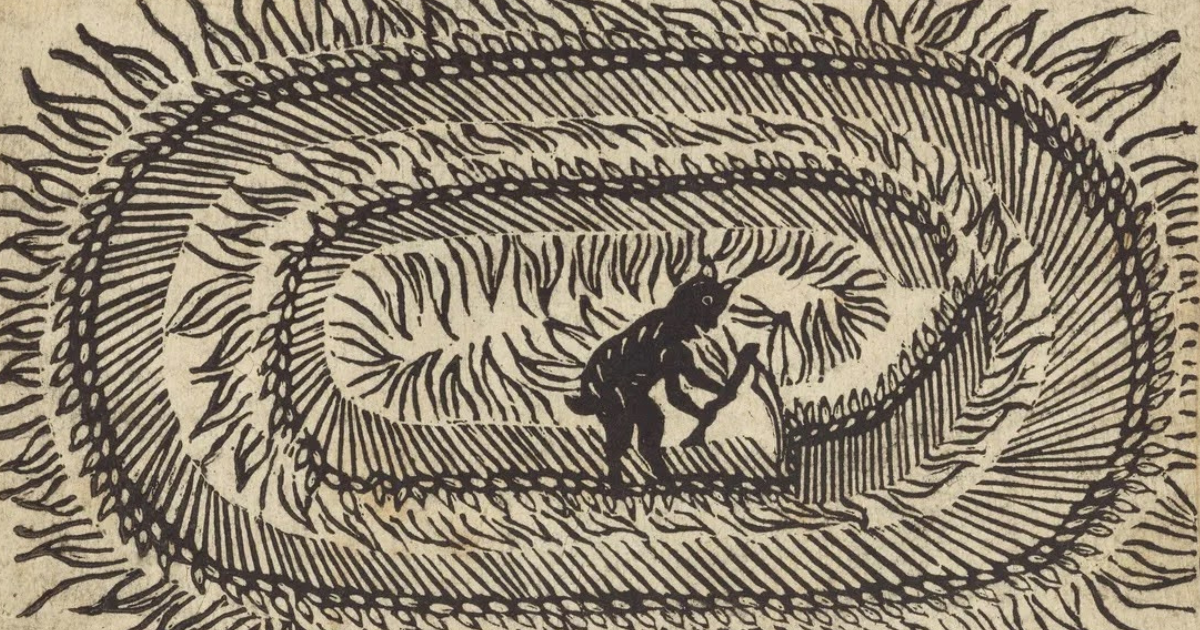
But first, we share with you an old tale of the farmer and the devil, regarding the origin of crop circles, found in a newspaper from 1678 – from which we’ve also pulled the creepy and fantastic woodcut we’ve chosen for lead image.
With this series, we hope to honor and continue the long tradition of storytelling and verse that has lived alongside and contributed to our favorite genres of music.
“The Mowing Devil Or, Strange News Out of Hartford-Shire”
Being a true relation of a farmer, who bargaining with a poor farmer about the cutting down three half acres of Oats; upon the mower’s asking too much, the farmer swore, that the devil mow it, rather than He; And so it fell out, that that very night, the crop of oats shew’d as if it had been all of a Flame: But next morning appear’d so neatly mow’d by the Devil, or some infernal spirit, that no mortal man was able to do the like. Also, how the said oats now lay in the field, and the owner has not power to fetch them away.
The Hunter’s Moon, red from eclipse, slides above the pines and half-bare maple trees, its hollow stare cast over Virginia’s Appalachian Plateau. Behind it, the night is black as pitch.
“You okay, Wills?” asks Annie. No, she hasn’t been okay in months, but Annie doesn’t want to hear that.
“Yeah, of course!” Willow rosins her bow, trying to ignore the wailing in her ears.
Annie glances down, rocking the toe of her boot into a groove on the worn cabin floor. “I hope I wasn’t too pushy…I just thought playing again might help.”
Two weeks earlier, over the phone, Annie had been less concerned about being pushy. “Willow Rose O’Connell, I’m not taking no for an answer. You are coming to Hunter Jam Weekend, just like you have every year for the last four years. I will not let my best friend rot away in some North Carolina suburb just because one tour didn’t work out.”
Didn’t work out. That was the story she let everyone believe: she had quit the gig of a lifetime halfway through the European arena tour, all because she couldn’t handle the pressure and had a nervous breakdown in a hotel room in London. It was a breakdown so bad that she flew straight back to Nashville that night, packed her entire apartment, drove eight hours to her parents’ house in Raleigh, and was now living in her childhood bedroom strung out on Xanax.
“What a shame,” people liked to say.
Now, she forces a smile. “I appreciate it, Annie. I’m good. I’m glad I’m here.”
Relief washes over Annie’s face. “Okay awesome. Let’s go, then. You don’t need to solo or anything, just play.” Annie grabs her mandolin and heads for the door. Willow follows, fiddle tucked neatly under her arm.
They wind through a wooded path lit only by the moon, towards the fire where the rest of their group has already started jamming. She can’t shake the wailing sound. An old recurring nightmare from childhood, a screaming woman next to a riverbank, has resurfaced with a vengeance since she left the tour six months ago. On the worst nights, the screams would weave themselves around memories of her grandmother’s shriveled voice singing old folk songs by the fireplace.
My race is run beneath the sun, the devil is waiting for me.
What no one knows is that an hour before the nervous breakdown, she forced her way out of the back of the tour bus, shaking uncontrollably, the manager’s whiskey breath staining the air. She had escaped the worst, thank god, but his slurred voice taunted behind her. “Don’t even try telling anyone, Will. You know I can ruin you.”
She knows. She knows how this industry works.
They reach the circle and Willow perches on a stump by the fire. There are a few awkward mumbled greetings, her former companions from the Nashville scene now looking at her like the ghost of an old friend. “Okay, where we at?” Annie cuts in. “‘Deep River’?” And with that, the jam resumes. Every time solos reach her, she leans to Annie and passes them off. The screaming is back, louder than usual, mixing with the songs into a sideways cacophony that makes her feel sick to her stomach. Her playing drifts off, she squeezes her eyes shut. The fire feels like it’s taking over her body.
The tune ends, and she gets up. “Sorry guys, I think I need to go lie down for a second. My head is killing me.” A murmur of concern ripples through the group but she can hardly hear it. She heads up the path towards the cabin.
The screaming is getting louder, and the ground feels like it’s shifting beneath her. Vertigo, maybe. The devil is waiting for me. She stumbles forward, barely conscious of where she’s going. You know I can ruin you. She reaches for a tree to steady herself, but the trees seem to be sliding up and down the periphery. She falls, hands driving into the dirt. Eyes squeeze shut.
The screaming stops.
A faint sound of banjo and a slurring male voice touches the air. She slowly pushes herself up, eyes adjusting. The sun is out, hanging red and low over the horizon, as if the moon has reversed its course. A river runs to her right.
In front of her lies a young woman, wispy brown hair fanned across the dry grass, and a half-empty bottle of burgundy wine next to her. She could almost be peacefully asleep, if not for the 15-inch knife sticking out of her chest and the crimson blood soaking her white cotton dress.
She stares at the woman like a mirror, the smell of whiskey burning her nose, when she hears him, gasping. She looks up. He’s in a loose-fitting linen shirt and dirty denim overalls, his eyes bloodshot, a banjo clutched in his left hand. His splotched face drains to white as their gazes meet.
“Rose– I– Rosie, my dear– I– I– I… my God, my God.” His trembling voice is centuries old. He glances wildly at the dead girl’s face, then back at Willow.
Her fingers curl around the knife handle and she pulls upward.
“I didn’t m-m-mean… I– I– I… Rosie please, I love you.”
She raises her bow arm. Her movements are not her own. Virginia turns red beneath the sun. The screaming begins again, different now, deafening.
Then it stops.
Heavenly quiet. And then a heavy splash.
It’s dark again. The moon is fixed to the night sky, and she’s standing at the edge of the circle. “You scared me!” Annie raises her eyebrows. “You okay, girl?”
“Yeah I’m good. Just needed a quick nap.”
Willow picks up her fiddle, which she had left leaning against the stump, and gives it a quick tune. “Okay y’all. ‘Wheel Hoss’? I’ll kick.” Without waiting for a reply, she jumps in. A few hollers from the group, and they all launch after her. Her fingers dance across the strings as everyone else holds back to hear her, finally, play again.
The final notes ring out. Silence, then the circle explodes into wild cheers and laughter.
Annie turns to her, grinning. “See Will, I told you playing again would help…” Her voice trails off.
Willow follows Annie’s stare. Her hands, strings, and fingerboard shine in the firelight, covered in blood.
Emily Garcia is a writer and fiddle player who spent her early career studying and performing within Nashville’s roots scene. She is now based in southern Maine and continues to perform, travel, and write stories inspired by American music and place. You can follow her work on Instagram at @imemilygarcia.
“Brother Fiddlers” by Stuart Thompson
Up in Clear Creek County, when the wind is lying still, They say you can hear it high above the Argo Mill. The sound is lonesome, and the sound is low, Like the fiddlers pointing out the guilty with their bows.
Will and Tom were brothers, bold and bound for gold, They followed the rush where the rivers ran cold. They staked their claim where the tall pines lean, And they carved their camp in a cut of green.
By day they dug with blood and sweat, By night they played in the dry sunset. Twin fiddles rose in the old saloon, And the one they played for was a gal named Lou.
She poured the drinks and danced the floor, With eyes that knew what men were for. She’d kiss you soft, then slip away– Leave you lost ’til your dying day.
Up in Clear Creek County, when the wind is lying still, They say you can hear it high above the Argo Mill. The sound is lonesome, and the sound is low, Like the fiddlers pointing out the guilty with their bow.
They struck it rich – oh, mother lode! A vein so thick it near broke the road. One would sleep while the other stood, Guardin’ gold in the dark pine wood.
But Lou, she schemed with a serpent’s smile, Fed them lies and love the while. “I want the stronger,” she said with a kiss. “One who’d fight for a prize like this.”
So Will took watch on a moonless night, With rage in his heart and death in sight. Tom came quiet, just to check the claim– But Will saw red and took his aim.
The shot rang once, and his brother fell, And all went silent but the echo’s knell. Will knelt down with a choking cry– Then Lou stepped out with a pistol high.
No words she spoke, no tear she shed, Just one quick flash – and Will was dead. She buried them both where the cold creek bends, And set her sights on richer ends.
Up in Clear Creek County, when the wind is lying still, They say you can hear it high above the Argo Mill. The sound is lonesome, and the sound is low, Like the fiddlers pointing out the guilty with their bows.
She bought new gowns and she drank top shelf, But Lou could never escape herself. At night she’d wake with a strangled cry– Hearing bows that scraped like a widow’s sigh.
She climbed the trail where the cold winds moan, To the shaft where the brothers’ blood was sown. And some say madness took her mind– She walked into that hole and left no sign.
Now nothing grows where the gold once lay, Just wind and whispers and strings that play. The miners say, when the stars hang low, You’ll hear twin fiddles weep and glow…
Up in Clear Creek County, when the wind is lying still, They say you can hear it high above the Argo Mill. The sound is lonesome, and the sound is low, Like the fiddlers pointing out the guilty with their bows.
Stuart Thompson is a husband, dad, and mandolin picker from Denver, Colorado. He can be found online at @stu.art.thompson.
Stay tuned for more opportunities to publish your own writing or art on BGS in a future collection!
Collection edited by Rachel Baiman and BGS staff.
Lead Image: Woodcut, “The Mowing Devil Or, Strange News Out of Hartford-Shire”, August 22, 1678. Source: The Public Domain Review.
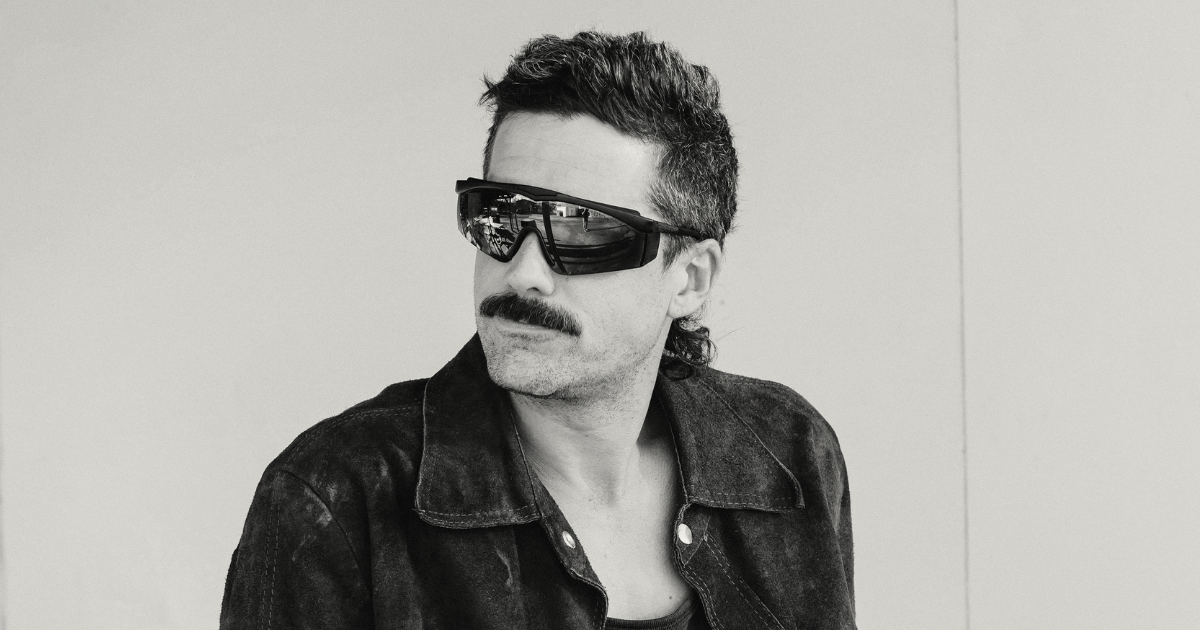
Holding the attention of a roomful of moderately smashed bar-goers is no small feat, let alone with a traditional Irish folksong. But last May, country singer-songwriter Dylan Earl ended his set at Brooklyn’s Skinny Dennis standing on top of the bar and singing an a cappella version of “Wild Mountain Thyme.”
“Will you go, lassie go/ And we’ll all go together/ To pull wild mountain thyme/ All around the blooming heather,” Earl implored in his warm baritone, towering above the room in worn jeans, boots, and a sleeves-cut-off T-shirt from his Arkansas-based label, Gar Hole Records. In spite of all the alcohol collectively consumed by the listeners who packed the venue to its beer-tinged walls that evening, the room was just about as quiet as a divey honky-tonk can be.
By ending his set with the kind of folk song which, passed down through generations, comprises one major lineage of country music – indeed, “Wild Mountain Thyme” is based in a much older Scottish folk song – Earl invoked a deep vernacular tradition and history often left out of modern country. Earl’s music attracts labels like “old-school” and “classic country,” and his voice certainly lends itself to those comparisons, but his own compositions convey a whole lot more. Rejecting the banality of tired Southern stereotypes, Earl writes punk-hearted, poetic music rooted in a love of people and place; music which is both socially and class-conscious and captures wide-ranging cultural unease and indignation with nuance and wit.
On his fourth studio album, Level-Headed Even Smile (released September 19), Earl makes clear that his is not a return to a bygone era so much as a carrying on of a long tradition of speaking truth to power and of imbuing dimension and worth into the lives of overlooked characters and issues too easily reduced to absolutes.
“I’d rather be an outlaw than in with the law/ All this authority worship is the strangest thing I ever saw,” he sings in “Outlaw Country,” a thesis statement of sorts for the album and Earl himself. Earl wrote “Outlaw Country” out of frustration at how many people made assumptions about his beliefs and morals because of his appearance – and because he plays country music with a whole lot of Southern twang. Earl wanted to make it clear where he stands.
“I finished high school in a very rural part of Arkansas; I identify with the Deep South, but I don’t identify with its most prevalent fucking right-wing rhetoric… I still want to remain approachable to those people I completely disagree with, because I think that’s an important part of making art, is creating discourse,” he says. “I want to try to approach these people and try to have that conversation. Be like, ‘Listen here, brother, I’m just like you, but you don’t have to be a racist piece of shit. It’s way more fun in life to be happy and be inclusive. Your soul will be happier because of that.’”
Lately, outlaw country morphed from its subversive roots into a shorthand for wicked good independent country or a slightly more specific alternative to Americana. While both wicked good and independent, Earl’s version also rekindles contempt for the establishment that fueled the original outlaw country movement:
I’d rather be a bootlegger than a bootlicker A side stepper than a homewrecker And I don’t get a pick me up From putting other people down
It’s clear to see by the air I breathe Working class solidarity Is the only way We’re gonna stamp that fascist out
Sardonic and irreverent, “Outlaw Country” is an anthem for anyone who ever believed in love and community over corruption and power. But rather than a callback, Earl’s music is of and for the next generation of ne’er-do-wells and dreamers living on the fringes, hoping for something better.
Earl grew up in Lake Charles, Louisiana, where he split his time between separated parents. Chafing at the craven habits of money and influence that he witnessed from his father, a powerful local lawyer, Earl preferred the warmth and love he felt in the house his mother shared with his grandmother. (Despite a rocky childhood, Earl’s now building a relationship with his dad.)
“I was living in poverty on one side and then I was living in opulence on the other side, and the poverty side is where I wanted to be, because that’s where all the love was,” Earl says. “I’m so lucky to have that, to be able to have identified where love was at a young age and identify where my soul felt good.”
Earl’s mother showed him how to seek joy and adventure, filling life with road trips and camping weekends. When he was just five years old, Earl’s mother plopped a map in his lap and taught him to navigate. Perpetually tight on money and resources and mired in an enduring custody battle with his father, she nonetheless taught him how to get away from it all, instilling in him a curiosity about the world. On the road, they stopped to check out historical markers, explored parks and rivers and the Gulf Coast, and watched giant boats come in while picnicking along the Intracoastal Waterway.
“That developed a sense of wonder and being like, ‘I don’t fucking need money to feel this type of happiness, to feel this sense of joy and adventure and love of life, just life in its purest form,” Earl says, choking up. (He firmly believes more men should cry, and that it helps him be more humane.)
“Her sense of adventure, her true passion for living, it’s amazing to me; it still is amazing to me.”
The album’s title and thematic heart – level-headed even smile – are derived from that approach to living life fully. For Earl, it’s an essential mechanism of coping and connecting. Remain engaged in the world and aware of all its horrors and tragedies, he says, but then, when it gets to be too much, know when and how to take a break:
Some nights I’m crying on the backroads Rolling my smoke backwards Trying to keep a level-headed even smile Don’t you know I might take a while to get there Just hoping I get anywhere Trying to keep a little level-headed even smile
“At some point we’ve got to unplug from the fucking screen and just go explore things that are fucking real, like the trees around us, or the grass, or the water, or the sun or the moon, and try to get in touch with that more primal sense of ourselves,” Earl says. “That is where we can really most quickly and most efficiently achieve happiness, it’s getting in touch with the simplest form of ourselves.”
Beside the love from his mother, Earl describes himself as a depressed kid who struggled in school and wanted desperately to escape his hometown and father and stepmother. At 15, he convinced his father to send him to boarding school which, in part because of Hurricane Katrina’s devastation of Louisiana, ended up being in rural Arkansas. At the Subiaco Abbey and Academy, Earl studied with monks who’d taken a vow of poverty and offered rigorous, benevolent study, kindness, and care. Though he’s an atheist, Earl counts the monks, whom he visits regularly, as mentors, connecting with them still through shared spirituality.
“We all fucking showed up pissed off as hell. And we found love and we found love amongst each other; we found love from those monks and found nature,” Earl says, reverently, of his time at Subiaco. “It saved my fucking life. The whole thing; I found joy and happiness for the first time in my life.”
Level-Headed Even Smile is dedicated to Earl’s late friend, William, who was the first to befriend him at Subiaco. “He helped me clear my heart,” Earl says. As he sings of those halcyon days on “Two Kinds of Loner,” “We were two kinds of loner/ A misfit and a wayward son…”
Armed with the sense of wonder his mom taught him, liberated by the fallow morals of youth, and subsumed by the ready escapism afforded by their surroundings, Earl and William learned every back road. They’d steal beer from the back of William’s dad’s Crossroads Tavern and drive for hours exploring the backwoods and levees along the Arkansas River.
“William was the first to show me the country air. Hanging out with him, something about getting in that truck after class, taking off down Lile Ridge Road, cracking a beer, putting on whatever weird music he was listening to at the time, that was the first sense of fucking true freedom I ever had in my life,” Earl says.
Stopping just shy of wistful, “Two Kinds of Loner” is a bittersweet, intimate portrait of the desperately important work of becoming oneself as a teenager – and of the raw beauty in forming kinship through human connection rather than blood relation:
Down where the kudzu meets the bodark And the darkness first let go of me High in a cab of a buddy I had He showed me the county air I used to not care about nothing Because no one seemed to care for me
After high school, Earl attended Hendrix College, a liberal arts school which lived up to its name situated in Conway, Arkansas. A few years earlier, Earl borrowed his father’s old guitar – a Yamaha FG 180 Red Tag, which he still plays today – and learned enough chords to make himself useful around a bonfire and impress the local girls. Encouraged by one of the monks at Subiaco, who noticed him straying from lesson plans, Earl started writing his own music.
When he got to college, he landed feet first in a robust DIY music scene. Together with a group of friends – including Gar Hole Records cofounder and label manager Kurt DeLashmet – Earl played a circuit of local house venues: White House, Blue House, Brick House, and occasionally Shit Mansion, where both also lived for a time. To this day, their two-day, 28-band Butt Ranger music festival thrown by friends at the White House remains one of Earl’s favorite shows.
“We were drunk off our fucking asses on plastic bottle whiskey and snorting Adderall and fucking ripping cigs and shit like that. It was fucked up. It was so awesome. It was just blood and piss everywhere,” Earl says. He recalls the floor at White House buckling so deeply that by the end of the night all his gear, including his oversized amp, wound up in a pile in the middle of the floor. Volume was of primary concern, tone and other nuances distinctly secondary. “What a fucking beautiful, carnal, amazing culture to be a part of,” he says.
Two songs on Even Smile come from those early days playing music first in college and, afterwards, in Little Rock, where Earl and his band Swampbird moved. (Earl lived in Little Rock for a few years then moved to Fayetteville, where he still lives.) Both songs are paeans to the chaotic moil of early adulthood rendered heady and hazy by too much booze and too little grounding: “Broken Parts,” which he first recorded with Swampbird, and “Little Rock Bottom,” about his time in Arkansas’ capital city.
“I don’t really quite realize it until I am talking about it, how much of my life and my story is wound up into that album,” Earl, who’s now in his mid-30s, admits. The album feels like a fitting way to process and close that chapter of life. “I do feel like I’ve left it on the table and I’ve left it all out on the field, so to speak.”
In total, Even Smile is a loving, layered depiction of both Arkansas specifically and the south in general. Among his many influences, Earl includes Arkansas gonzo poet Frank Stanford (who also attended Subiaco and whose burial there Lucinda Williams memorialized in her song, “Pineola”). Stanford’s realism and wild abandon creep into Earl’s songwriting sensibilities; they share a love of the South and its complexities and a reverence for and dedication to illuminating those stories.
Alongside a few cheeky disquisitions on life on the fringes – including road dog ode “Get In The Truck” – throughout the album Earl relishes the beauty of his home territory. Perhaps nowhere more so than on “High On The Ouachitas,” an extended soliloquy on the wild beauty of the mountain range, his chosen retreat for a reset and solace:
When I’m high on Ouachita High as I ever saw the Arkansas With goldenrod and reindeer lichen Twist flowers in bloom There’s just no place I’d rather waste my afternoons Than high on Ouachita
“I love it so fucking much, because I know all of the nuance and I know all the beauty that’s deep underneath all of the stereotypes. And just how fascinatingly complex our communities are,” Earl says. “It’s fucking beautiful. You have two and a half million acres of national forest. So we have the cleanest drinking water in America; we have endless amounts of outdoor recreation; the food is fucking kick ass; the people are the sweetest ever.”
Earl rounded out Level-Headed Even Smile with two very on-theme cover songs: beloved Arkansas folksinger Jimmy Driftwood’s “White River Valley,” a love letter to Arkansas’s pastoral beauty, and Utah Phillips’ peripatetic wanderer’s lament, “Rock Me to Sleep,” which concludes the album. Together they bracket the glib “Lawn Chair,” written with Cameron Duddy and Jonathan Terrell.
Earl jokes when playing the song live that it might be the worst song he’s ever written. And superficially it sounds like the kind of redneck anthem that might confirm the uneducated listener’s worst stereotypes about uncouth Arkansans: “It’s a whipass life just being me/ It don’t cost much to be the free/ I got my lawn chair/ And I’m sitting on top of the world.” Yet the song is also a sly rebuke against taking everything too seriously. Convivial in its roughness, it’s a gleeful, carefree reminder of the many ways to keep a level-headed even smile.
“If I’m feeling bogged down and feeling depressed, oftentimes it has nothing to do with the task at hand, it’s just that I’ve been absorbing how terrible the fucking world is and it makes me incapable of interacting and interfacing with my immediate world, because I’m so fucking caught up in that goddamn bullshit… and it is not allowing you to reach your full potential as a biological piece of anatomy that is somehow living on this planet,” Earl says.
“[A level-headed even smile is] an attempt to focus on your humanness and try to reattach yourself to the earth and detach from the problems of the earth; and just go out and find your smile. Go find your joy amongst all the fucking evil.”
Adam Wright is a songwriter’s songwriter. An artist’s songwriter. A poet whose medium is best set to music. And not just any music, but the absolute highest echelons of bluegrass and country – radio, real, outlaw, Americana, and everything in between and beside. He writes daily from an office nestled between Music Square East and Music Square West in Nashville – the fabled Music Row.
His songs have been cut by stars like Alan Jackson, Lee Ann Womack, Garth Brooks, Trisha Yearwood, Brandy Clark, and Robert Earl Keen. In bluegrass, bands like Balsam Range and Lonesome River Band have carried his originals high up the charts, and he’s co-written with many players in the genre, like Sierra Hull, for example. His songwriting and its distinct, intentional, and artistic voice has gained him award nominations from the GRAMMYs, the Americana Honors & Awards, and the IBMA Bluegrass Music Awards.
Since early February of this year, Wright has been leaving a trail of musical breadcrumbs online and on streaming platforms, teasing out his brand new album, Nature of Necessity, in four parts, which he calls “sides.” Along with singles peppering the release cycle throughout the following months, the prior three sides of the project finally convene with the fourth today, September 25, as a coalesced and cohesive project of 18 songs. The novel delivery mechanism for Nature of Necessity feels like an extension of the intentionality Wright brings to each of these literary, textural, and fantastic songs. They each stand alone, certainly, but together they sing.
These are not Music Row fodder, or craven attempts at radio hits, or tracks churned out day-in-and-day-out for volume and viral potential. These are passion projects. Ideas and stories that stuck in Wright’s creative craw and demanded much more deliberate treatments. It’s not as though songs written with the bottom line in mind can’t be this successful as works of art – they often are. It’s just that it’s immediately tangible to the listener that these works by Adam Wright aren’t just some of his best, they were clearly written and produced without a single thought towards saleability. Rather, Wright and his creative partners – especially producer Frank Liddell – gave each of these songs the artistic treatment they deserved on their own merits as stories and tableaus, vignettes and pantomimes.
If you remember when Bob Dylan was awarded the Nobel Prize in Literature in 2016, there was a whole lot of “discourse” on the internet as to the actual literary value of songs and lyrics. It’s a painfully on the nose, forest for the trees moment to even have to accept the premise of that debate in order to refute it. But with a writer like Adam Wright – ever so rare in country and roots music and becoming even more endangered still – it’s easy, direct, and demonstrable connecting the dots between literature and songwriting. Nature of Necessity being 18 compelling points on that trail. With this album, Wright should perhaps be offered a term as the poet laureate of Music Row. Let each of its four sides stand as a resumé.
I really love the sonics of the album, the production. I’m a bluegrass banjo player, so when I listen to records I want to hear the pick noise, I want to hear the room, I want to hear the distance between a singer’s lips and the microphone. I want it to sound like music and I want it to sound like a moment in time.
Granted, I listen to a lot of music that doesn’t check any of those boxes and I like it a lot for sure, but the first thing I noticed about this album was that it sounds not just live, but alive. Can you talk about that and can you talk about how you accomplished it? It feels like, having heard so much of Frank [Liddell’s] work as producer that he was probably a perfect partner to accomplish that production style, too.
Adam Wright: Yeah, he absolutely was. And we wanted the same thing. We wanted it to be live and to sound live. With all the flaws inherent in performance, like a full unedited, undoctored performance.
‘Cause I’m like you – I’m a pretty poor listener currently but I have, in my long life of listening, listened to an awful lot of music and studied a lot of it. I know when I’m listening to a song that was gridded and then a singer came in and sang very carefully and then they cut it up and got it right. Because I’ve made records like that, too.
You sound your best that way, you truly do. It is so flattering to have someone do that to you and then listen back and go, “Wow, I sound fantastic.” So what I’ve enjoyed, for some reason, [is] getting used to what I sound like, giving it my best effort on a play down all the way through, one whole take, and go, “That’s what I sound like.”
It’s like looking at yourself like in a hotel mirror. [They] are the worst mirrors in the world. Like you go in the bathroom in the hotel room and you look awful and can’t figure out why. Something about the lighting or the quality of the lighting or where they’re placed. Every time I’m in a hotel mirror, I’m just like, “What am I doing out in the world?”
It’s a little bit like that. You listen back to yourself, play this song, and you go, “Man… that is not perfect.” There are things I just really dislike about the way I sing certain things on this record, the way I played. I hear me failing the whole way through. ‘Cause we did track it live. Me and Matt Chamberlain and Glenn Worf tracked us a three-piece, me on acoustic and singing with bass and drums. The idea was just to keep all of that as it is, intact, which we did.
I told Glenn, I said, “You’re the lead instrument. No one’s coming to save us. If something has to happen, we just have to do it right now.” We recorded it with that philosophy. The meat of it is my playing and singing with Glenn and Matt and we didn’t fiddle with it. The caveat was, “Okay, we can add things, but this has to remain what it is.” Whatever we did has to be live as it happened.
We did it a bunch of times. We did every song like seven times. So if I didn’t get it, is it gonna get better? No. That’s how I sing that line, obviously. There was some freedom in that … I’ve just gotten to enjoy it.
These feel like songs for you and not songs to sell or to get cut or to pitch on Music Row. Like, they feel like songs that, as they came out of you, you may have been squirreling them away, caching them for yourself for the future. I wanted to see if that was true or if that resonated with you. To me, they’re poetic and they’re literary without being “pick me” or “try hard.” They’re really thoughtful. I love your lyricism because it’s not too esoteric. But, these traits aren’t exactly regarded as commercial. So how did this collection end up… collected?
That’s exactly how that went. And thank you for the kind words, too. I do write every day for a publisher. Usually that means co-writing. I co-write almost every day of the week. Whether I want to or not. I’m usually writing with younger artists that want a record deal or have a record deal and they have some ambitions about the commercial music industry – and for some reason they thought I could help them. [Laughs] As misguided as that is, that’s usually what our job is in that moment. I don’t think a lot about, “Hey kid, I got a hit for you.” My brain just doesn’t really work that way. I just try to write a really good song that I think is tailored towards that particular artist.
I do a lot of that, but I would never try to force one of these ideas like [that] are on this record on someone that is trying to do something like that. This is a different endeavor. I do categorize it differently. That co-writing with people for their records or for whatever they would like to do is almost like a day job. And these songs are my night job. So they are very different. It feels like a different writing brain altogether. The process of writing ’em is very different. It’s not two hours of looking at each other. Some took me weeks, just because I couldn’t unlock ’em, but I kept tinkering away. It’s a much different thing.
I want to find out the deepest realization of whatever the story was or the idea or the character that I decided the song was gonna be about. Just follow that rabbit through the woods as deep into it and as dark as it got, that’s what we were gonna do. It’s rewarding! It’s a lot of work and it takes a long time and I’m so busy at the moment. I don’t know if I could write some of those songs right now. If you told me to write a song that had a lot of Latin in it about watching the dawn, I’m not sure I could pull it off. [Laughs]
But you know how it is when you find these things. You get a hold of this little spark, you follow it, and then at some point it dims a little. Then you’re looking for another spark to light up. I’m currently between sparks – I’m writing every day, but I haven’t found a new thread that I just can’t wait to chase yet. But sometimes you get a little hint of it.
Let’s talk about some of the music. On “Dreamer and The Realist,” are you the dreamer? Are you the realist? Is it about you?
I never really decided if I contain enough pragmatism to be both a dreamer and a realist. Like in some ways I am. Like when my wife says, “Hey, we’re going to Disney World,” that’s what we’re doing. I would never decide to go to Disney World [on my own], because I don’t like fun. [Laughs] But once I know I’ve gotta go, then I can get pragmatic about it.
But aside from those types of things, I’m pie in the sky. If I could stare out a window 10 hours a day every day for the rest of my life and not starve to death, I would do it.
Thank you!
All I really want to do is walk around the world and roll around inside my own brain. That sounds fascinating to me forever, endlessly. And not because I have a fascinating brain, just because I think it’s fun to just go, “What if” and then, “What if” and then, “What if.”
I feel like this is a long way of trying to say, I feel like everyone is some combination of a dreamer and a realist. Or you couldn’t function. But certainly nobody’s all dreamer or all realist, I don’t think. I think we all compartmentalize our dreaming and our realism to certain areas of our life and hopefully we each find someone that compensates for, or augments, [ourselves] in ways. And that’s never perfect. There’s always like a dueling going on with all that stuff. But I love the push and pull of it; within myself and within a relationship. There’s music in all of that I’ll always find it very interesting. The song really is within the same person.
With “All the Texas,” which features Patty Griffin, one of the first things I thought when I heard it was of Lyle Lovett’s “That’s Right (You’re Not From Texas).” Plus, I was thinking about this moment in time with Texas and politics and the culture wars. Country music tends to feature this thinking like, “Everyone loves Texas and you should too!” “Don’t we all agree, Texas is great??” And then you look at what’s happening in Texas and you’re like, “Oh my gosh, Texas. What the hell?” I’ve had all the Texas…
Help us help you, please! Exactly.
Can you talk to me a little bit about that song? Because I have a feeling that there’s much more going on than just the way we’re all feeling about Texas these days.
It really was written before Texas got so Texas-y, recently. I don’t remember what year it was, but it was probably four or five years ago. Texas is always pretty Texas-y, but this was before it got super Texas-y. It was just about a night opening for Patty Griffin there at the Moody [Center] in Austin. It was just a whirlwind of a trip; flew in day of show, ran around Austin for half an afternoon, and then played a show.
She’s so supernatural. There’s just something like… sorcery around her. Anytime you’re around her, she doesn’t come off that way. She doesn’t walk around like talking wizard speak or anything; she’s just such a lovely, cute, normal, funny individual. But there’s still something that swirls around her that is just supernatural.
With all of that, I was like jotting things down, like the whole 24 hours that we were there. I just kept getting like little snatches of things and they all started to have this kind of mythical quality to ’em. Some of it’s literal, the Driskill and all of that stuff was true. But it turns into a sort of dream logic, mythical stuff – which is like watching [Patty] perform. It was an exercise in playing with almost like a journal entry of that experience and then distorting it with mythical language or symbolism.
I also love “Weeds” – and not just because Lee Ann [Womack] is on it. But also because I am obsessed with wildflowers, with native gardening, and habitat restoration. Something that struck me about that line, “Heaven is a meadow with no weeds” is perhaps heaven is a place where we finally understand that a “weed” is a social construct, right? A weed is a plant that we’ve decided is in a place where it shouldn’t be, but maybe we’re the ones where we shouldn’t be–
Yeah, that’s right.
Maybe we changed so much of the environment that we look out and we see a weed, but that plant has been here all along. And [the habitat is] probably supposed to be all weeds.
Exactly.
When I heard “Weeds” I also thought of Dolly’s song “Wildflowers” and the idea of, “What is the difference between a wildflower and a weed?” So, in my own mind, I heard that line as maybe you get to heaven and you realize all these weeds were wildflowers the whole time. Maybe I’m projecting. [Laughs]
I don’t know how the farmer’s perspective developed [on that song], I just don’t remember. And I’m not trying to put any sort of romanticism on it, it just didn’t come to me. I don’t remember what the jump was, but I remember why I started the song initially. I was at the library looking for something new to read and I came across this book, it was like a catalog of late-1800s farming equipment and the techniques and things. You could order out of these catalogs in like, 1870-whatever.
It also had articles about how to fix your wagon or what to do about this particular tractor part. How to deal with a stubborn mule or a pig that wouldn’t do what you wanted them to do. I thought it was fascinating, and the language of it – I love lingo so much. I love getting into some endeavor or line of work or character where there’s lots of language that I haven’t heard before. Like specialized language to a particular job or whatever. This book was full of it. I was just fascinated by all of it.
The whole thing about the last verse about the pig, all of that, it’s just outta the catalog. Those were all things [from the book]. Like, “Are you dealing with a hog who’s ill-formed? And unquiet in his mind? Here’s what you can do.” I found it all so interesting.
Then the middle verse about the tramp, to me he was dressed in soldiers’ clothes. I imagined he’d been shot and was laid over this farmer’s fence. It would have been just at the close of the Civil War era stuff. I wanted all of it to hang together, but with all of these strange things going on the overarching thing is this farmer going, “I can’t get rid of these weeds.” Why does he care? I don’t know. I just liked the guy [because] the thing that sort of kept him going was that his eternal reward might be a meadow without all of these weeds in it.
Your career has intersected with bluegrass and has been part of your career in so many ways. You’re a picker – which is one of the first things I noticed about this album, you guys tracking it live means we get to hear you pick the guitar. All these bluegrass folks have cut your songs, you’ve been nominated for an IBMA Award. What does the genre mean to you? And of course, the inseparable community that comes with it. How does that fit into the constellation of how you make music, songwrite, and be creative in general?
That’s interesting. I love the world of bluegrass. Maybe I’m just a little particular. Like, if you looked at all genres of music as slices of a pie, there’s really only a sliver that I really love. Out of any genre. Whether it be jazz or a big band or blues or bluegrass or classic country or rock, there’s really only a little bit of it that I really like and most of it, the rest of it I find I can leave alone. Not quite for me.
But I always said, good bluegrass might be the best music ever. Like, when it’s good and it’s right. I wish I had started trying to play that kind of music when I was younger. I got fascinated with it too late to physically do it at a level that I appreciate. I can distinguish the difference in the nuances of really great players, but I’m not able to do that. I don’t lose a lot of sleep over it, but I’ve probably got carpal tunnel trying to figure out Tony Rice licks a few times in my life. There’s so much of it that I really like and I love.
I’ve never really sat down to try to write bluegrass songs. I just write songs. Like you were talking about this interview going under the Good Country category, I’ve always sat somewhere in the mushy in-between of folk, singer-songwriter, bluegrass, and country. I’ve just always existed somewhere in the middle of all that stuff. Some of my favorite artists have done that, as well.
Some of my favorite bluegrass artists were folkier or bluesy-er. Del McCoury or Doc Watson. Tony Rice was such a genre evader. I always appreciated that about certain bluegrass artists. But writing-wise, I just always wrote songs. And because of the nature of what I’ve ingested, they lend themselves fairly well to more traditional bluegrass arrangements. They always play everything a lot faster than I think they’re going to. [Laughs]
Last night at the Bluebird [Cafe] I did my version of “Thunder and Lightning,” which is a moonshining song of mine that Lonesome River Band cut. I think I’m playing my version fast, like it feels fast to me. And then I hear them do it and it’s about twice as fast as I play mine. It sounds great when they do it, but if I try to play it that fast it sounds ridiculous.
I write some with Sierra Hull, she’s so much fun to write with. It’s funny, she hardly plays when we’re writing, which I had to get used to. ‘Cause the first time I wrote with her I was like, “Oh I can’t wait to just watch her play!” And I don’t even know if she touched the instrument a couple of times, just to check a chord. But I got to like her so much and enjoy writing with her that it didn’t matter. [Laughs] …
My dad was a piano player – and still is. His dad was a piano player, too. So I started on piano when I… I think I was like four. I was kinda tugging on their shirt going, “Hey, I wanna play piano!” And they’re like, “Yeah, okay. Sure.” But they did let me, I started, and I did like classical piano for years. Then I went to saxophone and then I heard a Chuck Berry record and I needed a guitar. Today. Right now. This afternoon.
I was talking to a friend of mine who is a bluegrasser, saying, “I just don’t know how you guys do it, the flatpicking. How are you doing this?” And he goes, “You remember when you were learning Rolling Stones songs on a Stratocaster when you were a teenager? Most of these guys were playing D28s with grown men at festivals then.” When they were that age, that’s what they were doing. Picking with grown men.
Who were having pissing contests with those children. [Laughs]
There is something woodsy and nature-rooted about Anna Tivel’s songwriting. It calls to mind mountain hiking, tall pines, mushroom foraging. The clink of a water bottle against a caribiner. The gentle tiptoe sound of dew dropping from treetops. Maybe it’s Oregon that’s seeped into her bones. Maybe it’s just the way her intrinsic poeticism steers things.
Listening to Tivel’s music tends to conjure the words of other writers. Consider some of the final lines from Barbara Kingsolver’s Prodigal Summer:
“Solitude is only a human presumption. Every quiet step is thunder to beetle life underfoot; every choice is a world made new for the chosen.”
Or, consider the poetry of Wendell Berry or Mary Oliver or Andrea Gibson. Each seemed to have plucked their pieces from shrubs and vines – or at least from the air around their foliage. Indeed, some of these names came up in our recent conversation with Tivel about her new album, Animal Poem, which drops August 29 on Fluff & Gravy Records.
Much like a walk through the woods, Animal Poem offers listeners a pathway toward retaining their humanity in a world that can feel inhumane. Though Tivel notes she began writing this album two years ago, she was conscious of the shifting geopolitical landscape and the way the chaos in the news might – or might not – echo into people’s private lives.
In the end, she suggests that life is mostly made of small moments between people who are guided by love and who are trying to understand one another. Those are the moments of dissonance where our commonalities have the best chance of prevailing. To hear Tivel tell it, that is the basis of her job as both poet and songwriter.
With so much going on in the world geopolitically, so many people are struggling with how to make art and why to make art and, of course, feeling compelled to continue to make art. But there’s this existential part of it that I feel like you’re addressing on this album. Maybe also in the creation of this album, which I’m guessing was recorded well before what’s happening today, and will be different from what will be happening when we publish it.
So, when you think about this album now, and what you were working through with these songs in that moment, how has it aged in your mind?
Anna Tivel: That’s funny, I was thinking today how, in this particular year so far, I’m having trouble [writing songs]. I’m having a lot of trouble finding the core of what I mean. I always feel like writing is this search for something a little beyond your understanding. You’re just moving through the world kind of trying to express what you see and what you’re learning and what you’re reaching for. And I’ve been finding, in this particular moment, it’s just so loud and it’s so tangled. I’m writing a lot of angry things that I will never play, [about] not understanding and not even knowing what to reach for to try to understand.
This album was all written like two years ago now, in a state of the world not dissimilar from this one. I was reading a lot of Wendell Berry and just thinking about big, overarching systems and how impossible it is for those to stay about people. [I was thinking] about the earth and kind of thinking about how these smaller communities … function and how things ripple outward. But, the really small things, like your family or your neighborhood. Power lies in these very mundane but magical lives we’re living. How we’re touching the person across the street from us or how we’re figuring out our own hearts, and how powerful that is in the overarching, huge system that [can] become very inhumane so easily.
I think there’s a lot of that there – a lot of love and immense, wild power. All these things are coming out of the technological wavelength that we’re on. And then things like love [that] just can’t be snuffed out.
As you were talking about what we’re reaching for, and the small things, I kept thinking about this image at the end of this record, in the song “Meantime.” The swing set that nobody used and this family that, maybe there was abuse, but the dad built the swing set. Nobody went out to play on it, and they left, and the swing was still there, blowing in the wind.
A swing doesn’t know what it’s reaching, but it’s always there to lift you. What a beautiful thesis that it is for this record, coming as it does, at the end. Can you talk a little bit about that song, “Meantime,” and your decision to place it second to last? Does it feel to you like that’s what this record was reaching toward? I’m always interested in how sequencing tells the story.
Sometimes [sequencing] is really just meaning-based, or it’s sort of sonically based. I really liked the idea of this record kind of starting with this song that expands as much as the whole country. And then going all the way down to the last song, [which] is just very quiet, about love between two people, or what it is to build the language of love with the people nearest to you. I like there to be some kind of journey on a record, where you’re taken through different stories and different lives, for there to be some sort of arc.“Meantime,” to me, feels [like] that’s what I’m trying to say, but it takes place in a very small image. It’s one neighbor. There’s always a lot of neighbors in my music. [I’m a] very voyeuristic neighbor, probably.
There’s this feeling on the record, I think, that we hold all these things and we’re contributing to all these things – such pain and also such beauty. And we’re all sort of trying to separate ourselves from each other [and] from these big forces.
You can recognize yourself in everything, both the good and the bad. But inside of me is so much love and there’s so much cruelty and so much confusion. And becoming part of a family or a community – or a global community – it’s almost like the deeper you [go,] the more you recognize that you are just like everybody. You hold all those things and they hold all those things, even if they feel ugly or small or huge or powerful, they’re in there.
You’re reminding me of the poem by the late, brilliant Andrea Gibson. When I first heard their line, I actually thought of you. And then listening to this album, it came back to me.
The line is, “Do you know how many beautiful things can be seen in a single second?” It’s from the poem, “In the Chemo Room…” It’s thoughts from chemo, which is such a hopeless, awful thing, theoretically. And yet, all of Andrea’s work is so full of hope. I feel like that is so true to what this album conjured for me. I’m wondering if you have any kind of relationship with their poetry or if you were even aware of that parallel.
Yeah, I wish. I wanna take it in, because my good friends in Portland were just telling me to go read their work. I haven’t yet, but I resonate a lot with that. Like, you can just look all around you and see horror upon horror. [But] we are stunningly alive. Full of love and mystery, all at the same time. You’d die if you couldn’t hold that. You can kind of lean in either direction, or you can kind of like just sit there in all directions at once. That’s the journey of the whole thing.
While I’m bringing up poets, you mentioned Wendell Berry. One of my other favorite lines is from him: “Be joyful though you’ve considered all the facts,” Right? Like, this whole idea that we are animals among animals on this planet. Everything’s brutal – and there’s joy. And there’s love, you know. This is such a vital part of what every poet says, right?
There’s a song on here called “Animal Poem,” but the fact that you chose that phrase as the title of the album seemed to resonate. What was it about, to you, to choose those two words as the title of this project?
It’s exactly that. I feel very much like I want to be another being on the earth [who is] trying to express all those things at once, that everybody’s feeling, going through, and finding ways to say to each other.
There’s so many ways that we hold the word “animal”: Wild, untethered, maybe dangerous, maybe instinct[ive], maybe disturbing. … A poem is such an intentional, beautiful way to capture a small part of being. I like the idea that maybe this whole thing is just [us] running around confused, trying to find a little beauty, in what often appears to be utter chaos.
But where is the line, in your mind, between poetry and music? Is there any difference? Is it something intrinsic to the piece? Or, how do you decide what gets music added and what stays a poem?
Yeah, maybe I just think it all comes from the same place – the raw urge to express something. The way that music, or any art form, allows you to express it a little more honestly, because it’s not so straightforward.
When you can live outside the exact facts and use all the colors and the sensory details and emotion of a thing, sometimes that feels more true than being like, “Ted went to the store and bought an egg.” You know? There’s all the other things that happened in that moment that informed the way Ted’s heart was moving, that can be more readily got-at with art. There’s all these ways that people do that.
Ted’s egg was actually quite an experience for him.
Yeah, I mean, why did he go for just one egg? That’s my question.
There’s only one egg left. Poor Ted.
Logistically, when it came to making this record, you noted that it was a group of people in a room just kind of playing together. Was there rehearsal? How many times did everybody else hear these songs? And what was the creative process in that circle?
It was really free. I loved making this record. It felt, to me, like a bunch of freedom. Hearts in a room, just having our thing. Some of us had toured together a little bit, so we played some of these songs in various ways. Some were new. We sort of just sat and played together for a day or two beforehand. We tried really hard not to make parts. [We were] really trying to at least get comfortable with the forms, so you know where the bridge lives, so it doesn’t surprise you. But [we didn’t do] so much that people settled into things.
Then we just sat in a circle. We didn’t wear headphones, which I loved, and we put my voice through a little monitor in the middle of the room. I’m fairly quiet, so everyone could at least hear the words. We mixed ourselves and just played music in the room together. There was no turning yourself up in the headphones or adding reverb. It just was what it was.
That felt really free. It felt like we forgot we were making a record. Just trying to feel the thing in the moment. I love this group of people. I’ve done a lot of touring with [them] over the years. [I’ve] known them a long time and really respect their musicality, but also their spirits.
We are in a moment of extreme distress. Especially, but not limited to, the formal politics of America’s dying empire. Living in its wake, it’s easy to collapse into hopelessness. Hopelessness seems reasonable, considering the criminalization of trans voices, or ICE raids, or the tariffs that wipe out hard earned income, or climate change, or any of the other myriad disasters we are in the middle of. There has to be some way forward – a full understanding of how bad the situation currently is, but also that there might be a small amount of hope; that it has been worse than this, but it has also been better.
Willi Carlisle released an album of traditional songs, called TheMagnolia Sessions, in December 2024 and will release Winged Victory June 27 via Signature Sounds. Winged Victory includes original songs and covers of Utah Phillips, Richard Thompson, and Patrick Haggerty, among others. These songs are about the delicate negotiation between historical understandings, current realities, and the possibility of a progressive future; about carving out small moments of pleasure against melancholy; of building a small paradise against these impending crises.
I reached Willi Carlisle by phone on Good Friday, the saddest day of the Christian calendar. On the first Good Friday, no one thought Christ would return. I have not been a believer for a while, but I remember sermons in college which warned against racing through Friday to get to the hope of Sunday. So when I call this album a hopeful one, it is hopeful with a full acknowledgement that it might not get better. The work needs to be done with the assumption that there is no intervention, divine or otherwise.
When asking Carlisle about optimism, or about hope, he makes his choices sound purposeful, mentioning that he had been wanting to make this kind of album for more than a decade and that these two albums are “more just like musical moments that continue to say the things I want to say, as opposed to saying the things that I want to get off my chest.” This is not a manifesting energy, or an optimism despite all odds, but one which is well earned after decades of performing.
Those decades of performance tile with decades of listening, each working together mutually. Winged Victory has several moments which cross cosmic time – decades or centuries – looking backwards or seeing what is possible in the futures of our children’s children’s generations. The collection begins, for example, with the Utah Phillips standard, “We Have Fed You All for 1000 Years.” Its chorus states baldly:
Go reckon our dead by the forges red And the factories where we spin. If blood be the price of your cursed wealth, Good God! We have paid it in!
This album is one of reckoning, of refusing the standard moments. In the original song, “The Cottonwood Tree,” a slow waltz, Carlisle talks about a “place where nobody lives, and everyone is free.” He is singing in first person while he plays a concertina, mentioning how he is part of nature now and how he will be part of nature in his own rotting. He is happy to die trusting people, but even after dies, even when he is buried under “the cottonwood trees,” he will be heard.
He concludes the song, believing that he will meet his friends six feet under the cottonwood tree. In a subtle moment, his friends are “the tall grasses rustling between his ears,” or the forget-me-nots in a parking lot, and maybe even other humans. Here time collapses, between the immediacy of the moment and the length it takes a body to absorb fully into those cottonwood trees.
Carlisle’s album of traditional songs, TheMagnolia Sessions, has moments of this cosmic time as well – a much eerier version of “Leatherwing Bat” than the one made famous on Peter, Paul and Mary’s children’s album, as well as the last song, a version of “Jubilee,” a moment which reminds us again that the joy will come, after working and waiting.
Conversation between original tracks and new work is central to Carlisle’s practice. His reckoning, which occurs over and over again, is also about the complex matrix of listening and performing other people’s songs. When asked about the covers, he talks about working together – that he had a “strong relationship to the material…”
“I see my whole project in folk music is hearing history with all of its interpretations, its historicity, back to the lives of actual human beings. It’s time to take off the cowboy hat and put on the work gloves.”
The strength of the relationships between material, is partly due to how the original songs on this album work in conjunction with the old songs. For example, how the waltz of “The Cottonwood Tree” leads into the harder, faster waltz of the Patrick Haggerty-penned “Cryin’ These Cocksucking Tears.” That Carlisle includes a Patrick Haggerty song at all is remarkable, even more so that he makes it full of joy and he considers it as part of the tradition of folk and country music. It’s a cult song in queer folk circles – the mainstreaming of this work is a foregrounding of queer desire, another tradition and another culture. Carlisle sings it with horns and an accordion which sounds like a circus calliope (between this and Lucy Dacus’ “Calliope Prelude,” the instrument is having a moment).
Collapsing of time can again be seen in his version of Richard Thompson’s “Beeswing.” Also running a little quicker than the original, it’s a song about lovers who cannot be kept and immediacy about “the price you pay for the chains you refuse.” But the next song, “Big Butt Billy” – a comic riff on possibly hooking up with a non-binary server at a diner in the midwest – makes other arguments, models other kinds of hope (for an immediate pleasure).
Other versions of “Beeswing,” meanwhile, take the side of the narrator and have a misogynist tinge against the person who roams. Having these two songs back to back argues in favor of roaming and typifies desire as a kind of roaming – Haggerty wants, the Romany wants, the server wants, and at the risk of thinking he might be a little autobiographical, Willi wants. Throughout these two albums, the hunger is palpable.
Roaming is central to Carlisle’s music, not only on this album, but as a theme. Roaming through time and space, through the cosmos, and on the very real roads of California, Texas, or Wisconsin. The first thing that Carlisle and I talked about was BBQ and about Kansas City, where he is staying on Good Friday when we connect. That could be seen as a kind of metaphor – having strong feelings about a very local meat & three and about the history of a song that is brand new; having thoughts about the place where he is landing and a song that is centuries old.
Roaming is a way through this mess, through catastrophe and disaster as a way of finding community, against despair while not naively thinking things will get better without labor. This pattern of Carlisle’s interpretive skill is top notch throughout both of these albums, because of that curious hunger, that roaming, and that possibility of a way forward, even in the darkest era.
The last question I asked Carlisle was about theater – he had worked at Fringe shows in his 20s. He said that he wanted to direct or act again, especially Brecht. I keep returning to Brecht’s “Motto,” which reads in its entirety:
In the dark times, will there also be singing? Yes, there will also be singing. About the dark times.
This poem was the epigraph to a book written when Brecht had moved to Denmark, escaping German fascism.
Winged Victory reveals there is great beauty in darkness, that singing itself is an act of optimism, and that exile creates its own narratives. Therein, Carlisle has found a way of singing through dark times.
Ismay visits cornerstone music venue The Hole in the Wall in Austin to interview Charlie Sexton, the producer and songwriter who’s best known as a guitarist for Bob Dylan. They discuss Charlie and Lucinda’s first gig together in 1979 when he was just a kid. Charlie shares insights into Lucinda’s remarkable songwriting, as well as the emotional struggles musicians face with self-doubt.
Produced in partnership with BGS and distributed through the BGS Podcast Network, Finding Lucinda expands on the themes of Ismay’s eponymous documentary film, exploring artistic influence, creative resilience, and the impact of Williams’ music. New episodes are released twice a month. Listen right here on BGS or wherever you get podcasts.
Finding Lucinda, the documentary film that inspired and instigated the podcast, is slated for release in the fall. Both the film and podcast showcase never-before-heard archival material, intimate conversations, and a visual journey through the literal and figurative landscapes that molded Lucinda’s songwriting.
Credits: Produced and mixed by Avery Hellman for Neanderthal Records, LLC. Music by Ismay. “Sundays” written by Lucinda Williams. Artwork by Avery Hellman. Music Supervisor: Jonathan McHugh Austin, Texas recordings at The Hole in the Wall. Sound recordist: Rodrigo Nino Producer: Liz McBee Director: Joel Fendelman Co-Director: Rose Bush Special thanks to: Mick Hellman, Chuck Prophet, Don Fierro, Jacqueline Sabec, Rosemary Carroll, Lucinda Williams & Tom Overby.
Find more information on Finding Lucinda here. Find our full Finding Lucinda episode archive here.
This website uses cookies to improve your experience. We'll assume you're ok with this, but you can opt-out if you wish.AcceptRejectRead More
Privacy & Cookies Policy
Privacy Overview
This website uses cookies to improve your experience while you navigate through the website. Out of these, the cookies that are categorized as necessary are stored on your browser as they are essential for the working of basic functionalities of the website. We also use third-party cookies that help us analyze and understand how you use this website. These cookies will be stored in your browser only with your consent. You also have the option to opt-out of these cookies. But opting out of some of these cookies may affect your browsing experience.
Necessary cookies are absolutely essential for the website to function properly. This category only includes cookies that ensures basic functionalities and security features of the website. These cookies do not store any personal information.
Any cookies that may not be particularly necessary for the website to function and is used specifically to collect user personal data via analytics, ads, other embedded contents are termed as non-necessary cookies. It is mandatory to procure user consent prior to running these cookies on your website.