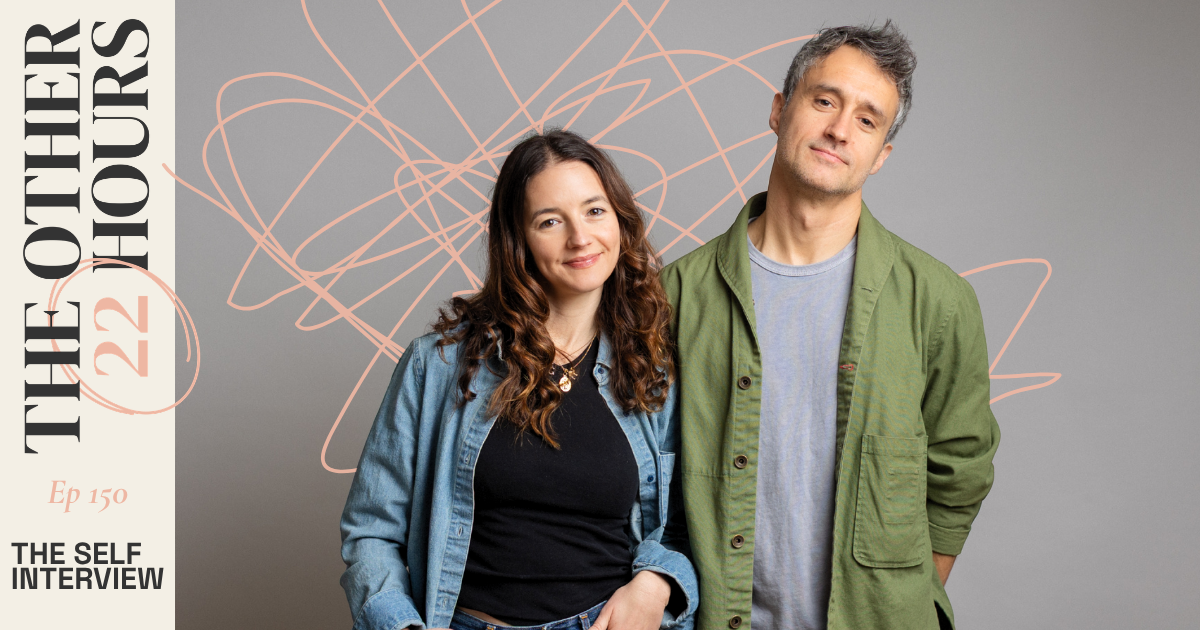
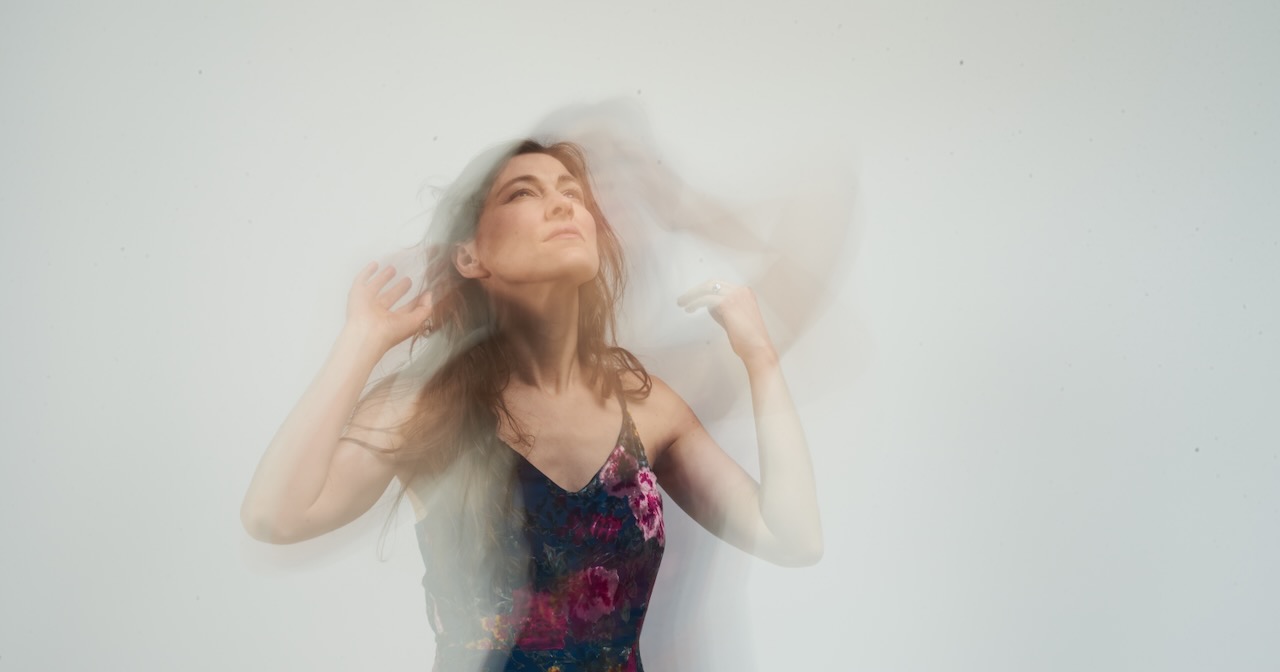
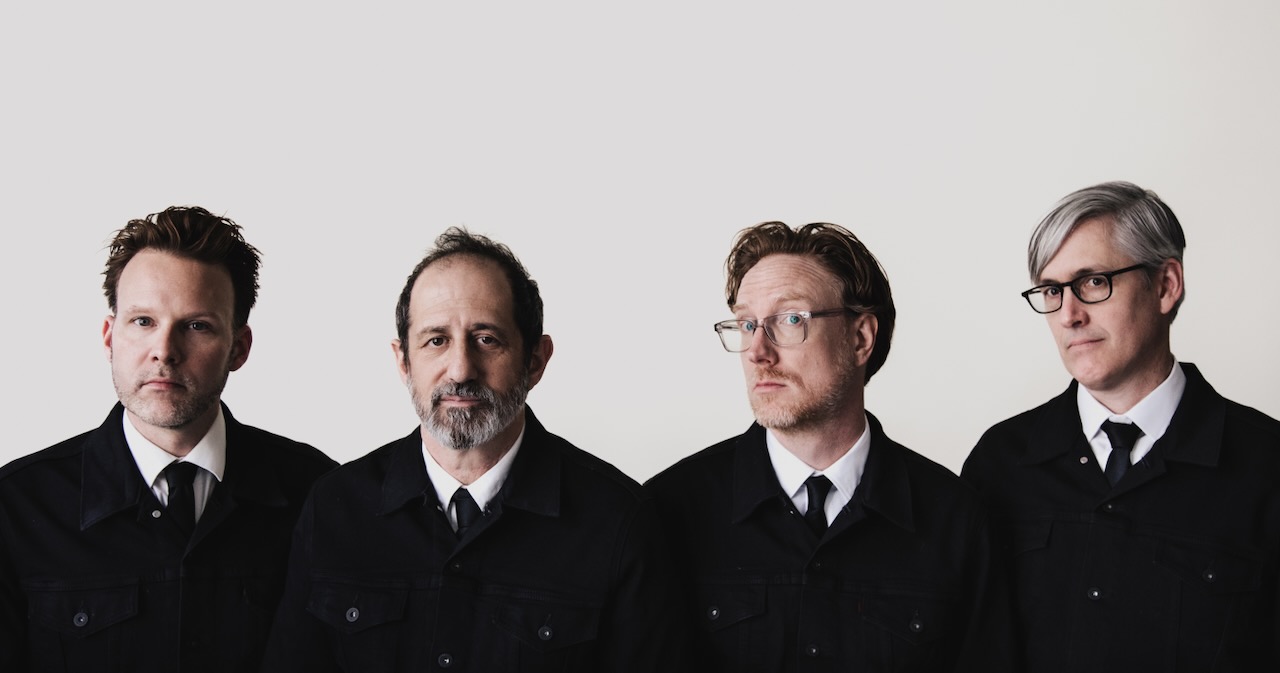
To celebrate our 150th episode of The Other 22 Hours, we try a bit of an experiment: interviewing ourselves, for the first time. After nearly two decades of partnership, we examine the evolution of the creative self. Michaela Anne – whose fifth record, These Are The Days, marks her first in over 10 years for which she retains total ownership – discusses the “massive shift of self” required to walk away from industry gatekeepers. Aaron Shafer-Haiss, whose compositions have scored major network dramas like Station 19 and The Good Doctor, reflects on the “utilitarian creativity” of a producer. It is a conversation about resilience, the “growth seesaw” of a creative marriage, and the realization that the dream is already happening.
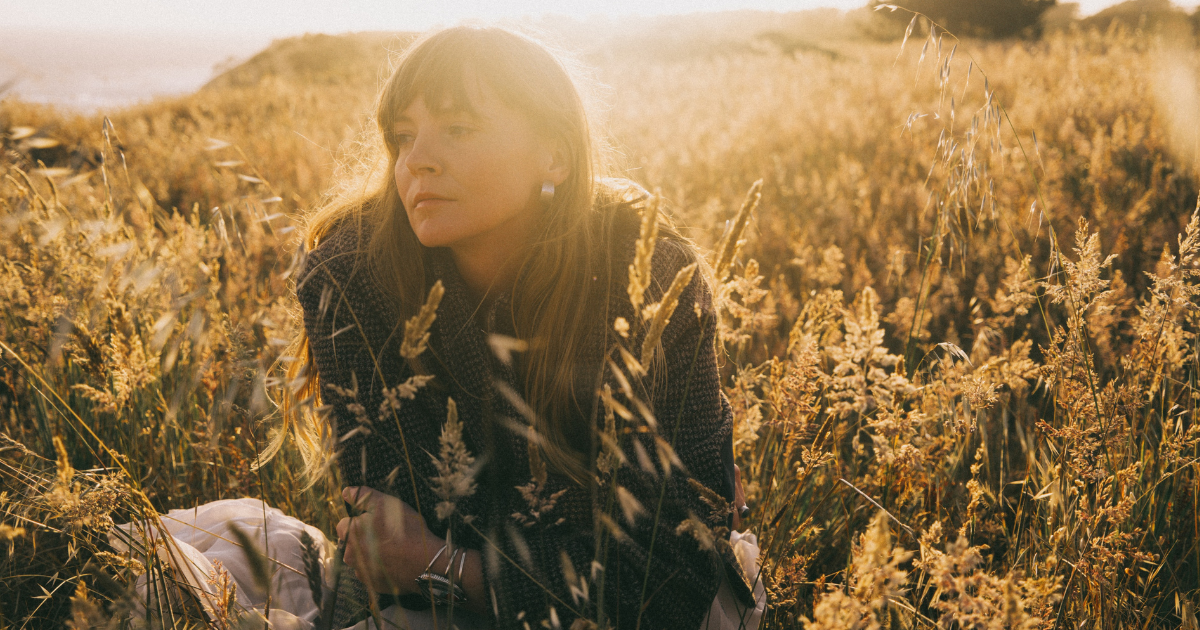
Courtney Marie Andrews’ story begins in Phoenix, Arizona. An only child raised by her mother, she found solace and an outlet for her creativity and imagination in music. She planted her music roots in a self-described “feminist punk band” and began touring while in her teens. Along the way, she recorded a number of albums – best known are Honest Life (2016), GRAMMY-nominated Old Flowers (2020), and Loose Future (2022) – lived in a number of cities, and worked and toured with a number of musicians, including rock band Jimmy Eat World.
Andrews eventually made her way to Nashville, where she now resides. There, she creates music and other art, fueling her soul and inspiration with long walks and her love of animals, bonding with friends’ dogs, and feeding an assortment of “porch animals,” mostly cats, who take up residence outside her door.
In addition to music, Andrews expresses herself through painting and poetry. She has published two collections: 2021’s Old Monarch (2021) and the recent Love Is a Dog That Bites When It’s Scared. Her music, writings, and artwork explore a broad scope of emotions and experiences: loss, grief, fearless love, deep darkness, pure joy, and acceptance of the entire spectrum.
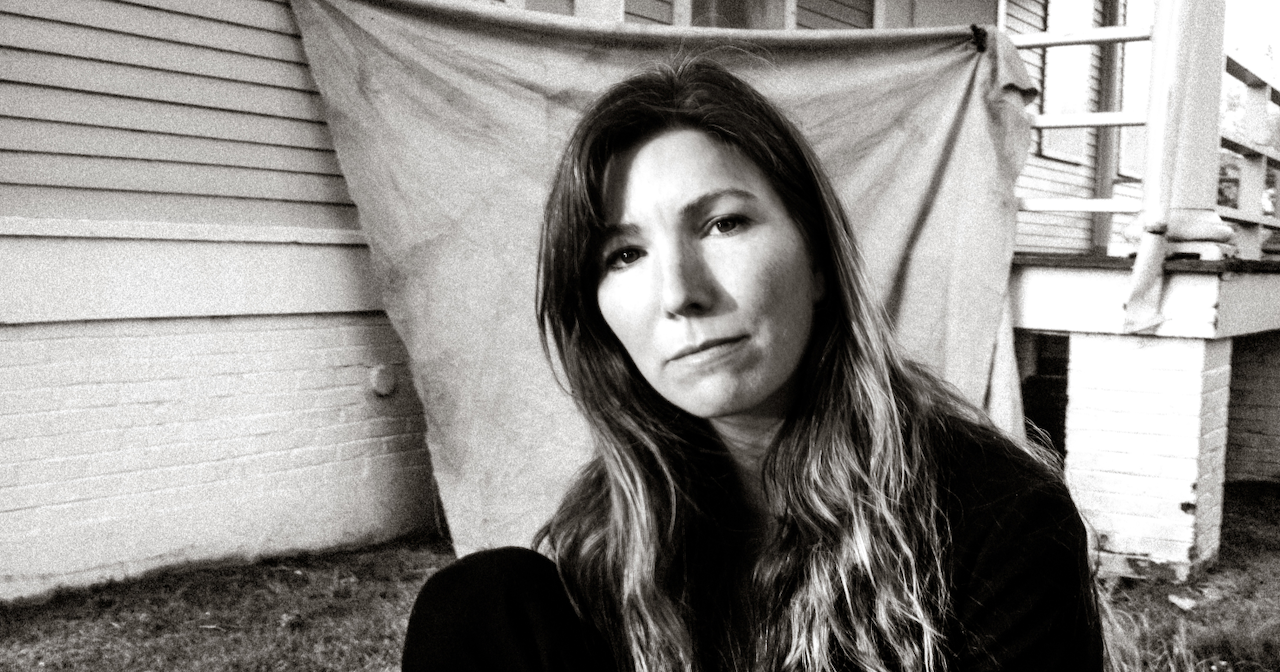
These outpourings are at the essence of her new release, Valentine (out January 16 via Thirty Tigers). Written in the throes of anticipatory grief, the album plummets into the vortex of her trajectory. While the message is raw, the recording is anything but. Valentine is an unfiltered look into Andrews’ heart, filled with waves of sounds and layers of instrumentation.
Among the numerous instruments she plays on Valentine, Andrews is featured on an assortment of guitars and basses, including a 1973 Martin D-28, 1968 Gibson B-45 12-string, 1970s high-strung Japanese Epiphone, Gibson J-45, Epiphone Casino, 1972 Fender P-Bass, 1960s Kay K5915 bass, and 1960s Teisco six-string bass. Longtime friend and colleague Jerry Bernhardt joins her on various instruments, with drummer Chris Bear rounding out the trio. The album was recorded by Michael Harris at Valentine Recording Studios in Los Angeles and produced by Bernhardt and Andrews.
BGS reached Andrews via Zoom for an Artist of the Month conversation.
Has Nashville changed you as a songwriter?
Courtney Marie Andrews: I thought it would deeply shift everything for me, but if anything, it made me want to do other things as well, maybe subconsciously. I started painting and focusing on poetry. But that core sense of self, that songwriter self, will always be with me wherever I go. It’s hard to say how it has shaped me until I’m looking back on my life 20, 30, 40 years from now.
But I will say the community I’ve found here is profound. I’m a Western girl. I’ve lived in Arizona and Seattle up until pretty much my 30s, and I didn’t realize how lonely the West can be. I think that’s apparent in my early work as a songwriter. That subject is throughout the work. When I moved here, I was almost overwhelmed by how much people wanted to hang out. It took a while to adjust and now I can’t imagine it any other way, not having that community to feel into and understand this work, because it is a strange career. So I think more [that] it has affected me personally, but I’ve always continued to write and been on this journey on my own and in my own time.
This is a stripped-down album – only three musicians, including you, and one of them is also your co-producer. Did you know, when the songs were written, that this is how it needed to be done?
I completely funded this album on my own, so if I’m being frank, it was an economical choice. Originally, we would have loved to have a band, but in hindsight, ultimately it created the record it created and I wouldn’t have had it any other way. There’s some power to it being a very condensed group of people, because the focus is a little bit more zoned in, and it becomes a vibe if it’s coming from a few core people, rather than everybody adding their stroke to what you’re doing – which I think is also valid. But looking back, it was probably the best thing we could have done, having Jerry and I playing all the instruments and Chris Bear, of course, on drums.
You played a number of guitars on Valentine. Do the songs determine the guitar, or does the guitar sometimes direct the song?
The songs ultimately lead the way on feeling and vibe. Jerry and I wanted to layer the record. There are a lot of different layers of guitars. We would varispeed one guitar up, so it’s super-high, and then we’d varispeed one guitar lower, so it’s super-low, to create the rounder sound, especially if you’re listening in headphones or on a high-definition speaker system.
But it’s definitely song-driven, whatever the feeling. “Best Friend” is just my guitar and Jerry’s twelve-string. We didn’t go much further than that, because the song was meant to be a bit sparser as far as the depth goes.
“Everyone Wants To Feel Like You Do” is about a certain type of misogyny where it’s, “I do whatever I want and I don’t care about the consequences, nor am I held accountable for the consequences.” The song was written with that feeling, and I thought it would be funny if I played guitar like that, where I didn’t care, so I over-distorted my guitar and played as crazy as I could to assert my power.
How do songwriting, poetry, and painting each fulfill a different side of your artistry and emotions? Is there ever some cross-pollinating?
I wanted to tell the same story with a different perspective, so there is cross-pollinating in terms of the source of the material, where it’s coming from, where I’m at in my life, whatever darkness or lightness I feel. It all sources from the same well of emotion and experience. But there are different ways of telling the same story. I found that when I was songwriting exclusively, I would write the same song over and over again. Whereas if I take a step back, do a different medium, and come back to songwriting, I feel fresher.
Ultimately and forever, I’ll always identify and feel the deepest connection with songwriting. That’s the first thing I fell in love with. It’s the thing I understand the most. But the mystery of these other mediums has really flourished.
There’s a natural through-line between poetry and lyrics. What about painting? Do lyrics sometimes inspire a painting? Does something you create on canvas ever become words in one of the other mediums?
There’s not a lot of crossover. I don’t look at painting like I would look at a page or a song. Painting is, for me, a place to describe emotions that are unexplainable. That’s why painting is so cool. It’s almost equivalent to jazz; it’s more of a feeling that you can’t describe. That was enticing to me. To express myself as a word person who ultimately values words so much, it was important to think outside of the box a little bit. Painting allows that. To not be confined by words is really interesting.
Tell us about your recent Artist in Residence at the Iowa City Songwriters Festival. You performed and did a reading from your new book, but what does “artist in residence” mean at this particular event?
Because Iowa City is a UNESCO World Heritage City of Literature, there’s a heavy college-funded element. I’m not sure if that was their direct funding, but they definitely have more of a collegiate approach to an artist in residence. I’ve done some residencies where they don’t want anything from you. They just say, “Come up and write whatever you want. We don’t care.” But this one was definitely a bit more mentorship-driven. I led a class, a songwriting workshop. I also had one-on-one mentorships with young songwriters, people who are just getting started. They had a packed schedule for me, but it was so lovely.
I think their ultimate goal is to prop up songwriting among the other literature of the world, having songwriting classes in college, and having it there with poetry, fiction, nonfiction, memoirs, memoir writing, and all that. I think that’s ultimately what they’re trying to attain with the residency program. So it was great.
I’ve found that I really love to talk about songwriting in that way. I think that, in our culture, it’s a dying thing, at least from where I’m sitting, to seek out opportunities to learn from elders, from people who’ve been doing it a long time. The more we can do that in our culture, the better off we’ll be. It’s an incredible festival, and I would highly recommend people going. The people who run it are just wonderful.
When you lead workshops and do one-on-one mentoring, is it as much a learning experience for you as it is a teaching experience?
Absolutely. I think to teach is to be a constant student. The moment you feel like you’ve figured it all out … I don’t know if that’s a good thing. Even as I speak about songwriting, I say things that open doors all the time to myself. It’s good to be endlessly curious.
Do you think being an only child contributes to your storytelling ability through songwriting and poetry? Living inside your head, escaping into your own head, in a way that might have been different if you had been surrounded by siblings?
Oh yeah, absolutely. Because I was a latchkey kid, I spent a lot of time alone. If I didn’t have a friend to play with, I had to go into the inner landscape of my mind. That was my way of communicating in a deeper way that I couldn’t quite get in my home life if my mom wasn’t home. I can attribute a lot of my childhood to that. I was a deeply imaginative kid and would create stories all the time. So I think the loneliness also fueled what I do now.
Do you draw from those past emotions when expressing what you’re currently experiencing?
How it manifests is that it’s like a period of reckoning when I’m writing songs. I’m generally alone. I find it very hard to write if I know somebody is even in the next room. I’ve had weird moments in my life where I wrote at soundcheck and stuff, but when I listen back to those things that I’ve written around people, it’s not as dialed in. So when I’m writing, I’m alone and reckoning with the life that I’m leading, or the life of others. It feels like this very quiet thing that needs to happen.
Are you an old-school pen-and-paper writer or have you gone the way of voice memos?
I do both. I exclusively use a green book to write in. It doesn’t matter what color green. They all are green, though, green-colored notebooks, generally the Moleskine variety or that look. I have plenty of them in a pile. [And] I love Micron, the ballpoint art pens. I really don’t like the standard DMV pen. I’m a little bit bougie when it comes to my pens. I like the flow of a Micron. I write and then voice memo. Generally, once I’m done writing a song, I try and always get it down in its unproduced form. I think it’s important to have that, and the phone happens to be the easiest way.
Is playing guitar, just playing, as much a part of songwriting as writing lyrics?
Oh, yeah. I love the guitar. I love open tunings. I love acoustic guitar music, Hawaiian slack key, and classical Spanish-style guitar on a nylon. I love to play and try and emulate that style. And so in certain works, it’s the first thing that happens. There’s many ways to come to a song, but one of them is [to] play a chord progression I like and sing gibberish, and that sometimes leads to a song. In that case, absolutely I need the guitar. But yeah, the instrument can definitely lead the way. It just depends.
When you spoke earlier about adapting to the Nashville community, it brought up the thought that growing up as “an only” maybe affects our social skills to a degree. It can make community something new, as opposed to something you’re used to having around you.
Yeah. I feel that. I have a hard time with small talk for this reason. I want to go immediately for the jugular, as far as intense conversations. I go from zero to a hundred. It’s really hard for me to be like, “Hey, how are you doing?” I feel like such an actor in those circumstances. Of course I’ve learned to do it by way of being a musician – you have to talk to new people every day. But small talk doesn’t do it for me. I have a hard time going in a simple, surface level.
In the bio accompanying this album, you said, “I was in one of the darkest periods of my life and songs were the only way I could reckon with it. I felt cursed and the only mental cure felt like songwriting and painting.” Have you always felt that darkness?
Obviously, as a teenager, I went through a pretty wild part of my life where I felt dark, but I think I actually denied my darkness for a very long time. I lived in a haze of denial and hope, which is a beautiful thing. It can do wonderful things for your mental health. But you also can’t really grow if you’re living in that state.
When I was younger, especially in my early twenties, I always had this hope – “Oh, one day things are going to change.” That denial, that hope, kept me in this holding place, which for a time was really nice, and as a matter of defense and self-preservation, I stayed there for a long time. It wasn’t until I started therapy that I realized I always had this underlying darkness. When I had that, we worked on that, and real things started to happen. Things in life that are so hard that happen to all of us – it became deeply dark and profound to experience that in a more awake state.
How did that help with writing this album?
During a lot of writing this, I was caretaking for my family member who was terminal. If you’ve ever been in that situation, it is all-consuming. The only way I could turn my brain off from that was to write. It wasn’t “I need to write an album.” It was “I need to get back to myself for a moment.” I wouldn’t say it was a conscious decision. It was just I know how I am, and I know that songs are my only way of regulating in these crazy times.
You once said you felt embarrassed by the vulnerability of your songwriting. Where do you draw the line, or do you draw one, between what needs to be said for yourself and what needs to be said for listeners for whom you are the voice? How do you do this and protect your mental health when performing these songs every night?
I’ve always said that once the song is written, it’s not mine. It also transforms for me as I sing it. There are songs I wrote fifteen years ago that I still perform, that have taken on completely new meaning and feel different to me when I sing them. I honestly can’t remember the headspace I was in when I wrote them, or the origin of them, or who I was thinking about, to a strong degree, but I feel differently about them.
As far as what needs to be said, ultimately I try to relate to people, or first myself, and then you put the song out and it becomes a different thing. I try, in an artistic space, to be as true to myself as possible. I try not to put up any walls in that space. As far as my life where I’m not playing music, that’s a different thing. But music is a safe space to say whatever the hell I want to say. That’s the reason it’s such a powerful thing. It’s a safe place for me to communicate. Whatever walls are up in a song are walls that I have up with myself. That’s always very apparent when you write a song. It’s not quite clicking and you’re like, “I’ve got some walls up to my subconscious, clearly.” So the extent to which the boundaries, the walls, are up is truly only the stage at which my heart is at in that moment.
Did that happen with Valentine – the walls, maybe the fear of the vulnerability? It’s deeply personal and powerful, going deeper and deeper into those emotions as your journey is sequenced.
I hate to say it, because I don’t want to sound trite, but making albums, making bodies of work like this, fear is the last thing on my mind. Obviously, natural fears come up: Is it going to be what I wanted, what I envisioned in my dreams? But as far as songwriting and being vulnerable in a song, that’s not the fear. In fact, if I got very close to the heart in a song, it’s generally the ones that I’m like, “That’s a good one. I got there. I got to the essence of this thing I was feeling.”
Being vulnerable in life can be really hard in my personal life, in some ways, and I think that is more where the fear is. But, for whatever reason, the way I direct it is okay in a song, and I’ve made up my mind for that to be true. I don’t know why; I guess it just makes sense to me. Human emotion makes the most sense to me in the backdrop of music.
As far as sequencing, Jerry and I argued quite deeply about the sequencing, but ultimately it did go to a place where once we got the sequence, it was undeniable. Side A and Side B are completely different frames of minds. Side A, you’re fighting for love and you’re desperate. Side B is a resignation – this is how it is, this is how it’s always been, and this is my childhood. By the end, in “Hangman,” you’re just “This is how it is, and you can fight for it or you can walk away.” So the sequencing was purposeful. I wanted it to be a journey. I think records should be like that. They shouldn’t be all one color or palette the whole way through.
Explore more of our Artist of the Month content featuring Courtney Marie Andrews here.
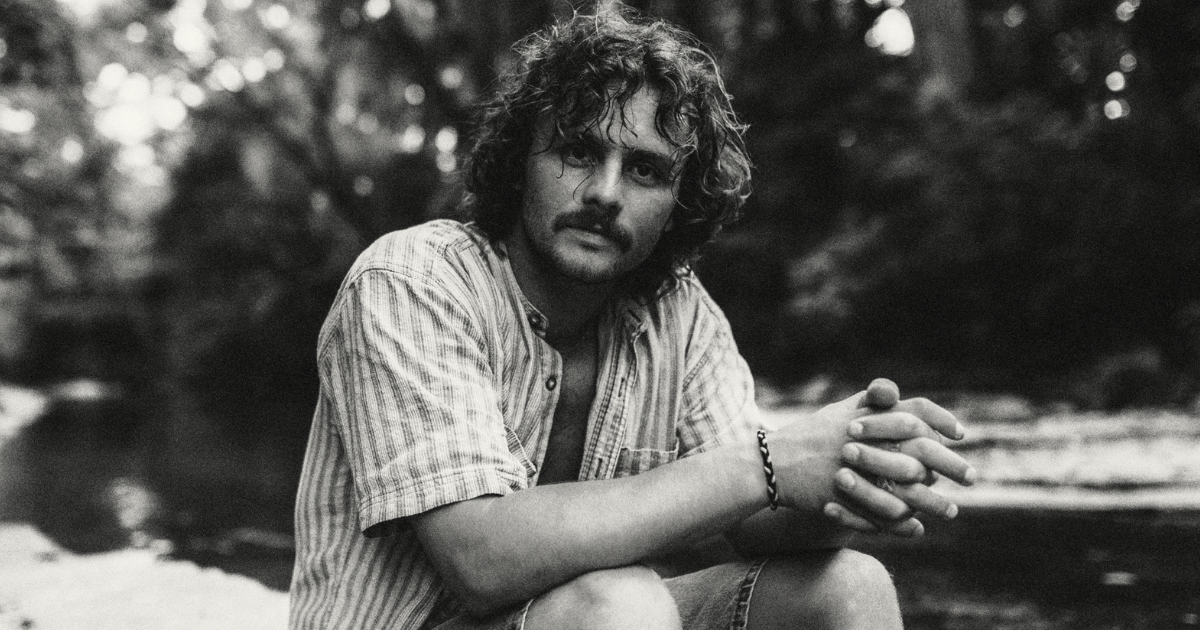
Evan Honer opens his new album, Everything I Wanted, with a charge of electric guitar – an unexpected twist for a singer-songwriter who has mostly recorded with a stripped-back sound. And after commanding attention with that blast of energy, Honer carries the listener through a range of emotions familiar to any twentysomething (and beyond). There are breakup songs, of course, but also entanglements with loneliness, self-doubt, and even the relationships that seem to be going well.
Recorded in Honer’s garage studio just outside of Nashville, Everything I Wanted documents a creative moment where sonic exploration may be the biggest priority. However, the fans who discovered Honer in 2022 through a TikTok cover of Tyler Childers’ “Jersey Giant” will likely embrace the songwriting on the new album, with lyrics that reflect a day in the life of someone who’s still figuring things out.
Honer was raised in Surprise, Arizona and excelled in competitive diving at California Baptist College in Riverside. Although a spot on the U.S. Olympic team was within reach, Honer turned instead to a career in music and established his own label, Cloverdale Records. From his home office, Honer called into Good Country to talk about his new album, his relationship with fans, and the road ahead.
I listened to your catalog, and this album seems more electrified than your previous work. Why it was important for you to show another side of your musical approach?
Evan Honer: I felt like the first two albums were… I guess it was what I was into and the production that I was a fan of at the time. I was so new to everything, too. I just thought, “I’m gonna record the guitar, then maybe we’ll have drums.” But I hardly had any drums at all with my first two albums. I guess I just didn’t know the possibilities. And the more I grew as an artist, and thankfully, with the resources that I have, the more things I can do. If I want this exact sound, I know I can do it and I can do it in my garage. My taste has changed. I grew as an artist, and I realized, why not? I can do whatever I want literally.
Are you pretty consistent with your writing routine?
Yeah, most of the time I’m working on something. And it could be one line the whole day, but I sat there for three hours. That’s very common. Now I’m writing with other people more – with artists that I am inspired by. And when I’m back home, it takes a long time. Sometimes it’s sitting with my guitar for hours, and I don’t get anything except a couple words. Or I go backwards and I change everything, then I don’t even have lyrics anymore. I try to do some type of writing every day, but on the road it’s a lot more difficult.
The song “Curtain” captures your relationship with your fans. What does that relationship between artists and audience look like for you personally?
It’s such a difficult thing for me. Recently I’ve been able to enjoy a tour more and not be so affected by it emotionally. On my first tour, I was so not used to how you’re running on no sleep at all and you’re around the same people for a month. You have a bad show, and it feels like your life is over. That is sort of what I wrote [“Curtain”] about, just the ups and downs of being on tour.
I still am upset after a bad show and I don’t know if I ever will not be. In my opinion, a bad show could be, like, one person talking for one song. It was tough for me to realize – and it still is tough for me to realize – that I have such a different perspective on it. There’s my perspective, and their perspective. I felt like I needed to write that song where it’s like, “I’m looking out at you, and I’m just grateful that you guys bothered showing up to hear me scream about my problems.”
And it really helps me, now that I let it. They’re constantly telling me, “Oh, your music means the world to me,” and that is the greatest thing to hear. But them being there is like the whole reason and it means so much to me. That relationship is not one-sided at all. It’s completely: “I need you as much as you need me.”
Listening to “Not There Yet,” I can remember that phase in relationships where it’s like, everybody wants me to be all in, except I’m not sure myself if I’m ready. When you finish a song like that, who is the first person that gets to hear it?
Most of the time, my best friend Blake Abernathy. He was a big reason why I started doing music. When I graduated high school, I went to go sell AT&T Internet and DIRECTV. I moved out to Minnesota with Blake and that’s where we became best friends. We worked together and he shared his music tastes. Tyler Childers was the first person he showed me and I’d never had felt that feeling before, from hearing a true songwriter, someone that makes me feel something.
And from that point, I went down a rabbit hole with my favorite songwriters, like Benjamin Tod, James Taylor, Jim Croce, and so many that I can’t even think of. And that’s how I started and fell in love with writing. From then on, I sent every single song to Blake and he always shoots me straight. He’s always such a big supporter in anything I’m doing, and he always gets it. He’ll tell me, “This is very different, I’m not sure if I like it yet,” or stuff like that.
For the record, can you explain how the “Jersey Giant” video took off?
The first song I ever posted on TikTok was the first song I released, called “How Could I Ever.” I had a good reaction to it and that was literally one of the only songs I had finished. At that point I was like, “Holy crap, I have to write another song because I don’t have any.” Maybe four months later, I was like, “All right, I got a new one.” So, I released “Comfort the Fall” and then “Foolin’ Ourselves,” and maybe a couple other ones, I’m not sure.
Then I released “Jersey Giant” as a cover and it went crazy. Then a bunch of label people were in my email! That was so funny. “Jersey Giant” was a big moment, for sure, but I think the songs that made people come to the shows were from my first and second album, rather than “Jersey Giant.”
I saw you playing banjo and singing a Noah Kahan song, “Dial Drunk,” on a TikTok video. When do you find yourself reaching for the banjo? Is there a certain mood where you think, “Banjo is going to make this better”?
Yeah, there’s a good amount of banjo that I played on this album. I don’t know, I just love the banjo. It’s always so interesting to me to have a song like “Long Road.” It’s not super country. And then you throw in a very country instrument, like a banjo. I love having really country instruments in songs that are not country and have very different melodies than what a traditional country song would normally have. It’s always fun to just throw in a banjo, whenever it feels like it needs it. Maybe I overdo it sometimes. [Laughs]
Do you remember when you first reached for the banjo, or what led you to it?
My grandma actually got me that banjo. I just wanted a new and different instrument to write on, to create new ideas. I think that’s always helpful with piano and banjo. Just writing on a different instrument to hopefully get a different outcome, because sometimes I’m writing on the guitar and it feels like “I’ve written this song already” and I don’t feel excited about it. Now I’m trying to explore every option to write a song, even if it’s writing and producing at the same time.
That’s a scary thing to me. It’s like, we’re writing this song as we’re making it. Normally you have a whole song, or at least how I do it, and you produce it out, and the creative part is producing it. But it’s kind of scary when you don’t have the lyrics. You don’t even know what the chorus is going to be, but you’re already starting to produce it.
Is that because you’re on deadline or just trying to stretch your boundaries? What leads you to a situation like that?
There’s no deadline at all. [Laughs] I’m a fully independent artist, so it’s all up to me when I want to release stuff. I think that’s why I feel like I’ve released a lot more than maybe somebody that kind of started the same time. Three albums in, it’s just me trying to make something different.
I read you released an album the day you graduated from college. Was that like a mission statement? Like, “I’m gonna do this. I’m a musician from this day forward”?
Yeah, pretty much. It’s called West on I-10, because I would go west on I-10 driving back from home to college. Funny enough, the navigational voice would always pop up in my voice memos with, like, “I-10 West.” I had already decided that I was going to do music full-time. I was a diver in college and I originally made plans with my coach to do my fifth year and go for the Olympic trials. That was tough, making that big change. First, my dad was very much like, “Wait, are you sure you want to do this?” But now he’s the biggest supporter ever. There was just a lot of uncertainty and releasing that album on the day I graduated just felt like the most normal thing for me. All those songs I’d written in college are now on that album, and I felt like then I can move on to whatever else.
What goes through your mind now when you hear this new album in its entirety?
This is always tough for me. In January when I recorded it, listening through the album, I’m, like, incredibly stoked on it. And I still am, but it’s a different type of stoked now. I’m stoked that it’s out and I don’t have to sit on these songs anymore. I can move on to what I’m liking now. Because right now, my taste has already changed, where I’m into different production styles, I’m into different, really weird lyrics, or whatever it is. I’m in a different spot now.
That’s always an interesting thing to see how delayed the music industry is. Even if I’m independent, it still takes time to do all these things. So that’s always a hard thing for me, but I’m so happy that it’s out, and I’m so happy that we recorded that way, just 18 straight days of recording. That helps with the cohesiveness of it. I’m really proud of it, and I’m really proud that it’s my third album, and I’m excited to make something else.
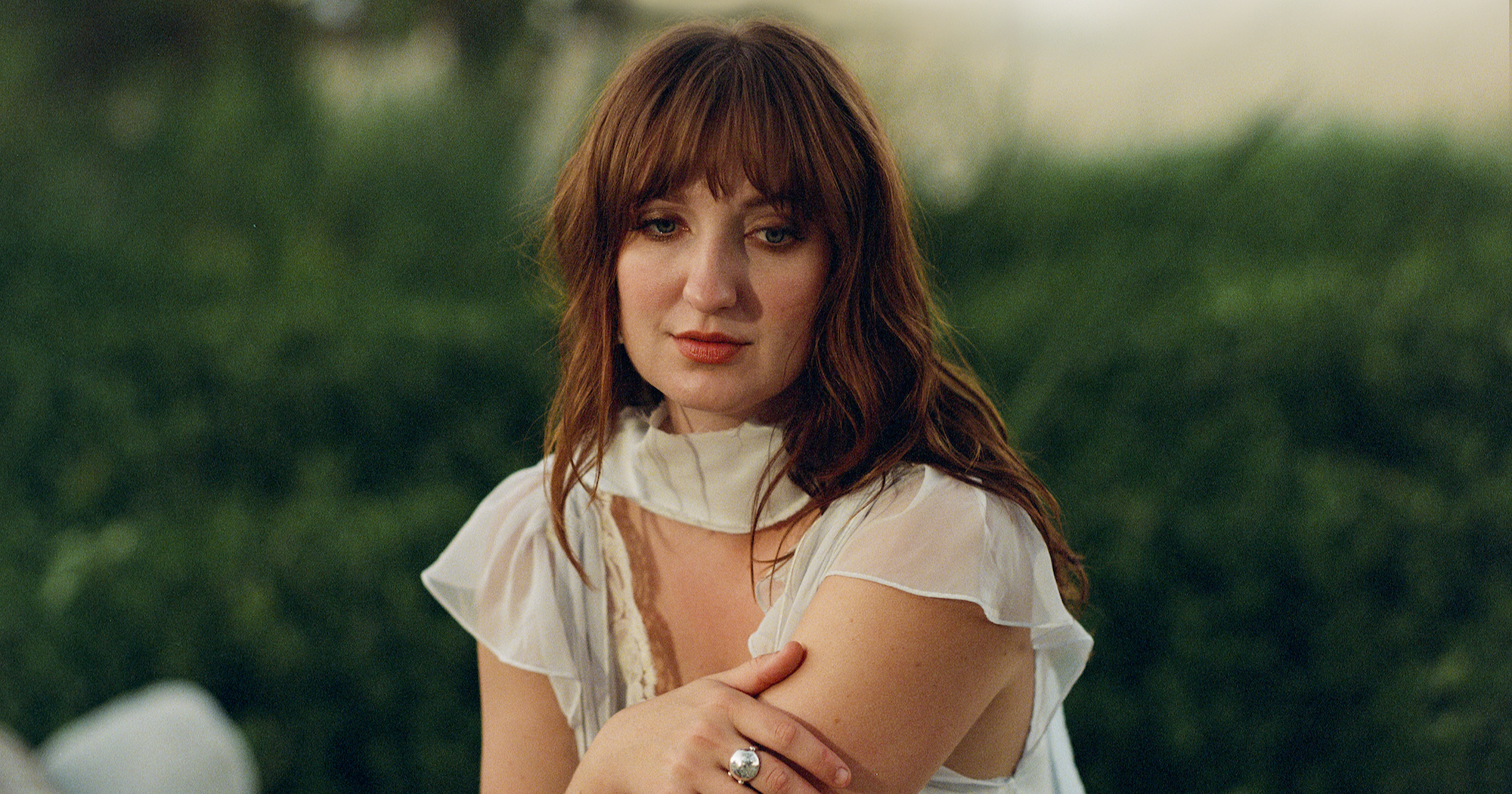
It is no news that Madison Cunningham is among the top tier of artists and musicians doggedly pursuing their craft; her newest record, Ace, casually echoes this. Soberly confronting a mountain of grief at home and transmuting its impressions through her open-minded, mature songcraft, the record encourages listeners through a seamless track list whose performances take on the form of open letters to its subjects. She treats an album as the dignified platform it once was and should be and this stance feels radical in today’s streaming-focused world.
A most striking feature of Ace (released on October 10, 2025) is the presentation of her vocals in a more expansive and spacious light, putting aside her much-associated – and anticipated – guitar for the piano, a more than suitable vehicle for this new terrain. Cunningham returns to her native instrument, the keys, as a “lost sojourner,” using it to strip away all but the most critical aspects of the record’s narrative, while highlighting its grooves and timbres.
All the songs played on piano started on guitar and later migrated to it. This practice seemingly grew out of her fascination with embracing the uncomfortable, like the open tunings she is known to use in her celebrated approach to the guitar as an instrument to be challenged and played with. From a new-to-her tuning, to the piano, and then to her band, this game of telephone still allowed Cunningham to sound more like herself.
The game doesn’t stop there. At a lair in Woodstock, New York, in the fall of 2024, Madison and her band committed themselves to a few simple principles: No demos. No vocal comps. “Do the thing that feels most musically true and curious.” And, “Don’t give a shit about what people have known you for.” These rules, in many ways, allow the anthropology of the moment in time during which this record was made to speak loudest. It goes without saying that this path is impossible to tread without a rigorous knowledge of oneself, trust in the folks around you, and, most centrally, the chops to back it up. The consequence of these choices is a record with a narrative “spine” throughout, animating what Cunningham likens to a ballet in its transitions – something she has been working toward both in the studio and on the road since her triumphant, full-length debut in 2019, Who Are You Now.
The song “Wake,” a duet with Robin Pecknold of Fleet Foxes, evokes the kaleidoscopic nexus of Alison Krauss & Robert Plant’s Raising Sand, the orchestration of Gillian Welch & David Rawlings, and the cinematic flair of Gustavo Santaolalla on top. More stripped-down performances, such as “Take Two” and “My Full Name,” demonstrate Madison’s subtle confidence as both a devoted curator and a fearless innovator. Woodwinds underscore and bookmark this collection’s ethereal climate, thanks to the work of Jesse Chandler. Taken as a whole, Ace brings the listener into the same trenches Madison found herself in and onward toward truth in the face of its hardships.
BGS reached Madison Cunningham via Zoom in mid-September to discuss Ace, its making, and the guidelines and rules by which she brought these songs into the world.
I noticed that you described the record as “light” when making it, despite its sober depiction of difficult subject matter. Which aspects were light to you?
Madison Cunningham: That’s a great question. The mission for making the record was really clear and all the “guidelines” were set up well in advance, which was something I had never done before. In the past, my process has been more about figuring it out as we go. This time, my band and I were very prepared. I used the touring band that I’ve been with for the last five years, and the deep collaboration and shared language we’ve developed over that time made everything feel so fluid.
We were all “cracked open” in this special way and we laughed the whole time. That’s probably what I mean the most about the record being “light,” how joyful it felt. I didn’t feel much fear while we were making it. I just had a picture of how I wanted it to sound, and it already was sounding like that. That felt like a relief.
Did you feel like you had less to prove in a superficial sense?
I guess there’s always something to prove. I don’t mean to erase the feeling that I had, which was, of course, a certain amount of pressure or wanting it to level up in some way. But, in light of being quite devastated in my personal life, everything else felt so small compared to the mountain I felt like I was climbing at home.
And maybe that was the gift and that’s why everything felt like it. For whatever reason, everything felt like green lights. It just couldn’t have been easier. Also, I’d never had a more fluid relationship with my label; there was no argument about how this was going to happen. It just was like, “Go. Do it.”
How would you describe the guidelines you had in place for this record and how did they differ from your usual process? Also, did playing the piano more for this record affect your writing style, perhaps making it more expansive in some ways?
I started as a kid on piano first and it had a resurgence in my life in the last three years. I fell back in love with it and I enjoyed the feeling of being a lost sojourner on it, just being like, “Oh, I’m finding all these things that I now am – I found a style here that I’m injecting into my guitar playing.” I wanted to play guitar more like a pianist.
One of my guidelines was, “Just don’t give a shit about what people have known you for, what they might expect. Do the thing that feels most musically true and curious.” And that sounds a lot like permission, but it was also a guideline. Another guideline was, “Make sure that there’s emotional delivery over anything that sounds too perfect. And don’t compromise on that.”
The other set of guidelines were between me and my band: we did a lot of rehearsal beforehand, but we didn’t record anything, so there were no demos. That was a huge rule. I also said, “I don’t want to do any vocal comps. I just want to sing the songs live.” That was helpful. It was another way of being like, “Okay, focus, and be in the room for the moment that these songs are being captured.” So, yeah, there was no previous, “Ah, but shit, we gotta out-beat that one demo we made.” Because that slate was so clean, I think everything was clearer.
During the recording process, do you listen to other music for comfort or do you stay entirely within the feedback loop of your own project? I’m also curious if the recording period was a continuous block of time, which would obviously influence your ability to listen to music.
We did record it continuously, and I don’t usually listen to music while I’m making a record. Honestly, destination recordings help so much with that, because you’re just immersed in the physical and spiritual environment of the whole thing. We were up at a lair and it was fall – it was this time last year – and there’s this beautiful hike that allowed you to look over the reservoir and the golden, brown, red leaves. I felt so romantic that whole time. Even if there was something that wasn’t working, I just had such faith it was going to get there.
We also had a crazy sort of work cycle, which was [that] we would start the skeleton of the song in the morning and then we would record until 2:00 AM and finish it. Again, I think because we all had the guidelines, we were like, “We want every song to have woodwinds pretty much, unless it doesn’t call for it, so we’re going to try and flesh it all out in the same day.”
Jesse Chandler did all that. He’s a genius. We would both talk through things we were both hearing, and then he would just play it all. It was like building a puzzle in real time, and it felt so wonderful to be able to see it all and to feel moved by it. We barely did any overdubs. We did another session in LA a month later after those two weeks up at Woodstock and did a few little overdubs, but we had mainly done everything while we were there.
Ace feels like a return to the “record” as a dignified format. In the lead-up to making it, did you think about the songs as individual tracks – as it relates to streaming culture – or did you focus on creating a cohesive narrative for the entire album?
There are so many examples of records that feel like a full statement and we’ve lost that. That feels radical now. I feel like I’ve made records that have been molded to the current format and I was so disinterested in that this time. I am so over the, “Hey, let’s just do what everyone else is doing,” and, “It’s guaranteed to work.” I really mistrust people when they say that to me, and that mistrust has usually been right.
Even if I see the “format” working for someone else, I’m like, “But that’s not me. That’s not my music, so we can’t say that’s the target, that’s the answer.” I was so interested in making the record feel like a ballet and feeling like the transitions were seamless. It was the first record I felt like I made that had a spine that connected the whole thing and I still find such value in that.
To be honest, we also made efforts to make sure that the songs were not too long. They were separated from their instrumental tracks so that it could work for playlisting. We weren’t, like, fully in protest.
When working on a song like “Wake,” where did that start? How different does it look from when you’re playing it on the couch, versus sitting down with Robin [Pecknold] to record it? Could you walk me through how that song got made? I love how active the guitar parts are, the closeness of the vocal harmonies, and how relaxed everything feels in the recording.
MC: I love that. I really appreciate that it comes across that way. That was the goal and the way that it was written. I wrote it with another songwriter named Will Taylor and we were both just playing these counterparts. And that’s where the seamlessness of it kind of took place; on the recording, that’s the direction I wanted it to go in. Then I just added some different flavors.
All those guitar parts you hear were added and layered, but I didn’t do very many takes of them, so that’s how it might feel live. I didn’t get in there and try to overly correct things. I wanted it to breathe. That has to be one of my favorite songs on the record because we wrote it in a Nashville blizzard and it sounds like that. The guitar part sounds like snowflakes falling in different directions to me, and Robin’s voice is just like a warm fire.
Did you record that in Nashville, or did you just write it in Nashville?
Wrote it in Nashville, recorded it in Los Angeles a year later, and we did all of that, everything that you hear, in one day. I recorded the main guitar and sang at the same time and then Robin sang in the other room. And once we figured that out, we added all the guitars, then Daniel Rhine added upright bass, and then we did the foot stomps at the end. And that was the song.
For the guitar-centric people, is “Wake” in an open tuning, and do you mind sharing what that is?
No, I always forget it, but I’m going to pull it up on my “favorite tunings” column.
It is C-G-D-F-A-C, from low to high. It’s basically an open suspended chord and it’s so tricky. At first, you’re like, “There’s no possible way through this tuning.” And that’s the tuning I wrote all the record on. Every guitar here, it’s in that tuning.
Your music contains rhythmic feels that seem to be informed by drums or percussion, outside of the guitar. I know you’ve played percussion – does your drumming experience influence your songwriting on other instruments? Do you workshop things back and forth with your drummer, Kyle [Crane] in this way?
I feel like if I were to show you the original demos of these songs, there was already such a strong, informed rhythmic thing, more than in the past for me. And Kyle, I think he was playing into, “How do I make this feel like we thought of this at the same time? Or, “How can it feel like that?” For example, “Break the Jaw” came out of a band jam. I wrote the lyrics to it, but the feel of the song wasn’t something Kyle tried to figure out after the fact. We were figuring it out in real time and I think that’s why it came out so cool. Everybody put their stamp on it.
The whole process was us trying to figure out the skeleton of rhythm and how to make it feel like it wasn’t fighting with itself.
I’m wondering how you approach sequencing an album. When you consider the interludes, the streaming world, live performance, and recording, are there specific ideas, people, or records that have helped you learn how to think about the flow and energy of a record from start to finish?
Ooh, yeah, I’m sure. Radiohead is a big one for me. I think the sequencing of their records is so specific. Their opening track is always perfect to me and their closing track is always perfect. From the beginning of making this record, before all the songs were written, I knew which was going to be the first and which was going to be the last. And then Robbie Lackritz – who made the record with me – and I spent a lot of time delineating over sequencing.
The story of the record is important. Obviously, the tempo arc, and the keys melded together. The story has a plot, so that was a big thing. I wasn’t trying to write it like that, but from an aerial view, I was like, “Oh yeah, this is how it connects.”
In the song “Take Two,” you mention a fear of writing simple songs. Did this perceived fear influence the guidelines you set for yourself when writing the album? Also, were the initial ideas for the songs primarily written on guitar or piano?
For every song that ended up on piano, it actually started on guitar – with the exception of the instrumental pieces, which were formed from the piano.
For example, “Shore” started on guitar and so did “My Full Name,” but they felt like piano songs to me because I was doing a lot of transposing between instruments to see if the song was good. I would transfer it between instruments and say, “Yeah, it still has a message.” In doing that, I fell in love with “My Full Name” on the piano.
“Take Two” also started on guitar, and I was like, “I don’t like this song very much. I love what it’s saying, but I find it to be so boring.” It was a song that everybody on my team was attached to. When we got to Woodstock, the song came together on the piano before we were going to record it and I was like, “I love this song.” Something made me say, “Hell yeah.”
On a more technical note, I’m curious about the guitar sound for “Skeletree.” It sounds like a low-tuned nylon string guitar with a contact mic. What was it?
Killed it. That’s exactly what it is. There was this big bedroom with a tall ceiling and that’s where we stored the amp. The contact mic was also sitting in a really big room, which contributed to the fairy dust.
Very cool. Were there any other notable guitars on the record that were new to you or were just lying around the studio?
I used a hollow body for the bridge of “Break the Jaw.” I think it might have been a 330 or something. I really love that you can hear a crunchy, kind of reverb thing just break out for a second. I also used my Collings acoustic. I know I had that for a few, but mainly it was just that nylon string that I stuck with. A little bit of the Collings, and then that electric guitar once, for one section of a song, and then all piano after that.
I did play electric bass for “Golden Gate” and “Mummy” too.
Do you ever write on bass or play along with records on bass?
I do, and I wrote “Golden Gate” on bass. That line that you hear at the beginning, it started with that.
Do you have any advice for people who want to feel like they don’t have anything to prove, especially if they are working toward a platform in the process?
I feel like the thing that I’ve learned the most from is, even if you don’t fully have your sound yet, make it a mission to just make music you like the sound of. Even if you haven’t fully found yours yet, you will, by way of learning what it is that you love and what you like coming out of your own body and mouth and fingers.
I think the things that have spoken the most to people is going, “I can tell that you love what you’re doing.” And even though in my earlier years, you could definitely see a lot of comparisons, I needed those because those were the things that made me believe in music and what I was doing. And then I think those faded away and now this record is the first time I’ve ever been like, “This is what I’ve always wanted to make. This sounds like me.” It just took a minute, but I enjoyed the whole ride.
I also feel like I was never not myself. Everything that I did, I felt was a risk in some way or stretched me as an artist. … What I loved the most about making this record was that all of it felt in balance. Finally, my voice was the loudest.
That’s just because I finally, like you said, trusted myself, trusted the process. I knew enough to know that even if something isn’t working the first time, there’s always a second, third, or fourth to try. So, trust your curiosity and do whatever it takes to make sure your curiosity is above the fearful, negative self-talk.
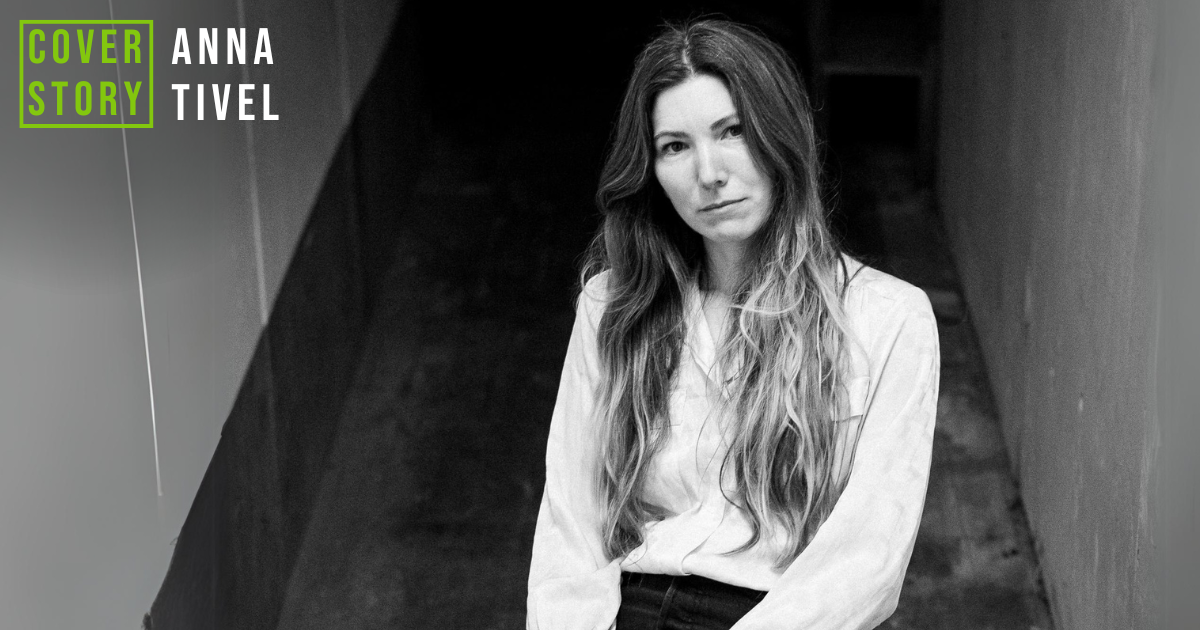
There is something woodsy and nature-rooted about Anna Tivel’s songwriting. It calls to mind mountain hiking, tall pines, mushroom foraging. The clink of a water bottle against a caribiner. The gentle tiptoe sound of dew dropping from treetops. Maybe it’s Oregon that’s seeped into her bones. Maybe it’s just the way her intrinsic poeticism steers things.
Listening to Tivel’s music tends to conjure the words of other writers. Consider some of the final lines from Barbara Kingsolver’s Prodigal Summer:
“Solitude is only a human presumption. Every quiet step is thunder to beetle life underfoot; every choice is a world made new for the chosen.”
Or, consider the poetry of Wendell Berry or Mary Oliver or Andrea Gibson. Each seemed to have plucked their pieces from shrubs and vines – or at least from the air around their foliage. Indeed, some of these names came up in our recent conversation with Tivel about her new album, Animal Poem, which drops August 29 on Fluff & Gravy Records.
Much like a walk through the woods, Animal Poem offers listeners a pathway toward retaining their humanity in a world that can feel inhumane. Though Tivel notes she began writing this album two years ago, she was conscious of the shifting geopolitical landscape and the way the chaos in the news might – or might not – echo into people’s private lives.
In the end, she suggests that life is mostly made of small moments between people who are guided by love and who are trying to understand one another. Those are the moments of dissonance where our commonalities have the best chance of prevailing. To hear Tivel tell it, that is the basis of her job as both poet and songwriter.
With so much going on in the world geopolitically, so many people are struggling with how to make art and why to make art and, of course, feeling compelled to continue to make art. But there’s this existential part of it that I feel like you’re addressing on this album. Maybe also in the creation of this album, which I’m guessing was recorded well before what’s happening today, and will be different from what will be happening when we publish it.
So, when you think about this album now, and what you were working through with these songs in that moment, how has it aged in your mind?
Anna Tivel: That’s funny, I was thinking today how, in this particular year so far, I’m having trouble [writing songs]. I’m having a lot of trouble finding the core of what I mean. I always feel like writing is this search for something a little beyond your understanding. You’re just moving through the world kind of trying to express what you see and what you’re learning and what you’re reaching for. And I’ve been finding, in this particular moment, it’s just so loud and it’s so tangled. I’m writing a lot of angry things that I will never play, [about] not understanding and not even knowing what to reach for to try to understand.
This album was all written like two years ago now, in a state of the world not dissimilar from this one. I was reading a lot of Wendell Berry and just thinking about big, overarching systems and how impossible it is for those to stay about people. [I was thinking] about the earth and kind of thinking about how these smaller communities … function and how things ripple outward. But, the really small things, like your family or your neighborhood. Power lies in these very mundane but magical lives we’re living. How we’re touching the person across the street from us or how we’re figuring out our own hearts, and how powerful that is in the overarching, huge system that [can] become very inhumane so easily.
I think there’s a lot of that there – a lot of love and immense, wild power. All these things are coming out of the technological wavelength that we’re on. And then things like love [that] just can’t be snuffed out.
As you were talking about what we’re reaching for, and the small things, I kept thinking about this image at the end of this record, in the song “Meantime.” The swing set that nobody used and this family that, maybe there was abuse, but the dad built the swing set. Nobody went out to play on it, and they left, and the swing was still there, blowing in the wind.
A swing doesn’t know what it’s reaching, but it’s always there to lift you. What a beautiful thesis that it is for this record, coming as it does, at the end. Can you talk a little bit about that song, “Meantime,” and your decision to place it second to last? Does it feel to you like that’s what this record was reaching toward? I’m always interested in how sequencing tells the story.
Sometimes [sequencing] is really just meaning-based, or it’s sort of sonically based. I really liked the idea of this record kind of starting with this song that expands as much as the whole country. And then going all the way down to the last song, [which] is just very quiet, about love between two people, or what it is to build the language of love with the people nearest to you. I like there to be some kind of journey on a record, where you’re taken through different stories and different lives, for there to be some sort of arc.“Meantime,” to me, feels [like] that’s what I’m trying to say, but it takes place in a very small image. It’s one neighbor. There’s always a lot of neighbors in my music. [I’m a] very voyeuristic neighbor, probably.
There’s this feeling on the record, I think, that we hold all these things and we’re contributing to all these things – such pain and also such beauty. And we’re all sort of trying to separate ourselves from each other [and] from these big forces.
You can recognize yourself in everything, both the good and the bad. But inside of me is so much love and there’s so much cruelty and so much confusion. And becoming part of a family or a community – or a global community – it’s almost like the deeper you [go,] the more you recognize that you are just like everybody. You hold all those things and they hold all those things, even if they feel ugly or small or huge or powerful, they’re in there.
You’re reminding me of the poem by the late, brilliant Andrea Gibson. When I first heard their line, I actually thought of you. And then listening to this album, it came back to me.
The line is, “Do you know how many beautiful things can be seen in a single second?” It’s from the poem, “In the Chemo Room…” It’s thoughts from chemo, which is such a hopeless, awful thing, theoretically. And yet, all of Andrea’s work is so full of hope. I feel like that is so true to what this album conjured for me. I’m wondering if you have any kind of relationship with their poetry or if you were even aware of that parallel.
Yeah, I wish. I wanna take it in, because my good friends in Portland were just telling me to go read their work. I haven’t yet, but I resonate a lot with that. Like, you can just look all around you and see horror upon horror. [But] we are stunningly alive. Full of love and mystery, all at the same time. You’d die if you couldn’t hold that. You can kind of lean in either direction, or you can kind of like just sit there in all directions at once. That’s the journey of the whole thing.
While I’m bringing up poets, you mentioned Wendell Berry. One of my other favorite lines is from him: “Be joyful though you’ve considered all the facts,” Right? Like, this whole idea that we are animals among animals on this planet. Everything’s brutal – and there’s joy. And there’s love, you know. This is such a vital part of what every poet says, right?
There’s a song on here called “Animal Poem,” but the fact that you chose that phrase as the title of the album seemed to resonate. What was it about, to you, to choose those two words as the title of this project?
It’s exactly that. I feel very much like I want to be another being on the earth [who is] trying to express all those things at once, that everybody’s feeling, going through, and finding ways to say to each other.
There’s so many ways that we hold the word “animal”: Wild, untethered, maybe dangerous, maybe instinct[ive], maybe disturbing. … A poem is such an intentional, beautiful way to capture a small part of being. I like the idea that maybe this whole thing is just [us] running around confused, trying to find a little beauty, in what often appears to be utter chaos.
But where is the line, in your mind, between poetry and music? Is there any difference? Is it something intrinsic to the piece? Or, how do you decide what gets music added and what stays a poem?
Yeah, maybe I just think it all comes from the same place – the raw urge to express something. The way that music, or any art form, allows you to express it a little more honestly, because it’s not so straightforward.
When you can live outside the exact facts and use all the colors and the sensory details and emotion of a thing, sometimes that feels more true than being like, “Ted went to the store and bought an egg.” You know? There’s all the other things that happened in that moment that informed the way Ted’s heart was moving, that can be more readily got-at with art. There’s all these ways that people do that.
Ted’s egg was actually quite an experience for him.
Yeah, I mean, why did he go for just one egg? That’s my question.
There’s only one egg left. Poor Ted.
Logistically, when it came to making this record, you noted that it was a group of people in a room just kind of playing together. Was there rehearsal? How many times did everybody else hear these songs? And what was the creative process in that circle?
It was really free. I loved making this record. It felt, to me, like a bunch of freedom. Hearts in a room, just having our thing. Some of us had toured together a little bit, so we played some of these songs in various ways. Some were new. We sort of just sat and played together for a day or two beforehand. We tried really hard not to make parts. [We were] really trying to at least get comfortable with the forms, so you know where the bridge lives, so it doesn’t surprise you. But [we didn’t do] so much that people settled into things.
Then we just sat in a circle. We didn’t wear headphones, which I loved, and we put my voice through a little monitor in the middle of the room. I’m fairly quiet, so everyone could at least hear the words. We mixed ourselves and just played music in the room together. There was no turning yourself up in the headphones or adding reverb. It just was what it was.
That felt really free. It felt like we forgot we were making a record. Just trying to feel the thing in the moment. I love this group of people. I’ve done a lot of touring with [them] over the years. [I’ve] known them a long time and really respect their musicality, but also their spirits.
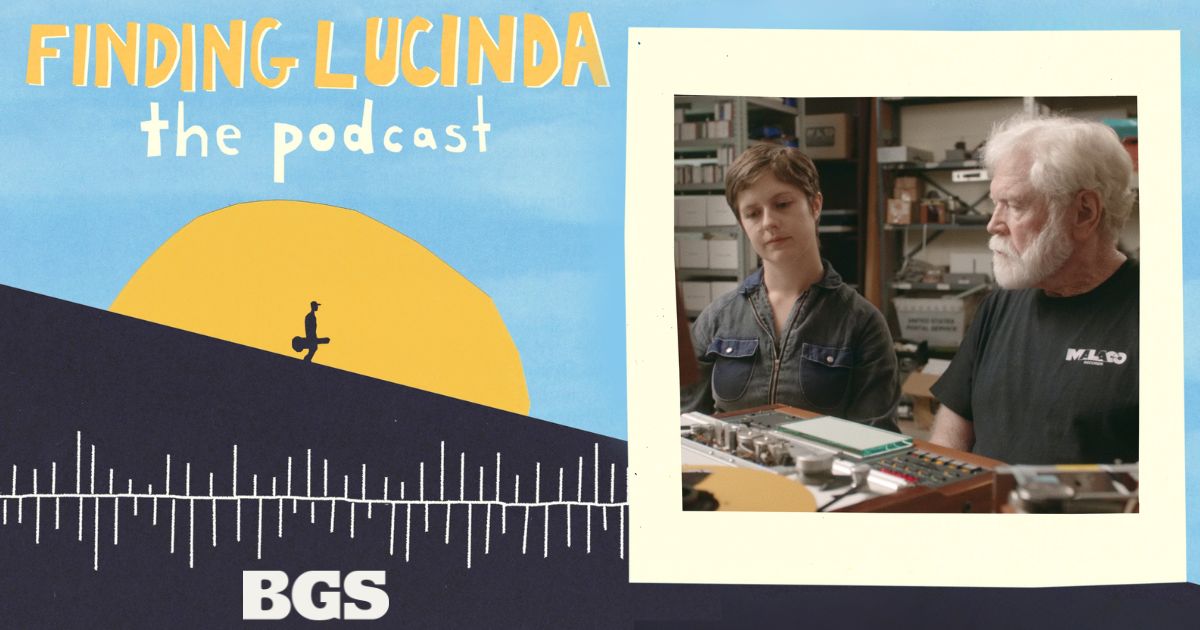
In the most exciting moment of the Finding Lucinda road trip thus far, Ismay hears from interviewee Wolf Stephenson that there is some archival material he wants to share from the concrete tape vault. After sitting on the shelf for 40 years, Wolf has finally brought three boxes down to review. He finds that there is something mysterious and unexpected in the third box, so Wolf and Ismay try to get to the bottom of what in the world this mystery box contains. This piece of never-before-heard material gives Ismay insight into Lucinda’s musical development and the choices she made as a creative person. But most importantly, discovering this treasure gives Ismay an opportunity to see themself in a way they never have before.
Produced in partnership with BGS and distributed through the BGS Podcast Network, Finding Lucinda expands on the themes of Ismay’s eponymous documentary film, exploring artistic influence, creative resilience, and the impact of Williams’ music. New episodes are released twice a month. Listen right here on BGS or wherever you get podcasts.
Finding Lucinda, the documentary film that inspired and instigated the podcast, is slated for release in the fall. Both the film and podcast showcase never-before-heard archival material, intimate conversations, and a visual journey through the literal and figurative landscapes that molded Lucinda’s songwriting.
Credits: Produced and mixed by Avery Hellman for Neanderthal Records, LLC. Music by Ismay. Artwork by Avery Hellman. Jackson, MS Recording: Recorded at Malaco Studios. Sound Recordist: Rodrigo Nino Producer: Liz McBee Director: Joel Fendelman Co-Director & Cinematographer: Rose Bush Special thanks to: Mick Hellman, Chuck Prophet, Don Fierro, Jacqueline Sabec, Rosemary Carroll, Lucinda Williams & Tom Overby
Find more information on Finding Lucinda here. Find our full Finding Lucinda episode archive here.
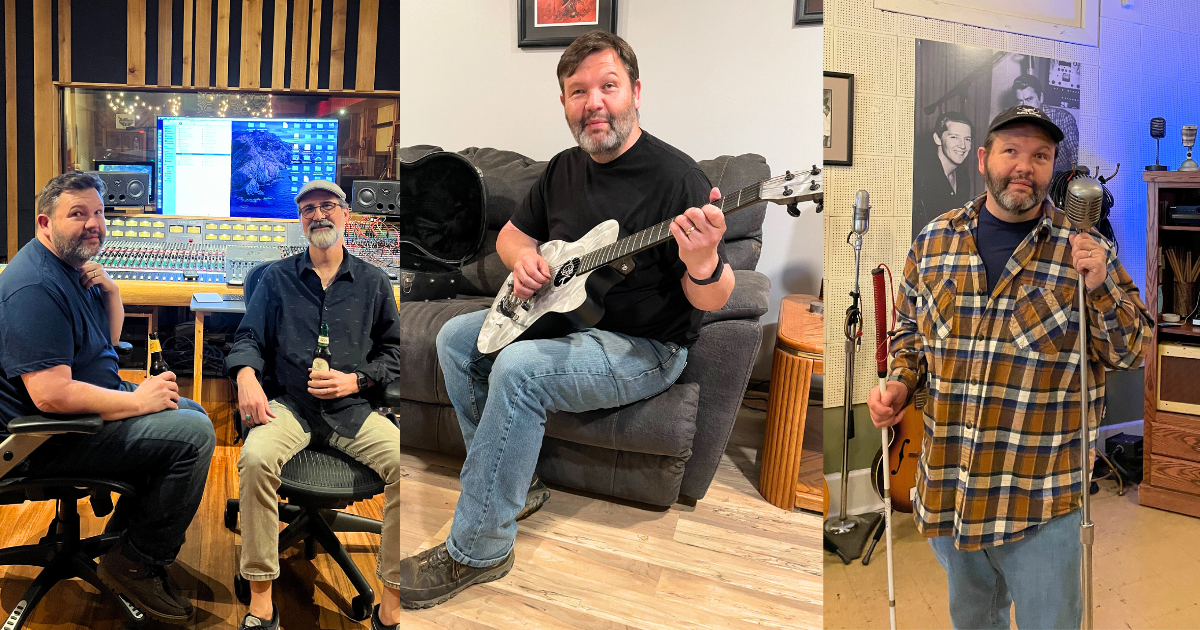
Though Randall Deaton’s excellence as a producer and engineer has been well known for many years in the bluegrass world, he had taken a hiatus from music for nearly nine years before returning in 2024. His latest venture is both a conceptual and musical triumph. The new release, Silver Bullet Bluegrass (Lonesome Day Records), pays tribute to the great rocker Bob Seger with an all-star corps of bluegrass vocalists and instrumentalists performing his tunes reworked, bluegrass style. The lineup of performers includes Gary Nichols, Tim Shelton, Shonna Tucker, Bo Bice, Tim Stafford, Bill Taylor, Larry Cordle, and more.
The project’s origin dates back even further, as Deaton detailed during a recent extensive interview with BGS conducted via email.
“(I got the idea) probably sometime around 2009,” Deaton said. “We released records by the band Blue Moon Rising and Ralph Stanley II in 2008 and each of those records contained songs that were pulled from non-traditional bluegrass sources. Blue Moon Rising did a cover of Bruce Springsteen’s ‘Youngstown’ and Fred Eaglesmith’s ‘Freight Train,’ while Ralph II did Elton John’s ‘Georgia’ and Townes Van Zandt’s ‘Loretta.’ I brought all those songs to the artists and I was really pleased with the way they turned out. They ended up being very legitimate takes on the songs without having any of the ‘pickin’ on’ vibe. I think the first thoughts of a Seger bluegrass record came from the idea of wondering how ‘Hollywood Nights’ would sound in a bluegrass style.”
However, the project took longer to happen than anticipated. “The overall recording process took over 12 years, but that was because I took about an eight year break from music in the middle to pursue other things,” Deaton continued. “The original challenge was to track the songs without the final lead vocalist. Seger is such a great vocalist and can comfortably sing in keys that most other male singers can’t, so I had to consider which keys to track some of the songs in. Some songs I left in the original keys and just knew that those songs needed to stay right there. Other songs we dropped down a step or so in order to have more options when it came to finding the right singer. The actual studio work was pretty easy once we knew who was doing what.”
“A great deal of the tracking band was the same group of musicians that we used on a record by Jeff Parker entitled Go Parker!” Deaton continued. “Mike Bub, Stephen Mougin, Ned Luberecki, and Shawn Brock all had plenty of experience playing and recording traditional bluegrass, but they also had experience outside of that – including Mike playing with Steve Earle on The Mountain record and Stephen touring with Sam Bush. Ned is a very progressive banjo player and Shawn is simply one of the best musicians I know. Other musicians were added based on what I thought the track needed. We used several fiddle players on this record and each of them brought something special and unique.”
When asked about personal favorites from the session Deaton responded: “The first singer to agree to perform on the record was Josh Shilling of the band Mountain Heart. He did “Main Street.” He did such an awesome job on that song that he set a bar for the rest of the record. That song is definitely one of my favorites. I am also partial to that track, because Megan Lynch [Chowning] played my grandfather’s fiddle on that track. It was just an old catalog fiddle from the 1930s, but I was told that he used to sit on the front porch and play it.”
“He passed away before I was born, but somehow I ended up with the fiddle. I think it is really neat that the same fiddle is doing that signature melody on ‘Main Street.’ The last two vocals that we recorded for the record were the Carson Peters and Bill Taylor tracks. Producing those vocals and in Carson’s case the fiddle was the first time I had been in a studio in many years and I wasn’t sure how effective I would be after so much time away. I am very proud of how those tracks turned out because they made me feel like I could do this again in the future if the right situation came up.”
An interesting thing about Deaton is bluegrass wasn’t his initial musical love growing up. “When I was a kid, we listened to country music around the house,” he recalled in his bio. “I knew more about Exile than I did about The Police. I knew a little bit about bluegrass, but I didn’t really get into bluegrass until I started learning how to play guitar. All the people that I could play with around home were mostly playing bluegrass music. That’s how I really got introduced to it.”
From that early start as a guitarist, Deaton converted a church left him by his grandmother in 1999 to a studio and started focusing on engineering. That led to the creation of the Lonesome Day label, which took its name off a Springsteen tune. Their first project was by Eastern Kentucky bluegrass artist Sam Wilson. The label soon became celebrated in bluegrass circles for turning out both hits and classic albums by a host of greats. The list includes Jeff Parker, Lou Reid, Blue Moon Rising, Larry Cordle, Steve Gulley, Ralph Stanley II, Ernie Thacker, Darrell Webb, Richard Bennett, Shotgun Holler, Wildfire, Fred Eaglesmith, and more.
Deaton’s accomplishments aren’t limited solely to the music world. He’s overcome retinitis pigmentosa, a genetic condition that affects nerve cells in the retina that causes functional failure and an inability to transmit information from the eye to the brain. But that hasn’t prevented Deaton from continuing his brilliance in the studio, nor from expanding into other musical areas as a label owner and producer. In 2011, Lonesome Day would release Sweet Nothings by Girls Guns & Glory – now known as Ward Hayden & the Outliers – which was produced by Paul Kolderie and recorded in Boston.
Kolderie would later produce Tim Shelton’s album, Jackson Browne Revisited. In 2014, A second Girls Guns & Glory project titled Good Luck was produced by Eric “Roscoe” Ambel. Prior to taking his break from music, Deaton’s label would also issue three albums by bluegrass guitar master Richard Bennett. But, by 2015, Deaton was both a bit disillusioned by some things happening in the music business and ready to do something else.
“Something else” included converting his music studio into an AirBnb, investing in short-term rentals in Eastern Kentucky, and later buying resorts in two different areas in Michigan, as well as a restaurant. Deaton also did a bit of concert promotion in the meantime. Eventually, he’d return to making music, with the latest result being Silver Bullet Bluegrass.
When asked about his favorite projects over his career, Deaton offers these selections:
“I really like the work I did with the band Blue Moon Rising. Their first record, On The Rise, was very well received and made me feel like I could make records that would find their place in the bluegrass genre. The second record I did with them entitled, One Lonely Shadow, is the record that contained ‘Youngstown’ and to me that is still probably the single best record I have been a part of. The song selection, the performances, and the engineering work of Mike Latterell are all outstanding. I am also very proud of the Ralph Stanley II record entitled, This One Is II. Again, the performances and song selections were outstanding and Mike also tracked and mixed this record.”
“We did both of these records in the same timeframe so they are kind of linked for me,” he continued. “These are consistently the two records that people still bring up to me saying that one of them is their favorite. One of my very first things that I still think guided me was my work on the record entitled Time by Lou Reid & Carolina. This was a band record and most everything on the record was done by Lou’s current band. Lou brought the song ‘Time’ that ended up being the title track to the record and it was clear to me that the song needed more than just what the band could bring.”
“We ended up using some great outside musicians,” he continued, “Such as Ron Stewart, Randy Kohrs, and Harold Nixon to get a track that was more solid. We also ended up getting Vince Gill and Ricky Skaggs to sing on the track. The final track turned out great and it ended up being a #1 song on the Bluegrass Unlimited chart in 2005. The song was also a challenge, because I felt like I was pushing for greatness and the artist was taking into account other things besides the record – such as the feelings of the band (which also included his then wife) and how those considerations would always be there moving forward. I always thought that if you were going to make a record you should do everything that is possible to make it as good as it can be within the means that you have.”
Deaton hesitates to pick personal favorites in terms of artists he’s worked with, but acknowledges a few names. “That is a tough one, because I have worked with so many talented people. Since I am such a proponent for great records, I would have to say that the audio engineers that I have worked with are always very special to me. In the very beginning I worked a lot with a guy named Harold Nixon and Harold introduced me to Ron Stewart.”
“Harold and Ron were very big parts of a lot of the Lonesome Day work from the beginning through when I got out in 2015. I also did a lot of work with Mike Latterell starting in 2005. Mike is one of the best audio engineers that I know and we still keep in touch to this day. I also had the chance to work with Brandon Bell on a couple records. He is also an incredible engineer and just a great guy in the studio. Gary Nichols introduced me to Jimmy Nutt back around 2013 or so, and he has been awesome to work with on this Silver Bullet Bluegrass record. When I got back in the studio in 2023 with Carson Peters, Jimmy made me feel like it was just yesterday that we were in the studio together, not eight years ago. Jimmy and his wife Angie have also become great friends to me and my wife, Shelagh, so if there is music in my future Jimmy will definitely be involved.”
“One musician that I have known for years, but never have worked with is Shawn Camp,” is Deaton’s first response when asked about possible future collaborations. “I think he is so talented and such a nice guy that I would love to work with him sometime in the future. A lot of the singers on Silver Bullet Bluegrass I had worked with in the past. Carson Peters and Bill Taylor were great in the studio and I think they have immense talent and I would like to work with those guys sometime in the future.”
As for possibly adapting other musicians’ tunes to the bluegrass idiom, Deaton immediately cites one name. “I think it would be great to do a Bruce Springsteen record. I am a big Springsteen fan and even named my label after one of his songs. I’ve lost count of the number of [his] concerts I have been to, but it is well over 100 from 1999 to 2024.”
His first response to the final question, regarding what’s next for his label, is “I don’t know.”
“I have been really focused on finally getting Silver Bullet Bluegrass finished and released that I haven’t thought about anything else. The landscape of the music business has changed so much since I started that I am in the middle of a learning curve again. I know that I like making records and I know that I don’t need to make records in order to make money. Whatever I end up doing, if anything, I want it to be fun and I want to at least think that it may matter somehow.”
“Nobody tells it like it is,” Anna Tivel sings on “Disposable Camera,” the first single from her new album, Living Thing. The song radiates with the joy and pain of reality, climaxing with the lines:
That big black train is rolling And that deep down scream is growing A hurricane come howling A shot heard from the mountain A blessing and a burden I swear this will be worth it…
Which are followed by a melodic and cathartic yell. I don’t know how I first came across Tivel’s music, but when I found the song “Blue World,” I got stuck on it. I listened to it over and over, trying to take in every aspect of it, break it into pieces, open it up like a watch so that I could understand how this perfect song ticked. It is still the most beautiful meditation on dying that I’ve ever heard. “You come to the heavy gate and you open it all alone…” is a line I think about often. To me, it sounded like she herself was telling it like it is.
A few weeks after discovering “Blue World,” I was on tour with Kris Drever, who is one of my favorite folk musicians from Scotland. We were trading new music discoveries and I played him that song, after which he became obsessed with it. We traveled around listening to “Blue World” and talking about death for the rest of the tour. Giving someone a new song to love is a special kind of transaction. It’s a gift for the new listener, but also a point of pride to have found something that someone else also finds meaning in – especially when the recipient of said gift is a musician you admire. New song discoveries are an unmatchable currency, a communication beyond words.
“Blue World” sent me on a journey through Tivel’s catalogue, with hours spent listening to Small Believer, The Question, and Outsiders, before the release of her latest record on March 31. With Tivel’s latest collection, I have to come to the conclusion that someone does tell it like it is and that person is Anna Tivel. I spoke with her over the phone for BGS about the inspiration behind her songs and the unique circumstances that led to her production choices on Living Thing.
I’ve been a fan of your work for a long time and I’m curious to know what feels new and different about this record than your past work?
Anna Tivel: I think there are two main things. I’ve worked with Shane Leonard before [who produced Outsiders and The Question], but this is the deepest collaboration we’ve ever done. There is so much of his heart and his sonic experimentation in these songs.
We made this squarely in the pandemic years, so there was no way to call upon a band for live tracking. It was just me and him in his studio. He went insane trying all kinds of sounds, playing all different instruments, and I scribbled extra verses on napkins as I heard what he was coming up with. We worked all day, every day and I slept on his couch for a month. I tried to say yes to everything and I learned so much. I really feel like the sounds feel different than what we’ve worked on before.
The other thing is that going through that year, I was craving soaring choruses… more melody and rise and rhythmic happenings that I normally do. Maybe it was a result of just sitting and looking at the same window for so long. I usually write long and dark monotonous stories with no chorus at all, but I think I craved a little more hope and joy. In general I feel like less people died on this album than usually die my albums… it’s still melancholy as fuck though.
Knowing that these songs were written and recorded during that very existential time, and now that they are being released into a different time, do these songs feel different to you than they once did?
Yeah, it’s interesting, the whole process of putting out a record. I really got stuck in the machine for a little while so it took quite a long time for this album to come out.
They are older songs now in my soul, but the project still feels really fresh. I think because Shane drew them into this more alive, sonic world. It was really exciting and fun to explore joy and rhythm and movement, especially in that isolated time. It felt good to have some hope and just wiggle around and try to feel the good parts of being a human.
So coming back to it now, it feels new and exciting to take them out on the road with a band. It’s making me realize it’s fun to have some songs that we can really move into, rather than building up from the ground.
One of my favorite tracks from your new record is “Desperation” – “Real life is far from fair, you tried and tried and got nowhere/ It’s like somebody rigged the whole damn thing/ Bloody knuckles, empty hands, you want to fight, but all you ever had/ Is desperation.” Can you tell me a little about what led to that song?
I think that one came out of the heart of that pandemic time, watching people, and having an awareness of how close many folks are to the edge, simultaneously knowing how the people pulling the strings aren’t the ones close to the edge.
Maybe your kid gets sick, and you miss work, and then that’s that, you’re evicted, and into the car. You don’t choose what you’re born into and if you’re born with the short end of the stick, it’s so hard to imagine anything but that reality.
You can see getting stuck, because that imagination isn’t generously shared by the people that own it. But if people that are living in a different world reach out to help it can really change the situation. Sometimes that means helping people believe that a different reality is possible. You have to go into your mind to create what you need. It’s sort of the same idea as representation, in the sense that if you’ve seen people that feel like you in very different situations than you, you can imagine yourself into a different situation.
I want to work on making that imagination more widely available.
That’s an amazing point, and a great one to keep in mind especially for artists. Artists can and have played that role for people, I believe. Does this same idea carry through for the song, “Disposable Camera?”
I like songwriting because you’re sort of always looking inward… You think you’re reflecting the world, but so much of yourself gets in there and the things that you’re learning into. A lot of this album is about getting free, getting loose of the way that you’ve taken in that it “should be,” the way that you should express yourself or the way you should move…
A lot of friends in the pandemic were having kids or trying to have kids and I was thinking about how, when we were all born, our parents were these people. [I was] realizing that everyone making babies has no idea what is going [to happen] and it’s kind of beautiful that it’s this big wheel of nobody knowing what they’re doing. Everyone is kinda hoping that someone else will be like “this is what it is,” but maybe the not knowing is actually a freedom. It feels scary to think you’re supposed to be certain, but you aren’t yet. The freedom is that nobody actually is certain and that’s not going to change.
I was listening to your song “Kindness of a Liar” and thinking about how important escapism was in 2020 and 2021. How badly I needed books and TV shows to get lost in so that I could come back to the present and have energy to cope with what was happening. Is that what this song is about to you?
In this batch of songs I was thinking a lot about what is truth, what is honest, what is listening, and what is being able to have nuance in all of those realms. You don’t just stay certain. To be able to move and shift and read situations and try to be learning in real time, messily, is very different from saying, “This is a fact and I’m going to hit everyone over the head with it until I’m proven wrong, and then I’m going to pretend I never said it.”
To try and tell stories to one another that are compassionate and messy – sometimes telling a story that might not be true is the most gentle and kind thing you can do while something hard is happening.
I think it’s about recognizing how much we crave each other’s stories and being really aware of how we paint the world for each other. The more artfully and more compassionately we tell each other’s stories the more we connect, and it’s not about trying to prove our point.
The most loving thing you can do is to share your mind and heart with people in the most nuanced way. And maybe there’s some fiction and lore in that.
Ruth Moody has a singular voice, whether she’s joining the soaring three-part harmonies of the Wailin’ Jennys, or carving her own path on her new solo album, Wanderer (released May 17.) The project was almost a decade in the making and finds Moody betting on herself as a songwriter, co-producer, and now-label head for her own Blue Muse Records. The album is parallel to Moody’s own journey at continuing to define herself, with its emphasis on confronting the past and carving away detritus that is no longer needed.
Moody splits her time between Nashville and Vancouver Island. The pull between her sense of place, as well as her identities as artist, wife, and mother, characterize Wanderer. The album was recorded at the legendary Sound Emporium in Nashville and was co-produced with Dan Knobler (Allison Russell, Lake Street Dive) and mixed by Tucker Martine (My Morning Jacket, First Aid Kit, The Decemberists).
As discussed below, Moody waited until the time was right to bring her favorite musicians together for the record: her partner Sam Howard, who plays upright bass and provides backing vocals; her older brother Richard Moody; The Wailin’ Jennys’ touring band member Anthony da Costa (guitars); Jason Burger (drums); Kai Welch (keyboards); Russ Pahl (pedal steel); Adrian Dolan (string arrangements); and duet partner Joey Landreth (on “The Spell of the Lilac Bloom”). Moody’s patient commitment to executing Wanderer the way she wanted to shows in its transcendent arrangements.
In our BGS interview, Moody discusses how she establishes her sense of self amidst the competing demands in her life, the factors that give Canadian roots music their own special quality, and the lessons she’s learned from doing Wanderer exactly the way she intended to.
What do you think it is about Canadian roots music in particular? It does have a different feel than roots music in the States.
Ruth Moody: You know, I’ve been asked this question for so long. It’s a very valid question, because I think there is something, but it’s really hard to have a clear answer. In Canada there’s such a range of geography and music culture. You can’t really pin it to one thing.
I grew up in Winnipeg and the winters are so harsh that I think music and art are one of the things that get people through. It’s something you can do in the winter. I also think that there’s something about the landscape and the winter that creates a certain work ethic because you’re so small against the elements, really. So consciously or subconsciously, that enters into the picture for people. And so I think people tend to work hard and really apply themselves. And when it comes to touring, especially if you’re from Winnipeg, it takes some effort to get to the next town. It’s a six-hour drive before you get to the next major town. So I think right from the start, young musicians know they have to go out in the world to tour and get their music out.
We’re pretty diverse and we’re also influenced by so many different cultures and types of music. So I think there is a very exploratory aspect to Canadian music. And a lot of cross-pollination between genres and scenes. We are very lucky to have government support for the arts and I think that helps artists thrive, obviously, but it also helps to create music communities and bring artists together in collaborative situations.
Well, it’s always good to start an interview out by asking you to speak for your entire country! But Wanderer focuses on the idea of home, and I know you’ve lived many different places. Did I read that you grew up in Australia?
I was born in Australia, and my parents are Australian, but they came back to Canada when I was only a year old. I grew up in Winnipeg, but, as an adult, I’ve moved around a ton and that was what inspired the title track. I’ve been touring for over 25 years at this point. “Wanderer” is a love song that I wrote for my partner, because he helped me have that feeling of home for the first time in my adult life.
There are a number of songs about young love and new love on the album. Was there something that was making you reminisce about those times in your life?
These songs were all written across a long time-span – over 10 years really – since my last record. So the songs come from different stages and sides of love, right into motherhood. Some songs deal with heartbreak too and some are more reflective about the past. During the pandemic, I was reflecting a lot about how we internalize the messages we receive from society, how as a woman I took on the expectations of others and how that has affected my life. I was looking back, looking for clues, curious about where fear comes from, where strength and resilience come from. How we learn how to be our authentic selves when there are so many outside pressures and confusing messages. “Seventeen” isn’t about that, at all, but it ended up coming out of that period of reminiscing. It’s a song that came from my own experiences but that is essentially about being in love and not being ready or able to face it or express it, which I think is probably a pretty common experience.
These are all things I’m thinking about a lot now that I have a child, too, because they become very relevant. You’re trying to model behaviors for a young person and it really makes you face yourself. You have to look at why you do and say certain things and what you want to teach and how you want to be.
Speaking of wandering, I read that you split your time between Nashville and Vancouver Island.
I just got back from British Columbia, and I’ll be back in BC in the summer, so yes, I’m back and forth. I tour a lot, so I try to get home to BC when I’m already out traveling. But I work a lot in Nashville and so does my partner, so we’re still figuring that out.
Do you feel you are different when you are in these two different places?
Definitely. That’s been a real theme becoming a mother, really. Suddenly, you’re responsible for another human life. You have to let go of a lot of ways that you used to do things and prioritize what matters. I’m always shifting modes.
When I’m on tour, I operate in a certain way. When I’m in BC, I’m close to my parents and that brings out certain things. When I’m on my own, I have a bit more freedom to maybe be my creative self and when I’m in parenting mode, that goes out the window. Additionally, a partnership requires a lot of work and time, too. There are a lot of different parts of life that I’m juggling. But it keeps it interesting.
This isn’t meant to be a conversation about being a musician and motherhood and “having it all,” but it is a big theme of the record!
It has been a big theme of my life of late. Actually, I wanted to make this record about eight years ago and then I put it on hold, because I wasn’t able to line up all the musicians I wanted involved. I thought, “I’ll do it next year.” And then I had my son and I just didn’t know that motherhood would be such an all-consuming thing. It doesn’t have to be – and everyone’s different!
I really want to do a good job at everything that I do, and so I found it hard [to balance everything.] I felt like I wasn’t doing a good enough job at being a parent and I wasn’t doing a good enough job at performing. That was really hard on me. And I think now, with this new way of looking at things, I’m just being easier on myself and thinking to myself, “Maybe I was enough. Maybe we can’t be perfect at every single thing.” Maybe we don’t have to attempt to be perfect at everything.
First and foremost I think that any woman should have the choice to [balance motherhood and work] in the way she wants to do it. I am still figuring out how to juggle everything – especially since for this record, I decided to put it out on my own label. It’s really exciting and I think will be really rewarding, but it is a ton of work and the learning curve is quite steep.
Wanderer is your fourth solo album. Do you feel this process is different than when you’re working with another artist or with The Wailin’ Jennys?
It is different. The Jennys – I mean, we’ve been together for so long and we have a certain way of working. We’re talking about making a new record, which is really exciting. It’ll be different, because it’s been a while and we’re all changing all the time, you know? That feels like it will be an exciting new experience.
But it is of course different working on my own, especially in this case, because I co-produced this record. When you’re on your own, you draw on a different part of your brain and even your heart. Wanderer is a really personal collection of songs. With the Jennys, we tend to maybe gravitate towards songs that call for three part harmony, so they end up being a bit more anthemic. With these really personal, intimate songs, I connect to them in a different way.
What lessons do you feel like you can take away now that you’ve finished making Wanderer that you want to take with you on your next project?
I’ve learned so much in doing this. Because it took so long to make it and these songs were waiting in the wings for so long, it felt really important for me to make it. The stakes felt high, because it had been so long in the making.
Now that it’s done and I’m putting it out, I am really excited and proud of it. I want to just keep releasing expectations and I’m very excited to dig into creative work again.
Last year, my bandmates and I went into the woods to a studio that wasn’t a studio to record this collection of songs, Did You Do The Thing We Talked About? (Out February 16.) Some were songs from before the pandemic that meant a lot to us, and others were new songs I needed to write coming out of it.
Usually, when you go into the studio, you’re trying to maximize control, right? You put everyone in different rooms, isolate each sound, get a basic track, then have everyone redo their part until they’re happy with it. Then you add other instruments, effects, color.
We didn’t do that for this album. Coming out of the pandemic, we needed to share space again. We needed to be in the same room, to see each other’s fingers, to watch the crumbs clinging for dear life to each other’s shirts.
I wanted to make a record that sounded like the four of us communing.We all set up in one big room. Made baffles out of couches and blankets, like you do. We recorded in whole takes without overdubs or extra instruments. Our guitarist, Eben Levy, engineered the tracking. Our saxophonist, Vito Dieterle, and I did the cooking. Ian Riggs, our bass player, kept the tempos and the peace. The album sounds a lot like what our band sounds like on any given night after playing together for 20 years, and that’s just what we were after.
In creating this Mixtape of songs recorded “in the same room,” I was just trying to think of recordings by artists I revere that contain a sense of intimacy and life – I can’t say for sure how they were all recorded. More than anything, these songs make me feel like I’m listening to humans saying human things to other humans. That always makes me feel less alone in the world. – Ethan Lipton
“Walter Johnson” – Jonathan Richman
This is an a cappella recording, so how could it not be intimate? Still, I love this song about one of baseball’s all-time greats, and on this version, Richman sounds like he’s making it all up — lyrics, melody, tempo — as he goes. No one else could do a recording quite like this. Richman occupies a unique space in music, blending folk, garage rock, and proto-punk (?), but it’s his chops as goofball raconteur that I love most. This song also reminds me of my big brother, who introduced me to Richman and a lot of my favorite songwriters.
“Christmas Card from a Hooker in Minneapolis” – Tom Waits
Two pianos, Tom (acoustic) and George Duke (electric). And they create a whole universe together. To me it sounds like Tom is drunk and George is trying to hold him up. There’s so much air and grease and love in it. Blue Valentine isn’t my favorite Waits album — there are too many other exceptional ones — but I’m devoted to the epic narratives of this song and “Kentucky Avenue.” And “Christmas Card” has my favorite lyric ever: “I don’t have a husband / he don’t play the trombone.”
“I’ve Loved You All Over the World” – Willie Nelson
A nearly perfect album, and of course Daniel Lanois got Willie to record it in an old Mexican movie theater. It sounds like every musician on this track is dialed in to every other. I mean, if Bobbie Nelson’s clankity piano doesn’t break your heart, I don’t know what will. And Mickey Raphael’s harmonica is something I hear in my dreams. The drumming takes us into this whole other world. Lanois once said: “We had some nice risers set up for Willie and Emmylou [Harris] and the drummers. So we had a nice time setting it up like a club, and it sounds as though the fun that you’re hearing in the track was definitely in the building at the time.” Amen to that.
“Stardust” – Hoagy Carmichael
I don’t know how this recording was made, but the intimacy of it feels so honest and assured, you almost can’t believe there was a time when it didn’t exist. Nobody sings Carmichael’s songs like he does, and this version is full of his idiosyncratic phrasing. It’s hard not to see Hoagy sitting at the piano when you hear it. And the song itself, I mean ranking is ridiculous, but it has to be one of the best ever written.
Here are a couple of faves from our saxophonist, Vito Dieterle:
“Alone Together” – Lee Konitz, Brad Mehdlau, Charlie Haden
Lee Konitz was a huge inspiration to me. A true improviser. Brad Mehldau took the scene by storm with his virtuosity, but I always knew his roots were in the old masters, and this group showcases all facets of Brad’s talent in ways that few other albums do. And Charlie Haden brings everybody together in a grounding way like only he could.
This group was together only briefly but it captured the essence of playing jazz live and being in the moment with little ego, with true spontaneity and freedom within the confines of the traditional forms of the American songbook. These three were playing live all in the same room/club. The result was just magic. And pure sensitivity and support. I encourage everyone to explore the entire record.
“Fall” – Miles Davis Quintet
This composition by Wayne Shorter is a perfect example of what I consider a “musical trust fall.” A moment when you know everyone in that room has your back, so no matter what, you feel like you can’t fail. The tempo here is liquid, and the chances taken are mighty and bold. You can feel each musician digging into and supporting each other’s choices, and in some cases making those choices even more bold and beautiful in real time. This track changed my life. The first piece of music that truly made me aware of teamwork being the dream work, in a musical context.
Our bass player Ian Riggs wrote about two of his favorites, including another classic by Tom Waits: (The four of us come from different points of musically, but it’s rare for only one of us to like a particular song. In almost every case, one or more of the other three has big love for the same tune.)
“Semi Suite” – Tom Waits
From the quiet count-off to the rousing peak, this song is a wonderful instance of a group of people listening and breathing with each other in the same room. Bones Howe, the producer on this (The Heart of Saturday Night) and other early Waits albums, came from a jazz background and preferred to record musicians that way, without separation. I suppose a multi-tracked version of this song could have also been great, but I’m sure glad they gave this way a shot first.
“Switch Blade” – Duke Ellington, Charles Mingus, Max Roach
The stories about these “Money Jungle” sessions are legendary. They say it wasn’t the best day for Charles Mingus. Apparently he packed-up and stormed out more than once. Duke Ellington and Max Roach (an idol and longtime friend of his) talked him into staying each time. Mingus’ playing is wildly erratic but also beautiful and full of raw feeling. Thank goodness for wise friends who ask you to stay, especially on the bad days.
And here are a couple of picks from Eben Levy, our guitarist.
“Little Ditty” – Cyrus Chestnut
Pianist Cyrus Chestnut’s 1993 album Revelation, with Christopher J. Thomas on bass and Clarence Penn on drums, feels so alive because it’s so live. The liner notes state, “Recorded live to two-track analog at Clinton Studios, Studio B on June 7 & 8, 1993. Complete takes only, with no additional mixing or editing.” It’s all tightrope playing and tightrope engineering. Everyone involved nails the landing, like Kerri Strug. There’s zero filler on this album, but the track “Little Ditty” kills me every time. When Chesntut goes into the very highest keys after the break at about 1:40, the swing is so hard and so light at the same time. Philippe Petit!
“Tight Like That” – Asylum Street Spankers
The 2004 album Mercurial by the Asylum Street Spankers was recorded live in a 100-year-old church direct to a 2-track reel-to-reel tape deck. I love how much the room itself is a voice on the album. The drums are way in the back. The singer is right up front. Wait, holy shit! That harmonica is right in my face! And check out the old 20s barn burner “Tight Like That.” Great solos, and the Spankers mix in some of Jim Carroll Band’s “People Who Died” just to fuck with me.
Now that I see the tunes everyone picked, I can’t wait to listen to this mix-tape!!! There are pieces of all of us in each of these songs. – Ethan Lipton
Photo Credit: David Goddard
This website uses cookies to improve your experience. We'll assume you're ok with this, but you can opt-out if you wish.AcceptRejectRead More
Privacy & Cookies Policy
Privacy Overview
This website uses cookies to improve your experience while you navigate through the website. Out of these, the cookies that are categorized as necessary are stored on your browser as they are essential for the working of basic functionalities of the website. We also use third-party cookies that help us analyze and understand how you use this website. These cookies will be stored in your browser only with your consent. You also have the option to opt-out of these cookies. But opting out of some of these cookies may affect your browsing experience.
Necessary cookies are absolutely essential for the website to function properly. This category only includes cookies that ensures basic functionalities and security features of the website. These cookies do not store any personal information.
Any cookies that may not be particularly necessary for the website to function and is used specifically to collect user personal data via analytics, ads, other embedded contents are termed as non-necessary cookies. It is mandatory to procure user consent prior to running these cookies on your website.