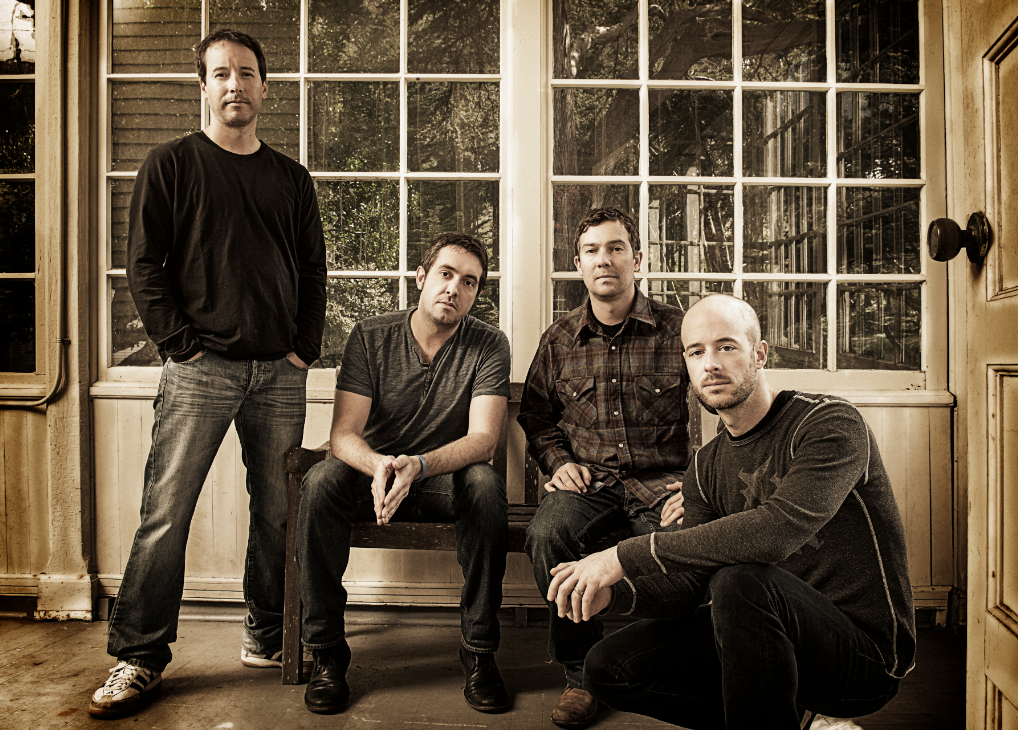
ANNOUNCING: Louisville’s Bourbon & Beyond 2024 Lineup

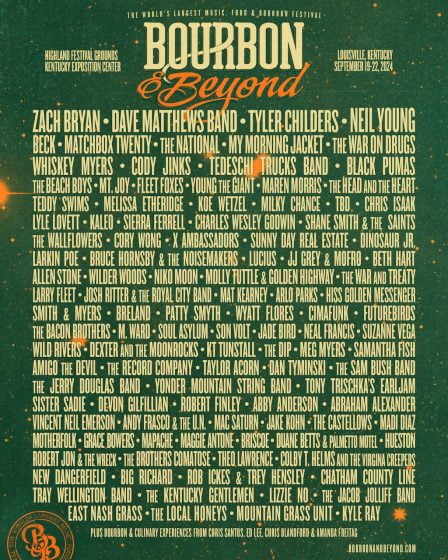
Today, Bourbon & Beyond, the world’s largest music and bourbon festival, announced its lineup for their 2024 event, to be held in Louisville at the Kentucky Expo Center September 19 through 22, 2024. With headliners such as Neil Young, Zach Bryan, Tyler Childers, and many more, the festival promises a roster filled-to-bursting with the best acts from country, Americana, bluegrass, and beyond.

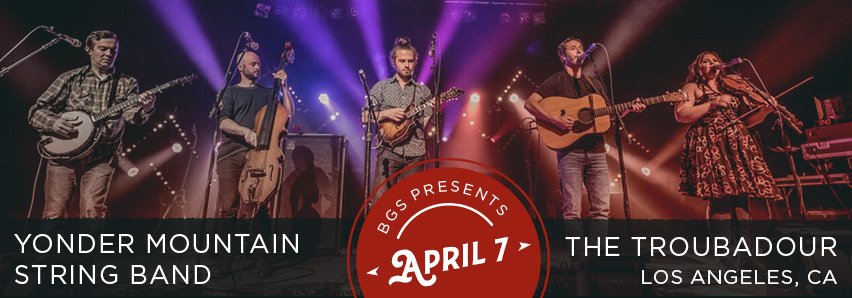
BGS will return to the festival for ours and the festival’s sixth consecutive year, once again curating the musicians and bands that will grace the Bluegrass Situation Stage. Housed in the Kroger Big Bourbon Bar, the BGS stage will feature bluegrass, line dancing, and as much bourbon as you can drink from dozens of distilleries. Each day of the festival our stage will culminate with performances by Sam Bush Band, the Jerry Douglas Band, Yonder Mountain String Band, and Tony Trischka’s Earl Jam. Plus, don’t miss exciting acts like IBMA Entertainer of the Year winners Sister Sadie, newly-minted Black string band New Dangerfield, and KY neighbors the Local Honeys and the Kentucky Gentlemen. See the full list of performers for the Bluegrass Situation Stage below.

Kentucky Governor Andy Beshear, via press release, had this to say about the festival: “The Commonwealth of Kentucky is honored to be hosting Bourbon & Beyond in Louisville this September,” he said. “The festival brings in fans from all over the world and showcases the best of Kentucky; highlighting our rich culture of bourbon, the best in local culinary, and a top tier musical lineup. We can’t wait to welcome fans once again for this great tradition that we all in Kentucky are proud to call our own.”

First-rate bands and artists from across the American roots music community can be found throughout Bourbon & Beyond’s lineup, not only at the Bluegrass Situation Stage. This year, Bourbon & Beyond adds two new secondary stages, as well as the usual BGS Stage and the Oak and Barrel main stages. From Tedeschi Trucks Band and Black Pumas to Melissa Etheridge and Molly Tuttle & Golden Highway, there’s truly something for everyone. Don’t miss sets by Larkin Poe, Josh Ritter, Jade Bird, Lyle Lovett, Sierra Ferrell, Devon Gilfillian, Vincent Neil Emerson, Robert Finley, Hiss Golden Messenger, and so many more.

Another highlight of Bourbon & Beyond each year are the bourbon and culinary events, workshops, and activations that feature celebrity chefs and food-and-drink experts such as Chris Blandford, Amanda Freitag, Ed Lee, Chris Santos, and more. All in all, Bourbon & Beyond promises to yet again be your complete music, bourbon, and food festival in beautiful Kentucky. Tickets are on sale now – we hope you’ll join us in Louisville for another year of Bourbon & Beyond!

The Bluegrass Situation Stage Lineup

Sam Bush Band
The Jerry Douglas Band
Yonder Mountain String Band
Tony Trischka’s Earl Jam: A Tribute to Earl Scruggs
Sister Sadie
New Dangerfield
Big Richard
Rob Ickes & Trey Hensley
The Brothers Comatose
The Local Honeys
Tray Wellington Band
Chatham County Line
The Kentucky Gentlemen
East Nash Grass
Mountain Grass Unit
Jacob Jolliff Band
…and more to be announced!


Photo Credit: Nathan Zucker, courtesy of Bourbon & Beyond.

WATCH: Yonder Mountain String Band, “Into the Fire”

Artist: Yonder Mountain String Band
Hometown: Nederland, Colorado
Song: “The Fire”
Album: Get Yourself Outside
Release Date: February 25, 2022
Label: Frog Pad Records

In Their Words: “It started as do most of my ideas; a melody with only one specific lyric in mind. This song actually marked my very first collaborative effort as Adam, Ben, and Dave all weighed in on the lyrics as they took shape. I think if I have a favorite line it would be, ‘I’m a boy with a song, it’s barely a sound.’ I love this song’s energy on stage. The audience’s response makes me think that it comes across the way I had hoped!” –Nick Piccininni, Yonder Mountain String Band


Photo Credit: Jake Cudek

The Tim O’Brien Band Reaches Beyond

Tim O’Brien is only half-joking when he acknowledges, “You know, I have not been known to show up with the same people from date to date.” True enough, considering he’s been with Hot Rize for four decades, played mandolin and sang on the first Earls of Leicester album, issued numerous collaborative albums with family and friends, and carved out a career as a Grammy-winning folk artist. Along the way, he’s also produced notable roots artists ranging from the Infamous Stringdusters and Yonder Mountain String Band, to Kathy Mattea and Laurie Lewis. His multiple IBMA Awards include two trophies for Male Vocalist (1993, 2006), and another for the 2006 Song of the Year, “Look Down That Lonesome Road.”

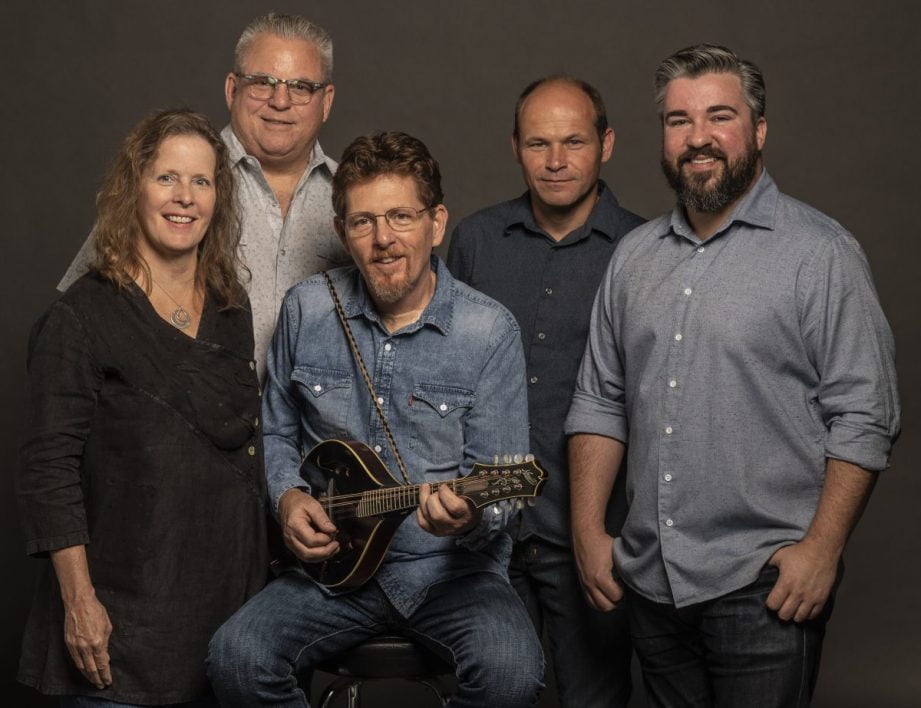
That road is less lonesome now that he frequently travels with his partner, Jan Fabricius, a mandolin player and singer who makes her leap into professional music with O’Brien’s new album, The Tim O’Brien Band. In an effort to find players adept at both Irish and bluegrass music, the impeccable ensemble is rounded out by Mike Bub on bass, Shad Cobb on fiddle, and Patrick Sauber on banjo and guitar. Released one day after O’Brien’s 65th birthday, the project leads O’Brien and his colleagues toward tour dates in his native West Virginia… and beyond.

O’Brien invited The Bluegrass Situation into his music room for a chat about being a traveling musician, a songwriter and (much to his surprise) a role model.

BGS: Pretty early on this record, you have some traditional tunes. Why did those songs seem right for this album?

O’Brien: Let’s see, we’ve got “Doney Gal” and the two reels, and we’ve got “Pastures of Plenty” – I guess that’s traditional now. You know, I didn’t write a lot of songs this time, and I revisited one that I recorded before. I had recorded “Crooked Road” solo in the past, but I thought it would be really good with a band, and I wanted to hear that. I was happy with the way it came out.

Whenever I started doing gigs on my own in coffee houses, I always mixed it up with traditional songs and covers and my own tunes when I started writing. So it’s kind of a continuation of that. It’s my style of making a record. I’m itching to write some songs, but I didn’t do it much this time.

When you need to round out an album, how do you decide what to record?

I go to the CD shelf over there. Nowadays, I glean ‘em every year and I get rid of the ones that I know I’m never going to listen to much. The ones I keep going back to, there’s often something on there that makes me go, “Oh yeah, I love this song. Maybe I can sing this song…” And I’ll try it. I have one of those Moleskine books that are filled with lyrics of songs that I want to know — and I’ll write the lyrics of the ones that I’ve just sung on a record and need to remember.

I have to say, I’m touched by your rendition of “Last Train from Poor Valley.”

Oh man, Norman Blake is my hero! I saw him first probably in 1972. He was on that first Will the Circle Be Unbroken record and some other friends that were playing bluegrass already knew about him. They had that first Norman Blake record, which came out around the same time. And when I started playing with Hot Rize, we’d play these festivals and we would meet up with him. We got to be friendly and it was like a regular ol’ friend that you’d see. That’s the great thing about the touring community. You see people week to week in the summertime months. That’s why it’s nice to live in Nashville. I used to go home to Colorado and you wouldn’t see those people in the grocery store or the post office. [Laughs]

Norman and Nancy are old friends, and I go back to see them every now and again in recent years. Their music is just so different from what I do, and what Hot Rize did, and yet all these years later, it’s a lot closer. Even though it’s still very different, it’s a lot closer than a lot of the other stuff that’s going on. But I just love the sentiment of that song, and I knew that song from when his record came out. I like to pay tribute to somebody like that. He’s not on the circuit anymore and I don’t want him to be forgotten.

I like the feel of “Beyond.” It sounds to me like a hero’s anthem. What was on your mind when you wrote that?

I had the idea of writing something about, “Let’s get beyond the day to day.” It sounds like a gospel thing, and it fits in there, but if you could find enlightenment within your daily routine, or just get past the stumbling blocks that frustrate you and say, “Hey, man, things are going to be fine… We can go beyond this and look beyond this.” And maybe if we can live there, we can live life more freely while you’re going about the day-to-day.

Do you consider yourself an optimist?

I am an optimist, yeah. Musicians have to be! [Laughs] My friend Chris Luedecke – Old Man Luedecke, a guy I’ve produced some records for and toured with – he says, “Man, we’re the ultimate optimists. We keep getting up in the morning and trying again.” I suppose everybody does it, if you define it that way. We’re all optimists. But yeah, I’m an optimist and I think it’s possible to change, it’s possible to rise above your problems and get around ‘em somehow, and get beyond.

What is your response when younger musicians see you as a role model?

It’s a funny evolution. I guess it’s happened, that I’ve become this role model. It surprises you, but if you look at who my role models were, a lot of them aren’t there anymore. That means I’m getting closer to the checkout line, so I’ve become a role model because I’m still out there doing it. So I guess it’s an honor, but it gets to be intimidating to continue, because you think you’re not coming up with your best stuff all the time, and you wonder if you can even show it.

Hot Rize is that way. It’s hard to go and record a Hot Rize record because of nostalgia. People look at Hot Rize’s repertoire and go, “Sheesh! There are so many great songs!” But it took, I think, eight records to get all those together. It sort of magnifies things in a funny way, and it will intimidate even yourself, as you’re trying to repeat yourself. Hot Rize can repeat ourselves, but the idea of putting a new record out was like, “Oh man… we really need to be good! We better be as good as all that.” You do a lot of soul searching and you take it more seriously.

I wanted to ask you about writing “Hold to a Dream,” because that song has done well for you – it’s something of a standard, I would say.

“Hold to a Dream” is a good one. I had been into Irish music for a while, and that seemed like an Irish tune. The lyric is not necessarily very specific about anything. It’s a love song, I guess, but it’s like the theme of “Beyond” — it’s possible. We can get past everything and we can still do well. I like that one because it’s got a little rhythm, it’s got a little instrumental bit, and it’s got a little bit of a message – and it’s fun. And it’s got a nice chord progression. [Laughs] …

What I’m surprised about some of the songs that I’ve written that have translated so much, there is nothing heavy about them. But people are distracted by music and then they are allowed to think about other things while they are listening to it. And just a few words will suggest something. I think songs like “Hold to a Dream,” or other songs where there’s an instrumental section, lets people go, “Ah, yeah… hmm….” (laughs) You start singing and they might start thinking of something else.

Newgrass Revival does a magnificent version of that song, and you’ve also had cuts along the way by Garth Brooks, Dixie Chicks, Dierks Bentley, Kathy Mattea, Nickel Creek, and others. As a songwriter, what is that like to hear something you wrote come to life through another artist?

It’s really flattering when anybody sings your song, if they want to. There’s a monetary reward, which is nice, but mostly you’re just flattered. Then you realize, OK, what I’m doing is valid. It means something, so continue. That carrot is the one I really want to catch, knowing that what you’re doing is worthwhile.


Photo credit: Michael Weintrob

Huck Finn Jubilee Makes Big Return for 41st Year of California Bluegrass

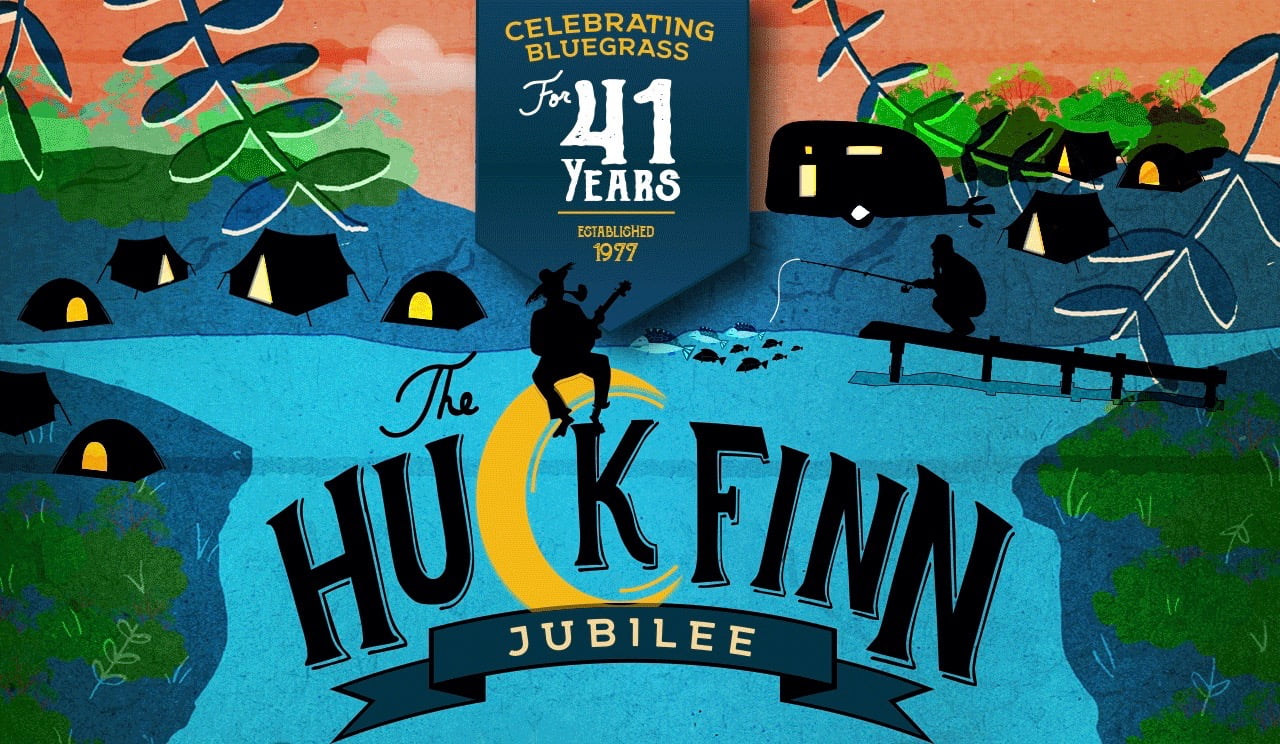
For bluegrass fans in Southern California, Huck Finn Jubilee has been a destination for more than 40 years.  After a two-year hiatus, the long-celebrated family event returns to Ontario, California, on Oct. 5-7. This year’s lineup features headliners such as the Infamous Stringdusters, Yonder Mountain String Band, and The Lone Bellow, and BGS will be on site all weekend to present the BGS House Party jam after the main stage sets wrap up…

Leading up to next weekend, the festival’s new owners, Roger and Nikki Malinowski, chatted with The Bluegrass Situation.

Don’t miss our special video sessions highlighting some of the acts you’ll see on the lineup below!

Fans can discover music in so many ways now. What is it about a music festival that is special?

The wonderful thing about music festivals is that they’re shared experiences. They bring people together. Those moments when the audience sings together with the artist, and each other, or when you literally feel the music move you – times like those can’t be beat. Music festivals create communities where neighbors can meet, families reunite and spend time together, where we can get away from it all for just a little while.

What have you learned about the process of booking festivals that has really surprised you?

We’ve been surprised by the amount of love and support from the Huck Finn audience. The festival has a 40-year-plus history, yet it almost ceased to exist. I remember when we made the announcement on Facebook that Huck was back, the messages of gratitude were overwhelming. We’ve also found that putting on a festival of this size is a significant amount of work. The time, energy and effort behind pulling off an event of this size is enormous. The support and love from the bluegrass community and fans of Huck Finn continues to motivate us to create the best experience we possibly can.

When you are selecting artists, do you have a certain audience in mind? In other words, is there a common thread that runs through your lineup and/or your ticket holders?

Absolutely. We want to take our audience on a musical journey. It is important that we honor the traditions of bluegrass music while ensuring that we give space for the evolution of the music. Our hope is that our younger audience gets exposure to the roots of bluegrass and appreciates the amazing musicianship, harmonies and tradition of the genre. We also hope that the entire audience will enjoy how the music itself is progressing, exploring the unique textures and sounds of acoustic instrumentation in more modern takes on the style.

For someone who has never been to Ontario, California, and the area, how would you describe it to them?

Ontario is essentially a suburb of Los Angeles. It has all the amenities one might want in traveling to a new place: great places to eat, drink, shop and stay. It has a small airport and a great number of hotels in the area. The park where Huck Finn is held is a little oasis tucked away within the city. It is absolutely beautiful with two stocked lakes for fishing, a zero-depth splash play area, a sizable playground for kids, and plenty of quiet shaded areas to relax and unwind. There is ample parking, great spots for tent camping and expansive area for RVs. It’s easy to get to, yet far from the busyness of LA. Ontario provides all the conveniences for anyone looking to spend a single day or the whole weekend with us.

People get hungry! How did you choose the vendors for Huck Finn?

The word that has driven all of our decisions this year has been ‘balance.’ We want to accommodate for all tastes, simple and more refined. We wanted to provide the types of foods you might expect at a festival, but also provide some more elevated offerings as well.

What do you hope that attendees will take away from the Huck Finn experience?

We hope to forge connections, ultimately. Connections to the music and the artists performing. Connections to each other, and to their families, neighbors and friends. We hope that people come with an open mind, enjoy a great lineup of music that spans the bluegrass genre, and get to put the stresses and worries that they might have behind them. I hope that they smile at each other and meet new people during the show, eat great food, spend undistracted time with their loved ones and make it something that they will want to bring their friends and family to for years to come.

You can still purchase tickets to HUCK FINN JUBILEE here.


Yonder Mountain String Band Finds the Next Plateau

Change rarely comes easy. But when, after 17 years, an established outfit like Yonder Mountain String Band parts ways with a founding member, it can have an even more profound effect. That’s the predicament the Colorado-based combo found themselves in April of 2014 when singer, songwriter, and mandolin player Jeff Austin cited personal and creative differences as a reason for making the decision to venture out on his own. As a result, YMSB suddenly found itself at a critical crossroads.

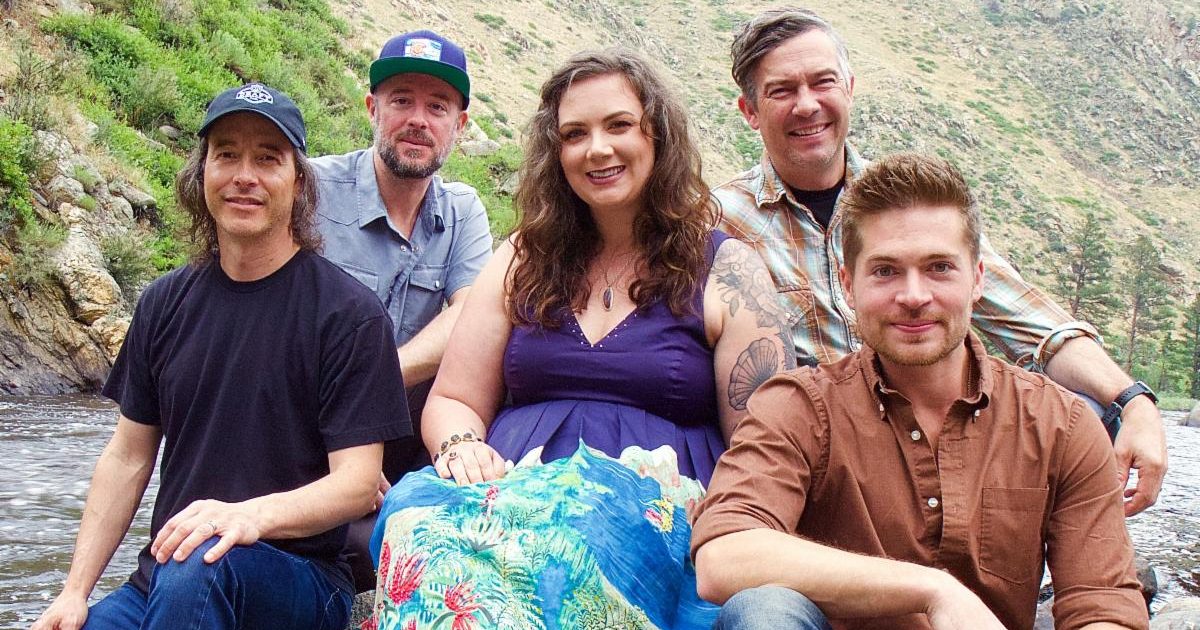
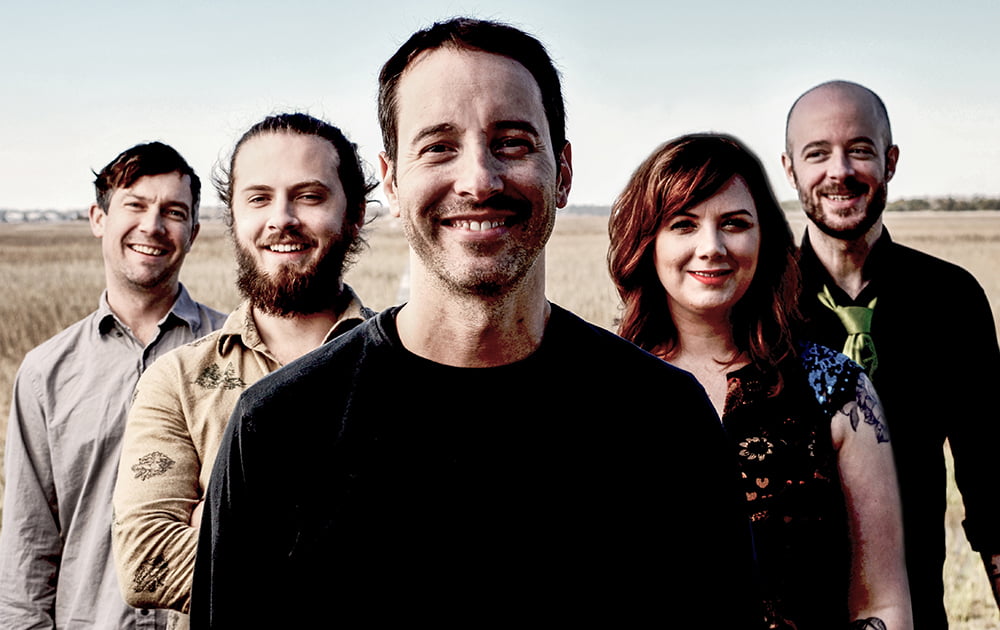
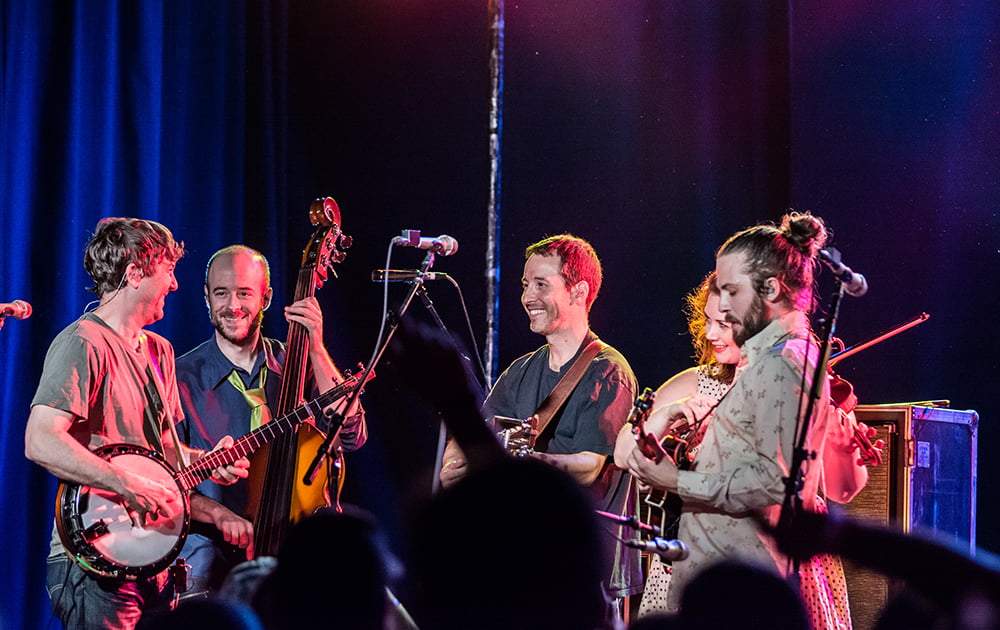
Fortunately then, remaining founding members Adam Aijala (guitar, vocals), Ben Kaufman (bass, vocals), and Dave Johnston (banjo, vocals) opted to re-group and press on with not one, but two new members added to the fold — mandolin player Jacob Jolliff, of Joy Kills Sorrow, and fiddler Allie Kral, formerly of the band Cornmeal. The pair joined YMSB on tour and, a year later, in the studio. They are now officially members of the new band line-up.

Black Sheep, the album that resulted from the reconfigured quintet, finds Yonder Mountain not only more song-centric than ever before, but also more willing to expand their musical parameters, resulting in a sound that’s as focused as it is frenzied. Known for its fiercely devoted fan following among the festival faithful and an approach based on both bluegrass and populist precepts, the band has initiated a new musical chapter.

Catch Yonder Mountain String Band at the Northwest String Summit this weekend (July 16-19).

Let’s start with the obvious. How did Jeff’s departure affect the making of the new album?

Aijala: Black Sheep was a project of firsts. The first full-length album that was self-produced. The first album with our new lineup. The first album that I helped engineer. The first album with fiddle on the entire record. So, yes, it was a bit different this time around. The process was indeed a lot of work, but it was good work, so therefore it felt really easy. Musically, it was great to work with Allie and Jake. And because we self-produced, I felt this project had much more collaboration than past records and we had an absolute blast doing so. We really felt like a team. I can't wait to record the next record.

How did you go about recruiting Allie and Jacob? Having been such a tight-knit band for so long, was it awkward bringing new people into the fold?

Kaufman: The only thing we knew for sure was that we wanted to have a mandolin in the band. Beyond that, we were open, but not attached, to adding a fifth member; and if we did, we could safely assume it would be either a dobro or a fiddle. We didn't really advertise that there were job openings. The word spread on its own … and quickly. One of the first phone calls that came in was from our friend and former manager D.J. McLachlan. He told us about Jake, whom he managed in a band called Joy Kills Sorrow. He basically said Jake's talent on the mandolin would be immediately apparent and speak for itself. But the more important thing was D.J.'s vouching for Jake's heart and character. When you travel in buses and vans and other tight quarters, a person's vibe is extraordinarily important. D.J. knows us all inside and out, so when he said Jake would be a great fit, I trusted him implicitly.

One of the most intriguing things to me was that Jake had never heard Yonder's music. We'd been at one common festival — when Joy Kills Sorrow played the Northwest String Summit. But they didn't get a chance to hang out. It was exciting to me that Jake wouldn't have any preconceptions about how the mandolin was "supposed to sound" in Yonder. We all checked out YouTube and saw what Jake could do and then invited him into the studio to record on Black Sheep. It just worked from the first note and we all knew we'd found our guy.

With Allie, it happened a little differently. We were on the fence about adding a fifth member. But then Allie came to a show in Portland, OR, that we played. She sat in and just blew the roof off the place. I can't remember if we asked her to come to the next show or if it just so happened that she was going to be in Seattle anyway. The point is, we played with her the next night and she blew the roof off the joint again. After that, our sound engineer Ben Hines cornered us and basically said we'd found our fifth member. It really wasn't a tough sell. Allie is talented on so many levels and she has this X-factor that I can't quite describe. It's like, she steps up to the microphone to solo and the crowd is already going nuts. She hasn't played a note yet and they're freaking out. She also brings down the house when she sings and she’s just intrinsically loveable, in my opinion. There is a deficit of women jam-band musicians … like, maybe three of them exist in the whole world. Somehow I feel that we achieved a perfect balance when Allie agreed to join Yonder Mountain.

Allie, what was it like to join a band with such a lengthy history and such a consistent line-up? Was it intimidating, challenging, exciting?

Kral: It has been such a thrill. Excitement is the most accurate feeling.

Did you ever find it awkward to assert yourself? Did you feel like you had been given the opportunity to fully contribute?

Kral: They have really encouraged my opinion and participation since day one. I think when you start any new relationship, there's usually a bit of a feeling out process. But I really didn't experience that here. They let me have full control over my solos and musical ideas, while sticking to the form of the song that had already been established. I think the addition of a new instrument naturally adds a different depth and dimension to everything we play. I have been incredibly conscious of how I add my flavor, while staying true to the original beauty of the music.

Ben, Adam, when Jeff announced his departure last year, was it a surprise? What sort of emotions were brewing at the time?

Aijala: The outside world saw the split as a surprise, but for us it was not. We had been having talks over the previous months about personal happiness and what we all came to realize was that happiness trumps everything else. Life is short so we should be enjoying it. The split was the culmination of those talks and ultimately the best decision for all four of us.

How big a role do your fans fill in your MO? What kind of personal interaction do you strive to maintain with them?

Aijala: I think our fans are as dedicated, involved, and invested as any in the business. Part of the dream I dreamt about being a musician was having a fan base that somehow became family. The Grateful Dead created the paradigm. I wanted something like that, something where the wall between the band and the audience comes down. The thing is, it's not really anything a band can make happen. It happens because the fans make it happen. I think it's crucial that the band dream the dream in that particular way, but it's up to the fans to actualize it. When we started, the original Kinfolk were mailing tapes and CDs of our shows to their friends. It was pre-Internet. It's a blessing that people care about Yonder Mountain in the way that they do. And there's some magic in the experience — something that isn't quite explainable. We do our best to get personal time with our fans. Social media helps in that way, but the very best is when we get a chance to hear people's stories from their own mouths. That usually happens at festivals. I'm humbled by the impact we've had on people.

Improvisation seems to play a prominent role in your live performances.

Aijala: The majority of the time we improvise is in sections of songs specifically designated as, for lack of a better term, the "jam section." Although there are many "song" songs and not "jam" songs where we improvise a solo each time we perform, I really enjoy those designated jam sections where the five of us are feeding off each others ideas. I think it's a very important part of our live show because it gives something fresh to both ourselves and the fans.

Allie, how familiar with the band were you prior to joining?

Kral: Very. I had been playing at the same venues and festivals, so our paths frequently crossed.

Would you classify yourselves as a bluegrass band or a jam band?

Kaufman: Yonder has always had one foot in the bluegrass world and one in the jam scene. And I think it's because we have a deep love and respect for both genres. When we started out, we got most of our gigs at jam band festivals. Basically we became the bluegrass band for the jam band crowd, while at the same time becoming the jam band for the bluegrass crowd. However, the term "jam band" is really misleading. Ultimately, it is descriptive of an audience that can get into all genres of music and approaches every performance with an open mind.

Allie, What's been your experience on the road with YMSB? Have you discovered anything that's taken you by surprise in terms of personalities, quirks, or fan reactions?

Kral: It's been so refreshing how welcome Yonder has made me feel. We all get along so well; it's like we've been playing together for years. Quirks? We all have them. We are musicians after all! The fans reactions have been impressive. I think most people are pumped to see the band continue thru this rebirth.

After 17 years, how do you keep yourself from becoming complacent or, worse yet, repeating yourselves? How do you keep the energy fresh?

Aijala: We obviously feel very energized these days because of the new line-up. Even though Ben, Dave, and I have been playing together for all these years, adding Jake and Allie to the mix gives our old songs new light. We also continue to do a completely new setlist every night and we're at the point now where we can play almost five full shows — 10 sets –without repeating a song.

Kaufman: We aren't happy unless we're creating, playing, writing, etcetera. I think we'd be in greater danger of becoming complacent if we suddenly had a hit single, made a fortune, and starred in a movie. But we are a blue collar band. And our fans, like ourselves, are prone to get bored with too much repetition. Sometimes it seems like we play a song five times and, if we’re not sick of it, then certainly ready to play something else. I don't know — we're pioneers of the short attention span.

It appears you give your fans lots of credit for inspiring you.

Kaufman: The fans are so receptive and supportive that, on the worst days, we can borrow some of their energy. The world has been looking for an unlimited, renewable source of energy. I think it's already been discovered and it’s called bluegrass. We've been blessed to be a band that is nearly two decades old and, at the same time, is a year old. Playing with Jake and Allie, having to redefine ourselves and fight to stay on top, is a blessing. It's not effortless, but it's so fun that it seems like it is.


Lede photo by Mitch Scobie / Bottom photo by Dorothy St. Claire
CONVERSATIONS WITH… Yonder Mountain String Band

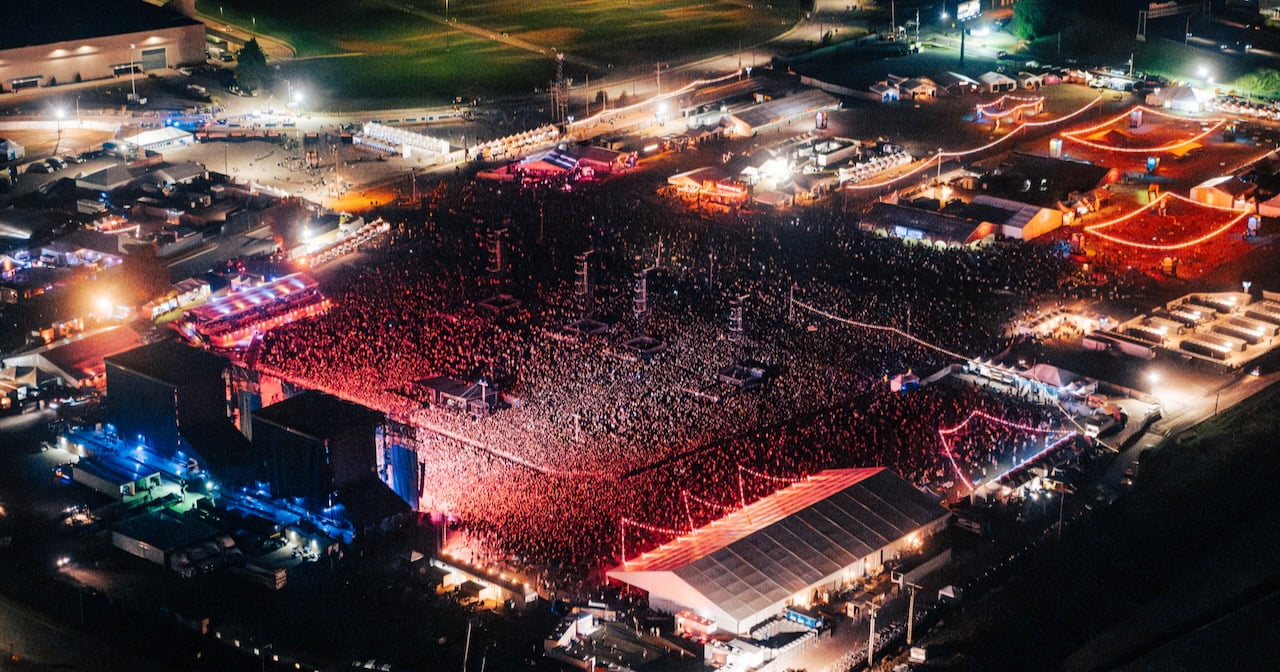
Summer festival season may be over, but October festivals are some of the most exciting in the bluegrass community.  While some of you are recovering from Hardly Strictly Bluegrass in San Francisco or The Festy Experience in Virginia, we urge you to head east to Mulberry Mountain in Ozark, Arkansas, where YONDER MOUNTAIN STRING BAND will be headlining their annual Harvest Music Festival on October 11 – 13.  The Sitch’s BRIAN HEPP got to chat with YMSB guitarist / vocalist Adam Aijala to hear all about the festivities.  For those unfamiliar with the Colorado quartet, YMSB released Elevation (Frog Pad Records) in late 1999, and even today it remains one of the best bluegrass debuts of the decade.  “Half Moon Rising”,  “Mossy Cow” and many other Elevation tracks have remained a crucial part of YMSB’s live repertoire.  With appearances at Bonnaroo, Northwest String Summit, and Telluride Bluegrass Festival, YMSB are a festival fixture, and from the sound of it, they’re just getting started…

Many fans consider YMSB to be one of the top ‘festival acts’ out there.  Would you agree with this?  Does YMSB sound its very best in a festival atmosphere?

Adam Aijala (AA): Well, I don’t know.  I do know that we get to play a lot of great festivals each year, but I’m not sure I’d categorize us as a ‘top festival act’ when acts like Phish and Bob Dylan still play festivals.  That’s ‘top’.

How has your sound evolved over the years?  What will we hear in your newest studio album?

AA: I think our sound has evolved a lot over the years.  We started out wanting to be a traditional sounding bluegrass band, but once we started bringing in our own original music and incorporating our outside influences (which were not bluegrass), we soon realized we could never be that.  With that in mind, we’ve never been afraid to try new styles of music or obscure covers.  Some work better than others, but it’s always been a work in progress.  Hell, I had to learn how to flat-pick onstage in front of people!  I’m still learning.  Our front-of-house engineer, Ben Hines, continues to push the envelope with our little ‘acoustic’ band.  For not having a drummer, our sound is big.

Have you noticed a difference between the bluegrass scenes on the east and west coasts?  Is there a difference in the audience?

AA: A little bit.  To be honest, I don’t really have my thumb on the pulse of bluegrass in this country.  I can comment on Colorado, though.  It seems Bluegrass Coloradans are a bit more open-minded to bluegrass that tends to stray away from tradition and fuse with other genres.  The fact that folks really liked us right off the bat gave us the confidence to leave Colorado and play elsewhere despite our non-traditional sound.  Audiences vary from town to town across the country.  College towns and mountain towns tend get down and party hard.  I notice differences in festivals on the different coasts, but that has to do with the security and police, which are way more chill out west.

What is a recent bluegrass / Americana recording that you have loved?

AA: I haven’t heard a new bluegrass / Americana record in a long time, but I’m anxious to hear the new Tim O’Brien/Darrell Scott record (We’re Usually A Lot Better Than This).  Lately, I’ve been on a Grateful Dead kick and loving it.

Any major plans or surprises for The Harvest Festival this year?

AA: Well, it wouldn’t be a surprise if I told you, right?  Sometimes surprises themselves don’t rear their heads until last minute.

What are two essential bluegrass recordings that have influenced the YMSB sound.

AA:  I will give the two records I would cite, but it’s merely my opinion though I’m sure no one would argue with the first record mentioned:  Seldom Scene, Live At The Cellar Door.  And a toss up between Tony Rice – Manzanita and Kentucky Colonels – Livin’ In The Past. 

If you could only play one more concert, what would the following songs be for your opener, encore, and one cover?

AA:  Good question and very hard to answer.  Man, I’ve made so many setlists through the years.  Please don’t make me do another one.  I’d probably have to dig through the song lists and really try to be clever here.

What can we expect with the four day New Year’s Eve run in Boulder?

AA:  High energy, no repeat songs over the 4 days, new songs, and some fun guests to play along with.

Any final words to your fans?

AA:  Can’t do it without you so thank you so much for letting us get to do what we do.  You keep coming, we’ll keep playing.  Deal? 

Sounds like a fair deal to us.  YONDER MOUNTAIN STRING BAND will perform all three nights of The Harvest Music Festival and continue to tour the Midwest and east coast throughout the autumn.   You can learn more about the band and their upcoming appearances at www.yondermountain.com