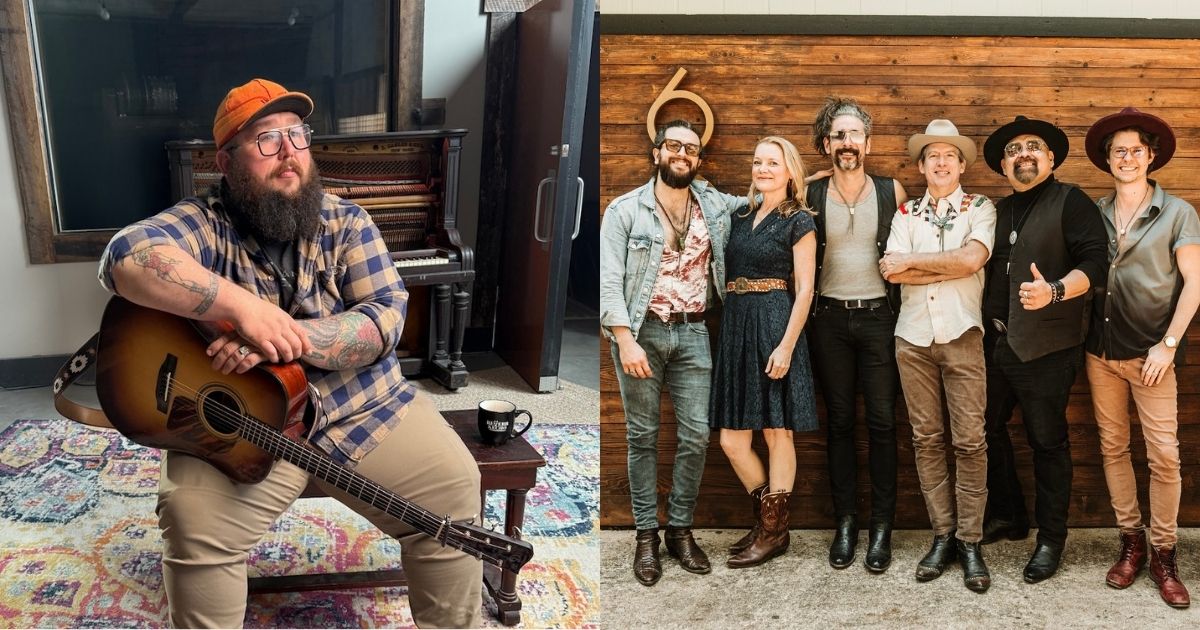
The music scene in Tulsa, Oklahoma, is alive and well. If I’d thought otherwise at any point in time, it wouldn’t take long for a stranger in an Austin dive or a songwriter in Nashville to remind me – and they have. I’ve called Tulsa home for 10 years and gladly claim and evangelize her as often as I can. This little-big town’s reputation of producing quality singer-songwriters and musicians is justified, however biased I am.
Come with me, Keyland, on a little walk through a Tulsa-Mixtape journey. Before we begin, I’d like to offer a few important listening notes:
1) I regret that I will inevitably leave some folks out, merely due to the limitation of brevity. My sincerest apologies. But I’d like to point out that this list is composed of my personal friends in the Tulsa music scene. Beers on me at the Mercury Lounge to any friends I leave out here…
2) This is a list of current artists. The Tulsa music scene is often associated with only a handful of eclectic deceased writers and musicians. God bless them – but Tulsa has changed a lot in the last 50 years or so. My friends included here do an amazing job of looking ahead at what the future holds.
Ramsey is one of my best friends and most likely the very best musician I know. He plays drums and sings harmonies in my band, Keyland, and he is an incredible guitar and banjo player. In the best way, this album is more a composition than anything else.
“Stranger” – Wilderado
This is my favorite band. I so respect the way these guys approach rock and roll with a blue-collar “dad” mentality. It’s truly inspiring, and the way I want to approach music as a career.
“Coyote” – Ken Pomeroy, John Moreland
This is a two-for-one selection: Ken and John are both powerhouse songwriters and singers. Both these artists are gifted in very special ways and I’m glad they make music.
“Get to You” – Micah Felts
Micah Felts is hilarious, a fantastic songwriter, and an all-around great dude and friend. He is also a stellar acoustic guitar player.
“Better If Worse” – HAFFWAY
Sam Westhoff is slipping in this Tulsa music list, because I sure as hell wasn’t going to leave him out. He is one of my best friends and has produced all of my music. He lives in Nashville now and is famous (rightfully so).
“Comanche Moon” – John Ferrell
John Ferrell is one of the most rawly talented players and singers I know. I met John while we were both in college and he learned to play guitar better than me and all my other friends in like three months.
“Marigold” – Chris Bo Jones
Also sneaking in this Tulsa list is OKC rockstar Chris Bo Jones. Lineman by day, rock star by night, Chris is one of my favorite singers.
“Outside” – MORE&MORE, Beachfriends
Brady Ballew (the happiest person I know) used to play professional soccer. Now his band MORE&MORE and Keyland like to sell out shows in our favorite Tulsa dive, the Mercury Lounge. I’ve listened to this song 10,000 times.
“Call Me Anytime” – Sports
Christian introduced me to nicotine toothpicks and Australian beer one time after a HAFFWAY show. These guys produce a lot of cool stuff in Tulsa. And Sports is like a huge band.
“Bullfighter” – Joleen Brown
Joleen Brown is Tulsa’s sweetheart. Her voice is crazy good and she is the sweetest, coolest person you will meet.
“Wishes” – Travis Linville
I’m new to Travis’s music and I’m so glad I found it. This is like a Tom Petty song in the best way. I don’t know Travis super well, but it seems like he has a really grounded view on the reality of what it means to be a musician in 2026, and for all the right reasons.
“More” – Kalyn Fay
Kayln Fay just put out a really cool record that highlights and honors her Cherokee culture and roots.
“This Damn Funky” – Johnny Mullenax
Johnny plays guitar 1000 miles per hour. Johnny’s band plays their music at 1000 miles per hour also. The live show is insane.
“South and Pine” – Zach Bryan, King Cabbage Brass Band
I have not met Zach yet, but I have drank one million beers at 5 or 6 of his concerts. The horn section in this new record of his is a Tulsa band called the King Cabbage Brass Band and it is physically impossible to not have fun at a show of theirs. And they also do really cool work in our community by teaching band camps for kids – they recently held a concert at Cain’s Ballroom and their band camp kids absolutely crushed a song on the main stage.
“Cowboy Song” – BC & the Big Rig, Jacob Tovar
This is another two-for-one selection: Brandon Clark was one of the first people to ever believe in my band, Keyland, and let us play our first real gig with them. Jacob Tovar has a buttery voice and one of the funniest people you could give a microphone to. You can catch both of these gentleman holding down separate residencies at local dives – Tonkin’ Tuesdays with Tovar and BC’s Sunday Service – you guessed it, at the Mercury Lounge.
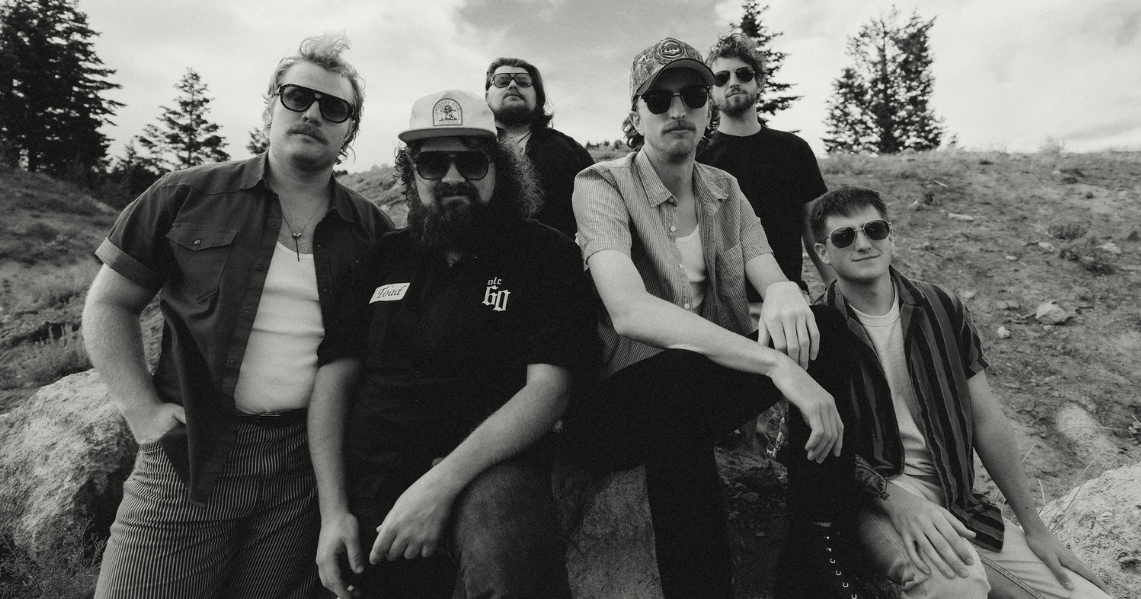
Pairing the slouchy charm of indie grunge with roots-rocking, small-town punk energy, Ole 60 spent 2025 becoming one of the most intriguing new acts in Americana.
With their debut album Smokestack Town – plus some fun-loving video content, huge opening-act performances with Zach Bryan, and first-time trips to Lollapalooza, the Ryman, the Grand Ole Opry, and more – the six-piece band came a long way from their blue-collar hometown of Hawesville, Kentucky. They even finished off the year with their biggest show yet, selling out their first-ever arena gig with an Owensboro homecoming. But there’s still more to do.
Inspired by a world of shift work and shitty luck, and powered by a rusty Toyota rolling on four bald tires, frontman and primary songwriter Jacob Ty Young fills his songs with vividly conflicted characters. Soaring garage-pop singalongs stand alongside sucker-punch ballads of screwing up and flaming out, each one struggling with the urge to get the hell out while still loving where you’re from. It’s a feeling anyone nursing big dreams in a small town will recognize, and Ole 60 shares it with a fresh voice.
In late January, Young told Good Country about the band’s quick rise and biggest year yet, while looking ahead to what comes next. There’s already a level-up tour underway and new music in the works. But Young pledges not to forget where they got their start – a pizza shop game room in a Smokestack Town.
In 2025, Ole 60 was out on tour, did big shows with Zach Bryan, made an Opry debut and released your first album. What’s it been like processing all that in the last month or so?
Jacob Ty Young: You try to take it in as it’s happening, but it’s a lot easier once you have some time to think. … I think it was definitely the best year we’ve had and now that we’ve had some time off, I’m eager to get back out and start touring again.
And I’ve been writing a lot. After putting out that first record, it was something that we’d never really done before. It was our first time making an album and we learned a lot of things and I think that everybody’s in the headspace that this next one’s going to be even better, so we’re working hard.
What was the common bond that brought you all together musically? You blend influences all the way from Smashing Pumpkins and Metallica to John Prine, right?
Five of the six of us are all from the same little small town in Kentucky, or bordering towns within about 30 minutes of each other. I kind of knew everybody before we started the band. We just got together and started jamming. I’m a huge Smashing Pumpkins fan. Most of the guys are big metalheads. They love Metallica, Black Sabbath, Primus, all that stuff. I think everybody bonded over just our love for rock music. There is obviously some country influence, but I never really considered it that. We were just a garage band, and it’s hard to not bond when you’re sitting there in a garage playing cover songs. The Pumpkins, Stone Temple Pilots, Black Crowes. It was that kind of grunge stuff that really glued us all together.
You can hear that still, and then there’s a rootsy folk side to it, too. When did you start writing songs?
I’ve been writing songs my whole life, but nothing ever really serious. I would write funny songs when I was in high school and I wrote a song about our basketball team one time, just as a parody thing. And I always really enjoyed playing guitar and being creative. I was into visual art and graphic design for a while. Then I kind of went through some stuff in my personal life and decided I wanted to sit down and write some songs about it. That ended up being the first EP [three twenty four]. That would’ve been 2023, I think. I always loved guys like John Prine and Bob Dylan and even Billy Corgan of the Pumpkins, just the uniqueness of the songwriting. I think for lyrics, I look to those guys, and then for the music we kind of look all over the place.
I hear there’s a pizza shop in there somewhere, right? We keep seeing pizza references in the socials and songs. Is the shop like an easter egg for you?
Yeah, I think so. I worked at a pizza restaurant in Hawesville, Kentucky, for about four years when I would come home from school. And then there’s another guy in the band, Ryan, his brother owned the pizza restaurant, so he worked there as well for years. When we first started practicing, rehearsing, and getting ready to go around playing bar gigs, we would rehearse in the back of Galaxy Pizza after close. We’d set up all our equipment back in the arcade section and jam until one in the morning. And then we got our bass player, Colby, and he had a garage, so we moved to his garage. But yeah, I grew up right next to Galaxy and it’s kind of a staple in our hometown, so we just try to let that side of us show through our content and all the visual side of stuff.
Tell me about putting the album together. Smokestack Town was one of my favorites of the year, so congratulations on how it came out. What did you want? I mean, creating a debut album is a pretty big moment. It might seem like an overwhelming task, so what were you going for?
We didn’t have a hardcore plan. I was just writing songs and I got six of ’em that I was really proud of. We went recorded and I was like, “Okay, I think this could be an album.” So I was writing as we were recording the album, and then the last song that I wrote was “Smokestack Town.” I was like, “That seems like a good name.”
I just wanted to push ourselves and try to do something different sonically than we had before. We got together with Jacquire King who produced it, and he’s one of the best of the best. He took my vision and ran with it and we’re very happy. We just wanted to put ourselves out there and let people in, see what kind of music we listen to.
That’s interesting, because it’s been presented as a concept album. But it sounds like you were building the concept as you went.
If it’s a concept album, it’s more so on the visual content side of things, because we’ve been putting out these little short videos of character acting. Taking the lead from the Foo Fighters.
Totally!
But there were just a lot of overarching themes in the record about home. Missing home, being homesick, being young. Plus that idea of small town, kind of dystopian … but not really.
Right, you wrote all these characters who are definitely small town people, with small town stories. But the thing I appreciate was they’re not stereotypical tailgate anthems or “I’m so country.” Nothing like that. Where were you coming from?
After I left Galaxy, I worked in an aluminum mill for a year and a half, and my dad works at the paper mill. Hawesville is a very industry-driven town. I think it’s different from your typical country town because it’s so labor-driven and everybody’s proud to be union and blue-collar. It’s less sitting on tailgates and drinking beer and more going to work a 16-hour shift and coming home and sleeping.
I wanted that to come through, because in country music it is a lot of sitting out in the boonies, drinking beer, and sitting on a tailgate. But I wanted to write my experience growing up in my little country town. There’s nothing to do, so we just ran around all the time and went to all these different places and got into trouble there. I wanted to write about that side of stuff, and less about the country stuff.
Being a new band coming into the indie and roots music scene, did it feel like there’s a lot of opportunity and energy out there?
Everything’s been so great. We kind of blew up on social media and I don’t know if any of us were ready for that to happen, but it did. I think that the reception’s been great. We went out and started headlining shows fairly early and we were selling them out. That’s a great feeling, because when you do blow up like that on social media, it’s hard to really put a gauge on what that means – until you go out and play a headline show and you see the crowd and they’re singing, and you go play a festival with all these big names and it’s your first time out there, and the crowd’s into it. And that’s kind of how it was.
True, and you finished last year with a huge statement in Owensboro, right? Hometown show, New Year’s Eve. Your first arena show and you sold it out. What was the feeling like on stage?
It was weird because it was both the most nervous I’ve ever been and the most comfortable I’ve ever been. You look out in the crowd, you see people you know, and you don’t get that a whole lot when you’re touring. It was just super cool. I got to sleep at the house I grew up in. The whole day just felt good. It was nice to be home and have family coming in and out and friends. Just the perfect way to end the year.
Y’all cleaned up nicely in the tuxedos. Did you put some extra polish on the performance, too?
Yeah, I thought it was New Year’s, we might as well get some tuxedos. I thought everybody looked nice. I want to do it more often. I dunno how the other guys feel about it. We’ll see.
You’re getting back on the road for the Smokestack Town Tour this winter. What’s everybody looking forward to? What’s the vibe?
The new year feels like a fresh start to change the show and really put a lot of thought into what we want to do with it. We’ve got some new production stuff, new lighting, and I’m really excited for everybody to see it. I think everybody just wants to go out there and every night needs to be the best show we’ve ever played. We’re playing bigger shows this year and we’re super excited, super grateful.
Earlier you said you’ve been writing, can you give us a hint about what’s been inspiring lately?
Yeah, I’ve been listening to a lot to indie rock, and what I listen to comes through in what I write. So definitely it sounds like Ole 60, but it’s new, and I’m still kind of figuring it out. But I’m really excited that the direction everything’s headed. I don’t have any idea about timelines for new music, but I have been writing a lot and I’m really excited about all of it.
Jacob, thank you for the time. I’ll leave you with the big picture – I always ask people what they hope listeners take away from their work. So what’s that look like to you?
I just hope that our story can be inspiring to others through the fact that we came from a town where after you graduate, you either go to college, you go to the military, or work in a factory, and that’s your options. And there’s always other options out there. You just got to put your head down, work hard and good things will come.
Artist:Ocie Elliott Hometown: Victoria, British Columbia, Canada Latest Album:Bungalow (released October 24, 2025) Personal Nicknames (or rejected band names): Jon and Ra
What has been the best advice you’ve received in your career so far?
Keep playing, keep writing. Don’t be precious with songs. There isn’t one right way, be yourself goddamnit!
What’s your favorite memory from being on stage?
Somewhat unexpectedly being invited to join Zach Bryan for his song “28” when we opened for him at Red Rocks this summer. We were handed wireless mics backstage and, not knowing when to sing or where to stand, were instructed to “just go for it!” – in front of thousands of people wrapped in towers of sandstone formations enveloping the sound. It felt like my sense of self dipped and pure elation took its place… like there was nothing I could do to stop my entire body from singing.
Another experience that comes to mind was one of our earlier shows, playing for 10 to 20 people in a secret locker room during a local festival in Victoria, BC. – Sierra
What other art forms – literature, film, dance, painting, etc. – influence your music?
For me, it’s mainly literature and films that influence my music and I suppose they do so more in a lyrical sense, by informing how I see the world and interact within it. I know for me, the times I feel most inspired in life is when I have been reading a great book or have just finished watching a really inspiring film. I love foreign films, especially, because they can often give such unique and also universal perspectives and open your frame of mind. – Jon
What musician has influenced you the most – and how?
Kurt Cobain. When I first heard and saw Kurt Cobain in the “Smells Like Teen Spirit” video my life changed forever. I can still recall the weird feeling of hearing his voice and almost not understanding it, in a way, and being so pulled in that I was dumbfounded. Kurt Cobain and his songs and voice made me really fall in love with music in an intense way. The fact that sound could have such an effect and inspire such feelings of pleasure and energy was life-changing and life-affirming.
What is a genre, artist, song you adore that may surprise people?
I love hip-hop/rap music, not that that should really surprise anyone, since the vast majority of musicians listen to every style of music, I think. But there was definitely a long period of my life (four to five years, at least) where I mostly listened to hip-hop. A Tribe Called Quest, Wu-Tang Clan, De La Soul, People Under the Stairs, and Outkast being my favorite artists overall.
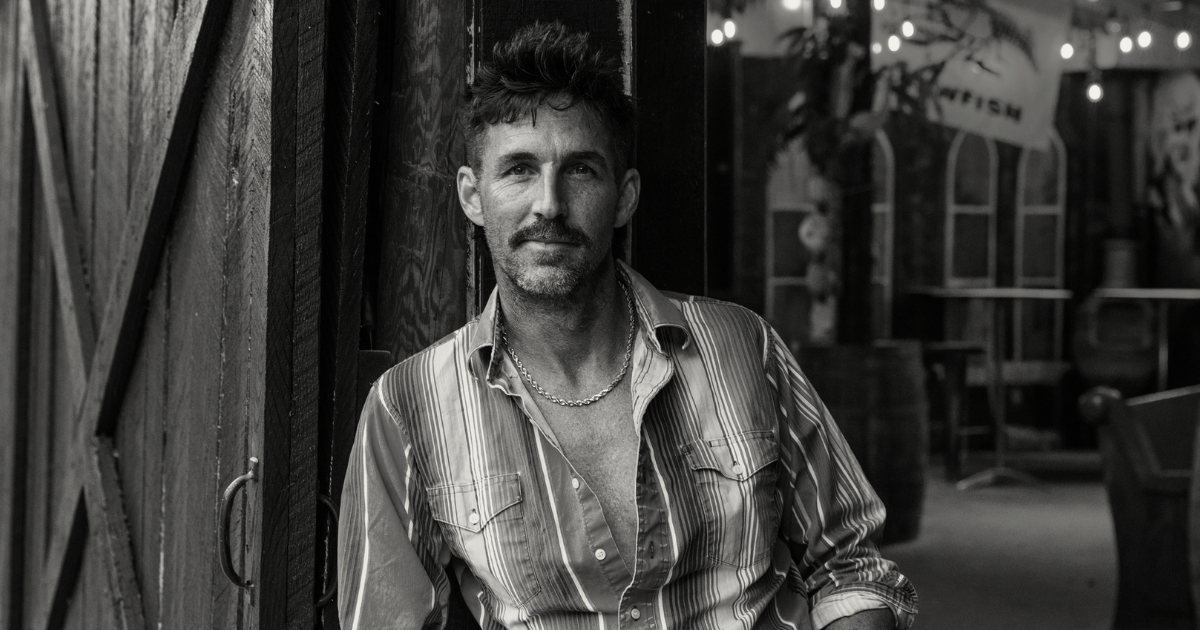
Depending on who you ask, Jake Owen might be responsible for the very first bro country song. His 2011 hit “Barefoot Blue Jean Night” wasn’t the first party-ready ode to Southern summers and ice-cold beer, but its slick mix of country signifiers and stadium-rock production – courtesy of Joey Moi, best known for producing Nickelback and later Morgan Wallen – proved highly influential, arguably paving the way for crossover smashes like Florida Georgia Line’s “Cruise” and Blake Shelton’s “Boys ‘Round Here.”
“Never gonna grow up, never gonna slow down,” Owen sang on his signature hit, neatly summing up the youth-obsessed ethos of the bro country era. Now 44 and newly independent after 20 years on RCA Nashville and later Big Loud, he’s singing a different tune.
“I’ve made a lot of records that had a fantasy, ‘Remember when we were young?’ kind of feel to them,” Owen told Good Country. “What feels good about this new record is that I can listen to it and feel like I’m listening to my life right now. It’s very real.”
Dreams to Dream, Owen’s eighth studio album and his first with Shooter Jennings producing, is a sharp left turn for an artist known for hits like “Beachin,’” “I Was Jack (You Were Diane),” and “American Country Love Song.” Earlier this year, Owen decamped to LA amid the wildfires, leaving the comfort of Nashville behind in search of creative truth and a more organic sound. The result is one of the year’s best and most surprising country albums, which trades bro-ish bravado for world-weary introspection and a classic-country sensibility.
The title track is a rollicking, country-rock statement of purpose that name-checks Hank Williams, Jr. and establishes the stakes: “I’ve been down, but I ain’t no quitter/ ‘Bout to get up on my feet/ ‘Cause I still got dreams to dream,” Owen sings in the rousing chorus. On the Troy Jones-penned “Wouldn’t Be Gone,” he muses about leaving stardom behind to work in a hardware store. (“I already know a thing or two about hardwood floors,” goes the song’s best line.) Other standouts include “Chill of December,” a Haggardian expression of winter loneliness, and “The One I Did It To,” a doleful admission of romantic wrongdoing.
In a Q&A, Owen spoke to Good Country about teaming up with Jennings, defining authenticity on his own terms, and why he doesn’t shy away from his bro country past.
This album is a departure from the sound that you’re best known for. What made now the right time to do an album like this?
Jake Owen: My life has always been about timing and believing that I’m supposed to be where I am. The album’s called Dreams to Dream and it came about because I was in this interesting place in my life where I’ve had a record deal for 20 years and, all of a sudden, I’m doing something on my own. Which felt kind of like freedom, but also felt very scary.
For a long time I was focused on the more commercialized songs that would work on radio, since I was on a major label, and I felt like this is the time to make the kind of record that I’ve always really loved. I’ve always tried to follow my heart and what my intuitions have told me. They haven’t always been right, but I definitely follow them.
What was it like working with Shooter Jennings?
He really exceeded my expectations. I expected to go out there and make a record, but I didn’t know I would leave there with an awesome new friend and somebody that really believed in me as a person with dreams and a purpose and things they wanted to say. He was so encouraging to me. I felt safe with him, which is a weird way to put it, I guess. But you need people to pat you on the back and tell you that you’re doing the right thing.
It also was at a time when – I’m not ashamed to say it – there were not a lot of people ringing my phone in Nashville to tell me they were proud of 20 years of what I’d done in my career and 11 number one songs. Kind of weird, right? But the one guy that was calling me and applauding me and telling me that I could do way better, bigger things in my life than what I’d already done was Shooter Jennings. Out of all people, right? That says so much about how much he loves music and believes in people. I think you’d probably hear that same answer from anybody else that he’s worked with.
The second song on the album, “Them Old Love Songs,” is a Waylon Jennings cover. Why did covering Waylon make sense for this record?
Well, there was no part of me going out there that thought I would do any covers. But Shooter and I just talked about life and music out there, and he was saying that his dad always would cut cover songs for fun when he came off the road. Shooter would encourage me, each night or whenever we were done with the session, to do some covers and just have some fun. With that one in particular, I was nervous to ask Shooter, because it felt a little cliché. I wondered how many people work with him and have wanted to do that or if he’s offended by that.
But I always loved that song and the album that it’s on, Are You Ready for the Country. It’s pretty wild, because that album starts off really rocking, and then it goes into that. To me, if you listen to that song, the lyrics say, “I wish I had a true fine woman/ Let her rock me all night long/ And maybe we could get it together/ Like people do in them old love songs.” I’ve been singing that my whole life and it’s still the way I dream of love. And then, going back to the first verse, it says, “Nobody cares where I’m going, all they know is I’m coming back.” I don’t think anybody cared that I was going to make a record with Shooter. Nobody really even knew.
Also, one of the reasons Shooter and I decided to make this album was our love for the Hank Williams Jr. record, The New South, that his dad actually produced. Hank moved to Alabama to make that album, I think it was in 1977, and said he needed to get out of Music City because he wanted to go make his kind of music with his friends. And I felt the same way. Like, here I am going to LA to make a record with Shooter, and he’s encouraging me like Waylon encouraged Hank. So recording that Waylon song, with Shooter producing it, it just felt right.
You recently celebrated the 20-year anniversary of moving to Nashville and signing your first record deal with RCA. You made a post referring to “the highest of highs and lowest of lows” in your career. Could you tell me about some of those highs and lows?
Yeah, well, first off, thanks for even acknowledging that, which I think is important to the reasoning behind this whole record in general. I would start off by telling you that the highest high for me was just moving to Nashville and knowing that something was ahead of me. When I left college, I left my twin brother and a lot of my friends and my entire family at home in Florida. I still look back on that guy, and I’m like, “What the fuck was I thinking?” But I guess I just had to chase it. And then getting to Nashville and immersing yourself with people that are so much better than you are, I just didn’t have that where I was in college in Tallahassee. I kind of felt alone. Getting a record deal was also a big part of that, feeling like I had accomplished part of what I came here to do. And then I spent the next seven years having to figure out how to keep the guys in the band paid and the buses rolling on the road and how to get my first number one song. Everybody thinks that’s the easy part once you sign the record deal, but it really wasn’t. It was a rude awakening.
And I went through a divorce. I got married, I had a kid. It’s like the classic country song shit, man. I think that was a big low for me, having to leave my family to go on the road. I had been very successful from my dreams that I chased, but the one thing that I probably desired the most, outside of music, was a family life. The one thing that I’ve never been good at and I haven’t figured out is that real solid relationship in life, building love and trust, and that bothers me a lot. It bothers me that I can be good at a lot of other things, and that is the most important thing to me, and I haven’t been so great at it.
You were a major player in the bro country era, which is now having this sort of nostalgic reappraisal. I’m thinking of the HARDY and Ernest song “Bro Country,” which is an ode to that time in country music. When you think about that era, what goes through your mind?
It’s funny, because I don’t know that anybody has said this before, but I’ll tell you right now: I started that shit. Everybody wants to shy away from bro country or whatever, but I invented that shit. And yeah, I am proud, in a way. I remember being at a time in my career where I had a record deal for seven or eight years and I had a couple songs that had done all right, but I was feeling like I was gonna lose my record deal if I didn’t try to do some different shit. And I didn’t have a producer at the time. I’d left Tony Brown, who was great. And he’s like, “Hey, man, you should meet this guy, Joey Moi. I think he’d be great for you.”
Joey obviously came from Nickelback and all that. At the time, no different than when I left Tallahassee for Nashville, everybody was like, “Dude, what the fuck are you doing?” So here’s a guy now from Nickelback who’s gonna try out making country music on me, which was probably a crazy thing, too. It wasn’t that I was trying to sell out. If anything, I look back and I’m like, “Dude, I had the balls to just do something different at the time.”
“Barefoot Blue Jean Night” was our first release and it had all of these claps and stomps and loop shit. It ended up being the most-played song of the decade [according to Country Aircheck]. I have the plaque on my wall. It was a major, major changing point in my life and career, because it worked. Not only did I keep making those songs for the next few years, but it influenced a shit-ton of people.
I think a lot of people might want to avoid that association. It’s kind of like the way that ‘80s rock and roll gets shit on sometimes, but there are still people in their cars cranking it to 11, right? If you look back at my early career, the songs I was writing were very country, because that’s what I always loved. I went on tour with Brooks & Dunn and Alan Jackson. So when all of a sudden, years later, all of the people that were my heroes were like, “I hate this kid,” it kind of hurt my feelings. But I always knew in my heart that I would get back to what brought me to the table.
Among the detractors you alluded to, people who are into more traditional-sounding country music, there’s this idea that pop-country or bro country is inauthentic. What do you think is “authentic” country music?
Authenticity is the ability for artists to take any type of music and just make it their own. Johnny Cash never shot a man in Reno. But it was a huge song for him. George Jones didn’t write “He Stopped Loving Her Today,” but he owns that song. Stardust is the biggest album Willie Nelson ever released and he didn’t write a single song on it. And he’s one of the greatest songwriters of all time. Authenticity isn’t about where somebody’s from or how they grew up. If you own what you’re doing, and you deliver it in a way that’s believable, I think that’s authentic.
I’m thinking now of this back-and-forth you had with Jason Isbell a couple years ago about artists writing their own songs.
Yeah, dude. That guy. I love Jason Isbell, that’s what’s crazy. Some of the artists that I love the most just spout off at the mouth. The other day I said something about Zach Bryan. I love that guy’s music too, right? He’s amazing, and he’s also uber successful – selling 120,000 tickets or whatever, which I could never even fathom. And Jason is out winning GRAMMYs on top of being an incredible guitar player, so much more talented than I could ever dream of being. But I don’t understand why guys like that will take the time on shit on someone else’s music.
That’s never made sense to me and it’s always made me want to just ask that question directly to them. Which is what I did to Jason. I was just like, “Dude, I’m not going to get into an argument with you over Twitter, so give me your number. I’m going to just call you and have a conversation about why you feel this way.” He and I had a great conversation. And he was very cool to acknowledge and entertain my questioning behind why he would just spout at the mouth about stuff like that. We both ended it at the time – and this was years ago, when I was drinking, or maybe he was – he’s like, “Dude, we should catch a beer sometime.”
So, to go back to the authenticity thing, there’s so many people that are so great at a lot of things. One of my absolute favorite artists right now is Charley Crockett and he does that, too. I wonder, sometimes, I’m like, “Why are you guys all trying to prove to one another that you’re more authentic than the next guy?” Sorry, you can tell I’m getting tense talking about it. But I’m confused by it, because those guys make some of my favorite music and it bothers me that they feel the need to try to blow somebody else’s candle out in order to make their already blazing one shining brighter.
I wonder if part of you wanted to prove to that type of person that you could make one of these really rooted, quote-unquote “authentic,” hardcore country records.
I think it was about proving to myself what my intuitions are and what my beliefs have always been about what’s right for me. I also really needed somebody to tell me that what I was doing was the right decision, and Shooter never wavered. He was constantly telling me, “Dude, this is it. You’re going to open up a Pandora’s box for your career in ways that I don’t think you’ve seen before.” I will say that it’s definitely opened my eyes to a lot of things and a lot of people reached out to me that have never reached out to me before.
One of my favorite songwriters, artists, people I’m a huge fan of is Brandy Clark. I think she’s incredible and just a brilliant songwriter. And she happened to be in LA when I was there and stopped by to see Shooter. She called me after and I just started crying. Because she was like, “Jake, I’m so happy for you. Like, I hear you in this.” It was just so fulfilling to hear that from her. She didn’t have to do that, but I was so moved by it.
I’m grateful for people that don’t think about music from a standpoint of judgment, but look at it as a possibility of something greater.
Sit back and relax and enjoy a New Music Friday roots music picture show, right here on BGS! It’s wall-to-wall music and performance videos in this week’s roundup.
Starting us off, Roman Alexander’s new album, Midwest Calling, is available today, so we’re celebrating the occasion with his new music video for “Way Over You.” Built on strong mainstream country sounds, the track showcases how the entire project is built on an indelible sense of self, on acceptance, and firm home ties. In bluegrass, Kentuckian picker and singer-songwriter Josh “Jug” Rinkel debuts a new performance video for “I’m Only So Good At Being Good,” an original song about overcoming addiction and facing down temptation time after time. With just a guitar and a voice, it’s gorgeous-and-simple bluegrass at its best – down-to-earth and moving, too.
West Texas Exiles call on Kelly Willis to share lead vocals on “Division,” which they’ve paired with a gentle fingerpicked melody and a very fun and charming stop-motion music video inspired by a Wes Anderson sort of aesthetic. The harsh realities of a long-term relationship coming to a close have never looked so cute, but this song will gut you – or give comfort – all the same. Singer-songwriter Pete Droge brings us a gauzy, kaleidoscopic video for “Fade Away Blue,” the title track for his new album (out today) featuring lead guitar by Rusty Anderson. Steeped in azure and cerulean, there’s a tenor of hope and looking ahead in the alt-folk twang and open guitar tuning.
Plus, Rachel McIntyre Smith continues her Honeysuckle Friend Sessions with her pal Duke Jones. The pair perform a cover of Zach Bryan’s “Oklahoma City” to celebrate McIntyre Smith’s recent deluxe EP and the robustly talented community of musician, artist, and creator friends that surrounds her. It’s the second installment from the series we’ve shared here (see the first edition here) and we’ll continue in a couple of weeks with another video from the Honeysuckle Friend Sessions.
Pop some popcorn and enjoy the pictures – You Gotta Hear This!
Roman Alexander, “Way Over You”
Artist:Roman Alexander Hometown: Kansas City, Missouri Song: “Way Over You” Album:Midwest Calling Release Date: August 22, 2025 Label: Twelve6 Entertainment
In Their Words: “Midwest Calling is about knowing who you are no matter where you go. It’s about carrying a sense of home through breakups, long nights, and big dreams – the moments that shape you, but also test you. No matter how far I’ve wandered or how much life has shifted, there’s always a part of the Midwest that pulls me back, grounding me in where I come from and reminding me why I started chasing this dream in the first place. It’s both a comfort and a compass – a voice that whispers you can grow, you can change, you can hurt and you can hope, but you’ll always belong to something bigger than yourself.” – Roman Alexander
Video Credits: Directed and edited by Sean O’Halloran. Coloring by Sam Aldrich.
Pete Droge, “Fade Away Blue”
Artist:Pete Droge Hometown: Bainbridge Island, Washington Song: “Fade Away Blue” Album:Fade Away Blue Release Date: August 22, 2025 Label: Puzzle Tree/Missing Piece Records
In Their Words: “I wrote ‘Fade Away Blue’ in an open tuning, DADGAD. There is a melody inherent in my acoustic rhythm part that was not speaking through the track once we added drums and bass. So we enlisted Rusty Anderson from Paul McCartney’s band on lead guitar to bring those phrases to the forefront. His tone, pocket, and feel are impeccable. He also added the slide guitar and an additional rhythm part in the chorus. Listen carefully and you’ll hear him add a nice Beatles chord on the last note. I guess after working with Sir Paul for all those years, that stuff is bound to rub off.” – Pete Droge
Rachel McIntyre Smith, “Oklahoma City” featuring Duke Jones (Honeysuckle Friend Sessions)
Artist:Rachel McIntyre Smith and Duke Jones Hometown: Oliver Springs, Tennessee Song: “Oklahoma City” Latest Album: Honeysuckle Friend (Deluxe) Release Date: August 27, 2025 (video); June 27, 2025 (deluxe EP)
In Their Words: “Duke and I both made our Whiskey Jam debut on the same night! His artistry really stuck out to me and I knew that I wanted to invite him to be part of my ongoing series, the Honeysuckle Friend Sessions. This song was suggested by Duke and for good reason! No one can cover a Zach Bryan song better than him. I’m grateful that BGS partnered with me to release this session. Keep an eye out in two weeks for the final video in this series with BGS as part of ‘You Gotta Hear This.’” – Rachel McIntyre Smith
“This song was one of the songs that inspired me to start singing and playing guitar. I’m thankful Rachel let me join her in this performance! Truly a special song for a special moment.” – Duke Jones
Track Credits: Duke Jones – Vocals, guitar Rachel McIntyre Smith – Vocals
Video Credits: Filmed and edited by Rachel McIntyre Smith.
Artist:Josh Rinkel Hometown: Mount Eden, Kentucky Song: “I’m Only So Good At Being Good” Album:Live from Reverb and Echo Studio Release Date: August 22, 2025 Label: Reverb and Echo
In Their Words: “‘Only So Good At Being Good,’ at its core, is a song about overcoming addiction. About a year into being sober, I started wondering how long I could actually keep it going, how long could I continue to make good decisions and say no to constant temptation. Recognizing your weaknesses is an essential part of overcoming them. That’s what ‘Only So Good At Being Good’ was for me. I was fortunate enough to have the opportunity to co-write this song with the legendary Jim Lauderdale and he recorded it on his most recent bluegrass album, The Long And Lonesome Letting Go.” – Josh Rinkel
Video Credits: Carter Brice
West Texas Exiles, “Division” featuring Kelly Willis
Artist:West Texas Exiles Hometown: Austin, Texas Song: “Division” featuring Kelly Willis Album:8000 Days Release Date: August 22, 2025 (video); May 2, 2025 (single); September 12, 2025 (album) Label: Floating Mesa Records
In Their Words: “‘Division’ dissects some harsh realities that come with ending a long-term relationship. Hopeful beginnings can unravel to expose a bitter end. Adding Kelly Willis as a counterpart lead vocal really brought home the split screen feeling of the song:
It’s the division I’ll take the couch, you sleep wherever Division I’ve learned there’s no such thing as forever Division A storage unit full of tainted memories And things you deem unworthy for the next part of life…
“As we were finishing this song, the production was really giving Wes Anderson-esque feels. The idea to make a stop-motion video of a house building itself then being torn apart, but the ‘stifling vines’ just felt like a natural and fun way expand upon the emotion and vibe of the song. Callum Scott-Dyson makes award-winning art and absolutely nailed the vision we had for the video.” – West Texas Exiles
Track Credits: Marco Gutierrez – Lead vocals, guitar Kelly Willis – Lead vocals Daniel Davis – Guitar, keys, BGVs Eric Harrison – Bass, BGVs Colin Gilmore – Mandolin, BGVs Trinidad Leal – Drums
Photo Credit: Josh Rinkel by Dan Deurloo; West Texas Exiles with Kelly Willis by Ramon Meija.
I remember my very first snipe hunt. I was a teenager and my family, along with a handful of others, had recently left our former congregation, deciding to spend each Sunday alternating between our various houses to hold “home church” instead. This particular Sunday afternoon, we had already finished our DIY service, had enjoyed our shared meal, and were sitting scattered in lawn chairs and on the front porch of a humble little brick home in the foothills of southeastern Ohio.
A few of the more mischievous, prank-minded adults had begun gathering as many of the kids as possible, from toddlers to teens like me to young adults, with empty plastic grocery bags spanning the distance between our arms as we tramped off from the porch to the surrounding trees and woods. We were taught to shout, to bang sticks together or against tree trunks, and to keep those grocery bags open and ready, as the snipe were hiding above and – when correctly startled using these certified methods – would fall directly and immediately into our waiting plastic sacks.
We made attempts, we marched around, we laughed and shrieked and ran about. No, we didn’t catch a single snipe that day, but that’s not how I determined it was a prank. It was my very first snipe hunt – we weren’t a Scouts or summer camp sort of family – and still, as soon as they began passing around grocery bags, I knew a joke was being played. I wasn’t on the inside of it yet, but I knew what was happening – even though I really had no clue.
As a young teen, I had at that point spent my entire life obsessed with two things: banjo and birds. So when the jokester adults began spinning their yarn about how we were going to all catch snipe together, I knew we most certainly were not. After all, I knew Wilson’s Snipe were the only snipe species native to North America and that they preferred grasslands, marshes, beaver ponds, shorelines, and flooded meadows to lush hardwood forests in the foothills. Plus, at that time of year they would have already migrated back to their summer grounds in the north.
I had also already passed my Ohio Department of Natural Resources Hunter Safety Course – incredibly proud that I had scored 100% and hadn’t missed a single question – and knew that Wilson’s Snipe were hunted across the U.S. as upland game birds. I hadn’t hunted or bagged any, but having already spent countless hours across multiple seasons tracking down pheasant, partridge, and grouse, I knew that a grocery bag wouldn’t be our first choice if taking home snipe were really our aim.
Though I had never before been initiated into the lore or ritual of such a snipe hunt, I immediately knew what was happening, why it was happening, and – somehow, despite the odds – I overcame my primary instinct as a know-it-all bird nerd and didn’t “Um, actually…” obnoxiously and ruin the joke for everyone. I stretched out that Kroger bag and ran alongside all my home church friends as we hunted for snipe.
On July 25, Kentuckian country megalith Tyler Childers released Snipe Hunter, a Rick Rubin-produced Appalachian fever dream of an album that has had a remarkably polarizing effect across the diverse and disparate swathes of folks who profess to be Childers fans. Drawing from grunge and garage rock as often as old-time fiddle and bluegrassy mountain music, the 13 songs of Snipe Hunter are impeccable, harlequin, and mystifying. This is a fantastic collection – superlative yes, but even moreso, these songs are pure fantasy.
Being a snipe huntin’ veteran myself, as I first listened through the LP, I was floored. As each unpredictable, unhinged, unparalleled song ended and the next began I was all at once shocked and surprised, but still knew exactly what was coming next – and why. (Even though, as for that first snipe hunt as a kid, I actually had no idea what was going on. How could any of us?)
It’s just, I was already on the inside of this joke, too. While the internet (especially TikTok and Instagram Reels) quickly became swallowed up in wall-to-wall speculative videos about the album – claiming it was a prank, a litmus test, a Rorschach inkblot, a middle finger to the red hat-wearing fans who blow capillaries in their eyes screaming for “Feathered Indians” at every show – a host of folks pushed back on their front porch gliders and smiled to themselves. Because, if you’re Appalachian, or a lifelong folk musician, or even just an ardent and committed fan of true country, Americana, and bluegrass, you know exactly what this album is – and you know without a single shred of doubt that it’s not a prank.
It’s clear that many listeners feel challenged and excluded by Snipe Hunter. Many folks think it must be a joke purely because the thing is downright silly, or because Childers forsook the Sturgill Simpson or Zach Bryan trajectory he could have taken quite a few records ago and they’re still grieving what could have been. Other listeners seem to think the album is unserious not because it’s hilarious, but because they don’t hear the country in it. Or the Appalachia in it. Or the homespun, DIY, front-porch, hay-barn-recording-studio, rural-East-Kentucky-VFW-hall of it all throughout the sequence.
But to folks from inside the scenes Childers paints, to folks who’ve lived their lives in or touching on the regions he tributes with these poetic (and ugly and greasy) songs, to folks who still have grounded, everyday relationships with this type of rural mountain creativity and the folkways he draws on, this is just a standard phenotypic Appalachian country record. With more than a dash of Childers panache, of course.
There are eye-widening and jaw-dropping tales of far-off and exotic places (“Down Under,” “Tirtha Yatra”); there are eyebrow-raising retellings of hunting trips that seem just a bit too good or too successful or too chaotic to be true (“Dirty Ought Trill,” “Poachers,” “Snipe Hunt”); there are songs about sticking it to the man, sticking up for the working class, and sticking out your wrist to clown your not-as-rich neighbors (“Eatin’ Big Time,” “Nose On The Grindstone,” “Getting to the Bottom”); there are tributes to the true, multi-ethnic reality of Appalachia and the Southeast (“Tirtha Yatra,” “Dirty Ought Trill”); and of course, there’s “transatlantic” “Scotch/Irish” present, too (“Tomcat and a Dandy”). In short, it’s a country album. It’s an Appalachian album. Rick Rubin be damned.
For a record that has been regarded by thousands and thousands of listeners as a “prank,” it’s striking how grounded in Kentucky, Appalachia, and the Southeast this set of songs really is. Though you may need to be viewing it from the inside of the kaleidoscope to hold onto this fact.
This is a traditional album; it might even be Childers’ most regional and culturally anchored project yet – which is saying something, given the terroir of Long Violent History, the Can I Take My Hounds to Heaven? trilogy, and well, you know, his entire remaining catalog of country and bluegrass. Plus, he tracked the thing in Hawai’i. Quite a different set of mountains than East Kentucky.
Snipe Hunter is only a joke if you see Appalachia as a joke. And, my, how so many folks are telling on themselves in this moment. Luckily, Appalachians are used to being the butt of the joke. (And Childers is, too, as he writes himself into that role over and over again – on Snipe Hunter for sure, and beyond.)
The area grew its regional and cultural identity that we all still venerate today from being the first “wild west” of the New World. An ancient mountain range – the bedrock older than trees, older than our current continents, and older than bones themselves – with its hidden hollers, switchbacks, and impenetrable forests and hills, it was the perfect hiding spot for hardscrabble working class folks of all backgrounds and ethnicities fleeing civilization on a continent that didn’t have a lot of that to go around anyway. Villages and towns were often multi-ethnic (white, Black, Asian, Native American) and, by necessity, were remarkably communitarian as, until the advent of the railroad, survival, getting anything done, and getting anywhere in the Appalachians was a tall task that required insider knowledge and a host of help. Back then “it took a village” to survive in Appalachia, and it does to this day.
Alongside the trend of speculating about the intrinsic prank of Snipe Hunter online you’re just as likely to encounter dozens and dozens of vertical videos explaining and hyping up Appalachian folklore about cryptids, ghosts, and paranormal activity. Never before in the history of the region have skinwalkers and unexplained whistling in the middle of the night and beings like Mothman held such cultural power outside of the mountains themselves. You can make an entire career off of explaining creepy Appalachian myths without ever having been there yourself – and with an accent so passé you could be from anywhere.
You wouldn’t think these brands of videos – “Tyler Childers made Sniper Hunter to piss off the fans he doesn’t like” vs. “Here’s what to do when you hear a voice call your name in the middle of the night in rural Appalachia” – would be so analogous, but they really and truly are.
With these kinds of Appalachian myths, of monsters and cryptids and spirits and ghosts, their validity is entirely based upon their contexts, right? Appalachians know there’s no easier way to spot an outsider, a city slicker, or a poverty tourist in their midst than by letting someone who thinks they know what they’re talking about do just that with all the unearned confidence of a person who actually doesn’t know what they mean. These myths, while in many communities and families are held up as true in particular contexts or shared as knowledge – an amalgam of legend, myth, truth, science, and spirituality – their purpose has always largely been to determine one thing: Who’s an insider and who’s an outsider?
If you hear a stranger on TikTok explain to you that you should: 1) never go outside in Appalachia at night and 2) if you do, and you hear a voice you recognize call your name, you should 3) not do that and go back from where you came and thank your lucky stars that you respected this magical place enough to learn your lesson in advance – that person is not an insider. And, if you believe that video as truth or as cultural knowledge, you may not be an insider, either.
And that’s where we land. Tyler Childers’ Snipe Hunter is not a prank, except it most certainly is. It’s a cryptid. A litmus test to show who is on the inside of what he’s making and who’s on the outside. It’s artful, stunning, and resplendent because he makes his musical test such that anyone can pass, anyone can enjoy the product, and anyone can be a part of this wild, ridiculous, and joyous reality. But will you be inside the joke, or outside of it? Will you be shuddering in your car, doors locked, afraid of skinwalkers? Or will you be out under the stars on a ridgetop listening to the hounds bray as Dirty Ought Trill chases the dogs who are chasing raccoons down the holler?
Either way, the music will still hit, but wherever you start or end up here will change how the snipe hunt goes for you – and will determine whether or not you take anything home with you in that crinkled-up grocery bag.
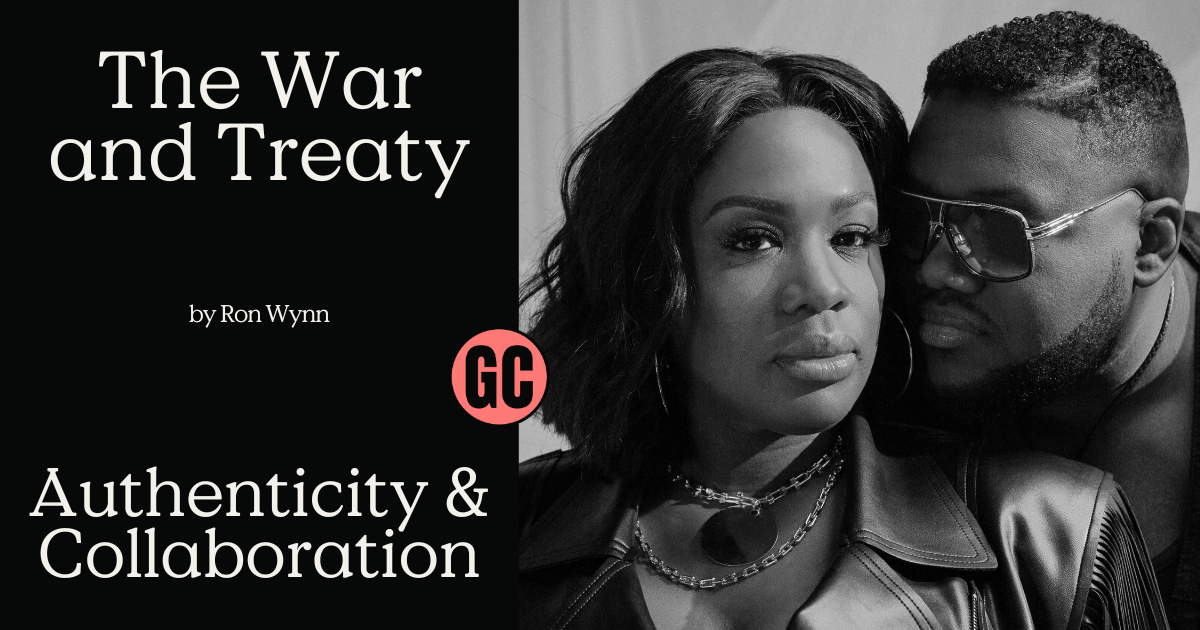
The mercurial husband/wife duo The War and Treaty are now riding a wave of success with an outstanding new LP, Plus One. Their fourth album, it’s out today, Valentine’s Day, on Mercury Nashville. They are also about to embark on a 30-city tour in March.
Two words recur throughout any conversation with Michael and Tanya Trotter, as they did during our extensive phone interview: Authenticity and collaboration.
“We titled it Plus One, because it’s really all about collaboration,” Michael said, getting things started. “That’s really been the key for us, especially since we came to Nashville and began working with the country community. They have been so open and willing to work with us, to listen and to hear what we have to say when we’re writing or when we’re in the studio.”
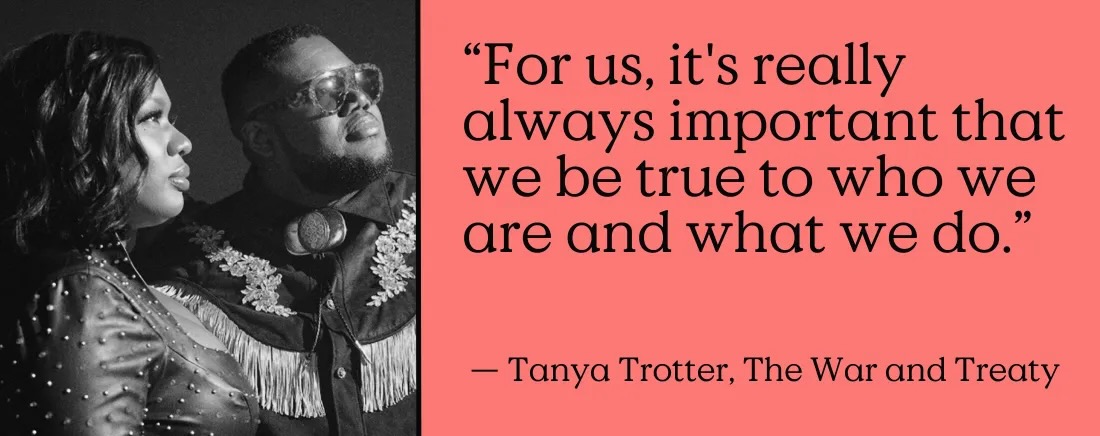
“For us, it’s really always important that we be true to who we are and what we do,” added Tanya. “That’s really been what we strive to do and the audiences really seem to enjoy it.”
Indeed, the pair earned multiple standing ovations during the opening night of a recent three-night engagement at the Schermerhorn Symphony Center in Nashville. Backed by the Nashville Symphony Orchestra, they went through a powerhouse nearly 90-minute performance, doing both fresh material from Plus One along with tunes from their earlier LPs such as the masterful “Blank Page,” as well as the glorious “Can I Get an Amen,” and a host of other numbers. They even performed a trio of Ashford & Simpson compositions, among them “Ain’t No Mountain High Enough” and “Ain’t Nothing Like the Real Thing.”
“Working with the Symphony was really inspiring, but it was also different for us,” Michael said. “They were so great and we just had to make sure that we were on pace in terms of timing and keeping things going.”
“They were really fantastic,” added Tanya. “They really give you a lot of energy and they were so great playing behind us.”
It’s been quite a ride for the Trotters ever since their debut album, Love Affair, was released. Prior to that, from 2003 to 2007, Michael was in the United States Army. He was a Private First Class assigned to the 1st Battalion, 6th Infantry Regiment, 2nd Brigade, 1st Armored Division and served in Iraq and Germany. During his deployment, his unit was encamped in one of Saddam Hussein’s private palaces, which had a piano in its basement. Michael learned how to play the instrument when his company commander, Captain Robert Scheetz, encouraged him to toy around with the piano knowing he had a passion for singing. Scheetz was killed on a mission shortly after, and Michael wrote his first song in Scheetz’s honor and sang it at his memorial. He then began performing at the services of other fallen soldiers.
When they began working together the couple were initially known as Trotter & Blount. A year later, with their new name the War and Treaty, they released an EP, Down to the River, which was a superb combination of multiple idiomatic references. It had blues and soul feeling in the lead vocals and harmonies, the intensity of gospel in the performances, and the storytelling charm and acumen of country in its lyrical treatments.
Yet, it also identified the one characteristic about the War and Treaty’s music that has proven perplexing. Because they are so naturally eclectic in terms of musical choice and performance style, they were immediately embraced by the Americana audience. Later they were subsequently welcomed by the country market. But they’ve never been able to generate much momentum or traction within the urban contemporary (what was once termed the soul or Black) market. Despite having a sound as soulful as it gets, and being deeply entrenched in traditional Black music (both popular and secular), that market has been slow, at best, to recognize and welcome their music.
“Well, we know who our tribe is and we accept that,” Tanya said. “Certainly we want to reach as many people as we can, and we clearly want to have our songs played on those stations. But we also understand how the industry and marketplace work, and those are things we have no control over.”
“I’ll say this, when we go to our concerts, we have all types of fans,” Michael added. “They’re across the board, old, young, Black, White, Latino, just people who love good music. We really stress being authentic and staying true to what we do and love. That’s all you can do. But I will add that if these stations would play our songs – [and] play songs by people like Kane Brown, Mickey Guyton, Jimmie Allen – I think they’d find a receptive audience, because there’s an authenticity and feeling there that transcends things, yet also is very much a part of the Black experience.”
That’s been the mission since their 2018 debut release, Healing Tide. They quickly became a sensation in Nashville with their second LP, 2020’s Hearts Town, which included a dynamic collaboration with the great Emmylou Harris on the single “Five More Minutes.”
Two years later they were signed to UMG Nashville. Their first effort for the label, Lover’s Game, was in 2023. That same year, they graced a Top 20 hit, “Hey Driver,” a collaboration with Zach Bryan. It led to them being the first Black duo to be nominated for both the Country Music Association and Academy of Country Music’s Duo of the Year awards. It was also an indication that they had been accepted into country’s inner circle, something that hasn’t always been the case with Black performers.
“From the beginning we’ve never received anything other than respect, kindness, and first-class treatment from the country community,” Michael said. “I know that there are some other acts out there who can’t say that, but that’s really been true for how we’ve been treated.”
“Oh yes, everyone’s been so wonderful,” adds Tanya. “I can’t say enough about how great we’ve been treated and what a thrill it’s been working with people like Emmylou Harris, Chris Stapleton, Zach Bryan.”
That theme of joining forces and working together permeates the War and Treaty’s latest, Plus One.
It’s an 18-song masterpiece recorded at the legendary FAME studios in Muscle Shoals and co-produced by the Trotters along with A-list names like John Shanks, Jesse Frasure, and Jonathan Singleton. There’s a host of notable numbers, among them the poetic and inspirational “Love Like Whiskey,” co-written with Miranda Lambert; “Drink From Me” which also spotlights guitarist Billy Strings; as well as the aforementioned “Can I Get an Amen,” “Called You By Your Name,” and “Carried Away.”
Frasure, Strings, and Jonathan Singleton are among the other contributing writers, but much of the material was co-penned by the Trotters. “Some of these go back a ways, while others are recent,” Michael explained. “We really had about 50 songs by the time we finished and we had to cut it down.”
“I think we’ve got the best of the ones,” added Tanya.
With a biopic now in the works that chronicles their storybook rise to fame, the War and Treaty are looking ahead to the tour and future projects. There’s actually one thing they haven’t done yet that they’d like to do.
“We want to do a bluegrass album some day,” Michael says, in conclusion. “We think there’s a lot of material in those old mountain songs, both the gospel and the secular, and we’d like to try our hands at doing them our way. ”
“I think our fans would be delighted,” added Tanya. “They really enjoy some of the other older type material we do, and I think there’s a lot of good material there that really fits what the War and Treaty’s all about, doing strong and good songs our way.”
Want more Good Country? Sign up to receive our monthly email newsletter – and much more music! – direct to your inbox.
Each year, the country music machine and its many fans and acolytes turn over, again and again and again, the quintessential question of “What is authenticity?” We’ve asked that very question quite a few times on Good Country over the last year ourselves, and we know as long as roots music and folk music are made, listeners will continue to ponder what is or isn’t “real,” “raw,” or… “authentic.”
Wyatt Flores has been chosen as authentic. Country Music has spoken, and this quickly skyrocketing young artist has been riding a wave lately surfed by folks like Sierra Ferrell, Tyler Childers, Colter Wall, and Zach Top. Like these real country “poster children,” Flores’ music is realistic and grounded. It isn’t idealized revisionism in outlaw trappings. His songs never attempt to sugarcoat or mythologize, paving over the complications of rural life, red dirt realness, or the gritty patina of a rural places – like his homeland of Oklahoma.
Flores’ new album, Welcome to the Plains, is decidedly and delightfully trad country with nearly universal critical and listener acclaim. He currently racks up 3.5 million streams a month on Spotify alone, bolstered by a series of incredibly popular and consistently viral singles and EPs leading up to this, his full-length debut. For so many writers, diehard fans, and critics, Flores has long been “one to watch,” but that visibility stretches further and wider, to listeners across the country and around the world from so many different backgrounds and starting points.
Part of the reason why such a young artist with a relatively nascent career could have already amassed such a coalition of followers is that realistic, unguarded, “I know who I am, even though I’m still figuring out where I’m going” approach. It’s evident in his artistry, his performing prowess, and his skill for songwriting – all of which are evidenced prominently across this album.
Welcome to the Plains is one of the most remarkable records of 2024; it continues a tone long set in Flores’ career and music, even before this current inflection point and its substantial momentum. Wyatt Flores is bound for longevity, for many more successes, for many more millions of plays, as long as he remains exactly who he is: Wyatt Flores.
Your music has such a strong sense of place, so I wanted to start by talking about Oklahoma and growing up there. You’re down to earth in the way that you talk about Oklahoma from the beginning of the album, from the first notes of the title track. You’re viewing it in a very realistic way, not just in an idealized way. Can you talk about how Oklahoma inspired the album and what “home” means to you?
Wyatt Flores: When you think about Oklahoma, you have to [barely] scratch the surface to know that the history behind it is pretty screwed up, how Oklahoma came about, and we’re not one of the best states, if that makes sense? We’re 49th in education. And we’ve got a lot of people from California moving there just because it’s cheaper and everything else, but to live in Oklahoma, you gotta bear through the weather.
Then also, every year is a coin toss if things are going to grow, right? This year’s been a struggle up until this past couple of weeks, [during] which we just got like a foot of rain. But yeah, it’s been one of the hardest places to really build. And the people are so damn nice in Oklahoma, but it’s a tough place to live. Most people don’t want it. But I love it. “Welcome to the Plains,” it’s trying to describe [Oklahoma] … in the verses I really wanted to try and find more of a nature side to it, and then by the chorus just really tell the truth about it.
It feels really authentic and grounded, but you can still hear that you love Oklahoma in it, too. I think that’s a really interesting combination. Country is really good at rural America propaganda – and I love rural America, so I’m for it, to a degree – but to me, your album doesn’t feel like it has to close an eye to the history of Oklahoma to love it.
Yeah, it was a fun journey to try. I was sitting there just trying not to write songs about the road, because that was the only thing that I was doing. I was like, “This is the only life I’m living.” And not many people know what it’s like to be on a bus or on tour – at that time we were still in the van. It was more so daydreaming about home, missing the place, and then just trying to find the memories to piece everything together.
And I had a lot of weird influences, like “Little Town,” I was really trying to find the same feeling as listening to “Pink Houses” by John Mellencamp. I don’t write too many happy songs, and I was not in a good headspace in that time period. For some reason, I guess I was just daydreaming of a better life, and I kept writing about home, but in a different format of not always missing it.
Another song that really captures this topic is “Stillwater.” I love that it has this sort of dark, contemplative tinge and it feels gritty. Could talk a little bit about writing “Stillwater” and about your relationship with “home” and the construction of “home”? That’s such a country tradition as well, not just talking about home and missing it, but understanding that home is a nebulous, intangible thing, even if it literally exists.
There’s a lot of bands that say they come from Stillwater, but they really just started in Stillwater and they came from a different area, since it is a college town. But I was born and raised there in Stillwater. All my life the college has been my backyard. When I wrote that song in the summer of ’22, I had my guitar player with me and my fiddle player’s husband and we sat down to write that. It was more so just trying to give people a different perspective on what it’s like to actually grow up in a college town, because it’s a vicious cycle of the same shit – like, no one else sees it, because they’re living inside of the four years of going [to college].
And me also being a college dropout, I never got to actually go to [Oklahoma State University]. I went to OSUIT in Okmulgee, Oklahoma. And that did not last long. [Laughs] But yeah, I was like, “No one’s ever actually talked shit on a hometown and actually put the name in it.” So I was just being ballsy with it. I had to change quite a few lyrics, because I kind of went a little too far. I probably would have pissed a lot of people off.
The song was intentional. I don’t know, [I wanted to] make people think differently. Because that is my home. A lot of times, you just see people take advantage of the town, and the town keeps growing. Every single time I come back home now, there’s another chicken place and another damn car wash. I was like, “How many do we need?” Good lord. I was really pissed off in the mindset of it. I’m glad that we captured it, because for a while, I was scared to release it just because I was like, “People are gonna think that I hate Stillwater.” But really, it’s still a love song towards it.
It feels like you’re loving Stillwater, you’re loving Oklahoma, but your love for it requires you to look at it through an accurate lens and not an idealized version of it.
And it’s a relationship. My relationship with that town has just been back and forth. You’ll have that resentment, and you’ll have that frustration with it, but you still love it. It’s crazy to think about it that way, through that lens, but that’s what it is.
You touched on your co-writing process and I was excited to see how forward your own writing and your own perspective is on this album. Can you describe your co-writing and collaboration process for these songs? I noticed, too, that Ketch Secor co-wrote the title track.
When I wrote with Ketch, that was super cool. ‘Cause I had just gotten done watching Killers of the Flower Moon. I was already so inspired by that and wanting to really speak some truth. But not just by absolutely laying into people on the bad shit that’s going on – you can’t force-feed people. When we sat down [to write, Ketch] said that he wanted to write shit about Oklahoma and I was like, “That works out great!” The song just came together and it was it’s one of the coolest things, because I didn’t know how to feel about it quite yet. I was like, “This has some good shit in there…” and then when we went to record it, I was like, “Here it is! This is the way it’s supposed to go.”
But with the writing of this entire album, I was scared shitless. I didn’t think I was good enough, and I didn’t think these songs were good enough for an album. I started overthinking the entire thing. People can get mad at me all they want for doing co-writes, but I’m still writing. It’s not like I just sit in there and wait for these people to write these songs for me. This is all me.
The other thing is, my music taste [has] so much variety that I think it’s only better if I sit down with other people that have other strengths, to get to where I want to go – into these different styles of songs. I don’t want to do the same song, different chords, you know what I’m saying? I wanted it to be so unique and to keep it the way that I’ve always done it, which is to have different styles of songs. For that, I feel like you have to have different songwriters come in and give you different pieces.
I also have to ask you about bluegrass. One of the first things that we shared on our site of yours was a Tyler Childers cover that you recorded with Sierra Hull at Red Rocks. Our audience loved it so much. I think part of why your music resonates across diehard country fans to indie fans to bluegrass fans is that you’re not just a performer and a songwriter, but you’re a picker, too. What is your relationship like with bluegrass music? Is it something that’s prominent in your listening and in your influence?
So, I will first and foremost say this: I am not that good of a picker. [Laughs]
That stuff, that is something that I love. That is a different art. That is so beautiful. But my love for it– everyone in Oklahoma started listening to Tyler Childers and that’s when he came around, I want to say in my high school days. That’s when everything took a shift. I was like, “I don’t know what this is…” because we all grew up listening to red dirt [country], which is what I am. But my influence has really changed. In the summer of ‘22, Laurel Cove Music Festival was the first time that I had seen Nicholas Jamerson, Charles Wesley Godwin, Sierra Ferrell, Cole Chaney. That changed everything for me. It changed the entire way that I looked at music, and from that point on I started listening to every single one of those artists. It just led to more.
I love bluegrass and I try to have a couple songs [in that style], but I can’t call myself bluegrass. As much as I love what they’re doing and I try, I have my influences, I’m still red dirt. The way that those artists do what they do, it’s because they are them. I have my influences, but I am still just me. So whatever comes out, it’s just me loving and respecting it. But I can’t fully call myself a bluegrass musician, because I’m not. I’m jealous of it though, I’ll tell you that much. I’m jealous, I wish!
The production style and the different aesthetics that you’re utilizing on the album feel like classic country and old country plus dashes of country & western. There are moments that are really rocking and there are moments that are really subdued. It’s also really modern and crisp. How much of that is coming from you or from the ensemble and how much is coming from your producer, Beau Bedford?
A lot of that was Beau. I learned so much from him. [Before,] I really didn’t ever get the experience of being in a studio with musicians that are just wizards. Beau really took care of me.
It was a challenge, because we recorded in three different places. We were in Nashville, in North Carolina, in LA, and then we finished in Nashville. We were scared that it wasn’t gonna flow together, being in these different studios and then also just having this [group] of songs. Luckily, it all came together and as different as they do sound, they still flow. That was all just luck. We’re all we’re all sitting there going, “Huh? Hope this goes right!” I had my doubts, too, and [Beau] goes, “Wyatt, everything’s gonna be all right, because you are the main character that runs through this entire thing.”
That’s the constant throughout the entire project. I’m just lucky that it worked. When you go from different styles of songs – red dirt, and then you got this beachy [thing], old-time. It’s just crazy how they all go along together. Then it goes into this weird psychedelic rock and “Falling Sideways.” It was a wild adventure, and I’m so grateful for it. I just can’t believe the way that it turned out.
I ask this last question often, especially with people like yourself who are so effortlessly traditional country. There are a lot of folks out there who are excited about you – and artists like Zach Top and Tyler Childers and Zach Bryan – because these listeners sense that there’s this “new movement” that’s going to save country music, that’s going to renew country. That country is going to be what it used to be before “murder on Music Row.”
I wondered what your thoughts and feelings are on that paradigm?Because I sense that you don’t care so much about what is or isn’t traditional or what is or isn’t “inside” country. Does country music need to be saved? Do you see yourself as part of that saviorship? Do you care?
There’s something to be said about it, because yeah– I have my opinions about commercial country. There’s some really good songs and then I also think there’s some songs that say absolutely nothing. I guess as a songwriter, my goal is to keep writing about real shit and keep expressing myself with vulnerability. And to still write good songs.
I have a very important person in my life who’s been a mentor to me; his name’s Shane Lamb. I used to talk about writing these super-poppy melodies. And he goes, “Yeah, it’s because it’s popular music. … Who are some of your favorite artists?” We started going through Tyler Childers, early on in the days of me being in Nashville. [Shane] was like, “Listen to the fucking melody, Wyatt. It’s a pop melody. It’s for popular music. That’s why it works. But his arrangement is country.”
And I was like, “Oh… when you think about it that way, yeah, I guess you’re right.” So, I do try to have poppy melodies as much as I can, but I still try and keep my verses very needy, if that makes sense. I like putting a whole bunch of detail and really trying to focus in on the verses and let the chorus speak for itself.
That’s so perfectly put; yes, country has always been popular music. It’s one of my favorite Tyler Mahan Coe quotes, the creator of Cocaine and Rhinestones, the podcast and the book. He talks regularly about how country music has always been popular music. That’s not to say that fact absolves Music Row and Music City from all the truck and beer songs, but it certainly helps remind us that hand-wringing over “Is country music going to be okay?!” is not something that’s ever going to go away, but it’s also not something we really need to worry about.
And I think for the first time ever with social media, people are able to find new music that’s always been there. They’re just now finding out about it for the first time, because the radio stations aren’t playing it. That’s its own deal. But now they’re able to find all this new music and I feel like country is still going to be country. Like you said, when it comes to beer and truck songs, I think the thing that’s missing is them not explaining what they love about it. They’re just talking about it, not being vulnerable with it.
I think about “Drive” by damn Alan Jackson, dude. That is just talking about driving. That’s really all it is, but the sentiment is there, because it has to do with the father and the son. And then, all of a sudden, there’s the father and the daughter – that is fucking awesome country music that I still absolutely love! I wish that I could do that, like that Zach Top thing. I told him that whenever I met him, I was like, “Dude, I wish I could do it.” I really do. ‘Cause he’s fucking killing it. There’s so many different styles of music and I’d rather just do what I want to do, which is all of them, rather than just settle for one sound.
Artist:Noeline Hofmann Hometown: Bow Island, Alberta, Canada Latest Album:Purple Gas EP
What’s your favorite memory from being on stage?
It’s nearly impossible to narrow down, but one of my favorite memories from the stage happened this October while on tour with Colter Wall. For the better part of the tour, Corb Lund – a fellow Western Canadian (like Colter and I) – was also on the road with us. I grew up listening to Corb on the radio back home and later discovered Colter as a teenager. Their songwriting resonated with and influenced me deeply as a young writer and continues to today.
Colter kindly invited us to join him in singing “Summer Wages” by Albertan cowboy legend, Ian Tyson, for his encore during tour. The first night that Corb joined us on stage, he took me by the arm for a two-step during the instrumental – much to mine and the crowd’s surprise. (Sorry about scuffing up your boots with my two left feet, Corb.) It was such a wonderful, full circle moment to be on stage beside two artists from home who had such a huge impact on me and singing a song together by a late legend from home who has impacted all of us.
Further, Patrick Lyons, the producer of my EP, Purple Gas, plays guitar in Colter’s band. Another reason that made these memories of singing “Summer Wages” special was it being the first time(s) I was lucky enough to share a stage with Pat as well as all of the other boys in the band, who I’ve come to know and love not only as musicians, but as friends.
Which elements of nature do you spend the most time with and how do those impact your work?
I love to spend time out on the prairie. It has an understated beauty that with every passing year becomes more and more striking to me. It is unforgiving. Seemingly never-ending. In tune and knowing. It’s seen my own blood, sweat, and tears and that of generations of people that I love, alike. I’ve never felt closer to God than I have out there, all alone. Being raised in a prairie town, around prairie people, the landscape and all that results due in part to it, has defined my life experience thus far in an immeasurable way – and consequently, impacted my work just as deeply.
What’s the most difficult creative transformation you’ve ever undertaken?
While I’ve been feeling incredibly inspired to write in the wake of releasing my first recording project, I think I am simultaneously in the midst of one of the most difficult creative transformations I’ve faced so far.
All of the songs on my debut EP were written during a very different time in my life; before I’d ever been on tour, or set foot in a studio, or before the music industry began revealing itself to me behind the thick veil of mystery that once clouded it from my gaze. I was working blue- and pink-collar jobs such as bartending and doing farm labor before eventually putting all of my cards on the table and giving a career in music an all-or-nothing go, starting with the regional music scene in Alberta. Those years, age 18 to 20, were raw and electric, reckless, trial by fire. I was full of piss and vinegar, stubbornly tuning out the expectations others had of me and striking out into the world for the very first times to try forging a path towards something more for myself in life. I confronted some shocking losses and also experienced those first great formative loves you do at that age. Environments and emotions that are natural recipes for songs.
My day-to-day life has pulled a complete 180 since those songs were written. I have a lot of writing to do from my new pair of boots. I haven’t been able to take them for many test drives behind the pencil while on tour this spring and summer and am waiting with bated breath for the winter, when I’ll get to sit down and really dig into writing and processing the last year. It’s in my nature to always want to step above the bar I last set for myself – it’s as nerve-wracking as it is exciting to be starting to write for the next project. Especially now that most of the surroundings and life circumstances that inspired the songs on my first project are no longer part of my daily life on the road and there is now a recorded precedent set that didn’t exist at the time I wrote the songs on my first body of work.
What is a genre, album, artist, musician, or song that you adore that would surprise people?
“Good Luck, Babe!” by Chappell Roan (of course!)
If you didn’t work in music, what would you do instead?
I would probably be a ranch hand. Ranching is humbling, creative, and requires your all – mind, body, and soul. You have to live and breathe it. I can’t do anything halfway. For two jobs that, on the outside, look as though they couldn’t be any more different from each other, I’ve found a surprising number of parallels between my experiences working on a ranch to working as an artist.
(Editor’s Note: Sign up to receive even more Good Country direct to your email inbox.)
(Editor’s Note: Sign up to receive even more Good Country content direct to your email inbox!)
The headline takeaways from this year’s CMA Awards nominations may be the inclusion (and exclusion) of pop superstars, with understandable interest in what that says about today’s country format. But the 2024 field features plenty of roots and bluegrass influence, too. Regular BGS and Good Country readers might even be surprised at the confluence of the modern mainstream and its traditional tributaries.
We want to highlight that dynamic as well. Country has always been a big tent, but is it now becoming more receptive to its roots?
Let’s start with the superstars. These days, many can claim a rootsy kind of rebelliousness, and chief among those is Chris Stapleton. With his long history – in bluegrass, in Southern rock, in classic country songwriting, and with a train load of CMA trophies – Stapleton vies once again for what would be his first Entertainer of the Year award – after a record-setting eight nominations. Yet he still sings with the fiery Appalachian soul he debuted at the front of The SteelDrivers.
Others earning top billing this year include Zach Bryan and Lainey Wilson – and both have a reputation for gritty, creative realism. Some of the hottest new names country has to offer, Bryan has been selling out stadiums with his confessional alt-country and Wilson’s bluesy Louisiana swagger earned her last year’s Entertainer of the Year title. Those are not the only established artists holding true to the cause, though.
Kacey Musgraves continues to show salt-of-the-earth songcraft is not mutually exclusive to shimmering pop decadence. And while Ashley McBryde has perfected the art of making arenas feel like a massive, county-line roadhouse, Cody Johnson proves the appetite for hardcore Texas twang did not die with King George’s (semi) abdication. All have become perennial fixtures in the format’s upper echelons.
Likewise, this year’s nominees offer excitement for the future, awash with fresh talent. Shaboozey turned heads with the Number One ear worm, “A Bar Song (Tipsy),” but dig beyond the single and his catalog marks an elusive missing link between the hard-times inspirations of both hip-hop and country. Artists like Zach Top – who also came up through bluegrass – accept no substitute for twangy telecasters and shuffling, two-step beats. And while The War and Treaty continue their mission to bring soul and gospel back into the heart of country, The Red Clay Strays find a home for their blend of heady roots rock and commanding, fire-and-brimstone vocals.
Even the behind-the-scenes nominees highlight this rootsy resurgence, with the Musician of the Year category dominated by keepers of the instrumental flame. Fiddle phenom Jenee Fleenor goes head to head with steel-guitar legend Paul Franklin and the multi-talented guitarist/Americana artist Charlie Worsham – while the other two, guitarists Tom Bukovac and Rob McNelley, are certainly no slouches when it comes to six-string scholarship.
In fact, the commonalities between this year’s CMA Awards nominees and the artists covered by BGS and GC are so striking, we wonder what you think. Take a look at the full list of nominees below, and let us know.
THE 58TH ANNUAL CMA AWARDS – FINAL NOMINEES (by ballot category order):
ENTERTAINER OF THE YEAR
Luke Combs Jelly Roll Chris Stapleton Morgan Wallen Lainey Wilson
SINGLE OF THE YEAR Award goes to Artist(s), Producer(s) and Mix Engineer(s)
“A Bar Song (Tipsy)” – Shaboozey Producers: Sean Cook, Nevin Sastry Mix Engineer: Raul Lopez
“Dirt Cheap” – Cody Johnson Producer: Trent Willmon Mix Engineer: Jack Clarke
“I Had Some Help” – Post Malone (Feat. Morgan Wallen) Producers: Louis Bell, Charlie Handsome, Hoskins Mix Engineer: Ryan Gore
“Watermelon Moonshine” – Lainey Wilson Producer: Jay Joyce Mix Engineers: Jason Hall, Jay Joyce
“White Horse” – Chris Stapleton Producers: Dave Cobb, Chris Stapleton, Morgane Stapleton Mix Engineer: Vance Powell
ALBUM OF THE YEAR Award goes to Artist, Producer(s) and Mix Engineer(s)
Deeper Well – Kacey Musgraves Producers: Ian Fitchuk, Kacey Musgraves, Daniel Tashian Mix Engineers: Shawn Everett, Konrad Snyder
Fathers & Sons – Luke Combs Producers: Luke Combs, Chip Matthews, Jonathan Singleton Mix Engineer: Chip Matthews
Higher – Chris Stapleton Producers: Dave Cobb, Chris Stapleton, Morgane Stapleton Mix Engineer: Vance Powell
Leather – Cody Johnson Producer: Trent Willmon Mix Engineer: Jack Clarke
Whitsitt Chapel – Jelly Roll Producers: Andrew Baylis, Brock Berryhill, Zach Crowell, Jesse Frasure, David Garcia, Kevin “Thrasher” Gruft, Austin Nivarel, David Ray Stevens Mix Engineers: Jeff Braun, Jim Cooley
SONG OF THE YEAR Award goes to Songwriter(s)
“Burn It Down” Songwriters: Hillary Lindsey, Parker McCollum, Lori McKenna, Liz Rose
“Dirt Cheap” Songwriter: Josh Phillips
“I Had Some Help” Songwriters: Louis Bell, Ashley Gorley, Charlie Handsome, Hoskins, Austin Post, Ernest Keith Smith, Morgan Wallen, Chandler Paul Walters
“The Painter” Songwriters: Benjy Davis, Kat Higgins, Ryan Larkins
“White Horse” Songwriters: Chris Stapleton, Dan Wilson
FEMALE VOCALIST OF THE YEAR
Kelsea Ballerini Ashley McBryde Megan Moroney Kacey Musgraves Lainey Wilson
MALE VOCALIST OF THE YEAR
Luke Combs Jelly Roll Cody Johnson Chris Stapleton Morgan Wallen
VOCAL GROUP OF THE YEAR
Lady A Little Big Town Old Dominion The Red Clay Strays Zac Brown Band
VOCAL DUO OF THE YEAR
Brooks & Dunn Brothers Osborne Dan + Shay Maddie & Tae The War And Treaty
MUSICAL EVENT OF THE YEAR Award goes to Artists and Producer(s)
“Man Made A Bar” – Morgan Wallen (feat. Eric Church) Producer: Joey Moi
“you look like you love me” – Ella Langley (feat. Riley Green) Producer: Will Bundy
MUSICIAN OF THE YEAR
Tom Bukovac – Guitar Jenee Fleenor – Fiddle Paul Franklin – Steel Guitar Rob McNelley – Guitar Charlie Worsham – Guitar
MUSIC VIDEO OF THE YEAR Award goes to Artist(s) and Director(s)
“Dirt Cheap” – Cody Johnson Director: Dustin Haney
“I Had Some Help” – Post Malone (Feat. Morgan Wallen) Director: Chris Villa
“I’m Not Pretty” – Megan Moroney Directors: Jeff Johnson, Megan Moroney
“The Painter” – Cody Johnson Director: Dustin Haney
“Wildflowers and Wild Horses” – Lainey Wilson Director: Patrick Tracy
NEW ARTIST OF THE YEAR
Megan Moroney Shaboozey Nate Smith Mitchell Tenpenny Zach Top Bailey Zimmerman
Sign up to receive even more Good Country content direct to your inbox!
This website uses cookies to improve your experience. We'll assume you're ok with this, but you can opt-out if you wish.AcceptRejectRead More
Privacy & Cookies Policy
Privacy Overview
This website uses cookies to improve your experience while you navigate through the website. Out of these, the cookies that are categorized as necessary are stored on your browser as they are essential for the working of basic functionalities of the website. We also use third-party cookies that help us analyze and understand how you use this website. These cookies will be stored in your browser only with your consent. You also have the option to opt-out of these cookies. But opting out of some of these cookies may affect your browsing experience.
Necessary cookies are absolutely essential for the website to function properly. This category only includes cookies that ensures basic functionalities and security features of the website. These cookies do not store any personal information.
Any cookies that may not be particularly necessary for the website to function and is used specifically to collect user personal data via analytics, ads, other embedded contents are termed as non-necessary cookies. It is mandatory to procure user consent prior to running these cookies on your website.