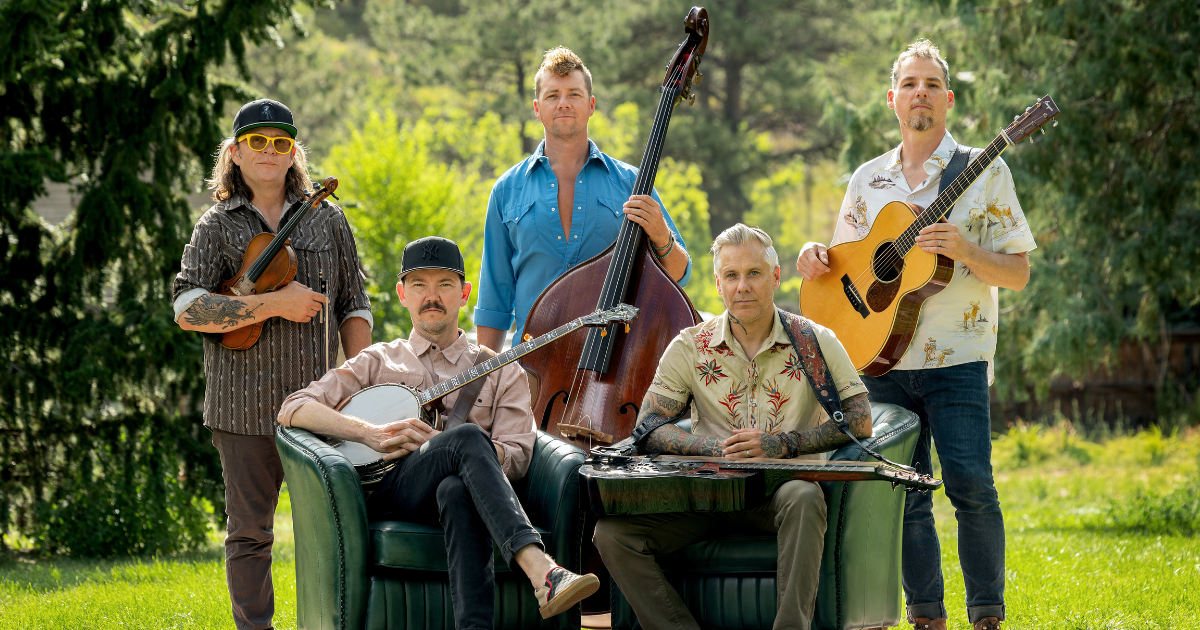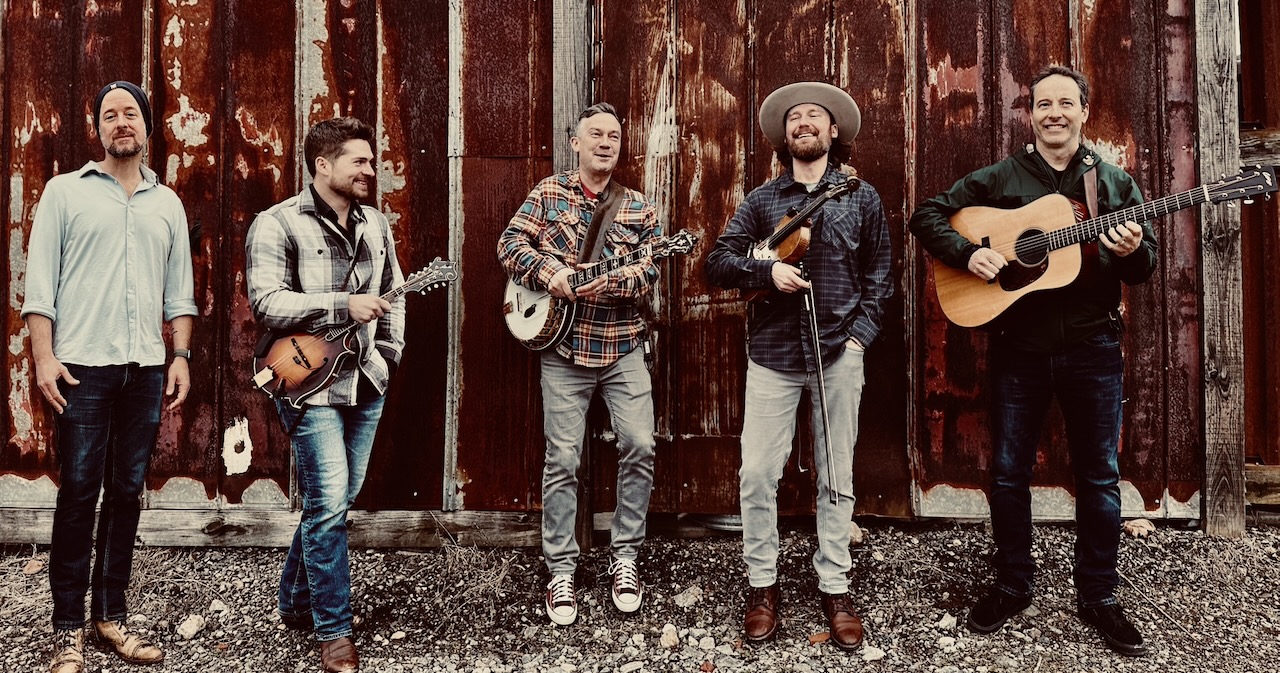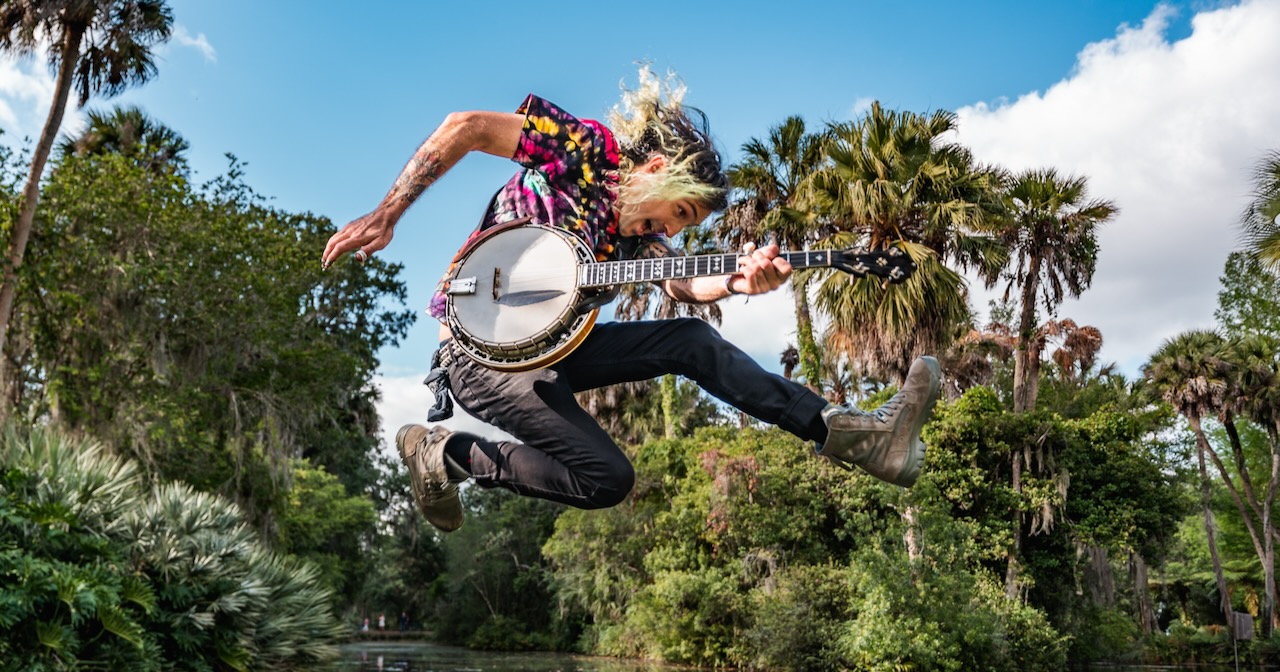
Yonder Mountain Never Meant to Change the Bluegrass Landscape, But They Did

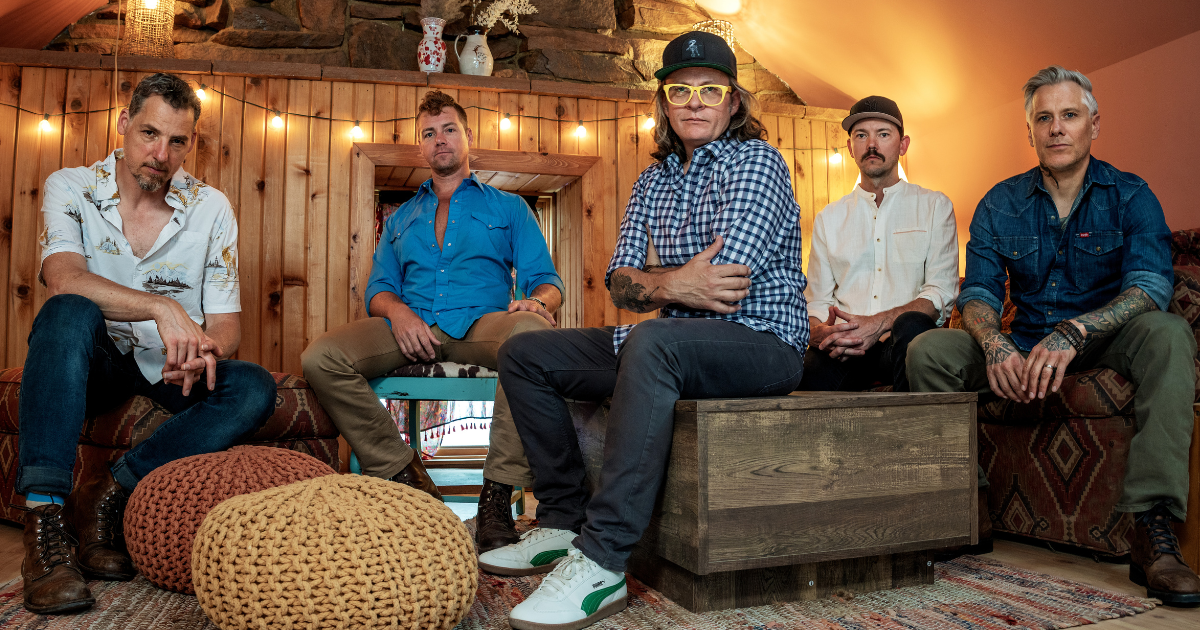
Following instructions for listeners to Get Yourself Outside in 2022 and declaring they’re heading Nowhere Next in in 2024, jamgrass torchbearers Yonder Mountain String Band have reached their zenith on Good As True.

Released March 27, the collection finds the band embracing the skill sets of its newest members Nick Piccininni (mandolin, vocals) and Coleman Smith (fiddle) more than ever, as they dissect the human condition through nine tracks highlighting everything from falling in and out of love (“Brand New Heartache”), to confronting regret (“Blind”), and frustrations with today’s political climate (“The Lie”).

During a recent phone call, bassist Ben Kaufmann spoke with BGS about working Piccininni into the writer’s room, lessons learned from touring, how former band member Jeff Austin’s spirit sticks with him, and more.

This is your third album having Nick in the writer’s room with you, Adam [Aijala], and Dave [Johnston]. What has that evolution of bringing him into the fold there been like?

Ben Kaufmann: Yonder has always had its own special sound. There’s a very specific energy and communal taste with the music that we’ve been tapping into collectively for so long. Nick had already been writing for a while before coming aboard [for 2022’s Get Yourself Outside], so once we got him up to speed with our style we realized how intuitive he is. He has his own understanding of what a Yonder Mountain song is, which has made it fun when it comes to overhearing him workshopping songs or when we swap ideas backstage and on the bus.

We also knew, with recording time on the calendar, that we’d need more material. For most of Yonder’s lifespan we’ve had four writers – going all the way back to the days with Jeff, so it only made sense to give Nick the same opportunity when we saw what he could do. After putting songs from all of us “through committee,” a bunch of his wound up being cut [recorded] these last handful of years.

It’s especially important because Nick is such a wonderful singer. He’s great at everything he does, which is really inspiring to be around. He’s really stepped into his own as a featured vocalist and as a mandolin player. It’s been fun encouraging him to cultivate his own voice while also hearing him take the reins on some of Yonder’s oldest, most beloved songs.

What’s most satisfying for me with this band is writing my own songs, playing them with the band, and having people who are ostensibly there to hear the music enjoying it. There’s no better feeling than that and we wanted Nick to feel it too, since he’s currently in what seems to be a really prolific time of his life for songwriting. He’s the perfect fit for what we do. I’m so grateful he came into our lives and continues to enjoy making music with us. Being in a touring band isn’t for everyone, but everything with Nick has felt very natural from the start.

You just mentioned touring life, which I know the band touches upon with the song “Long Ride.” Do you have any good tips or wisdom you’ve picked up from your 28 years on the road with this band?

It’s like two hours of the greatest time of your life, every day, followed by 22 hours sitting in an airplane. [Laughs] In all seriousness, it’s been very different depending on the time in my life we’re talking about. I’ve handled it really well, but I’ve also handled it terribly. I’ve made mistakes and overcome them, but I’m sure I’ll make even more. When I was young I felt invincible. I’d drink too much and do all the drugs – not to the point of turning disastrous, but I lived that life. Doing that ages you so much faster than otherwise, and touring in general is already not easy.

Because of that I’ve spent so much time, energy, and money working on my personal growth through therapy and reading about ways I am deficient and could improve, to realize my full potential. A massively important part of my life is having a deep curiosity for how to be a better person, which is something I’d like to think I’d still be doing even if I worked in an office or at a place like FedEx. I don’t even know what else I’m qualified to do at this point except survive on the road.

What’s helped me through it all is paying attention to the people around me, investing in myself, and embracing the group dynamic so we can create the highest possible energy state and vibe. Essentially, don’t be a dick! [Laughs]

Lyrically, this record deals a lot with relationships, communication, and the fallout that can occur when those two things break down. With songs like “The Lie” and “One To One Another” this seems to deal partly with politics, but were there any other factors that motivated this direction on the record?

Not in the sense that we spoke about it ahead of time. We didn’t say, “Hey, we’re going to do a record so let’s write about A, B, and C.” A lot of our songwriting is done individually, but there still are some collaborative opportunities for us to get together, as well. As we got closer and closer to our recording dates and the song started being developed, [that] was when we first noticed those common themes. At the same time, I’m not surprised when common themes like this do emerge due to being on the road together and living the same life a lot of the time. When you’re seeing, doing, and talking about the same things regularly it’s easy to have a lot of synchronicity between what we’re writing about and creating.

Ultimately, we’re at our best when we’re writing about our own experiences and what we know. With “The Lie,” I like to think about Jesus, [and] all the bad actors in our world, many of which wield immense power. It makes me feel helpless at times as a bass player and musician – like, what am I supposed to do? It’s an overwhelming predicament, and that song for me speaks to that feeling of, “How did we get here?” It’s also very empowering to sing a song that speaks truth to something like that.

“The Lie” was also one of the songs that got my explicit vote when it came to making the cut for the record. When it came to sequencing, I also wanted that to be one of the first songs you hear when you put the needle down on your vinyl or press play.

“Blind” seems to be a song about regret, mental health, and realizing too late how much someone truly mattered. Have you ever thought about how that tune and what it’s describing relates to your fallout over a decade ago with the late Jeff Austin?

To this point I hadn’t connected that song with how I engage with Jeff’s spirit, but maybe I will now. His spirit and my thinking about him happens at every show. As time has passed, I’ve found that the thoughts I have about him that stick out are all the good times we had together, which wasn’t always the case for us. It was a deeply challenging and complicated relationship we had together and it wasn’t wonderful at the end, which is ultimately why we stopped playing together.

But as time passed, and with his passing – which remains one of the most tragic things I’ve experienced in my life – I became more and more crushed that he didn’t get the help that he needed. I don’t think he knew how important he was to so many people. I think more and more fondly of his spirit, energy, and memory with each passing day.

That original version of the band really changed bluegrass music by building a bridge between it and the jam world. What it did was really powerful, so it’s very interesting trying to think back and conceptualize what it was that we accomplished because we didn’t mean to do anything – we were just trying to play music the best we could.

As I look at it – especially as far down the road as we are now – I see the scene that’s developed from it and all the people doing amazing things with the music as a result. It’s all very humbling, and Jeff was a huge part of that. There’s never going to be anybody else like him, good and bad. We had a pretty complicated relationship – we were the best of friends for a while until we weren’t – but I always have and will love him.

One of my favorite moments on the record is the 17-minute jam on “Barroom Feather.” How did it come about?

One of the things that’s always interested us once we were able to start accessing the data is what our most-streamed song is, for better or worse. [Laughs] What we found is our most-streamed song is a cover of “Dancing In The Moonlight,” which is a good song, but not an original like I wish it was. Then our second most-streamed song is a tune called “Midwest Gospel Radio” that’s an instrumental from our self-titled record. On the album, when we first released it, the song was only two and a half or three minutes long, but along the way someone else released a nine-minute version that’s gotten millions of streams and is now second on our list of top songs.

It got me reflecting on our version and how comfortable we all were in the studio recording it, so when Dave brought us this song we pivoted from doing a shorter, “radio edit” version [that you also hear on Good As True] to something much longer. We recorded a couple takes that way, allowing ourselves to exist in that space and jam a bit, and I couldn’t be happier with the spaces and textures we came up with. It has this time-travel, hypnotic space-time warp thing about it that we were really psyched about. It works really well as both a more streamlined song and as a long jam like what we end the album on, so I’m excited to see how people listen to and engage with it.

You’ve been touring with Yonder for 28 years now. What continues to motivate you nearly three decades in?

First and foremost, I love music. That will never change. I also have a 14-year-old son that I love more than anything in the world. Music is part of the fabric of my flesh, blood, and spirit – I simply don’t know what else I’d be doing if not for it. I’m so blessed that this weird little music project called Yonder Mountain String Band happened, because looking back it doesn’t make much sense. Going from that to seeing what bluegrass music has become, having schools and colleges now devoted to bluegrass music, to [the] elevation of the music’s degree of technicality and musicianship, has been mind-blowing. None of that was the case when we were starting out in the ‘90s. We loved bluegrass music but were a lot more beholden to the spirit of the Grateful Dead than we were Bill Monroe, but we still wanted to play it.

I look at it in the sense of me being good at what I do, but by no means am I the best bass player around. None of us were the best at what we did and when you put it all together it goes against all the laws of physics, mathematics, and common sense. But two plus two equaled five for that one moment in time. I can’t tell you why, but it did and here we are now.

As a result, I get to live this extraordinary musical life that’s navigated some big ebbs and flows. That, along with all the fans who’ve embraced our music through the years and found us in different ways, is what keeps us going.


Photo Credit: Lead image by Robin Vega; alternate images by Mountain Trout Photography, Trent Grogan

Our Jamgrass column is brought to you in partnership with Preston Thompson Guitars.
An Oral History of the Infamous Stringdusters

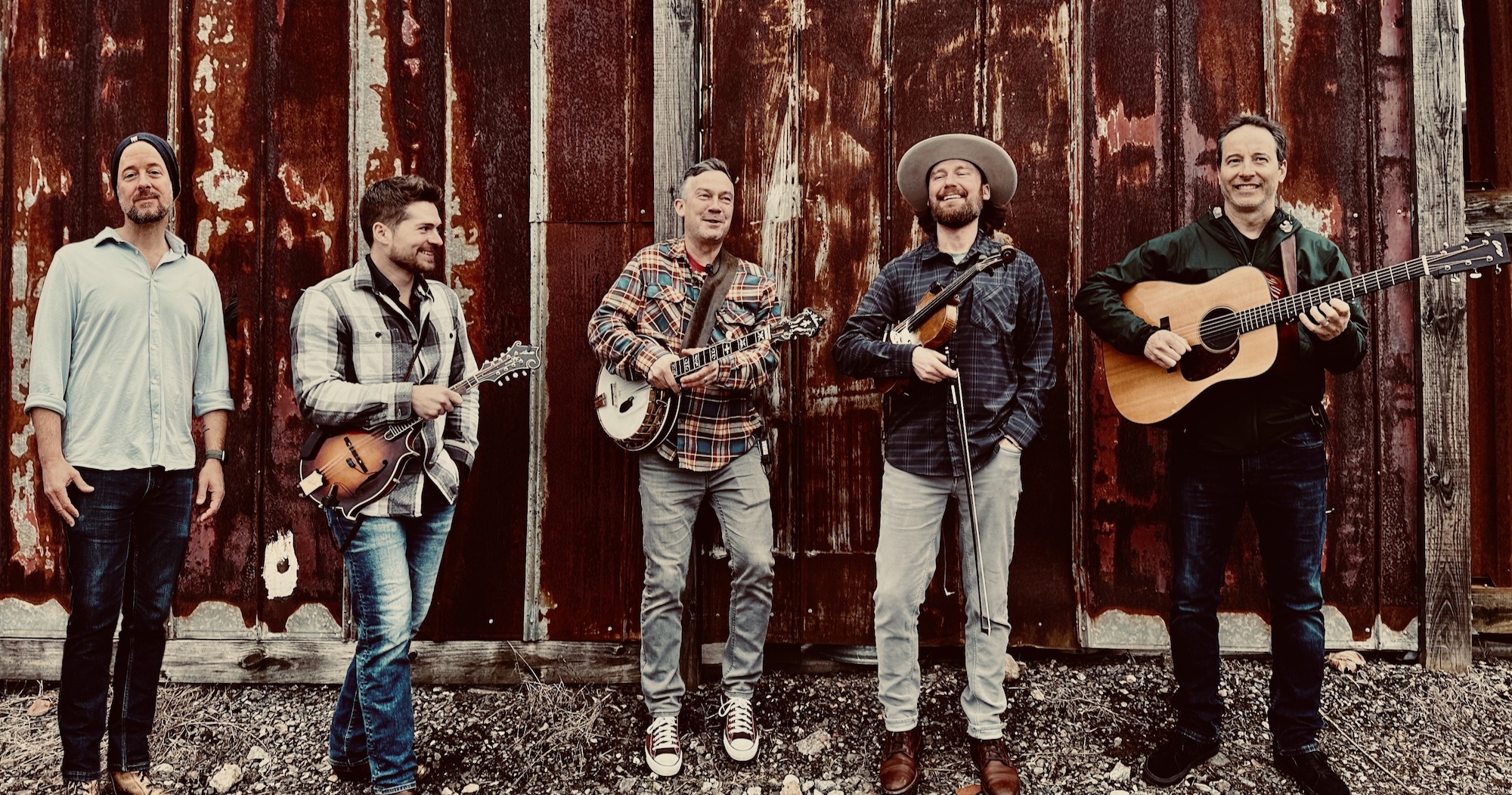
BGS was founded 14 years ago and from the very beginning, we’ve been covering, collaborating with, and cheering on the Infamous Stringdusters. Our first posts about the group published to our site in 2013 – not even a year after our launch – spotlighting banjoist Chris Pandolfi’s Bluegrass Manifesto, the band’s only-four-years-old marquee event The Festy Experience, and their most recent album at that time, Silver Sky. Now, in 2026, they’re not only our Artist of the Month for the second time, they’ll be headlining our stage at Bourbon & Beyond this September, too. But, our love for the band – and the many partnerships we’ve built together – began, like most, back in 2007 with their now iconic debut album Fork in the Road and a banner year for the group at IBMA’s World of Bluegrass and the IBMA Awards.

Back then, when the Stringdusters took home trophies for Song of the Year (“Fork in the Road”), New Artist of the Year, and Album of the Year, perhaps no one – not even the band themselves – would have predicted the seismic, existential impact they would end up having on bluegrass and the as-yet-unnamed subgenre thereof: jamgrass. Twenty years on, the Stringdusters celebrate their duo of decades with 20/20, an album of 20 songs celebrating 20 years of defining and redefining bluegrass and jamgrass.

For our Artist of the Month coverage, BGS and Good Country co-founder Amy Reitnouer Jacobs sat down with all five members the Infamous Stringdusters for a wide-ranging conversation of a band that epitomizes bluegrass, jamgrass, and psychedelic string band music in the 2000s.

First of all, again, I wanna just thank you for doing this. We are so thrilled to have you guys as our Artist of the Month and congratulations on 20 years of the ‘Dusters.

I wanna start this with Panda actually, and this is not gonna be just an oral history interview, but I think, looking back on 20 years, it feels appropriate to start from the beginning. So let’s talk about origins and start back at Berklee [College of Music], if that’s cool. Tell us a little bit about the beginning of the band.

Chris Pandolfi: I arrived at Berklee in 2001, which was the year that Andy [Hall] had just left Boston for Nashville. I first met Critter [Chris Eldridge] through Zach Hickman, who was playing in Josh Ritter’s band. He went to Oberlin [University] with Critter. We got together and we were playing, and Zach had some free studio time at a spot in New Hampshire and we were gonna go record some music, just for fun. Our careers were not underway in any way, shape, or form. We didn’t have any grand designs here. We were just gonna go record some music and have some fun.

Then, on the precipice of this recording, we went down to the Cantab Lounge to meet this guy named Andy Hall. We went there and–

Andy Hall: [It was] The Plough and Stars.

CP: The Plough and Stars! Andy was playing–

AH: I don’t remember exactly if I was playing or if you were playing.

CP: And the next day we were in New Hampshire at this recording studio and we made this EP called Stable Horse. Essentially, Andy was already living in Nashville, so around that same time, he had met Jeremy [Garrett] and they were playing together. It was that recording session that got the wheels turning for me. Like, “Oh, we could do this thing with other people our age,” and not fall into the very sort of common thing in bluegrass where you get hired by someone else and you’re essentially a sideman.

We were recording and teeing things up, and we all had other gigs at that time. It was me, Andy, Jesse [Cobb], Critter, and Alan Bartram from the Del McCoury Band. But that was my earliest memory of “We could start a band with our contemporaries.” And Zach Hickman, I give him credit, he facilitated that.

I don’t even think we had the name “Stringdusters” yet. Alan got the offer to go play with Del McCoury and we had met Travis [Book] at IBMA, so we called him up and he came and lived in my driveway for a few months. True story.

Travis Book: You can really get away with a lot if you park your car in someone’s driveway and then try to stay outta the way.

So Andy and Jeremy, what are the origins of you guys starting to play together?

AH: Was it Ronnie Bowman? Was that the first time? I was in Ronnie Bowman’s band and the fiddle player and Ronnie had a bit of a falling out while we were on the road and–

CP: We were all at a festival, so we scooped up Jeremy and he got on the bus with Ronnie Bowman!

Jeremy Garrett: Yeah, I definitely knew about you two beforehand. And, of course, in bluegrass everyone’s a fan of Ronnie Bowman. He’s such a crooner and such a cool cat. I definitely had plenty of experience before, but this was like one of my first major Nashville gigs. And it was eye-opening very quickly that, as a sideman, it’s pretty limiting.

The conversations I remember started happening pretty fast in the back rooms: “Hey, let’s maybe consider doing something of our own. Long-term, how can we make this happen?” But it was just like whispers. I remember going to IBMA – that’s where I met Chris Pandolfi and he blew me away with his melodic banjo playing style and this futuristic sound that he had. I’d really never played with that before, because I came from a very traditional side of bluegrass.

CP: Didn’t I give you a copy of my record? I remember you telling me that.

JG: Yeah. And I listened to that record all the way home from IBMA – I’ll never forget – and my dad was riding with me. I was just like, “This guy’s awesome.” Overall, it felt like all of us coming together through our connection in Nashville and these music parties that used to happen on the reg. I don’t know if they still do. We would have huge jam sessions, especially at Panda’s Pad. There’d be 20-30 people all gathered up in somebody’s backyard, picking. And it was almost every night. So you can’t help but get tight and start seeing the writing on the wall, the possibilities, through those kind of connections.

CP: These days in Nashville are so different. It’s so much “cooler” now. There’s so many young people playing bluegrass and when you hear about a lot of the socializing in Nashville, it’s a lot of young musicians. When we were having these parties, it was a real diverse mix of ages. You had Sam Bush there, you had Scott Vestal, you had Ronnie Bowman, and the McCourys. We were the young cats around and there wasn’t a very vibrant young scene. We were intermingling with a lot of the elder statesmen of bluegrass.

That’s a really special time in Nashville. I can remember that’s when I started hanging out in town and there was like a magic in the air. That intergenerational mix doesn’t organically seem to be happening as much, but maybe it is and I’m just not invited to parties anymore.

So Travis, were you coming to Nashville from Colorado? Where were you before then?

TB: Yeah, I was living in Durango and Anders Beck from Greensky [Bluegrass] and I started playing music together in maybe 2002. There were gigs and we were learning this music and then Andy Thorn and some other friends – that’s Leftover Salmon – they just showed up in a music store one day. Andy was probably 19 on college break and we hung out with him for three days straight. When he went back to North Carolina, we called him up. We’re like, “Dude, you gotta come back! We gotta make a band! We’ll play RockyGrass, you’ll win the banjo contest, we’ll win the band contest.” Anders and I were like, “We can see the future, but we need Andy Thorn,” because he was such a compelling musician and just such a natural. Still is.

We started this band called the Broke Mountain Bluegrass Band with Jon Stickley, who’s also a visionary in our music. We were all picking and almost entering that same path as Leftover Salmon or Yonder [Mountain String Band]. We were already doing this like hippie bro band, just loving playing music and camping and playing festivals and going to hot springs and just fucking around. It was brilliant.

But then we went to IBMA, which at the time was the best way to show off your band and position yourself in the context of the larger [bluegrass] world. Try to get some gigs and go party your absolute brains out for a week. We were pretty rough around the edges, but one night I stepped off an elevator and Chris Eldridge came around the corner. [He] was like, “We need a bass player for this jam. Will you come jam with us?” I went into this little alcove and it was essentially the Stringdusters. It was Critter and Pandolfi and Andy Hall and Jeremy and Jesse Brock. I was just hanging out, holding on for dear life. I’m partying, I have a backpack full of beer, I have no shoes on, and I looked around and all my band mates were just there sitting along the hallway floor listening to the jam.

Andy’s partner at the time, Janice, said, ” Do you ever think about moving to Nashville?” I just laughed. Absolutely not. But I had fixed myself in their mind and once they exhausted all the possibilities of people who could play bass in Nashville – at least this is my understanding – they dug into their collective consciousness and called me up to audition. They’re like, “We think you’re the guy. When can you move to Nashville?” So I went out there to work on Fork in the Road that summer. What was this, 2004? Am I right, guys?

AH: I think that would’ve been 2005.

TB: Yeah, you’re right. 2005. [I] moved out there in September and lived in this guy’s driveway. It was kinda wild.

Falco, I promise we’re getting to you. We’re almost there!

In pretty quick succession though, you’ve got the core crew with Critter and Jesse [Cobb] at that time, you record the album, and get signed to Sugar Hill. And then things just start happening! Can you walk me through the time between recording and the IBMA Awards in ’07?

CP: There’s a lot of extremely disorganized touring. We’re driving around in two cars. I still have the notebook from the gigs – we were getting paid a few hundred bucks a night, maybe a thousand on a good night. Doing everything that we could.

We didn’t have grand designs on anything. The IBMA Awards was a really big moment for our band. Thinking back, it was a moment of legitimacy, of just getting [to] one of the hardest things as a band, which is the collective feeling that this thing is gonna stick together. That’s the peril of starting a band with players who you think are really good: at any time anyone could get hired away for something. But we were playing gigs, we were loving life, we were working on our music, and we were poor as could possibly be. I just remember the IBMA Awards as a big moment of solidity, of that feeling like we could really do this, we could really be in this for a long time.

TB: There was that first summer we had a couple of big anchor gigs, but a lot of it was really just driving around and killing time in between these anchors and hoping that we could reach the right audiences. I think that the big bluegrass scene was ripe for some young pickers who were taking it seriously and committed to each other.

JG: Yeah, getting gas in the tank right off the bat was huge for us, that’s for sure. And we spent a lot of time in between those gigs just going to be in the wilderness and spending time together. I don’t know, for lack of a better way of explaining it, [we were] bonding like a band.

But man, when you’re a real band and you’re not just like a frontman or whatever, you’ve got a real synergy with other guys in a group. It’s special. And I feel like a lot of what brought us together and [what] makes us as tight as we are now was those off times where we were discovering our lives and just doing cool stuff like that. Creating this thing together.

I do need to know who came up with the name. Where did the name come from?

CP: Ben Eldridge.

AH: Yeah!

CP: We were working with a list of pretty mediocre names and Ben came up with “Stringdusters.” After 20 years, I can say there’s a lot of bad band names out there, but the Stringdusters – I think it’s a cool band name and it suits us.

All right. Now we bring Falco into the mix. So how did you get mixed up in all this? Tell us your origin story.

Andy Falco: So, Critter fell off the back of a truck and I got picked up – no! What happened was, I’d known Pandolfi and Andy Hall from the Northeast bluegrass scene. I was playing with this guy, Buddy Miriam, who’s on Long Island, and who actually was friends with Bill Monroe because he got struck by lightning at the Berkshire Mountain Bluegrass Festival, which of course was Grey Fox. And Monroe found out about it and reached out and they became friends. So he learned a lot of mandolin directly from Monroe.

My brother was getting into bluegrass and was like, “You should come to this bluegrass festival.” I went up there and saw Doc Watson and really got into playing bluegrass. ​I moved to Nashville maybe a year after Panda and Critter did. Andy Hall was already playing in Dolly Parton’s band. And I had met Jeremy, actually by accident, at SPBGMA. My first time in Nashville, some guy came up to me and said, “Hey man, how are you doing? How’s everything been?” I was like, “Great. This is my first time in Nashville. Everything’s been great.” Then he stopped and said, “Man, I thought you were someone else.” And he says, “Come meet my son.” That was Jeremy’s dad, and that’s the first time I met Jeremy.

When I moved to Nashville, these guys were starting the band. I was watching them doing their sets at IBMA. It was killer. Then when Critter left, they asked if I’d be in. I wasn’t gonna start until September and one month later was the IBMA Awards. So I just joined the band and here they are, winning all these awards.

JG: I would like to say, I’ll never forget your first gig. You killed it harder than literally anybody I’ve ever worked with to this day. Absolutely stepped into the role and blew it away. And it was very obvious at that moment that he was the right man for the job, for the Stringdusters.

AF: I had big shoes to fill with Critter – and Critter and I were friends. In fact, I knew Critter before I met anybody in the Stringdusters. We met at seven o’clock in the morning on the last day of IBMA, when we’d pick all night and our door was open. And here comes Critter with his guitar.

CP: Critter introduced us.

AF: Yeah.

CP: He said to me, “Do you want to go hear the fastest guitar player alive?” And I said yes.

AF: I worked with Critter, too. Critter was very supportive of coming over when I was preparing to join the band, showing me the parts that he played on the record. So I had a really good foundation, thanks to Critter, of what he had done. Then I was able to put my stamp on it.

So what is that pivot then? You all mentioned the kind of shift that occurred, moving you away from traditional bluegrass and more towards jamgrass. How did you find your own sound? What was the decision to pivot?

AH: I remember a specific show where we decided we were gonna try and extend some [of the] set. I think it was the Animus Theater in Durango and it was a Colorado bluegrass crowd, which was more of a dancing crowd. They were used to more diverse sounds. I don’t remember, we were just like, “Let’s try and put a jam in this one song,” or whatever. So we’re playing, we’re jamming, and we’re extending whatever song it was. The whole crowd was just dancing. The energy was feeding back and forth and it was like, “Whoa! This is so much more exciting,” in contrast to everyone sitting silently and clapping in between songs. We made a choice one night and we saw the crowd just light up and dance and lose themselves in the music, and that fed our energy.

CP: Also, we were into that stuff.

AH: Yeah.

CP: But we hadn’t really made that connection yet. The real moment that I remember is we opened three shows for Railroad Earth. We played the 9:30 Club. We played Theater of the Living Arts and, I think, and we played Burg Williamsburg, when our van broke down and we showed up last minute. Those are the gigs that I referenced in the Bluegrass Manifesto. When I did the IBMA keynote that grew out of that, it really referenced those. I remember a few shows, too, where we would come off stage and we’re like, “Oh my god, that jam. Let’s do that again.”

We played these shows with Railroad Earth and it connected some dots that didn’t connect automatically, even though we had Grateful Dead, Phish, playing all the time. We were really coming from that IBMA buzz and awards. And, like anything, it took some time to discover, [it took] some experience. That was when some real change started happening around our business. Then the music really followed that trend.

JG: I’ll say, you guys, don’t forget about the Zeltfestivals. They were beyond anything that I personally had ever experienced. We went out and these people were going absolutely bonkers for our music – they had barricades out there and stuff. I’d never seen any of that at a bluegrass show. To me, that was fire in the tank.

AF: I think that also a big part of that is just, I know for myself, not growing up playing bluegrass music and then getting turned onto it by Garcia and Grisman and people like that. But I think it was just like when I started learning bluegrass. There’s a way that you have to do it and then, finally, you get to a certain point where all these dots are being connected, where you start to let these other influences come out, because you start to get more comfortable as a band. You start to allow that like, “Yeah, why can’t we do it? Why can’t we mix these things?” Even just as individual players. Why can’t you play this style? Blending these kind of jammy elements and these rock elements and then seeing how it worked.

You all have such varied individual projects and influences. Do you still think that you’re shifting your sound? What are you listening to and is that influencing what you’re doing?

AH: It’s definitely influencing what we’re doing. I think, to Falco’s point, I feel like I’m allowing [in] more and more of my original influences that I grew up with. I was a metal dude in high school. I think the older I get, the more I enjoy letting in who I am.

AF: Getting away from the “that ain’t a part of nothing” bullshit, right? Like, what? Who’s to say, right?

JG: Yeah, at the end of the day it’s art and you gotta let that lead itself, if you’re a true artist. Otherwise, you’re doing a preservation society kind of thing in the bluegrass world. For the longest time, I felt we were all paying homage to this awesome music, but we’re not letting it breathe like it should sometimes. It’s very fun to be an artist and be able to have the permission to just kinda let it flow, which is what we let ourselves do. We let the art dictate what we did, and we were true to ourselves in that way. That was something that served us very well. Still does.

You all live in different places now. I know the band is not as centered in Nashville as it used to be, but you did talk about the off-times and how that bonded the group early on. How do you stay bonded as a band now? How have things shifted? Being a decentralized band, how has the writing recording process changed for y’all over the last 20 years?

JG: I think that’s an important point. Yes, we’ve changed a lot over the years, but we’ve been able to stay tight because of those early formative years when we were all just broke traveling around in a band. I didn’t have any brothers growing up, but these guys are definitely my brothers and they know more about me than anybody else in this world. To allow each one of us to have the freedom to live where we wanna live and come together the way that we want to come together, I think that has been really one of the main things that have kept us together.

Over the years we’ve all developed little side things outside of the band. I think that’s been healthy. For me, I like to do my own solo music, music that I write and I like to perform – and stuff that wouldn’t necessarily fit within the confines of the Stringdusters. But I still want to get that art out there. We continue to challenge each other. Music can be competitive in a not-healthy way. But I feel like we do it in a healthy way, in the sense that we drive each other to just be the best that we can be at what we do.

CP: I got married last fall and in the run up to my wedding, one of my aunts asked me, “Are all your bandmates gonna be there?” In my mind I had this moment where I was like, “Are my band mates gonna be there?” You might as well ask me if my family is gonna be there! It’s just life at this point. After 20 years, it’s cool to observe the level to which you become each other’s family.

That’s the definition of community and you don’t think about these things when you’re going into this life, but there are some incredible unintended consequences. That informs the music and that informs all the life experiences too.

And here we are, 20 years later. That’s pretty cool.


Explore more of our Artist of the Month coverage of the Infamous Stringdusters here.

Photo Credit: Daniel Milchev

Artist of the Month: The Infamous Stringdusters

During the Infamous Stringdusters’ recent holiday gig at The Orange Peel in Asheville, North Carolina, the storied venue was packed out with jamgrass freaks, the performance itself a kickoff of sorts for the band’s 20th anniversary in 2026. I found myself standing sidestage when show opener Bronwyn Keith-Hynes came up next to me. A smile emerged on her face taking in the band and the audience.

“The Stringdusters made me want to start a band,” the GRAMMY-winning fiddler said, turning to me. “The Fork In The Road album was the most influential modern bluegrass album for me when I was at Berklee.”

Keith Hynes’ sentiment conjured numerous memories and moments I’ve been lucky enough to be a part of when it comes to the ‘Dusters. The first time I ever laid eyes and ears on them, it was the 2008 Targhee Bluegrass Festival in Alta, Wyoming. I was 23 years old and a rookie reporter for the Teton Valley News, based just down the mountain in Driggs, Idaho. By that point in my life, both personally and professionally, I was diving deep into the jamgrass world – the intersection of ancient tones, psychedelia, improvisation, and a collective love of the Grateful Dead.

The initial spark of the modern jamgrass movement was lit by Yonder Mountain String Band, Leftover Salmon, and the String Cheese Incident, all three acts coming into the national spotlight by the end of the 1990s. A musical template had been formed, and the ‘Dusters would emerge in the early 2000s to throw gasoline onto that melodic fire, ultimately becoming a missing link (alongside Greensky Bluegrass) between jamgrass originators, those ‘90s propagators, and folks currently carrying the torch into new, exciting realms: Billy Strings, Sierra Ferrell, Molly Tuttle, Sierra Hull, and more.

“That’s what’s so beautiful about bluegrass music, in particular,” Stringdusters fiddler Jeremy Garrett told me recently. “You pass it on to the next generation and they take it and they do their thing with it. Luckily for us, we were around at a time that [that] was very important, and a transitional time in the industry.”

In 2010, a couple of years after my introduction to the band at Targhee, when I returned to my native North Country of Upstate New York, I found myself covering a show at the intimate Showcase Lounge at Higher Ground in Burlington, Vermont. I was there to see the ‘Dusters once again. Their sound and energy immediately transported me back to the Rocky Mountains that I missed dearly. (Sharing the bill was another rising jamgrass act, Trampled by Turtles.)

I remember walking away from that gig feeling in awe and refreshed with a genuine feeling that something was happening. Something was on the horizon when it came to bluegrass and string band music. This wasn’t a traditional bluegrass band in matching suits, standing like statues. It was a rock show with acoustic instruments. Baseball caps and long hair, grins ear-to-ear. More provocative than standstill, more vibrant than just going through the motions of what past generations were instructed to do.

“Being able to showcase our own songs, in our own way, [our] writing skills, and making the decisions on what was chosen to play and how to play it [were] foremost for most of us at the beginning,” Garrett says. “Over time, we realized that we were actually growing a community. And after all these years, that honestly has become the most important part, the most important thing that we could possibly do.”

What I witnessed in Wyoming and Vermont years ago is what I’ve continued to experience with the Infamous Stringdusters, in person and in method, from Florida to Colorado and beyond. They set the pace then for where we stand with jamgrass right now, built on a full-throttle approach, one which remains sonically elusive as well as paying homage to the architects of bluegrass and those who broke from the pack and made something all their own.

Aside from the talents of the Stringdusters, either as individuals or the sum of their parts, you also have a unique setup. Alongside founding members, banjoist Chris Pandolfi and Dobroist Andy Hall, who emerged from the prestigious Berklee College of Music in Boston, you have the tradgrass pedigree of Garrett, who was born and raised in a traveling family bluegrass band hailing from Idaho. This fusing of road-tested grit and grace with conservatory-style techniques is at the heart of what this group does best: jam.

All of which circles back to the Asheville Orange Peel performance in late 2025. There were tightly knit melodies and freewheelin’ improvisational explorations. They broke down the invisible walls between themselves and the audience, maintaining a two-way street of momentum, energy, and inspiration from both sides of the microphone – a vortex of sound and scope, all revolving around a deep sense of community.

“The band is stronger than ever and making some of the best music we’ve ever made,” Garrett says. “But, the thing I see that is the most important being carried on is that community factor. We certainly didn’t invent that, but we took note and applied the philosophy to our scene, and hopefully the next generation realizes how important that piece is.”

Ultimately, this 20th anniversary celebration for the Infamous Stringdusters is a culmination of a tried-and-true effort to bring this hallowed music into the unknown and unfolding musical landscape of the 21st century. With their upcoming album, 20/20 (out February 13 via Ameriana Vibes) they continue their efforts to break new ground and forge ahead, together, whatever the next 20 years hold for jamgrass and the ‘Dusters.

The Infamous Stringdusters are our Artist of the Month. Below, enjoy our Essential Infamous Stringdusters playlist and stay tuned as we share brand new and archive content on the ‘Dusters throughout the month of February here on BGS – and across our social media channels. Like our exploration of their 20-year discography or our oral history of the band featuring all five members in conversation.


Photo Credit: Daniel Milchev

25 Years On, Yonder Mountain String Band Keep Redefining Bluegrass

For a quarter century Yonder Mountain String Band has inspired a generation of bluegrass fans with its fusion of traditional sounds and intricate jams. That trend continues on Nowhere Next. The band’s first full-length album since 2022, it showcases the abilities of its two newest members – mandolinist and vocalist Nick Piccininni and fiddler Coleman Smith – front and center.

Piccininni connected with the group in January 2020 and Smith was added earlier this year, joining the band’s longtime core of bassist Ben Kaufmann, guitarist Adam Aijala, and banjo player Dave Johnston, collectively bringing a new energy to the band that harkens back to its early days – when they also consisted of the frenetic and oftentimes unpredictable Jeff Austin. Despite being in the band for nearly five years now and co-writing nine of the album’s 11 songs, Piccininni says that joining up with such an established collective was intimidating at first.

“It’s definitely daunting when you come into something that’s been around as long as these guys have,” Piccininni admits to BGS. “But working with Adam, Ben, and Dave has actually come very naturally. They’ve made me comfortable in expressing opinions about the music and giving my two cents. They’ve not once made me feel like I was an outsider.”

In our latest installment of First & Latest, we chart the band’s evolution and trailblazing nature from their 1999 debut, Elevation, all the way to their brand new album, Nowhere Next, a collection that features old favorites familiar to longtime fans alongside new songs sure to make you fall in love with them all over again.

Two songs on this record – “Didn’t Go Wrong” and “River” – have been a part of your live show for years, even making it on to different iterations of your Mountain Tracks compilations. What made y’all want to finally give them a proper studio treatment?

Adam Aijala: Ben sings on and had been pushing both of those. We have about 30 songs we’ve written over the years that aren’t on a formal record yet. Even before Nick joined the band, we’d been thinking about getting into the studio and recording some of them. That being said, I still prefer to write new stuff. When people ask me how you keep going after a quarter century, I always say that if we weren’t writing new material I don’t know that we would still be around. You’ve got to keep things fresh, whether that’s learning new covers or having your own new stuff to perform.

Given the mix of new and old on this record, both in terms of the song selection and rotation of band members, what are your thoughts on where Nowhere Next stacks up with the rest of the Yonder catalog?

AA: When Get Yourself Outside came out, I thought that was our best record, but now I think this one is. I still hold an affinity for albums like Elevation and Town by Town, but I’m really happy with Nowhere Next and what we were able to do on it. It’s still bluegrass, maybe not the traditional kind, but Yonder Mountain’s bluegrass with varied rhythms, tempos, and styles.

One of our biggest influences is The Grateful Dead, and they’re the same way. In the years between their albums – from their self-titled first album to their Skulls & Roses live album, Wake of the Flood, Terrapin Station, and Workingman’s Dead – they evolved in different ways, but always stuck to a similar blueprint no matter what musicians happened to be around them. Similarly, you can still hear elements of what we did on our first few albums today, which songs like “Didn’t Go Wrong” and “River” further help bridge the gap to.

One song that I feel ties together all of the elements that make up “Yonder Mountain’s bluegrass,” that you just spoke of really well, is Nick’s song, “Secondhand Smoke.” Mind sharing a bit about how that one came to be?

Nick Piccininni: The basis of that is that I went through a divorce and when I separated from my wife the first apartment I got had my landlord living downstairs. He was unfortunately confined to a wheelchair and just sat there chain-smoking cigarettes one after the other. I only lasted a month there before I went out and found a new place. In that sense the song was very literal, but there was also the aspect of going through a big change in your life while living in a small town and feeling like everyone is watching you and talking behind your back.

Interesting. I picked up on the themes of deceit, but the literal reference to secondhand smoke is a nice touch. What does the band’s songwriting process look like as a whole, especially with Nick and Coleman now part of the band?

AA: Everybody in this band has written songs that I really like. With that in mind, I don’t think it’s a “too many cooks in the kitchen” kind of situation. It’s more like, I trust that we’re going to get the best song by letting everyone have a listen, peek at it, and hear what they have to say, whether it’s with one of my songs or someone else’s. I’m not someone to hold my ideas close. It’s better not to be married to them, for me at least. For instance, when Dave tells me he doesn’t like something of mine, it doesn’t bother me because he’s not saying it to be hurtful, he’s just giving his opinion and I trust him when it comes to that.

For me most of my songwriting ideas start with music first. I don’t have a great writing regimen or practice, I just wait for something to spark interest and roll with it. But if it’s music first and I don’t really have an idea on what it would be about, I think on the mood of the music and what those chords and potential melody makes me feel and go from there.

What about you, Nick? And has your process changed at all since joining Yonder?

NP: Historically, for me, I’ve been a music-driven ideas guy too. On most days I’ll sit down at home, pick up my guitar and record or work on a few voice memos. Lately I’ve also gotten into a better habit of working on a lyric while on an airplane or sitting at a hotel because we have so much downtime with all of our travel. At the same time, things have changed a lot in the last four and a half years of being with Yonder though. Prior to joining them I’d never co-written. Getting that outside perspective on my songwriting is something I’d not experienced before and has been incredibly beneficial to me.

Although it’s not Nowhere Next or new songs, I wanted to briefly discuss your I’d Like Off EP, a previously unreleased project from 2010 featuring former member, Jeff Austin, that dropped earlier this year. What was the motivation behind finally sharing those recordings?

AA: When we recorded it our intent was to do a full album. We recorded about 13 tracks for it in pre-production at my house, some of which ended up on the EP and others that were never recorded. We’ve had a couple projects like this that we’ve sat on so long that we didn’t see much of a point in releasing so far down the road, but with this one we decided to move forward since everything was done aside from it being mixed and mastered. We’ve been playing “What the Night Brings” and other songs from it live regularly, as well. It helps to keep us interested, which in turn keeps the crowd interested and connected to what we’re doing as well.

What has your time with Yonder Mountain String Band taught you about yourself?

AA: It’s helped to hone my social interactions. If there’s one thing in life I’ve learned it’s that the world doesn’t revolve around you, especially when you’re a traveling outfit with multiple people. You’ve got to learn to roll with things and when we first started the band I wasn’t like that. Before I joined the band, I traveled all over the country in my own vehicle by myself. I got so used to going where I wanted when I wanted, but in a band it’s the exact opposite.

NP: It’s taught me how impatient I can be. Musically, it’s been cool because I’ve usually played banjo, fiddle, and more melodic instruments, but stepping into a mandolin role has taught me just how much of the snare drum of bluegrass it really is and learning to just do one very simple thing repeatedly and lock in on it. It’s been one of the most challenging things I’ve had to take on and pushing myself to do it to the best of my ability has been neat.


Photo Credit: Robin Vega

What to Do, See, and Hear at Earl Scruggs Music Festival 2024

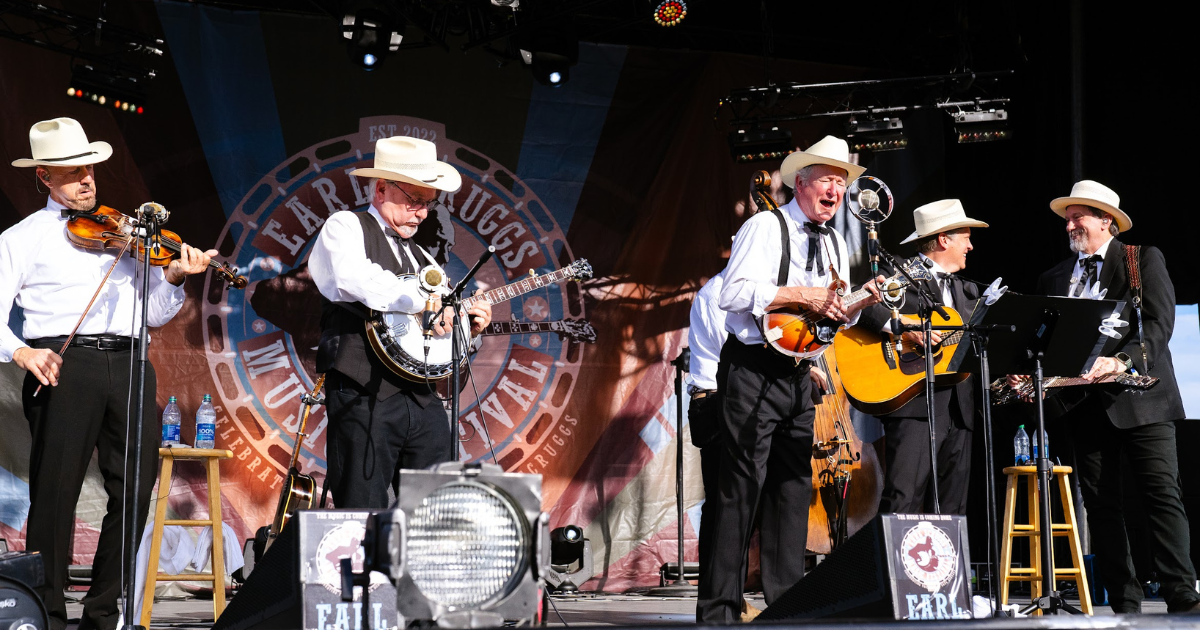
From August 30 to September 1, the legacy of banjo innovator and bluegrass forebear Earl Scruggs will be celebrated once again at the 3rd Annual Earl Scruggs Music Festival. Held at Tryon International Equestrian Center in the western North Carolina foothills – just beyond where the Bluegrass and Country Music Hall of Fame inductee was born and raised – the festival will see Jerry Douglas and the Earls of Leicester return as hosts and will include performances by roots superstars like Tanya Tucker, Old Crow Medicine Show, Marty Stuart & His Fabulous Superlatives, Yonder Mountain String Band, and many more. (Full lineup below.)

BGS is excited to be returning to ESMF for the third year in a row, this time presenting the Scruggs Sessions with the Earls of Leicester. On Saturday, August 31, from 3 to 4:30p.m. on the Foggy Mountain Stage – nearest the festival gates – the Earls of L will pay tribute to Flatt & Scruggs’ seminal live album, Flatt & Scruggs At Carnegie Hall!, with special guests and appearances from across the festival lineup. This is a brand new iteration of our fan favorite tribute sets from the past two years that highlighted albums by the Earl Scruggs Revue. Last year’s performance was hosted by Tony Trischka and included guests such as Della Mae, Tray Wellington, members of Greensky Bluegrass, and more. We cannot wait for you to see what’s in store for this year’s Scruggs Session.

Below, find a few of our tips and insider tricks for attending ESMF, plus we’ll highlight a few of the acts, artists, and bands we’re most excited to catch at this year’s festival. From the posh grounds to engaging workshops and sessions, horse jumping demonstrations to excellent brick-and-mortar restaurants and local food trucks, up-and-coming groups and world-class talents, Earl Scruggs Music Festival truly has something for everyone.

The Grounds: Tryon International Equestrian Center

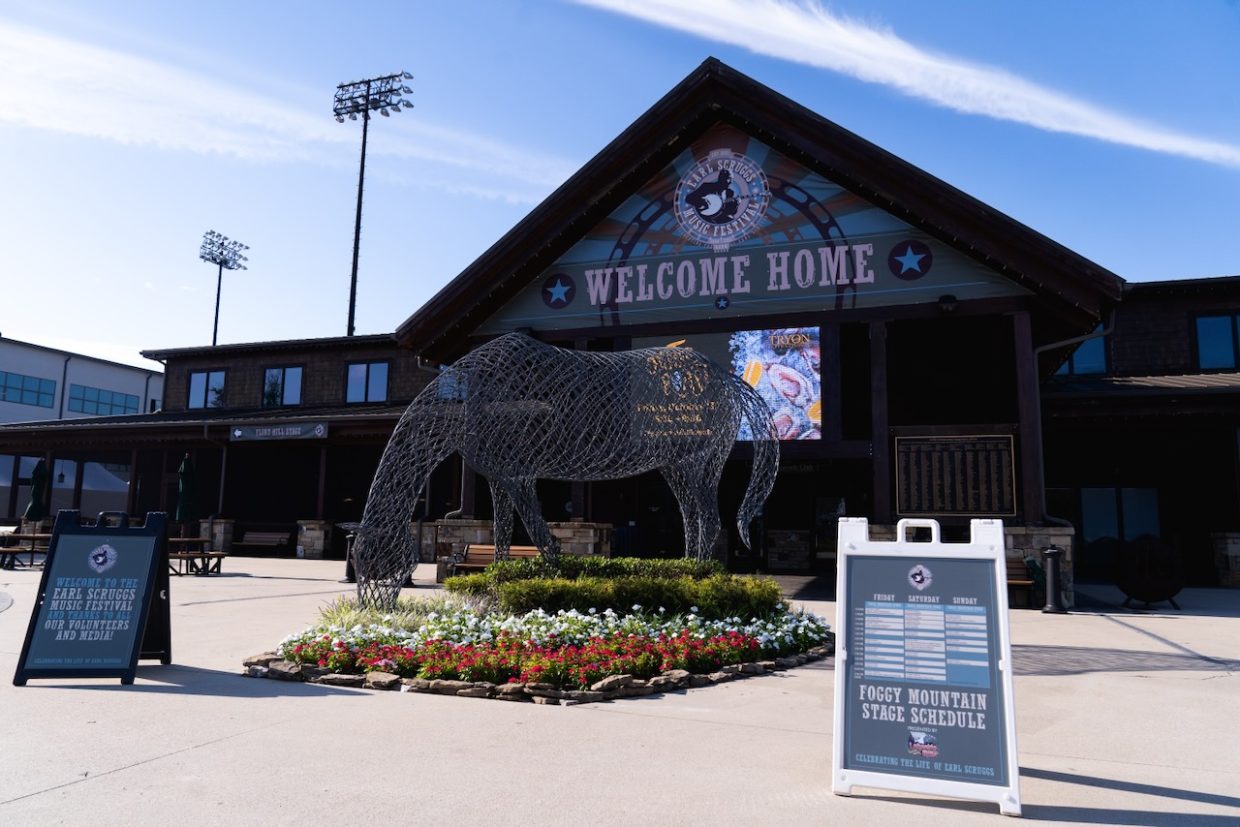
The Earl Scruggs Music Festival entrance. Photo by Eli Johnson.

Your first impression of the Earl Scruggs Music Festival grounds – the Tryon International Equestrian Center in Mill Spring, North Carolina – might be that this is a very fancy locale for a bluegrass festival. But after your first day, or even your first few hours, you’ll see how perfect a setting this state-of-the-art equestrian park is for a music festival. It can be very hot in late August in Mill Spring, but the permanent amenities, ample shade, high quality air-conditioned restaurants, and relatively compact footprint make the usual pitfalls and inconveniences of a hot summer festival fade to the background.

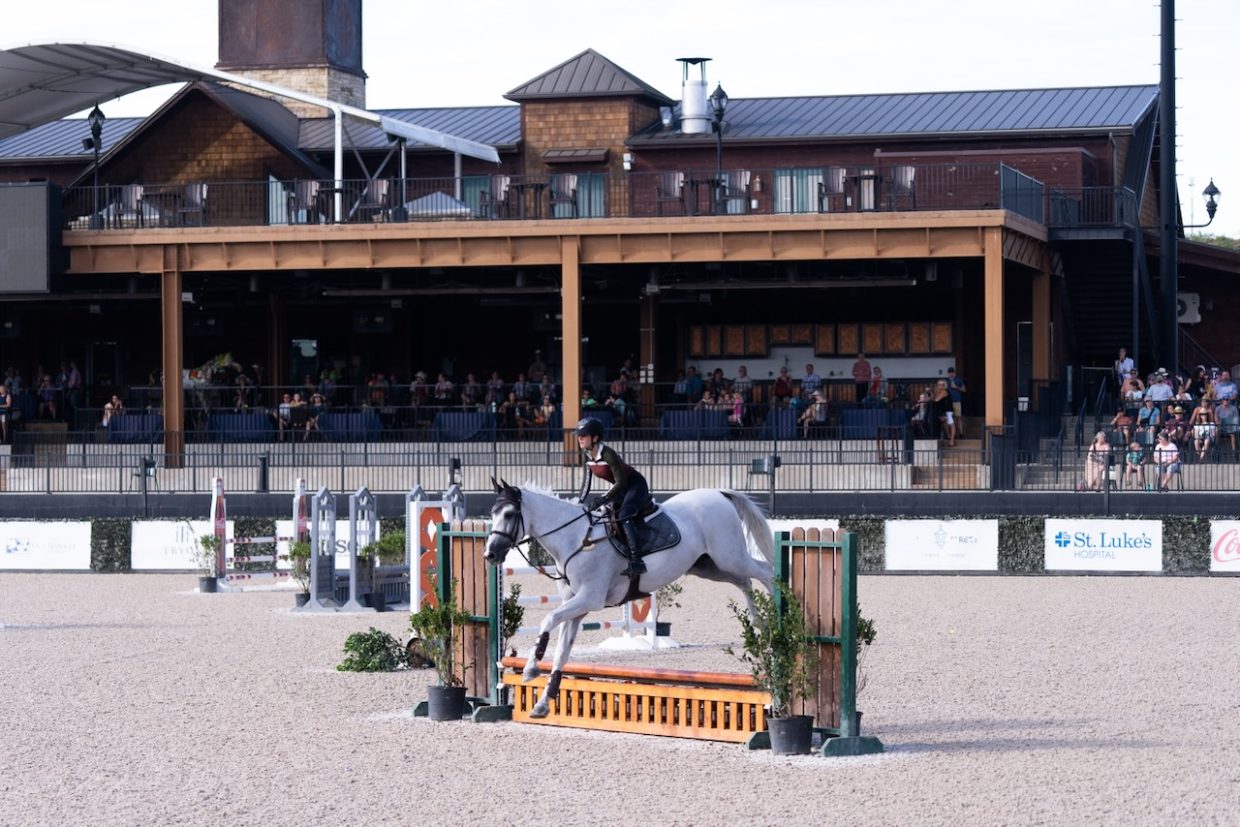
A horse jumping demonstration held during the festival. Photo by Eli Johnson.

Catch a horse jumping demonstration or one of the center’s mini-horse ambassadors doing a meet and greet to get the full equestrian experience. VIP ticket holders can enjoy the shady grandstand with perfect views of the main stage. There’s plenty of space in the sandy arena grounds for folding chairs, too. The General Store, near to the festival entrance, sells drinks, ice cream, snacks, and treats and has many festival essentials you may need – whether you’re camping on site or just visiting for the day.

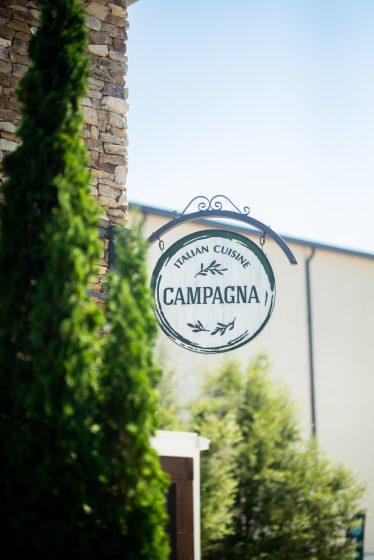
Definitely don’t miss the delicious Italian restaurant, Campagna, on the grounds, as well. Pro tip: order their delicious wood-fired pizzas to go and enjoy while watching your favorite bluegrass bands take the stage. Or, dine in and cool off – whether lunch or dinner, we loved always having Campagna nearby. Other brick-and-mortar options on site include Blue Ginger Sushi, Legends Grille, Roger’s Diner, and more. Plus, plenty of delicious fair foods are on sale with carnival-style vendors and food trucks coming out in force for the fest.

Campagna Italian Cuisine raises the bar for bluegrass festival food. Photo by Eli Johnson.

The Area

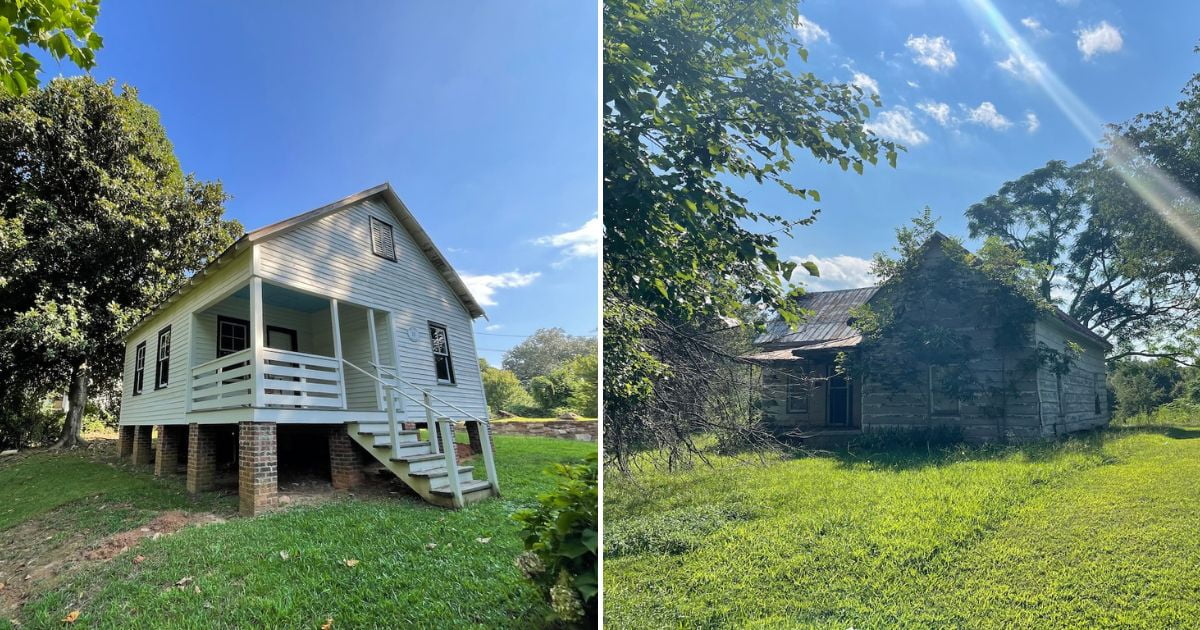
L: Nina Simone’s childhood home. R: Earl Scruggs’ childhood home.

Sure, there’s not much to mention directly surrounding the oasis that is the Tryon International Equestrian Center, but there is so much to explore just beyond the festival grounds. Whether you head up towards the mountains and Tryon proper (hometown of Nina Simone, where you can visit her historic home place) or head down the road to Shelby (Scruggs’ home turf), this area of North Carolina holds so many treasures. A visit to the Earl Scruggs Center, which calls the former Shelby county courthouse home and is located just up the road from Scruggs’ homeplace(s) in Flint Hill, is essential. The museum tells the story of Scruggs, his banjo, and his music within and outside of Shelby county and includes plenty of local history, too. If you’re not able to make it the short drive to Shelby to see the Center, don’t worry! They have a great booth set up at the festival for the entire weekend.

There are a few excellent trails and hikes nearby, like Alexander’s Ford Trail at Bradley Nature Preserve pretty near to Mill Spring, and there are so many mountain-y treks and water fall hikes just a short drive west – we recommend Little Bradley Falls. If you like cute little railroad towns, Saluda, North Carolina is worth a stop. Just up the mountainside, it used to be the home of the steepest standard gauge railway line in the United States. As you drive back down the interstate east, down the titular Saluda grade toward Tryon and Mill Spring, it’s a stunning view of North and South Carolina beneath you, with the Appalachians at your back. It’s lovely country!

The Music

ESMF does an excellent job demonstrating the sheer depth, width, and breadth of Earl Scruggs’ impact on American roots music. The lineup boasts country, Americana, singer-songwriter, old-time, and endless bluegrass. It’s curated thoughtfully and intentionally and there’s always someone new to discover and someone legendary to nerd out over. Here are a few of the sets we’re most excited for, below. Plus you can peruse the entire announced lineup and find links to the full schedule of events. We hope we see you this year at Earl Scruggs Music Festival!

Casey Driessen’s Red Shoe Stringjam (Sunday)

Fiddler Casey Driessen has turned his infamous and beloved Red Shoe Stringjam into a traveling roots music festival variety hour! We can’t wait to see what he cooks up at ESMF with this superlative lineup. His recent appearance at Grey Fox earlier this summer boasted and incredible roster of guests and collaborators.

AJ Lee & Blue Summit (Saturday)

We can’t wait to catch up with our pals AJ Lee & Blue Summit, fresh off their Grand Ole Opry debut and the release of their critically-acclaimed new album, City of Glass. Our recent feature on that new record has been a reader favorite ever since it published – check it out here. Don’t miss their main stage (Flint Hill Stage) performance and their Foggy Late Night set (Foggy Mountain Stage), which will surely be a raucous and rowdy end to day two of the festival.

Marty Stuart & His Fabulous Superlatives (Saturday)

If you’re a true fan of Marty Stuart, you know just how intimately his own story in music is woven into the stories of Flatt & Scruggs. What a perfect addition to the lineup. From psychedelic country to surf rock to driving bluegrass to shredding the mandolin – like he did with F&S as a kid all those years ago – Marty and His Fabulous Superlatives epitomize so many distinct facets of Earl’s music and legacy. This is especially noticeable with Stuart carrying on the bluegrass tradition of mentorship bestowed on him by Flatt & Scruggs – like with young mandolinist, Wyatt Ellis, who is also on the festival roster this year.

Miko Marks (Sunday)

Bay Area-based country singer, songwriter, and recording artist Miko Marks is a “must-see” on our list! She’ll be playing the Foggy Mountain Stage on Sunday evening, bringing her thoughtful, engaging, fun, and polished post-genre country to western North Carolina. Marks is a musical activist, a truth teller, and a community builder who has blazed a trail – nationally, in Nashville, and in the Bay Area, as well – in country and roots music.

Darrell Scott’s String Band (Friday)

Even though Darrell Scott’s solo shows are just as engaging and jaw-dropping as when he tours with a band, we’re certainly pleased that his recent string band album, Old Cane Back Rocker, included Shad Cobb, Bryn Davies, and Matt Flinner – and doubly pleased to still be able to catch this crack ensemble on the road! Darrell will also play a set on the Foggy Mountain Stage in the evening Friday, after the band’s afternoon appearance on the Flint Hill Stage.

The Scruggs Sessions with the Earls of Leicester (Saturday)

There is no one better to tribute a classic and iconic bluegrass album like Flatt & Scruggs At Carnegie Hall! than the Earls of Leicester. We’re tickled to be presenting the Scruggs Sessions, where the Earls and many special guests will perform songs from Flatt & Scruggs’ appearance at Carnegie Hall, a set and an album that have become keystones in the bluegrass canon. We’ll see you at the Foggy Mountain Stage on Saturday at 3p.m.!

Twisted Pine (Saturday)

Twisted Pine blew us away last year at Earl Scruggs Music Festival, so we were especially excited to see them set to return to the event this year, too. They’ll be doing double duty, again, playing both stages at different points on Saturday – catch them at 12p.m. on the Flint Hill Stage and at 5p.m. on the Foggy Mountain Stage.

The Wilder Flower (Friday)

A local string band trio based in western North Carolina and upstate South Carolina – making them essentially festival neighbors! – the Wilder Flower are a group to look out for. Made up of Danielle Yother (guitar), Madeline Dierauf (fiddle), and Molly Johnson (banjo), we’re looking forward to catching the band’s set on the Foggy Mountain Stage on Friday at 3p.m. Especially given their debut album, If I Wait Anymore, will be released in September. Keep your eyes and ears on this trio!

Explore the full Earl Scruggs Music Festival schedule and purchase tickets here.

The Full Lineup:

Hosted By:
Jerry Douglas
The Earls of Leicester

Featuring:
Tanya Tucker
Old Crow Medicine Show
Marty Stuart & His Fabulous Superlatives
Yonder Mountain String Band
The Steeldrivers
Peter Rowan & Sam Grisman Project
Mighty Poplar
Lindsay Lou
Pony Bradshaw
Darrell Scott’s String Band
Miko Marks
Shawn Camp
The Grascals
Darin & Brooke Aldridge
AJ Lee & Blue Summit
Chris Jones & The Night Drivers
Travis Book Band
Shadowgrass
The Scruggs Sessions, Hosted by The Earls of Leicester
Casey Driessen’s Red Shoe Stringjam
Twisted Pine
Wyatt Ellis
Rachel Sumner & Traveling Light
Carley Arrowood
The Faux Paws
Larry & Joe
Martha Spencer & The Wonderland Country Band
Tanasi
The Wilder Flower
The Well Drinkers
Warren Wilson College Bluegrass Band
Ryn Riley and Appalachian Roots
PacJAM Ramblers
The Biscuit Eaters
Creekwater Collective
Fine Tuned Sessions Presented by Rare Bird Farm & Blue Ridge Music Trails


All photos courtesy of Earl Scruggs Music Festival. Photo credits as marked. Lead photo by Eli Johnson. 

Banjo Player Kyle Tuttle Reflects on Personal Growth and ‘Labor of Lust’

One of the most talented and sought after banjo players in bluegrass, Kyle Tuttle’s life has been full of the highest of highs and lowest of lows in recent years, from a marriage and divorce to the surprise death of close friend and bandmate Jeff Austin to the loss of his job due to COVID and finally hitting the road as a member of Molly Tuttle & Golden Highway.

All of that and more are documented on Labor of Lust (out February 16), an 11-song expedition taking listeners on a deeply personal and sonically diverse journey of tragedy and triumph. Recorded across three separate sessions in Nashville dating back to 2018, the record also documents a significant chunk of Tuttle’s life that, despite the length of time and changes that come with it, aren’t lacking a central theme. This led him to describing the project as “a long work-in-progress,” due to how its focus shifted throughout the more than five years of bringing it to life.

“By the time it was all said and done, this was a pretty eclectic group of songs,” Tuttle tells BGS. “There’s some stuff with an electric band that includes drums and me on electric banjo, others with traditional string band arrangements and some that meet in the middle for a more jamgrass sound.”

One of the songs that bridge the gap between these two worlds of bluegrass is “Hard to Say,” a song that sees Tuttle grieving the loss of Austin, his marriage, and his job all at the same time. It’s anchored by his blistering banjo backbone with introspective lyrics like, “Knowing that it’s gone and gone for good, makes you wonder what the hell you’re waiting on?” that serve as a message to himself and anybody listening to ask the questions you need to ask, then play another one.

“Even though the music and lyrics were written over a handful of years, loss and learning to deal with it on a personal level is central to this record,” indicates Tuttle. “That being said, there’s a lot of joy within these songs too. I don’t want to make it seem like I wrote music for five years and all I experienced was misery. Loss is something we all have to deal with at one time or another, and my way of dealing with it was to write some of this music.”

Speaking by phone from his snowed-in Nashville home following a mid-January winter storm, Tuttle opened up about how he approaches being a bandleader compared to his current gig with Golden Highway, being stuck in a Bob Ross painting, choosing to work doing something you love, and more.

You’re notorious for staying extremely busy in your musical endeavors, from sitting in with folks on stage and in the studio to your stints with the Jeff Austin band, (your current gig with) Molly Tuttle, and your own compositions and projects, like Labor of Lust. With that in mind, how do you approach your own music versus being a member of someone else’s band?

Kyle Tuttle: It’s a bit different, because with my own show I’m the bandleader, along with other variables. With my shows, I play with lots of different members, I don’t have one set group of people that know my body of material super well, but rather lots of friends I can call on who all have different strengths. For that reason, when fronting my own band I’m more in the headspace of trying to wrangle all these people and variables together for a cohesive show, whereas with Molly we all have our roles that are specifically defined. One role isn’t more comfortable to me than the other, they just both require different things from me.

Is that comfort what had you leaning on friends like Travis Book, Dominick Leslie, and Lindsay Lou in the studio instead of session players?

It speaks very similarly to what we were just talking about with putting together a version of the Kyle Tuttle Band for shows. I wouldn’t use the term session player though, because even though all of these people are my friends they can also be called “session players” for their work on other’s records, because they’re all so good at what they do. I pick them very specifically based on their strengths and what they’ll bring to the music. I’ve been lucky through my years in the business to build personal connections with an awesome group of people that I can call when I’m looking to create something.

Although not an original, I really enjoy your cover of Harry Nilsson’s “Turn On The Radio” that closes the album. What drew you to that song of his in particular instead of “Coconut” or another of Nilsson’s gems?

I’m gonna have to work on a “Coconut” cover next, because that song is awesome! In all seriousness, [“Turn On The Radio”] felt like a thematically appropriate way to close this album. At the end of the day, I’m just a jamgrass stoner that plays banjo wanting to make a record that people can enjoy and have fun with. This record has some heavy undertones, so I felt like it deserved a nice ribbon on top to end it. It speaks to me big time, [about] remembering those near and dear who you’ve lost, especially if they’re an artist doing something you can hear. That sentiment of “turn on your record player, listen to my song, turn on your night light baby, I’m gone” felt like the right words to capture that feeling even though I didn’t say them, Harry did! I’ve loved the song for a while, so when I began putting this record together it immediately made sense to close it with this.

In terms of your own songs, I understand that “Trailer In Boulder Canyon” came together at two different times, similar to the recording process for all of Labor of Lust?

That’s a funny one, because as I said previously, I’m just a jamgrass stoner banjo player. First and foremost it’s a fun, feel good song about a magical place — a shitty little trailer on the side of a mountain up in Nederland, Colorado, where you don’t have to worry about any of your troubles or cares and just get to play fiddles and banjos and have fun all day. There’s a great jamgrass scene up there due to Vince Herman and Drew Emmitt basically starting Leftover Salmon up there. Years later some of The String Cheese Incident guys moved there followed by Jeff Austin, leading to the eventual forming of Yonder Mountain String Band there as well. There’s such a rich history of the music I love so much in that goofy little mountain town.

I initially wrote the chorus and first verse for the song as a goofy little ditty after it bounced around in my head for a while. I went up there when Vince put together a memorial concert for Jeff to help raise money for his family and so people could grieve together and ended up writing the second half of the song driving up the canyon road to get there. So like a lot of things on this record, part of it came to me at one point before finishing it off much later.

You’ve got three instrumentals on this record and another mostly instrumental tune in “Two Big Hearts.” What variations do songs like those have compared to ones with lyrics in the creation process?

The process is relatively the same, because no matter if I write with lyrics or melody I’m starting with some short idea and building around that nugget of information piece by piece. If it’s a melody, it’ll probably come out as an instrumental, but if it’s with lyrics it’s probably going to come out as a song with vocals. Even though it’s one track, “Two Big Hearts” is really two songs. The lyrics in it don’t come in until the second song, nearly four minutes in, but I felt that both were similar enough that they should be together and presented as one idea. I don’t think I’ll ever play one part of it without playing the other.

On “Not Quite Spring,” you’re singing about being stuck inside a Bob Ross painting. How’d that idea come about?

That’s a COVID song. I was sitting around on the couch watching a lot of Bob Ross’s The Joy Of Painting, just killing time like we all were back then. All of his paintings were titled and each episode of his show is titled after the painting he does in it. [“Not Quite Spring” is season 25, episode 3]. It’s of this spooky, huge mountain that’s covered in snow and frozen. A lot of his paintings are happy sunsets and warm things like a pond reflecting the trees around it, a stark contrast to this one that’s cold, dark and lonely, which is exactly how I felt at the time trapped inside my house.

In the album’s liner notes you allude to a life in music often being painted in glamor, when in reality it’s a consistent grind where persistence pays off. Is that message of sticking to it what you’re singing about on “Saddle Up?”

“Saddle Up” is the term I have for getting up every day and doing it again. It’s the idea that you may not have succeeded today or done everything you wanted to do the way you wanted to do it, which is what I’m touching on with the lyric, “The past can’t be where my best is.”

I feel like persistence defines my own life and career. Anyone who works in pursuit of a skill or art is always striving to get better. Even outside of that, we’re all working on our personal relationships and doing better by the people around us. Hopefully our best work, whether it be art or personal growth, is ahead of us and it’s not all downhill from here. It’s also a message I wish to impart on any listener or friend going through a rough patch to remind them that brighter days are on the horizon.

With Labor of Lust’s themes of personal growth in mind, what’s one resolution you have for yourself, music or otherwise, in 2024?

I’m actually trying to play the banjo even more, not from the standpoint of traveling and playing more shows, but just tinkering with it more in my downtime. It’s an interesting duality, tying your work to something you love. It’s a tricky thing to do because the lines between work and play are instantly blurred and made one. If it’s all work and no play it makes Jack a dull boy, so my resolution is to just keep the banjo in my hands for fun and to work smarter, not harder, which comes back to the idea that the past is not where my best work is.


Photo courtesy of the artist.

ANNOUNCING: Louisville’s Bourbon & Beyond 2024 Lineup

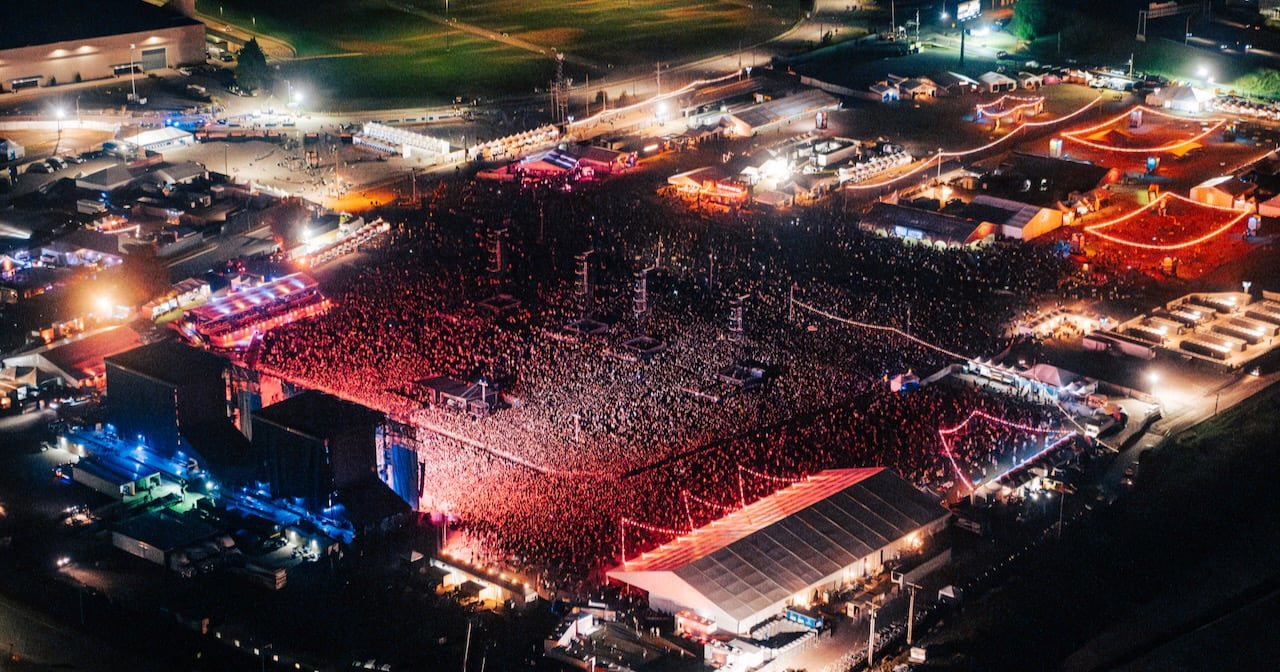
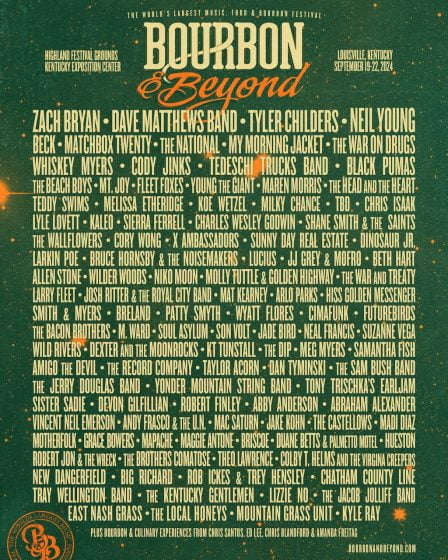
Today, Bourbon & Beyond, the world’s largest music and bourbon festival, announced its lineup for their 2024 event, to be held in Louisville at the Kentucky Expo Center September 19 through 22, 2024. With headliners such as Neil Young, Zach Bryan, Tyler Childers, and many more, the festival promises a roster filled-to-bursting with the best acts from country, Americana, bluegrass, and beyond.

BGS will return to the festival for ours and the festival’s sixth consecutive year, once again curating the musicians and bands that will grace the Bluegrass Situation Stage. Housed in the Kroger Big Bourbon Bar, the BGS stage will feature bluegrass, line dancing, and as much bourbon as you can drink from dozens of distilleries. Each day of the festival our stage will culminate with performances by Sam Bush Band, the Jerry Douglas Band, Yonder Mountain String Band, and Tony Trischka’s Earl Jam. Plus, don’t miss exciting acts like IBMA Entertainer of the Year winners Sister Sadie, newly-minted Black string band New Dangerfield, and KY neighbors the Local Honeys and the Kentucky Gentlemen. See the full list of performers for the Bluegrass Situation Stage below.

Kentucky Governor Andy Beshear, via press release, had this to say about the festival: “The Commonwealth of Kentucky is honored to be hosting Bourbon & Beyond in Louisville this September,” he said. “The festival brings in fans from all over the world and showcases the best of Kentucky; highlighting our rich culture of bourbon, the best in local culinary, and a top tier musical lineup. We can’t wait to welcome fans once again for this great tradition that we all in Kentucky are proud to call our own.”

First-rate bands and artists from across the American roots music community can be found throughout Bourbon & Beyond’s lineup, not only at the Bluegrass Situation Stage. This year, Bourbon & Beyond adds two new secondary stages, as well as the usual BGS Stage and the Oak and Barrel main stages. From Tedeschi Trucks Band and Black Pumas to Melissa Etheridge and Molly Tuttle & Golden Highway, there’s truly something for everyone. Don’t miss sets by Larkin Poe, Josh Ritter, Jade Bird, Lyle Lovett, Sierra Ferrell, Devon Gilfillian, Vincent Neil Emerson, Robert Finley, Hiss Golden Messenger, and so many more.

Another highlight of Bourbon & Beyond each year are the bourbon and culinary events, workshops, and activations that feature celebrity chefs and food-and-drink experts such as Chris Blandford, Amanda Freitag, Ed Lee, Chris Santos, and more. All in all, Bourbon & Beyond promises to yet again be your complete music, bourbon, and food festival in beautiful Kentucky. Tickets are on sale now – we hope you’ll join us in Louisville for another year of Bourbon & Beyond!

The Bluegrass Situation Stage Lineup

Sam Bush Band
The Jerry Douglas Band
Yonder Mountain String Band
Tony Trischka’s Earl Jam: A Tribute to Earl Scruggs
Sister Sadie
New Dangerfield
Big Richard
Rob Ickes & Trey Hensley
The Brothers Comatose
The Local Honeys
Tray Wellington Band
Chatham County Line
The Kentucky Gentlemen
East Nash Grass
Mountain Grass Unit
Jacob Jolliff Band
…and more to be announced!


Photo Credit: Nathan Zucker, courtesy of Bourbon & Beyond.

WATCH: Yonder Mountain String Band, “Into the Fire”

Artist: Yonder Mountain String Band
Hometown: Nederland, Colorado
Song: “The Fire”
Album: Get Yourself Outside
Release Date: February 25, 2022
Label: Frog Pad Records

In Their Words: “It started as do most of my ideas; a melody with only one specific lyric in mind. This song actually marked my very first collaborative effort as Adam, Ben, and Dave all weighed in on the lyrics as they took shape. I think if I have a favorite line it would be, ‘I’m a boy with a song, it’s barely a sound.’ I love this song’s energy on stage. The audience’s response makes me think that it comes across the way I had hoped!” –Nick Piccininni, Yonder Mountain String Band


Photo Credit: Jake Cudek

The Tim O’Brien Band Reaches Beyond

Tim O’Brien is only half-joking when he acknowledges, “You know, I have not been known to show up with the same people from date to date.” True enough, considering he’s been with Hot Rize for four decades, played mandolin and sang on the first Earls of Leicester album, issued numerous collaborative albums with family and friends, and carved out a career as a Grammy-winning folk artist. Along the way, he’s also produced notable roots artists ranging from the Infamous Stringdusters and Yonder Mountain String Band, to Kathy Mattea and Laurie Lewis. His multiple IBMA Awards include two trophies for Male Vocalist (1993, 2006), and another for the 2006 Song of the Year, “Look Down That Lonesome Road.”

That road is less lonesome now that he frequently travels with his partner, Jan Fabricius, a mandolin player and singer who makes her leap into professional music with O’Brien’s new album, The Tim O’Brien Band. In an effort to find players adept at both Irish and bluegrass music, the impeccable ensemble is rounded out by Mike Bub on bass, Shad Cobb on fiddle, and Patrick Sauber on banjo and guitar. Released one day after O’Brien’s 65th birthday, the project leads O’Brien and his colleagues toward tour dates in his native West Virginia… and beyond.

O’Brien invited The Bluegrass Situation into his music room for a chat about being a traveling musician, a songwriter and (much to his surprise) a role model.

BGS: Pretty early on this record, you have some traditional tunes. Why did those songs seem right for this album?

O’Brien: Let’s see, we’ve got “Doney Gal” and the two reels, and we’ve got “Pastures of Plenty” – I guess that’s traditional now. You know, I didn’t write a lot of songs this time, and I revisited one that I recorded before. I had recorded “Crooked Road” solo in the past, but I thought it would be really good with a band, and I wanted to hear that. I was happy with the way it came out.

Whenever I started doing gigs on my own in coffee houses, I always mixed it up with traditional songs and covers and my own tunes when I started writing. So it’s kind of a continuation of that. It’s my style of making a record. I’m itching to write some songs, but I didn’t do it much this time.

When you need to round out an album, how do you decide what to record?

I go to the CD shelf over there. Nowadays, I glean ‘em every year and I get rid of the ones that I know I’m never going to listen to much. The ones I keep going back to, there’s often something on there that makes me go, “Oh yeah, I love this song. Maybe I can sing this song…” And I’ll try it. I have one of those Moleskine books that are filled with lyrics of songs that I want to know — and I’ll write the lyrics of the ones that I’ve just sung on a record and need to remember.

I have to say, I’m touched by your rendition of “Last Train from Poor Valley.”

Oh man, Norman Blake is my hero! I saw him first probably in 1972. He was on that first Will the Circle Be Unbroken record and some other friends that were playing bluegrass already knew about him. They had that first Norman Blake record, which came out around the same time. And when I started playing with Hot Rize, we’d play these festivals and we would meet up with him. We got to be friendly and it was like a regular ol’ friend that you’d see. That’s the great thing about the touring community. You see people week to week in the summertime months. That’s why it’s nice to live in Nashville. I used to go home to Colorado and you wouldn’t see those people in the grocery store or the post office. [Laughs]

Norman and Nancy are old friends, and I go back to see them every now and again in recent years. Their music is just so different from what I do, and what Hot Rize did, and yet all these years later, it’s a lot closer. Even though it’s still very different, it’s a lot closer than a lot of the other stuff that’s going on. But I just love the sentiment of that song, and I knew that song from when his record came out. I like to pay tribute to somebody like that. He’s not on the circuit anymore and I don’t want him to be forgotten.

I like the feel of “Beyond.” It sounds to me like a hero’s anthem. What was on your mind when you wrote that?

I had the idea of writing something about, “Let’s get beyond the day to day.” It sounds like a gospel thing, and it fits in there, but if you could find enlightenment within your daily routine, or just get past the stumbling blocks that frustrate you and say, “Hey, man, things are going to be fine… We can go beyond this and look beyond this.” And maybe if we can live there, we can live life more freely while you’re going about the day-to-day.

Do you consider yourself an optimist?

I am an optimist, yeah. Musicians have to be! [Laughs] My friend Chris Luedecke – Old Man Luedecke, a guy I’ve produced some records for and toured with – he says, “Man, we’re the ultimate optimists. We keep getting up in the morning and trying again.” I suppose everybody does it, if you define it that way. We’re all optimists. But yeah, I’m an optimist and I think it’s possible to change, it’s possible to rise above your problems and get around ‘em somehow, and get beyond.

What is your response when younger musicians see you as a role model?

It’s a funny evolution. I guess it’s happened, that I’ve become this role model. It surprises you, but if you look at who my role models were, a lot of them aren’t there anymore. That means I’m getting closer to the checkout line, so I’ve become a role model because I’m still out there doing it. So I guess it’s an honor, but it gets to be intimidating to continue, because you think you’re not coming up with your best stuff all the time, and you wonder if you can even show it.

Hot Rize is that way. It’s hard to go and record a Hot Rize record because of nostalgia. People look at Hot Rize’s repertoire and go, “Sheesh! There are so many great songs!” But it took, I think, eight records to get all those together. It sort of magnifies things in a funny way, and it will intimidate even yourself, as you’re trying to repeat yourself. Hot Rize can repeat ourselves, but the idea of putting a new record out was like, “Oh man… we really need to be good! We better be as good as all that.” You do a lot of soul searching and you take it more seriously.

I wanted to ask you about writing “Hold to a Dream,” because that song has done well for you – it’s something of a standard, I would say.

“Hold to a Dream” is a good one. I had been into Irish music for a while, and that seemed like an Irish tune. The lyric is not necessarily very specific about anything. It’s a love song, I guess, but it’s like the theme of “Beyond” — it’s possible. We can get past everything and we can still do well. I like that one because it’s got a little rhythm, it’s got a little instrumental bit, and it’s got a little bit of a message – and it’s fun. And it’s got a nice chord progression. [Laughs] …

What I’m surprised about some of the songs that I’ve written that have translated so much, there is nothing heavy about them. But people are distracted by music and then they are allowed to think about other things while they are listening to it. And just a few words will suggest something. I think songs like “Hold to a Dream,” or other songs where there’s an instrumental section, lets people go, “Ah, yeah… hmm….” (laughs) You start singing and they might start thinking of something else.

Newgrass Revival does a magnificent version of that song, and you’ve also had cuts along the way by Garth Brooks, Dixie Chicks, Dierks Bentley, Kathy Mattea, Nickel Creek, and others. As a songwriter, what is that like to hear something you wrote come to life through another artist?

It’s really flattering when anybody sings your song, if they want to. There’s a monetary reward, which is nice, but mostly you’re just flattered. Then you realize, OK, what I’m doing is valid. It means something, so continue. That carrot is the one I really want to catch, knowing that what you’re doing is worthwhile.


Photo credit: Michael Weintrob

Huck Finn Jubilee Makes Big Return for 41st Year of California Bluegrass

For bluegrass fans in Southern California, Huck Finn Jubilee has been a destination for more than 40 years.  After a two-year hiatus, the long-celebrated family event returns to Ontario, California, on Oct. 5-7. This year’s lineup features headliners such as the Infamous Stringdusters, Yonder Mountain String Band, and The Lone Bellow, and BGS will be on site all weekend to present the BGS House Party jam after the main stage sets wrap up…

Leading up to next weekend, the festival’s new owners, Roger and Nikki Malinowski, chatted with The Bluegrass Situation.

Don’t miss our special video sessions highlighting some of the acts you’ll see on the lineup below!

Fans can discover music in so many ways now. What is it about a music festival that is special?

The wonderful thing about music festivals is that they’re shared experiences. They bring people together. Those moments when the audience sings together with the artist, and each other, or when you literally feel the music move you – times like those can’t be beat. Music festivals create communities where neighbors can meet, families reunite and spend time together, where we can get away from it all for just a little while.

What have you learned about the process of booking festivals that has really surprised you?

We’ve been surprised by the amount of love and support from the Huck Finn audience. The festival has a 40-year-plus history, yet it almost ceased to exist. I remember when we made the announcement on Facebook that Huck was back, the messages of gratitude were overwhelming. We’ve also found that putting on a festival of this size is a significant amount of work. The time, energy and effort behind pulling off an event of this size is enormous. The support and love from the bluegrass community and fans of Huck Finn continues to motivate us to create the best experience we possibly can.

When you are selecting artists, do you have a certain audience in mind? In other words, is there a common thread that runs through your lineup and/or your ticket holders?

Absolutely. We want to take our audience on a musical journey. It is important that we honor the traditions of bluegrass music while ensuring that we give space for the evolution of the music. Our hope is that our younger audience gets exposure to the roots of bluegrass and appreciates the amazing musicianship, harmonies and tradition of the genre. We also hope that the entire audience will enjoy how the music itself is progressing, exploring the unique textures and sounds of acoustic instrumentation in more modern takes on the style.

For someone who has never been to Ontario, California, and the area, how would you describe it to them?

Ontario is essentially a suburb of Los Angeles. It has all the amenities one might want in traveling to a new place: great places to eat, drink, shop and stay. It has a small airport and a great number of hotels in the area. The park where Huck Finn is held is a little oasis tucked away within the city. It is absolutely beautiful with two stocked lakes for fishing, a zero-depth splash play area, a sizable playground for kids, and plenty of quiet shaded areas to relax and unwind. There is ample parking, great spots for tent camping and expansive area for RVs. It’s easy to get to, yet far from the busyness of LA. Ontario provides all the conveniences for anyone looking to spend a single day or the whole weekend with us.

People get hungry! How did you choose the vendors for Huck Finn?

The word that has driven all of our decisions this year has been ‘balance.’ We want to accommodate for all tastes, simple and more refined. We wanted to provide the types of foods you might expect at a festival, but also provide some more elevated offerings as well.

What do you hope that attendees will take away from the Huck Finn experience?

We hope to forge connections, ultimately. Connections to the music and the artists performing. Connections to each other, and to their families, neighbors and friends. We hope that people come with an open mind, enjoy a great lineup of music that spans the bluegrass genre, and get to put the stresses and worries that they might have behind them. I hope that they smile at each other and meet new people during the show, eat great food, spend undistracted time with their loved ones and make it something that they will want to bring their friends and family to for years to come.

You can still purchase tickets to HUCK FINN JUBILEE here.