BGS 5+5: Stephen Kellogg

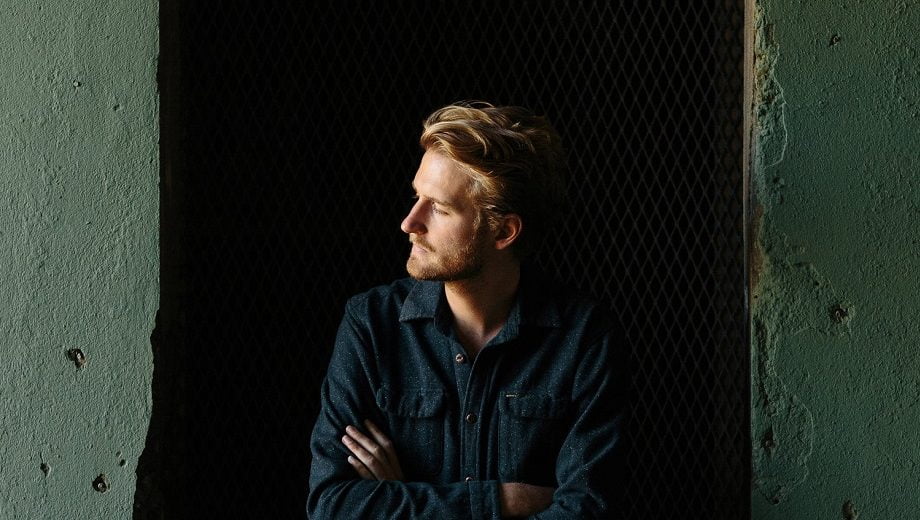
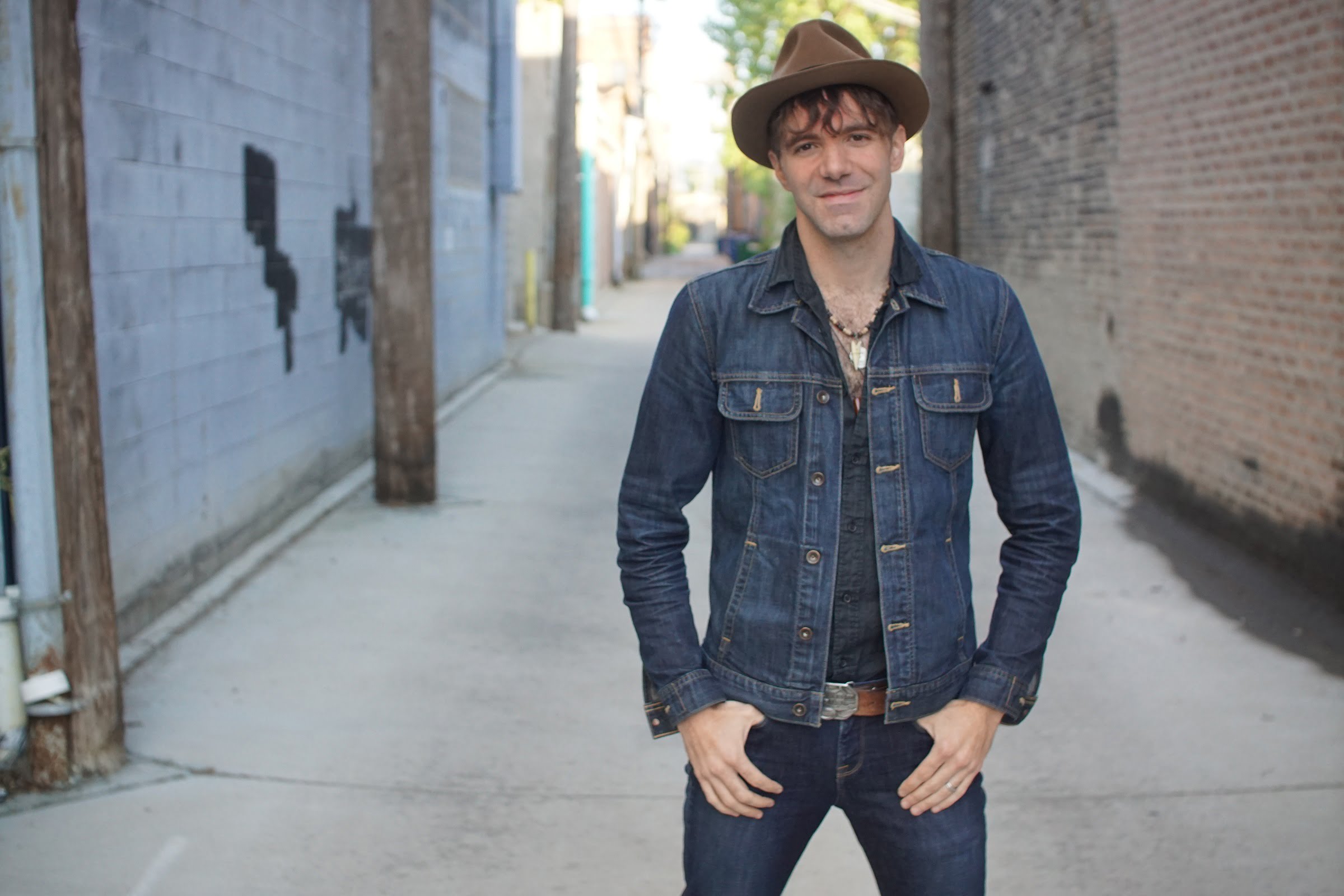
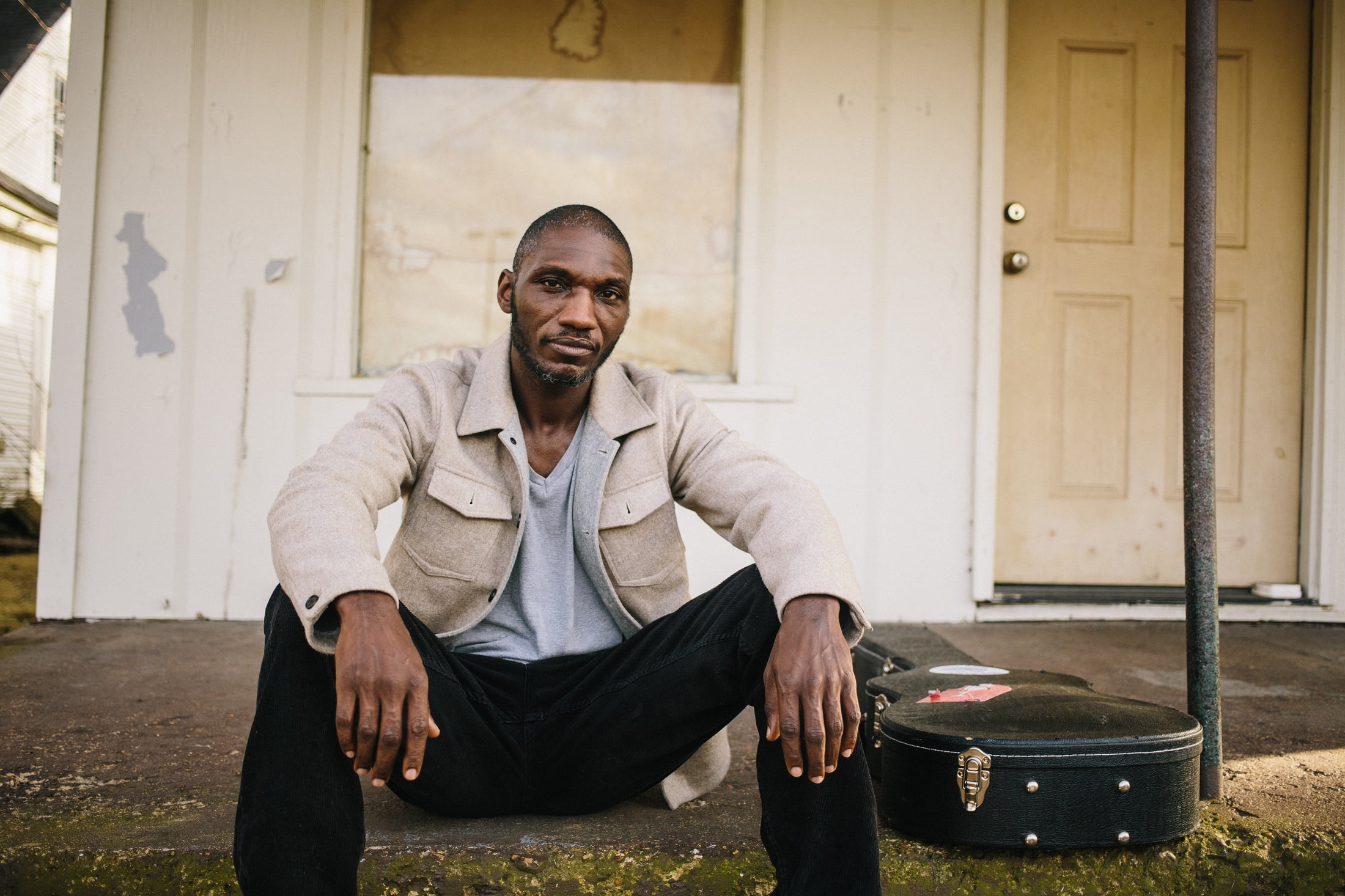
Artist: Stephen Kellogg
Hometown: Formerly of Northampton, Massachusetts – now in Connecticut
Latest album: Objects in the Mirror
Personal nickname: Skunk

What other art forms — literature, film, dance, painting, etc — inform your music?

I love books. Dickens writes with his heart–very inspiring. Also movies. I like those art forms because my brain never tries to deconstruct what I’m experiencing in quite the same way as it does when I hear a good song. So it can be the emotion without the intellect jumping in there. For years it would bother me because certain music that was widely accepted as great would mean nothing to me, and other stuff I loved would fall under the ‘cheesy’ moniker. Then one day I realized that it was all about the lyrics for me. If the worldview was something that resonated authentically I didn’t care about the production. The same was true in reverse, cool production isn’t really enough for me to dig something. Once I learned that about myself, I was able to apply it to the other art forms. If I feel what’s being said or commented on with piece of art, there’s a good chance I can get inspired by it.

What’s the toughest time you ever had writing a song?

I once heard a quote from Tom Petty that was something to the effect of “When the muse comes to visit, if you don’t write it down that’s just ruuuude.” I think of that every time I get an idea in the middle of the night and have to wake up to jot it down in my journal. Lots of ideas come at really inconvenient times when you aren’t looking for them. When my mother-in-law passed away, her song came to me. The problem was, that I was just so sad I didn’t want to deal with it even though I knew I very much had to get it written down. I knew the moment the first line came to me that I would be singing it at her funeral a few days later, but even trying to write the song would bring me to tears. So I’d say “Ingrid’s Song” was the toughest because even though the words and chords came with some fluidity, it was a rough time to pull it out and do what needed doing. I’m glad I did though. She deserved that tribute.

If you had to write a mission statement for your career, what would it be?

I like this question a lot. It strikes me as very important to understand one’s purpose in all this. It can really sustain you when there are bumps in the road. For me, I don’t play music because I love playing guitar or singing. I play because I love the human connection. In recent years I’ve been doing more speaking and writing of other kinds. I have my first full length book out in March 2019 and I feel a similar rush from those experiences too. My mantra that I keep around some of my social media outlets says ‘using words and intention in the hopes of a positive legacy for my family.’ I’d say that’s the mission.

Since food and music go so well together, what is your dream pairing of a meal and a musician?

It occurs to me that maybe this question is simply one of picking an artist paired with the correct meal (like Sam Cooke with linguine and clams or something). I’m going to answer it though as it first occurred to me, as in who would you like to break bread with and what would you eat? There’s nothing like meeting up with an interesting person in a place where you can actually talk and kick around ideas. I do find that to be one of the great perks of the job. I always remember the anecdote that Dylan recounts of Bono swinging by his house with a case of Guinness. That sounds like a fun evening. As much as I’d love to have dinner with Tom Petty or Taylor Swift, I feel like the most thrilling connection usually occurs when you aren’t too star-struck and I wouldn’t trust myself with either of them. Also important to me in a hang is that folks have a good sense of humor. So I’d lean towards a night of steaks on the grill with Dave Grohl. I like his vibe.

How often do you hide behind a character in a song or use “you” when it’s actually “me”?

Rarely. Probably to a fault, I need to identify with a character if I’m going to sing it. It makes it increasingly hard for me to even perform certain songs from earlier in my career because I don’t identify with the wisdom being expressed or the aims of the character. I have a ballad called “Such a Way” that I wrote when I was in my mid-twenties. I sing about “the woman down the street with a daughter twenty years.” This made lots of sense when I was 24. Now that I’m in my 40s it feels a bit lecherous when I sing that line if I think too much about it. I mean I can get back to the sentiment of young love sure, but I also have a teenage daughter myself now and it just doesn’t feel as true to me to narrate; although I’ll sing it at shows, it’s hard for me to have an emotional experience with that song sometimes. No judgment because how else can Robert Plant sing “Whole Lotta Love” or Foreigner do “Hot Blooded” without feeling ridiculous? For me, though, if I don’t relate it’s kind of like acting instead of music.


BGS 5+5: Hush Kids

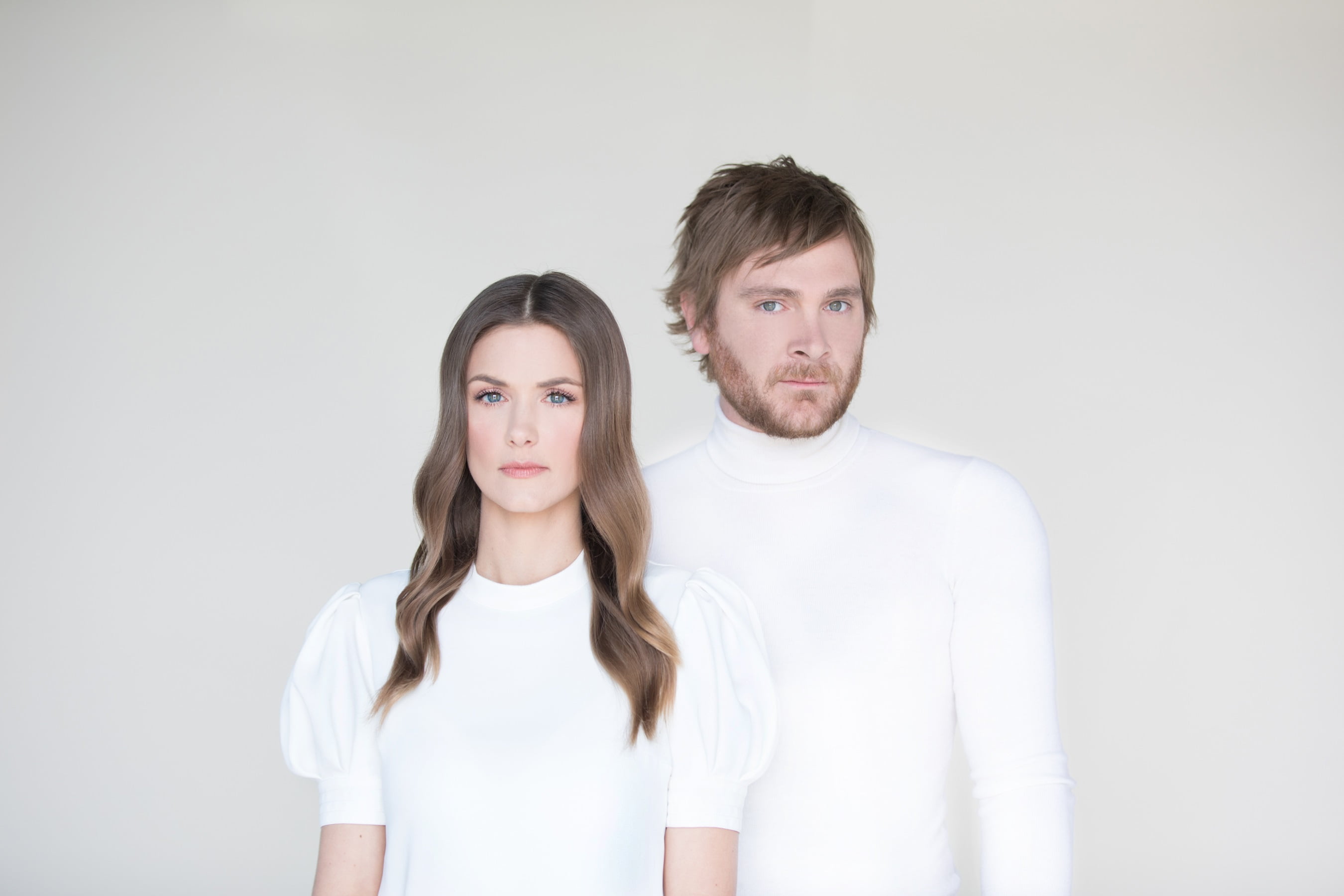
Artist: Hush Kids (Jill Andrews + Peter Groenwald)
Hometown: Peter – La Grange, Illinois; Jill – Johnson City, Tennessee
Latest album: Hush Kids
Personal nicknames (or rejected band names): Peter Butter and Jilly. Peter: P-Train, Pizza Man. Jill: Dill, Jer, Jerry, Poi, Jilly.

What’s the toughest time you ever had writing a song?

There are some things that I feel deeply but have a hard time writing about. In this case I’m either protecting myself, or protecting the subject from a song that I don’t think would do the subject justice. I started a lullaby for my daughter before she was born. After many hours on many days of working on this song, it is still unfinished. She is 4.5 years old. She is precious. I wish I could be a little less precious with the damn song so she could actually hear it while she still likes me to sing her to sleep. — Peter

If you had to write a mission statement for your career, what would it be?

Follow the muse wherever it leads — other people’s opinions be damned. — Jill

What rituals do you have, either in the studio or before a show?

I pace a lot, especially in the studio when writing. It’s the way I can shake things up if I feel stuck. I’ll leave the room and walk around. It often helps me find perspective for a missing line or a necessary change in direction. Until recently, I used smoking for short breaks from the room. Although my walkabouts are probably disruptive to some, they’re healthier for me! — Peter

Which elements of nature do you spend the most time with and how do those impact your work?

I live on about 17 acres, 10 of which I mow once a week. It takes a lot of time, and can cause anxiety when it’s looming above a full schedule. But, once I actually start the process, there’s nothing to do but think and look around. Sometimes that time helps clear my head, sometimes it makes it busier, but either way it seems necessary and not up to me. Also, there is something powerful and charging about routinely tracing the same path on every walkable foot of our land. The dips and bumps become more familiar and less hazardous. — Peter

Since food and music go so well together, what is your dream pairing of a meal and a musician?

I once watched Weird Al Yankovic play at a State Fair while eating a turkey leg. Made sense to me then. — Jill


Photo credit: Fairlight Hubbard

BGS 5+5: Granville Automatic

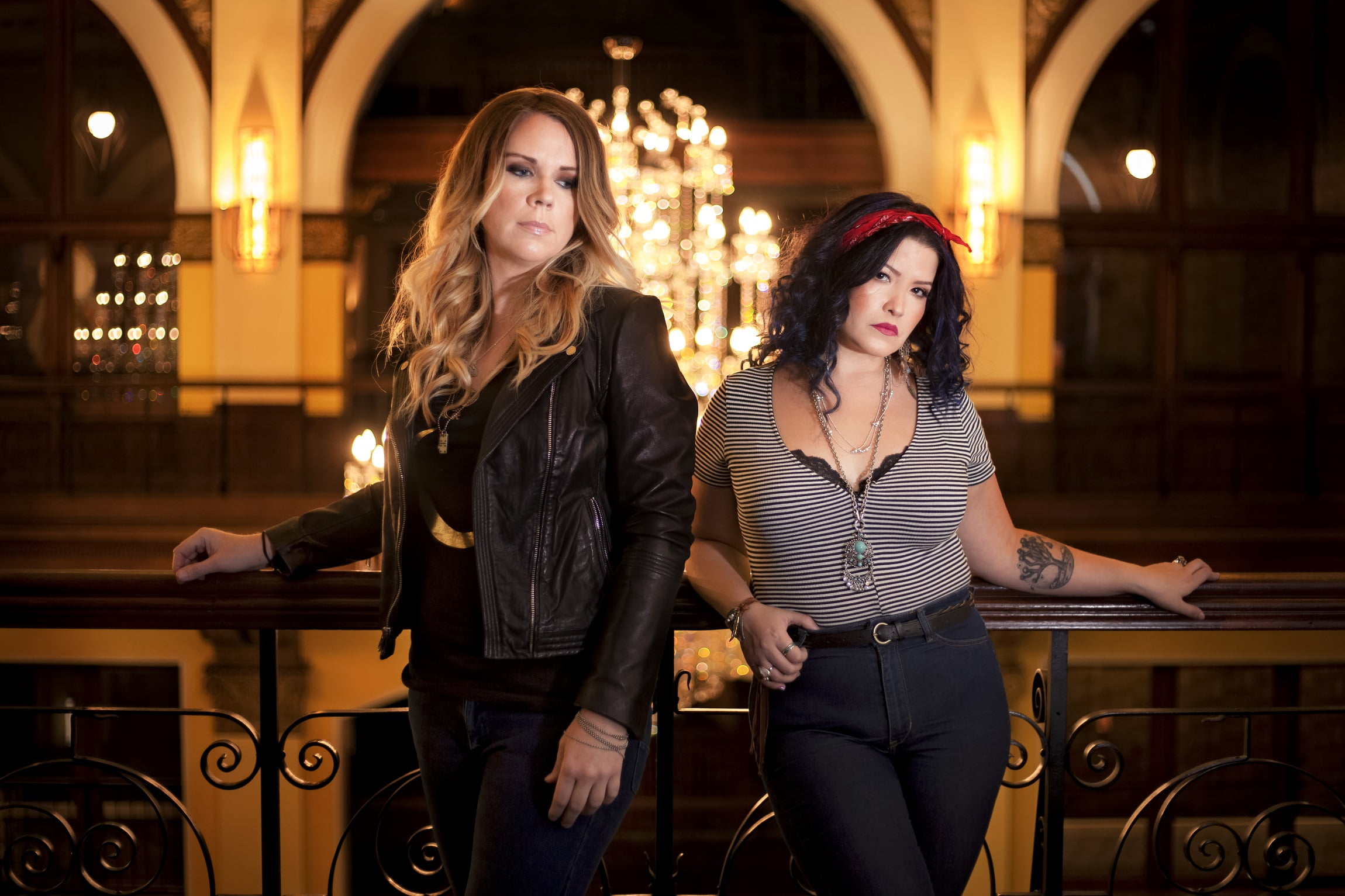
Artist: Granville Automatic
Hometown: Nashville, Tennessee
Latest album: Radio Hymns
Personal nicknames (or rejected band names): We really thought we were going to call the band The Sound of Yesterday.

How often do you hide behind a character in a song or use “you” when it’s actually “me”?

Vanessa Olivarez: The fun thing about Granville is that most times, we aren’t writing about ourselves. It’s fun to dive into someone else’s human experience and imagine that it’s your own. I think as writers, we get tired of scribing the same love song over and over again in a different way … so sometimes it’s a good brain workout to shift the focus onto another topic. I’ve written from the perspective of mothers, soldiers, pieces of furniture, ghosts, lovers, and the like, and I feel like it gives me a greater appreciation for those stories I’m trying to honor. However, if you knew my life and its ins and outs, you would definitely hear all of the hidden personal feelings and thoughts within those characters. I guess you have to read between the lines!

What rituals do you have, either in the studio or before a show?

VO: My rituals are sort of non-rituals. More just habitual peculiarities, like my weird motorboat warm ups, and long looping sirens, and going to the car to run (and visualize) my first song, and never eating before I sing. I also drink a ton of room temperature water and gargle it to the tune of whatever to kick-start my vox. I’m actually a very nervous performer, so I tend to get relatively quiet before I jump on stage for fear of working myself up too much. Once I get through the first song, it’s usually all bets off. I often channel the nerves into saying whatever comes into my head at any given moment … which can be either a blast or really horrifying depending on who you ask. Oh. And always lipstick on stage!!

What was the first moment that you knew you wanted to be a musician?

VO: I would say the moment I knew I wanted to be a musician was the moment I figured out I could sing. I used to give performances for my Grandma in her living room from the time I was about 2 years old. I’d sing to Rainbow Brite, or blast my favorite record She’s So Unusual, and my Grandma always let me indulge in whatever ridiculous routine I’d put together for her. I’ve always had an affinity for music, the stage, and an audience. I don’t think that kind of thing is something you acquire, but something you’re born with. As a performer, the love you have for making people laugh, or cry, or just feel something never really disappears. That feeling is addictive.

What other art forms — literature, film, dance, painting, etc — inform your music?

Elizabeth Elkins: People who create in other mediums fascinate me. I like hanging around writers, painters, architects, etc. We’re all just trying to tell stories in different ways. Since we often write about history, there are plenty of history books that were the spark for these songs. I often think I’m just a very frustrated novelist.

If you had to write a mission statement for your career, what would it be?

EE: We really hope these songs are a gateway drug for people to remember stories from the past. I’ve always said this band is going to be a slow burn, but, in the end, I know we will have a collection of albums that truly have something to say.


Photo credit: Holly J Haroz

BGS 5+5: The Last Tycoon

Artist: The Last Tycoon
Hometown: East Atlanta, Georgia
Latest album: Oppenheimer Blues
Personal nicknames (or rejected band names): Johnny G’s Atomic Rock ‘n Roll Orchestra, Johnny Arkansas, John Gladwin

What’s your favorite memory from being on stage?

One night I was playing in Stockholm, Sweden, at a club in the oldest part of the city called Gamla Stan. The building was about 500 years old and the stage was in a little alcove with a few tunnels. It was winter and snowing heavily.

In the middle of the set an old Swedish guy in an overcoat was hanging around an alcove on the side of the stage. We were playing a blues tune and he jumped on stage and produced a harmonica and started to play a solo. We laughed and rolled along with it as he blew over a few choruses. The song ended, and the crowd erupted in applause and laughter. He said something to me in Swedish I didn’t understand, jumped off the stage and walked out into the cold Stockholm night.

I assumed that he was a friend of one of the other bands, but after the gig we realized neither the bands nor crowd had a clue who the man was. He just walked through the club with a harmonica in the right key, had a moment in the spotlight and left never to be heard from again. It was incredible. Often the best parts of gigs are the parts you don’t plan.

What other art forms — literature, film, dance, painting, etc — inform your music?

As a songwriter, I look for inspiration in all types of art forms – not just music. Anything can spark an idea for a song if you know where to look. The new album, Oppenheimer Blues, started while I was in New Mexico working on a TV pilot for CBS, and films became a constant frame of reference during the writing and recording of the album. I watch a film nearly every day. When I’m writing, sometimes a character can start off in a song and end up in a screenplay I’m writing – or vice versa. There isn’t much difference between the rhythm of a song and the rhythm of a script.

Since this record was born on a New Mexico film set, and this is a 5+5 piece, here are five films that inspired Oppenheimer Blues:

Hiroshima Mon Amour
Dr. Strangelove: Or How I Learned to Stop Worrying and Love the Bomb
Ace in the Hole
Night of the Hunter
Paris, Texas

What’s the toughest time you ever had writing a song?

There is craft in songwriting, but craft only gets you so far. Sometimes a song just takes time and you must give it space to grow. If a song doesn’t work, I don’t beat my head against the wall trying to make it. Instead, I try to find an oblique approach to coax it out of the ground.

The song on Oppenheimer Blues that was the trickiest to finish was “Lincoln County Oracle.” The song was inspired by the Oracle at Delphi from Greek history. A young woman would be selected to live in a cave, dance herself into a reverie and decide things of cultural, spiritual and political importance. I thought it would be great to put her into a 21st century trailer park in New Mexico. I had the tune but couldn’t get the verses to work, so I decided to write a screenplay for a short film based around the character. It took a little while but after finishing the script I was able to go back and complete the song.

Which elements of nature do you spend the most time with and how do those impact your work?

Oppenheimer Blues sprouted out of the New Mexico desert. I spend a lot of time camping and hiking out in the desert. Sitting under the stars on an ocean of dirt is a great place to do some writing. There’s a reason painters like Georgia O’Keeffe have been coming to the New Mexican desert for a century or more – there’s simply no place like it.

I often ran the trails on Sandia Mountain in Albuquerque and in the Jemez Mountains outside of Los Alamos while writing the record. We shot the music videos for the album on the Rio Grande Gorge in Taos, the Galisteo Basin outside Santa Fe and the White Sands National Monument in Alamogordo. Each place has its own unique look. It’s hard to explain to friends from the East Coast how compelling dirt and rocks can be to look at. But if you hang around long enough in the desert, you begin to notice that none of it looks alike and every sunset is more incredible than the last.

How often do you hide behind a character in a song or use “you” when it’s actually “me”?

I don’t mind having characters in my songs. If every song was autobiographical, then we would only have songs about writing songs (which I acknowledge is a popular subgenre in some corners of Nashville). Songs can have elements of yourself as well as characters that give you freedom to explore scenarios you could never in real life.

The opening track on Oppenheimer Blues is a song called “Where Shadows Grow.” It’s written from the perspective of a murderer who is driving across the desert. A friend of mine wanted a title song for a film he was making, so I gladly put on the black hat for that track. Unfortunately, the movie never got finished but I got a great song out of it. And honestly, it’s just more fun playing the bad guy sometimes.


Photo credit: Melanie Rosenthal

BGS 5+5: Kari Arnett

Artist: Kari Arnett
Hometown: Minneapolis, Minnesota
Latest Album: When The Dust Settles
Personal nicknames: Kari Anne

Which artist has influenced you the most … and how?

It’s hard to answer with only one artist but some inspiring artists I’ve been listening to are: Caroline Spence, Lori McKenna, First Aid Kit, Margo Price, Neil Young, and one artist I always go back to is Tom Petty. All the good vibes right there.

Which elements of nature do you spend the most time with and how do those impact your work?

When I’m not writing or touring, I am usually out near a lake somewhere. The flow of the water is like the ebb and flow of life… it’s a good meditative area to sit and reflect on what’s to come or what might have been.

What rituals do you have, either in the studio or before a show?

Usually, I have to spend some quiet time alone before a show to ground myself for what’s to about to happen. Silence can be a powerful tool. Also making sure I’m well-hydrated is important.

What was the first moment that you knew you wanted to be a musician?

I think it was when I was little and I would watch shows that had live music, like Austin City Limits. It was inspiring to watch and growing up in a musical household, I had a feeling I would always have something to do with music.

What other art forms — literature, film, dance, painting, etc — inform your music?

I read a lot of poetry and that imagery that I get, can set the tone for song, as well as movie scores–anything that moves you in that creative way can get thoughts moving to inspire the next song.

https://open.spotify.com/user/124052670/playlist/1H7R5qYsX0rvCwaxtmeGV4?si=YoMdyOeoS9mi0Q8kZf2c0Q

BGS 5+5: Hawks & Doves

Artist: Kasey Anderson, of Hawks & Doves
Hometown: Portland, OR
Latest album: From a White Hotel 

Which artist has influenced you the most … and how?

In the course of writing From a White Hotel, the writer whose work I spent the most time with was Eve Ewing. Her book, Electric Arches, came with me every day to the studio.

What’s your favorite memory from being on stage?

In 2012, just before we went out on tour with Counting Crows, we spent about a week working as the backing band for Tim Rogers, who is one of my favorite songwriters. Pretending to be You Am I for a week was as much fun as I’ve ever had on stage.

What other art forms — literature, film, dance, painting, etc — inform your music?

It’s all more or less connected to me. I mentioned Eve Ewing, whose poetry was a huge influence on me not necessarily because I wanted to borrow anything from her stylistically, but just in the sense that seeing someone do work of that quality is inspiring. I feel that way whether it’s looking at something Basquiat or Emory Douglas did or listening to Amanda Shires or Lydia Loveless or Mavis Staples. I walked out of Boots Riley’s film, Sorry to Bother You, with that same feeling. I get that feeling eating Sean Brock or Gabriel Rucker’s food. If you have to go out of your way to find inspiration, your eyes aren’t open very wide.

What rituals do you have, either in the studio or before a show?

It’s not a ritual per se but never underestimate the restorative power of a good lunch when making a record. That hour or so is absolutely sacred to me, I learned that early on from Eric Ambel.

Since food and music go so well together, what is your dream pairing of a meal and a musician?

Dinner with Boots Riley at Pizzaiolo in Oakland. The specific meal wouldn’t matter much as I’d probably be so nervous to be anywhere near Boots I doubt I’d be able to keep anything down.


Photo credit: Jennie Baker

BGS 5+5: Liam Russell

Artist: Liam Russell
Hometown: Nashville, Tennessee
Latest album: No Contest
Personal nicknames (or rejected band names): Liam Titcomb

Which artist has influenced you the most … and how?

Up until a few years ago, it would have been The Beatles. I learned everything about popular music from The Beatles. Chord progressions, melody, harmony, rhythm, lyrics, attitude, production. … I was pretty obsessive in my teen years about them and I honestly think it improved me greatly as a musician. I learned to play guitar by learning all their songs. I completely learned how to sing harmonies by deciding one day to only sing along to them in harmony and because I knew the songs so intimately, it worked!

A few years ago, I started to dig deeper into lyrics and so I’m returning to other things I’ve loved over the years and going over the lyrics with more of a fine-tooth comb. Lucinda Williams is a really big one for me these days but also Patty Griffin and John Prine, etc. It’s a long list.

What’s your favorite memory from being on stage?

I got to take part in a 70th birthday tribute to Joni Mitchell in Toronto for the Luminato festival. They got Joni’s band to be the house band, Brian Blade was the musical director and then there was a handful of singers. Myself, Chaka Khan, Kathleen Edwards, Rufus Wainwright, Glen Hansard, Lizz Wright, etc… Joni decided to come to the event and had said she wasn’t sure if she would sing but then I got an email that said: “Joni’s been singing at every rehearsal and has decided to sing a couple songs.”

That alone was exciting enough for me because I’d never seen her live before and now I was gonna be really really up close and personal. The whole thing was like a dream. I had to pinch myself even during rehearsal with those incredible musicians because Brian Blade is probably my most favorite drummer of all time and they were all just so damn good.

Then I met Joni before one of the shows (we did two nights) and she was delightful and had watched my performance and was giving me wardrobe tips for the second night because of the lights for my songs. It was wild. But all this to say that my favorite memory from being on stage is singing “Woodstock” with Joni and that band as the grand finale. That was just unbelievable and so special. I’ll never forget it. She killed it and she was so supportive of me too. What a woman.

What was the first moment that you knew you wanted to be a musician?

I was 7 years old at an after-party for a big fundraiser show that was for one of my dad’s best friends, Bob Carpenter. There were all kinds of folk music big shots there and people were clumped into groups of four to eight, all having little jams. My ah-ha moment happened when I saw Soozi Schlanger playing Cajun songs. She was playing the fiddle and singing with all her heart and it blew my mind. I totally had the thought, “That’s what I wanna do.” And I did! I convinced my God-mum to rent me a violin, got my parents to beg Soozi to teach me and it all started there, playing second fiddle with Soozi and learning to sing in French phonetically.

What’s the toughest time you ever had writing a song?

“To Be a Man” is a song off this new EP inspired by the #MeToo movement and it was definitely the hardest song I’ve ever written. I wrote it with my friend Robby Hecht (another great Nashville singer-songwriter). We had gotten together to write a song and started talking about the movement and what it meant to us as self-identifying “good guys” and whether we even really were good guys and it just spiraled into this heavy conversation about what it is to be a man and we thought “we should write about this” but neither of us realized how hard it was going to be.

It took us about six get-togethers to get it done and it was a slog every time. We labored over every line and made sure to run it all past my wife Zoe Sky Jordan to make sure nothing would be misconstrued. It was a serious challenge but one I’m very proud of. Frankly, after thousands of years of men taking advantage of women in one way or another and them suffering from it, it had better be hard and a little painful for me to write a song about it. Men deserve to feel a little discomfort for a change.

How often do you hide behind a character in a song or use “you” when it’s actually “me”?

I used to this a lot. I think it’s very common to do this as a young writer. It’s hard to confront your true self, let alone put it on display for everyone else in a song. I mean, how often do we even do that in conversations? The older I get, the more I value writers like Lucinda Williams who just lays everything out for all to see. Every ugly bump, every beautiful twist and turn. To me, the most fascinating writing is the honest and vulnerable writing because that’s what we all are! We’re vulnerable and we have warts and we’re just trying to figure it out and not fuck it up. I endeavor to never make this mistake in my writing again and really hope I only get more honest as time goes on.


Photo credit: Blu Sanders

BGS 5+5: Cedric Burnside

Which artist has influenced you the most … and how?

The artist that influenced me the most: Well, of course my “Big Daddy” (R.L. Burnside). He just had a great stage presence. And even though people loved his music, he played with so much passion that most of the time I don’t think he noticed! One of my favorite memories on stage was when my Big Daddy didn’t know there was a smoke machine on stage, so he stopped in the middle of a song and was about to run off stage, lol! That was a funny moment, lol!

Which elements of nature do you spend the most time with and how do those impact your work?

Earth is my favorite element. I love nature, I love sitting on my porch listening to the birds, walking in the woods. It helps me think, it helps me be creative. A few rituals I like to do – I like to play my guitar a little and I like to meditate and pray before I go on stage.

What other art forms — literature, film, dance, painting, etc — inform your music?

I would say one part that helps me would be dancing, because when I see people dance to my music, it makes me want to write more. My mission would be to put as much love as I can into my music and spread it around the world.

What’s the toughest time you ever had writing a song?

The toughest time I had writing a song was when my brother died. Normally I still could, but when he left me, it was just hard for me. Years ago, I hid behind a character when I wrote. But now I just try to stay true to myself, and tell it like it is.

Since food and music go so well together, what is your dream pairing of a meal and a musician?

Music and food! I would say eating a plate of pinto beans, and listening to a little of my Big Daddy and a little Fred McDowell! I knew I wanted to be a musician at a young age, since about 6 or 7 years old, from seeing my Big Daddy, my Daddy and uncles at house parties. That’s when I knew I wanted to play music for the rest of my life.


Photo Credit: Abraham Rowe

BGS 5+5: Justin Hiltner & Jon Weisberger

Editor’s Note: Our writers at the Bluegrass Situation have many talents — and for regular contributors Justin Hiltner (pictured right) and Jon Weisberger, their original music is worth discovering by our BGS readers.

Artist name: Justin Hiltner & Jon Weisberger
Hometown: Nashville, Tennessee
Latest album: Watch It Burn
Personal nicknames (or rejected band names): “J-Dubs” (Jon); “HUSTIB” (Justin).

Which artist has influenced you the most … and how?

Jon: It would have to be Merle Haggard. His music and his career exemplify so many things that first attracted me to country and bluegrass music. For instance, he worked as a sideman before going out on his own, in a classic sort of apprenticeship that I really appreciate; he wrote about a lot of different things in a lot of different ways, with his personal story being just one element in his songwriting; and to me, he really found a sweet spot between acknowledging and taking part in tradition on the one hand, and having his own, unique voice on the other.

Justin: It’s difficult to pinpoint just one, especially given that bluegrass is predicated upon versatility and wearing all of the creative and musical hats all at once. If I were to hazard an answer, based on where I stand at this point in time, musically and otherwise, it would have multiple parts. Earl Scruggs, first and foremost, really and truly is my most important banjo inspiration. “Little Darlin’ Pal of Mine” off of At Carnegie Hall! was undoubtedly my OH-SHIT-EARL-SCRUGGS moment. Darrell Scott would probably fill the most influential songwriter slot (and getting to sing harmony with Tim O’Brien on Watch it Burn’s “If I Were a Praying Man” let me live my Darrell Scott dreams, if just for one song!) And if I were to pick an influential vocalist, it would have to be Lee Ann Womack. Now I ought to stop while this answer is still sufficiently succinct.

What’s the toughest time you ever had writing a song?

Jon: There are several different kinds of tough! I remember that when Jeremy Garrett and I first wrote “Where The Rivers Run Cold,” he got some feedback about the song that caused us to spend some time trying to write a different chorus, and that was tough; eventually, the band adopted it as it was originally written, which turned out pretty well. And he and Josh Shilling (Mountain Heart) and I recently revisited one we kind of thought we had finished back in late 2014, but that none of us was really satisfied with; that one wound up with a different time signature and a different chorus that we love, but working out what to change and what to keep was a real job.

Justin: On my own, I tend to write hyper-personal, intensely specific songs. I often find myself way too close to a song’s hook or core idea, so close that I can’t make progress or finesse the writing at all. The beauty in having a co-writer like Jon nearby, someone that I’ve worked with for so long, is that I can trust him to take one of those personal song ideas and flesh it out in a way that cares for the premise, but insures that it’s relatable to a broader audience. This is exactly how we wrote “This Isn’t How I Wanted to Come Home” together, a song about my grandma passing away. Without a steady co-writing hand like Jon’s, so many difficult songs sit languishing, unfinished, in my iPhone notes!

If you had to write a mission statement for your career, what would it be?

Jon: Super-simple: write and play music that means something to me, and do so well enough that it means something to others, too — enough that I’m able to, as Melvin Goins used to say, put a biscuit on the table.

Justin: That no one ever feel excluded from these roots genres that we love because of who they are. Full stop.

Which elements of nature do you spend the most time with and how do those impact your work?

Jon: I guess that would be fauna — specifically, cats. My wife and I have two, and they affect my work every time I write with someone at our house! Matisse, the older of the two, appears in the “at the writing table” photo used in Watch It Burn’s graphic design, and in other promotional photos, too, illustrating the exact nature of that impact — entertainment and/or distraction.

Justin: I should hope at this point that it’s a well-known fact that I’m an avid birdwatcher and amateur naturalist. I’ve got 353 species of birds on my life list (an ongoing list of every species I’ve ever successfully identified in-field). I learned very early in my time as a performer that I ought to bring my binoculars wherever I go on tour. I write a lot of songs about birds, but so many aspects of nature filter into my writing — as in “Lady’s Slippers,” from the record, a song indirectly about a gorgeous, rare native orchid. “Winnsboro Blue” was written for a quarry near property my uncle owns in upstate South Carolina, where we go birding every time I’m in the area. It comes through whether you can always trace the connection or not!

How often do you hide behind a character in a song or use “you” when it’s actually “me”?

Jon: I’ve never really thought about it in that way, I guess, in part because I’ve pretty much always been a side musician and singer who took up songwriting more out of need than out of the urge for self-expression that I think motivates a lot of singers and writers, at least when they’re starting out. Too, bluegrass and country are fields in which distance between singer/writer and the character written or sung is no less legitimate than complete identification. Perhaps this more craft-oriented approach has helped as a co-writer; I’m really accustomed to looking for how I can relate to the germ of a song idea almost in the way a listener, rather than a writer would. As a result, I do think there’s a part of me in every song I’ve written, even though they’re almost all co-writes — in fact, that’s part of what makes co-writing so enjoyably mysterious or mysteriously enjoyable.

Justin: I used to hide myself and my identity in my songs not by clever or deflective writing, but by literally distancing myself from my songs. If I had written something with prominent male pronouns I would pitch the song to women, operating under the assumption that I could not/would not ever be the one singing those songs. For so long I felt that my queerness need not be present in my writing and my art, because, “Straight people aren’t flaunting their identities in their music!” Turns out 99.9 percent of all music ever made flaunts heteronormativity pretty unabashedly, so I consciously broke the habit of filtering my own perspective out of my songs. It was a pivotal point for me, personally and professionally, and I’ll never go back to hiding behind songwriting rhetoric choices ever again!


Photo credit: Bethany Carson, Carson Photoworks

BGS 5+5: New Reveille

Artist: New Reveille
Hometown: Raleigh, North Carolina
Latest album: The Keep
Personal nicknames (or rejected band names): “We never really discussed names, New Reveille is a name I gave the project before it became a band.” – Daniel Cook

What’s your favorite memory from being on stage?

I’d say my favorite New Reveille show was our first, even though I’d slipped on the ice and gotten a concussion about 30 minutes earlier. My wife said it sounded like a watermelon breaking on the ground. I said, “Well maybe it’ll make me better at banjo.” It didn’t. Anyway, one of the main reasons that show stands out was that it was our singer Amy Kamm’s debut performance with a band. We were unsure of how she would like to be in front of a crowd since she had never sung outside of church. But she was an absolute natural. Stunning. The harmonies really got people’s attention and Autumn, George and Kaitlin lit it up as well.

The show was at this cool little venue called Deep South the Bar in our hometown of Raleigh, North Carolina. We had a sold-out crowd and people were singing along with some of our songs, which was really surprising because it was our first show. It was a great feeling for all of us. We had our friends Ryan Jernigan on bass, Dan Blaisdell on pedal steel, and Max Palmer on drums joining us. Eight people squeezed onto a tiny stage. Autumn’s violin bow kept almost taking my eye out. That still happens all the time. I need to stay out of her way when she gets into it.

What other art forms — literature, film, dance, painting, etc. — inform your music?

I’ve been a video editor by trade for about 15 years. I direct sometimes as well. Outside of music, editing is still a passion of mine. It was through music editing that I got into non-linear video editing in college. I realized that it was such a powerful art form. Editors get little recognition, working behind the scenes, but they really have a lot of control over how a film comes together. It’s pretty amazing—the way you’re able to bend and stretch time, find and build moments of tension, play with nuances to create emotional subtext, and sometimes even create an alternate sense of reality—and it never gets old.

It’s not unlike songwriting for me, in that it’s a constant, no-holds-barred experiment. I never really know where I’ll end up when I first sit down with a piece. I think Walter Murch—editor of Apocalypse Now, among many other films—said it best: “Editing is not so much a putting together as it is a discovery of path.” The same applies to songwriting, for me at least. There are time-tested structures and rules. But it’s the discovery of path that excites me and makes me want to keep going. I sometimes say that if I knew what I was doing, I wouldn’t be doing it.

What was the first moment that you knew you wanted to be a musician?

When I was about 14, an encounter with a classical guitarist named Julio interrupted my plans to dominate the NBA. I was down the street playing basketball at a friend’s house when this guy came out and started fingerpicking on the porch. I recognized the tune. It was Nirvana’s “Smells Like Teen Spirit,” but an interesting finger-style interpretation played on a nylon string guitar. I stopped playing mid-game and walked over to him. I asked him some questions, but he didn’t answer. He just smiled and kept playing. I went home that night and said, “Hey Mom, I wanna play guitar.”

My mom told me that my sister had this old toy guitar up the attic. I immediately went up there, brought it down, and started trying to pick out melodies. I remember that I accidentally figured out a single-note version of Tom Petty’s “Free Fallin’” pretty quick. That got me excited. So, being the cart-before-the-horse type that I am, I went and built a “studio” in my Dad’s shed. I made a drum set out of Tupperware, assembled some milk carton maracas, and rounded up some other neighborhood kids who reluctantly agreed to join my new band, which I called “Burnin Snowmen.”

I made an album cover for our cassette tape using construction paper. They disapproved. The band split a few days later, realizing lessons were necessary. But Mom soon got me a good acoustic guitar and I learned a bunch of Lynyrd Skynyrd songs from my uncles who played guitar, which is crazy because Lynyrd Skynyrd are now our labelmates. Funny how things come full circle.

Since food and music go so well together, what is your dream pairing of a meal and a musician?

This is a very interesting question because, as much as I like to eat, and as much as I love music, I can’t recall a single time that I’ve ever watched a show, or even listened intently to a song, while eating. I’ve never even thought about that. Chewing makes noise, so obviously I’m not going to chew while I’m trying to hear a song. I’ll even pull my beanie off my ears to listen, even when the music is really loud and it’s cold outside. I also hate it when people talk over music. There is no such thing as background music as far as I’m concerned.

But now you have me thinking about it. Maybe I should give it a try. Eating and listening. Seems mutually exclusive to me. I really like beef brisket and you’ve caught me at a time when I’m very hungry. And I was just listening to Sylvan Esso. But somehow, I don’t think of brisket when I think of Sylvan Esso. I could eat a brisket at a bluegrass jam. Or something with grease dripping off. But I don’t have access to a brisket or bluegrass band right now so maybe I’ll crank up Foo Fighters and eat a sausage dog.

But next time we go back to Nashville, Amy and George and I will almost certainly go back to Hattie B’s Hot Chicken. Autumn and Kaitlin don’t eat meat. I’m not sure what kind of music I’d eat beans or salad to. You’ve stumped me here, and quite frankly made me hungrier.

How often do you hide behind a character in a song or use “you” when it’s actually “me”?

Oh, I do this all the time. I’d even go as far as to say that when I write in second-person, I’m talking to myself about half the time. It’s usually subconscious, though. I’d say there’s even a little bit of that in “Hounds,” talking about karma or getting what you deserve. So, it’s no surprise that when Amy sings it, I sometimes feel like the antagonist in the song. It’s pretty haunting. But I guess it’s true that writers will often hide their own demons in other characters, even unintentionally. Or sometimes you’re literally just talking to yourself on the page.

For example, “Abide” was sort of a rally cry to myself at the time: “Brace that sand upon your shore, ‘cause hard days are coming Lord.” A similar process happens sometimes when I combine things about myself with things I know about other people in my life to create fictional characters. Again, it’s not intentional. It just happens that way. And I usually only realize it after the fact.

“Miracle” is one that was inspired partially by several people I’d met who had lost children or siblings prematurely, and partially by my own contemplating life and death and trying to find the meaning of it all during a hard time. Where the song finally landed through that “discovery of path” was, in the end it’s all about the love we give while we’re here and the love we leave behind. And when Amy sings that song, it’s special for a lot of reasons that are personal for me as well as her. But yeah, that’s another one where I’m hidden in there, although maybe not as a “you.”


Photo by Jeremy Danger