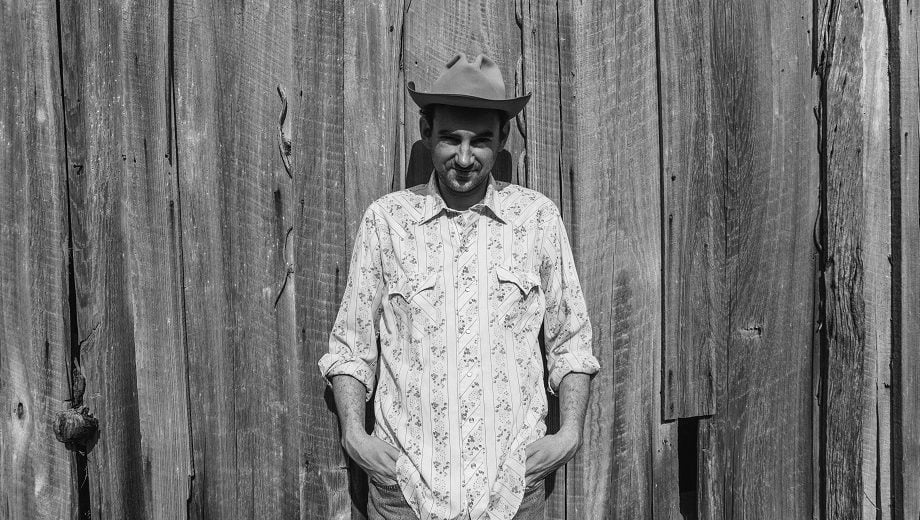
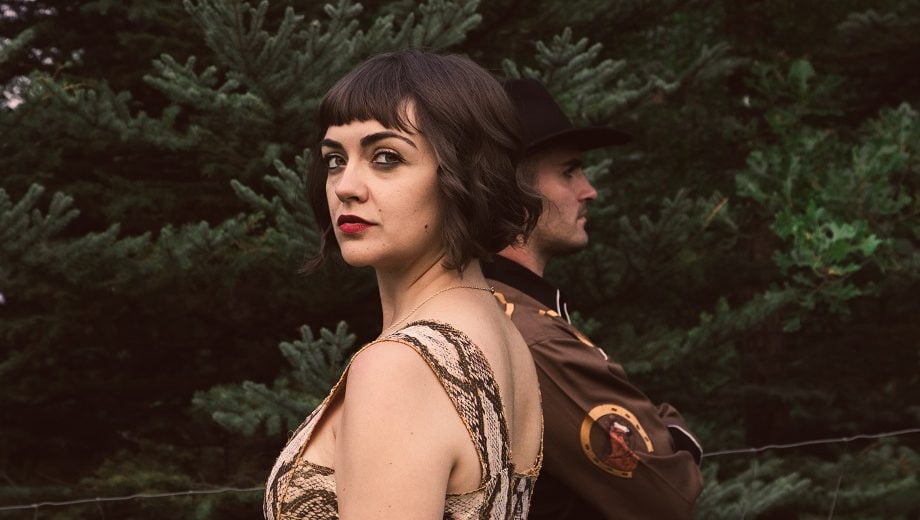
LISTEN: Melody Guy, “Dry the Rivers”

Artist: Melody Guy
Hometown: Nashville, Tennessee
Song: “Dry the Rivers”
Album: Dry the Rivers
Release Date: January 25, 2019

In Their Words: “In my first apartment in Nashville, I went through a very depressing time in my life and had never lived anywhere with cockroaches. Eek! I woke up in the morning and stared out into the grey cold hallway. I couldn’t have been lower. The first line is ‘I’ve got monsters creepin’ in, I hear voices speaking sin.’ The monsters were emotional as well as the physical ones, the dark thoughts of: ‘How did I get there? There’s no way out.’ I decided that day I was not going down like this. I will be happy, I will continue, I will not let this winter emotion or season destroy me. My daughter Delaney Smith is singing harmony on this song as well, and when her harmonies come in, my heart starts to glow with happiness.” — Melody Guy


Photo credit: Cathy Partridge

LISTEN: Adam Klein, “Low Flyin’ Planes”

Artist: Adam Klein
Hometown: Atlanta via Athens, Georgia
Song: “Low Flyin’ Planes”
Album: Low Flyin’ Planes
Release Date: March 1, 2019
Label: Cowboy Angel Music

In Their Words: “This is the title track and centerpiece of the record, and the most sparse song in terms of instrumentation. To me, it cuts to the core of what this album is about. The expression of someone still searching, on a journey toward a sense of fulfillment. The narrator is barely lifting off, nearly scraping the ground, one misstep away from some kind of rock bottom. Then again, maybe they will rise — who knows? It may be a song about passivity, not exercising agency in one’s own life, and enduring what can be called the poverty of vulnerability. For those to whom these notions resonate, may we practice peace, acceptance, and compassion, not only to others, but also to ourselves.” — Adam Klein


Photo credit: Jeff Shipman

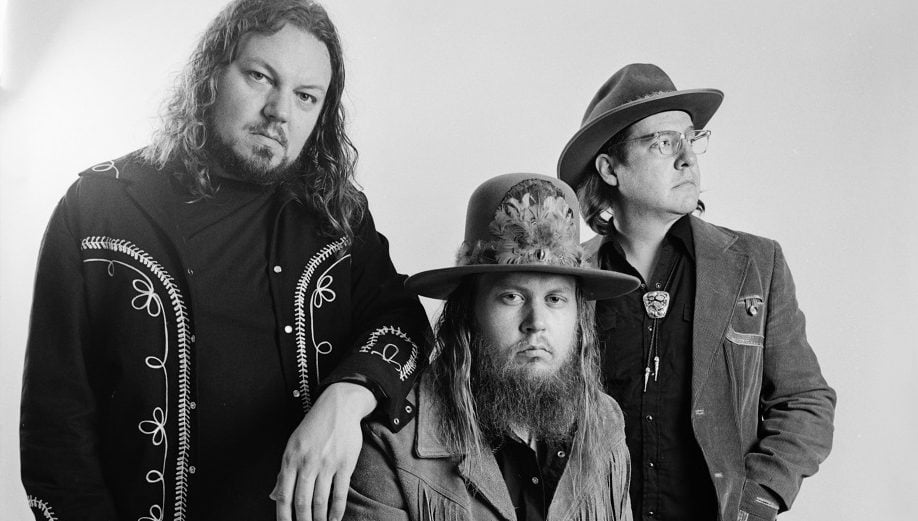
BGS 5+5: The Steel Woods

Artist: Wes Bayliss of The Steel Woods
Hometown: Woodland, Alabama
Latest Album: Old News

Which artist has influenced you the most … and how?

My grandpa is one of my biggest musical influences. I grew up in a very musical family. Although most of them had a hand in teaching me about music, the most influential as far as style goes was Grandpa. I remember all us kids would be trying to watch TV when he would grab a guitar and start picking and pretty soon we were gathered around trying to pick along with him.

What’s your favorite memory from being on stage?

One of my favorite memories of being on stage would have to be the first time we played the Opry. It was not at the very top of my bucket list so I couldn’t have anticipated the feeling of standing in the circle. There are so many people that have dreamed of being on that stage all of their life and never got the chance. Realizing that in the moment was one of the most humbling feelings in the world.

What was the first moment that you knew you wanted to be a musician?

My family had a southern gospel band when I was a kid so we were on the road a lot. One day when I was eight, my uncle bought me a harmonica at Cracker Barrel. I’m sure he immediately regretted that when he realized I was gonna blow it until my lungs gave out and we were all stuck on a bus together for hours at a time. He finally told me if I was gonna be making noise I would have to start making it sound good so I did just that. With his help I learned a few cross harp licks and joined the band within weeks. I knew then that music was gonna be my thing.

What rituals do you have, either in the studio or before a show?

We don’t do much as far as pre-show rituals other than the one most important thing for any musician to do before playing. Tune your instrument! I still fail to do that until I get on stage from time to time.

Since food and music go so well together, what is your dream pairing of a meal and a musician?

If I understand this question correctly I would like to pair country fried steak, double hash brown casserole, fried okra and a sweet tea, with myself! I would follow that with a hearty helping of blackberry cobbler and of course, I would have to follow that with a day of fasting.


Photo credit: Alyssa Gafkjen

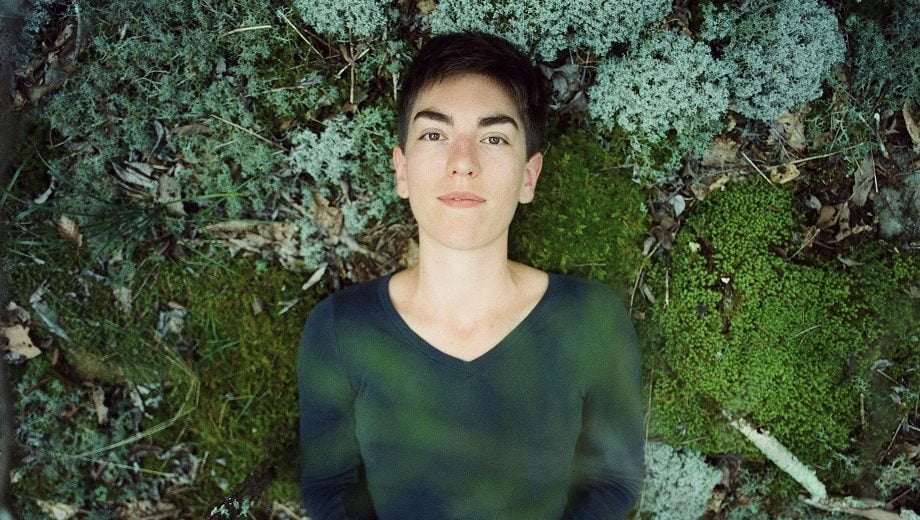
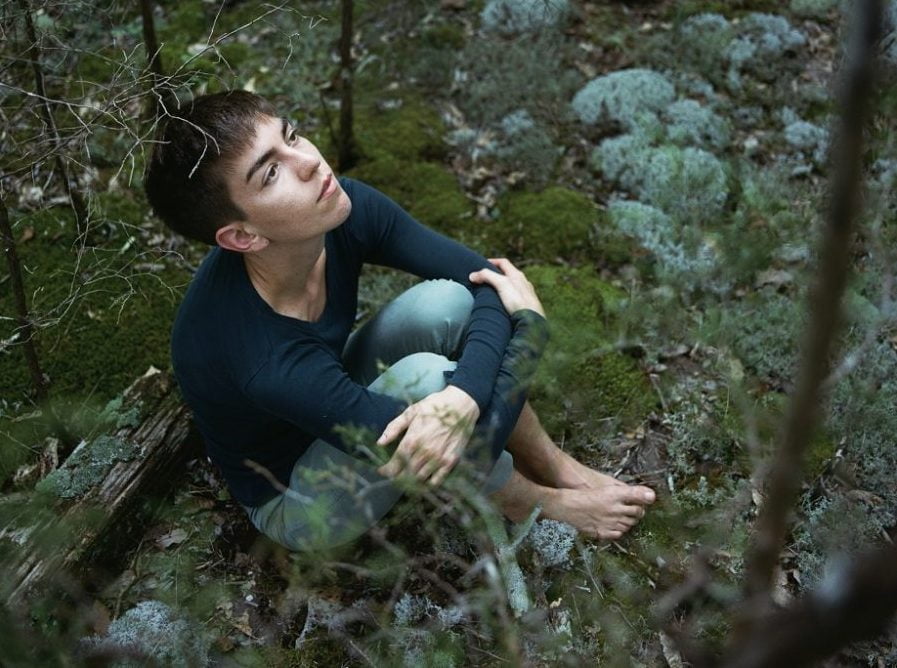
STREAM: Maya de Vitry, ‘Adaptations’

Beginning in 2016, The Stray Birds’ fiddler and vocalist Maya de Vitry found herself writing songs that didn’t fit with the band’s aesthetic. At the time, the prospect felt confusing, even a touch frightening. “It was really scary because I didn’t know what that meant,” she says over the phone from Pennsylvania. “The band was all consuming.” De Vitry had been performing with the The Stray Birds for nearly a decade, releasing — at the time — four albums and an EP. What were these songs, if not for them?

As it turns out, her solo debut Adaptations moves away from the sound — and structures — that defined her folk and traditional inclinations with The Stray Birds. Producer Dan Knobler and a backing rock band layer each song with flourishes of electric guitar phrasing and soft brushes on the drum, all of which open the door for de Vitry’s strikingly deep and at times stately voice to infiltrate new spaces. (Stream Adaptations at the end of this story.)

Writing for herself rather than a group, de Vitry’s lyrics lean towards inclusivity, humanity, and other unitive concepts. There are also themes of love, but not exactly the romantic kind. On “The Key” de Vitry writes about the necessity of friendship at a time when romance felt burdensome (she and The Stray Birds’ Oliver Craven had broken up following the release of the band’s 2016 album Magic Fire). Whatever misgivings de Vitry had about walking her own path, Adaptations showcases a remarkable voice set to scale new heights. As she sings on “Wilderness”: “It’s time to leave the trail behind.”

BGS: You’ve said that these songs emerged from a period of self-exile. Can you tell me a bit about that time?

de Vitry: When I first started songwriting when I was younger, it felt extremely vulnerable and scary to me. Around 2010, when I started playing with Oliver and Charlie and we made The Stray Birds, that was a really natural place for me to put my energy at the time.

You had the protection of the group.

Yeah, and I had the camaraderie of the group. I’m trying to figure out how I want to navigate telling the story because it’s hard. The group broke up, and I’m still processing how much I want to share.

So what was it like to write outside the bounds of the group?

In a way, making this record was revelatory to me. Writing these songs, being alone, insisting on space, and insisting on stopping the motion and commotion of being on the road with that band, that’s what I was craving. If you just keep moving, you think that’s the way you’re going to survive, that maybe things will change and you’ll find yourself in the right place. But writing the record and that self-exile took realizing that you can’t just keep moving. Sometimes you have to stop and look inward.

The exile was… I felt like I was doing something wrong by stepping away and doing something creative outside the band. Ultimately, it was a cocoon that needed to be exited. Now I feel really bright and strong — about the record and the place that I’ve come to. At the time, I felt I needed to escape. I was going to a land that was really unknown, which was myself.

There’s a sense of serendipity surrounding this project: You were supposed to go to Nashville and instead retreated to your grandparents’ cabin; then you were supposed to make a demo and instead recorded half of the album. What’s the most important takeaway you’ve learned as a result?

What I’m continuing to learn is that our bodies are at least a few steps ahead of where our brains are. Our instincts and our gut feelings — the way that we’re sometimes physically pulled towards things — you can’t explain it. It sounds kind of out there, but I think I’ve learned to trust intuition a little more. That’s important to me in thinking about being. Paying attention to that.

It gets distilled into that opening line on “Wilderness”: “It’s time to leave the trail behind.”

As much as society or careers or trajectories—the dreams that we have for achievement—might be linear, I don’t think we can get away from the fact that we are actually a part of nature, so therefore we are sort of beholden to cycles, and we might have cycles of rest.


You share beautiful and necessary messages on “Anybody’s Friend,” “Slow Down,” “The Key,” etc. Why did these in particular register for you?  

“The Key” I wrote while I was up at the cabin, for that first writing retreat session, and that one was really personal. It was a love song to a few friends of mine. I was feeling really thankful for friendship. It’s a heralded kind of love, but I was forgetting how important it had been to me. With friends you can grow apart and grow together. There’s a lot more gray areas that are accepted in friendship. At the time, I was really disenchanted with any kind of romantic relationship.

I went to Cuba in January of 2017. It was around the time of the inauguration in the U.S. and I was seeing this divisive language and leadership, and power over people. One of my friends [in Cuba] was so patient with my Spanish. I asked him why, and he was like, “I want to know you.” I think the temporariness of that, and “Take a deep breath and try to tell me what you’re trying to say in this language,” was such permission. I felt like I was experiencing the power of listening and the power of vulnerability. I was like, “That divisive power has nothing on this.” I think that’s how I was interpreting the world, in a hopeful way.

That makes sense. Even on “Go Tell a Bird,” it seems like the current political climate influenced those lyrics.

Yeah, and it’s not like I’m a perfect person. I guess I just wanted to challenge the language, and challenge the boxes, and challenge the idea of freedom.

Every song has such a different kind of soundscape compared to what we’ve heard from you before with The Stray Birds. When you got into the studio with your producer Dan Knobler, what was it like building each one?

Working with Dan was probably an interesting choice on my behalf. It wasn’t like I was really attached to some catalog of work that he’s done, though he’s got a great catalog of work as a producer and engineer. I was really just operating on this feeling I’d had. Before I’d asked him to produce, I was doing a compilation CD and The Stray Birds were a part of it. I was singing and the way he spoke to me about my voice and my phrasing, and the way we interacted while I was singing, I felt really heard in a new way. I never forgot that feeling.

How did he push your voice on this album?

I felt freer. The Stray Birds, as much as they weren’t strictly tied to a genre like folk or bluegrass, I think there was a certain dialect of singing that we did. Especially with harmony singing, the blend is dependent on how everyone is singing. With this, I felt the more I stepped into feeling free, the more Dan would be there to encourage that.

Also, with the sonic palette — the fullness that’s around it — that’s not an idea I had going into this. That is something I would really thank Dan for hearing. I was surprised when he said, “I think we should get some strings, and see what Russell Durham has to bring to these songs.” The band that we tracked it live with was pretty much just a rock band—upright bass, drums, and two guitars. Anthony da Costa has really tasteful electric guitar playing.

But there was no genre. There was nothing I was trying to prove. I wasn’t even really trying to make a record — it was supposed to be a demo. So it was very playful. Dan and I are really particular about songs, and I feel more and more if I can trust the song 100 percent and if the song feels indestructible to me and also very flexible then we can go play with it and it’s going to be fun. The studio was such a joyful time.

With The Stray Birds, endings themselves are naturally fraught, and obviously you’re still parsing through a lot of what took place there, but what are you proud of as you begin a new phase of your career?

I’m really proud of what we learned together, and our willingness to take risks together, and our willingness to just show up. Sometimes there was less reflection in what we were doing — there was more action. I’m really most proud of the last record that we made together.

It sounds like it was immensely collaborative.

Yes, that’s what I’m most proud of in that band. It’s a beautiful record. It was so difficult to write it, but it was so fulfilling to write it. Everyone’s voice is present in all the songs, melodically and lyrically. I think that record was the most empowering experience for everyone in the band.


Photo credit: Laura Partain
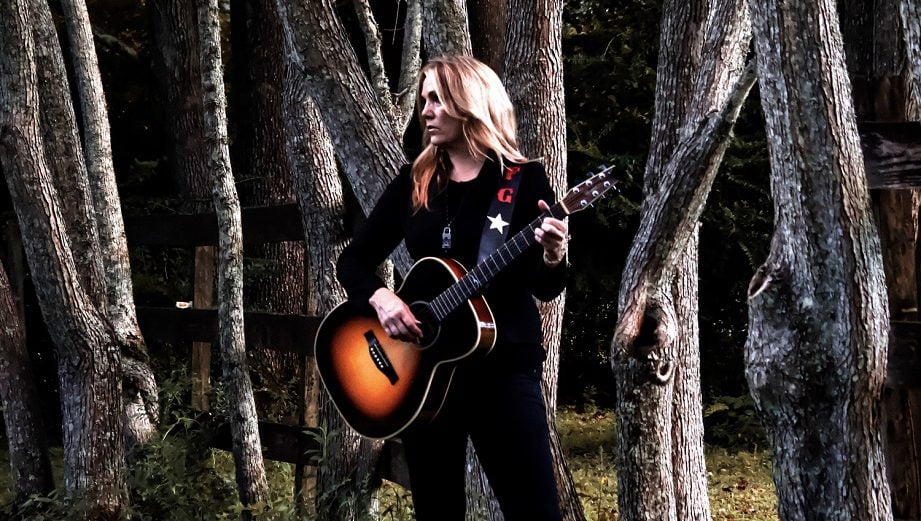
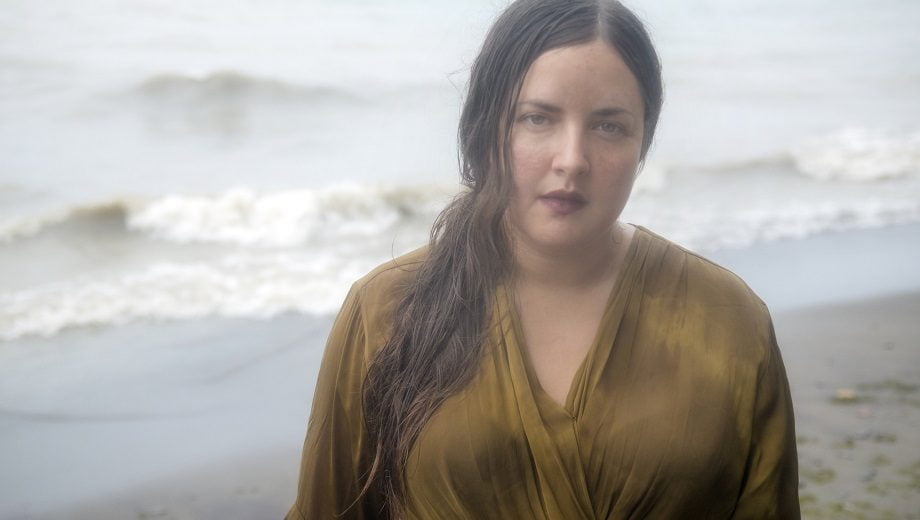
WATCH: Abigail Lapell, “Down by the Water”

Artist: Abigail Lapell
Hometown: Toronto, Canada
Song: “Down by the Water”
Album: Getaway
Release Date: February 1, 2019
Label: Coax Records

In Their Words: “‘Down by the Water’ is a springtime song, so there’s a lot of imagery of renewal or redemption, and even some biblical symbolism, suggesting an escape to a better place — whether literal or metaphorical. The song evokes the idea of getting away somewhere isolated, away from the world, in order to rediscover your voice or calling — something that ultimately deepens your sense of connection to the world. Like a songwriting retreat!

“I love singing with Dana Sipos, who’s featured on this song and is an amazing songwriter — and people often tell us we sound like sisters, which is a bonkers compliment to me because she has one of my favourite voices of all time. We’ve toured together a bunch (including by bike and canoe) so we’ve had a good amount of practice singing on each other’s songs. For this tune we recorded live-off-the-floor in the studio, in a room together; no headphones or isolation, just a guitar and our two voices. So it’s one of the simplest arrangements on the album.

“This was my first time making a music video, and it was a really fun and surprisingly time-intensive process. It was filmed by Brittany Farhat at Union Sound Studios in Toronto, which is such a beautiful (and photogenic!) space, and I edited it very slowly over several months. Also featured in the video is Chris Stringer, my wonderful producer, who was one of a small team that started the studio — they built it literally from the ground up a few years ago. It’s also where I met my fiancé, while working on my last album there. So this video and location are particularly special to me.” — Abigail Lapell


Photo credit: Gaelle Legrand

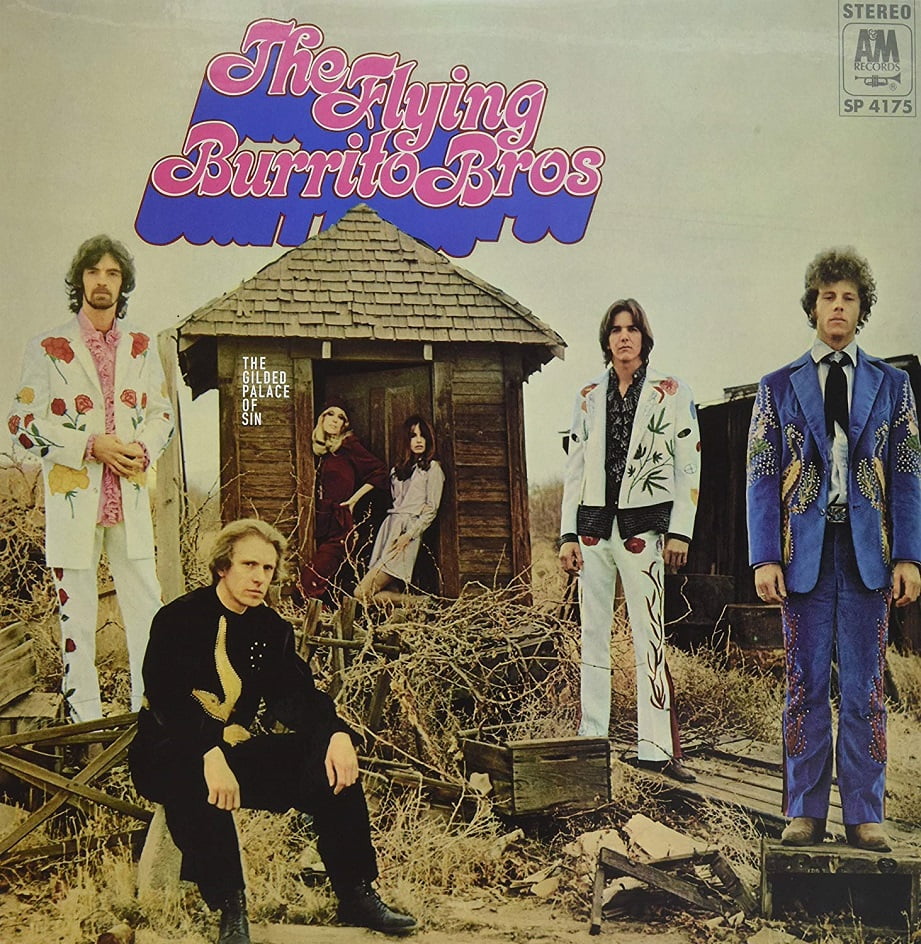
Canon Fodder: The Flying Burrito Brothers, ‘The Gilded Palace of Sin’

A spry country tune driven by Chris Hillman’s hyperactive mandolin and Sneaky Pete Kleinow’s spacy guitar solo, the Flying Burrito Brothers’ “My Uncle” is not a song about family. The uncle they’re harmonizing about is Uncle Sam, who in the late 1960s wanted members of the band to kill others and possibly be killed in Vietnam. Gram Parsons had already secured a somewhat dubious 4-F deferment, making him ineligible for military services for health reasons, but the Army continued its pursuit. “So I’m heading for the nearest foreign border,” Parsons sings, resigning himself to the ignoble fate of a draft dodger.

In the late 1960s, rock and roll was rife with anti-war songs. Some were angry, like Creedence Clearwater Revival’s “Fortunate Son.” Others were riddled with mortal dread, like “Feel Like I’m Fixin’ to Die Rag” by Country Joe & the Fish. But few sounded anything like “My Uncle,” an album cut from The Gilded Palace of Sin. For one thing, as the Flying Burrito Brothers ponder what they owe their country, they sound more melancholy than outraged, as though they’re singing a breakup song with America.

For another thing, they dressed their anti-war sentiments up in the threads of country music, which was already viewed as both musically and politically conservative: a counter to the counterculture, representing the moral/silent majority that finally put Nixon in the White House in 1968. “Okie From Muskogee” was the defining country hit of the era, a song that tsk-tsks the hippies, roustabouts, and even the conscientious objectors burning their draft cards. Merle Haggard may have written it to gently puncture the sanctimonies of an older generation, but listeners heard no irony or distance in lyrics about wearing boots instead of sandals and respecting the college dean.

Given the canonization of Parsons over the last few decades, as well as the gradual breakdown of genres and styles over time, it’s easy to forget just how contrarian it would have been for a West Coast rock band to embrace country and bluegrass. The Flying Burrito Brothers had risen from the ashes of the Byrds, a group which earlier in the decade had included Gram Parsons for just one album, Sweetheart of the Rodeo. A relative flop upon release, it nevertheless invented country rock with a set of twangy originals and covers of songs by Cindy Walker, Haggard, and the Louvin Brothers. Aside from Dylan, who was covered by everybody in the late 60s, these weren’t especially hip influences at the time.

Draft dodging may have been anathema to country music, but “My Uncle” is at its heart about more than just protest. “A sad old soldier once told me a story about a battlefield that he was on,” Parsons and Hillman harmonize. “He said a man should never fight for glory, he must know what is right and what is wrong.” The Flying Burrito Brothers plumb that stark moral divide on “My Uncle” and every other song on their debut, parsing temptation from salvation, wickedness from righteousness, and painting a picture of an America where you might easily confuse one for the other. Country music becomes the ideal vehicle to explore ideas about violence, consumerism, free love, and more broadly, the notion of sin.

The idea of sin illuminates every song on The Gilded Palace of Sin. The rollicking “Christine’s Theme” opens the album with a woman bearing false witness: “She’s a devil in disguise, she’s telling dirty lies.” “Juanita” imagines an angel rescuing the band from booze and pills. “Hot Burrito #2” invokes Jesus Christ by name — not cussin’ but praying. “Do Right Woman,” a Dan Penn/Chips Moman number popularized by Aretha Franklin, is transformed from a lover’s plea into a preacher’s wagging finger. “Dark End of the Street,” by the same Memphis songwriting duo, is about coveting your neighbor’s wife: “It’s a sin and we know that we’re wrong.” When the Flying Brothers get to the bridge, “They’re gonna find us,” they might as well be talking about angels and demons.

“Sin City,” the album’s centerpiece, is the band’s version of Jonathan Edwards’ “Sinners in the Hands of an Angry God,” which mixes Biblical imagery with twangy country harmonies to create a startlingly dire depiction of Los Angeles as both Sodom and Gomorrah. It’s a place where avarice rules all, leaving even the determined and upright struggling for footing. “That ol’ earthquake’s gonna leave me in the poorhouse,” the Brothers sing, echoing Edwards’ assertion that all humans as sinners are “exposed to sudden unexpected destruction.” Wealth won’t buy redemption or avert damnation: “On the thirty-first floor, that gold-plated door won’t keep out the Lord’s burning rain.” (That’s likely a sly reference to Larry Spector, the Byrds’ former manager, who lived on the thirty-first floor of a luxury LA high-rise).

Jesus shows up for a verse of “Sin City,” and he may or may not reappear in the close “Hippie Boy,” a spoken-word homily in the style of Hank Williams’ moralizing alter ego Luke the Drifter. Hillman tells the story of a boy caught up in the violence between the right and the left. In his 33 1/3 book on Gilded Palace of Sin, Bob Proehl suggests the band might have been inspired by the riots at the Democratic National Convention the year before. “The so-called riots in Chicago were actually more of a police action,” he writes, “a beatdown instigated by the gestapo tactics of Mayor Daley’s police force right in front of the delegates’ hotels.” Even before the song concludes with a rousing chorus of the old hymn “Peace in the Valley,” the song is a damning attack on anyone who would employ violence in the name of morality.

While they are using country music to interrogate the genre’s own high moral standards, the Flying Burrito Brothers don’t come across as scolds. Instead, they’re doing something more ambitious yet far more personal: They’re trying to find their own way in this sinful America, trying to find the moral high ground in shifting sands. On “My Uncle” they sing about dodging the draft with guilt and sadness, but they understand it is a moral predicament. “Heading for the nearest foreign border” is preferable to enlisting and killing. That makes The Gilded Palace of Sin unsettlingly prophetic fifty years after its release, maybe even inspiring in its spirit of dissent and moral defiance.

None of the Brothers would ever sound quite so political or quite so driven by moral inquisition on subsequent albums. Their follow-up, 1970’s Burrito Deluxe, sounds good but has little of the brimstone determination of their debut. Parsons left the group shortly after its release, and his pair of solo albums drive the roads of a murky, mythological America.

However, less than a year after the release of The Gilded Palace of Sin, the Brothers witnessed Biblical calamity firsthand when they played the Altamont Free Concert. Billed as a West Coast alternative to Woodstock, it included San Francisco bands Santana and the Jefferson Airplane, with the Rolling Stones headlining. The crowd of 300,000 was already agitated when the Brothers played their early set, and by the time the Stones took the stage, they were volatile, and hostile. During a performance of “Under My Thumb,” one of the Hell’s Angels working security stabbed and killed a black man named Meredith Hunter, stopping the show and casting a pallor over the event, if not the entire decade. It was intended as a show of countercultural unity, but it must have seemed like God smiting the hippie generation: the end of the 6os in great and gory conflagration.

LISTEN: Lindi Ortega, “Liberty” (from ‘Liberty: Piano Songbook’)

Artist: Lindi Ortega
Hometown: Toronto, Ontario
Song: “Liberty”
Album: Liberty: Piano Songbook
Release Date: January 25, 2019
Label: Shadowbox Music

In Their Words: “What I love about the Piano Songbook version of ‘Liberty’ is how it still has this vintage vibe to it. I immediately picture this tune being played on an old Western saloon piano. I think the sense of triumph is still captured in the chorus but new elements reveal themselves in the melody, and in the bridge of the song that allows it to take a new shape. It’s been extremely interesting for me to get a real sense of the melodies without vocals. Piano has always been an instrument I truly respect and love the sound of; to be honest, I don’t think a full instrumental would work properly with any single instrument other than piano. Piano has body, richness and fullness all on its own. ‘Liberty’ was one of the more produced songs on the original record, and for it to still carry itself with piano is really cool.” — Lindi Ortega


Photo credit: Kate Nutt

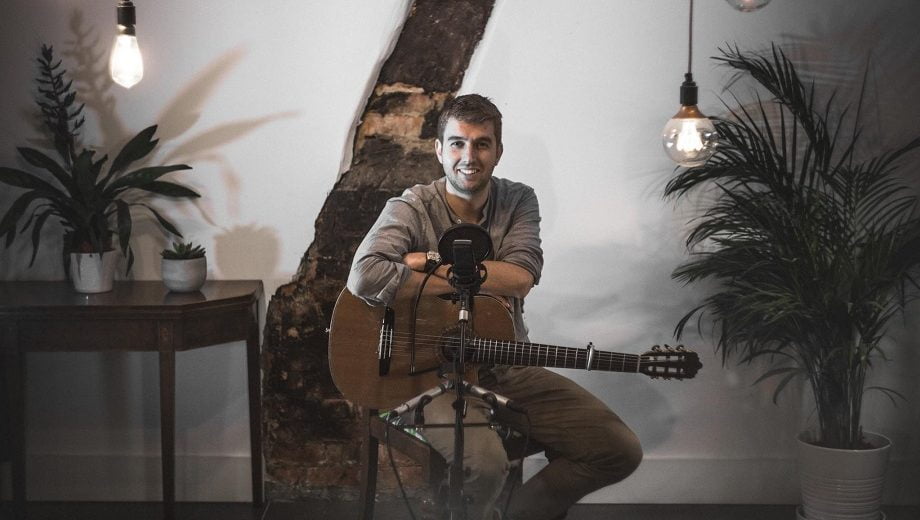
WATCH: Si Cliff, “Run”

Artist: Si Cliff
Hometown: London, UK
Song: “Run”
Release Date: January 15, 2019

In Their Words: “The track ‘Run’ started out as two separate voice recordings of the chorus melody and bass line. An idea that I arranged on guitar later that week turned into what you hear now. The starting groove of the verse came to me when practicing and it fit so well. The lyrics are about having lots of chances not to face up to things these days, with many apps and endless media sources to preoccupy us. We can find excuses to put real life and decisions on hold when the time to do them is now.” — Si Cliff


Photo credit: John Powell

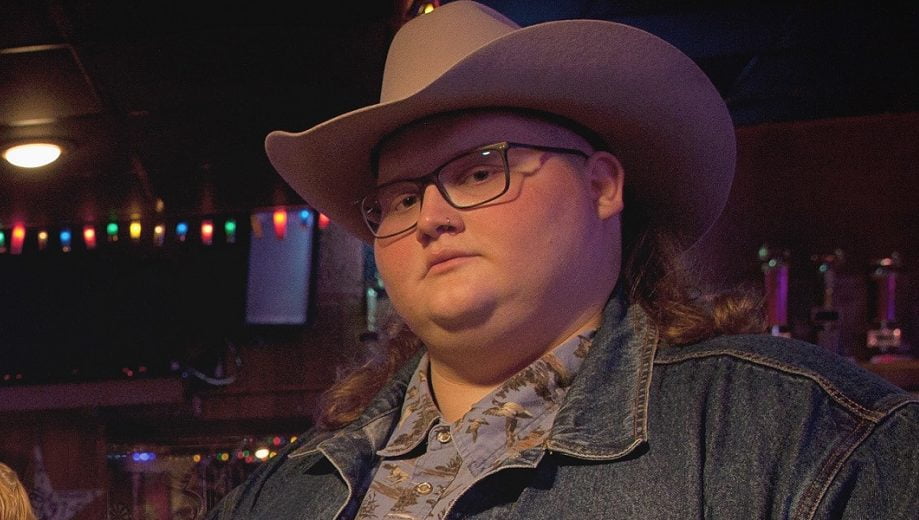
LISTEN: Joshua Ray Walker, “Burn It”

Artist: Joshua Ray Walker
Hometown: Dallas, Texas
Song: “Burn It”
Album: Wish You Were Here
Release Date: January 25, 2019
Label: State Fair Records

In Their Words: “Listeners probably won’t notice right away, because of the quick tempo and boisterous production, but ‘Burn It’ is the most autobiographical song on the record that paints me in an unflattering light. It’s about losing control, being overwhelmed with emotion in a way that only results in self-destruction, self-defamation, and self-medication. A song with this sort of emotion couldn’t be a lamentation or sound melancholic; it needed to be angry.” — Joshua Ray Walker


Photo credit: Josh David Jordan

STREAM: Neyla Pekarek, ‘Rattlesnake’

Artist: Neyla Pekarek
Hometown: Denver, Colorado
Album: Rattlesnake
Release Date: January 18, 2019
Label: S-Curve Records/BMG

In Their Words: “The idea of writing Rattlesnake honestly began as a joke. I didn’t know if I was capable of writing songs that anyone else wanted to hear. But in writing an album inspired by Rattlesnake Kate (a 1920s Colorado trailblazer who became notorious for a death-defying encounter with a rattlesnake migration, where, in order to protect her 3-year-old son, she proceeded to bludgeon 140 snakes), a woman who lived her life on her own terms, and with little care for other people’s opinions of her, I found strength and courage to stop joking (at least, in terms of writing an album), and wrote a record for myself with songs that were weird and vulnerable and funny to me. Writing an album about someone else’s life was a really liberating because I could write through this mask, taking the parts of Kate’s life that were significant and inspiring to me, and write about my own baggage through those events.

“I made the stubborn decision that I only wanted one person to produce this record, and that was one of my musical heroes, Matt Ward (M. Ward, She & Him). Keeping my fingers crossed that a few poorly recorded demos from my living room would be enough to convince him to produce my record, I was able to make this album sound exactly the way I envisioned it. I feel very lucky to have had the validating experience of working with Matt, as well as our audio engineer Adam Selzer, and am so grateful for all of their contributions on making this record with me.” — Neyla Pekarek


Photo credit: Liza Nelson