12 Fantastic Merle Haggard Covers

April 6 would have been Merle Haggard’s 89th birthday – and was also the tenth anniversary of his death. So, before these anniversaries get too far in the rearview mirror, I wanted to take a moment to remember one of country music’s all-time legends – and one of the great singer-songwriters in all American popular music.

One lesson of Haggard’s career is that you best honor your musical heroes, not only by playing their records at home or talking up their influence in interviews, but by continuing to perform their songs – on stage and in the studio. Merle released tribute albums to Jimmie Rodgers, Bob Wills, and Elvis Presley, and across his catalog cut at least an album’s worth of Lefty Frizzell songs.

Since his death, it’s been nice to see how often Merle’s musical contemporaries and descendants have taken Haggard’s model to heart, recording his songs and even releasing entire Merle Haggard tribute albums.

In recognition of his ongoing legacy, I’ve chosen 12 of my favorite cover versions of songs by Merle Haggard. I shared a kind of companion piece to this list last week, at No Fences Review, pulling choices from the 20th century only. Now, for Good Country, I’m focusing my dozen picks on Hag covers from this century.

I could assemble similarly strong lists every week for months without running out of possibilities. But these dozen Hag covers are among the very favorites.

“You Don’t Have Far to Go” – Candi Staton (from His Hands, 2006)

Co-written with trucker-song specialist Red Simpson, “You Don’t Have Very Far to Go” was the earliest of Merle’s songs to have legs. Recorded more than a couple dozen times through the years (including three versions from Hag himself), it’s proven a special favorite of first-name-basis country women. Bonnie and Connie, Rosanne and Lucinda, and others all seem to sing the song directly to some toxic asshole: “If I’m not crying, you’re not satisfied.”

My favorite reading of the song in that way is by Candi Staton. She became renowned for her disco and gospel recordings, but when first establishing herself as an R&B star circa 1970, it was with striking country soul takes on hits by Tammy Wynette and Patsy Cline. Decades later, she deploys Merle’s old song to deliver a master class in soulful, thought-by-thought phrasing. Staton sounds fragile and beaten down yet, by the end, her tone hints she may finally have had enough.

“Hungry Eyes” – Leona Williams (from Leona Williams Sings Merle Haggard, 2008)

Leona Williams may be best known as Haggard’s third wife, but she’s a tremendous artist in her own right, a country music lifer who played bass behind Loretta Lynn in the 1960s, enjoyed a solo career worth tracking down, and wrote or co-wrote chart toppers “You Take Me for Granted” and “Someday When Things Are Good” for Merle in the early ‘80s.

Leona’s version of “Hungry Eyes,” from her superb 2008 Haggard tribute, always stops me in my tracks. In the verses, she sounds haunted by her parents’ long-ago struggles. At each chorus, she gulps and springs to the top of her range, once again meeting her mother’s dissatisfied gaze. “She only wanted things she really needed!”

“The Running Kind” – Marty Stuart & His Fabulous Superlatives (from The Marty Stuart Show, c. 2009 or 2010)

“The Running Kind” is both one of country music’s great declarations of independence and, for Haggard, a great self-own: Merle boasts that he’s always on the run from one thing or the other even though, “I know running’s not the answer” to anything. The sentiment can serve as a kind of thesis statement for the Hag’s own restless life and career, so it’s ironic that my favorite version of the song isn’t Merle’s but this live cut from Marty Stuart. From an episode of the singer’s television series, Stuart and his Superlatives rage noisily and headlong, while staying absolutely controlled, through Merle’s tune. The solos from Kenny Vaughan and Stuart are my idea of Telecaster heaven.

“Ramblin’ Fever” – Tanya Tucker (from My Turn, 2009)

My pick for the best-ever “Ramblin’ Fever” is this version by Tanya Tucker. Riding an outlaw thump spiked by country disco high-hat, Tucker honors a musical hero, a former paramour, and a kindred rambling spirit. To that end, she loves it when some good-lookin’ fella rubs her back, but what really turns her on comes in the a.m. when she can drink a cup of coffee before leaving. The series of guitar solos that play out the final 1:20 here sound like she’s already out the door.

“How Did You Find Me Here?” – k.d. lang (from Sweet Relief III: Pennies from Heaven, 2013)

“How Did You Find Me Here?” was among Merle’s finest new songs of this century. From 2010’s I Am What I Am, Merle sings the number like a grim but grateful gospel ballad – his savior has come for him in his grave. “Thank you, Lord,” he prays at the close.

k.d. lang’s spare, ethereal reading feels less straightforwardly religious but, if anything, more spiritual. She’s desperately alone, at her nadir, but now someone – a lover or friend, her sponsor or her community – has seen her for who she is, taken her in. Lang’s contralto sounds bleary-eyed and dumbfounded, but she gains strength as she goes, ready to move on up.

“I Think I’ll Just Stay Here and Drink” – Suzy Bogguss (from Lucky, 2014)

Back in 1989, one of Suzy Bogguss’ earliest charting singles was a cover of “Somewhere Between,” still my favorite version of that great Haggard ballad. So my expectations were unreasonably high for Lucky, a full-length Merle Haggard tribute that she released in 2014. But the album’s a gem straight through, and I especially recommend her take on “I Think I’ll Just Stay Here and Drink.”

Most versions of Merle’s boozy romantic complaint have been done by rowdy dudes who sound like they’re slamming shots while ordering their fourth pitcher ahead of passing out. Bogguss, by contrast, comes off country-jazz cool, sipping a good bourbon and commiserating with herself in some dark corner. Don’t wait up. She’s going to be here awhile.

“Shelly’s Winter Love” – Lonesome River Band (from Turn on a Dime, 2014)

Merle’s most haunting song is about depression: Shelly’s depression each winter, the narrator’s the rest of the year round when the sunshine’s lured her back to town. This Lonesome River Band rendition from 2014 is the most haunting I know. Brandon Rickman sings beautifully but frighteningly too, and LRB’s pacing, like seasonal affective disorder set to a melody, reflects the long, slow days of a long dark winter. Midway through, Sammy Shelor’s banjo plunks a drip, drip, drip, that quickly gathers to a stream. A thaw’s coming; spring is on the way. It won’t be long now…

“A Working Man Can’t Get Nowhere Today” – Rob Ickes & Trey Hensley (from Before the Sun Goes Down, 2015)

This was a savvy cover choice by Rob Ickes, 15-time winner of the IBMA’s Resophonic Guitar Player of the Year award, and Trey Hensley, the association’s pick for Guitar Player of the Year in 2023. For one thing, the song is an underappreciated gem of the Haggard songbook, recorded maybe not even half a dozen times since Merle had a hit with it in 1977. More importantly, this Hag number lets Ickes and Hensley trade elegantly exhausted solos while tapping into a perpetually frustrating and common condition: Working your ass off every day to to put food on the table yet still coming up short. Hensley moans, “I’ll still be deep in debt the day that I fall dead.”

“Some of Us Fly” – Bonnie “Prince” Billy (from Best Troubador, 2017)

Merle’s “Some of Us Fly” served as the concluding track to his underrated release Chicago Wind, from 2005, and featured a guest vocal from Toby Keith. Because both men had already experienced such heights in their career, the message of each chorus – “Some of us fly but all of us fall” – comes off a little like superstars performing their humility. But where Haggard and Keith share hard-won wisdom, Bonnie “Prince” Billy casts a spell. With his duet partner, Irish singer/flutist Nuala Kennedy, he surrenders to a mystery.

On the remarkable 2017 Haggard tribute album, Best Troubador, Billy (AKA indie songster Will Oldham) and Kennedy whisper their way through Merle’s song in cautious harmony, their hands clutched tightly. The whole performance feels so fragile a strong wind might blow it way.

“Today I Started Loving You Again” – Eli “Paperboy” Reed (from Down Every Road, 2022)

Eli Reed specializes in making over all manner of roots-adjacent material into cool, committed soul music. Down Every Road does that for the Haggard songbook with thrilling results straight through. (A duet between Eli and Sabine McCalla on Merle’s most covered song, “Today I Started Loving You Again,” was inspired by a famous, but officially unreleased, 1969 version by Buck Owens and soul singer Bettye Swann.)

I especially appreciate Reed’s take on Merle’s celebratory kiss-off “I’m Bringing Home Good News,” which he relocates from Merle’s dusty, country-rocking San Joaquin all the way down to Louisiana for some funky Tony Joe White-styled swamp.

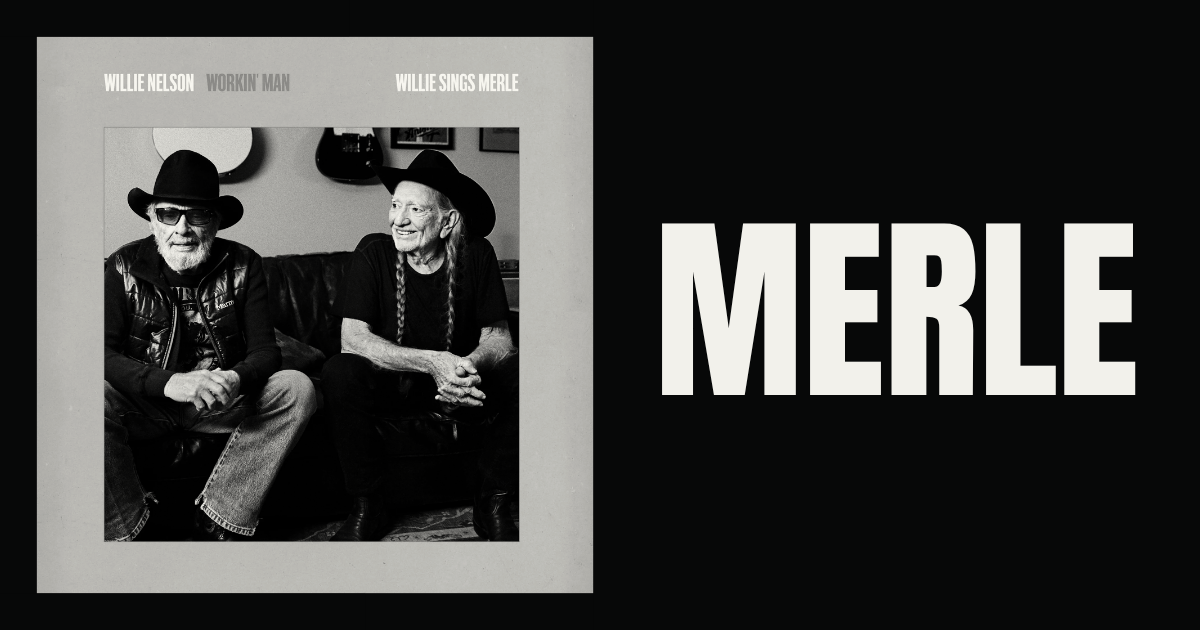
“Workin’ Man Blues” – Willie Nelson (from Workin’ Man: Willie Sings Merle, 2025)

One of Hag’s signature hits, “Workin’ Man Blues,” is usually framed as a purely blue-collar anthem, but it’s good to remember he identified the song as a blues. Having to work to survive while hoping your body holds out as long as you’ll need it is something to be cursed more than celebrated.

From last year’s Workin’ Man: Willie Sings Merle, a 92-year-old Nelson delivers his friend’s lines with a bit of a slur, weary and resigned but also grateful still to be working, to be on the road again until he runs out of road. Similarly, Willie’s arrangement sheds Merle’s Elvis-y fanfare for some hard, use-it-or-lose-it swing. “Play it, little sister,” he says, introducing one of the hot-jazziest solos in the career of the late Family band pianist Bobbie Nelson. Willie’s solos up top and midway through, meanwhile, are things of singular beauty, guitar work that sounds like play but refuses to hide the callouses and the miles. “As long as my two hands are fit to use…”

“Daddy Tried” – Jade Jackson (single, 2026)

Merle’s “Mama Tried” has been covered well over 100 times since he wrote it for the Killers Three soundtrack in 1968. But the song’s indelible ascending chorus and its universal theme – Merle sings it as if he’s as proud of defying his mom as he is remorseful for disappointing her – have encouraged people to use the song in all kinds of ways. Country comic Don Bowman parodied it as “Pappa Tried” as early as 1969 and more recently Angeleena Presley was clearly in conversation with Merle’s classic when she released “Mama I Tried” in 2017. As was Keith Urban when he sampled its lick for “Coming Home” in 2023.

Jade Jackson grew up in a small Cali town between Bakersfield and the Pacific, and her updated, gender-flipped take on Merle’s tale sounds just like that: Her voice feels a little dusty and a little sunny. Switching out Merle’s locale from “prison” to “Nashville” is funny because those two aren’t at all alike, but also because maybe they’re a little alike. For sure the ache in her voice reveals her as another singer-songwriter in a long line of kindred spirits to Merle; she’s going to go her own way, no matter her dad’s good advice.


David Cantwell is the author of The Running Kind: Listening to Merle Haggard, the co-author of Heartaches by the Number: Country Music’s 500 Greatest Singles and the co-creator of No Fences Review. His byline has appeared at Rolling Stone Country, The New Yorker, Slate, and No Depression, among other publications.

Photo Credit: Workin’ Man: Willie Sings Merle on Legacy Recordings
The Other 22 Hours: Suzy Bogguss

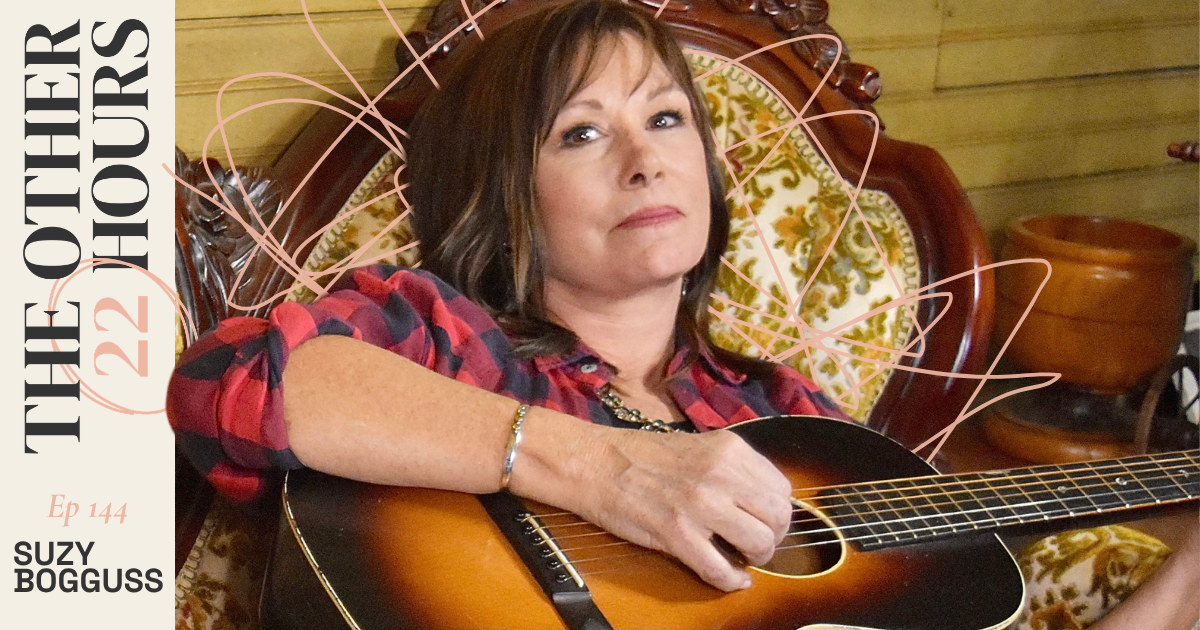
How does an artist outlast the industry machine to build a career entirely on her own terms? We sit down with GRAMMY-winner, 1989 ACM Top New Female Vocalist, and 1992 CMA Horizon Award recipient Suzy Bogguss to explore the evolution of her 40-year career, which includes platinum records and her 2026 induction as a member of the Grand Ole Opry. Our conversation is an invitation to reconsider what we all value, moving away from the noise of major label machines and toward a philosophy of quality over quantity, independence, and deep community.

LISTEN: APPLE • SPOTIFY • AMAZON • MP3

In This Episode:

Suzy Bogguss
Matraca Berg
Jeff Hanna
Ep 43 – Gretchen Peters
Patty Loveless
Ep 46 – Mary Chapin Carpenter
Capitol Records
CAA
Kathy Mattea
Folk Alliance
Ep 16 – Rodney Crowell
Chet Atkins

Go Deeper:

Watch: View this entire conversation on YouTube.
Explore: Find similar conversations in these themed playlists.
Connect: Join the conversation on Instagram.

The Other 22 Hours is hosted by Aaron Shafer-Haiss (producer, mixer, musician) and Michaela Anne (songwriter, artist, creative coach). More about Aaron’s workMore about Michaela Anne’s work.


Produced by Aaron Shafer-Haiss. Original music written, performed and produced by Aaron Shafer-Haiss.

Photo Credit: Doug Crider

Country Rocks,
Country Rules

Editor’s Note: Each issue of Good Country, our co-founder Ed Helms will share a handful of good country artists, albums, and songs direct from his own earphones in Ed’s Picks.

Ashley McBryde
Ashley McBryde

Ashley McBryde gets the year started off right with a soaring, anthemic new single. As you’ll see with “What If We Don’t,” Good Country and arena country aren’t mutually exclusive styles. Garage rock, country grit, and stadium-ready flair – McBryde is doing it better than almost anyone else out there.


Buck Meek
Buck Meek

Not your mamaw’s “Ring of Fire.” Big Thief’s Buck Meek launches his upcoming solo album, The Mirror, in just a couple of weeks. Its songs were grown where alternative, indie, folk, and country overlap, though each feels just outside of reach of any single one of those terms. Featuring Adrienne Lenker on BGVs, “Ring of Fire,” like Johnny’s classic by the same name, is about love and connection – but is perhaps the flipside of the Cash coin.


Emily Scott Robinson

You can always trust the John Prine-founded Oh Boy Records to put out amazing music by generational songwriters. Emily Scott Robinson is certainly one. Her new album, Appalachia, embodies her heart-forward, community-minded approach to songcraft and musicmaking. Stand outs include “Hymn for the Unholy,” “The Time for Flowers,” the album’s title track “Appalachia,” and this lovely duet with John Paul White, “Cast Iron Heart.”

Read our recent interview with Emily Scott Robinson here.


Langhorne Slim
Langhorne Slim

Speaking of rock ‘n’ roll, our old pal Langhorne plugs in and turns up on his new album, The Dreamin’ Kind, which was produced by Greta Van Fleet’s Sam F. Kiszka. Slim’s personality – and the signature, charming touches that made us all fall in love with his music – is front and center on the new collection, however far into rockin’ territory he brings his Americana and folk sensibilities.

Find out more about The Dreamin’ Kind in our recent Cover Story interview.


Zach Top
Zach Top

He started as a bluegrass picker in a family band and a Keith Whitley and Tony Rice diehard. Now everyone’s favorite trad country revivalist is a GRAMMY Award winner. Top took home the trophy for Best Traditional Country Album for his sophomore release, Ain’t In It for My Health earlier this month. He’s the first awardee in the buzzed-about new category opposite Best Contemporary Country Album. Well deserved!


Want more Good Country? Sign up to receive our monthly email newsletter – and much more music! – direct to your inbox.

Photo Credits: Ashley McBryde by Nathan Chapman; Buck Meek by Germaine Dunes; Emily Scott Robinson by Angelina Castillo; Langhorne Slim by Savannah Lauren; Zach Top by Getty Images for the Recording Academy.

2025: Another Year of Ed’s Picks

As our second year of Good Country comes to a close, we’re reflecting on another 12 months’ worth of the best in country music. Whether Americana, bluegrass, or string band, blues, outlaw, or Western swing – or any of the many styles of country we know and love – there’s been plenty of excellent picks from my ear buds directly to your inboxes and playlists.

We sampled post-modern Mississippian country from KIRBY, got funky and soulful with Memphis family band and GRAMMY nominees Southern Avenue. We celebrated Suzy Bogguss’ invitation to join the Grand Ole Opry and traveled to the remote center of the Pacific Ocean for Maoli’s particular twang.

Fiery twin fiddle by Jason Carter & Michael Cleveland had our jaws on the floor, while we were surprised – but not really – at how well Brooks & Dunn went together with the Earls of Leicester. Huge stars like Billy Strings, Warren Zeiders, Sabrina Carpenter, and Carín León were enjoyed alongside everyday working musicians like Jordan Tice, The Creekers, Nick Shoulders, Sunny War, and more.

That depth and breadth – of artists and styles, of notoriety, or approach – is exactly what we’re going for with Good Country.

Good Country isn’t any one thing. It’s a feeling. It’s a place. We’ll be chasing more Good Country feelings and places in 2026, and we’re so grateful to have you along for the ride. Look back at all of Ed’s Picks for 2025 with our master playlist.


Want more Good Country? Sign up to receive our monthly email newsletter – and much more music! – direct to your inbox.

100 Years of Grand Ole Opry
Makes a Mighty Book

The sheer variety and singularity of the Grand Ole Opry – whether in just one of its shows or in just one of its many eras – would be paralyzing enough, if tasked with telling its complete, unabridged story to a broad audience. The assignment of taking the entire century-long history of the world’s longest running radio show and condensing it between the covers of a book would have to be heart-stopping. How could one ever take such a complex story full of twists, turns – and plenty of the idiosyncrasies found in human beings who make and love country music – put it down in 350+ pages?

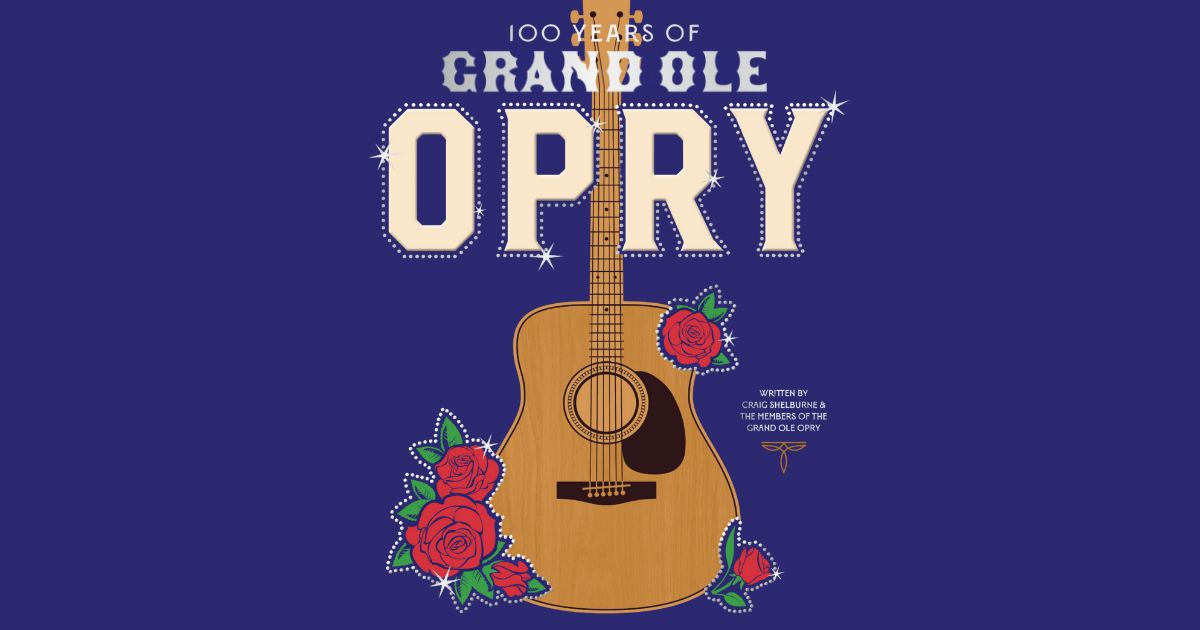
It’s hard to imagine, but that’s exactly what writer Craig Shelburne, historian Brenda Colladay, and a host of Opry members have done with the brand new book, 100 Years of Grand Ole Opry. Shelburne – a BGS contributor and former managing editor for our website – worked with Colladay to penetrate the vast, lush archives of the Grand Ole Opry to posit its history decade by decade, chapter by chapter in the new hefty, coffee-table-ready tome. They completed dozens and dozens of interviews with Opry members, artists, musicians, employees, executives, and broadcasters and, as a result, the history book feels remarkably alive and vibrant – just like the show itself.

The book, released in April of 2025, demonstrates and reiterates time and again that the Grand Ole Opry isn’t a relic – nor has it ever been. It’s a living, breathing, adaptive being that’s enacted by a strong community of stakeholders not only from across the company that owns the brand, Ryman Hospitality, but the music industry as a whole, too. 100 Years of Grand Ole Opry showcases a country and cultural icon not waning or winding down after a century of triumphs (and trials and bumps and scrapes, too). No, instead, this book finds the Opry, beloved by all of us, merely at its next transition point, moving purposefully from the last 100 years to the next 100 years.

We sat down with Craig Shelburne on the phone to chat about the immense undertaking of writing this book, the surprises found and lessons learned along the way, and what makes the Grand Ole Opry so special, all for our Artist of the Month celebration of Opry 100.

This is such a gargantuan task, staring down the entire 100-year history of the Opry and being asked to turn it into a book. Where do you even begin? How did you take that first bite? What did it feel like to you to enter this process of creating a book?

Craig Shelburne: Yeah, 100 years is a massive undertaking and we – my co-writer Brenda Colladay and I – spent some time at Frothy Monkey in East Nashville sketching out some of the important Opry milestones in those eras when things really seemed to be shifting. As we did that, we realized that we could probably have each chapter be roughly a decade. At one point, we realized we wanted to have some breakout sections, but we didn’t know how to do that.

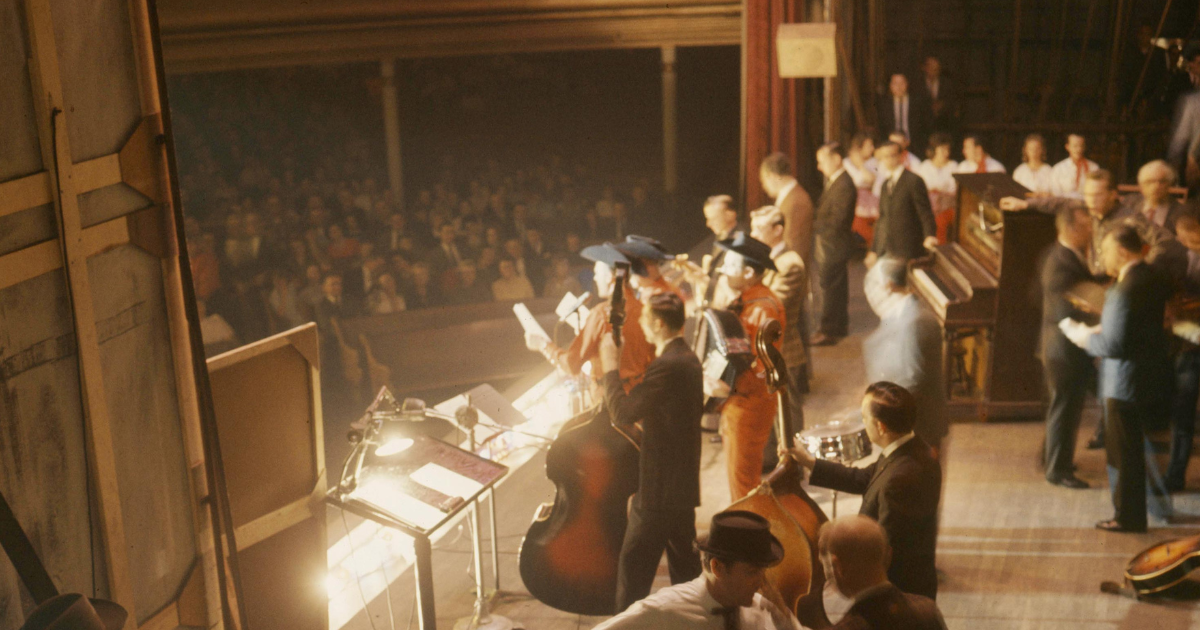
I wanted the book to be very readable, [without] a whole bunch of sidebars. So instead of designing sidebars, we have these pages that are interludes in between the decades, in between the chapters. You have the history of bluegrass, or the ways that the Opry has been on television, or what the Opry looked like when it went into the 21st century and a new era of technology. [That] was our chance to expand on one particular theme, rather than try to weave [those themes] into the narrative or take away from the narrative. It could be distracting if you dropped [a sidebar] into the manuscript every time the Opry was on television. Those interludes also gave us a chance to use some of these magnificent color photos [from the Opry archives] just because they’re beautiful photos. We didn’t have to necessarily set them up within the text. …

It was intimidating for a while until one night, late at night, I was writing and I realized that the main character of the story is the Opry itself. There are so many people that have passed across the stage, from Roy Acuff and Minnie Pearl up to the modern era. I wanted the artists and the cast members to be represented well, but really the main figure throughout this 100 years is the show itself. And it’s a show. It’s not a stage, it’s not a building. It’s a show.

Once I could get my head around the fact that this was the leading character in a 100-year story, the narrative started to fall into place. That was a breakthrough for me.

I also love how that format parallels the structure of the show itself. That you have segments, sets of artists performing, you have commercials and announcers and little games with sponsors, and you have talk-back sessions from artists. When you go to a show, it’s not just one thing from start to finish, it’s a bunch of different things – and there are obviously lots of interludes built in. So there’s something about the structure of the book that parallels the show in a nice way.

And telling the story of how the segmented portions of the Opry came to be was one of my favorite parts of writing the book. Basically, the Opry hired their music librarian – who was a very organized individual – to try to reign in some of the chaos from when the Opry was at what is now the Belcourt Theater [in the 1930s]. I think back then it was called the Hillsboro Theater. His name was Vito Pellettieri and he realized if he could wrangle three or four artists within the same timeframe, then these performers would now have a rough idea of when they needed to be standing side stage, instead of disappearing as musicians might have been wont to do.

Then of course, being the Opry, owned by an insurance company, the business people sensed an opportunity there and thought, “Let’s sell those segments to sponsors and advertisers.” And so that’s how the 30-minute segments came to be. Whether it was dog food or condensed milk or tobacco, if there was a sponsor for each segment, the Opry made more money that way, too. The Opry has been pretty creative in how it positions itself and how it can take advantage of good ideas quickly.

I know you spoke to dozens of artists, stakeholders, musicians, executives, broadcasters, and announcers. You and your co-writer Brenda Colladay must have done hours and hours of interviews for this book. Can you tell us a bit about that process and who you most enjoyed or were most excited to sit down with?

On one hand, the general narrative crafting you’re talking about sounds like really grueling work, but on the other hand, it sounds like doing that through these interviews was probably the most fun part of this process.

I would say the interviews were the most fun. I agree with you on that. I have the Opry show schedule as a shortcut on my smartphone now, because I would always try to figure out who was playing and who we needed to talk to.

As it should be, we started our interview series with the one and only Jeannie Seely. We felt like she needed to be first, and she deserved that. She only got about halfway through what she wanted to say [during our first meeting], so we set up another interview. It was wonderful to talk to her. Both of those afternoons were great, because with Jeannie, she’ll tell you the way it actually was. Some of it was very positive and some of it was critical, but it’s her perspective. And she was there! I didn’t get to see the Opry in the ‘60s or ‘70s, and she did. Getting to hear it directly from her was fantastic. She was also hilarious, when you got to sit down and joke around with her a little bit.

It was really important to talk to people firsthand and to go deeper than just, “Hey, what do you think of the Opry? Why is it important?” So the Opry opened up its entire archive to me, which was videos, books, newspaper clippings – pretty much anything that I wanted to look at, read, or watch. When I knew I had an interview coming up, I would spend several hours reading clippings and reading stories in order to come up with questions specific to their Opry experience. Rather than just, “Tell me about when you moved to Nashville. Tell me about this. Tell me about that.” Those aren’t questions, those are just prompts. When the people came in to talk to us, we were usually in pretty much a supply closet for camera equipment. It was a really small room. We didn’t have any cameras. We wanted everybody to be casual and comfortable and not worry about makeup and hair.

Then it became a very comfortable conversation. We started every interview with the same question, which was, “What is going through your mind in those moments before the curtain comes up?” Everybody had a different answer. That put them in the frame of mind of talking about the Opry, I think, more than talking about themselves. They went pretty deep, back in their memories, of how they discovered the Opry and what it’s meant to them. Quite a few of those artists went to the Opry as kids. So then they started talking about their family and what the Opry meant to their family, there were a lot of emotions.

I think some of those artists expected it to be like a 10 or 15 minute interview to grab that [sound] bite that says, “I sure do love the Opry.” But we went really deep and spent more than an hour talking with some of these artists. You don’t get to put everything like that into the book, but suddenly now we have an oral history from these modern contemporary performers that will live forever. When somebody writes about the Opry in 50 years from now, they have it straight from the artists, [speaking] about their path to that stage.

I think that’s one of the best accomplishments of this book, that it tells the story in such a rich, full way that isn’t just the mythology and isn’t just the good parts and the glitzy parts. It sounds like part of how you were able to accomplish that is by having these interviews set up in such a way that you could build trust with folks, so they didn’t feel like they were just giving you that marketing sound bite. They could really tell you those full stories.

I think a lot of that came from the Opry headquarters. They wanted us to tell [it] the way it happened. A woman named Jenn Tressler, she handles a lot of the talent requests there and I think she primed most of these artists about what the interviews would be like and what the goal was. Just [so they would] be comfortable and [know] no topic is off limits. Artists were asked some pretty sensitive questions sometimes about the relationship with the entertainment industry in general, including the Opry and the artists rose to the occasion.

We wanted to tell the actual story. I’ve often felt that nobody wants to read a book where everybody’s happy and there’s no conflict. There’s conflict in this one.

From your interviews or from writing this book, what was a story or two about the Opry that stuck out to you or surprised you? Or, that brought you to learning something new that maybe you wouldn’t have tripped over into if you hadn’t done this book? Is there a story or two that stand out to you?

The first one would be just how young everybody was when they got involved with the Opry. George D. Hay was a young man; Harry Stone, who was one of the early program directors, had just turned 30 when he took on that role. The artists were [in their] 20s and 30s. You had a very young Bill Monroe, Roy Acuff, Minnie Pearl, coming on the stage and changing the game for country music.

Sometimes the Opry is perceived as the elder statesman of country music – and that’s true and they’ll always have a place there, it’s wonderful. But a lot of the shake-ups at the Opry and a lot of the progress that’s been made was because of these young, innovative perspectives. That happened over and over. I think without that viewpoint from people who were younger, the Opry would’ve struggled through the last hundred years. There would’ve been times somebody might’ve said, “I want it to stay the same way, ’cause this is how we’ve always done it.” It’s never the right answer, to do it just because it’s always been done that way. I think that was pretty fascinating to me.

The other thing I didn’t realize was that it was not until I believe 1978 that the Opry was ever aired on television. It was a PBS special. If you wanted to see the Opry, you had to come to Nashville for the first 53 years. After that one night on the PBS special, it didn’t happen again until the following year. Being able to see the Opry, you had to come to Nashville, and I think executives at that time feared that if you put it on television, people would stay away from the show and they wouldn’t sell tickets anymore. But time has proven just the opposite. People saw it on television, how exciting it was and they felt like they needed to be there, myself included. I watched it growing up in Nebraska as a teenager and I just was fascinated by it. By that time, of course, it was on TNN.

I watched it many a Saturday night with my grandparents and I didn’t always know who those legendary figures were that were sharing the stage with Alan Jackson or Clint Black or Alison Krauss. But because of the Opry, I got a country music education as a teenager before I moved to Nashville in 1994. By the time I got here, I feel like I had a leg up on other people who wanted to write about country music that were my age.

You’re pointing out another fact that we often forget about country music, hillbilly music, these traditions that made these musics. It’s that all of them are constantly changing and growing, morphing and adapting to the future – and responding to the present.

Like, the reason the Opry became what it is today was because of technology, because of the “Air Castle of the South.” Because of radio, because there wasn’t a lot of competition on the literal bandwidth, and because the tower was so tall it could reach so many people all across the country. To think that, nowadays, when we view “tradition” in 2025, we think that means not changing something.

Wrong!

But the Opry has always been changing and always been using cutting edge technology to do that. And country wouldn’t exist without technology, without the railroad, without industrialization, without radio, without recording technology becoming portable and handheld.

Oh, absolutely. Well said. It has to change, and the Opry does figure out a way to reach new listeners and engage with people that have never been there. Obviously, when you go to the Grand Ole Opry House for a show now, the emcee will say, “Who’s never been to the Opry before?” And a lot of hands go up. They’re constantly marketing the show – as they should be. They want people to have a seat in the Ryman or the Opry House to see how special the world’s longest running radio show is. I give them a lot of credit for always trying to reach new people and not just looking for what they’ve done already in the past. They take a lot of pride in the fact that no two shows have ever been the same.

I was just listening the other night [on the radio] and I was able to catch the Opry debut of Grupo Frontera. I thought it was such a perfect example of what you’re talking about, that a Spanish-speaking, Spanish first language group that makes country. Of course, it’s Mexican folk and Tejano and Latin folk and all these other things as well – but it’s certainly country & western. [They were] making their debut and you could hear the building shaking through the radio. It felt like one of those iconic ovations we hear about from the old days, with everybody stamping their feet in the balcony of the Ryman. The Opry is still doing that. And not only are they doing it, but this year for Opry 100, they’re doing it over and over again where they’re having these shows with these special moments, reaching new audiences.

And it was a brilliant move, because those fans now have a general idea of what the Grand Ole Opry is, how it is performed, and they got to hear some music from people they maybe hadn’t heard of. I know Frank Ray was on the show that night, he might’ve gained some fans from those who came to see Grupo Frontera. It’s a win for everybody when an artist of that caliber plays the Opry.

There was a great moment, after doing some digging, where I found the full performance of when Porter Wagoner invited James Brown to come play the Opry. It was like a 20-minute segment – there are some things online where you hear bits and pieces of it. But the Opry archive had it from start to finish, so I just sat there and listened to it. There was some screaming and hollering going on that night, too. It was exhilarating to listen to it. Then I found an oral history from Porter Wagoner – I quoted it in the book – that said, when you bring someone of world-renowned stature to the Opry, it benefits the Opry. You want the Opry to be in the news, because it draws attention to the show.

We’ve already talked about Jeannie Seely, but I wrote my concluding question with her in mind, as well. She passed in August of this year and when she did she had performed on the Opry almost 5,400 times. (The number is 5,390-something.) That longevity is incredible. So thinking about longevity, we’re standing here at the milestone of a hundred years of the Grand Ole Opry, looking at potentially another 100 years of the Grand Ole Opry coming up.

Do you see this modern era of the Opry as its golden age? Do you think the golden age of the show is yet to come? And who are you seeing that’s just getting their start “in the circle” nowadays that is gonna be like Jeannie Seely in a few decades, thousands of appearances into their Opry career?

Yeah [the future] looks strong to me, too. Something I never put into context until I wrote the book was that in the 1990s the Opry lost Roy Acuff, Minnie Pearl, Grandpa Jones, Bill Monroe, and Dottie West. And you just think, “How do you recover from that?” They did. They figured out a way to press on.

There were definitely growing pains and bumps, but some of those figures that they picked out in the early 2000s have become advocates for the Opry, champions for the Opry. The ‘90s country stars that I love, like Lorrie Morgan, Pam Tillis, Vince Gill, Steve Wariner, and Marty Stuart are still out there. They still play the Opry – and they’re the elder statesmen now. I do think the cast members that joined in the ‘90s and 2000s are gonna become a foundation for the show.

I think you’ll be seeing Trisha Yearwood out there quite a bit as she settles into the “twilight years” of her career. I sense that she will be out there singing alongside Kathy Mattea and Suzy Bogguss. I think Opry is in really good hands with the young women that they’ve invited to be part of the cast. More than once, without any prompting, artists like Carly Pearce and Lauren Alaina have said they feel the responsibility to be here. And I think Lauren Alaina is very likely to inherit the comic routines of Jeannie Seely – she’s pretty much already there. She had us rolling in laughter in her interviews. She’s got the natural timing of a comedian, but she’s got hit songs, too.

I think the Opry is in really good shape right now. They’ve done a good job of connecting to a younger audience that wants to play it. It’s a career goal now for a lot of inspiring artists. I think when I moved here in the ‘90s it was seen as living history and you had to have some history to get on that stage. But now you just have to have a good story, some musical talent, and an ability to connect with an audience. That’s easier said than done, but if you can have those three things, the Opry will take a chance.

I think they’ve found a recipe for success. They set themselves up to succeed. There are times in the music industry where it seems like things are crumbling or those pillars are not as strong as they used to be. But I think right now the Opry is as strong as it’s ever been. I don’t see it going anywhere anytime soon.


Lead image courtesy of Ryman Hospitality Properties.

The Opry, the GRAMMYs, and Beyond

Editor’s Note: Each issue of Good Country, our co-founder Ed Helms will share a handful of good country artists, albums, and songs direct from his own earphones in Ed’s Picks.

Luke Bell
Luke Bell

When country singer-songwriter and community-builder Luke Bell passed away in 2022, he left an enormous vacuum in the scenes that made him and adored him. But, he left an even larger legacy. His only posthumous album, The King Is Back, was released last week after being lovingly compiled by his mother Carol, sister Jane, and his team, friends, and collaborators – many of whom perform the LP’s 28 Bell-penned songs. It’s a devastating and heartfelt collection that benefits the Luke Bell Memorial Affordable Counseling Program. Learn more and donate here.


Suzy Bogguss
Suzy Bogguss

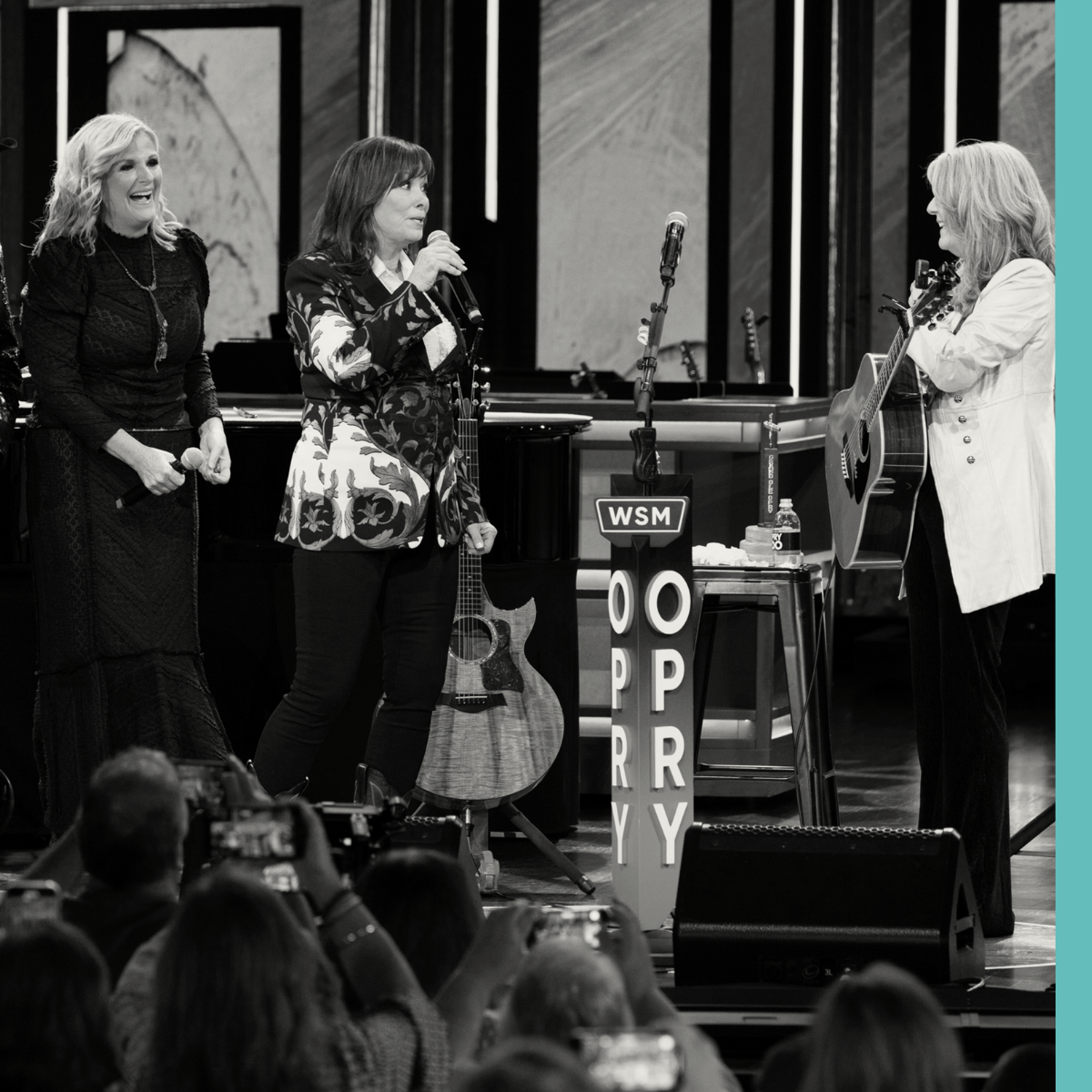
Suzy Bogguss is a country artist and singer-songwriter who’s won a GRAMMY, two CMA Awards, and an ACM award, and has had eight original songs become top 10 hits on the country charts across her career. Now, she’s adding another impressive title to her resumé: Grand Ole Opry Member! Last month, while her longtime friend Kathy Mattea celebrated her own induction into the Opry, Mattea interrupted her performance of “Eighteen Wheels and a Dozen Roses” (with Bogguss, Trisha Yearwood, and Terri Clark singing along) to surprise Suzy with her own invitation. Congratulations, Suzy! (She’ll be inducted in early 2026.)


We’re celebrating 100 Years of the Grand Ole Opry for our Artist of the Month. Dive into our Opry 100 coverage here.


Shooter Jennings
Shooter Jennings

It would be hard to find a more prolific artist-producer-actor in country these days. Shooter Jennings is everywhere, producing albums for Jake Owen, Charley Crockett, Jeremy Pinnell, and the Turnpike Troubadours this year alone. In addition, he’s reached back into the archive of his outlaw father, Waylon Jennings, to release Songbird, the first in a three-album series of posthumous Waylon releases curated by Shooter. His influence is everywhere in modern country – and we’re glad about that.


Read our brand new feature on Shooter Jennings and the new Waylon project,
Songbird, here.


Southern Avenue
Southern Avenue

We first heard about Memphian modern blues-Americana family band Southern Avenue way back in 2017 and now, more than eight years later, they’re nominated for a GRAMMY! Their most recent album, Family, dropped in April and gained the group their second GRAMMY nomination last week for Best Contemporary Blues Album. The band showcases how Memphis, though it’s often overlooked in favor of its nearby music city sisters, produces fascinating, genre-blending roots music dripping with personality.


Read our GC 5+5 interview with Southern Avenue from earlier this year here.


Colter Wall
Colter Wall

Everyone’s favorite Canadian cowboy recluse is back with more of his signature raw, down-to-earth, and grizzled country & western sound. Memories and Empties, Wall’s first studio release in two years, is out today. Tracked in Nashville at the legendary RCA Studio A with his touring band, Scary Prairie Boys, and production by bandmate Pat Lyons, it’s a stellar collection of traditional, working-class, flatland-steeped country that wouldn’t even dare to try getting above its raising. Plus, it celebrates the communities and relationships often obscured or overlooked in songs and recordings that sound like this. Good Country? That’s for damn sure.


Want more Good Country? Sign up to receive our monthly email newsletter – and much more music! – direct to your inbox.

Photo Credits: Luke Bell by Mike Vanata; Suzy Bogguss, Kathy Mattea, and Trisha Yearwood at the Grand Ole Opry by Chris Hollo; Shooter Jennings by Jared Christopher; Southern Avenue by Rory Doyle; Colter Wall by Jake Zielke.

How-dee! And Happy 100 to the Grand Ole Opry

In 1925, world leaders were signing the final treaties coming out of WWI; Congress authorized work on Mt. Rushmore as a national memorial; the Scopes Trial was held in Tennessee; and the first patent on radio transmission was only 28 years old.

And, in 1925, WSM first broadcast its barn dance – soon to become the Grand Ole Opry.

One hundred years later, the Grand Ole Opry is the world’s longest-running radio program. After a century that saw changes unparalleled in world history, audiences are still drawn to the Opry. Every week thousands make the pilgrimage to the Grand Ole Opry House in Nashville while others tune in around the world. The show continues to inspire new generations of performers to aspire to step “into the circle” on the Opry House stage.

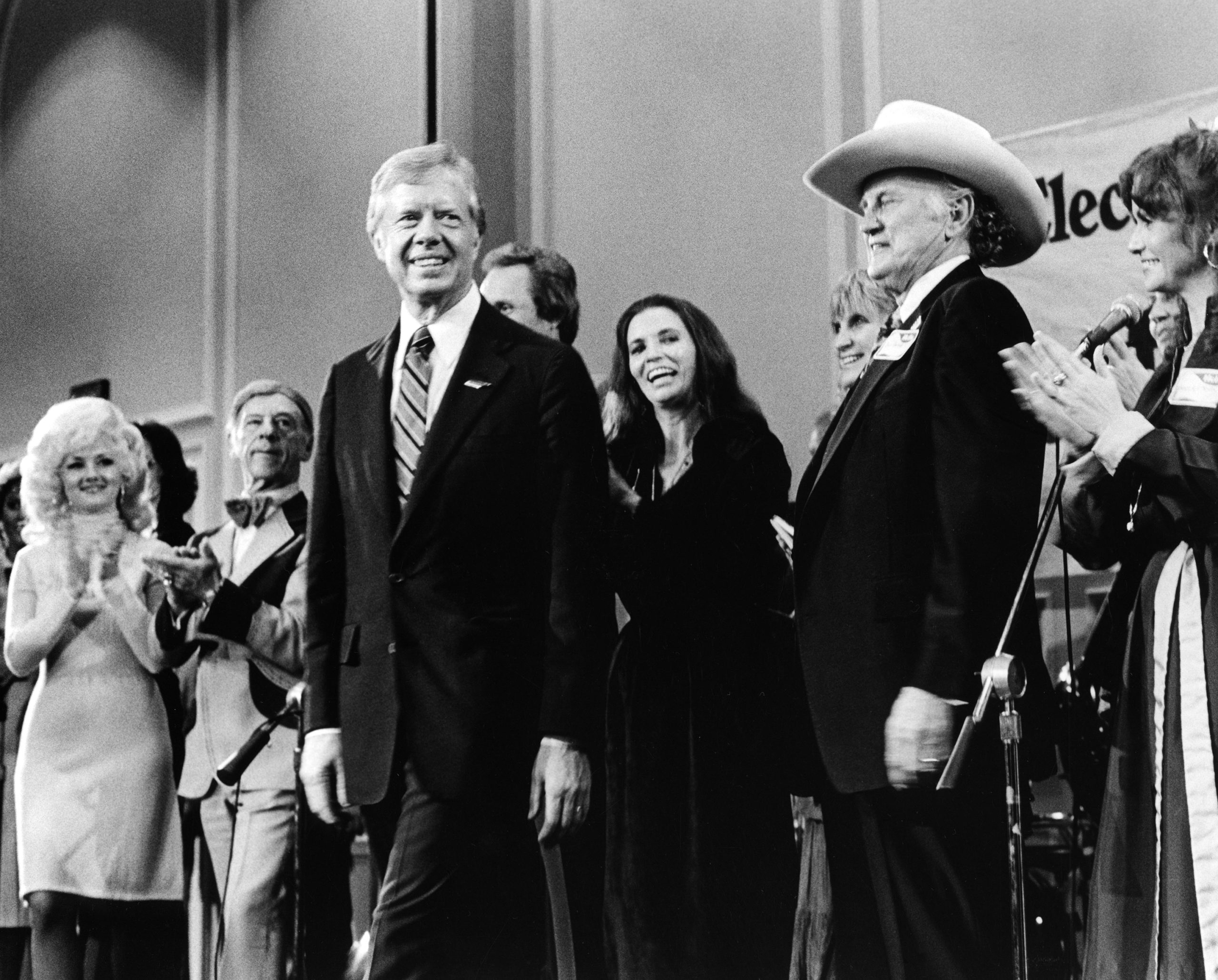
President Jimmy Carter on the Grand Ole Opry stage with Kelly Foxton, Hank Snow, Mel Tillis, June Carter Cash, Skeeter Davis, Bill Monroe, Jeannie C. Riley, and others on October 9, 1980. Photo courtesy of Ryman Hospitality Properties.

In The Beginning Was Insurance

In the 1920s, Edwin Craig was watching radio stations emerge across the nation – and seeing the money-making potential for sponsors and owners. He convinced Cornelius Craig, his father and founder of the National Life and Accident Insurance Company, that a radio station could sell a lot of insurance.

Soon, the fifth floor of the company’s downtown Nashville building held a radio studio. The call letters WSM stood for “We Shield Millions,” the company’s motto. A program that would become the lifeblood of country music started as a way to promote life insurance.

The hiring of George D. Hay away from Chicago’s WLS was the beginning of the WSM Barn Dance. The 30-year-old who called himself The Solemn Old Judge and started every show with a steamboat whistle would set the tone for much of the Opry’s 100 years – including its name.

Which all started with a clash of cultures.

Some upper-crust Nashville residents complained the only radio they could hear on weekends was string band programming from the dominant WSM station. In response, WSM began carrying the syndicated “Music Appreciation Hour.”

The Barn Dance slot followed the classical program, and Hay, not one to pass up a good line, said, “For the past hour, we have been listening to music largely from Grand Opera, but from now on, we will present ‘the Grand Ole Opry.”

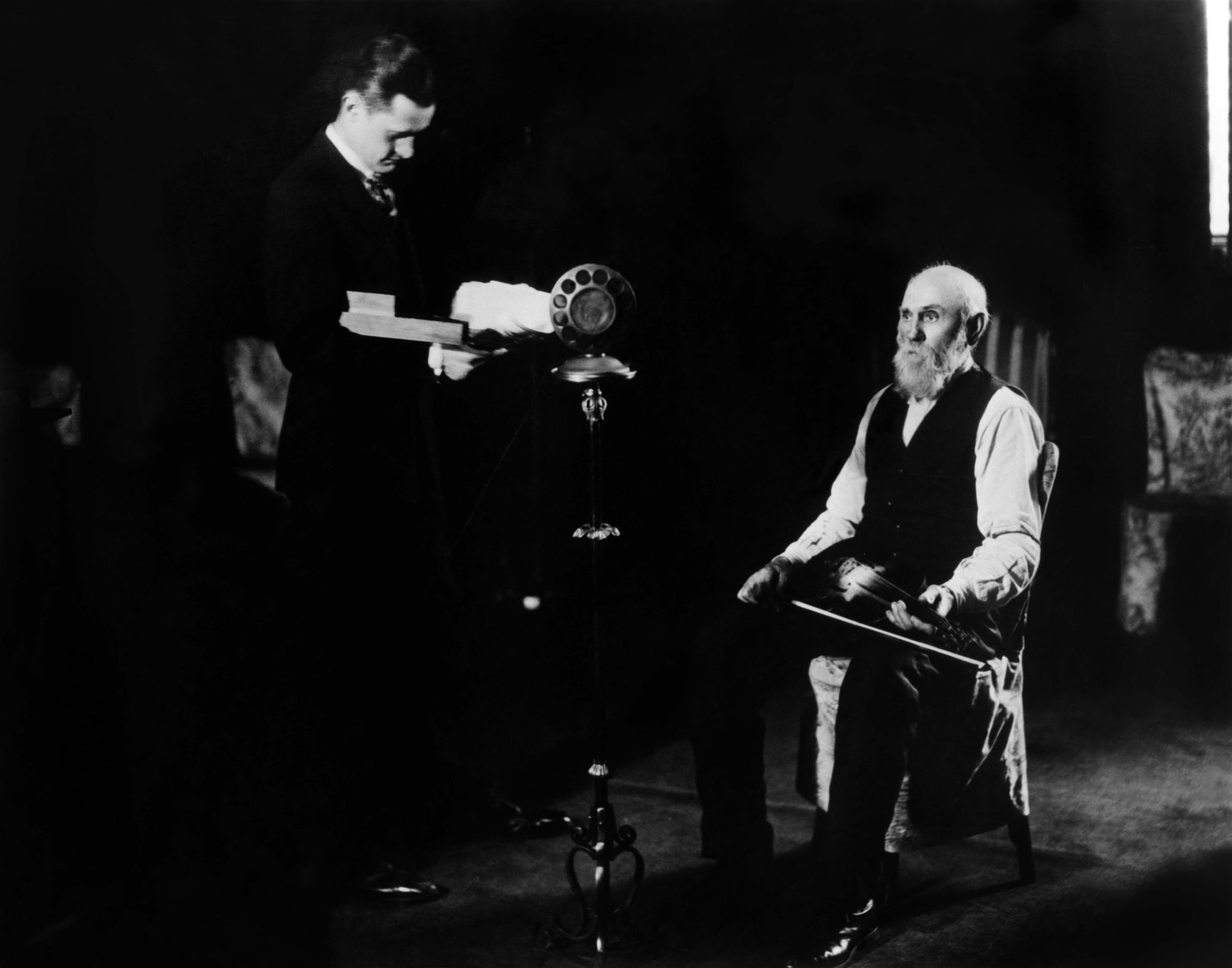
George D. Hay is pictured at microphone with a whistle and Uncle Jimmy Thompson is seated in this 1925 photograph from when the Grand Ole Opry was still the WSM Barn Dance. Photo courtesy of Ryman Hospitality Properties.

For years, the Shield Men – door-to-door National Life and Accident insurance salesmen carrying the company’s shield logo – introduced themselves as representing the Grand Ole Opry. They would even listen outside windows to see who was tuned in to the Opry – and who would be a likely customer.

The earliest WSM shows relied on local talent, running heavily toward fiddlers and string bands. But Hay would invite whoever he thought the audience would like.

DeFord Bailey, a Black musician grounded in both the blues and old-time string band music, became a regular, wowing audiences with his harmonica. Kitty Cora Cline, the first female soloist, performed on hammered dulcimer, and Fred Shriver played the accordion. Uncle Dave Macon on his banjo with Sid Harkreader on fiddle and guitar set the stage for the comedy that would remain central to the Opry’s success, with songs like, “Keep My Skillet Good and Greasy.”

A Beacon

As the recording industry grew, the variety of musicians available to the Opry grew, as well. The show began featuring brother duets, cowboy music, Western swing and solo crooners. Bill Monroe & the Blue Grass Boys were featured stars for decades.

Opry singers expressed the joys of new romance, the happiness of Sunday dinner on the lawn, the sorrow of lost love, and the loneliness of leaving home. Audiences across America listened – and related. The Opry became a focus of family life.

Dolly Parton, like many rural listeners, grew up without electricity. Her family faithfully listened to the Opry on a battery-powered radio. Waylon Jennings’ dad would hook their radio to the car battery. Jeannie Seely’s family would pile in the car and drive up a hill until they could get the signal. Opry history is filled with stories of musicians who listened as children – and dreamed of growing up to perform, like their idols, on the iconic stage.

Opry member Dierks Bentley, who gracefully moves between country and bluegrass, told BGS, “Being invited to join at all is the biggest honor – especially for me, personally. I grew up listening to all the Opry greats on the radio with my dad, so becoming a member is like having the ultimate backstage pass to see the best musicians in the world. And to be invited by Marty Stuart … hands down, it was one of the coolest nights of my life.”

Dan Rogers, the Opry’s senior vice president and executive producer, said the Opry has always been a place to celebrate the good times and be uplifted during the tough times. “Think about,” he said, “the folks who tuned in on Saturday nights during World War II. That was their only source of entertainment throughout the week.” Minnie Pearl, with her signature “How-dee,” and Roy Acuff gave them respite from war news.

On the first show after the 9-11 attacks in 2001, Rogers said, “Our background singers sang an a cappella version of ‘God Bless America.’ And one by one, the people in the audience stood and sang along. And I remember thinking, I bet everybody tuned in across the country is singing along to ‘God Bless America.’”

The Opry’s response to the COVID-19 crisis created desperately needed connection during a frightening time of isolation.

Just a week after deciding that live audience shows weren’t safe, Opry staff arranged a pared-down streaming production with no audience and a skeleton crew. Longtime cast members Bill Anderson, Jeannie Seely and Connie Smith held down the first night alongside Mandy Barnett, Michael Cleveland & Flamekeeper, and Sam Williams.

For the second weekend of restrictions, veterans Vince Gill, Marty Stuart, and Brad Paisley sat on stools spread out across the stage and pulled off what Rogers called “a beautiful, beautiful show.”

Watching from his office, Rogers started reading comments from grateful listeners. For months, people marked their calendars to tune in. They wrote, “I’m in Europe. I set my alarm. It’s 2 a.m. here, but I wanted to experience this with a community.”

Marty Stuart, Vince Gill, and Brad Paisley perform for an empty Grand Ole Opry House during the COVID-19 lockdowns in 2020. Photo by Chris Hollo, courtesy of Ryman Hospitality Properties.

Kathy Mattea, the newest Opry inductee, feels those connections whenever she performs there.

People may have sung along to her hit “18 Wheels and a Dozen Roses” in their car or in the shower, but at the Opry, she says to BGS, “Here’s your chance to sit with an audience and sing this song that everybody knows. Nobody knows who the person next to them voted for and it doesn’t matter at that moment.”

“The Ellis Island of Country Music”

In the early days of radio, what was called hillbilly music was as limitless as the range of a 50,000 watt radio station. And the Opry remains dedicated to maintaining those wide open spaces.

Garth Brooks and Trisha Yearwood, in their forward to the book 100 Years of the Grand Ole Opry, refer to the show as the “Ellis Island of Country Music – a place where all are welcome.”

Contemporary country often has been accused of being homogenous and limited. But despite the factors that have controlled commercial country, the Opry maintains its open-arms attitude. Rogers said, “The two core tenets of an Opry show are celebrating the past, present, and future of country music, and also showcasing multiple genres under the country music umbrella.”

In any show, he said, “You might have something that’s on the top 20 of the country charts today. And you’ll have country classics. You might have a contemporary Christian song, Americana string music, or even something from outside the genre by somebody who just happens to be a country music fan or was influenced by country music.”

In 1974, the R&B-oriented Pointer Sisters included an original country song, “Fairytale,” on their second album. The cross-over hit earned them an invitation to the Opry stage, where they became the first Black group to perform.

Ringo Starr appeared for the first time in 2025 and James Taylor’s debut on November 11 will be remembered as a big part of the 100th anniversary celebration.

And, Rogers said, “Because we can do it, it’s fun to take a chance on a new artist.”

Before his first Opry appearance in July 2022, Zach Top had no hits to his name. But Rogers remembered the programming team saying, “You don’t see an artist like that every day. It sure feels to us like our audience would absolutely eat that guy up!” Today, Top’s music is everywhere.

Bluegrass has been a staple since before it had a name and it has never lost its place on the stage. Bentley and Del McCoury played “Roll on Buddy, Roll On” when the Grand Ole Opry House first reopened after the 2010 flood closed its doors for months.

Charlie Mattos is a 10-year veteran Opry announcer and longtime co-host and producer of WSM’s morning show. He said that on any given night, a portion of the Opry House audience “may truly have never seen a bluegrass band play.”

“And when Del McCoury and the boys finish with an incredible instrumental,” Mattos continued, “or Sister Sadie blisters the stage … the enthusiasm that comes out of that crowd, the immediate standing ovation for the insane musicianship that they have just witnessed …” Mattos said, “it blows their minds.”

Mattea said, “Bluegrass is front porch jazz – the virtuoso playing and the vocals and the harmonies and the trading off of licks. That’s how I fell in love with bluegrass.” And the Opry exposes millions to that brilliance.

A Good-Natured Riot

The Opry show is a complex set of acts and sets requiring precision planning, flexibility, and good nature on the part of the announcers – and commitment on the part of the performers. Rehearsals are brief or non-existent. Timing is everything.

Borrowing a phrase from George D. Hay, the Opry is still sometimes called a “good-natured riot.”

Mattos said, “When you come to see the show live, you see it all. The set changes. The artists leaving as the announcer sends them off. You can see the stage crew out there and usually in 90 seconds they can completely swap things around.”

But while reading a commercial during set changes, Mattos may notice the stage manager giving the “stretch” signal. He might have to keep talking for as long as four minutes – a millennium in radio time.

Sometimes the commercials themselves become the entertainment.

The first time Glad Wags sponsored an Opry segment, Chuck Morgan was announcing. While he stood off-stage reading the dog food commercial, house bassist Bill Linneman came up behind him and started barking. “By my last year there, there were like 20 people behind me going at it,” Morgan said. (The consensus is that Connie Smith does a great chihuahua imitation.)

A Family

Jeannie Seely – who racked up nearly 5,400 performances on the Grand Ole Opry before her passing in August 2025 – remembered it was more than the music that fueled her desire to join the Opry: “That’s hearing these people, like Mr. Acuff and Minnie [Pearl] and Jimmy Dickens and all of them, coming together every week,” she says in 100 Years of the Grand Ole Opry. “They always sounded like they were so glad to be together. They picked on each other and joked, and I thought, that’s just like a family.”

And they were family. When the plane Jim Reeves was aboard crashed in a wooded Nashville suburb, Marty Robbins and Ernest Tubb joined the search party, as did the elegant Nashville socialite Sarah Ophelia Colley Cannon – known as Minnie Pearl.

Opry star Jean Shepard was expecting her second child with husband Harold “Hawkshaw” Hawkins when Hawkins died in the plane crash that also killed Patsy Cline and Cowboy Copas. After months feeling adrift, as Shepard was quoted in the 100 Years book, “I looked down my driveway one day and here come two big black limousines full of the so-called ‘higher-ups’ from the Grand Ole Opry. They said, ‘We want you to come back to the Grand Ole Opry.’ And it really meant a lot to me.”

The family feeling is no accident. In earlier years, Opry members had to perform a specified number of Saturday nights a year. While there’s no set number today, Rogers said they look for a sense of commitment in new members. “It truly is about that relationship,” he said.

Rogers quoted Mattea, upon her invitation to become a member, saying, “These people treat you like family, no matter what.”

One of Mattea’s favorite Opry memories involves a bass player who toured with her. “He was sitting on a stool, playing and singing some old Western swing chestnut, and suddenly Riders in the Sky leaned into the dressing room in full regalia and started singing harmony.

“He was gobsmacked. He felt it was the highlight of his life,” she said.

Bluegrass performer Kody Norris’ music is influenced heavily by first- and second-generation bluegrass. But the band’s preference for flashy suits dates back to a family-friendly welcome Norris received 25 years ago.

His parents took nine-year-old Kody backstage at the Opry, “and I met Bill Anderson. And he had on a red rhinestone suit. That’s the first one I ever saw up close, where I could touch it.”

Later that day, upon meeting his equally rhinestone-clad hero, Porter Wagoner, young Kody got so excited he spit out his chewing gum. Wagoner graciously grabbed two Opry-logoed napkins, one of which the little boy used for his gum. The other one the grown Norris still keeps in perfect condition.

The Circle is Unbroken

In 1974, the Opry left its revered home of decades, the Ryman Auditorium, to move to the deliciously air-conditioned 4,400-seat Grand Ole Opry House.

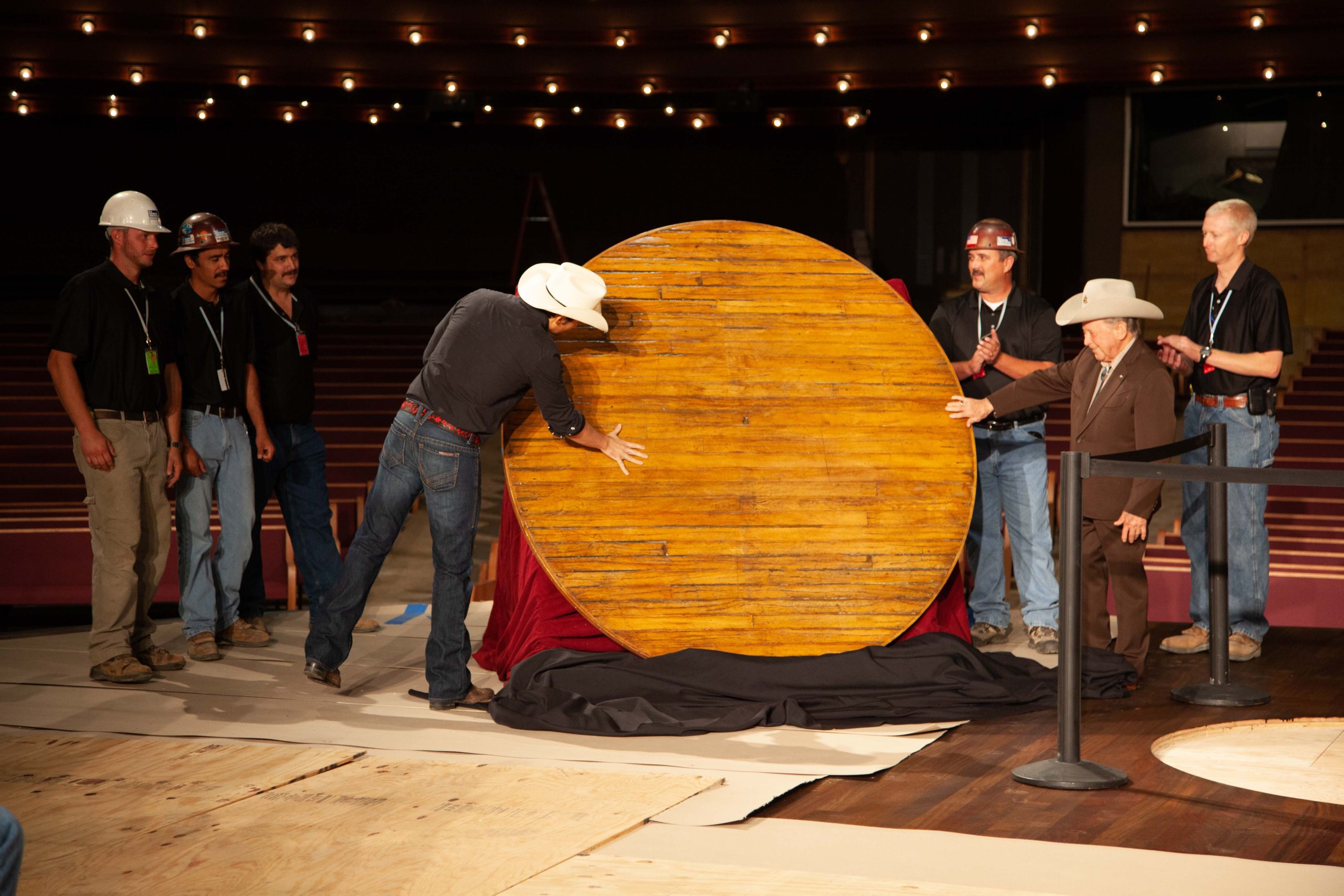
To honor its longtime home, the Opry crew cut a circle out of the Ryman stage and inset it in the new Opry House stage. The circle symbolizes the Opry’s continuity, respect for the past, and optimism for the future.

Mattea experienced that sense of a completed circle on the day she became an Opry member.

“Suzy [Bogguss] was there. We’ve toured together and sung on each other’s records. She’s my closest artist friend, and she was the only one at the ceremony who was not a member. And I thought how generous it was of her to be there.

“So, while I was overflowing with celebration, to get to invite my friend to the party publicly in the name of the Opry was the sweetest gift. It was a moment I’ll never forget, and I’m going to be there for her induction, too.” Bogguss will officially be inducted as an Opry member in early 2026.

Braid Paisley and Little Jimmy Dickens return the Circle to the Opry stage after the 2010 flood. Photo courtesy of Ryman Hospitality Properties.

Join The Celebration

There’s nothing low-key about the Grand Ole Opry – so in the classic Opry spirit, fans have had plenty of opportunity to celebrate the centennial all year long.

Earlier this year, NBC broadcast a three-hour anniversary special, with dozens of stars ranging from Reba McEntire to Jelly Roll to The War and Treaty. The Opry also took the show to London’s Royal Albert Hall for the very first time. You can stream clips of these and other Opry events on YouTube and social media.

With the Virgin Music Group, the Opry has produced the album Opry 100, Country’s Greatest Songs (released November 7). Among the unforgettable recordings are Vince Gill singing his heart-rending “Go Rest High on That Mountain,” Dolly Parton singing “I Will Always Love You,” and Ashley McBryde covering the classic “Your Cheatin’ Heart.” You can order the album from the Opry site.

Craig Shelburne, Brenda Colladay, and Opry members and employees collaborated on 100 Years of the Grand Ole Opry, a book filled with anecdotes and photos that vividly illustrate the Opry’s remarkable history. And to teach your children well, there’s also a new childrens’ picture book written by Emily Frans and illustrated by Susanna Chapman. Find them in your local bookstore.

And, on November 28, 2025, the official 100th anniversary of the Grand Ole Opry we all hold dear, the Opry is celebrating with two huge birthday party shows featuring country stars and Opry members like Vince Gill, Ricky Skaggs, Trace Adkins, Dailey & Vincent, Bill Anderson, Jamey Johnson, Marty Stuart, and many, many more. Tickets are available here.

Of course, the celebrations will continue in 2026.

“The Opry is the core and soul of country music,” Bentley said. “It’s a place where the past, present and future of our genre all come together. There isn’t anywhere else like it.”


Continue exploring our Artist of the Month coverage of Opry 100 here.

All photos courtesy of Ryman Hospitality Properties, credits and attributions as marked. Lead image: Bill Monroe & the Blue Grass Boys and the Opry Square Dancers take the Opry stage at the Ryman Auditorium in the 1960s.

BGS 5+5: Joshua Hedley

Artist: Joshua Hedley
Hometown: Naples, Florida
Latest Album: Neon Blue
Personal Nicknames: Mr. Jukebox

Which artist has influenced you the most…and how?

I found Bob Wills at a very young age. Probably 10 years old or somewhere around there. I was instantly obsessed. He really struck a chord with me. Something about the blend of country and jazz resonated with me and particularly inspired me to be better at my instrument. I would lock myself in my parent’s bathroom with a CD player and my fiddle and just wear out this Bob Wills greatest hits CD for hours, trying to learn all the fiddle parts and solos and stuff. It really strengthened my ear at that age when you just soak up knowledge like a sponge. I probably wouldn’t be playing at the level I’m at today if I hadn’t discovered Bob Wills when I was so young.

What was the first moment that you knew you wanted to be a musician?

Honestly, it’s almost like I was born into it. I don’t remember the first moment I knew. I just always did. I asked my parents for a fiddle when I was 3. They told me to ask again when I was older, and I did, five years later. They got me one when I was 8 and I just took to it almost instantly. I just knew that’s what I was going to do with my life from then on. I started playing for real, professionally in bands, when I was about 12 and after that it was all over. That was it. I decided then I was going to move to Nashville and play country music for the rest of my life.

What’s the toughest time you ever had writing a song?

I always have a tough time writing. More specifically with finding inspiration and focus. I had this brief period of inspiration when I wrote Mr. Jukebox, but before that and ever since, I’ve always had a hard time writing. I struggle with ADHD, so it’s hard for me to stay focused on a single idea long enough to write a whole song. There’s also a level of self confidence needed to be a great writer that I lack. I can recognize a great song that someone else wrote, but even if other people tell me how much they love my songs, I always second-guess them myself. I always feel embarrassed playing my own music.

What has been the best advice you’ve received in your career so far?

Don’t read your press. Especially the reviews. Good or bad, they’ll affect your ego negatively. Someone once told me when I was just a kid, “You’re never as bad as they say you are, but you’re never as good as they say you are either.” You can’t control what people write about you. If it’s negative, it can crush you, but if it’s positive, it can inflate your ego too much. Neither of those things are good for you. Staying away from your own press seems like good advice to me, even if I don’t always take it.

Since food and music go so well together, what is your dream pairing of a meal and a musician?

You can probably tell just by looking at me that I enjoy food. I like everything from Michelin Star to Taco Bell. My buddy Sean Brock is absolutely crushing the food game in Nashville right now. It’d be cool to do a show where he catered it. Maybe do a bunch of traditional Florida foods like gator tail, smoked mullet, frog legs, Cuban sandwiches, key lime pie — stuff like that. Then me and Elizabeth Cook and Wade Sapp can play a bunch of country music from Floridian artists like Mel Tillis, Pam Tillis, Slim Whitman, Vassar Clements, John Anderson, Terri Gibbs, Gary Stewart (not actually Floridian, but we claim him), etc. Actually…I kind of want to make that happen now.


Photo Credit: Joshua Black Wilkins

Take the Journey: 17 Songs for a Sunny and Warm Summer Vacation

In July we put together a playlist of bluegrass songs for summer vacation and once the inspiration was flowing, it was difficult to stop! We thought we should return to the theme, but slightly zoomed out, to include songs from across the roots music landscape. With the summer still shining, enjoy these 17 folk, Americana, and country songs perfect for your road trip playlist.

“Ride Out in the Country” – Yola

Yola was a 2020 Best New Artist nominee at the Grammys and she’s just returned with a new, full-length album on Easy Eye Sound, Stand For Myself. The entire project is lush and resplendent, like the glory days of orchestral, big-sound country-pop in the ‘60s and ‘70s. For this playlist, though, we return to her prior release, Walk Through Fire, and the perfectly country track, “Ride Out in the Country.” Take the scenic byways and crank the volume!


“I Like It When You’re Home” – Della Mae

One of the nicest silver linings of vacation is missing home – and that delicious feeling of returning to your own space and your own bed after being away. And your loved one(s), too! Della Mae captures that sentiment in this jammy, rootsy track from their album, Headlight. Take the day off, drive north, sit by a lake.


“A Little Past Little Rock” – Lee Ann Womack

A truly quintessential driving song. A must-add even if your vacation route comes nowhere near Arkansas. The baritone guitar intro, the shout-along-with-the-lyrics chorus, the whimsically late ‘90s production. A banger. A bop.


“Sunny and Warm” – Keb’ Mo’

Keb’ Mo’ is a master of vibes. His single “Sunny and Warm” showcases the acoustic blues musician in a more traditional R&B light – and the impact and result are simply golden. This track will have you craving your happy place, wherever that warm and sunny locale may be.


“Heavy Traffic Ahead” – Bill Monroe

Look, we’re The Bluegrass Situation! We’ve gotta get our bluegrass kicks in somewhere – bluegrass is roots music, after all. Given that we left this classic by the Big Mon himself off our Bluegrass Songs for Summer Vacation we felt it was worth inclusion here. And worth a mention so that you’ll go check out the entirely bluegrass playlist, too!


“Country Radio” – Indigo Girls

Finally a country song about country radio – and cruising around aimlessly listening to it – that is enjoyable and free of the guilt associated with the false nostalgia, conservative politics, authenticity signalling, and post-2000s country. Especially the kind most often played on the radio! This Indigo Girls track is testament to all the folks out there who love country music, even if it doesn’t always love them back. Don’t worry, it will. Eventually! (Read the BGS interview.)


“White Noise, White Lines” – Kelsey Waldon

If you catch yourself daydreaming, in a dissociative or meditative trance as you keep it between the lines, Kentucky-born singer-songwriter Kelsey Waldon has the exact soundtrack for you. “Whie Noise, White Lines,” the title track of her most recent album, speaks to that near-trope-ish phenomenon of losing oneself amid the countless miles traveled while living the life of a traveling musician. Waldon, as in most of her music, accomplishes this motif without stereotypes or clichés, and the result is a song that will be a staple on vacation playlists for decades to come.


“Table For One” – Courtney Marie Andrews

A variation on the same theme, this time from Courtney Marie Andrews, “Table For One” is gauzy and lonesomely trippy. “You don’t wanna be like me / this life ain’t free,” the singer pleads, seeking a sense of reality in a life almost entirely abided within liminal spaces. Find peace in the redwoods, but try to hold on to it. You might lose it twenty miles later.


“Two Roads” – Valerie June

Cosmic and longing, Valerie June distills Kermit the Frog’s “the lovers, the dreamers, and me” into album form with her latest outing, The Moon and Stars: Prescriptions For Dreamers. Whatever bug you’ve been bitten by – rambling, restlessness, cabin fever, listlessness – let this song and this album scratch that itch. And as you let the miles fade behind you, on whichever of the two roads you take, don’t forget to look up… at the moon and stars and beyond.


“Christine” – Lucy Dacus

Whether or not you’ve experienced the beautiful, transcendent, and heart-rending forbidden love of being queer — on the outside looking in on love that society has constructed to which you’ll never have access — Lucy Dacus’ fantastic, alt/indie roots pop universe will give you a crystalline window into this very particular iteration of unrequited love on “Christine.” The song feels almost as though you’ve woken from a warm, sunny, time-halting afternoon nap in the back seat of a car yourself.


“It’s a Great Day to Be Alive” – Darrell Scott

Darrell Scott goes two for two, landing on both our bluegrass summer vacation round-up and our rootsy list, too! “It’s a Great Day to Be Alive” is THE song for the moment you realize you’re out of the office, away from your chores, without a care in the world — whether you have rice cooking in your microwave or not.


“Hometown” – Lula Wiles

For those summers when all you can muster is a trip home. Lula Wiles don’t just trade in nostalgia and hometown praise, though, they take on the subject with a genuine, measured perspective that picks up paradoxes, turns them over, and places them back down for listeners. It’s a subtly charming earworm, too.


“Heavenly Day” – Patty Griffin

“Oh heavenly day / All the clouds blew away / Got no trouble today…” The exact intention to be channeling during vacation! Don’t let your summer getaway be one of those vacations from which you end up needing a vacation. Leave your troubles behind, have a heavenly day.


“Midnight in Harlem” – Tedeschi Trucks Band

Your travels may not bring you even within the same state as Harlem, but this song had still better be on your road trip playlist. There’s almost no song better to put on at midnight, wherever you may be roaming, than Tedeschi Trucks’ “Midnight in Harlem.”


“Outbound Plane” – Suzy Bogguss

Every time I step into an airport my anxiety seems to sing, “I don’t want to be standing here with this ticket for an outbound plane.” It’s always true. This writer has not yet returned to the jetways post-COVID, so we’ll see how that goes. At least there will be the security and comfort of this jam (composed by Nanci Griffith and Tom Russell) from Suzy Bogguss’ heyday.


“455 Rocket” – Kathy Mattea

There are plenty of modern versions of muscle cars available and on the road today, but not a single one is an Oldsmobile 455 Rocket! Kathy Mattea represents the rockabilly/Americana tradition of paeans to automobiles and gearhead culture with this loping tribute to a 455 Rocket, an early cut for Gillian Welch and David Rawlings. If you happen to take your country drives in a muscle car, regardless of brand, this track is for you.


“Take the Journey” – Molly Tuttle

What better way to conclude our playlist than with this always-timely reminder from Molly Tuttle? It might be a cliché, though it really is true: It’s about the journey, not the destination. So take the journey! Enjoy its twists, turns, and be in the moment. And take some clawhammer guitar along with you.


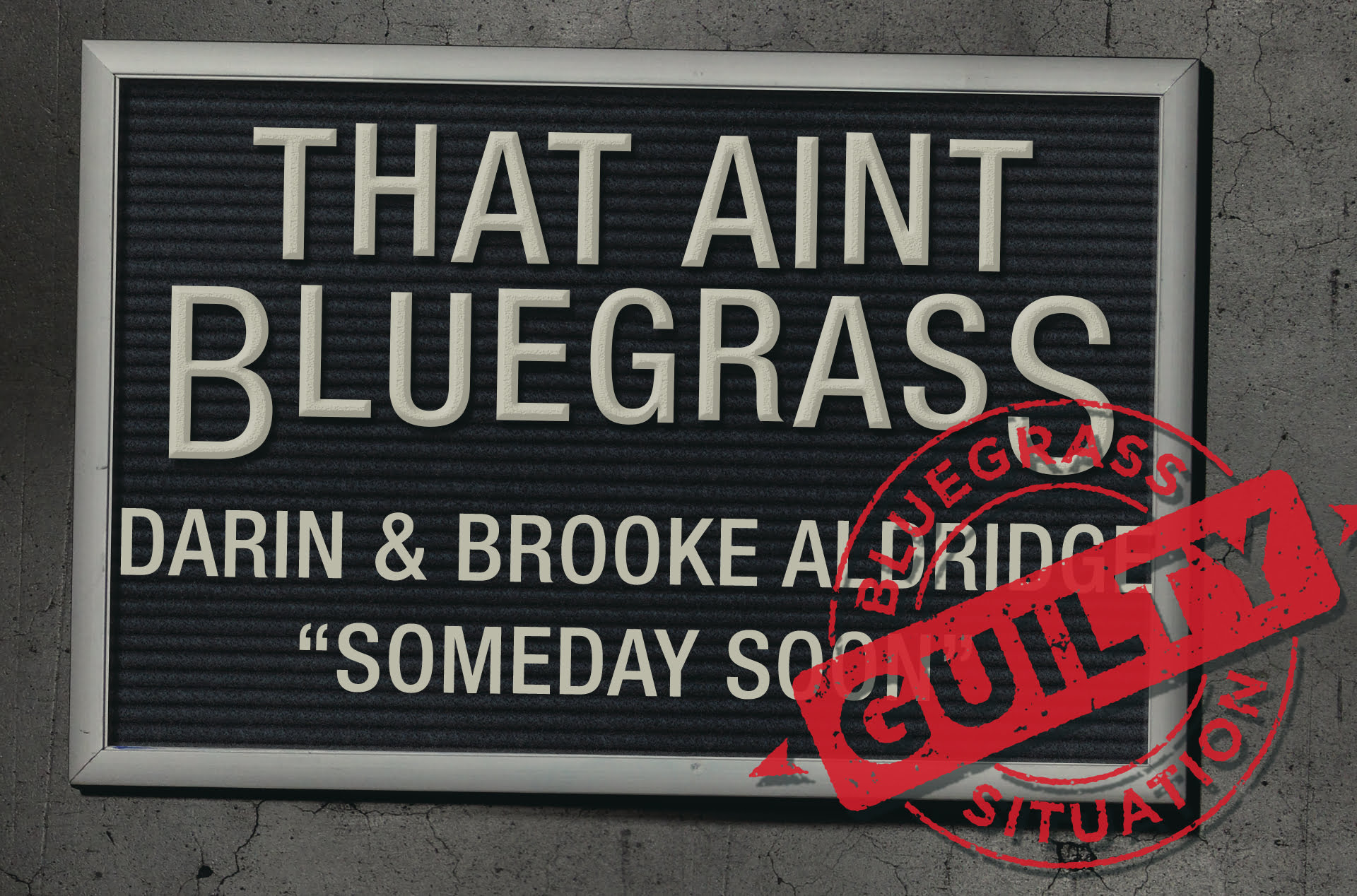
That Ain’t Bluegrass: Darin & Brooke Aldridge

Artist: Darin & Brooke Aldridge
Song: “ Someday Soon” (originally by Ian & Sylvia)
Album: Faster and Farther

When did you first hear “Someday Soon?”

Darin Aldridge: It’s one of the tunes that Brooke and I have been doing in the living room around our house, as we just sit around playing, coming up with tunes. [Laughs] Suzy Bogguss was probably the first for both of us. We were in Sarasota, Florida, about a year-and-a-half or two years ago with John Cowan — we’ve been on tour a lot with him lately. And the Nitty Gritty Dirt Band, some of those guys were down there. We were just soundchecking, and Brooke started singing the song as a vocal check. And they all asked if we would do that song that night. We started doing it from there.

What was your process for arranging it and putting it together?

We kept it in the same key for her. It sang really well. The chords are so beautiful in it the way Ian Tyson wrote them, so we thought, “Why change anything that’s not really broken?” She does hold out a part of it toward the end. It’s such a good note for her. And that’s different from any other versions of the song. We arranged it with the band we would be performing live with, so it would have the fiddle and guitar break. Dobro was in our band, at the time, so that’s how we had that in there.

It’s been a tradition since the beginning of bluegrass for artists to take songs from outside of the genre and turn them into bluegrass songs. Why do you think that is?

I think that as people in different genres and different eras — say the ‘60s til now — people just play music that they enjoy, writing they enjoy. I got to be a part of the Country Gentlemen in the last decade or so that Charlie Waller was alive. They were probably known as the first bluegrass artists to really be reaching out in the ‘60s, doing a lot of folk tunes, a lot of rock songs, like things from the movie Exodus and so forth. That trickled down through the decades. If it’s just a good song, it’s hard to keep down, and I think that’s what keeps a lot of the music fresh. Even Monroe ventured into some of the bluesy music, so did Flatt & Scruggs, to keep along with the times. Different artists just picked things that they enjoyed or spoke to them.

What’s your favorite thing about performing this song?

Probably the crowd response. It speaks to a lot of new folks listening to it the first time, then you get the older generation that have heard it from the hit by Judy Collins in the ‘60s, or from Suzy Bogguss’s hit — people who are 40 or 50 years old remember that from the ‘90s. It’s a good crowd favorite. We got to perform it on the Grand Ole Opry this year, when we debuted, and it got a great response. It’s just been a wonderful song. It’s up for IBMA Song of the Year. It’s been number one for us on the Bluegrass Today chart, Roots Music Report, and, I think, Bluegrass Unlimited.

You know that ain’t bluegrass, right?

[Laughs] ‘Cause it don’t have a banjo in it! I see it from both sides. Considering bluegrass the way Monroe and them played it in 1946 with that instrumentation — that’s ground zero for bluegrass. This song doesn’t have banjo in it, but it’s got soul, it’s got instrumentation of bluegrass, and of course wonderful singing. It’s hard to keep that down. It can crossover to whatever. It’s not too far from Suzy’s version of it or mainstream country and it’s hit a lot of country radio.

That’s a hard question, you know? If it’s bluegrass or it’s not. I think it’s people’s opinion about what they enjoy and that opinion is growing wider and wider, which makes the music grow. Why not let them fight over what they think is and isn’t bluegrass? That’s why they make CDs and downloads, so you can choose yourself, I guess? [Laughs]