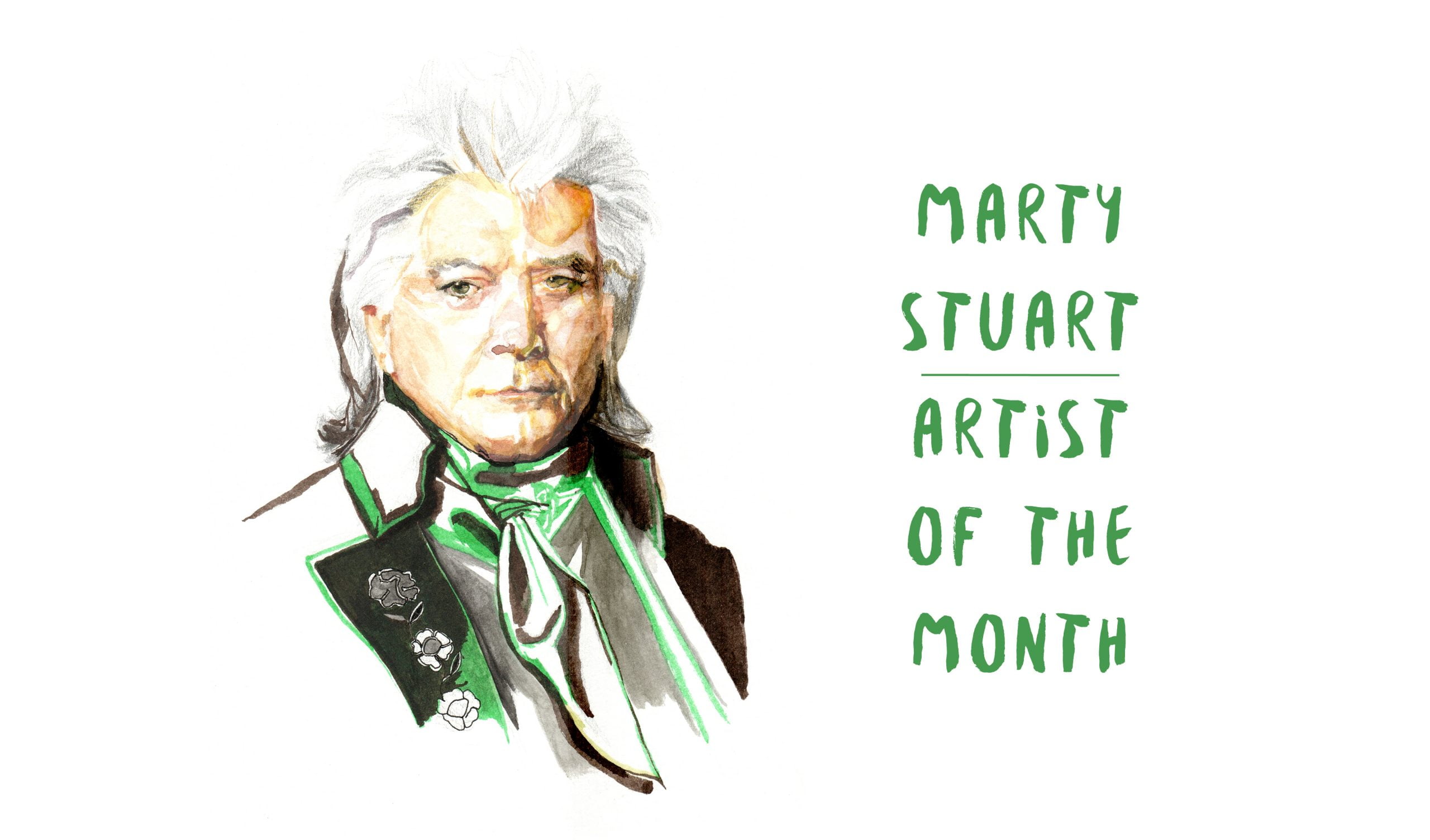
Marty Stuart: Surfing the Desert Waves

Marty Stuart’s catalog reads like an ode to the American landscape, even if that reverence arises more through sound than song title. “You’re talking to somebody who will build around a tree instead of cut it down,” Stuart says about his regard and wonder for nature. “I’ve built decks and porches around them just so they could keep living.” Ever since the early days of hillbilly music, country has been rooted in rural terrains so, for a musician with an inclination toward tradition, Stuart doesn’t have to look any further than the songs themselves to channel the land that shaped them.

His projects call — sometimes subtly, others overtly — to different regions. The styles he has worked to both preserve and play with house geographies as diverse as his native Delta, the rugged Badlands, and now the psychedelic California wilderness. His new album, Way Out West, recorded with longtime band His Fabulous Superlatives, pays homage to the rugged West — to the myths, legends, and lore hovering over that arid atmosphere. “The desert’s a funny place,” he says. To reflect that quirk, Stuart blended the twangy surf rock riffs of the California coast with the shimmering sustain of the wavering desert horizon. He calls the resulting mish-mash “hillbilly surfband” music.

While Stuart holds musical traditions in high regard, he has never treated them as fragile things liable to break at the slightest hint of playfulness. But even he wasn’t sure what to make of the sound he and the Superlatives were fusing together for what would become Way Out West, until he realized every reference fed back into country’s winding history. “If I go back and listen to recordings from the 1960s, and I hear what the Shadows and the Ventures were doing, or Merle Haggard or Buck Owens and the Buckaroos — the kind of instrumentals they were playing — I think everybody was listening to everybody back then,” he explains. “Basically, it was all Fender guitar-driven, twangy music.”

Setting that twang in the Mojave Desert culminated from two earlier projects. First came film: Billy Bob Thornton approached Stuart about scoring All the Pretty Horses (2000), which opened him up to music’s visual properties in an entirely new way. “I learned more about making cinematic songs come to life when we were doing that film,” he says. “I actually called upon Kristen Wilkinson, who was the arranger — we scored that film together — so anytime you hear an orchestral part in [Way Out West], that’s Kris Wilkinson.” Then came his 2006 album Badlands: Ballads of the Lakota. A particular field recording he made for that project stood out and provided the entry point for his new album. “I thought about this prayer that Everett Helper sang and played on his drums. Between that and a sitar and just combining all those sounds, all of a sudden [Way Out West] became a different record.”

Stuart & His Fabulous Superlatives tap into the West’s living spirit — as well as the spirits that have shaped it — from the very start. “Desert Prayer 1” opens Way Out West and epitomizes the blended compositions that follow. Wind howling across the desert floor gives way to a psychedelic guitar calling, as if from the horizon, and eventually segues into Native American drumbeats and chanting. “I wanted the listener to reach out and take my hand at the edge of the Mojave Desert, and I wanted to take them on a cosmic, twangified trip through the desert,” he says. The desert, like his hometown Delta, may seem like “thousands of acres of nothing,” according to Stuart, but he knows there’s a presence in all that supposed absence. “If it’s pitch black and you can’t see anything except what’s in front of you, you start hearing things,” he says. “I’ve done this. I hear things and see things that really aren’t there.” If that sounds like the makings of a Hunter S. Thompson adventure, Stuart insists he’s been “stone cold sober” when such moments have occurred. “There’s a whole spirit world dancing around in those places, and I wanted to tap into that in Way Out West,” he says.

Working with producer and guitarist Mike Campbell (Tom Petty and the Heartbreakers), who Stuart has long admired for his “band” ear, he let the songs breathe. Instrumentals like “Mojave” and instructives like “Time Don’t Wait” reflect the desert’s wide open expanse through their instrumentation and, more importantly, their arrangement. Space is a subject close to Stuart’s heart. “I heard a statistic the other day where there are generally 88 people a day moving into Nashville,” he says, balking at the drain that puts on the natural world. “They keep selling pastures and building houses on what used to be beautiful farmland.” Having recently visited London and New York, he worries about their size and the kind of toll that takes on the earth. What happens to Nashville if it grows in that direction? “As citizens, we have a responsibility to care for what’s in front of us, and we don’t do that very well sometimes, in general, as a people,” he admits.

As much as Way Out West is a love letter to the desert landscape and the music personifying it, it’s also a reminder. Stuart didn’t write a political album, but the timeliness of its arrival takes on greater significance in the current political light. With Donald Trump and his administration proposing budget cuts that would not only affect, but in some cases decimate, departments and programs established to protect the country’s more majestic manifestations, Stuart’s album, in some ways, feels like a panegyric. He brings listeners closer to the grandeur and, in turn, the importance of the land by bringing it to life track after track. “When I walk out into the desert and come in front of a saguaro cactus that’s been there for who knows how long, I respect it because I know that I’m in the presence of something that belongs there and I’m just a visitor,” he says. “I do that everywhere I go. I try to honor the land.” Stuart recalls his deep friendship with illustrator Thomas B. Allen, who drew several album covers for Lester Flatt and Earl Scruggs, and the important lesson Allen taught him. “He was one of my favorite people in this world that I’ve ever known. He said, ‘It’s important, as an artist, to keep something in front of you that knows more about you than you know about it. That keeps you honest, and it keeps you digging.’”

Alongside songs dealing with the natural wonder of the land — in melody, if not always in lyric — Stuart also includes a sonic tip of the hat to truck drivers. “Whole Lotta Highway (With a Million Miles to Go)” finds him waxing poetic about a blue-collar character as much a part of the American landscape’s fabric as the land itself. But with automation threatening to replace so many workers, killing some 1.7 million jobs over the course of the next decade, Stuart’s salute could one day become an artifact detailing a way of life thrown over by industrialization’s endless march forward, like the Carolina Tar Heels’ “Peg and Awl.” “I keep hearing and seeing speculation about driverless cars,” Stuart says. “It’ll be the same thing: There are driverless trains already. Truck drivers are, in my opinion, old American folk heroes. They’re the last of the concrete cowboys and they shouldn’t be forgotten. It’s not an easy job they chose.” The chatter about losing jobs to automation isn’t one to be taken lightly. “You can already say that about a caboose on a train,” he says. “The trains I knew as a kid, they had a red caboose at the end and a guy that sat up in the caboose and took care of business from that perspective. We can already say, ‘I remember the caboose on the train.’ Trucks should be concerned.”

For a historian interested in preserving musical traditions and honoring the past, Stuart’s music encapsulates the landscapes and characters that comprise the American experience. Blurring country, rockabilly, psychedelic rock, and surfer rock into some unruly thing, Stuart & His Fabulous Superlatives have painted a golden- and amber-hued picture of the Wild West. At the end of the day, though, he only cares about music that means something. “I’m addicted to creating, and I’m addicted to projects that matter and say something,” he says. “The hardest thing in this world — I could write songs all day long — but songs that matter, songs that reach out and touch somebody’s heart? I never know when they’re going to come, but I always keep my radar ready for them.”


Lede illustration by Cat Ferraz.

How I Got to Memphis: Cory Branan in Conversation with Coco Hames

Cory Branan and Coco Hames lived in Nashville for years, had mutual friends, moved in the same singer/songwriter circles, released records, played shows, lived life, but somehow managed never to actually meet each other. “We would have absolutely met, if I’d ever left my house for five years,” Branan says, somewhat apologetically. “I just never go out when I get off the road. I stay at home and just look at the wife and child.”

“I never go out,” says Hames. “People are always trying to get me to go to some new bar, and I’m like, ‘I live in bars! I would rather put on some soft pants and stay at home and read.’”

Their homebodiness is well-earned, even if it’s not the only thing they have in common. Both have been road warriors for the better part of the 21st century, Branan as a solo artist and Hames as the frontwoman for the garage-pop outfit the Ettes. He writes witty, roguish songs full of concrete details and wry observations, like John Prine — if he was really into vintage synths and classic rock. Hames’s songs are minimal and smart, eccentric and rambunctious, as though she’s triangulating the spot where the Ramones, Josie & the Pussycats, and Tammy Wynette overlap.

Plus, they’ve both just released what may be their best albums to date. After the Ettes made an amicable split, she went solo with a self-titled record that shows more range and acuity, toggling between a torch song like “I Do Love You” and a country lament like “Tennessee Hollow.” On Adios, Branan writes movingly about the deaths of his father and grandparents and the ongoing trials of small town heroes like the heroine of “Blacksburg” and anyone sentenced to live in “Walls, MS.”

Neither of you live in Nashville anymore. These days, you don’t leave the house in Memphis, Tennessee.

CH: I’ll just tell you: I fell in love, got married. That’s what brought me to Memphis. I left Nashville and moved here a couple years ago, and I love everything about it. I’m very happy here. Actually, in a little bit, I’m going to go see my friend Margo Price at Minglewood Hall. I don’t know if you know her, but I wouldn’t be surprised.

CB: I met Margo, yeah, just a couple times. I’ve been back in Memphis for a whopping two week altogether. Nashville priced us out. We found a cheap place in Memphis, and it was just decided. We got the truck the day we decided to move, and we loaded up. We moved the next day, returned the truck the next day. I told my wife, “Well, it’s a new place, baby. I’ll see you in two months.” She’s already painted the whole place. She’s got it on lockdown. She’s good at moving.

Memphis has great history, but Nashville is still such a big industry city. Did it feel strange to leave that behind?

CH: I have put my foot in my mouth more than once, for more than one city. I’ve lived in New York and L.A. and London and Madrid and Nashville and Austin and Memphis. I always say something stupid about one of those cities, but I don’t really mean it. Nowhere is really home for me anyway, so it’s not really hard for me to leave. I opened a record store in Nashville, but it was getting really expensive. And my husband was visiting me, and I said to him, “What do you do when you’re an adult and you fall in love with somebody and you want to be with them?” He said, “Well, you know, you move to Memphis or I could move to Nashville.” I’m like, “I’ll move to Memphis.” So it wasn’t super weird. It’s a cool place and there’s a lot going on, but nothing I miss too much, to be honest.

CB: What record store did you have?

CH: It’s called Fond Object, and it was up in Riverside Village on the east side.

CB: I didn’t know that was your place. I’ve been up there a few times. I played behind it one time.

CH: Did you get to meet my goats and my pig?

CB: Yes. My son was fascinated. He wanted to take one home.

CH: When I was leaving, I knew it was in capable hands, so I signed off on it and gave it to my bandmates. I think they lost their lease and moved downtown.

CB: I liked living there, but it’s all the same, honestly. Mainly Memphis means geographical ease. There’s a reason FedEx is in Memphis. It has access to Chicago and New Orleans, and it’s so close to Atlanta. When I lived in Austin, you can get in to Mexico before you can get out of Texas. I do well in three or four cities in Texas. L.A., you wouldn’t think it, but it’s pretty isolated. I’m spoiled from being in Memphis. It’s really easy to tour out of. You can do two-week runs in any direction, as opposed to California, where it’s an ordeal going anywhere but the West Coast.

When I lived in Memphis, there a big Memphis-Nashville competition that everybody in Memphis knew about and nobody in Nashville had any clue about.

CB: Exactly. They didn’t know they were in the fight. I’m happy to be from Memphis, but it does give you a little bit of a chip on the shoulder. There’s no scene here. It’s splintered and fractured. There are great musicians who never leave. You can go see somebody who’s amazing, but they’re not touring very much. On the other hand, there’s never anyone in the crowd that can help you. There’s never a producer, never a publisher that’s going to offer to help your career. Nashville has that element. I didn’t enjoy that element. If you’re playing to a stubborn Memphis crowd, it burns off the chaff. If you’re not alive for it or you don’t love it, they’re going to expose you.

CH: Nashville is a hard place to feel comfortable, because I don’t think they’re really interested in anything, which feels very sad and lonely. I’d rather you dislike me than try to chat me up about who we both know. That’s the worst part of what I do. I’m not very schmoozy. I’m probably the least schmoozy person. There are plenty of people to pay for that sort of thing, but I’m not crazy about it.

CB: Don’t get me wrong — there are great things about Nashville and there are shit things about Memphis. It’s a rough town, and there’s a huge gap between the haves and the have-nots. They’re refurbishing downtown, but I don’t know if they’re working a bit on education. Nashville, on the other hand, has no infrastructure for the massive number of people that are moving there, but the city itself is a little more thirsty. They’ll go out to a show: “Oh, I don’t know what it is. Let’s go check it out.” Memphis, they need to know that their buddy is going to be there. But you can be at a party and the guitar will not come out. Unlike Nashville. Some asshole’s always pulling out an acoustic guitar in Nashville. That’s the best way to kill a party right there.

CH: That’s my cue to leave.

I wanted to ask you two about Memphis and Nashville because I feel like place figures very prominently into your songwriting. There are lots of place names in your lyrics, along with a sense of travel and movement.

CH: Cory, you can go first because you’re from here. I’m from Florida, so place has always been something I was trying to get away from.

CB: Really?

CH: I don’t know. It’s more in my record collection than it is outside my window. It’s cooler to be from Mississippi.

CB: That’s the thing. I grew up in a damn suburb. I was a little hoodrat. My grandparents had a farm, but my old man worked at FedEx. He moved us up to the last town in Mississippi, so I was just as much a suburban kid as anybody else. I grew up with the music in the church. Gospel has blues roots, maybe a little more prominent than your typical Southern Baptist reading out of the hymnal. It swings a little more. It depends on where I’m playing whether people consider me country or not. When I’m out opening rock shows or something, as soon as I open my mouth and they hear the accent, they’re like, “Oh, he’s country.” You can’t wash it off. Everything I do, it’s filtered through that lens.

But my music is all over the place. I don’t really play a particular genre. I tend to stay away from a lot of things that I love — old blues, the Piedmont stuff, that’s all scripture for me. Maybe some of the finger picking works its way in, but I don’t really play the blues or anything. I just stay away from that stuff. There’s more of a white suburban thing to me, I think. My music is more about Big Star or the Replacements. That’s sort of blues music, in a way. I’ve always said there’s a reason why Johnny Cash fans are Clash fans and Clash fans are Johnny Cash fans.

Stylistically, both of your albums are all over the map. You get a lot of different sounds and genres, but they all make sense as part of this larger musical personality that you project.

CB: Probably the last record [2014’s The No-Hit Wonder] is the closest I’ve gotten to a consistent sound. I hammered it out really fast, and they just happened to be a bunch of roots-based songs. I’m always about whatever the song sort of wants, and I don’t think as an album, as a whole. I try to structure it later, as far as the pacing of it and what songs go where. I definitely play that loose. Frankly, my obscurity lets me do that. I would probably have a bit more of a career if I didn’t change it up so much. I was on tour with Lucero, and [frontman] Ben [Nichols] was listening to Adios and he said, “Why don’t you do a full album with this kind of song and then another whole album of this kind of song?” I was like, “Because it bores me, and I don’t get to do enough albums to do that.” It takes two-and-a half-years to get a new record through the red tape.

CH: That’s true. At my level, whatever that is, I can do whatever I want, so I do whatever I want. When I was in the Ettes, it was very formulaic without me really knowing it. I was writing for this specific group of people, so of course I kept doing the same thing. There are people who are very sweet and love my band, and I’m sure they want all the songs to be just like that. But with this solo record, I wrote all the songs and let them go wherever they went. It’s all over the place. The whole point was to try these new things, and hopefully I did a good job with them.

That seems most prominent on “I Do Love You,” which reminds me of Dusty Springfield. That’s a nice thing to hear between a country song and a garage song.

CB: I get that same vibe off that one.

CH: I was trying to go for something epic, because I wrote it about my husband. I wanted an epic love story and big feelings. When I was singing it in the studio, I had my arms up like Eva Perón. I’d never really sung like that before. I just assumed I could do it. No one was telling me I couldn’t, so why not?

You’re both writing songs about real people in your lives. That songs about your husband. There are some songs about your dad and your grandparents on Adios.

CB: The one about my father, I wrote that one right after he died, and I never played it out. It seemed a little too specific. I like songs to be useful for other people. I never want to be like, “Oh, look at my pain.” But my wife told me to just shut up, play it out a few times, and see if anybody responds. She was right, as always. Since it seemed to be useful for other people, I went ahead and cut it. But usually, the closer it is to me, the more I will cast it with other characters and other situations. I’ll take all that grief and mourning or even joy and cast it into another storyline. But “The Vow” was very specifically about my dad and it seemed like it worked out all right.

CH: What do you mean? You try to put that sort of emotion or experience away from yourself? You try to insert maybe like a “he” or a “she” where it might be a “me”?

CB: That’s part of it. Also, I’m just not a fan of diary writers. When he died, I did put out a record after that [The No-Hit Wonder], and there was a song on there called “All I Got and Gone.” It’s about a guy in New Orleans and a woman, and there’s a note that he found, but you don’t know if it’s a suicide note or a “Dear John” letter. I was mourning, but I put that feeling in a completely different scenario. That song for me was like, “Okay, here we go. I got this out of me.” But no one would ever connect that, you know? I don’t tend to write with any sort of precision, while I’m still in the whirlwind. I like to get perspective on things and, if I’m going to try to do the old man justice, it’s hard to get a whole human being in a three-minute song.

CH: Yeah. Especially with something like that, do you ever feel like it’s too … I’m going through something that happened recently, and it means so much to me that it feels cheap to approach it where I’m going to put it into song. A lot of people write like that. That’s part of how they get it out, but to me, it’s so precious to me that I can’t distill it.

CB: I know exactly what you’re talking about there. Added on to all of this is that I wanted to do right by the old man and not be maudlin. I didn’t want to manipulate emotions. It’s hard to earn the genuine feeling of “Okay, this was a solid person, a human being.” The second verse is talking about how he gave shit advice. It’s got humor in there, because the old man was funny. But he was also very stoic and his advice usually amounted to, “Don’t do it.”

I Do Love You” is obviously a very different song, but the approach is similar in that you’re writing about a real person and trying to capture that complex relationship in three minutes of music.

CH: I think everybody has had the feelings in that song. I hope everybody has. But I very rarely feel ready to immediately turn my observations or my feelings about important things into a song. It’s not something that I usually need to do, and so I don’t do it. But something that affects your life so strongly, maybe it’s okay not to write about it as a way to understand it, because it’s so big that I don’t think it’s fair for me to understand it yet. So I wait. If something strikes me or I get drunk and write a bunch of stupid lines and one of them is good, maybe it will spur something useful. That’s the most I can do and, if it comes back around and still stands up, if I still know what I was talking about, then it can make me say more.

CB: I won’t mention anybody’s name, but there is an artist I really love and respect. They got successful and found a good relationship, and then they trashed it on purpose, because they thought that’s the only one they could create. It’s the whole tortured artist myth. John Prine has my favorite quote on that: “I’d rather have a hot dog than a song.” Take the joy. You can have both the joy and the song. People say to me, “You’re a relatively sane human being now that you’ve settled down and stopped acting like an asshole, and you have kids, so how do you write when you’re happy?” Well, I know it’s all fleeting. I know all the good stuff is only here for a little bit. My fears and dreams, they go deeper and darker now that I have kids and I’m living for other people. I have no problem writing sad songs, but I take the happy while it’s there.

CH: I don’t like to see somebody who’s a wreck up on stage. I’ll be there. I’ll support them, but really I’m like, “You should take a break, man.” Because I’m not that way. If everything was going wrong and I was unwell, then I couldn’t write. I’d be so depleted and sad and wouldn’t see the point of any of it. I’m a super happy camper right now, but don’t worry, sad things will keep happening — probably as soon as I hang up the phone.


Cory Branan photo by Joshua Black Wilkins. Coco Hames photo by Rachel Briggs.
The Mavericks, ‘I Wish You Well’

Ever since I heard the Bob Dylan lyric “He not busy being born is busy dying,” from “It’s Alright, Ma (I’m Only Bleeding),” I felt haunted by it: Which one was I doing at any given time? And is there a point in your years where you switch permanently from one to another? Is it a specific age? A moment? As I grew older, I realized there was no easy answer to this question. Timing of life and death is often completely trivial at best, falling in our laps when we least expect it, and the best we can do is keep being reborn, over and over again, until that hourglass runs out of sand — or just shatters.

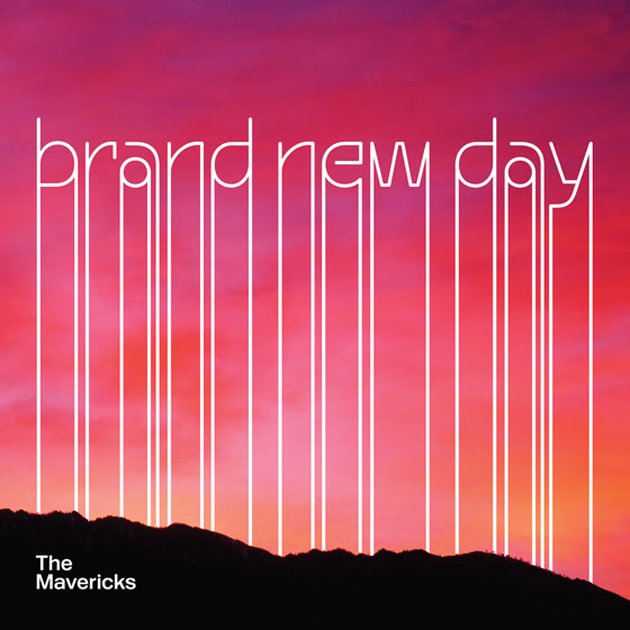
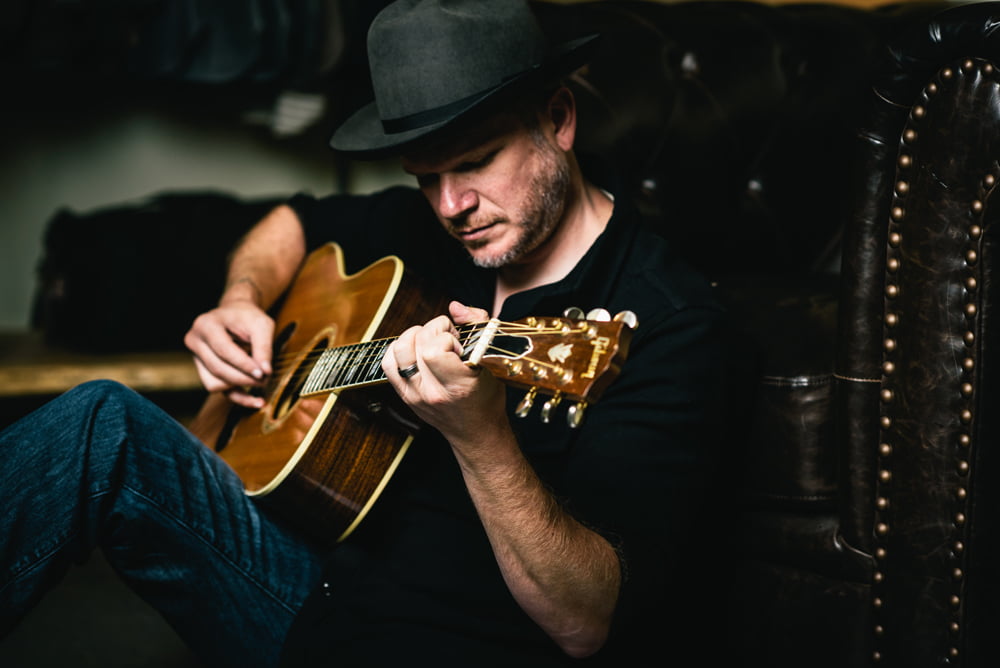
The Mavericks know a thing or two about rebirth: Together since 1991, they’ve fought fiercely for their independence in a country climate often looking for conformity. Brand New Day is the first on their own label — Mono Mundo Recordings — and it proves that, nine albums in, the genre-blending quartet knows how to keep the cocoon spinning. But life can be long and cruel, and they know a thing or two about death, as well. Bandleader Raul Malo’s father passed away while they recording the LP, and “I Wish You Well,” a gorgeous meeting place between Tejano serenade and Roy Orbison croon, is the tribute to the legacy he left behind and the uncertainly ahead. “This is where the road divides,” sings Malo. His voice is unlike most in country or Americana — smooth, mournful, full of sunbaked soul. After two decades making music, old can be new again, even as we embrace the passage of time. Maybe the best way to keep busy being born is just to be a maverick.  

3×3: Mike Wheeler on Heavy Thinking, Hopeful Dreaming, and Rural Living

Artist: Mike Wheeler
Hometown: Vermonter living in Owensboro, KY
Latest Album: Sunbeams All Twisted
Personal Nicknames: Wheeler


Beauty day for a drive to #nc

A post shared by Mike Wheeler (@micwheeler) on

If Jesus, Buddha, Krishna, and Mohammed were in a band together, who would play what?

Jesus on the Flying V, Krishna on the Yamaha Wind Midi, Mohammed on drums (plus heavy-duty earplugs), and Buddha on a Jazzmaster bass.

If you were a candle, what scent would you be?

Miller High Life in New England Basement

What literary character or story do you most relate to?

Marco Polo in Invisible Cities by Italo Calvino. I’m often guilty of describing similarities between places and, once in a while, they just blur together. Honorary mention to Ignatius J. Reilly (A Confederacy of Dunces) as the character I most often talk about, but hope in almost every way to not relate to … though I’d gladly live in New Orleans.


Happy Valentine’s Day #hugsforall #songfamily #darksongs2016 #troop333 #barrettshiddenagenda #gentletouch

A post shared by Mike Wheeler (@micwheeler) on

What’s your favorite word?

From a hopes and dreams standpoint — impeachability. But more casually, and not too distantly related — jabroni.

What’s your best physical attribute?

My E.T.-shaped second toes. They let me phone home when the road gets rough.

Which is your favorite Revival — Creedence Clearwater, Dustbowl, Elephant, Jamestown, New Grass, Tent, or -ists?

My teenage self says CCR, but after selling my soul to bluegrass and moving to Kentucky, Sam Bush and the boys. If I say otherwise, they might send me down the river.


#hotel #campfire #fai2017

A post shared by Mike Wheeler (@micwheeler) on

Are you more a thinking or feeling type?

Feeling, with bouts of heavy thinking.

Urban or rural?

I can’t do one for too long without some relief from the other, but rural takes the cake.

Apple or orange?

Cranberry

A Slice of Life: A Conversation with Mac Wiseman

Members of Bill Monroe’s Blue Grass Boys — and there were more than 150 of them during his half-century career — often started their own bands in the style of their mentor. This was a huge part of Monroe’s influence: He was both bandleader and charismatic evangelist, training future bandleaders to preach bluegrass in a Monroe-style band of their own. His star students (Jimmy Martin, Lester Flatt, Earl Scruggs, Carter Stanley, Del McCoury, Peter Rowan) started their own influential bluegrass bands — not carbon copies, of course, but homages to the Founding Father’s vision. It was an apprenticeship model.

But one early Blue Grass Boy, Mac Wiseman, left the band to do something unusual: He played solo. He still sang songs from the canon of bluegrass and early country, but he presented them with just his guitar and voice. For dyed-in-the-wool grassers, it was kind of weird. The inside joke went something like, “Did you hear the sad news? Mac Wiseman broke up.”

There was another thing that made him different — and this is just my impression, but I think our interview backs it up. Among the early Monroe disciples, he projected a pretty non-bluegrass relationship to his Southern-ness. Wiseman grew up during the Depression in Virginia coal country, having as much of an authentic claim to rural roots as any of the bombastic blue-collar belters like Jimmy Martin, but he de-emphasized the drawl. Wiseman started his career as a radio broadcaster and always sounded like one. He didn’t want to develop a groovy, bluesy, Monroe-style band or shake the rafters with a piercing tenor. Instead, he found a home in the ’60s folk revival crowd. He told stories. He enunciated. He crooned.

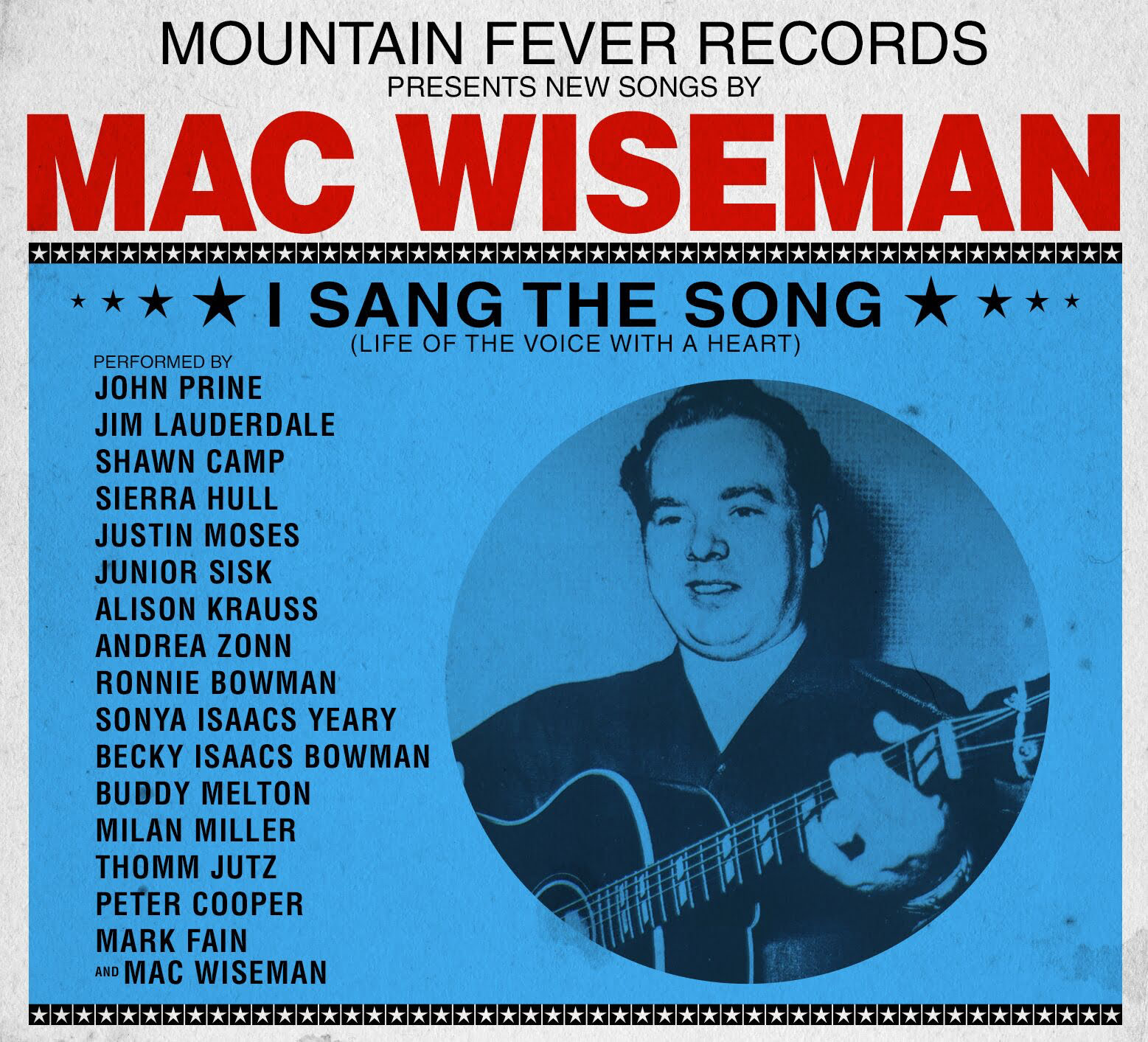
And now, at 91, he has a new album. I Sang the Song (Life of the Voice with a Heart) features 10 songs that tell the story of Wiseman’s long, busy life. Featured guests like John Prine, Shawn Camp, Sierra Hull, and Alison Krauss help pay tribute to his distinctive voice and one-of-a-kind career. Amazingly, Mac Wiseman can still hit the high notes.

I called Mac at his house in Nashville and first got his answering machine. He picked up, interrupting my message, and said, “Sorry I almost missed you! I had the vacuum going!” We talked about his childhood during the Depression, how he learned guitar while recovering from polio, his introduction to John Prine (it involves a threat — and Earl Scruggs), and his deep disappointment with the direction of country music. At 91, he’s gracious, funny, and sharp as a tack — and, maybe most impressively, he still does his own vacuuming.

First of all, I think it’s amazing that you’re 91 years old and still singing. It’s amazing, too, to think of how much social and cultural change you must’ve seen in your lifetime.

Oh, it certainly is. And I’ve been blessed with a decent memory. When I think of all the different phases I’ve gone through, it’s hard to cope with it sometimes.

I know you were born in mining country in Crimera, Virginia, in 1925. I’m sure life in Virginia back then was pretty different.

The first four or five years I was alive, it was peaches and cream. Then the Depression hit and it was the opposite. It was onions and water! I have vivid memories of when I was four, five, six years old. I remember how carefree things were. When the new highways were being constructed all over the place, my dad was making nine dollars a day. He had a Ford Model T car with solid rubber tires on it in 1928. Then, the next year, he couldn’t even afford to buy the tags for it.

I heard that you started learning the guitar while you were recovering from polio, is that right?

Actually, it was while I was recovering from a few corrective surgeries. I had polio when I was six months old, but they wouldn’t do any surgeries until I was approximately the growth I was going to be. So, at about 13 years of age, I went to Charlottesville to the hospital — twice. They operated on my legs, and it made all the difference in the world. That’s when I started learning the guitar, just laying around with a cast on up to my butt!

I guess you couldn’t do much but sit and sing.

That’s exactly right. I had been very active, of course, working the farm for our livelihood, but when I was laid up that summer and fall through the seventh grade, my mother had to take me to pick up the school bus in a little buggy. Then I went on and became valedictorian. How do you like them apples? [Laughs]

That’s impressive! I heard another impressive quote about you. Bill Monroe called you “the best lead singer I ever had.” That’s pretty high praise from a guy who was a tough bandleader.

Well, he did say that, and that was very complimentary. Oh, working for him was very interesting. We toured a lot. He was from Kentucky, of course, and we played all the big theaters around there. We traveled and watched all the movie rolls. Bill and I watched them so much we could recite them riding along in the car! He was a very interesting man to work for. He knew exactly what he wanted to do, and he told you. But I enjoyed working for him and we never had a cross word.

You’ve made over 60 albums, recorded some 800 songs …

Yep, sure have. A lot!

… and most of that was before the Google era, when you could look up all 50 versions of a song with one click. How did you learn new songs, and how did you decide which ones to record?

In my growing up days, we mostly listened to live radio. In the ’20s and ’30s, radio was just coming into its own, you know, and it was mostly live — there were no disc jockeys. My mother was quite interested in music. She would play the organ and read shape notes and things like that. She encouraged me, hoping I would learn something that would get me out of the fields. That’s where I learned a lot of those old songs. She would sit out by the radio — we had the first battery radio in our community — in the wintertime, when it was too cold to work outside, she sat there and quilted and crocheted. She had a composition book laying on top of the radio, and when a live group would come on and sing a song, she’d get a verse or two of it. A few days later, they’d sing it again and she’d get some more. I’ve got 13 composition books in her handwriting where she wrote those songs down for me.

That’s really a treasure.

It is indeed. That’s where I got my background of the old songs. I can remember some of those songs from when I was four or five years old. “Granny’s Old Arm Chair” and “Barbara Allen,” things like that.

That’s interesting. Those old ballads like “Barbara Allen,” they’re story songs. And that’s sort of what the songs on this new record do. They tell your story.

That’s right. It’s my life story in song … 10 songs.

That’s one thing I really like about your singing, that sets you apart from some bluegrass and country singers — it may be a small thing, but it strikes me as important to you — that you sing words really clearly. It’s always easy to hear your lyrics.

Lyrics are very important to me. That’s been an important identity for me, as well. I went to college majoring in radio and did a lot of air work — news, pop records shows, working the control room — and that’s where a lot of my diction comes from.

Well, it shows in your songs. You know how to tell a story.

Well, I try to do that. You know, I actually lived those stories. They don’t change with generations. Even with a new batch of people, the old songs remain the same, and the themes remain the same. Disasters and love and train wrecks, things like that. They’re a slice of life, so to speak.

I’m only 26. My generation grew up with the Internet, many of us living in suburbs, getting our food from an air conditioned grocery store. Do you think all these songs about trains and cabin homes and farming can still resonate emotionally with people?

Well, like I said, they’re a slice of life. Maybe there aren’t many train wrecks that you know about anymore, but it’s also an historical look, these songs. I’ve played a lot of the colleges, the listening rooms, just me and a guitar. They’ve wanted to hear these old songs that paint a picture of a life these kids have never been exposed to. That’s the reason for the longevity of them, I think.

One amazing thing to me is that you’ve played through so many eras of history and eras of music. You were right there through the beginning of bluegrass in the ’40s, but you also played the Newport Folk Festival in the ’60s — what was the Newport folk scene like?

I never knew Bob Dylan, but I did a number of festivals with Joan Baez. After these festivals in the evenings, that was fun, we’d gather up in hotel rooms and sing old songs.

So you’ve been making music for a long time, and it seems like learning from every different generation — bluegrass in the ’40s, folk in the ’60s, pop along the way. Do you feel like you had to reinvent yourself for different eras?

No, I just kept on doing my thing, you know. I could’ve been a bigger star for a short period of time by following the trends, but I decided to just be myself and hoped people liked that. Fortunately, I’ve had a pretty good haul all these years. But I never tried to copy anybody else in the business or change my style to seek what they wanted.

You got to work with a lot of great musicians on this new record.

That’s right. Alison Krauss came by my house and we recorded “’Tis Sweet to Be Remembered” for the new CD. And I sang it the same key as I sang it in 1951 when I recorded it first for Dot Records! Even the new songs we wrote for this record, those are true stories in those songs: standing and warming my feet where the cows had been laying … wheat crop going bad because it rained on it … Every one of those are actual stories about my life. So, yeah, sorry to repeat myself, but it’s a slice of life.

John Prine is featured on this record, and you made a record with him in 2007. How did you get to know each other?

Well, I’d always been aware of his work. Then, one time, a guy who owned a studio came to Earl Scruggs’ birthday party — he’s a real boisterous fellow and he told me, “John says, if you don’t come see him Thursday, he’s going to kick your butt!” I admired him and all, so I went down to his office. What he had in mind was pitching me songs for me to do on my own. We got to talking and found out we knew a lot of the same things, so that’s how that record came about. That was one of the great experiences of my life, singing with John and swapping verses, you know. John still comes to my house to see me quite frequently.

You’ve been around for so much of country music history. I’m curious if you listen to any new music and what you think about it.

Today’s music? Well, I’m very disappointed in it, because so many of the younger artists don’t know the background. That’s the reason I go to colleges: They sit on the floor all hush-hush and listen to the old stories. Sometimes I have to do the same old song two or three times in a concert. So it’s an educational thing to the younger people. For so many industry people today, it’s all a mechanical thing. The record companies have publishing companies, so they can sign up an artist and put him in a room for four or five hours a day to write. Pretty often, one song out of the whole album is the one that hits, but the rest of them are junk. I still listen to it just to see what changes, but I don’t enjoy it like I did. There’s a few acts that I enjoy, but a lot of the younger ones, I don’t know who the hell they are!

So you feel like a lot of the younger artists don’t have an understanding of the history of country music?

No, they really don’t. They don’t have the knowledge of it. Actually, the record companies don’t have a knowledge of it. They’re business people out of New York and Chicago and L.A., and they come to Nashville to make business out of it. A lot of them have no idea of the history. I’ll give you a quick example: I was on the board of directors for the CMA where we nominated people for the Hall of Fame. And there was a young man on there from New York representing Decca Records here. We were at a board meeting, and folks like Owen Bradley were there, people of that vintage. [Note: Owen Bradley was an influential producer who helped modernize the Nashville sound in the ’50s and ’60s.] Owen nominated Brenda Lee. This young man stood up and quite innocently said, “Who is she and what did she do?” I wrote a letter of resignation right then and there. He was an honest fellow, and it was okay that he didn’t know, but what was he doing on that board?

Didn’t that make you want to stay on the board and change it and teach them a little more about the history?

No, you know, I was one of the founders. I worked at every facet of it. I’m the only living member of the original board of directors. I’ve been in it professionally since ’44, you know. Radio, bands, and recording. I was A&R director of the country department for Dot Records out of Hollywood for six years. Done a lot of things.

Well, you’re still singing at 91 — and you still sound like you. I’m sure a lot of people are wondering what’s your secret to staying productive into your 90s and still being able to sing so well.

I don’t know, but it is a blessing. I think it’s sticking to your guns and the good Lord’s blessing — that’s it.

Mr. Wiseman, I really appreciate you taking the time to speak with me this afternoon.

Well, it was my pleasure. I’m so pleased you’re writing about this music. But at the same time, you know, it keeps me alive.

LISTEN: Sunny Sweeney, ‘I Feel Like Hank Williams Tonight’

Artist: Sunny Sweeney
Hometown: Longview, TX
Song: “I Feel Like Hank Williams Tonight”
Album: Trophy
Release Date: March 10, 2017
Label: Thirty Tigers

In Their Words: “I’m so excited that I finally recorded this song. It’s my favorite country song ever, written by the one and only Chris Wall. The melody has gotten me since the first time I heard it years and years ago. I chose not to change the gender, because that’s the way he wrote it. Also, I’ve always loved when a title makes you think the song is going to be about something else.” — Sunny Sweeney


Photo credit: Christina Feddersen

LISTEN: Mark McKinney, ‘Bridge’

Artist: Mark McKinney
Hometown: Austin, TX
Song: ”Bridge”
Album: World in Between
Release Date: February 24, 2017
Label: Texas Evolution

In Their Words: “I quit throwing matches on the bridge we burned” … “I had the melody for this song since my last album, but could never find the lyrics to fit the haunting ‘minor key vibe’ it had created. Then my wife Cassie and I collaborated on it and finished it together. It’s a song about making the most of every situation, and about letting go, and moving on from those toxic and dead-end relationships in life.” — Mark McKinney


Photo credit: Lindsey Thorne

LISTEN: Gwyneth Moreland, ‘The California Zephyr’

Artist: Gwyneth Moreland
Hometown: Mendocino, CA
Song: “The California Zephyr”
Album: Cider
Release Date: April 21, 2017
Label: Blue Rose Music

In Their Words: “In 2008, I booked a 3,000-mile trip by bus and train from my hometown of Mendocino, California, through the Southwest. With a heavy heart, I began a journey of long rides on the Pacific Surfliner and Southwest Chief, with a return ride from Denver on the famous train, the California Zephyr. During this time, I began to realize that my relationship with my then-boyfriend/bandmate was dissolving. So, yeah: I was heartbroken, torn up, and in desperate need of an adventure.

So, when inspiration from the Carter Family’s “The Cannon Ball Blues” struck while aboard the California Zephyr, I went with it. What came out was not a biographical song, but one that was definitely shaped by the way my heart was feeling and all the tunes floating through my head on that 54-hour ride from Denver. A friend nailed it when he said, ‘You are singing about leaving behind your honey babe, but you’ve got a huge smile on your face!’ And yes, it’s true — I do … now. All those years of searching have led me here to this moment. The train keeps rolling.” — Gwyneth Moreland


Photo credit: Jay Blakesberg

Squared Roots: Johnnyswim on the Perfect Imperfections of Johnny Cash

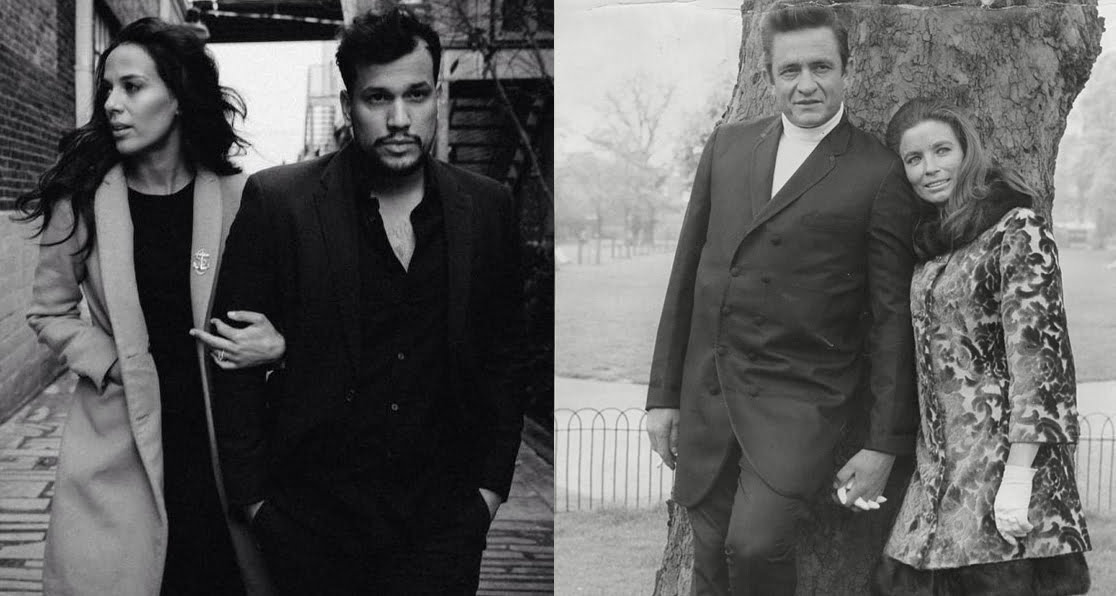
Through wars with authority and battles with addiction, Johnny Cash carved out a place in musical history for himself that is the stuff of legends. The rebellion and redemption, as well as the humor and humility, that run through his songs resonated — and still resonate — with fans around the world who have bought more than 90 million records. An Arkansas native, Cash grew up listening to the Carter Family, spent time in the U.S. Air Force, found his way into music while in the service, got married just out of the service, struggled with addiction and affairs, had four daughters, got divorced, and, eventually, married the love of his life, June Carter, with whom he had one son. In the midst of all that, the “Man in Black” made some of the most popular and influential music of the 20th century. He passed away in 2003, four months after June’s own passing. 

For the husband-wife duo of Johnnyswim (comprised of Abner Ramirez and Amanda Sudano) Cash represents an artistic archetype worth emulating. As such, for the 12 years they’ve been making music together, Ramirez and Sudano have blazed a musical path that similarly reflects the lives they live — lives of faith, family, love, and wonder. Johnnyswim’s deep passion and immeasurable joy for their work is most evident in their live shows, where the audience reflects it all right back at them. There’s no doubt Johnny would have loved their jaunt into the balcony of Ryman Auditorium to be among those fans at a recent Nashville show. It was right out of the Cash playbook.         

Usually, I can connect the dots for myself on these picks. Other than the fact that he has quite a few songs the drunks all sing, help me get from Johnnyswim to Johnny Cash.

Abner Ramirez: [Laughs] Amanda and I … the influence our parents have given us from their varying backgrounds into what we’re doing today is the desire to do the thing we are most passionate about — to live for that and that alone. The trajectory is not record sales or moving up in a company. The trajectory is “how close are you to the mark of doing what you’re truly passionate about.” And I think, if there’s an artist I can point to that, in all his albums and the interviews I’ve seen him in, it seems like he had that true north trajectory. And that’s, to me, the most drawing facet of any artist.

There’s the … I want to say “no bullshit” but there’s a better way to say it. There’s that gritty, imperfect … I mean, us being on Conan and Amanda forgetting the lyrics and me singing a little bit sharp because I was so excited and nervous, that’s some of my favorite stuff because it’s real. Otherwise, have a computer go do it and put a pretty face on it. Anybody, with enough money, can be beautiful. It’s not about doing something perfect or exactly beautiful. It’s about being honest. And, sometimes, the only place you see that honesty is in the imperfections. That drives us toward our passions. We’re not trying to be perfect. We’re trying to be passionate. And I think Johnny Cash was one of the most passionate artists I’ve ever listened to.

Amanda Sudano: On a personal level, Johnny Cash was one of the very first artists that we bonded over when we first met and were writing songs. We would listen to him all the time, riding around town, singing along, being fully absorbed in the stories of each song. He was kind of our joint one true love. He was our first threesome. [Laughs]

[Laughs] That’s AWEsome.

AR: [Laughs] Oh, God! There have been none since. That should be said.

AS: [Laughs] First and only!

So, Abner, when you were parking cars at the Palms [in downtown Nashville], how often did you sneak down to the Johnny Cash Museum?

AR: You know what? It wasn’t there, when I was at the Palms. I’m older than I’d like to be. [Laughs]

[Laughs] Right on. Of all the different facets and eras of Johnny, is there one that you guys gravitate more toward?

AR: I think it’s seasonal for us. Ask me that question again in six months or six days, and I’d give you a different answer. But, for me, I love the Folsom Prison moment, when he’s established as a worldwide star and he’s recording this album. And I’m sure it was his choice to do it at the prison. I love the moment when he’s saying, “The record label wants me to do this thing and they’re filming it, and they want me to do this and that. And the only thing that matters is that you like what I’m doing and I like what I’m doing! So screw them!”

There’s something about that attitude of bucking the system … even though, of course, we’re in the beginnings of our career, we’re just getting started … there’s something about that attitude of not submitting to every opinion that a suit has for you that really is still in fashion in 2017 because, being people that are in pursuit on the grind, for so many of us young artists, that seems like the only wise decision — to agree with somebody who has a larger catalog or more experience — just to submit. Many times it is the wise thing, but it’s not the only wise thing.

And having your own compass inside your chest that burns when you’re going the right way — how important that is — that’s something that, right now, is so important to us. So that part of his career when he’s famous, but he’s still gritty and doing the wrong thing a lot of the time …

AS: If you listen to his live recordings, you get a sense that it’s not about the recording. It’s about the people he’s in front of. I feel like that’s so important. Now, most of the time with the shows you go to, it feels like you’re kind of watching them on TV. It feels like, “This is entertainment. This is a performance. They’re up on stage. We’re down here.” I think that’s something we’ve always tried to copy, really, that sense of him being one with the audience. It’s not just him on stage for you to ogle at. It’s him being part of you and you being part of him, and “we’re all in this together.” I feel like you get that sense in every bit of his live recordings, which I love so much. It’s really helped us.

A lot of that goes with what Abner said before: It’s not about perfection. It’s about the moment. If you can focus on that and quit worrying about perfection so much and worry more about being present, then the music becomes more alive than it could ever be if you were just playing the notes. Anybody can just play the notes, but let’s have some fun!

That being said, I do love the later years. I feel like, in every song, there is this bittersweet sadness of a man who has loved and lost, especially after June was gone. Those last recordings, there’s something so powerful about that tone of his voice. You can hear that he’s at the end of his life. You can hear that he’s lost his best friend. And there’s something so powerful about that. I think, especially in times when we’ve been going through loss and dealing with our own hurt, it’s helped us identify it and make the bitter a little sweeter, just hearing it in his voice. I have days when I just want to listen to the very end of Johnny Cash, the very last record of Johnny Cash’s, because that seems appropriate.

I’m glad you brought June into it because I think she’s an important piece to not lose in all of this, particularly because of your relationship. Through that lens, what do you see that June brought to Johnny that he wouldn’t have had on his own?

AS: What didn’t she bring that he wouldn’t have had?! She stabilized him in a lot of ways. I imagine them being much like me and Abner — obviously, on a very different spectrum. But with June coming from a family of musicians … and I come from a family of musicians … and being able to harness some of that passion. We had a friend that once said something like Abner was the passion, the fire, and I was the intimacy. And that was something that made us special because Abner has all this fire, and mine was smaller. It was a smaller flame. But it was that intimacy that made us, together, kind of come alive.

And I feel like you hear that … you hear something different in Johnny, post-June. For the rest of his life, she was able to bring out the more subtle flavors of him. There was just a sensibility of someone who’d been in music and wasn’t one of those girls who was starry-eyed at him all the time. That kind of balanced him out.

It’s important to not let the guys get too cocky about it all. You can’t fawn over them all the time.

AR: That’s right. Especially when they don’t have the right to be too cocky about it.

[Laughs] Especially when they sing a little bit sharp on Conan .

AR: [Both laugh] That’s exactly right!

Do you guys feel like the legacy and legend of Johnny — and even his music — if he hadn’t lived such a raucous life, it wouldn’t have been the same. What do you think it would be?

AR: Of course not. No.

AS: He wouldn’t have had the stories.

AR: He wouldn’t have had the stories or the honest place to come from when he was telling the stories. You learn the lesson, like you learn through loss, that, yes, it sucks. That is a statement on its own: When you lose somebody, when there’s a rough patch, whatever it might be, it really is the thing that makes the rest of your life take flavor. Picasso says the painting, on its own, isn’t the most valuable part. It’s the plane that it’s in, the dimensions that you put it in, because there are limitations — the frame gives it limitations. And it’s what you do within those limitations that make it beautiful. If there were no limits, there wouldn’t be beauty. And I think that’s what loss and suffering and hard times do to us: They put a frame around a canvas and it’s what we do within that frame that makes it beautiful. If it were limitless happiness, I think you’d be limited in the true beauty you could create.

Seeing as you’ve stated quite clearly that you “want to write a song the drunks all sing,” which of Johnny’s songs do you guys wish you’d written?

AR: “Sam Hall.”

AS: [Laughs] I was gonna say “Sam Hall”!

AR: [Laughs] I don’t think he even wrote it! But that’s my favorite Johnny Cash song. I think it’s both of ours.

AS: Whenever we’re on a road trip, that’s the one where we’re like … you know when you get a little bit delirious? There’s always a point on a road trip, right as you’re pulling up to where you’re going or, at some point, you’re going to fall asleep and you decide to double-down and try to stay awake? That’s our song. We’ve sung that song so many times on the road, so that would be the one that I secretly wish we would’ve written.

AR: [Sings] “The sheriff, he come to, he come to. The sheriff, he come to, he come to. The sheriff, he come to, he said, ‘Sam, how are you?’ I said, ‘Sheriff, how are you?’ ‘Damn your eyes!’” [Laughs]

AS: [Laughs] The only way you could write that song and sing it as legitimately as he did is if you really mean it and fully commit. Because it’s so ridiculous. But he does it. And I want to have that sort of commitment.

It’s like “Boy Named Sue.” You have to give yourself over to the whole thing.

AS: Uh huh. Yeah!