Del McCoury: Whatever Suits the Song

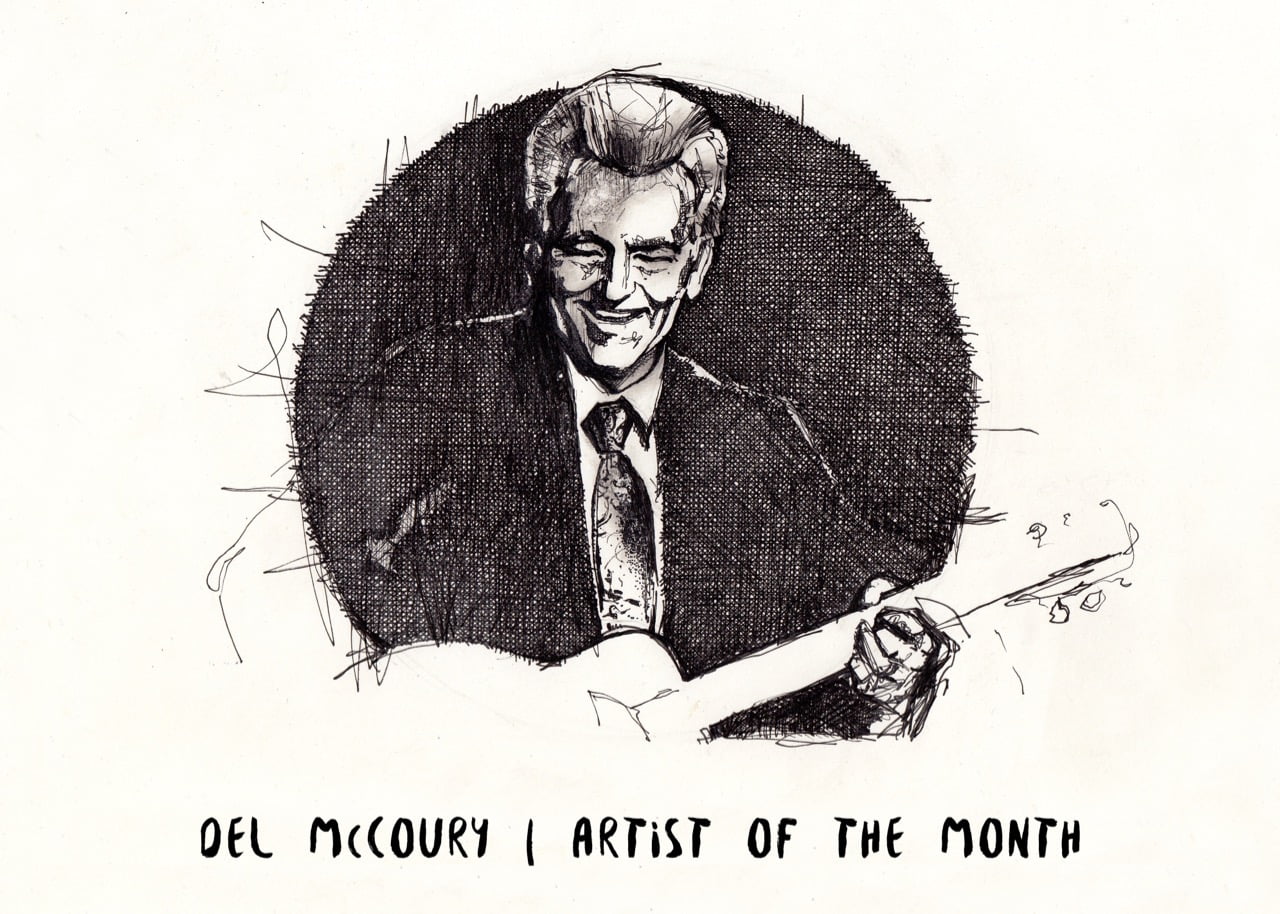
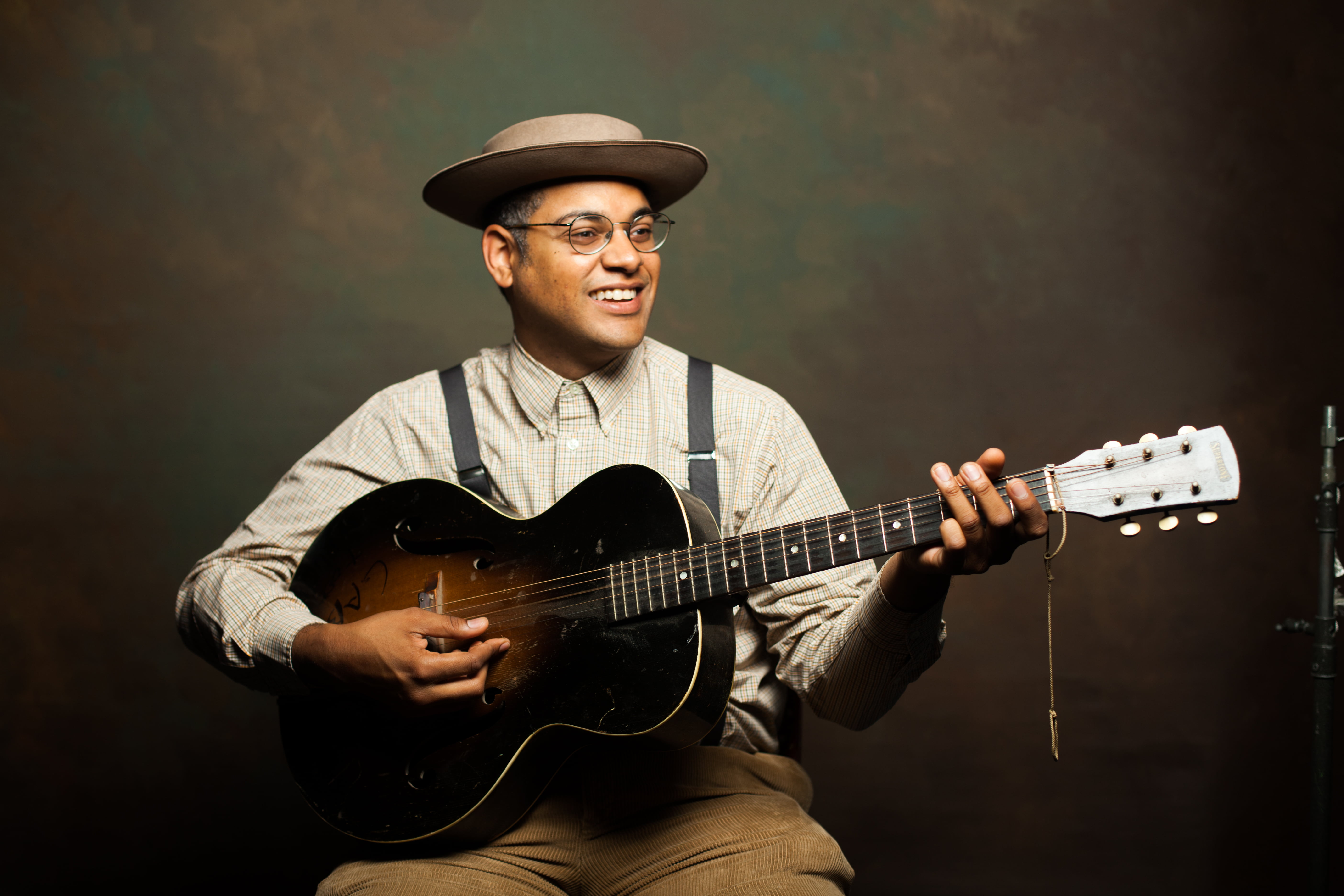
There are three things that you need to know about Del McCoury before anything else: His hair is incomparable, he giggles almost ceaselessly, and he still sings bluegrass.

Fifty years ago, after ending his stint with Bill Monroe’s Blue Grass Boys as lead singer and guitarist, McCoury released his debut solo project, Del McCoury Sings Bluegrass, with his now-iconic pompadour coiffed proudly and precisely on the cover. The album was released on Arhoolie Records, whose founder and proprietor, Chris Strachwitz, produced the album, phoning the young McCoury barely a day before the session to offer him the deal. Because of the severely short notice, the band was cobbled together from whomever was available and the songs chosen from whatever Del knew: A lot of Bill Monroe material, plenty of traditional bluegrass, and some old-time country, too.

Since those days in the late 1960s, songs have been the most significant driver of McCoury’s inspiration and creativity all along. “In the early years,” he remembers, “my producers would bring songs to me and I would usually just do them, even though sometimes I didn’t really like the song. As time went by, I got to thinking, ‘I’m just going to record songs that I like, instead of doing everything [anyone] brings to me.’ I figured I’m the one who’s going to have to sing these songs!”

It’s this love for the songs themselves that has informed his entire career, sculpting the iconic McCoury style that can be detected through each and every one of his albums. It’s remarkable that he’s been able to sustain such a particular, tangible musical identity over the decades without it ever growing stale or cliched. That identity — innovation balanced with tradition and overlaid with melody-focused, virtuosic picking, while centered on soaring, high lonesome vocals, all accomplished with a wink and a smirk — doesn’t always come from overt attempts at consistency. “I’ll tell you what it is,” he says in a tone that foretells that this is not some ironclad secret. “It comes down to, simply, I just record songs that I like. It’s hard to say where they’re going to come from. … I don’t think about if anybody else is going to like it when I do it. I just think about me having to sing it.” And as far as production and arrangements? That’s no proprietary recipe under lock and key, either: “But really, it’s whatever suits the song.” Whatever he’s throwing into the pot, it is downright delectable on McCoury’s brand new album, Del McCoury Still Sings Bluegrass.


Thank goodness that he does. If his signature chuckle, a constant as he tells stories and discusses the new record over the phone, wasn’t indication enough, Del has always been a beacon of joy in bluegrass communities. From the first second of track one, the slightly silly, totally burning, almost-a-love-song “Hotwired,” through a high-speed Alan Jackson cover, a classic fast waltz, yes, a train song, too, and another couple of handfuls of carefully curated material, that joy is palpable. It’s a striking through line that stems first from his absolute adoration of just doing the thing. It’s a love he’s always had. “In the early days,” he says, “When I was playing bluegrass festivals, we’d stay up all night, play all night, and go and do a show the next day in the afternoon. I had that much interest in it that I could play night and day and never stop. When you get older, you can’t do that; you have to pace yourself. But I still have that interest, I really do.”

Even casual observers would not note McCoury’s current clip as “pacing oneself.” He’s a member of the Grand Ole Opry and a Bluegrass Music Hall of Fame inductee, he tours nationally, he hosts the radio show Hand Picked with Del McCoury on SiriusXM’s Bluegrass Junction, and he presents an annual roots-music-festival-meets-family-reunion, DelFest, in Cumberland, Maryland, every May. All of that notwithstanding any current album release cycles and press junkets he may be running. While plenty of other artists with such long, successful careers would be pumping the brakes, Del is still looking ahead. “I just never lost interest in it. I never lost interest in recording records and entertaining folks. It’s something I love to do.”

And the folks love him back. Whether listeners come from the most staunch camps of bluegrass diehards, or from hippie festivals and jammy string band gatherings, or symphony halls and performing arts centers, they all count Del as one of their own. The rarity of that fact is not lost on him. “[That’s why] when we do a show, we never have a set list. We figure these people paid to see us, so we’re just going to do what they want us to do, we’ll see what they want to hear. It keeps me enthused, the audience excited, and also the boys [excited, too.] And the audience never know[s] what we’re going to do. ‘Cause I don’t!”


By choosing to record and perform material that he connects with personally, he’s passing down that care and respect for songs to every one of his audiences, who, in turn, learn to appreciate and then reinforce that care. So, when a song comes along on Still Sings Bluegrass that includes an extended, rip-roaring electric guitar solo (in this case played by Del’s grandson, Heaven), or when “To Make Love Sweeter for You” kicks with a jangly upright piano, you don’t hear the predictable, “that ain’t bluegrass” balking. Furthermore, the traditional, straight-ahead policers are visibly absent from DelFest, where more fringe, jammy acts like Trey Anastasio and The String Cheese Incident are just as likely to appear as Larry Sparks — or Tedeschi Trucks Band. And whether he’s recording a set of songs such as this fresh crop, curated by the man himself, or lending his voice and his band to projects like Del and Woody, an album of unrecorded Woody Guthrie songs, or American Legacies, the New Orleans-meets-Nashville, jazz-meets-bluegrass, Del McCoury Band-meets-Preservation Hall Jazz Band crossover album, his footing within bluegrass never falters and is rarely challenged.  

Del doesn’t believe there’s a secret antidote to the signature, absolutist trains of thought some find in bluegrass and he clearly says so. When asked why he thinks his fans might let him off the hook he laughs, “You know what, I’m afraid they’re gonna let me go any minute!” But we know this isn’t true. Now more than fifty years into his song-led career, Del’s creative vision has never been so clear, his perspective never more innovative, his hair never more enviable, his laugh never so charming, and his music never more joyful.

No matter how that ends up sounding from the stage or through the speakers, by definition, it’s still bluegrass.


Illustration by: Zachary Johnson


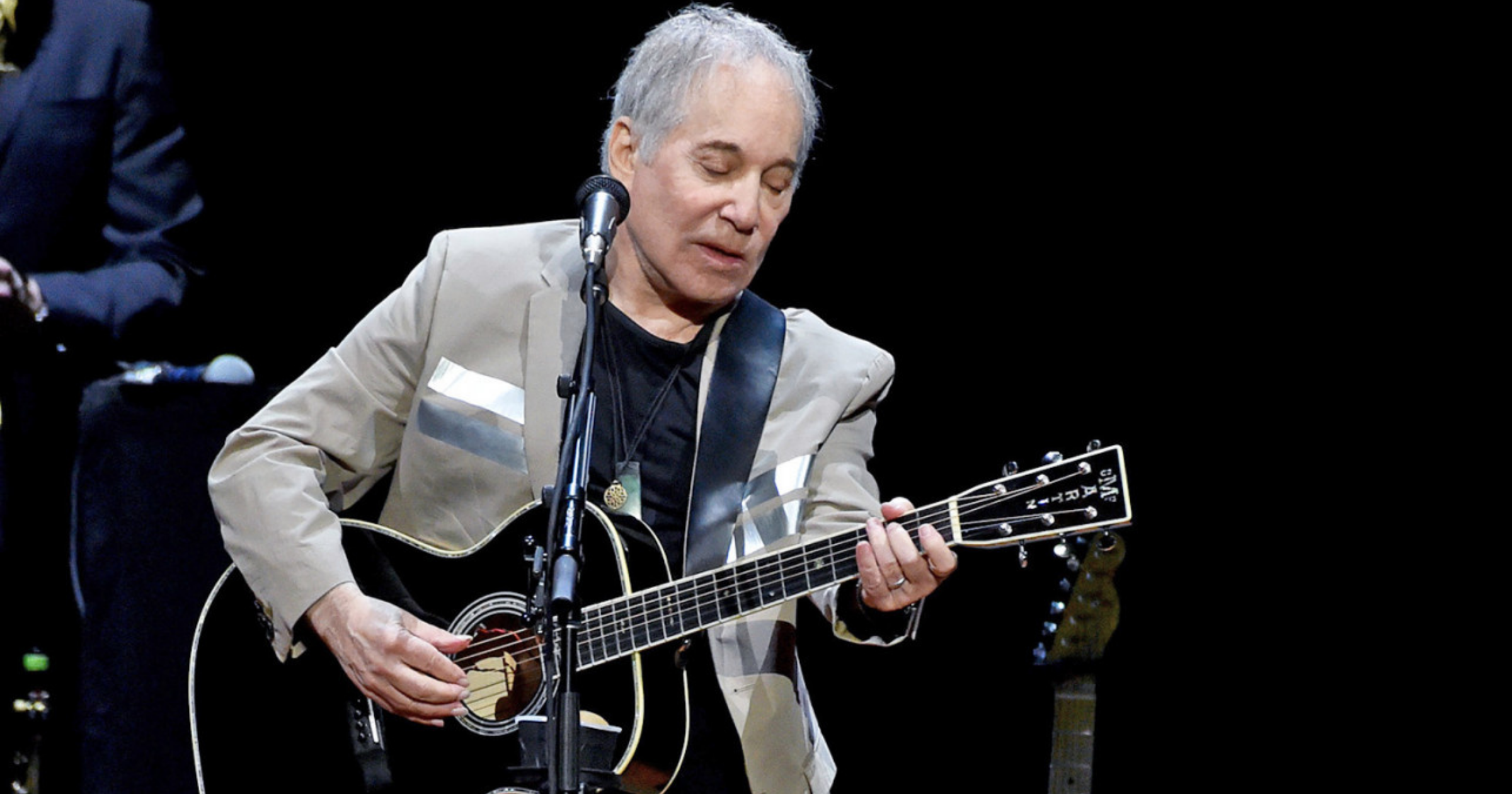
Small World: How Paul Simon Found Himself in the ‘60s English Folk Scene

In 1965, a dejected Paul Simon went for an extended stay in England. When he returned home to New York toward the end of the year, he brought Anji with him.

Well, “Anji.” A piece of music, not a woman.

“Anji” — sometimes spelled “Angi” or “Angie” — was written and first recorded in the late 1950s by English guitarist Davy Graham, considered by many the first star of the U.K. folk guitar renaissance. It’s a snappy little fingerpicked number, a series of trills over a descending bass line. Really more jazzy than folkie. By the time Simon first heard it, apparently via the playing of another young star of the scene, Bert Jansch, it had become the touchstone for English acoustic guitarists. This was the piece they had to master to gain entry into that world and in the process serving to popularize the dark modal DADGAD open tuning as the scene standard.

Simon’s recording of “Anji,” with the writing credit originally going to Jansch before later being corrected, served as an instrumental interlude at the end of side one of The Sounds of Silence, the second album he made with Art Garfunkel. But in the context of the sweep of Simon’s eventual status as one of the modern era’s supreme songwriters (and Simon and Garfunkel’s standing as one of the key pop acts of the 1960s and ‘70s), “Anji” marks a turning point.

“One of the things he found [in England] was a welcome, warm music community,” says Robert Hilburn, author of the new biography Paul Simon: The Life. The book is a comprehensive and colorfully enlightening look at the artist, done with his full cooperation. It was published in May, on the eve of what he says will be his final full concert tour. He’s named it the “Homeward Bound” Tour, after a song he wrote while in England.

“He hadn’t felt accepted in folk circles of America — Greenwich Village put him down because he came from Queens,” says Hilburn, who was the pop music critic and editor at the Los Angeles Times for more than three decades (and with whom this writer worked for more than 20 years). “But there, he was from America and people listened to him and liked him. And he said that the folk clubs in England were generally away from the bars and people listened to the songs. In America they were in bars and people chatted and ignored the music.”

Simon was feeling that rejection acutely when he moved to England. While Simon and Garfunkel had been signed to Columbia Records by tom Wilson after some furtive steps under the name Tom & Jerry (and some solo Simon work under the name Jerry Landis), their debut album, the acoustic folk-tinged Wednesday Morning, 3 A.M., had flopped and the partners were at odds — a common state through their lives. In England he found something to give him new artistic life, new purpose, a setting in which he could define his own goals and ambitions, and in which he was valued.

He released a 1965 solo album featuring acoustic performances of his own songs (The Paul Simon Songbook, not issued in the U.S. until its inclusion in the 1981 Paul Simon: Collected Works box set), co-wrote with Australian-born musician Bruce Woodley (including the bouncy “Red Rubber Ball,” a 1966 hit by the band the Cyrkle) and produced an album by fellow American ex-pat Jackson C. Frank, including the song “Blues Run The Game.” (Simon & Garfunkel recorded the song as well.) The composition became another standard of English folkies and later came to mark the tragic life and death of its writer. In the process, Simon discovered key things about who he was, and who he wasn’t, as an artist.

“Most of those musicians there were guitar players and played old folk music,” Hilburn says. “They didn’t write as much of their own. He couldn’t play guitar like they did. Martin Carthy [another rising star of the scene] was particularly helpful in teaching him things, but he realized that it was words that would distinguish him. That’s what the other English musicians wouldn’t do. He wasn’t a fan of the old-time English ballads. When he heard Dylan, he said, ‘That’s what I want to do, write about the world today, not just “I went down to the river and killed my baby.”’”

Now, to be fair, those “down to the river” ballads were just as much core to the American folk revival as the English one. But by and large they originated in England and elsewhere in the British Isles and Europe. The songs of murder, treachery and heartbreak arrived on these shores with the many waves of immigrants, mutating in various ways but still very recognizable in the forms associated with Appalachia and the Delta, bluegrass and blues alike, Cajun and country, you name it.

Of course, that all found its way back across the Atlantic where American folk and blues (and, of course, rock ’n’ roll) influenced and inspired a generation of English musicians looking for meaning and authenticity, even if borrowed, first in the “skiffle” movement, and then in both the folk revival and with the Rolling Stones, the Animals, of course the Beatles and the others who, in the mid’60s British Invasion, brought blues back to America.

Davy Graham was heavily influenced by American blues and jazz, and his early ‘60s albums were full of his arrangements drawn from that repertoire. And one of Graham’s frequent collaborators, singer Shirley Collins, traveled through the South in 1959 with American folk and blues collector and preservationist Alan Lomax, researching and recording the music on porches, in churches and prisons and at social occasions, documenting various forms that were threatened with extinction in the face of “progress.”

It is, in fact, a blues song that kicks off the upcoming Live in Kyoto 1978 concert recording by English folk great John Renbourn, who passed away in 2015. Renbourn, who in addition to his own long and fruitful solo career co-founded the revolutionary jazzed-up folk band Pentangle with Jansch, started this show with a version of “Candy Man,” a raunchy ragtime tune first recorded by Mississippi John Hurt in 1928. But the second song of that concert? Yup. “Anji,” with an introduction by Renbourn explaining that it was a “tune that started me, and a lot of other people, trying to play the guitar.” The album is a wonderful slice of a remarkable career from a stellar guitar talent who regularly tied together Medieval Italian and French dance tunes with American blues and jazz, all fixed around the English folk traditions of such songs as “Banks of the Sweet Primroses.”

It’s the Circle of Folk.

And it circled back when Simon found himself moving home to New York due to an unexpected turn of events. While he was in England, producer Tom Wilson — without Simon’s knowledge — added some folk-rock instruments to the acoustic version of “The Sound of Silence” that had been on the S&G debut. Suddenly it was the right song at the right time, a perfect fit alongside the Rubber Soul Beatles, the sparkling folk-rock of the Byrds and, of course, the newly electrified Dylan himself. That new version became both the title song of the next album and the launching point for new approaches that would quickly distinguish the duo.

How did the time in England make an impact, aside from “Anji”? Hilburn sees little direct evidence of the English folk scene on Simon’s writing, though there’s certainly some of the mood and filigrees of the guitar styles in the fingerpicked lines of “April Come She Will.” And there is “Scarborough Fair,” an actual English folk song that Simon took almost note-for-note from Carthy’s arrangement into an unlikely pop hit, its refrain providing the title of the third S&G album, Parsley, Sage, Rosemary and Thyme.

Carthy has said he was “thunderstruck” when he saw the song credited as “words and music by Paul Simon” on the original S&G release. Later it was discovered that while royalties were paid, the money was never forwarded to Carthy by his publisher. Simon years later made sure that new payments were made to the English artist, an act Carthy deemed “honorable” per Hilburn’s account.

But it remains a controversial episode for some, presaging later controversies of proper crediting and cultural appropriation that saddled Simon, particularly regarding his Graceland work with South African musicians at a time of a cultural embargo due to the countries brutal apartheid policies. (And, for Carthy, it was a second case of an American artist nicking one of his arrangements, as Dylan himself used Carthy’s version of the traditional “Lord Franklin” for “Bob Dylan’s Dream.” In addition, “Scarborough Fair” was liberally adapted into “Girl From the North Country,” with the source noted readily in the liner notes of The Freewheelin’ Bob Dylan as well as in various interviews by Dylan over the years. A duet by Dylan and Johnny Cash made for a highlight from the later Nashville Skyline album.)

If the direct impact of what he learned in England was not an ongoing presence in Simon’s writing and performance, it did seem to stimulate a hunger for exploring music from various cultures and countries, which soon emerged in a variety of ways — the Andean folk-tune on which he based in “El Condor Pasa” (in turn making it virtually inescapable for later travelers in Peru), reggae in “Mother and Child Reunion” (recorded in Kingston with Jamaican studio mainstays), and gospel in “Love Me Like a Rock.” Then he took that giant leap into South African music with the landmark Graceland album in 1985 and various Afro-Brazilian and Latin American inspirations and collaborations on Rhythm of the Saints in 1990, profoundly the batucada drumming on the song “The Obvious Child.”

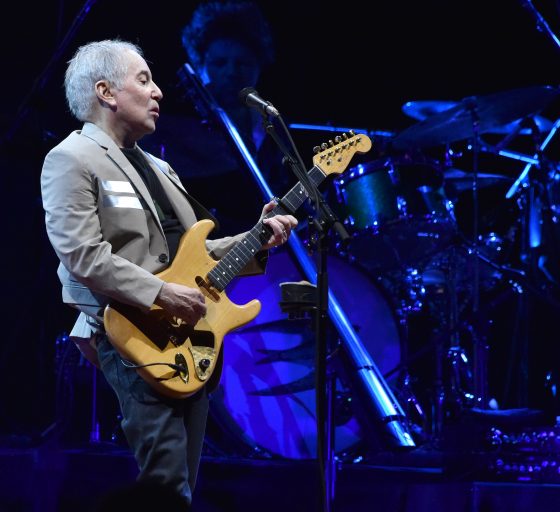
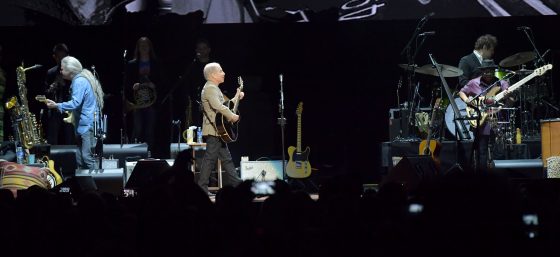
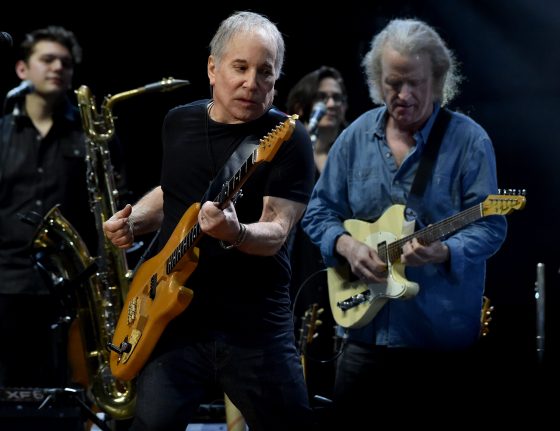
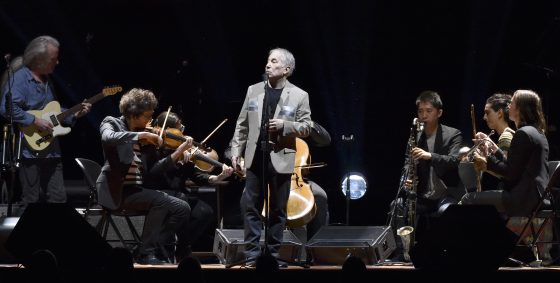
And, with this all in mind, it was striking during one of Simon’s Hollywood Bowl shows on his farewell-ish tour how well the song, “Dazzling Blue,” which had been on the 2012 So Beautiful or So What album, could have fit alongside many things done by Graham, Jansch and Renbourn. In this performance, Simon’s fingerpicked figures and lilting melody were weaving through the Indian-derived rhythms and modes carried in Jamey Haddad’s ghatam (clay pot) percussion and the veena-like melisma of Mark Stewart’s slide guitar. Ultimately it’s all of a piece, the band on this tour anchored by South African bassist Bakithi Kumalo, who has been Simon’s partner on much of the music he’s made from Graceland on. Young Nigerian guitarist Biodun Kuti steps in with grace and aplomb to the hole left by the death last December of Cameroonian musician Vincent N’guini, who had been with Simon since Rhythm of the Saints. But still the music is threading back to the epiphanies of London in the ‘60s. And yes, even Greenwich Village.

“He loves roots music,” Hilburn says. “What was interesting to me is that as a songwriter he doesn’t come up with a theme first. If you or I were writing a song, we might go, ‘Let’s write about ecology, or about breaking up with a girlfriend.’ He lets the music inspire him, plays guitar or piano and if something sounds interesting, he thinks, ‘What do those notes mean to me?’ and tried to put that into words. One line, then to the next line, and he discovers the theme as he’s writing. So he constantly needs new musical inspiration. He started with doo-wop and blues, then rock and folk. But by the end of 1969 he felt he couldn’t go any further in folk. He didn’t want to be part of that. So he goes to classical and jazz and gospel and bluegrass. And then South African music. He has to have fresh inspiration.”


Photo credit: Lester Cohen


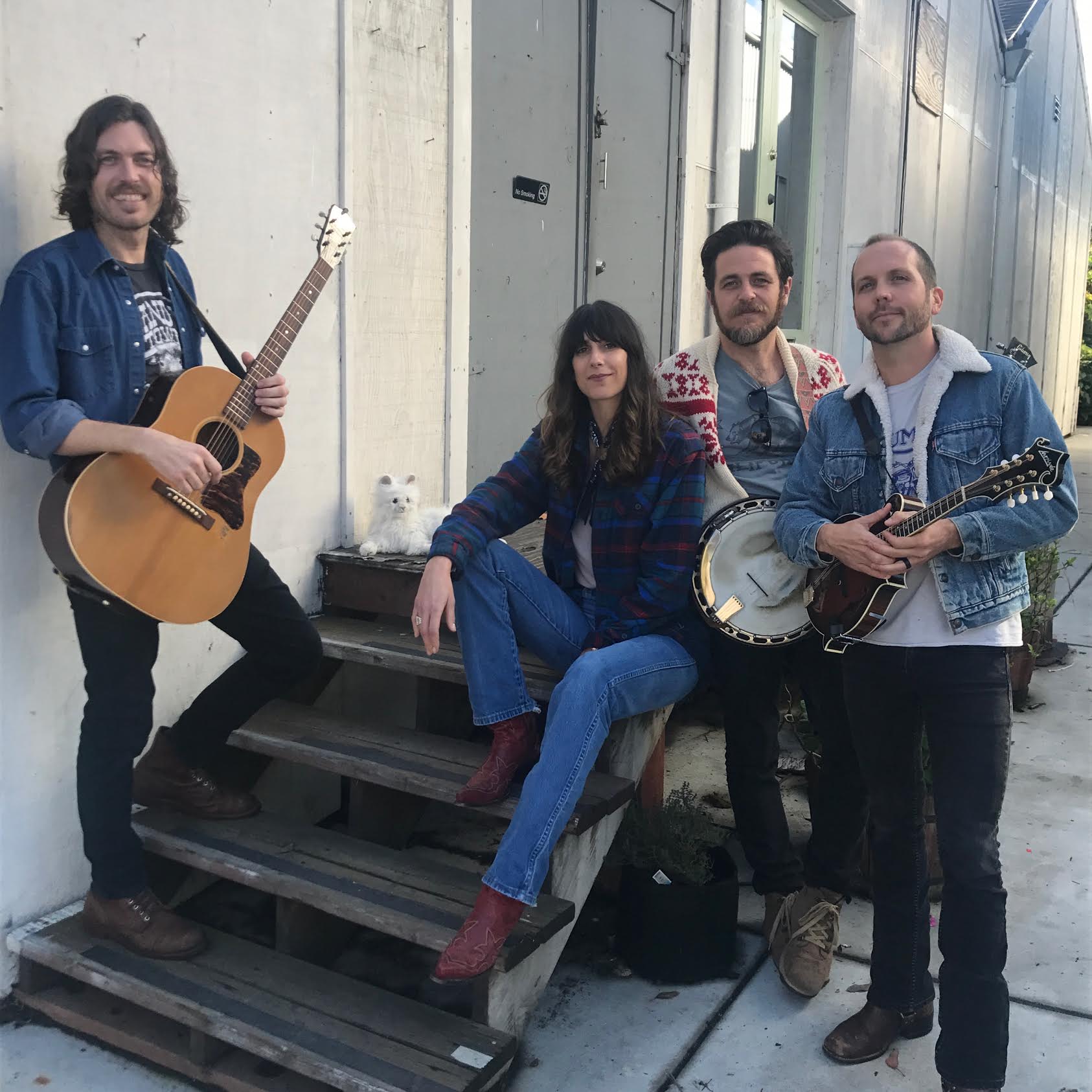
WATCH: The Brothers Comatose Featuring Nicki Bluhm, “Sugar Please”

Artist: The Brothers Comatose
Hometown: San Francisco, CA
Song: “Sugar Please”
Album: Ink, Dust & Luck
Release Date: June 1, 2018

In Their Words: “Nicki Bluhm is one of the best dang singers we’ve ever worked with. Our new track ‘Sugar Please’ is sort of a throwback country style duet and she brings the magic to this one.” – Ben Morrison of the Brothers Comatose

“I love singin’ with that tall can of PBR so when Ben asked me to join him for a duet, I could think of no greater pleasure. Ben and The Brothers Comatose sure can write those sweet love songs from the perspective of the road. I have an appreciation for that livin’ out here myself.” – Nicki Bluhm


Photo credit: John Vanderslice

Finding Universals: A Conversation with Loreena McKennitt

Loreena McKennitt is both a Romantic and a pragmatist. During a thirty-year career that began with her busking on the Toronto subway and led to composing a new work for the Royal Canadian Air Force, the Canadian singer-songwriter-producer-historian has dug deep into European musical traditions (the Celts in particular) and has found vivid inspiration in the Romantic poets (Keats and Yeats in particular). Her music strives for a dreamy kind of beauty, often described as ethereal but usually rooted deep in the soil of her native Canada and her ancestral Ireland.

And yet, she admits the impetus behind, Lost Souls, her first album of new material in more than a decade, was largely practical: “The fact that there hadn’t been anything new was becoming a bit conspicuous. We had a number of people writing to ask if I was going to come out with a soothing original ever again.” In addition to writing a handful of new songs, McKennitt pored through her own archives, finding old songs—some written in the late 1980s—that spoke to her. “There were songs I had written along the way that didn’t fit my previous recordings, so I started looking at those songs again. I thought, yes, they’re a bit like lost souls.”

The songs may have disparate origins, but Lost Souls is neither a rarities compilation nor a retrospective. Rather, the album holds together as a larger statement, as one song after another expounds on the implications of its title: loss and yearning, travel and transience both geographic and temporal, even the end of humanity on Earth.

Can you tell me about putting this album together? It doesn’t sound like a bunch of songs you had lying around.

If I look at it objectively, I suppose it makes sense. There are various composers of music who have stayed within a certain realm of their sensibilities. Even if they wrote something years ago, the material itself has the connection to the person who wrote it. Also, we recorded these songs all freshly within the last year, so I was able to bring a lot of the aesthetic and approach of recent recordings to it. And I am blessed with an incredible bank of talented musicians.

What was it like to revisit these songs and engage with them again?

It was interesting going back to previous mindsets. “Ages Past Ages Hence,” I wrote it somewhere around ’89 or ’90. I remember performing it at the Toronto Winter Garden in 1990. It was at a time when I was listening to Kate Bush. I really liked the angular approach she takes on some of her music, so I thought it might be interesting to head in that direction. “The Breaking of the Sword,” I wrote it about a year and a half ago. I was commissioned to write that piece, but I wrote the melody in 2006 or maybe even earlier than that and only put the words to it last year. Those lyrics mean a lot to me and that’s the piece I would say probably connects most to where I am today.

It’s interesting that “Ages Past Ages Hence” is so old. It seems to fulfill the theme of the song to have it waiting around for so long.

When I think of that song, I remember I was living in a rented farmhouse and my writing desk looked out a window into a wooded area. A lot of the trees were quite mature, probably 100 or 150 years old, and I remember many times reflecting on what they had seen during their lives. They were witnesses to whoever lived there and all the human folly in a more general sense over the years. That sentiment connects to my own Celtic history. The Celts had a major connection with trees. They felt that trees perhaps embodied some of their ancestors, as many indigenous people have, and they felt the trees played a special role on this planet. So the fact that I had this Celtic heritage and this connection with trees is probably not surprising. Also, I wanted to be a veterinarian at one point in my life, and if I hadn’t gone into music, I probably would have gone into wildlife conservation or forestry.

These things are all tied together, and then everything comes together in the last song, “Lost Souls,” which was based on a book I read a few years ago by an anthropologist called Ronald Wright. He studied civilizations as one might study the black boxes of aircraft that have gone down, and he observed that over the millennia we as a species have a tendency to get us into progress traps. We might very well be caught in one now. He observed that around the time of the industrial revolution, we went from being concerned about our moral progress to being more interested in our technical progress. He cites the denuding of the landscape on this planet as one of the big progress detriments, because it’s so integral to oxygen and water retention. All of these things go swimming through my mind as I’m stitching together the recording, which becomes a bit like a quilt.

These are songs about travel, which don’t just mention the places but incorporate the music of those places as well. 

I love listening to these various instruments played in their idioms, so part of it is pretty selfish. Secondly, there is the thrill of getting to share that excitement with other people. Bringing in the flamenco player from Málaga gives the music an authenticity that it perhaps wouldn’t have if someone else played that part. So it’s a combination of respect to those cultures and the gratification it gives me to share that with other people as one might share a new recipe with friends.

But it is complex territory. It’s been fresh on my mind because I was listening to an interesting BBC program about the upsides and downsides of selecting music from other cultures and putting it into your own. Some people say, “Hey, that’s our culture. You shouldn’t be taking that.” Other people say, “Wow, I’m going to visit that place and that culture and I’m going to listen to more groups that play flamenco.” I like to think that music is a timeless and international language, and there’s nothing I want to do to damage the distinctiveness of that voice or compromise what I love about, but I love to draw and weave those things into my own music in an honest and meaningful way. I think that manifests itself in “The Breaking of the Sword,” where the military band evokes a very particular feeling, and I felt that nothing but the military band would do.

You debuted that song on Remembrance Day last year. What was the response to it?

There were people who were surprised that I had created a piece like that. But other people were less surprised because they knew my connection to the Canadian military. I’m an honorary colonel of the Royal Canadian Air Force, which in itself is a surprise to people. I was commissioned to write something for the ceremony a year ago, which was at Vimy Ridge in France and commemorates a World War I battle. In the end, the producers decided they wanted me to sing something from [McKennitt’s 1997 album] The Book of Secrets. I was already writing this song, and I thought to myself, if I don’t put it on the recording, it too will become a lost soul. There was a lot of discussion and debate about whether or not it should go on Lost Souls, because it’s not the kind of piece I would have thought to create without being commissioned.

It seems to echo a theme of impossible longing, in particular with this mother wishing for the return of her dead son. It seems like a story that keeps happening and continues to have meaning across every culture.

I think that speaks to what I’m striving for: to come at the concept of lost souls from different directions. “The Breaking of the Sword” is a snapshot of an experience that I think most people who have had someone perish in a military exercise will relate to. I wanted to take great pains not to get trapped in the winning side or the losing side or the right side or the wrong side. Rather, I wanted the song to sit in the simple zone of a family losing a loved one. On one level, it’s about a mother losing a son. But there’s another layer, one that many people may not realize: The military is another kind of family, and it’s a powerful bond amongst those who serve. I’m reminded of that each year when I go down to the cenotaph each year.

I like to think that sense of loss is something that is timeless and universal, which means we shouldn’t get trapped by questions like, “Is it in support of the military? Or is it not?” All of that is another conversation, a very important one for sure, but this was just simply about losing someone who believes they are fighting for the betterment of humanity. It’s about the simplicity of losing someone who defends what they believe in.


Photo credit: Richard Haughton

Dom Flemons: Many Pieces to the Puzzle

It’s fitting that Black Cowboys, the latest record from writer, storyteller, historian, and songster Dom Flemons, was released on Smithsonian Folkways, the non-profit label arm of the eponymous museum and its Center for Folklife — the album plays and reads like a museum exhibit in musical form. This collection of songs, from traditional Western folk melodies to African slaves’ field hollers to Flemons’ timeless originals, celebrates the heritage of African American cowboys in the Wild West.

The existence of black cowboys has largely been omitted from the greater historical record, relegated to forgotten dime store novels, dusty biographies, and seldom-sung songs. The commercial narratives that took the nation by storm in the last century, such as Wild West rodeo shows, singing cowboys, and myriad television shows and films, largely centered on whiteness and white heroes as the keystones of the pioneer West. Flemons understood the larger, more complicated picture — in part due to his African American and Mexican American heritage and growing up in Arizona. With this record and its exhaustive liner notes he brings these integral stories, these neatly interlocking puzzle pieces of black identities shaping the American West, out into the mainstream.

When I listen to this record and read through the liner notes it strikes me that the crux of the entire project is revisionist history and figuring out how to undo it.

One of the things I’ve found most interesting about the issue of revisionist history is that it creates even more weight to the work of people like Martin Luther King Jr. and Malcolm X, because you start to understand why they were working for civil rights and first-class citizenship, compared to second-class citizenship. Up to that point, no matter how far you got in the status as a citizen, you could not be considered a first-class citizen if you were an African American person. This becomes extremely prevalent when speaking of early Western history. To put a black person on the same level as a white person was taboo up until even the late 1970s and early ‘80s. Nowadays it’s really hard for people to grasp that concept. When you aren’t in control of the narrative, you’ll find there are holes in it. My notion has been to add and to elevate different parts of the narrative so that when you bring all of the narratives together you get a truer picture of what the history is supposed to be. That was part of the reason I felt that this album was very important to get out there.

Being from the Southwest, I know that it’s a diverse community. The story isn’t just black and white. There are the Native American populations as well as the Mexican American populations and the different refugee groups as well. The Southwest and Western culture tends to have a very diverse population, because the open expanses of land give a lot of room for people to build a new life for themselves. Where there aren’t a lot of people, you don’t want to upset your neighbor, because they could help you in your time of need. When you read about the cowboys you start finding that the ideas of discrimination and segregation in the classic sense break down in certain situations where, because of the lack of numbers, everybody had to be working together. That called for a brotherhood and a kinship between all these different cultures, in a way that is very unique and is very reassuring, especially in modern times when it seems that the whole world is connected, but we still feel like, “Why have we never been able to get along?” But you find in different situations along the way people have figured out how to work together and get along with each other just out of necessity.

Are people surprised by the concept of the album? I can just imagine someone saying, “Black cowboys? That’s a thing?” How do you unpack for people that black folks have been everything and everywhere, just like white identities?

It’s a matter of perspective and a matter of representation in the mainstream. When it comes to cowboys, three things happened. First, you had the birth of dime store novels, sensationalized Western fiction that were written by people [back East]. They took Western stories and created a sensational picture of Western culture. It’s interesting to read about these too, because you do have several pulp novels that feature black cowboys in them, so you still have a bit of that culture in there.

The second wave was Buffalo Bill’s Wild West show. It was the first internationally recognized Western program. [Buffalo Bill] was definitely a Confederate-leaning individual, even though he was part of the communities in Kansas that fought against slavery. Buffalo Bill, he had black friends, he had Native American friends, he was good friends with Sitting Bull. But at the same time, ideologically, when the Wild West show went out there [on tour], it painted Buffalo Bill as a white savior, at the forefront of all of this. With it being presented at Madison Square Garden and all over the world, including Australia, Germany, England, France, and Spain it painted the picture of Western American culture being a white phenomenon and having white heroes that are in the forefront. That’s the second level.

The third thing that really cemented the image of the cowboy in place were the singing cowboys: Gene Autry, Tex Ritter, and a whole slew of other folks following behind — like Jimmie Rodgers, the father of country music. That set the stage for the cowboy being a white man in a cowboy hat and chaps, saving the day. It caught on with the adults and the kids, and the kids carried on these same traditions. Once you see that sort of representation and there’s no narrative that conflicts with that, there’s no need to consider that there might be a different narrative.

Now we’re over a hundred years down the road from all three of those things. The idea that black cowboys are representative of cowboy culture is something that’s been chipped away for many years. When it comes to representation and African American culture in the West you’ll find that there are a lot of pieces to the puzzle.

How do you take an album that might come across as a “time capsule” or historic novelty music and show it’s more than just a bridge to yesteryear? How do you view this music today, in a modern context?

There was one thing that really set this off. At first I faced that problem. Of course, I had my interest in cowboy music in general; I love Willie Nelson, Marty Robbins, Riders in the Sky, etc. That interested me in general, but I came into this particular issue as I started trying to make this into a compelling narrative so that people won’t just pass it off as nostalgic music.

I was talking with my father about one of the cowboys I was reading about, a fellow by the name of Nat Love, who was one of very few black cowboys to write an autobiography. He worked out of this town called Holbrook, Arizona. Then he became a Pullman porter working on the railroad lines. The history of Pullman porters was what we would call a catalyst for the early civil rights movement. One of the main Pullman porters, a man by the name of A. Philip Randolph, started the very first all-black union called the Brotherhood of Sleeping Car Porters. Black people who were Pullman porters were able to elevate themselves socially, because they began to know the most prominent white patrons from traveling with them. At first they just worked for tips, but then they wanted to work for a salary, so A. Philip Randolph helped the porters raise their wages.

The porters were also the connecting point between every black section of town in the United States. When it came to delivering the all-black newspapers and when it came to 78 RPM records, the porters had supplies that they would sell to people. They connected the North, South, East, and West of the United States. Later on, in the 1940s, ‘50s, and ‘60s, Randolph was one of the people who helped Martin Luther King Jr. organize the bus boycott. My father told me that; he was a porter for a chair car, the local/regional train car.

Seeing that someone like Nat Love was a cowboy and later a Pullman porter connected this ancient story of dusty old cowboys on the range into a very modern African American context. That was how I connected the narrative so it would be modern. This gave me a strong sense of why we don’t think about black cowboys. White cowboys continued to ranch and become proprietors on their ranches. But of course in the African American community nostalgia, looking backwards, thinking about the old home place is a whole different story. Cowboy music is connected to country music and one of the biggest parts of country music is nostalgia. In the African American community, nostalgia has always been a double-edged sword.

When I hear you talk about your connection to your music, the dots seem to connect pretty directly, but you’ve put in time, done the research, given it care, and given yourself an in-depth education. How do we make it as easy as possible for people to also trace those threads without all of the rigorous work you put in? Or do you think that work is necessary and maybe something everyone should experience?

Well, I think technically everyone should work through all of that. That’s something that I would like to have happen.

Especially since there are so many of us who haven’t had a choice but to put in that work.

Absolutely. [It all started for me by] being a big fan of Texas country blues music, which is part of my grandfather’s culture. It was very natural to listen to people like Lead Belly, Henry Thomas, and Lightnin’ Hopkins even. All of that stuff is black Western culture from the descendants of these cowboys. I wanted to bring that stuff into a single room. I also went to the National Cowboy Poetry Gathering in Elko, Nevada, and I met several of the cowboys. Don Edwards, a legendary cowboy singer who has spent a lot of time talking about the influence of black cowboys, told me about how all the black cowboys were called black vaqueros. He told me about Mexican vaqueros and how they were the original cowboys. It opens up Spanish and Mexican culture being part of Western culture starting three hundred years before the time period we cover on the album. That’s a piece of the puzzle.

It’s obviously a very complicated and complex puzzle, but it’s not necessarily more complicated than just the narrative of America we’re already familiar with — the melting pot of cultures and backgrounds. It’s a matter of putting those pieces together. You’re adding more colorful pieces to the puzzle they already have half-built in their heads.

Overall, I really wanted to be able to give Black Cowboy 101. Like the quote from Mike Searles that I used in the introduction. When people think of the birth of the West they think of it as the birthplace of America. If you think of it as only white America, you would get the impression that only white people are true Americans and everyone else is an interloper. If you start adding these other people — Mexican vaqueros, African American cowboys, and even Native American cowboys — you get a better sense that it’s not only the birthplace of America, but it’s always been multicultural, from the beginning.


Photo by Timothy Duffy

LISTEN: Juliana Daugherty, ‘Easier’

Artist: Juliana Daugherty
Hometown: Charlottesville, VA
Song: “Easier”
Album: Light
Release Date: June 1, 2018
Label: Western Vinyl

In Their Words: “I don’t think anyone would describe me as a bleak person, but I do feel like my capacity for sadness — depression, sometimes, and sometimes just garden-variety melancholy — has always been somewhat overgrown. I find my various sadnesses to be infinitely interesting when I’m writing, and deeply boring and unhelpful at almost all other times. To write a song is to externalize a feeling, so that I don’t have to carry it around in my daily life. ‘Easier’ also has the benefit of catharsis: Singing the last section feels a little like howling at the moon.” — Juliana Daugherty


Photo credit: Tom Daly

Nefesh Mountain: From the Inside Out

In bluegrass, rags-to-riches stories are revered and glamorized, strong personal convictions are lauded, off-stage legends of wit and badassery are currency, and a sharp suit (rhinestones optional) and western hat speak volumes. There’s a notable correlation between the success of the genre’s greats and the presence of their personalities, perspectives, and stories throughout their art. The relatability, accessibility, and appeal of their songs can often be attributed not only to the level of talent, but also to the boldness with which their true selves are communicated, musically, to an audience. Roots music fans have always been hungry for indicators of an artist’s authenticity — a way to winnow out the performative, commercial aspects intrinsic to the recording industry and leave just the juiciest nuggets of “real life.”

Attempting to follow in that tradition and feed that hunger is Nefesh Mountain. Partners Eric Lindberg and Doni Zasloff want nothing more than to have the lens of their entire identities filtered through their brand of crisp, refined, and timeless bluegrass in myriad ways — tangible or intangible. Overtly, we hear this perspective in vocals sung in Hebrew, lyrical hooks derived from Jewish sayings, and a grassy cover of Irving Berlin’s “Russian Lullaby.” Deeper, more subliminally, we find that the themes of family bonds, a love for home, a respect for nature, and prayers for peace and empathy comforting our ears also stem from their Jewish background. But the specificity of this origin point is neither alienating or confusing. Rather, it reinforces two truths about this music: Bluegrass is for everyone, and bluegrass is indeed better when the people who make it shine brightly throughout it.

So many different folks from so many different backgrounds have analogous stories of how they come into roots music. What is it about bluegrass, old-time, and these more vernacular forms of roots music that allows the heart and soul of the music to effortlessly intertwine and weave itself into any background, experience, or personal story?

Eric Lindberg: That’s such a good question and something I think about all the time. I think that folk music — you could use “folk” or “roots music” — is synonymous with bluegrass nowadays. It’s all under that same umbrella. When I hear folk music from anywhere, it seems to be the music that translates in a spiritual sense or, for some people, a religious sense — which isn’t exactly where we’re coming from — or, as a general function of society, as a storytelling vehicle.

When I see and hear music from China, or Eastern Europe, or Australia, or Ireland, there’s kind of a pentatonic or maybe diatonic, very simple matrix of melody that has that high lonesome sound. There’s a certain thing about bluegrass that feels American to me; it connects me to our country. The way that the melody lilts connects me to the mountains, to the trees, and the things that I feel are undeniably true in the world. It speaks to my soul, as a human being.

As we’ve played our music infused with our Jewish background through the years, Doni and I have gotten in touch with our own hearts and our own worlds, breaking down the barriers between anybody or anything. It’s been really exciting to live this way — where we’re all humans. We’re living, breathing things, and we all just want … well, we don’t all, unfortunately, but the people that I know just want to put more love out there. Most of humanity is good, in that sense. Folk music has a way of bringing that out, and bluegrass, specifically, has this way of embracing nature, the beauties of the world, and also the beauties of humanity: feelings, friendship, love.

On your record, those themes might be assumed to be simply, overtly Jewish, but they do fit uncannily within the working language of bluegrass. The parallels are there. I wonder if you feel audiences relate to your music because they already feel these parallels, perhaps not from a cultural Jewish background, but from their own perspectives. Are you seeing that connection happen?

Doni Zasloff: That’s exactly what is happening, and it brings us almost to tears because it’s so moving. After a show, we’ll go into the audience, and it’s so many people of so many different backgrounds. That’s what’s happening with this music, and I don’t even have words to express the gratitude that I feel that it could do that.

Yes, the point is that we’re singing about love. We’re singing about friendship. We’re singing about these universal themes. That’s why we’re singing about them. The little bit of Hebrew in it is our background — it’s so cool to listen to music with different languages threaded into it. It’s a cultural expression.

EL: When we sing Hebrew, we’re celebrating our culture and our heritage. I was talking with Jerry Douglas, during the [recording] sessions, about the Transatlantic Sessions that he’s been leading and a part of for so long, and about how much that’s influenced me. The Scottish-Irish music they create is sung in these ancient kind of Scottish/Gaelic tongues, and it’s never been a barrier to me. I listen to that on repeat.

DZ: To your point, the message is something that we know all people can relate to. On one of the songs, “The Narrow Bridge,” we sing an old saying from the 1800s: “The whole world is a narrow bridge, and the important thing is to not be afraid.” We thought it was a beautiful, poetic saying. We turned it into a story and a song relating to the world right now and how it feels troubled and divided.

I love the lyric in that song, “From the cracks of a barren land, a beauty grows unplanned.” I feel like that’s what roots music is poised to accomplish, especially when it’s dedicated to the idea that we can come from different backgrounds, experience life, and be human with empathy and understanding for stories and experiences that might seem ultra-specific and somewhat forbidding. Have you tried to make what you do more relatable for that purpose? Or does it just work if you put it out into the universe as is?

EL: I think, on the one hand, it works if you just put it out into the universe, but we’re really careful what we put out. Well, not careful, but we really want to write songs that are universal. I think that’s something about folk music — it is universal. It goes back to that thought that we’re all people. There are certain things that we can all embrace and rejoice in about life, in general, while also coming at it from our own different places and different flavors. Like food, it’s a universal thing, but sometimes I want sushi and sometimes I want Mexican. We all have cultures — and beautiful cultures — but they’re better all celebrated in the mix together.

DZ: The magic of bluegrass and old-time music, for us, is that it’s been a way to break down some people’s perceptions. We’re Jewish Americans. This is who we are. I’ve lived here all my life. My mother lived here all her life, and my grandmother came from Poland. I think to be doing “Jewish bluegrass,” we’re quite literally being authentic to what we know and who we are. A lot of people will immediately try to stereotype Jewish music as klezmer music, even when say we play this music they’ll say, “Oh, are you like, klezmer-y?” No! We’re not. Yes, my great-grandmother lived in Poland, but I don’t, so that’s not authentic to me.

You’re making melting-pot music.

DZ: Right. And this is who I am.

EL: Jewish people are an interesting bunch of folks. Throughout all the years of this world, Jewish people have lived in all these places of the world: Eastern Europe, Spanish-speaking countries, South America — we’ve kind of moved all over the place. Historically, we’ve made music in all these different places where Jews have put down roots. In Eastern Europe, what we know as the branded Jewish music is klezmer and that’s because that’s where they lived! Klezmer is actually more of an Eastern European sound than a Jewish sound. For me, it’s interesting that Jewish people have lived in this country for centuries, but we haven’t played these American forms.

I want to shift gears a little bit. In my experience, being gay in bluegrass, if I boil my identity down to just those two communities, I find myself on the margins of both. Gays don’t know what to do with a gay who plays banjo, and bluegrass doesn’t know what to do with a gay who plays banjo. So I wondered … you exist in a very small overlap of the Venn diagram of Jewish identities and bluegrass. Do you feel the tension of being on the fringes of both of those communities?

EL: I do. I totally do. Hearing you talk about it makes me feel for you, because I live in a world — in my own head, and I want the world to be this way — where there are no barriers or lines between people. I was born in Brooklyn to be this Jewish American kid who happened to fall in love with bluegrass music. A lot of that was because my father actually converted to Judaism before I was born. My dad’s side of the family, who aren’t Jewish, all used to live in rural Georgia, and we’d go down there for weeks at a time, when I was a kid, being in the heartland, in Appalachia. With the make-up of who I am — whether it’s my experiences, where I was born, or the kind of melodies that I like — I can’t help but be a Jewish bluegrass musician. That’s just the truth. I think the world’s going to have to catch up to that. Just like you have to blaze your trail — which you are doing — Doni and I have to create, for lack of a better word, a genre around this music, because there’s no textbook for it.

That’s interesting, because in bluegrass, Jewish folks are one of very few marginalized, minority identities that actually have had ongoing, historical representation. From folks like Ralph Rinzler to Andy Statman to Jerry Wicentowski — how do you feel your music connects to that Jewish heritage within bluegrass? Or does it at all?

EL: I love Andy Statman. He’s a master klezmer musician and, obviously, a master on the mandolin. He changed the mandolin game around when Tony Trischka was changing the banjo game back in the ‘70s or earlier. Béla Fleck, by his heritage, is Jewish. Noam Pikelny is Jewish — and I’m not trying to out them in any way — and David Grisman. I mean, I’ve had so many heroes in the bluegrass world and whether they were Jewish or not has had no bearing on that. I’ve always found it interesting, actually, that so many Jews could record gospel music. I’ve always wondered about it with my big heroes. Like David Grisman … how did that work for him?

I think that, over the years, and especially since World War II, Jews in this country have been very silent about who they are, whether or not they’re religious with their Judaism, or just culturally. The biggest case, I think, is Bob Dylan who, in the end, converted away from Judaism, but who is obviously the biggest troubadour and songwriter of our time. He grew up as a Jew in the Midwest. When he moved to New York, he basically copied Woody Guthrie, a very non-Jewish persona. Jews have a hard time dealing with the events of World War II. I don’t have it totally worked out, but there’s something in there.

DZ: And I think that people with Jewish identities have been comfortable being the comedians, and it’s different for a Jewish person to come out and be very authentic. There has been some Jewish bluegrass in the past, but it has all been kind of comedic and not quite the same as us coming from a really soulful place, trying to speak to who we are, own it, share it, and take a different approach.

To get back to this prior question: Do you feel like you have looked to that representation of other people with Jewish identities in bluegrass as an influence? Does your music build on it and expound on it, or do you feel like you’re coming from a different place? A different artistic impetus?

EL: I feel the latter. We’re coming from a different place. I was really only influenced by Andy Statman, personally, and it wasn’t in a Jewish way. I have listened to his klezmer music, but that hasn’t had any effect on my own bluegrass music.

I guess I just wanted to feel out if you thought you were on the same family tree as that tradition, or if you felt you two had planted your own sapling. It sounds like you feel like you have your own sapling growing, which is not a qualitative judgement. I’m not saying you should be one or the other.

DZ: I think that we are just deeply inspired by music. All of our heroes, you know, that’s where the inspiration came. We are just trying to be authentic to the expression of the music that we are so inspired by — like Béla Fleck, and all of the guys on the record. We just make honest music and we’re super inspired by other people who do that.

EL: To sum it up, we didn’t set out to be the first ones, but it kind of weirdly happened this way for us. Nobody has ever recorded any sort of spiritual or Jewish heritage [influenced] bluegrass music of their own making. Either I haven’t heard it, it’s been infused with some sort of klezmer, or it’s been something like a Jew doing a cover of a bluegrass song or a song with Bill Monroe. There have been so many beautiful bluegrass songs that I’ve played through the years — all the Bill Monroe, the Flatt & Scruggs, the Stanley Brothers, all the way through Tony Rice, Jerry Douglas, and Béla. I feel like I’m standing more on their shoulders, in terms of the music. I feel like we’re a separate thing.

DZ: Our story is that we fell in love when we were doing this — it’s our love story. It came from falling in love and being vulnerable. We always say this is our baby, this is our life. It came so much from inside of us. We had no plan. We were just falling in love and being authentic with each other. It just happened.
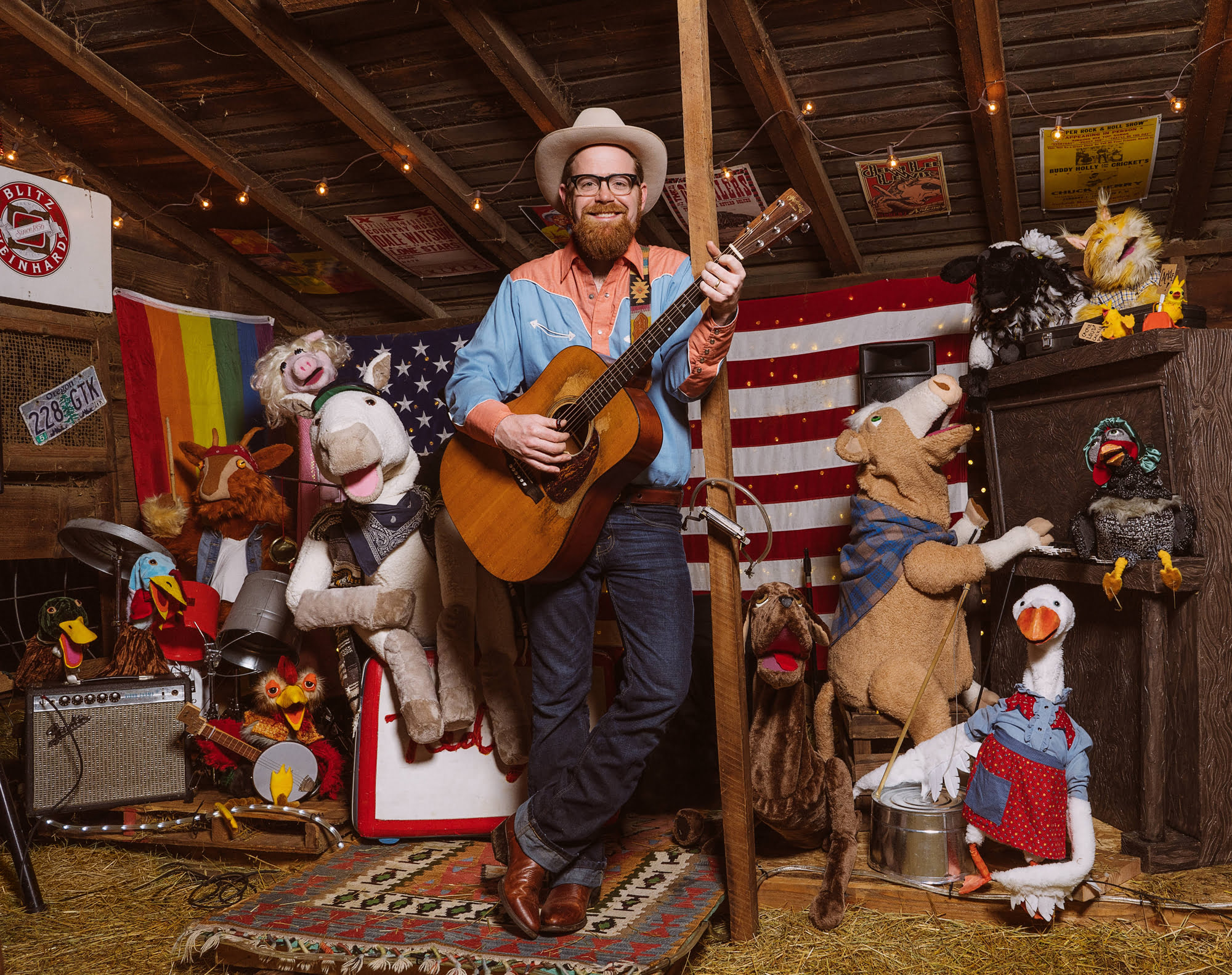
LISTEN: Red Yarn, ‘Old Hen Cackled’

Artist: Red Yarn
Hometown: Portland, OR
Song: “Old Hen Cackled”
Album: Red Yarn’s Old Barn
Release Date: April 27, 2018
Label: Red Yarn Productions

In Their Words: “I can’t remember which Seeger’s version of ‘Old Hen Cackled’ I heard first, Pete’s or Mike & Peggy’s take on Ruth Crawford’s. Either way, I had been tinkering with this old folk song for a few years and had come up with the main riff and the chord progression for the bridge, but I was searching for something innovative to do with the lyrics.

In August 2017, right after the racist rallies in Charlottesville and the president’s tepid response, I found my inspiration: The old hen needed to be a progressive activist. I modeled her after my mom, my mother-in-law, and other feminist boomers who’ve been fighting the good fight since the 1960s. Folk songs have always been an essential part of protest movements, and I thought an old hen cackling all the way from the farm to the White House would be an accessible image for the budding young activists in my audience. Once I had the concept, the lyrics pretty much wrote themselves.” — Andy Furgeson


Photo credit: Aaron Hewitt

WATCH: Tim Easton, ‘Old New Straitsville Blues’

Artist: Tim Easton
Hometown: Nashville, TN
Song: “Old New Straitsville Blues” (alternate take)
Album: Paco & the Melodic Polaroids
Release Date: April 13, 2018

In Their Words: “New Straitsville is a small town in Southeast Ohio where they have a Moonshine Festival. Also, an infamous coal mining strike occurred there in 1884, when the miners gathered in a nearby cave to unionize … and probably drink a lot of moonshine. They ended up setting the mine on fire.

I went into that cave with Paco, my Black Gibson J45 acoustic guitar, and set out to write a historic coal mining tune, but then realized I knew nothing about coal mining, and just wrote verses that were truer to my own life.” — Tim Easton


Photo credit: Michael Weintrob

Canon Fodder: Various Artists, ‘Oh My Little Darling – Folk Song Types’

“What’s the name of this song you’re going to sing?” says Herbert Halpert. The year was 1939, and the folklorist was visiting Elk Park, North Carolina, a small mountain community near the Tennessee border, not far from Johnson City. There, he met two singing sisters, Mrs. Lena Bare Turbyfill and Mrs. Lloyd Bare Hagie.

“’Lily Schull,’” replies Turbyfill.

“Were you used to singing it together, before … “

“Yes, sir,” they respond in unison.

“I mean … when you were young, did you sing together at all?”

“Ever since we’ve known it.”

Perhaps it is the 80 years between then and now, but those words sound an awful lot like forever when Turbyfill says them in her Appalachian accent. But “ever since we’ve known it” is 25 years at most.

“That’s the way you sing it most of the time?”

“Yes,” again in unison.

“Go ahead and sing it the way you do most of the time. Go ahead.”

It’s a perfectly awkward moment saved for all of posterity by Halpert’s disc-cutting machine, which he hauled down the East Coast collecting folk tunes. It’s city meeting country, urban meeting rural, educated meeting self-taught, but any discomfort is dispelled as soon as the two sisters start singing. They sing with no accompaniment — their voices blending almost magically, following no harmonic pattern other than the one they devised and perfected themselves. It’s the essence of folk music. Their sisterly harmonies and spry phrasing contrasts sharply with the grisly story of “Lily Schull” which, like so many murder ballads, begins in penitence and punishment. In the first verse, a crowd surrounds a jail to hear a condemned man’s last words. In the second, he confesses to the “murder of Lily Schull, whom I so cruelly murdered and her body shamefully burned.” By song’s end, he is asking God to save his soul and watch after the wife and family he leaves behind.

The sisters hesitate between the second and third verses. Perhaps they are overcome by the details of the crime, or perhaps they are responding to some gesture by Halpert. It’s a silence that asks, “Should we go on?”

Once the murderer meets his Maker, the folklorist asks the folk artists about the song. Turbyfill responds, “That’s a true song,” and the tape cuts off. Perhaps the sisters knew the story of Lilly Shaw, an African-American woman from East Tennessee, whose murder inspired “Lily Schull.” Perhaps they knew she had been brutally killed in 1903 by a man named Finley Preston, who was hung two years later after multiple appeals. They had learned the song when they were teenagers and, by the time they met Halpert, had been singing it more than half their lives.

Forty years later as it was cut to disc, “Lily Schull” was anthologized on Oh My Little Darling, released by New World Records, a label established in 1975 by a grant from the Rockefeller Foundation to produce a comprehensive anthology of American music. There are many folk compilations like this one, far too many to list. Oh My Little Darling is nowhere near as beautifully strange as Harry Smith’s world-building Anthology of American Folk Music, nor is it as comprehensive or as immersive as the multi-volume Sounds of the South series. It lacks the geographic specificity of the 1975 anthology High Atmosphere: Ballads and Banjo Tunes from Virginia and North Carolina. It was only pressed once to vinyl, and reissued in 2002 on CD. (As of this writing, the compilation is not available for download or streaming.)

Regardless, Oh My Little Darling stands out as a useful entry point for newcomers to American folk music. Culling from various sources and covering a range of styles, it serves as something like a textbook to the various types of folk songs percolating in the American South during the first decades of the 20th century. It opens with Arkansas singer Almeda Riddle performing a children’s ballad called “Chick-a-Li-Lee-Lo,” perhaps the most famous song here. There are also cowboy songs and outlaw songs, minstrel songs and labor songs, bawdy blues and evangelical hymns, songs derived from old broadsides and songs known as Child ballads, collected by the 19th-century proto-folklorist Francis James Child.

In his liner notes from the 1977 vinyl edition, folklorist Jon Pankake warns against lumping these disparate styles into the same category, as though every folk song belonged to the same species. He would rather us celebrate the infinite variety of the music, which reflects the infinite complexity of American history. These songs document the fears and desires, regrets and prejudices of the past, serving as vessels of public memory, chronicles of history as it was experienced in rural America. History books don’t mention Lillie Shaw, but folk music memorializes her for generations.

In some ways, folklore, as represented by Oh My Little Darling and similar compilations, offers a rebuke to the Great Man school of history, established in the 19th century and still perpetuated today by such scholars as Joseph J. Ellis. That approach to the past suggests that all history is motivated by the actions of great and powerful individuals. Folklore relocates both the motivation and the documentation to the will of the people.

In that regard, this compilation is a fine introduction to American folk music as a populist force, especially if you’re looking to start a band. That’s what Jay Farrar, Jeff Tweedy, and Mike Heidorn were doing when they discovered Oh My Little Darling at the Belleville, Missouri, public library in the late 1980s. It opened up a new world for them and showed them how they might marry folk subject matter with punk guitars. The trio took the name Uncle Tupelo, and the roots of their debut, No Depression — not to mention the genre it inspired, also called No Depression, or alt-country, or whatever-you-call-it — twist tightly around these old recordings. The band would even cover two songs on their third album, plainly titled March 16-20, 1992 after the rough dates for the sessions in Athens, Georgia. Farrar sings both tunes in his grave baritone, turning “Lilli Schull” into a time-stopping mea culpa. The song plods along as he draws out each line, as though he’s trying to stall the snap of the noose around his neck. It’s a much more obvious interpretation than the sisters’ original, but still affecting in its deliberation.

Farrar also sings the 1937 labor song “Come All You Coal Miners,” written and performed by Sarah Ogan on Oh My Little Darling. This original is a cappella, her only accompaniment the hiss and crackle of the archival 78 record, and she sounds righteous and outraged describing the dangerous conditions miners faced at the time: “Coal mining is the dangerousest work in our land today,” she spits, “with plenty of dirty slaving work and very little pay.” She makes her closing line a rallying cry to presumably striking laborers: “Let’s sink this capitalist system to the darkest depths of hell.”

Farrar never had the humor or the audacity to sell such a line, but he nevertheless savors the historical details in Ogan’s lyrics. “I know about old beans, bulldog gravy, and cornbread,” he sings, as though the camp menu was a password to the union meeting. His version is more a lament, perhaps sung from the point of view of a miner who survived the pits yet still recalls the perils. Neither “Coal Miners” nor “Lilli Schull” resembles its original, which is the whole point: Uncle Tupelo understood that the class issues of the 1930s were pretty much the same as those of the 1980s, which empowered them to participate in that folk tradition and put their own stamp on these old songs. For that reason, Oh My Little Darling stands as a foundational text in alt-country and contemporary Americana — a testament to the malleability of American folk music in all its types.