Buck Meek’s Musical Worlds Collide

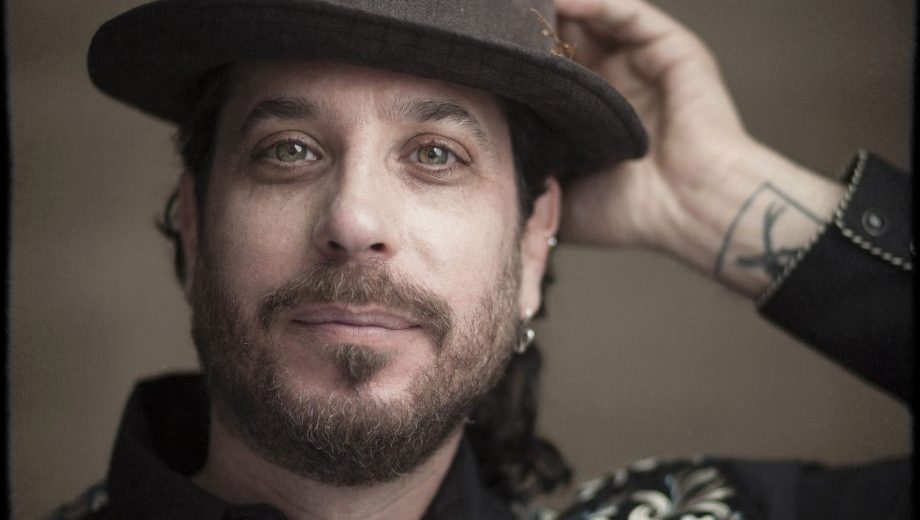
Buck Meek doesn’t give the whole game away. It’s not guaranteed he’ll tell you exactly what his songs are about. However, he will expound, in detail no less, on how he gets himself in alignment to write them and what the mechanics of his songwriting process look and feel like. After six albums with Big Thief and four solo albums, most recently The Mirror, he has more than earned the right to hold back in some ways while sharing deeply in others.

Born and raised in Wimberley, Texas, Meek grew up playing guitar, singing, and writing songs surrounded by a community of old-guard outlaw songwriters, western swing players, and barrelhouse blues musicians who took him under their wing at a young age, taught him how to play it how he felt it, and gave him his first gigs around the Texas Hill Country. At the same time, annual trips to the nearby Kerrville Folk Festival introduced him to the rich traditions of Texan folk music.

As the grandson of scholars who studied the two Williams – Shakespeare and Faulkner – and the son of a child psychologist and a glass sculptor, it’s easy to surmise he was never short on literature and art. His depth of influence and fluency come through in how he speaks about his musical practice and his commitment to it.

When he was 17, Meek left Texas for Boston, where he studied jazz at Berklee College of Music before finding community with a generation of young musicians who wanted to write their own songs and play sweaty rock shows in basements. Later, he moved to New York, where he began performing with Adrianne Lenker. The two musicians lived in a van, singing their songs across the country before forming Big Thief. Fourteen years later, the East Coast’s long-standing punk and rock traditions are as much a part of his musical DNA as the Americana, country, folk, and blues he was raised on. The eureka moment came when he let his two worlds collide musically.

Produced by Big Thief drummer James Krivchenia, The Mirror features a stunning cast of family and friends turned collaborators, including his brother Dylan, Lenker, the hauntological harpist Mary Lattimore, Adam Brisbane, Germaine Dunes, Staci Foster, and the Avant-Americana icon and former BGS advice columnist Jolie Holland.

Opening with the range-roving rhythms and bittersweetly sung melodies of “Gasoline,” Meek digs into the intricacies of relationships and communication throughout the album, rendering them in a traditionalist alt-country and western style, underpinned by modular synthesis and subtle electronic textures from Krivchenia and engineer Adrian Olsen.

On “Can I Mend It,” he describes a deeply regrettable moment where raw emotions crystallize, before shattering into a million potentially irreparable fragments. As he laments on the chorus, “Can I mend it?/ Can I make it whole?/ Now that you’ve seen into the dark side of my soul.” Later, when Meek looks in the mirror on “Demon,” Olsen’s modular synthesis briefly overpowers the band with a not-so-subtle squelch. As with all parts of the album, there’s a reason for this.

By the time The Mirror closes with the summery, sunset shuffle of “Outta Body,” we’ve lived with Meek for a spell. Although, as he argues in this interview, we never really fully know anyone else, or even ourselves for that matter. Sometimes, when you look at someone from that right angle, or let our communication move beyond words, we achieve brief but precious moments of understanding.

On a Wednesday morning in early March, Meek spoke with Good Country by video call about all of the above and more.

How are you doing? What do your days look like at the moment?

Buck Meek: I just moved to Los Angeles. I got this big old yard, but the fence is kind of patchy. My little dog keeps running away. I’ve just been chasing my dog around every day. She keeps escaping and there are peacocks everywhere in my neighborhood. So my dog is just chasing peacocks all day long. I’ve also been trying to learn how to garden a little bit, planting some plants, and doing lots of interviews.

It’s one thing to be in a band that succeeds, but it’s a whole other thing to be able to have a solo career as well. What’s the difference between how things have played out for you and the future you imagined when you were younger?

I grew up playing blues, ragtime, and jazz manouche with some local cats, Django Porter and Brandon Gist, and playing in icehouses around the Texas Hill Country. I felt really happy when I played the guitar, and that was enough. I didn’t really have any idea what it even meant to be a musician in the world. When you’re a kid, you don’t know how any of that works. Of course, I idolized Jimmy Page and the like, but that felt completely out of reach.

Do you think what you’re describing was a common experience for musicians your age growing up in Texas?

I think the bar bands of the world are the modern folk musicians. Really, the people who are keeping the songs alive are the ones who have never made an album, or nobody’s ever heard of. The people who play in bars around the world in small towns. They’re the ones who keep the spirit of music alive. There is this incredible relationship between the elders at the bars and the little kids coming up as guitar students. Inevitably, the star kid, the kid who works the hardest, gets taken under the wing by the old-timer as their protege. There are these beautiful relationships that pass down knowledge. I think you find that pretty much everywhere.

I’ve gone on to have bands with names and travel around the world, but when I’m on stage playing guitar, it still feels the same as it did back then. It’s just me and my guitar. It’s a very simple form of happiness. It’s very fulfilling, whether people show up or not. There’s a life cycle to attention, but as long as I have my guitar, I don’t care.

At the heart of it, it’s about your relationship with your instruments and the musicians you play with, right?

Totally. In the words of Tom Sachs, the reward for good work is more work. As long as I get to do it again the next day, I’m good.

When you think about your career in Big Thief and as a solo artist, do you feel like you’ve mostly been able to do it on your own terms?

Yes, for the most part, but we’ve done it collectively. Everyone in Big Thief is very uncompromising in our own ways, but we all have blind spots. Because we’re a group of people, we’re able to call each other out on our blind spots, maintain our collective lack of compromise, and never sell out, never sell our souls. I’ve been lucky to be surrounded by people who have a perspective on that. We’ve done it on our own terms. I’ve definitely learned the power of that over the years.

Do you ever feel like you were born in the wrong era?

No, I don’t feel that way. I’m stoked.

What do you think the era you emerged within has afforded you that a previous era might not have?

Of course, it’s a two-headed monster, but access to communication, for example, how we’re talking now, helps so much. Not being beholden to a record label giving you a budget, and being able to record your own music at home is huge as well. Now, people are able to hear that music on Bandcamp or the like, which allows you to go and play shows around the world. That’s a very new phenomenon. It’s been a huge part of building my career.

When we started booking tours, we recorded our first album at our friend’s house. We were burning copies to CD-R, putting them in brown paper bags, and passing them out to anyone we could think of. We basically asked all our friends in Brooklyn if they had friends in other towns and got their email addresses. We’d email them our record and ask if we could play a show in the town where they lived. We just kind of pieced this tour together around the country.

We used the internet as a tool to get started, but we’d drive to these towns, meet these people, shake their hands, and become friends. Eventually, we moved out of our apartments, bought a crappy van, hit the road, and played a lot of shows: parties, basements, whatever. Getting in a room with people was essential.

How do you feel about going on the road by yourself?

Lately, I really enjoy traveling with a band. I’ve had some really good solo tours, especially down in the desert and around the Southwest. My friend Tony Presley, who runs the label Keeled Scales, released my first two solo records. He’s an Austin kid. He’s a booking agent as well, but he primarily books small towns and DIY venues. He booked a few tours for me around the Southwest. Taos in New Mexico, out in the desert, El Paso and Santa Fe. Little towns in Arizona, and out in the Hill Country of Texas, stuff like that. That’s always a lot of fun.

How much impact do you think the people you meet through these experiences have had on your music?

I think they’ve made me who I am, which has a big impact on my music. I mostly think of songwriting as the time I spend away from my guitar and my songs. I really try to put it down and just go out into the world and live my life. That’s the real work, living your life as a person in the world.

How close do you think we can get to truly knowing another person?

We never fully get there. I think the closest we can often get is by looking at them sideways or trying to find oblique solutions to communication. I think language is really powerful, but it’s limited. The space between words and conversations, and unspoken communication, often adds up to more of an understanding. The truth is, we never fully know ourselves either. So how can we know someone else? Often, I feel like it’s easier to understand someone else than to understand yourself. I think it’s just shifting constantly. There are moments of understanding, but there’s never any kind of permanence.

Tell me about the conditions under which your new album came together.

I spent a couple of years just living my life. I was living in a log cabin in Topanga and booked a recording date with my band about six months in advance. I sat on the porch every day for eight hours and wrote these songs. I’m blessed to have the resources to do that thanks to my label, 4AD. I put in the time to write the tunes, and then I brought the band together in the cabin.

We set up the big living room with the drums. I stood on the front porch and recorded the vocals outside with a big window into the living room. So there was enough isolation for the drums. Our producer, James Krivchenia, had this setup of electronic instruments and modular synths in the control room with our engineer, Adrian Olsen. They were using the live band as triggers for modular synths and some electronic synthesis feedback in the mix. The album was made live with my band. We moved pretty quickly. There was about a week and a half of tracking.

The other thing I’m the proudest of is how much fun we had making it. It was a great group of people. We had a blast cooking good meals, playing cards, and running around the woods. The music was just a small part of it. I’m glad I can share it as an artifact, but the experience was really the best part.

I thought it was interesting how subtle the use of modular synthesis was.

The entry point for the idea was to be pretty bold, but in practice, the band held a lot of space for the songs. James wanted to focus on the songs as the primary force. There were certain moments where the modular synth took the lead. At one point in the song “Demon,” it kind of takes over and swallows the band for a second. There’s this battle between the two worlds.

For the most part, it’s pretty subtle. For me, it represents the subconscious. The band is the conscious world – a structured, acoustic-instrument world. The electronic elements represent the subconscious. I speak about this in the lyrics of these songs, this kind of play between the conscious and subconscious, intention and intuition, and all these things. It’s subtle, but if you were to remove the electronics, the impact would be great.

It’s like Ernest Hemingway’s iceberg theory. You only ever see the 20% of the iceberg that floats above the surface.

I think having a nod to this limitless space, this ambient world where there’s no grid, no structure, not as much transient energy, this textural, abstract, liquid aspect of the album, opens up the subconscious a little bit in the listening experience.

While listening to The Mirror, I thought about how no one has a monopoly on interiority. Just because someone doesn’t say much in a conversation doesn’t mean they don’t have a lot going on upstairs.

I like playing with that in songwriting. I feel this pressure to be precise and create a very clear map and logic for people to follow. My ideas have to be very concrete, but that’s a rule I’ve imposed on myself. It’s exciting to be able to, to some degree, reveal an abstract inner world amid structure and logic.

I know that pressure is self-imposed or has been projected onto me by society at large. It’s something I try to push back against, while still honoring the medium. There’s a reason that people want some form of relativity or underlying structure. There is always a need for a starting point in communication, but I think we must know when to depart from that structure to express the full spectrum of our ideas and truth. There’s a balance. It’s important to honor it, because otherwise you’re just isolating yourself.

When did you start thinking about songwriting in the sort of terms you’ve just articulated?

I started writing songs in high school as a confession to my high school crush. I just wrote a love song for love’s sake. It was no more complicated than that. I think that’s really the heart of a song. Ideally, for me, a song has a reason to be. It comes from some form of compulsion, or a need to articulate something or to create an artifact, to be able to pull something out of your body and observe it as some form of catharsis. To me, those are the best songs, but there are no rules for the context.

How did you develop your approach to it all?

As I started writing, my self-education was mining the world for songs that, for lack of a better term, felt good. I was trying to find songs that really moved me. Intuitively, I started trying to understand why a song makes me feel something. I’d unpack every word and learn the song and the melody while trying to understand the relationship between them. I wanted to understand how the melody sanctified the lyric and what the rhythm had to do with it.

Let’s talk about taste. There’s a constructed taste you can use as a tool to help people understand where you are. Then, there are those songs that you might not even think you like, but they make the hairs stand up on your neck.

The older I get, the more willing I am to accept those things for myself and really listen to that intuition. As a young kid, I was obsessed with pop country. In my teenage years, I rejected it. When I listen now, it still hits me in the same way it did when I was six. I’ve learned to embrace that. Sometimes, you’ve got to be able to come home. I think with this album, I was thinking about moments when my body wanted to say something, but my mind would kick in and say, “Oh, the critics won’t think that is cool, hip, or smart enough.” I had to lean into those lines and say them twice, say them louder. If you can do that, no one can touch you.

Have you ever thought about how lakes and streams were the original mirrors?

Yeah, ponds and lakes and puddles and things. Good point. They’re still enough to provide a reflection, but also fluid enough that you can throw a rock in and diffuse them. There’s still a relativity to it, which is more true to what a reflection really is. There’s some form of objectivity, but to some degree, it’s just a construct.


Photo Credit: Germaine van der Sanden

Out Now: Madeleine Kelson

Madeleine Kelson blends traditional folk, country, and Americana. She played Queerfest and took part in AmericanaFest this year, has been featured multiple times on NPR, and was a finalist in the Kerrville Folk Festival’s New Folk Competition. 

Madeleine is from Chicago and based in Nashville, where she lives with her partner. Her single, “The Way I Do,” displays her relationship with her partner through a lens that shows how ordinary queer relationships can be: Drinking coffee every morning, coming home for dinner, and falling asleep beside each other every night. The hook declares, “God has never loved a woman the way I do.” It’s an iconic LGBTQ+ anthem, and in my opinion, it’s one of the most compelling songs about queer love and pride.

We’re proud to promote this dedicated and creative up-and-coming coming artist. Our Out Now interview discusses why Madeleine creates music, her favorite LGBTQ+ artists, her release and touring plans for 2024, and more.

Why do you create music? What’s more satisfying to you, the process or the outcome?

Making music has been a part of my life for as long as I can remember. When I started playing and singing as a kid, it was a way for me to connect to the people around me – at first by singing around the house with my mom and my sister and then by playing music with my friends. That’s still a big part of it now, but starting around my teenage years music became a way for me to process big emotions and give them somewhere to live outside of my mind.

As far as the process versus the outcome, I don’t tend to think of making music as having an outcome. A song gets written, and maybe that’s the outcome of songwriting, but then it might get arranged, or performed, or recorded. Even after I stop playing a song at shows, people still listen to it and it grows and changes with them. I’d say the most satisfying part is the impact, whether that be for me or for someone else.

What’s the best advice you’ve ever gotten?

I love this question! I couldn’t pick just one piece of advice, so here are a few:

One from my mom: “No is a complete sentence.”

Some from my grandpa: “Shoot for the moon. You might surprise yourself and get it.” “Follow your passion. If you love what you do that’s what you will do best.“ And “Treat others with respect. The way up can be a hard slow journey but the fall can be very fast and you meet the same people on the way down as you did on the way up.”

I’ll throw in a good Yiddish saying too: “When you have a lot to do, go to sleep.”

Who are your favorite LGBTQ+ artists and bands?

Oh man! Here’s a big long list, because it’s so hard to choose!

Brandi Carlile (I will always look up to her), Freddie Mercury (I listened to a lot of Queen in high school), Indigo Girls, Linda Perry, Allison Russell, Brandy Clark, Aaron Lee Tasjan, Katie Pruitt, Amythyst Kiah, Celisse, Boygenius…

Also want to shout out some amazing local artists that I love: Purser, Autumn Nicholas, Jobi Riccio, Becca Mancari, Denitia, Jaimee Harris, Liv Greene, and Julia Cannon.

For anyone reading this who might not be out of the closet, were there any specific people, musicians, or resources that helped you find yourself as a queer individual?

I was really lucky to grow up in a very liberal city in a very liberal family. When I came out, I knew the people around me would be supportive. Any apprehension I felt had to do with the people outside of my circle and my life beyond Chicago. That being said, I still didn’t really know I was gay until high school. I think the things that helped me find myself were the people around me – having friends who were out, seeing queer couples, going to pride parades, watching shows with queer characters, going to concerts or other events that I knew lots of queer people would attend.

Seeing what that part of my life could look like in other people helped me make sense of who I could be. Coming out is something you don’t do just once, but constantly for the rest of your life. At some point it changed from something I dreaded doing to something that has brought me comfort, joy, and community.

What are your release and touring plans for the next year?

I’m currently releasing singles off of a four-song EP that will be out mid-February. I’ll be on tour with Alaina Stacey supporting that EP, through the Midwest and Northeast starting February 16th in Chicago. Touring is one of my favorite things, and I can’t wait to see everyone at these shows! Seriously, show up. I want to see you!

You’ve done a lot this year, from touring to playing several festivals, including Queerfest, AmericanaFest, and Perseids Music Festival. What’s that been like for you?

It has been so much fun! There are few things that bring me more joy, or make me feel more like myself, than being on stage. It’s such a rush and so emotionally gratifying, even to play sad songs and feel things so deeply with other people. There’s really nothing like it. It’s been a busy year, and one in which I have definitely overcommitted myself, but I’m grateful for every part of it.

In 2022, you released your debut album, While I Was Away, on Olivia Records. Can you share some of the key inspirations and themes behind the album?

While I Was Away was actually my college thesis project! The idea was to write and produce an album that musically pulled from the different building block genres of Americana (folk, rock, country, etc.), and lyrically spoke to the years since I moved away from home. It’s a real time capsule of my life from 18-22. It’s about leaving home, being gay in the South (oy), growing up, watching the kids I babysit grow up, my dog, so many things!

You were also a finalist in the Kerrville New Folk Competition. Could you tell us about that experience?

Kerville Folk Festival was incredible. I had no idea what to expect going into it. I applied on a whim and when I heard that I got in, I could never have imagined what it would be like. If you haven’t been to a festival like that, it can be hard to imagine, but essentially there’s a big piece of land in the middle of Texas and for three weeks every year it turns into a city of stages, tents, RVs, and so much good music. It’s home to the most respectful and outstanding song circles that carry on through the night, and quite possibly do not ever end. Playing and competing was an honor, but the real privilege was to be around so many phenomenal songwriters whom I’m happy to now call my friends.

Could you share the creative process, inspirations, and the significance behind your song ‘The Way I Do’?

“The Way I Do” started as a line that floated around in the back of my mind, honestly probably for months before I knew what to do with it. The line was, “If I don’t get to heaven for loving her true, God has never loved a woman the way I do,” which ultimately became the hook of the chorus.

Growing up, I was very aware of homophobia, but it wasn’t something I experienced personally in any significant way. That really changed when I moved to Tennessee. And I say that not to generalize or condemn the South – there are a lot of amazing people here who are deeply involved in fighting inequality. In my experience, it’s a more tangible and pervasive issue here, and if anyone is going to make a difference, it’s the people here who are fighting that fight every day. I think growing up with the experience of feeling entitled to confidence and comfort in my sexuality made me that much more pissed off when I was faced with intolerance. Especially the virulent brand of “Christian” homophobia that the South is so well known for. That, I really didn’t and still don’t understand.

The thought behind the song is kind of a sarcastic, “If your god knew how great it is to love a woman, he/she/it definitely wouldn’t hate me for it.” It’s definitely a “fuck you,” but it’s also an honest reflection on how easy and natural it is to love someone who happens to share your gender.


Photo courtesy of the artist.

BGS 5+5: The Deer’s Grace Rowland

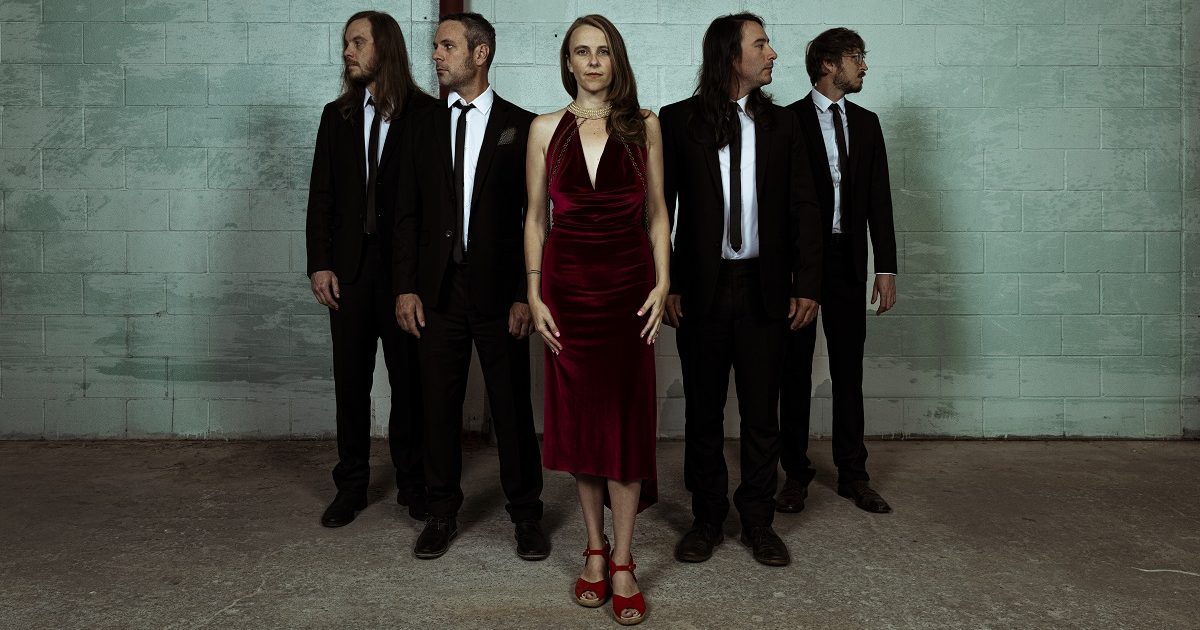
Artist: The Deer (answers by Grace Rowland)
Hometown: San Marcos/Austin, Texas
Latest Album: The Beautiful Undead
Personal nicknames (or rejected band names): We used to be called Grace Park and The Deer, when I was using that stage name and it was more my folk songwriting project. We have many silly names for Noah, our fiddle/mandolinist, including Nugiel and Space Nug. Our guitar player Michael goes by Deenyo.

What’s the toughest time you ever had writing a song?

They don’t always come easy, and the muse is ephemeral, like a Whac-A-Mole. We strike when the iron is hot and write independently as much as we can, but we also have to force ourselves to get together and record every now and then whatever comes to mind, even when in a drought. These “drought” sessions are some of the toughest because they are so open-ended. But a lot of good can come from them — the song “Six-Pointed Star” comes to mind right now. It started as a simple song we made in the woods, but when we took it to the studio we had the worst time trying to make it sound right. We must have made four different versions until we finally hit it, but now it is one of our favorites to play.

Which artist has influenced you the most … and how?

Gillian Welch’s rustic realism
John Hartford’s wordsmithing
Depeche Mode’s moody chord progressions and deep bass
Pink Floyd’s subtle layering and studio techniques
Tori Amos’ outspoken poignancy and fearless lyricism

How often do you hide behind a character in a song or use “you” when it’s actually “me”?

For me, it’s often the other way around. I will write from a first-person perspective to make it sound like it’s me, but the person is actually someone else in another body, and the events are imaginary, or real but in another time. In this way I feel like I can transcend time and space lyrically, perhaps to sound a call for mystical encounters that would be otherwise impossible, or to set the stage for events that have yet to happen. One example is the lyricism in “Like Through the Eye,” a billowing romp of a dream that never actually took place, but an experience that I have always envisioned and desired to happen to me. Songs are a way of bringing these things to me. Jesse, however, does this all the time. For instance in our new single “Bellwether,” the original lyrics were “I am falling farther into Me.” As a narcissistic ode to ourselves it served a purpose, but for our greater audience we decided to soften it into a palatable love song.

Which elements of nature do you spend the most time with and how do those impact your work?

Bodies of water would be our main way of connecting with nature as a group. We make it a point to visit rivers, oceans, hot springs, and lakes wherever we can, and take in Earth’s most valuable essence, and all the plants and animals they gather around them. In lyrics we often reference the sea and the river, flora and fauna, and interspecies relationships, because they reflect the cosmological order that governs our bodies and our feelings. Our complex emotions can be understood better when we zoom out and realize that we are not only driven by this order, but a vital part of it.

What was the first moment that you knew you wanted to be a musician?

I was really into musicals as a kid, watching VHS tapes for hours on end and learning every song. My first concert was Lilith Fair in 1997. I was 12, and it was life-changing. However, my decision to actually pursue music as a career didn’t come until my early 20s, when I met a large swath of working musicians at Kerrville Folk Festival in 2006. Seeing so many people my age who were writing their own songs and touring independently, traveling with freedom and spreading their art, was enough to set my intent upon making that dream real.

Whether we got started later or earlier in life, as a group the media we consumed as kids was probably 100% responsible for illustrating an applied use for the gifts we knew we possessed. MTV (back when they played music videos), the Grammys, Saturday Night Live, the Super Bowl halftime show, and yes, even church — these mainstream outlets showed us at an early age what it looked like when someone was giving it their all to entertain their community, and the world. It was enough to inspire each of us to hone our skills, and bring our talent to people on our own scale.

https://open.spotify.com/playlist/1N6SuTPadcfEYWC8l5gRqw?si=zp3dc_rGQKOkpL6k3vlhmA&nd=1


Photo credit: Barbara FG

BGS 5+5: Danny Schmidt

Artist: Danny Schmidt
Hometown: Austin, Texas
Latest album: Standard Deviation
Personal nicknames (or rejected band names): “The Widowmaker,” for the exploits of my youth. Just kidding.

What’s your favorite memory from being on stage?

There are two moments that really stand out to me. My wife Carrie Elkin and I got to perform at the Ryman Auditorium for a show with Emmylou Harris a few years ago. That represented so many dream moments of mine colliding in one evening that it was utterly surreal and disorienting. The other evening that especially stands out to me was a show when Carrie and I were on tour with the podcast “Welcome To Night Vale,” and Carrie had just announced she was pregnant, and immediately began to crowdsource the name of our daughter live in front of 2000 lunatic Night Vale fans. It was a beautiful silly moment of shared celebration.

What other art forms — literature, film, dance, painting, etc. — inform your music?

I’ve always been a lover of photography, both as an appreciator of other’s photography, and of taking my own shots. I love the static nature of the form, the sense of capturing something fleeting. And I love how that static nature forces your eye to choose images that have some sort symbolic quality and associative properties to try and tell a little story in one still impression. It’s a lot like songwriting in that particular way.

What’s the toughest time you ever had writing a song?

I had only been writing for a couple years when 9/11 hit, so it was a craft I was still learning and not very confident in. But like everyone else at that moment in time, my mind was hard at work trying to process all the emotions and geopolitical realities of the situation. So it wasn’t like I set out to write a 9/11 response song, it’s just that I write about the things that are on my mind, and that’s what was on my mind. But it was such a complex stew of emotions that it was extremely hard to distill it down to what felt like a fair and nuanced encapsulation. In the month it took me to write that song (called “Already Done”) to my satisfaction, I wrote about four or five other songs, cause they all felt so easy by comparison, that they just popped right out.

If you had to write a mission statement for your career, what would it be?

Be inspired by everyone and don’t listen to anyone. Cause, y’know … it’s beautiful to be inspired and influenced by the work of other folks in your community. At the same time, you have to have an unflinching internal compass as an artist or you’ll lose your way.

How often do you hide behind a character in a song or use “you” when it’s actually “me”?

That’s a great question! I think the answer is very often. I question the word “hide” though. Sometimes it is hiding. But sometimes it’s choosing a voice that can best deliver the message, and sometimes that’s not the first-person. And sometimes you’re just writing a fictional account in the third person and realize somewhere along the way that the character is starting to feel suspiciously familiar. I think it’s true that, at the very least, we put a lot of ourselves into everything we create, whether it ends up in a highly coded form, or whether it’s completely straight forward.

I picked songs that in one way or another changed the course of my personal life:

Bob Dylan – “It’s Alright Ma, I’m Only Bleeding”

I discovered Dylan’s music when I was a very disaffected 15-year-old. I thought the world was insane and everyone in it was blind. I still think the world is insane, but Dylan taught me that not everyone was blind, at least, and he helped me start getting my head around the madness of it all in a manageable way. I connected very strongly with his worldview (especially with the stuff he was writing from 1964-1966), and it had a powerful affect on my sense of isolation. From across the world, and across two decades, there was a friend who would commiserate with me. It taught me a lot about the power of song.

Carrie Elkin – “Berlin”

This was the first song I ever heard Carrie Elkin sing, on the night we met. We would go on to become husband and wife, and so “Berlin” was sort of her siren song.

Anaïs Mitchell – “Why We Build the Wall”

I heard Anaïs sing this song around a campfire my first night at the Kerrville Folk Festival in 2006. Anaïs was one of about 20 young songwriters huddled together all night around the fire that evening, almost all of them new to me, and almost all of them would go on to become my closest friends and conspirators in this world of music. If the world could’ve heard the songs shared that night among compatriots, I feel like it might’ve fixed a lot of broken spirits.

Mississippi John Hurt – “I Shall Not Be Moved”

This album inspired me to get an acoustic guitar for the first time, and convinced me that if I practiced for 60-something years, I could get good enough at fingerpicking that I wouldn’t need a band.

Ayub Ogada – “Obiero”

My daughter was born to this album by Ayub Ogada. My wife asked me to pick some music for the birth, something that was calming, soothing, and ethereal. Ayub Ogada might actually be an angel. And Maizy was safely delivered.


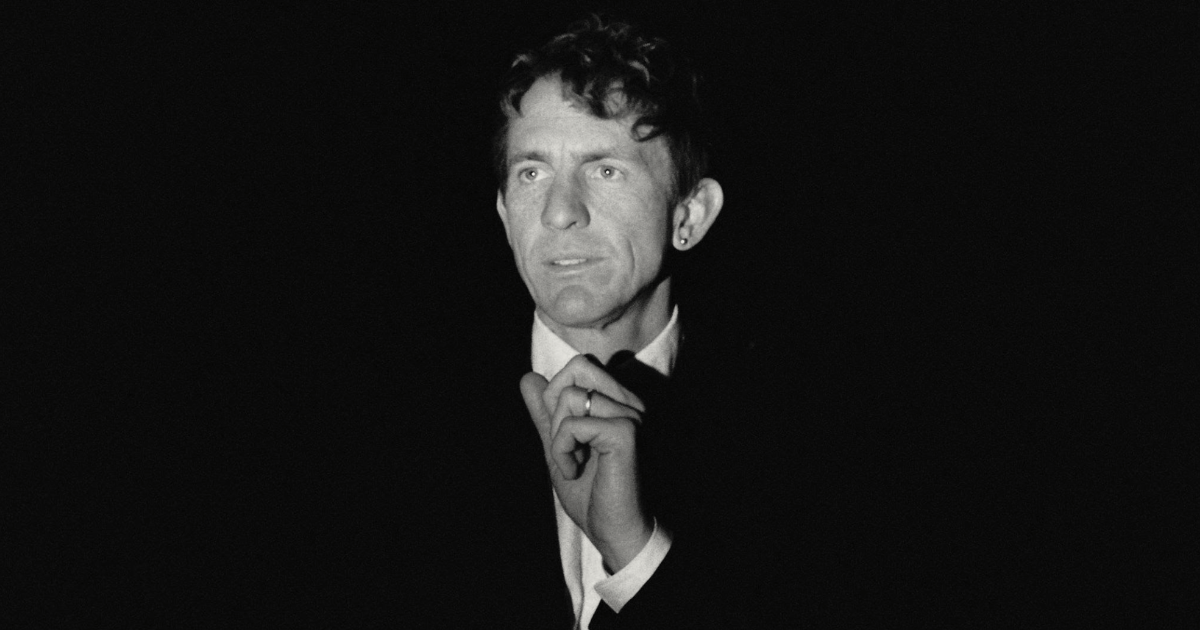
Photo credit: Chris Carson