Joe Mullins & the Radio Ramblers Turn the Dial to Bluegrass Tradition

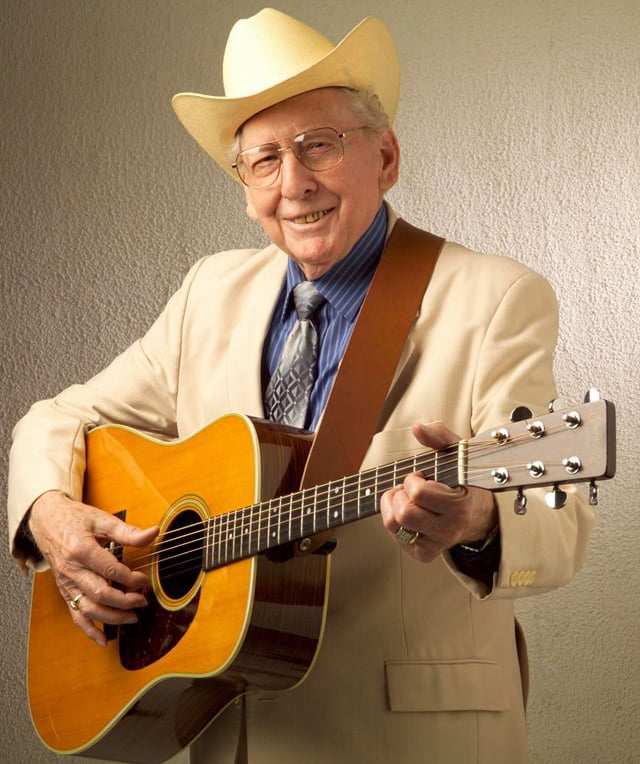
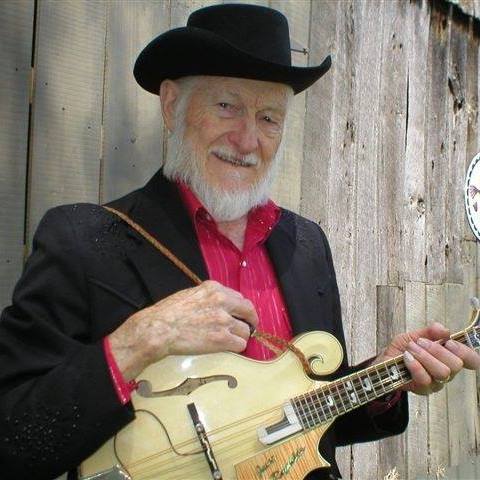
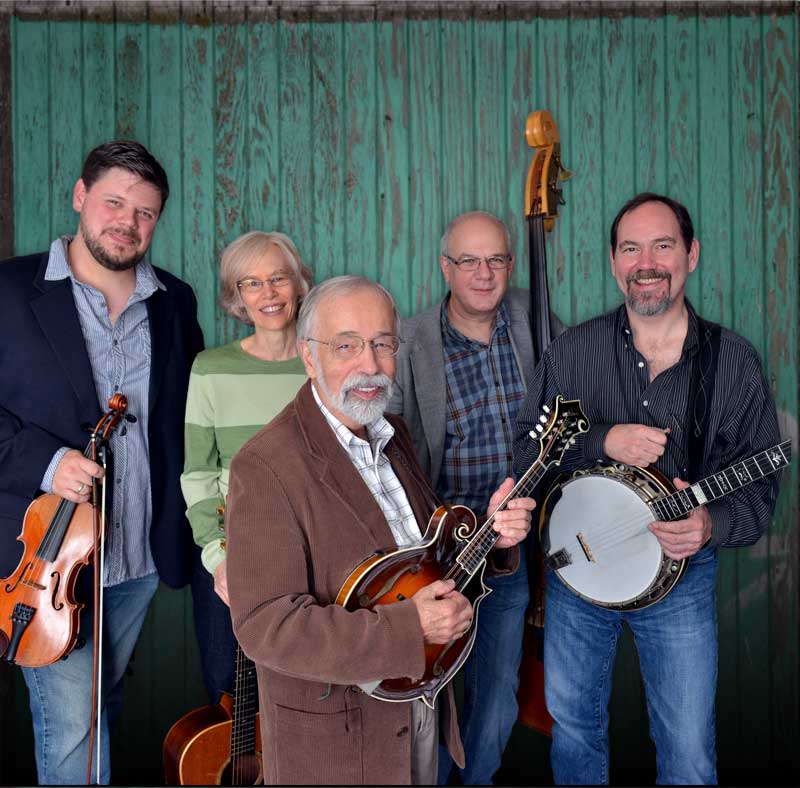
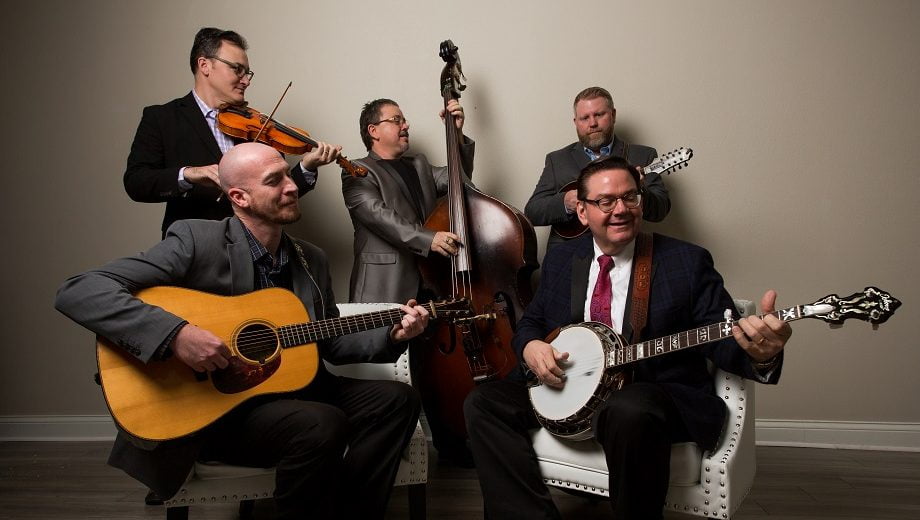
For the record, Joe Mullins is a cornerstone of the modern bluegrass community. He’s chairman of the International Bluegrass Music Association, as well as a radio station owner and an award-winning musician. Plus he’s just an easy guy to talk to. During a visit with the Bluegrass Situation, Mullins traced his decades-long career, from teenage gigs to For the Record, his latest album with the Radio Ramblers, featuring Jason Barie on fiddle, Mike Terry on mandolin and vocals, Duane Sparks on guitar and vocals, and Randy Barnes on upright bass and vocals.

BGS: Did you go into these latest sessions with a certain sound or musical direction in mind?

Mullins: We had three or four new songs that we wanted to do, and wanted to make those our own. I try to make certain that when we combine rare tunes that we want to cover with new songs, that we get the perfect balance of a variety of vocal and instrumental arrangements. I don’t like the same ol’, same ol’. We’re fortunate in the band to have so much vocal versatility. There are three of us that can sing any part, plus a bass singer if we want to do a quartet number. So, I make certain there’s a good balance vocal arrangements, keys, tempos, subject matter… If you listen to all 12 songs in a row, I don’t want you to get bored and go to sleep.

That’s harder than it sounds.

It is! Especially when you combine original material with some rare tunes that you want to cover, and that you want your audience to hear. I always find a few of those. We’re called the Radio Ramblers because I have been on radio and on stage since ’82. I was 16 the first time I played a major bluegrass event as a banjo player, the same year I started in broadcasting. So I’ve got a real deep well to draw from, everything from old-time stuff to contemporary country, classic country, Americana music, and everything bluegrass. On this new album, we’re covering a Johnny Cash/Hank Jr. tune (“That Old Wheel”), and doing new songs, and something from a hundred years ago, out of a hymnbook. So there’s a little bit of everything.

I’ve heard you talk before about the bluegrass history in Southwestern Ohio, and you made a reference to Sonny Osborne and J.D. Crowe as being mentors to you. What was that relationship like?

My dad was a broadcaster and a good bluegrass fiddle player. He was in and out of bands. He sat in with the Osborne Brothers a bunch when I was a kid. He sat in with J.D. Crowe when Doyle Lawson and J.D. had the Kentucky Mountain Boys going. He was on a ton of recording sessions in the ‘60s and ‘70s with a variety of bands. In Southwestern Ohio, the Cincinnati/Dayton region, it’s just thick with bluegrass history. Everybody from Flatt & Scruggs to the Stanley Brothers — they all recorded in this area at one time or another. Larry Sparks started here and grew up here.

The Osborne Brothers started here. Their parents had left Kentucky to get a job in Dayton, Ohio, when they were boys. Bobby and Sonny started their career right here in the same neighborhood where the Radio Ramblers started. They started in the late ‘40s, early ‘50s, and we started in the early 2000s. Matter of fact, Bobby started singing on the radio in Middletown, Ohio, in 1949 — the same station my dad started working at in 1964, and the same station I started working at in 1983. So there’s just a lot of connection there.

The Osborne Brothers and J.D. Crowe and Ralph Stanley and Don Reno — all these first-generation bluegrass leaders were all family friends. They were in and out of the house when I was a kid. My mom fixed breakfast or supper for everybody I just mentioned, multiple times. Dad sat in with them and played on Larry Sparks’ first record, and played on all kinds of recordings in the area. I saw these guys growing up a lot.

So when I decided to attempt the five-string banjo, I had seen J.D. Crowe and Sonny Osborne and Ralph Stanley in their prime, multiple times, and had all the recordings already in my bedroom. Then, when it came to me pretty naturally, and I had the opportunity to play and perform and record as a young guy, if I was having a struggle with something, I always had access to J.D. Crowe or Sonny Osborne or Don Reno or Ralph Stanley. “How do you do this?” “How do you that?” I got to see them often and I got some one-on-one time with all of them.

Did that strike you as amazing at the time? Or was it later in life that you realized how incredible that was?

Later in life I realized I am the most blessed guy in the world. The most fortunate cat, you know? To be 15 or 16 years old, trying to learn how to play banjo, and have access to these guys always – and get to be encouraged by them, and sing by them… Sonny especially, he would lecture about all kinds of stuff besides banjo playing. “Make sure you go to college! Quit smokin’!” That’s just who he is. We still talk often and I play one of his banjos on this record. He’s had custom banjos built and designed for many years and I’ve had one of them for the last six years.

I wanted to ask about your dad and touring with the Traditional Grass. Was he easy to travel with?

Not always. [Laughs] I often look back on the Traditional Grass – we had it going on in the late ‘80s and early ‘90s. We had a ball! We were on the road all the time and back then it was just wide open. Us, the Del McCoury Band, the Bluegrass Cardinals, the Lost & Found Band — and the first generation guys were still out there. We saw the Osborne Brothers, Ralph Stanley, and Jim & Jesse all the time.

I was real young and I look back on it now a ton, because Dad was my age then. He still was a pretty hard-charger. All the other guys in the band were young and it didn’t matter how late the show was, or how long the party went on, he hung in there with us. [Laughs] He wasn’t really hard to get along with. He just got tired and cantankerous sooner than all of us young cats did, I guess. But he didn’t worry about details. He worried the most about playing great music and having a good time.

In the ‘90s, you were pretty visible with Longview, too.

Very fortunate. Worked out great. Traditional Grass toured like crazy in the early ‘90s. We burned it up from ’89 to about ’95. I about burned myself out and burned myself up, just living hard on the road. I was very fortunate to have an opportunity to buy a local radio station here in this wonderfully historic bluegrass neighborhood in Southwestern Ohio.

The Longview thing was already in the works before I came off the road with the Traditional Grass. We started conversations around ’94. I was on the road with that band through the summer of ’95 and launched my first radio station as an owner in the summer of ’95. And Longview recorded first in December of ’95, so by the time the album came out, there was a good buzz with it and it was an immediate success. And we had to go out and tour part-time.

So I had just enough time to get my radio business started and established without a heavy tour schedule. And then I had this wonderful, high-profile gig as a special event recording band that also got to tour and play everything from MerleFest to Wintergrass, from Telluride to Myrtle Beach. We played everywhere as a special event band in the late ‘90s and it kept me from falling off the radar.

If you look back on the late ‘70s when you were developing, to now, where you’re thriving in a lot of different areas, so many things have changed in bluegrass. But what would you say has been a consistent thread from those days until now?

You’ve still got to be able to play in time and sing in tune. [Laughs] I don’t care how young or old you are! Some of the consistent threads are that there’s nothing to hide behind in bluegrass music. You still have to be able to cut the gig. You still have to be able to bring it. I’m still on stage every night with five guys who have to know exactly how to manhandle their instrument, and vocally, it’s all out there.

The simplicity of that part of it — for my band and the sound we look for — it hasn’t changed. It hasn’t changed from the original formula that Monroe and the Stanleys and the Osbornes and all of ‘em have put on stage since the ‘40s and the ‘50s. It’s still got to be players that are masters at the craft. It’s still a combination of art, entertainment, and blood, sweat and tears. That’s bluegrass.


Photo credit: Amanda Martin Photography
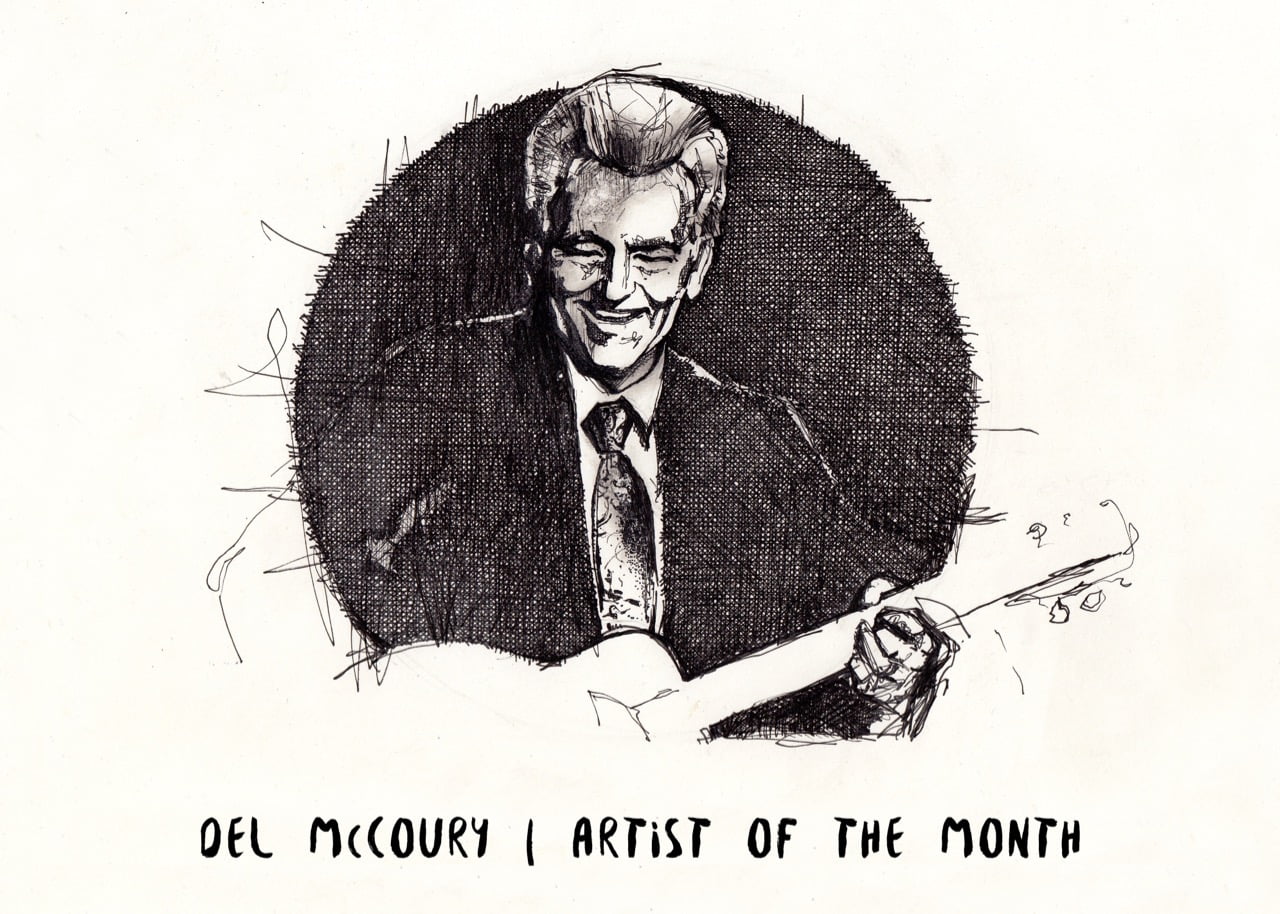
Del McCoury: Whatever Suits the Song

There are three things that you need to know about Del McCoury before anything else: His hair is incomparable, he giggles almost ceaselessly, and he still sings bluegrass.

Fifty years ago, after ending his stint with Bill Monroe’s Blue Grass Boys as lead singer and guitarist, McCoury released his debut solo project, Del McCoury Sings Bluegrass, with his now-iconic pompadour coiffed proudly and precisely on the cover. The album was released on Arhoolie Records, whose founder and proprietor, Chris Strachwitz, produced the album, phoning the young McCoury barely a day before the session to offer him the deal. Because of the severely short notice, the band was cobbled together from whomever was available and the songs chosen from whatever Del knew: A lot of Bill Monroe material, plenty of traditional bluegrass, and some old-time country, too.

Since those days in the late 1960s, songs have been the most significant driver of McCoury’s inspiration and creativity all along. “In the early years,” he remembers, “my producers would bring songs to me and I would usually just do them, even though sometimes I didn’t really like the song. As time went by, I got to thinking, ‘I’m just going to record songs that I like, instead of doing everything [anyone] brings to me.’ I figured I’m the one who’s going to have to sing these songs!”

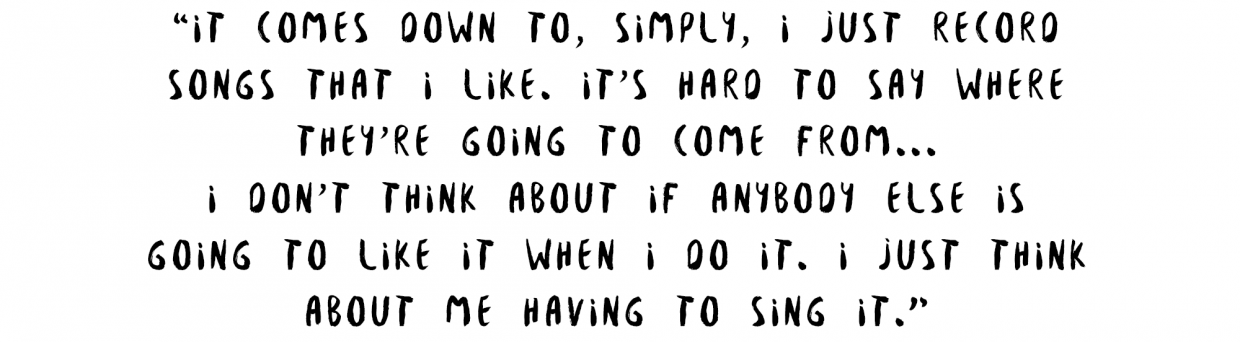
It’s this love for the songs themselves that has informed his entire career, sculpting the iconic McCoury style that can be detected through each and every one of his albums. It’s remarkable that he’s been able to sustain such a particular, tangible musical identity over the decades without it ever growing stale or cliched. That identity — innovation balanced with tradition and overlaid with melody-focused, virtuosic picking, while centered on soaring, high lonesome vocals, all accomplished with a wink and a smirk — doesn’t always come from overt attempts at consistency. “I’ll tell you what it is,” he says in a tone that foretells that this is not some ironclad secret. “It comes down to, simply, I just record songs that I like. It’s hard to say where they’re going to come from. … I don’t think about if anybody else is going to like it when I do it. I just think about me having to sing it.” And as far as production and arrangements? That’s no proprietary recipe under lock and key, either: “But really, it’s whatever suits the song.” Whatever he’s throwing into the pot, it is downright delectable on McCoury’s brand new album, Del McCoury Still Sings Bluegrass.


Thank goodness that he does. If his signature chuckle, a constant as he tells stories and discusses the new record over the phone, wasn’t indication enough, Del has always been a beacon of joy in bluegrass communities. From the first second of track one, the slightly silly, totally burning, almost-a-love-song “Hotwired,” through a high-speed Alan Jackson cover, a classic fast waltz, yes, a train song, too, and another couple of handfuls of carefully curated material, that joy is palpable. It’s a striking through line that stems first from his absolute adoration of just doing the thing. It’s a love he’s always had. “In the early days,” he says, “When I was playing bluegrass festivals, we’d stay up all night, play all night, and go and do a show the next day in the afternoon. I had that much interest in it that I could play night and day and never stop. When you get older, you can’t do that; you have to pace yourself. But I still have that interest, I really do.”

Even casual observers would not note McCoury’s current clip as “pacing oneself.” He’s a member of the Grand Ole Opry and a Bluegrass Music Hall of Fame inductee, he tours nationally, he hosts the radio show Hand Picked with Del McCoury on SiriusXM’s Bluegrass Junction, and he presents an annual roots-music-festival-meets-family-reunion, DelFest, in Cumberland, Maryland, every May. All of that notwithstanding any current album release cycles and press junkets he may be running. While plenty of other artists with such long, successful careers would be pumping the brakes, Del is still looking ahead. “I just never lost interest in it. I never lost interest in recording records and entertaining folks. It’s something I love to do.”

And the folks love him back. Whether listeners come from the most staunch camps of bluegrass diehards, or from hippie festivals and jammy string band gatherings, or symphony halls and performing arts centers, they all count Del as one of their own. The rarity of that fact is not lost on him. “[That’s why] when we do a show, we never have a set list. We figure these people paid to see us, so we’re just going to do what they want us to do, we’ll see what they want to hear. It keeps me enthused, the audience excited, and also the boys [excited, too.] And the audience never know[s] what we’re going to do. ‘Cause I don’t!”


By choosing to record and perform material that he connects with personally, he’s passing down that care and respect for songs to every one of his audiences, who, in turn, learn to appreciate and then reinforce that care. So, when a song comes along on Still Sings Bluegrass that includes an extended, rip-roaring electric guitar solo (in this case played by Del’s grandson, Heaven), or when “To Make Love Sweeter for You” kicks with a jangly upright piano, you don’t hear the predictable, “that ain’t bluegrass” balking. Furthermore, the traditional, straight-ahead policers are visibly absent from DelFest, where more fringe, jammy acts like Trey Anastasio and The String Cheese Incident are just as likely to appear as Larry Sparks — or Tedeschi Trucks Band. And whether he’s recording a set of songs such as this fresh crop, curated by the man himself, or lending his voice and his band to projects like Del and Woody, an album of unrecorded Woody Guthrie songs, or American Legacies, the New Orleans-meets-Nashville, jazz-meets-bluegrass, Del McCoury Band-meets-Preservation Hall Jazz Band crossover album, his footing within bluegrass never falters and is rarely challenged.  

Del doesn’t believe there’s a secret antidote to the signature, absolutist trains of thought some find in bluegrass and he clearly says so. When asked why he thinks his fans might let him off the hook he laughs, “You know what, I’m afraid they’re gonna let me go any minute!” But we know this isn’t true. Now more than fifty years into his song-led career, Del’s creative vision has never been so clear, his perspective never more innovative, his hair never more enviable, his laugh never so charming, and his music never more joyful.

No matter how that ends up sounding from the stage or through the speakers, by definition, it’s still bluegrass.


Illustration by: Zachary Johnson


Give Me the Wintertime: 10 Bluegrass Songs for the Cold

If we really have no choice but to endure winter (other than high-tailin’ it toward the equator), we might as well give in, cozy up, and spin some wintry bluegrass songs. Cold rain, cold snow, cold wind, cold hearts … some folks like the summertime when they can walk about, but wintertime … well, it’s a season that happens, too.

Tony Rice — “Girl From the North Country”

The north country = where the wind blows cold on the borderline. It feels like Tony sings about winter and its themes quite a lot. It just fits.

Emmylou Harris — “Roses in the Snow”

Not to throw around the term “iconic,” but this one is iconic. We’re familiar with the idea that love is like the seasons, but this time, love is like a greenhouse. It can grow roses in the snow! It’s a refreshing twist on a concept that usually ends up with the flower of love frozen over and wilted in the cold.

Larry Sparks — “Snow Covered Mound”

The only conscionable reason to highlight any recording of this song besides Ralph Stanley’s is … Larry Sparks. His voice captures winter and its grief perfectly. It will send a shiver up your spine.

The Osborne Brothers — “Listening to the Rain”

Some places aren’t lucky enough to enjoy the austere beauty of snow in the winter months, getting rain, and gray, and mud, and gloom instead. Of course, cold rain with a heapin’ helpin’ of lost love sounds about right.

Ronnie Bowman — “Cold Virginia Night”

IBMA’s 1995 Song of the Year leans into the cold heart metaphor. It is beautiful. And catchy. And still reverberating off the walls and in the halls of every former IBMA convention host hotel.

Jim Mills — “Sledd Ridin’”

If you gloss over the strange spelling of “sledd,” you’ll find this rollicking banjo tune feels like a day spent on the snowy neighborhood hill. Time for hot cocoa.

Reno & Smiley — “Love Oh Love Oh Please Come Home”

In a dynamic twist, the woman has left the man alone, at home, with their baby, while the snow has covered up the ground.

Del McCoury — “Rain And Snow”

It’s a murder ballad. It’s a lover’s lament. It’s sung in an astronomically high register. And it’s pretty sexist. It’s bluegrass to a T. It also happens to be a goddamn classic. Del McCoury does it right.

J.D. Crowe & the New South — “Ten Degrees and Getting Colder”

Somehow the saddest part of this song isn’t that he’s traded off his Martin. This song is a masterpiece and distillate of the troubles of a working musician: The coldest months are always the hardest months.

Bill Monroe — “Footprints in the Snow”

Once again, we are reminded that the father of bluegrass not only originated the genre, he’s responsible for a good many of its themes, too. In this case, winter isn’t an analog for heartbreak; it’s a silver lining, guiding the song’s speaker to his love via her footprints. You can’t trace footprints in the summer!


Photo by The Knowles Gallery on Foter.com / CC BY

8 Legendary Artists on Our Bluegrass Bucket List

It was 2012 which taught me that, even though bluegrass is a relatively young genre, I was taking that young age for granted. In just a few months, both Earl Scruggs and Doc Watson passed away before I had gotten the chance to see either of them live in concert. Being a banjo player, I was especially broken-hearted over never having met Earl and thanked him for everything he gave me, indirectly, via the banjo. Even though I resolved to catch shows by as many living legends as possible after that particularly devastating year, I have not done well enough. In order to learn from my personal shortcomings, here’s a list of the legends that we all simply must see and hear as much as we possibly can. There’s no time like the present.

Curly Seckler

Chances are, if you’re listening to a recording of Flatt & Scruggs, you’re hearing Curly Seckler sing the tenor. His singing and mandolin graced more than 100 songs during his tenure with the Foggy Mountain Boys. In the ’70s, he joined Lester Flatt’s Nashville Grass and inherited the act after Lester passed on. After retiring more than 20 years ago, he continued to release albums and appear as a guest with nearly every bluegrass band of note, on stage and in the studio. He’s a Bluegrass Hall of Famer, an IBMA Award Nominee, and one of the last surviving members of the first generation of bluegrass.

Mac Wiseman

AKA “the Voice with a Heart,” Mac Wiseman got his start with Flatt & Scruggs and the Foggy Mountain Boys, and went on to join Bill Monroe’s Blue Grass Boys before setting out on his own, carving out a solo career that continues to this day. Though he’s currently 91 years old, he just released a musical memoir, I Sang the Song (Life of the Voice with a Heart), on Mountain Fever Records and he has hundreds more songs backlogged for future release. The Country Music Hall of Fame and Bluegrass Hall of Fame inductee rarely performs these days, but musicians, writers, and fans continue to make the pilgrimage to his home just outside of Nashville where he holds court from his armchair — and still does his own vacuuming.

Jesse McReynolds

With his brother Jim, Jesse McReynolds toured and recorded some of the best brother duo bluegrass music ever created. A tireless innovator, Jesse has recorded an album of Chuck Berry covers, a Grateful Dead tribute album, and even appeared on the Doors’ Soft Parade. Lucky for all of us, Jesse still tours, playing festivals and concerts around the Southeast. He also performs quite frequently on the Grand Ole Opry and is the Opry’s oldest member. At 87 years old, he’s still got it — and you need not take our word for it, just catch him tearing through “El Cumbanchero.”

Eddie Adcock

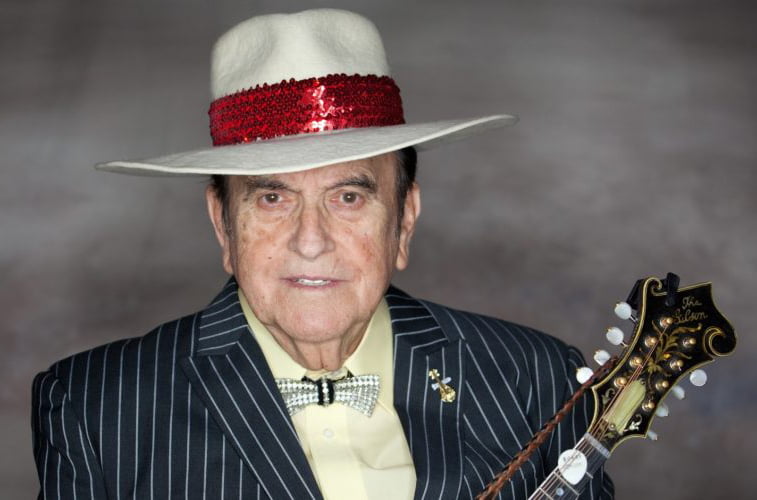
Eddie Adcock is one of the wackiest, most joyful, ingenious banjo players to have graced bluegrass music with his playing. He, too, spent a stint playing with the Blue Grass Boys and went on to join the Country Gentlemen. He toured as a solo act with his wife, Martha, for many years. Their annual benefit concert for Room in the Inn, a homeless shelter network in Nashville, is always a highlight of the Christmas season. It’s worth attending just to catch Eddie, but the lineup is usually brilliantly star-studded. Interesting tidbit: Eddie had brain surgery to correct debilitating hand tremors and was kept awake during the surgery so he could play banjo and the doctors could determine to what extent they could eliminate the tremors. There’s video of this. Go find it.

Bobby Osborne

At 85 years old and after more than 60 years of performing professionally, Bobby Osborne filmed his first music video for “I’ve Gotta Get a Message to You,” the single off his brand new record, Original. That’s right, it’s a bluegrass Bee Gees cover. And it isn’t the only surprising cut on the new record, either. There’s “They Call the Wind Maria” from the Broadway musical Paint Your Wagon and Elvis’s “Don’t Be Cruel.” The record plays like a walk back through Bobby’s — and the Osborne Brothers’ — highly influential career in bluegrass, country, and the folk revival. You can catch Bobby touring across the country with the Rocky Top X-press and on the Grand Ole Opry. It might be the only context in which you hear Rocky Top without being mad about it.

Larry Sparks

Larry Sparks got his start with the Stanley Brothers in the early 1960s and, after Carter Stanley passed away, he became lead vocalist, singing some of Ralph Stanley and the Clinch Mountain Boys’ most iconic songs. His own band, the Lonesome Ramblers, continues to carry the torch for traditional, straight-ahead, no-nonsense bluegrass music, but without the hubris and self-righteousness that these uncompromising bands sometimes espouse. Larry was inducted into the Bluegrass Hall of Fame in 2015 and he is a two-time winner of IBMA’s Male Vocalist of the Year award. He’s still going strong with nary a sign of stopping. You need to do yourself a favor and see him live.

Roland White

Too often eclipsed by the fame and influence of his late brother, Clarence, Roland White is the quintessential bluegrass living legend. He appeared on the Andy Griffith Show with his brothers in its first season, he performed with the Kentucky Colonels, the Country Gazette, and the Nashville Bluegrass Band, and he founded the Roland White Band in 2000, after nearly 60 years in the industry. He recently turned 79, but he still teaches at camps and workshops, tours across the country, and plays monthly at the World Famous Station Inn in Nashville. Over the past few years, he’s re-released two live albums by the New Kentucky Colonels: Live in Sweden 1973 and Live in Holland 1973. These recordings should be required listening. Go get them.

Norman Blake

Do you know what Johnny Cash, Bob Dylan, Kris Kristofferson, Joan Baez, John Hartford, Nitty Gritty Dirt Band, Tony Rice, O Brother Where Art Thou?, Alison Krauss and Robert Plant, and Inside Llewyn Davis have in common? Norman. Blake. To call his guitar playing “iconic” would be sorely understating it. His influence reaches beyond bluegrass to almost any player who has ever picked up a flat-top box, whether those players know it or not. His latest record is Brushwood (Songs & Stories), recorded with his wife and longtime musical partner, Nancy. It’s a folk album that channels the roots of the music, but with a political bent that’s as unapologetic as it is classically folk.


Eddie Adcock photo by Eddie Janssens. All photos courtesy of the artists.