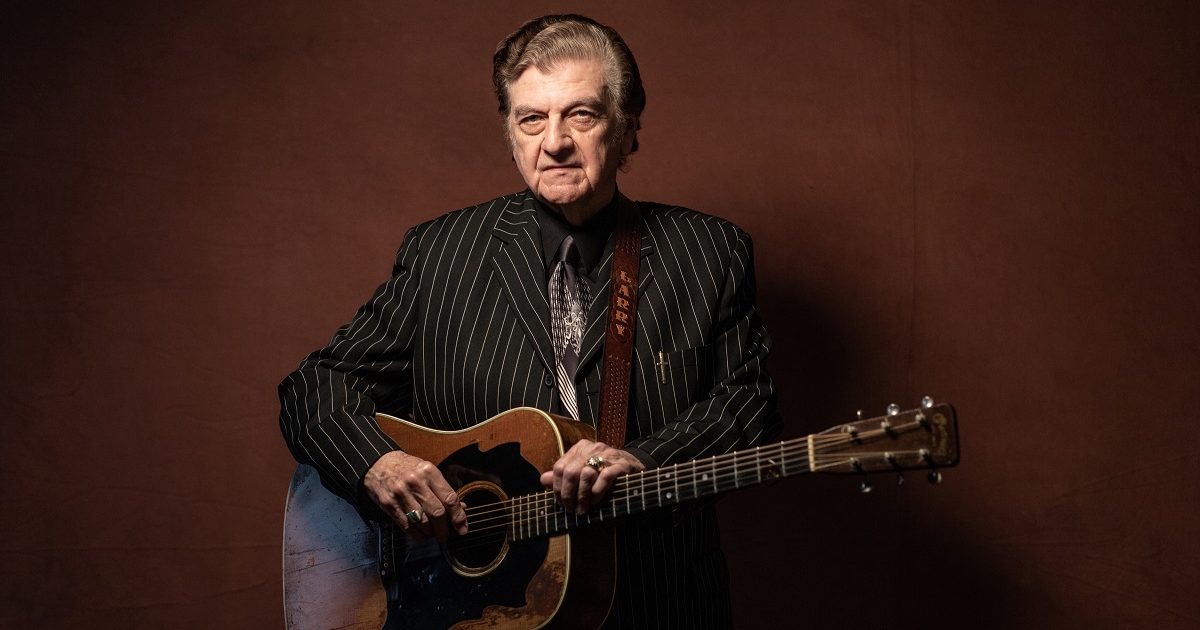
Larry Sparks Is a Surprisingly Zen Bluegrass Star

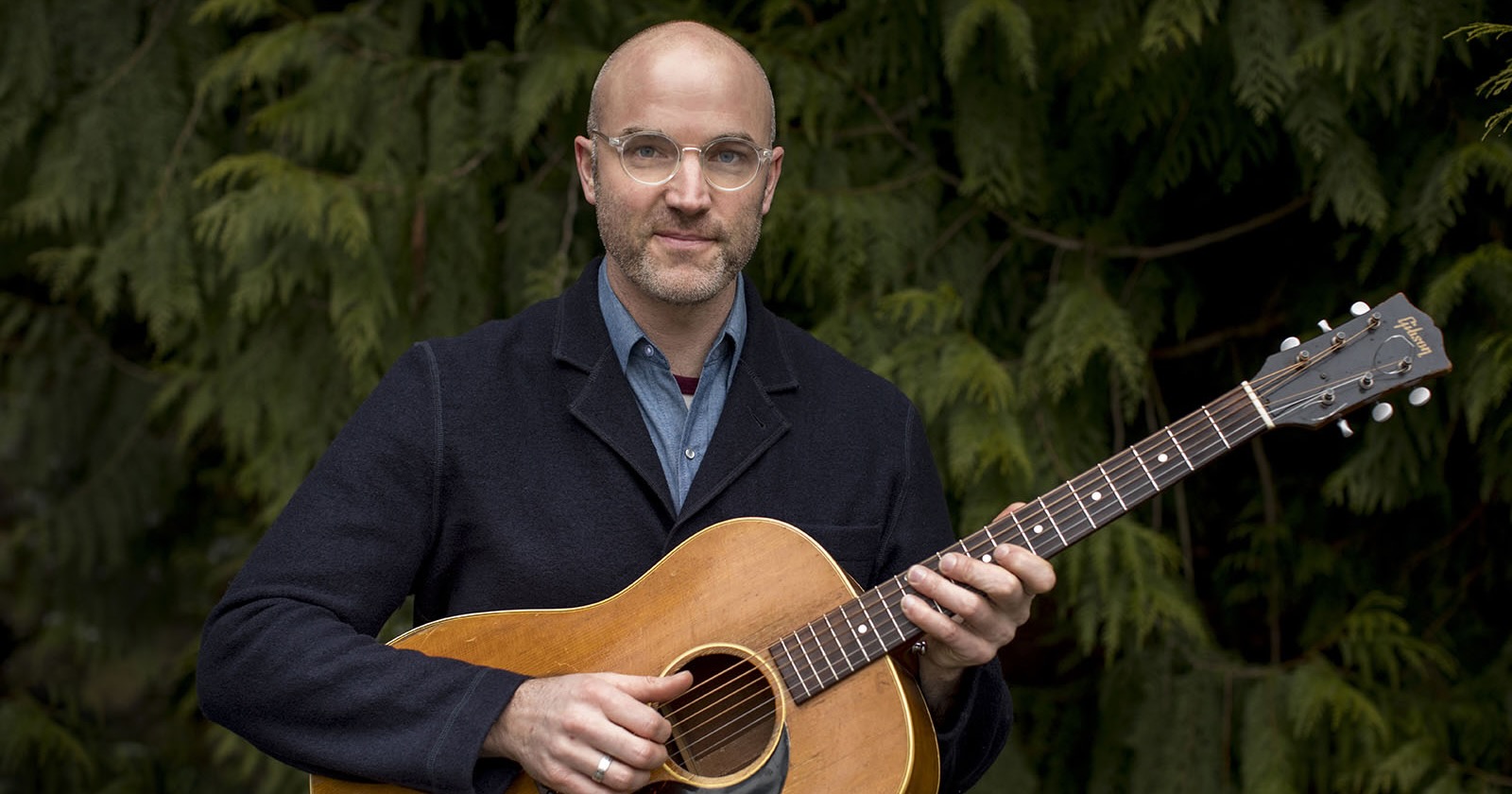
Speaking to Bluegrass Music Hall of Fame inductee and IBMA Award winner Larry Sparks over the phone, you might never guess you’re conversing with a living legend. He’s remarkably humble, down to earth, and plainspoken. And his approach to making bluegrass – as he has professionally for more than 60 years – is surprisingly zen.

His latest album, Way Back When, was released in late October 2025 and the project finds Sparks in exactly the same sonic space as any of his excellent LPs from the last six decades. If you were to take a short audio sample of Way Back When, it would be genuinely difficult to identify from which era of his lauded career it came. The project is warm, lively, and resonant, sounding like you’ve been dropped into a cozy living room with perfect acoustics and a superlative bluegrass string band.

The songs, as well, are timeless and classic, whether fresh tracks, iconic covers, or an old-timey instrumental fiddle tune with familial origins. Like his vocal style, guitar picking, and production preferences, Sparks’ song curation also feels like an intuitive extension of his personality. When he describes how he accomplishes this consistency across eras and executes the timelessness of his albums, it seems as though he becomes a sort of bluegrass guru.

“When songs touch me, they touch my feelings,” he explained to BGS . “When the song touches me, it’s saying something. I’ll take that and see what I can work with, and make it my song.

“The song’s me and I’m the song. And that’s the way that they did it back in the day. They become that song – the older singers, they became those songs. That’s the way that I do it, I try to make that song me and me the song.”

It’s a secret ingredient lacking from too many bluegrass records out there today. Not just his inhabitation of songs so that they can inhabit him, but also treating bluegrass like the forebears of this music did. As a living, breathing, cutting-edge thing that doesn’t need to be built on a foundation of regurgitation and emulation and litmus testing. Like Sparks puts it so simply – and eloquently – in our conversation, bluegrass has mainstream appeal. It requires heart, soul, and being present – becoming the music and becoming each song.

That right there is exactly how Sparks became a Bluegrass Music Hall of Famer and a hero to many – Alison Krauss, Billy Strings, and this writer included. It’s also how he’s maintained a consistent (never boring, stale, or regressive) sound over the course of his 62-year career. And, it’s what keeps him motivated to continue looking forward while inspiring all of us and reaching new audiences.

Let’s start by talking about your excellent new album, Way Back When. When I first listened to it in the fall, when it was released, I was struck by how old-school it sounds. The production style sounds so timeless, it sounds so warm and live – like real bluegrass. It also feels like it could have been pulled from almost any era of your career. with the way that it’s produced and the way that it stands out sonically. I wondered how you accomplished that?

Larry Sparks: I try to do things normal and just go for it. And all of the band– you just feel what you’re doing. You make it real. It’s hard to explain. It’s just, I sing and play from my heart, soul, and mind. Some songs you don’t have to do that, you just – like the old saying – rear back and let it go.

But some songs need attention, and you have to become that song and the song becomes you. That’s the way that I think probably all these songs are, everything I sing is pretty much that way. But, I don’t know, the feel just comes out natural. It’s more of an older feel, the real feel. That’s the way I like things. So much [that’s] added in today’s recording and music and everything, it’s okay – I’m not saying anything about it! But myself, I’d rather keep it pretty real, just like it used to be.

Are you tracking in isolation booths? Or are y’all tracking in the same room and live? It doesn’t sound like you’re putting the music under the microscope, as it were.

No, I don’t like that. You have to [sometimes], but I’d rather [not]. It’s [an] all in the same room deal. Sometimes you’ve gotta do an overdub break or something. You miss your hot lick, you gotta do it over again. Overdubs are good to use, but I don’t like to depend on them. I’d rather do it straight down the line, and if you make a mistake you do it over, you can overdub a spot or something.

Something else that stood out to me listening to the album is how consistent your sound has been over the decades. You have your own way of singing, you have a style that’s really consistent – as well how you pick the songs that go on your recordings. And you certainly have your own guitar-picking style. Almost no one picks like you these days. How do you think it is true, across 60 years in music, that when you listen to Larry Sparks, you know you’re hearing Larry Sparks and Larry Sparks alone?

It’s a natural style for me. I respect the older songs an awful lot. The older music and the older singers, that came along before I did, in the ‘30s, ‘40s, and ‘50s. I was a kid, but I remember the music mighty, mighty well in the ‘60s. All the older country singers were embedded in me, too. Some of the people just stayed in me. They were good singers and their music, their singing was real. It embedded in me.

I still had my own way of singing and playing. I never did wanna copy someone else. And although I respected what they did very much, the older music and the older country and bluegrass [artists] and whatever else – there is other music, too. It just became natural for me to have my own style of singing and playing, and I never really worked on it to do that. It’s just me, and the band pretty well feels what I’m doing.

The whole thing, you gotta keep it natural, real, and feel what you’re doing, from your heart and soul. That’s the way I do it. It’s nothing I plan to do. It just comes out that way.

I think that’s why it works and is so consistent across your entire career, because it’s not a costume that you put on, it’s not affectation, it’s not a target that you’re trying to hit. It’s just you being you.

People can feel that, too. The audience can feel what you feel. Most of ’em, they can feel exactly what you feel, what you do.
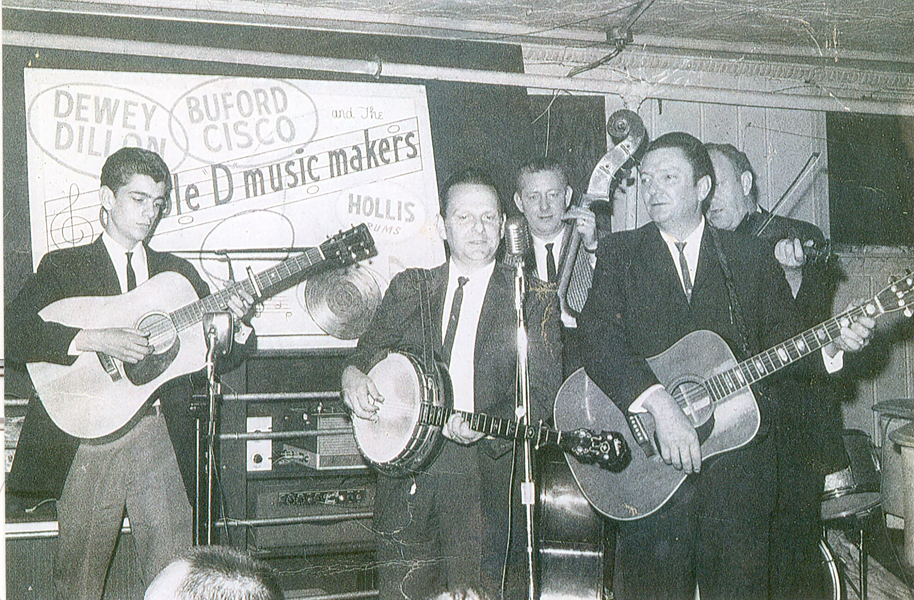
Larry Sparks (far left) performs with the Stanley Brothers before Carter Stanley’s death. Circa 1964. Image courtesy of Rebel Records.

I so appreciate that you bring up heart and soul, because I think people make the assumption that bluegrass is not a music that’s based on heart and based on soul. Especially when you listen to some barn burning, shredding bluegrass or jamgrass.

But for me, this music has always been as much about the stories, the heart, and the soul – and the feeling of it. And that’s clearly such an important part of it for you, too, and the storytelling. I think a lot of people don’t realize heart and soul are an important part of the tradition of bluegrass.

Yeah, sure it is. I’ve worked under the bluegrass name for years. Bluegrass is about 80 years old now, and I have been into it 62 of those years.

Wow.

I can’t believe I’ve been into it that long under the bluegrass name. My music is considered bluegrass, but actually a lot of my stuff could go either way. I’m considered bluegrass and that’s fine. I appreciate it. I’m honored, but a lot of my stuff can go into country or some other direction, too.

I just hold to what I’m doing and [what has] been a good business for me over the years. But you have to make it work and look ahead. The music is music, but you gotta make a business out of it. If you don’t, it’s not gonna work. And that’s what I did. It’s worked out for me. A lot of the bluegrass [industry] is not easy. It’s not one of the easiest forms of music to “make it” in.

And, it’s always been set behind [other] forms of music. I’d really like to see it be possible for bluegrass to be played on all stations. To play it [alongside] new country, modern country, rock and roll. Whatever it is, mix it up. But get bluegrass to program directors. If it ever could get played on other stations, with the right songs and the right artist – put in with everything else they’re doing – it would work. I don’t know if it’ll ever come to that or not, but that’s what it’s always been. We’ve always – like the old saying – took the backseat to the other forms of music.

But we got enough fans and that keeps it [going]. … I’m honored and I’m thankful for it. But it takes a lot of years, a lot of hard work. It’s not easy. I’ve done it all myself. I’ve done my own management, my own booking, my own phone calls, my own writing. This, that, this, that, this, that. I’ve done it all. Like I said, I’m gonna keep doing it, it’s working. It’s fine.

Like you mention, these songs really could go both ways. I love how much country is on this album, and you do such a great job of illustrating that bluegrass and country will always be related and that they cross-pollinate.

And I totally agree, bluegrass has mainstream appeal. And always has! I don’t know why we pretend like it doesn’t.

Yeah, we need more promotion on bluegrass. I wanna keep doing everything I can for it, because I respect it very much. Bill Monroe, the Stanley Brothers, and Flatt & Scruggs – these three names put [bluegrass] on the path and all that played bluegrass come after those three names.

Those three names are in you. I never did want to actually copy any one of those three names, but you take those three names – just to give you an idea. Take those three names I said and you put the Osborne Brothers with ‘em. Put Jim & Jesse with ‘em. Put Jimmy Martin, Mac Wiseman and others – and Larry Sparks – all those names. Every one of ’em are different sounds, different style. But they’re still on the same path. That’s what you gotta have. That’s what I knew, “I better stick to that and not be a copy.”

Let’s talk a little bit about your guitar playing style, because I think you’re carrying on a tradition of a particular kind of guitar picking in bluegrass that is rarer and rarer today. So few people who still make records and perform shows pick like you do. I love how front-and-center your guitar is on this album. Could you talk a little bit about your picking style and maybe who your influences were or how you came up in that type of picking?

Other guitar players are really good and there are a few players out there that can. But the way I do things, my playing is like my singing. I play the melody. And I don’t play over the melody. There’s less notes than normal guitar, it’s more of a feel. It’s hard to explain, but I just play the feel of the song and the melody. I try not to overdo it. I play it and when I hit a note or a slide or a backward– or whatever I do, a pull-off, I want it to come from me. I want it to be me and I wanna feel that note I’m doing, feel that slide I’m doing, whatever I’m doing. And [I want to] keep it that way and not overplay the song.

I also wanted to talk about the instrumental on the album, “Sleepin’ Lula.” Speaking of things that are rarer and rarer in bluegrass, having the clawhammer banjo on it is excellent. It feels like no one flogs the banjo anymore. There’s a lot of old-time players, a lot of clawhammer players, but it doesn’t really seem like anybody’s flogging it anymore. Hearing the instrumental, when the clawhammer kicks in, it was reminding me of that era of early bluegrass when you were just as likely to hear frailing banjo as a three-finger in a bluegrass band.

That’s great. Yeah, I thought it turned out pretty good. I was pleased with it. That’s an old tune. My grandpa, I got a recording of him playing that in 1953. Him and some guys, and he’s from Jackson County, Kentucky. Very good fiddle player. Very good. He was one of the best, he could’ve done something with his talent. He was born in 1877. Back in those days, up to the turn of the century, ‘20s, ‘30s, ‘40s, and ‘50s, he just played square dances around locally and stuff. He never did really go out. Stringbean asked him to go out with him some, but he never wanted to leave or go ‘round traveling and stuff. But he could have filled the bill for anything. He was that good.

I heard the tune from him. And I had never heard it before. “Sleepin’ Lula” – that was my grandma’s name, his wife’s name. She died in 1910 in childbirth and I never got to see her, of course. But her name was Lula, and so he recorded that “Sleepin’ Lula.” And I don’t know, I’m not going to say for sure if he wrote it. There’s a couple other fiddle players I heard play that from back in the ‘20s or ‘30s. But all respect to him. There wasn’t a player like my grandpa.

I don’t know who it came from. I don’t know if it came from my grandpa and he put it together because his wife’s name is Lula. Or if “Sleepin’ Lula” was the name [he gave another tune.] Someday I may try to trace that out a little further.

The other fiddlers that you know played it, did they use the same title for it, too?

Yeah!

Interesting. That’s so cool!

Yeah, it’s something else.

You’re a famous bluegrasser. You’ve been famous to me, for instance, my whole life. I was honestly nervous and a little starstruck to have this conversation. [Laughs] But you’re also becoming more famous at this moment, because two of the biggest bluegrass names to ever come out of the genre – Alison Krauss and Billy Strings – they’re such big fans of yours. I feel like both Alison and Billy see your legacy, they see how important it is, and they are translating that importance to people that maybe don’t know who you are or are just learning about you for the first time.

So I’ve just been curious to ask you, how do you feel about having these prominent “fans” – and it’s not just Alison and Billy, obviously. What does it mean to you to be part of that constellation of people that they look to as influences? And, what does it mean to you to see your music reach new audiences thanks to them and others?

It’s a new world. It’s a different world than what I’m used to. Which, there’s nothing wrong with it. I’m very honored that they stand behind what I do and my music. And, for the music, I’m very honored and thankful that they like it and that they maybe have it in their shows sometime or whatever.

But yeah, the new crowds in bluegrass – we have a very good crowd, but it’s bigger than it ever has been, now, bluegrass music is. But we still have that limited crowd [coming] from other forms of music. And that’s why I said, if it ever got to play on the big stations, give us a little room and respect for the bluegrass. It’s very important music and if the big country stations would give us some respect and get bluegrass to their program directors…

Don’t just [throw it out there]. You gotta be careful. Give it the right thing, the right artists, the right songs, and it would really help our music. It really would help.

But if it never happens, we still got a good crowd and we get more people all the time coming in. It’s a kind of a new crowd coming in, a new age group coming in. We still have a lot of the older people, but the younger people are coming into it. Teens to 20 years old, I’m seeing that happen more. That’s good. Bluegrass, it needs more push, it needs more promotion.

Do you see what Billy Strings is doing as that push or as that promotion? Can you tell, with younger fans coming in, that they started as Billy Strings fans and found you that way? I wonder, is there any way you’re measuring the impact of people talking about you and pushing your music?

I can’t really tell on that, for sure. I can’t. I’m just seeing people that’s young – teenagers and stuff – that wants to learn to play the music and are trying to play. And then that age group I was telling you about is. It’s coming in stronger all the time.

I’ll be honest with you. I don’t listen to other music. I don’t listen to anything hardly, music-wise. You gotta keep yourself fresh. But I respect other music. I respect it. All forms of music. I don’t have anything against the big bands and all the new names. But I like that old stuff. Of course, bluegrass and old country. And other things, blues, I like a lot of that.

You seem remarkably humble and so down to earth. You follow the songs, you put heart and soul into ‘em. But you’re literally a Hall of Famer and you’re one of the last of the first big generation of bluegrass makers that are still doing it today. You’re a legend to all of us. Does it feel like you’re a legend? To you, on the inside? Or no?

I would be to a lot of people, a legend, and to a lot of people I would be famous, I would be a star. But when I went into this business, went into music in my teens, I never looked at it as wanting to be a star or to be famous. I never looked at those two things. I wanted to take what talent I had. I knew I had something to offer. I had to put it together and see what I could do [to] make it work.

I don’t know if I’m a star or famous to people. I hope so, because that’d be nice. I’m pretty honored.


Photo Credit: Images courtesy of Rebel Records. Lead image by Michael Wilson.
BGS Class of 2025: Best in Bluegrass

If you’re looking for a definitive, qualitative, and deliberate ranking; a firm and scientific rubric; or an unbiased, sterile reckoning of the best albums made in bluegrass this year, this roundup may not be for you.

Truthfully, as someone who’s worked, been acquainted, and become friends with many of the artists on this list in various capacities – from bio writing to onstage performances to media coverage to pickin’ parties to recordings and beyond – objectivity isn’t something I, personally, could establish anyway. And such year-end or other merit-based lists and collections aren’t all that interesting, are they, if not just to argue with their curation and selections.

I would not even attempt such things, because to me – to many of us – that’s not what bluegrass is about anyway. Bluegrass is about a feeling. It’s about innovation. It’s about virtuosity. It’s about tradition, loving it or retooling it or coaxing it or turning it upside down. It’s about adrenaline and a high pulse – and passing a mason jar around. It’s about feeling downtrodden or alone, shedding tears into that very ‘shine, and wailing along with the high lonesome sound. It’s folk music as much as it’s abject commercial country in “poor people drag.” It’s endlessly interesting and complex, but pretty damn simple, too.

Anyone with even an ounce of sense knows and understands that bluegrass can’t ever be objective. So indeed, why try? Why not acknowledge that bluegrass is always a matter of taste, of preference, of whimsical or capricious or convicted opinion? Bluegrass is always debatable, because, after all, bluegrass is always in the eye of the beholder.

In the eyes – and especially ears – of this particular beholder, these albums released in 2025 were the best, the most memorable, the most engaging. These collections stick to ribs like ham hocks, or stick in your throat like the tastiest clod of emotional peanut butter. They each advance, subvert, perpetuate, or wrinkle our core ideas of what bluegrass is – and what it can be.

Are each and every one of these LPs the best in bluegrass from 2025? Perhaps not… But also definitely yes.

Big Richard, Girl Dinner

In January, we gobbled down a heaping helping of Big Richard energy with the nourishing and nutritious Girl Dinner. The project may have been the band’s album debut, but this Colorado all-women quartet had already been making remarkable waves in the bluegrass, jamgrass, and string band scenes – and each of the members had extensive and glitzy musical resumés before they even convened. With a new album, Pet, on the horizon for February 2026, a signing with Signature Sounds, and an upcoming co-bill tour with fellow femme outfit Della Mae, we can tell this Girl Dinner is set to become an ongoing traveling feast.

Shawn Camp, The Ghost of Sis Draper

I remember attending Station Inn shows in Nashville in the early 2010s and sitting with rapt attention – like Martha’s sister Mary at the feet of Jesus – as Shawn Camp performed his suite of Sis Draper songs with his star-studded bluegrass bands. Often you’d hear just “Magnolia Wind” or just “Sis Draper.” Sometimes he would perform a more complete handful of the tracks he had written, individually and with his hero and mentor Guy Clark, about the mythical roots music figure from his home state of Arkansas. Now, he’s collected the slate of material – what could easily become a musical or multi-disciplinary theatre work of some kind – into one commanding, lovely, and visceral album. These are timeless songs, written and rendered as only Camp could.

Jason Carter & Michael Cleveland, Carter & Cleveland

Every now and again a new collaborative duo album comes along and makes you think, “Oh! This must have been what it felt like when Skaggs & Rice was released.” Or Tone Poems. Or Ralph Stanley and Jimmy Martin’s First Time Together. A monumental occasion, captured for posterity’s sake in the studio. When fiddlers Jason Carter & Michael Cleveland released their duo debut, that was the feeling. History made in the present, a work that will be regarded as seminal ages into the future being enjoyed in real time. Carter and Cleveland have collaborated quite a bit over the decades they’ve known each other, but what a gift to have that musical friendship ensconced forever on this album. We hope there is more to come.

Wes Corbett, Drift

Look, if all modernist banjo players sounded like Béla Fleck and Noam Pikelny, that would certainly be great. But thankfully there are dozens of five-string pickers continuing to expand on the Fleck (and Pikelny and Munde and Keith and Trischka) school of Scruggs-style, each in their own veins. Corbett is one of the best. Though he blends effortlessly into Scott Vestal’s former role in Sam Bush’s band – or into any number of recordings and one-off pick-up bands that boast his playing in newgrass and bluegrass and beyond – Corbett is a true idiosyncratic banjo player and composer. Drift, his latest, often employs traditional techniques as tools for innovation and contemporary tunesmithing. He recalls the great melodic pickers while always sounding first and foremost like himself.

East Nash Grass, All God’s Children

A few years ago, if you had told me the ragamuffin band holding down Monday nights at Dee’s Country Cocktail Lounge in Madison, Tennessee, would in 2025 release an album you’d describe as “heartfelt, contemplative, and intentional,” I would have probably laughed. East Nash Grass were just as jaw-dropping good then as they are now, but with that down-home silliness and clumsy charm all the great bluegrass bands born of indentured residencies have had. All God’s Children finds the band all the way grown up (but not really), and they never forsake their banter-rich, never-know-what-you’re-gonna-get roots. That overlap – of silly and heartfelt and virtuosic and not too serious – is where most (if not all) of the best bluegrass is born, anyway.

Sierra Hull, A Tip Toe High Wire

Every single time Sierra Hull releases a new album, journalists and critics love to talk about how she’s now “found herself” and “found her sound.” This writer, however, disagrees. I first saw Hull perform when we were both in our mid-teens and then as now I knew, wholeheartedly, this is someone who knows who they are. Granted, Hull has done plenty of finding herself along the way, as we all do, but the songs and tunes of A Tip Toe High Wire were obviously not born of someone just locating her voice, musically or otherwise. They don’t feel experimental or out on a limb, they are each solidly in her wheelhouse. They do still push the envelope, though, and they all tell personal stories, draw on individual experiences, and chase those treasured Hull-ian melodies wherever they lead.

I’m With Her, Wild and Clear and Blue

Perhaps all future I’m With Her albums should be made while basking in the “Ancient Light” of a total solar eclipse, given the striking sonic successes of Wild and Clear and Blue. Is that cosmic magic why their second full-length release feels so distinct and metamorphosed from their debut? Is it all the years and personal growth in between recordings? It’s not like they reinvented the wheel, they’re the exact same band – but something feels different here. Whatever the special sauce may be, all of I’m With Her’s offerings over the course of the band’s lifespan have been stellar, but this latest full-length project stands apart. As long as Jarosz, O’Donovan, and Watkins are making music together, we will be unendingly grateful they offer us these recorded windows into their creativity.

Kissing Other ppl, Kissing Other ppl

Bluegrass and old-time birth new projects, bands, and collaborations all the time. Some are purposefully momentary, some are unintentional flashes in the pan, some are such long strings of last names ampersand-ed together you know there’s no future for them. We hope Kissing Other ppl are here to stay. Rachel Baiman and Viv & Riley joined forces on the album – and band – turning mainstream and pop songs into bluegrassy and old-timey string band arrangements that positively vibrate with passion and life. “Sad boi” covers these are not, though you may at times find them subdued or tender or mild. Long may this old-time Americana musical polycule reign.

Cameron Knowler, CRK

If you’ve been craving a contemporary storyteller and poet who utilizes the guitar as their medium – like Norman Blake or Doc Watson or Tony Rice or so many others – I am so pleased to step onto my soapbox to tell you about Cameron Knowler. Also a writer (at times for BGS), archivist, photographer, and visual artist, Knowler’s guitar-centered album, CRK, is almost anything but a “guitar album,” despite each and every composition centering on the instrument. The LP paints vivid and haunting musical portraits of a place Knowler loves, longs for – and despises or begrudges, too – Yuma, Arizona. Knowler wouldn’t even pretend to compare himself to Norman Blake or state that he’s deliberately taking up Blake’s heavy, heavy mantle in the 2020s, but I’m saying he is. Thank goodness.

Bryan McDowell, Bryan McDowell

You may recognize multi-instrumentalist Bryan McDowell from his time performing, recording, and touring with artists like Claire Lynch, Sierra Hull, Molly Tuttle, Alison Brown, and many, many more. He’s an incredibly talented sideman and session player, so when I first received his new self-titled solo album, I imagined the sort of formless instrumental project most pickers with similar resumés create. What a pleasant surprise to find a fully fledged, well-rounded, complete song sequence chocked full of original songs and McDowell’s lovely, honeyed singing voice. (I know Bryan and I didn’t know he sang like this!) It’s on me, really – I shouldn’t have been surprised at all – but McDowell’s skill set is clearly no longer just geared towards backing others up. I am looking forward to seeing what’s next.

Shelby Means, Shelby Means

Speaking of artists ready to step out of the role of sideperson or session musician. Bassist, singer, and songwriter Shelby Means’ debut solo album is fantastic. Since departing Molly Tuttle’s Golden Highway, Means has already built striking momentum as an artist unto herself, and the quick success of her album has played a huge role in that. With originals, tasteful (and surprising) covers, and a star-studded roster of pickers – Tuttle, Ron Block, Michael Cleveland, and more – the project certainly doesn’t feel like a debut. And it shouldn’t, Means has crisscrossed the country and the globe for decades, she’s more than ready to step to the center of the stage. She’s done it before, she’s doing it again – and now a lot more frequently, I’d bet.

The Onlies, You Climb the Mountain

All the best bluegrass is old-time these days. (I say that over and over again, here’s what it means.) While mainstream bluegrass sounds more like ‘90s country played by a bluegrass string band, or jamgrass, or “MASH” – all of which depart greatly from the 1945/1946 sound of its origin – modern old-time becomes more and more of an audio swatch of essential parts of what bluegrass used to sound like and used to include. One album this year that epitomizes this phenomenon is the Onlies’ You Climb the Mountain. Is it phenotypical bluegrass? Oh, no. It’s not. But it also has plenty of textures and tones endemic to original bluegrass that are becoming increasingly rare in its modern forms. I shouldn’t sell the Onlies short, though, they aren’t here because they’re “better bluegrass” than bluegrass, or more authentic, or more “real.” They’re here because this album is excellent, on its own terms.

Danny Paisley, Bluegrass State of Mind

Danny Paisley is celebrating 50 years of bluegrass with his latest album, Bluegrass State of Mind. Still looking for new challenges and trying to add fresh sparkle to his dyed-in-the-wool traditional sound, the new LP includes Dobro (for the first time), drums (sacrilege!), and a bit of an Americana lean. (Don’t you dare call it “grassicana.”) To BGS readers, the project will most likely sound like straight down the middle bluegrass of the highest order. Longtime fans of Paisley & the Southern Grass, though, may notice that very sparkle Danny has been chasing, as he targets new audiences and still sets new goals, five decades into his career as a bluegrass tradesman. It’s the family business.

Missy Raines & Allegheny, Love & Trouble

Missy Raines is one of the winningest musicians in the history of IBMA, amassing 10 Bass Player of the Year trophies over the years and and a handful of honors in other categories, as well. She may have won her biggest prize, though, when she landed on her latest band lineup, Missy Raines & Allegheny, a few years ago now. Her second album with the group, Love & Trouble, continues building upon the chemistry and collaboration that dripped from 2024’s Highlander. They often rise to the occasion of my preferred nickname for them, Mashy Raines & Allegheny, but they remain a consistently dynamic group capable of gritty, barn-burning bluegrass and contemplative and emotive slow burners, just the same.

Red Camel Collective, Red Camel Collective

They began as Junior Sisk’s backing band, and like many of the great “spinoff” bluegrass bands of yore – Quicksilver (Authentic Unlimited), the New South (American Drive), and many more – Red Camel Collective have quickly shown they’ve got the chops to take the same route. Their debut self-titled album was released earlier this year and was made at Sisk’s suggestion – and with his blessing. (He regularly steps off the stage at his own shows to spotlight the Collective and their music, as well.) This band of lifelong pickers have clocked so many miles playing bluegrass and executing the visions of others that, when charting their own course as Red Camel Collective, they’re able to sound exactly like themselves. It’s tough to sound singular in modern, radio-inclined bluegrass. But Red Camel Collective do. Is that why they won New Artist of the Year at the IBMA Awards this fall? It sure ain’t coincidence.

Sister Sadie, All Will Be Well

Sister Sadie’s All Will Be Well is like dropping the needle on a 45-minute bluegrass therapy session. I don’t say it flippantly or sarcastically; it is indeed shocking the level of earnest contemplation, processing, emoting, and growth evident in the songs on this album. At the same time, when you hear the tracks played down at a bustling bluegrass festival or a packed rock club or a subdued listening room, they never feel twee or try-hard or sodden with greeting-card level sentiments. They never feel heavy, actually – this is fun, often hilarious, party-ready music. Dance-along music. Shout-along songs. You’ll laugh, you’ll cry. (At the vocals alone.) These are real human ideas, thoughts, and feelings set to bluegrass. Imagine.

Larry Sparks, Way Back When

How does this album seem like it could have been pulled from any year, any decade of Bluegrass Hall of Famer Larry Spark’s sceptered career? Because it could have been, damnit. He’s Larry Sparks. Way Back When sounds warm and live, like listening to tape or vinyl over earbuds or cell phone speakers. Like being in the room with that resonant, vibrant, and patinated voice. The material is timeless, but never tired or lost in retrospection. Sparks is obviously making bluegrass in the present, as he always has. He just sounds exactly like this. And the way he talks about making music – as he did in a BGS interview set for publish in January 2026 – you can tell, for him, it’s essential to inhabit the present and inhabit the song. Bluegrass really is his calling, and we’re all all the better for it.

Billy Strings & Bryan Sutton, Live At The Legion

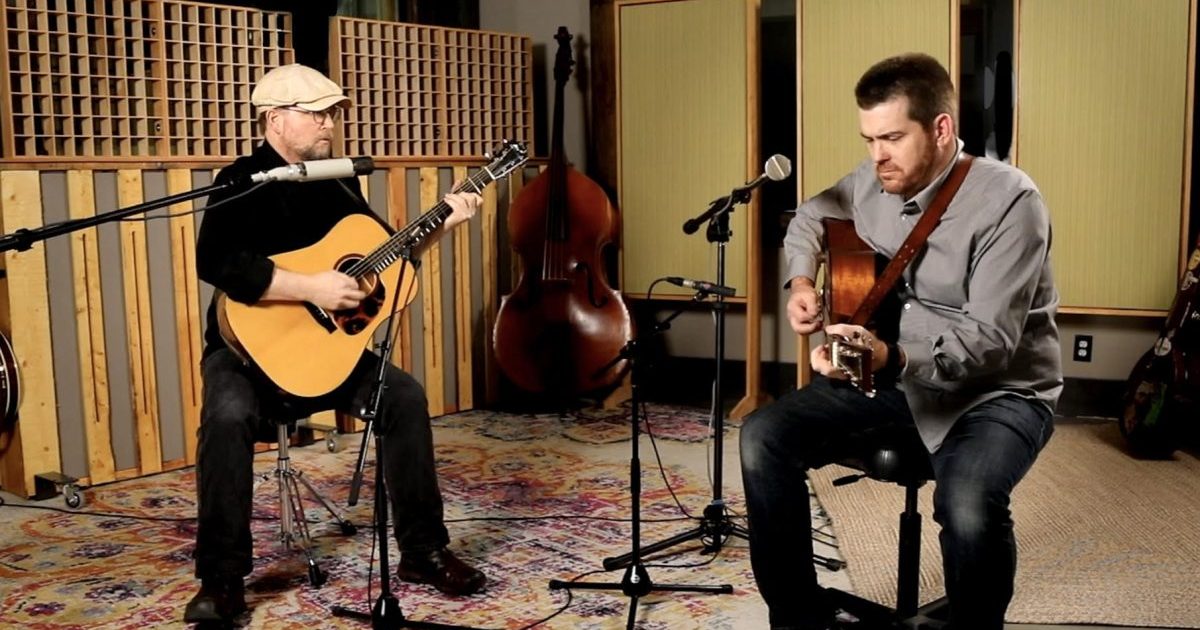
One of the best bluegrass albums of the year? Of course. One of the best live shows and tours of the year? Doubly, triply, quadruply of course. You’d think it would be brain-melting to listen to hours of two acoustic guitars and an electric bass pick through bluegrass, fiddle tunes, and Doc Watson classics, but it was divine. Trance-like – not with eyes glazed over, but on the edge of your seat. I wasn’t at that show at the Legion when they tracked the album, but was lucky enough to catch their show this fall at the Ryman in Nashville. If you weren’t so fortunate, don’t worry, ‘cause this isn’t an incredibly exclusive club. This record really does capture all that’s ineffable of being “in the room.” (No one is surprised.) Turns out, you can actually bottle and sell it, if you’re these two. Now if only you could buy the skillset, too…

Thompson the Fox, The Fox in Tiger’s Clothing, vol. 1 & vol. 2

Maybe once a year I trip over or into a new music discovery that gets me so excited I start getting annoyed with myself from having to hear me recommend them over and over again. With Thompson the Fox, it never got annoying (not to me, at least) and the excitement of turning folks onto their music still hasn’t worn off. So here we are, again. If this is your initiation, don’t thank me, thank the people who sent Thompson the Fox my way. Jazz, newgrass, bluegrass, bebop, ragtime, and oh-so-many more styles and textures combine in a completely fresh and distinctive form. I’ve never heard new acoustic music quite like this, yet it’s clearly rooted in that tradition. The simple math of xylophone, banjo, bass, and drums doesn’t quite math, but this group sounds resplendent, rich, and fascinating. Takumi Kodera on banjo is a revelation and Rie Koyama (xylophone), Akihide Teshima (bass), and Tomohito Yoshijima (drums) complete the Tokyo-based ensemble.

Cristina Vane, Hear My Call

Cristina Vane exists at an intersection of roots music that far too few inhabit, because very few can manage there. Vane can. She does blues, bluegrass, old-time, country, and Americana. Sometimes blended, sometimes compartmentalized. She’s got short-form, short-attention-span, vertical-video appeal for days, but her songs are never vapid or playing to any kind of commercial common denominator. Her instrumental skills and the passion for learning and song collection across roots and folk genres that she exhibits bring it all together. I’d not want to subject either woman to the corniness of comparing one to the other, but for folks who love Sierra Ferrell and are looking for more artists in a similar roots-meets-mainstream space, Cristina Vane can do it. She is doing it.

Vickie Vaughn, Travel On

Vickie Vaughn has won IBMA Bass Player of the Year for three years in a row and on the heels of that remarkable accomplishment, she’s released her debut full-length solo album, Travel On. Produced by Deanie Richardson of Sister Sadie, it’s Vaughn’s first recording under her own name released in 10 years. Original songs and covers are packaged in a sound that’s always trad bluegrass, but often infused with a dash of Osborne Brothers from the ‘80s or Jim & Jesse with a drum kit. It’s an Earl Scruggs Revue sort of flair, troubadour-steeped bluegrass-country. And it’s divine.

To conclude this long yet non-exhaustive and surely myopic list of the best bluegrass albums of 2025, let me leave you with this gentle reminder. What’s bluegrass and what’s best are always in the eye – and the ear – of the beholder.

What was your favorite bluegrass album of 2025? Let us know on social media. We hope you discover some new music to love in our BGS Class of 2025 and we can’t wait to make new discoveries with you, too.


BGS Staff contributed to this list.

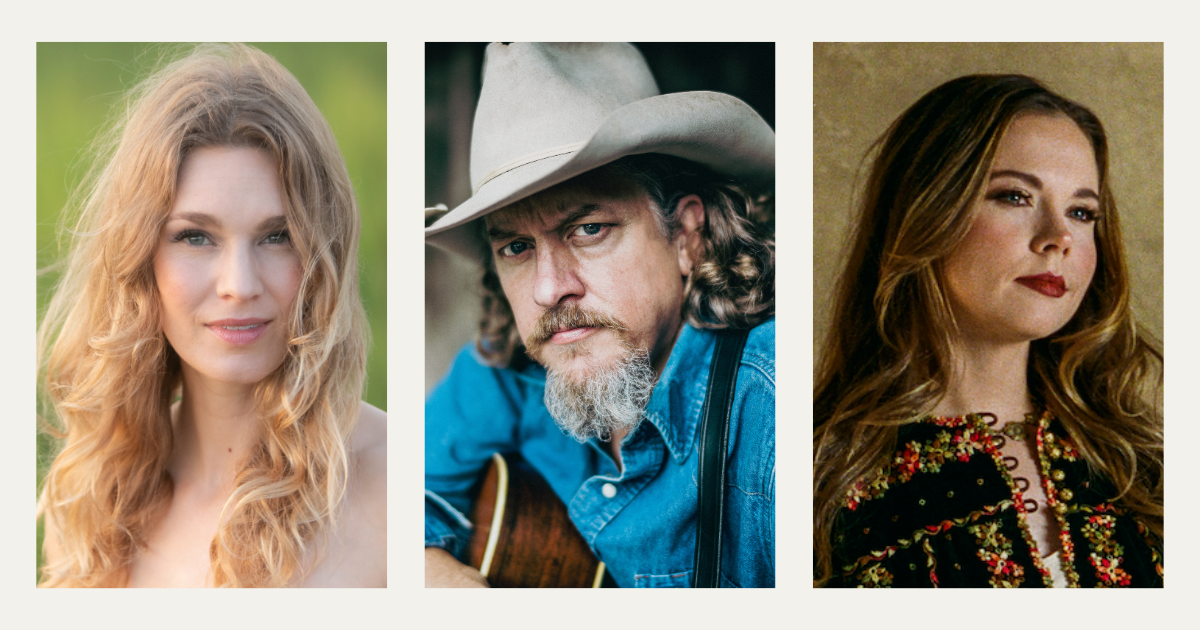
Photo Credit: Shelby Means by Hunter McRae; Shawn Camp by Neilson Hubbard; Sierra Hull by Spencer Showalter.

Eli West: Timber and Timbre

Eli West first rose to prominence in the acoustic music world as part of a duo with fellow singer-songwriter Cahalen Morrison. After creating three highly regarded albums together in the 2010s, West set off on his own. In 2016, he released The Both, featuring appearances by folks like Dori Freeman and Bill Frissell and on 2021’s well-received Tapered Point of Stone, West led a band that included Watchhouse’s Andrew Marlin and Clint Mullican and fiddler Christian Sedelmyer (Jerry Douglas Band).

This summer, the Seattle-based musician delivered his third solo album, The Shape of a Sway, where he is backed by his current sidemen, fiddler Patrick M’Gonigle and bassist Forest Marowitz, along with longtime collaborator Matt Flinner (mandolin, banjo) and an old college buddy, Peter Hatch (harmonium, piano).

West didn’t take a straight line to becoming a professional musician. Although he played violin and guitar growing up in the Pacific Northwest, he studied visual arts and political science in college. Then he headed east, where he went to timber framing schools in Vermont and Maine. Returning to Seattle, he got a job as a graphic designer.

Dissatisfied with his 9-to-5 existence, he quit his desk job after several years and went to Seattle’s Bainbridge Graduate Institute to study business. About halfway through, he realized business school wasn’t for him. It was around this time that West, who was getting more interested in bluegrass, met Morrison. He quickly decided to take a big leap and start playing and touring with Morrison. “My 30s were my 20s and it was awesome,” he shares with BGS. “And music was the means for that.”

West took some time to talk about his new album and his life while loading up a rental truck with timber frame kit to take to Orcas Island off the coast of Washington, where he and his wife own the Victorian Valley wedding chapel.

The Shape of a Sway is your third solo album. What type of a musical evolution do you see with this album?

Eli West: [With] each sequential record since my project with Cahalen, I’ve just been kind of establishing myself as a solo artist and singing my own music.

Tapered Point of Stone occurred right after my dad died and then this [album] occurred right after I became a dad. And making it halfway through life, turning 40, thinking about the second half. So, there’s kind of a transition theme. Looking up to someone and then all of a sudden looking down to my kids. Kind of switching teachers. My parents were my teachers and now my kids are my teachers. That’s a really abrupt shift.

I was writing for my last two records, but with this record I’m finally singing my songs that matter to me in a way that if they fall on other ears and feel good, I’m stoked. But I’m mostly happy with them as my own journal entries.

You have said you had something of a late start as a songwriter. How did your recent significant life events – your father dying, you getting married, and having children – influence your songwriting?

It took me so long to start songwriting, because I felt like I was cocky if I was putting my songs out if I hadn’t lived life. So, I needed to experience death. I needed to experience life on the other end, being a dad. I just didn’t have enough to say until then. It felt arrogant to do that without those experiences.

I have more certainty in whatever I’m doing. And I honestly needed a few years to think about my dad dying before I became a dad. And that certitude I feel in my music now, too.

I’m not writing to anything. I’m writing for myself. I have a lot of friends in Nashville, but I hate Nashville, because everyone’s writing to something. Not everybody, but there’s a big trend of writing to something to get awards or get someone to cover it – you know, that kind of thing.

How did you select the ten songs – did you pick them because they felt like a piece or because they were the ones ready to record?

It’s half matchmaking and half just the dam breaking because it was time. Making sense of getting half of your life, getting married, settling down, not road-dogging anymore, and ultimately deciding to have kids. So the matchmaking was finding the songs that spoke truth to being a new parent, I guess.

Are there tunes that you feel especially stand out to you from a songwriter’s perspective?

Well, “Ever Lovin Need To Know” doesn’t have a lot of meaning and it’s kind of filling syllables and it just feels good. It had meaning, but it was more about the feeling of the song than the content. “Spite and Love” is maybe the other end, where I had read this article in the New York Times about crows holding grudges and that just kind of launched it. I’m really proud of the lyrical content of that song.

And what songs served as the impetus for the album?

“Ever Lovin Need To Know” kind of felt like the tipping point where I could start assembling songs… And then “Rocks and Trees” is the most pertinent to my current situation. I have a nine-month-old daughter and that is speaking to that reality of who she is in my life.

“Rocks and Trees” also contains the line that you used for the album’s title.

Yeah, I don’t like naming a record after a song title. I think picking a lyric is way more interesting. I think there’s more satisfaction in finding that as a listener, than having a song title be the album title. So, “the shape of a sway” was kind of a secondary line that ended up meaning a lot to me. I have this newborn daughter, and I feel like I really know her not in a cognitive sense, but in a feeling sense. And “the shape of a sway” is this kind of different way to know somebody.

It feels like your lyrics often concern people exploring, examining, and searching for answers, but you don’t necessarily provide answers or explanations. Also, several songs (“All The Saints,” and the cover of Jean Ritchie’s “Cool of the Day”) have spiritual or religious imagery. Is this intentional or coincidental?

I’m glad you brought that up. I grew up in the church but then realized there’s just such a bigger common denominator than religion to get to know the world and people. So, I’ve happily delivered myself from that. But I think I ask better questions of myself because I acknowledge that human experience is bigger than any one religion.

I’m kind of looking back on those religious questions with a humanist empirical perspective, and I think that’s pretty fascinating to look back at the same questions but have a deeper well of experience and knowledge.

Was it difficult to quit the more structured world of graphic design and later business grad school for a life of a musician?

I think we’re all trying to reclaim this word “freedom” in this time and the definition of freedom for me was choosing a creative pursuit. There was some privilege and luxury in that, but it just felt like freedom. And I am grateful.

Has your background in design influenced the way you make music, similar to the connection that people have drawn between music and math?

Yes, spatial thinking – relative understanding based on space – what it feels like to be in one room and look into another room. I think of music and arrangements like that. The flow of walking through space and anticipation and memory, that’s really how I navigate music. That sounds kind of cocky, but I think you know what I mean.

You have talked about how collaborations are important to you. And this album features performers who you are familiar with (Patrick M’Gonigle, Forest Marowitz, Peter Hatch, and Matt Flinner). So, I was wondering how you walked the line with the arrangements and the collaborating, when it’s your name on the cover.

Yeah, I think any relationship [involves] grabbing onto the things that are important. The first line of this “Rocks and Trees” song is “a heavy rock that’s lightly held.” So, how to grab on to important things, but not white-knuckle them. I mean, I had this a few times, mostly in relationships, but also in musical collaborations that you seize the moment, but you don’t pretend it’s eternal.

And there’s a kind of like healthy promiscuity in music that just feeds the creative side. That said, this band that I play with right now – I feel so lucky. They’re just some of my favorite musicians. Besides Matt, we’re all in the Northwest now. And I think beyond anything, that’s why I do this – it’s just to play music with pals that I appreciate.

I had tried to record this a year previous, [and] it was basically too lightly held. I went in with a framework, but not enough rehearsing or structure around mostly [the] arrangements. And it was a great session. Those songs sound great. But it just didn’t have that kind of cohesive thing. So, I think my ideal process is leaving like 20% to be determined the day of recording. And then like that shit is always so great. But I need the 80% structure there.

You play a rather impressive variety of instruments. Guitar is your main instrument, but you play mandolin on this album’s two original instrumentals (“Gentleman’s Bulldog” and “Thanks and Sorry”). And you also play banjo and pedal steel. Do you feel like you have a particular facility with playing instruments?

I did Suzuki violin as a kid, which focuses mostly on ear training and that really helps to be fluid on instruments later in life. So, I’m really grateful for this Suzuki method!

This album has a little less bluegrass sound to it. Songs like “Spite and Love” and your reworking of Paul Simon’s “Hearts and Bones,” in particular, have real adventurous arrangements. Listening to it, the album sounds more genre-less – in a good way.

Yes, I am without genre. I just am drawn to good music, and I don’t like bad music. That’s how I define genre. There’s a lot of whim and not feeling bound to anything. So, that’s a freedom, and I kind of don’t care.

The Shape of a Sway also contains fewer instrumentals than your prior albums, was that by design?

I also love instrumental music…But the lyrical content of this record is important enough that I think that the instrumentals are just kind of supplemental.

You end the album with a real lively version of “I’d Rather Be A Train.” Was that on purpose?

[Chuckles] That Larry Sparks song was mostly just to make sure I still love bluegrass or to show that I love bluegrass.


Photo Credit: Jenny Jimenez

MIXTAPE: “Tempus Fugit” – Joe Mullins’ Past, Present, and Future Playlist

I’m rarely satisfied with the status quo. And I love roots music that is bona fide. Well, I’ve used up most of my Latin vocabulary very quickly.

I didn’t know what “Tempus Fugit meant until I got a wonderful new song from Tim Stafford and Missy Raines, both great artists, writers, and old friends. Missy and I were together with our bands at Americanafest in Nashville in 2024. I was chatting with her and said, “We’ve been doing this a long time,” since we got acquainted in the 1980s, as we were both learning everything about the bluegrass community. Missy said, “Yes, but we have heard so much great music and met so many wonderful people. And getting older isn’t a bad thing!” Then she told me she and Tim had a song about the subject. I had to hear it and I loved it!

Our new single, “Time Adds Up (If You’re Lucky)” is out just a few weeks after the new gospel album from JMRR was released in March. Thankful and Blessed is a collection of eight new sacred songs and two revived oldies. I’m grateful for the opportunity to deliver the spiritual message and provide an inspiring gospel collection, but I’m thankful for a great variety of music, and I’ve been blessed by the powerful talents of great musicians, singers and songwriters of all kinds.

So, this Mixtape is truly a mix – some songs from the past that inspire me, a tune from the current JMRR gospel album, and our latest bluegrass single from an album releasing in the near future. Carpe diem! – Joe Mullins

“Time Adds Up (If You’re Lucky)” – Joe Mullins & The Radio Ramblers

“Time Adds Up (If You’re Lucky)” is the new bluegrass single by JMRR. “Tempus Fugit” are the first words of the song, meaning time flies. The lyrics were so relatable for me at this phase of life. I have been on stage with a banjo and on radio in some capacity since 1982. Now, over four decades later, I have my first grandchild – and she’s gorgeous by the way!

I’m not just lucky, I’m thankful and blessed.

“My Ropin’ Days Are Done” – Blue Highway

Tim Stafford is such a great writer! This is a favorite recording of one of the most consistent bands of the past 30 years. Wayne Taylor sings with soul and the song is as lonesome as a one-car funeral procession.

“Yardbird” – Larry Cordle

Music has to be fun sometimes! I love a good sad song, but clever lyrics that are so entertaining have been penned by Larry Cordle for years. And the mighty Cord is a great singer, too. Cord is also one of my favorite people, one of those who you always look forward to seeing. He’s been very supportive of my recording career, providing many songs. He and Larry Shell wrote “Lord I’m Thankful” in our new gospel album and a new working man’s song in the Radio Ramblers bluegrass album that releases soon.

“Andy – I Can’t Live Without You” – Ashley McBryde

She has such a believable delivery, and this song is gritty and sincere. The beauty of simplicity can’t be beat – a great voice, a killer song, and one guitar.

“Gonna Be Movin'” – Larry Sparks

Sparks is a stylist, both vocally and instrumentally. He’s an original in every way. I’m pretty sure he has his own zip code. Interestingly, Larry sings three of the four vocal parts in the quartet portions of this recording from the 1980s. Randall Hylton was a superb songwriter and performer whose home-going was way too soon. His bluegrass gospel songs will be enjoyed eternally and this is one of Randall’s best. I was fortunate to have a song from Randall’s catalog that was never recorded, and it’s the a cappella selection in our new album.

“Looking at the World Through a Windshield” – Daniel Grindstaff with Trey Hensley

One of East Tennessee’s great banjo men, Daniel Grindstaff, produced one of my favorite recordings of 2024. I love good, driving country music. I’ve managed a small network of radio stations for many years and we feature a lot of hard-hitting country music from every era. Daniel and Trey nailed this old truckin’ tune with a contagious, grassy groove.

“Beneath That Lonely Mound of Clay” – George Jones & The Smoky Mountain Boys

Yes, it’s a sad song. Graveyard tunes have always been part of the bluegrass and country canon. But I want the world to be aware of this album. Jones went to the studio with Roy Acuff’s band in the very early 1970s and recorded his favorite Acuff songs. The album wasn’t released until 2017. I’m a huge fan of George’s music from his six-decade career and he was in his prime here with an acoustic band that helped define country music on the Grand Ole Opry stage.

“Journey On” – Joe Mullins & The Radio Ramblers

If you’re enjoying the mixtape in order, we need something uplifting after our stop at the cemetery. This is a new song featuring the Ramblers quartet. The perseverance of the saints is celebrated in this tune from our new album Thankful and Blessed.

“From Life’s Other Side” – Lee Ann Womack

I was fortunate enough to produce an award-winning album during the pandemic. This song is on the 2021 IBMA Album of the Year, Industrial Strength Bluegrass. The album celebrates music I grew up on in my neighborhood, Southwestern Ohio. Dave Evans was an Ohio singer and songwriter with soul oozing out of every note he breathed, like Lee Ann Womack. Her treatment of one of Dave’s rare songs was a highlight of that album that is so special to me.

“Lonesome Day” – The Osborne Brothers

I must include an Osborne Brothers song, because I’ve listened to their music almost daily for my entire life. Bobby’s vocal delivery and Sonny’s banjo genius are among my greatest influences. This cut was produced about 1977. They went to the studio to record a collection of songs from their traditional bluegrass roots, after crossing over into mainstream country during the previous decade. You’ll be hard-pressed to find a more pure voice, and each instrument rings with huge tone because of the perfect touches, including Kenny Baker and Blaine Sprouse on fiddles, and the legendary Bob Moore on bass. Just turn it wide open on repeat!


Photo Credit: Brandy Buckner

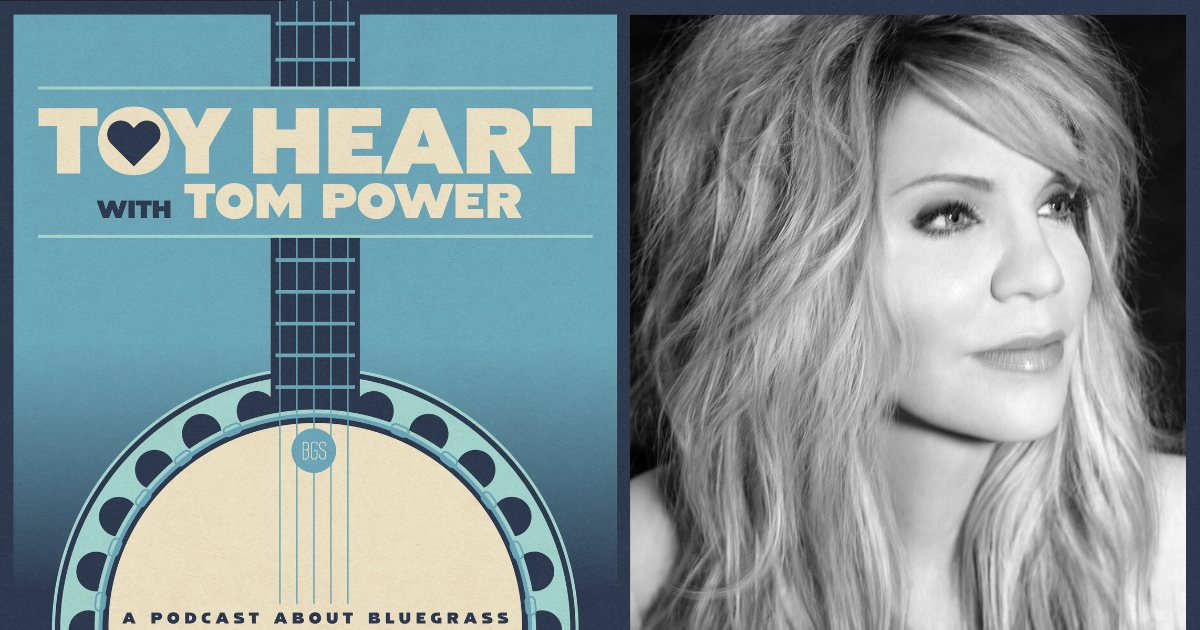
Alison Krauss – Toy Heart: A Podcast About Bluegrass

We could hardly think of a better guest with whom we’d conclude our second season of Toy Heart than 27-time Grammy Award winner, Alison Krauss. Arguably the most prominent bluegrass musician in the genre’s nearly one hundred year history – certainly the most well-known in her own generation – host Tom Power’s laughter-filled conversation with Krauss weaves through her childhood and upbringing, from her grandparents immigrating to Chicago (then her parents to Champaign, Illinois) and Alison’s first fiddle contests all the way to her first Grammy win as a young adult.

LISTEN: APPLE PODCASTSSPOTIFYMP3

In a rare podcast interview, Krauss is funny, charming, and open, her candor painting a picture of the bluegrass community’s lifelong support and the winding journey that has brought her to the present, as one of the most recognizable voices and musicians in American roots music. From her earliest hits like “Steel Rails” and “Every Time You Say Goodbye” to collaborating with Robert Plant, James Taylor, the Cox Family, and more, to her Buddy Cannon-produced 2017 album, Windy City, Power and Krauss talk about song selection, her early days touring and road-dogging with Union Station, and how it felt when her musical career really began to take off.

But these stories aren’t just about awards and accolades. They chat about many moments, the big and small, that define Krauss, the festivals that became like homes, and the bonds that music forged with her band, Union Station, and her many collaborators. They explore how Krauss creates on the boundaries of many roots genres – plus what she views as bluegrass and what’s not bluegrass – the authenticity that she’s tried to capture throughout her career, and the cultural waves made by projects like O Brother, Where Art Thou? and the Down From the Mountain tour.

From personal anecdotes about Ralph Stanley and Larry Sparks to her feelings about Billy Strings’ massive success to a jaw-dropping and exciting revelation that she and Union Station are working on a new bluegrass album, our season finale with Alison Krauss is truly one of our best Toy Heart episodes to date.


Photo Credit: Randee St Nicholas

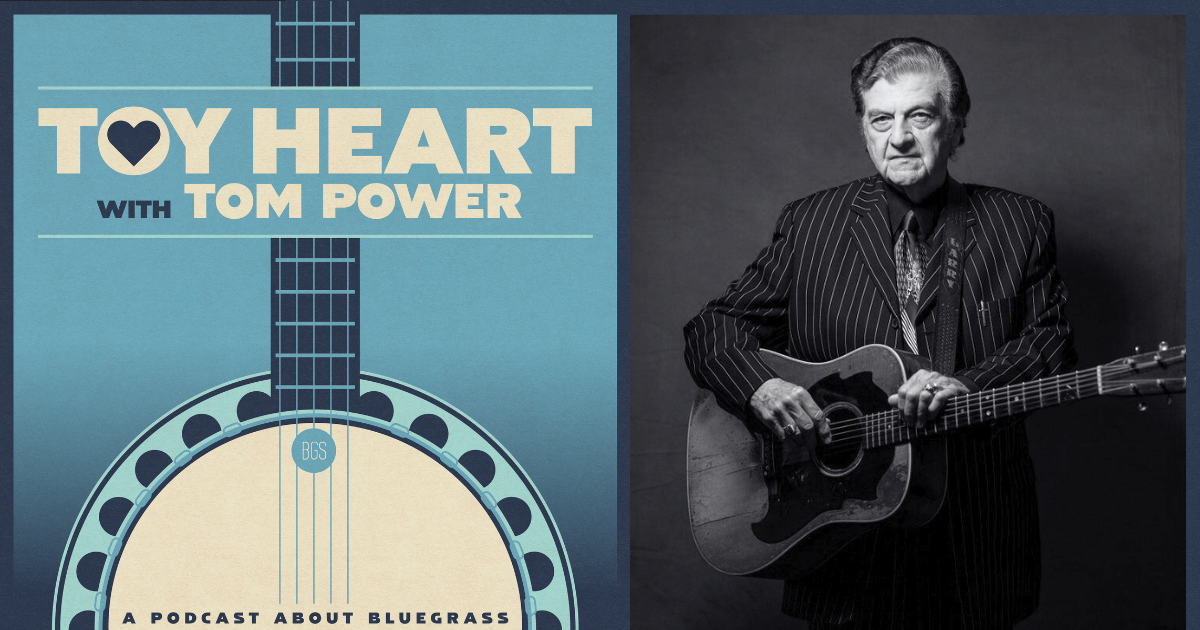
Larry Sparks – Toy Heart: A Podcast About Bluegrass

The legendary Larry Sparks, a prominent player in bluegrass for over six decades and a Bluegrass Hall of Fame inductee, joins host Tom Power for this episode of Toy Heart. Sparks shares insightful anecdotes from his early years, touring and performing with the Stanley Brothers and from his tenure with Ralph Stanley & the Clinch Mountain Boys. From traveling in a ‘67 station wagon to the challenges of navigating the music industry over so many decades, Sparks reflects on his particular journey through bluegrass, old-time, and country music. We explore his musical influences, his unique approach to bluegrass guitar playing, and the profound impact of gospel songs on his own soulful, down home sound.

LISTEN: APPLE PODCASTSSPOTIFYMP3

Sparks also offers a glimpse into his Nashville days, highlighting the unique challenges he faced in Music City. His stories reveal a dedication to preserving the essence of bluegrass and his commitment to honest storytelling. Hear Sparks describe making hits like “John Deere Tractor” as well as speaking to the spiritual resonance of gospel music. He paints a vivid picture of a musical legacy that spans more than 60 years, leaving an indelible mark on the heart and soul of the bluegrass community.


Photo Credit: Michael Wilson

WATCH: Rob Ickes & Trey Hensley with Molly Tuttle, “John Deere Tractor” (A Tribute to the Judds)

Artist: Rob Ickes & Trey Hensley and Molly Tuttle
Hometown: Franklin, Tennessee; Jonesborough, Tennessee; Palo Alto, California
Song: “John Deere Tractor”
Album: A Tribute To The Judds
Release Date: October 27, 2023

In Their Words: “It is an incredible honor to be included in this amazing tribute to The Judds. I grew up listening to these songs. I’ve always been a huge fan of The Judds and of that sound that they created with their producer Brent Maher. And ‘John Deere Tractor’ is one of my all-time favorite songs, so when we were asked to perform this song with the great Molly Tuttle, we of course jumped at the opportunity. I’m so proud to be a part of this album, and I’m so excited for everyone to hear it. Thank you to The Judds for creating such wonderful music that we’ll all be listening to forever.” – Trey Hensley

“I remember hearing The Judds on the radio for the first time — it blew my mind! It was a musical oasis on the radio, that’s for sure. As a kid growing up playing bluegrass, I loved their sound with the ACOUSTIC guitars(!), and the Dobros that were front and center in the mix (great production by Brent Maher!), and of course, their harmonies and song choices were impeccable. And Wynonna, what a voice! So strong, an amazing tone… ‘John Deere Tractor’ was a big song for me because my bluegrass hero, Larry Sparks, did a great version of it. I was really impressed when I saw that The Judds recorded it and loved their version also. It was such a thrill to record this awesome song, and I love the vocal performances by Trey Hensley and Molly Tuttle on this track. They hit it out of the park.” – Rob Ickes


Photo Credit: Rob Ickes & Trey Hensley by Jeff Fasano; Molly Tuttle by Bobbi Rich.

BGS Wraps: Patty Loveless, Darin & Brooke, Brei Carter, and More

How is December already half over? Christmas is merely 10 days away – and in just over six days, Winter Solstice will bring the light back into our lives. We hope your home smells of evergreen and sugar cookies and that a seasonal roots music tune is wrapping you up in wintry coziness. If that isn’t the case, we can help with the rootsy seasonal tunes bit!

For our third week of BGS Wraps, we have celebratory bluegrass alongside loping country, introspective indie and gothic Tim Burton-esque tales, too. Plus, don’t miss Jeannie Seely as Grand Marshal of the Donelson Hermitage Christmas parade in Nashville tomorrow.

Whatever you’re celebrating this season, we’ve got the music, songs, albums, and events to pair with your peace and joy.

Darin & Brooke Aldridge, Hometown Holiday

One of bluegrass’s preeminent couples, Darin & Brooke’s new Christmas album, Hometown Holiday, feels like an afternoon visit in their living room, as they play down a few of their favorite seasonal numbers. The husband and wife duo are known for their covers of non-bluegrass songs, and several among this collection truly shine – like Joni Mitchell’s “River,” rendered beautifully by Brooke. You’ll hear country piano, a modern classic popularized by Amy Grant, “The Chipmunk Song,” and more, all packaged with a neat and tidy bluegrass bow.


Beth // James, Christmas at the Burchills

Friends of BGS will know this team loves a good tiki drink, so including this Beth // James original seemed essential for our holiday Wraps. “Tiki Christmas Land” is one of four originals – joined by a cover of “Blue Christmas” – on Beth // James’ new EP, Christmas at the Burchills. Make yourself a holiday mai tai or painkiller and enjoy your visit with Beth, James, and the Burchills.


Brei Carter, Twinkling Tales of Christmas

Your cheeks may be a bit rosier after listening to Brei Carter’s jazzy, pop country holiday collection, Twinkling Tales of Christmas – and not just because of the chill in the air! “50 Shades of Christmas” will certainly get you in a festive and adventurous mood, and “Santa Wontcha” is for all Christmas season fans who proudly extend the season well prior to Thanksgiving. But “Bow on You” and “Christmas Is You” are certainly the stand out tracks.


38th Annual Donelson Hermitage Christmas Parade December 16, with Grand Marshal Jeannie Seely

If you’re near to Music City USA, head out to Donelson tomorrow afternoon, December 16, to catch country legend Jeannie Seely as she Grand Marshals the 38th Annual Donelson Hermitage Christmas Parade. Seely is standing in for Brenda Lee, who ended up being unable to attend the event – and who better to step into Lee’s Christmas hit-singing shoes? Seely has been involved with the parade many a time before and this year is an especially perfect time for the Grand Ole Opry member to Marshal, as she just released a holiday single with the Flat River Band entitled “Christmas Time.”


Pat McGrath, “Let’s Just Get Past Christmas”

A smooth, swingin’ Christmas song from singer, songwriter, studio musician Pat McGrath that looks forward, willing the new year to come fast and wipe the slate clean. A great tune for anyone who feels the holidays are often bittersweet, with a heavy dose of love and putting one foot in front of the other, you can get past just about anything. Christmas included.


Drake Milligan, “Cowgirl for Christmas”

More Christmas songs need yodeling, right? Right. Drake Milligan’s “Cowgirl for Christmas” is a delight, from the sound stage music video set that feels direct from a ‘50s western to the catchy, yodeled hook, to the danceable, western swing beat. Not a brand new track or video, but one worth remembering each year when December rolls around for sure. You’ll be wishin’ for a cowgirl under your tree, too.


The Nields, “The Darkest Day”

A harmony rich neo-folk song from The Nields, “The Darkest Day” was released earlier this year on their brand new album, Circle of Days. To herald solstice, they’ve brought out a video to highlight the track and ask the titular question, “What do you want on the darkest day?” A timely reflection, as we welcome back the sun and look ahead to spring – however far away it may feel.


Malin Pettersen, “Santa”

Malin Pettersen’s first ever Christmas song is an entire vibe. With a classic R&B back beat and conversational tone with Americana touches, Pettersen lays out her wishes for the holiday – for her longing to end and for some light to brighten the holidays and dark January. Whomever you’re trying to manifest into or out of your life, Pettersen can offer a shortcut to writing your letter to the big man at the North Pole.


Hannah Rose Platt, “The Wendigo Rag”

Wendigos and skinwalkers, oh my! If your TikTok For You Page knows that you love a cryptid tale or the paranormal or other unexplained phenomenon, Hannah Rose Platt has made a wintry, stop motion, Tim Burton-esque video just for you. And if you’d like to continue your rootsy Wendigo songs playlist, we have another selection from back around Halloween by Thunder & Rain you’d enjoy, too.


Larry Sparks, “White Christmas”

Each Christmas we’re reminded of this amazing album by bluegrass legend Larry Sparks and especially of this four-chord version of a holiday classic, “White Christmas.” Only a picker like Sparks could pave over such an iconic chord progression without leaving the listener missing it – at all. “White Christmas” is a jam buster no more, anybody can play along. We put this album on every year around the holidays and are never disappointed.


Sofia Talvik, “Alone for Christmas”

Swedish folk and Americana singer-songwriter Sofia Talvik utilizes jazz touches and dramatic strings to paint a lonesome Christmas portrait that both relishes and abhors the season. Playing around within that paradox – how can lonely holidays feel so bereft of Christmas spirit, while also epitomizing so many of the feelings of the season? The repetition in the song (“Alone for Christmas… Again. Again.”) underlines how being “Alone for Christmas” really isn’t as uncommon or unfamiliar as any of us would hope it is.


The Wildwoods, “Somewhere in the Snow”

Nebraska-based folk trio The Wildwoods offer their first-ever holiday song, “Somewhere in the Snow,” replete with a Peanuts-style animated video. It’s gauzy and sweet with a burnished patina and tone of redemption. Whether you love or hate the snow, it certainly seems like a perfect place to bury your troubles and fears.


Our Classic Holiday Album Recommendation of the Week:
Patty Loveless, Bluegrass & White Snow, A Mountain Christmas

Patty Loveless’s bluegrass bona fides are unassailable, it’s true, but this album might clinch her claims to the genre, if ever challenged by a naysayer or proverbial chair snapper. Bluegrass & White Snow is a perfect combination of classic, sing-along carols and bluegrass staples, plus a couple of bespoke beauties, too, sung as only Patty could sing them. With a big, belty voice that carries with it some of that signature high lonesome grit. Dr. Ralph would be proud. (And he was.)


Photo Credit: Darin & Brooke Aldridge by Kim Brantley; Brei Carter courtesy of the artist; Drake Milligan courtesy of the artist.

WATCH: Larry Sparks, “Mama’s Apron Strings”

Artist: Larry Sparks
Hometown: Lebanon, Ohio
Song: “Mama’s Apron Strings”
Album: It’s Just Me
Release Date: March 31, 2023
Label: Rebel Records

In Their Words: “‘Mama’s Apron Strings’ was a way of life back in the day. Women used them for working in the home and yet sometimes they would also offer up something sweet in their pockets for the children. This generation of folks were great people. Their first love was caring for their family and providing for their needs. It reminds me of my own mom and the ways she cared for our family. When it came time to make a video for ‘Mama’s Apron Strings’ it seemed right to film it at my house. I guess I am a ‘kinda back in the day’ person: my home is 145 years old and I have a few old cars including the 1950 Dodge used in the video. God has been good to me through the years and I hope everyone will enjoy this video for my current single ‘Mama’s Apron Strings.’” — Larry Sparks


Photo Credit: Michael Wilson

WATCH: Ron Block & Clay Hess, “The Old Spinning Wheel”

Artists: Ron Block and Clay Hess
Hometown: Nashville (Ron Block); Peebles, Ohio (Clay Hess)
Song: “The Old Spinning Wheel”
Album: Live at Reverb And Echo
Release Date: October 19, 2022

In Their Words: “‘The Old Spinning Wheel’ is a tune I first heard through Larry Sparks, years ago, on an instrumental album he recorded. It’s an old song from years past, and I always love to play simple song melodies on the guitar.” — Ron Block

“I first heard ‘The Old Spinning Wheel’ from a guy named Dave Starlin. He was one of my mentors starting out. He used to sing it. I usually try to sing the song with the guitar on simple melodies like this. This style of song is so much fun to play.” — Clay Hess