Last month, we celebrated the 100th anniversary of the Grand Ole Opry as our Artist of the Month. We dove into the history of the world’s longest running radio show, we celebrated the music made on its hallowed stages, and we spoke to author Craig Shelburne about undertaking the gargantuan task of squeezing all of that rich history into a book, 100 Years of Grand Ole Opry. That coffee-table-ready tome is 350+ pages of photos, stories, interviews, and Opry lore.
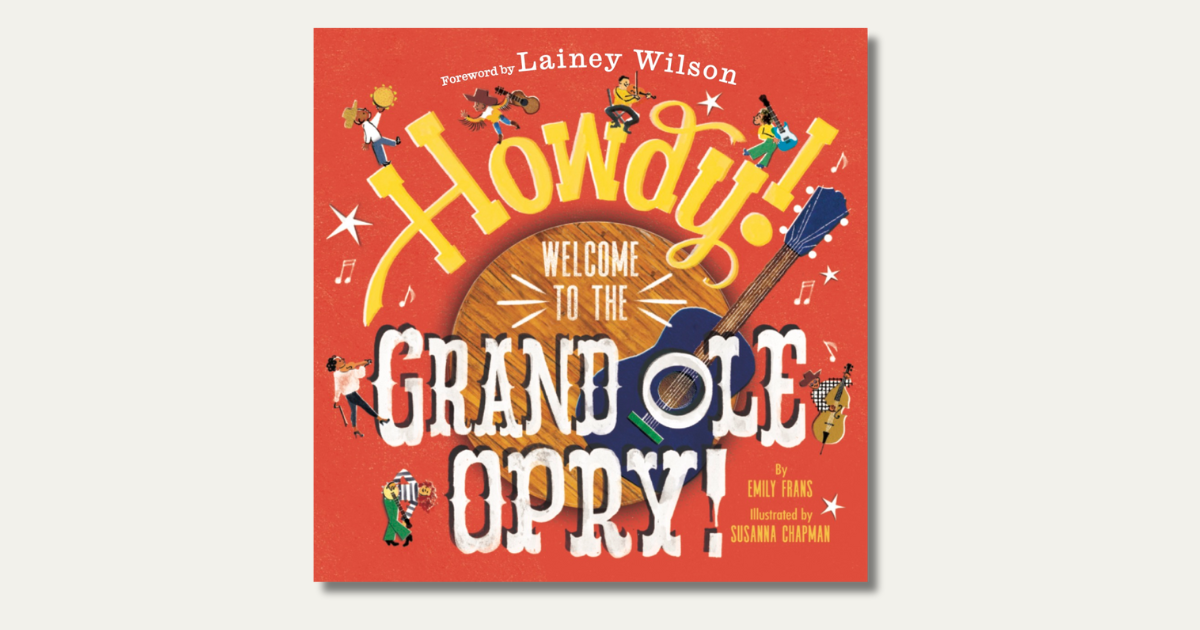
Now, imagine the same task for Opry employee, archivist and content manager Emily Frans – but squeezed into a children’s book. The new title, Howdy! Welcome to the Grand Ole Opry!does just that. One hundred years of history, illustrated gorgeously and fantastically by Susanna Chapman alongside words and story by Frans, it distills the magic of the Grand Ole Opry for its tiniest audience members and fans. With a foreword by Lainey Wilson and stories from Dolly Parton, Lauren Alaina, and more, it’s an Opry 100 celebration that can be appreciated by country music fans of any/all ages.
Whether a gift for the holidays, an everyday present for the youngsters in your life, or pro-country-music propaganda (which we can always get behind), the new kids’ book is certain to inspire oncoming generations of would-be stars, pickers, and songwriters, seeding dreams of someday stepping into that hallowed circle on the Opry House stage. We spoke to author Emily Frans about the project and the special balance of telling a complete Opry history that engages, inspires, and stokes the imagination of children all around the world.
It must have been a difficult enough task for your colleagues to write the 350+ page 100 Years of Grand Ole Opry book that distills the immense history of the Opry into a single volume — it’s hard to imagine condensing all of that history, all of those stories, and all of that music into an even smaller space, a kids’ book! How did you go about it?
Emily Frans: You’re right! After pouring so much time into artist interviews, research, and trying to cover 100 years of history in as much detail and photography that a 350+ page book will allow, shifting gears into a children’s book was a completely different challenge. The biggest task was figuring out what not to include.
With kids, it’s all about clarity, pacing, and imagination, so I asked myself: What moments spark imagination? Which people feel larger than life? What stories can light a fire in a young mind? I tried to frame the story as kind of an adventure that kids could really imagine themselves experiencing while still including historical facts and details that they could learn from.
What do you see as the essential “nuts and bolts” of the Opry story that could – or should – be translated to country fans of all ages? What is the central idea or mission here, as far as putting this incredible, respected show in front of its youngest audience?
As a parent to young daughters, I realize how important it is for the youngest generation to understand not just what the Opry is, but why it matters. This book was written to bridge that gap and to spark wonder, inspiration, and to continue cultivating the tradition that we all cherish. In an age where attention spans are short and kids can choose their entertainment with a swipe of a screen, creating a book to share the Opry with children felt more important than ever.
The Opry is different than any other stage because of the way it connects people – artists to fans, parents to kids, and one generation of country music to the next. That emotional connection is the heartbeat of the Opry, and why, at 100 years old, it continues to thrive. I wrote this book with the goal of sparking that connection with our youngest generation.
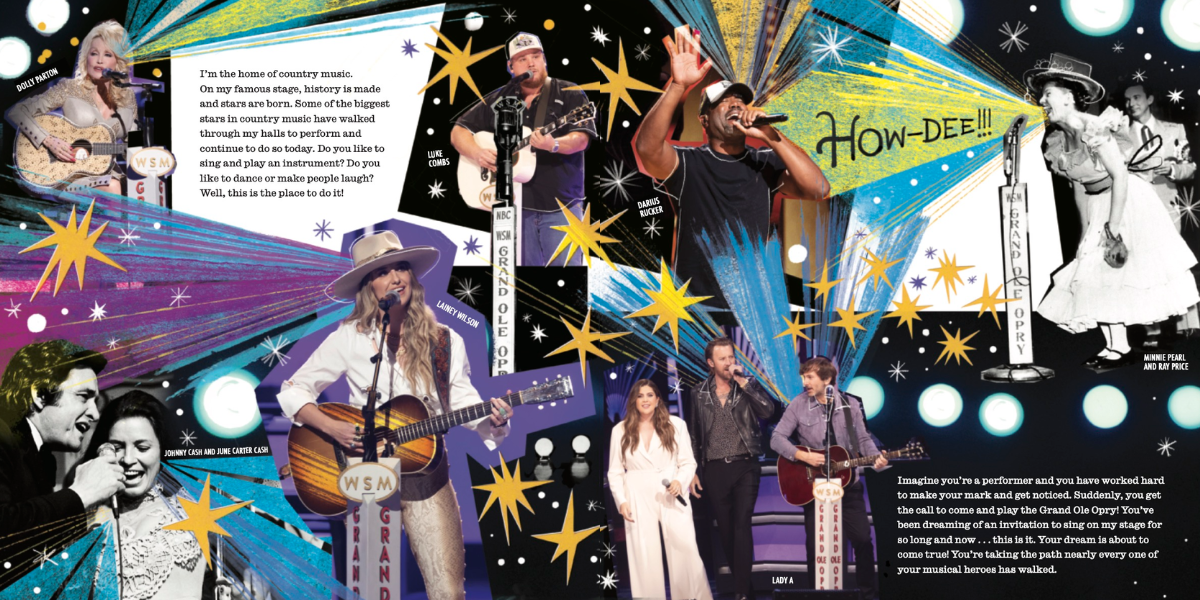
The book has a foreword by Lainey Wilson and includes Opry stories from folks like Lauren Alaina, Dolly Parton, Kelsea Ballerini, and more. Country artists often have very special, down-to-earth relationships with their younger fans — these artists especially. Can you talk about curating the artist stories for the book and what Lainey Wilson brought to it with her foreword?
The artists featured in the book all share a genuine connection to the Opry and a real heart for their younger fans. I wanted to include messages that would almost feel like a little spark of mentorship coming straight from the stage, conveying the gravity of being asked to perform on the Opry while also making it sound achievable.
Lainey Wilson embodies that spirit so naturally. Her message is all about believing in yourself and honoring the roots that helped shape you. When she talks about stepping into the circle, she makes it sound magical, but also achievable. That tone set the stage for the rest of the book beautifully.
The book was illustrated by Susanna Chapman — the Grand Ole Opry and its history, especially its visuals, branding, costumes, and pageantry, are simply perfect for a children’s book like this, aren’t they?
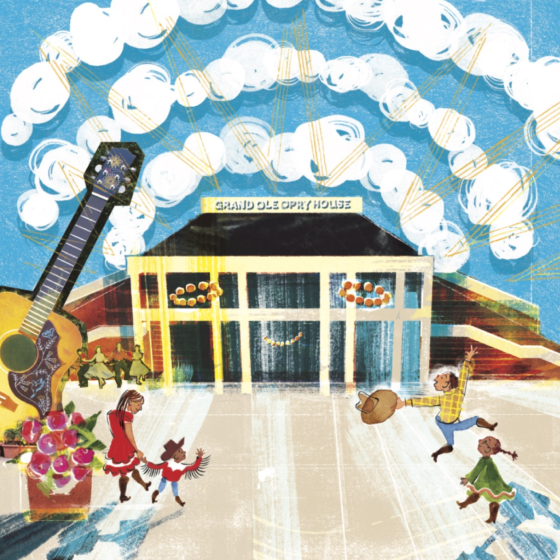
Absolutely. The Opry has always been visually rich – from stage lights to rhinestone suits to the red barn set, it was practically begging to be illustrated! Susanna Chapman did an incredible job and brought a wonderful balance of authenticity and imagination. She captured the physical space of the Opry and infused her illustrations with movement, color, and emotion.
In fact, she spent time with one of my daughters during an Opry show trying to understand which elements of the sights, sounds, and even smells stood out to her so that she could create illustrations that really make the reader feel like they were there. The words are important, but it is the visuals that really draw kids to a book and Susanna knocked it out of the park.
So many kids have made appearances on the Grand Ole Opry — Sierra Hull, Wyatt Ellis, Charlie Worsham, Vassar McCoury, and many others — do you think this book will birth a new generation of youngsters itching to step into the circle?
I really hope so. One of my goals with this book was to show kids that the circle isn’t just for legends, it’s for dreamers, too. The Opry encompasses the past and present of country music, but also its future. If even one child reads this book and thinks, “Maybe that could be me someday,” whether they imagine themselves on stage or in a seat, then it’s done its job.
Why do you think the Grand Ole Opry has such broad appeal — across identities, geography, genres, communities, and age groups?
I think the Opry continues to thrive because it offers authenticity, tradition, and genuine connection all while continuing to evolve. On any given night, you can see legends, today’s hitmakers, and up-and-coming artists sharing the same stage. That blend of past, present, and future gives the Opry a real uniqueness and, unlike a typical concert, provides a platform for guests to discover music they may have otherwise missed out on. And the emotional connection is what brings both artists and fans back night after night. When an artist steps into the circle for the first time, guests can feel it. They can sense the history, the honor, and the gratitude and that the artists are there because it matters to them. That kind of sincerity creates a powerful bond between the stage and the seats.
All images courtesy of Ryman Hospitality Properties, illustrations by Susanna Chapman.
The sheer variety and singularity of the Grand Ole Opry – whether in just one of its shows or in just one of its many eras – would be paralyzing enough, if tasked with telling its complete, unabridged story to a broad audience. The assignment of taking the entire century-long history of the world’s longest running radio show and condensing it between the covers of a book would have to be heart-stopping. How could one ever take such a complex story full of twists, turns – and plenty of the idiosyncrasies found in human beings who make and love country music – put it down in 350+ pages?
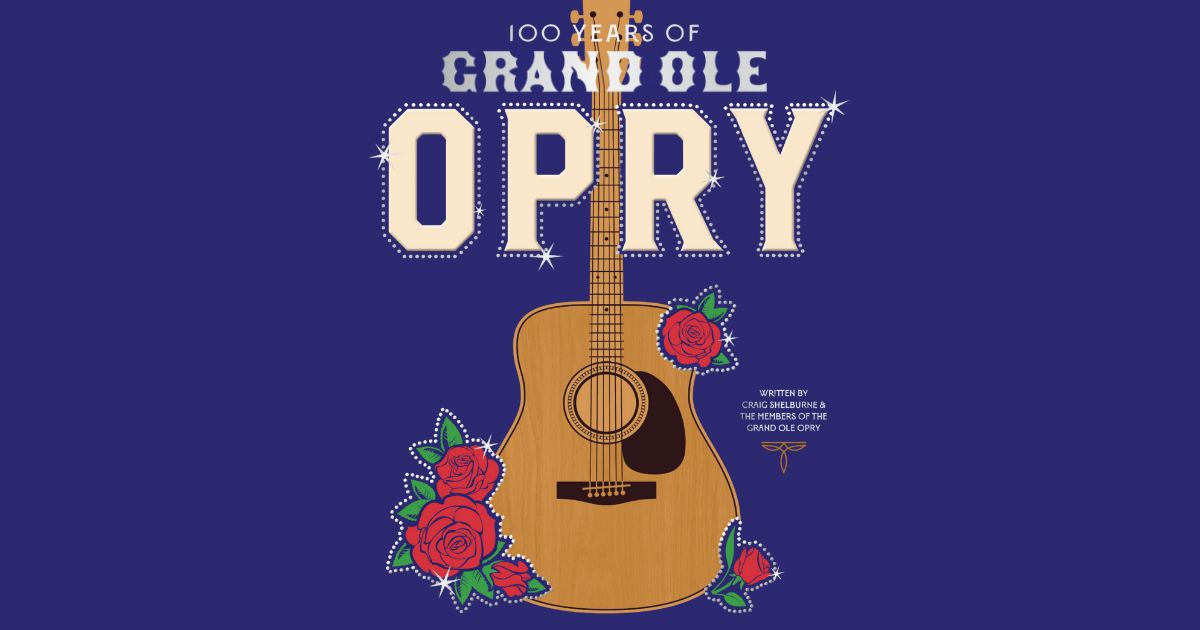
It’s hard to imagine, but that’s exactly what writer Craig Shelburne, historian Brenda Colladay, and a host of Opry members have done with the brand new book, 100 Years of Grand Ole Opry. Shelburne – a BGS contributor and former managing editor for our website – worked with Colladay to penetrate the vast, lush archives of the Grand Ole Opry to posit its history decade by decade, chapter by chapter in the new hefty, coffee-table-ready tome. They completed dozens and dozens of interviews with Opry members, artists, musicians, employees, executives, and broadcasters and, as a result, the history book feels remarkably alive and vibrant – just like the show itself.
The book, released in April of 2025, demonstrates and reiterates time and again that the Grand Ole Opry isn’t a relic – nor has it ever been. It’s a living, breathing, adaptive being that’s enacted by a strong community of stakeholders not only from across the company that owns the brand, Ryman Hospitality, but the music industry as a whole, too. 100 Years of Grand Ole Opry showcases a country and cultural icon not waning or winding down after a century of triumphs (and trials and bumps and scrapes, too). No, instead, this book finds the Opry, beloved by all of us, merely at its next transition point, moving purposefully from the last 100 years to the next 100 years.
We sat down with Craig Shelburne on the phone to chat about the immense undertaking of writing this book, the surprises found and lessons learned along the way, and what makes the Grand Ole Opry so special, all for our Artist of the Month celebration of Opry 100.
This is such a gargantuan task, staring down the entire 100-year history of the Opry and being asked to turn it into a book. Where do you even begin? How did you take that first bite? What did it feel like to you to enter this process of creating a book?
Craig Shelburne: Yeah, 100 years is a massive undertaking and we – my co-writer Brenda Colladay and I – spent some time at Frothy Monkey in East Nashville sketching out some of the important Opry milestones in those eras when things really seemed to be shifting. As we did that, we realized that we could probably have each chapter be roughly a decade. At one point, we realized we wanted to have some breakout sections, but we didn’t know how to do that.
I wanted the book to be very readable, [without] a whole bunch of sidebars. So instead of designing sidebars, we have these pages that are interludes in between the decades, in between the chapters. You have the history of bluegrass, or the ways that the Opry has been on television, or what the Opry looked like when it went into the 21st century and a new era of technology. [That] was our chance to expand on one particular theme, rather than try to weave [those themes] into the narrative or take away from the narrative. It could be distracting if you dropped [a sidebar] into the manuscript every time the Opry was on television. Those interludes also gave us a chance to use some of these magnificent color photos [from the Opry archives] just because they’re beautiful photos. We didn’t have to necessarily set them up within the text. …
It was intimidating for a while until one night, late at night, I was writing and I realized that the main character of the story is the Opry itself. There are so many people that have passed across the stage, from Roy Acuff and Minnie Pearl up to the modern era. I wanted the artists and the cast members to be represented well, but really the main figure throughout this 100 years is the show itself. And it’s a show. It’s not a stage, it’s not a building. It’s a show.
Once I could get my head around the fact that this was the leading character in a 100-year story, the narrative started to fall into place. That was a breakthrough for me.
I also love how that format parallels the structure of the show itself. That you have segments, sets of artists performing, you have commercials and announcers and little games with sponsors, and you have talk-back sessions from artists. When you go to a show, it’s not just one thing from start to finish, it’s a bunch of different things – and there are obviously lots of interludes built in. So there’s something about the structure of the book that parallels the show in a nice way.
And telling the story of how the segmented portions of the Opry came to be was one of my favorite parts of writing the book. Basically, the Opry hired their music librarian – who was a very organized individual – to try to reign in some of the chaos from when the Opry was at what is now the Belcourt Theater [in the 1930s]. I think back then it was called the Hillsboro Theater. His name was Vito Pellettieri and he realized if he could wrangle three or four artists within the same timeframe, then these performers would now have a rough idea of when they needed to be standing side stage, instead of disappearing as musicians might have been wont to do.
Then of course, being the Opry, owned by an insurance company, the business people sensed an opportunity there and thought, “Let’s sell those segments to sponsors and advertisers.” And so that’s how the 30-minute segments came to be. Whether it was dog food or condensed milk or tobacco, if there was a sponsor for each segment, the Opry made more money that way, too. The Opry has been pretty creative in how it positions itself and how it can take advantage of good ideas quickly.
I know you spoke to dozens of artists, stakeholders, musicians, executives, broadcasters, and announcers. You and your co-writer Brenda Colladay must have done hours and hours of interviews for this book. Can you tell us a bit about that process and who you most enjoyed or were most excited to sit down with?
On one hand, the general narrative crafting you’re talking about sounds like really grueling work, but on the other hand, it sounds like doing that through these interviews was probably the most fun part of this process.
I would say the interviews were the most fun. I agree with you on that. I have the Opry show schedule as a shortcut on my smartphone now, because I would always try to figure out who was playing and who we needed to talk to.
As it should be, we started our interview series with the one and only Jeannie Seely. We felt like she needed to be first, and she deserved that. She only got about halfway through what she wanted to say [during our first meeting], so we set up another interview. It was wonderful to talk to her. Both of those afternoons were great, because with Jeannie, she’ll tell you the way it actually was. Some of it was very positive and some of it was critical, but it’s her perspective. And she was there! I didn’t get to see the Opry in the ‘60s or ‘70s, and she did. Getting to hear it directly from her was fantastic. She was also hilarious, when you got to sit down and joke around with her a little bit.
It was really important to talk to people firsthand and to go deeper than just, “Hey, what do you think of the Opry? Why is it important?” So the Opry opened up its entire archive to me, which was videos, books, newspaper clippings – pretty much anything that I wanted to look at, read, or watch. When I knew I had an interview coming up, I would spend several hours reading clippings and reading stories in order to come up with questions specific to their Opry experience. Rather than just, “Tell me about when you moved to Nashville. Tell me about this. Tell me about that.” Those aren’t questions, those are just prompts. When the people came in to talk to us, we were usually in pretty much a supply closet for camera equipment. It was a really small room. We didn’t have any cameras. We wanted everybody to be casual and comfortable and not worry about makeup and hair.
Then it became a very comfortable conversation. We started every interview with the same question, which was, “What is going through your mind in those moments before the curtain comes up?” Everybody had a different answer. That put them in the frame of mind of talking about the Opry, I think, more than talking about themselves. They went pretty deep, back in their memories, of how they discovered the Opry and what it’s meant to them. Quite a few of those artists went to the Opry as kids. So then they started talking about their family and what the Opry meant to their family, there were a lot of emotions.
I think some of those artists expected it to be like a 10 or 15 minute interview to grab that [sound] bite that says, “I sure do love the Opry.” But we went really deep and spent more than an hour talking with some of these artists. You don’t get to put everything like that into the book, but suddenly now we have an oral history from these modern contemporary performers that will live forever. When somebody writes about the Opry in 50 years from now, they have it straight from the artists, [speaking] about their path to that stage.
I think that’s one of the best accomplishments of this book, that it tells the story in such a rich, full way that isn’t just the mythology and isn’t just the good parts and the glitzy parts. It sounds like part of how you were able to accomplish that is by having these interviews set up in such a way that you could build trust with folks, so they didn’t feel like they were just giving you that marketing sound bite. They could really tell you those full stories.
I think a lot of that came from the Opry headquarters. They wanted us to tell [it] the way it happened. A woman named Jenn Tressler, she handles a lot of the talent requests there and I think she primed most of these artists about what the interviews would be like and what the goal was. Just [so they would] be comfortable and [know] no topic is off limits. Artists were asked some pretty sensitive questions sometimes about the relationship with the entertainment industry in general, including the Opry and the artists rose to the occasion.
We wanted to tell the actual story. I’ve often felt that nobody wants to read a book where everybody’s happy and there’s no conflict. There’s conflict in this one.
From your interviews or from writing this book, what was a story or two about the Opry that stuck out to you or surprised you? Or, that brought you to learning something new that maybe you wouldn’t have tripped over into if you hadn’t done this book? Is there a story or two that stand out to you?
The first one would be just how young everybody was when they got involved with the Opry. George D. Hay was a young man; Harry Stone, who was one of the early program directors, had just turned 30 when he took on that role. The artists were [in their] 20s and 30s. You had a very young Bill Monroe, Roy Acuff, Minnie Pearl, coming on the stage and changing the game for country music.
Sometimes the Opry is perceived as the elder statesman of country music – and that’s true and they’ll always have a place there, it’s wonderful. But a lot of the shake-ups at the Opry and a lot of the progress that’s been made was because of these young, innovative perspectives. That happened over and over. I think without that viewpoint from people who were younger, the Opry would’ve struggled through the last hundred years. There would’ve been times somebody might’ve said, “I want it to stay the same way, ’cause this is how we’ve always done it.” It’s never the right answer, to do it just because it’s always been done that way. I think that was pretty fascinating to me.
The other thing I didn’t realize was that it was not until I believe 1978 that the Opry was ever aired on television. It was a PBS special. If you wanted to see the Opry, you had to come to Nashville for the first 53 years. After that one night on the PBS special, it didn’t happen again until the following year. Being able to see the Opry, you had to come to Nashville, and I think executives at that time feared that if you put it on television, people would stay away from the show and they wouldn’t sell tickets anymore. But time has proven just the opposite. People saw it on television, how exciting it was and they felt like they needed to be there, myself included. I watched it growing up in Nebraska as a teenager and I just was fascinated by it. By that time, of course, it was on TNN.
I watched it many a Saturday night with my grandparents and I didn’t always know who those legendary figures were that were sharing the stage with Alan Jackson or Clint Black or Alison Krauss. But because of the Opry, I got a country music education as a teenager before I moved to Nashville in 1994. By the time I got here, I feel like I had a leg up on other people who wanted to write about country music that were my age.
You’re pointing out another fact that we often forget about country music, hillbilly music, these traditions that made these musics. It’s that all of them are constantly changing and growing, morphing and adapting to the future – and responding to the present.
Like, the reason the Opry became what it is today was because of technology, because of the “Air Castle of the South.” Because of radio, because there wasn’t a lot of competition on the literal bandwidth, and because the tower was so tall it could reach so many people all across the country. To think that, nowadays, when we view “tradition” in 2025, we think that means not changing something.
Wrong!
But the Opry has always been changing and always been using cutting edge technology to do that. And country wouldn’t exist without technology, without the railroad, without industrialization, without radio, without recording technology becoming portable and handheld.
Oh, absolutely. Well said. It has to change, and the Opry does figure out a way to reach new listeners and engage with people that have never been there. Obviously, when you go to the Grand Ole Opry House for a show now, the emcee will say, “Who’s never been to the Opry before?” And a lot of hands go up. They’re constantly marketing the show – as they should be. They want people to have a seat in the Ryman or the Opry House to see how special the world’s longest running radio show is. I give them a lot of credit for always trying to reach new people and not just looking for what they’ve done already in the past. They take a lot of pride in the fact that no two shows have ever been the same.
I was just listening the other night [on the radio] and I was able to catch the Opry debut of Grupo Frontera. I thought it was such a perfect example of what you’re talking about, that a Spanish-speaking, Spanish first language group that makes country. Of course, it’s Mexican folk and Tejano and Latin folk and all these other things as well – but it’s certainly country & western. [They were] making their debut and you could hear the building shaking through the radio. It felt like one of those iconic ovations we hear about from the old days, with everybody stamping their feet in the balcony of the Ryman. The Opry is still doing that. And not only are they doing it, but this year for Opry 100, they’re doing it over and over again where they’re having these shows with these special moments, reaching new audiences.
And it was a brilliant move, because those fans now have a general idea of what the Grand Ole Opry is, how it is performed, and they got to hear some music from people they maybe hadn’t heard of. I know Frank Ray was on the show that night, he might’ve gained some fans from those who came to see Grupo Frontera. It’s a win for everybody when an artist of that caliber plays the Opry.
There was a great moment, after doing some digging, where I found the full performance of when Porter Wagoner invited James Brown to come play the Opry. It was like a 20-minute segment – there are some things online where you hear bits and pieces of it. But the Opry archive had it from start to finish, so I just sat there and listened to it. There was some screaming and hollering going on that night, too. It was exhilarating to listen to it. Then I found an oral history from Porter Wagoner – I quoted it in the book – that said, when you bring someone of world-renowned stature to the Opry, it benefits the Opry. You want the Opry to be in the news, because it draws attention to the show.
We’ve already talked about Jeannie Seely, but I wrote my concluding question with her in mind, as well. She passed in August of this year and when she did she had performed on the Opry almost 5,400 times. (The number is 5,390-something.) That longevity is incredible. So thinking about longevity, we’re standing here at the milestone of a hundred years of the Grand Ole Opry, looking at potentially another 100 years of the Grand Ole Opry coming up.
Do you see this modern era of the Opry as its golden age? Do you think the golden age of the show is yet to come? And who are you seeing that’s just getting their start “in the circle” nowadays that is gonna be like Jeannie Seely in a few decades, thousands of appearances into their Opry career?
Yeah [the future] looks strong to me, too. Something I never put into context until I wrote the book was that in the 1990s the Opry lost Roy Acuff, Minnie Pearl, Grandpa Jones, Bill Monroe, and Dottie West. And you just think, “How do you recover from that?” They did. They figured out a way to press on.
There were definitely growing pains and bumps, but some of those figures that they picked out in the early 2000s have become advocates for the Opry, champions for the Opry. The ‘90s country stars that I love, like Lorrie Morgan, Pam Tillis, Vince Gill, Steve Wariner, and Marty Stuart are still out there. They still play the Opry – and they’re the elder statesmen now. I do think the cast members that joined in the ‘90s and 2000s are gonna become a foundation for the show.
I think you’ll be seeing Trisha Yearwood out there quite a bit as she settles into the “twilight years” of her career. I sense that she will be out there singing alongside Kathy Mattea and Suzy Bogguss. I think Opry is in really good hands with the young women that they’ve invited to be part of the cast. More than once, without any prompting, artists like Carly Pearce and Lauren Alaina have said they feel the responsibility to be here. And I think Lauren Alaina is very likely to inherit the comic routines of Jeannie Seely – she’s pretty much already there. She had us rolling in laughter in her interviews. She’s got the natural timing of a comedian, but she’s got hit songs, too.
I think the Opry is in really good shape right now. They’ve done a good job of connecting to a younger audience that wants to play it. It’s a career goal now for a lot of inspiring artists. I think when I moved here in the ‘90s it was seen as living history and you had to have some history to get on that stage. But now you just have to have a good story, some musical talent, and an ability to connect with an audience. That’s easier said than done, but if you can have those three things, the Opry will take a chance.
I think they’ve found a recipe for success. They set themselves up to succeed. There are times in the music industry where it seems like things are crumbling or those pillars are not as strong as they used to be. But I think right now the Opry is as strong as it’s ever been. I don’t see it going anywhere anytime soon.
Lead image courtesy of Ryman Hospitality Properties.
(Editor’s Note: Be one of the first to read our Good Country email newsletter, including exclusive features, interviews, and articles by signing up today.)
Few artists have changed country music like Lainey Wilson.
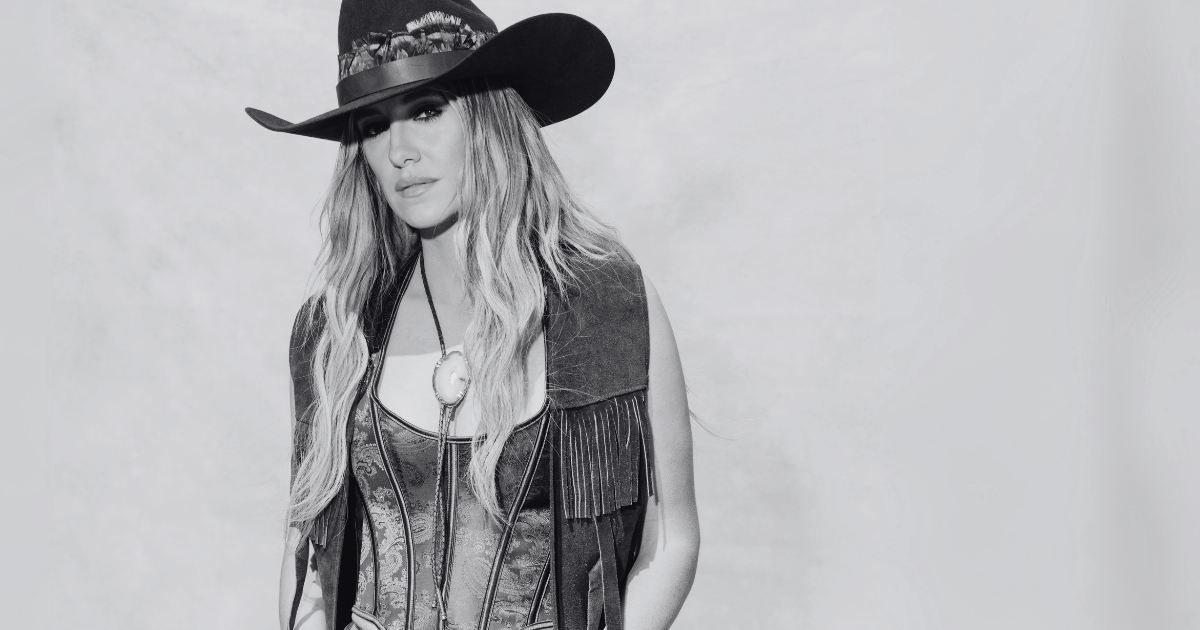
The bell bottom-wearing, slow-talking singer-songwriter from small-town Louisiana has taken the genre by storm since dropping her breakout third studio album, Sayin’ What I’m Thinkin’, in 2021, and she’s reshaped the country music industry along the way. With Wilson’s highly anticipated fifth studio album, Whirlwind, due August 23, she’s bound to shake things up once again.
If you’ve engaged with just about any form of media in recent years, chances are you’re already familiar with Wilson, who also starred on the fifth season of the wildly popular Paramount Network show Yellowstone. She’s racked up a room’s worth of trophies, including a Grammy, six ACM Awards and seven CMA Awards, including the coveted Entertainer of the Year award in 2023, which made her the first woman to win the honor since Taylor Swift’s win in 2009.
And somehow, in a genre that infamously allows mostly men to dominate charts and radio air time, Wilson has found mainstream country success commensurate with her critical acclaim. She’s notched four number ones on country radio when many women can’t even get their music played. She’s lent assists to big names like HARDY (2022’s “Wait in the Truck”) and Jelly Roll (2023’s “Save Me”), and for a while seemed to be country’s favorite feature – since 2021, she’s also collaborated with Dolly Parton, Lauren Alaina, Ernest, and Cole Swindell.
So, what is it about Wilson that resonates with so many people?
Her breakout single, 2020’s “Things A Man Oughta Know,” is a great place to start. Wilson’s voice is undeniable – like Parton or Loretta Lynn, Wilson has an inimitable sound and style – and a ballad like “Things A Man Oughta Know” gives her ample room to shine. Her voice is nimble and elastic, rich and dynamic. She knows when to stretch a note for emotional effect, like when she sings, “How to keep it hidden when a heart gets broke,” bending the final syllable to reinforce its ache. Lyrically, the track epitomizes the grittier side of Wilson’s persona, as she shows herself to be as adept at love as she is “chang[ing] a tire on the side of a road.”
That tune first appeared on Wilson’s 2020 EP, Redneck Hollywood, and would be reprised on Sayin’ What I’m Thinkin’. It would prove to be no fluke, too, as the LP released to near-universal acclaim. While much of commercial country music was steeped in pop and hip-hop influences, Wilson’s music was traditional but forward-thinking, sounding like AM radio classics, but from a fresh perspective.
It seemed as though Sayin’ What I’m Thinkin’ made Wilson an overnight success, but like most artists who come to Nashville seeking a big break, she had paid serious dues. After graduating high school, Wilson moved to Nashville from Louisiana in 2011, living in a camper van while she found her footing in town.
She’d honed her musical chops as a kid, first discovering a love for music as a young child. As she grew older, Wilson’s dream of pursuing a career in music grew, too, and by the time she was a teenager she had regular gigs as a Miley Cyrus impersonator, showing up at weekend birthday parties to perform for kids.
That would be good practice for building a career in Nashville, as grinding it out at local writers’ rounds, bars, showcases, and open mic nights is, for most artists, a Music City rite of passage. Nashville’s “10-year town” reputation, which posits that an artist must keep at it for a decade to break through, proved true for Wilson, who had spotty success between 2011 and 2021 before finally clearing the hurdle.
Wilson would follow Sayin’ What I’m Thinkin’ just a year later, eschewing a more traditional two to three years between records in favor of maintaining her momentum. Bell Bottom Country did just that and then some, catapulting Wilson from up-and-coming country star to household name.
The album, with its retro, Stevie Nicks-coded cover photo, also further developed the Lainey Wilson brand, which is more hippie than hillbilly. (Or rather, it’s both – the second track is called “Hillbilly Hippie,” after all.) Her bell bottoms quickly became part of her iconography, like Dolly Parton’s colorful makeup or Brad Paisley’s traditional cowboy hat. The imagery matches the mood of the music, as even Wilson’s more somber songs still have a sense of looseness, of freedom.
Perhaps a product of her decade-plus in the game, that ease is evident on Bell Bottom Country hit “Watermelon Moonshine,” a spiritual descendent of Deana Carter’s “Strawberry Wine” that is sure to be a country classic. Steeped in nostalgia and illustrated with vivid imagery (“kudzu vines,” “old farm ruts,” “a blanket ‘neath the sunset”), the song is a tender ode to young love, balancing youthful abandon with the melancholy of hindsight. It’s also a showcase for Wilson’s melodies, which are sticky but not cloying, and just poppy enough to catch the ear without distracting from the story.
Bell Bottom Country also birthed “Heart Like a Truck,” a massive hit for Wilson thanks, partially, to its use in a Dodge Ram commercial. The song is, blessedly, proof that a “truck song” can still be creative, as Wilson likens her aching heart to a truck that’s “been drug through the mud.” It’s also one of Wilson’s most powerful vocal performances, letting her play with dynamics before letting go and wailing toward the end of the song.
Wilson uses Bell Bottom Country to show off her broader musical ambitions, too. “Grease” is syncopated and funky, reminiscent of more recent work from The Cadillac Three or Brothers Osborne. “This One’s Gonna Cost Me” flirts with arena rock, made epic with production from Jay Joyce, famous for his work with Eric Church. And Wilson surprises with a vibrant cover of “What’s Up (What’s Going On),” the iconic 4 Non Blondes hit.
Such sonic detours hint at what might come with Whirlwind, whose title no doubt references the wild last few years of Wilson’s life. Lead single “Hang Tight Honey” is tight and catchy but sonically complex, with girl-group vocals and a rockabilly beat accompanying Wilson’s soulful, swaggering delivery. “4x4xU” recalls the mid-tempo drama of the best Lee Ann Womack songs, though with a funkier groove. And on “Country’s Cool Again,” Wilson reminds that her country roots run deep, with a deliciously twangy chorus that more than earns the song’s Garth Brooks and Brooks & Dunn references.
Despite these country bona fides, Wilson has still faced accusations of inauthenticity, particularly around her thick Louisiana accent. In a January interview with Glamour, she says, “I think sometimes, especially when people were first getting introduced to me, they heard my accent and immediately thought, ‘There’s no way this girl could be that country.’ The truth is, you can say anything you want to about me, but when you start talking about my accent, I’m ready to fight somebody because then I start feeling you’re talking about my family.”
Debates about authenticity in country music are a dime a dozen, though they tend to be directed at women artists more often than their male counterparts. You don’t hear skeptics of, say, Morgan Wallen’s accent or Tennessee roots, or of Jelly Roll’s history with incarceration. But a quick search of “Lainey Wilson fake” turns up video after video dissecting her accent, most of which barely – if at all – engage with her actual music.
For her part, Wilson seems largely unfazed by doubters and detractors. In that same Glamour piece, she later shares, “When you grow up somewhere like I did with the kind of people that I did, you can’t help but to be country. You can’t escape it no matter if you move eight hours away like I did. Country music was the soundtrack of our lives. We lived it out.”
While Wilson’s musical talents will always be her biggest draw, her larger-than-life personality is a close second. She’s a famously electric live performer, vamping across the stage and bantering with fans with such ease it seems second nature. That she does this without missing a note is what elevates her artistry – that CMA Award isn’t called “Entertainer” of the Year for no reason.
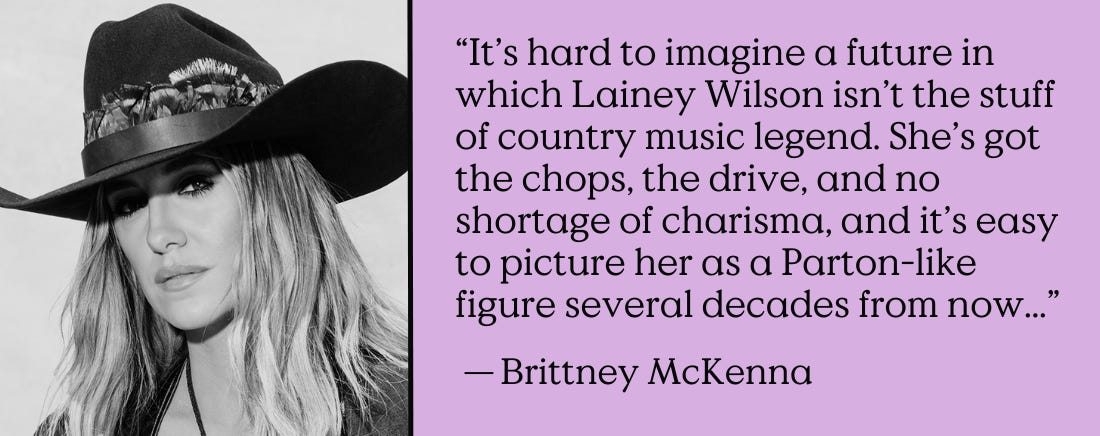
It’s hard to imagine a future in which Lainey Wilson isn’t the stuff of country music legend. She’s got the chops, the drive, and no shortage of charisma, and it’s easy to picture her as a Parton-like figure several decades from now, ushering in and supporting a new generation of country artists whose reverence for and innovation of the genre will help keep it alive.
This website uses cookies to improve your experience. We'll assume you're ok with this, but you can opt-out if you wish.AcceptRejectRead More
Privacy & Cookies Policy
Privacy Overview
This website uses cookies to improve your experience while you navigate through the website. Out of these, the cookies that are categorized as necessary are stored on your browser as they are essential for the working of basic functionalities of the website. We also use third-party cookies that help us analyze and understand how you use this website. These cookies will be stored in your browser only with your consent. You also have the option to opt-out of these cookies. But opting out of some of these cookies may affect your browsing experience.
Necessary cookies are absolutely essential for the website to function properly. This category only includes cookies that ensures basic functionalities and security features of the website. These cookies do not store any personal information.
Any cookies that may not be particularly necessary for the website to function and is used specifically to collect user personal data via analytics, ads, other embedded contents are termed as non-necessary cookies. It is mandatory to procure user consent prior to running these cookies on your website.