May is Mental Health Awareness Month, but for those with lived experience, every day is about mental health awareness. During the most difficult times, many creators and listeners turn to music. It’s where we connect through lyrics and melodies that express the things we so often cannot, will not, dare not say.
The intersection of music and mental health is nothing new. Long before memes and catchphrases about “break the stigma,” Hank Williams did just that with “I’m So Lonesome I Could Cry.” Years later, Porter Wagoner exposed the ugly unspoken truth about “The Rubber Room.”
Thankfully, through incremental steps, times have changed – although not enough – in terms of media portrayal and public discourse. With great courage, more and more artists are coming forward about their struggles. Dozens of artists and musicians have spoken openly with BGS and Good Country about how mental health challenges move them to create songs and albums that make us all feel a little bit less alone. (Scroll to find our playlist of roots songs all about mental health below.)
Artists and bands like Becky Buller, Courtney Marie Andrews, Sister Sadie, and Tenille Townes give us glimpses at how mental health and self-care inform their creative processes and how they craft their songs, albums, and sets. Groups like Southern Avenue and the Band Loula – who make music built on the sonic and storytelling traditions of the South – subvert regional expectations about what’s “allowed” to be spoken about in the light of day with their approaches to infusing mental health awareness into their songs. Still more conversations with artists like Fruit Bats, Cole Chaney, Emily Scott Robinson, and Chely Wright reinforce that mental health in roots music isn’t a fad or passing trend, it’s an intentional through line. Songwriting and roots music are perfect vehicles for this sort of vulnerability and these once forbidden topics.
The proliferation of YouTube and democratization of music videos in the 2000s and 2010s opened up new dimensions for artists, giving them more formats in which to express themselves, depict their work, and consider mental health. Additionally, of course, it offers live performances that go beyond anything a studio recording can capture.
“I Think It’s Going to Rain Today” – Randy Newman
Randy Newman’s masterpiece has been covered many times, and the internet is full of those recordings – as well as his. This performance, however, at his induction into the Rock and Roll Hall of Fame, may very well surpass them all.
“God, Can You Hear Me?” – Dax
Dax is fearless in addressing the most difficult and “taboo” topics. “God, Can You Hear Me?” asks the unspoken question within the context of a subject that far too many people refuse to address: suicidal ideation. (Content warning: graphic.)
“Let the Circle Be Broken” – Sister Sadie
In genres predicated upon generational legacies and “handing down” tradition, Sister Sadie’s song of release, letting go, and stepping out from underneath the long shadow of generational traumas is more than powerful. By the same token, that it was written and is sung and performed by a band of all women makes it a truly transcendent message. Some circles are meant to remain unbroken, others must be demolished.
“Bench Seat” – Chase Rice
Chase Rice broke down walls and stereotypes and opened doors to discussions about suicide with this multiple-award-winning video. Country needed this. Country needs more of this. (Content warning: graphic.)
“Hurt” – Johnny Cash
Johnny Cash. Enough said.
“I’m Gonna Be the Wind” – Laurie Lewis
Bluegrass legend Laurie Lewis has penned many a fine song tackling issues of mental health, but this is the song for when you’re ready to stride out anew again. It’s a song of strength, resilience, of realizing that often one of the primary forces keeping us down is our own mindset. Tired of being a blade of grass, bent and bruised by the wind? Be the wind!
“Sunday Morning Coming Down” – The Highwaymen
Mickey Raphael described them as “like Mount Rushmore onstage” and called Kris Kristofferson “the Shakespeare of our time.” This is why.
“Will the Sun Ever Shine Again” – Bonnie Raitt
One of the best songs Bonnie Raitt has ever sung and released was recorded for the 2004 animated film Home on the Range. Devastating, endlessly relatable, but ultimately hopeful, the film cut of “Will the Sun Ever Shine Again” is hard to track down on streaming services and online, but it’s truly lovely. A gem of a soundtrack find from an often overlooked Disney children’s movie from the aughts.
“Alone Again (Naturally)” – Gilbert O’Sullivan
In 1971, Gilbert O’Sullivan bravely addressed loss, grief, heartbreak, loneliness, depression, suicidal thoughts, and questions of faith, wrapped them up in a lovely melody, set them to a catchy beat, and rode to the top of the charts with one of the most gutting, most accurate depictions of mental health challenges ever put to song. Decades and numerous cover versions later, stripped down to keyboard and guitar, his voice aged like fine wine, “Alone Again (Naturally)” remains poignantly accurate and relatable.
“Bad Mind” – Erin Rae
A song so perfect in its illustration of how we project and ascribe mental health, onto ourselves and others. We all may know, somewhere inside ourselves, that there is no such thing as a “Bad Mind,” but stigma and internalized expectations leave so many of us feeling broken and “incorrect.” Listening to Erin Rae sing this lovely, devastating song brings an immediate feeling of needing to reassure the singer that there really aren’t bad minds… and thereby the realization we should also apply that grace to ourselves.
Below, you’ll find our full playlist of nearly 8 hours of roots music created by the teams at BGS and Good Country that features some of the many excellent songs that address mental health. For Mental Health Awareness Month and beyond.
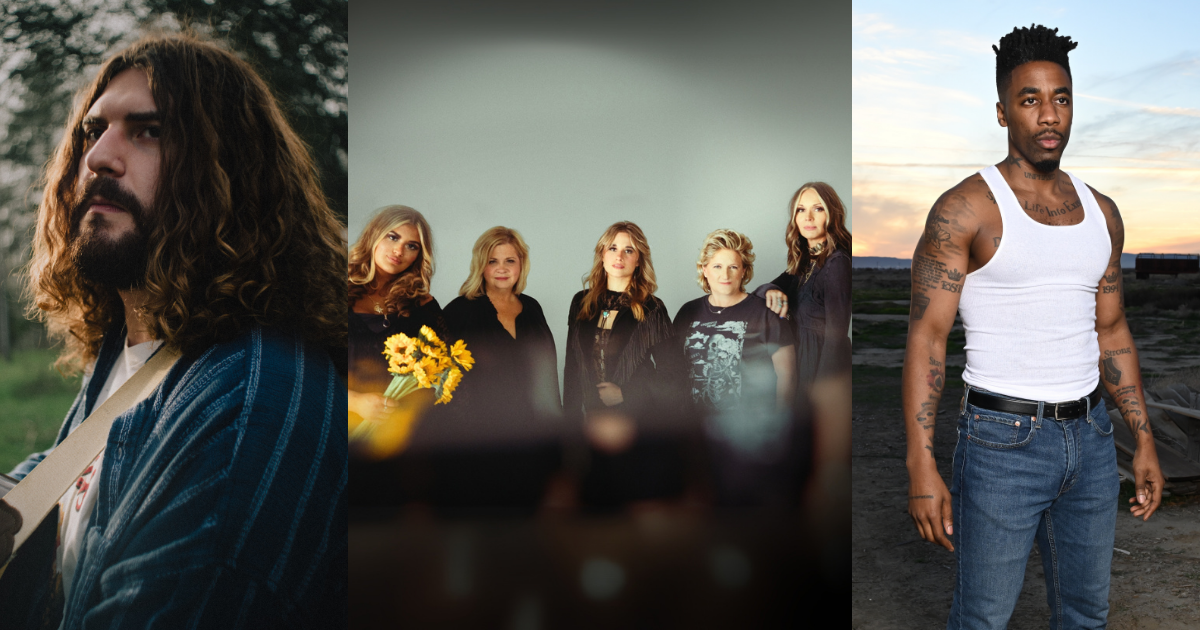
Photo Credit: (L to R) Cole Chaney by Anthony Simpkins; Sister Sadie courtesy of the artist; Dax by Annie Devine.
Additional curation and contributions by Shelby Williamson and Justin Hiltner.
The sheer variety and singularity of the Grand Ole Opry – whether in just one of its shows or in just one of its many eras – would be paralyzing enough, if tasked with telling its complete, unabridged story to a broad audience. The assignment of taking the entire century-long history of the world’s longest running radio show and condensing it between the covers of a book would have to be heart-stopping. How could one ever take such a complex story full of twists, turns – and plenty of the idiosyncrasies found in human beings who make and love country music – put it down in 350+ pages?
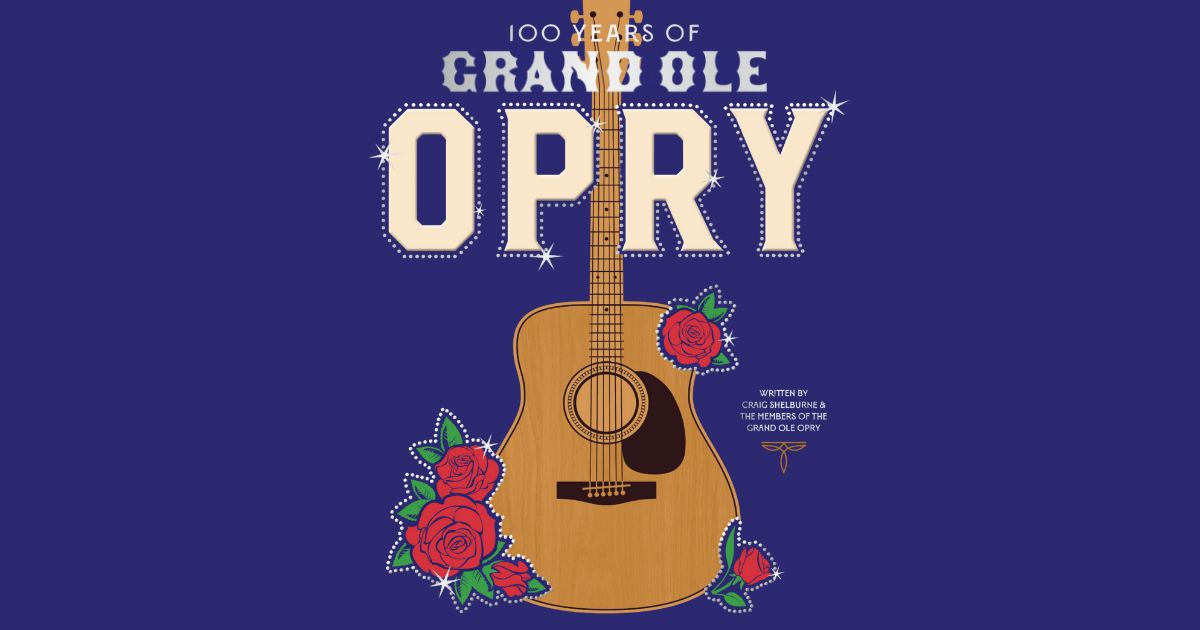
It’s hard to imagine, but that’s exactly what writer Craig Shelburne, historian Brenda Colladay, and a host of Opry members have done with the brand new book, 100 Years of Grand Ole Opry. Shelburne – a BGS contributor and former managing editor for our website – worked with Colladay to penetrate the vast, lush archives of the Grand Ole Opry to posit its history decade by decade, chapter by chapter in the new hefty, coffee-table-ready tome. They completed dozens and dozens of interviews with Opry members, artists, musicians, employees, executives, and broadcasters and, as a result, the history book feels remarkably alive and vibrant – just like the show itself.
The book, released in April of 2025, demonstrates and reiterates time and again that the Grand Ole Opry isn’t a relic – nor has it ever been. It’s a living, breathing, adaptive being that’s enacted by a strong community of stakeholders not only from across the company that owns the brand, Ryman Hospitality, but the music industry as a whole, too. 100 Years of Grand Ole Opry showcases a country and cultural icon not waning or winding down after a century of triumphs (and trials and bumps and scrapes, too). No, instead, this book finds the Opry, beloved by all of us, merely at its next transition point, moving purposefully from the last 100 years to the next 100 years.
We sat down with Craig Shelburne on the phone to chat about the immense undertaking of writing this book, the surprises found and lessons learned along the way, and what makes the Grand Ole Opry so special, all for our Artist of the Month celebration of Opry 100.
This is such a gargantuan task, staring down the entire 100-year history of the Opry and being asked to turn it into a book. Where do you even begin? How did you take that first bite? What did it feel like to you to enter this process of creating a book?
Craig Shelburne: Yeah, 100 years is a massive undertaking and we – my co-writer Brenda Colladay and I – spent some time at Frothy Monkey in East Nashville sketching out some of the important Opry milestones in those eras when things really seemed to be shifting. As we did that, we realized that we could probably have each chapter be roughly a decade. At one point, we realized we wanted to have some breakout sections, but we didn’t know how to do that.
I wanted the book to be very readable, [without] a whole bunch of sidebars. So instead of designing sidebars, we have these pages that are interludes in between the decades, in between the chapters. You have the history of bluegrass, or the ways that the Opry has been on television, or what the Opry looked like when it went into the 21st century and a new era of technology. [That] was our chance to expand on one particular theme, rather than try to weave [those themes] into the narrative or take away from the narrative. It could be distracting if you dropped [a sidebar] into the manuscript every time the Opry was on television. Those interludes also gave us a chance to use some of these magnificent color photos [from the Opry archives] just because they’re beautiful photos. We didn’t have to necessarily set them up within the text. …
It was intimidating for a while until one night, late at night, I was writing and I realized that the main character of the story is the Opry itself. There are so many people that have passed across the stage, from Roy Acuff and Minnie Pearl up to the modern era. I wanted the artists and the cast members to be represented well, but really the main figure throughout this 100 years is the show itself. And it’s a show. It’s not a stage, it’s not a building. It’s a show.
Once I could get my head around the fact that this was the leading character in a 100-year story, the narrative started to fall into place. That was a breakthrough for me.
I also love how that format parallels the structure of the show itself. That you have segments, sets of artists performing, you have commercials and announcers and little games with sponsors, and you have talk-back sessions from artists. When you go to a show, it’s not just one thing from start to finish, it’s a bunch of different things – and there are obviously lots of interludes built in. So there’s something about the structure of the book that parallels the show in a nice way.
And telling the story of how the segmented portions of the Opry came to be was one of my favorite parts of writing the book. Basically, the Opry hired their music librarian – who was a very organized individual – to try to reign in some of the chaos from when the Opry was at what is now the Belcourt Theater [in the 1930s]. I think back then it was called the Hillsboro Theater. His name was Vito Pellettieri and he realized if he could wrangle three or four artists within the same timeframe, then these performers would now have a rough idea of when they needed to be standing side stage, instead of disappearing as musicians might have been wont to do.
Then of course, being the Opry, owned by an insurance company, the business people sensed an opportunity there and thought, “Let’s sell those segments to sponsors and advertisers.” And so that’s how the 30-minute segments came to be. Whether it was dog food or condensed milk or tobacco, if there was a sponsor for each segment, the Opry made more money that way, too. The Opry has been pretty creative in how it positions itself and how it can take advantage of good ideas quickly.
I know you spoke to dozens of artists, stakeholders, musicians, executives, broadcasters, and announcers. You and your co-writer Brenda Colladay must have done hours and hours of interviews for this book. Can you tell us a bit about that process and who you most enjoyed or were most excited to sit down with?
On one hand, the general narrative crafting you’re talking about sounds like really grueling work, but on the other hand, it sounds like doing that through these interviews was probably the most fun part of this process.
I would say the interviews were the most fun. I agree with you on that. I have the Opry show schedule as a shortcut on my smartphone now, because I would always try to figure out who was playing and who we needed to talk to.
As it should be, we started our interview series with the one and only Jeannie Seely. We felt like she needed to be first, and she deserved that. She only got about halfway through what she wanted to say [during our first meeting], so we set up another interview. It was wonderful to talk to her. Both of those afternoons were great, because with Jeannie, she’ll tell you the way it actually was. Some of it was very positive and some of it was critical, but it’s her perspective. And she was there! I didn’t get to see the Opry in the ‘60s or ‘70s, and she did. Getting to hear it directly from her was fantastic. She was also hilarious, when you got to sit down and joke around with her a little bit.
It was really important to talk to people firsthand and to go deeper than just, “Hey, what do you think of the Opry? Why is it important?” So the Opry opened up its entire archive to me, which was videos, books, newspaper clippings – pretty much anything that I wanted to look at, read, or watch. When I knew I had an interview coming up, I would spend several hours reading clippings and reading stories in order to come up with questions specific to their Opry experience. Rather than just, “Tell me about when you moved to Nashville. Tell me about this. Tell me about that.” Those aren’t questions, those are just prompts. When the people came in to talk to us, we were usually in pretty much a supply closet for camera equipment. It was a really small room. We didn’t have any cameras. We wanted everybody to be casual and comfortable and not worry about makeup and hair.
Then it became a very comfortable conversation. We started every interview with the same question, which was, “What is going through your mind in those moments before the curtain comes up?” Everybody had a different answer. That put them in the frame of mind of talking about the Opry, I think, more than talking about themselves. They went pretty deep, back in their memories, of how they discovered the Opry and what it’s meant to them. Quite a few of those artists went to the Opry as kids. So then they started talking about their family and what the Opry meant to their family, there were a lot of emotions.
I think some of those artists expected it to be like a 10 or 15 minute interview to grab that [sound] bite that says, “I sure do love the Opry.” But we went really deep and spent more than an hour talking with some of these artists. You don’t get to put everything like that into the book, but suddenly now we have an oral history from these modern contemporary performers that will live forever. When somebody writes about the Opry in 50 years from now, they have it straight from the artists, [speaking] about their path to that stage.
I think that’s one of the best accomplishments of this book, that it tells the story in such a rich, full way that isn’t just the mythology and isn’t just the good parts and the glitzy parts. It sounds like part of how you were able to accomplish that is by having these interviews set up in such a way that you could build trust with folks, so they didn’t feel like they were just giving you that marketing sound bite. They could really tell you those full stories.
I think a lot of that came from the Opry headquarters. They wanted us to tell [it] the way it happened. A woman named Jenn Tressler, she handles a lot of the talent requests there and I think she primed most of these artists about what the interviews would be like and what the goal was. Just [so they would] be comfortable and [know] no topic is off limits. Artists were asked some pretty sensitive questions sometimes about the relationship with the entertainment industry in general, including the Opry and the artists rose to the occasion.
We wanted to tell the actual story. I’ve often felt that nobody wants to read a book where everybody’s happy and there’s no conflict. There’s conflict in this one.
From your interviews or from writing this book, what was a story or two about the Opry that stuck out to you or surprised you? Or, that brought you to learning something new that maybe you wouldn’t have tripped over into if you hadn’t done this book? Is there a story or two that stand out to you?
The first one would be just how young everybody was when they got involved with the Opry. George D. Hay was a young man; Harry Stone, who was one of the early program directors, had just turned 30 when he took on that role. The artists were [in their] 20s and 30s. You had a very young Bill Monroe, Roy Acuff, Minnie Pearl, coming on the stage and changing the game for country music.
Sometimes the Opry is perceived as the elder statesman of country music – and that’s true and they’ll always have a place there, it’s wonderful. But a lot of the shake-ups at the Opry and a lot of the progress that’s been made was because of these young, innovative perspectives. That happened over and over. I think without that viewpoint from people who were younger, the Opry would’ve struggled through the last hundred years. There would’ve been times somebody might’ve said, “I want it to stay the same way, ’cause this is how we’ve always done it.” It’s never the right answer, to do it just because it’s always been done that way. I think that was pretty fascinating to me.
The other thing I didn’t realize was that it was not until I believe 1978 that the Opry was ever aired on television. It was a PBS special. If you wanted to see the Opry, you had to come to Nashville for the first 53 years. After that one night on the PBS special, it didn’t happen again until the following year. Being able to see the Opry, you had to come to Nashville, and I think executives at that time feared that if you put it on television, people would stay away from the show and they wouldn’t sell tickets anymore. But time has proven just the opposite. People saw it on television, how exciting it was and they felt like they needed to be there, myself included. I watched it growing up in Nebraska as a teenager and I just was fascinated by it. By that time, of course, it was on TNN.
I watched it many a Saturday night with my grandparents and I didn’t always know who those legendary figures were that were sharing the stage with Alan Jackson or Clint Black or Alison Krauss. But because of the Opry, I got a country music education as a teenager before I moved to Nashville in 1994. By the time I got here, I feel like I had a leg up on other people who wanted to write about country music that were my age.
You’re pointing out another fact that we often forget about country music, hillbilly music, these traditions that made these musics. It’s that all of them are constantly changing and growing, morphing and adapting to the future – and responding to the present.
Like, the reason the Opry became what it is today was because of technology, because of the “Air Castle of the South.” Because of radio, because there wasn’t a lot of competition on the literal bandwidth, and because the tower was so tall it could reach so many people all across the country. To think that, nowadays, when we view “tradition” in 2025, we think that means not changing something.
Wrong!
But the Opry has always been changing and always been using cutting edge technology to do that. And country wouldn’t exist without technology, without the railroad, without industrialization, without radio, without recording technology becoming portable and handheld.
Oh, absolutely. Well said. It has to change, and the Opry does figure out a way to reach new listeners and engage with people that have never been there. Obviously, when you go to the Grand Ole Opry House for a show now, the emcee will say, “Who’s never been to the Opry before?” And a lot of hands go up. They’re constantly marketing the show – as they should be. They want people to have a seat in the Ryman or the Opry House to see how special the world’s longest running radio show is. I give them a lot of credit for always trying to reach new people and not just looking for what they’ve done already in the past. They take a lot of pride in the fact that no two shows have ever been the same.
I was just listening the other night [on the radio] and I was able to catch the Opry debut of Grupo Frontera. I thought it was such a perfect example of what you’re talking about, that a Spanish-speaking, Spanish first language group that makes country. Of course, it’s Mexican folk and Tejano and Latin folk and all these other things as well – but it’s certainly country & western. [They were] making their debut and you could hear the building shaking through the radio. It felt like one of those iconic ovations we hear about from the old days, with everybody stamping their feet in the balcony of the Ryman. The Opry is still doing that. And not only are they doing it, but this year for Opry 100, they’re doing it over and over again where they’re having these shows with these special moments, reaching new audiences.
And it was a brilliant move, because those fans now have a general idea of what the Grand Ole Opry is, how it is performed, and they got to hear some music from people they maybe hadn’t heard of. I know Frank Ray was on the show that night, he might’ve gained some fans from those who came to see Grupo Frontera. It’s a win for everybody when an artist of that caliber plays the Opry.
There was a great moment, after doing some digging, where I found the full performance of when Porter Wagoner invited James Brown to come play the Opry. It was like a 20-minute segment – there are some things online where you hear bits and pieces of it. But the Opry archive had it from start to finish, so I just sat there and listened to it. There was some screaming and hollering going on that night, too. It was exhilarating to listen to it. Then I found an oral history from Porter Wagoner – I quoted it in the book – that said, when you bring someone of world-renowned stature to the Opry, it benefits the Opry. You want the Opry to be in the news, because it draws attention to the show.
We’ve already talked about Jeannie Seely, but I wrote my concluding question with her in mind, as well. She passed in August of this year and when she did she had performed on the Opry almost 5,400 times. (The number is 5,390-something.) That longevity is incredible. So thinking about longevity, we’re standing here at the milestone of a hundred years of the Grand Ole Opry, looking at potentially another 100 years of the Grand Ole Opry coming up.
Do you see this modern era of the Opry as its golden age? Do you think the golden age of the show is yet to come? And who are you seeing that’s just getting their start “in the circle” nowadays that is gonna be like Jeannie Seely in a few decades, thousands of appearances into their Opry career?
Yeah [the future] looks strong to me, too. Something I never put into context until I wrote the book was that in the 1990s the Opry lost Roy Acuff, Minnie Pearl, Grandpa Jones, Bill Monroe, and Dottie West. And you just think, “How do you recover from that?” They did. They figured out a way to press on.
There were definitely growing pains and bumps, but some of those figures that they picked out in the early 2000s have become advocates for the Opry, champions for the Opry. The ‘90s country stars that I love, like Lorrie Morgan, Pam Tillis, Vince Gill, Steve Wariner, and Marty Stuart are still out there. They still play the Opry – and they’re the elder statesmen now. I do think the cast members that joined in the ‘90s and 2000s are gonna become a foundation for the show.
I think you’ll be seeing Trisha Yearwood out there quite a bit as she settles into the “twilight years” of her career. I sense that she will be out there singing alongside Kathy Mattea and Suzy Bogguss. I think Opry is in really good hands with the young women that they’ve invited to be part of the cast. More than once, without any prompting, artists like Carly Pearce and Lauren Alaina have said they feel the responsibility to be here. And I think Lauren Alaina is very likely to inherit the comic routines of Jeannie Seely – she’s pretty much already there. She had us rolling in laughter in her interviews. She’s got the natural timing of a comedian, but she’s got hit songs, too.
I think the Opry is in really good shape right now. They’ve done a good job of connecting to a younger audience that wants to play it. It’s a career goal now for a lot of inspiring artists. I think when I moved here in the ‘90s it was seen as living history and you had to have some history to get on that stage. But now you just have to have a good story, some musical talent, and an ability to connect with an audience. That’s easier said than done, but if you can have those three things, the Opry will take a chance.
I think they’ve found a recipe for success. They set themselves up to succeed. There are times in the music industry where it seems like things are crumbling or those pillars are not as strong as they used to be. But I think right now the Opry is as strong as it’s ever been. I don’t see it going anywhere anytime soon.
Lead image courtesy of Ryman Hospitality Properties.
Our partnership with our friends at Real Roots Radio in Southwestern Ohio continues as we celebrate Women’s History Month. We’re proud to bring you weekly collections of a variety of powerful women in bluegrass, country, Americana, folk, and elsewhere who have been featured on Real Roots Radio’s airwaves each weekday in March, highlighting the outsized impact women have on American roots music. You can listen to Real Roots Radio online 24/7 or via their FREE app for smartphones or tablets. If you’re based in Ohio, tune in via 100.3 (Xenia, Dayton, Springfield), 106.7 (Wilmington), or 105.5 (Eaton).
American roots music, historically and currently, has often been regarded as a male-dominated space. It’s certainly true of the music industry in general and these more down-home musics are no exception. Thankfully, American roots music and its many offshoots, branches, and associated folkways include hundreds and thousands of women who have greatly impacted these art forms, altering the courses of roots music history. Some are relatively unknown – or under-appreciated or undersung – and others are global phenomena or household names.
Over the last few weeks, radio host Daniel Mullins, who together with BGS and Good Country staff has curated the series, has brought you just a few examples of women in roots music from all levels of notoriety and stature. Week one featured Dottie West, Gail Davies, and more. Week two shone a spotlight on Big Mama Thornton, Crystal Gayle, Rose Maddox, and more. This week, we’ll pay tribute to Emmylou Harris, Wild Rose, Goldie Hill, Jenee Fleenor, and Mother Maybelle Carter. We’ll return next week for the final installment of the series – with even more examples of women who blazed a trail in roots music.
Plus, you can find two playlists below – one centered on bluegrass, the other on country – with dozens of songs from countless women artists, performers, songwriters, and instrumentalists who effortlessly demonstrate how none of these roots genres would exist without women.
Emmylou Harris (b. 1947)
Let’s spotlight a true legend of American music: Emmylou Harris. Born on April 2, 1947, in Birmingham, Alabama, Emmylou Harris grew up in a military family, moving frequently across the South. A straight-A student and class valedictorian, she initially pursued drama at the University of North Carolina. However, her passion for music led her to the vibrant folk scene of Greenwich Village in the late 1960s.
Her big break came when she collaborated with Gram Parsons, contributing to the birth of country rock as a genre. After Parsons’ untimely death, Harris embarked on a solo career, releasing her acclaimed album Pieces of the Sky in 1975. Over the next four decades, Harris became a musical chameleon, effortlessly blending folk, country, and rock. Her collaborations read like a who’s-who of music legends, including Rodney Crowell, Mark Knopfler, Ricky Skaggs, and as one third of “Trio” alongside Dolly Parton and Linda Ronstadt.
In 1992, Harris recorded an acoustic album at the Mother Church of Country Music. The historic building had been practically abandoned and nearly condemned, but the success of Emmylou’s live project At The Ryman is largely viewed as responsible for saving the historic landmark. Her 1995 album, Wrecking Ball, is also significant for Emmylou, as she leaned into more of an alt-country space, creating a landmark record for what is now referred to as Americana.
With over 25 albums and 14 GRAMMY Awards to her name, Emmylou Harris was inducted into the Country Music Hall of Fame in 2008 and received a GRAMMY Lifetime Achievement Award in 2018, cementing her legacy as one of the most influential artists in contemporary music. Her distinctive voice and heartfelt songwriting continue to inspire artists and captivate audiences worldwide. Whether revisiting traditional tunes or exploring new sonic landscapes, Emmylou Harris remains a beacon of authenticity and artistry in the music world.
A groundbreaking band in country history, do you remember Wild Rose? Founded by several veteran musicians in 1988, Wild Rose proved that a band with girl power can bring some serious fire power, too.
The group featured Pam Gadd (banjo/guitar) and Pam Perry (mandolin), who had cut their teeth in bluegrass as members of the New Coon Creek Girls, plus Wanda Vick (guitar/fiddle) and Nancy Given (drums) who had worked on the road with Porter Wagoner, and Kathy Mac (bass). Originally known as Miss Behavin’, they would change their name to Wild Rose. Combining country-rock, bluegrass, and more, they were full of energy and sass.
The title track of their debut album, Breaking New Ground, was written by Carl Jackson and Jerry Salley and would be a Top 15 Country Hit in 1989 (and a kickin’ music video as well). Their first album would also include the Top 40 Texas-flavored follow-up single “Go Down Swingin’” and the GRAMMY-nominated instrumental track, “Wild Rose.” With their tight harmonies and hot pickin’, Wild Rose was nominated for Top New Vocal Group or Duet at the 1990 ACM Awards. Their lively stage presence would earn them television appearances on Hee Haw, Nashville Now, and more. The band would release two more albums, Straight and Narrow and Listen to Your Heart, before disbanding in 1991. Many of the gals would continue to work in traditional music as session musicians, songwriters, and more. Although their time together was short-lived, their country-grass sound made waves and made history during country’s new traditionalist era.
Goldie Hill is one of country’s unsung legends. Born in 1933, Goldie was a trailblazer and a shining star in the early days of Nashville. She wasn’t just a pretty face–she was a powerhouse vocalist with a heart full of soul.
Goldie’s breakout hit, “I Let the Stars Get in My Eyes,” soared to the top of the charts in 1953. It was an answer song to “Don’t Let the Stars Get in Your Eyes,” so popular in 1952 that Perry Como, Sketch McDonald, and Ray Price all had separate hit renditions. “I Let the Stars Get in My Eyes” made her only the second female country artist to have a Number One hit song.
Goldie Hill would entertain audiences on radio airwaves through the Grand Ole Opry and the Louisiana Hayride and on television screens through the Ozark Jubilee. With a voice that blended sweetness and grit, she became a favorite of fans and fellow musicians alike. She would go on to have several hit duet recordings with Red Sovine and Justin Tubb. She married fellow country star Carl Smith in the late ’50s, releasing some albums under the name Goldie Hill Smith in the ’60s. Goldie largely retired from the music business by the end of that decade. She and Carl Smith were married for 47 years before Goldie’s passing in 2005. Along with her peers such as Kitty Wells and Jean Shepard, Goldie Hill helped open doors for women in country.
When you think of today’s great country fiddlers, one name has to be a part of the conversation – Jenee Fleenor! Born and raised in Arkansas, Jenee picked up the fiddle as a kid after she heard Bob Wills’ “Faded Love” and never looked back. She dropped out of college when she landed her first professional gig playing bluegrass music with Larry Cordle & Lonesome Standard Time.
Since then, she has toured with some of the biggest names in country, including Blake Shelton, Terri Clark, Martina McBride, and George Strait, while also doing session work in Nashville, playing fiddle, mandolin, and guitar on all sorts of hit records – such as Jon Pardi’s fiddle-laden “Heartache Medication.” She’s the first-ever female to be named a CMA Musician of the Year – taking home the honors a whopping four years in a row.
Not only is Fleenor a top-tier musician, but she’s also a talented songwriter, penning hits for artists like Miranda Lambert, Blake Shelton, Darin & Brooke Aldridge, Del McCoury, Adam McIntosh, Rebecca Lynn Howard, Kathy Mattea, and more. Recently, she helped form the hit bluegrass and roots band, Wood Box Heroes, where she lends her talents as a picker, songwriter, and vocalist — a true triple threat! Her skills are shaping the sound of modern country and roots music.
Referred to as the “Mother of Country Music,” there was only one Maybelle Carter. Born in 1909 in the hills of Virginia, Maybelle Carter didn’t just play the guitar – she changed the way it was played. With her signature “Carter Scratch,” she made the guitar a lead instrument, blending melody and rhythm like nobody had before.
Maybelle, Sara, and A.P. Carter formed the original Carter Family. Maybelle was eight months pregnant in August 1927 when the trio made the trek to Bristol, Tennessee/Virginia, to audition for RCA Victor’s Ralph Peer, part of what we now refer to as the “Big Bang of Country Music.” Peer immediately knew the Carter Family were stars.
The Carter Family’s music captured the heart of America – from “Keep on the Sunny Side” to “Wildwood Flower.” Epitomizing the “Sunday morning” aspect of country’s Saturday night/Sunday morning dichotomy, their songs of hearth and home told stories of love, loss, and life in the Appalachian mountains and became part of the bedrock of country, folk, and even rock and roll.
After Maybelle’s cousin Sara Carter divorced A.P. Carter, the original Carter Family went their separate ways by 1944, with Maybelle taking on a matriarchal role – literally! With her daughters Anita, June, and Helen, “The Carter Sisters and Mother Maybelle” began making waves on radio throughout the southeast, even hiring a young guitarist by the name of Chet Atkins as a part of their show in 1949 and bringing him with them to Nashville when they were made members of the Grand Ole Opry in 1950.
By the latter half of the 20th century, Mother Maybelle was a revered figure in American roots music. She would be a special guest of Flatt & Scruggs on their 1961 salute to the Carter Family. Maybelle and her daughters would frequently tour and collaborate with her future son-in-law Johnny Cash, and would find an enthusiastic new generation of fans thanks to the Folk Revival. In 1972, she would appear alongside other musical pioneers as featured guests on the Nitty Gritty Dirt Band’s platinum-selling Will the Circle Be Unbroken, shortly before her passing in 1978. Mother Maybelle’s influence still echoes today in every twang, every strum, and every song that dares to tell a story.
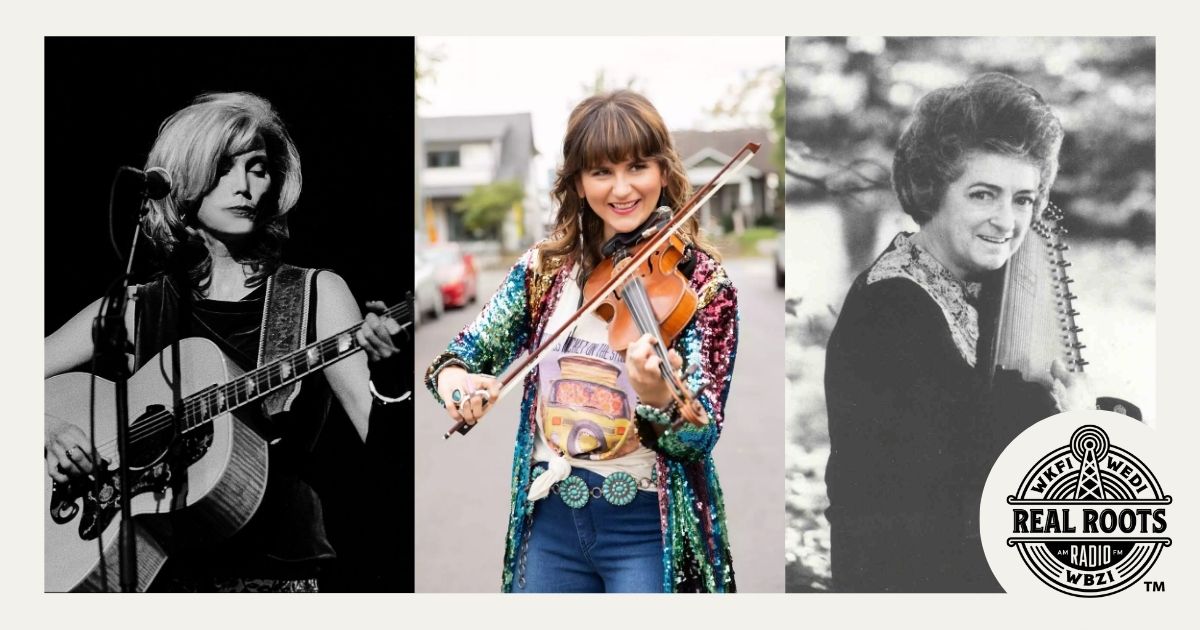
Photo Credit: Emmylou Harris by Paul Natkin/Getty Images; Jenee Fleenor by Katie Kauss; Mother Maybelle Carter via the Southern Folklife Collection at UNC.
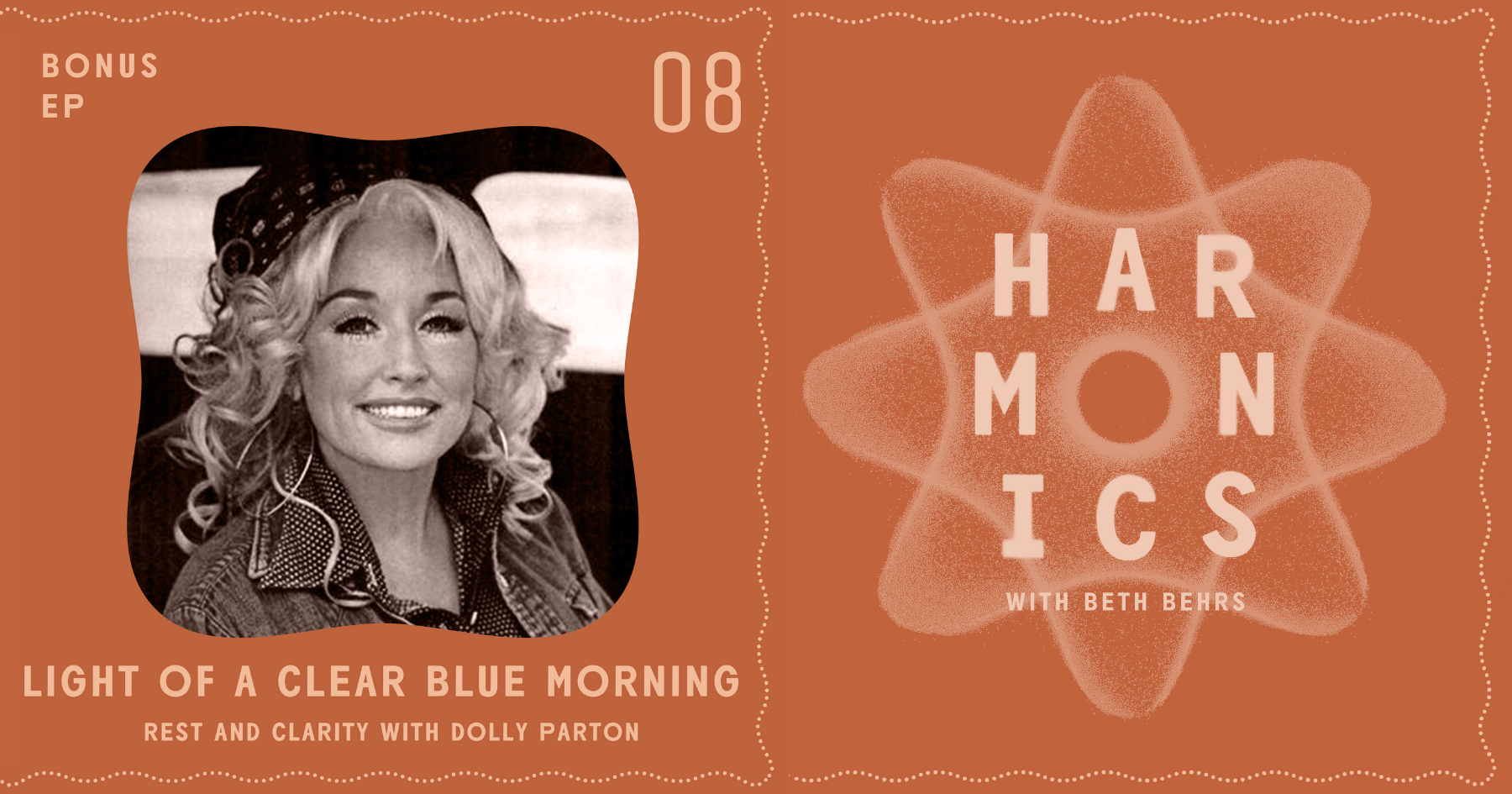
It’s been a long dark night… but we’re rested and ready for a new day with the help of Dolly Parton and her inspirational lyrics and spirit. If you’ve been following along with Harmonics, you may be familiar with the practice of Yoga Nidra. In short, it’s a guided meditation intending to bring us to a state of consciousness between waking and sleeping — and it makes for some serious relaxation and rejuvenation. Harmonics host Beth Behrs recently completed her Yoga Nidra teacher training, and who better to inspire her first meditation than Dolly?
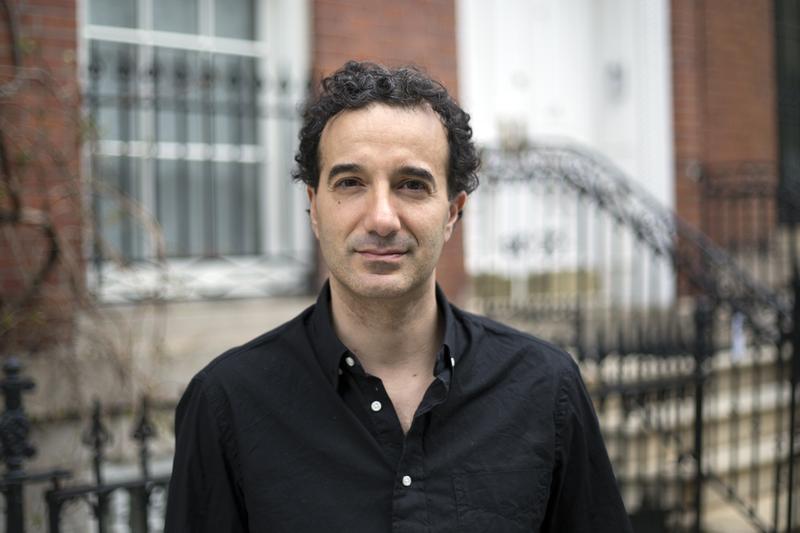
In public radio and podcast fandom Jad Abumrad’s voice is not only immediately recognizable, it’s iconic. As a host of WNYC’s hit show, Radiolab, Abumrad has explored myriad topics ranging from secret World War II missions to the social and cultural impacts of contagious diseases. He has a knack for storytelling, uncovering and contextualizing minute details that many other writers and journalists may have simply shrugged at or glossed over.
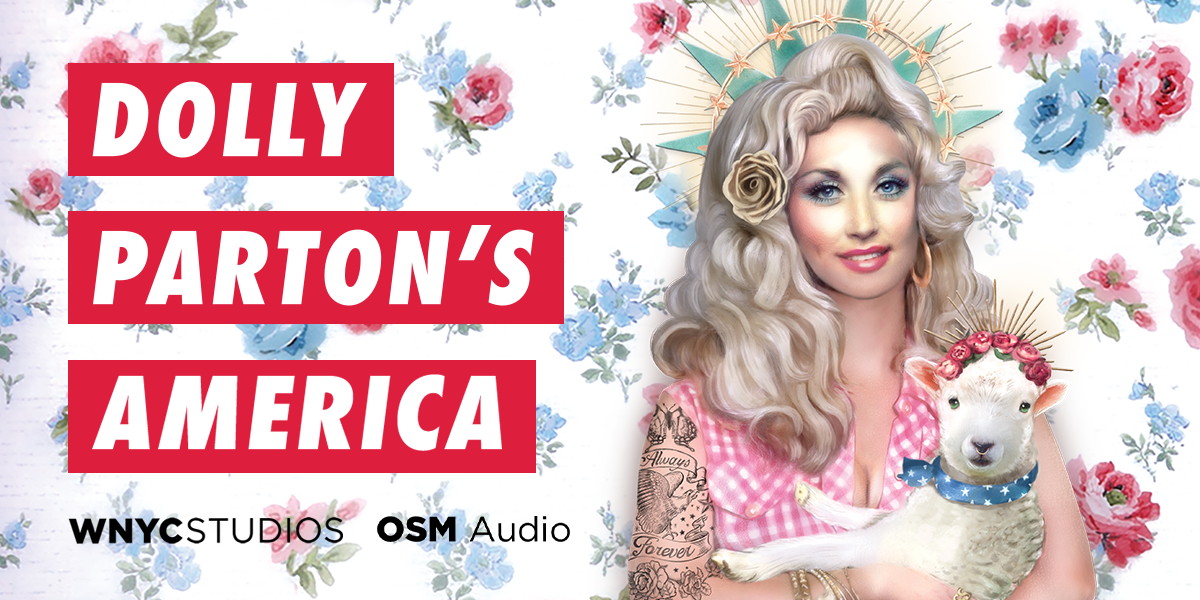
This instinct, a sixth sense that guides him to these subtle nuances that often rest undisturbed just below the surface or hide in plain sight, is focused on a new subject in his brand-new podcast (also produced and distributed by WNYC), Dolly Parton’s America. The nine-part series lives up to the oft-invoked, seldom accurate characterization of “a deep dive,” covering ground that even the most ardent Dolly experts and fans may have never trod.
A self-described “new initiate” of country music, Abumrad grew up in Nashville, but given Dolly’s standing as an almost omnipresent cultural touchstone he realized much later that during those Tennessee years he almost couldn’t see the Dolly Parton forest for the Dolly Parton trees. “I knew her music, in terms of the crossover stuff — ‘9 to 5’ and ‘Islands in the Stream,’” he admits. “But the first place I started was going back to ‘60s Dolly and ‘70s Dolly. That’s a very different Dolly.”
Though what he found in those early decades of her career was often unexpected, it was never truly shocking or surprising, especially given the pop culture monolith that Parton has become since those years. A monolith that Abumrad describes as being able to bring people together across all manner of divides — something particularly remarkable in this current global moment.
“You see these stories emerge of not only her changing over time, but what was happening around her in the south, in Appalachia, and in America,” he continues. “The early Dolly music and lyrics became almost like a portal that I could step through to talk about history, to talk about politics, to talk about culture, to talk about feminism. It’s all there in her music.”
And so, it’s all in the podcast. In the two already released episodes Abumrad et. al. cover topics as broad and varied as Dolly’s constantly being undervalued as a songwriter, her being “typecast” as a secondary character (a “dumb blonde”), her shift from the sad, forlorn songs of her early career to her jubilant, encouraging anthems later on, and even her own struggles with suicidal ideation.
With such an entity as Parton, a bystander might assume that any approach to unspooling the many tendrils of her vastly variable and dynamic career would be insufficient, myopic, and/or excruciatingly intimidating. Abumrad faces this daunting task with aplomb, acknowledging the many ways such a project can go awry, but not allowing that acknowledgment to dissuade him. Rather than shy away from storytelling that might open him and the podcast up to criticism about omissions or oversights or missteps, he leans into the humanity that allows for those scenarios. “This is a project where I was trying to see Dolly through other people’s eyes, so that I could understand them and understand their lives and their experiences… I wanted to understand Dolly not simply as a performer and an icon, but as somebody who’s created all this culture… Why do they love it? What do they see in it? What is it about it that calls them? I felt like that was a way to understand the country at this moment.”
BGS editor and contributor Justin Hiltner spoke to Abumrad on the phone about Dolly Parton’s America; the two took turns picking their favorite Dolly tracks, as if standing in front of a Dolly-only jukebox in a Dolly-themed dive bar.
JH: If you and I were standing in front of a jukebox full of Dolly Parton songs what would be your “pick” if you were asked to play Dolly Parton for a room full of people? What would be the first song you would think of?
JA: I think [with] any jukebox selection you have to disclaim: There’s no way to be comprehensive, so any selection you make is going to be one tiny sliver of a tremendous catalog of thousands and thousands of songs.
But, I think the first one I’m going to have to pick is “Muleskinner Blues.” I think it was 1970? I think that’s right. 1970. I would play this one because that song is just… it is pure fire. The rhythm section is so badass and her on top of it, you just cannot — you have to move when you hear it. And I say this as somebody who didn’t grow up with this genre. I grew up in a house full of opera and bad hair metal. Country music was not my jam. But this is one of the first songs that when I heard it I was like, “Oh my god. This SONG.”
The moment that she ad-libs, “I’m a lady muleskinner–”
Oh my god, it’s so good.
It’s so good! And I think about it all the time. When we talk about bluegrass, [people like to say,] “Oh, you know, we don’t have that many women forebears, we don’t have many [women] to point to.” I hear that [ad-lib] and I hear her telling the history of women in roots music and American music. “I’m a lady muleskinner” is like, “I’m not just singing this song that’s always been sung by men, this song is MINE now.” I love that.
Let me follow that inspiration, because one of the things that I think about that song is where it falls in her history. She was on the Porter Wagoner show, right? She’s this crazy prolific songwriter, but she’s kind of under the thumb of this guy, who’s a legend and an amazing hitmaker in his own right, but he was kind of holding her back. At that point she’s starting to bristle. We talked to a bunch of people… I think of them as “Dolly-ologists,” these new academics who think about Dolly a lot, before this song it was a lot of sad songs, often sung from the perspectives of little girls, about something that had been done wrong to them. This is the first song that she grabs her power, in some way.
When she holds that first note she holds it as long as she wants and the band has to follow her. So she’s like, “Y’all gonna follow me.” Then as soon as she lets go the band follows her. It’s literally her taking charge of the band. You feel that power, you feel that energy. It’s such a good song. I’ve been listening to it non-stop.
I think my first jukebox pick, what might be my favorite Dolly cut ever, is “Do I Ever Cross Your Mind” with Chet Atkins. Have you heard this?
Yeah!
It’s just two guitars, it’s just them. They’re kind of conversing while they play. There’s this subtle moment where Chet makes a joke like, “Why don’t you pick one, Dolly?” Then he continues to pick a solo and Dolly laughs like, “That’s not me, that’s not me!” But there’s this sort of respect in his voice, where he’s telling the listeners that she’s a picker. Like, “Don’t forget, don’t sleep on Dolly Parton. She can play guitar!” She’s the real deal.
They mix up the words at one point, they aren’t singing the right harmonies together. Then at the end, they’re just laughing together, and Dolly sighs, “Oh, I love you Chet.” He’s like, “Oh, I love you Dolly.” I think it’s my all-time favorite Dolly Parton recording ever. And for a song that she’s re-recorded so many times, to hear it pared down like that — definitely my number one pick.
Wow. That’s awesome.
What’s another one for you?
Let’s see, I’m really zoned in on ‘70s Dolly right now. I hope you don’t mind that most of my picks are going to be in that era.
Nothing wrong with that!
I just love the moment that her songs go kinda funky and percussive. I’ve always been less of a lyric guy and more of a music/tambour kind of guy. I love from “Jolene” on when she starts adding different instrumentations to her songs.
I have a couple of picks here… let’s go with “Joshua.” Again, it’s a song she did right after “Muleskinner” and I feel like that’s the moment when she truly becomes [a star] — if you want to look at her ascent to global superstardom, I think it begins in those few years and “Joshua” was her first number one. I just love the production of the song, I love how her voice was recorded, it’s a little bit distorted. I love how all the instruments are panned hard left or right. The rhythm guitar is over on the right and Dolly’s voice is on the left — or maybe it’s vice versa. I love the whole ‘70s production of it.
It’s such a weird story! It’s [about] an orphan girl meeting a crazy old man living by himself in the woods and they fall in love. There’s something kind of offbeat and oddball, but also kind of poetic about it. When it modulates, it goes up a semitone, like somewhere in the middle. It’s just cookin’. I love it.
My next pick, and really this is hard, I would probably pick something off of The Grass is Blue. And I think that my favorite one is “Train, Train.” I mean, you can’t be upset at a bluegrass song about a train, for one, but also that album means so much to me. You have this woman who has conquered every genre, has hits on so many different charts, and for her to come back to bluegrass — and I always make sure to emphasize the “back” to bluegrass because she’s been based in this. Her music since day one has been bluegrass music, the mountain music, as she calls it.
And the band on that record, the band that she toured with doing promo for that record, they were ridiculous! Chris Thile was in the band, if Chris Thile wasn’t, Sam Bush was. Jim Mills — it’s everybody. Jerry Douglas. This stacked roster of bluegrass pickers and then she takes that band to like, the CMA awards. To see bluegrass in primetime, in the mainstream like that always means so much to those of us who have always loved bluegrass first and foremost. I keep beating the drum of, “Induct Dolly Parton into the Bluegrass Hall of Fame! Induct Dolly Parton into the Bluegrass Hall of Fame!” I think it’s a no-brainer, and “Train, Train” is the perfect distillation of that for me.
Totally! You know, it’s interesting, what I remember is being in the UK — we went to the UK to shadow her for the premiere of 9 to 5 the musical — and on the way to the show I had to be in the car [with her] posse from the Dollywood Foundation and the Imagination Library, like David Dotson and some of these folks. They all were echoing basically what you just said. That album, more than any other album of hers, is most meaningful to the people around her. I think a lot of people feel like you feel. I don’t want to say it was one of her less successful [records], but it didn’t have the crazy crossover [appeal.] That album meant a lot to a lot of people.
Do you have another one? Maybe to close us out? One more for you, one more for me.
Sure, let’s see. I’ll give you a choice and you can tell me which one will be more interesting. “Love is Like a Butterfly” or “He’s Alive.”
Oh shoot, do both.
Okay, I’ll do both in one shot. So, “He’s Alive” is not the kind of song I’d ordinarily choose to put on, as a — I’ll be completely transparent — godless liberal. I come from a country that was torn apart by religion and my parents are scientists, so when we came from Lebanon my parents were like, “Don’t you damn set foot in a church!” [Laughs]
The first time I heard “He’s Alive” I got goosebumps. I hadn’t been that moved by a song in a long time. We were driving from Knoxville to Dollywood, actually, with one of Dolly’s biggest fans, and she put that song on for us. It was crazy, driving through the hills seeing signs like “Jesus saves you” and “Jesus loves you.” Then that song comes on and, as you know, the first few minutes are kind of a little bit overblown and orchestral and there’s this bombast going on, but when the chorus and the gospel chorus come in? Oh my god. That is more intense than any techno DJ drop. We were all just pinned to our seats for that. It feels like she’s alive, right? [Laughs]
I played it for my wife and my family the other day and they were like, “You like this?” But when it gets to the chorus they were like, “Oh, I get it.”
I’ll throw in “Love is Like a Butterfly” because when she had a string of number ones going from Dolly the “girl singer” to being Dolly the superstar, that was one [important song.] I don’t know, there’s something about her voice on that song. She’s describing this almost trance of love, she’s in love with someone and she’s weightless and entranced the way a butterfly is in the wind. The song isn’t as poetic as some of her others, but there’s something in the way she sings it that I just feel what she’s describing without even hearing the words. Something about her voice that is so… it literally flies. It’s like a butterfly. Her voice captures that. I’m so mystified by her voice on that recording.
I think my last choice would be, “Why’d You Come in Here Lookin’ Like That,” not only because it’s just a really good jukebox song — it is a perfect rollicking country song for a night at the dive bar. But also I realized — I’m openly gay, I’m a career banjo player who happens to moonlight (during the day) as a music writer, and so I went through this whole dynamic [when I was younger] of discovering my sexuality after I had already been in this music for my whole life. I realized, “Oh wait, I don’t think I belong here. I don’t think this space is for me. I play banjo, I love bluegrass.”
Something that I really appreciate about Dolly, from long ago, before I even knew she was a queer icon — and rightly so! — I could project my queerness onto and into her art and see myself in it. There’s something about “Why’d You Come in Here Lookin’ Like That” that’s just like, “Why does this straight man have to come up in my business and remind me that he’s unavailable to me?” That’s what I hear listening to that song, and it’s funny that I could go down a list of like ten other Dolly songs that feel like that to me. That feel like the queer experience realized through Dolly’s lens.
That’s really interesting… how so many of her songs create that space, so you can read it that way. I love that you have a list that goes beyond that. I might have to call you back and ask you to elaborate on that. [Laughs]
It was something that I really didn’t want to have this conversation happen without mentioning. I mean, even if you don’t count the rhinestones and the false nails and the big boobs, and everything. Boiled down to just nuts and bolts, and thinking of her as just a songwriter, she’s still allowing space for people to see their own experiences in her music. That’s not a very common thing in country. It is because heartbreak is all through country and everybody’s heart gets broken all the time, but other than that it really takes that sort of [approach] — well, what you’re talking about through this whole entire project. She touches on all of these issues that are sort of endemic to our culture, in a way that’s so organic that we ingest them almost without realizing it until now, in retrospect, I look back thinking, “Well of course she’s a queer icon, she’s creating space for us to relate to her music.” Even if it’s coming from such a specific place.
She, as a songwriter like you say, has created that space. Even without having to look at the persona in any way.
She still has not gotten her due as a songwriter, and it’s painful at times. To see that be such a big part of what you’re doing [is important.]
Yeah, I appreciate that, that’s where we start the series is taking her seriously as a songwriter, cause I agree. Robert Oermann said in one of our episodes that if she had been born two hundred years ago she’d be Mozart. (I think maybe he means more than two hundred.) Because she’s that touched by that creative spirit. That’s never been acknowledged. Bob Dylan gets it, Johnny Cash gets it, but she hasn’t.
Photo of Jad Abumrad: Bo Jacober Illustration: Christine de Carvalho
Country music was made for duets. Not only because those tight, tasty harmonies are a foundational aspect of the music, but also because country accomplishes heartbreak — and every other make and model of love song — better than almost any other genre. (Thought quite possibly better than all other genres.) It just makes sense to have two singers, one to play each role in a lost, soon-to-be-lost, or (rarely) divine, never-perishing romance. But the format isn’t restricted to lovers or their placeholders, it can just as seamlessly fit heroes and acolytes, parents and children, siblings, peers, fellow pot smokers, and on and on.
Take a scroll through these twenty-two country twosomes:
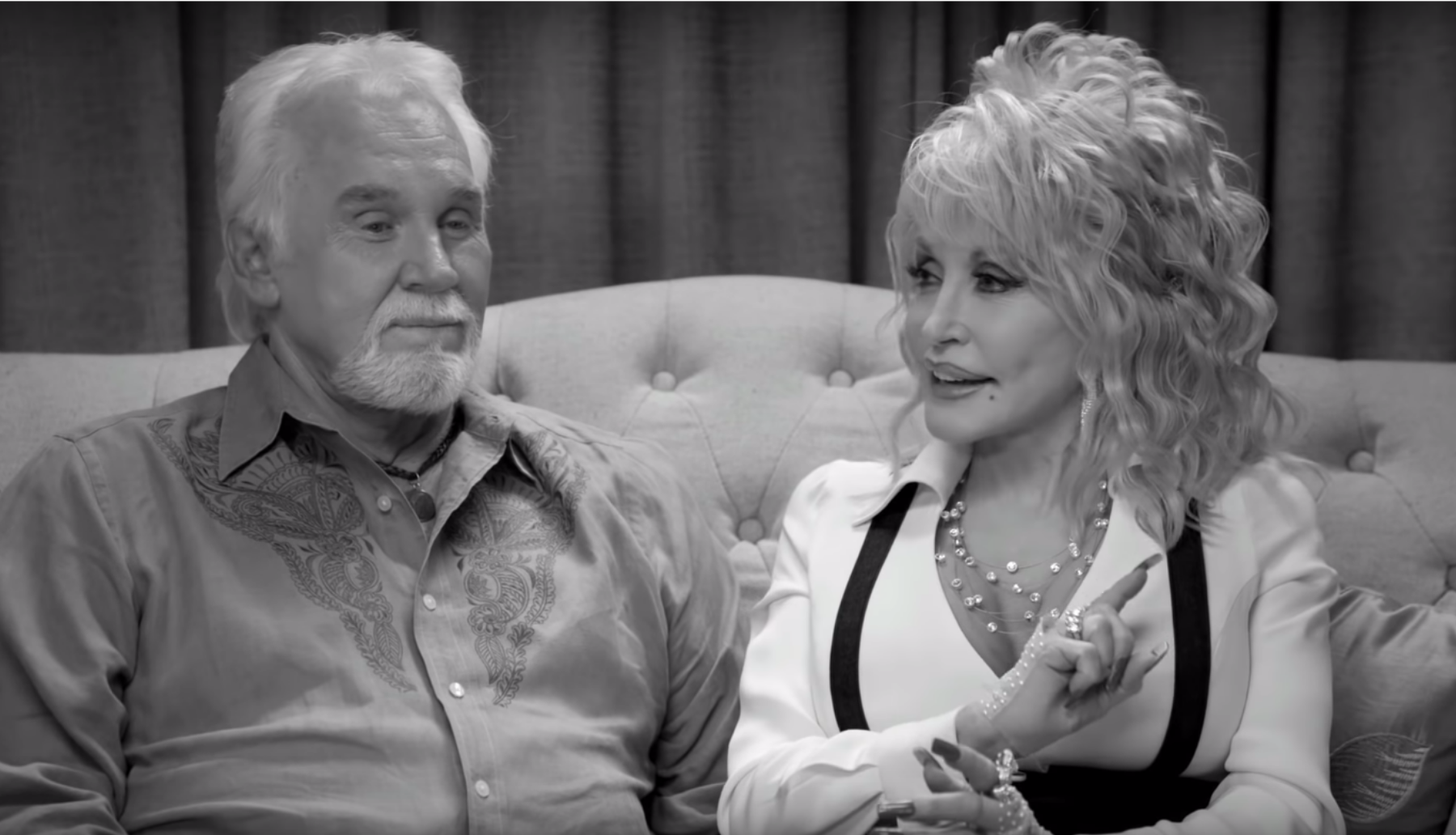
Kenny Rogers & Dolly Parton
We couldn’t have this list without these two. They should be the start, middle, and end of any definitive list of country duos. So we’ll just make the easy choice and kick it all off with Kenny and Dolly — that extra intro about their friendship and the years they’ve known each other? Swoon.
Loretta Lynn & Conway Twitty
After saying what we did about Kenny & Dolly we knew this pair needed to come next — so as to not rile anyone. Out of countless duets we could have chosen, how could any top “You’re The Reason Our Kids Are Ugly?”
Willie Nelson & Ray Charles
For inexplicable reasons people tend to forget Ray Charles’ incredible forays into country. His collaborations with Willie are stunning for the extreme juxtaposition of their voices and styles — they feel and swing so distinctly and differently, but all while perfectly complementary. “Seven Spanish Angels” ranked a very close second to this number in our selection process.
Glen Campbell & John Hartford
The most-recorded song in the history of recording? It’s said “Gentle On My Mind” holds that honor. And goodness gracious of course it does. Here’s its writer and its popularizer and hitmaker together.
Lee Ann Womack & George Strait
Together, Lee Ann and George were beacons of the trad country duet form, especially in the ’90s and early 2000s. This one from the jewel in the crown of Lee Ann’s discography, Call Me Crazy, is crisply modern, but with decidedly timeless vocals.
George Jones & Tammy Wynette
A broken, country fairy tale of a love story, George and Tammy’s relationship was infamously fraught, but damn if that didn’t just make their duets ever more… ethereal. Which doesn’t justify that Tammy Wynette kinda pain, to be sure, but it does remind us that if country can do anything better than all other genres, it can be sad.
Reba McEntire & Linda Davis
One of the best country songs, duets, and music videos EVER MADE. Theatrical and epic and a little silly and downright catchy and Rob Reiner and… we could go on forever.
Tanya Tucker & Delbert McClinton
Tanya is back with a brand new album and its well-deserved level of attention has been helping to re-shine the spotlight on her expansive career. Forty top ten hits across three decades. Who does that? Here she duets with Delbert McClinton on their 1993 hit, “Tell Me About It.”
Alan Jackson & Jimmy Buffett
Hey, if this has to be stuck in our heads for the rest of the month, it should be stuck in yours, too. Fair’s fair. It’s only half past [whatever time it is], but we don’t care.
Johnny Cash & June Carter Cash
One of the most recognizable duos in the history of the genre, immortalized not only in their discography but in a film adaptation of their love as well, Walk the Line. We all know “Jackson” as familiarly as the ABC’s, so here’s a slightly lesser-known beaut. (Keep watching til the last verse for an adorable bit from June.)
Eric Church & Rhiannon Giddens
Country is at its best when it surprises us. This collaboration is certainly, on the surface, unexpected, but the message of the song isn’t the only way these two artists can relate to each other. Over the course of their careers they’ve both fought their way from the fringes to the centers of their respective scenes. More of this, please.
Dolly Parton & Porter Wagoner
Dolly got her start with Porter Wagoner on his television show in the 1960s. They can certainly be credited with pioneering, popularizing, and epitomizing the country duet format. One of her most famous hits, “I Will Always Love You,” was written for Porter as she lamented leaving their act to go totally solo. (We’re a little glad she did.) You can tell they sang this song just a few gajillion times together, give or take.
Pam Tillis & Mel Tillis
Father/daughter duos in country aren’t as common, but they certainly aren’t unheard of. Pam and Mel are a perfect example. (The Kendalls are another.)
Patty Loveless & Ralph Stanley
Patty Loveless received the first ever Ralph Stanley Mountain Music Memorial Legacy Award in 2017 at Ralph’s home festival, Hills of Home, in Wise County, Virginia. Patty and Ralph were longtime friends and collaborators during his lifetime and even through her mainstream country success she referenced bluegrass and Ralph as influences — and she cut a few bluegrass records as well.
Alison Krauss & James Taylor
It’s. Just. Too. Good. Like butter. Like a warm bubble bath. Like floating on a cloud. Two voices that were meant to intertwine.
Charley Pride & Glen Campbell
These two were made to sing Latin-inflected harmonies together, weren’t they? Charley Pride gets overlooked by these sorts of lists all too often. But dang if he didn’t crank out some stellar collaborations, too!
Gram Parsons & Emmylou Harris
“Love Hurts” and boy, if Gram and Emmylou don’t make you believe it heart and soul and body and being. The definitive version of this Boudleaux Bryant song? Perhaps.
Willie Nelson & Merle Haggard
Icons being icons. And friends. And amazingly talented, ceaselessly musical comrades. You love to see it. (We could’ve/should’ve chosen “Pancho & Lefty.” We did not.)
Vince Gill & Amy Grant
There are quite a few reasons why the Ryman Auditorium basically hands this husband and wife duo the keys to the place each December. Basically all of those reasons are evident in this one. It’s fitting that this video came from one of those Christmas shows, too.
Dolly Parton & Sia
Dolly literally outdoes herself, re-recording “Here I Am” for the original soundtrack for her Netflix film, Dumplin’, after she first cut the Top 40 country single in 1971. Clearly she and Sia have much more in common than an affinity for wigs; their soaring, acrobatic voices seem so disparate in style and form until you hear them together. Listen on repeat for the best therapeutic results.
Robert Plant & Alison Krauss
[Insert entire Raising Sand album here, because how could we ever choose?] Lol jk, here’s “Killing the Blues.”
Carrie Underwood & Randy Travis
Cross-generational, meet-your-hero magic right here. Little did we know what was in store for Carrie Underwood then. But the way Randy looks at her up there, you can tell he knows she’s goin’ places.
Ah, the mixtape. Playlists. Songs. BGS asked us to do a mixtape and we decided it would be fun to ‘mix’ it up with a bunch of our favorite duos. A lot of them we just pulled off of our Wild Ponies Friends and Neighbors playlist. The hard part was narrowing it down. We threw in a few ringers who aren’t really our friends or neighbors — but we wish they were. There are so many ways to present music. We love a great big band, a power trio, a solitary soul with an acoustic guitar…
But there’s really something special about two voices working together, spiraling into that rare space that makes the whole room levitate. There’s a push and twist. If you’re at a show you can see it in the performers’ eyes when it locks in and happens. But if you can’t be at the show the next best thing is to close your eyes and just listen to the music. If you sit real still you might even be able to levitate at home, just a little. It’s worth a try. — Doug and Telisha Williams, Wild Ponies
Stacey Earle and Mark Stuart – “Next Door Down”
Oh, y’all, where do we even start with Stacey and Mark? We would not be making the mixtape or probably even be in Nashville without the support and love of these two. We picked “Next Door Down” from Simple Girl, because it was this release that began our love affair with Stacey and Mark. I’m pretty sure we can still play each and every song on that record!
Gillian Welch & David Rawlings – “Annabelle”
Well, our first dog was named Annabelle, after this song. That’s just how much we love Gillian, Dave, and this record.
Buddy & Julie Miller – “Keep Your Distance”
We’re so excited about Buddy and Julie’s new record, but we reached back in time a little on this one. When I listen to this song (by Richard Thompson?), Buddy and Julie’s influence on Wild Ponies’ sound is so evident.
Porter Wagoner and Dolly Parton – “Put It Off Until Tomorrow”
Oh, Porter and Dolly, one of the original duos. Each of them is such a talent, but together, there is magic — a third, indescribable element that elevates the song,
John Prine and Iris Dement – “In Spite of Ourselves”
Come on, John Prine AND Iris Dement. Our love for both of these superstars runs deep, but the blend of their quirky authenticity is stunning.
The Louvin Brothers – “My Baby’s Gone”
There’s nothing like family harmony. We were lucky enough to get to know Charlie Louvin later in his life, and the stories he shared about singing with his brother were slightly terrifying and beautiful. All the years after Ira’s death, Charlie could still hear Ira’s voice and his part every time he sang. The way that they could seamlessly switch parts and cross each other’s lines is something that maybe only those that share blood can accomplish.
Wild Ponies – “Hearts and Bones”
Singing this song live each night has become a favorite spot in our set. There’s something in the intimacy of our vocals — even just the “ooohs.” It almost feels like we’re sharing something that the audience shouldn’t be allowed to see.
Robby Hecht and Caroline Spence – “A Night Together”
Robby and Caroline are both amazing singers and songwriters. Two of our favorites in Nashville, right now. This duet record is absolutely stunning. I hope there’s another coming.
Conway Twitty and Loretta Lynn – “Easy Loving”
This song was released before I was born, but feels like the soundtrack to my childhood. I think I can even smell the chicken casserole cooking in the oven.
The Everly Brothers – “All I Have to Do Is Dream”
This is what every duo wants to sound like. Period. Anyone who tells you different is either lying or they’ve never actually heard this track.
Freddy and Francine – “Half a Mind”
I’m so happy that Lee and Bianca (aka Freddy and Francine) are in Nashville now. Their show and sound is amazing! Don’t those tight, powerful harmonies make you want to move?!
The Sea The Sea – “Love We Are We Love”
I challenge you to pick out who is singing what part with these two. Chuck and Mira’s voices blend so beautifully together, that it’s easy for me to get lost somewhere in the space between.
The White Stripes – “In the Cold, Cold Night”
Bad. Ass. The White Stripes make me want to break all the rules. This is such a cool track, because it’s mostly just Meg’s voice and Jack’s guitar. I guess not technically a duet, but it still feels like one. So intimate and creepy.
Anana Kaye – “Blueberry Fireworks”
Anana and Irakli are just weird and cool. Their writing is so big and theatrical. I love what they do. You should really go see them live — you can’t look away. They’re so good.
Waylon Jennings & Willie Nelson – “Pick up the Tempo”
Similar to the Conway and Loretta tune, this sounds like my childhood, only this time the smell is my daddy’s truck instead of chicken casserole.
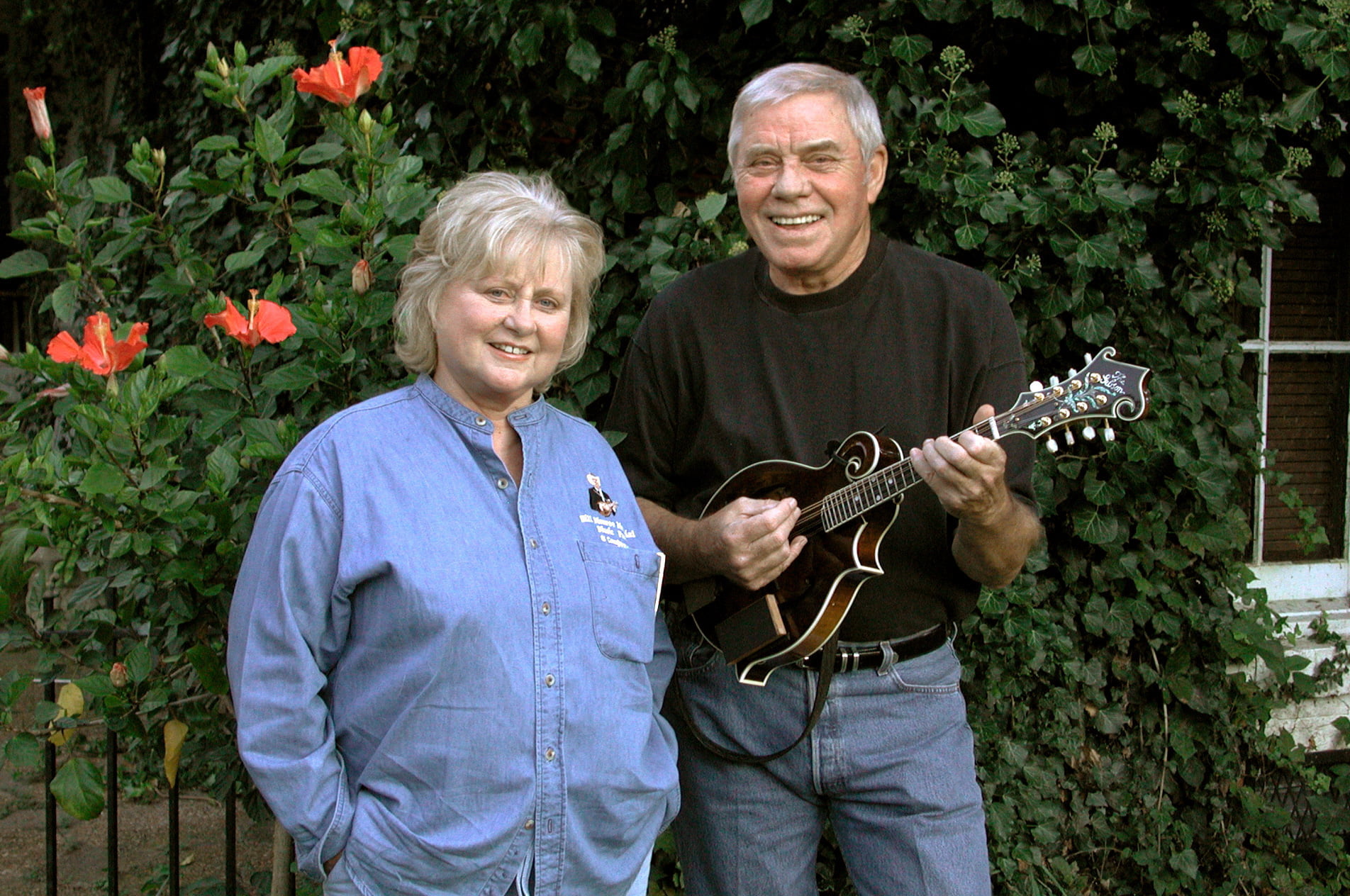
She was a trick-riding horsewoman born and raised in England; he, an Army veteran born in the foothills of Appalachia. Together, they were one of the most important songwriting duos of bluegrass, country, and American roots music as a whole. This year, they were inducted into the Bluegrass Music Hall of Fame together, following his induction into the Country Music Hall of Fame in 2008. If y’all don’t know the music — and impact — of Tom T. & Miss Dixie Hall, it’s time you do. Here’s a 12-song primer that attempts to scratch the surface of their far-reaching influence.
“Truck Drivin’ Son Of A Gun” — Dave Dudley, co-written by Miss Dixie
Co-written by Miss Dixie Deen (before she became a Hall), this single, released by Dave Dudley in 1965, reached #3 on the US country charts. It earned a BMI award; Dixie and Tom T. met at that awards banquet. The rest is history.
“Fox On The Run” — Tom T. Hall
An absolute classic. Tom T. brought bluegrass to country radio in 1976, when this track reached #9 on the Billboard charts. Just one stellar track on an entire album of top-shelf bluegrass that included appearances by J.D. Crowe, Donna Stoneman, Bill Monroe, Bobby Thompson, and so many more.
“Washed My Face In The Morning Dew” — Porter Wagoner and Dolly Parton, written by Tom T. Hall
Recorded the year before “Harper Valley P.T.A.,” Tom T.’s first top 40 hit is still going strong, relevant as ever 51 years later. “The rich got richer and the poor got poor, and to me it just didn’t seem right.”
Here’s a version by one of country’s favorite duos of all time, Porter and Dolly.
“Old Dogs, Children, and Watermelon Wine” — Tom T. Hall
“Old Dogs” was Tom T.’s third #1 hit as an artist. Charlie Sizemore, who followed Keith Whitley as Ralph Stanley’s lead singer, led an all-star cast on an entire album of Tom T.’s songs, including this one, in 2002.
“I Flew Over Our House Last Night” — Tom T. Hall
“So close, yet so far away,” Tom T. laments, whimsically, being 30,000 feet above the one he loves as he flies over home. This one has been covered by everyone from Balsam Range to Joe Henry.
“Leaving Baker County” — Junior Sisk & Rambler’s Choice, written by Tom T. & Miss Dixie
There’s a sardonic glee in the chorus, leaving Baker County and the woes described herein. “I never did think much of Baker County, and every mile I’m thinking of it less.”
“A Hero In Harlan” — Chris Jones & the Night Drivers, written by Tom T. & Miss Dixie
A somber story of a little brother coming home to Harlan the one way all military families fear — in a flag-draped casket. But Tom T. and Dixie don’t glamorize or sensationalize the story, as songs on this subject matter often do. They (and Chris Jones & the Night Drivers, who first recorded the song) tell it real, raw, and relevantly.
“Lessons In Stone” — Longview, written by Tom T. & Miss Dixie
A 1990s bluegrass supergroup, Longview’s original members included Dudley Connell, Glen Duncan, James King, Joe Mullins, Don Rigsby, and Marshall Wilborn. Woof. Dudley, Don, and Glen give the buttery three-part on the chorus.
“Our Little World” — Darin and Brooke Aldridge, written by Tom T. & Miss Dixie
The way Tom T. & Miss Dixie tell it (via Darin and Brooke), you really can have it all, without needing much.
“Pretty Green Hills” — Tom T. Hall, written by Tom T. & Miss Dixie
These two could write a story song like almost no one else can. The level of detail might seem mundane, but with such deft pens, these two make the little things seem integral — important, minute colors and shades that make the whole picture shine.
“Someone Made the Sandals Jesus Wore” — Paul Williams and the Victory Trio, written by Tom T. & Miss Dixie
Paul Williams, a fellow Bluegrass Hall of Famer inducted with Tom T. & Dixie this year, sings this gospel tune with the Victory Trio. It’s a simple, but incredibly poignant message: there really is no contribution, talent, or skill that’s too small or insignificant to positively impact the lives of others.
“Somewhere In Kentucky Tonight” — Tom T. Hall, written by Tom T. & Miss Dixie
When Tom T. recorded this song on Tom T. Hall Sings Miss Dixie & Tom T., that project was a Christmas gift to his wife. His Christmas card to Dixie promised:
“We’ll record in our studio; you choose the songs and the pickers. You produce and I’ll do songs we have written together. Local and Pal will handle (canine) security. We will call the project TOM T. HALL SINGS MISS DIXIE & TOM T. Merry Christmas! Love, T.”
And if that beautiful sentiment doesn’t capture their love perfectly, the song itself truly does. What a pair. Hall of Famers, indeed.
Photo courtesy of IBMA Jon Weisberger and Justin Hiltner contributed to this piece.
This website uses cookies to improve your experience. We'll assume you're ok with this, but you can opt-out if you wish.AcceptRejectRead More
Privacy & Cookies Policy
Privacy Overview
This website uses cookies to improve your experience while you navigate through the website. Out of these, the cookies that are categorized as necessary are stored on your browser as they are essential for the working of basic functionalities of the website. We also use third-party cookies that help us analyze and understand how you use this website. These cookies will be stored in your browser only with your consent. You also have the option to opt-out of these cookies. But opting out of some of these cookies may affect your browsing experience.
Necessary cookies are absolutely essential for the website to function properly. This category only includes cookies that ensures basic functionalities and security features of the website. These cookies do not store any personal information.
Any cookies that may not be particularly necessary for the website to function and is used specifically to collect user personal data via analytics, ads, other embedded contents are termed as non-necessary cookies. It is mandatory to procure user consent prior to running these cookies on your website.