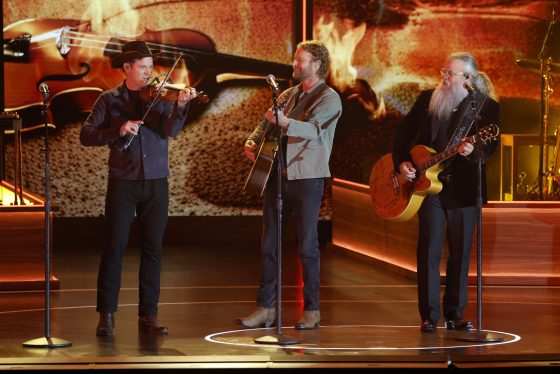
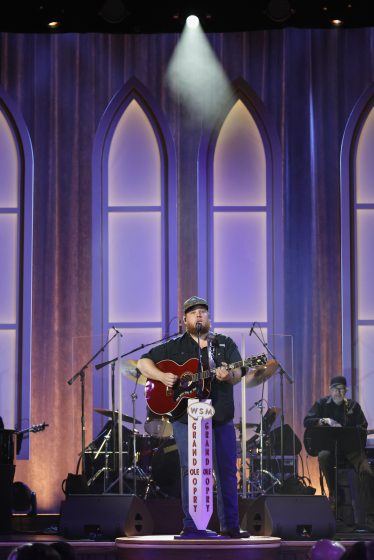
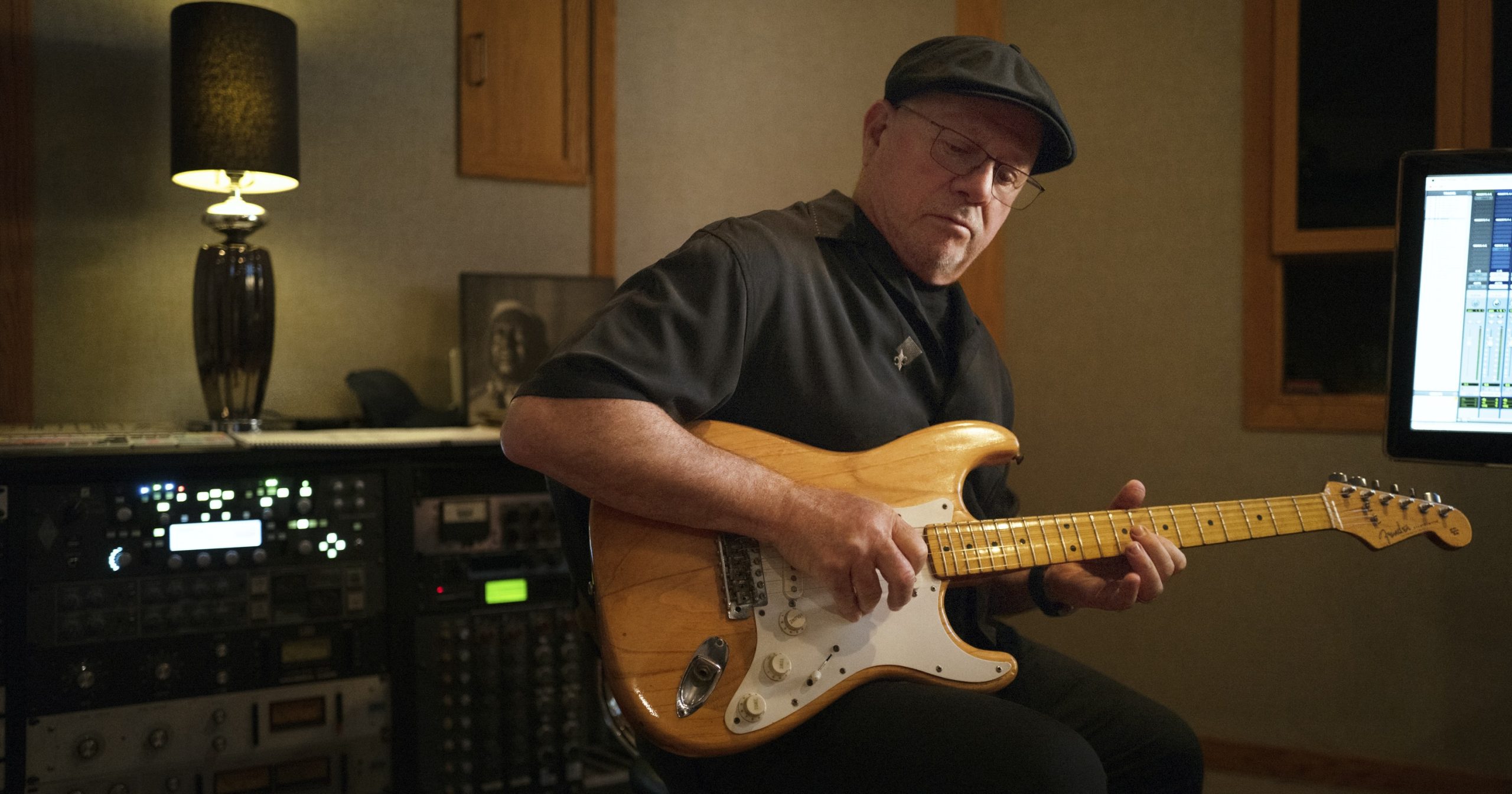
To celebrate our 150th episode of The Other 22 Hours, we try a bit of an experiment: interviewing ourselves, for the first time. After nearly two decades of partnership, we examine the evolution of the creative self. Michaela Anne – whose fifth record, These Are The Days, marks her first in over 10 years for which she retains total ownership – discusses the “massive shift of self” required to walk away from industry gatekeepers. Aaron Shafer-Haiss, whose compositions have scored major network dramas like Station 19 and The Good Doctor, reflects on the “utilitarian creativity” of a producer. It is a conversation about resilience, the “growth seesaw” of a creative marriage, and the realization that the dream is already happening.
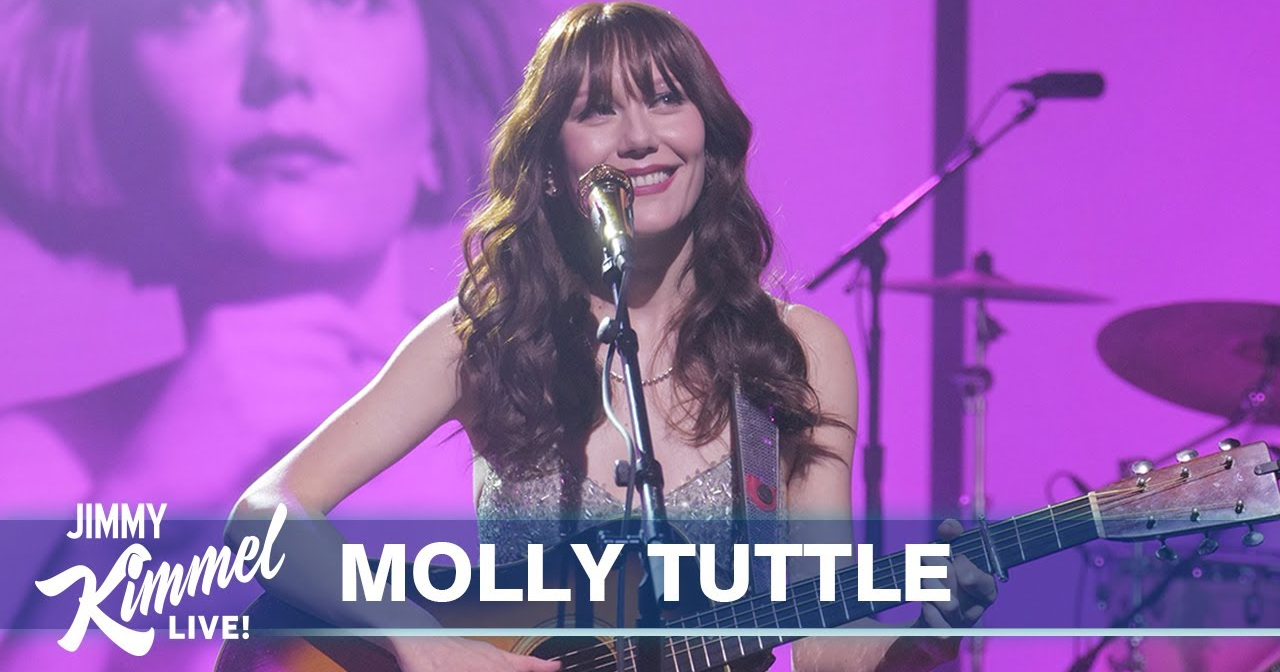
Molly Tuttle kicked off the new year in style, appearing on Jimmy Kimmel Live! on January 5 to perform a GRAMMY-nominated song from her GRAMMY-nominated album. “That’s Gonna Leave a Mark” was released on So Long Little Miss Sunshine in August of 2025. The track was nominated for Best Americana Performance while the LP gained a nomination for Best Americana Album. Featuring her signature clawhammer guitar picking style and impassioned, heart-wrenching vocals, “That’s Gonna Leave a Mark” is a standout track from So Long Little Miss Sunshine, having held the No. 1 slot on the Americana radio charts for four weeks and having climbed to #13 on the AAA charts, as well.
On the Kimmel stage, Tuttle and her band – Ellen Angelico (guitar), Megan Jane (drums), Vanessa McGowan (bass), Mary Meyer (keys) – demonstrate the genre-blending style that’s also a hallmark of her most recent album. Clawhammer guitar builds a rich foundation for pop-steeped Americana, polish and grit combining in intricate and intriguing ways. Tuttle’s percussive right hand reminds of piano key strikes in similar singer-songwriter (but keys-centered), pop and adult contemporary styles. It may be surprising that old-timey and bluegrass textures could fit so well in this musical context, but this is an intersection of styles Tuttle has long been comfortable with.
Molly Tuttle will vie for the Best Americana Performance and Best Americana Album GRAMMYs on February 1, when the awards will be handed out in Los Angeles, before going on tour with Marty Stuart & His Fabulous Superlatives for Molly x Marty: Guitars on Fire — The Cosmic Twang Tour in the South and Northeast in February.
Photo Credit: Lead image courtesy of ABC/Jimmy Kimmel Live!; alternate image courtesy of ABC, shot by Randy Holmes.
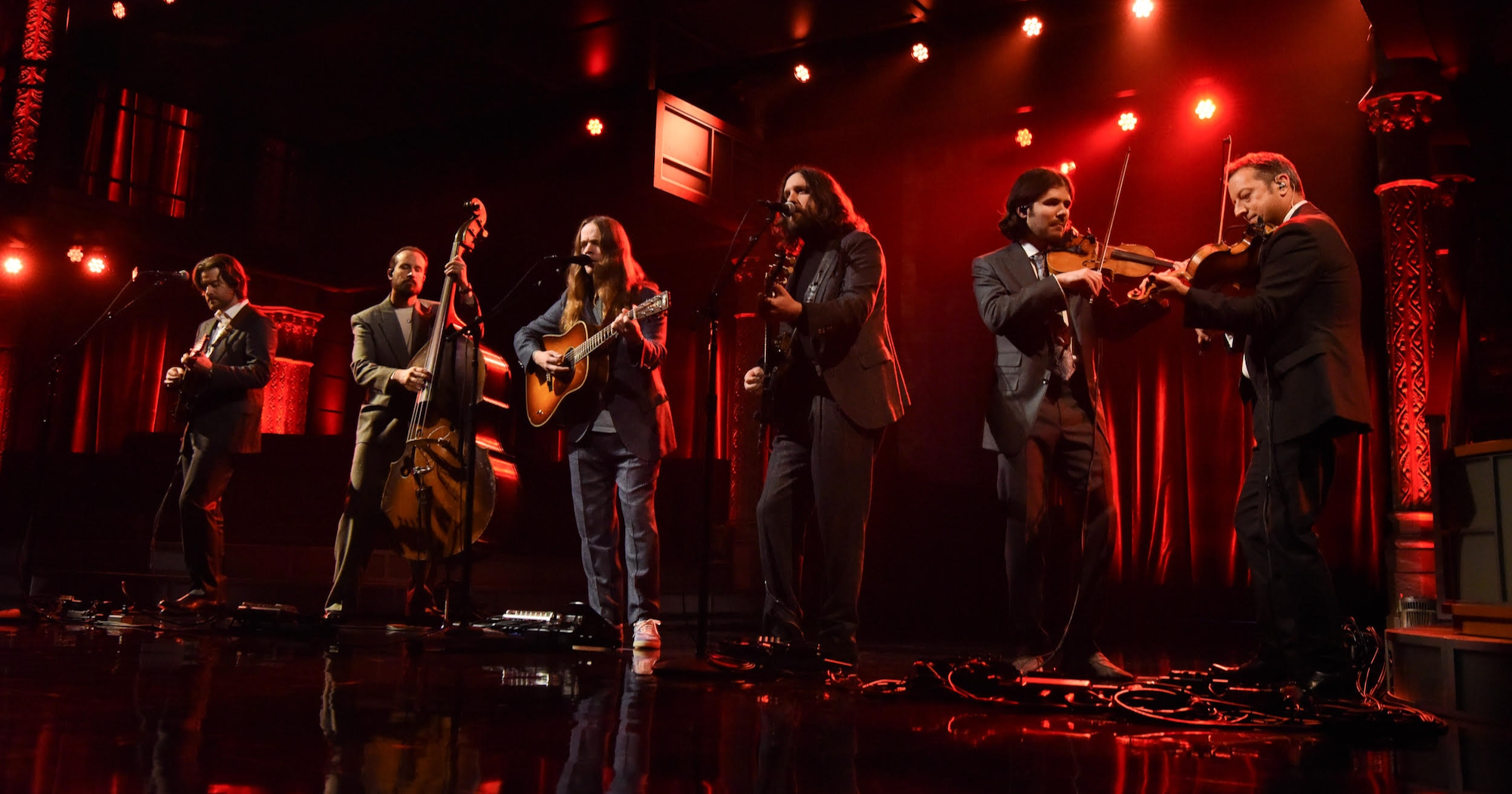
On Thursday, November 20, 2025, Billy Strings and his band returned to The Late Show with Stephen Colbert for another exciting bluegrass performance broadcast over the television airwaves. Strings’ 2024 album, Highway Prayers, was recently announced as a GRAMMY nominee for the Best Bluegrass Album award at the upcoming 2026 GRAMMY Awards, which will be held in early February. On Colbert, the group performed “Leaning on a Travelin’ Song” off the project to celebrate the LP’s nomination. (Watch above.) It’s Strings’ eighth GRAMMY nomination since 2020 and, if he wins in 2026, will be his third trophy for Best Bluegrass Album.
The band, which includes Jarrod Walker (mandolin), Royal Masat (bass), Billy Failing (banjo), and Alex Hargreaves (fiddle), were joined by fellow Best Bluegrass Album nominee Jason Carter for a twin-fiddle arrangement of “Leaning on a Travelin’ Song.” (Carter is GRAMMY-nominated with Michael Cleveland for their debut duo album, Carter & Cleveland.) Carter guested on the track on Highway Prayers, as well, supplying delicious twin fiddle and reprises his album role on the Colbert stage. The song begins with mournful a cappella three-part vocals and dramatic guitar strums before kicking into time with the lush, burning fiddling of Hargreaves and Carter.
As Nickel Creek’s Sara Watkins put it in a comment on Instagram, “Yes sirs!! Nothing like some singin’ twin fiddles on National Television!” We and the many other commenters and viewers on the internet agree. Strings and his cohort sound excellent, offering warm, lively, and crisp, fresh-sounding bluegrass to millions over the television airwaves. The world could always use more twin fiddle, and it certainly always craves more Billy Strings.
We spoke to Billy Strings about Highway Prayers while celebrating the album’s release last fall when he was BGS Artist of the Month. Check out that interview here.
Photo Credit: Scott Kowalchyk for The Late Show with Stephen Colbert.
The sheer variety and singularity of the Grand Ole Opry – whether in just one of its shows or in just one of its many eras – would be paralyzing enough, if tasked with telling its complete, unabridged story to a broad audience. The assignment of taking the entire century-long history of the world’s longest running radio show and condensing it between the covers of a book would have to be heart-stopping. How could one ever take such a complex story full of twists, turns – and plenty of the idiosyncrasies found in human beings who make and love country music – put it down in 350+ pages?
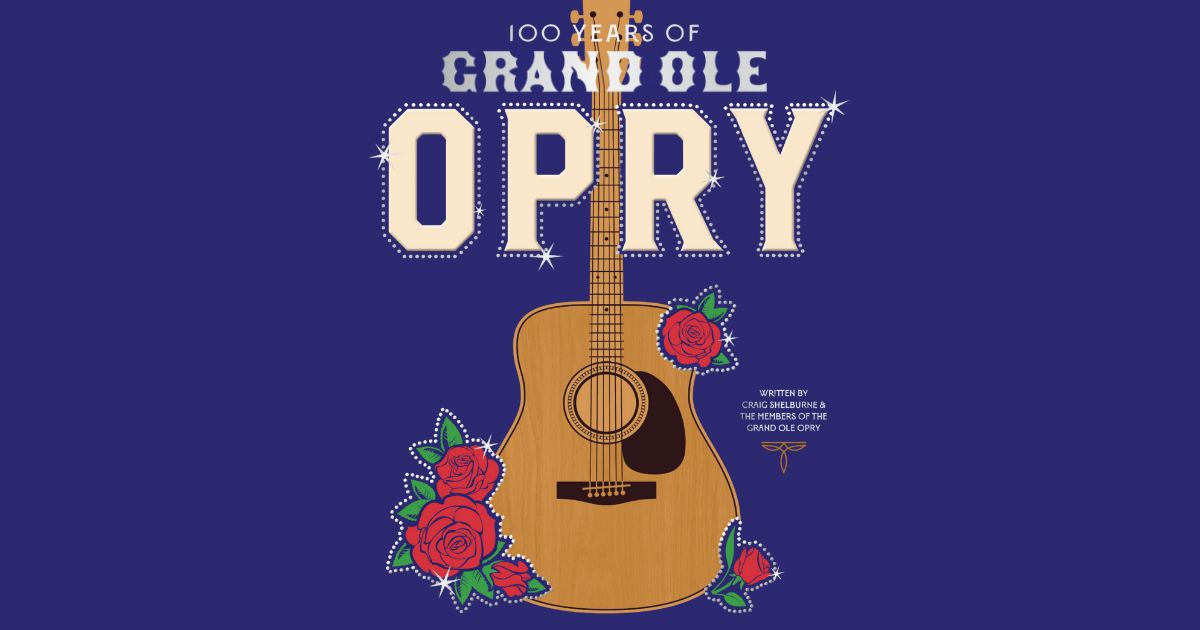
It’s hard to imagine, but that’s exactly what writer Craig Shelburne, historian Brenda Colladay, and a host of Opry members have done with the brand new book, 100 Years of Grand Ole Opry. Shelburne – a BGS contributor and former managing editor for our website – worked with Colladay to penetrate the vast, lush archives of the Grand Ole Opry to posit its history decade by decade, chapter by chapter in the new hefty, coffee-table-ready tome. They completed dozens and dozens of interviews with Opry members, artists, musicians, employees, executives, and broadcasters and, as a result, the history book feels remarkably alive and vibrant – just like the show itself.
The book, released in April of 2025, demonstrates and reiterates time and again that the Grand Ole Opry isn’t a relic – nor has it ever been. It’s a living, breathing, adaptive being that’s enacted by a strong community of stakeholders not only from across the company that owns the brand, Ryman Hospitality, but the music industry as a whole, too. 100 Years of Grand Ole Opry showcases a country and cultural icon not waning or winding down after a century of triumphs (and trials and bumps and scrapes, too). No, instead, this book finds the Opry, beloved by all of us, merely at its next transition point, moving purposefully from the last 100 years to the next 100 years.
We sat down with Craig Shelburne on the phone to chat about the immense undertaking of writing this book, the surprises found and lessons learned along the way, and what makes the Grand Ole Opry so special, all for our Artist of the Month celebration of Opry 100.
This is such a gargantuan task, staring down the entire 100-year history of the Opry and being asked to turn it into a book. Where do you even begin? How did you take that first bite? What did it feel like to you to enter this process of creating a book?
Craig Shelburne: Yeah, 100 years is a massive undertaking and we – my co-writer Brenda Colladay and I – spent some time at Frothy Monkey in East Nashville sketching out some of the important Opry milestones in those eras when things really seemed to be shifting. As we did that, we realized that we could probably have each chapter be roughly a decade. At one point, we realized we wanted to have some breakout sections, but we didn’t know how to do that.
I wanted the book to be very readable, [without] a whole bunch of sidebars. So instead of designing sidebars, we have these pages that are interludes in between the decades, in between the chapters. You have the history of bluegrass, or the ways that the Opry has been on television, or what the Opry looked like when it went into the 21st century and a new era of technology. [That] was our chance to expand on one particular theme, rather than try to weave [those themes] into the narrative or take away from the narrative. It could be distracting if you dropped [a sidebar] into the manuscript every time the Opry was on television. Those interludes also gave us a chance to use some of these magnificent color photos [from the Opry archives] just because they’re beautiful photos. We didn’t have to necessarily set them up within the text. …
It was intimidating for a while until one night, late at night, I was writing and I realized that the main character of the story is the Opry itself. There are so many people that have passed across the stage, from Roy Acuff and Minnie Pearl up to the modern era. I wanted the artists and the cast members to be represented well, but really the main figure throughout this 100 years is the show itself. And it’s a show. It’s not a stage, it’s not a building. It’s a show.
Once I could get my head around the fact that this was the leading character in a 100-year story, the narrative started to fall into place. That was a breakthrough for me.
I also love how that format parallels the structure of the show itself. That you have segments, sets of artists performing, you have commercials and announcers and little games with sponsors, and you have talk-back sessions from artists. When you go to a show, it’s not just one thing from start to finish, it’s a bunch of different things – and there are obviously lots of interludes built in. So there’s something about the structure of the book that parallels the show in a nice way.
And telling the story of how the segmented portions of the Opry came to be was one of my favorite parts of writing the book. Basically, the Opry hired their music librarian – who was a very organized individual – to try to reign in some of the chaos from when the Opry was at what is now the Belcourt Theater [in the 1930s]. I think back then it was called the Hillsboro Theater. His name was Vito Pellettieri and he realized if he could wrangle three or four artists within the same timeframe, then these performers would now have a rough idea of when they needed to be standing side stage, instead of disappearing as musicians might have been wont to do.
Then of course, being the Opry, owned by an insurance company, the business people sensed an opportunity there and thought, “Let’s sell those segments to sponsors and advertisers.” And so that’s how the 30-minute segments came to be. Whether it was dog food or condensed milk or tobacco, if there was a sponsor for each segment, the Opry made more money that way, too. The Opry has been pretty creative in how it positions itself and how it can take advantage of good ideas quickly.
I know you spoke to dozens of artists, stakeholders, musicians, executives, broadcasters, and announcers. You and your co-writer Brenda Colladay must have done hours and hours of interviews for this book. Can you tell us a bit about that process and who you most enjoyed or were most excited to sit down with?
On one hand, the general narrative crafting you’re talking about sounds like really grueling work, but on the other hand, it sounds like doing that through these interviews was probably the most fun part of this process.
I would say the interviews were the most fun. I agree with you on that. I have the Opry show schedule as a shortcut on my smartphone now, because I would always try to figure out who was playing and who we needed to talk to.
As it should be, we started our interview series with the one and only Jeannie Seely. We felt like she needed to be first, and she deserved that. She only got about halfway through what she wanted to say [during our first meeting], so we set up another interview. It was wonderful to talk to her. Both of those afternoons were great, because with Jeannie, she’ll tell you the way it actually was. Some of it was very positive and some of it was critical, but it’s her perspective. And she was there! I didn’t get to see the Opry in the ‘60s or ‘70s, and she did. Getting to hear it directly from her was fantastic. She was also hilarious, when you got to sit down and joke around with her a little bit.
It was really important to talk to people firsthand and to go deeper than just, “Hey, what do you think of the Opry? Why is it important?” So the Opry opened up its entire archive to me, which was videos, books, newspaper clippings – pretty much anything that I wanted to look at, read, or watch. When I knew I had an interview coming up, I would spend several hours reading clippings and reading stories in order to come up with questions specific to their Opry experience. Rather than just, “Tell me about when you moved to Nashville. Tell me about this. Tell me about that.” Those aren’t questions, those are just prompts. When the people came in to talk to us, we were usually in pretty much a supply closet for camera equipment. It was a really small room. We didn’t have any cameras. We wanted everybody to be casual and comfortable and not worry about makeup and hair.
Then it became a very comfortable conversation. We started every interview with the same question, which was, “What is going through your mind in those moments before the curtain comes up?” Everybody had a different answer. That put them in the frame of mind of talking about the Opry, I think, more than talking about themselves. They went pretty deep, back in their memories, of how they discovered the Opry and what it’s meant to them. Quite a few of those artists went to the Opry as kids. So then they started talking about their family and what the Opry meant to their family, there were a lot of emotions.
I think some of those artists expected it to be like a 10 or 15 minute interview to grab that [sound] bite that says, “I sure do love the Opry.” But we went really deep and spent more than an hour talking with some of these artists. You don’t get to put everything like that into the book, but suddenly now we have an oral history from these modern contemporary performers that will live forever. When somebody writes about the Opry in 50 years from now, they have it straight from the artists, [speaking] about their path to that stage.
I think that’s one of the best accomplishments of this book, that it tells the story in such a rich, full way that isn’t just the mythology and isn’t just the good parts and the glitzy parts. It sounds like part of how you were able to accomplish that is by having these interviews set up in such a way that you could build trust with folks, so they didn’t feel like they were just giving you that marketing sound bite. They could really tell you those full stories.
I think a lot of that came from the Opry headquarters. They wanted us to tell [it] the way it happened. A woman named Jenn Tressler, she handles a lot of the talent requests there and I think she primed most of these artists about what the interviews would be like and what the goal was. Just [so they would] be comfortable and [know] no topic is off limits. Artists were asked some pretty sensitive questions sometimes about the relationship with the entertainment industry in general, including the Opry and the artists rose to the occasion.
We wanted to tell the actual story. I’ve often felt that nobody wants to read a book where everybody’s happy and there’s no conflict. There’s conflict in this one.
From your interviews or from writing this book, what was a story or two about the Opry that stuck out to you or surprised you? Or, that brought you to learning something new that maybe you wouldn’t have tripped over into if you hadn’t done this book? Is there a story or two that stand out to you?
The first one would be just how young everybody was when they got involved with the Opry. George D. Hay was a young man; Harry Stone, who was one of the early program directors, had just turned 30 when he took on that role. The artists were [in their] 20s and 30s. You had a very young Bill Monroe, Roy Acuff, Minnie Pearl, coming on the stage and changing the game for country music.
Sometimes the Opry is perceived as the elder statesman of country music – and that’s true and they’ll always have a place there, it’s wonderful. But a lot of the shake-ups at the Opry and a lot of the progress that’s been made was because of these young, innovative perspectives. That happened over and over. I think without that viewpoint from people who were younger, the Opry would’ve struggled through the last hundred years. There would’ve been times somebody might’ve said, “I want it to stay the same way, ’cause this is how we’ve always done it.” It’s never the right answer, to do it just because it’s always been done that way. I think that was pretty fascinating to me.
The other thing I didn’t realize was that it was not until I believe 1978 that the Opry was ever aired on television. It was a PBS special. If you wanted to see the Opry, you had to come to Nashville for the first 53 years. After that one night on the PBS special, it didn’t happen again until the following year. Being able to see the Opry, you had to come to Nashville, and I think executives at that time feared that if you put it on television, people would stay away from the show and they wouldn’t sell tickets anymore. But time has proven just the opposite. People saw it on television, how exciting it was and they felt like they needed to be there, myself included. I watched it growing up in Nebraska as a teenager and I just was fascinated by it. By that time, of course, it was on TNN.
I watched it many a Saturday night with my grandparents and I didn’t always know who those legendary figures were that were sharing the stage with Alan Jackson or Clint Black or Alison Krauss. But because of the Opry, I got a country music education as a teenager before I moved to Nashville in 1994. By the time I got here, I feel like I had a leg up on other people who wanted to write about country music that were my age.
You’re pointing out another fact that we often forget about country music, hillbilly music, these traditions that made these musics. It’s that all of them are constantly changing and growing, morphing and adapting to the future – and responding to the present.
Like, the reason the Opry became what it is today was because of technology, because of the “Air Castle of the South.” Because of radio, because there wasn’t a lot of competition on the literal bandwidth, and because the tower was so tall it could reach so many people all across the country. To think that, nowadays, when we view “tradition” in 2025, we think that means not changing something.
Wrong!
But the Opry has always been changing and always been using cutting edge technology to do that. And country wouldn’t exist without technology, without the railroad, without industrialization, without radio, without recording technology becoming portable and handheld.
Oh, absolutely. Well said. It has to change, and the Opry does figure out a way to reach new listeners and engage with people that have never been there. Obviously, when you go to the Grand Ole Opry House for a show now, the emcee will say, “Who’s never been to the Opry before?” And a lot of hands go up. They’re constantly marketing the show – as they should be. They want people to have a seat in the Ryman or the Opry House to see how special the world’s longest running radio show is. I give them a lot of credit for always trying to reach new people and not just looking for what they’ve done already in the past. They take a lot of pride in the fact that no two shows have ever been the same.
I was just listening the other night [on the radio] and I was able to catch the Opry debut of Grupo Frontera. I thought it was such a perfect example of what you’re talking about, that a Spanish-speaking, Spanish first language group that makes country. Of course, it’s Mexican folk and Tejano and Latin folk and all these other things as well – but it’s certainly country & western. [They were] making their debut and you could hear the building shaking through the radio. It felt like one of those iconic ovations we hear about from the old days, with everybody stamping their feet in the balcony of the Ryman. The Opry is still doing that. And not only are they doing it, but this year for Opry 100, they’re doing it over and over again where they’re having these shows with these special moments, reaching new audiences.
And it was a brilliant move, because those fans now have a general idea of what the Grand Ole Opry is, how it is performed, and they got to hear some music from people they maybe hadn’t heard of. I know Frank Ray was on the show that night, he might’ve gained some fans from those who came to see Grupo Frontera. It’s a win for everybody when an artist of that caliber plays the Opry.
There was a great moment, after doing some digging, where I found the full performance of when Porter Wagoner invited James Brown to come play the Opry. It was like a 20-minute segment – there are some things online where you hear bits and pieces of it. But the Opry archive had it from start to finish, so I just sat there and listened to it. There was some screaming and hollering going on that night, too. It was exhilarating to listen to it. Then I found an oral history from Porter Wagoner – I quoted it in the book – that said, when you bring someone of world-renowned stature to the Opry, it benefits the Opry. You want the Opry to be in the news, because it draws attention to the show.
We’ve already talked about Jeannie Seely, but I wrote my concluding question with her in mind, as well. She passed in August of this year and when she did she had performed on the Opry almost 5,400 times. (The number is 5,390-something.) That longevity is incredible. So thinking about longevity, we’re standing here at the milestone of a hundred years of the Grand Ole Opry, looking at potentially another 100 years of the Grand Ole Opry coming up.
Do you see this modern era of the Opry as its golden age? Do you think the golden age of the show is yet to come? And who are you seeing that’s just getting their start “in the circle” nowadays that is gonna be like Jeannie Seely in a few decades, thousands of appearances into their Opry career?
Yeah [the future] looks strong to me, too. Something I never put into context until I wrote the book was that in the 1990s the Opry lost Roy Acuff, Minnie Pearl, Grandpa Jones, Bill Monroe, and Dottie West. And you just think, “How do you recover from that?” They did. They figured out a way to press on.
There were definitely growing pains and bumps, but some of those figures that they picked out in the early 2000s have become advocates for the Opry, champions for the Opry. The ‘90s country stars that I love, like Lorrie Morgan, Pam Tillis, Vince Gill, Steve Wariner, and Marty Stuart are still out there. They still play the Opry – and they’re the elder statesmen now. I do think the cast members that joined in the ‘90s and 2000s are gonna become a foundation for the show.
I think you’ll be seeing Trisha Yearwood out there quite a bit as she settles into the “twilight years” of her career. I sense that she will be out there singing alongside Kathy Mattea and Suzy Bogguss. I think Opry is in really good hands with the young women that they’ve invited to be part of the cast. More than once, without any prompting, artists like Carly Pearce and Lauren Alaina have said they feel the responsibility to be here. And I think Lauren Alaina is very likely to inherit the comic routines of Jeannie Seely – she’s pretty much already there. She had us rolling in laughter in her interviews. She’s got the natural timing of a comedian, but she’s got hit songs, too.
I think the Opry is in really good shape right now. They’ve done a good job of connecting to a younger audience that wants to play it. It’s a career goal now for a lot of inspiring artists. I think when I moved here in the ‘90s it was seen as living history and you had to have some history to get on that stage. But now you just have to have a good story, some musical talent, and an ability to connect with an audience. That’s easier said than done, but if you can have those three things, the Opry will take a chance.
I think they’ve found a recipe for success. They set themselves up to succeed. There are times in the music industry where it seems like things are crumbling or those pillars are not as strong as they used to be. But I think right now the Opry is as strong as it’s ever been. I don’t see it going anywhere anytime soon.
Lead image courtesy of Ryman Hospitality Properties.
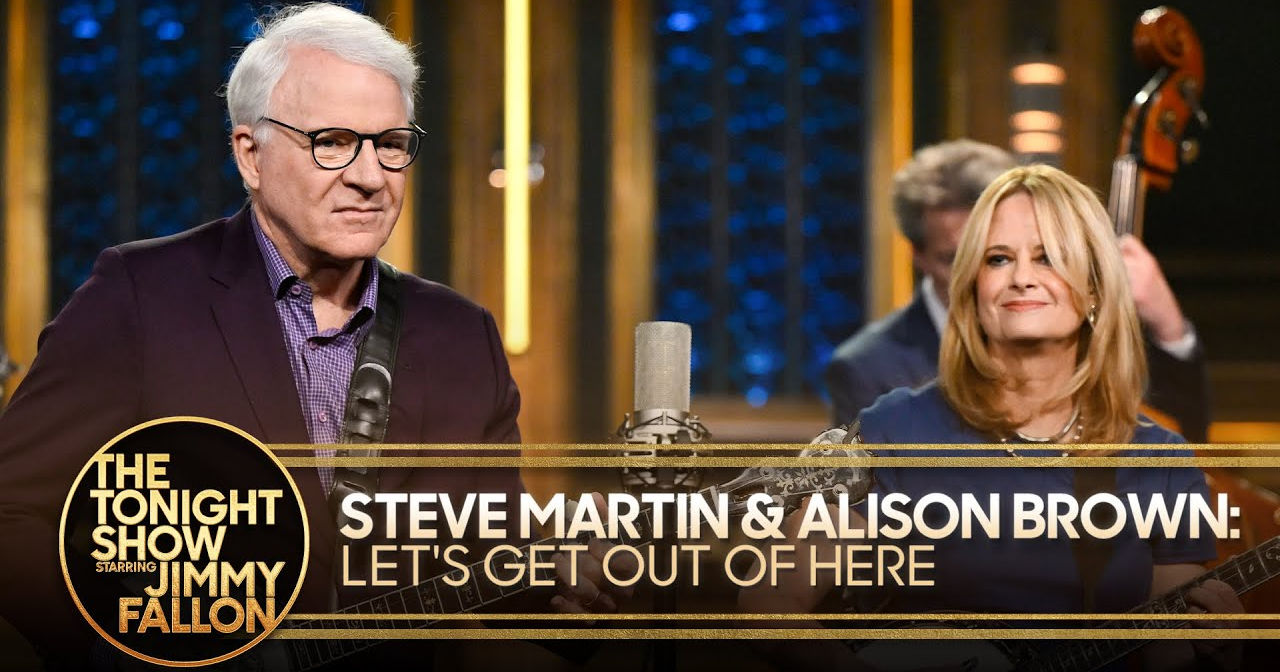
Last week, Steve Martin & Alison Brown brought a star-studded bluegrass band to The Tonight Show Starring Jimmy Fallon to celebrate their brand new duo album, Safe, Sensible and Sane. Released via Brown’s Compass Records on October 17, the album showcases a mighty roster of pickers and special guests as well a packed slate of original tunes and songs co-written by Martin and Brown. For their Tonight Show appearance, they burn through the LP’s closing track, “Let’s Get Out of Here,” a perfect selection to close out the late-night television show.
On the album, Martin’s dancing clawhammer banjo and Brown’s confident three-finger style on the number are bolstered by Sam Bush, Trey Hensley, Stuart Duncan, and Todd Phillips. But for their live TV appearance, they tap an equally astounding group of players, bringing along Bronwyn Keith-Hynes (fiddle), Sierra Hull (mandolin), Michael Daves (guitar), and Brown’s husband and business partner Garry West (bass). The tune demonstrates the special – and often tricky – stylistic dialog Martin and Brown accomplish with ease, blending frailing old-time with Scruggs-style bluegrass. The melody is especially suited to both approaches, danceable and driving at the same time. It’s something of a hallmark of the pair’s work together across the years, and especially this new recording.
As viewers can attest watching their performance of “Let’s Get Out of Here,” the music of Safe, Sensible and Sane is excellent, engaging, hilarious, and heartfelt. All qualities that have attributed to its debut last week at No. 1 on Billboard‘s Bluegrass Album Chart. Need more of this duo? BGS co-founder, actor, comedian, and banjoist Ed Helms, recently had a lovely in-depth chat with both Martin and Brown about the album, three renowned banjo stylists in conversation. Read that feature interview here.
The Earl Scruggs Revue’s only movie soundtrack, Where The Lilies Bloom (1974), is not well known. That’s a pity because in 1973, when it was recorded, the band had been together for four years and was a very solid outfit. At the beginning of 1973 the group included Earl, Randy, and Gary Scruggs, Josh Graves, and Jody Maphis. Steve Scruggs was an occasional member. Vassar Clements’ last credited appearance on record with the Revue was on Earl Scruggs‘ Dueling Banjos (C 32268), released early in 1973, and he was still with them when they recorded the soundtrack.
The movie was filmed between May and August 1972 and released in 1974 through United Artists. The soundtrack album, Columbia KC 32806, is credited to the Revue and their longtime producer, Ron Bledsoe. Movie soundtrack recordings are made after the film has been edited; the musicians perform in a studio setting while the film is rolling. This is a precision business, obviously; I have yet to find accounts of the Revue’s involvement in this process, which must have taken place in early 1973.
Soundtrack albums focus on eliciting memories of the film. Viewing and listening are, in the final analysis, two very different things. The music in Where The Lilies Bloom was, in the first instance, the musicians’ responses to the visuals, shaped by the movie producer and director.
Earl came up with new tunes and restatements of old ones; Randy contributed deft and creative electric and acoustic guitar, both flatpicked and fingerpicked; Vassar performed masterful fiddle from a point in his career when he was doing the old-time tunes brilliantly while developing his new jazz-inflected style; and Josh played the creative and brilliant Dobro that a generation would follow.
The film’s producer, Robert B. Radnitz, based the picture on Vera and Bill Cleaver’s award-winning young adult novel of the same title. It tells the story of the struggle of the Luther family siblings, four young Appalachian country youths – the oldest is 16 – to live at home together following the death of their widower father. They do this by “wildcrafting,” gathering and selling wild herbs as health supplements. The narrative focuses on the two teen daughters’ growth and relationships.
Where The Lilies Bloom was shot on location in Watauga County on North Carolina’s northwestern border. Producer Radnitz strove to employ workers from Appalachia, such as screenplay writer Earl Hamner Jr. and actor Harry Dean Stanton, who had a leading role as the older “Kiser Pease.” The young actress who had the leading role as 14-year-old “Mary Call Luther,” Julie Gohlson, was a Georgia native chosen after a nationwide search. She was nominated for a Golden Globe in 1975. This was her only movie appearance.
Radnitz worked with toymakers Mattel on this co-production, their second. The first was Sounder, released in 1973. That acclaimed film about young teens in Black Mississippi propelled Cicely Tyson to stardom and featured blues star Taj Mahal for its soundtrack. For his second movie’s soundtrack, Radnitz again sought music reflecting the cultural background of the film’s narrative – in this case, the oral traditions of Appalachia. He chose the Earl Scruggs Revue.
The film got a good reception, with prizes and nominations of various sorts. It’s well worth watching – not only is there a DVD with commentary, it’s also available VOD on YouTube and is available to watch via select streaming services. The album, on the other hand, pretty much sank like a stone – no ripples. But if you want to hear what the Earl Scruggs Revue sounded like when they were together just playing by themselves, with no added stars in the studio, this is the album to try. There’s plenty from them to appreciate on the film’s soundtrack, as well. A lot of nice creative moves here!
This was a hard album to find. By the time I finally got it in the ’80s I wasn’t as interested in the band as I’d been earlier. I listened once, filed it away, and only listened again recently. Holding and looking at the album cover during this playback reminded me why I only listened to it once before. The liner notes must have been composed by some 9-to-5er at United Artists. There’s nothing there about the music. Who’s the female vocalist? What’s the band doing? No mentions. The visuals and most of the copy are from the movie. Not much of a musical souvenir!
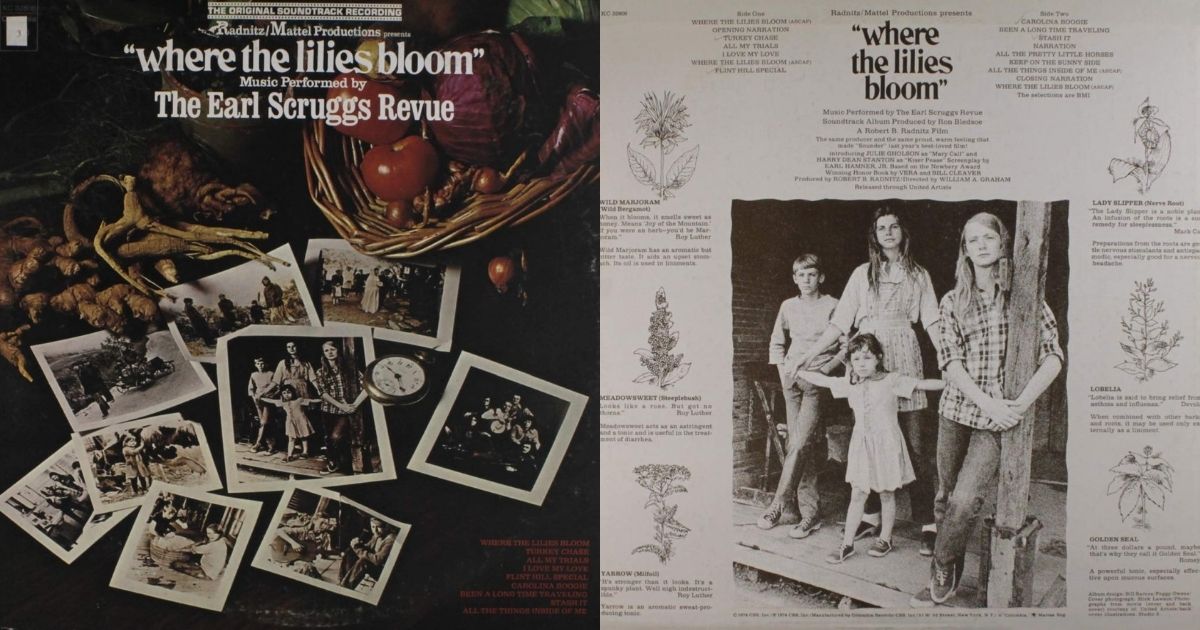
The album cover of Columbia KC 82806 announces at the top: “The Original Soundtrack Recording.” Below that comes “Radnitz /Mattel Productions presents, where the lilies bloom (all in large lowercase), then: “Music Performed by” and finally “The Earl Scruggs Revue.” All this is printed over a collage of color shots of herbs, along with nine little black and white stills from the film – one of which is the Revue.
On back of the album cover, we are told this is a ”Soundtrack Album Produced by Ron Bledsoe [for] A Robert B. Radnitz Film.” Cast members (but not band members) are listed. Next to this info are small columns, left and right, that list the tracks. Filling the center below all this is a large still of the film’s young lead actors; on either side of this are illustrations of wild herbs – three on each side.
In spite of the Revue’s lack of prominence on the album’s notes, I think that the band did a good job of coming up with new compositions and old-time tunes that represent their music in imaginative arrangements relating to the context of the film.
After relistening to the LP, I bought the film’s DVD, which was remastered and released in 2022 with an audio commentary by filmmaker and historian Daniel Kremer. The film opens (as does album track A1) with song “Where The Lillies Bloom” sung by its composer, Barbara Mauritz.
Singer-songwriter Mauritz (1949-2014), originally from Texas, was the vocalist with Lamb, an avant-garde folk-jazz-rock fusion group active in San Francisco in the early ’70s. Her first solo album, Music Box, was released on Columbia in 1972.
How did she end up on this movie’s soundtrack? I wish I knew! Being a Columbia artist was probably not coincidental. As we hear, she’s paired with another Columbia artist, Earl Scruggs, on the theme song at the opening. The Revue is laid-back in the track’s background at the start; eventually Randy’s guitar plays the melody, while Earl’s banjo sneaks up to end with beautiful 6/8 triplets in the background, and a few of Josh’s Dobro licks can be heard.
This is music meant to be heard in accompaniment to the visuals that open the film, aptly demonstrated by its trailer, which opens with the character “Devola Luther” (the oldest sister, played by Jan Smithers) singing “A Long Time Traveling” a cappella. The guitar is very much in the background, as is the banjo, which comes up only at the end.
The album contains three “Narrative” tracks by lead character Mary Call Luther which explicate the dramatic turning points in the film’s story. Following the first narrative track, A2, comes “Turkey Chase”, track A3, which plays beneath a scene in which the Luther children are trying to catch wild turkeys.
The Revue is actually playing the traditional fiddle tune “Chicken Reel,” led by Earl with brief interludes by Randy (lead guitar) and Josh Graves (Dobro). This is two minutes of really good straightforward old-time music, which the Revue knew well but rarely recorded.
The next track (A4) presents slow, moody instrumental music that plays behind scenes pertaining to the father’s death: “All My Trials,” a traditional spiritual with Bahamian connections popularized by Joan Baez in the ’60s. Randy’s lead guitar mixes with some nice piano, probably by Mauritz. It’s a pretty performance.
Track A5, “I Love My Love,” which plays behind a romantic sequence, was also popular in the folk revival. English composer Gustav Holst described it as a “Cornish folksong” in his arrangement of it. It’s sung here by Mauritz, over a finger-picked guitar which could be hers, or maybe that of Randy or Earl.
Track A6 repeats the theme, “Where The Lilies Bloom,” as a slow instrumental piece in 4/4 time. Randy’s finger-picked guitar plays it twice, and then Gary’s bass and Earl’s banjo join for two more verses. It really demonstrates Earl’s artistry – such control, economy, lyricism!
In the film’s soundtrack, The Revue plays Earl’s “Flint Hill Special” behind several action scenes – countryside automotive rambles – as Mary Call and the family are in conflict with Kiser. Here’s what that sounds like as played by Earl, Josh, and Vassar on the soundtrack:
The original pressing of the LP diverges from the movie soundtrack at this point, on Track A7, which is also identified as “Flint Hill Special.” No doubt that garnered Earl some royalties for his composition of that name, but the tune played on the original album is the traditional “Sally Ann,” a piece Earl recorded on his 1961 Foggy Mountain Banjo release. (This seems to have been corrected on digitally distributed versions of the album. Hear the LP’s version of “Sally Ann” below.)
It’s an interesting new version, opening with a couple of fiddle licks and then shifting to the percussive sound of the banjo strings being played with right-hand fingerpicking (a “roll”) while the strings are muted with the heel of the left hand. Then the fiddle steps up while at the same time Dobro, bass, and guitar enter – a powerful old-time bluegrass sound. Earl’s banjo takes over second time through, then the fiddle returns and finally Earl closes as he began, percussively. The “shave and a haircut” ending is dominated by Randy’s fancy guitar.
Side two of the album (track B1) opens with music from a scene in which the four Luthers, who’d been at the grocery store learning about wildcrafting, get a ride home from the store owner “Mr. Connell” (played by Tom Spratley). Here, the Revue is heard playing “Carolina Boogie,” basically an update of Earl’s up-tempo blues in G, “Foggy Mountain Special.” It features the entire Revue with a considerable amount of call-response between Randy and Vassar and a great ending.
The family’s funeral for the mountainside burial of their father includes “Been A Long Time Traveling” (track B2) sung a cappella by oldest daughter character, Devola. It’s heard twice, at the beginning and the close of the burial scene.
Following this, the film’s narrative shifts to wildcrafting, with Mary Call’s next visit to the grocery store to sell herbs backed by the Revue playing (track B3) Earl’s “Stash It,” a catchy banjo tune which starts slowly and speeds up.
Next, Mary Call’s poem about witnessing a starburst is heard on track B4, with subtle guitar and piano backup. It’s followed (track B5) by “All The Pretty Little Horses,” a traditional lullaby of African American origin, performed solo here by Randy’s fingerpicked guitar. In the film this plays behind a tender scene in which the Connells visit the Luther home.
Later, as the Luther children are depicted gathering herbs, the melody of the old Carter Family song “Keep On The Sunny Side” (track B6) is heard. First, it’s finger-picked by Randy on guitar, then Earl’s banjo comes in doing harmony. Neat! This is the ultimate father and son duet; Gary, on bass, is close by.
As the narrative approaches climax, we hear Barbara Mauritz singing her “All The Things Inside of Me” (track B7), accompanied by fingerpicked guitar, probably by Randy but possibly by Mauritz herself.
Mary Call’s final narrative (track B8) leads to the full band playing the theme; it’s heard at length as the film’s credits roll.
The preceding description, based on the album, does not point out all the places where the Revue’s music is heard on the film soundtrack – scenes where Randy’s guitar, Gary’s harmonica, Josh’s Dobro, and Vassar’s fiddle add aural nuances to the screenplay. Throughout the film, music editor Robert Takagi places in the aural background little quotes taken from performances like the final version of the theme. Randy’s guitar, in particular, is heard behind several scenes.
Other musical segments in the film are not heard on the album at all, but play a central role in evoking the film’s cultural milieu. Thus, while rambling in the car, they turn on a local radio station: the Revue is heard playing county-rock. Elsewhere, as they are walking home from wildcrafting, there’s a nice a cappella performance of “Feast Here Tonight” by youngest Luther daughter “Ima Dean” (played by Helen Harmon).
These musical segments remind us that the Revue, while featured on the album, is really playing in support of a story, a visual drama. As such their music here is different from that found on all their other albums. It does not sell the sound of the band – it speaks for images of the region’s atmosphere and its culture that emerge in the film’s narrative.
We know we’re not the only ones constantly clamoring for more bluegrass, string band, and old-time music on television – especially primetime and late night. So last week, on Monday, June 16, we and roots music fans across the country were delighted to find a superlative bluegrass song broadcast on Jimmy Kimmel Live!
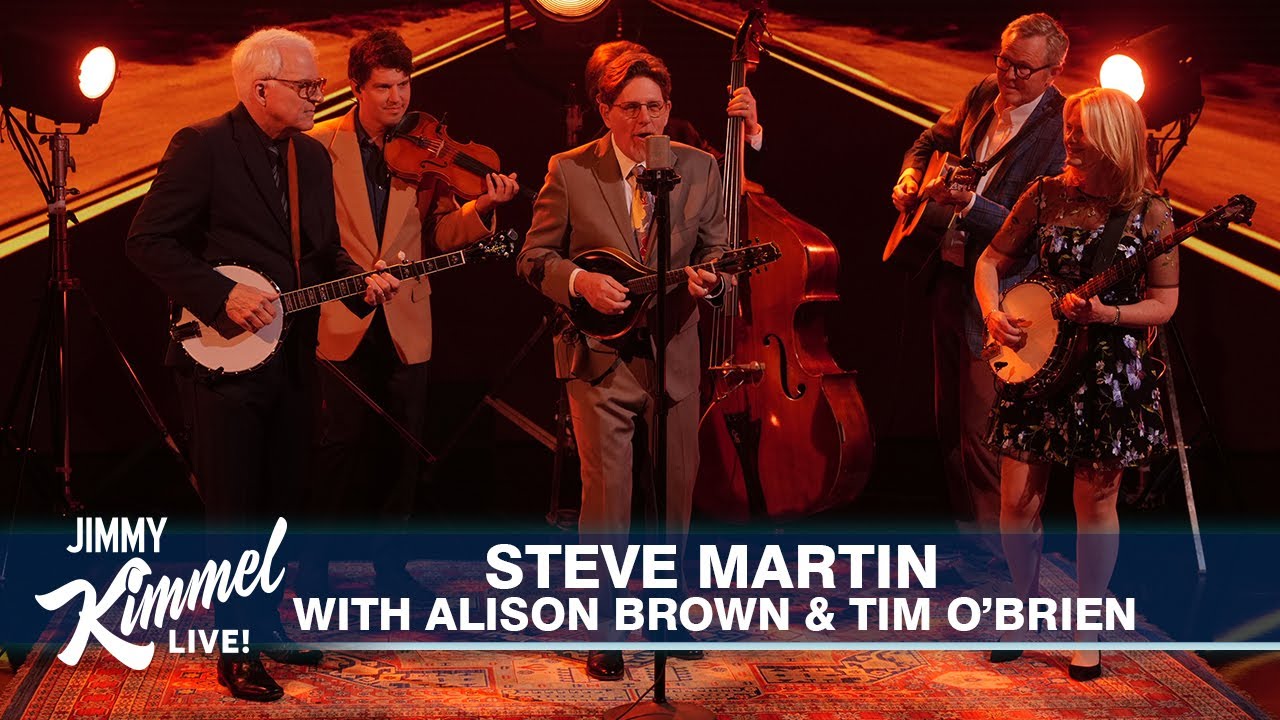
Actor, comedian, and banjo renaissance man Steve Martin and his pal, preeminent five-string picker and record label executive Alison Brown, brought another of their musical collaborations to the world from the Kimmel stage in Hollywood. Joined by Tim O’Brien singing lead and playing mandolin, Robbie Fulks on guitar and harmony vocals, Christian Sedelmyer on fiddle, and Garry West on bass, the sextet performed “5 Days Out, 2 Days Back.” (Watch below.)
Martin and Brown have worked together quite a bit (watch a couple of past BGS posts highlighting their work together here and here) and have a seamless musical rapport, even in this instance pairing his clawhammer with her three-finger style and low-tuned banjo. Their songs are often hilarious, or sweet, or intricate, and always whimsical. “5 Days Out, 2 Days Back” is about the call of the road, the life of an itinerant musician, and the push and pull between longing for the horizon and missing one’s home and loved ones. By the track’s conclusion, we find the singer passing along the life he loves, however bittersweetly, to his own child – whatever the pros and cons. O’Brien offers the lyrics in his classic, laid-back and reedy voice with Fulks lending a sharp, ‘grassy tenor.
The song’s arrangement is intricate and technical at times, but flows easily on down the highway; it’s orchestrated and well-rehearsed for television, but feels down-to-earth and intuitive at the same time. This balance is a hallmark of Martin’s roots music forays, whether with Brown and company, the Steep Canyon Rangers, and beyond. You can sense the intention in each lyric, each note, and the flow of the number. But, ultimately, the result is each of these impeccable musicians getting out of the way of the first-rate song.
Martin, Brown, Fulks, and band (sans O’Brien) appeared just two days after their Kimmel appearance at the Hollywood Bowl for Rhiannon Giddens’ American Tunes (see exclusive BGS photos of the event here), making for a musically lush few days of bluegrass and roots music in Southern California, on the airwaves and wafting on the breeze over the Hollywood hills.
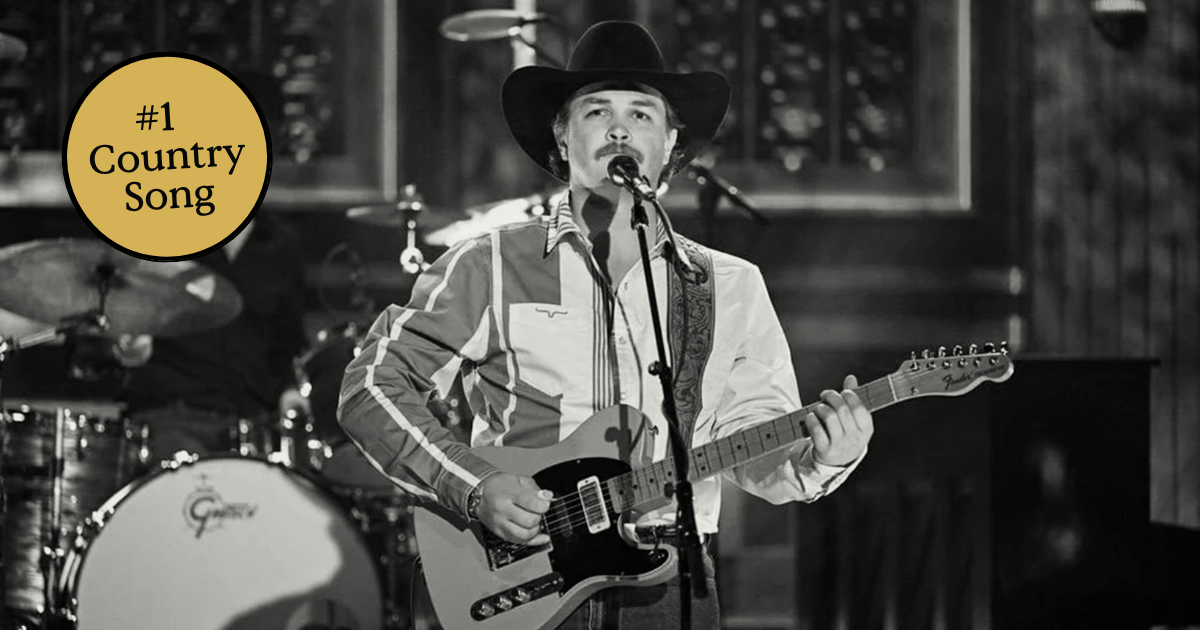
If it seems like Zach Top has been everywhere lately, it’s because he has. Not only because he and his band are staring down a packed summer full of tour dates all across the country, but he’s also coming off of his first Academy of Country Music Award win – snagging the New Male Artist of the Year trophy while also being nominated for Album of the Year – and then immediately turning around to perform on The Tonight Show Starring Jimmy Fallon. The appearance was his late night television debut, after his stunner of a traditional country album, Cold Beer & Country Music, was released to widespread acclaim – from critics and audiences alike – just over a year ago in spring 2024. The project continues to build momentum and gain thousands and thousands of new listeners for the picker-songwriter-upstart.
Top and band performed “I Never Lie” on Fallon, certainly the viral hit sensation of Cold Beer & Country Music. Shortly after his television appearance, the track, which is already RIAA certified Platinum, topped the country charts, becoming the number one country single in the country (and Canada) according to Mediabase. It’s Top’s very first number one.
“I Never Lie” is a classic yet modern take on a well-known country songwriter trope, the “of course I’m not lying” or “opposite day” type of rhetorical device that’s been employed by country artists and songsmiths since the genre began. Top’s spin on this iconic sort of country song setup is almost divine in its execution, as evidenced by his audiences – from humble honky-tonks to packed rodeo arenas – shouting along with the song at the tops of their lungs each and every time it’s performed.
This will surely not be the last television appearance or country award for Top, who leverages his bluegrass family band upbringing and longtime idolization of heroes like Tony Rice and Keith Whitley to craft a style of Good Country that’s forward-looking and timeless at the same time. With a wink, a smile, a first-rate mustache-mullet combo, and a “Zach Top Hop,” this still-fresh country superstar is sure to continue making an impact all across roots music well into the future. From country to bluegrass and back again.
We hope you enjoy Zach Top’s performance of “I Never Lie” on The Tonight Show. Don’t forget to make your plans now to catch Top and his incredible band on their mighty summer tour, too.
If you missed the Grand Ole Opry’s no-holds-barred 100th birthday party and live television broadcast extravaganza on NBC, we’ve got your recap right here on BGS.
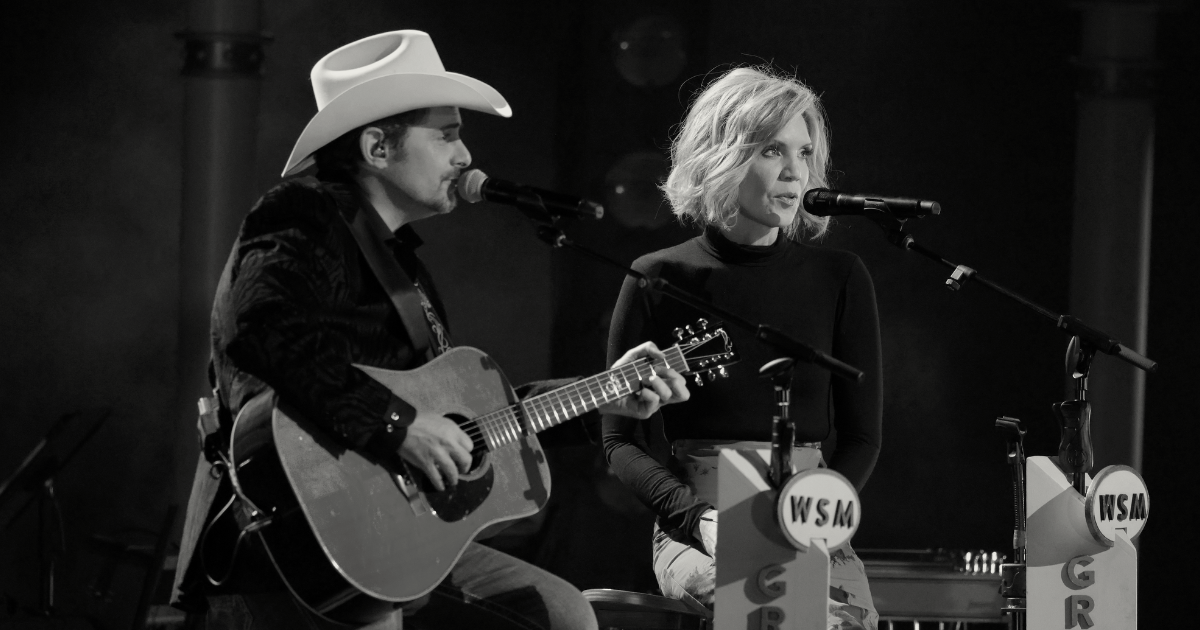
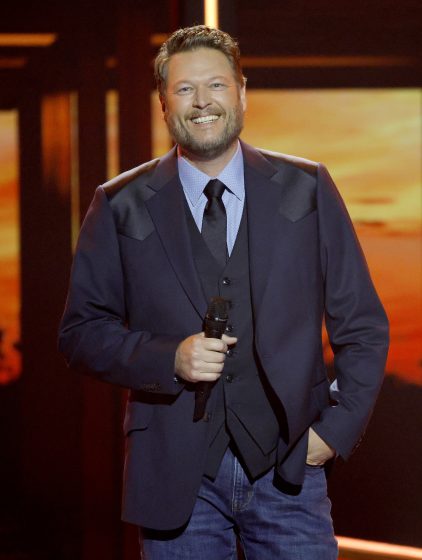
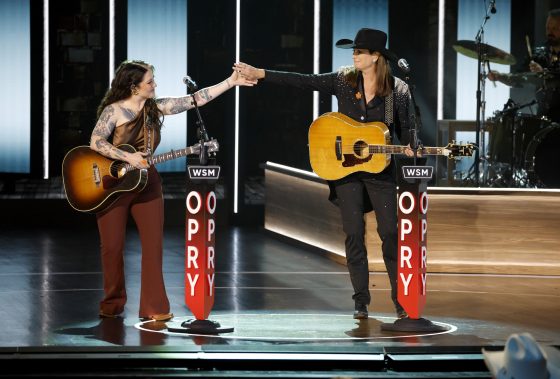
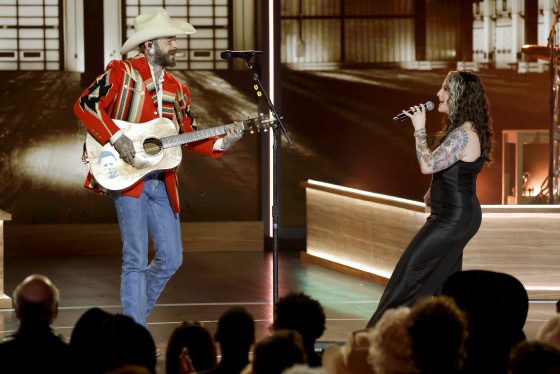
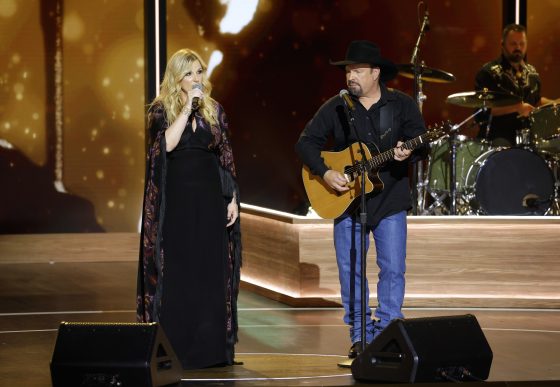
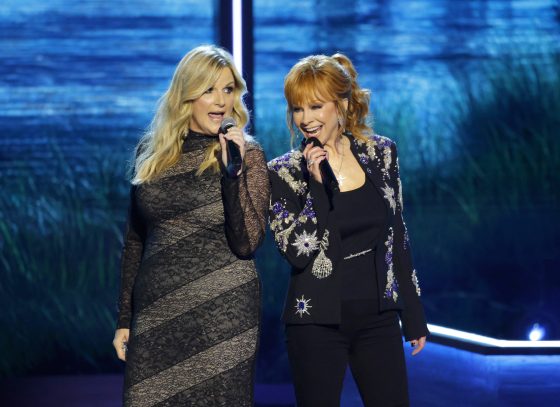
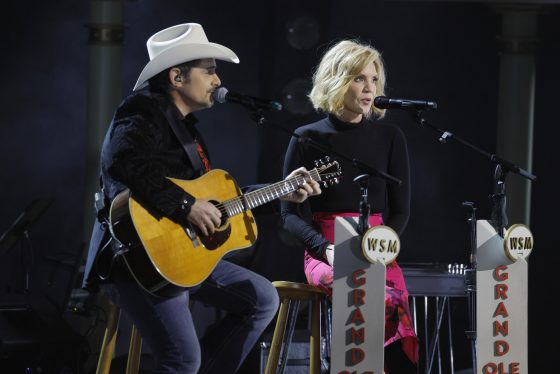
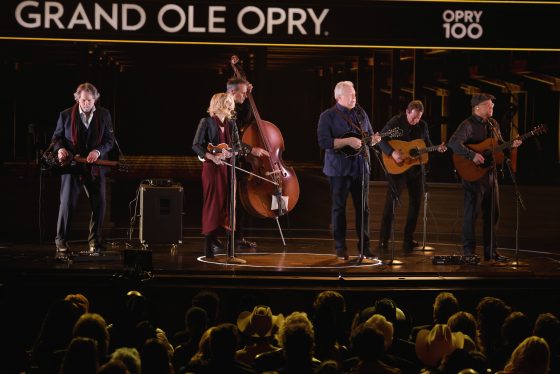
Hosted by Blake Shelton at the historic Grand Ole Opry House in Nashville, Tennessee, Opry 100 included performances by artists like Vince Gill, Alison Krauss & Union Station, Lainey Wilson, Brad Paisley, Ashley McBryde, Reba McEntire, Dierks Bentley, Garth Brooks, Trisha Yearwood, and many more. The primetime broadcast and streaming concert is just one event among an incredible, chocked-full effort by the Opry to celebrate their centennial – officially November 28, 2025 – throughout the entire calendar year.
Over the two-hour broadcast, there were dozens of show-stopping moments, from the brash, bold, and sensational to tender, intimate, and heart-wrenching performances. Good country of all varieties was on display from a wide array of artists at all levels of notoriety.
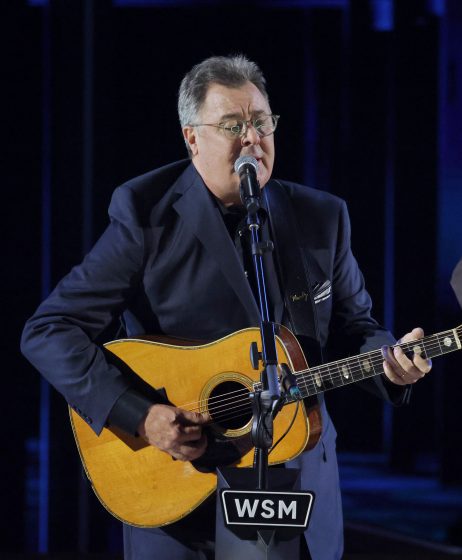
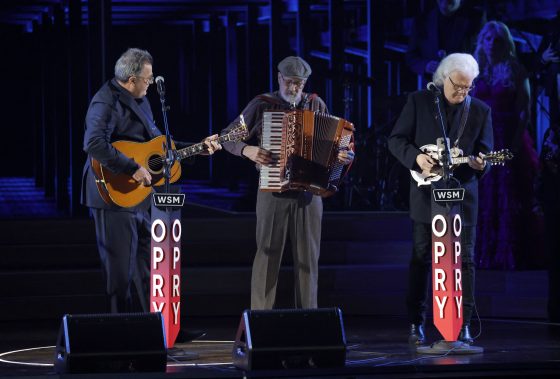
The War and Treaty sang alongside Steven Curtis Chapman and Amy Grant; Vince Gill reunited with his old pals Jeff Taylor and Ricky Skaggs; Ashley McBryde brought the house down alongside superstar country newcomer Post Malone and elsewhere in the show, ’90s stalwart Terri Clark; Lainey Wilson shared the stage with country picker and renaissance man Marty Stuart; husband-and-wife Trisha Yearwood and Garth Brooks were on hand; and Brad Paisley and Alison Krauss reunited for their 2003 smash hit duet, “Whiskey Lullaby.”
The show wrapped with a stunning full cast tribute to Dolly Parton, who greeted the Opry House audience via video and gave her sincere regrets for not being able to appear at the event. (Parton’s husband of 58 years, Carl Dean, recently passed away.) Dozens of the evening’s star artists took to the stage to pay tribute to Parton by singing her most famous hit, “I Will Always Love You,” a perfect, soaring sing along to close the momentous show.
There are truly too many once in a lifetime collaborations, songs, moments, and performances from Opry 100 to list, but we’ve collected a few of our favorite moments so you can relive this once-in-a-lifetime – or once-in-a-century – show! Get your fix by traveling through a few of our own favorite moments from Opry 100: A Live Celebration below.
Blake Shelton Hosts
Country superstar, award winner, and television personality Blake Shelton was a more than qualified host for Opry 100: A Live Celebration. Of course, he also gave a rousing performance of Joe Diffie’s “Pickup Man” to the delight of everyone in the crowd who find somethin’ they like in a pickup man. It wouldn’t be a celebration of country or the Opry without a truck mention.
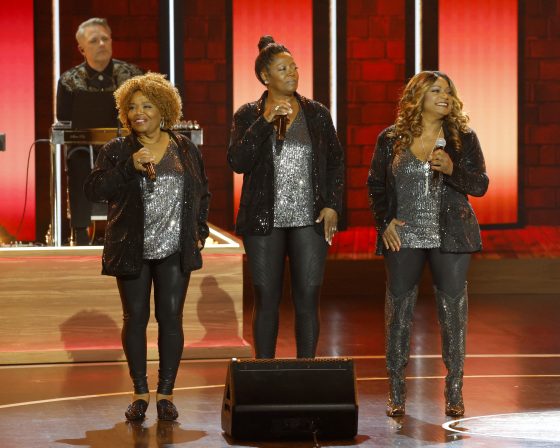
Nashville’s Own, the McCrary Sisters
Nashville’s favorite, in-demand singing siblings, the McCrary Sisters were on hand for Opry 100, too. It’s certainly not their first time on the hallowed Opry stage, but in the centennial context their appearance reminds of the legacies of similar groups who blazed trails at the Opry before them – like the Pointer Sisters – and those who’ve followed in their footsteps, like the Shindellas and Chapel Hart.
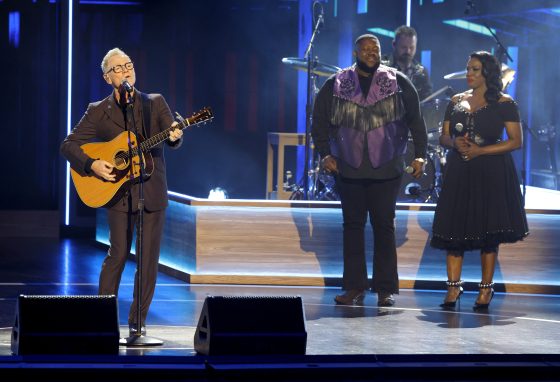
Steven Curtis Chapman and the War and Treaty Share a Sacred Moment
Grand Ole Opry member and contemporary Christian singer-songwriter Steven Curtis Chapman was joined by Americana/soul/country duo the War and Treaty for his performance on Opry 100.
Lainey Wilson and Hall of Famer Marty Stuart Duet
One of the biggest names in country at the moment, former GC and BGS
Artist of the Month Lainey Wilson was joined by bluegrasser, fiery picker, and Country Music Hall of Famer Marty Stuart backing her up on mandolin. They perform “Things a Man Oughta Know” from her huge 2021 album, Sayin’ What I’m Thinkin’, which many regard as her breakout release.
Ashley McBryde with Post Malone and Terri Clark
Ashley McBryde had multiple stellar moments during Opry 100, including these two prime duo performances. One with ’90s country star Terri Clark and another with a superstar newcomer to the genre, Post Malone. Her song selection with Postie was impeccable, too, taking the Opry 100 down to “Jackson” to mess around.
Trisha Yearwood with Garth Brooks and Reba McEntire
Country has boasted many amazing artist couples, but who better to take the Opry 100 stage than Trisha and Garth? Trisha also appeared with Reba McEntire to perform “The Night the Lights Went Out in Georgia,” a track that has been a huge generation-spanning hit for McEntire.
Brad Paisley and Alison Krauss Reunite
An iconoclastic example of a tear-jerker country story song, Paisley and Krauss’s recording of “Whiskey Lullaby” was released in the 2000s, but has had immense staying power. It shines from the Opry 100 stage in its simple and stripped-down styling. Is anyone a better duet partner and harmonizer than Alison Krauss? Perhaps not. Certainly a highlight among all of the many highlights of the broadcast
Alison Krauss & Union Station Perform, Too
On the precipice of their first album release in over 14 years, Alison Krauss also brought her band Union Station – including newest member,
– to the Opry 100 stage. Introduced by the Queen of Bluegrass, Rhonda Vincent, AKUS performed a hit from a prior era, “Let Me Touch You for Awhile” off 2001’s New Favorite. Their brand new project, Arcadia, releases March 28.
Country Music Hall of Fame Inductee, Vince Gill
It wouldn’t have been a complete lineup for Opry 100 without Vince Gill! The Country Music Hall of Famer was joined by his old friends Jeff Taylor on accordion, Sonya Isaacs, and fellow inductee Ricky Skaggs, to sing perhaps his most famous song, “Go Rest High on that Mountain.” An impactful and inspiring number, the original has been a comfort to thousands of fans and listeners experiencing their own losses and grief. Of his deep-and-wide catalog of music, there’s not a better choice for an evening like Opry 100.
Ketch, Dierks, and Jamey
An Opry member trifecta, Dierks Bentley, Jamey Johnson, and old-time and bluegrass fiddler Ketch Secor (of Old Crow Medicine Show) paid tribute to the Charlie Daniels Band with a perfectly honky-tonkin’ medley of “Drinkin’ My Baby Goodbye” and, of course, “The Devil Went Down to Georgia.” From the sidewalks of Lower Broadway to the Grand Ole Opry stage, Charlie Daniel’s impact on country is indelible.
Luke Combs’ Mother Church Moment
From the hallowed stage of the Ryman Auditorium, the most famous former home of the Grand Ole Opry, one of the most popular singers in all of country, Luke Combs, performed George Jones’ “The Grand Tour,” as well as “Hurricane,” for Opry 100. With more than 800 million streams (on Spotify alone), “Hurricane” is one of his biggest hits from his 2017 album, This One’s For You, which has been certified double platinum by RIAA.
This long list of our favorite Opry 100 moments is still, somehow, merely the tip of the country iceberg. Stay tuned as the Grand Ole Opry continues their 100th birthday celebration all year long.
All photos courtesy of the Grand Ole Opry; credit Getty/Jason Kempin.
Lead image: Brad Paisley and Alison Krauss perform “Whiskey Lullaby” live at Opry 100.
Want more Good Country? Sign up to receive our monthly email newsletter – and much more music! – direct to your inbox.
Whether or not you realize it, the majority of people reading this have been listening to Mike Post’s music for a very long time. Like, a lot of it.
Post is the guy behind the theme songs to Magnum P.I., Hill Street Blues, Quantum Leap, The Greatest American Hero, and countless others. He even invented the famous Law & Order “DUN-DUN.”
But that’s only part of the story. Post began his 60+ year career as a member of the mythologized Wrecking Crew, becoming a Grammy-winning record producer who has worked with the likes of Kenny Rogers, Dolly Parton, and Van Halen whilst finding his niche in the television world with frequent collaborators Dick Wolf and Steven Bochco.
Now, Mike Post adds another chapter to his biographical tome, having released Message from the Mountains / Echoes of the Delta – an ambitious double album that blends his love of bluegrass and blues with his orchestral pedigree.
BGS co-founder Amy Reitnouer Jacobs sat down with Mike for an in-depth conversation, covering everything from Aaron Copeland to Earl Scruggs to Eddie Van Halen.
Amy Reitnouer Jacobs: Mike, what was your introduction to roots music? Because there is a long history, I think, of bluegrass and folk in Los Angeles that a lot of people don’t expect or understand. How did you get into bluegrass and Delta blues specifically?
Mike Post: I think I was first attracted to the harmonies and the melodies that are common to Irish music, to bluegrass, to the blues. There’s this modal sort of a thing that all those genres share, right?
Maybe even as far back as lullabies… My mom used to sing me this Irish lullaby, “Too Ra Loo Ra Loo Ral,” and I still remember it. And then I recall the first time I heard The New World Symphony and Grand Canyon Suite, things my parents were playing when I was 4 years old.
But, like every other white middle class kid from the Valley, when [Flatt & Scruggs’] Foggy Mountain Banjo album came out, it was like somebody handing you the Bible or the encyclopedia or something. I had to understand everything about it.
It wasn’t like [just] one thing that happened. It was a mishmash of The Kings: B.B., Albert, and Freddie. Flatt & Scruggs led me back to Monroe, which led me to Jim & Jesse and the Osbornes, and then I just drowned in this stuff.
This is not just a roots music album though, and I think you’ve kind of just touched on this in saying about how many different things you were pulling from. This is a record that has a really epic scale, often only saved for symphonic pieces and movie scores. It evoked Aaron Copeland the second I heard it. But it also has some of the most legit roots music players in Los Angeles on there, like Gabe Witcher, Herb Petersen, and Patrick Sauber. How did you get connected to those folks for the project? Did you already know them?
I met Herb when I was 18. You know, he just moved down from Berkeley. He’s about six months older than me, but we actually met at Hootenanny Night at the Troubadour. He was in a band called the Pine Valley Boys from Northern California, I had this five piece folk group; we were sort of like an expanded Peter, Paul and Mary. I had a Gibson 12-string and I’m a finger picker.
I heard [Herb] before I met him and I went, “Who was that?” And through Herb, I’ve known Gabe since he was a little boy.
Actually, I hadn’t worked with [Gabe Witcher’s brother], Mike Witcher before. And I’ve heard and worked with the best guys. So when I heard Mike, it was shattering to me because he is so soulful. You know, he’s not the flashiest, overplayer in the world. There’s a lot of them out there that have brought it to a place of technicality and speed that phenomenal. But Mike’s got the thing that Josh [Graves] had, which is the way he vibrates.
You can’t find much more authentic, better bluegrass players than the guys that are on this record. And the reason both the blues piece and the bluegrass piece are weird is because I’m weird.
You know, I’m a rock and roller folky that learned how to read, write, and orchestrate. So the idea for this was an odd idea. It only happened because my TV shows were on the beach, because of COVID. So I’m sitting there with nothing to do and I’m driving down to the desert to play golf. And I go down this Spotify bluegrass rabbit hole. I heard a couple of things I hadn’t heard before. And it just struck me.
I said, “You haven’t done anything scared you in a long time.” Not that I’ve been coasting – I’ve been writing music for television shows and producing some records all this time. But as a composer, you know, I’m the guy that at 23 years of age did this record, Classical Gas, which was supposed to be kind of off-the-beaten-path. I thought, well, why can’t you combine the orchestra and a bluegrass rhythm section? Not just a single fiddle player or a dobro player or a banjo player or a guitar player. Why don’t you put the five guys in front and have a conversation?
To have those things feed off of each other is really the formality of an orchestra and the improvisation that comes with bluegrass. It works really beautifully.
Thank you. I didn’t even know whether this was going to work. But I did it the old way… I got my drafting board out and my papers and pencils and score paper and did it by hand.
The we went into the Sony scoring stage in Culver City and had 80 players, genius orchestral players come in and it was thrilling.
Because orchestral recording, at least for television scoring, is more rare these days, has this inspired you to want to do more? To not just compose for picture?
It certainly was a different kind of rewarding. You know, working with pictures is fun because it’s so collaborative. They bring me their art and I put my art with it. Hopefully the whole thing’s more artful, right? But the truth is, I’m so satiated. I’ve been a member of the union since I was 16. I’ll be 80 in a few months. I’m still working. I was in here this morning working on the last episode of the season of SVU and still enjoying it!
One thing that I have noticed throughout your career is you consistently surround yourself with great collaborators that also seem like friends. First there’s your time starting with the Wrecking Crew and producing Kenny Rogers & the First Edition. Then there’s your ongoing projects with Steven Bochco, Stephen Cannell, Dick Wolf. Can you talk about those friendships and returning to work with people that you love and trust over and over again?
You’re never going to find anybody more fortunate than me. I am – it’s a corny word cause everybody overuses it – but I am blessed. It’s supposed to be a treacherous business, right? Supposed to be a business of people elbowing each other out of the way and climbing over bodies and litigation and getting screwed by the man and by the club owner and the record company. That never happened to me, none of it. I’ve been treated great. So why not give that back in double?
You know, I’ve been so fortunate to meet Steve Cannell before he’d ever sold a script. To be musical partners with a guy like Pete Carpenter… we worked together for 17 years. We wrote 1700 hours of music together for TV and never had an unkind word. So, you know, that’s the way my life has gone. Cannell led me to Bochco, Bochco led me to Dick Wolf. Cannell, Bellisario, Bochco, Dick Wolf. We did all kinds of stuff together, musically and film-wise and fun-wise and business-wise.
I just have never embraced the competitiveness. I’ve either made dear friends with the people I work with, or hired my friends, or the guys that hired me were already my friends. Wow, who gets to do that?
I moved out here to LA to work in film and then kind of stumbled into my musical life. But the whole time, I only wanted to surround myself with good people. It’s not about the competition. And it always surprised me, I guess, how revolutionary that seems to some people.
Speaking of working with your friends, I would be remiss if I didn’t talk about your work with Eddie Van Halen. Eddie is such a consistently referenced and venerated artist by some of the biggest bluegrassers today, like Billy Strings and Bryan Sutton. I read that you and Ed were friends before you produced Van Halen III. What was it about your musical sensibilities that attracted you to work together?
Let’s be honest. Eddie Van Halen is not the first martian that landed on the face of the planet, okay? Look at Mozart! Fast forward… how did Earl Scruggs sit there and go… [imitates the banjo]. Every once in a while, a genius shows up and changes everything.
After becoming friends, Eddie turned to me and he said, “Hey, will you help me with something?” I said, “Sure. What?” And he said, “I’d like to do one sober.”
I’ve never done any drugs. And Eddie knew that. So he said, you know, you can help me do this without any substance. And I went, am I producing an album or am I the sergeant at arms at the door? Am I your sponsor? And he goes, man, I don’t know, both? And I went, all right, fuck it. Let’s go.
Basically all I did was get out of the way. It’s not a very good album. It’s nobody’s fault. It was an experiment. Unfortunately, [Alex Van Halen] was going through a terrible time in his life. So Al didn’t play on that. Eddie played everything. It just didn’t have magic. That’s all.
Ed was right on that trail of genius martians that look at music a different way. And no one else is ever going to do it like that. That’s just once. When you study Mozart, you look at it on paper and you go, “How in the world did that happen? Look at that.”
It doesn’t make sense, actually. That’s the beauty of it.
Exactly. It doesn’t make sense.
The last thing I wanted to say is what a fan I am and to let you know how grateful I am for taking the time today. I was going through your catalog last night and realizing how many of the songs you have written have been true soundtracks of my life. I kid you not when I tell you that “Hill Street Blues” is still my ringtone on my phone. So, uh, I just need you to know that I still love that song.
That really makes me feel really happy! Sometimes [I look back at my career and] I don’t know that I actually believe that emotionally; I believe it intellectually. I go, “Oh yeah, that’s me up on the TV.” Like, did this really happen to me?
Photo Credit: Lawrence Sumulong
This website uses cookies to improve your experience. We'll assume you're ok with this, but you can opt-out if you wish.AcceptRejectRead More
Privacy & Cookies Policy
Privacy Overview
This website uses cookies to improve your experience while you navigate through the website. Out of these, the cookies that are categorized as necessary are stored on your browser as they are essential for the working of basic functionalities of the website. We also use third-party cookies that help us analyze and understand how you use this website. These cookies will be stored in your browser only with your consent. You also have the option to opt-out of these cookies. But opting out of some of these cookies may affect your browsing experience.
Necessary cookies are absolutely essential for the website to function properly. This category only includes cookies that ensures basic functionalities and security features of the website. These cookies do not store any personal information.
Any cookies that may not be particularly necessary for the website to function and is used specifically to collect user personal data via analytics, ads, other embedded contents are termed as non-necessary cookies. It is mandatory to procure user consent prior to running these cookies on your website.