The 6 Best New Holiday Albums of 2016

If you're like me, you've already been listening to holiday music for a solid month now, and your annual playlist, to which you gleefully add each year, has already gained another hour or two worth of music since this year's holiday releases began rolling out in October. If you aren't obsessed with all things festive and aren't sure where to begin with this year's holiday releases, breathe easy. We've rounded up six of the best roots-related holiday releases of the year.

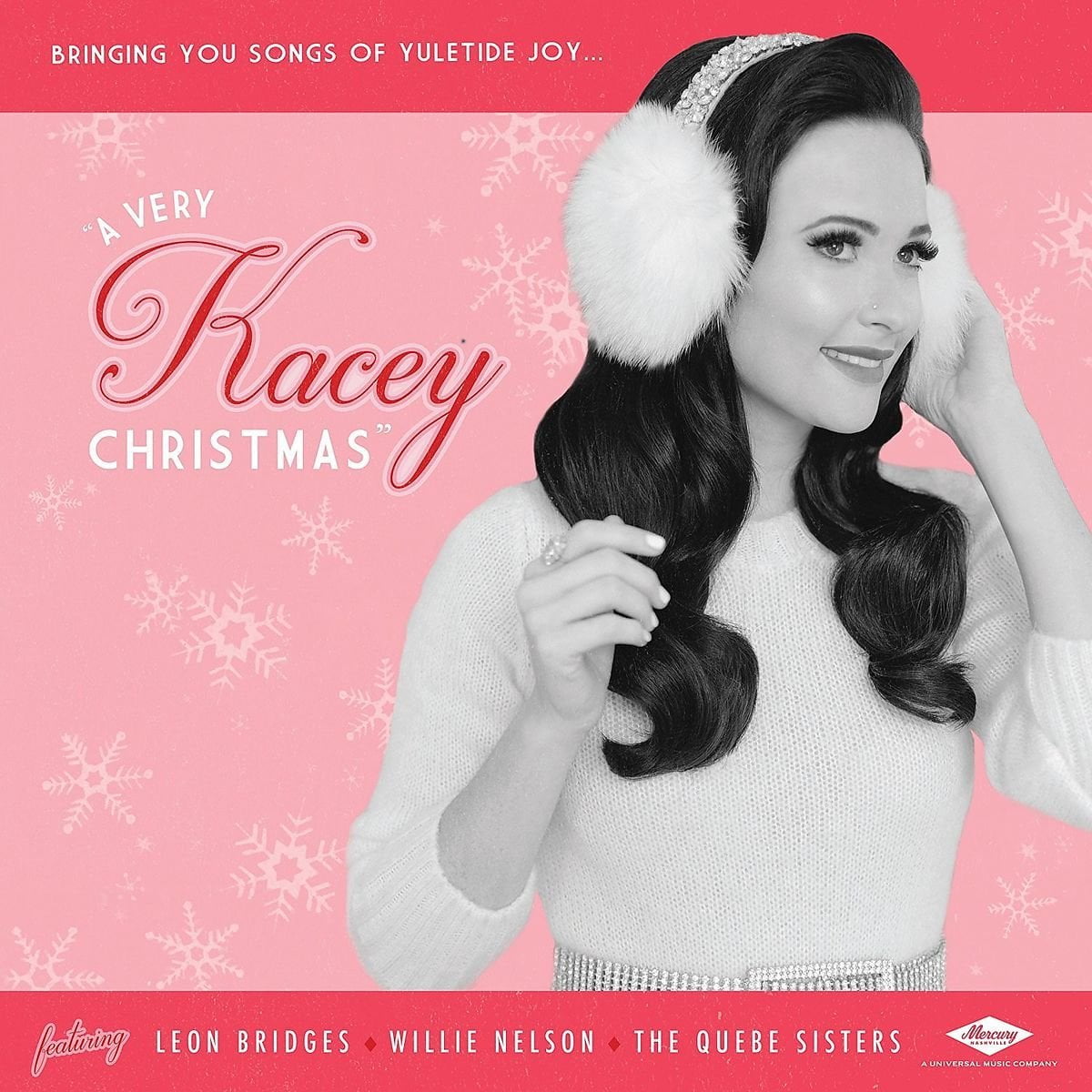
Kacey Musgraves, A Very Kacey Christmas

This holiday album from Kacey Musgraves is pure joy — well, mostly, but we'll get to that in a minute. With cameos from Leon Bridges, Willie Nelson, and the Quebe Sisters, there's a little something for everyone in this collection of classics and original songs, and Musgraves' trademark charm shines through in every tune. The album's high point, though, is also its lowest — the tear-jerking "Christmas Makes Me Cry," a beautiful tune Musgraves penned with Shane McAnally and Brandy Clark.

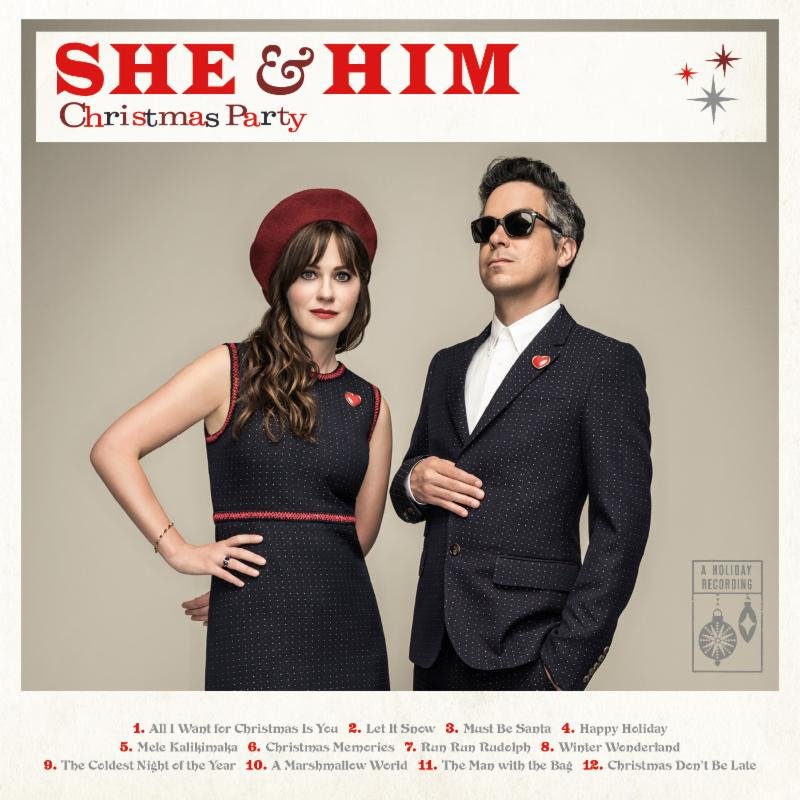
She & Him, Christmas Party

The duo of M. Ward and Zooey Deschanel returns with a second holiday release, the follow-up to 2011's A Very She & Him Christmas. The cuts get a little deeper the second time around the tree, although you'll still find standards like "Let It Snow" and "Winter Wonderland."

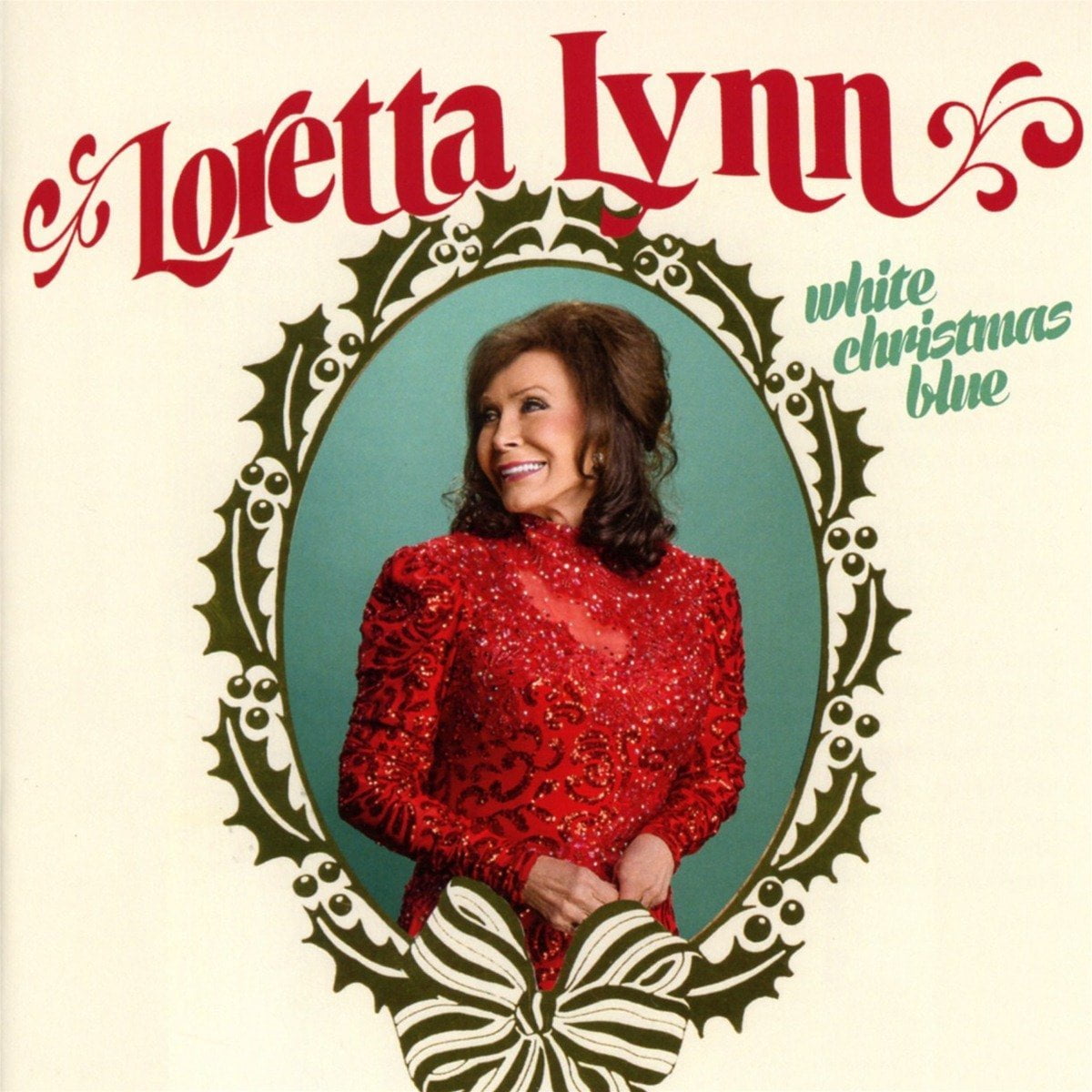
Loretta Lynn, White Christmas Blue

Believe it or not, it's been 50 years since Loretta Lynn last released a holiday album. (In 1966, she put out Country Christmas.) This year, she has gifted us with White Christmas Blue, and it includes re-recorded versions of Country Christmas favorites, holiday classics, and a new song, the album's title track.

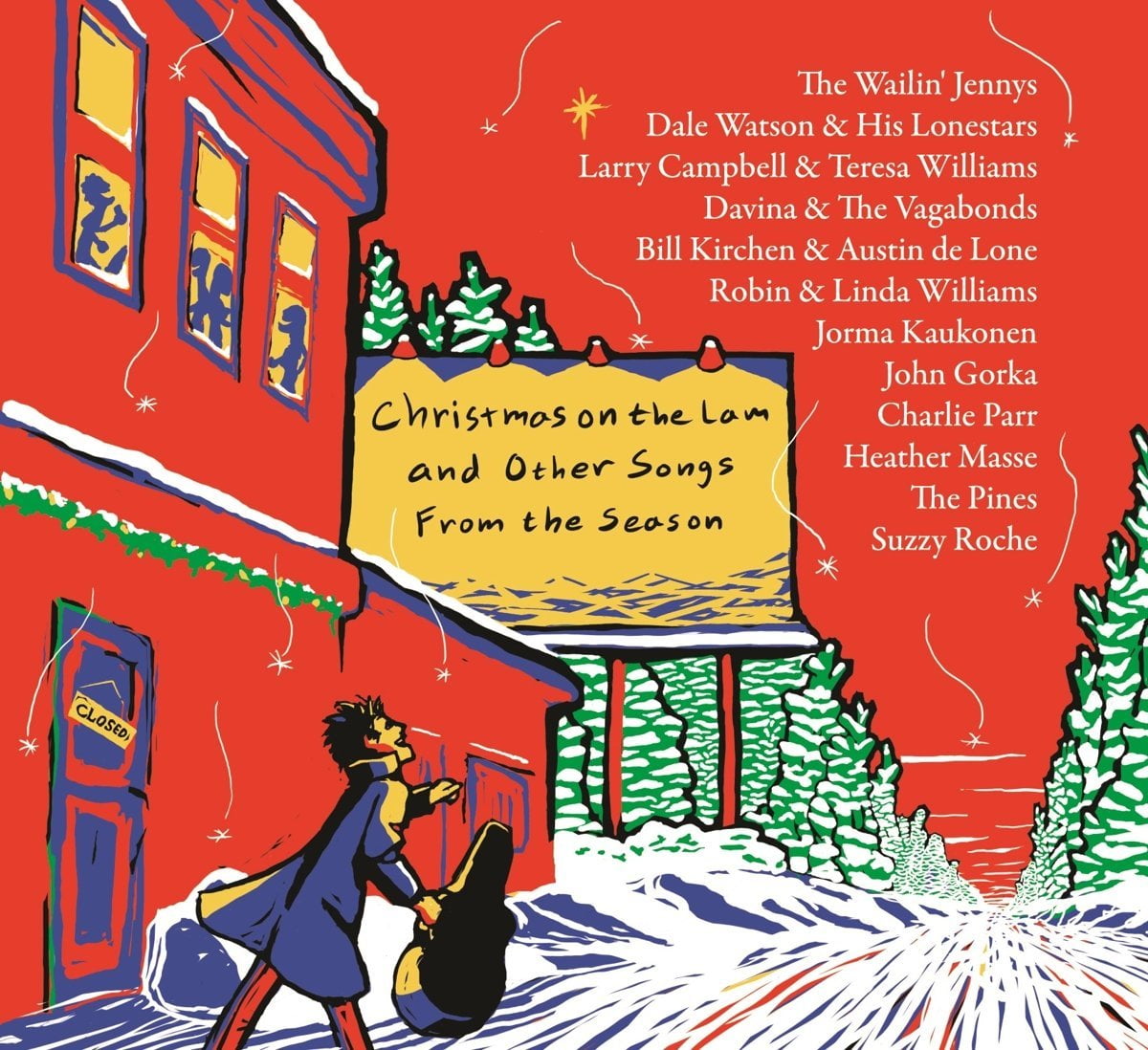
Various Artists, Christmas on the Lam and Other Songs from the Season

Red House Records ventures into holiday album territory for the first time with this collection of songs, featuring artists like Charlie Parr, the Wailin' Jennys, and Larry Campbell with Teresa Williams. Look for a good mix of new songs and old favorites in this bunch.

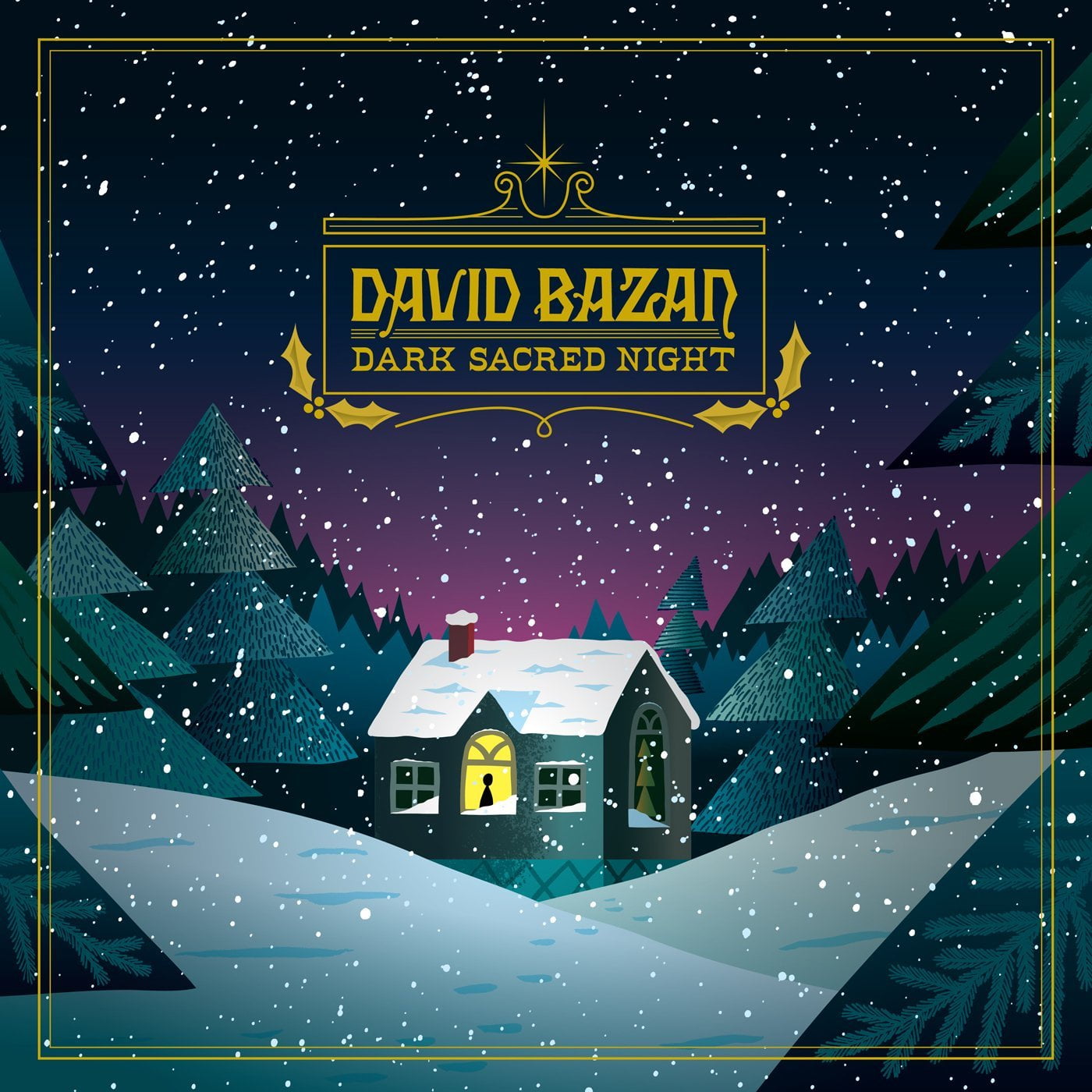
David Bazan, Dark Sacred Night

If you didn't collect all of the holiday singles David Bazan began releasing with Suicide Squeeze Records in 2002 (or if you'd enjoy the convenience of having most of them on one disc), you're in luck, as Bazan has compiled 10 of those 14 songs for this remastered collection.

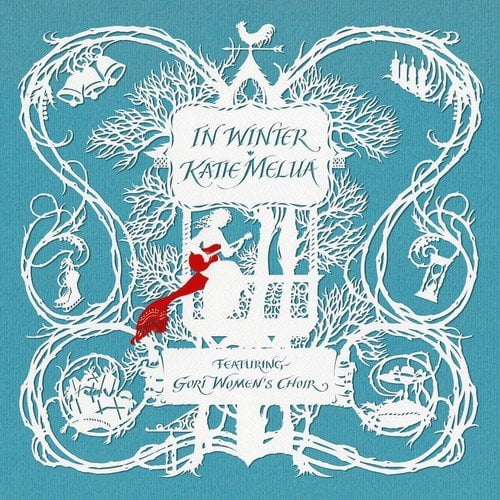
Katie Melua, In Winter

Katie Melua is better known across the pond, but this stirring collection of holiday songs, featuring the Gori Women's Choir from Melua's native Georgia, should earn her some well-deserved recognition here in the States, too.

SaveSave

A BGS Roots Road Trip

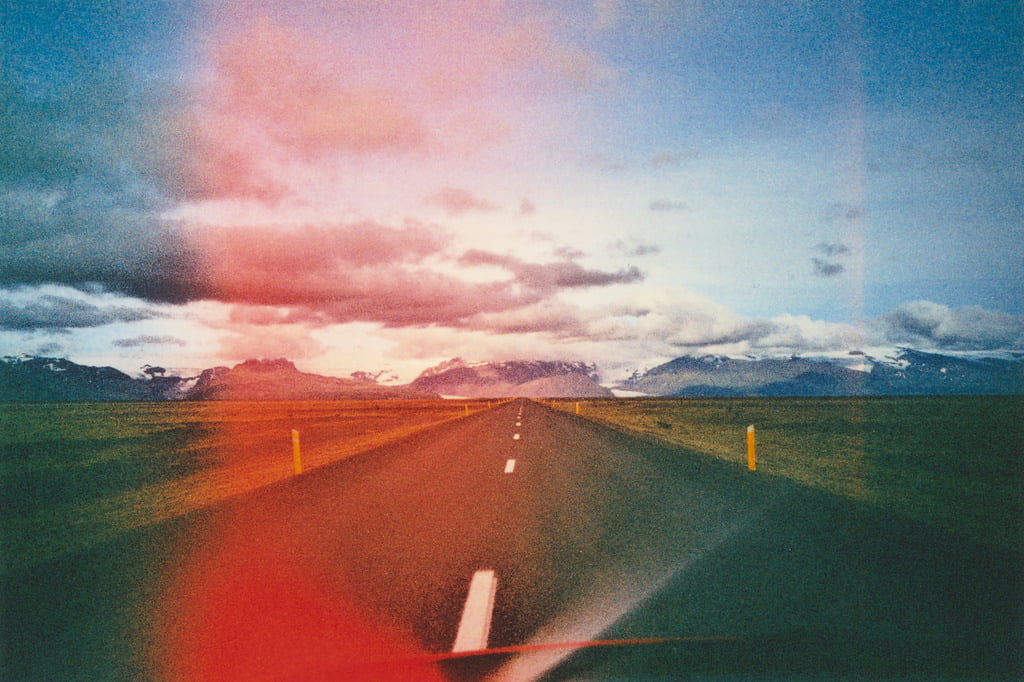
Nothing says Summer like a road trip, and nothing says road trip like awesome — and sometimes awesomely weird — roadside attractions. There's no shortage of amazing destinations for roots music fans in the good ole US of A, so we've put together a handful of our favorite roots-related roadside romps. Whether you're deep in the South or soaking up the sun in Southern California, there's something here for you. 

And hey, any good road trip needs a great soundtrack, so check out our road-worthy Spotify playlist, too.

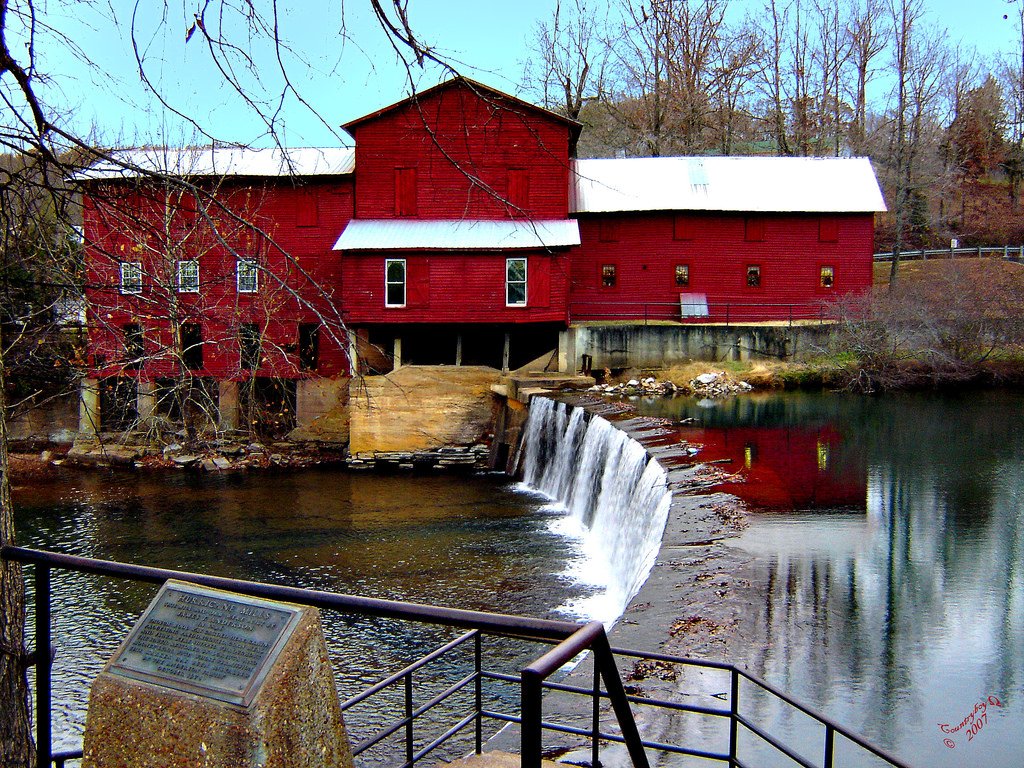
Loretta Lynn's Hurricane Mills

Photo credit: countryboy1949 via DesignHunt / CC BY-SA

Why have one museum when you can have six? That's what Loretta Lynn was thinking when she opened Hurricane Mills, her ranch in the Tennessee town of the same name that features plenty of Loretta history, sure, but also houses a doll museum and rentable log cabins.

Dollywood

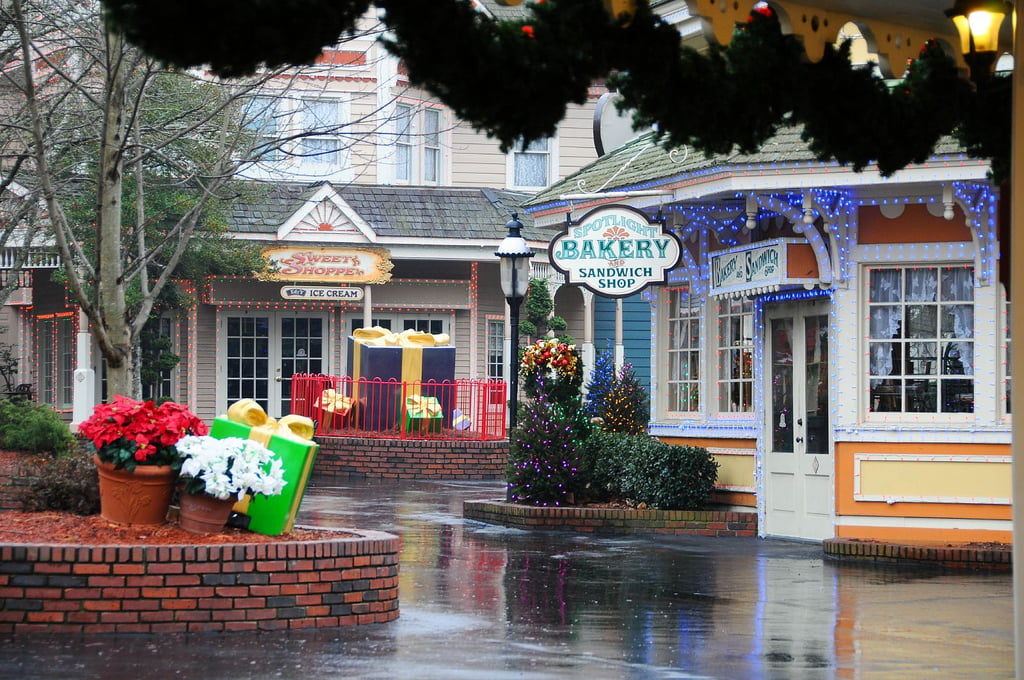
Photo credit: Valerie Everett via DIYlovin / CC BY-SA

Pigeon Forge, Tennessee, (and neighboring Gatlinburg) is a strange place. It's perhaps the only town on earth where one can bungee jump and visit a replica of the Titanic on the same stretch of road. More importantly, though, it's home to Dollywood — your definitive source for Southern food, surprisingly scary roller coasters, and, of course, all things Dolly Parton.

Bill Monroe Music Park and Campground

Photo courtesy of BillMonroeMusicPark.com

The legacy of Bill Monroe, an array beautiful campsites, and live events galore? Those are some darn good reasons to head to Brown Country, Indiana, for some outdoor R&R.

International Bluegrass Music Museum

Rendering courtesy of International Bluegrass Music Museum

There's no better place to learn about the history of bluegrass that the International Bluegrass Music Museum in Owensboro, Kentucky. And what luck for you, bluegrass fans out there, as the Museum recently broke ground on an extensive expansion.

Buck Owens' Crystal Palace

Photo credit: Panegyrics of Granovetter via Foter.com / CC BY-SA

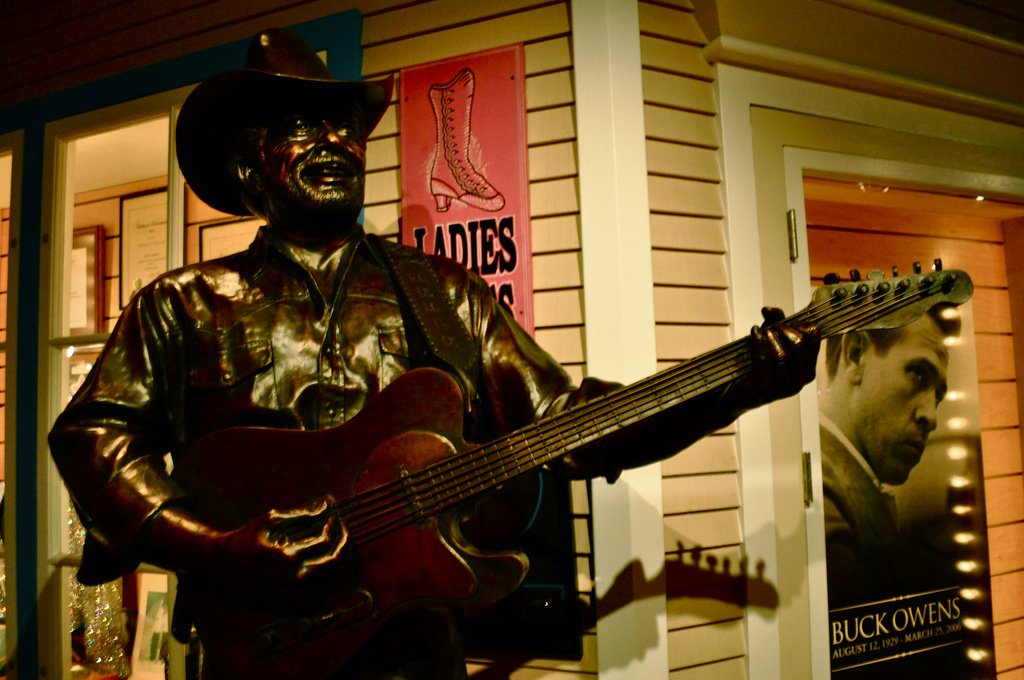
We can't vouch for the food at this Bakersfield joint, but the on-site "museum" hosts a number of cool bronze statues of country luminaries that are sure to give your Instagram some real, down-home cred.

50 National Landmarks

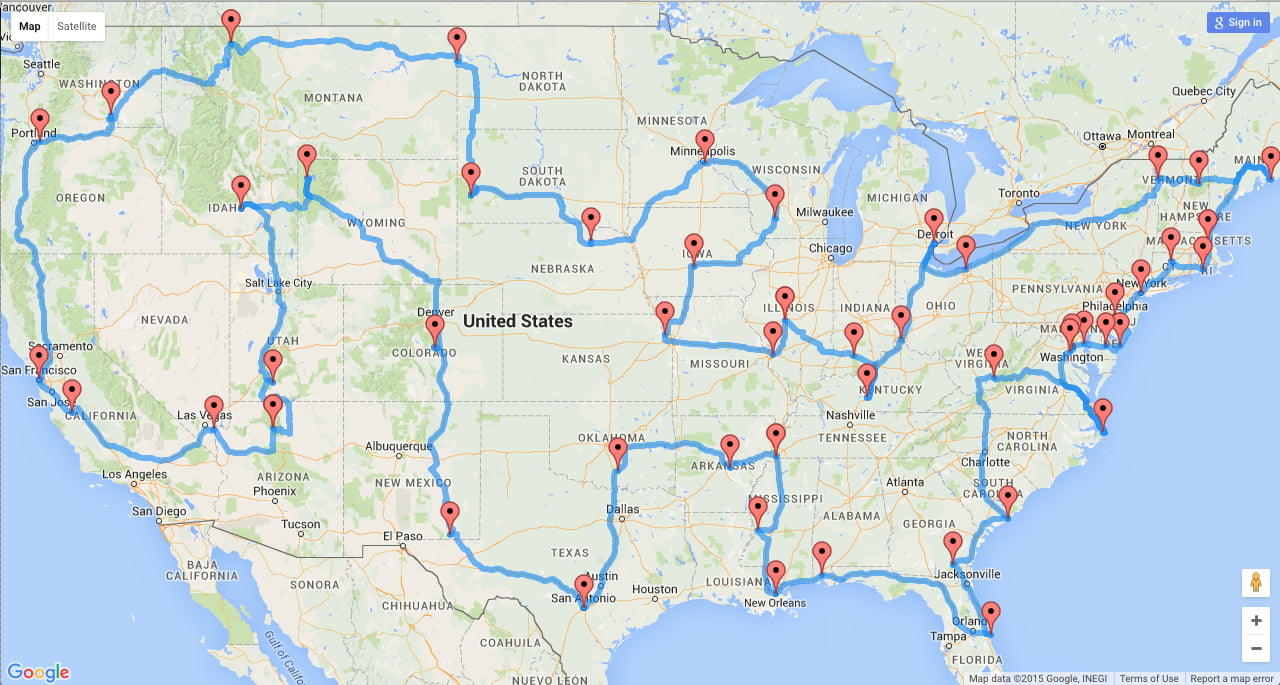
If you want to throw in some stops at non-music monuments and hit all of the lower 48 States, Michigan State University doctoral student Randy Olson compiled a fantastic map of national landmarks like Yellowstone, the French Quarter, Pikes Peak, Graceland, Mount Vernon, and more.


Lede photo credit: auspices via Foter.com / CC BY

That Old Feeling: Vince Gill in Conversation with Margo Price

We usually think of musical traditions as being defined by their distinctive stylistic elements: the hard-driving string bands of bluegrass; the nimble, fingerstyle guitar figures of Piedmont blues; the rhythmically frisky washboard and squeeze box of Zydeco. It’s quite possible, though, for us to hear a kinship to country tradition in the music of two artists who serve two separate audiences in separate ways. That’s certainly true of Vince Gill and Margo Price — he, the mainstream country standard-bearer; she, the indie country newcomer. They may both incorporate time-tested textures like pedal steel guitar, but they belong to markedly different traditions of countrified emotional expression.

A classically trained singer who’s cultivated a tough vocal attack, Price musters a worldly brand of feistiness and hardship-withstanding resilience that takes significant cues from Loretta Lynn. And, much as Lynn’s down-home grit has come to command the admiration of a younger generation of rock-reared fans who value rawness and autobiographical authenticity — not to mention attract Jack White as a collaborator — Price’s music holds powerful appeal for that same crowd. It’s White’s Third Man Records that is releasing her bewitching debut, Midwest Farmer’s Daughter, an album that arrives with a vintage aesthetic and an underdog narrative: She had to part ways with her car and wedding ring to pay for it.

Gill, on the other hand, ranks as one of modern country’s finest, most tender voices — an openly emotional balladeer par excellence who’s equally at ease with honky-tonk weepers in the George Jones vein and sensitive, sophisticated adult-pop. That expressive range has long endeared Gill to popular country fans and made him a radio fixture through the ’90s. The same major label that was his home back then, MCA Nashville, just put out the immensely rewarding new set that he recorded in his home studio, Down to My Last Habit.

Though Gill’s singing and songwriting often exemplifies the softer side of country and Price stakes out spunkier territory, they had no trouble at all speaking across the divide.

Margo Price, meet Vince Gill. Vince Gill, meet Margo Price.

Vince Gill: Well, it’s great to hear from ya, Margo. Are you doing okay?

Margo Price: Yeah, I’m doing well. How are you?

VG: I’m just fine.

Before you got on the line, Vince, Margo and I were talking about the fact that she’s doing her very first Opry performance this Friday night.

VG: Oh, that’s awesome! It’s a big deal. You will never ever forget it, I can assure you.

MP: Thank you!

It just so happens that Vince is celebrating his 25 th anniversary as a member of the Opry very soon.

MP: Yeah, congrats!

VG: Aw, thanks. I’m just old.

[Both Laugh]

MP: Well, I’m pretty old to be making my first appearance on the Opry. Do you remember the first time that you played?

VG: I do, yeah. I got asked once to play the Opry, I think, in ‘88 or ’89. My daughter was in the second or third grade, and we were all set to do this talent show at school. She asked me to play guitar for her, so I taught her “You Are My Sunshine.” We practiced and learned it and had to make all the rehearsals. [The talent show] was all set for a Saturday night.

So I get this call from the Opry, and they said, “Hey, we’ve been watching your career. We want to invite you out to play the Opry.” And I said, “Awesome! When?” And they said, “Saturday night.” I said, “Oh, my God. I can’t make it. I’m playing at the Grassland Elementary School. I’ve gotta back up my kid.” So I kept my promise to my kid, and they invited me on down the line a little bit later.

MP: That’s really beautiful.

VG: Yeah, it was really cool. Jimmy C. Newman was the one who did the introduction, and I sang “When I Call Your Name.” That’s the first song I sang on that stage. I’d just written it and had hopes for it. I don’t even know if I’d recorded it yet.

MP: Wow, that’s really cool.

I love that we’ve begun this conversation with you two comparing stories. I’ll open with a question for both of you. I admit I almost feel silly asking this of a member of the Country Music Hall of Fame who is himself cited as an influence by so many singers. Here goes anyway: What country singer sets the bar for you when it comes to conveying emotion and being expressive?

VG: Go ahead, kiddo.

MP: Well, I have always been really drawn to a lot of singers of the ‘50s through ‘70s, especially women. Loretta Lynn, I think, is kind of where I’ve tried to set the bar. She could sing so tough, but she was always talking about something. I think Tammy Wynette, too. She could go one second from sounding really vulnerable and fragile to just kind of overcoming and somehow coming out strong, even though she didn’t feel that way. I think probably those two, and Dolly. The three of them I try to live up to, which is a hard thing to do.

What about you, Vince?

VP: One of the most emotional singers I’ve ever heard is Patsy Cline. You felt a tear in the way that she sang all the time. Then the earliest George Jones records. They sounded hungry. They sounded forlorn. They were full of melancholy. To me, that’s the epitome of a great country singer, is you honestly find the emotion, not necessarily through the words of a song but through the emotion of a singer. Come to find out, when I got to be great friends with George, he told me, “I was trying to emulate Roy Acuff.” If you listen to a Roy Acuff record, you hear him do the same kind of thing that George did, but George did it quite a bit differently, with some more soulful notes and bending notes a little differently. But there was a real similarity in them.

I remember when I was first starting to make country records, I wanted to be so traditional, but I was at a label that really wasn’t all that keen on having a real traditional roster. So I was a little bit lost. When I started on my first record, I was singing my heart out as best I could. My producer, Emory Gordy, graciously told me, “Listen, that sounds great, but we already have a George Jones. You need to find your voice. You need to find your way that you want this emotion to be conveyed. Don’t ever imitate. Be inspired by, but find your own voice.”

Vince, the most traditional-sounding song on your new album is the one you’ve dedicated to George Jones, “Sad One Comin’ On.” It’s a real weeper about being deeply affected by his singing in life and deeply affected by his passing. What went into that song?

VG: Just the truth. The greatest songs come from the truth. The truth was he lived every word of that song. All I had to do was tell his truth through my eyes. There’s one moment in that song where I really feel like I channeled him in a really beautiful way. In the last verse, there’s a line that says, “He’d tear your heart out when he sang a song.” Just the way that the word “tear” came out of my mouth, I wanted that to be an instant where it sounds like George.

Margo, I’ve read that you have an interesting connection to George Jones. Is it true that your great uncle is the songwriter Bobby Fischer, who wrote Jones’s “Writing on the Wall”?

MP: Yeah. He actually just had his 80th birthday. His daughter surprised him by getting everybody to sing songs that he wrote. Of course, I picked “Writing on the Wall.” That’s one of my favorites. It was so nerve-wracking. I sang it in front of him and Dickey Lee. George is probably the greatest singer of all time. It’s crazy that he lived the way he did and he could still belt.

Vince, you’ve joked that you cried like a baby at George Jones’s funeral. I was listening live on WSM that day, and I think you filled a really important role in the collective grieving process when you sang your song “Go Rest High on That Mountain” and got so overcome that you couldn’t get the words out.

VG: It was interesting, because I think it gave everybody the okay to let go. Before [I sang], it had all been so performance-oriented that, when I kind of lost it, it gave the room the ability to cry. … Truth be told, what really tore me up was hearing Patty’s [Loveless] voice — the sound of her voice and mine and the history of the two of us [singing together]. We were there getting up for George. So it was a combination of all those things: the passing of one of the true greats.

What’s it been like watching “Go Rest High on That Mountain” become a modern-day standard that people turn to for comfort?

VG: It’s pretty overwhelming, honestly. I was not gonna record that song back in the day when I wrote it. My brother passed in ‘93, and that was my way of honoring my brother and grieving for him and putting it in a song what I hoped was in store for him. I’m so grateful that we did choose to put it out. I guess people have said it’s become the modern-day “Amazing Grace” almost. … When people wanna turn to something you’ve gone and created, in their hardest of times, I can’t even describe how grateful I am [for that].

Not all the songs on your new album are melancholy, but a lot of them really testify to the depths of people’s feelings toward those they love or desire, those they’ve delighted in or let down or been wounded by. For you, how is that kind of sensitivity linked to mature expression?

VG: All I know is that all I’ve ever wanted was to be moved by music, not so much to be impressed. Certain voices can sing all the notes, all the runs, all the licks, or a guitar player can play every note in the book, and at the end of the day, you go, “Well that was impressive, but it didn’t do anything to stir an emotion in me.” That’s kinda what the whole point of it has been for me.

Margo, you were joking earlier that you’re belatedly reaching this point in your career. You’ve been grinding it out in small clubs for a dozen years now, something like that.

MP: That sounds about right.

Since this is your first album under your own name, it’ll be most people’s first chance to form an impression of what you do. The title you chose, Midwest Farmer’s Daughter, brings to mind Loretta Lynn’s Coal Miner’s Daughter. What appeals to you about drawing a connection between where you’re coming from and where she was coming from?

MP: It was definitely kind of a nod to her, and also a nod to the Beach Boys’ song [“Farmer’s Daughter”]. It just felt really good to be honest and say where I’m from. I wasn’t born in the South, and sometimes people wanna make a point that I’m not allowed to sing country music or something because of that.

There have been great Canadian country singers.

MP: Yeah. I mean, you’d be surprised when you look back. Connie Smith, she was from Ohio. But yeah, I think it was nice to say something simply about who I am and where I came from.

To get a little more specific, how did Loretta Lynn’s tough-talking tell-offs, songs like “Fist City” and “Don’t Come Home a-Drinkin” and so on, influence some of your songs, say, “About to Find Out,” for instance?

MP: [Laughs] That’s a very good comparison between the three that you just mentioned. That one [“About to Find Out”] definitely mirrors the attitude in her songs. I just always loved that she was able to talk about things and not shove an idea down someone’s throat, but maybe [show] the other side of the coin. “The Pill” and things that she really went out on a limb to do, that kind of writing and living on the edge excites me.

You sing from the perspective of somebody who’s lost the family farm, or who’s spent a weekend in jail, or who’s been kicked around by life and the music industry — someone who’s gone through all that stuff and is a scrappy survivor. That’s the persona I get from a lot of your songs. What feels right to you about singing from that place?

MP: I think, for so long, I was writing from a different point-of-view. That may or may not be why it’s working now and it wasn’t then. I think, like Vince said earlier, the best thing about songs is honesty. An honest song is a good song. I feel really confident when I sing it, because I’ve lived it. It’s a form of therapy, I think, to just get it out and wear my heart on my sleeve a little bit. Plus, everybody loves an underdog.

Have you noticed that people seem to really place a lot of importance on the idea that the hardships you’re singing about are literally your autobiography?

MP: … It’s been interesting that that’s what people want to talk about. I guess the songs are interesting. I think, when I was writing 10 or 12 years ago, I didn’t have a lot of life experience. Like Vince was saying earlier, when your brother passed and you wrote that song, you kind of go into survival mode of, “How do I make myself and other people able to cope with tragedy?” Through that, you get thicker skin and you move on and, hopefully, you can share some of what you’ve learned with the folks around you.

Vince, the way you use your voice — the vibrato and curlicues and bent notes — makes a tremendous difference in making people feel a song. What would you say it takes for you to put that tenderness across vocally?

VP: Well, I think that the key to great singing is when you don’t; it’s when you stop. And what I mean is, if there’s this long line of words, it’s kind of like breathing. You want the listener to be able to take a breath, too. So often singers will sing all the way across the end of a phrase, all the way through, so that they cover up where maybe the hi-hat ends or the guitarist does what he does or whatever. The point of it all is to make room for everybody. That includes the singer.

I think a voice is either interesting to you or it’s not. It’s not going to be more interesting to you if you can sing more notes or if you can sing louder or harder or what have you. … What’s funny is, most singers will find a thing that they think is their thing, their go-to thing. And, to me, it’s generally the least appealing thing that they do. [Laughs] I don’t know why that is, but I’m sure that’s true in my case, as well. There are some go-to things that I think are my thing and everybody will roll their eyes and go, “That’s not what it is.”

MP: [Laughs]

VP: So I don’t know that I’ve got the answer to what it is that I do that people are drawn to. I’m grateful that they are. I think it’s the ability to be subtle with what you’re trying to do.

Margo, you have that no-nonsense, tough vocal attack and hard-edged phrasing. People have compared it not only to Loretta Lynn but also Tanya Tucker, and I’d throw in Wanda Jackson, too. How do you feel like you summon toughness in your approach to singing?

MP: You know, I had so many years of classical training. I was in choir and sang a lot in church and my mom would drive me 45 minutes up to this voice teacher in the city. She would teach me all the things, but it really is about just the raw emotion underneath it. I’m sure I still use some of my technique here and there, but I don’t find myself over-thinking it, because that’s when I’ll mess up. Growing up, too, in the school choir that I was in, the choir director, she never wanted to give me solos. Every now and then I would get to be in an ensemble. It was just like Vince was saying — people either like your voice or they don’t. And I think some people really love my voice because it’s different and it stands out. I’m sure other people are just not sure what to think of it. It’s got its own thing. I don’t quite know how to explain what I do, I guess.

I’d love to close with another question for both of you. We’ve been talking about the emotional traditions that you’re each working in. How do you feel like masculinity or femininity shapes what you do? How do you make use of either in your expression?

MP: You wanna go?

VG: Go ahead, buddy.

You’re both so polite!

MP: I know. Too polite.

… I do love a lot of male musicians and songwriters. So I feel like there’s part of me that’s always been a little jealous of the way that guys have the ability to sing more powerfully. Sometimes there’s this misconception that women have to sing pretty. I guess I like a good mix of the two. I’ve kind of been trying to get back into exercising my head voice a little more, because I do use my belting chest voice a lot. Like I said, I have classical training and I would sing mezzo-soprano Italian songs. I really exercised that delicate, sweet voice. But I think that, for a long time, I’ve kind of wanted to do the opposite and belt things out like Hank or Merle or George — or even women who commanded it, even Etta James or soul singers that really drove it out. You know, you have to find a good balance that works for you. Hopefully I’ve landed somewhere in the middle of that.

VG: [Laughs] You’re asking a question about masculinity and you’re talking to a guy that sings higher than most women on the planet. I already sing like a girl.

I just think that the real key is more about the soul that you bring. You sing what’s appropriate for the song you’re singing. … All you really want to do is sound authentic when you’re singing. You don’t want to sound like, “Hey, I’m a country singer singing a rock tune. Hey, I’m a jazz singer singing a country tune.” I think that each song is gonna dictate the way you should sing it. You may wanna sing it hard, but that could be wrong. I think that it’s more a song to song choice. I can honestly say I don’t think anything about masculinity at any point when I’m singing.

[All Laugh]

I really appreciate you both being good sports about this.

VG: It was fun.

MP: Yeah.

VG: Margo, have a great Friday night. I’m happy for ya.

MP: It was really an honor to speak with you today. I’m not gonna lie: I was a little nervous.

VG: Don’t be!

MP: You’re so sweet.


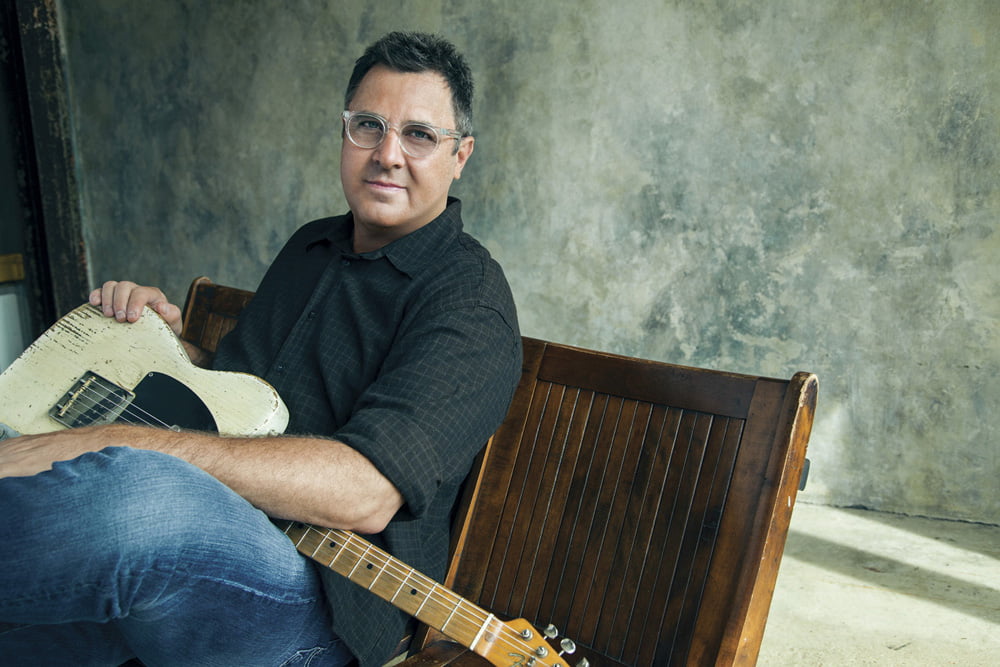
Illustration by Abby McMillen. Vince Gill photo by J Wright. Margo Price photo by Angelina Castillo for Third Man Records.
Daddy-O: A Father’s Day Playlist

This Father's Day (June 19), you could do what you always do and buy your pops the same pair of new socks that he doesn't need. Or, you could give dear old dad the gift of music. To get you started, we've pulled together some of our favorite songs about dads, written from both the perspective of fathers and from those of the kids who loved them. If you're feeling generous, pick up an album or two featuring songs from the list. If not, at least send dad a link to the Spotify playlist. Either way, his sock drawer will thank you.

"Daddy Doesn't Pray Anymore" — Chris Stapleton

This tearjerker from Chris Stapleton is served up with a little twist, made all the more heartwrenching by his stellar vocals and somber delivery.

"Daddy Sang Bass" — Johnny Cash

This 1968 tune, written for Cash by Carl Perkins, is a testament to the bonds of both family and music — both of which, in this case, are anchored by dad and his bass.

"Undercover Dad" — Jonny Corndawg (now Jonny Fritz)

A snooping dad must grapple with what he finds in his teenage daughter's diary in this sweet, light-hearted tune from Jonny Corndawg's 2011 Down on the Bikini Line.

"Paradise" — John Prine

A father teaches his son about the perils of mountaintop removal in this classic John Prine tune from his 1971 self-titled debut album. 

"My Father's Father" — the Civil Wars

Ghosts of the past and his "father's father's" blood on the tracks bring a prodigal son home in this song from the now-defunct duo's 2011 debut album, Barton Hollow.

"A Father's First Spring" — the Avett Brothers

One of the most profound statements on an album (The Carpenter) that grapples with bassist Bob Crawford's daughter's battle with brain cancer, "A Father's First Spring" tugs at heartstrings with lines like "I do not live unless I live in your light."

"Coal Miner's Daughter" — Loretta Lynn

"Daddy worked all night in the Van Lear coal mines," and his proud daughter wrote one of the greatest country songs of all time to thank him for that hard work.

"Welcome to Earth (Pollywog)" — Sturgill Simpson

Sturgill Simpson's new album, A Sailor's Guide to Earth, is something of a guidebook for living for his young son, and opening track "Welcome to Earth (Pollywog)" introduces us to "the greatest love [he's] ever known."


Photo credit: CarbonNYC [in SF!] via Foter.com / CC BY.

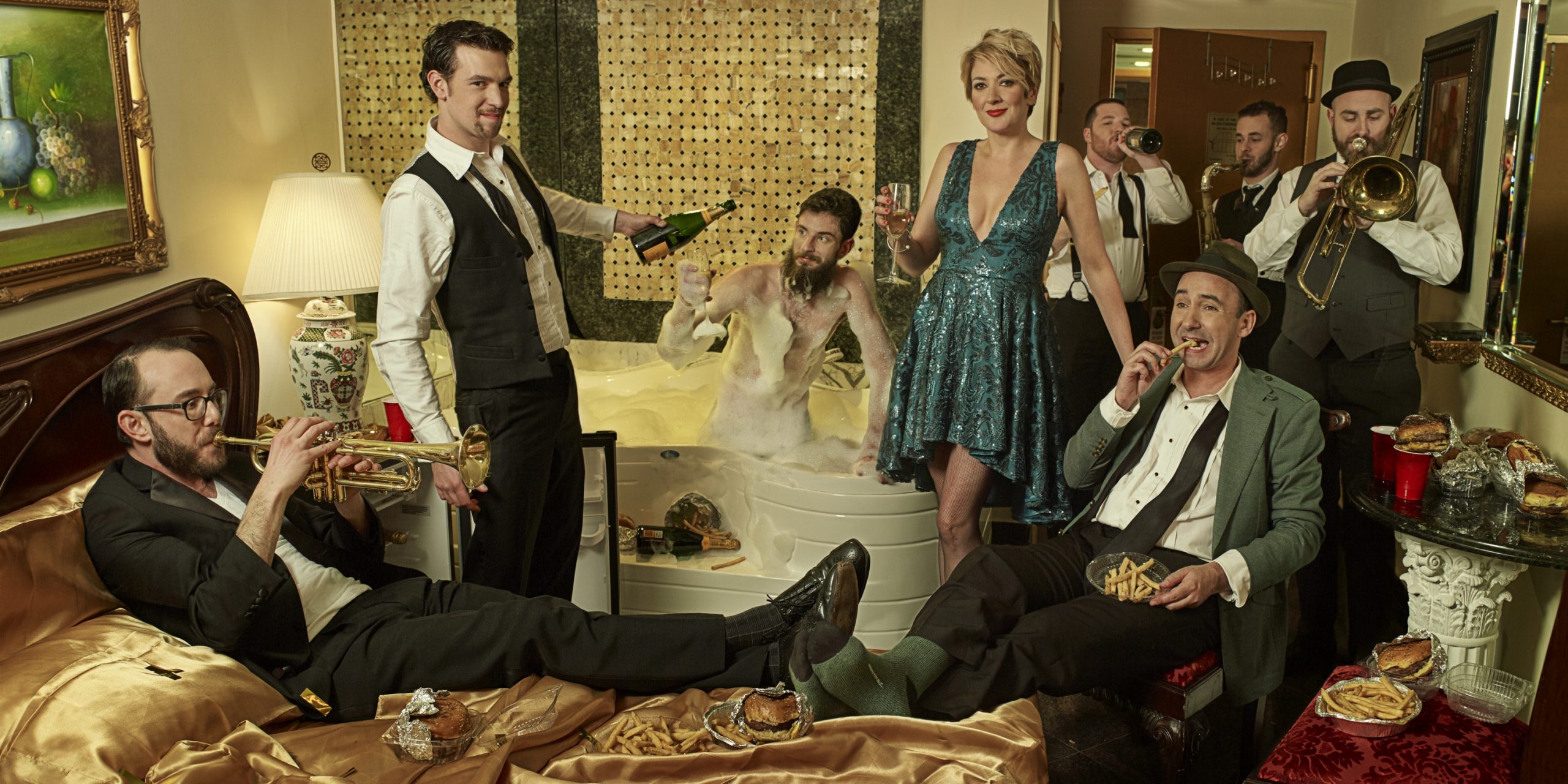
3×3: The Hot Sardines on Brown Butter, Cypress Hill, and an Obsession with Podcasts

Artist: Miz Elizabeth (from the Hot Sardines)
Hometown: Born outside Paris, currently living in Brooklyn.
Latest Album: French Fries & Champagne
Rejected Band Names: One band name contender was Brown Butter. When we were just a two-person outfit, Evan (Palazzo, who started the band with me) and I came up with all these names that were food-related. Other than music, that's probably what the band talks about most.

Your house is burning down and you can grab only one thing — what would you save?
As many pieces of artwork by my mother as I could carry.

If you weren't a musician, what would you be?
A dialect coach. You know Lake Bell’s character in In a World who’s obsessed with accents and is always recording snippets of conversation? I'm that kind of dialect nerd. I'd be one of those people prepping Jennifer Lawrence to play, say, the king's mistress in some French period piece. Spend a day getting her to roll her Rs just right.

Who is the most surprising artist in current rotation in your iTunes/Spotify?
People tend to be surprised that I listen to anything past 1960. Maybe Cypress Hill?

What is the one thing you can’t survive without on tour?
Podcasts — I'm a little obsessed with Alec Baldwin's Here's the Thing podcast.

If you were a car, what car would you be?
A Citroën Deux Chevaux

Who is your favorite superhero?
Amy Schumer

Vinyl or digital?
Digital for sheer portability (which is key on tour). I’m a digital woman with a turntable soul.

Dolly or Loretta?
Both, in two-part harmony.

Meat lover's or veggie?
Vinyl

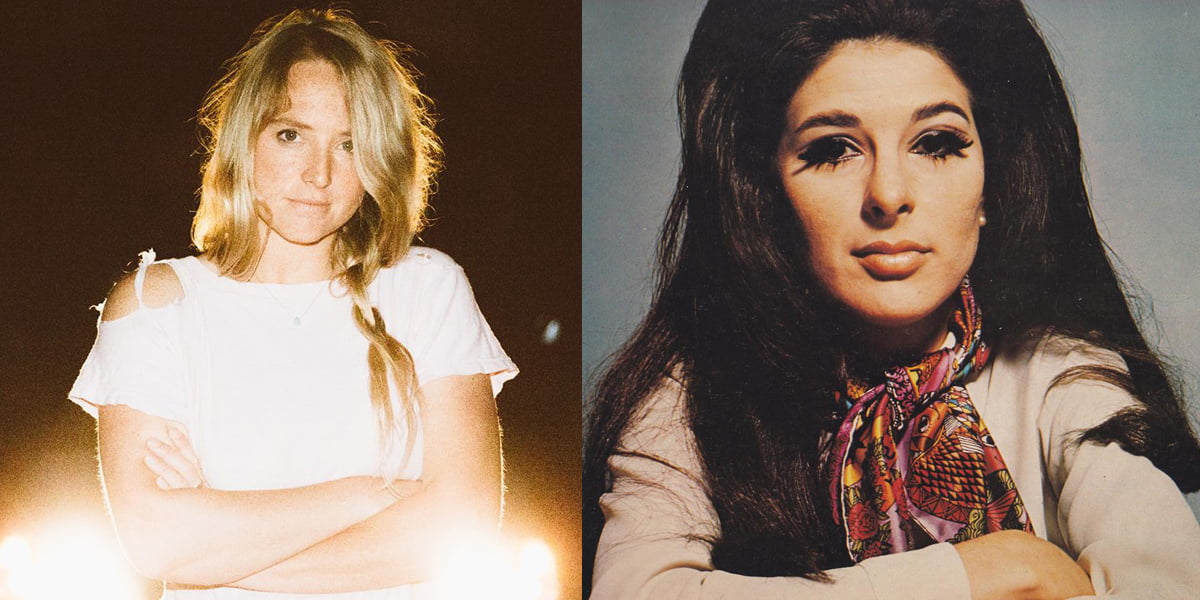
Squared Roots: Lissie on the Stories of Bobbie Gentry

Bobbie Gentry is one of those artists whose legend all-too-often overshadows her artistry. With the surprise — and massive — success of "Ode to Billie Joe," Gentry made a name for herself in multiple music circles. The chart-topping, Grammy-winning song — like so many in her catalog — drew its inspiration from the hard-scrabble lives of her Mississippi homeland.

Gentry knew pretty early on that music was her calling, teaching herself how to play piano, guitar, bass, banjo, and vibraphone before going on to study philosophy at UCLA and composition at the Los Angeles Conservatory of Music. After a bit of modeling and performing around L.A., she eventually landed a deal with Capitol Records in 1967. Though "Ode to Billie Joe" was her first hit, Gentry went on to land 10 more on the Billboard Hot 100 and another handful on the UK Top 40. Then, in 1978, she retired from music, altogether, leaving many to wonder why.

Singer/songwriter Lissie Maurus can relate. Since bursting onto the scene in late 2009 on the strength of her fierce, bold vocals and finely tuned compositions, the Illinois native has released several EPS and three albums — including 2016's The Wild West — to much critical acclaim. But, in Gentry, she sees something of a kindred spirit, having herself considered walking away from the business of music.

Bobbie grew up in Mississippi with her grandparents who traded a milk cow for a piano and she chose her stage name from a film character who was born into poverty but determined to succeed. So, basically, she was scrappy. She knew what she wanted to do and went for it. I see some of that in you, too. But connect the dots between you and Bobbie for me. Why her?

I didn't really know about Bobbie Gentry until some British friends of mine told me about her. I had heard “Ode to Billie Joe” and remembered thinking it was a cool song. But I just got so fascinated with her and fell in love with all of her songs because she really paints a visual picture, in her lyrics, of what is happening in the story she's telling. That's something I admire because I don't think I have the ability to do that.

I liked how she was one of the first female country singers to write her own material and was really, like you said, scrappy. She was really bold and tough, yet really charming, in this man's world in the 1970s country scene. So I just think she's a bad ass. And she was probably writing better lyrics than all of her male contemporaries, in that day and age.

I was shocked to learn that “Ode to Billie Joe” was the b-side of her first single, “Mississippi Delta.”

Yeah. Me, too. We probably read the same Wikipedia entry. [Laughs]

[Laughs] I'm sure.

If we're going to go into her songs more specifically, the song “Lookin' In” … I can sort of relate to it. I think she really struggled between doing music because she loved it and trying to keep up with the business and image side of it — all the papers to sign, traveling everywhere, and just wanting to go home. And, yet, she wanted to share this gift of hers and, ultimately, kind of disappeared and just stopped playing music.

But in between, she was on the Billboard Pop Chart, the Black Albums Chart — which has since become the Hip Hop/R&B chart — and she was also tagged as the Academy of Country Music's Most Promising Female Vocalist. What do you hear in her music that you feel lends itself to that kind of crossover appeal?

I think it's because she's such a great storyteller. “Ode to Billie Joe” was such a huge success because people were so fascinated. They were riveted. They were like, “What did they throw off the bridge?” [Laughs]

[Laughs] And she was going, “You're missing the point!”

[Laughs] Yeah, totally. But everyone was enthralled. She writes such compelling stories that you want to listen to … more so than how I think I would write, at all. I would only ever hope to write like that someday. I might touch on emotions that I'm having in really literal expressions, but she's talking about how they're passing the rolls around the table, and what the person's wearing, and the expression on someone's face, and what the scene out the window is — all the imagery. It's like reading a book. She's telling this story that you want to hear.

But, also, she was pretty and had cool fashion. She was charming and appealing, had a great voice and a good personality. I don't know why, exactly. And that was a different time in music, too, when things were maybe changing culturally or societally, and maybe women were starting to come into their own a bit more and she got to be a part of that.

Do you feel like being able to write story songs versus confessional songs … do you think that's a learned art or is it an inherent gift? Because it sounds like you actively study her craft with an aim toward getting there, yeah?

I think, eventually. There are two ways to write: There's a way that I find — in terms of what I'm best at — is to write about what I'm feeling because that's where all the emotion comes from. I think people pick up on that and can relate to it because it's very direct and honest and coming from an actual situation.

But I think, if I were to want to settle down on my farm and get more into the idea of writing songs that were less about me and even writing songs for other people, I would like to explore doing more of the storytelling like she does. It's weird because, she's just telling these stories, and it's clever, but there's still so much heart and emotion in it … which I find interesting. If I were just making up fake stories, I don't think people would enjoy it as much because it's not as heartfelt. [Laughs] You know what I mean?

[Laughs] Yeah, yeah. Then she also had her feminist bent with “Fancy” and stuff. I've been saying for months that Ashley Monroe or Kacey Musgraves should remake Loretta Lynn's “The Pill” as a benefit for Planned Parenthood.

Oh, yeah!

Maybe you should do “Fancy” as the b-side.

“Fancy” is always my karaoke song.

Is it?

[Laughs] Yeah!

Do you do her version or Reba's?

Well, usually they only have the Reba version at karaoke. A lot of people don't know who Bobbie Gentry is.

I guess not. They know “Billie Joe” and that's it — not even, necessarily, knowing who sang it. Right. And then, like you said, she walked away and went into hiding. What do you think causes an artist to do that? Bill Withers did the same thing.

Well, I'm not currently anywhere near as successful as she was — or Bill Withers was — but last year, I was tempted to … not to stop writing and playing songs and sharing it, but just get out of the game. It can be really soul-destroying. You subject yourself to a lot of pressure and criticism. There's so much stuff that's not about the music that's always being brought up and forced.

She probably just got burnt out. When you listen to her song “Lookin' In,” you can tell she's just burnt out. I also heard maybe she had a child that needed some special care. That's one theory: Once she became a mother, she decided to focus on that. I don't know. She probably just got burnt out, but she was so good, it would be amazing to have more of her material because I feel like I've already listened to everything so many times.

I wonder if it'll be like … you know how they keep uncovering more and more Jeff Buckley recordings? It would be amazing, with some of the artists like her, to one of these days discover a whole, lost treasure trove of Bobbie Gentry tunes that she was secretly recording in her basement.

Yeah. That would be amazing. You wonder, too, though … she hasn't granted any interviews … so you wonder if something bad happened that made her want to turn her back on it so much so that she won't grant any interviews and no one knows where she is. You wonder what the deal is. It's an interesting thing trying to balance creativity and expressing yourself and something that brings you joy when you subject it to the elements. It can be a little hairy and gnarly.

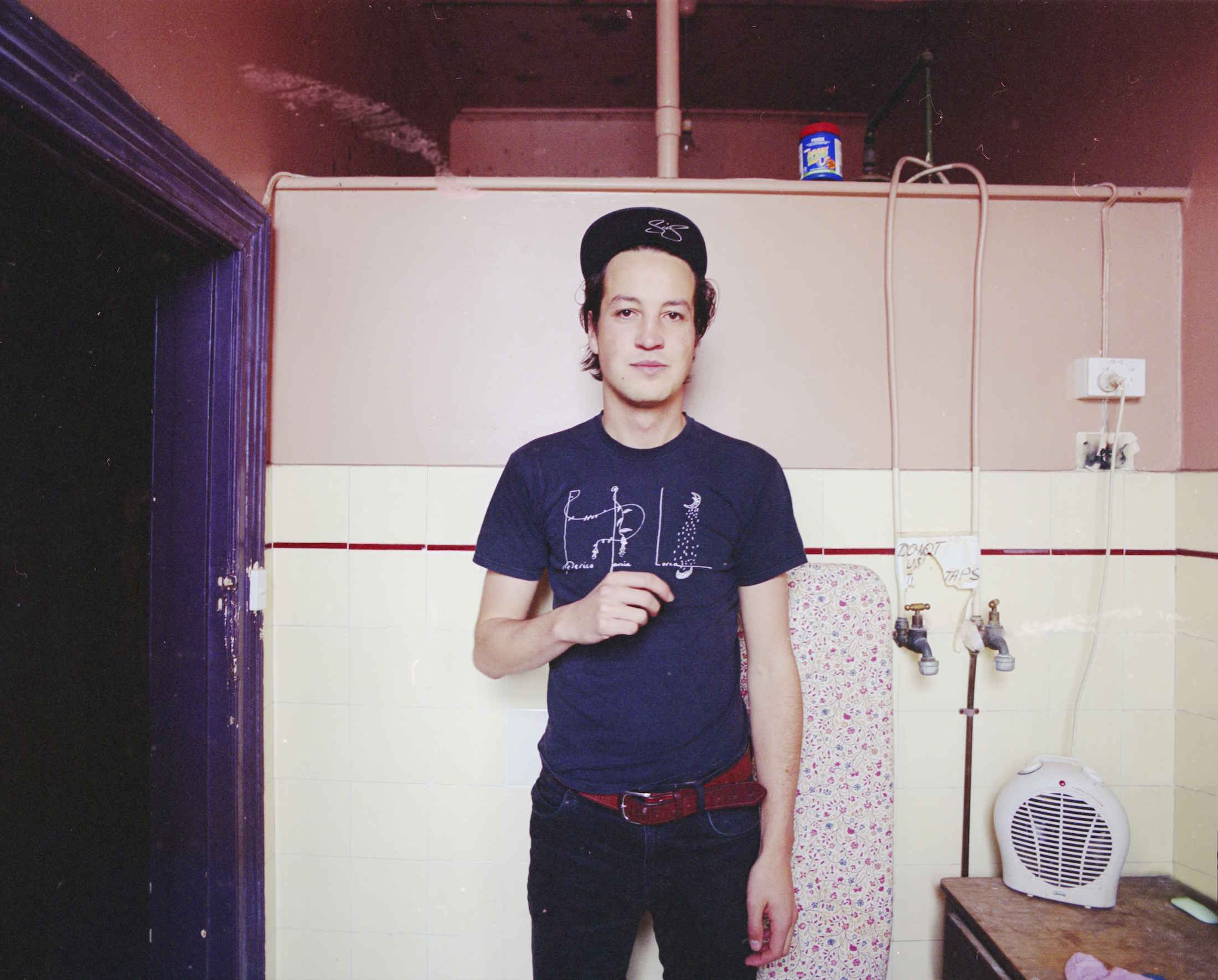
3×3: Marlon Williams on iPhones, Ice Cube, and the Many Glories of Loretta Lynn

Artist: Marlon Williams
Hometown: Christchurch, New Zealand
Latest Album: Marlon Williams
Nicknames: Woolley Fish


Williams incorporated. What a woman

A photo posted by marly Marly Marl (@marlonttwilliams) on

Your house is burning down and you can grab only one thing — what would you save?
My mum. Or my dad.

If you weren't a musician, what would you be?
Very drunk.

How many unread emails or texts currently fill your inbox?
Unread texts: 0. Unread emails: 5,095. Don't hate.


#hecallsformeandnotforyou #therehearsalfilm

A photo posted by marly Marly Marl (@marlonttwilliams) on

What is the one thing you can’t survive without on tour?
Rubbish iPhone games.

If you had to get a tattoo of someone's face, who would it be?
I don't know. Who do people normally get? Jesus? Probably Ice Cube.

Who is your favorite superhero?
Probably Colossus of X-Men fame. He's just a no-nonsense dude with a hefty punch.


Snap!!

A photo posted by marly Marly Marl (@marlonttwilliams) on

The Simpsons or South Park?
I love them both but The Simpsons family have always been there for me. How many seasons now? 26? Still so good.

Dolly or Loretta?
Loretta. Always Loretta. Loretta and Conway. Loretta and George. Loretta.

Meat lover's or veggie?
Meat lover's. Unless it's too full on. Keep your bacon for the breakfast table.


Photo credit: Martin Martini

3×3: Bart Crow on Pilots, Pups, and His Unfortunate Nickname

Artist: Bart Crow
Hometown: Austin TX
Latest Album: The Parade
Nicknames: Bart the Fart ;-/

Your house is burning down and you can grab only one thing — what would you save?
My golden retriever Fala

If you weren't a musician, what would you be?
A pilot

How many unread emails or texts currently fill your inbox?
0! Too ocd

What is the one thing you can’t survive without on tour?
Toothbrush

If you had to get a tattoo of someone's face, who would it be?
Jesus

Who is your favorite superhero?
Spiderman


She done…My protector Ink by the fabulous @mo__malone #mymaiden #triplecrowntattoo #coverup

A photo posted by bartcrowband (@bartcrowband) on

The Simpsons or South Park?
South Park

Dolly or Loretta?
Straight tie, all day!

Meat lover's or veggie?
Meat lover's

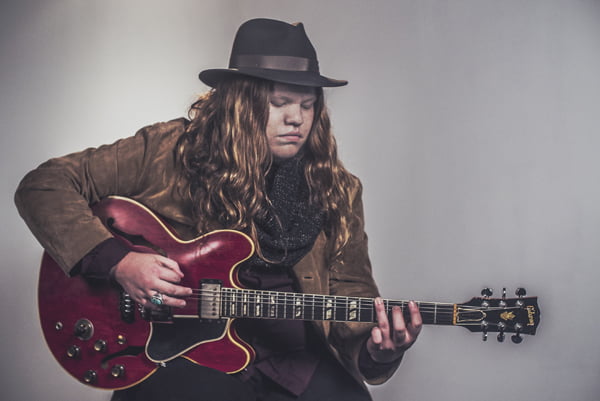
3×3: Marcus King on Underwear, Underdog, and Unread Emails

Artist: Marcus King (of the Marcus King Band)
Hometown: Greenville, SC
Latest Album: Soul Insight
Personal Nicknames: MK


Bob Forte photography 11-7-15

A photo posted by The Marcus King Band (@themarcuskingband) on

Your house is burning down and you can grab only one thing — what would you save?
Big Red ( my guitar)

If you weren't a musician, what would you be?
Psychologist or therapist

How many unread emails or texts currently fill your inbox?
Usually pretty good about responding pretty quick, so at the most maybe 5-10.

What is the one thing you can’t survive without on tour?
Clean underwear

If you had to get a tattoo of someone's face, who would it be?
A.J Benson

Who is your favorite superhero?
Underdog


MKB is NYC bound!

A photo posted by The Marcus King Band (@themarcuskingband) on

The Simpsons or South Park?
Simpsons

Dolly or Loretta?
Loretta

Meat lover's or veggie?
Meat


Photo credit: Jay Sansone

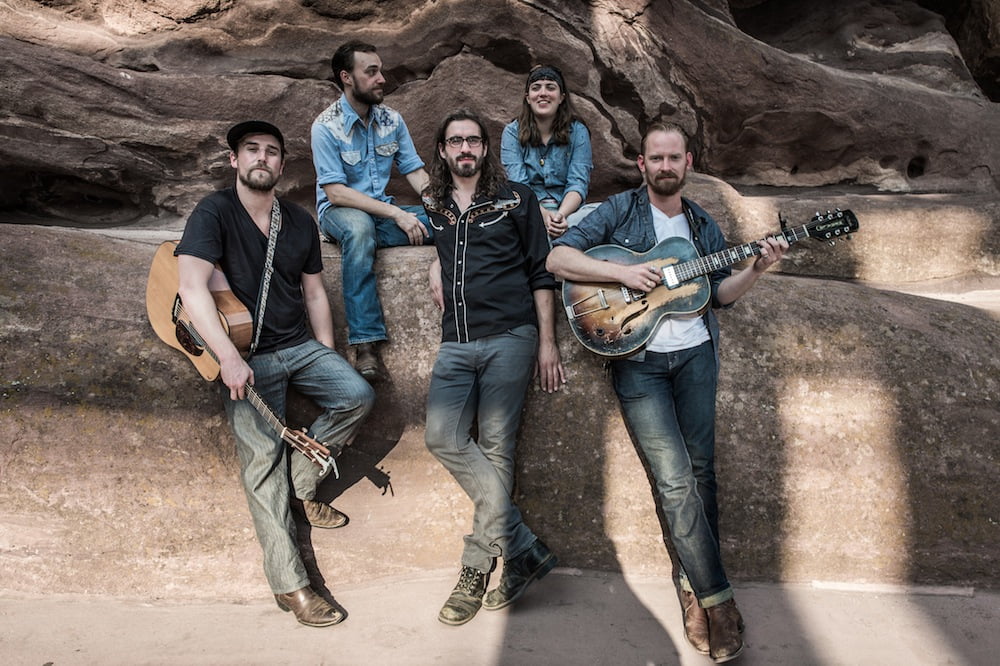
3×3: Fruition on Archtops, Clean Socks, and Inboxes

Artist: Jay Cobb Anderson (of Fruition)
Hometown: Lewiston, ID
Latest Album: Holehearted Fools
Nicknames: J, Jake, Jay Cobb

Your house is burning down and you can grab only one thing — what would you save?
I live in a van, but if I did have a house, it would have my old archtop guitar from the 1930s in it … which would be what I'd grab.

If you weren't a musician, what would you be?
Lost

How many unread emails or texts currently fill your inbox?
Over 100


Proof that there is water (and folk soul grass rock bands) on Mars. #nasa #spacex #martians

A photo posted by Fruition (@fruitionpdx) on

What is the one thing you can’t survive without on tour?
Clean socks

If you had to get a tattoo of someone's face, who would it be?
Jimi Hendrix or Jeff Buckley

Who is your favorite superhero?
Batman

The Simpsons or South Park?
The Simpsons

Dolly or Loretta?
Loretta

Meat lover's or veggie?
Meat lover's


Photo credit: Brian Spady