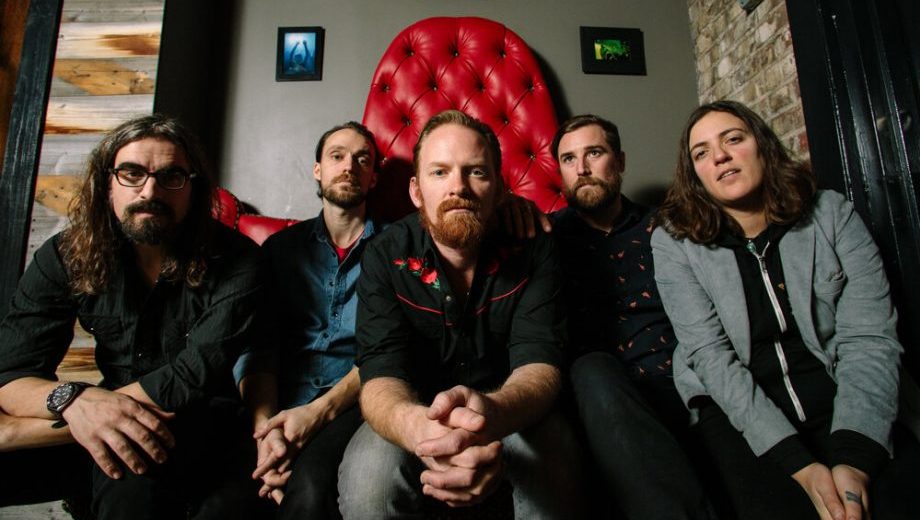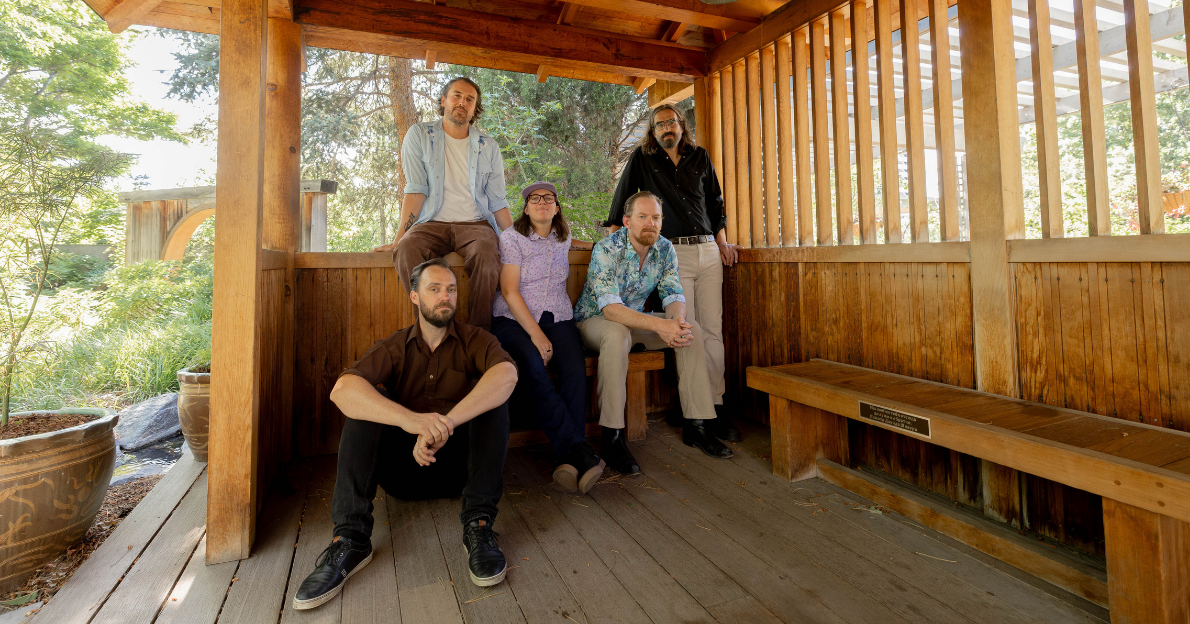
Fruition Finds Something More Before Finishing One Last Tour

Formed in 2008 as a busking band on the streets of Portland, Oregon, Fruition has thrived in the places where people would least expect it. I mean, how else does a folk pop band wind up playing for and being embraced by the jamgrass community?

Over the past 18 years the band — Tyler Thompson, Kellen Asebroek, Miriam “Mimi” Naja, Jay Cobb Anderson and Jeff Leonard — has dropped eight albums including the just-released Something More, each one more explorative and cohesive than the last. The new album’s 11 songs touch on everything from hurdles in relationships (“Matters of the Heart”) to finding light in uncertain places (“The Well”) and dreaming about what comes next (“Something More”).

As the title track suggests, Something More also happens to be the band’s final album (for now) after it issued a statement that the economics of touring are no longer feasible. Ahead of the album release, Jay Cobb Anderson spoke with BGS about why now is the right time to say goodbye.

BGS: Tell me about the timing of this decision to step back from touring. I understand it partly stems from some issues you were having with the band’s sprinter van.

Anderson: We’d already been thinking about stepping back and the van breaking down was just another sign that was the right decision to make. It all started this spring when Mimi came to the conclusion she didn’t want to tour anymore. A lot of bands will continue on when one of its members doesn’t want to do it anymore, but the core of the group has always been her, Kellen and me, so when she told us that we all began to reevaluate things. It’s just been really hard out there since the pandemic. There’s less people coming to show and guarantees for bands are lower as a result.

Also, for a long time I’ve wanted to focus on my solo stuff. So, this doesn’t mean we’re all going to stop making music entirely. The way we’ve been doing it is just no longer sustainable. Things change and people grow, so there’s no telling what’s going to happen in the future. Just because we aren’t touring doesn’t mean we won’t play together again. In fact, I highly doubt we’ll never play again. We might even put out another record but not tour on it — you just never know.

It sounds like your desire to make music together hasn’t waned, just that the financials and logistics behind it are getting tougher to manage.

That’s absolutely the truth of it. We’ve sacrificed so much for the music, and have done so for a long time, that it just became automatic. But at a certain point we started asking ourselves, “What are we doing?” Because even when you’re doing this at a high level on a bus, it still eats your time and keeps you away from home for long periods of time. When you’re young you feel like you can go on tour forever. We used to never think about the future, so this just feels like a natural evolution of things.

However, it is also very sad because we are at the point where we’re musically connecting better than we ever have. The shows have been incredible and the sound of our band has reached a point that we’re really happy with. It’s definitely bittersweet to think that it’s not going to happen like this anymore, especially when we’re firing on all cylinders, but that’s just the way it is and life goes on. I’m just excited and proud to be releasing what I think is the best record we’ve ever made before this.

Is there anything new or different you’re planning to bring to this final run of shows?

With where we’re at, we’re already taking more chances than we ever have on stage. This record pushed us in different ways, like on the title track when our bassist Jeff Leonard played piano. It’s the only song we’ve ever done where he’s stepped away from the bass. Stuff like that is going to be special live, but I’m also looking forward to digging into our back catalog as well.

One of the shows I’m most excited for is at the Crystal Ballroom [in Portland] in January. It’s our second-to-last show, so we’re hoping to turn that into a big event with a bunch of old friends. I’m actually out on the road with Caamp right now. I’ve played with them for the past year and a half when I’m available. Over that time Taylor Meier and I have become really good friends, so I’m hoping to have a sit-in from him somewhere along the way.

When you first began writing the songs that make up Something More, did you already know this would be your “final” record?

This album was being worked on way before we ever had the idea to stop touring. As artists and writers, you’re always trying to evolve, and this record in particular has more co-writes than any record we’ve done. What’s cool is you get to not only hear the evolution of us individually through some of those songs, but true collaboration as they’re coming to life too. The song “By Now” comes to mind. I remember Kellen had a riff on the piano and all of us gathered around him shouting out words until the song wrote itself. It was a true tri-write!

There was no intentional thought of “This is ending” but I believe we were being really vulnerable with each other by bringing up songs that were half-finished and writing them together, which we’d never done before. It’s a great way to give tribute to this band that we’ve all been in for so long.

You reunited with producer Tucker Martine — whom you refer to as a sixth bandmate — on this record. What drew you to working with him again?

We first worked with him back in 2018 with our record Watching It All Fall Apart. He produced that and we recorded it at Flora Studios, so we had a rapport with him and loved working with him. We always kept it in the back of our mind that if we wanted to do the producer thing again, maybe we should go back to him. He’s just so good at knowing what to say and how to coax the best performance out of somebody. He’s one of those guys that we all trust in his ear and ability to help us build this thing.

He’s also super encouraging and open for exploration of his studio. We’re the kind of people that when we walk into his studio, we start exploring and messing around with stuff immediately. One of the things he had was this old organ from the ’60s called an Ace Tone organ. It’s a little suitcase organ that has a Farfisa sound to it. It’s a very unique sound that we immediately put on the first track on day one. Then we put it on the second track and at a certain point we’re like, “Let’s see if we can put this on every track” and that’s exactly what we did. It’s something that would never have happened if we weren’t recording with Tucker and didn’t have that kind of encouragement and freedom to just explore whatever’s in the studio.

One thing that’s really hard about being in a band with three different songwriters is making a congruent record that flows together, because everybody can be in different places in their lives. We’ve always just cared about if the songs are honest and have integrity, and Tucker has this golden thread he’s able to weave in between every track. Part of that has to do with his capabilities from the engineering side of things, like some of the amps he’s using and compression that he’s using that give everything a similar sound, even though the songs might be completely different. There’s rock and roll songs on this record, there’s soul songs, there’s country-ish songs, and for him to add his flavor to it all just makes for a much better record.

Were there any other peculiar instruments that found their way onto the record?

He’s got a really old Maestro Rhythm King drum machine, and we ended up using it on the last track on the record. He also had a specific kind of reverb tank that Lee “Scratch” Perry used on all his reggae dub stuff, which Tucker loves. Also on “All Over,” he had an analog space echo that was really fun. We’re pulling these old junker Harmony guitars off the wall because they have cool tones. He also had an autoharp that we used at the end of the song “Forward.” I just pulled it down and strummed it to see if it would work and was like, “Oh man, it’s in tune for this one chord,” and it was the ending chord of the song. [laughs]

It sounds like a lot of experimenting and trusting your intuition, which also seems to be at the heart of the song “Compass.” Care to elaborate on it?

Yes. The title suggests that in its own way and the lyrics – ‘You could be a light in the sky / Your heart is a compass rose / And it knows what’s right’ – are such poignant and simple things. Kellen actually wrote it about ten years ago and we demoed it with Tucker our first time around with him, but it wasn’t quite ready yet and wound up sitting on the back burner for a long time. It just wasn’t going to die though and popped back up during this album cycle and we knew we were finally ready for it when it did.

You already talked about how this album was recorded long before a band hiatus was on the table, but what about the song sequencing? How intentional were you with that, and does any of it reflect that this is the end of an era for the band?

The track order was really hard this time around, which is funny to me because usually it’s not for us. We typically go, “OK, this will be a great opening track” and “This will be a great ending track,” with it ebbing and flowing in between, but this time we all had different ideas of how the track flow would work.

Since we couldn’t come to a consensus on anything, we instead just did whatever Tucker wanted to do. It resulted in a very different track order than I was wanting for the record, which is interesting because I can be a little pushy in my artistic visions. But I just relinquished control, which took me a while to do, and eventually something clicked and now it really resonates with me. In Tucker we trust.

What do you hope fans remember most about Fruition when they listen and look back on your legacy as a band?

When you do this kind of thing, you always hope that you are resonating with your crowd and giving them something that they need. Our fans have been so great through the years and so supportive to us. We have a lot of hardcore fans, and I know a lot of people are going to be affected by this, but I hope that they just come to the shows like they have in the past, enjoy themselves and let us do our thing. They’ve always trusted us with throwing out new stuff and trying new things.

My goal is that people walk away from some of these last shows reflecting on the songs, the moments we’ve shared together and how we have always tried to be genuine, honest and vulnerable. I don’t want any of them to walk away thinking that we’re over each other or making music together, because that couldn’t be further from the truth.


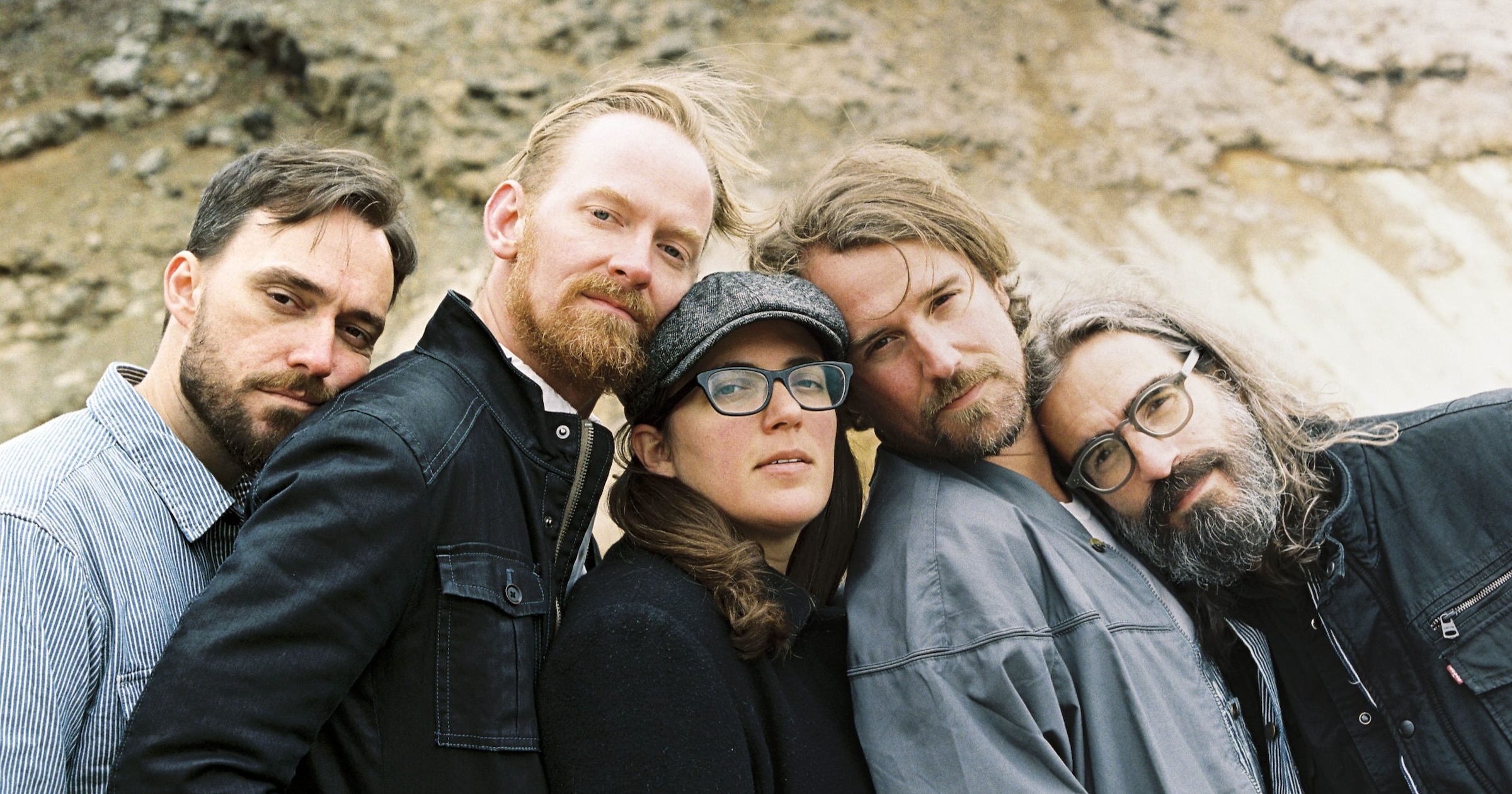
Photo Credit: Lauren Hartmann; L to R: Tyler Thompson, Kellen Asebroek, Miriam “Mimi” Naja, Jay Cobb Anderson and Jeff Leonard
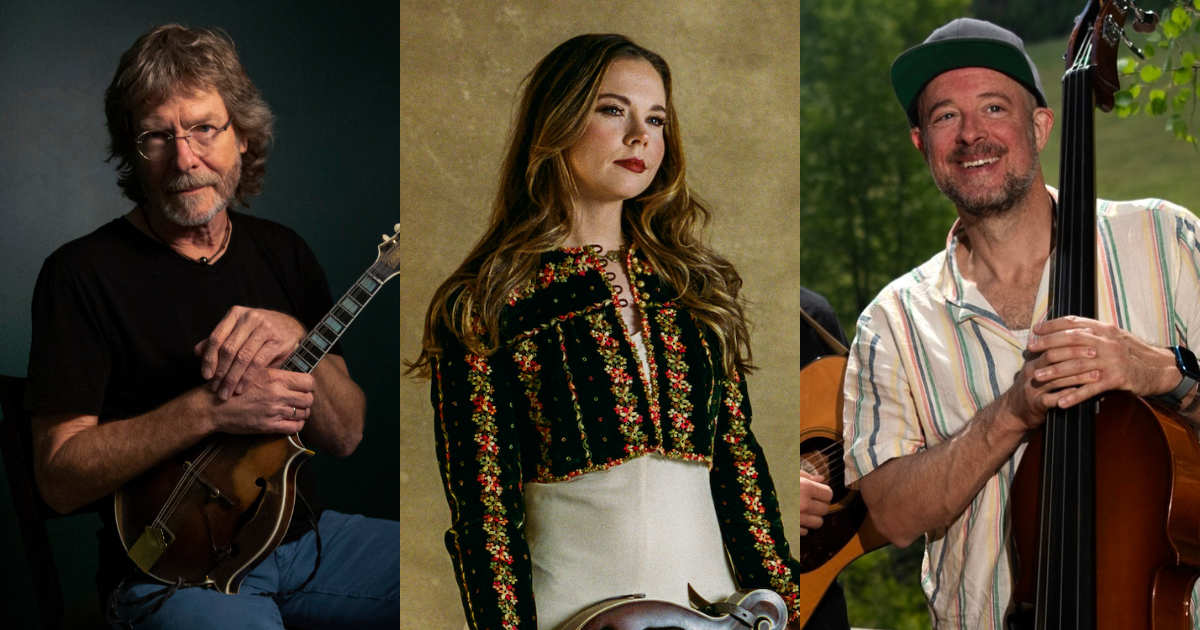

The Origins and Evolution of Jamgrass – And Where It Goes From Here

Whether it’s Bill Monroe, Sam Bush, Sister Sadie, or Billy Strings, bluegrass has always pushed boundaries. At the forefront of that movement sits jamgrass, which brings together a barrage of influences performed with grassy, stringed arrangements and an improvisational sensibility that makes each song and show feel like a living organism – and results in each performance having its own qualities and quirks.

However, despite many tying the origins of jamgrass to ’90s upstarts like Leftover Salmon and Yonder Mountain String Band, its roots actually go back at least a half-century – and in some cases to the very origins of bluegrass music itself.

“When Bill Monroe started the Blue Grass Boys and they came on the Grand Ole Opry with that band, they were so far removed and different from other string bands of that same era even though they had the same instrumentation,” says Bush. “They were light years ahead of all the rest of the music on the Grand Ole Opry in terms of progressiveness and innovation, so in his own way Bill Monroe was a rebel. The Opry audience was just astounded with the way they played, and then when Bill introduced a great fiddler like Chubby Wise and the banjo playing of Earl Scruggs, that’s what kicked what we call bluegrass into gear.”

That same trailblazing spirit of Monroe could also be found in Bush himself several decades later, with the formation of the Bluegrass Alliance and, shortly after, New Grass Revival. The latter went against the grain of traditional bluegrass in nearly every way imaginable, from covers of Jerry Lee Lewis, Bob Marley, and The Beatles to their long hair and the tie-dye they dressed themselves in. All more akin to Deadheads and the hippie movement than bluegrass at the time. Per Bush, the group was inspired by bands that had already deviated from the old-time ways of bluegrass like the Osborne Brothers, Jim & Jesse, the Country Gentlemen, the Dillards, the Greenbriar Boys, Area Code 615, and even John Hartford – who he’d later pay tribute to with his 2022 album Radio John.

That being said, New Grass Revival and the movement they helped spark also held the tradition of bluegrass in as high regard as anyone, even as the band pushed the music in a direction it had never been before. “We always said that if you want to play newgrass, you first have to know how to play bluegrass,” recalls Bush.

The band’s rise gave way to the progressive leaning newgrass movement that saw an influx of outside influences and experimentation flood into the music that Monroe and the Blue Grass Boys made famous, with one of the most notable being Leftover Salmon. Formed in 1989 – the same year New Grass Revival first broke up – in Boulder, Colorado, Salmon brought together acoustic and electric arrangements with percussion to create an offshoot of newgrass they coined “Cajun slamgrass.” The outfit’s hybrid sound was an instant hit, and by the early ’90s the band found itself on the H.O.R.D.E tour with rock and jam bands like Phish, Widespread Panic, Spin Doctors, and Blues Traveler. This further connected the worlds of bluegrass and jam, resulting in what many refer to as the official launch of the jamgrass movement later in the decade when Yonder Mountain String Band burst onto the scene.

In fact, Yonder’s bassist, Ben Kaufmann, recalls attending that H.O.R.D.E tour and credits it for sending him down the rabbit hole of bluegrass. But being from Boston and growing up a Deadhead, he knew that any music he’d go on to create would be radically different from what had come before it.

“We didn’t grow up in the rural South,” explains Kaufmann. “We were suburban kids, which was critical to whatever Yonder ended up achieving. If we weren’t, the band likely would’ve leaned much more traditional. We thought the music of Flatt & Scruggs, Bill Monroe, and the Stanley Brothers were the coolest things ever, even though it was born out of an environment that’s not ours.

“That, combined with the influences of our formative years, helped to mold our own little version of what a bluegrass band could be, even though not everyone thought it was the ‘right’ way to play it. For a while the bluegrass community didn’t want any part of us, which made me realize that if people weren’t going to invite us to their party that we’d create our own, which is exactly what we did.”

From there, Yonder integrated their high-strung and energetic live show even more than the jam band circuit, piecing together the foundations of what would soon become the jamgrass scene in the process. That momentum reached a fever pitch for the band in the late 2000s when the band was headlining bigger rooms than it ever had before and landing opening slots on arena tours with the Dave Matthews Band and Widespread Panic, similar to the gigs New Grass Revival had opening similar venues for Leon Russell in 1979.

Thinking back on that era of the band, Kaufmann says it made him understand the full potential of what jamgrass and bluegrass could achieve if given the opportunity, which he says is now being realized with artists like Billy Strings, Mountain Grass Unit, and others.

“Even in the late aughts when Yonder was at max room capacity and opening these arena shows, we wondered if bluegrass would ever work in rooms this big. And, to our amusement, it did – you just needed to fill the venue with the right people. We didn’t know if that would be us headlining those places one day, but playing those gigs showed us it was something that could happen.

“With that in mind, it’s no surprise to see a young gun like Billy Strings come along and set the world on fire. In the little amount of time we’ve spent together it was obvious that he is a special talent, so observing his rise and all he’s done for this kind of music has been mind-blowing.”

Yonder’s success lit a spark for the jamgrass movement that’s been burning ever since, with countless performers crediting the band for the influence they’ve bestowed upon them. One of those people is Kyle Tuttle, who grew up following the band around on tour in the early 2000s before eventually landing a spot playing in founding member Jeff Austin’s band after Austin departed Yonder in 2014.

“I was just starting to see real bluegrass and already loved the Grateful Dead, so when Yonder Mountain String Band came along and overlapped with those two worlds, it was like a dream come true,” Tuttle explains. “I’d been seeing all these suit-and-tie bands playing straight bluegrass and loved it, but at the same time I was also wondering where I fit into it. Then Yonder pops up and it feels like what I’d been waiting my whole life to discover.”

Tuttle played his first gig with the Jeff Austin Band in 2016 and remained in the group up until the singer’s untimely death in 2019. He went on to perform with the GRAMMY Award-winning Molly Tuttle & Golden Highway from 2021 to early 2025. Now he leads his own collective, the Kyle Tuttle Band, where he intertwines original compositions with traditional bluegrass covers and other off-the-wall influences as he puts his own spin on what jamgrass is.

“It’s a common perspective for people to not want you to mess with their bluegrass and tradition, whereas the jamgrass world tends to be more wide open,” admits Tuttle. “Fans nowadays are ready to hear whatever interesting mashup you create, which makes for a really nice union.”

With how wide open the jamgrass has become, even bands outside its periphery have found their way into the community from time to time. Take Fruition for example, a band that began busking on the streets of Portland over 15 years ago with a mix of string instruments and a poppy folk sound that sits on the far outer reaches of the jamgrass spectrum. Similar to how Yonder struggled to be embraced by the bluegrass community in its early days, Fruition’s Kellen Asebroek said it was the jamgrass community that first embraced and welcomed the band when nobody else would. “There’s no telling where we’d be if they hadn’t welcomed us into their family.”

“I was introduced to [jamgrass] in 2002 before I even knew what it was,” recollects Asebroek. “My uncle was a big Leftover Salmon fan and gave me an audience recording from the ’90s to listen to that left me in awe wondering what the hell it was they were doing. I grew up in more of a punk, reggae and classic rock world, so that was the first time I heard something remotely grassy. It wasn’t until we started Fruition and were busking on the street that people began referring to us as a jamgrass band. That being said, Fruition tends to be on the more structured side, so much so that I wouldn’t even call ourselves a jam band. We’ve always been in a unique place in that world in the sense that the jamgrass community is who took us in as babies and showed us around even though we were on the fringes of it.”

Also on the fringes of jamgrass is Daniel Donato, who began picking country and bluegrass tunes on Nashville’s Broadway strip as a teenager before launching his own project, Cosmic Country, in 2015 after seeing shapeshifting country singer Sturgill Simpson at the Ryman. The sound that grew out of that moment is equal parts Simpson and the Dead, but Donato says that bluegrass legends like Bill Monroe are also critical to what he creates as well, even though he utilizes mostly electric instrumentation.

“Jerry Garcia also had a really sophisticated understanding and appreciation for bluegrass music,” compares Donato. “The arrangements of the Dead were not succinctly bluegrass, but there was a ton of bluegrass influence that went into the way he played, especially with Old & In The Way and the Jerry Garcia Band. My goal has been to tap into a similar feeling, but with a slightly more prominent country twang.”

Someone else who’s spent plenty of time in the jamgrass scene despite not always producing music that would be categorized as such is Sierra Hull. The mandolin prodigy grew up on a heavy dose of traditional bluegrass in East Tennessee, with acts like Blue Highway, the Seldom Scene, and Lonesome River Band being the soundtrack of her youth. While she’s tended to lean more towards “chambergrass” and singer-songwriter styles in her adult life, she also takes plenty of time to let loose and jam, whether it’s stretching out her own material or joining artists like Cory Wong, the String Cheese Incident, Greensky Bluegrass, Béla Fleck, and Sam Bush on stage. The latter of whom she credits – along with luminaries like Peter Rowan and David Grisman – for planting the seeds that later grew to become jamgrass.

“For people like me, [Sam] was such a huge gateway to a lot of these other musicians who were really open-minded about what they played and who they collaborated with,” confides Hull. “Coming from a more traditional background, what I’ve enjoyed most about getting out to these bluegrass and jam festivals [is] mixing it up with folks. I’ve become a fan of jamgrass from seeing it all happen up close, rather than having grown up on albums – which I feel is the case for a lot of fans of jam music. The recorded music is still awesome, but the live shows are where the spirit and energy of jamgrass truly live.”

Hull continued, stressing how despite the current momentum behind jamgrass it’s still a very niche genre that nobody gets into expecting to become famous from it, which makes the heights Billy Strings and others are taking it to that much more mesmerizing.

“There’s something really cool about seeing folks who maybe don’t know who Bill Monroe or Doc Watson is, but they can go to a Billy show and immediately connect to the authenticity of what the music is,” exclaims Hull. “We live in a day and age where people are ripping on their pedals and doing more progressive stuff than they ever have before with string music, but at the same time most all of these bands have their moments where they throw that all away and just play a straight-up bluegrass tune. Seeing people resonate with that is central to what this music is and does.”

Another woman staking out a career in and around jamgrass is Lindsay Lou, who first discovered the subgenre witnessing the early days of Greensky Bluegrass performing in Michigan. Although she’d already been vaguely familiar with Yonder and Leftover Salmon, Lou credits Greensky’s sound and proximity to her as the driving factors for introducing her not just their music, but jamgrass as a whole.

“Greensky was my gateway to the jam world, because we were both part of the same scene,” says Lou. “I started hanging with them and soon found myself at festivals with other like-minded bands that sent me diving into the music of the Grateful Dead and others.”

One of those artists she wound up connecting with was a young Billy Strings, who she’d grow close with and later live across the street from in Nashville. The two would even go on to co-write a number of songs together including “Freedom” and “Nothing’s Working,” which both appeared on Strings’ albums Home and Renewal, as well as the latter appearing on Lou’s Queen Of Time. “It’s been really cool having written songs with Billy and hearing him perform them to arenas packed with 30,000 all singing along.”

“It’s no surprise to me that Billy has brought so many people to jam and bluegrass music in the same way that Yonder and Greensky did for so many before him, including Billy himself,” she stresses. “It’s been so much fun watching a young hippie kid like him take a traditional song to places you never thought it could go due to him embracing the musical conversation that jam music is centered around.”

Someone at the heart of the Billy Strings phenomenon is Jarrod Walker, who’s played mandolin in the Michigander’s band since 2018. Similar to Sam Bush, Walker believes the roots of jamgrass can be traced all the way back to Bill Monroe, due to how he took popular songs of the day and breathed new life into them with stringed arrangements – similar to how modern day jam bands pull from influences far and wide to create something entirely new. And although he credits Sam Bush as being a central figure for the movement, he also holds the Seldom Scene – who recorded an extended version of the Grateful Dead’s “I Know You Rider” (simply called “Rider”) on its 1973 album Act III – in a similarly high regard.

“There have been a smorgasbord of different influences in jamgrass from the very beginning with Irish and English music and gospel and blues – all of it was an integral part of what Bill Monroe originally did,” says Walker. “Then someone like Jerry Garcia comes along and follows Monroe like people would soon be following the Dead, which led to Old & In The Way, continuing the prophecy that’s still playing out to this day.”

But even as that prophecy continues to play out, Walker is amazed by where it’s taken not just the Billy Strings band, but string music as a whole. Having been accustomed to gigging at performance art centers and other smaller, seated venues for most of his pre-Billy picking days, he says that the experience of performing at rock clubs and now arenas with fans going crazy for bluegrass music has been mind-boggling and a phenomenon he’ll never stop being captivated by.

“[Playing arenas] is something none of us saw coming and is a combination of being at the right place at the right time and the contributions of everyone who came before us that paved this path for us to do it,” states Walker. “Billy is also a fantastic musician and student of bluegrass whose love for the music combined with his other influences is emblematic of the cohesion that is core to jamgrass and everything it stands for.”

Like all forms of music, jamgrass is a living, breathing organism that is constantly evolving and bringing new ideas and influences to the table. Whether it’s traditional and progressive bluegrass or rock, blues, punk, soul, country and everything in between, it all has a place in the jamgrass setting and is without a doubt the biggest driving factor of the genre’s success. It truly is a “rising tide lifts all boats” scenario that may have been a long time coming to arrive, but now that it’s here and thriving shows no signs of departing anytime soon.

“It took a long time for listening tastes to catch up with this kind of music and these instruments, but it’s no surprise to me that someone as talented as Billy is having the success he’s having,” declares Bush. “It’s only natural that the music is going to grow, and it’s in a really healthy place right now. But even with the rise of jamgrass you still have good ole Del McCoury leading the pack with his Bill Monroe style of bluegrass, and the same audience that loves jamgrass loves him too.”


Continue exploring our Jamgrass in July coverage here. This content brought to you in partnership with Preston Thompson Guitars.

Photo Credit: Sam Bush courtesy of Crossover Touring; Sierra Hull courtesy of the artist; Ben Kauffman courtesy of Crossover Touring.

30 Jamgrass Sitch Sessions

What do you mean this whole time we could have been the Jamgrass Situation!?

Ever since the earliest days of BGS we’ve been posting about bluegrass, hosting bluegrass shows, and shooting bluegrass Sitch Sessions. Our often-viral performance videos have been the bread and butter of the brand. Along the way, with our borderless and wide open “rootsy” purview, quite a bit of bluegrass “coloring outside the lines” has been celebrated on our site and jamgrass has permeated everything we’ve done. As the years went on, the influence of bluegrass’s current biggest phenomenon became more and more apparent on the site.

You can see this fact – obviously! – throughout our archive of Sitch Sessions. It’s quite the collection of first-rate jamgrass. Over more than 15 years we’ve had dozens of Sitch Sessions and YouTube videos feature some of the best and most beloved jamgrass acts around. One of our very first viral sensations was a now-retired clip of Billy Strings himself. But so many more have featured on our site and channels: Yonder Mountain String Band, The Lil Smokies, Elephant Revival, Front Country, Punch Brothers, Fruition, Greensky Bluegrass, Town Mountain, Mountain Grass Unit, Lindsay Lou, AJ Lee & Blue Summit, the Travelin’ McCourys, the Hillbenders – and many, many more.

From rooftops in downtown L.A. to Falkenberg, Sweden, to DelFest in Cumberland, Maryland, to the powdery slopes above Lake Tahoe to Telluride, Colorado, and back again. Across the trajectory of BGS over time, jamgrass has been an indelible through line of the work we do and the content we create. And we wouldn’t have it any other way!

To celebrate Jamgrass in July, enjoy exploring these 30 jamgrass Sitch Sessions. And dive into the archive here and here to see even more! Just for today, just for this month – let’s be the Jamgrass Situation.

“Take a Chance on Me” – Yonder Mountain String Band

We’ve gotten the chance to collaborate with Yonder Mountain String Band quite a bit over the years, but this Sitch Session has always been a highlight of our content together. YMSB have been carrying the jamgrass banner for a long time; they are stalwarts of the subgenre, for sure!

“Miss Marie” – The Lil Smokies

But why did the Lil Smokies have to retire!? We miss them so much already. If you miss them as much as we do, check out our final interview with the group posted in April 2025 on the heels of their excellent last album, Break Of The Tide.

“Cedarwood Pines” – The Brothers Comatose

Across the decades and generations you can always count on the Bay Area to produce excellent jamgrass. The Brothers Comatose certainly fit that descriptor! “Cedarwood Pines,” shot on a picturesque DTLA rooftop in 2017, features a classic lineup of the group and (gasp!) electric guitar!? (That’s how you know it’s jamgrass.)

“If Something Breaks” – Front Country

Speaking of Bay Area jamgrass – and bands we wish hadn’t retired! Front Country may be no more, but we’re glad we have our Sitch Session memories. And of course, the members of FroCo have gone on to do even more excellent things in roots music. For instance, have you heard BERTHA? Now there’s some jamgrass, too.

“Wasting Time” – Nathaniel Rateliff & the Night Sweats

Sometimes a band that isn’t a jamgrass band is a jamgrass band, you know what we mean? Now, are Nathaniel Rateliff & the Night Sweats always a jamgrass band? Perhaps no. But here, in our Sitch Session, or in many of their live, all-skate jam or festival or collaboration set contexts? Could be jamgrass… It’s always in the ear of the beholder, after all.

“Winter to Pry” – The Deer

That time we shot sessions at Old Settler’s in Austin, Texas, was one of the best. Such a great range of acts, sounds, and styles. The Deer turned out a perennial favorite Sitch Session for us, which we returned to time and time again as winter would roll in. The outdoor Austin shoot and the Deer’s offering of the song would always warm us up.

“All Day All Night” – River Whyless

If you miss River Whyless, worry not, this band hasn’t retired, they’ve just slowed down a bit and re-intentionalized their performing and touring rhythms. We once featured the group on our stage at Bonnaroo and while their sound always defied perfect categorization, here on “All Day All Night” and on festival stages – and elsewhere, to be sure – they often fit the jamgrass bill perfectly.

“Hey Boys” – The HillBenders

Recently the HillBenders have slightly shuffled their lineup, but the Missouri-based band are still one of the most party-ready groups on the bluegrass and jamgrass scenes. Their work with Keller Williams and Tommy: A Bluegrass Opry are the jammiest of their offerings, but the threads and vibes of jams and jamgrass are woven throughout their work.

“Home In Your Heart” – Elephant Revival

One of our coolest Sitch Session locations ever! Out in the desert in Pioneertown, California, with Elephant Revival. This has always been such a memorable one. Here’s another group we greatly miss.

“Dance You Hippy Dance” – Tim O’Brien

What do you call a forefather who’s also a currentfather? That’s what Tim O’Brien is to jamgrass, a foundational figure who’s also active in the music and in moving it forward. And what would jamgrass be without dancing hippies? Nothing! It would be nothing!

“Burn Them” – Greensky Bluegrass

One of our most-viewed Sitch Sessions of all time, and it’s no wonder. Greensky Bluegrass epitomize the ethos of jamgrass – community, longevity, collaboration, and of course, jams. Every time we collaborated with Mason Jar Music, who produced this session, the results would be stellar. With 1.5 million views and counting… jamgrass is where it’s at.

“Death Comes Knockin’” – Fruition

When bands and performers would route through Los Angeles, we often jumped at the chance to link up and capture some content. In 2016, we met up with Fruition in Echo Park to shoot “Death Comes Knockin’” a rocking, macabre song that’s as old-timey as it is jammy. Fruition have always been good at infusing the traditional into their progressive sounds. An essential band of the modern jamgrass movement.

“My Oh My / Boll Weevil” – Punch Brothers

Okay, now just because they can also play classical doesn’t mean Punch Brothers aren’t a jamgrass band! It’s bluegrass, it’s jam band, it’s jamgrass. I mean, you can’t be a string band playing that many Radiohead covers and not be considered jamgrass, right? Right.

“Coming Back To You” – Town Mountain

North Carolina has birthed some high-quality jamgrass over the years. Another band we’d wish out of retirement if we could, Town Mountain combined jam band appeal with country twang and bluegrass drive (and silliness, too). They were jamgrass even before they added a drum kit and a pedal steel, but towards the end of their tenure there they seemed to creep ever closer to the jammy center.

“One Horse Town” – Michael Cleveland & Flamekeeper Featuring Charlie Starr

Fiddling phenom Michael Cleveland is as traditional as they get, but whether in his work with Jason Carter or his many jaw-dropping features – with Béla Fleck, or Billy Strings, or Tommy Emmanuel, or whomever – he’s known to shred his way through some jamgrass, too. Partnering here with Charlie Starr of Southern rock group Blackberry Smoke, Cleveland and his band Flamekeeper are remarkably jamgrass.

“Billy in the Lowground” – Kenny G, Ed Helms, Bryan Sutton, and Gabe Witcher

A virtual jam for pandemic times creates virtual jamgrass of the highest – and most random – sort! One of our crowning achievements across the history of BGS will be getting Kenny G in on a COVID benefit bluegrass jam. For Whiskey Sour Happy Hour, our pandemic-era virtual variety show, the sensational wind specialist performed “Billy in the Lowground” with Bryan Sutton, Gabe Witcher, and our co-founder Ed Helms. ICONIC. If Kenny G is playing bluegrass, it’s gotta be jamgrass.

“Turn Around” – Larry Campbell and Teresa Williams

Calling Larry Campbell and Teresa Williams “jamgrass artists” would be woefully reductive and simplistic. Still, it wouldn’t be right to exclude them from this list. Across their varied and diverse careers they’ve collaborated, recorded, and performed with some absolutely seminal figures in Americana, jam band, and bluegrass. Here, we caught up with the duo while sailing aboard our favorite roots music cruise, Cayamo.

“How Many Times” – Rainbow Girls

Something about Rainbow Girls is just a perfect fit for a jamgrass playlist – and we don’t just mean the rainbows. Also captured aboard a Cayamo voyage, this Bob Marley cover by the Bay Area-bwased folk group encapsulates so many of the facets that we love about jamgrass, from the material to the joy they bring forth in the music to their humor and community mindset.

“House of the Rising Sun” – Peter Rowan, Sam Bush, and Friends

There wouldn’t be no jamgrass without these fellas! At MerleFest last year Sam Bush hosted the iconic Late Night Jam and there were quite a few Late Night-jamgrassy moments. Whenever jamgrass gets to the point of having its own canon of recognizable material, like bluegrass, old-time, jazz, and others, “House of the Rising Sun” will surely be found among those songs. Absolutely nonnegotiable.

“Takes So Long, Goes So Fast” – Lindsay Lou

Decked out in snow gear, in a gondola above Lake Tahoe, with a bunch of hippies and wooks and music fans at WinterWonderGrass? Yep, that might be jamgrass. Lindsay Lou has become a stalwart in the younger jamgrass generations, and certainly not just because of her many connections to Billy Strings. As a performer herself or a collaborator or artist at large, she’s a favorite at jamgrass festivals and events.

“Fishin’ in the Dark” – AJ Lee & Blue Summit

Jamgrass filtering down through the generations! A fantastic up-and-coming bluegrass band, AJ Lee & Blue Summit, offer their rendition of a jamgrass classic first recorded by Nitty Gritty Dirt Band. Who are Nitty Gritty if not a jamgrass outfit? While AJ Lee and band are much more than “just” jamgrass, they fit that moniker oh so well. This Sierragrass Sitch Session has been a fan favorite.

“Lonesome Dove” – Mountain Grass Unit

Shouldering the jamgrass mantle for Gen Z, Mountain Grass Unit have jammed with everyone from Billy Strings to Kesha to Shania Twain. These fellas are making a name for themselves right at the very center of the jamgrass universe, but while still carving out their own sound and their own identity. An exciting act to be watching and following along with at this juncture, their new album is set for release in late August.

“The Missing Stair” – Big Richard

You know what’s a prerequisite for being or becoming a jamgrass band? Big Richard energy. This group of supremely talented women have got it. We’d love to see them on more jam band and jamgrass festival lineups – a welcome palate cleanser, indeed.

“Fiery Gizzard” – the Travelin’ McCourys

Del McCoury Band have been known to dip a toe in the jamgrass waters regularly, but when the boys are “released” from their duties with their father and bandleader and go out as the Travelin’ McCourys is when they really lean into the jams. Their live shows are some of the highest quality jamgrass out there, the most elite bluegrass virtuosity lent to the jammiest, rip-roaringest tunes and songs.

“The Road Is a River” – Jim Lauderdale

Country’s modern renaissance man Jim Lauderdale is oh-so-many things – and jamgrass is one of them. With Lillie Mae and Frank Rische at his side, that seems especially true in this Rootsy Summer Session shot in Sweden. With as much tai chi as Lauderdale does, of course he belongs on this list!

“High Country” – Leftover Salmon

Leftover Salmon are one of THE most important and impactful artisan purveyors of jamgrass around. We were lucky to finally get a Sitch Session with the group a few years ago at WinterWonderGrass in Colorado. WWG is one of the best jamgrass assemblages around these days, and the festival just announced BajaWonderGrass in Mexico for April 2027.

“Weight of the World” – Clay Street Unit

Another group on the cutting edge of jamgrass and actively building its future is Clay Street Unit. Born out of the fertile jamgrass territories surrounding Denver, Colorado, the band just released their debut album earlier this year. So there’s still ample opportunity to get in on the “ground floor” of a group that is certainly going places.

“These Chickens Eat Fascists” – Pixie & the Partygrass Boys

We’d like to thank Pixie & the Partygrass Boys for representing anti-fascism in jamgrass. It’s an important beat and we need more folks giving us such a hilarious point of solidarity as “These Chickens Eat Fascists.” Two things jamgrass is always going to be: open and accepting of everyone, and a goddamn party!

“Not Quite Spring” – Kyle Tuttle

A premier banjoist in jamgrass, Kyle Tuttle has performed with so many greats in the subgenre, from Jeff Austin and Molly Tuttle to Lindsay Lou to Leftover Salmon – and many, many more. His own solo albums and solo shows (which are, gratefully, becoming more and more frequent) are jamgrassy top-to-bottom. If you’re lucky, catch him at Bluegrass Mondays at Dee’s Country Cocktail Lounge in Nashville these days, where he’s often holding court with impeccable bands backing him up.

“Islands In the Stream” – Love Canon

A jamgrass tributary in the mighty jamgrass river coursing towards the roiling jamgrass sea is cover songs from outside of bluegrass and roots music altogether. Ever since the Earl Scruggs Revue, New Grass Revival, and others in the earliest days, this has been an important plank in the jamgrass platform. Love Canon are one of the bands who did it best, offering bluegrassified versions of absolute bangers – like “Islands In the Stream,” here featuring Lauren Balthrop on vocals.


Lead Image: AJ Lee & Blue Summit

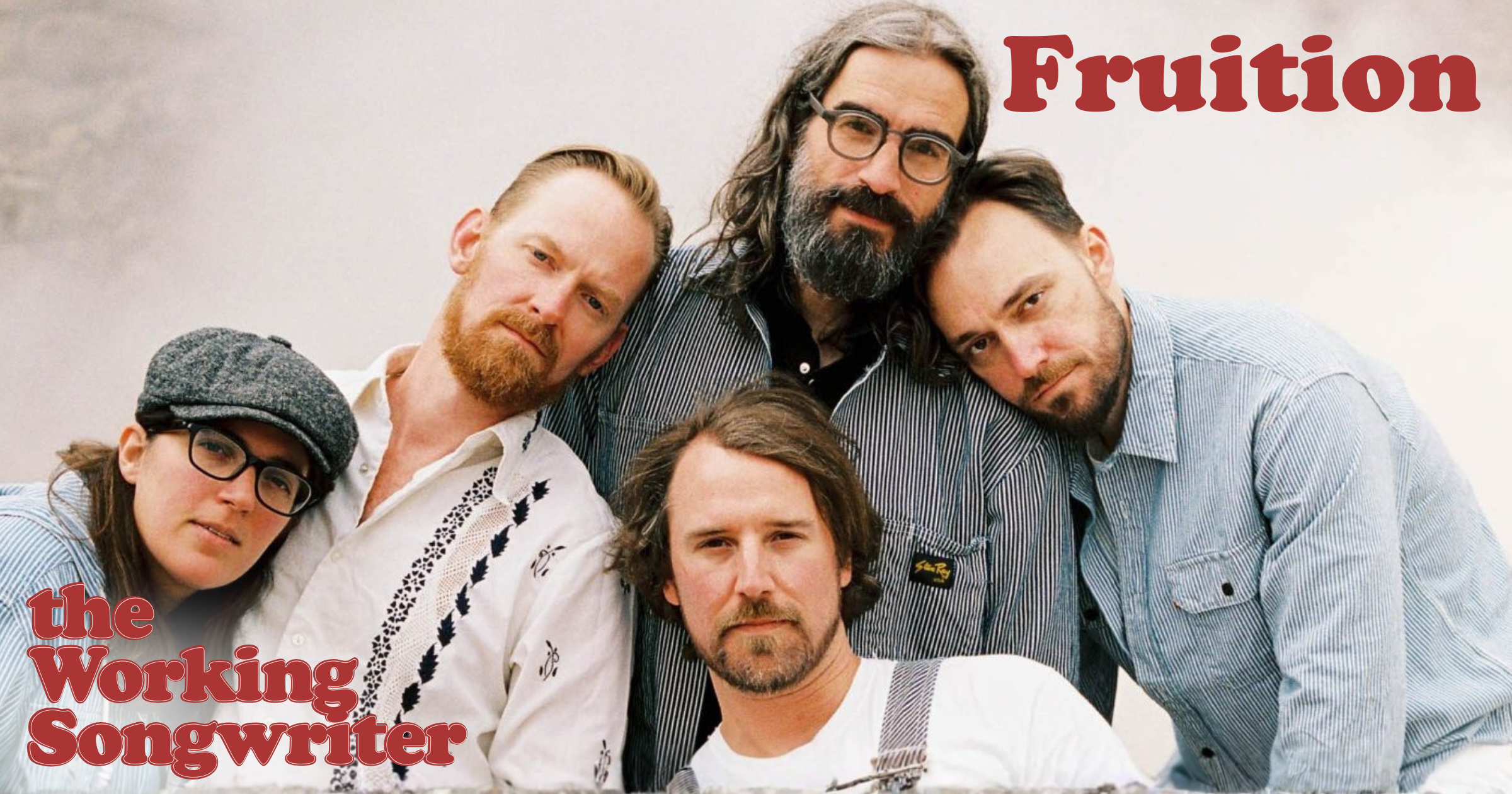
The Working Songwriter: Fruition

Our guests this week got their start busking on the streets of Portland, Oregon, but it wasn’t long before their popularity pulled them onto the open road. Jay Cobb Anderson and Kellen Asebroek are pivotal and founding members of roots music band Fruition. They have toured with Greensky Bluegrass, the Infamous Stringdusters, Yonder Mountain String Band, and many others and have appeared at iconic festivals such as Telluride Bluegrass Festival, WinterWonderGrass, and the Northwest String Summit.

LISTEN: APPLE • SPOTIFY • LIBSYN • MP3

Fruition’s 2018 release, Watching It All Fall Apart, debuted at #3 on the Billboard Bluegrass Albums Chart. Billboard said, “Fruition have matured into one of America’s most compelling roots acts” while Rolling Stone Country noted, “The trio’s harmonies are as tight as anything coming out of Nashville.” No Depression declared that they’re “a band whose chemistry feels lived-in and wholly authentic.”

I got a chance to catch up with them a while back to hear about their musical journey so far.


Photo Credit: Kaja Sigvalda

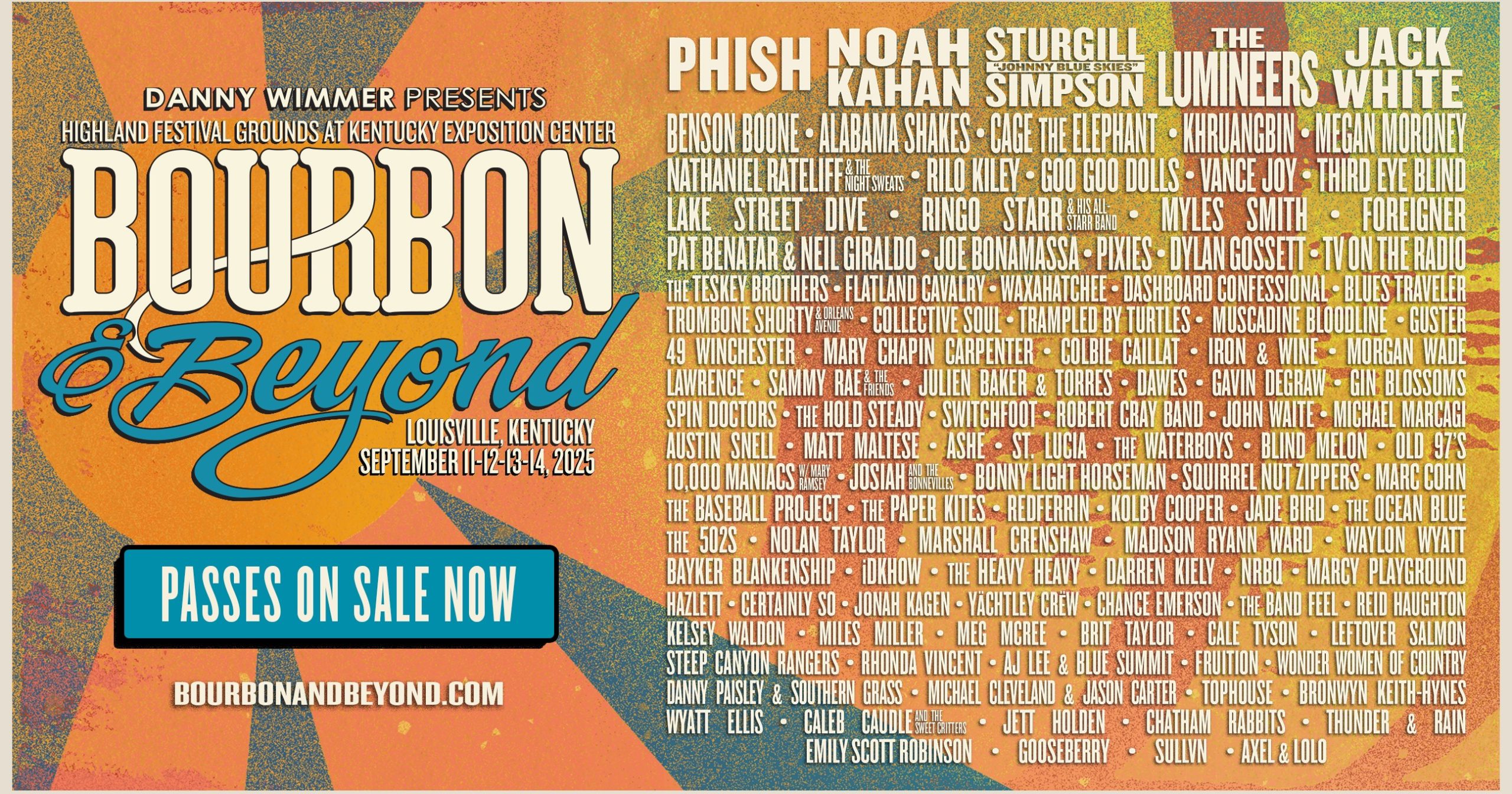
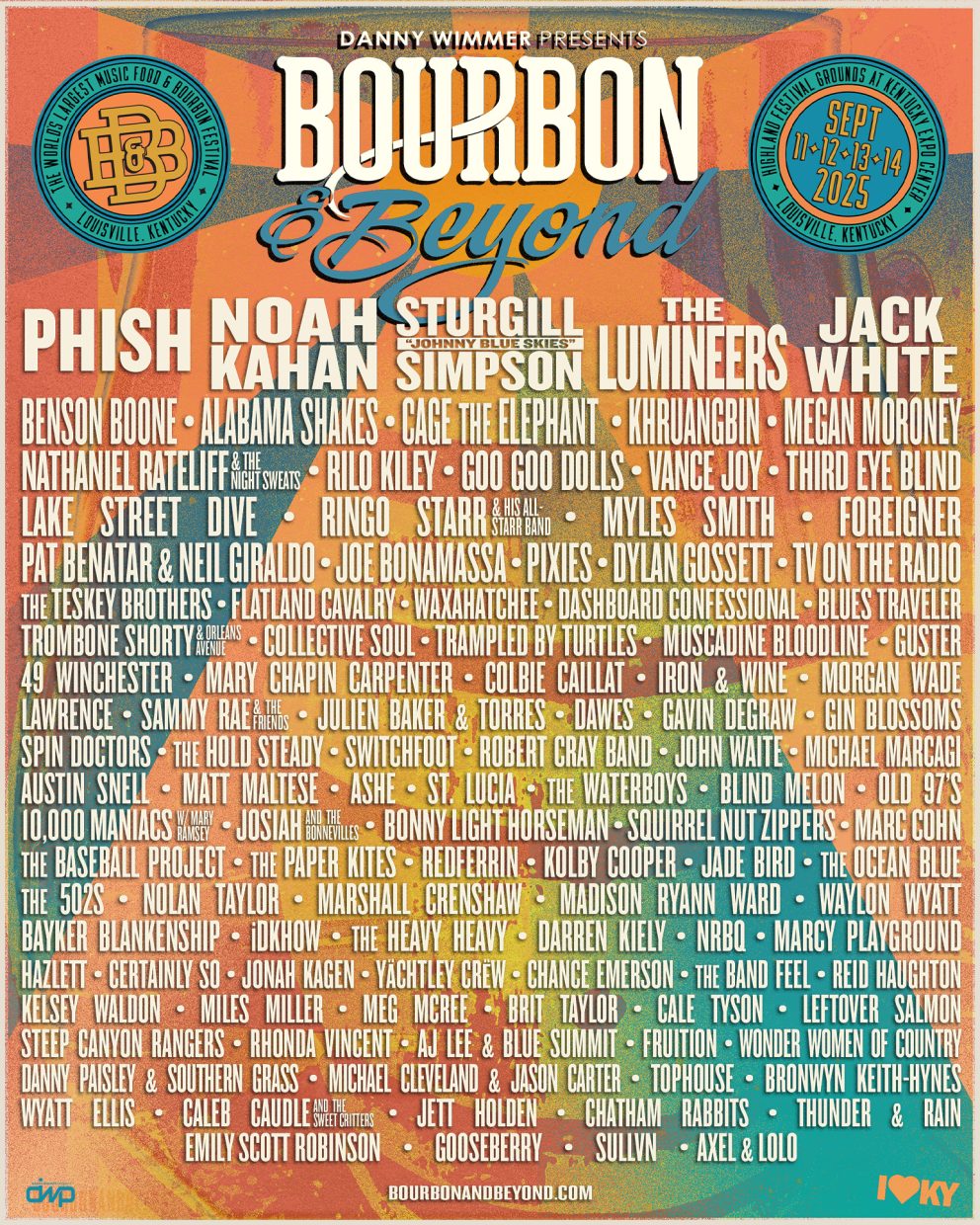
ANNOUNCING: The Full Lineup for Bourbon & Beyond 2025 is Here

Today, Bourbon & Beyond, the world’s largest music and bourbon festival, announced its lineup for their 2025 event, occurring September 11 through 14, 2025 in Louisville, Kentucky once again held at the Kentucky Expo Center. Last year, the festival attracted more than 200,000 attendees over its four days, setting a record as the largest music festival in the state’s history with its singular and wildly attractive roots-meets-mainstream lineup.

This year, main stage headliners include The Lumineers, Alabama Shakes, Phish, Sturgill Simpson (as Johnny Blue Skies), Jack White, Noah Kahan, Megan Moroney, and more. Plus, BGS returns to Bourbon & Beyond for our seventh consecutive year, programming The Bluegrass Situation stage in the Kroger Big Bourbon Bar. Attendees can enjoy delicious Kentucky Straight Bourbon Whiskey from dozens of distilleries while hearing the best bluegrass, country, and Americana from across the country. Don’t miss line dancing between sets while you enjoy the sounds of BGS – from new discoveries to living legends – and one of the shadiest spots on the festival grounds.

Our headliners gracing the BGS stage will be some of our biggest gets yet for the event, including AJ Lee & Blue Summit, Rhonda Vincent, Steep Canyon Rangers, and Leftover Salmon. Plus, you can catch Jason Carter & Michael Cleveland – who just announced their upcoming debut duo album – young mandolin phenom Wyatt Ellis, the impressively big-voiced Jett Holden, GRAMMY nominee Bronwyn Keith-Hynes, and many more. (Find our full BGS stage lineup below.)

While there’s always plenty of bluegrass and old-time, folk and Americana to be found on our own stage, B&B boasts an incredibly diverse array of artists, bands, and musicians each year across all of its stages. Elsewhere during the event we’ll be running around, too catching sets by Bonny Light Horseman, Kelsey Waldon, Flatland Cavalry, Jade Bird, Julien Baker & TORRES, Mary Chapin Carpenter, Lake Street Dive, Trampled by Turtles, and so many more.

“Bourbon & Beyond is the best lineup of the year – bringing together the biggest names in rock, Americana, and alt, alongside country icons and breakout artists,” says Danny Wimmer of Danny Wimmer Productions, who produces the event. “It’s a festival that doesn’t just celebrate one sound, but the best of all of them, paired with world-class bourbon, incredible food, and that unmistakable Kentucky vibe.”

We couldn’t agree more. Bourbon & Beyond remains one of the highest quality events we’ve ever partnered with, bringing together world class food and beverage, unique experiences and activities, so many genres and sounds, and the buzziest talents alongside sparkling fresh discoveries and legacy acts with household names. All set in the heart of roots music country in beautiful Kentucky.

Tickets for Bourbon & Beyond are on sale now. We hope you’ll join us for yet another year in Louisville – you won’t want to miss our BGS stage lineup or any of the limitless fun B&B has on offer.

BGS Stage Lineup:

AJ Lee & Blue Summit
Rhonda Vincent
Steep Canyon Rangers
Leftover Salmon
Caleb Caudle & the Sweet Critters
Jason Carter & Michael Cleveland
Chatham Rabbits
Wyatt Ellis
Fruition
Jett Holden
Bronwyn Keith-Hynes
Danny Paisley & Southern Grass
Steep Canyon Rangers
Thunder & Rain
TopHouse
Wonder Women of Country


Graphics courtesy of DWP.

15 Years In, Fruition Aren’t Just a Band, They’re a Family

For many of us, we’re already well aware of how difficult it is to pinpoint the sonic tones and textures of Fruition. From Americana to blues, gospel to folk, the ensemble has this “kitchen sink” type of subconscious approach — one where anything goes musically, so long as it inspires and stokes the creative flame within.

On their latest album, How to Make Mistakes, the Portland, Oregon-based quintet retains that same intent, which has made the group a prized touring act in acoustic realms coast-to-coast since it first came onto the scene in 2008.

At the helm of the band is founding member Mimi Naja, a multi-instrumentalist whose swirling, carefree vocals of joy, purpose, and curiosity reside at the heart of the chemistry that gives Fruition this ebb and flow relationship with the muse itself. Always soaking in whatever you cross paths with; always radiating a deep sense of self from inhabiting of your own respective path in this universe.

Beyond the new record, Fruition also recently crossed over the 15-year mark together, after a cosmic happenstance where guitarist Jay Cobb Anderson just so happened to see Naja at a Portland open mic night those many years ago — the result being this continued journey of not only artistic discovery, but also genuine friendship.

Listening to the new album, what I like about it is in such a chaotic world we live in on a day-to-day basis, it’s relaxing. It made me, purposely or subconsciously, slow down a little bit.

Mimi Naja: Yes. That’s amazing. I love “relaxing” as an adjective. I really feel like we matured a little bit by this stage. But really, I think we just kind of relaxed. There’s a lot of half-time tempo. Just settle in and do the song. Not a lot of pumped, flashy, show-off energy, just very chill.

It didn’t seem like y’all were in a hurry. It seemed like the band was enjoying the process, being together and creating.

That’s exactly it. You’re nailing it. I’m glad that it’s coming across that way. The title, How to Make Mistakes, is pulled from a song lyric in one of the tracks. But, it’s really appropriate to the fact that it’s all [recorded] live with no overdubs. All in the same room and just in the moment. Making a record like records used to be — an actual record of people sitting in a room playing music.

What does it feel like to be with folks that you’ve played together for 15 years and to still enjoy that space?

It’s the best. And the fact that it has been so many years is why it’s easy to get there. I dabble in other side projects and I love the thrill of having to stay on your toes, when you’re getting to know someone musically and otherwise. But, it’s a real blessing to just settle in [with Fruition] — it feels like home.

Maybe even on an existential level, what does that album title mean to you?

We just believe in the beauty of flaws. And knowing when something is raw, it’s real. In a world of how we look on social media and filters and everything being polished and clean and quantized, we love the realness and the rawness. Sometimes that’s cracks in your voice or you’re slightly out of tune or whatever it is — we love that. There’s a thirst for that realness in this polished age. So, we hope it makes the ears happy in this world.

Whether it’s conscious or subconscious, your band is very elusive sonically. Is that by design or just how things evolved?

I think it’s a point of pride in the early days of, “We are here to deliver a good song in its finest form, no matter what it sounds [like].” In some ways, it’s been to our detriment, as far as a growth trajectory. From a longevity career standpoint, being elusive is charming, but it’s also hard to sell. So, in a way it was by design. But then, as the years went on, I think we hate boxes. People need boxes and we don’t have one for them. So, that’s why we’re kind of trying to cling to this Americana blanket because it works for us.

There’s such a rich tapestry of sound. I hear Delta blues, gospel, country, indie rock, and folk. I hear everything in there. But, that’s also a testament to the band’s curiosity. Y’all seem like you’re sponges just constantly soaking in influences.

For sure. And it’s what we love about ourselves individually and as a band. It’s what fuels such a richness. But, it’s a double-edged sword. That can be confusing to new fans that are just pushing play. It’s such a crap shoot on whatever two or three songs they choose to push play on throughout our pretty large discography. They could get a very different outcome. But, you know, that’s the chance we take, we love it all. That’s what makes this unique, but also confusing.

Multiple harmonies are a big part of your sound. Why is that such an important component to the band?

We just love singing, first and foremost. As a band, that’s the roots of where we began. We were a sidewalk busking band before we ever really organized. That’s just what we were doing for fun and for chump change. Back in the good old days, just busking to pay our bills. And that’s when we realized how powerful this three-part harmony was together. And that comes back to [the new album], how it feels sitting in a room together when those three-part harmonies kick in. That’s what really feels like home. It’s always to serve the song – that’s our deep love right there.

What did busking teach you about who you are as artists?

You learn to use the kind of the raucous, fast, high, long note vocals. But faster, a little more like party songs. We knew when we needed to turn it up, to turn some heads and get a couple bucks dropped. But, I learned once you’ve drawn them in, that’s when you can do what you really want, which is sing the slower, sadder, prettier things. We love it all. We love raucous rock, but we’re really quite tender artists at heart. I learned how to get attention and I learned that we do have something special. Once we’ve gotten the attention, we have it, and so then we have freedom to relax. Today’s climate makes it pretty challenging, but we believe in it and we’re just hoping for more ears, so that we can continue doing what we love.

Fruition recently crossed over the 15-year mark. What’s been the biggest takeaway for you on this journey thus far?

I can tell you that the passing of time is blowing my mind. Fifteen years sounds wild. My body doesn’t feel youthful, but my spirit still feels youthful. The road and the performing, the giving your heart up onstage and getting that back from the crowd? That keeps us young. The flying and sitting in vans doesn’t. There’s a youthful spirit that stays alive through all of this somehow. A true band is as deep as a marriage or a sibling-hood. It’s beautiful. And it’s a real testament to the music, too, because it’s cool when you see people just grow and continue to offer new shades of their music or new chapters. And, with no shade to any sort of artist or bands with hired guns, it’s very apparent that this is so different from that. It’s so much deeper. It’s a family, you know?


Photo Credit: Kaja Sigvalda

The BGS Radio Hour – Episode 204

Welcome to the BGS Radio Hour! Since 2017, the weekly show has been a recap of all the great music, new and old, featured on BGS. This week, we bring you old bluegrass newly recorded by the Infamous Stringdusters, music from our Artist of the Month, Peggy Seeger, and so much more! Remember to check back every Monday for a new episode of the BGS Radio Hour.

The Brother Brothers – “Circles”

Celebrating their upcoming Calla Lily (available April 16), Adam and David Moss of the Brother Brothers joined us on a recent 5+5. We talked John Hartford, writing music for dance, and the inspirations and songwriting techniques behind these two brothers and their new album.

Johnny Chops – “Trouble With the Truth”

Austin-based Johnny Chops brings us a song this week from his upcoming Yours, Mine and the Truth EP. This song pretty much fell out of the sky and onto Chops’ paper in his writing room one morning. The video continues to tell the story of the song, building a dark and bleak vibe through dramatic and abandoned filming locations.

Sinner Friends – “Unforgivable You”

Sinner Friends don’t just sound like vintage bluegrass: they record like it too, down to just a few microphones, no editing, everything done right then and there. Recorded and released by Bigtone Records, the result is on par with those early bluegrass recordings that defined the genre. This week, they bring us a song from their newly released Sinner Friends Miss You (The Quarantine EP). 

Keb’ Mo’ – Yamaha x BGS Artist Session

For 2021’s Folk Alliance International and SXSW conferences, BGS teamed up with Yamaha to film performances from some of the artists we’re most excited about. Our first segment is from none other than Keb’ Mo’, playing a Yamaha FGX5 – modeled after the vintage FG180, Keb’s first guitar which he unfortunately lost in the Nashville flood of 2010. Aren’t we all just waiting on the medicine man these days? Keb’ performs two songs for us, “Every Morning” and “The Action.”

The Gina Furtado Project – “Kansas City Railroad Blues”

Gina Furtado brings us the “magic fire” of the banjo on this new single, finding the sound that first made her fall in love with the instrument. It’s the latest single in an exciting and excellent batch from Furtado and Mountain Home Music Company, produced by banjo phenom Kristin Scott Benson, and accompanied by Drew Matulich, Wayne Benson, and siblings Malia and Lu Furtado.

Ervin Stellar – “Nothing to Prove”

From Grand Rapids, Michigan, Ervin Stellars joined us on a 5+5 last week – that is, 5 questions, 5 songs. We talked everything from Wes Anderson and the Coen Brothers to waves and mountains. And let’s not forget his new album, Nothing to Prove.

Mimi Naja – “All You Know of Me”

Known for her work with Fruition, Mimi Naja recently dropped Nothing Has Changed, her first solo release since 2014. We caught up with Naja to talk about songwriting, inspirations, and a dream meal pairing of Thai with Khruangbin.

Peggy Seeger – “The Invisible Woman”

Peggy Seeger is our Artist of the Month for April here at BGS! Her just-released First Farewell is a goodbye to recording and the road, but she is not leaving that lineage behind. Coming from a musical family including the likes of Pete and Mike Seeger, the traditional continues, as Seeger enlists her sons Neill and Callum MacColl on the new album. Stay tuned all month long where we’ll be featuring Peggy Seeger!

The Alex Leach Band – “The Turntable”

Alex Leach has been adored by the Eastern Tennessee bluegrass community since he first started appearing at the WDVX radio station in Knoxville as a small child. Through the years, he’s played with Ralph Stanley, hosts a weekly show on WDVX, and now has his newest endeavor, The Alex Leach Band, who just released their latest album (produced by Jim Lauderdale), I’m the Happiest When I’m Moving. 

Acoustic Syndicate – “Sunny”

Acoustic Syndicate has been making music in Western North Carolina’s jamband scene for over two decades, but their latest studio endeavor is the first in seven years. “Sunny” is a promising first release with Organic Records, the band joined by Brian Felix on piano and Lyndsay Pruett on violin.

Elizabeth King – “Living in the Last Days”

Memphis-based Elizabeth King brings us this deeply thought number this week from her latest album of the same title. “Living in the Last Days” is about the trouble that so casually surrounds our current days, and King sings about it with a lot of conviction. The song should inspire us all to look a little more closely at what surrounds us, and what we can do to make this world a better place for all.

Bobby Osborne – “White Line Fever”

“White Line Fever” was a hit for Merle Haggard in the 60s, but had never been cut as a bluegrass song. That is, until Alison Brown and Bobby Osborne got a hold of it. One thing leading to another, and Jeff Tweedy wrote a second verse about Bobby (being the voice of Rocky Top) and his 60 years on the road as a musician. Mixing all of this with some A-list bluegrass musicians like Sierra Hull and Stuart Duncan, well… this is the result! As Brown says, “it was hard to believe the song hadn’t been a bluegrass standard all along.”

Cha Wa – “My People”

Joseph Boudreaux Jr, vocalist for Cha Wa, teaches us about ‘ancestral recall’ with this song, a phenomenon where people consciously or subconsciously draw on the experiences and lives of their ancestors to perpetuate a certain lifestyle or culture. “‘My People’ reminds us that no matter who you are — rich or poor, big or small — we’re all in this together as humans,” Boudreaux told BGS. “Cause one day we gon’ all be in the same boat.”


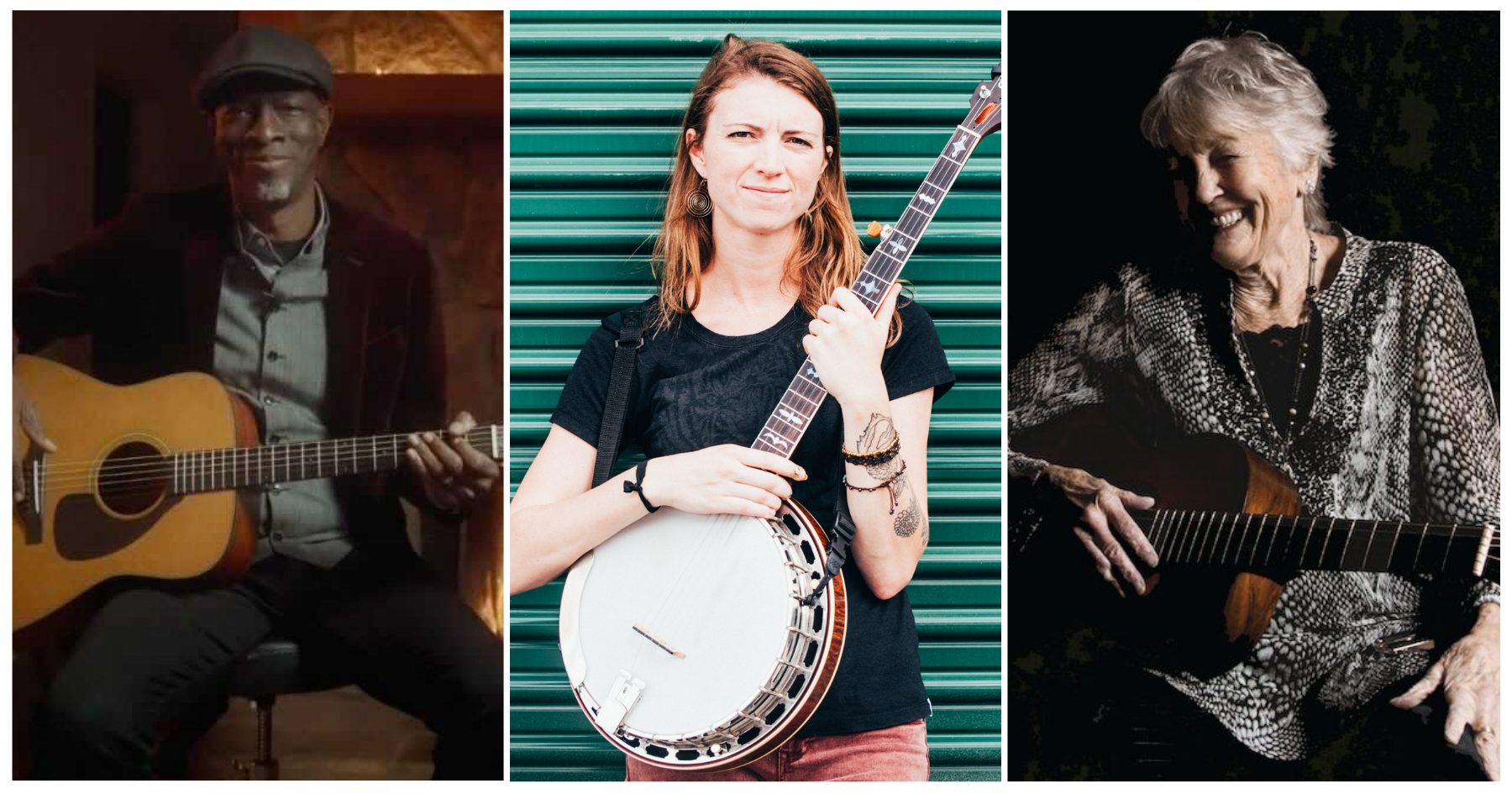
Photos: (L to R) Keb’ Mo’; Gina Furtado by Sandlin Gaither; Peggy Seeger by Vicki Sharp

BGS 5+5: Mimi Naja

Artist: Mimi Naja
Hometown: Atlanta, Georgia
Latest Album: Nothing Has Changed

What was the first moment you knew you wanted to be a musician?

One of my earliest memories is being in the basement of my childhood home and walking past the old beat-up upright piano. It had dents and scuffs and chipped keys, and was my favorite thing in the house. I remember being four years old and reaching up to plunk the keys, or climbing up on the bench, and my feet couldn’t reach the pedals. My parents were incredibly supportive and put me in piano lessons immediately.

What’s the toughest time you ever had writing a song?

“Counting the Days” comes to mind, from Fruition’s Broken at the Break of Day. The bulk of it was written ten years ago, as a relationship was unraveling. There’s a lot of honesty of shortcomings of action and character in it, which is always challenging but also essential for such a personal song. We shelved it for several years, knowing it had some golden nuggets in it, but it just wasn’t there. I revisited the lyrics for those sessions and rewrote some, with newly informed tidbits dealing with the same shortcomings, but from the unraveling of another relationship. So, opening old wounds and acknowledging new ones in the same vein. Painful and necessary.

Which elements of nature do you spend the most time with and how do those impact your work?

Any body of water. If I lived near the ocean, my answer would clearly be the ocean. As it stands, I get to lakes and ponds more often, and the stillness really caters to a de-cluttering of the mind that helps writing come more easily.

What rituals do you have, either in the studio or before a show?

On tour, if there’s time between soundcheck and doors, I always try to walk to a coffee shop and find a local rag, or a local music shop. Mostly just in it for the walk if the weather’s good, to try to get a taste of where we are besides the four walls of a venue. Other rituals will look a lot different now that I’ve gotten sober. It’ll be ginger tea, mocktails with seltzer, cranberry, and lime, and hitting a room in the Sobriety Clubhouse.

Since food and music go so well together, what is your dream pairing of a meal an a musician?

I’ve been cooking lots of Thai food. I’d like to do Thai with Khruangbin.


Photo credit: Michael Weintrob

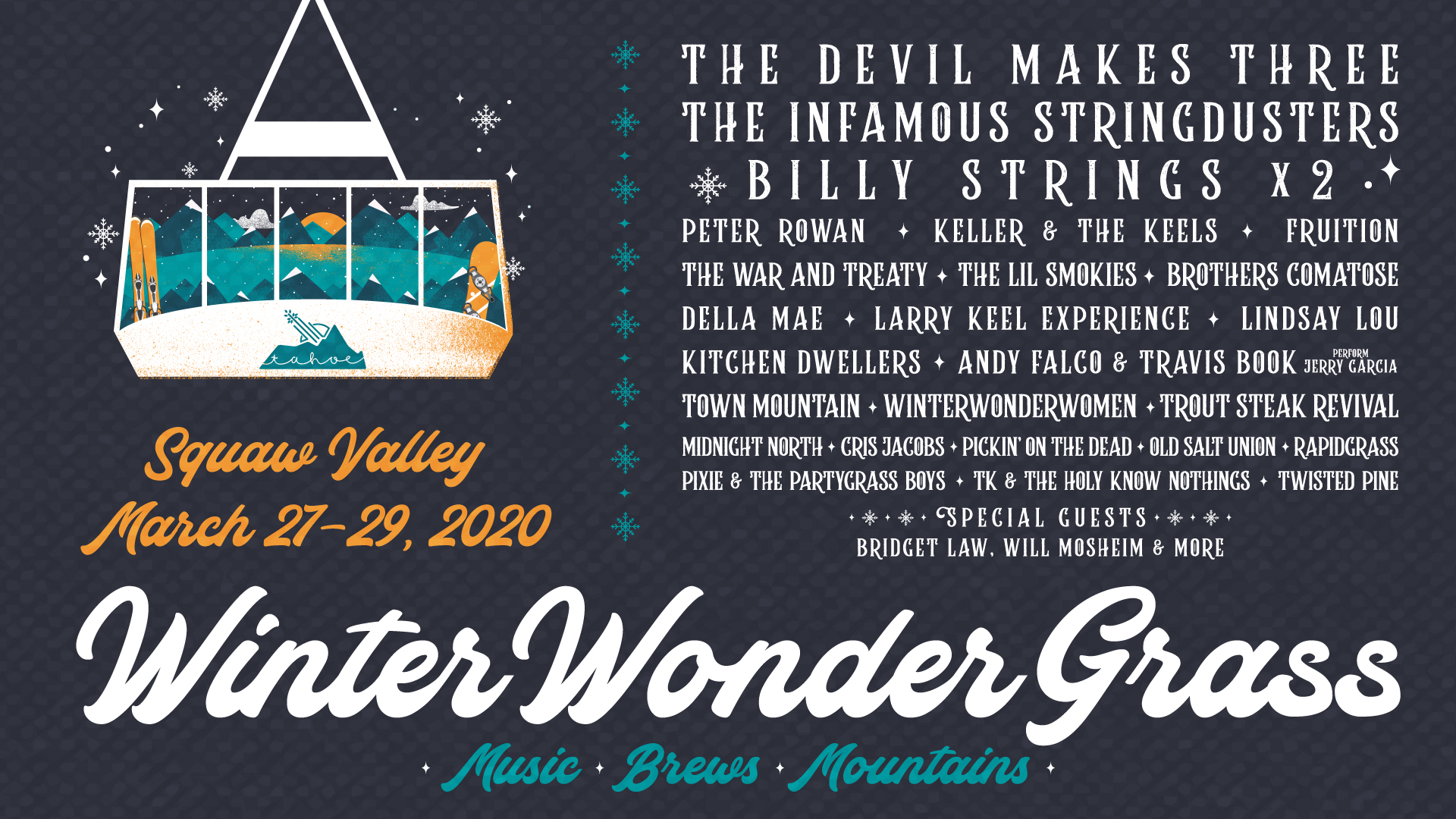
GIVEAWAY: Win tickets to WinterWonderGrass (Squaw Valley, CA) Mar 27-29

MIXTAPE: Fruition’s Songs About Time

“I put together this playlist with a theme of ‘time.’ This theme is wide open, so it has the potential to be vastly vague, or momentarily specific. I’ve chosen some of the former and the latter; seasons changing, or that one chapter of a changing relationship. I’m drawn to songs that lyrically take me not just to a certain space, but a certain time that I understand.” — Mimi Naja, Fruition

Bahamas – “All The Time”

A deep, honest, smooth breath of fresh air. Of presence. I end up using this song to get into a sort of meditation sometimes, when things are moving too fast and I can’t keep up. “I’ve got all the time in the world…”

Erykah Badu – “Next Lifetime”

Anyone that’s been in a committed relationship, met someone new, felt that spark and stayed true understands this theme.

Elephant Revival – “Season Song”

Paints a gentle and weighted picture of the clock ticking and the seasons changing.

Fruition – “Turn Your Love”

This one paints a few different pictures in the verses, but the chorus comes back to the same idea. We have the power to take the time to direct our energy where we choose. “Turn your love to the ones you ain’t had time to take time to think of.”

Bob Marley – “Waiting In Vain”

This is a familiar position — the push and pull of romantic endeavors, being willing to be patient but also wanting to make sure things are moving forward. Waiting in vain. Spot-on.

The Frightnrs – “Gonna Make Time”

When you recognize that being busy had you overlooking the love you’ve already got.

Simon & Garfunkel – “April Come She Will”

Evokes some tender reflection. Seasons turning can always do this. This is one of the most well-known songs of this nature, and it’s incredibly short, which is impressive.

Sade – “In Another Time

A very subtle consolation to a woman’s overlooked feelings that imply hope that her dude might eventually figure it out…

Erykah Badu – “Time’s A Wastin”

An anthem of acknowledging the endless mystery and it being a given to be your best, just because.


Photo credit: Dustin Chambers