BGS Top Songs of 2018

Here at the Bluegrass Situation, we’re always eager to hear a new song. This year it’s likely that thousands of them drifted by, each with their own charms. Yet, rather than ranking our favorites, we decided simply to pick 10 tunes that grabbed our attention — listed here in alphabetical order. Take a look.

Rachel Baiman, “Tent City” 
Written with long, tongue-twisting lines and a laconic melody reminiscent of John Hartford’s “Gentle on My Mind,” “Tent City” replaces the former’s voluntary rambler and train yard denizen with a man down on his luck and reflecting on the ease of his descent into homelessness. It’s a strong song, elevated to greatness through spirited, flawlessly idiomatic performances by Baiman and her specially-assembled posse: Justin Hiltner (banjo), Shelby Means (bass), Tristan Scroggins (mandolin) and Molly Tuttle (guitar). “Tent City” isn’t bluegrass-flavored social commentary, it’s a socially conscious and thoroughly bluegrass song. –Jon Weisberger


Birdtalker, “Be Where You Are”
Nashville’s Birdtalker took flight when husband and wife Zack and Dani Green started writing songs more for enjoyment than with career plans. But they’ve got a career now as a breakout band with an intuitive, joyful flavor of folk rock that brings listeners into a comforting fold. “Be Where You Are” is a lushly arranged meditation on staying in the moment, a rebuke to both brooding nostalgia or anxious speculation, not to mention the great screen hole. From getting the reverb just right on the opening guitar figures to the juicy intervals in the vocal harmonies, this is among the most enchanting and centering tracks of the year. –Craig Havighurst


I’m With Her, “Hannah Hunt”
It’s been a big year for I’m With Her, the supergroup comprised of Sara Watkins, Sara Jarosz, and Aoife O’Donovan. Their album was an expert blend of harmonies and modern roots craftsmanship, but it’s this single (recorded at Spotify Studios) that takes their art to a whole other level. Their cover of “Hannah Hunt” will make you forget that the original Vampire Weekend version ever existed. —Amy Reitnouer Jacobs


Loretta Lynn, “I’m Dying for Someone to Live For”
Loretta Lynn and co-writer Shawn Camp go straight to the heartache on “I’m Dying for Someone to Live For,” a highlight of Lynn’s Grammy-nominated album, Wouldn’t It Be Great. By now, the lonesome whippoorwills and the weeping willows in these lyrics are as entrenched in country music history as the Coal Miner’s Daughter herself. Contributing to the pedigree: Lynn recorded the album in Johnny Cash’s former cabin, with John Carter Cash and Loretta’s daughter, Patsy Lynn Russell, handling production. For those days when nothing but a sad country song will do, you can still count on Loretta Lynn. –Craig Shelburne


John Prine, “Summer’s End”
At 72, John Prine is churning out some of the best work of his already genius-level career. Of all the tracks from The Tree of Forgiveness, however, “Summers End” is Pure Prine Perfection. It’ll make you laugh, then cry, then want to listen to it all over again. –Amy Reitnouer Jacobs


Missy Raines, “Swept Away”
Raines and producer/banjoist Alison Brown brought in the strong-women-of-bluegrass cavalry as the backing band for 2018’s International Bluegrass Music Association Song of the Year, showcasing each woman who was first to win in her respective instrumentalist category at IBMA: Becky Buller, Molly Tuttle, Sierra Hull, and Raines and Brown themselves. Still, the song itself supersedes its virtuosic, socially-important trappings. Written and first recorded by bluegrass legend Laurie Lewis, “Swept Away” is a stunning reminder of Lewis’ artistic ingenuity, constantly creating music that all at once sounds unfathomably brand new and comfortingly timeless. Raines tipping her hat to Lewis, in this context, and then to each of her fellow first-women-to-win, is the cherry-on-top of a song that will always be a testament to the amazing women of bluegrass, in whatever form it may take. –Justin Hiltner


Moira Smiley, “Refugee”
Smiley wasn’t merely inspired by news reports to write “Refugee,” a highlight of her sparkling Unzip the Horizon album. The Vermont native drew on her global interactions with people and cultures shaped by migration and refugee experiences — particularly her experiences in refugee camps in Europe as a volunteer with the Expressive Arts Refuge organization. She even enlisted refugee residents of the so-called Calais Jungle and referenced music of medieval expulsions. “So here we are again, in a different, but related era of diaspora,” she told BGS in March. “What can we learn from the past? How can we be compassionate to each other as these big forces are hurting our brothers and sisters?” –Steve Hochman


Stick in the Wheel, “Follow Them True”
This London band may be one of the unruliest acts in the contemporary English folk scene, finding inspiration in centuries-old work songs that speak to present-day issues of class and marrying acoustic instruments with dance production techniques. Perhaps their boldest move yet is the title track to their second album: “Follow Them True” is a new song that sounds old, with a lilting, quietly majestic melody and a set of lyrics that might serve as the band’s mission statement. But it’s less about what Nicola Kearey sings and more about the way she sings it. She filters her voice through an effects pedal that she manipulates in real time, twisting and bending her voice as though the song is echoing across hundreds of years. The effect is both old and new, conjuring the past to point toward the future. –Stephen Deusner


Aaron Lee Tasjan, “If Not Now When”
I saw ALT perform previews of the songs that ultimately came out on Karma For Cheap at Nashville’s Basement East and didn’t realize how much I needed these weird guitar riffs. Led by “If Not Now When,” the recorded version of this album doesn’t disappoint. Tasjan steps away from his more countrified roots and takes it in a more cosmic, gritty direction and the results are glorious. –Chris Jacobs


Anna Vaus, “The Ground”
The first winner of the Miranda Lambert Creative Fund—which the singer-songwriter created to support women in the arts—Anna Vaus promised to be a formidable songwriter. After all, if she garnered Lady Lambert’s approval, she must have a way with words. Vaus’ debut California Kid showcases her exacting lyrical prowess, leaning into honest moments that aren’t exactly pretty, but she saves her best for last. Closing song “The Ground” opens with ponderous guitar while Vaus’ voice stretches her major moment of self-reflection taut. Laden with grace, she lays bare her penchant for messing up a good thing. “Love sure feels like flying on the way down,” she sings, twisting the final moment with a guitar riff that underscores the weight of her realization. “It ain’t the fall that hurts, it’s the ground.” –Amanda Wicks
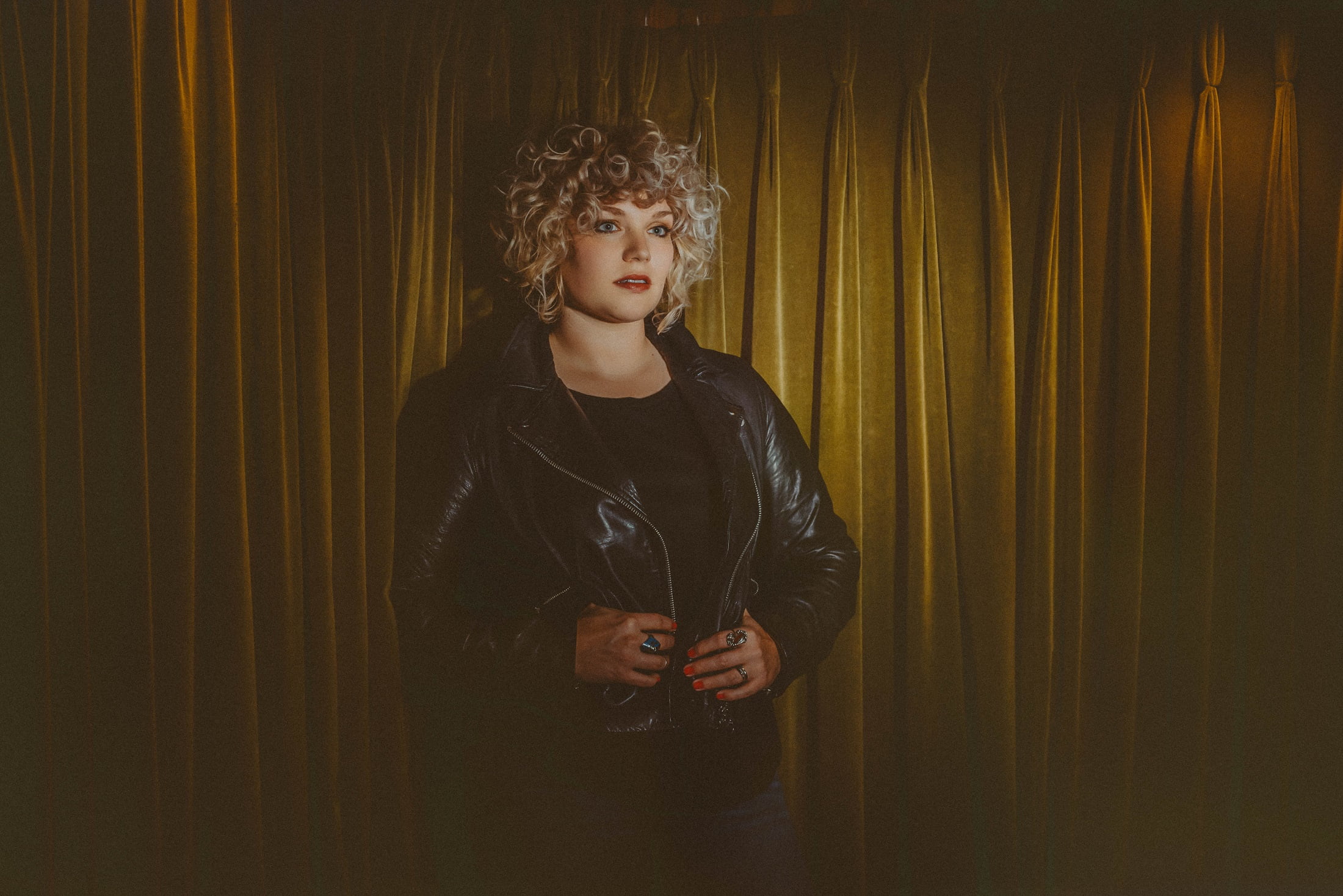
LISTEN: Lauren Morrow, “Mess Around”

Artist: Lauren Morrow
Hometown: Marietta, Georgia
Song: “Mess Around”
Album: Lauren Morrow
Release Date: October 12, 2018

In Their Words: “I like to joke that ‘Mess Around’ is my less violent version of Loretta Lynn’s ‘Fist City.’ But in all seriousness, I think every girl at some point in her life has been stabbed in the back by someone who she once considered a friend. I’ve always felt like I had a pretty good ‘bullshit radar’ on people, but sometimes it malfunctions. So, this is my retaliation song. My ‘Taylor Swift diss track’ if you will.” — Lauren Morrow


Photo credit: Jacqueline Justice

MIXTAPE: Elise Davis’ Songs I Love and Why

Below is a list of songs I think are special and timeless. Some are songs I’ve loved for many years, others are songs I was particularly influenced by during the making of my new album, Cactus. Get ready for a party in your ears. — Elise Davis

Willie Nelson – “Time of the Preacher”

I’ve always loved Willie Nelson but recently had a revival of that love. I decided I wanted to go out to the desert to shoot the album cover so I packed up my car and drove to Terlingua, Texas. I stayed in the middle of Big Bend so there was no cell phone reception, which was appreciated and amazing other than the fact that while driving around in the desert I couldn’t listen to any music other than what CDs were in my car. Turned out I had Willie Nelson’s Red Headed Stranger in my car. I put it in the player and never took it out. The whole week that album was on low in the background and sometimes the foreground and I never wanted to turn it off. The experience led me to dig into older Willie records that I hadn’t heard much, and now I have gone through phases of also obsessively listening to Teatro and Stardust. His voice is one of a kind and he has made so many timeless albums.

Lucinda Williams – “Lonely Girls”/“Ventura”/“Those Three Days”/“Drunken Angel”/“Something About What Happens When We Talk”

This was too tough to name one song. She is my all-time favorite songwriter. I am a huge album person, so I picked songs from my favorite albums but I suggest just listening down to the whole album in its chosen sequence. Like Willie, Lucinda has a one-of-a-kind voice. She always has killer musicians and great production on her albums, which only enhance the songs that strongly stand on their own with just an acoustic guitar and vocal. I am a lifer fan of Lucinda. My favorite albums: Sweet Old World, Essence, Car Wheels on a Gravel Road, and World Without Tears.

Aimee Mann – “Thirty One Today”/“Goose Snow Cone”

I have loved Aimee Mann since I was 16. She has such a cool vibe, intelligent lyrics, awesome melodies – it’s good shit. One of my all-time favorite songs of hers is “Thirty One Today.” I’ve had a plan for a long time to book a show on the day I turn 31 and cover it. “Goose Snow Cone” is a track off her most recent album, Mental Illness. This album completely blew me away. The whole thing is so good!!!

Kathleen Edwards – “House Full of Empty Rooms”

When I first heard this song I cried. I was blown away by its beauty. The lyrics are so simply put yet so impactful and heartbreaking. Her voice is soothing. I have listened to her album Voyager hundreds of times over the years and I feel Kathleen is a hidden gem.

Bahamas – “Like a Wind”

This is a current band I really dig. I haven’t caught a show yet but am going to as soon as I can. The songs are catchy, the harmonies throughout are amazing, it’s upbeat and feel-good but has depth and character. My favorite albums: Bahamas Is Afie and 2018’s Earthtones.

Sharon Van Etten – “Tarifa”/“I Wish I Knew”/”Every Time the Sun Comes Up”

Her voice is so unique and beautifully melancholy. I am the kind of person that likes to listen to depressing music when I feel depressed and Sharon’s albums have been a go to for me on the darker days. “Tarifa” and “Every Time the Sun Comes Up” are off her 2014 album, Are We There. That record as a whole is pretty intense and sad, but one of my all-time favorite albums.

Loretta Lynn – “When the Tingle Becomes a Chill”

I am a huge Loretta Lynn fan. She is a pioneer for women in country music and cut so many songs that were edgy, even controversial, lyrically at the time. And I love that. This was hard to pick one, but I chose “When the Tingle Becomes a Chill.” She is singing about when a husband comes home at night and gets in bed, what used to be a tingle of sexual desire is now replaced with a chill. It’s real, and raw, and that’s what I’m all about.

Harry Nilsson – “Everybody’s Talkin”

To me this is one of the most beautiful songs ever recorded. I have spun this hundreds of times. His music was authentic and he was a true artist.

Tom Petty – “Time to Move On”

As with most of the artists I am naming here, one song is really hard to pin down as a favorite. I chose this song because during the time of recording my new album, Cactus, I was obsessively listening to Tom’s album, Wildflowers. It is one of those records you can just let roll through the whole thing over and over. I love the freeing mood of “Time to Move On.” It makes you want to go on a drive, roll the windows down, and let go of all the bullshit you’ve been carrying around.

Wilco – “Jesus, Etc.”

I had to include a Wilco song because I have loved this band for a long time. They have their own sound, clever lyrics, and just an overall great band. This was one of the first songs that got me into them so I chose this one. Others I really love “How to Fight Loneliness,” “Please Be Patient with Me,” and “Hate It Here.” My favorite albums: Yankee Hotel Foxtrot, Summer Teeth, and Sky Blue Sky.

Sheryl Crow – “Maybe Angels”

This song is off of Sheryl’s massively famous self-titled album, which includes mega hits such as “If It Makes You Happy,” “Every Day Is a Winding Road” and “A Change Would Do You Good.” But to me every song on that record is fuckin’ timeless. I have said this many times over the years and still wholeheartedly stand behind it: I think if this record came out today it would have the same amount of success. It’s just that good. She was a big influence to me as a 12-year-old learning to play guitar and beginning to write songs, and still as an adult this album is a classic and one of my all-time favorite albums.


Photo credit: Alysse Gafkjen

3×3: Lo Carmen on Prine, Parton, and Pizza

Artist: Lo Carmen
Hometown: Los Angeles, CA via Sydney, AUS
Latest Album: Lovers Dreamers Fighters
Personal Nicknames: Carmo, Lo Lo, Yo Lo, Loey, Lolene, Leone

Uncanny resemblance @tfsrecords. Midnight portrait by jet lagged 6 year old.

A post shared by Lo Carmen (@locarmenmusic) on

What song do you wish you had written?

“Be My Baby.” This is my 50th answer in five minutes. How can such a short question be so difficult?

Who would be in your dream songwriter round?

Will Oldham, Dolly Parton, John Prine

If you could only listen to one artist’s discography for the rest of your life, whose would you choose?

Dylan — pretty much got all bases covered for life there!

How often do you do laundry?

Constantly. I have small and rather grubby children, and sometimes I feel like Loretta Lynn in the bad ol’ days of “Hey Loretta.”

What was the last movie that you really loved?

Youth by Paulo Sorrentino. It had a really surreal, reflective Fellini-esque feel.

If you could re-live one year of your life, which would it be and why?

Maybe 14. Every crazy teenage story I have seems to be from when I was 14. I’d like to take notes this time and see how much is true.

A post shared by Lo Carmen (@locarmenmusic) on

What’s your go-to comfort food?

Spaghetti marinara. Or pizza. I think I must have Italian heritage somewhere.

Kombucha — love it or hate it?

I’m suspicious, but occasionally curious/hopeful.

Mustard or mayo?

Chipotle mayo!

Photo credit: Katerina Stratos

MIXTAPE: Paula Cole’s Golden Anniversary Song Celebration

Way back 50 years ago, in 1967, the music was the stuff of legend — full of artists, songs, and culture that begat the Summer Of Love. So many great bands/artists were burgeoning under the surface: Pink Floyd, Joni Mitchell, Rolling Stones, the Who, Janis Joplin/Big Brother and the Holding Company. Tina Turner was preparing to blow away Ike, and Carole King was readying to become her own artist. The Byrds, the Hollies, and Buffalo Springfield birthed CSN(Y), and audiences booed Dylan at Newport Folk Festival for going electric.

It was a time of great social change, a new generation declaring itself in resistance to the Vietnam War and their parents’ conservatism; a time of refuting politics, haircuts, normalcy; a time of experimentation with mind-altering substances, and a quest for peace and love. The late ’60s were a cauldron of cultures and consciousness, and it made for tremendous music.

Let us stand back and appreciate 1967. Let us hope for our cultural renaissance in 2017, in our equally turbulent times. If ever we need a music revolution again, it is now. As Picasso said, “Artists are the politicians of the future.” — Paula Cole (also a product of 1967)

The Beatles — Sgt. Pepper’s Lonely Hearts Club Band

The Beatles were sick and tired of being the Beatles, so they became Sgt. Peppers Lonely Hearts Club Band, creating the first concept album with no singles. Free from touring, they began to live their unique personal lives, then went to the studio to record their masterwork. Psychedelia, innovation in writing/recording, the 1967 London art scene, Yoko, transcendental meditation, brilliance, and irreverence … they made the alter-ego masterwork whose influence is incalculable.

Aretha Franklin — I Never Loved a Man (The Way I Love You)

Newly signed to Atlantic Records, recording with the Muscle Shoals, Alabama, rhythm section featuring Ms. Franklin on gospel rock piano, Aretha stormed the charts and changed music, hearts, and minds forever with fireworks such as “Respect,” “Think,” “Baby, I Love You,” and “You Make Me Feel (Like A Natural Woman).”

Bobbie Gentry — Ode to Billie Joe

My sister from another generation, an introvert, Best New Artist Grammy winner Bobbie Gentry left the patriarchal music business, leaving us with this amazing story. She sang and played her guitar and, importantly, self-produced in a time when women didn’t do that. Her timeless song leaves us wondering what ever happened to Billie Joe, over the course of a Southern American family supper.

Jimi Hendrix — Are You Experienced?

One of the greatest debuts in music history, Jimi marked the sonic marriage of psychedelic UK rock with American blues and R&B.

Dolly Parton — Hello, I’m Dolly

Dolly’s first full-length album introduced her to the world, with two country hit singles — “Dumb Blonde” and “Something Fishy.”

Miles Davis — Live in Europe: 1967

The album celebrated one of the greatest quartets in musical history behind Miles:
Herbie Hancock, Wayne Shorter, Ron Carter, an Tony Williams.

James Brown — “Cold Sweat”

This was possibly the first funk single — with drums breaks, single chord jams, and funky instrumental arrangements.

Otis Redding — “(Sittin’ on) The Dock of the Bay”

He recorded this in December 1967 and died four days later, never knowing the tremendous success achieved on both the R&B and pop charts. It is said that he wrote this song, influenced by listening to Sgt. Pepper’s Lonely Hearts Club Band.

Nina Simone — High Priestess of Soul, Nina Simone Sings the Blues, and Silk & Soul

Enough said! Incredible!

Sly and the Family Stone — A Whole New Thing

Sly and company made their debut with this one, which was lauded by Tony Bennett and Mose Allison, despite no commercial success.

Jefferson Airplane — Surrealistic Pillow

Jefferson Airplane had breakthrough hits with “Somebody to Love” and “White Rabbit,” pioneering the psychedelic era of rock.

Other notable musical moments of 1967:

Grateful Dead — The Grateful Dead
Loretta Lynn — Don’t Come Home A-Drinkin (With Lovin’ on Your Mind)
The Doors — The Doors
Marvin Gaye and Tammi Terrell — “Aint No Mountain High Enough” (off United)
Cream — Disraeli Gears
Simon & Garfunkel — “Mrs. Robinson” (from The Graduate)
Leonard Cohen — Songs of Leonard Cohen
Glen Campbell — Gentle on My Mind
Bob Dylan — “All Along the Watchtower” (off John Wesley Harding)

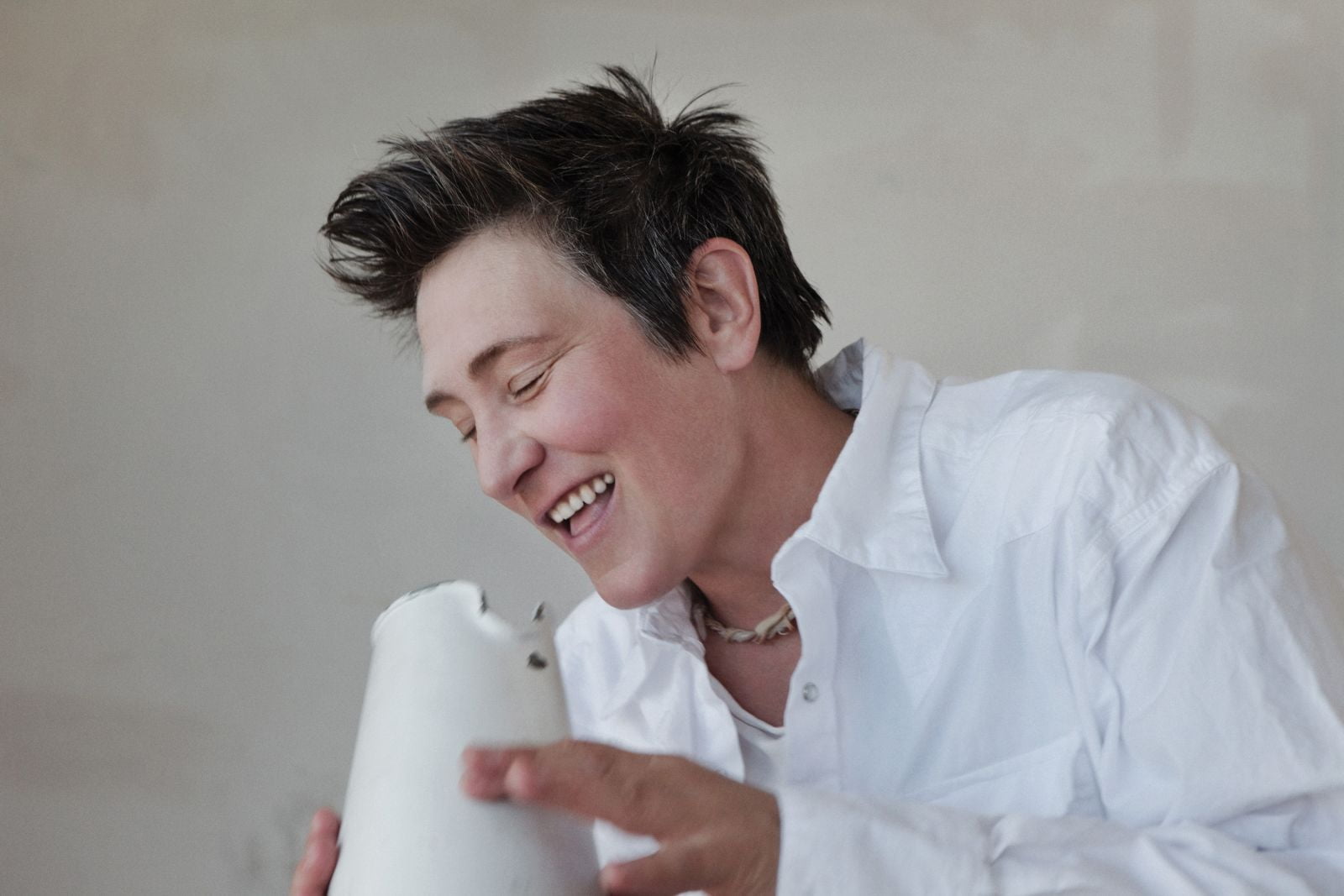
k.d. lang: Flawless, Fearless

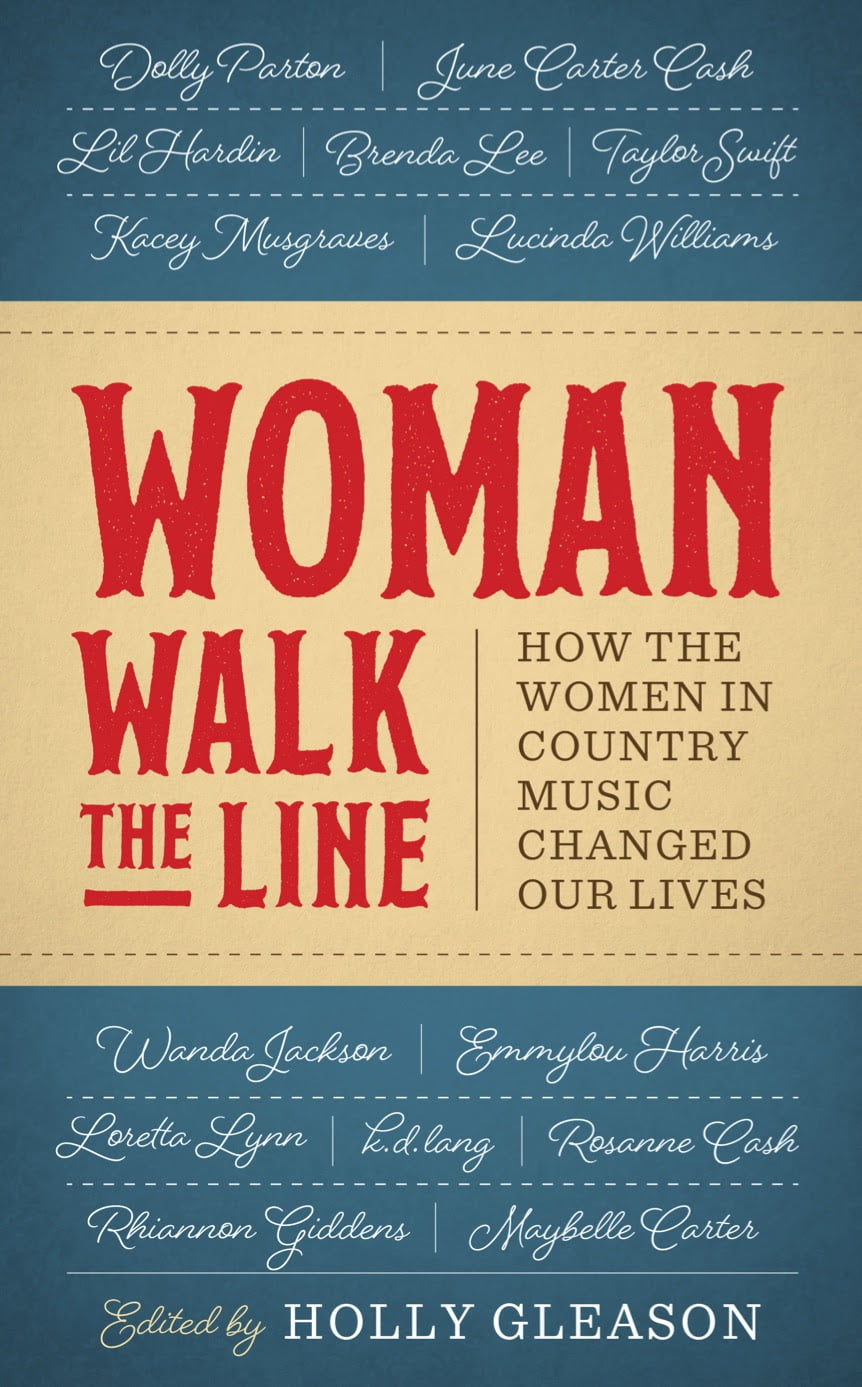
Just about a year ago, legendary music journalist Holly Gleason asked me to contribute an essay to a book she was editing titled Woman Walk the Line: How the Women in Country Music Changed Our Lives. The premise was to have a bunch of female writers explore female country artists and the impact they had on our lives. It didn’t take long for me to pick k.d. lang, as I simply would not be who I am today without her. The book — which includes essays by Taylor Swift, Rosanne Cash, Grace Potter, Aubrie Sellers, Kim Ruehl, Ronni Lundy, and many others — comes out on September 15 via the University of Texas Press, and I couldn’t be more proud to be part of it. In honor of its release — and the 25th anniversary of k.d.’s seminal album, Ingenue — here’s an excerpt from my piece.

It wasn’t the first time I heard k.d. lang’s voice that carved out a forever place for her in my heart. It was the first time I saw a photo of her for, in it, I saw a reflection of who I was or, more likely, who I wanted to be. It was 1990, maybe 1991, and media representation of those of us who are “masculine-of-center” was sparse, at best. But there was k.d., handsome and heartfelt, staking a claim for all of us … even those still nestled safely in our closets.

Actually, in 1991, k.d. wasn’t out yet, either. Not publicly, at least.

Musically, k.d. put her reverence and respect for the form and its icons at center stage — her first band was called the Reclines, after all. But, stylistically, she injected a sharp wit and a cow-punk ethos into her earliest works, much of which she learned from another country legend — Minnie Pearl. On her first few albums, k.d. still considered herself to be a performance artist, playing with gender by sporting a crew cut while donning a cowgirl skirt and horn-rimmed glasses. By the late ’80s, her look had settled into the tomboy version of a cowboy, letting denim, boots, and short hair frame her prairie-born good looks.

Because her talent was undeniable — and she wasn’t yet waving a rainbow flag — country music fans could abide by their own version of “don’t ask, don’t tell” and just enjoy her utterly stunning voice. Heck, Patsy Cline’s beloved producer, Owen Bradley, helmed Shadowland and recruited Kitty Wells, Loretta Lynn, and Brenda Lee to sing on it. Doesn’t get much more classic country than that.

But then, in 1990, the avowed vegan caused an uproar among said classic country folk for appearing in a “Meat Stinks” ad for PETA, earning herself a lifetime ban from country radio. A sign proclaiming Consort, Alberta, to be ”Home of k.d. lang” was even burned in effigy. Naturally, k.d. was bothered by it all, but she never wavered from her convictions. Instead, she doubled down.

Within a couple of months of that kerfuffle, k.d. was waltzing toward the adult contemporary music space with a contribution to the Red Hot + Blue Cole Porter tribute compilation benefitting AIDS research and relief. Her performance of “So in Love” was a highlight of the platinum-selling album, showcasing her extraordinary gift as an interpreter of song. She finalized her transition in March of 1992 with the absolutely captivating collection that is Ingenue. Flourishes of pedal steel here and there were, really, the last remaining vestiges of country music in k.d.’s sound.

In June of 1992, before “Constant Craving” led the album to multi-platinum sales and a third Grammy Award, k.d. came out as gay in The Advocate, confirming the open secret that everyone already knew, but dared not speak. That year — along with the Indigo Girls’ — k.d.’s courage and conviction, artistry and activism made a bigger impact on my life than anyone before or since.

I still remember sitting on the edge of my seat in the first row of the balcony on August 7, 1992 for the entirety of her first-of-two performances at the Universal Amphitheater in Los Angeles. Having already come out, k.d. introduced the gender-play that is “Miss Chateleine” with a comic bit meant to put everyone in the crowd at ease: “There’s been something I’ve been meaning to tell you, something that’s been on my chest for quite some time. So I’m just gonna conjure up the gumption and spit it out.” [drum roll] “I… AM… A… LLLLL… AWRENCE WELK FAN!”

The show was one of the best I’ve ever seen. EVER. And it was a show: k.d. is not just an incredible singer; she’s a captivating entertainer, paying attention to every detail, from the punchlines to the performances. Summing up his review of the show for the Los Angeles Times, Chris Willman wrote, “Even the most die-hard meat industry activist would be hard-pressed not to switch-hit and walk away from this one a close t… LLLLLLLANG FANATIC.”

Less than a month after that fateful night, I too became an avowed vegan and, in November, I became an out queer. Doubtful I could’ve, or would’ve, done either without having k.d.’s lead to follow, without having her image to reflect. Seeing k.d. stand so gloriously in her truths inspired me to find and live my own. Though I didn’t yet have the capacity to understand or accept it, I’d known since I was a kid that I was queer. But growing up in rural Louisiana did more damage than good, where understanding and acceptance were concerned. (Funnily enough, the same could be said of not eating meat: Of all the left-leaning things in my life — moving to Los Angeles, working with rock stars, being a homo, living in a meditation ashram, and being a vegan — the one thing my Southern-born and bred father could never get a handle on was me not eating meat.)

So when I finally saw someone who looked like me, lived like me, and loved like me, I started moving toward the light that she was shining. Turning toward that light meant turning into myself — digging into my own identity and drumming up my own courage. That process of discovery, sparked almost entirely by k.d., uncovered who I was at my core … and who I continue to be today — an Eastern philosophy-abiding, activist-minded queer who works in music and doesn’t eat meat.

Though I haven’t been as dedicated a follower as I should have been, the past 15 or so years have seen the release of several more k.d. collections and collaborations, including her 2016 project with Neko Case and Laura Veirs, aptly monikered case/lang/veirs. When their tour brought them to Nashville’s Ryman Auditorium on August 6, 2016 — the Mother Church of country music and long-time home of the Grand Ole Opry — k.d. greeted the crowd with a big ol’ Minnie Pearl-style “HOOOOOW-DYYYY!” before reminiscing about how she’d been kicked out of the Ryman on several occasions. Both Case and Veirs seemed to understand the gravitas of k.d.’s triumphant return, and everyone else in the room understood it, too, by the end of her rafter-raising cover of Neil Young’s “Helpless.”

As soon as I heard the song’s opening plunks, I let out a big ol’ “WHOOP!!!” and moved to the edge of my front-row balcony seat, just as I’d done 24 years (minus one day) earlier. And I hung on every note, remembering all that she has meant to me over the passing decades. Quite simply, k.d. lang is one of the greatest singers of any generation, with flawless pitch and fearless control. She is also one of the greatest influences on my life, with flawless talent and fearless style.

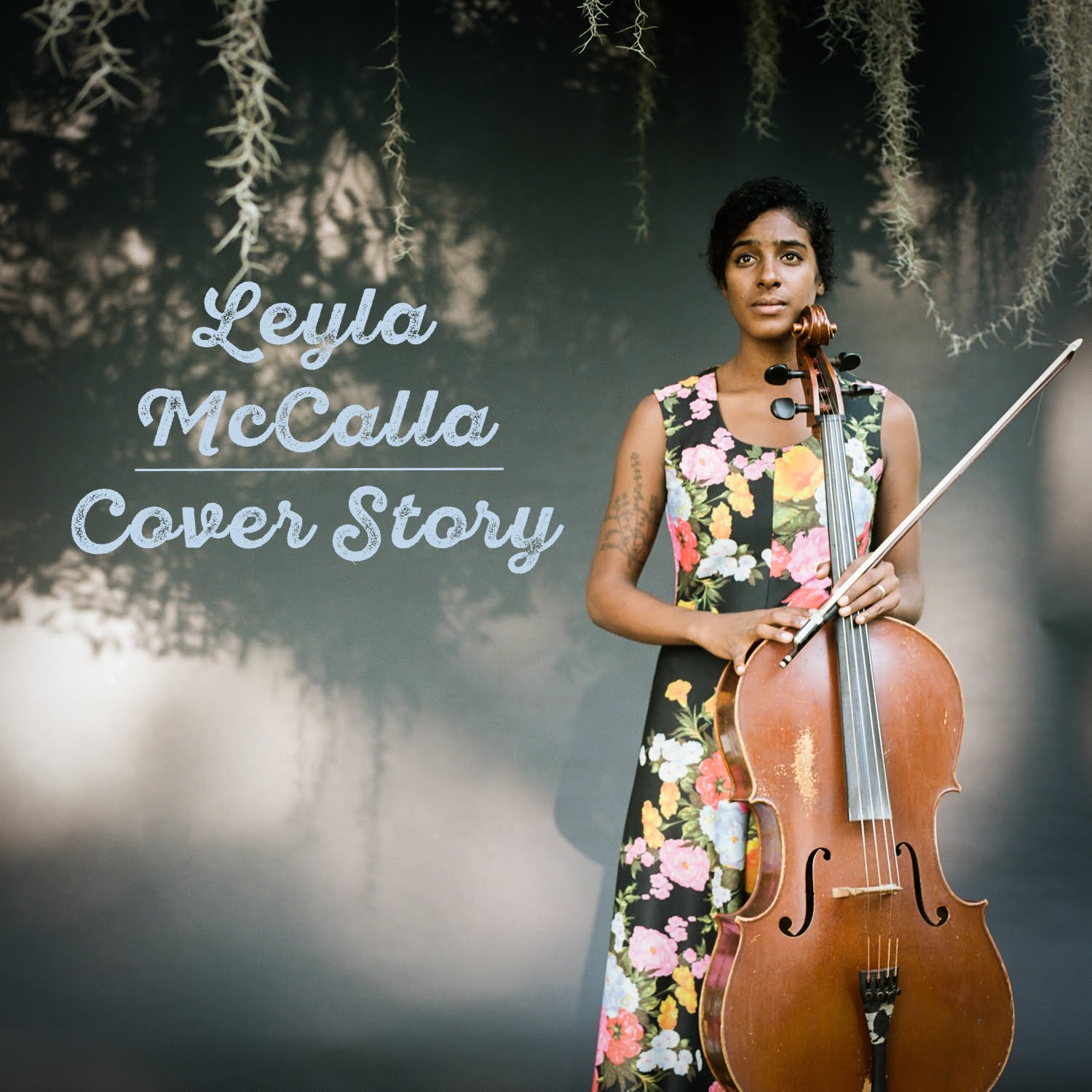
On Histories, Stories, and Identities: A Conversation with Leyla McCalla

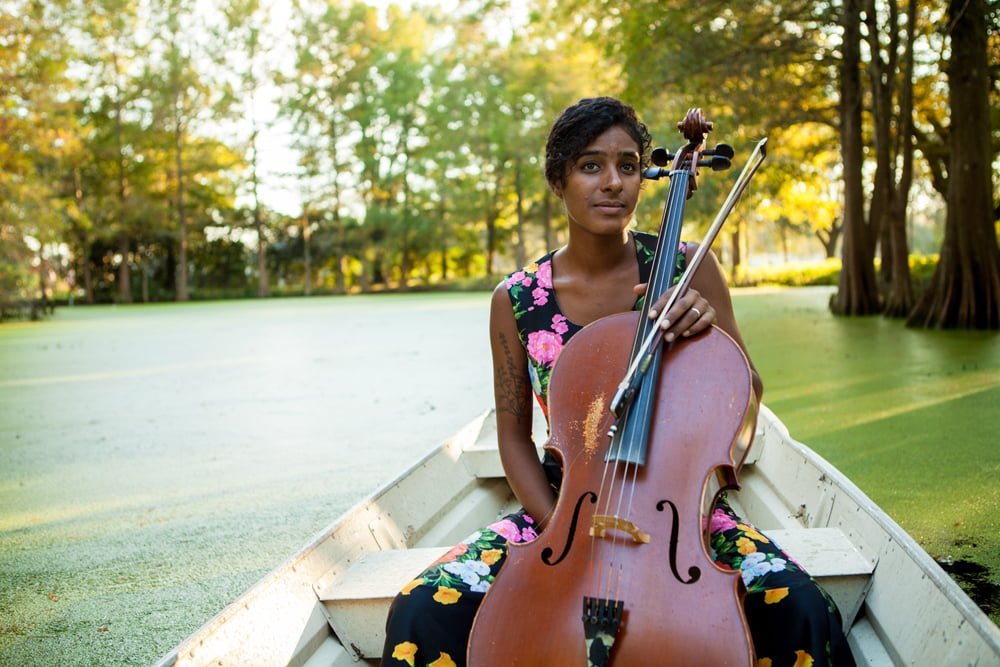
For cellist Leyla McCalla, everything begins with rhythm. On the titular single off her sophomore album — A Day for the Hunter, A Day for the Prey — the formally trained McCalla takes her bow, drawing it back like an arrow and embodying for a moment the song’s noted hunter before releasing it in quick, short bursts that suggest a ballooning urgency. McCalla’s approach twists the cello’s low, luscious timbre to produce a different, but equally physical, effect on the listener. As a composer, her technique defies the traditions that shaped her musical foundation, helping her tell more nuanced stories as a result. The song, based on a Haitian proverb, recounts two narratives almost simultaneously — cello and banjo on the one hand; a second cello and fiddle on the other. Instead of devolving into a cacophony, the stories find their nexus, a point that echoes throughout the album and McCalla’s life.

Both literally and figuratively, McCalla’s music exhibits a web of spatial exchange, particular histories bumping up against one another in ways that reveal their convergences. If her first album, 2013’s Vari-Colored Strings, involved original compositions set to Langston Hughes’ poetry — a dialogue between past and present — her newest work moves beyond that tête-à-tête to exhibit a more polyvocal quality. Not only does McCalla sing in Haitian Creole, French, and English, but she also draws on old folk songs, proverbs, and more to shape A Day for the Hunter, A Day for the Prey. That kind of complexity makes sense coming from a Haitian-American musician who grew up in New Jersey, spent time in Ghana, and settled in New Orleans in 2010. Not finding herself in the traditional American landscape, McCalla unearthed her layered identity through a process of self-discovery that largely came to fruition in the Crescent City. After feeling an unusually tangible connection to the city — one bolstered by discovering many family names in its cemeteries — McCalla began researching Haiti and its connection to Louisiana. As a result, she hit upon the ways in which her identity cannot be confined to one explanation, one story. Her music is the result of those many utterances.

While you primarily play cello, you also play guitar and tenor banjo. How do these timbres embody your identity or your perspective?

The cello has all these different roles it can play, musically, and I think that’s one of the things I really like about it. I tend to play the cello like a rhythm instrument. In a recording situation, I’ll overdub, if I’m using the bow. And even sometimes when I’m using the bow, I’m still playing it like it’s a rhythm instrument. I think I play all of those instruments very rhythmically and, in composing and writing songs, I’m always thinking of those instruments as the ground for the song. It’s a different sort of conceptualization of the music, I think, because I’m not trying to fit into the classical context; it gives me a lot more freedom.

When I first heard [“Day for the Hunter…”], I thought, “Maybe I should play that with a bass drum.” Then I thought, “Well, what if I could experiment with the cello being that sound?” I felt like it was very percussive, so I’m bouncing the bow on the string, and that’s kind of how that song was born. I heard the rhythmic structure for it before completing the lyrics and the melody.

You’ve said before how, growing up, you felt disconnected because you identified as a Haitian-American, but didn’t see that reflected in the United States. How has New Orleans helped ground you by giving you a more physical sense of where you came from and who you are?

I think that’s just it. Being here in New Orleans has given me a very physical sense of place, in terms of my heritage. It’s said very often that New Orleans is the northernmost city in the Caribbean, and I think there’s a lot of truth to that. The more I stay here, the more I see all of these parallels between the culture of New Orleans and the culture of Haiti. Last weekend was Super Sunday and, Saturday night in the neighborhood, the Mardi Gras Indians came out, and we got to watch them parade and battle each other. It was so intense, but it reminded me of the Rara bands. The rhythm is almost the same. It kind of comes from the same place, like spiritually and culturally.

When I moved to New Orleans, I was like, “Huh, what’s going on here?” Some of these things feel so familiar, so I read a lot of books and did a lot of research and I was like, “Wow, how did I not know that there was a mass migration of people from Haiti to Louisiana in the 1700s during the Haitian Revolution? Why wasn’t I told that? Why isn’t that more talked about?” I remember going to St. Louis Cemetery and seeing my family’s names. That kind of tripped me out.

What an interesting way in which your history found you.

Yeah, and beyond that, I feel like myself here. I feel this sense of belonging that I never really felt up north, and I never felt in New York, and I never felt when I was growing up in New Jersey, and not in Ghana when I lived in West Africa. I think there’s something to that. That, in and of itself, is really inspiring to me. I feel so curious about what’s really going on here in terms of the history, but also in terms of how I understand what’s happening in our society and in our culture now. This album is definitely born out of a lot of curiosity and processing of those things.

Speaking of the album, what kind of narrative legacy do you want to leave for your daughter?

It’s a hard question because there are so many things I want to say. I want her to not feel the limitations that so many people feel now. It scares me that she could grow up feeling that, because she’s a woman or because she’s biracial or because she’s Black or whatever. I want her to understand the things that other people have had to live through and I hope that she doesn’t have to live through to have her freedom. I think it’s important to understand; I think it’s important to know the history and have that as a reference for things that are happening in our society today. I think it’s idealistic to think she won’t experience the pain of prejudice of racism or misogyny in her lifetime. I think that would be naïve, but I hope she’s more prepared than I was to face those things and to know how to deal with them.

I would imagine it kind of unfolds as she gets older, too.

Yeah, I think you have certain experiences in your life that are bigger teachers than any book that you can read or anything that anyone can tell you. That will really be part of her learning process is her life experiences.

Do you see your music providing her with a bit of that legwork? As if you’re able to say through your albums, “Here’s where we are and who we are and where we came from. I hope this helps inform you in some way.”

Definitely. Working on this album, as a new mother, that was so close to my heart and on my mind throughout the whole process, since she was physically not far from me, because I was still nursing. There are a lot of songs that were addressed specifically to a mother or to a child that came up on the record, because I feel like the challenge of figuring out survival in our world, it starts really early — it starts with your relationship with your parents. That comes up for me a lot, in thinking about this record. The thing about these songs is that, yeah, this is something I can share with her and talk about.

What a neat conversation piece around the dinner table.

That’s the fun thing about making a record. This is going to last past my existence and past her existence, and hopefully it’s something she can pass on to her kids, if she decides to have kids. Even if it sucks, I would love to hear the music that my grandmother made. The music industry can make you feel like, “Oh God, what am I doing with my life?” But the creative side of it is really magical and gratifying, and will exist for a while.

What have you learned between your debut and sophomore albums?

Oh, man. I learned a lot. I think when you release an album, you tour it when you’re pregnant, and then get married, and have a baby, and then record another album, it’s impossible not to feel like, “Oh God, I’m learning too much!”

Did you have time to stop and take it all in?

I think it’s hard. I’ve had time to stop physically, but mentally, it’s hard to stop and take it in, and especially me. I’m always, “What’s next? What’s next?” We travel so much with my daughter on the road, and my husband and I started playing music together, so there’s a big learning curve there. I feel lucky to work with the people that I’m working with, and I feel I learn a lot from the musicians that I work with about music, about respect, about self-respect, about how to take care of yourself, about how to stay diligent in your work, which I think is a true challenge as a parent. Your time is just not the same anymore.

Well, it’s a consideration and a responsibility of someone else’s time.

Right. I feel I’m still trying to learn what opportunities to be okay passing on, and what opportunities to take. Luckily, I have a team of people around me that I can trust, that I can express myself with and truly be heard. That’s very important, I think. I feel, in some ways, I’m a lot more organized and engaged than I was before. Now I know more of the questions to ask about how we’re planning things, and how to get this music out into the world in a way that feels that it’s the right way.

And also just how to not be afraid to say, “Hey, I don’t really understand what you’re saying. Can you say that again?” I think — especially as women — we’re not taught to be comfortable with that, because you have the pressure on you to know how to deal with the world, and I think just being engaged and willing to stand up for yourself and say, “Hey, this is making no sense. Explain it to me or fix it” — that’s pretty empowering. I think it’s something that’s come a little bit easier to me since becoming a mother, because I have that instinctiveness, like, “I can’t really bullshit right now. I don’t have the time to be cute and please you right now.”

Right, so “Get to the point and let’s get going.”

Exactly. In some ways, motherhood is very empowering, as difficult as it can be and challenging in all these other ways. I feel I’m less afraid and really realizing that I’m a full-grown woman and this is my time to not try to be cute and hide what I think or what I feel. It’s very valid. I wish I’d known that when I was younger. I guess you have to learn.

You do, but thank goodness you’re learning now instead of 20 years from now.

I know! Think of how many artists … the Darlene Love story comes to mind … you know that film 20 Feet from Stardom, and just her not getting credit for all the creative work she did when she was 16? What gives?

Etta Baker — whose music I love and I’ve learned a bunch of her songs on guitar and gotten into that style of music — didn’t record hardly anything until she was in her 60s, and it was because her husband didn’t want her playing music. God, I can’t imagine. I would be divorced immediately. I guess it wouldn’t happen because my husband plays in my band, but yeah. It’s mind-blowing how far we’ve come in some ways, and how much further we still have to go.

Your last album drew upon Langston Hughes’s work, and your new album incorporates a variety of writing, like folk songs and proverbs. What kind of writing strikes you the most?

I think that I am drawn to those things that speak to me immediately, or the things that kind of make my mind turn over and over again. I felt that way about Hughes’s poetry. I feel that way so much about Haitian music. And I feel that way so much about Louisiana music, and so many other things, as well. Reading the biographies of Nina Simone and Bessie Smith … these women who were true pioneers and really sort of paved the way for me to be onstage — me and so many other artists. Reading about their lives and the decisions that they made, and how many children they had, and how they felt at that time, and what they lived through. Those are the things that really inspire me and motivate me. It’s not limited to Black artists or Black expression, but I feel that’s so much a part of my experience as an American it’s hard for me to not think of those things immediately.

I also read the Loretta Lynn biography. I love reading women musician biographies. Like, “God, how do we do this? How does it happen?” She’s like, “There’s no simple task.” It helps me remember that because, when you’re young and you think, “I’m going to be a musician; I’ll just meet the right people and things will just click into place.” And it’s like, “No, you still have to do that creative and spiritual work that feeds your art and feeds your craft” — like how to stay inspired in the face of having to pay your rent or your mortgage or find a daycare center for your kid, or figure out how to get health insurance. All those things. That’s the great balancing act. How to take care of yourself and your family, and also stay inspired and stay creative, and live your life in this way. That, I feel, is a big question for me, and I’m always answering through my work in some way.


Photo credit: Sarrah Danzinger

3×3: India Ramey on Drinking Caffeine, Deviling Eggs, and Enjoying Life

Artist: India Ramey
Hometown: Born in Rome, GA, but I claim Birmingham, AL
Latest Album: Snake Handler
Personal Nicknames: “Indie.” My grandaddy called me that. My sisters called me “Tush” (long story) and “Indiana Banana Copa Cabana.” There are many more, but in the interest of brevity …


#womansmarchonwashington

A post shared by India Ramey (@indiarameymusic) on

What song do you wish you had written?

“Hold On Hold On” by Neko Case

Who would be in your dream songwriter round?

Jason Isbell, Neko Case, Loretta Lynn, and Johnny Cash.

If you could only listen to one artist’s discography for the rest of your life, whose would you choose?

Neko Case. Without question.


My plans for the evening #mrbaby #bobsburgers #snoozefest #motherofkittens

A post shared by India Ramey (@indiarameymusic) on

How often do you do laundry?

Does that in include pulling stuff out of the dirty clothes bin and fluffing it in the dryer with a fabric softener sheet? Not often enough, clearly.

What was the last movie that you really loved?

Kill Bill (both)

If you could re-live one year of your life, which would it be and why?

Last year. I would have spent less time worrying and more time enjoying it.


Woa!! I made the Nashville Scene! That’s me to the left of the chicken!

A post shared by India Ramey (@indiarameymusic) on

What’s your go-to comfort food?

Biscuits.

Kombucha — love it or hate it?

I had to Google that. If it’s got caffeine, I’m out.

Mustard or mayo?

Both. You can’t make a decent deviled egg without both.


Photo credit: Greg Roth

Trixie Mattel: Equal Parts Mother Maybelle and Mama Ru

To be in roots music is to be infatuated with its “good ol’ days,” with its forefathers, and with tradition. Almost any change — stylistic or cultural — is debated. The labels on album spines and headstocks are just as important as the labels given to each other. After all, any genre within roots music is not simply a genre, but a community and, if the members of these communities look, sound, act, and think like ourselves, it’s easier.

On the other hand, the art of drag is all about challenging perceptions and presuppositions. By slapping on a wig and three or four pairs of pantyhose, a queen puts gender identity, sexuality, and societal pressures all under the microscope. In drag, boundaries are meant to be pushed, shock is a commodity, and respect for the “tradition” is more often than not shrouded in biting, heartless insults. Nothing is sacred and no one is safe.

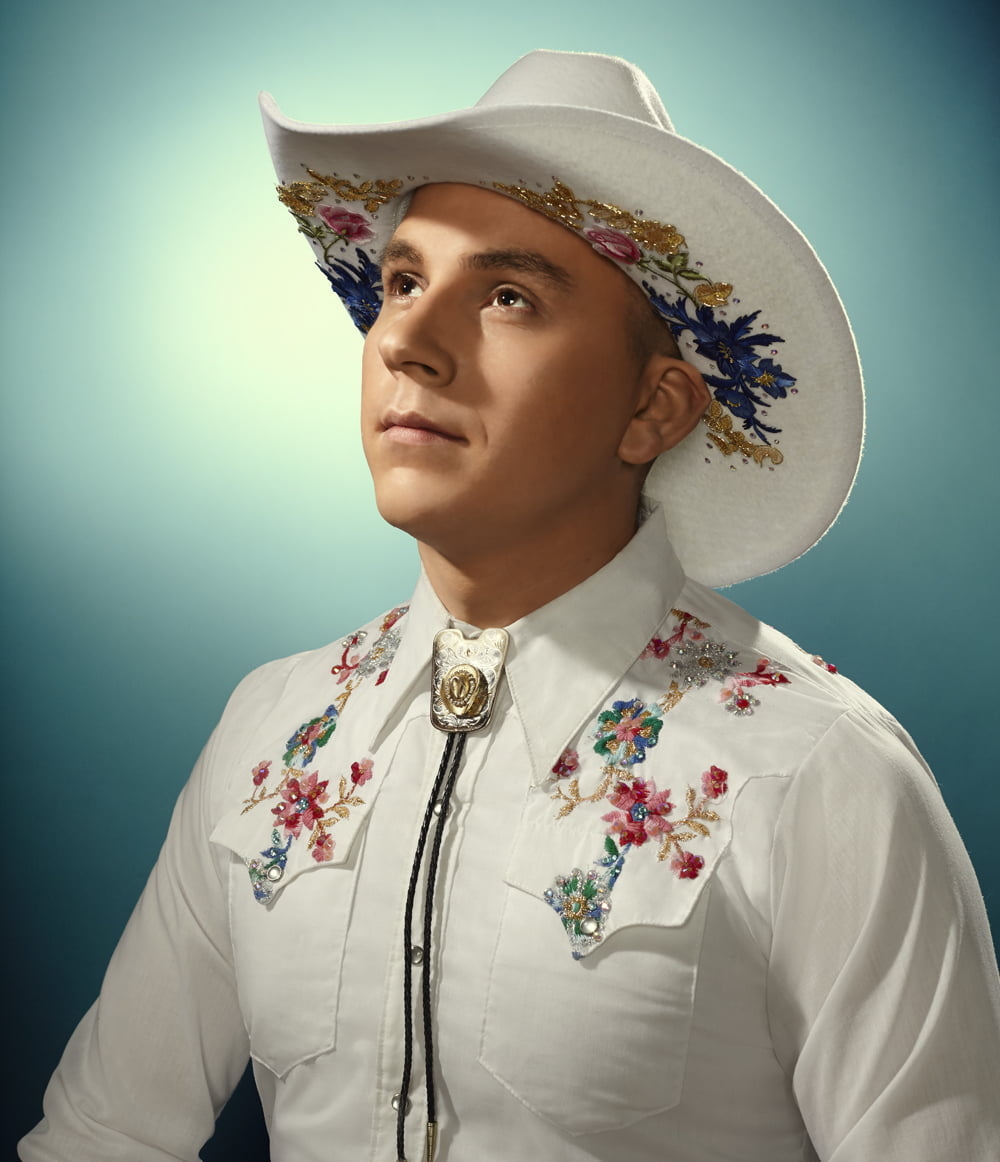
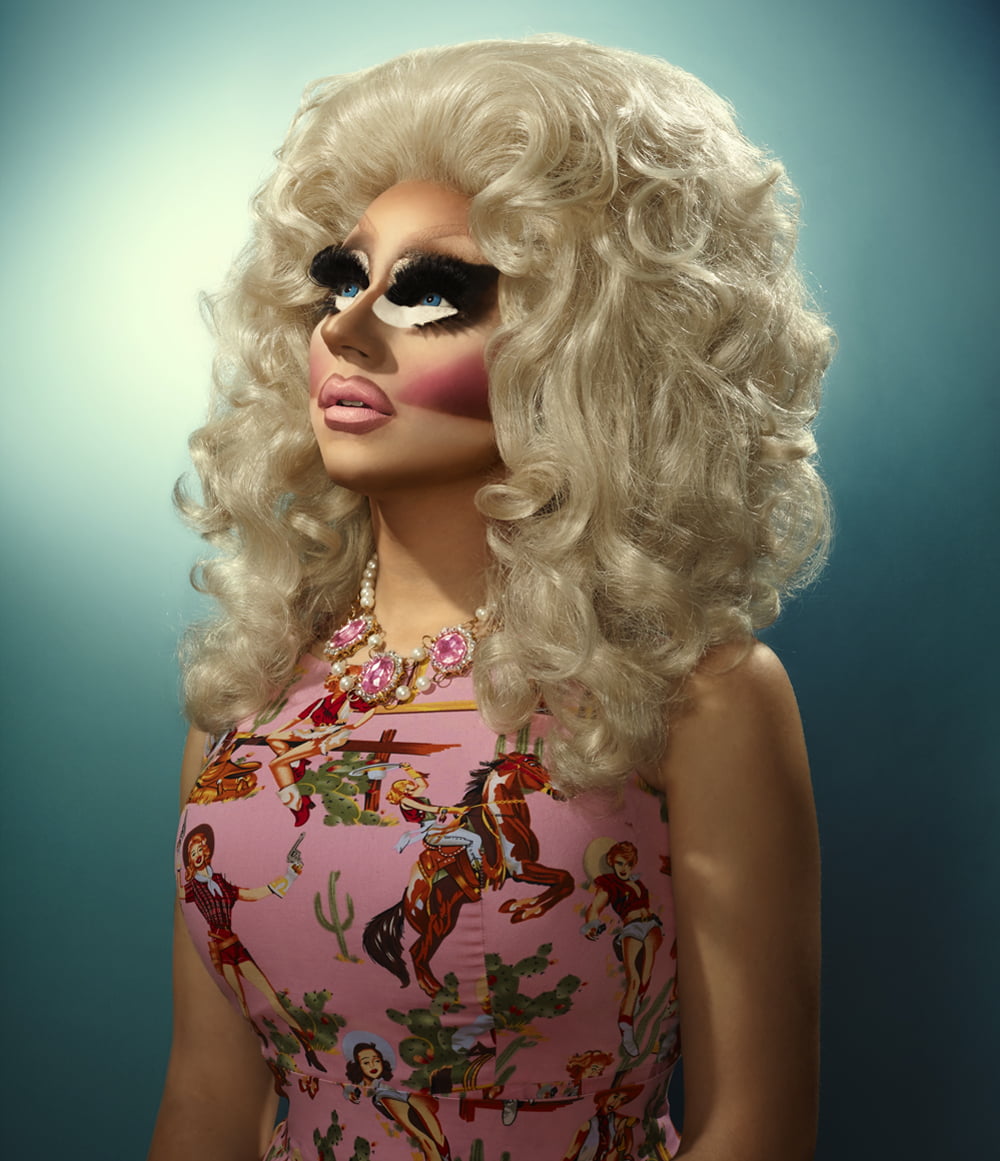
Where the two overlap, we find international drag queen superstar, contestant on season seven of RuPaul’s Drag Race, and folk musician Trixie Mattel. While many Drag Race alumni have released albums — not surprisingly all are dance/club-oriented — Trixie (aka Brian Firkus) just released Two Birds, a folk-influenced country album of original songs. Firkus grew up in rural northern Wisconsin with hardly a neighbor and a shortage of friends, so playing Carter scratch guitar and listening to his grandad’s favorites — Conway Twitty, Johnny Cash, and the like — were the most entertaining use of time. To most roots music fans, that’s an awfully familiar story, right up until you add a wig even larger than Dolly’s, makeup that rivals a clown’s, and a lacy nightgown.

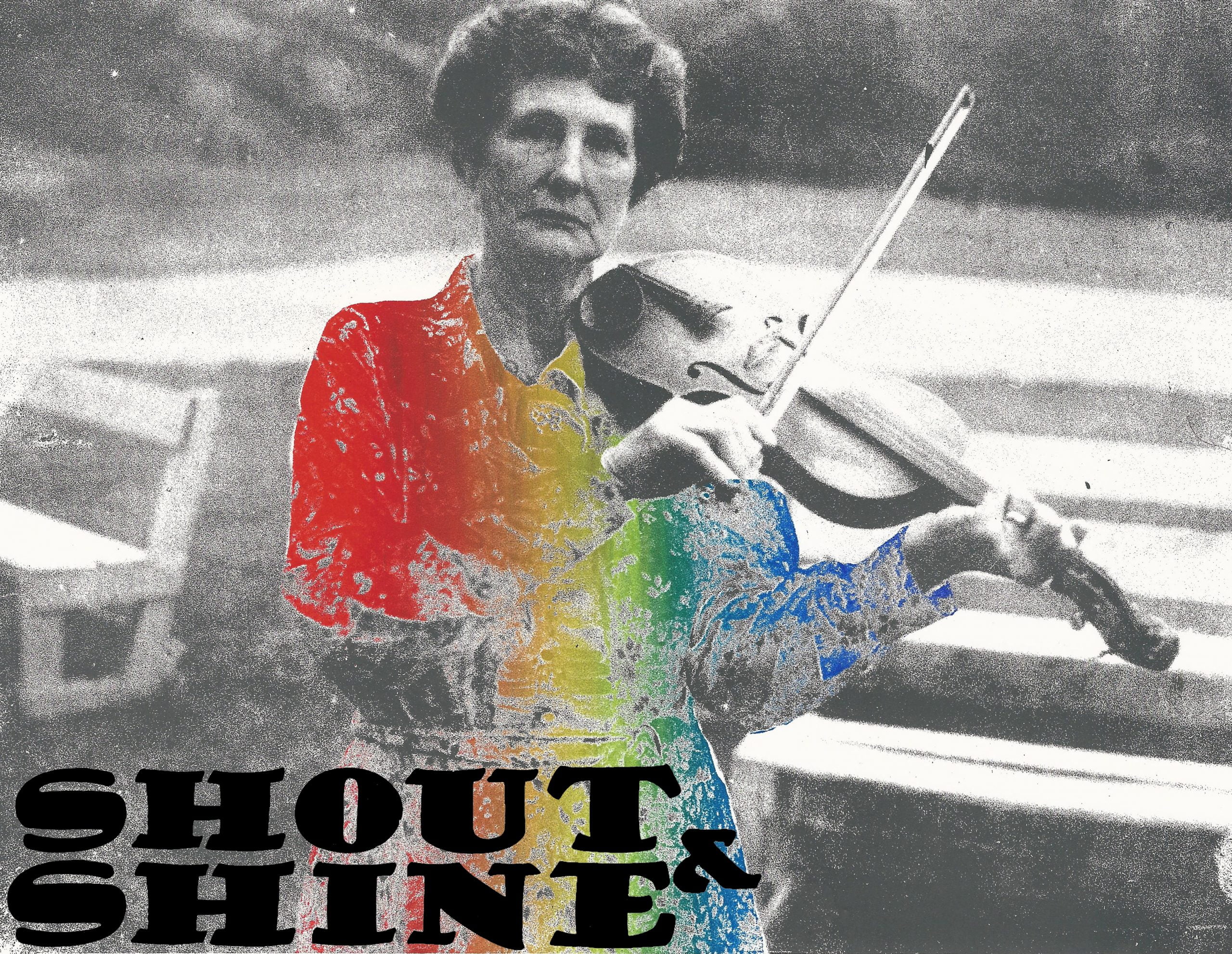
In our brand new column, Shout & Shine, we will explore diverse voices and identities in roots music. We’ll talk to musicians, artists, and creators who don’t fit the “mold.” People who are marginalized within roots music communities — not because their love and respect for the music is lacking, not because they don’t have the familial or cultural ties, and not because they did not grow up learning chords from their grandparents at the kitchen table, but because there are people out there who believe the music can only belong to those who are exactly like themselves. A man in a wig, lashes, nails, and a nightgown is surely disqualified.

When I was scrolling through Twitter and I saw a video of you playing “Storms Are on the Ocean” on autoharp, I was shocked. Where did you get those autoharp chops?

Oh my God, you are going to laugh. I’ve only been playing autoharp for like … five months? I love the instrument! Plus, it’s such a pretty-looking instrument to play in drag. It has such an angelic, feminine look to it. I learned on a chromaharp by Oscar Schmidt and I just got a D’aigle harp made for me. It’s a custom build and it’s so beautiful.

I’ve played guitar for 15 years. I play kind of “Carter scratch” style. I grew up alone in the country playing, so I learned how to play the accompaniment with the melody together on guitar. I’ve always sung and played together, so it made perfect sense. I taught myself guitar, and autoharp, to me, it’s the same business. You use the leading tones of the chords to find the melody. You just learn to play by ear. That instrument, it’s sort of like learning to sight-read or sing solfege — like do-re-mi. Once you do it enough, it becomes second nature. On the album, I got Allison Guinn to play it. She’s like the Beyoncé of autoharp — she’s been on the cover of Autoharp Quarterly and she’s a Broadway actress whose special skill on her Broadway resumé is that she’s an autoharp champion. She’s fabulous.

I saw you perform in Nashville for A Drag Queen Christmas where you sang Dolly Parton’s “Coat of Many Colors” live and accompanied yourself on guitar.

That was the only night I did “Coat of Many Colors.” I love that song and, to me, it’s almost a Christmas song. I ended up dropping it because I wanted to do what I normally do — I do a stand-up set with music woven in. I’ll make a joke about Aja [RuPaul’s Drag Race season nine contestant] looking like a burn victim, then I’ll sing “Girl on Fire” for 15 seconds. Or I’ll make a Columbine joke then sing “Dust in the Wind” for 10 seconds. That’s usually what I do — little bits of music punctuated by jokes. For Nashville, I wanted to do “Coat of Many Colors,” because I thought, if anybody is going to go on this journey with me, it’s the people in Nashville.

I play guitar. I went to school for music, but it never occurred to me to make Trixie sing. When I started, it was like a light turned on. I never really sang in drag until this year. I look like Dolly Parton, but I sing like Garth Brooks … like it doesn’t really make sense. [Laughs] It didn’t make sense to me for Trixie to have this man’s singing voice. But then the comedy became less about being a drag queen and more autobiographical. The stand-up show I’m doing now, there’s a portion where I do original music and it’s always everyone’s favorite part of the show. It occurred to me, people relate and are more responsive to Trixie being a singing drag queen than I thought they would be, so I might as well run with it.

You said you’ve been playing guitar for 15 years — how did you get started?

I’m from the Northwoods of Wisconsin, and we didn’t have any neighbors or anything. I didn’t have any friends. There wasn’t anyone else who lived around us, so I learned to play guitar at the kitchen table from my grandpa, who was a country musician his whole life. At 13, I started and he kind of taught me, but he was a little more insistent on me teaching myself. He said, “If you were a good musician, you could figure it out on your own,” which I think is sort of true.

Who did you listen to growing up? Who did your grandpa turn you on to?

He turned me on to George Jones, Roy Orbison, Johnny Cash, Conway Twitty. Obviously, I gravitated more toward the women — I liked Loretta a lot. Dolly. Loretta and Dolly, for me, are running head-to-head for my favorite. I think Dolly is a finer musician, but I do like that Loretta’s music is a little rougher and tougher. She’s a little more like a tomboy in country music. I like the rougher side of her lyrics, and it’s a little more mellow. Her songs are about being poor and stuff, but obviously, I’m a drag queen, so I like that Dolly wears full drag.

There was some crossover into pop music for a while, that stuff you listen to when you’re a teenager. With folk, I was like, “That’s old people music! My grandparents like that.” When I started to get older, I was done with it, but then only as an adult, when I entered my mid-20s, did I realize that country and folk, given how simple it is, it speaks to the most basic human needs. It’s simple music because it’s by simple people for simple people, really.

I’m the only person from my family to go to college. You can be smart, but not educated and, in folk music, that’s pretty apparent. There’s an emotional intelligence. They communicate really deep things with clean, simple structures in the music.

The people who created this music have always had marginalized identities: immigrants, impoverished people in Appalachia, African slaves, African-Americans being excluded from Western European music and turning to jazz, creating blues. Roots music has always been this vehicle for the struggle of people who are othered. It would makes sense that LGBTQ identities could be intuitively folded into that music, but within these genres, there persists this narrative that they belong to straight, white, Christian men.

Folk music feels like it’s not for us because the culture that surrounds folk music is so old school and very religious. We feel like we can’t belong in that genre of music. When is a gay [artist] ever going to win a CMT Award? Probably never. Or even like an Americana award or something smaller. It’s a challenging thing. Folk’s contemporary movement is a little more liberal.

When I wanted to do the album, I thought it was going to be a shot in the dark, because I really wanted to use gay musicians, if I could. It wasn’t as hard as I thought it would be. My producer, Brandon James Gwinn, is originally from Nashville, but he works in New York producing off-Broadway music material for musical theatre. I’m a half-musical theatre person, half-folk person, so he was perfect, because he knew the Nashville sound. He worked on Ring of Fire, the Johnny Cash musical, and he had a network of people, like the fiddle player and bass player.

I feel like a foray into the roots music market would be daunting for any LGBTQ person, let alone a behemoth character/star such as Trixie?

Originally, when we shot the album artwork, we did it in drag, out of drag, and we shot one together, because we weren’t sure how we were going to market it. We also thought about doing two different covers and different names to sell the album in different ways, because we wanted people who like folk music to pick it up, but not be deterred by the fact that there’s somebody who puts on a dress on the cover. My manager asked me if I wanted to release it as Trixie or as Brian. First I said Trixie, then I said Brian, then I was like, “You know what? It’s kind of irrelevant. It’s more about the story of the music. People can envision whoever they want singing it. That’s kind of irrelevant. That’s sort of the point of the album.”  I didn’t want to market it as drag, but I didn’t want to shit on what people already know about me. It would make no sense, as a business person, to market it without the name on it, because all of the followers I’ve gotten — who like me for comedy, for dressing up — it would be stupid to not try to also let them know that there are other things going on.

I think people, in general, especially in drag and with the age of drag on television, people aren’t used to drag queens having any discernible gifts whatsoever. Nowadays, dressing up is enough. When people see you do something, they’re like, “Oh my God! That person got on stage and did a thing!” I’m like, “By the way, Linda, people used to have to do that.”

How does it feel for you to go from being a former Drag Race contestant to becoming a songwriter?

I’ve always felt like a songwriter first and a live performer second. It’s exciting to have people hear it, even if they don’t hear it live. But I also prefer to play alone. I’ve always played by myself — it’s just what I’m used to. I really love to do stand-up and I love to do comedy and I think I’m actually funnier than I am a fine musician, so I like to blend the two together.

I’m hoping people will go on the journey with me. A lot of people love me for the look and for the comedy. I hope that they’ll listen to it. The music is kind of the behind-the-scenes of the lifestyle of being a comedian and drag queen. It’s not necessarily funny music; though a lot of it has a sense of humor to it, it’s not comedy music.

Would you say on your family tree, on one side you have Mother Maybelle and on the other side you have Mama Ru?

Oh yeah, totally! I’m so into that. There’s a museum somewhere that has Mother Maybelle’s autoharp on display and I’d love to go see it someday.

Last question: Do you think there oughta be a bluegrass drag queen named Shady Grove?

Oh my God. Yes. The answer is yes.

MIXTAPE: Lee Ann Womack’s Country Primer

When we needed an artist to make us a Mixtape of classic country tunes, we turned immediately to Lee Ann Womack … and not just because we love her very, very much, but also because she grew up hanging out in an East Texas radio station while her father played some of the greatest country music ever made. LAW noted that these aren’t, necessarily, her favorite country songs and they don’t go all the way back, but they are certainly a solid representation of the genre’s great past which has absolutely informed its wonderful present.

Johnny Cash — “I Walk the Line”
The ultimate crossover artist, he took country beyond all boundaries. He’s not just one of the greatest country artists, but one of the greatest American artists of all time.

Bill Monroe — “Blue Moon of Kentucky”
He might have been known as the Father of Bluegrass, but music in the country genre was heavily influenced by Bill Monroe. I love — and have borrowed from — the mournful sound of his vocals, the electricity of the harmony vocals, and the drive of the instruments in his music.

The Carter Family — “Wildwood Flower”
Nicknamed the First Family of Country Music, the Carter Family were pioneers of mountain gospel and country music, utilizing harmony vocals in a way that would influence the country genre for many years to come.

Waylon Jennings — “Lonesome, On’ry and Mean”
He had a career as a sideman for Buddy Holly and as a disc jockey in radio before he ever came to Nashvillle to make country records. He was part of the first platinum country album, Wanted: The Outlaws, along with Willie Nelson, Tompall Glaser, and Jessi Colter. To me, Waylon was the epitome of the marriage of rock and country, bringing all of his West Texas vibes to ’70s country.

Tammy Wynette — “Stand by Your Man”
You’d be hard pressed to find someone who isn’t familiar with Tammy and her song “Stand by Your Man.” It’s been a controversy several times over! Her voice is like a broken heart poured directly through stereo speakers and her life seemed like a living, breathing country song.

Loretta Lynn — “Coal Miner’s Daughter”
The ultimate country female singer, she wrote and sang about her life, which reflected so many of the people in rural America and the things they were going through. Listening to her music, one could learn a lot about the times she grew up in, and that’s country music: real life.

Dolly Parton — “Coat of Many Colors”
Her Appalachian roots, so present in her voice and music and, obviously, in the lyrics she wrote. The perfect example of a country girl with bluegrass/mountain influences.

Buck Owens — “Together Again”
From Sherman, Texas, and, along with Merle, created the Bakersfield sound. As is often told, Buck influenced countless other artists in and outside the country genre, not the least of which was the Beatles. I always loved his use of the telecaster and harmonies via Don Rich, and could hear their influences in so many of the country acts that followed.

Merle Haggard — “Okie from Muskogee”
The smoothest and prettiest voice of the male country singers, I always loved Merle for his music and his appreciation of music. I love his playing and especially love his studious approach, pouring over the catalogs of masters like Bob Wills and Jimmie Rodgers — not to mention the blues and jazz music influences you can hear in him. He fascinates me. Along with Buck, they created a whole new country music scene in Bakersfield and refused to play by the rules. I love it.

George Jones — “He Stopped Loving Her Today”
I could do a whole list of just George Jones songs. To me, he surpasses all others because he actually created a new style of singing. Often imitated but never, ever has anyone come close to duplicating. As Gram said, “He’s the king of broken hearts.”

Hank Williams — “I’m So Lonesome I Could Cry”
A country boy with so much soul, he transcends any genre and is one of the greatest songwriters in all of music.

Willie Nelson — “Crazy”
An American treasure, Willie is another artist who really transcends all genres, but there’s no mistaking his country upbringing. He puts music first, before any kind of labels or boxes, and he definitely influenced Nashville and Texas music in a huge way and showed that, when it’s honest, country music and country artists can have mass appeal.