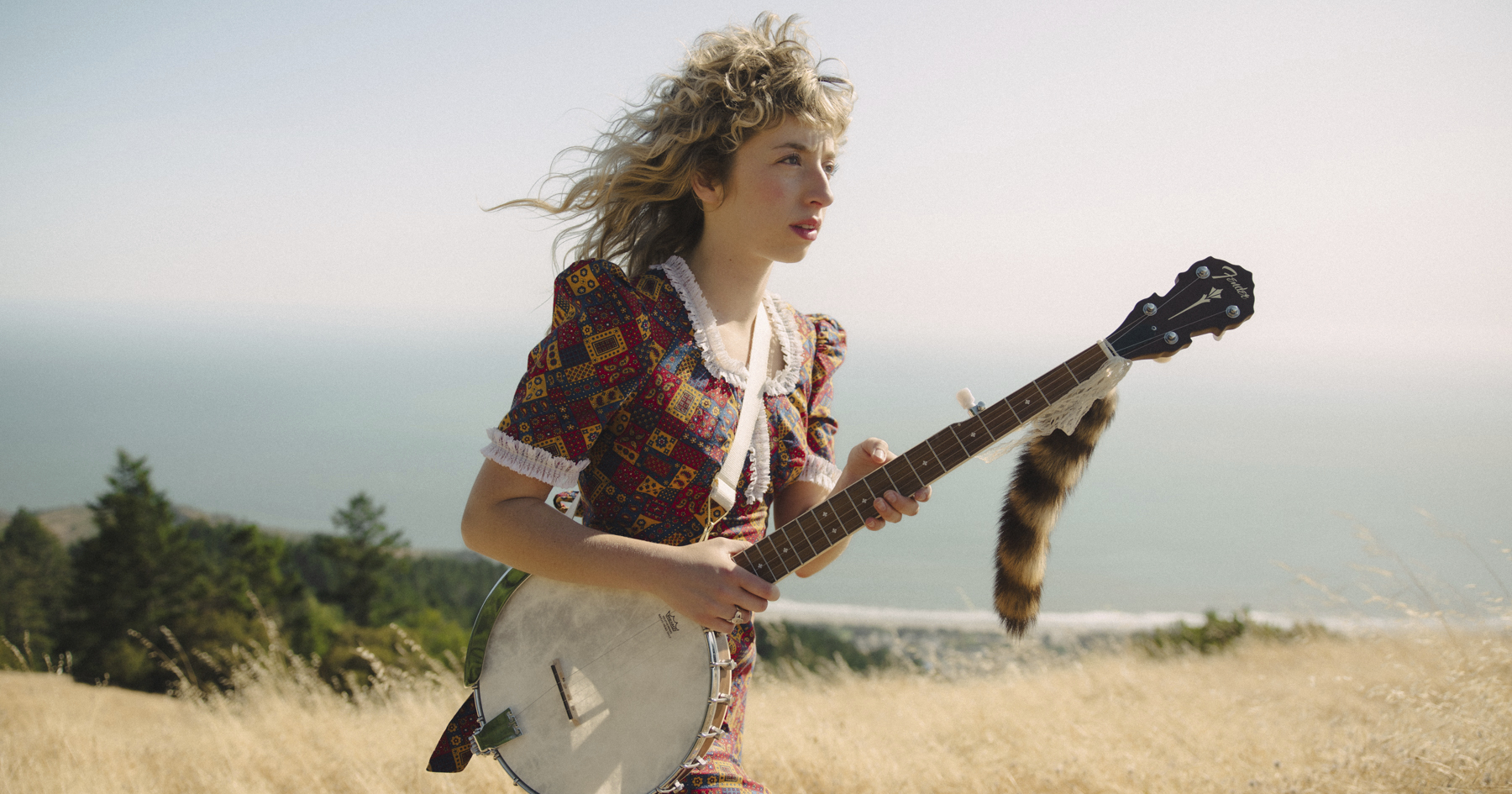
There are plenty of country subgenres out there, but quickly rising up-and-comer Meels has carved out a unique new niche. The California-born singer-songwriter calls her sound “critter country,” a fitting term for her playful but grounded brand of country-leaning roots music, which takes cues from folk of the ‘60s and ‘70s, traditional bluegrass, and classic country a la Loretta Lynn or Willie Nelson.
On her recently released new project, Across the Raccoon Strait, Meels takes listeners on a colorful, far-reaching tour of critter country and in the process announces herself as a fresh, genuinely exciting new voice in the broader roots music ecosystem.
Folks are taking notice – Meels is one of the first handful of artists signed to the newly rebirthed Lost Highway Records, with a legacy of artists like Lucinda Williams, Lyle Lovett, and Johnny Cash, as well as another left-of-center singer-songwriter, Kacey Musgraves, who was announced as the first official signee when the label relaunched last year. Meels has shared stages with artists like Molly Tuttle and Old Crow Medicine Show, and will appear with Margo Price, Carter Faith, and Nitty Gritty Dirt Band this spring.
Below, BGS catches up with Meels about songwriting, “critter country” and signing to Lost Highway.
In the lead-up to releasing Across the Raccoon Strait you shared that this batch of music feels truest, holistically, to who you are as an artist. Can you elaborate on that? What do you think enabled you to express yourself so fully?
Meels: As a writer and a producer and a songwriter and a singer, I really trust my gut and just follow the wave. With these songs, it was just me doing that. A few summers ago, before I made the project, I dove deep into the country classics – like Loretta Lynn and Marty Robbins and Dolly Parton. I got super inspired, the floodgates opened, and I just started writing like crazy. I grew up on a lot of ‘60s and ‘70s folk and my uncle is actually a bluegrass musician. He gigged around town where he lives in upstate New York. So I was already introduced to that world, but I took a deep dive and felt really inspired. The project just kind of poured out of me.
Would it be fair to say you found some unexpected connection points or overlap in those genres – the bluegrass and folk you grew up with, then the classic country you dove into?
Oh, totally. I also was trying out my own take on all of these genres and, again, trusting my gut with production and with the songwriting, to find a space within the genres that felt right for me as an artist.
You describe your music as “critter country,” which I just love. And that seems to encompass more than just your sound, as you’ve developed this really strong visual aesthetic in your videos and artwork, too. How did the concept “critter country” first come to you?
That came naturally, too. I grew up surrounded by a ton of critters in the woods in Northern California and found myself using animals as metaphors for my life. I went to NYU for music, and I took a branding class. I remember all of my peers were coming up with all these cool names for their genre. The teacher was like, “Oh, come up with a name specific to your genre and who you are as an artist.” I was still figuring out who I was as an artist in college and when I was looking through my lyrics and finding all of these “critter” similarities, I was like, “You know what? Critter country, that has such a nice ring to it.”
Take me back to the early days of making Across the Raccoon Strait. Was there a moment or idea that kicked off the creative process for you?
I think it was probably “Out West.” That track, in itself, encompasses the whole idea of the EP. I wrote it in New York when I was still living there and I’d just decided that I was moving back to California, back to my roots. I was just so excited about the idea of moving back out to the West Coast that the song came ripping out of me in my New York apartment. So that was a catalyst for me. I wrote most of these songs – that are about California and about home, actually – in New York when I was in a state of longing for home.
Did having that physical distance from your California home, and maybe the benefit of hindsight, help you write those songs?
I think so. My whole life, I have felt the most creative when I’m in California. New York is very overstimulating and there’s a lot going on all the time. I feel like, when I was living there, I was very much just absorbing everything that I could, but I wasn’t really writing so much until I was like, “Yeah, I’m gonna move back.” Then all of the sudden, I just started writing like crazy.
Something that stands out in your songwriting is how freely you use humor in your lyrics. You tackle some tough subjects, but never shy away from playfulness and to me it makes the stories feel more realistic, because in real life our experiences are often mixed bags. Are you consciously trying to inject some lightheartedness into your writing or does it just happen that way for you?
I don’t know. I do find myself making little jokes in my songs all the time. For example, in “The Wizard” I’m writing about a heavier topic: my struggles with OCD for my whole life. But I’m writing about it in a way that I’m not trying to hide anything. I’m just trying to put it in a way that’s maybe a little more digestible, and a little silly and a little funny, to help myself work through it a little more. And maybe to make it more digestible for my audience, too. Maybe I use humor as a way to cope.
“The Wizard” really does nail that balance of sharing something difficult and vulnerable while giving a little wink and nod to the listener.
I love a wink and a nod.
Speaking of that song, when you do get into vulnerable territory in your writing, do you ever feel fear or hesitation? And if you do, how do you engage with those voices?
To be honest, I feel like when I’m songwriting I’m at my most fearless. Since I was young, it’s been my way to put it all out on the table and not be afraid. I think me writing in these little critter metaphors, or using humor – maybe that’s my fear talking, I don’t know – but when I’m writing I just want to lay it all out on the table. It’s my one true release, so I try to do it without fear.
It sounds like you had a fantastic group of collaborators working with you in the studio. What was your time together like?
It was so wonderful. We recorded at a studio in Oakland called Tiny Telephone [owned by John Vanderslice]. They actually had old telephones that worked all over the studio. And they had everything you could want and more to play with and to get creative with. The space itself was incredible. We had an incredible engineer named Danielle, and she was also so important in the creative process, you know, running the vocal through this weird flanger and making moves that were so creative and so unique and so cool.
I also co-produced it with Peter [Groenwald] and Mark [Campbell], who made my first record with me, so that felt really comfortable and really safe. I knew nothing was off the table. I could bring up any idea, no matter how stupid I thought it was, and we would try it. Sometimes it worked, sometimes it didn’t. But we had such a good, natural flow in the studio. I brought a lot of friends, too, to play in the band, which was just really great.
You can hear the looseness and camaraderie in the music, in a way that I’d assume can’t be replicated without having close relationships with the players.
I’d always wanted to track a whole record live to tape. And we did that with Across the Raccoon Strait. We didn’t use any click [tracks]. It was just like, “Let’s get this next one tight, guys, let’s go.” We were all having a lot of fun with it.
When I’m in the studio, making music is such a collaborative thing. Even if it’s my song, every musician that I bring in is going to bring something unique. I really love to let them loose and let them rip. We can pull back where we want, but everybody in there plays an instrumental – no pun intended – role in making the music great.
This is also the first project you’ve done as one of the initial signees to the newly relaunched Lost Highway Records. How did you get hooked up with them and what does it mean to you to work with such an historic and impactful label?
This record has opened a lot of doors for me. I made it a little over a year ago and I was like, “I’m gonna quit my day job.” I was living with my grandma in Pasadena. She’s 86 and she’s so cool. “Marsha June” was actually written about her. So, I was basically like, “I’m just gonna give this thing a go.”
I sent this record around to literally anybody that would listen to it. I would send it to venues, because I’d just moved to LA. I was like, “Hey, I haven’t played a lot of LA gigs. Here’s my new record. You want to book me?” I was just kind of fearless about that, too. Some artists are so precious with the new stuff and don’t want to send it around. But I was sending these songs around before they were even mastered.
Eventually, I started working with a manager, I started working with an agent, and then I got a lawyer and did the whole thing. I talked to a lot of great labels, but when I met with Lost Highway I knew that it was the right direction. I’m so, so happy that I’m working with them. It really does feel like a family. It’s such a close-knit team and everybody really cares. … So many of my favorite artists have put music out through Lost Highway. Its legacy just runs so deep. I’m the hugest Johnny Cash fan in the world – and a Willie Nelson fan, and Lucinda Williams. It’s kind of absurd to me that my name could be looped in with all of those other names.
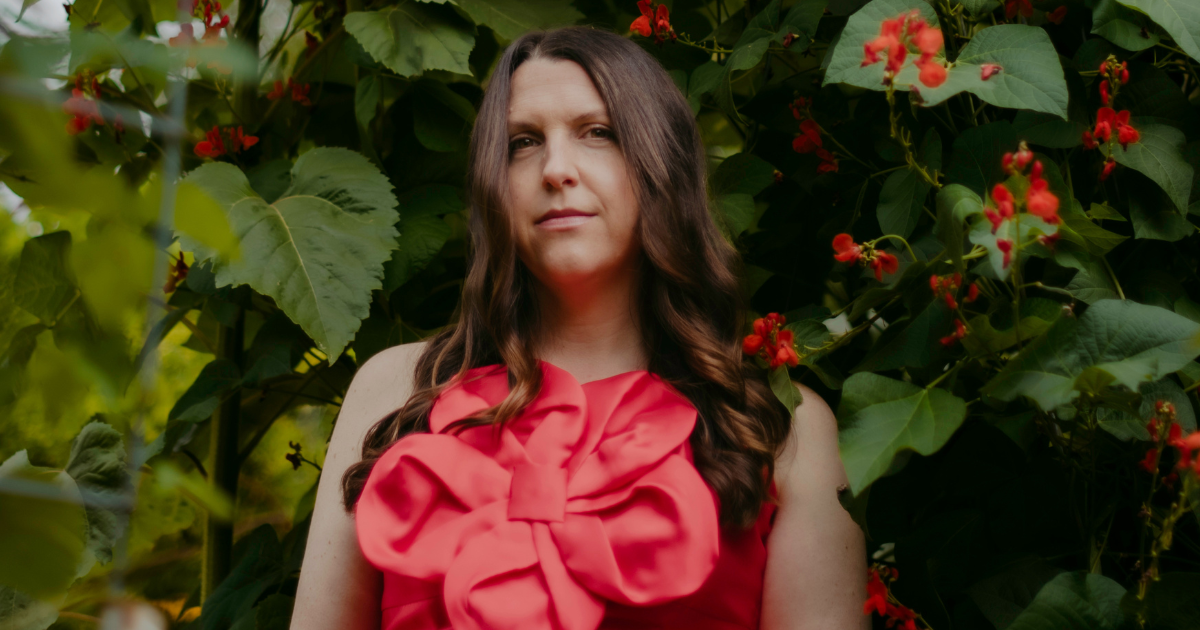
Caroline Spence and Lori McKenna are both lauded for writing songs that cut straight to the heart. In conversation, it’s clear they also share admiration and a generosity of spirit, offering insight into how a life built around family can both coexist with and deepen a life in music. The two met with BGS via Zoom to discuss Spence’s new record, Heart Go Wild, produced by Peter Groenwald, Mark Campbell, and Spence herself.
As Spence charts her first year of motherhood, McKenna reflects on building a catalog of piercingly honest songs while raising five children of her own. Together, they explore the mysteries of publishing, the influence of mentors like Mary Gauthier, and the butterfly effect of one songwriter’s choices on another’s path.
Their exchange drifts from songwriting craft to the role of co-writers in self-discovery into the bigger questions of life: how family and creativity intertwine, how community ripples outward, and how songs become offerings that carry meaning long after they leave the writer’s hands.
What emerges is a portrait of two artists at different points along similar paths, each proving that family life and creative life are not competing forces, but intertwined sources of inspiration and strength.
I know you two have a lot to talk about, but I’d love to start, if we can, with how you know each other? Did you know of each other musically first, and then how did you come to know each other personally?
Lori McKenna: I think the first time we met might have been at breakfast that time?
Caroline Spence: Right. I think that was another Bluegrass Situation connection. I think that was the first time I met you.
I had a good friend from summer camp and we would often trade mixes. She put one of your songs on a CD for me. I had already found Patty Griffin and was having my singer-songwriter love affair. That led me to The Kitchen Tapes, which led me to everything else. And I distinctly remember when Faith Hill cut “Stealing Kisses” and I thought, “Wait, that’s how that works?” I didn’t know what publishing was. I didn’t know how music worked in that way and that became a new little baby dream of mine that I carried with me: to write a song that was good enough that maybe somebody else would want to sing it. I feel like I would not be aware of the job that I have had I not found you, Lori.
LM: That is really cool. I remember not knowing anything about publishing, how it works and all that stuff, too. And I still feel like I know just a tiny bit more.
CS: I know, totally. It’s still a mystery.
LM: We were at a wedding over the weekend and my son Chris, who’s a writer in town, has his first single that he co-wrote that’s going to radio. So we were singing songs and at the end of the night, my brother was like, “Chris sold the song!” I’m like, “It’s not called selling the song.” He’s like, “Well, how does it work?” Nobody knows.
CS: Yeah, nobody knows. They just stream it now into the abyss.
LM: The only reason I knew anything was because of Mary Gauthier. I did know people who had moved to Nashville before Mary, but because I’m in the Boston area, they came back saying, “Yep, it’s very different.” It is very different in Nashville. I didn’t know anyone who had stayed before Mary, you know? I love being inspired by other people. I love it that that’s how life works, that you see someone else do something, and you’re like, “Wait! I can do that! At least I can try!”
CS: I’ve been thinking about that a lot lately, the butterfly effect, and how that happens within our community. Like, if Mary hadn’t done this, then this wouldn’t have happened for you, and if you hadn’t done that, then I wouldn’t have known about this, and I’ve been thinking about that as I’ve been in this creative community for a decade now. There’s so much stuff that you never know your little ripple is doing.
LM: The ripple is such a good word. It’s such a ripple, isn’t it? It’s crazy. We’re really lucky. I know you just had a baby, but the number of people that come up to me and ask, “How did you do this with kids?” Nobody told me that I couldn’t. I know stories of other artists that someone’s told, “You can’t do this and have a family at the same time.” I’ve heard those stories, but nobody ever told me that.
It didn’t seem impossible at the time. But now my son Chris has a baby. I look at them and I’m like, “Wait, how does anybody do that ever? How does anybody have a baby?”
CS: Man, some days it really feels that way. Most days it feels that way. No one ever said that to me either, but those are absolutely the cultural messages you absorb. There are certain gigs I might not get because of my familial obligations, but you just make your choices. And I’m not building my life around what I “might get.” I want to build my life around what I know I want to have. I just feel like all of that is gonna feed your person. You can’t starve yourself of these big, beautiful growth opportunities for some sort of potential. My life is bigger than my career, and I would like it to be as big as possible.
LM: And it’s crazy, right?
CS: Yeah, it’s nuts. Absolutely nuts. The fact that I got a shower this morning is a big win.
LM: Well, that and the fact you’re putting a record out!
CS: Yeah, yeah, and the record!
LM: You did good.
CS: It’s a little bit cuckoo, but it’s been done for a while. A lot of the heavy lifting was done even before I was pregnant, so that was an accidentally smart idea and we’ve just had to be strategic about everything else. I feel like there’ll be a lot of people who assume this is a record about marriage and family, which it’s not. I’m sure I will have that, but this feels like a record that’s more about the chaos before I decided I could do all that.
LM: From the minute I knew who you were, I’ve always loved the way that you express your feelings in such a way that makes other people be like, “Oh! I’ve felt like that! This song makes me realize that I’m not alone in feeling that.”
There’s something in the way that you write that is like arms are reaching out, but they’re also like, “I know you feel this way, too and it’s okay that we all feel this way.” I feel like that’s why music exists. For someone pulling over their car and being like, “Oh my god, okay, I’m not gonna die today because I just heard the song!” It is the biggest reason, the service of songwriting, as Mary Gauthier says. You don’t do it consciously, but it just is your way of doing it. It just seems so innate in the way you write.
CS: That’s so kind and means a lot to me, because that’s really how I feel about it. It’s been a progression. I started writing because I needed to get these hard things out when I was a younger person and as I started putting those out there, I would have conversations where someone would say, “I feel that way, too.” That kind of cemented in me to keep writing from that place, because that’s what music did, and still does for me.
What is personal is universal. I feel like someone smart said that before I did, but it’s so true. And Mary’s perspective of songs as a service resonates so deeply with me. There’s a quote I read when I was doing The Artist Way a few years ago that says, “The artist has to be humble, for he is essentially a channel.” To let the divine in, whatever it is, to flow through you, you have to get small and get in your humanity.
And when I’m feeling really in my head and when I don’t want to perform or I’m feeling self-critical, I think about what I’m doing as an offering, and it makes me feel better and more inside what I’m trying to do.
LM: I love the offering.
CS: People want to feel understood. As a listener, you want to find your soundtrack for your hard time or your good time.
LM: Well, congratulations on doing all this, because the record’s beautiful, as usual. You co-produced this whole thing, right? Did you always co-produce? Because this record seems, and I hate to use the word “rockier,” but it feels like it moves a little bit more. Was that intentional?
CS: I think a lot of that might sort of be a songwriting change for me. I feel like I’ve gotten better at translating what I’m hearing into the actual thing, so I think that’s a skill I’ve slowly developed from my slow folk songs for years.
LM: The transition is so beautiful. With the song “Soft Animal,” if I wrote that song, it would be just the slowest. It wouldn’t move the way [it does].
CS: It totally started on the page, too. It was very much like a poem. Sometimes I sit down to a piece of writing, if I’m going through my ideas, and if something’s sort of dead on the page, I’ll just start playing. That one was one where it sort of just came out that way. The clash of “Soft Animal” to something that felt really thrashy, the irony of that felt celebratory to me, and it was fun. That’s one of my favorites production-wise on the record.
LM: Oh, that’s great. When I work with a producer, you can tell. You can listen to the record and know that this is definitely different. But there’s been this really consistent line with you the whole time, which is kind of remarkable when you think about how much you’ve changed in life and as a person over the years. There’s this vibe that really just comes through where you can tell that you are a big piece of the production of everything.
CS: Thank you for saying that. That was actually a dealbreaker thing for me for this record, that I would only work with people who would give me a production credit, because I felt like over the years – and not to discredit the people who are credited as producers on my albums – but because of who they are as producers, it was collaborative, and there were times when I was making sure that my vision got to the finish line in spite of their initial instincts. I didn’t know it mattered to me until maybe I’d read some press that would bring that person’s name into it and it made me feel a certain way.
Producers are important because I think it’s really helpful to get outside of yourself and your own instincts, and to be challenged. But sometimes what’s helpful is to be challenged, and then you know exactly how firmly you feel about something.
For this record, I really wanted to know that it was collaborative from the jump. That felt incredible, and I worked with two people who had the best energy and a healthy sense of ego, and it was just really fun.
LM: That’s awesome. You come through. I’m exactly the opposite, because I can’t stand being in the studio.
CS: I understand that as well.
LM: I don’t know how you do it, because I literally only hear the song and what it sounds like when I sit at my kitchen table and sing it. People kept telling me over the years that I’d start to hear parts. So I am a person who needs producers… I’m just like, “Here are the songs.”
CS: Yeah, I’ve done that so many times, I’ve given a pile of songs and been like, “I don’t know what I made. What’s speaking to you?”
LM: Well, this morning I was listening to the album again, and I thought, “Oh, she’s gonna produce other people’s records someday.”
CS: That’s very kind and, honestly, a thought I hadn’t really had for myself, but I really did enjoy it. I think if I ever do that, it’s gonna be because of the experience I just had with these people that built up my confidence in that space. It was a lot of fun.
LM: You have this beautiful voice. I have an unpretty voice and you have a very pretty voice that you know how to use really well. You can say the hard things with that beautifully well-orchestrated production and then your beautiful voice, and it still makes you feel all the feels, versus I always feel like no matter what I sing, it’s gonna sound sad.
CS: I feel like a lot of the time I try to be like, “I’m not so sweet,” and grit up the production or avoid certain songs. I was self-conscious about it, which I think may be some internalized misogyny, because I have such a high female voice.
Speaking of songs being of service, babies and children come out singing, you know? It’s such a natural thing to do. We’re meant to do it. It’s joyous; it’s a release. And knowing the way it feels in my body to perform or really sing has changed the way I perceive my own voice.
LM: It is the first thing anybody knows how to do.
CS: Your voice has this wisdom to it. It kind of doesn’t matter what you’re singing; it sounds like you believe what you’re saying and you trust what you’re saying. You have this earnestness to your voice. If you were singing “Red Solo Cup” I’d be like, “That song means a lot to me.”
LM: I actually was at a round at the Bluebird [Cafe] with the Warren Brothers a couple of weeks ago, and they sang “Red Solo Cup.” I am so jealous of songs like that, because I could never write them.
In terms of writing for you, how have things changed since the baby?
CS: I haven’t had the same amount of headspace. My publisher held a sync camp and my mom came to town to help. I wrote for days straight and that felt really good to get back at it. As far as writing by myself, that’s just now kind of coming back.
LM: Is your son enjoying you playing the guitar?
CS: It’s a pacifying thing. I could put him in his playpen if I want to and mess around on guitar, and he’s super happy to listen. The other day, I was practicing for this Springsteen cover night that I got asked to do and I just started kind of riffing around. The flow started and that felt really good. I was like, “Oh, okay, it’s still in there.” I just hadn’t had the circumstances to put myself in the position where I’m visited by that energy. Being in creative spaces with others has been really nice right now, too, to slowly rebuild.
LM: When my kids were little, I actually wrote a lot. They all shared a bedroom and, after dinner, my husband would work on the house while I tried to sing them songs – sometimes terrible ones – or make up songs while they fell asleep. That routine gave me more time to write than I expected.
Two of my kids are songwriters now, though at the time they probably went to sleep just to get away from me singing the same line over and over. But honestly, if I hadn’t had that hour and a half every night with them, I don’t think I would have learned how to write. I wasn’t planning to be a musician. My children gave me the time and space to discover that.
By the time I had five kids, I started doing open mics. I never would have had the courage to get up there if I didn’t have my kids. They were my world, so if people didn’t like what I did on stage, I could always just go home and sing in the living room with them. That gave me the confidence to try.
CS: That balance is so important and it’s hard to reverse-engineer for people. If you move somewhere completely career-focused, you can get lost in that and miss the balance of family and partnership. I feel like any sense of longevity in life or career needs that.
For me, I’ve realized that to be a happy, well-rounded person – good partner, good friend – I need a rich family and personal life. Otherwise, my career just eats me alive. I think the reason you’ve been able to sustain your career and create a catalog of songs full of humanity is that you’ve always had that balance.
LM: Exactly. And it’s not just a woman’s thing. I know men who do it, too. But when you put family first, you have to say no to some things. You can’t always do that week-long tour, for example. But the things you say no to fade away; you don’t remember them. You only remember what you did. Instead, you stayed home and sat in the backyard with your kids and that’s the summer you wrote that one song that you’re still singing years later.
Love is supposed to be the thing you surrender to. It just opens up the universe wider. I’ve seen it happen again and again; even songwriters who know exactly what they want in their twenties, after falling in love or having a child, the world opens up in new ways.
CS: That’s making me emotional. That’s exactly where I am right now. I feel like my life is starting in a really good way. My career feels like it is starting over again. It is making me recalibrate how I want to show up in the world. And it’s freeing to have my compass aligned around my family. It feels like a new beginning. It’s really beautiful.
LM: That’s exactly it. Parenthood gives you a stream of love you hadn’t experienced before and it changes everything creatively. For me, it didn’t really happen until my fifth child, but it always happens. The universe shows up when you do something hard, like having a baby. I remember putting out a record in May, right around the birth of my son, David. By Thanksgiving, I had Faith Hill cuts. It’s like the universe says, “We should remind her that she gets to keep doing this.”
CS: That really resonates.
LM: I always listen to the last song on a record first.
CS: I love that because some of my favorite songs on your records are the last songs.
LM: When I heard “Where the Light Gets Through,” that song is such an offering, such a service. I don’t know if you want to talk about where that song came from, but years from now you are still going to have people tapping you on the shoulder saying “thank you” for that song.
CS: We’d made the record basically and we couldn’t figure out the last one. I said to the producers, “What if we write this one together?” Mark and Peter started building the track. I was going through ideas and I’d been writing a lot about my brother-in-law’s passing away. It just so happened that something I’d written fit almost exactly word for word and we shaped it from there. It couldn’t have just been me on that record, because it needed to feel lighter than I wanted it to.
LM: I know exactly what you are talking about. That’s why I love co-writing. You get perspectives that you could never create alone. Sometimes you can’t do it by yourself, and the song only exists because of that.
I’ve had that experience with Liz [Rose] and Hillary [Lindsey]. I had a song I’d been trying to write for a month by myself and I was so mad I couldn’t. I showed it to them and Liz was writing and singing it immediately. Hillary was like, “Do you know this song?”
CS: Do you feel like that is possible because you know each other so well that they can meet you where your brain is?
LM: Absolutely. And that’s another thing I love about co-writing. You fall in love with each other so quickly in the room. And when you trust yourself with someone, you can say the dumbest thing and it might turn into the smartest thing. I rarely sit with someone who doesn’t make me feel like I can speak my mind. With Liz and Hillary, Liz can read my mind and Hillary is like a musical and emotional genius. They both are.
Parenthood also gives you that focus. You don’t have all the time in the world, so you go straight to the point.
CS: I’ve heard many parents say they become more productive because they have to think differently about time and energy. I feel that now, with my baby being a little more self-sufficient.
LM: Exactly. And think of all the things you can do since having a kid! You weren’t opening drawers with your feet before, were you! Well, I love what you do, and I was genuinely happy when I heard you were pregnant. It’s a good thing for artists to step into family life.
CS: There’s a class of women my age choosing to have families now, balancing careers – it feels like a statement in all the best ways.
LM: Parenthood changes your perspective. You look back and wonder how you managed everything, but the flow and the creative life meet you there. You make the things you have to make because that’s what we’re here for.
CS: Man, there’s a lot of stuff I needed to hear today that you just spouted out. Thank you for spending time with this record.
LM: Congratulations. The record is so good. I hope the biggest challenge with it is all the things you have to say no to.
This website uses cookies to improve your experience. We'll assume you're ok with this, but you can opt-out if you wish.AcceptRejectRead More
Privacy & Cookies Policy
Privacy Overview
This website uses cookies to improve your experience while you navigate through the website. Out of these, the cookies that are categorized as necessary are stored on your browser as they are essential for the working of basic functionalities of the website. We also use third-party cookies that help us analyze and understand how you use this website. These cookies will be stored in your browser only with your consent. You also have the option to opt-out of these cookies. But opting out of some of these cookies may affect your browsing experience.
Necessary cookies are absolutely essential for the website to function properly. This category only includes cookies that ensures basic functionalities and security features of the website. These cookies do not store any personal information.
Any cookies that may not be particularly necessary for the website to function and is used specifically to collect user personal data via analytics, ads, other embedded contents are termed as non-necessary cookies. It is mandatory to procure user consent prior to running these cookies on your website.