12 Mandolinists We Know You’ll Love

The mandolin’s role in music has changed a lot over time and with its steady pace of change comes a constant flow of new players. Nobody plays or interprets music in the same way as anyone else, bringing plenty of new ideas and explorations.

There have been many different eras of mandolin playing in bluegrass. Ranging from the classic Bill Monroe style to David Grisman to Chris Thile – and, lately, a more string band sound is being popularized by players like Andrew Marlin. And of course, there are countless other mandolin eras beyond and in between.

The mandolin has also been used in many other genres besides bluegrass; it lends itself to genres such as Choro, jazz, classical, and pop. The mandolin even fills major arenas. There have been a lot of folks making incredible music on the instrument and though this is just a starting point, here are 12 mandolinists who you might not be familiar with, but we know you’ll love!

Jean-Baptiste “JB” Cardineau

Franco-American mandolin virtuoso Jean-Baptiste “JB” Cardineau is currently Boston-based, having graduated from Berklee College of Music. JB’s mandolin playing delves into many genres such as bluegrass, classical, old-time, and some traditional French music, too. His style is quite adventurous; he dives deep into the old-school Monroe ways, looking towards Frank Wakefield for much inspiration. JB has spent a lot of time touring with different bands, such as the Ruta Beggars, as well as his own project, JB and Cardineau Sin. As well as being an incredible instrumentalist, JB is also a gifted songwriter. Above is one of JB’s original tunes, “Si Tu Vois Ma Mandoline.” This tune blends the more traditional French style with bluegrass influences.

Ian Coury

Raised in Brazil’s capital, Brasília, Ian Coury is a masterful, well-respected 10-string mandolinist currently based in Boston. Growing up playing Choro, Ian pushes the boundaries of the genre, writing original music that has won him “Best Instrumentalist” awards from the National FM Radio Festival (2020) and second place in Brazil’s eFestival (2021). He has shared the stage with renowned musicians such as Hamilton de Holanda and Armandinho. In 2019, Coury enrolled at Berklee College of Music and later earned his master’s degree from the program. Here is Ian playing an original composition entitled “Solando no Limbo” for Mandolin Mondays.

Maddie Witler

Originally from and based in California, Maddie Witler is a phenomenal musician. Primarily known for her mandolin playing, Maddie is also an incredible guitarist and banjoist. Having also attended Berklee College of Music, Maddie was a founding member of the Boston-based bluegrass group the Lonely Heartstring Band. Maddie also used to tour with powerhouse GRAMMY-nominated band Della Mae. In 2022, Maddie released her debut solo album, Astronaut, a truly incredible compilation of all original songs and tunes from Maddie. In this video, Maddie is joined by Jacob Jolliff at Mandolin Camp North shredding on a classic bluegrass tune by Frank Wakefield, “New Camptown Races.”

Jesse Appelman

Jesse Appelman is both a gifted mandolinist and tune writer. Based in California, Jesse frequently tours with the Sam Grisman Project, as well as his own group, Jesse Appelman’s West Coast Stringband Project. His debut album, Where We Go, which was released in February, is a collection of original tunes and select cover songs and was produced by John Mailander. His tunes are mellow yet groovy, capturing anyone listening. This clip is Jesse’s rendition of “The Hills of Isle Au Haut” joined by Eli West and Patrick M’Gonigle.

Ethan Setiawan

An Indiana native who now makes his home in Maine, Ethan Setiawan is an incredible mandolinist and tunesmith. Ethan was the 2014 National Mandolin Champion, and in 2017 was the first place winner of the Rockygrass mandolin contest. He is also a graduate from Berklee College of Music, and has also done some teaching there, too. Ethan has toured with bands like the Acoustic Nomads, Corner House, and currently tours with both his duo Hildaland and his own group, Ethan Setiawan and Fine Ground. He has released a few albums of his instrumental music, Flux (2018), Gambit (2023), and Encyclopedia Mandolinnica (2025). Bringing in elements of bluegrass, classical, jazz, and Scottish music, Ethan makes his own sound and brings his listeners along for the story. Enjoy a recording of Ethan playing his original tune, “Uncrossed.”

Korey Brodsky

Originally from Connecticut and now based in Asheville, North Carolina, Korey Brodsky is both a talented mandolinist and guitarist. Yet another of our mandolinist picks who studied at Berklee College of Music, Korey has toured all over. In 2021, he joined Boston bluegrass band Mile 12 and he’s traveled and recorded with artists such as Jody Stecher, the Tray Wellington Band, Nefesh Mountain, the April Verch Band, and more. Above, Korey plays a beautiful take of a Karl Suessdorf and John Blackburn tune, “Moonlight in Vermont.”

Megan Cody

Originally from Colorado and now living in New York City, Megan Cody is a killer mandolinist as well as an incredible guitarist and singer. Fronting the band the Cody Sisters alongside her younger sister Maddie, Megan’s mandolin approach is playful and thoughtful. Megan tours year round with the Cody Sisters and frequently plays all over New York City. Here is a recording of the Cody Sisters playing a medley of a few songs and tunes.

Casey Campbell

A rare Nashville native, Casey Campbell is a fourth-generation bluegrass musician. An extraordinary mandolinist, Casey has performed with musicians like Bryan Sutton, Chris Stapleton, Vickie Vaughn, Becky Buller – and the list goes on! Casey was the 2017 winner of the IBMA’s Momentum Award for Instrumentalist of the Year. He has a duo mandolin album that was released back in 2017, Mandolin Duets: Volume One, which features Casey playing with various masters of the mandolin. In the video above, Casey is joined by Sam Bush as the two play a Jethro Burns tune in honor of Sam called “Sam’s Bush.”

Michael Prewitt

Originally from Kentucky, Michael Prewitt spent many years touring with the iconic bluegrass band Special Consensus. In 2024, he released his debut album, The Peerless Mountain Sessions, and then followed that up later that year with an incredible album of all original music, Something He Can Handle. Michael currently tours around the country with his own band, Michael Prewitt & CrunchGrass Supreme. The video above features one of Michael’s original songs, “Winnipeg” played by Prewitt with CrunchGrass Supreme.

Thomas Cassell

From Southwest Virginia, Thomas Cassell now resides in Nashville. A a founding member of the band Circus No. 9, he currently tours with the Wood Box Heroes and performs as a sideman with many other groups. Thomas has won many awards – he was the 2021 National Mandolin Champion and in 2020 he won the IBMA’s Momentum Instrumentalist of the Year Award. Thomas fronts his own band as well and has a few of his own albums out, Voyager (2018), What You Need to Prove (2022), The Never-Ending Years (2024), and he has a forthcoming album soon to be released! The video above is of Thomas’ new single, “Ramblin’ Heart,” featuring Tim Stafford. This is the first single off his upcoming album, so stay tuned.

Lauren Price Napier

Based out of Owensboro, Kentucky, Lauren Price Napier is a talented mandolinist and singer who digs deep into Monroe-style mandolin playing. Fronting the traditional bluegrass band the Price Sisters with her twin sister Leanna, Lauren has been nominated for multiple awards from the IBMA, such as Momentum Vocalist and Momentum Instrumentalist of the Year in 2019 and 2020, respectively. Lauren brings her own spin to playing traditional Monroe-style mandolin while also sticking to the roots of the genre. Above is a video of Lauren playing one of her original tunes entitled, “Tuel’s Landing.”

Tristan Scroggins

Tristan Scroggins is a GRAMMY-nominated mandolinist who also won the IBMA’s Momentum Instrumentalist Award in 2017. He spent years touring with his dad’s band, Jeff Scroggins and Colorado, but he also has a duo with violinist Alisa Rose called Scroggins & Rose and recently toured full time with Missy Raines & Allegheny. In 2019, he released an all-instrumental EP featuring his style of mandolin crosspicking called Fancy Boy. Tristan also has an ongoing, multi-volume project with fiddler George Jackson recording 100 of the most popular old-time tunes called Old Time 100. Tristan currently tours with Bronwyn Keith-Hynes. Here, Tristan is joined by fiddler Ellie Hakanson playing a bluegrass tune, “Ashland Breakdown.”


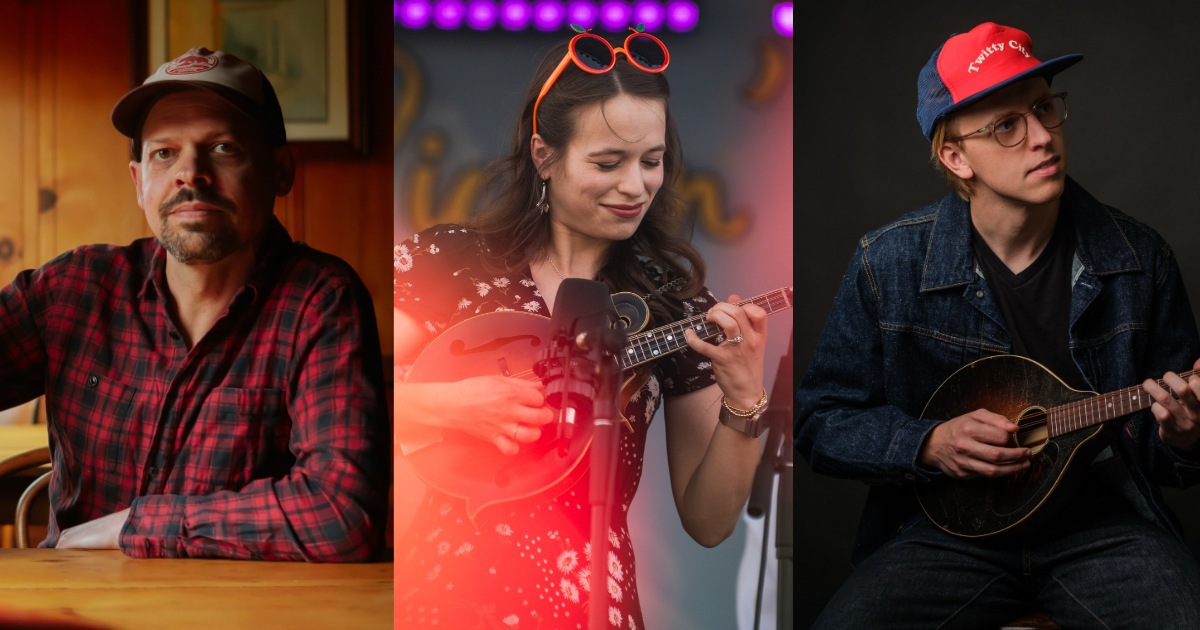
Photo Credit: Lead image (L to R), Jesse Appelman by Giant Eye Photography; Lauren Napier Price by Jay Strausser; Thomas Cassell by Scott Simontacchi.
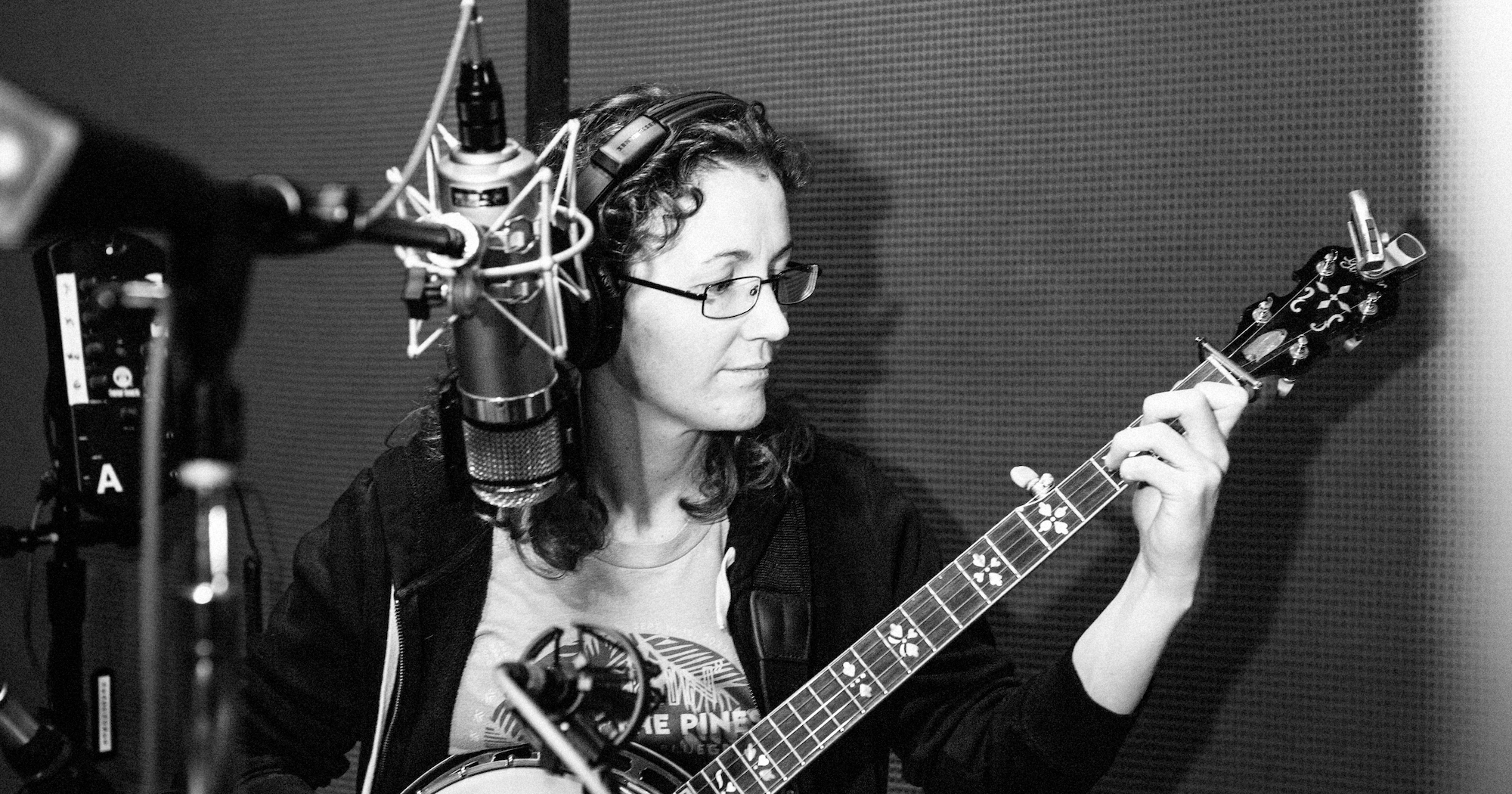

BGS 5+5: Catherine “BB” Bowness

Artist: BB Bowness
Hometown: Somerville, Massachusetts
Latest Album: Goodtime Revival (released November 1, 2025)
Personal Nickname (or rejected band names): BB (short for Catherine)

Which artist has influenced you the most – and how?

It’s tough to choose just one person, but I’d have to say Béla Fleck. He has expanded what’s possible on the banjo for all of us banjo nerds. Hearing him play classical, jazz, bluegrass and so many other styles, all with stunning fluency, is such an inspiration to me. And his tune writing is masterful, tunes like “Sunset Road,” “The Overgrown Waltz,” and “Big Country” feel so beautiful and singable to me. It’s really hard to write tunes that come anywhere close to that level of completeness.

What was the first moment that you knew you wanted to be a musician?

I’ve always been drawn to music, since growing up in a traveling New Zealand craft market. There was a stage manager in the fair, Ralph Bennett-Eades, who played guitar and sang really great. His boys played guitar and drums so I always saw the cool, older kids playing music. Then after learning banjo for a few years, I headed to the states for the first time and got to attend some festivals and camps including Telluride and Rockygrass in Colorado. Seeing the amazing musicians perform on stage at those festivals made me really want to try music for a living. Fifteen-year-old me thought, “Wow, people do this for a job?!” Turns out it’s not that easy to get those jobs, but it’s been an incredible journey so far.

What has been the best advice you’ve received in your career so far?

The great Tony Trischka once told me it’s great if you can learn to sing. I’ve thought back on that comment frequently through the years, being primarily an instrumentalist. But it really rings true! Being able to sing in a band and contribute to the show as a vocalist by singing harmonies is a big plus. It’s also so great in general for your musicianship to learn to sing so that your ears are more connected to your hands. Having a decent ear is a must for singers and I’ve found it very helpful for my banjo playing to work on developing my ear.

If you didn’t work in music, what would you do instead?

I’ve always fantasized running a New Zealand coffee shop that sells baked goods. It’s got to be a waterfront cafe so that I can wake up early, go for a surf, and then make coffee and baked goods for people.

What would a perfect day as an artist and creator look like to you?

I love the days where you’re not sitting in a van for 10 hours. Any day where the drive is short and you get to play music with your friends for people who’re listening is a very good day! Throw in some vegetables with dinner and a little private spot to practice some before the show and I’m positively delighted.


Photo Credit: Louise Bichan

Guitarist Ben Garnett’s New Album Transcends the Instrument

My conversation with Ben Garnett finds him at about a decade in Music City and in the swing of an album cycle for Kite’s Keep, the guitarist-composer’s second full-length solo record. Our discussion centers around the ethos of modern string band music, what the guitar has to say about it, and the potential for folk music’s inherent narrative quality to uplift and move past tradition itself.

Garnett’s perspective on these topics is one that is quite underrepresented: A graduate of the University of North Texas’s famously rigorous jazz guitar program, he spent his early years in Texas developing the skills needed as a pop-oriented sideman and session player, while making ripples in the experimentally disposed Denton, Texas, before heading east. As we’ll find out, he has made disparate musical worlds come together, informing each other along the singular path he leads.

Upon arriving in Nashville, Garnett was quickly recruited as trailblazer Missy Raines’ go-to guitarist, while contributing his compositions and musicianship to progressive acoustic ensemble Circus No. 9. Though his path wasn’t entirely certain at first, his dedicated, open-minded approach to musicianship quickly yielded success both creatively and professionally. Now touring his original music while balancing responsibilities as a band member, the new album Kite’s Keep was made in collaboration with today’s top-of-the-heap acoustic guard: Darol Anger, Chris Eldridge, Brittany Haas, Ethan Jodziewicz, Paul Kowert and experimental pianist-composer Matt Glassmeyer.

I was surprised to hear Ben describe this project as a “guitar” record; being a guitarist myself, and with kindred reference points, I am conditioned to hear six string-born music through the instrument’s highly subjective – yet unendingly capable – lens, though Ben manages to disrupt this. His distinct transcendence of the instrument comes from embracing its format and stepping past folks’ conception of it, while explosively celebrating the guitar as a compositional tool.

Garnett’s ability to write for the room, so to speak, enables him to accommodate many players’ perspectives while balancing high precision with casualness. This is a blend of skill sets and priorities that are rare in ecosystems historically dominated by performative virtuosity. At every turn, Ben Garnett is courteous and grateful, crediting his achievements to friends, linchpins, and heroes within his scene – ones that he now orates his compelling tale alongside.

Is it safe to say that your new record, Kite’s Keep, portrays a narrative? Was that built into your approach as you wrote and recorded it?

Ben Garnett: Absolutely. Poetically speaking, the album title Kite’s Keep loosely refers to this idea of a child’s inner world – a dreamscape where each song represents a different vignette of imagination. The broader narrative has to do with using the acoustic guitar as a world-building tool. This idea that guitar records can be more expansive than just, “here’s my solo arrangement of such and such a tune.”

My goal was to make a record that celebrates the power of what an acoustic guitar can do as an ensemble instrument – like bringing out what other instruments are capable of. The guitar can act as this stage, or world, that other instruments can then inhabit.

So, in that way, would you say that this is a guitar record?

Definitely.

Interesting, because when I listen to it, it doesn’t necessarily feel that way, which is an aspect I’m quite partial to.

I’m curious why this feels like a guitar record to you. I know you’re facilitating these exchanges and you’re world-building with them, you’re obviously pushing past what the guitar is conceived of, but it sounds like you’re not trying to push past the guitar itself.

I guess the idea is that, in addition to world-building, a lot of the compositional material was guitar-born. I’m thinking of the fiddle and bass as extensions of what I would otherwise play. They’re bringing guitar-born ideas into this other register, carrying them to places where the guitar can only point.

Do you have a compositional process? Would you consider it more passive, or do you sit down to compose in a more dutiful way?

Sometimes it’s dutiful, but a lot of the time it’s passive, like when I’m at the airport. Thoughts come to me and I’ll write them down in my notes app. From there, it’s more like script or scene writing. For instance, I’ll want the tunes to arrive at a certain point and I’ll figure out how to get there in reverse. When I’m being more dutiful, I’ll realize a piece in a program like Ableton or Finale, or just by recording myself.

I wrote one tune in a weird way: I improvised freely for 15 minutes, mostly with long tones. The only directive was to play a note and whatever note I heard after that, I would immediately try to play. I chased my tail for 15 minutes and recorded myself. Then I sped up the recording by 400%. I chopped up the transients, warped it, and put the transients on different parts of the metric grid. I had a groove in mind – a half-time, kind of bluegrass-funky tempo. Since it was my melodic sensibility and the way I heard the notes flowing into each other, there was a certain intention and trajectory there.

So, you were kind of sampling yourself – that must get you out of your own head and off the instrument.

Yes. It gave me rhythms and phrasing that I never would have come across otherwise.

And then you learn it from yourself.

Exactly. … It’s the second track, with Darol Anger, “Tell Me About You.”

For something like that, which is more thoroughly composed, how do you make it sound so fluid in the studio while recording?

The process for that tune involved getting the basic elements assembled in Ableton, but then there was the process of arranging the material. Then after arranging, came “breaking in” the tune, so to speak.

Once I had a basic arrangement, I brought it to Darol. We probably got together four or so times. I remember asking him what would make it more idiosyncratic to his instrument and playing. He’d suggest adding a double stop somewhere or doing something rhythmically a little differently. Basically, it was all about massaging it so it didn’t feel clunky. It had to pass all these “tests” before we even got into the studio.

What are these tests that it must pass?

They have to do with the flow. Even if the compositional material comes from using a computer or another unusual place, the music still has to have this casualness. String band music tends to sound its strongest when the parts rely on each other in a certain way. I generally will “test” my music by playing it with as many people as I can, to make sure it has an inherent interpretive quality. Making sure the ideas are robust enough to hold water no matter who’s playing them.

For people who don’t know, you come from Dallas, you went through UNT’s jazz guitar program, and then you moved to Nashville. I’m curious how you found Nashville with your sensibilities, growing of musical age in an environment that is uniquely experimental, yet highly rigorous. Did you come here with the aspirations of doing the things that you’re doing now?

Not at all. At the time, it was much more open-ended than that. I was mostly driven by wanting to get out of Texas. But I had also just gone to the Acoustic Music Seminar with Mike Marshall, Julian Lage, Bryan Sutton, and Aoife O’Donovan, which was a hugely formative experience. I think it was Sutton who offhandedly mentioned, “You should think about moving to Nashville.” I knew there were acoustic musicians here I looked up to – the whole Sam Bush and Jerry Douglas generation of players and I knew Critter [Chris Eldridge] and Sutton were here, too.

At that time, I was also in a phase of wanting to be an electric guitar player. The idea of being a session musician or side-person appealed to me. I had an electric background playing all kinds of music back in Texas – jazz, rock, country, pop, etc. I remember my cousin and my first guitar hero, Andy Timmons, telling me, “Nashville is definitely where I would be if I were your age.” It just seemed like the most open-ended place for the variety of interests I had.

Did you feel like you could do what you wanted to do at first?

It took a while to figure that out. I got a job with bluegrass bassist Missy Raines two weeks after arriving, which was a great first touring experience. I had the idea of making a solo record in my head for a long time, but I always thought I’d wait until I was 30 or so to make it. However, at one point, I distinctly remember Missy telling me, “You definitely need to make a record before you’re 30,” which was amazing advice.

I also got a job with progressive bluegrass band Circus No. 9, a year or so after moving, and was expected to bring in original music to build out our repertoire. The more engrossed I got in the progressive bluegrass world, the more I realized how rare my perspective on it was. It felt isolating at first, but being on the road with Missy and Circus was like being in a second family where I got to realize my position and perspective.

Fast forward a few years, and my hero Chris Eldridge agreed to produce my first solo record, Imitation Fields.

I’m always fascinated by the Dennis Hopper quote where he says one day an actor wakes up and they decide they’re a producer. I’m wondering if you feel similarly in regard to pursuing your voice as a bandleader, composer, artist. I feel like in the current state of the music industry, with how comically hard it is to do anything, it’s almost like a fatalistic, “Why not?”

I’m curious if you could speak to the process of finding yourself in a record of your own stuff and what advice you might give to somebody trying to figure it out.

It goes back to the validation thing. I probably wouldn’t have made a record without all the help and encouragement from those around me. I hate to even frame it this way, but I just have to count my blessings. In some ways, I feel like I walked into something that was waiting for me.

You could have stayed in Texas and made records, but you wouldn’t have made the records you’re making here in town.

Absolutely. Who knows what those Texas records would’ve sounded like.

Going back to your question on what advice I’d give to somebody figuring it out. If you’re an aspiring musician who wants to make your own music, I’d advise not to be too career-oriented at first. Obviously, you need to do what it takes to pay the bills. But there’s a lot of music out there that, to me, sounds born from a certain careerist mentality, which I frankly find to be taking up space.

All the stuff I’m doing now – booking my own tours, stocking merchandise, making promo graphics, being my own publicist (essentially being a small-business owner) – is all really new to me. I moved to Nashville just to see what would happen. I had no real objective. Even if it at times felt meandering or directionless, I’m grateful for the space I inadvertently gave myself to try things. You find yourself in that process, and I think your art becomes more meaningful as a result.

Another factor worth considering in finding myself was the impact of COVID. Critter and I were in the middle of editing Imitation Fields during this time and I think if it weren’t for COVID, it could have easily been, “Okay, we’ve recorded now – let’s edit, mix, master, then done.” All the sudden, it became a whole process of, “What if we tried this? What if we did that?”

It’s like being in a block of molasses. You’re not thinking, “I have three days in the studio, and we have to figure it out.”

Exactly. We had all this time. No corners were cut. … It was kind of insane. I didn’t quite realize it at the time. I’m just really grateful, even if it ultimately drove me a little crazy.

As someone who puts a lot of meticulous work into the visuals which accompany your music, how do you feel that film informs music and vice versa?

First and foremost, the two seem inseparable. For those of us who can see and hear, we’re always looking at something while we’re listening and we’re always listening while we’re looking. That connection is inherent, so my argument is, why not have a say in both realms of sensory experience?

On top of that, I think there’s something cinematically interesting with the traditions of jazz and folk music. A lot of folk music tends to have this quality of wanting to tell a story, albeit in a fairly literal way. Listening to a song, there can be this mini-movie playing in the listener’s mind. Maybe they’re imagining a character, or their own life experiences – whatever the case may be, it largely seems to be about evoking imagery on some level.

In contrast, that kind of storytelling seems less of an objective in jazz. Jazz tends to revolve around this more abstract, spontaneous kind of communication. Which feels equally as cinematic, but the goal of that storytelling feels distinctly different than with folk music.

Of course these are generalizations and I don’t mean to be reductive with either music. This is all to say – the way these traditions interact with our “cinematic” experience of music is something I find deeply fascinating and is a huge source of inspiration for my writing and playing.

It’s the same phenomenon with a song like “Nine Pound Hammer” that has lyrics and semantic content, but is also a vehicle for instrumental virtuosity. I feel like you’re meeting in the middle there.

Absolutely. This is where bluegrass, in some ways, has the best of both worlds.

What I think initially drew me to folk music, in general, was the cinematic quality I didn’t get playing jazz standards. Obviously, there’s the storytelling you get listening to the great singer-songwriters, but there’s also listening to bands like Strength in Numbers. It feels like cinematic stories are being told in those compositions.

Do you feel like a more approachable rhythmic foundation provides a shoo-in for listeners to more quickly imagine a world?

It certainly can. But I also think it’s this general narrative quality in folk music that provides this. For instance, when I play a tune with Brittany [Haas], there’s almost this unspoken objective between us to build the tune in a certain way. In a way that’s very different from playing a jazz tune.

As an aside, I think that’s why people sometimes misunderstand jazz or say they can’t connect with it. Most of the time, jazz isn’t trying to do what most pop or folk music is doing. It’s not trying to conjure a story in this literal way. What makes jazz work is how it centers around this more abstract, colloquial communication.

Perhaps in that way, music school’s training isn’t always “backwards compatible.” Is that fair to say?

I grew up being taught a certain set of rules about how to make good music from going to jazz school. Then, when I moved to Nashville and started working with string band musicians, I realized what I was working with was quite different from the rules they had grown up with.

I think this intersection is what makes someone like Edgar Meyer a powerful force. In some ways, he’s able to pull out all these things in people like Jerry Douglas, Russ Barenberg, Béla Fleck, Mike Marshall, and Sam Bush by bringing in this other perspective from his classical background.

He also realized that the same rules did not apply.

Exactly. He’s able to take what those musicians are giving him, see what they’re good at, harness it, and arrive at a perspective that none of them would have had otherwise.


Photo Credit: Natia Cinco

Ethan Setiawan’s Personal Encyclopedia Mandolinnica

A short history of the mandolin in America: The mandolin is essentially a small lute which has been around since the 1300s. Italian immigrants brought bowl-back mandolins to the States in the 1800s. Mandolin orchestras were big in the 19th and 20th centuries, believe it or not. In fact, a whole mandolin family exists with mandolas, mandocellos, and mandobasses out there.

Around the turn of the 20th century, Orville Gibson started to develop flat-backed mandolins constructed more similarly to guitars. Finally, in the 1920s, Lloyd Loar created the F5 mandolin, with its longer neck and F holes. These new instruments were built to project and fill a concert hall, though they were ill-timed – the mandolin orchestra craze was fading and not ’til Bill Monroe picked up one of those instruments from a barbershop in Florida in the ’30s did they come back into their own. Since then, bluegrass mandolinists the world over have played these instruments or copies thereof. I play an instrument by John Monteleone, who started innovating on Lloyd Loar’s design in the 1980s – and so the tradition continues.

My new album, Encyclopedia Mandolinnica, turned into a survey of Western and Northern mandolin styles quite quickly. It’s very much been shaped by these inspiring musicians who were very kindly up for playing a duet with me. We go on a real journey through bluegrass both progressive and traditional, old-time, jazz, classical, and Scottish trad. The chance to get to work with these heroes of mine has been such a pleasure and invoked several “pinch me” moments. One of the most beautiful things was getting to see how everyone approached our little 8-stringed instrument so uniquely. I learned something from playing with and working alongside each of the mandolinists that agreed to be a part of the project!

In putting together this playlist I thought about my personal inspirations as well as the mandolin’s place in musical cultures across the world. It ranges from hardcore bluegrass, to Brazilian choro, over to Scottish trad – with lots of things in the middle. It mostly features folks you can hear on Encyclopedia Mandolinnica. I hope you enjoy my guided tour of the mandolin! – Ethan Setiawan

“Victoria” – Ethan Setiawan & Mike Marshall

Mike is a legend of the mandolin. He was an early member of the David Grisman Quintet and went on to collaborate with Darol Anger, among others. He helped write the book on progressive acoustic music and mandolin styles therein. This tune of mine falls within that realm and Mike was the perfect person to play it with.

“Shoulda Seen It Comin’” – Mike Marshall & Chris Thile

Mike also duetted with this young guy Chris Thile, whom you may have heard of. The live record that this cut is from is one of my very favorite recorded mandolin performances. Both mandolinists are at the top of their game. This tune was in my ear quite a bit when writing the previous tune, which maybe you can hear?

“There Will Never Be Another You” – Don Stiernberg

Don is one of the world’s foremost practitioners of jazz mandolin – a combination of words you might have never thought you’d hear. He studied with the great Jethro Burns of Homer & Jethro before forging his own path forward into a style where few mandolinists have ventured. Don was a teacher of mine during high school and it was great fun to get to be in the studio together for Encyclopedia Mandolinnica.

“Jiguaraña” – Ethan Setiawan & Maurizio Fiore Salas

Venezuela has a rich and beautiful mandolin tradition that not many folks are aware of. This tune is a co-write between myself and Maurizio. We took a jig (a Celtic form in 6/8) that I came up with and Maurizio had the bright idea of putting it over a Venezuelan rhythm called guarana (also in 6/8). It’s always a joy to play with Maurizio, he challenges me in the right ways.

“Wonderful” – Kinnaris Q (Laura-Beth Salter)

Laura-Beth is at the forefront of the Scottish trad revolution in Glasgow, Scotland. This track by her band Kinnaris Q puts the mandolin front and center – when she takes the tune at 1:52 check out the facile right hand triplets! We co-direct the Glasgow Mandolin Retreat as well and it’s always great to get a tune with LB.

“Blue Grass Stomp” – Bill Monroe

This is where it all started for a lot of us. Bill Monroe, along with Earl Scruggs and Lester Flatt, in the ’40s had something electric and powerful, so much so that in large part bluegrass has been unchanged since then.

“New Cimarron” – Matt Flinner

Matt Flinner is one of my favorite mandolinists out there. One of the many things that strikes me about his playing is how good it feels. Everything is placed so precisely and beautifully. He also writes great tunes that beautifully synthesize lots of things we love about bluegrass, old-time, and jazz. This is one of my favorite tunes of his.

“Golden” – Ethan Setiawan

In a similar tradition to the last tune, this is my take on a progressive “new acoustic” tune. Darol Anger on the fiddle here, he produced this album and it was such a joy to work with him on it.

“O Voo Da Mosca” – Jacob Do Bandolim

While bluegrass was developing up north, another mandolinist was fusing styles down south. Way down south. In short, choro is a fusion of classical forms with jazz harmony and Afro-Brazilian rhythms – similar on the page to ragtime. Jacob Do Bandolim (which translates to Jacob the mandolin, amazing) wrote many tunes that became staples of the style and was a virtuosic mandolinist to boot.

“Saint Cecilia Caprice” – Hamilton De Holanda

Hamilton De Holanda is the Chris Thile of Brazil. Amazing technically and a great musical mind. He wrote a double album of caprices and made the music public on his website, as well. Every mandolinist reading this: go download them, now!

“Salt Spring” – John Reischman

The greatest modern jam standard of our time! John is another great tune writer. He also gets the most beautiful sound out of the mandolin.

“Shetland Jigs” – Hildaland (Ethan Setiawan)

My own contribution to the Scottish trad lexicon from my duo with fiddler Louise Bichan, Hildaland. These are a couple nice jigs from Shetland. I’m playing mandola here, but I’ve tuned the highest string down a step and put on a capo so that the strings are tuned DAEA. This is inspired by the fiddle, which is crosstuned – common in old-time but not so common in Great Britain. We thought it was a cool connection to draw for our duo which goes between those styles at will.

“Canon at the Twelfth in Counterpoint at the Fifth” – Caterina Lichtenberg & Mike Marshall

Caterina is one of the greatest classical mandolinists to ever live. There have been vital classical mandolin traditions going on this whole time in Italy and Germany, which is so cool to see. Classical music is being made on the mandolin at very high levels and being taught as well.

“Queen of the Earth, Child of the Stars” – Sharon Gilchrist & John Reischman

A beautiful old-time tune, played so beautifully by Sharon on mandolin, John on mandola, and backed up by Scott Nygaard on guitar. I first heard this tune played late at night by Darol Anger and Bruce Molsky at Freshgrass a bunch of years ago now and it’s stuck with me ever since.

“Big Hill” – Ethan Setiawan & Andrew Marlin

Andrew has taken the mandolin scene by storm over the past several years with beautiful tunes and great trad bluegrass playing. Part of the thing that developed with this project was to write something that I thought might work well for each guest – not to explicitly write something that sounded like theirs, but to draw a little inspiration. I think this tune captured something there and I love the way Andrew accompanies the tune.


Photo Credit: Louise Bichan

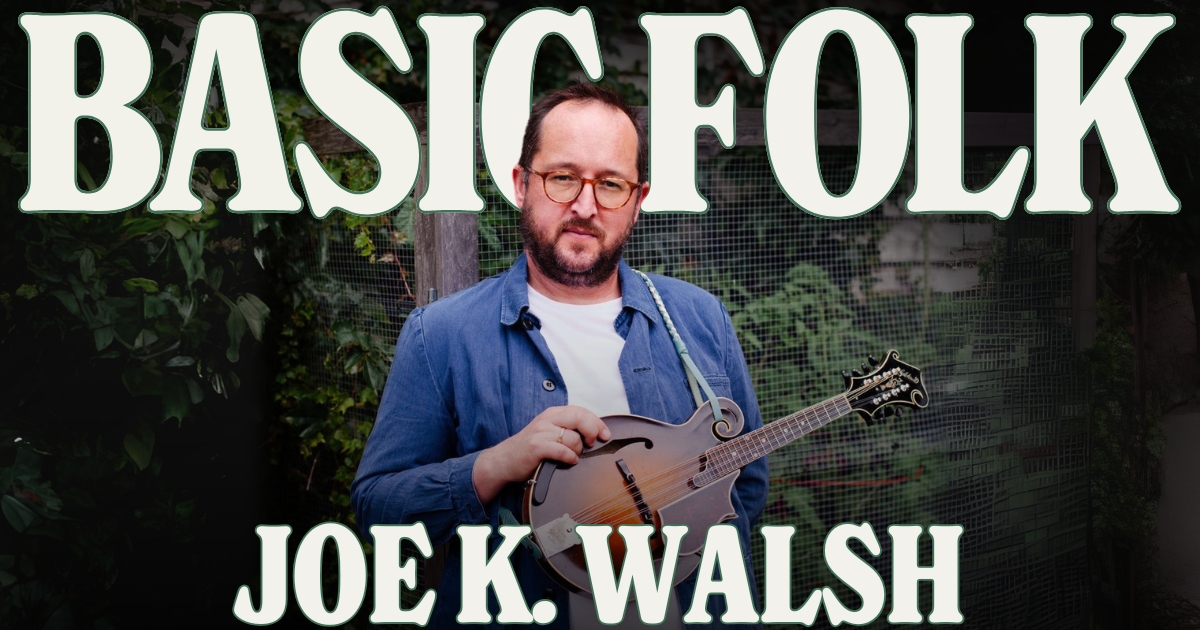
Basic Folk: Joe K. Walsh

Joe K. Walsh grew up in Duluth, Minnesota, and became enthralled with the mandolin (his primary focus, currently) after hearing the first David Grisman Quintet record. His dad got the young Joe his own mando. He ended up getting very serious about the instrument and found himself studying at Berklee College of Music in Boston (where he is now on faculty in the string department). Joe, in fact, was the first mandolin student at Berklee in a town that is now flooded with amazing mandolin players. His already strong sense of community and collaboration led him to becoming a main player in the Boston scene with his string band Joy Kills Sorrow, and with the Gibson Brothers. He now resides in Portland, Maine, and plays solo as well as with Mr. Sun, a group led by fiddler Darol Anger.

LISTEN: APPLE • SPOTIFY • AMAZON • MP3

In our Basic Folk conversation, we talk about taking over at Berklee after the death of professor John McGann, a beloved trad player who recorded with David Grisman, Mark O’Connor, Tim O’Brien, and the Boston Pops, among others. Joe addresses the question of whether bringing folk music into a college setting is “academizing” it or perhaps “folking” music academia. He also gets into hot button issues like improv, simplicity, and restraint. And, of course, he finally reveals his true feelings about the “other” Joe Walsh. Joe’s new instrumental album, Trust and Love, is a peaceful listen in these wild times. I’m happy to know Joe and have already benefited from his friendship! He and his wife gave my family a ton of baby hand-me-downs that have proved so useful. Everyone has a friend in Joe. K Walsh.


Read our feature interview with Joe K. Walsh on his latest album, Trust and Love, here.

Photo Credit: Natalie Conn

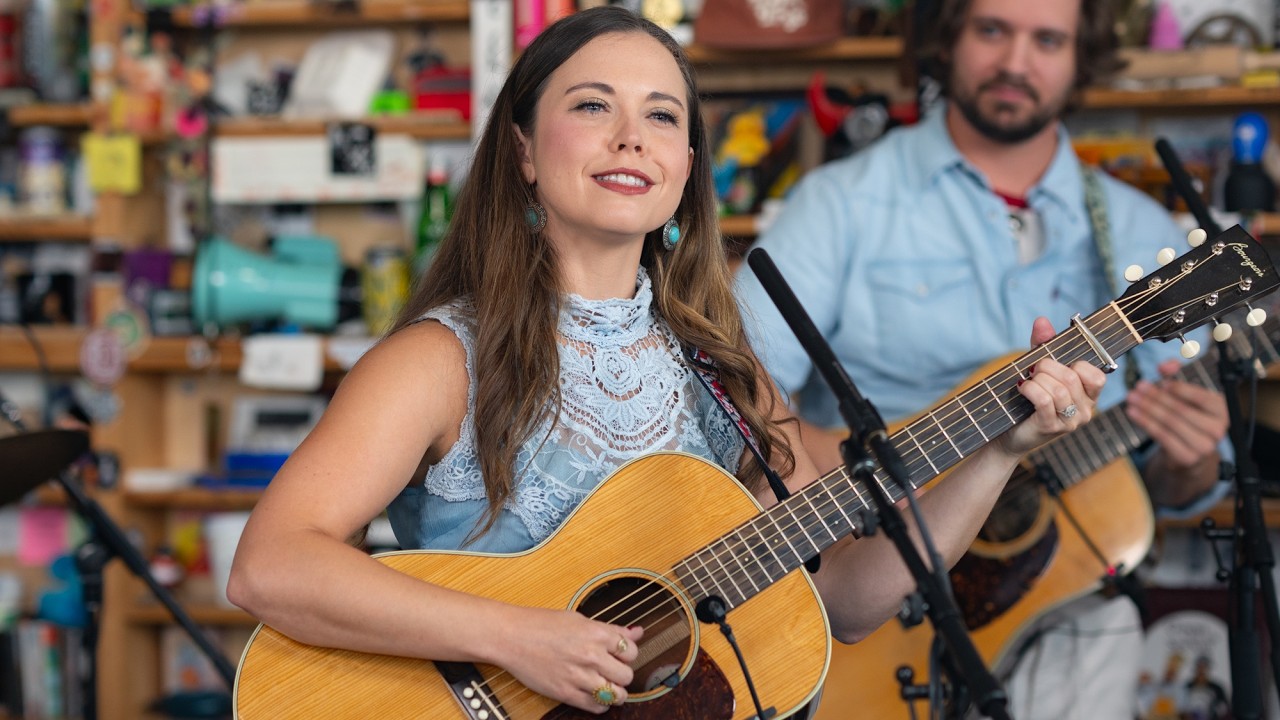
Sierra Hull, Her Mandolin, and Her Band Blow Away NPR’s Tiny Desk

We know we aren’t the only ones addicted to NPR’s fabled Tiny Desk Concert series – especially with all of the excellent roots musicians, country artists, and bluegrassers they’ve had behind the desk lately. We’re obsessed with Gil & Dave’s recent appearance, Sierra Ferrell’s turn from about a year ago, Megan Moroney’s debut, Yasmin Williams wowing the NPR audience, and so many more.

Now, one of our longest-running and most beloved Friends & Neighbors has brought her band and her new album to NPR’s headquarters in Washington, D.C. for her very first Tiny Desk Concert. IBMA Award winner and GRAMMY nominee Sierra Hull – accompanied by her touring band of Erik Coveney (bass), Avery Merritt (fiddle), Mark Raudabaugh (drums), and Shaun Richardson (guitar) – performed four songs from her latest album, A Tip Toe High Wire, from behind the iconic desk.

“Well you guys, this is truly a ‘pinch me’ moment,” Hull exclaims while introducing her second song. “I can’t believe we’re at Tiny Desk!” And that grateful, excited energy remained front and center through the group’s beautiful mini set.

From the grooving “Boom,” to the burnin’ and acrobatic instrumental “Lord, That’s A Long Way,” to the homage to her grandmother, “Spitfire,” to the wise and poetic “Muddy Waters,” the Americana, newgrass, and jamgrass textures of the studio recordings are present, but somewhat subdued in the acoustic, pared down Tiny Desk environment. This is the exact band and these are the exact arrangements you’ll hear at a Sierra Hull headline show or on the album itself, but this setting more immediately demonstrates how her bluegrass and string band upbringing in rural Tennessee is a foundation for everything she makes. Hull is always innovative and cutting edge, yes, but she accomplishes this not by forsaking bluegrass but by bringing it with her wherever she goes, from tours with Cory Wong or Béla Fleck to NPR Music.

Another stellar Tiny Desk Concert by another incredible bluegrass, string band, and Americana musician. If you haven’t yet enjoyed Sierra Hull’s Tiny Desk appearance, watch now above.


Read our recent Cover Story interview with Hull all about A Tip Toe High Wire here.

You Gotta Hear This: New Music From Tray Wellington, Dallas Burrow, and More

Country and folk, bluegrass and new acoustic music all come together in this week’s edition of our new music and premiere roundup!

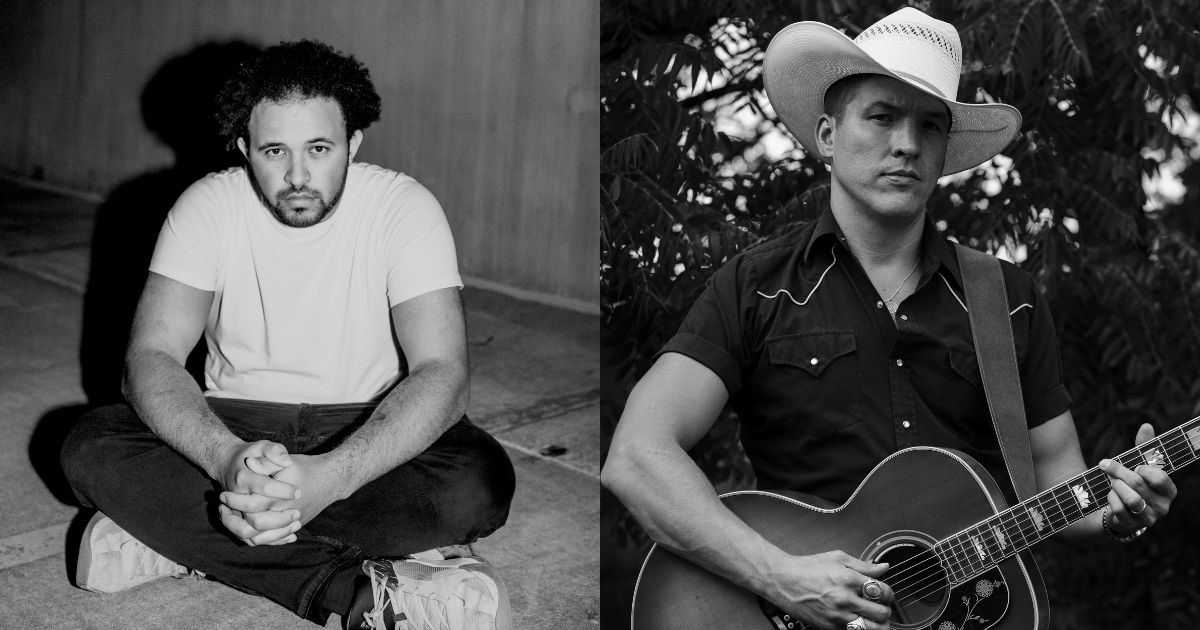
First up, country singer-songwriter Dallas Burrow is joined by Ray Wylie Hubbard on a brand new music video for their duo track, “Read ‘Em and Weep,” from Burrow’s upcoming September release. The song was inspired by classic gambling songs, so of course Ray Wylie was the perfect special guest to tap for the track and the country & western-styled video. Also bringing a new music video this week are Americana/folk trio The Last Revel, of Minneapolis. “Static” is about the overwhelm and confusion of new love.

In bluegrass, Chris Jones & the Night Drivers tap Jim Lauderdale for a new track, “How Small of Me.” Despite knowing each other for decades, it’s the first time Jones and Lauderdale have collaborated in the studio. Jones’ labelmates Deanie Richardson & Kimber Ludiker debut another new twin fiddle tune, this time offering their take on a Frank Wakefield classic, “New Camptown Races,” with a mighty backing band.

From experimental string band fringes we have a few stellar selections, as well. Award-winning banjoist Tray Wellington readies a new EP – set for release August 8 – with a performance video of an original song, “Man on the Moon,” continuing his creative relationship and fascination with the earth’s celestial relative. It’s jammy, expressive, and contemplative and shows a blend of many of the different styles of ‘grass he often employs. Mandolinist and composer Ethan Setiawan has new music on the way, too. His next project, Encyclopedia Mandolinnicaarrives mid-August and to celebrate, he’s shared a track featuring Joe K. Walsh called “Mount Holly.”

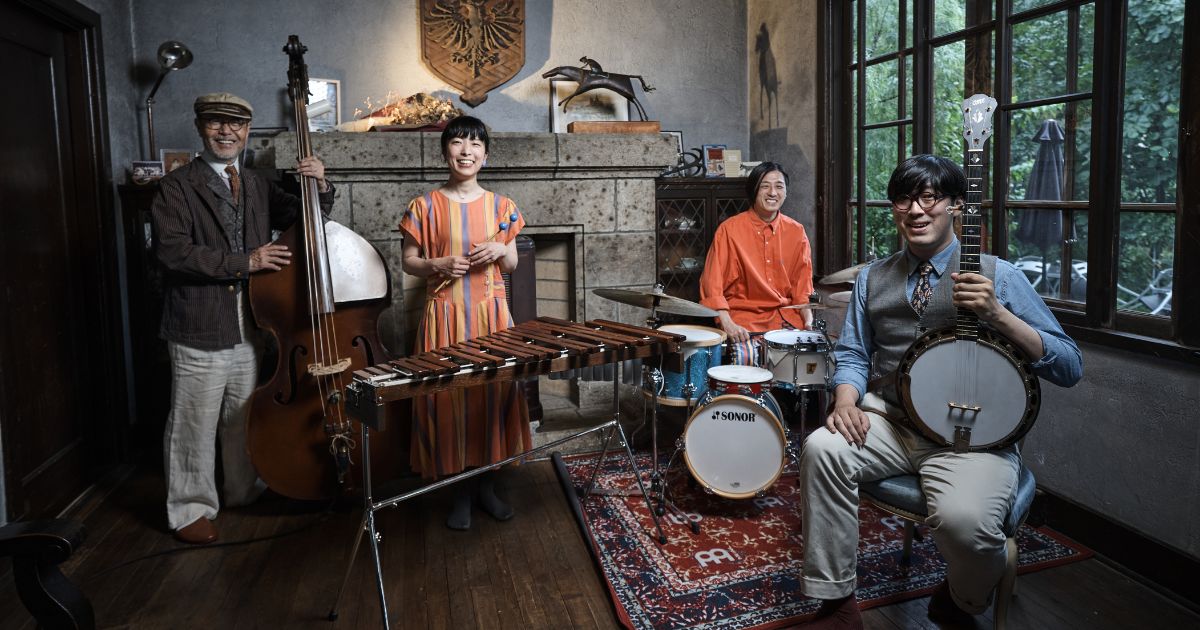
Finally, you won’t want to miss the return of Thompson the Fox, Tokyo’s quartet of mind-bending pickers who combine jazz, bebop, new acoustic, bluegrass, and so much more. Volume 2 of The Fox In Tiger’s Clothing – entitled TIGER – drops next month, so we’re sharing “Minute Waltz Rag,” the group’s reimagination of Chopin’s quintessential composition that’s ragtime, bluegrass, classical, and jazz altogether. Still, it’s incredibly easy to listen to – and impressive in technique and artfulness, both.

It’s all right here on BGS and, truly, You Gotta Hear This!

Dallas Burrow, “Read ‘Em and Weep” featuring Ray Wylie Hubbard

Artist: Dallas Burrow
Hometown: New Braunfels, Texas
Song: “Read ‘Em & Weep” featuring Ray Wylie Hubbard
Album: The Way The West Was Won
Release Date: July 18, 2025 (video); September 26, 2025 (album)
Label: Forty Below Records

In Their Words: “This song, which serves as the opening track of the album, is actually a musical sequel to a song I wrote with my good friend Charley Crockett called ‘The Only Game in Town,’ which I wrote all the verses for after he brought me a chorus and a chord progression. In that song’s third verse the narrator tells us, ‘The dealer is [his] friend and the house always wins.’ This song you might say serves as a challenge to its prequel, with the opening verse declaring, ‘I heard the dealer was your friend, I heard you know him well.’ Both, stylistically, were inspired by great gambling songs like ‘Mr. Mudd and Mr. Gold’ by Townes Van Zandt and ‘Dust of the Chase’ by Ray Wylie Hubbard. It was only fitting then that Ray Wylie would sing on this tune. I gave him the whole record to listen to and this was the one he picked out to sing on. It was quite the honor to have him sing the entire second verse, since he’s always been one of my biggest inspirations and heroes. The tune opens with producer Lloyd Maines counting it off and playing a striking harmonic guitar part. As the track continues to build it is further brought to life by Lloyd’s legendary Dobro playing, and Katie Shore’s immaculate fiddle work.” – Dallas Burrow

Track Credits:
Ray Wylie Hubbard – Vocals
Dallas Burrow – Vocals, acoustic guitar, songwriter
Katie Shore – Fiddle
Lloyd Maines – Dobro, bass, acoustic guitar, producer
Pat Manske – percussion


Chris Jones & the Night Drivers, “How Small of Me” featuring Jim Lauderdale

Artist: Chris Jones & The Night Drivers
Hometown: Nashville, Tennessee
Song: “How Small of Me”
Release Date: July 18, 2025
Label: Mountain Home Music Company

In Their Words: “Jim Lauderdale and I have been friends for decades now, but this is the first time we have ever sung together on a recording, so I’m really happy about this. Meanwhile I co-wrote the song with John McCutcheon, somebody I first met when I was a teenager, and though more recently, he’s somebody who the band and I have performed with a few times at the Walnut Valley Festival in Kansas, we had never written a song together until last year, and ‘How Small of Me’ is one of our first results.” – Chris Jones

Track Credits:
Chris Jones – Acoustic guitar, lead vocal
Jim Lauderdale – Harmony vocal
Mark Stoffel – Mandolin
Grace van’t Hof – Ukelele
Jon Weisberger – Bass
Tony Creasman – Drums
Chris Scruggs – Steel guitar


The Last Revel, “Static”

Artist: The Last Revel
Hometown: Minneapolis, Minnesota
Song: “Static”
Album: Gone For Good
Release Date: July 18, 2025
Label: Thirty Tigers

In Their Words: “It’s a simple little song about how overwhelming and confusing love can feel especially in the beginning. It’s about losing yourself and everything you have just to spend time with the only person that seems to be vibrating at the same frantic frequency while everything else seems still and static.” – Lee Henke


Deanie Richardson & Kimber Ludiker, “New Camptown Races”

Artist: Deanie Richardson & Kimber Ludiker
Song: “New Camptown Races”
Release Date: July 18, 2025
Label: Mountain Home Music Company

In Their Words: “‘New Camptown Races’ is a song that Kimber and I played together last year and it went so well we knew it was one we wanted on this record. I went to a recording from one of my fiddle heroes, Randy Howard, on this. I will admit, I did steal a few licks from Randy on this one. Love that my dear friend is with us on this track.” – Deanie Richardson

“We have long loved Frank Wakefield’s great mandolin tune ‘New Camptown Races,’ which quickly became part of the bluegrass canon when he first recorded it in 1957. We set out to create a twin fiddle reimagining of this classic Bb tune with the spirit of a high-energy late-night jam with phenomenal playing by Tristan Scroggins on mandolin, Kristin Scott Benson on banjo, Cody Kilby on guitar, and Hasee Ciaccio on bass.” – Kimber Ludiker

Track Credits:
Deanie Richardson – Fiddle
Kimber Ludiker – Fiddle
Cody Kilby – Acoustic guitar
Hasee Ciaccio – Upright bass
Tristan Scroggins – Mandolin
Kristin Scott Benson – Banjo


Ethan Setiawan, “Mount Holly” featuring Joe K. Walsh

(Click to listen)

Artist name: Ethan Setiawan
Hometown: Cornish, Maine
Song: “Mount Holly” featuring Joe K. Walsh
Album: Encyclopedia Mandolinnica
Release Date: July 23, 2025 (single); August 15, 2025 (album)
Label: Adhyâropa Records

In Their Words: “This one’s for the Fogels, at whose cabin in Vermont I spent a couple of great New Years, and who smoke the most delicious meat at all hours at festivals in the Northeast. I started to work on the tune in 2022 or 2023 up in Vermont and then finished it soon before tracking with Joe in early 2024. I finished it without a mandolin in hand, which lately has been a good exercise in letting my ear rather than my hands guide the composition. I’m playing mandola and Joe is playing octave mandolin, because we had to get in those low mandolins!” – Ethan Setiawan


Thompson the Fox, “Minute Waltz Rag”

Artist: Thompson the Fox
Hometown: Tokyo, Japan
Song: “Minute Waltz Rag”
Album: The Fox In Tiger’s Clothing, Vol.2: TIGER
Release Date: August 9, 2025
Label: Prefab Records

In Their Words: “Following our May release of The Fox In Tiger’s Clothing, Vol.1: FOX, we’re excited to announce the upcoming release of its sister album, Vol.2: TIGER, coming out on August 9.

“The album title is a play on two phrases from different cultures: the Japanese proverb, ‘The fox borrowing the tiger’s authority’ and the English idiom, ‘A wolf in sheep’s clothing.’

“While Vol.1: FOX consisted entirely of our original compositions, Vol.2: TIGER is a collection of cover tunes. Ahead of the album’s release, we’ve just shared a music video for ‘Minute Waltz Rag.’ It’s a reimagining of Chopin’s beautiful waltz, which I arranged in two-time for this quartet. We hope you enjoy it!” – Takumi Kodera

Track Credits:
Rie Koyama – Xylophone
Takumi Kodera – Banjo
Akihide Teshima – Bass
Tomohito Yoshijima – Drums

Video Credit: Takumi Kodera


Tray Wellington, “Man on the Moon”

Artist: Tray Wellington
Hometown: Raleigh, North Carolina
Song: Man on the Moon
Album: Spatial Awareness (EP)
Release Date: July 18, 2025 (single); August 8, 2025 (EP)
Label: Free Dirt Records

In Their Words: “‘Man on the Moon’ is one of the most personal songs I’ve ever written. I wanted to capture how easy it is to hide struggle behind a smile and how many of us carry that weight silently. Writing has always helped me process things I hadn’t fully acknowledged and I hope it can do the same for someone else. This track was also one of my favorites for production as it’s one of the songs I feel like we really captured the feelings of the song throughout.” – Tray Wellington

Video Credit: Rob Laughter


Photo Credit: Tray Wellington by Heidi Holloway; Dallas Burrow by Melissa Payne.

This Faux Paws Playlist Includes ‘No Bad Ideas’

Growing up with access to all of recorded music, it’s hard to imagine not enjoying a wide range of styles. When we all met around fifteen years ago, it was fun to see where our backgrounds overlapped and where they didn’t. Eventually, after lots of road testing, we ended up with some kind of sound to our band that is pretty unique. Our new album, No Bad Ideas, is an expression of that. It’s all over the place, but somehow not.

For this Mixtape, we set out to include music that’s influenced us as a band, inspired our playing and songwriting, or otherwise shaped us as people. Some of these are tunes that have been with us a long time, some of them we just listened to in the van while we’ve been on tour. It’s all over the place, but there’s a through line as well. No Bad Ideas in a playlist! – The Faux Paws

“TSA” – Danny Barnes

Just banjo, drums, and voice. It’s weird, sparse, beautiful, and one of those songs I’ve been coming back to for years. – Andrew VanNorstrand

“Rockingham” – The Faux Paws

This song is all about the excitement and uncertainty of moving to a new place and finding community, even if you aren’t necessarily ready for it. – AV

“Backstep Cindy” – The Freight Hoppers

July 1998. I am ten years old. I wander into the dance tent at the Grey Fox Bluegrass Festival and my tiny little mind is blown into a thousand pieces as I experience the absolutely insane energy of The Freight Hoppers. I’ve been chasing that feeling ever since. This. Tune. F-ing. Rocks. – AV

“Odds of Getting Even” – Maya de Vitry

I can’t get enough of this album. Maya sounds great. Her band sounds great. The material is great. This song has a subtle message of patience and perspective that really speaks to me. Play it again. – AV

“He’s Gone” – Caleb Klauder & Reeb Willms

Caleb and Reeb played for my wedding! They are true cornerstones of the amazing Pacific Northwest Americana scene and are launching a new festival this week, Orcasfest. Caleb wrote this song about his childhood dentist, who was also his best friend’s dad/second dad. – Chris Miller

“Jesus Was a Cross Maker” – Judee Sill

I am always telling people about this singular artist and I feel like her music is still pretty underground in my circles! She had a wild childhood and was caught up in the Laurel Canyon California music scene, experimenting with psychedelics and reflecting on her Christianity. The result is music that doesn’t sound like anything else I’ve ever heard. – CM

“For Me It’s You” – Jobi Riccio

I heard Jobi play this song in a hotel room in Kansas City during Folk Alliance and it broke me. Like, truly deeply broke me the way only a great song can. Everyone has a dream they know probably won’t come true. I needed this song. Maybe you do, too. – AV

“15 Below” – The Faux Paws

Every time we play this, Noah makes my jaw drop – and we captured some of that on the record. This tune came to life when we were quarantined in Newport, Rhode Island, January 2022. We went to try and find a bird on the beach and it was insanely cold. – CM

“Artificial Intelligence” – Jim Lauderdale

Most of the time we spend in the van is actually listening to terrifying podcasts about the seemingly inevitable AI future. I grew up seeing Jim Lauderdale play and I appreciate how he can remain frozen in a time of “real country” while still plundering the depths of current philosophical issues. – CM

“the 1” – Taylor Swift

Noah really, really, really likes Taylor Swift. And he picked this song. And that’s all. Hope you like it. Noah really likes it. A lot. Contact Noah directly for more details on how much he likes Taylor Swift. – AV

“Straight Back” – Taylor Ashton

I love the way this song slips and slides. Smooth groove, clever lyrics, ooo-eee-ooo-eeyoo hook in the chorus.  It’s impossible to pin down. And why would you want to pin it down anyway? Just let it do its thing. Don’t worry about it. – AV

“You Are Also Them” – Jenny Ritter

I came across Jenny Ritter randomly around fifteen years ago and have been obsessed with her music ever since. We actually recorded our Backburner EP with the same engineer (Adam Iredale) on tiny Mayne Island, British Columbia. This track coincidentally has Zoe Guigueno on bass! – CM

“Unknowing” – Busman’s Holiday

I don’t have a long history with this song, but we were recently on tour in Nashville and Zoe played it for us. I just can’t shake it. You ever get the sense that a song is perceiving you just as much or more so than you are able to perceive it? I hope this song likes me. – AV

“I Didn’t Realize” – Buddy Spicher & Vassar Clements

The first music I learned to play was a mix of classic country, western swing, and contest-style fiddling from Ontario. I fell in love with twin fiddle harmonies and a tight rhythm section. Listening to these two fiddle legends riffing off of each other is such a joy. – AV

“I Just Wanna Listen to the Band Play” – Freddy & Francine

These guys (Bianca and Lee) are some of my idols, both in the way they make music and live with intention. As it seems we can’t beat the robots in the great war coming, I think the only hope for music and art is if we decide to be a little more intentional about … everything. This song is from 2020, but more relevant than ever! – CM


Photo Credit: Dylan Ladds

BGS 5+5: Thompson the Fox

Artist: Thompson the Fox
Hometown:
Tokyo, Japan
Latest Album: The Fox In Tiger’s Clothing, vol.1: FOX

Which artist has influenced you the most – and how?

Takero Sekijima. I first encountered his music about 15 years ago, back when I was playing marimba and aiming to become a classical performer. At the time, I was unsure whether to continue pursuing that path. Until then, I had mostly performed solo, but his music taught me how powerful it can be to create music with others. After discovering his work, I came to believe that simple, warm music has the ability to speak directly to the heart. – Rie Koyama, xylophone

Earl Scruggs. When I started playing banjo at age 11, I was blown away by Foggy Mountain Jamboree by Flatt & Scruggs. I couldn’t read English at the time, but I began studying banjo on my own using Earl’s instruction book that my parents bought for me. He’s the most creative figure in the history of the banjo and he has always been the player I respect the most. – Takumi Kodera, banjo

Dennis Crouch. His bass lines are precise and never excessive, and the tone he creates with gut strings is truly unique. – Akihide Teshima, bass

Paul Motian. As a drummer, his playing opened my eyes to the idea that rhythm can have a three-dimensional structure – almost like cubism in sound. He also composed many brilliant pieces and constantly explored new musical possibilities through innovative work in trios and combos. – Tomohito Yoshijima, drums

What’s the toughest time you ever had writing a song?

There was a time when a tune I came up with seemed to call for many different characters or voices and I felt that Thompson the Fox alone didn’t have enough sound to fully express it. That was a real challenge. On our new album, we layered toy piano and percussion to expand the sound. For live shows, we do our best to recreate that lively atmosphere by ourselves. – RK

My goal in composing and arranging is to make the most of each member’s abilities through the ensemble. Writing for a band like ours – with its unusual and unprecedented instrumentation – is always challenging, but deeply rewarding. Since there’s no model to follow, I try to understand each instrument’s unique qualities as well as each member’s playing style. – TK

For me, every tune needs a story – like a short piece of fiction. The hardest part is crafting a story that’s compelling on its own, then figuring out how to express it through music in a way that evokes that narrative. Communicating that idea clearly to the other members is also part of the challenge. – TY

Genre is dead (long live genre!), but how would you describe the genres and styles your music inhabits?

I’ve always approached music freely, without confining myself to specific genres. It’s all about expressing myself authentically. – AT

Rie comes from a background of classical and contemporary music, Tomohito from jazz, and Akihide and I from bluegrass. We’re a band made up of four people with completely different musical backgrounds. We’ve been searching for the common ground between us and expanding on that as we create music. As a result, I believe we naturally developed a unique sound that’s difficult to categorize into any specific genre. – TK

Since food and music go so well together, what is your dream pairing of a meal and a musician?

Grilled samma (Pacific saury) with Bones Jugs. – RK

On a cold winter day, sipping hot sake and enjoying oden at a cozy izakaya while listening to Amos Milburn. – TK

Yakitori with modern jazz. – AT

Spicy food so hot it makes you sweat, paired with Miles Davis’ Bitches Brew. – TY

What would a perfect day as an artist and creator look like to you?

A day with no urgent deadlines. I’d practice the xylophone, take a nap, go for a run, drink some beer, eat fish, read a sci-fi book in the bath, and go to bed. – RK

A day when I can play the banjo not to prepare for anything, but purely out of interest and curiosity. – TK

A day when I can play without mistakes and enjoy a drink afterward. – AT

A day when I can spend as long as I want trying to beat an insanely difficult video game. – TY


Photo Credit: Koichi Wakui

You Gotta Hear This: New Music From EZRA, Lonesome River Band, and More

Okay, we say it every week, but really– You Gotta Hear This! Our weekly premiere and new music roundup includes bluegrass, the blues, Americana, indie, bebop influences, and so much more.

LA’s American Mile kick us off with a music video for “Waiting on a Sunday,” which is equal parts roots rock and alt country – into Tom Petty vibes? This one’s for you! The song was inspired by a mundane gas station encounter on a silent pandemic Sunday. Singer-songwriter Meir Levine also launches “I Wish It Was Over,” an indie rock-tinged Americana track with poppy textures that considers closure, moving on, and looking ahead.

Unfortunately, two of our string bands below have the blues this week! EZRA, a talented new acoustic quartet with bluegrass roots and a stacked roster of pickers, bring us a performance video for “Basically a Blues,” where they turn a typical 12-bar blues progression inside out and upside down with acrobatic, virtuosic picking. Plus, Lonesome River Band’s new single, “Blues,” is an Adam Wright-written song featuring Rod Riley on Telecaster. That track is from their upcoming project, Telegrass, and we’re receiving the message loud and clear.

Singer-songwriter Mac Cornish covers Danny O’Keefe’s “The Road” with a deliciously retro, twangy ’70s sound that’s appropriately melancholic and full of life, too. Elsewhere in our roundup, you’ll hear Julia Sanders, who’s also inhabiting grief, sadness, and nostalgia in a video for her new single, “Star Stickers,” during which her listeners will certainly be able to picture glow-in-the-dark decorations stuck haphazardly to their childhood ceilings.

Make sure to scroll all the way to the bottom, though, as you won’t want to miss “Foxology” from Tokyo’s Thompson the Fox, an exciting newgrass quartet with an uncommon lineup: banjo, bass, drums, and xylophone. It’s fantastic music, bebop and jazz influences leading to sonic surprises around every twist and turn of the original melody. When this one arrived in our inboxes, we were immediately charmed and entranced. You will be, too.

It’s all right here on BGS and, simply– You Gotta Hear This!

American Mile, “Waiting on a Sunday”

Artist: American Mile
Hometown: Los Angeles, California
Song: “Waiting on a Sunday”
Album: American Dream
Release Date: May 2, 2025 (single); June 6, 2025 (album)

In Their Words: “When I was writing ‘Waiting on a Sunday,’ I was on a couch in Vermont. It was silent and my thoughts were the only thing around. It was 2020, in the middle of the pandemic, and I walked to the gas station up the street, ’cause nothing was coming to me in that silence. There was a lady at the gas pump trying to wrestle her kids into the car and pump gas at the same time. I thought I recognized her from high school, so I helped her pump her gas while she dealt with her kids. She told me a little bit about her life and the struggles of being a single mom; she was heading to church that morning. It all kind of flooded into my mind at that point and I wrote most of the lyrics that day. I thought to myself, ‘We’re all in a way waiting for a Sunday,’ whatever that means to us.” – Eugene Rice


Mac Cornish, “The Road”

Artist: Mac Cornish
Hometown: Nashville, Tennessee
Song: “The Road”
Release Date: May 1, 2025

In Their Words: “‘The Road’ by Danny O’Keefe has been one of my favorite songs for years, because of Danny’s melancholic but beautiful lyrics about life on the road. Danny’s writing in general has always been important to me, but as time has passed and I’ve toured more, this song keeps resonating with me more. I started covering it with my backing band about a year ago and it quickly became a staple in our set and a favorite of our audiences. This past December we went into the studio and recorded the whole thing to tape, really trying to emulate the early ’70s sounds of this song, but also give our own spin on it. Our two acoustic guitars lay as the foundation for our version of the song. The bass and drums drive the song forward, but never distract from the delicate Travis picking. The pedal steel weeps through the whole song, emphasizing certain lyrics and complementing the vocal melody. I’m proud of my take on this ’70s classic and am excited to add my name to the list of artists who have covered this song.” – Mac Cornish

Track Credits:
Mac Cornish – Acoustic guitar, vocals
Bailey Warren – Acoustic guitar, backing vocals
Trevor Stellflug – Pedal steel
Jacob Miller – Bass
Hunter Maxson – Drums


EZRA, “Basically a Blues”

Artist: EZRA
Hometown: Oberlin, Ohio
Song: “Basically a Blues”
Album: Froggy’s Demise
Release Date: May 9, 2025
Label: Adhyâropa Records

In Their Words: “‘Basically a Blues’ takes the standard chords used in a 12-bar blues and flips them upside down. All the well-known bluesy harmonies become diminished when doing this, and I found the sound to be fairly intriguing. I especially love the solos and trades that Max [Allard] and Jake [Jolliff] take over this quirky tune and have to give major kudos to Craig [Butterfield] who burns constant 8th notes for the duration.” – Jesse Jones, guitar

Track Credits:
Jacob Jolliff – Mandolin
Max Allard – Banjo
Jesse Jones – Guitar, composer
Craig Butterfield – Double bass


Meir Levine, “I Wish It Was Over”

Artist: Meir Levine
Hometown: Upstate & Brooklyn, New York
Song: “I Wish It Was Over”
Album: Long & Lonely Highway
Release Date: June 6, 2025
Label: First City Artists

In Their Words: “‘I Wish It Was Over’ came in one of those exceedingly rare moments, where I woke up one morning and the song was already fully formed in my head. The song covers a pretty simple message I think, about the things that we can’t seem to let go of, that we seek out just to feel something – even if it’s bad or harmful to us.” – Meir Levine

Track Credits:
Meir Levine – Songwriter, vocals, guitars
Andrew Freedman – Producer, piano, keyboards
Will Graefe – Electric guitars, acoustic guitars
Jeremy McDonald – Bass
Mike Robinson – Pedal steel, guitars
Jordan Rose – Drums


Lonesome River Band, “Blues”

Artist: Lonesome River Band
Hometown: Floyd, Virginia
Song: “Blues”
Release Date: May 2, 2025
Label: Mountain Home Music Company

In Their Words: “We’ve all had the ‘Blues’ in our lives, but this Adam Wright song sees the ‘Blues’ in a whole different light. It’s a lighthearted break from the sad songs – one that we have a ton of fun with. Featuring our good friend Rod Riley on the Telecaster, it comes from our upcoming Telegrass project.” – Sammy Shelor

Track Credits:
Sammy Shelor – Banjo, harmony vocal
Jesse Smathers – Acoustic guitar, harmony vocal
Mike Hartgrove – Fiddle
Adam Miller – Mandolin, lead vocal
Kameron Keller – Upright bass
Rod Riley – Electric guitar


Julia Sanders, “Star Stickers”

Artist: Julia Sanders
Hometown: Asheville, North Carolina
Song: “Star Stickers”
Album: Dark Matter
Release Date: May 16, 2025

In Their Words: “Usually my songwriting process is the same. I start with a melody and then lyrics start to unfold as the idea of the song becomes more distilled. With this one, the chorus came lyrics, melody, and all, as I was laying in bed getting my daughter to sleep one night. I had been asking myself, ‘What am I avoiding writing about?’ and maybe more than any other theme, was my challenging and painful relationship with my own mother. My mother struggled with mental health her whole life and in her own pain, she hurt those around her. Just before I started working on this album, she was diagnosed with ALS. Her physical decline was very quick and heartbreaking. The grief was heavy, complicated, and messy. Lying in my daughter’s bed that night, watching the yellow-green glow of star stickers on the ceiling, I felt like I was time-traveling – to my own childhood bedroom, needing my mother to be different than she could be, then back to this room, trying hard to be a different kind of mother for my own children, and then to the future, where nothing is known except that none of this lasts.” – Julia Sanders

Track Credits:
Julia Sanders – Vocals, songwriter
John James Tourville – Guitar
Steve Earnest – Baritone guitar
Landon George – Bass
Bryce Alberghini – Drums

Video Credit: Ashlyn McKibben


Thompson the Fox, “Foxology”

Artist: Thompson the Fox
Hometown: Tokyo, Japan
Song: “Foxology”
Album: The Fox In Tiger’s Clothing, vol. 1: FOX
Release Date: May 3, 2025
Label: Prefab Records

In Their Words: “We’re a Tokyo-based instrumental quartet with a unique lineup – xylophone, banjo, bass, and drums. Each member comes from a different musical background: Rie Koyama (xylophone) from classical music, Tomohito Yoshijima (drums) from jazz, and Akihide Teshima (bass) and I (banjo) from bluegrass.

“Writing tunes for such an unconventional instrumentation always feels like an experiment. I’ve long had the idea that the rapid melodic lines and complex syncopation of bebop would suit the xylophone and banjo. So I wrote this tune with strong influences from Charlie Parker – which is why I named it ‘Foxology.’

“It was a lot of fun coming up with the A section melody that can be played in melodic style on the banjo, so is the B section featuring a double-stop chromatic scale played on the xylophone with four mallets. We hope you enjoy our new album!” – Takumi Kodera, banjo

Track Credits:
Rie Koyama – Xylophone
Takumi Kodera – Banjo, composer
Akihide Teshima – Bass
Tomohito Yoshijima – Drums


Photo Credit: EZRA by Tanya Rosen-Jones; Lonesome River Band by Sandlin Gaither.