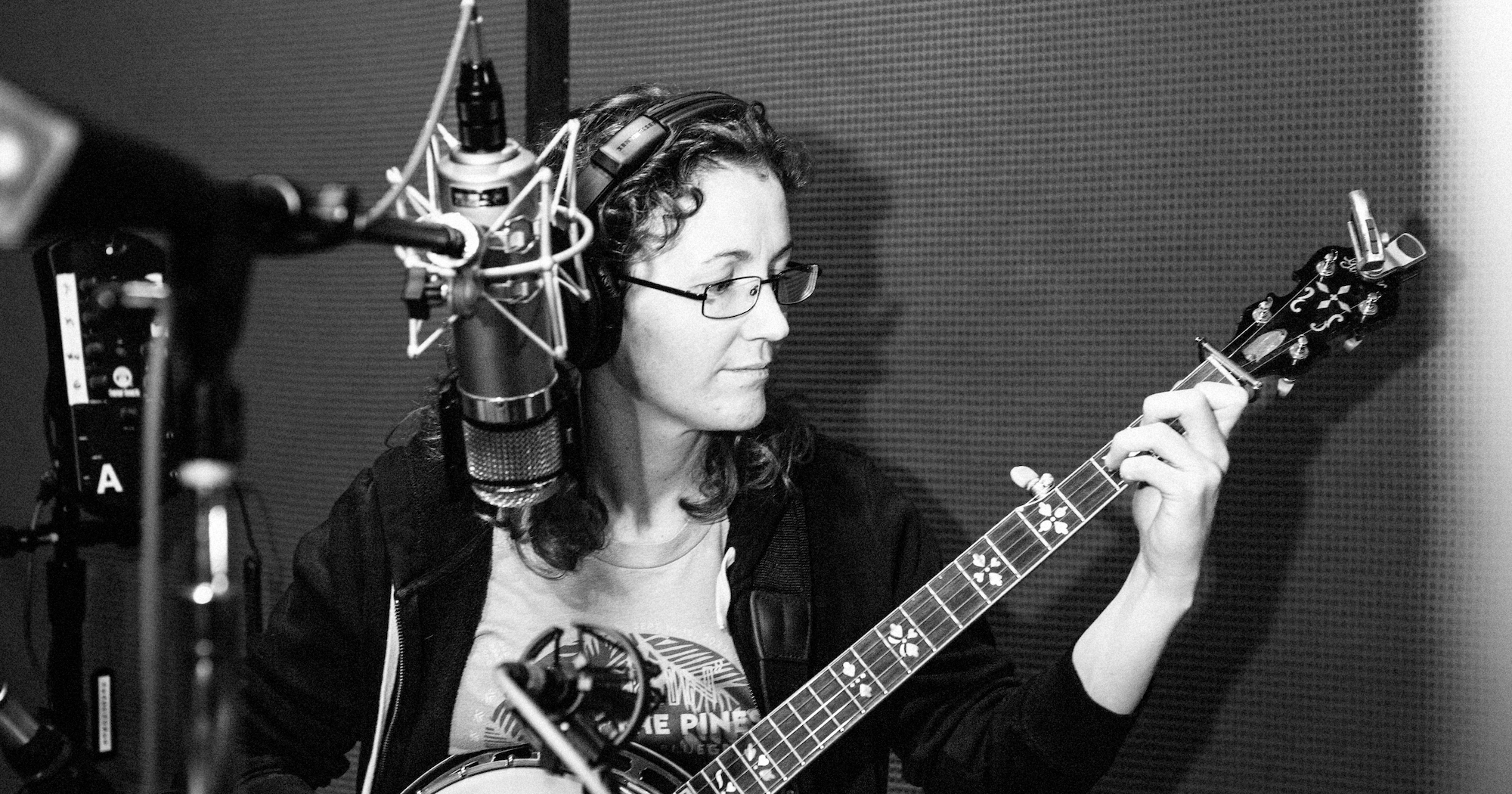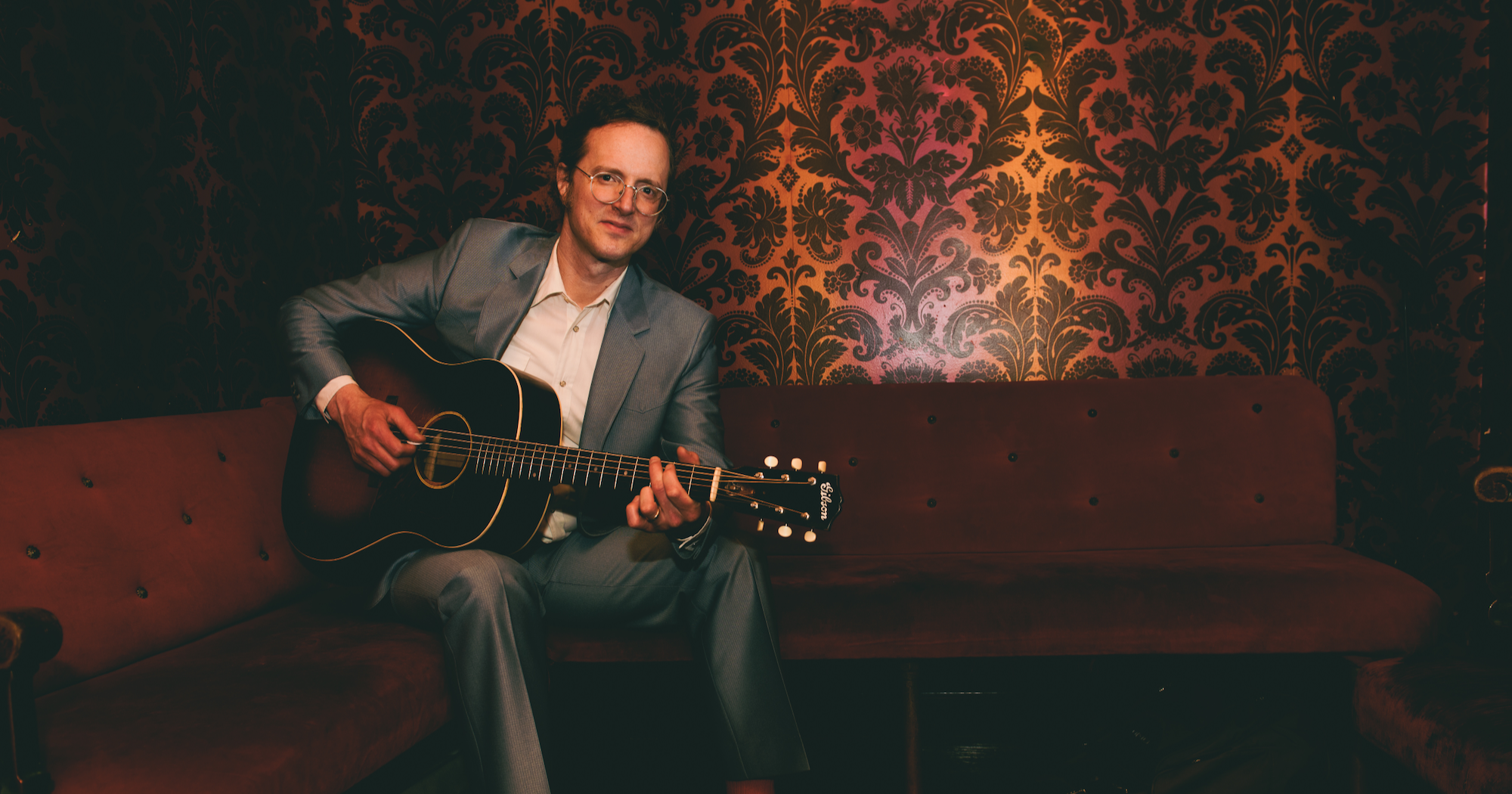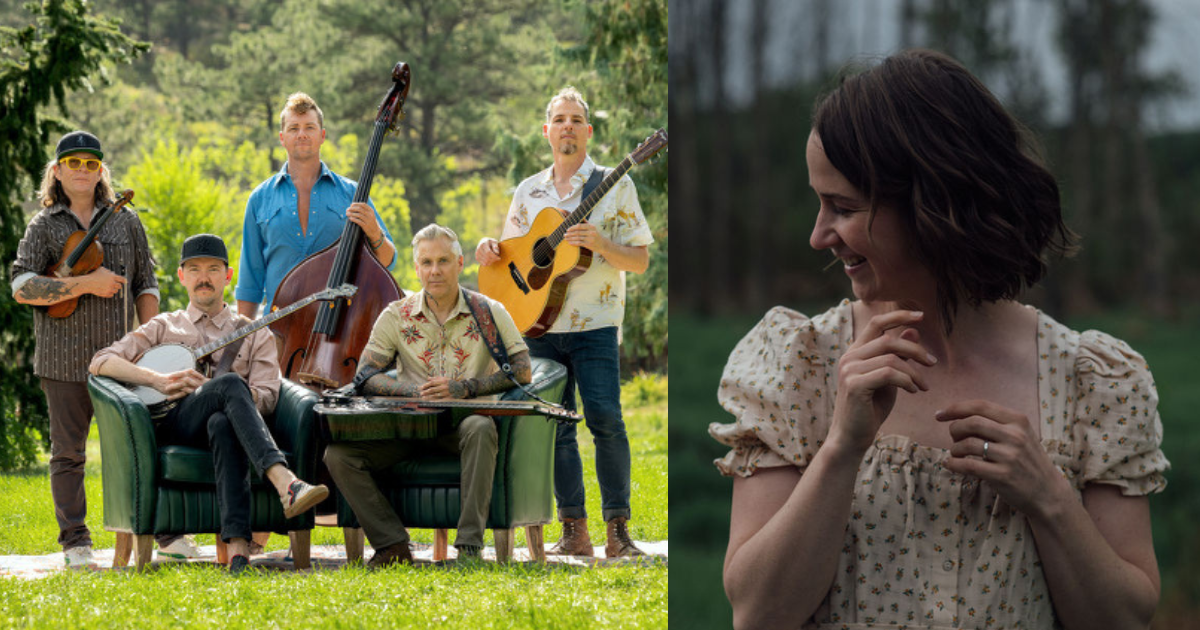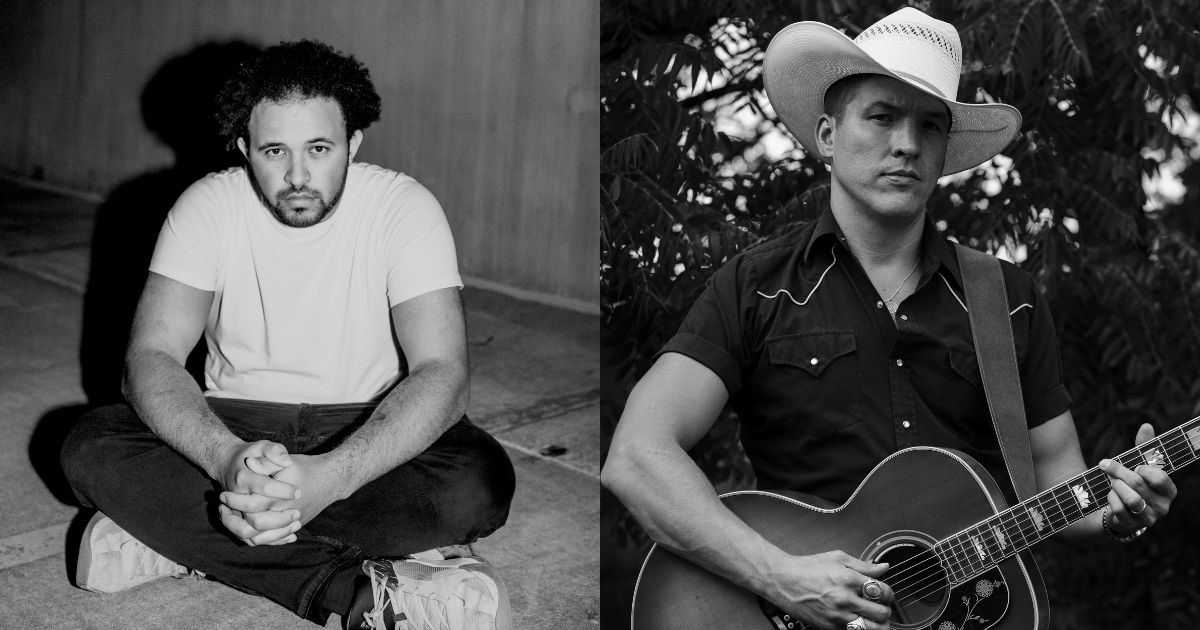
Max Allard Wrote a Banjo Concerto

The banjo, a sonic staple of folk and bluegrass, has often been left to its established devices in traditional circles or, more optimistically, among contemporary newgrass like Punch Brothers, the Infamous Stringdusters, and New Grass Revival, which included the genre-bending banjoist himself, Béla Fleck. Still, some musical spaces, like classical performance and composition, remain largely devoid of the banjo despite its lengthy and socially complex history, global presence, and tonal variety. Thankfully, between artists like Fleck, Noam Pikelny, John Bullard, and others, classical compositions have had a chance to shine on the instrument, paving the way for next-generation players to embrace and mix the traditions of classical writing with the distinct sound and musical capabilities of the banjo.

One such figure rising to the occasion is composer and artist Max Allard. A recent graduate of Oberlin College’s Conservatory of Music, the Chicago native is a champion of many cultures and genres in his work, which Allard describes as “an unclassifiable mix of bluegrass, jazz, new acoustic, classical, and pop.”

Allard has brought his stylistic openness to every facet of his artistry, including a duo with his brother Otto Allard; a bluegrass ensemble he co-founded, EZRA, that includes mandolinist Jacob Jolliff, guitarist and composer Jesse Jones, and bassist Craig Butterfield; and his touring support of Michigan-based bands Full Cord and Westbound Situation and Virginia-based band the Hackensaw Boys. Another instance finding him pushing banjo boundaries was his collaborative performance with fellow banjoists Bill Evans, BB Bowness, Cassidy Beentjes, and Matt Flinner in an adventurous arrangement of “In C,” the iconic composition by American minimalist composer Terry Riley, as part of a commissioned work series at the 2025 FreshGrass Festival.

Many of these ambitions grew alongside or after Allard’s studies, giving him several creative contexts in which to nurture his knowledge of classical forms and styles. One of the most impactful of these opportunities was part of Allard’s collegiate work itself: A Concerto for banjo and mixed ensemble. Encouraged by his EZRA bandmate and Oberlin professor Jesse Jones, Allard wrote his single movement work in 2023, giving the world premiere with the Oberlin Contemporary Music Ensemble under conductor Tim Weiss in December 2024. Though the piece has long since debuted, Allard’s vision for what the concerto would accomplish and what the experience of writing it revealed to him along the way remain ongoing sources of inspiration and guidance as Allard continues to write and perform for anyone who wants to listen. (Watch a video of Allard’s Concerto below.)

BGS recently spoke with Allard over the phone, discussing the many branches of his work as an artist and composer. We dive into how each stylistic space blends with his classical training, where he sees the banjo’s place in classical performance, his thoughts on cross-genre efforts by other artists, and more.

How would you describe the journey around your Banjo Concerto and its compositional process?

Max Allard: I had anticipated [the piece] for a while. I had gotten into Oberlin College as a composition major and part of the reason I chose Oberlin is because composition faculty member [Jesse Jones] comes from a background of playing bluegrass. He plays mandolin, some banjo, and guitar so I knew that I would have someone in the faculty on my side to help me, to know where I was coming from and to help guide the path forward in terms of a study and a pedagogy that I had not been taught before. So Jesse told me, “I think it would be great for your work here at Oberlin to culminate into a banjo concerto.”

I had the plan of approaching the banjo as a concert instrument – and as a concert instrument with the supporting ensemble. To do that, I had to get away a little bit from the folk aspects of the banjo in terms of a composition process, while still embracing those same aspects in terms of style.

[The concerto] sort of started as a banjo draft. And something I think is interesting to mention is that people have compared my banjo playing before to piano players and it’s a very valid comparison, because I take a lot of inspiration from piano players like Keith Jarrett, Chilly Gonzales, and many European classical composers like Sergei Rachmaninoff and Frédéric Chopin. I have long thought of the banjo as a very capable instrument to take solo composition very seriously on. I had to find ways to creatively think about which instruments to give various roles to. The nice thing was that I got to pick the makeup of the ensemble. I knew I wanted to have celesta. I wanted to have clarinet, flute with piccolo – there were certain sounds I knew I wanted to include.

I had very specific ideas about which instrument fulfills which role. It’s definitely a string-heavy piece and I’m a huge fan of writing for strings. So I had known that this piece would provide me the depths that the banjo doesn’t always have. I thought, “I can fill out these luscious piano-like chords that I usually like to write on the banjo, with the help of the supporting string section that has a much broader range than the banjo has by itself.” It was actually really liberating for me, because having an ensemble with a very diverse range – not just timbre-ly, but sonically and in terms of highs and lows – I had many options. It was a really great blank canvas for me to further explore creativity without some of the limitations of the banjo, be it physical or range related, or what have-you. I was able to basically apply my banjo knowledge and compositional tendencies to a blank slate, which presented a lot more opportunities.

What are your thoughts on the banjo’s “place” in classical music?

The banjo has a very checkered, problematic history and there’s a lot of moral debate that I’ve witnessed amongst people about what the banjo’s role is. It has had many different roles – a lot of it actually being erased. We talk about the problematic history of the banjo being used for minstrelsy but we actually forget about the banjo’s history of being used in parlor music. For a long time, the banjo actually had a role being played in parlors and social events, and even playing classical music.

I find it funny when people sort of criticize the banjo these days because the reputation has been ruined so much. People tend to think of the banjo with the film Deliverance. That film sort of ruined the reputation of the banjo as being this hillbilly folk instrument that’s not taken seriously. Unfortunately, that stereotype still exists, so people sort of scoff at banjo players who want to elevate the instrument into a certain concert environment.

I think all instruments can be used however people want. It’s like the artist has a final say in how they want to showcase their instrument. But for me, I think I’ll always still want to pay my respects to the traditions of the banjo. And as I said, the banjo has, throughout history, been used in a variety of different contexts. What I try to do is bridge the gap of pedagogic composition and folk music. If we’re talking about my banjo concerto, I want to write well-written concert music but [avoid creating] a totally contrived piece of music that just tries its best to fit the banjo in with an ensemble. I want to at least take my understanding of bluegrass, folk music, and old time music and still amalgamate it with concert music.

What do you find you learn most from other banjo players who have thrived in the classical space like Noam Pikelny, Béla Fleck, John Bullard, and others?

Broadly speaking, if [banjo players] want to put our instruments in the classical space, we need to do our best to understand the way the classic musicians think – really get in the minds of classical musicians. If one, as a banjo player, wants to pursue classical music, it behooves them to get at least a decent understanding of concert music. And I think most banjo players [like Fleck, Pikelny, Bullard] who have attempted that absolutely do have a different understanding. I just think the understanding of how deep it actually goes, what details go into really good concert music – it just takes a long, long time to master. And I am nowhere close to mastering it. But I at least have an understanding of how little I knew before attending [Oberlin].

Are there any aspects of Terry Riley’s “In C” that were especially challenging to capture with this banjo-centric arrangement?

I should give a shout out to Cassidy Beentjes, who did all this arranging – a really good pedagogue of the banjo. In terms of limitations though, the key [was one]. With the banjo’s natural key being G major, we took the piece down to a G-major tuning, so it makes much more sense to play the piece in G, especially since we want to achieve certain overtones. We could have played in C with a C tuning, but a lot of complexity would have arisen from playing in a foreign tuning. We were already uncomfortable in the first place, you know, with a piece of music like this, because banjo players don’t get the opportunity to do something like this very often, so we were careful.

What aspect of your musical identity does EZRA help you to fulfill that you don’t necessarily achieve in the same way with other pursuits?

I’d say it’s a good opportunity to write for a smaller acoustic ensemble where there’s a good understanding of not only folk and bluegrass, but also classical and jazz music.

It makes a big difference when you’re writing for people who you’re friends with – writing for people you know. You want to give people roles that you know they’re going to enjoy doing and that they do well. When I write for EZRA, it’s definitely much more stripped down and basic than if I were writing something like the banjo concerto. Because with the banjo concerto, I give very specific instructions, I supply a whole score with those specific instructions for everyone to read from. And when I’m writing for EZRA, usually I’m just writing lead sheets, just chords with the melody. In terms of arrangements, that can be discussed in the studio.

It’s funny though, because anytime we’ve recorded a record, we’ve had such limited studio time that we have to get our act together in just 72 hours or so and make our arrangements studio-ready. But again, that’s freeing for me, because I can write more vague ideas, stuff that I would not feel as intrepid writing with a big ensemble. When I’m with EZRA, I can just do whatever the heck I want and know that we can get away with it in some way. It’s also definitely a great opportunity for me to write contemporary folk music that is absolutely rooted in folk and bluegrass but also has all these other influences. A lot of Béla Fleck influence, a lot of classical music as influence – all kinds of stuff. It’s definitely a very special opportunity for me.

What’s the most unique aspect about the duo you perform in with your brother? How do you both approach playing together?

I guess the main thing that stands out is just the brotherly synergy. My brother is the easiest musician to play with because we know each other so darn well. Not much has to be planned – there’s almost never any stress. We’ve played plenty of gigs where we haven’t rehearsed at all beforehand and it goes pretty well just because we can glance at each other a certain way and know exactly what we mean musically. We’ve also played gigs where like a half hour has gone by and the whole thing is improvised. We just weave sounds together and it’s great.

It’s great to have a brother who plays music because it’s just that very intense, personal connection that one has with their sibling. You know each other so well that no communication really has to be done verbally. In general, playing with my brother is just very fun because we make crazy, spontaneous decisions and do ridiculous things that we would not do in any other setting.

Do you think the folk and bluegrass communities could better embrace the banjo being a genre-versatile instrument? And do you think that schools or community spaces are the best starting place to initiate that shift?

If I were talking to a banjo player who wants to get into classical music, I would say you can learn just as much by surrounding yourself with the right people. I think the most viable option is to try to meet some people who come from that background. And it can be any background. Like, say you want to get into a certain style – find musicians who can do that and try your best to talk to them, befriend them, whatever you can, and surround yourself with that. I think community is always important in the arts. Definitely, it’s very important to surround yourself with people – not even not necessarily like-minded people – but people who have very different experiences and very different backgrounds. Personally and musically in any way.

I think the bluegrass culture and scene could definitely benefit from opening themselves up a little bit. I think sometimes we forget that bluegrass has a very progressive foundation to it. Even Bill Monroe valued when he heard New Grass Revival. He was supportive of it, supportive of all those people who were taking bluegrass in a different direction. So I think it’s very progressive by nature. And music has always evolved and always will evolve and it has to sort of be accepted.

I think the banjo is actually in a very good place right now, because we’ve never had so many banjo players. It’s very good because the banjo is becoming popular for the right reasons – not necessarily gimmicky reasons, with banjos being used in pop music – but it’s being taken seriously amongst musicians from all different types of backgrounds. Broadly speaking, I don’t have too many complaints. I think it’s in good hands.


Photo Credit: Tanya Rosen-Jones
BGS Class of 2025: Best in Bluegrass

If you’re looking for a definitive, qualitative, and deliberate ranking; a firm and scientific rubric; or an unbiased, sterile reckoning of the best albums made in bluegrass this year, this roundup may not be for you.

Truthfully, as someone who’s worked, been acquainted, and become friends with many of the artists on this list in various capacities – from bio writing to onstage performances to media coverage to pickin’ parties to recordings and beyond – objectivity isn’t something I, personally, could establish anyway. And such year-end or other merit-based lists and collections aren’t all that interesting, are they, if not just to argue with their curation and selections.

I would not even attempt such things, because to me – to many of us – that’s not what bluegrass is about anyway. Bluegrass is about a feeling. It’s about innovation. It’s about virtuosity. It’s about tradition, loving it or retooling it or coaxing it or turning it upside down. It’s about adrenaline and a high pulse – and passing a mason jar around. It’s about feeling downtrodden or alone, shedding tears into that very ‘shine, and wailing along with the high lonesome sound. It’s folk music as much as it’s abject commercial country in “poor people drag.” It’s endlessly interesting and complex, but pretty damn simple, too.

Anyone with even an ounce of sense knows and understands that bluegrass can’t ever be objective. So indeed, why try? Why not acknowledge that bluegrass is always a matter of taste, of preference, of whimsical or capricious or convicted opinion? Bluegrass is always debatable, because, after all, bluegrass is always in the eye of the beholder.

In the eyes – and especially ears – of this particular beholder, these albums released in 2025 were the best, the most memorable, the most engaging. These collections stick to ribs like ham hocks, or stick in your throat like the tastiest clod of emotional peanut butter. They each advance, subvert, perpetuate, or wrinkle our core ideas of what bluegrass is – and what it can be.

Are each and every one of these LPs the best in bluegrass from 2025? Perhaps not… But also definitely yes.

Big Richard, Girl Dinner

In January, we gobbled down a heaping helping of Big Richard energy with the nourishing and nutritious Girl Dinner. The project may have been the band’s album debut, but this Colorado all-women quartet had already been making remarkable waves in the bluegrass, jamgrass, and string band scenes – and each of the members had extensive and glitzy musical resumés before they even convened. With a new album, Pet, on the horizon for February 2026, a signing with Signature Sounds, and an upcoming co-bill tour with fellow femme outfit Della Mae, we can tell this Girl Dinner is set to become an ongoing traveling feast.

Shawn Camp, The Ghost of Sis Draper

I remember attending Station Inn shows in Nashville in the early 2010s and sitting with rapt attention – like Martha’s sister Mary at the feet of Jesus – as Shawn Camp performed his suite of Sis Draper songs with his star-studded bluegrass bands. Often you’d hear just “Magnolia Wind” or just “Sis Draper.” Sometimes he would perform a more complete handful of the tracks he had written, individually and with his hero and mentor Guy Clark, about the mythical roots music figure from his home state of Arkansas. Now, he’s collected the slate of material – what could easily become a musical or multi-disciplinary theatre work of some kind – into one commanding, lovely, and visceral album. These are timeless songs, written and rendered as only Camp could.

Jason Carter & Michael Cleveland, Carter & Cleveland

Every now and again a new collaborative duo album comes along and makes you think, “Oh! This must have been what it felt like when Skaggs & Rice was released.” Or Tone Poems. Or Ralph Stanley and Jimmy Martin’s First Time Together. A monumental occasion, captured for posterity’s sake in the studio. When fiddlers Jason Carter & Michael Cleveland released their duo debut, that was the feeling. History made in the present, a work that will be regarded as seminal ages into the future being enjoyed in real time. Carter and Cleveland have collaborated quite a bit over the decades they’ve known each other, but what a gift to have that musical friendship ensconced forever on this album. We hope there is more to come.

Wes Corbett, Drift

Look, if all modernist banjo players sounded like Béla Fleck and Noam Pikelny, that would certainly be great. But thankfully there are dozens of five-string pickers continuing to expand on the Fleck (and Pikelny and Munde and Keith and Trischka) school of Scruggs-style, each in their own veins. Corbett is one of the best. Though he blends effortlessly into Scott Vestal’s former role in Sam Bush’s band – or into any number of recordings and one-off pick-up bands that boast his playing in newgrass and bluegrass and beyond – Corbett is a true idiosyncratic banjo player and composer. Drift, his latest, often employs traditional techniques as tools for innovation and contemporary tunesmithing. He recalls the great melodic pickers while always sounding first and foremost like himself.

East Nash Grass, All God’s Children

A few years ago, if you had told me the ragamuffin band holding down Monday nights at Dee’s Country Cocktail Lounge in Madison, Tennessee, would in 2025 release an album you’d describe as “heartfelt, contemplative, and intentional,” I would have probably laughed. East Nash Grass were just as jaw-dropping good then as they are now, but with that down-home silliness and clumsy charm all the great bluegrass bands born of indentured residencies have had. All God’s Children finds the band all the way grown up (but not really), and they never forsake their banter-rich, never-know-what-you’re-gonna-get roots. That overlap – of silly and heartfelt and virtuosic and not too serious – is where most (if not all) of the best bluegrass is born, anyway.

Sierra Hull, A Tip Toe High Wire

Every single time Sierra Hull releases a new album, journalists and critics love to talk about how she’s now “found herself” and “found her sound.” This writer, however, disagrees. I first saw Hull perform when we were both in our mid-teens and then as now I knew, wholeheartedly, this is someone who knows who they are. Granted, Hull has done plenty of finding herself along the way, as we all do, but the songs and tunes of A Tip Toe High Wire were obviously not born of someone just locating her voice, musically or otherwise. They don’t feel experimental or out on a limb, they are each solidly in her wheelhouse. They do still push the envelope, though, and they all tell personal stories, draw on individual experiences, and chase those treasured Hull-ian melodies wherever they lead.

I’m With Her, Wild and Clear and Blue

Perhaps all future I’m With Her albums should be made while basking in the “Ancient Light” of a total solar eclipse, given the striking sonic successes of Wild and Clear and Blue. Is that cosmic magic why their second full-length release feels so distinct and metamorphosed from their debut? Is it all the years and personal growth in between recordings? It’s not like they reinvented the wheel, they’re the exact same band – but something feels different here. Whatever the special sauce may be, all of I’m With Her’s offerings over the course of the band’s lifespan have been stellar, but this latest full-length project stands apart. As long as Jarosz, O’Donovan, and Watkins are making music together, we will be unendingly grateful they offer us these recorded windows into their creativity.

Kissing Other ppl, Kissing Other ppl

Bluegrass and old-time birth new projects, bands, and collaborations all the time. Some are purposefully momentary, some are unintentional flashes in the pan, some are such long strings of last names ampersand-ed together you know there’s no future for them. We hope Kissing Other ppl are here to stay. Rachel Baiman and Viv & Riley joined forces on the album – and band – turning mainstream and pop songs into bluegrassy and old-timey string band arrangements that positively vibrate with passion and life. “Sad boi” covers these are not, though you may at times find them subdued or tender or mild. Long may this old-time Americana musical polycule reign.

Cameron Knowler, CRK

If you’ve been craving a contemporary storyteller and poet who utilizes the guitar as their medium – like Norman Blake or Doc Watson or Tony Rice or so many others – I am so pleased to step onto my soapbox to tell you about Cameron Knowler. Also a writer (at times for BGS), archivist, photographer, and visual artist, Knowler’s guitar-centered album, CRK, is almost anything but a “guitar album,” despite each and every composition centering on the instrument. The LP paints vivid and haunting musical portraits of a place Knowler loves, longs for – and despises or begrudges, too – Yuma, Arizona. Knowler wouldn’t even pretend to compare himself to Norman Blake or state that he’s deliberately taking up Blake’s heavy, heavy mantle in the 2020s, but I’m saying he is. Thank goodness.

Bryan McDowell, Bryan McDowell

You may recognize multi-instrumentalist Bryan McDowell from his time performing, recording, and touring with artists like Claire Lynch, Sierra Hull, Molly Tuttle, Alison Brown, and many, many more. He’s an incredibly talented sideman and session player, so when I first received his new self-titled solo album, I imagined the sort of formless instrumental project most pickers with similar resumés create. What a pleasant surprise to find a fully fledged, well-rounded, complete song sequence chocked full of original songs and McDowell’s lovely, honeyed singing voice. (I know Bryan and I didn’t know he sang like this!) It’s on me, really – I shouldn’t have been surprised at all – but McDowell’s skill set is clearly no longer just geared towards backing others up. I am looking forward to seeing what’s next.

Shelby Means, Shelby Means

Speaking of artists ready to step out of the role of sideperson or session musician. Bassist, singer, and songwriter Shelby Means’ debut solo album is fantastic. Since departing Molly Tuttle’s Golden Highway, Means has already built striking momentum as an artist unto herself, and the quick success of her album has played a huge role in that. With originals, tasteful (and surprising) covers, and a star-studded roster of pickers – Tuttle, Ron Block, Michael Cleveland, and more – the project certainly doesn’t feel like a debut. And it shouldn’t, Means has crisscrossed the country and the globe for decades, she’s more than ready to step to the center of the stage. She’s done it before, she’s doing it again – and now a lot more frequently, I’d bet.

The Onlies, You Climb the Mountain

All the best bluegrass is old-time these days. (I say that over and over again, here’s what it means.) While mainstream bluegrass sounds more like ‘90s country played by a bluegrass string band, or jamgrass, or “MASH” – all of which depart greatly from the 1945/1946 sound of its origin – modern old-time becomes more and more of an audio swatch of essential parts of what bluegrass used to sound like and used to include. One album this year that epitomizes this phenomenon is the Onlies’ You Climb the Mountain. Is it phenotypical bluegrass? Oh, no. It’s not. But it also has plenty of textures and tones endemic to original bluegrass that are becoming increasingly rare in its modern forms. I shouldn’t sell the Onlies short, though, they aren’t here because they’re “better bluegrass” than bluegrass, or more authentic, or more “real.” They’re here because this album is excellent, on its own terms.

Danny Paisley, Bluegrass State of Mind

Danny Paisley is celebrating 50 years of bluegrass with his latest album, Bluegrass State of Mind. Still looking for new challenges and trying to add fresh sparkle to his dyed-in-the-wool traditional sound, the new LP includes Dobro (for the first time), drums (sacrilege!), and a bit of an Americana lean. (Don’t you dare call it “grassicana.”) To BGS readers, the project will most likely sound like straight down the middle bluegrass of the highest order. Longtime fans of Paisley & the Southern Grass, though, may notice that very sparkle Danny has been chasing, as he targets new audiences and still sets new goals, five decades into his career as a bluegrass tradesman. It’s the family business.

Missy Raines & Allegheny, Love & Trouble

Missy Raines is one of the winningest musicians in the history of IBMA, amassing 10 Bass Player of the Year trophies over the years and and a handful of honors in other categories, as well. She may have won her biggest prize, though, when she landed on her latest band lineup, Missy Raines & Allegheny, a few years ago now. Her second album with the group, Love & Trouble, continues building upon the chemistry and collaboration that dripped from 2024’s Highlander. They often rise to the occasion of my preferred nickname for them, Mashy Raines & Allegheny, but they remain a consistently dynamic group capable of gritty, barn-burning bluegrass and contemplative and emotive slow burners, just the same.

Red Camel Collective, Red Camel Collective

They began as Junior Sisk’s backing band, and like many of the great “spinoff” bluegrass bands of yore – Quicksilver (Authentic Unlimited), the New South (American Drive), and many more – Red Camel Collective have quickly shown they’ve got the chops to take the same route. Their debut self-titled album was released earlier this year and was made at Sisk’s suggestion – and with his blessing. (He regularly steps off the stage at his own shows to spotlight the Collective and their music, as well.) This band of lifelong pickers have clocked so many miles playing bluegrass and executing the visions of others that, when charting their own course as Red Camel Collective, they’re able to sound exactly like themselves. It’s tough to sound singular in modern, radio-inclined bluegrass. But Red Camel Collective do. Is that why they won New Artist of the Year at the IBMA Awards this fall? It sure ain’t coincidence.

Sister Sadie, All Will Be Well

Sister Sadie’s All Will Be Well is like dropping the needle on a 45-minute bluegrass therapy session. I don’t say it flippantly or sarcastically; it is indeed shocking the level of earnest contemplation, processing, emoting, and growth evident in the songs on this album. At the same time, when you hear the tracks played down at a bustling bluegrass festival or a packed rock club or a subdued listening room, they never feel twee or try-hard or sodden with greeting-card level sentiments. They never feel heavy, actually – this is fun, often hilarious, party-ready music. Dance-along music. Shout-along songs. You’ll laugh, you’ll cry. (At the vocals alone.) These are real human ideas, thoughts, and feelings set to bluegrass. Imagine.

Larry Sparks, Way Back When

How does this album seem like it could have been pulled from any year, any decade of Bluegrass Hall of Famer Larry Spark’s sceptered career? Because it could have been, damnit. He’s Larry Sparks. Way Back When sounds warm and live, like listening to tape or vinyl over earbuds or cell phone speakers. Like being in the room with that resonant, vibrant, and patinated voice. The material is timeless, but never tired or lost in retrospection. Sparks is obviously making bluegrass in the present, as he always has. He just sounds exactly like this. And the way he talks about making music – as he did in a BGS interview set for publish in January 2026 – you can tell, for him, it’s essential to inhabit the present and inhabit the song. Bluegrass really is his calling, and we’re all all the better for it.

Billy Strings & Bryan Sutton, Live At The Legion

One of the best bluegrass albums of the year? Of course. One of the best live shows and tours of the year? Doubly, triply, quadruply of course. You’d think it would be brain-melting to listen to hours of two acoustic guitars and an electric bass pick through bluegrass, fiddle tunes, and Doc Watson classics, but it was divine. Trance-like – not with eyes glazed over, but on the edge of your seat. I wasn’t at that show at the Legion when they tracked the album, but was lucky enough to catch their show this fall at the Ryman in Nashville. If you weren’t so fortunate, don’t worry, ‘cause this isn’t an incredibly exclusive club. This record really does capture all that’s ineffable of being “in the room.” (No one is surprised.) Turns out, you can actually bottle and sell it, if you’re these two. Now if only you could buy the skillset, too…

Thompson the Fox, The Fox in Tiger’s Clothing, vol. 1 & vol. 2

Maybe once a year I trip over or into a new music discovery that gets me so excited I start getting annoyed with myself from having to hear me recommend them over and over again. With Thompson the Fox, it never got annoying (not to me, at least) and the excitement of turning folks onto their music still hasn’t worn off. So here we are, again. If this is your initiation, don’t thank me, thank the people who sent Thompson the Fox my way. Jazz, newgrass, bluegrass, bebop, ragtime, and oh-so-many more styles and textures combine in a completely fresh and distinctive form. I’ve never heard new acoustic music quite like this, yet it’s clearly rooted in that tradition. The simple math of xylophone, banjo, bass, and drums doesn’t quite math, but this group sounds resplendent, rich, and fascinating. Takumi Kodera on banjo is a revelation and Rie Koyama (xylophone), Akihide Teshima (bass), and Tomohito Yoshijima (drums) complete the Tokyo-based ensemble.

Cristina Vane, Hear My Call

Cristina Vane exists at an intersection of roots music that far too few inhabit, because very few can manage there. Vane can. She does blues, bluegrass, old-time, country, and Americana. Sometimes blended, sometimes compartmentalized. She’s got short-form, short-attention-span, vertical-video appeal for days, but her songs are never vapid or playing to any kind of commercial common denominator. Her instrumental skills and the passion for learning and song collection across roots and folk genres that she exhibits bring it all together. I’d not want to subject either woman to the corniness of comparing one to the other, but for folks who love Sierra Ferrell and are looking for more artists in a similar roots-meets-mainstream space, Cristina Vane can do it. She is doing it.

Vickie Vaughn, Travel On

Vickie Vaughn has won IBMA Bass Player of the Year for three years in a row and on the heels of that remarkable accomplishment, she’s released her debut full-length solo album, Travel On. Produced by Deanie Richardson of Sister Sadie, it’s Vaughn’s first recording under her own name released in 10 years. Original songs and covers are packaged in a sound that’s always trad bluegrass, but often infused with a dash of Osborne Brothers from the ‘80s or Jim & Jesse with a drum kit. It’s an Earl Scruggs Revue sort of flair, troubadour-steeped bluegrass-country. And it’s divine.

To conclude this long yet non-exhaustive and surely myopic list of the best bluegrass albums of 2025, let me leave you with this gentle reminder. What’s bluegrass and what’s best are always in the eye – and the ear – of the beholder.

What was your favorite bluegrass album of 2025? Let us know on social media. We hope you discover some new music to love in our BGS Class of 2025 and we can’t wait to make new discoveries with you, too.


BGS Staff contributed to this list.

Photo Credit: Shelby Means by Hunter McRae; Shawn Camp by Neilson Hubbard; Sierra Hull by Spencer Showalter.

BGS 5+5: Catherine “BB” Bowness

Artist: BB Bowness
Hometown: Somerville, Massachusetts
Latest Album: Goodtime Revival (released November 1, 2025)
Personal Nickname (or rejected band names): BB (short for Catherine)

Which artist has influenced you the most – and how?

It’s tough to choose just one person, but I’d have to say Béla Fleck. He has expanded what’s possible on the banjo for all of us banjo nerds. Hearing him play classical, jazz, bluegrass and so many other styles, all with stunning fluency, is such an inspiration to me. And his tune writing is masterful, tunes like “Sunset Road,” “The Overgrown Waltz,” and “Big Country” feel so beautiful and singable to me. It’s really hard to write tunes that come anywhere close to that level of completeness.

What was the first moment that you knew you wanted to be a musician?

I’ve always been drawn to music, since growing up in a traveling New Zealand craft market. There was a stage manager in the fair, Ralph Bennett-Eades, who played guitar and sang really great. His boys played guitar and drums so I always saw the cool, older kids playing music. Then after learning banjo for a few years, I headed to the states for the first time and got to attend some festivals and camps including Telluride and Rockygrass in Colorado. Seeing the amazing musicians perform on stage at those festivals made me really want to try music for a living. Fifteen-year-old me thought, “Wow, people do this for a job?!” Turns out it’s not that easy to get those jobs, but it’s been an incredible journey so far.

What has been the best advice you’ve received in your career so far?

The great Tony Trischka once told me it’s great if you can learn to sing. I’ve thought back on that comment frequently through the years, being primarily an instrumentalist. But it really rings true! Being able to sing in a band and contribute to the show as a vocalist by singing harmonies is a big plus. It’s also so great in general for your musicianship to learn to sing so that your ears are more connected to your hands. Having a decent ear is a must for singers and I’ve found it very helpful for my banjo playing to work on developing my ear.

If you didn’t work in music, what would you do instead?

I’ve always fantasized running a New Zealand coffee shop that sells baked goods. It’s got to be a waterfront cafe so that I can wake up early, go for a surf, and then make coffee and baked goods for people.

What would a perfect day as an artist and creator look like to you?

I love the days where you’re not sitting in a van for 10 hours. Any day where the drive is short and you get to play music with your friends for people who’re listening is a very good day! Throw in some vegetables with dinner and a little private spot to practice some before the show and I’m positively delighted.


Photo Credit: Louise Bichan

LISTEN: Michael Daves, “Can’t Get There From Here” (R.E.M. Cover)

Artist: Michael Daves
Hometown: Atlanta, Georgia (originally); New York, New York and Adams, Massachusetts (currently)
Song: Can’t Get There From Here
Album: Fables (EP)
Release Date: December 19, 2025
Label: Wild Geranium Records

In Their Words: “As a Georgia boy growing up in 1980s, R.E.M. was my first musical obsession and I still love those early albums. The dream logic, the obscure references to Southern culture, the addictive hooks, the ghostly background vocals. I thought it would be interesting to adapt one of them to bluegrass and it happens that Fables of the Reconstruction is celebrating its 40th anniversary this year. It’s an arty rock album, but there’s a lot of droney stuff in there that sounds like it came from mountain dulcimer, banjo, and mandolin. The quartet I lead with Hargreaves, Jolliff, and Alvar has proven very adept at interpreting music from non-bluegrass sources and though they had no prior knowledge of this music, they were open to it and knocked it out of the park.” – Michael Daves

Track Credits:
Michael Daves – Guitar, vocals
Alex Hargreaves – Fiddle
Jacob Jolliff – Mandolin
Erik Alvar – Bass
Duncan Wickel – Cello
Sean Cahill – Background vocals
Jefferson Hamer – Background vocals

Video Credit: Jason Zucker


Photo Credit: Manish Gosalia

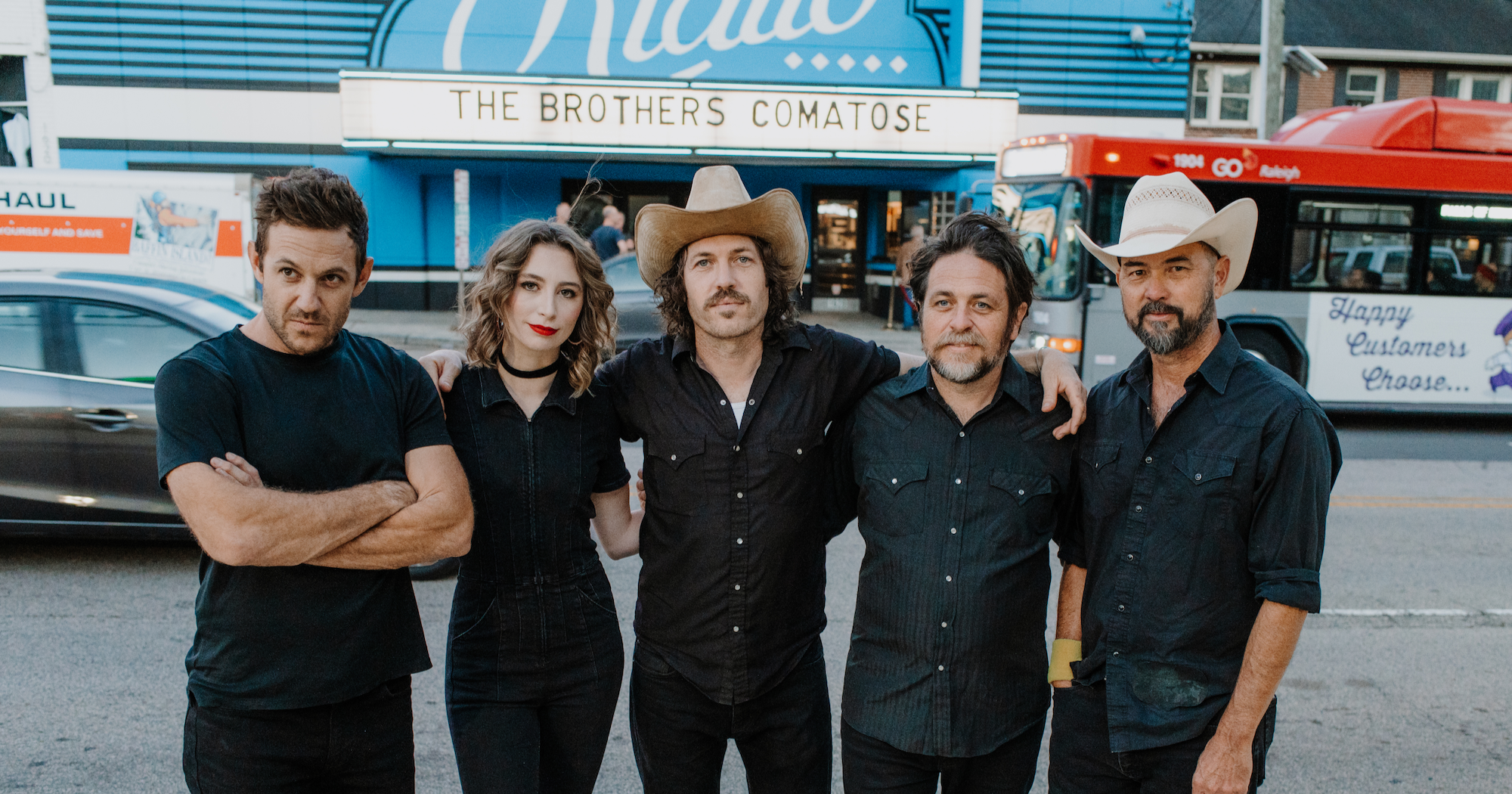
The Glittering Golden Grass of The Brothers Comatose

Bay Area five-piece The Brothers Comatose were actually founded by the brothers Morrison: that would be Ben on guitar and lead vocals and his brother Alex on banjo. The Morrisons came from a musical family and were influenced as much by classic rock as they were by country and bluegrass – their first album, Songs from the Stoop (2010), even contains a cover of The Rolling Stones’ “Dead Flowers.” Initially, the band’s lineup included bassist Steve Height, fiddler Phil Brezina, and mandolin player Greg Fleischut.

In the 15 years since, they have stayed busy both in the studio and on the road. As anyone who has seen the band’s concerts can attest, The Brothers Comatose are anything but… comatose. Their live performances are known to be high energy and often include audience participation. They have supported everyone from Gillian Welch & David Rawlings to Yonder Mountain String Band to Trampled By Turtles. In addition, the group has played festivals like Hardly Strictly Bluegrass and Outside Lands.

The Brothers Comatose returned at the end of July with their fifth studio outing, Golden Grass. The title track, which also opens the album, came from an unlikely source. “A fan started calling our sound ‘golden grass,’” explains Ben Morrison. “And the phrase just felt right.”

Golden Grass arrives three years after the band’s prior album and continues their mix of traditional bluegrass and rock. But behind the scenes, there have been some changes. The Brothers recorded Golden Grass in two separate installments with two different producers, Greg Holden and Tim Bluhm. While they were making the disc, mandolin player Greg Fleischut decided to leave the group. His replacement, Addie Levy, is the first woman in the band and, at just 23, significantly younger than her fellow members. “We always thought it would be cool to have a female voice to hit those high harmonies,” says Morrison. “Addie’s such an incredible mandolin and fiddle player, but she’s also a great singer and songwriter in her own right.”

Golden Grass is probably a bit more diverse than the band’s previous albums. Beyond being their first release to include a woman singer and mandolin player, it’s more collaborative in general. Ben wrote several songs, of course, but other tracks were penned by Levy, Brezina, and Alex Morrison. Still, Golden Grass maintains a pretty consistent sound over its 10 songs. The title track sounds like a lost Allman Brothers tune from back in the day and other highlights include lovely ballads like “Home Again” (featuring Lindsay Lou on guest vocals) and “My Friend” as well as the funny, rollicking “The IPA Song.”

I recently had the pleasure of catching up with Ben Morrison and Addie Levy for BGS.

To start with, tell me a little about the making of Golden Grass. I understand there were some changes between your last album and this one. Addie obviously is the new addition. And I guess Greg was the guy who left?

Ben Morrison: Yeah, Greg was in the band before. He left like halfway through the album. We recorded it in chunks. So we recorded half the album, we were working through the rest of the songs, and in that process, he left the band. Addie joined and recorded the second half of the album with us. But it’s funny. There are four mandolin players on [Golden Grass]. We had a couple of guest mandolin players on the album before Addie joined. Ronnie McCoury’s on there. It’s a good variety, I guess. [Laughs]

Tell me about the title track, which is also the first song on the album.

BM: That’s a good question. It started out with us trying to identify ourselves – that age-old question when you ask a musician what kind of music they play. “Well, it’s kind of hard to define. We’re jazz and pop and metal and boy band!” [Laughs] You know, it’s definitely pulling a lot from the bluegrass world. But also from a bunch of other influences.

We kept posting these things on Facebook and there’s this guy, Cyrus Clark, I believe his name is. He kept commenting about a lot of music coming from California – string band music specifically – going back to Old & In the Way. He kept saying, “Golden Grass! Brothers Comatose, Molly Tuttle, and AJ Lee.” We thought that was really cool.

I think I had just written it down in a notebook one day. And we did a cowrite – myself, our fiddle player Phil, and the guy that produced the second half of the record, Tim Bluhm. I was like, “What if we called it Golden Grass?” We started name-dropping different bands in the lyrics and kind of giving them a little shout out. We had fun with that and went with it.

“Home Again” – reading the press release, I know what inspired it. But just listening to the lyrics, I [probably] would have known anyway. For those of us on the East Coast, tell me a bit more about what [the wildfires] were like and how it affected the song.

BM: That wasn’t a personal story; it was about good friends of ours who lost their house in the Santa Cruz Mountains fires a few years back. For those of you not in California, there’s a fire season [here] where fires can just rip through and destroy communities. It’s pretty messed up and now it’s literally close to home. Some good friends of ours – all their property and their house got destroyed. I think it was during the pandemic and it hit me pretty hard. I was just really feeling for them and that song kinda came pretty quickly.

We had the song and thought about getting somebody to help sing it with us. Lindsay Lou’s been a friend for a long, long time and she’s such a great singer. We sent it to her and she was on it. It’s about a couple losing their house and building back together. So it made more sense to me as a duet.

I like the ballads on the album. Addie, I think you were the one who wrote “Blue Mountain?”

Addie Levy: I am.

Tell me a bit about the inspiration for that song.

AL: I’m from the Blue Ridge Mountains of Virginia. I grew up in Appalachia my whole life. [The mountains] have always been a very big inspiration for my writing and who I am as a person.

I was driving to work one day and was listening to the Infamous Stringdusters’ [version of the Cure’s] “Just Like Heaven” and got really inspired by having a keen lick throughout the whole song. I was like, “I need to write a song like that.” It all came to me within the drive to work. I showed it to my mom when I got home and she kind of looked at me with concern. She was like “Are you and your boyfriend okay?” I was like, “What does that have to do with the song I just played you?” I accidentally wrote the entire thing about him – which is bad ‘cause he cheats on me in the song! But he doesn’t in real life! [Laughs]

There were all these little pieces. Like, I pass his exit to work every day. He knows my Starbucks order. I painted the walls blue in his bedroom in one of our first months of dating. I pulled all these little things I didn’t mean to. Then I had to show it to him. I was like, “I am so sorry I wrote this song about you!” But when you’re in a nice, healthy relationship – I don’t have that much stuff to complain about so I can’t really write about it!

“The IPA Song” is a fun track. Anything either of you want to share with me about that?

BM: When we play shows, we like to get people onstage to help us out – you know, for sing-alongs or whatever it might be. I think we’ve had more children onstage for “The IPA Song” than any other song, which is ridiculous. But they make signs and stuff – like the IPA circled with a line through it. We had a 15-year-old last night playing mandolin with us for that song! I mean, the lyrics are goofy, but I guess it’s a catchy one. It’s been a fun song to play live.

Going back to the Bay Area music scene. In the late ‘60s, it was known for bands like The Grateful Dead, Jefferson Airplane, and the whole psychedelic thing. And in the late ‘70s, there was something of a punk scene. Even in the ‘90s, there were bands like Counting Crows that recorded in San Francisco.

What is the scene like now? And with all these different musical sounds that have come from the city, how did you settle on more of an Americana/bluegrass sound?

BM: The band got its start in 2008 in San Francisco. My brother and I were living in a house on Haight Street – right in the thick of it. Phil lived a few blocks down, so he would come over. We continued to live in the city for a long time and there was a bustling scene. With bluegrass too – like this [past] weekend was the Hardly Strictly Bluegrass Festival. I kind of credit that festival with my direct interest with this kind of music. It’s massive, three-quarters of a million people throughout the weekend. It’s all free. Huge headliners. It’s not all bluegrass but it definitely leans in that direction.

It was so cool being exposed to different kinds of music that I hadn’t really listened to before. What was also cool was watching artists play – Del McCoury, John Prine, Emmylou Harris – all these players that were older. It seemed like the older you get, the more respect you get in this world. [That] was interesting, because I felt like in the rock world there was sort of a shelf life. Like “Oh, you’re in your late 20s in a rock band? Give it up, kid.” That kind of thing. But in this world, when you’re 70, you’re doing it! That was always so cool to me.

So San Francisco does have a pretty cool scene. Probably 10 years ago, a lot of people started moving out because tech started moving in [and it became] more expensive. But I’ve heard that it’s getting cool again. I don’t hang out there as much anymore ‘cause we’re on the road a lot and I’ve got two kids. I mean, Addie probably hangs out there more than I do.

AL: Anytime I’m in town, I try to find a bluegrass gang. There’s a couple of bars [where] I’ve made some good friends. Sometimes there are jams, sometimes they’re just drinking. But there are some really cool musicians in town.

Ben, I know your brother is also in the band. Tell me what Alex brings to The Brothers Comatose that is unique.

BM: Alex has swagger beyond belief. [Laughs] Is that what you would call it?

AL: Yeah. [He’s] the most photogenic, most in the vibe of every situation.

BM: And the way he plays, too. To me, he plays banjo like Keith Richards plays guitar. You know, he’s not trying to be the Yngwie Malmsteen of the banjo or anything. He’s just trying to make it groovy, stanky, in the pocket. It’s just got such good feel to it. And also, he’s a great songwriter and singer. But a lot of his influences come from [bands like] The Rolling Stones, Led Zeppelin. We used to listen to a lot of classic rock when we were kids.

Addie, I guess I wanted to ask you what it’s like so far as the new member of the band and also the first woman. Crashing the boys’ club, as it were.

AL: My very first show with them was in Idaho. I had never met any of them, I had one phone call with them and I had never been west of Nashville! You know, I grew up traveling up and down the East Coast and never really left. I remember touching down in Sun Valley and the realization hit that I knew two people there and they were leaving the next day. And I was like, “I’m gonna get murdered. I am gonna die out here!” [Laughs] I never heard of the festival, it was in the mountains somewhere… I was like, “This is the end.”

[I was] super anxious to start. I mean, our first show was a headlining slot that Sunday. That was terrifying. But [the Brothers Comatose are] just the greatest people. They’re so welcoming. And I’m an only child. So they’re really the siblings [I never had]… They’re the best.


Photo Credits: Lead image courtesy of Burning House Management. Alternate image by Jessie McCall.

You Gotta Hear This: The Infamous Stringdusters, Courtney Hartman, and More

Happy Friday! There’s plenty of new music to enjoy this week in our latest edition of You Gotta Hear This, our regular roundup of upcoming and just-released tracks and videos.

Kicking us off, innovative banjoist Wes Corbett (who currently tours with Sam Bush) shares the second single from his upcoming album, Drift. “Eagle Harbor” was inspired by the vibe and structure of Jackson Browne’s music and the picturesque ferry ride to Bainbridge Island in Washington state, where Corbett grew up. Guitarist, poet, and singer-songwriter Courtney Hartman is returning with new music as well; this time it’s a lush and whimsical neo-folk song co-written with Ana Egge about how being a mother and raising a child transformed the way she saw everything around her. It’s set to an intimate and cozy new music video you’ll love to watch.

New Mexico-based artist and songwriter Michael Rudd will release a new track, “Not Today,” next week and below you can find a preview of the number. It contemplates war, history, loss and their legacies; Rudd was spurred to write “Not Today” by the many wars ongoing today, especially in Gaza, and by his recent travel to Germany, Poland, and to visit monuments of the Holocaust.

Lauren Morse is ready to get you dancing with her new track and music video. “Let that Fiddler Fiddle” is a message we can certainly get behind. Inspired by Nashville’s ever-popular Honky Tonk Tuesday, it’s a two-stepping song sonically found where country and bluegrass meet – and perfect for toe-tapping or hip-swaying (or both). Trey Hedrick brings us a very enjoyable bluegrass track as well; “Passing Through” began to come together while Hedrick was out west and longing for the hills of home. With a talented roster of pickers and musicians on the song, Hedrick says it’s “a self reminder to go, to try, and to not leave the important things undone.”

Rounding us out, a group we’ve loved and collaborated with for a very long time, The Infamous Stringdusters, have a brand new single and a video to go with it. “Dead Man Walking” was written by Jeremy Garrett and Larry Keel. Don’t be fooled by the title, this is a song of uplift and positivity, set to the grooving and gritty style of bluegrass we all know and love from the Dusters.

It’s another stellar collection this week, if we do say so ourselves, and You Gotta Hear This!

Wes Corbett, “Eagle Harbor”

Artist: Wes Corbett
Hometown: Nashville, Tennessee
Song: “Eagle Harbor”
Album: Drift
Release Date: September 15, 2025 (single); October 3, 2025 (album)
Label: Adhyâropa Records

In Their Words: “As a kid, Jackson Browne was playing around the house a lot so that music has always filled me with a sense of warm nostalgia. As an adult I’ve realized how gorgeous his music is and how profound of an impact I think it’s had on me as a musician. ‘Eagle Harbor’ is a reflection of this both in vibe and in structure – wide warm sounds, open space, and what I hope is a strong melody. It’s named after the main harbor on Bainbridge Island where I grew up, which looks particularly beautiful during golden hour as you approach on the ferry with the Olympic Mountains as the backdrop. This group of musicians is an absolute dream to make music with! With so much emotional depth and their masterful touches as a bedrock it has become one of my favorites on Drift. I feel so lucky and honored to have the chance to cut this track with them.” – Wes Corbett


Courtney Hartman, “Bright Eye”

Artist: Courtney Hartman
Hometown: Eau Claire, Wisconsin
Song: “Bright Eye”
Album: With You
Release Date: September 17, 2025 (video); August 27, 2025 (single); November 14, 2025 (album)

In Their Words: “I began writing ‘Bright Eye’ the first summer after my daughter was born. Loving her transformed the way I saw everything around me and I found myself surprised by the joy of seeing our life through her eyes. I believe that this is what love does: love of any kind changes how and what we see. It lets the light in.

“Ana Egge is a favorite songwriter of mine, she has a wonderful way of articulating melodies. I sent her an early version of the song and we finished it together. ‘Bright Eye’ also features harmonies from my dear friend and fellow Eau Claire artist and mother, Sarah Elstran (The Nunnery).

“I wanted the video for the song to give a real sense of the spirit behind With You – the community, the care, and the laughter. The album came about during a season of heaviness, but the women who co-wrote the songs with me, along with the friends who recorded them, truly helped to carry me through.” – Courtney Hartman

Track Credits:
Courtney Hartman – Voice, guitars, songwriter
Ana Egge – songwriter
The Nunnery – Harmony vocals
Ben Lester – Synth, pedal steel
S. Carey – Drums, piano, synth
Shane Leonard – Percussion
Zoe Guigueno – Electric bass

Video Credits: Filmed by Kyle Lehman, edited by Erik Elstran.


Trey Hedrick, “Passing Through”

Artist: Trey Hedrick
Hometown: Wilkesville, Ohio
Song: “Passing Through”
Album: Sing, Appalachia
Release Date: September 19, 2025

In Their Words: “‘Passing Through’ started with my time living out West. I went out there looking for adventure, and I found it – mountains, open skies, and a pace to life that felt more open. But even then there was always a pull toward home, toward the hills. The song is about moving through places and seasons, chasing what you need to see while you can. It’s also about how all of us are just passing through in life, and how easy it is to get stuck only talking about the things we want to do. I’ve never wanted to live that way. That’s where the line ‘I ain’t afraid of dying, just the things I never did’ comes from. It’s a self reminder to go, to try, and to not leave the important things undone.” – Trey Hedrick

Track Credits:
Trey Hedrick – Lead vocal, acoustic guitar, songwriter
John Mailander – Fiddle
Ethan Ballinger – Mandolin
Frank Evans – Banjo
Phillipe Bronchtein – Piano
Jamie Dick – Drums
Rhees Williams – Bass
Maya De Vitry – Harmony vocals


The Infamous Stringdusters, “Dead Man Walking”

Artist: The Infamous Stringdusters
Hometown: Nashville, Tennessee and Colorado
Song: “Dead Man Walking”
Album: 20/20
Release Date: September 19, 2025 (single); January 2026 (album)
Label: Americana Vibes

In Their Words: “I had this idea about a pitiful character that needed to snap out of their life and take a bigger view of everything before it was too late. I kept having Larry Keel’s voice in my mind as I worked through the melody of the song a bit, so I sent him a verse or two and he sent me back some. His lyrics were awesome, uplifting, and on the positive side. In a few sessions, we came up with what feels like a powerful chorus and a cool hook. It felt so natural for Dusters to make this one as country as we could and I just hope it resonates with everyone who listens, as it did with Larry and me as the songwriters.” – Jeremy Garrett

Video Credits: Directed and edited by Jack Gould at Ninja Video Production.
Craig Babineau – Second camera


Lauren Morse, “Let That Fiddler Fiddle”

Artist: Lauren Morse
Hometown: Jackson, Michigan
Song: “Let that Fiddler Fiddle”
Album: The Sweetest Sound (EP)
Release Date: September 12, 2025 (video/single); January 2026 (EP)

In Their Words: “I wrote this song after a Nashville Honky Tonk Tuesday. I was being spun around by a man old enough to be my grandpa at the American Legion and I thought, ‘This is so much more fun than my date was the previous night.’ I immediately wanted to write a song folks could two-step to and that’s what I set out to do. Playing it out around Music City, I was always getting compliments on how it felt like nostalgic country music. It is the best feeling in the world to see the intention for the song to be played out in a music video with the same people who inspired it! I think it’s a real special song people get excited about and can’t help but clap or dance along.” – Lauren Morse

Video Credits: Directed by William Gawley.
Produced by Michelle Robertson, Charlotte Avenue Pictures.
Director of Photography – Wayne Taylor with Giovanni Gotay
Drone pilot – Wayne Taylor
Edited/color – Color Synch Visuals


Michael Rudd, “Not Today”

Artist: Michael Rudd
Hometown: Albuquerque, New Mexico
Song: “Not Today”
Album: Ways of the World
Release Date: September 26, 2025 (single), February 27, 2026 (album)
Label: Invisible Road Records

In Their Words: “‘Not Today’ is about the legacy of war, both for the vanquished and the ‘victor.’ In a time when wars seem to be everywhere, the song considers not just the impact on those fighting now, but also on generations to come. ‘Not Today’ is from the perspective of a man who has lost everything – his family, his home, his land – but not the knowledge of who he is. It was most directly inspired by the war in Gaza and settler violence in the West Bank, as well as my visit last year to Berlin, Warsaw, Krakow, and Auschwitz. As an American Jew who grew up with the cornerstones of Israel, Jewish ethics, a knowledge of historical antisemitism, and the specter of the Holocaust, I wonder how future generations will process the current war and the influence it may have on how they see themselves and the world.” – Michael Rudd

Track Credits:
Michael Rudd – Vocals, electric guitar
Pat Malone – Electric guitar
Mark Clark – Drums
Brant Leeper – Hammond organ
Asher Barreras – Electric bass
Kelly Kuhn – Backing vocals


Photo Credit: The Infamous Stringdusters by Daniel Milchev; Courtney Hartman by Michelle Bennett.

Ethan Setiawan’s Personal Encyclopedia Mandolinnica

A short history of the mandolin in America: The mandolin is essentially a small lute which has been around since the 1300s. Italian immigrants brought bowl-back mandolins to the States in the 1800s. Mandolin orchestras were big in the 19th and 20th centuries, believe it or not. In fact, a whole mandolin family exists with mandolas, mandocellos, and mandobasses out there.

Around the turn of the 20th century, Orville Gibson started to develop flat-backed mandolins constructed more similarly to guitars. Finally, in the 1920s, Lloyd Loar created the F5 mandolin, with its longer neck and F holes. These new instruments were built to project and fill a concert hall, though they were ill-timed – the mandolin orchestra craze was fading and not ’til Bill Monroe picked up one of those instruments from a barbershop in Florida in the ’30s did they come back into their own. Since then, bluegrass mandolinists the world over have played these instruments or copies thereof. I play an instrument by John Monteleone, who started innovating on Lloyd Loar’s design in the 1980s – and so the tradition continues.

My new album, Encyclopedia Mandolinnica, turned into a survey of Western and Northern mandolin styles quite quickly. It’s very much been shaped by these inspiring musicians who were very kindly up for playing a duet with me. We go on a real journey through bluegrass both progressive and traditional, old-time, jazz, classical, and Scottish trad. The chance to get to work with these heroes of mine has been such a pleasure and invoked several “pinch me” moments. One of the most beautiful things was getting to see how everyone approached our little 8-stringed instrument so uniquely. I learned something from playing with and working alongside each of the mandolinists that agreed to be a part of the project!

In putting together this playlist I thought about my personal inspirations as well as the mandolin’s place in musical cultures across the world. It ranges from hardcore bluegrass, to Brazilian choro, over to Scottish trad – with lots of things in the middle. It mostly features folks you can hear on Encyclopedia Mandolinnica. I hope you enjoy my guided tour of the mandolin! – Ethan Setiawan

“Victoria” – Ethan Setiawan & Mike Marshall

Mike is a legend of the mandolin. He was an early member of the David Grisman Quintet and went on to collaborate with Darol Anger, among others. He helped write the book on progressive acoustic music and mandolin styles therein. This tune of mine falls within that realm and Mike was the perfect person to play it with.

“Shoulda Seen It Comin’” – Mike Marshall & Chris Thile

Mike also duetted with this young guy Chris Thile, whom you may have heard of. The live record that this cut is from is one of my very favorite recorded mandolin performances. Both mandolinists are at the top of their game. This tune was in my ear quite a bit when writing the previous tune, which maybe you can hear?

“There Will Never Be Another You” – Don Stiernberg

Don is one of the world’s foremost practitioners of jazz mandolin – a combination of words you might have never thought you’d hear. He studied with the great Jethro Burns of Homer & Jethro before forging his own path forward into a style where few mandolinists have ventured. Don was a teacher of mine during high school and it was great fun to get to be in the studio together for Encyclopedia Mandolinnica.

“Jiguaraña” – Ethan Setiawan & Maurizio Fiore Salas

Venezuela has a rich and beautiful mandolin tradition that not many folks are aware of. This tune is a co-write between myself and Maurizio. We took a jig (a Celtic form in 6/8) that I came up with and Maurizio had the bright idea of putting it over a Venezuelan rhythm called guarana (also in 6/8). It’s always a joy to play with Maurizio, he challenges me in the right ways.

“Wonderful” – Kinnaris Q (Laura-Beth Salter)

Laura-Beth is at the forefront of the Scottish trad revolution in Glasgow, Scotland. This track by her band Kinnaris Q puts the mandolin front and center – when she takes the tune at 1:52 check out the facile right hand triplets! We co-direct the Glasgow Mandolin Retreat as well and it’s always great to get a tune with LB.

“Blue Grass Stomp” – Bill Monroe

This is where it all started for a lot of us. Bill Monroe, along with Earl Scruggs and Lester Flatt, in the ’40s had something electric and powerful, so much so that in large part bluegrass has been unchanged since then.

“New Cimarron” – Matt Flinner

Matt Flinner is one of my favorite mandolinists out there. One of the many things that strikes me about his playing is how good it feels. Everything is placed so precisely and beautifully. He also writes great tunes that beautifully synthesize lots of things we love about bluegrass, old-time, and jazz. This is one of my favorite tunes of his.

“Golden” – Ethan Setiawan

In a similar tradition to the last tune, this is my take on a progressive “new acoustic” tune. Darol Anger on the fiddle here, he produced this album and it was such a joy to work with him on it.

“O Voo Da Mosca” – Jacob Do Bandolim

While bluegrass was developing up north, another mandolinist was fusing styles down south. Way down south. In short, choro is a fusion of classical forms with jazz harmony and Afro-Brazilian rhythms – similar on the page to ragtime. Jacob Do Bandolim (which translates to Jacob the mandolin, amazing) wrote many tunes that became staples of the style and was a virtuosic mandolinist to boot.

“Saint Cecilia Caprice” – Hamilton De Holanda

Hamilton De Holanda is the Chris Thile of Brazil. Amazing technically and a great musical mind. He wrote a double album of caprices and made the music public on his website, as well. Every mandolinist reading this: go download them, now!

“Salt Spring” – John Reischman

The greatest modern jam standard of our time! John is another great tune writer. He also gets the most beautiful sound out of the mandolin.

“Shetland Jigs” – Hildaland (Ethan Setiawan)

My own contribution to the Scottish trad lexicon from my duo with fiddler Louise Bichan, Hildaland. These are a couple nice jigs from Shetland. I’m playing mandola here, but I’ve tuned the highest string down a step and put on a capo so that the strings are tuned DAEA. This is inspired by the fiddle, which is crosstuned – common in old-time but not so common in Great Britain. We thought it was a cool connection to draw for our duo which goes between those styles at will.

“Canon at the Twelfth in Counterpoint at the Fifth” – Caterina Lichtenberg & Mike Marshall

Caterina is one of the greatest classical mandolinists to ever live. There have been vital classical mandolin traditions going on this whole time in Italy and Germany, which is so cool to see. Classical music is being made on the mandolin at very high levels and being taught as well.

“Queen of the Earth, Child of the Stars” – Sharon Gilchrist & John Reischman

A beautiful old-time tune, played so beautifully by Sharon on mandolin, John on mandola, and backed up by Scott Nygaard on guitar. I first heard this tune played late at night by Darol Anger and Bruce Molsky at Freshgrass a bunch of years ago now and it’s stuck with me ever since.

“Big Hill” – Ethan Setiawan & Andrew Marlin

Andrew has taken the mandolin scene by storm over the past several years with beautiful tunes and great trad bluegrass playing. Part of the thing that developed with this project was to write something that I thought might work well for each guest – not to explicitly write something that sounded like theirs, but to draw a little inspiration. I think this tune captured something there and I love the way Andrew accompanies the tune.


Photo Credit: Louise Bichan

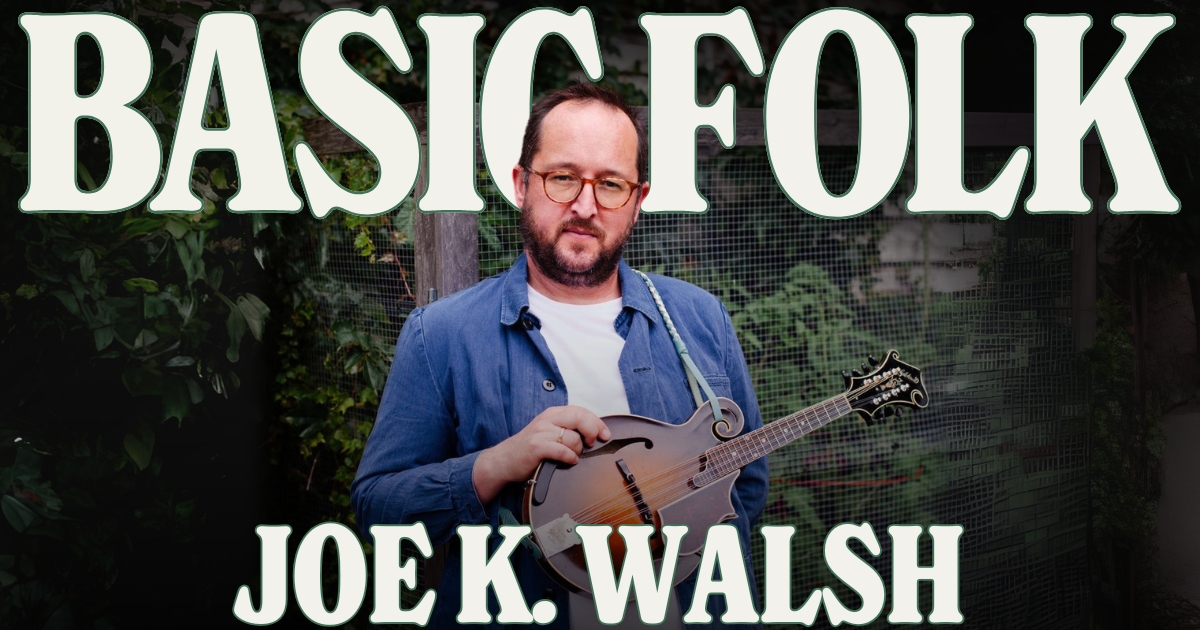
Basic Folk: Joe K. Walsh

Joe K. Walsh grew up in Duluth, Minnesota, and became enthralled with the mandolin (his primary focus, currently) after hearing the first David Grisman Quintet record. His dad got the young Joe his own mando. He ended up getting very serious about the instrument and found himself studying at Berklee College of Music in Boston (where he is now on faculty in the string department). Joe, in fact, was the first mandolin student at Berklee in a town that is now flooded with amazing mandolin players. His already strong sense of community and collaboration led him to becoming a main player in the Boston scene with his string band Joy Kills Sorrow, and with the Gibson Brothers. He now resides in Portland, Maine, and plays solo as well as with Mr. Sun, a group led by fiddler Darol Anger.

LISTEN: APPLE • SPOTIFY • AMAZON • MP3

In our Basic Folk conversation, we talk about taking over at Berklee after the death of professor John McGann, a beloved trad player who recorded with David Grisman, Mark O’Connor, Tim O’Brien, and the Boston Pops, among others. Joe addresses the question of whether bringing folk music into a college setting is “academizing” it or perhaps “folking” music academia. He also gets into hot button issues like improv, simplicity, and restraint. And, of course, he finally reveals his true feelings about the “other” Joe Walsh. Joe’s new instrumental album, Trust and Love, is a peaceful listen in these wild times. I’m happy to know Joe and have already benefited from his friendship! He and his wife gave my family a ton of baby hand-me-downs that have proved so useful. Everyone has a friend in Joe. K Walsh.


Read our feature interview with Joe K. Walsh on his latest album, Trust and Love, here.

Photo Credit: Natalie Conn

Sierra Hull, Her Mandolin, and Her Band Blow Away NPR’s Tiny Desk

We know we aren’t the only ones addicted to NPR’s fabled Tiny Desk Concert series – especially with all of the excellent roots musicians, country artists, and bluegrassers they’ve had behind the desk lately. We’re obsessed with Gil & Dave’s recent appearance, Sierra Ferrell’s turn from about a year ago, Megan Moroney’s debut, Yasmin Williams wowing the NPR audience, and so many more.

Now, one of our longest-running and most beloved Friends & Neighbors has brought her band and her new album to NPR’s headquarters in Washington, D.C. for her very first Tiny Desk Concert. IBMA Award winner and GRAMMY nominee Sierra Hull – accompanied by her touring band of Erik Coveney (bass), Avery Merritt (fiddle), Mark Raudabaugh (drums), and Shaun Richardson (guitar) – performed four songs from her latest album, A Tip Toe High Wire, from behind the iconic desk.

“Well you guys, this is truly a ‘pinch me’ moment,” Hull exclaims while introducing her second song. “I can’t believe we’re at Tiny Desk!” And that grateful, excited energy remained front and center through the group’s beautiful mini set.

From the grooving “Boom,” to the burnin’ and acrobatic instrumental “Lord, That’s A Long Way,” to the homage to her grandmother, “Spitfire,” to the wise and poetic “Muddy Waters,” the Americana, newgrass, and jamgrass textures of the studio recordings are present, but somewhat subdued in the acoustic, pared down Tiny Desk environment. This is the exact band and these are the exact arrangements you’ll hear at a Sierra Hull headline show or on the album itself, but this setting more immediately demonstrates how her bluegrass and string band upbringing in rural Tennessee is a foundation for everything she makes. Hull is always innovative and cutting edge, yes, but she accomplishes this not by forsaking bluegrass but by bringing it with her wherever she goes, from tours with Cory Wong or Béla Fleck to NPR Music.

Another stellar Tiny Desk Concert by another incredible bluegrass, string band, and Americana musician. If you haven’t yet enjoyed Sierra Hull’s Tiny Desk appearance, watch now above.


Read our recent Cover Story interview with Hull all about A Tip Toe High Wire here.

You Gotta Hear This: New Music From Tray Wellington, Dallas Burrow, and More

Country and folk, bluegrass and new acoustic music all come together in this week’s edition of our new music and premiere roundup!

First up, country singer-songwriter Dallas Burrow is joined by Ray Wylie Hubbard on a brand new music video for their duo track, “Read ‘Em and Weep,” from Burrow’s upcoming September release. The song was inspired by classic gambling songs, so of course Ray Wylie was the perfect special guest to tap for the track and the country & western-styled video. Also bringing a new music video this week are Americana/folk trio The Last Revel, of Minneapolis. “Static” is about the overwhelm and confusion of new love.

In bluegrass, Chris Jones & the Night Drivers tap Jim Lauderdale for a new track, “How Small of Me.” Despite knowing each other for decades, it’s the first time Jones and Lauderdale have collaborated in the studio. Jones’ labelmates Deanie Richardson & Kimber Ludiker debut another new twin fiddle tune, this time offering their take on a Frank Wakefield classic, “New Camptown Races,” with a mighty backing band.

From experimental string band fringes we have a few stellar selections, as well. Award-winning banjoist Tray Wellington readies a new EP – set for release August 8 – with a performance video of an original song, “Man on the Moon,” continuing his creative relationship and fascination with the earth’s celestial relative. It’s jammy, expressive, and contemplative and shows a blend of many of the different styles of ‘grass he often employs. Mandolinist and composer Ethan Setiawan has new music on the way, too. His next project, Encyclopedia Mandolinnicaarrives mid-August and to celebrate, he’s shared a track featuring Joe K. Walsh called “Mount Holly.”

Finally, you won’t want to miss the return of Thompson the Fox, Tokyo’s quartet of mind-bending pickers who combine jazz, bebop, new acoustic, bluegrass, and so much more. Volume 2 of The Fox In Tiger’s Clothing – entitled TIGER – drops next month, so we’re sharing “Minute Waltz Rag,” the group’s reimagination of Chopin’s quintessential composition that’s ragtime, bluegrass, classical, and jazz altogether. Still, it’s incredibly easy to listen to – and impressive in technique and artfulness, both.

It’s all right here on BGS and, truly, You Gotta Hear This!

Dallas Burrow, “Read ‘Em and Weep” featuring Ray Wylie Hubbard

Artist: Dallas Burrow
Hometown: New Braunfels, Texas
Song: “Read ‘Em & Weep” featuring Ray Wylie Hubbard
Album: The Way The West Was Won
Release Date: July 18, 2025 (video); September 26, 2025 (album)
Label: Forty Below Records

In Their Words: “This song, which serves as the opening track of the album, is actually a musical sequel to a song I wrote with my good friend Charley Crockett called ‘The Only Game in Town,’ which I wrote all the verses for after he brought me a chorus and a chord progression. In that song’s third verse the narrator tells us, ‘The dealer is [his] friend and the house always wins.’ This song you might say serves as a challenge to its prequel, with the opening verse declaring, ‘I heard the dealer was your friend, I heard you know him well.’ Both, stylistically, were inspired by great gambling songs like ‘Mr. Mudd and Mr. Gold’ by Townes Van Zandt and ‘Dust of the Chase’ by Ray Wylie Hubbard. It was only fitting then that Ray Wylie would sing on this tune. I gave him the whole record to listen to and this was the one he picked out to sing on. It was quite the honor to have him sing the entire second verse, since he’s always been one of my biggest inspirations and heroes. The tune opens with producer Lloyd Maines counting it off and playing a striking harmonic guitar part. As the track continues to build it is further brought to life by Lloyd’s legendary Dobro playing, and Katie Shore’s immaculate fiddle work.” – Dallas Burrow

Track Credits:
Ray Wylie Hubbard – Vocals
Dallas Burrow – Vocals, acoustic guitar, songwriter
Katie Shore – Fiddle
Lloyd Maines – Dobro, bass, acoustic guitar, producer
Pat Manske – percussion


Chris Jones & the Night Drivers, “How Small of Me” featuring Jim Lauderdale

Artist: Chris Jones & The Night Drivers
Hometown: Nashville, Tennessee
Song: “How Small of Me”
Release Date: July 18, 2025
Label: Mountain Home Music Company

In Their Words: “Jim Lauderdale and I have been friends for decades now, but this is the first time we have ever sung together on a recording, so I’m really happy about this. Meanwhile I co-wrote the song with John McCutcheon, somebody I first met when I was a teenager, and though more recently, he’s somebody who the band and I have performed with a few times at the Walnut Valley Festival in Kansas, we had never written a song together until last year, and ‘How Small of Me’ is one of our first results.” – Chris Jones

Track Credits:
Chris Jones – Acoustic guitar, lead vocal
Jim Lauderdale – Harmony vocal
Mark Stoffel – Mandolin
Grace van’t Hof – Ukelele
Jon Weisberger – Bass
Tony Creasman – Drums
Chris Scruggs – Steel guitar


The Last Revel, “Static”

Artist: The Last Revel
Hometown: Minneapolis, Minnesota
Song: “Static”
Album: Gone For Good
Release Date: July 18, 2025
Label: Thirty Tigers

In Their Words: “It’s a simple little song about how overwhelming and confusing love can feel especially in the beginning. It’s about losing yourself and everything you have just to spend time with the only person that seems to be vibrating at the same frantic frequency while everything else seems still and static.” – Lee Henke


Deanie Richardson & Kimber Ludiker, “New Camptown Races”

Artist: Deanie Richardson & Kimber Ludiker
Song: “New Camptown Races”
Release Date: July 18, 2025
Label: Mountain Home Music Company

In Their Words: “‘New Camptown Races’ is a song that Kimber and I played together last year and it went so well we knew it was one we wanted on this record. I went to a recording from one of my fiddle heroes, Randy Howard, on this. I will admit, I did steal a few licks from Randy on this one. Love that my dear friend is with us on this track.” – Deanie Richardson

“We have long loved Frank Wakefield’s great mandolin tune ‘New Camptown Races,’ which quickly became part of the bluegrass canon when he first recorded it in 1957. We set out to create a twin fiddle reimagining of this classic Bb tune with the spirit of a high-energy late-night jam with phenomenal playing by Tristan Scroggins on mandolin, Kristin Scott Benson on banjo, Cody Kilby on guitar, and Hasee Ciaccio on bass.” – Kimber Ludiker

Track Credits:
Deanie Richardson – Fiddle
Kimber Ludiker – Fiddle
Cody Kilby – Acoustic guitar
Hasee Ciaccio – Upright bass
Tristan Scroggins – Mandolin
Kristin Scott Benson – Banjo


Ethan Setiawan, “Mount Holly” featuring Joe K. Walsh

(Click to listen)

Artist name: Ethan Setiawan
Hometown: Cornish, Maine
Song: “Mount Holly” featuring Joe K. Walsh
Album: Encyclopedia Mandolinnica
Release Date: July 23, 2025 (single); August 15, 2025 (album)
Label: Adhyâropa Records

In Their Words: “This one’s for the Fogels, at whose cabin in Vermont I spent a couple of great New Years, and who smoke the most delicious meat at all hours at festivals in the Northeast. I started to work on the tune in 2022 or 2023 up in Vermont and then finished it soon before tracking with Joe in early 2024. I finished it without a mandolin in hand, which lately has been a good exercise in letting my ear rather than my hands guide the composition. I’m playing mandola and Joe is playing octave mandolin, because we had to get in those low mandolins!” – Ethan Setiawan


Thompson the Fox, “Minute Waltz Rag”

Artist: Thompson the Fox
Hometown: Tokyo, Japan
Song: “Minute Waltz Rag”
Album: The Fox In Tiger’s Clothing, Vol.2: TIGER
Release Date: August 9, 2025
Label: Prefab Records

In Their Words: “Following our May release of The Fox In Tiger’s Clothing, Vol.1: FOX, we’re excited to announce the upcoming release of its sister album, Vol.2: TIGER, coming out on August 9.

“The album title is a play on two phrases from different cultures: the Japanese proverb, ‘The fox borrowing the tiger’s authority’ and the English idiom, ‘A wolf in sheep’s clothing.’

“While Vol.1: FOX consisted entirely of our original compositions, Vol.2: TIGER is a collection of cover tunes. Ahead of the album’s release, we’ve just shared a music video for ‘Minute Waltz Rag.’ It’s a reimagining of Chopin’s beautiful waltz, which I arranged in two-time for this quartet. We hope you enjoy it!” – Takumi Kodera

Track Credits:
Rie Koyama – Xylophone
Takumi Kodera – Banjo
Akihide Teshima – Bass
Tomohito Yoshijima – Drums

Video Credit: Takumi Kodera


Tray Wellington, “Man on the Moon”

Artist: Tray Wellington
Hometown: Raleigh, North Carolina
Song: Man on the Moon
Album: Spatial Awareness (EP)
Release Date: July 18, 2025 (single); August 8, 2025 (EP)
Label: Free Dirt Records

In Their Words: “‘Man on the Moon’ is one of the most personal songs I’ve ever written. I wanted to capture how easy it is to hide struggle behind a smile and how many of us carry that weight silently. Writing has always helped me process things I hadn’t fully acknowledged and I hope it can do the same for someone else. This track was also one of my favorites for production as it’s one of the songs I feel like we really captured the feelings of the song throughout.” – Tray Wellington

Video Credit: Rob Laughter


Photo Credit: Tray Wellington by Heidi Holloway; Dallas Burrow by Melissa Payne.