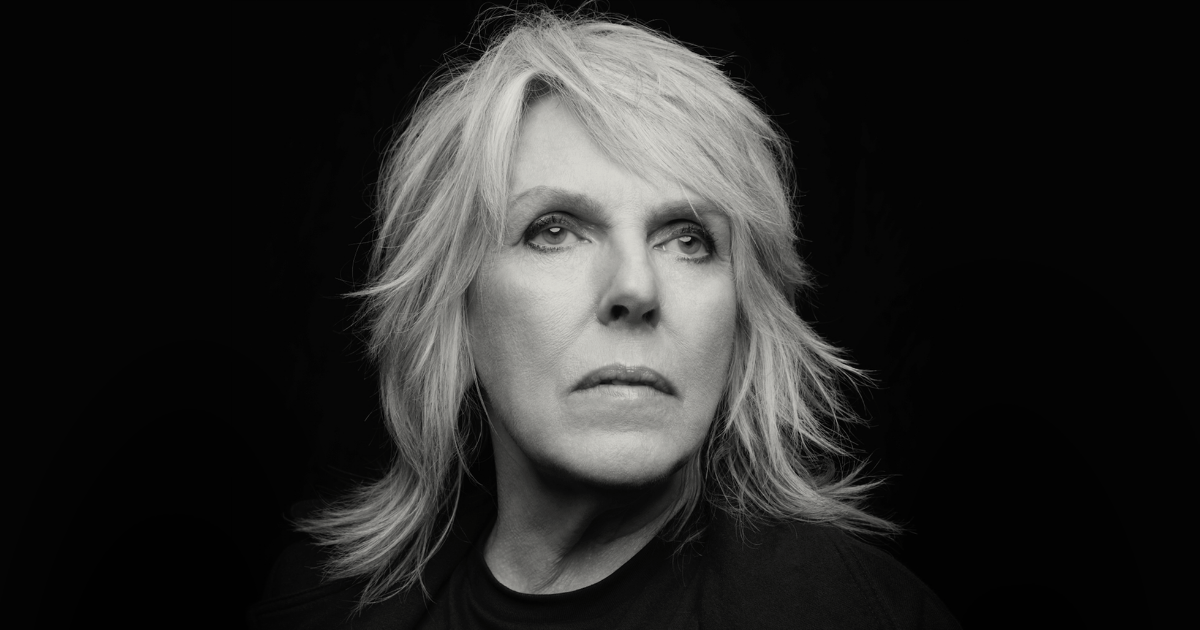
Lucinda Williams: A Folk Singer’s Heart and A Rock Star’s Swagger

With a folk singer’s heart and a rock star’s swagger, Lucinda Williams gets it right on World’s Gone Wrong. Produced by Ray Kennedy and Tom Overby and released January 23, 2026, the topical album shows no love for the current president; instead, Williams turns to the musicians in her band, R&B legend Mavis Staples, and even a Bob Marley classic to put her own beliefs front and center.

As protesters take to the streets across America, Williams is reaching people where they live by maintaining an impressive tour schedule, just as she’s done for the last four or five decades.

BGS caught up with Williams for an Artist of the Month interview by phone, in motion and outspoken.

First off, I just want to say I love the electric guitar on this record.

Lucinda Williams: Yeah, I’ve got two of the best in my band, Doug Pettibone and Marc Ford. Marc was in the Black Crowes before and Doug’s been with me for a while. The two of them just play off of each other. They’re really great when you see the band live.

Thanks for saying that. I’ll pass that on! I’ve always managed to find really good guitar players to work with me. It’s important to me, having a good guitar sound in the band, both live and on the record.

This record’s got that live energy, which is hard to capture on an album. What were the sessions like putting this album together?

Wow! You’ve said all the right stuff that I want to hear! I love you! [Laughs] But like you said, it’s hard to get the recording to reflect that. That’s why I’m so excited that came across, but I always record live for the most part. … We’re all situated in that part of the studio where we’re recording, but the vocals are isolated, just for the sake of convenience, so we don’t have to worry about the [tracking band] bleeding in, in case there’s a mistake. But it has that live feel, because we’re not putting down certain things and then coming in later. The drummer is not coming in separately and putting the drum track down, that kind of thing. We’re putting down the basic track all at the same time, together.

I would be playing guitar normally, but since I had my stroke about five years ago, I’m struggling with it. That hasn’t come back all the way yet, unfortunately. Which makes it even more challenging, because normally I would set up the vibe and the feel on acoustic rhythm guitar, and then the guys would follow me and fall in behind me. So, now one of the other guitar players has to fill in for me. And even though they’re both great guitar players, nobody’s going to do a rhythm thing exactly like I do. That’s a little bit of a challenge right now, but we managed to pull it off somehow.

You’ve had so many musicians that have worked with you over the years. When it’s time to hire somebody in the studio or in your band, what qualities are you looking for?

Probably just being aware of different styles of music. I can’t read or write music, so for me to have to discuss something to another musician, I usually use a reference of another artist. And I might say, “I want to play this song kind of like Clifton Chenier,” like a zydeco thing. And if they don’t know who that is, it’s hard for me to describe it musically. So, the easiest and best way is just [bringing up] the sound of another style of music and using an artist to describe that.

What was on your mind as you were writing the song, “The World’s Gone Wrong”?

Well, what do you think? What’s going on right now, every single damn day. There’s some other crazy piece of news surrounding the so-called King of the United States. Or he wants to be king. He wants to name the Kennedy Center after himself. That stuff builds up in your mind, and after a while it’s therapeutic to sit down and write a song about it. Just get it out of your system. … I just remember, every single day there’d be something on the news, in the newspaper, on TV or somewhere online. You couldn’t get away from it. It was pervasive. It was just on my mind a lot, of course, and still is.

This might be venturing out a little bit, but it seemed like a love song too, because these two people in the song are leaning on each other.

Yeah, I’m glad you brought that up. I’m glad you saw that in there. I think it’s an interesting way of dealing with the political unrest, by painting a picture of a regular, everyday couple and what they’re going through. So you can express it that way.

I’ll shift it over to “Low Life,” because I feel like I’m sitting at that bar with you when I listen to that song. And I also like those bars where you can be anonymous and no one really knows you. When you’re out on tour, do you look for places like that?

Yeah, the guys and me will look for a cool little place to maybe go hang out after the show. It’s hard to find one, though, where they won’t know who we are, because then they’ll want to come up and talk and stuff. A lot of times the guys will go somewhere and I’ll be like, “I want to go! Take me! Take me!” And they’ll go, “Lu, you’re not going to want to go, because it’s going to be swamped with fans and everybody’s going to want to talk to you,” and all that. Then I get all disappointed because I can’t go. [Laughs] So I’d just stay on the bus.

We end up hanging out on the bus more often than not. That becomes our little bar. I like to fraternize with the band guys after we do a show. I like to bond with them a little bit on the tour bus.

I noticed you’re going on the road with the band Heart in March. When that offer came through, what made you think, “Yeah, I’ll do that.”

Well, turns out they were fans of my music, which I wasn’t aware of, and I guess their people reached out to my people… or my person [laughs] and wanted to take me out with them. Ann and Nancy Wilson are just two of the nicest people ever, real down to earth. We went out and already did some shows with them not too long ago. It seemed like with their fans and my fans, there was kind of an overlap there. It seemed to work musically as a bill.

I don’t think enough has been said about Nancy’s playing. I caught a documentary a while back on the music scene in Seattle back in the day, and with Heart a lot of people don’t realize they were there then, right when Nirvana was around. They were a little bit different, but I hadn’t realized how proficient Nancy was on the electric guitar and I was just sitting there watching it like, “Oh my God!” And Ann’s voice – they’ve got what it takes, that’s for sure.

You’re back out on the road, you’ve got this new album, and I’m sure there are a lot of other things in the works. What are you enjoying most about this stage of your career?

Being able to go out and do shows with artists like Heart. I got to go out and do shows with a tour featuring Bob Dylan and Van Morrison. I got to go out and do shows with the Allman Brothers. I’ve met so many fantastic, legendary artists over the years who like my music. And some might be a surprise. I was surprised, actually.

Like, Joey Ramone was a fan. David Byrne is a fan. Robert Plant is a big fan and I’ve done quite a few shows with him. So that’s been a big boost. Those probably have been the highlights of my career, being able to connect with those kinds of artists. The people I listened to when I was starting out and looked up to.

It was interesting to hear you include “So Much Trouble in the World” on this record. What did you like most about Bob Marley’s original version of that song?

First of all, I feel like that song was ahead of his time and it still rings true today. It’s still so fresh and could have been written yesterday. It’s still relevant. People still love the song. It’s got a great melody. Nobody can do it like Bob Marley did, though. I was a little self-conscious about that when we cut that song, because I was thinking, “What are people going to think? Me covering a Bob Marley song?” Like, “What does she think she’s doing?” But it’s a great song to play live. And like I said, it’s so much about what’s going on right now.

Having Mavis Staples on that recording is such a treat. What did she bring to the track?

She just added a whole extra level of soul, and thought, and everything. And we didn’t tell her what to sing or how to do anything. We didn’t give her parts to do or anything like that. We just showed her where the vocal booth was. You know, “Here’s the microphone,” turn it on, and she just let it rip. We’re so grateful to have her on there. And every single person I’ve done an interview with has mentioned her. Like, “What’s this about Mavis Staples on the record? How did you get her in the studio?” and all this. Everybody’s so excited to hear her on there.

I also wanted to ask you about “Too Far to Turn Around.” It feels like something we could sing at a protest march, but it’s kind of like a meditation, too.

Yeah. Thank you so much. I love hearing you say that, because that’s what I had in mind when I was writing it. Exactly that. I was thinking about songs like “We Shall Overcome” and everybody singing it together and holding hands. Because I experienced that myself back in the ‘60s. When I was a teenager, I used to go to all these marches and demonstrations. And music was the thing that kind of brought people together back then.

Those kinds of songs like “We Shall Overcome” were being sung and Bob Dylan was writing all those amazing protest songs like “Masters of War,” which I used to sing. I’d get my guitar, go to these things, and sometimes they’d ask me to sing. I’d do those kinds of songs, like Joan Baez and all. I mean, there was just a gamut of great folk singers. That’s what they used to call us! I kind of wish that would come back. Just call it folk music. The people’s music.


Continue exploring our Artist of the Month coverage of Lucinda Williams here.

Photo Credit: Mark Seliger
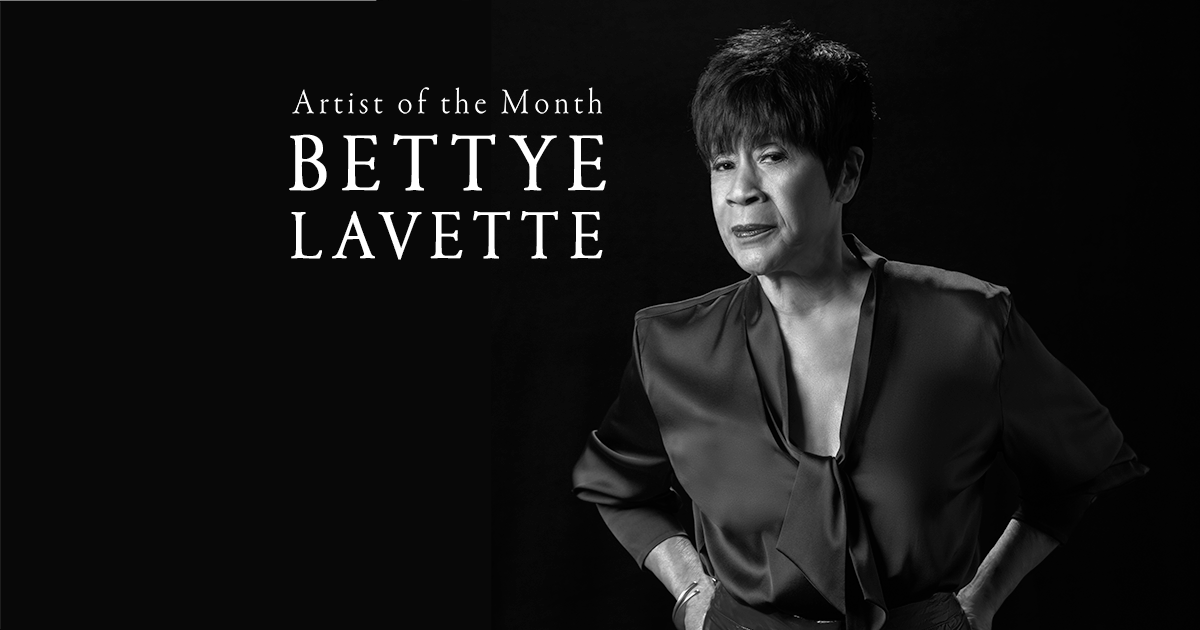
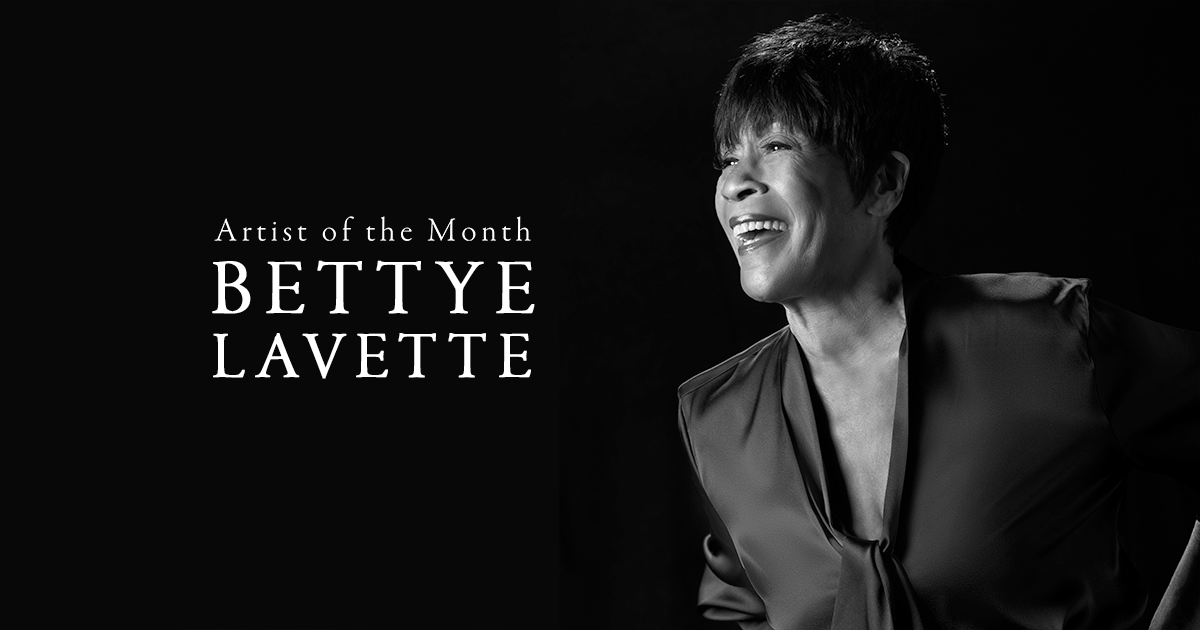
On ‘Blackbirds,’ Bettye LaVette Honors Black Women Who Inspire Her (Part 2 of 2)

When Bettye LaVette sings “I Hold No Grudge,” she brings the weight of all her years to it. The 74-year-old vocalist draws out certain notes, delivers certain lines almost in a speaking voice, as though she wants to show us how difficult, but also how essential, it can be to let things go. “Deep inside me there ain’t no regrets,” she declares, “but a woman who’s been forgotten may forgive but never, never forget.” She draws out that second “never” to underscore its harsh finality, to remind you that she’ll live with the memory of this slighting forever.

“I Hold No Grudge” has never been merely a song about romantic betrayal — not when Nina Simone recorded it for her landmark 1967 album, High Priestess of Soul, and not when LaVette recorded it more than sixty years later. This new version sounds like it’s addressed to anyone who stood in LaVette’s way so many years ago, in particular those executives at Atlantic Records who saw fit to shelve her debut album in 1972 without so much as explanation, much less an apology. That decision crushed her and thwarted her promising career. “That’s exactly what it is,” says LaVette. “I probably have some grudges, but they aren’t big enough to make me stop. I’ve not been defeated. I’m extending the olive branch once again.”

“I Hold No Grudge” opens her latest album, Blackbirds, which collects her interpretations of songs made famous by Black women in the 1940s and 1950s, including Dinah Washington, Ruth Brown, Nancy Wilson, and Billie Holiday. She calls them “the bridge I came across on,” referring to that era between big band blues of the 1940s and rhythm & blues of the 1960s, when these artists were pushing popular music in new directions.

With a small band led by producer-arranger Steve Jordan, LaVette runs through deep cuts like “Blues for the Weepers,” a song first sung by Ruth Brown (and later made famous by Lou Rawls). It’s a song dedicated to “all the soft-singing sisters and torch-bearing misters,” she sings. “They just come to listen and dream.” She understands that we go to songs now for the same reasons we did sixty or seventy years ago: to find sympathy and solace, but also to find a way forward, perhaps some promise of a better life.

The most familiar tune on Blackbirds is likely “Strange Fruit,” popularized by Billie Holiday ninety years ago at Café Society in New York City and covered by countless singers ever since. As a result it’s difficult to make the song sound new and urgent, yet LaVette manages to do just that. Against her band’s dolefully trudging rhythm, she tilts the melody forward just slightly, as though pulling us toward some horrific destination, and she shreds the syllables of the song’s climactic declaration: “Here is a strange and bitter crop.”

That middle word is frayed almost beyond recognition – “stra-ya-ange” – to make the song’s metaphor sound tragically real. LaVette recorded it nearly a year ago and was startled when it became so heavily relevant again. To hear her sing “Strange Fruit” in 2020 is to be reminded that the injustices so many Americans are protesting — the murders of George Floyd, Breonna Taylor, and too many other Black men and women — are not new or specific to the current era.

In the second installment of our Artist of the Month coverage, LaVette talks about growing up with a jukebox in her living room, giving these formative artists their due, and how Paul McCartney fits into all this.

(Editor’s note: Read part one of our Artist of the Month interview here.)

BGS: This record is rooted in the history of popular music. Can you tell me about this particular period and what it means to you?

LaVette: People — especially white people — they throw “rhythm and blues” and “blues” together a lot. And now today, they’re throwing “rhythm and blues” toward young blacks and young whites who want to sound black. When people talk about rhythm and blues, they go back about as far as Etta James, but these women are the bridge that Etta came across on as well. Rhythm and blues was a music that came from blues, of course, and from gospel. When people ask me the difference between “blues” and “rhythm and blues,” I always tell them that you can cry to blues, but you can dance and cry to rhythm and blues.

It’s a short bridge, from about 1948 or ’49 to the burgeoning of Atlantic and Motown’s rhythm and blues, which was about ’61 or ’62. That’s when I came along. We took away the saxophones and added more guitars. We took the blues guitar and sped it up and put it in our tunes. The people who took us from the late ‘40s into the early ‘60s are rarely mentioned, and that’s why I chose this group of women.

I didn’t even know there were Black women who sang, other than Lena Horne and Dorothy Dandridge. And then, hearing LaVern Baker and Ruth Brown and Little Esther, I don’t know whether it gave me hope or whatever, but it really surprised me. I didn’t know that women who sung in such a bawdy way even existed.

When did you first hear these women?

When rhythm and blues came about, that was when I was young and I was dancing. That was when I was coming up and my sister was a teenager. We had a jukebox in our living room in Muskegon, Michigan, which is where I was born, and it had all the current tunes of the day, which my sister played daily when she got out of school. They were all rhythm and blues songs. You know, they weren’t into jazz — they were either blues or rhythm and blues songs on the jukebox. And gospel and country-western, no less. At one point, my favorite singers used to be Doris Day and Dale Evans.

Wait, you had a jukebox in your living room?

My parents sold corn liquor in the ‘40s and ‘50s. Muskegon was extremely segregated, so if you wanted a drink after dinner or after work, you had to come by my house. These were homes that had been built for the soldiers returning from the Second World War. So they were theoretically projects, but they hadn’t started making them out of brick yet. They looked more like barracks, and everybody’s house was just alike.

It was living room, dining room, small kitchen, two bedrooms, and a bathroom. My parents sold corn liquor and chicken sandwiches and barbeque sandwiches. There was no gambling. Nobody could cuss but my mother. But they could get shots and pints and half pints. And the jukebox was there in the living room where most people’s couch probably was. I was about 18 months old when I learned all the songs on the jukebox — all of them.

How did you choose the songs for this record?

I keep several files. Or, I should say, my husband keeps them for me. I’ve got all kinds of files. I’ve got a country and western file. I’ve got a strictly George Jones file. What I do is, I offer my label two or three ideas based on these files, and they tell me which one they like best. So I have some ideas that I like, and that way I don’t have to take their suggestions. If they find one they believe in and are willing to spend money on, I’ve got the songs already in.

I had this file here of standards, some of which I had done when I did little gigs in places around, just me and a keyboard player. Some of them, like Nancy Wilson’s “Save Your Love for Me,” I had done in other venues that most people haven’t seen me in, because they didn’t come where I was. A song like “I Hold No Grudge, which I heard eighteen years ago, it’s been in my file since then. I thought, if I ever get a chance to do that kind of album, I will do that tune. I wasn’t going to throw it away.

When did you discover that song?

I was living in Detroit, and I was getting my hair done. Usually in Black salons, there’s a radio on that plays Black music, and this song came on. I had never heard it before! And because Detroit is one of the places where I can pick up the phone and call whoever is playing whatever it is and I’ll know them, I called them up and she told me it was Nina Simone. And I said, well, if I ever get the chance, I’m gonna record that tune. That was eighteen years ago.

Just a few years ago I performed at a party for David Lynch, the movie producer, and this gentleman came up to me and said, “I loved your performance. My name is Angelo Badalamenti, and I do all the music for David Lynch’s films.” My husband, who loves David Lynch’s films, was ecstatic. Angelo says, “I have a tune. Years ago, I used to work with Nina Simone, and I wrote this tune for her that I think would be perfect for you.” I said, “What’s the name of it?” “‘I Hold No Grudge.’” I said, “I know you aren’t going to believe this, but I’ve had plans to do that tune for the last fifteen years!” So when I got the opportunity to do this album for Verve, I got in touch with Angelo and sent it to him, and he said he could hear Nina listening to it, closing her eyes, and saying, “Yeah, she got it.” Of course that made me feel very good.

Another song I wanted to ask you about is “Strange Fruit,” which seems sadly very timely right now.

But it just became timely! When we recorded it back in August, it was one of the oldest tunes on the album. And then all of this mess broke out, and the tune became timely! But all of this wasn’t going on when we recorded it. That’s not why we recorded it. We recorded it to fill in the Billie Holiday slot. While we were waiting for the album to come out, all of this happened. And it was just timely — as if we went to look for a tune to describe what’s going on now. So it’s bad that it’s timely — it’s awful that it’s timely — but it’s timely.

I knew the tune had not lost any of its power, and I knew I had to do it completely different from Billie. I’m blessed to work with Steve Jordan because he doesn’t hear these songs the way they were originally recorded. He hears them the way I sing them, because his age is closer to mine. He was born and raised in Harlem, and he grew up with these rhythm and blues tunes. He knew that I wanted “Strange Fruit” to be terse and sad and black and dark, and when we finished recording the music, I said, “Steve! I didn’t want it to sound exactly like they’re standing by the tree playing this song,” but it does. It’s just haunting. That’s the thing that makes Steve so important to me.

The outlier on the album is your interpretation of the Beatles’ “Blackbird.” What made that song fit this project?

The reason that I chose it — and I chose it for the title — is because many Americans don’t know that Brits call their women birds, and Paul is talking about a Black girl that he saw standing up on a picnic table singing one night in a park. He’s talking about a Black girl singing and I thought that that would just be perfect for it.

(Editor’s note: Read the first half of our Artist of the Month interview with Bettye LaVette.)


Photo credit: Joseph A. Rosen


How Bettye LaVette Finally Learned to Let The Songs Sound Like Her (Part 1 of 2)

When Bettye LaVette covered “Your Time to Cry” nearly fifty years ago, she wrung every ounce of hurt and drama from the lyrics, but especially on the chorus. She stretches out the word “time” until it breaks into two syllables, implying a similar emotional break that doesn’t undercut the song’s determination, but shows what cost she has paid for it. It’s a riveting performance, a raw, southern soul slow burner that should have established her as one of the finest R&B voices of the 1970s.

During those same sessions, she also covered Neil Young’s “Heart of Gold” and John Prine’s “Souvenirs,” among other tunes, yet for reasons that were never made clear, Atlantic Records shelved the project, declining to promote “Your Time to Cry” as a single or to release her debut album. That has been a defining moment in LaVette’s long career — and one she subtly and slyly addresses on her new album, Blackbirds. She is the woman wronged, the embodiment of the music industry’s disregard for talent, especially that of Black women. For three decades LaVette continued to work, developing and strengthening her voice and expanding her repertoire. She explains, “When people say I had a resurgence, I want to say, ‘No, I never stopped. You just didn’t come to where I was!’”

Now, nearly fifty years after recording “Your Time to Cry” in Muscle Shoals, Alabama, she has become one of the finest and most accomplished singers in R&B or any other genre for that matter, with a string of albums that showcase her stylistic range as well as her deep understanding of pop history. After releasing a comeback record on the tiny Blues Express label in 2003, she caught the ear of Andy Kaulkin at Anti- Records, who signed her as a new artist at the height of the soul revival of the 2000s.

Since then, she’s covered The Who for the Kennedy Centers Honors ceremony (famously bringing Pete Townshend to tears), recorded with Drive-By Truckers (back in the Shoals, for an album appropriately titled The Scene of the Crime), and reimagined Dylan tunes so thoroughly even his own bandleader didn’t recognize them. And those original Shoals sessions did finally get an official release, first in 2000 on a small Dutch label and again in 2018 from vinyl specialists Run Out Groove.

Blackbirds is among her most powerful albums: a collection of songs by female artists active from the late 1940s through the early 1960s, including Nancy Wilson, Dinah Washington, and Nina Simone, whom LaVette refers to collectively as “the bridge I came across on.” It’s an album that celebrates these artists, but also emphasizes their shared experiences as Black women in the music industry. “Every broken promise broke my heart,” she sings on “Book of Lies,” a song made famous by Ruth Brown. Her voice is lower than it was in 1972, but no less expressive, and she makes that sentiment more than just romantic; it’s also a professional lament, addressed to the industry that derailed her career so long ago.

We spoke with LaVette about Blackbirds in our second half of the interview; here, she tells BGS about her early hopes and disappointments.

BGS: What was your impression when you were down in Muscle Shoals? Had you been there before you recorded?

LaVette: No! What would I be doing there?! What would you go there for, if you weren’t going to record? They had to win me over. I’d wanted to record in New York and Chicago. I always wanted to be very bougie. But after I had accepted how different my voice was — how un-girly-like it was — I identified more with Solomon Burke and Wilson Pickett and Otis Redding. After I was down there for a day, I was absolutely as happy as I could be. They were absolutely wonderful — and wonderful to me. When I got back to Detroit, I could not stop talking about them, especially with the way they wrote and read music.

Were you ever told why your ‘72 sessions were never released?

That has been one of the big mysteries in my career. I can think of that album and my dog Mickey, that I had when I was 11, and just burst into tears at any time. I had Brad Shapiro, who was Wilson Pickett’s producer. I had the Swampers, who I had wanted. I was at the label that I had loved. But when they told me they weren’t going to release the album, I got up under the dining room table and stayed three or four days. My friends brought me food and wine and joints. I’m telling you, I’m about to cry now. It was to be my first album, after having already had a string of singles. For years, all I had was “Your Turn to Cry.” Whenever people would come in with their latest whatever-it-is at my house or at a party, I always kept that song handy, maybe on a cassette. I’d say, “I made a record that was really, really good one time. Y’all wanna hear it?”

I just found out — when I say “just found out,” I meant in the last twenty years, maybe — that it was a split between Ahmet Ertegun and Jerry Wexler. Jerry Wexler was on my side and Ahmet was on Aretha’s side. For the longest time I never knew what happened. I had no idea, and it sounded so stupid, for thirty years, to tell people, “I have no idea.” Many people had heard “Your Time to Cry,” and they said, “If that stuff is anything like this, I can’t understand.” When Atlantic put “Your Time to Cry” out, it was just out. They didn’t mention it to anyone. They just put it out. What you wanted at a label was to have one of everything, and maybe a junior one of everything, too. So they could see where that wouldn’t work with me and Aretha. I think Diana [Ross] is probably the reason I was never at Motown. Those personalities wouldn’t have worked.

Judging by reissues from those sessions, you had already worked up a pretty diverse repertoire.

My manager, Jim Lewis, who was the assistant to the president of the musicians’ union in Detroit and a trombone player with the Jimmie Lunceford Orchestra, was a hard, hard taskmaster. When we started to work this management thing out, he said, “You’re cute. You’ve got a cute little waistline and a cute little butt, but you’re going to have to learn some songs, because there’s a possibility you may not be a big star.” That’s not a given, but you can be a singer for the rest of your life, if you will learn a lot of songs. He said, “You’re a different kind of singer, and you should learn that.”

How so?

I’ve accepted that I sound more like James Brown than Doris Day. But I used to think I had to sound the way Nancy Wilson sounds, which discouraged me from even wanting to learn how to sing. The thought that I could sing it and it didn’t have to sound beautiful didn’t even occur to me, until Jim came along. He told me, “Just let ‘em come out of your mouth. They’re gonna sound like you.” So I had to satisfy myself with the songs. I had to choose songs that I really like, and I would tell people, “Do you like the song or do you like the record? Because those are two different things.”

Jim made me learn a lot of songs. He insisted I learn “Lush Life,” which permitted me to be comfortable at the Carlyle Hotel for ten years. He insisted I learn “Sweet Georgia Brown” and “God Bless the Child,” which put me in the lead role in Bubbling Brown Sugar. He made me learn country and western. Otherwise, I would have been fighting with the local songwriters over them giving songs to Aretha and not giving them to me, you know? I was able to say, “Hey, I can go on and just be real good.” So I approach what I’m doing a little differently. I thought Jim was telling me to sing these songs like these people, but he just wanted me to sing them how they came out of my mouth. However they come out, sing them like that. Now that I’ve accepted that, I’m not so concerned about how it sounds, but how I feel about the song. That helps me present it. I’m very grateful to him.

That comes through on these sessions from 1972, where you’re covering Neil Young and John Prine and doing a song that Bowie was doing at the same time. There’s that range.

Well, it was after that that I did “What Condition My Condition Is In” by Kenny Rogers and the First Edition. And that got me another record contract. Kenny Rogers came to Detroit and Jim said, “Why don’t you take it and let him hear it?” I didn’t think he’d like it, but Jim said, “You don’t know how it’ll sound to him.” So I took it to him and Kenny loved it. His brother, Lelan Rogers, was just starting a record label called Silver Fox, and they flew me down to Nashville. I was with them for four or five years, but still no album. All these albums were set to come out and didn’t come out.

After finally breaking out in the 2000s, you established yourself as an interpreter of songs. What do you bring to a song? How do you make something familiar sound like you? Or is that even something you’re thinking about at this point?

That isn’t something that I plan or set out to do. When I hear the song and start to sing it, that’s just the way I sing it. The thing that makes it new is that it’s different. I doubt I could come up with anything new. But it is different, and so I need for people to change their attitude about it. That was one of the things with Interpretations, my British rock album. The thing that helped me the most recording that album was that I didn’t know most of the songs. I had never heard most of them. They didn’t play them a lot on Black radio. So all I did was just lift the lyrics and sing them the want I wanted to.

Michael Stevens was brilliant, and he did the arrangement of “Love, Reign O’er Me” by The Who that I did for the Kennedy Center Honors. When I went to rehearsal, they got ready to go into the tune, and I told him, “I can’t sing it like that.” And he said, “Well, sing it the way you want to sing it.” So I sang the song to him a cappella, and he took a break and after a while came back and redirected everybody. He’d been listening to this song for thirty years — since he was a teenager! — and I’d only been listening to it for three or four days.

Something similar happened on the Bob Dylan album, Things Have Changed. We had Bob Dylan’s guitarist, Larry Campbell, playing on it, and he had a ball. He said, “I’ve wanted to hear these a different way for seventeen years!” Because he knew about the inner workings of each one of the tunes, more than any of us, he started to find clever little things, probably, that he had always wanted to play, and he played them for me.

How was working with these songs on Blackbirds different?

Working on this album was intimidating, in that I didn’t want to bastardize any of the songs or cast them off. I didn’t want to do anything to them just for the sake of doing something, you know? That was kind of daunting. But that’s the thing that makes Steve [Jordan, producer] so important to me. When we develop an arrangement, what I usually do is I’ll get my keyboard player to go in the direction that I want to take the song.

When Steve hears me with the piano, singing it the way I want to sing it, that speaks to him to put something else in there. He no longer hears Billie Holiday’s interpretation of “Strange Fruit,” and he arranges what he hears in his head, not what the other record was. I’m not going to change any of the notes — I’m just going to put them in different places and say them differently, so you can’t follow that trajectory that you know from the record. It has to be different.

(Editor’s Note: Read part two of our interview with Bettye LaVette.)


Photo credit: Joseph A. Rosen