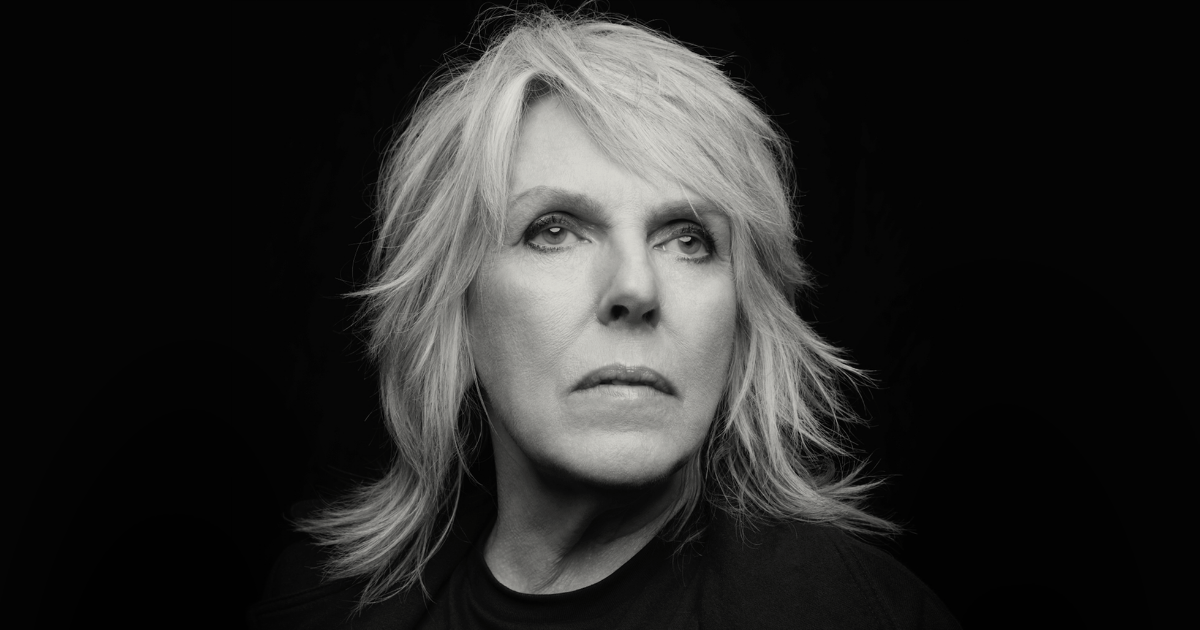
Lucinda Williams: A Folk Singer’s Heart and A Rock Star’s Swagger

With a folk singer’s heart and a rock star’s swagger, Lucinda Williams gets it right on World’s Gone Wrong. Produced by Ray Kennedy and Tom Overby and released January 23, 2026, the topical album shows no love for the current president; instead, Williams turns to the musicians in her band, R&B legend Mavis Staples, and even a Bob Marley classic to put her own beliefs front and center.

As protesters take to the streets across America, Williams is reaching people where they live by maintaining an impressive tour schedule, just as she’s done for the last four or five decades.

BGS caught up with Williams for an Artist of the Month interview by phone, in motion and outspoken.

First off, I just want to say I love the electric guitar on this record.

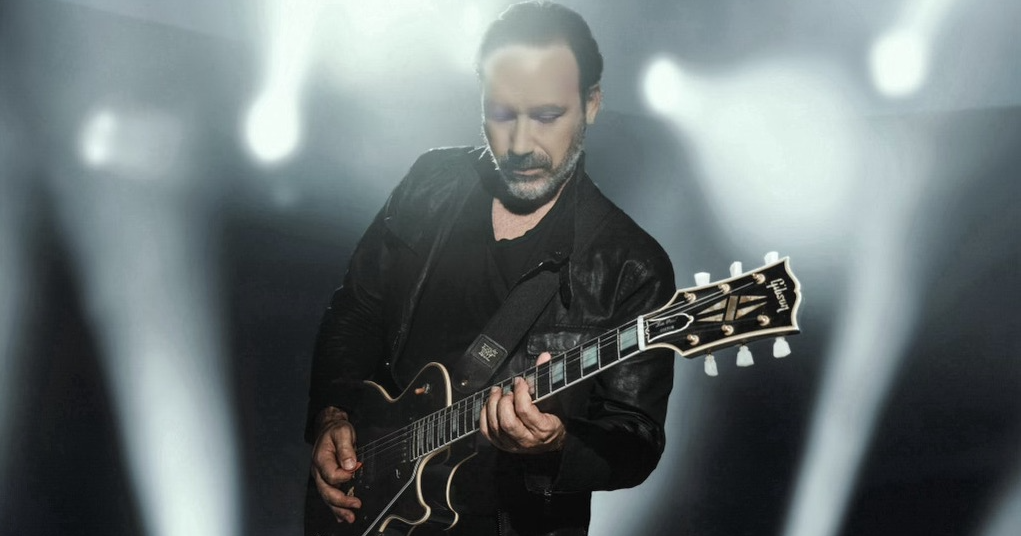
Lucinda Williams: Yeah, I’ve got two of the best in my band, Doug Pettibone and Marc Ford. Marc was in the Black Crowes before and Doug’s been with me for a while. The two of them just play off of each other. They’re really great when you see the band live.

Thanks for saying that. I’ll pass that on! I’ve always managed to find really good guitar players to work with me. It’s important to me, having a good guitar sound in the band, both live and on the record.

This record’s got that live energy, which is hard to capture on an album. What were the sessions like putting this album together?

Wow! You’ve said all the right stuff that I want to hear! I love you! [Laughs] But like you said, it’s hard to get the recording to reflect that. That’s why I’m so excited that came across, but I always record live for the most part. … We’re all situated in that part of the studio where we’re recording, but the vocals are isolated, just for the sake of convenience, so we don’t have to worry about the [tracking band] bleeding in, in case there’s a mistake. But it has that live feel, because we’re not putting down certain things and then coming in later. The drummer is not coming in separately and putting the drum track down, that kind of thing. We’re putting down the basic track all at the same time, together.

I would be playing guitar normally, but since I had my stroke about five years ago, I’m struggling with it. That hasn’t come back all the way yet, unfortunately. Which makes it even more challenging, because normally I would set up the vibe and the feel on acoustic rhythm guitar, and then the guys would follow me and fall in behind me. So, now one of the other guitar players has to fill in for me. And even though they’re both great guitar players, nobody’s going to do a rhythm thing exactly like I do. That’s a little bit of a challenge right now, but we managed to pull it off somehow.

You’ve had so many musicians that have worked with you over the years. When it’s time to hire somebody in the studio or in your band, what qualities are you looking for?

Probably just being aware of different styles of music. I can’t read or write music, so for me to have to discuss something to another musician, I usually use a reference of another artist. And I might say, “I want to play this song kind of like Clifton Chenier,” like a zydeco thing. And if they don’t know who that is, it’s hard for me to describe it musically. So, the easiest and best way is just [bringing up] the sound of another style of music and using an artist to describe that.

What was on your mind as you were writing the song, “The World’s Gone Wrong”?

Well, what do you think? What’s going on right now, every single damn day. There’s some other crazy piece of news surrounding the so-called King of the United States. Or he wants to be king. He wants to name the Kennedy Center after himself. That stuff builds up in your mind, and after a while it’s therapeutic to sit down and write a song about it. Just get it out of your system. … I just remember, every single day there’d be something on the news, in the newspaper, on TV or somewhere online. You couldn’t get away from it. It was pervasive. It was just on my mind a lot, of course, and still is.

This might be venturing out a little bit, but it seemed like a love song too, because these two people in the song are leaning on each other.

Yeah, I’m glad you brought that up. I’m glad you saw that in there. I think it’s an interesting way of dealing with the political unrest, by painting a picture of a regular, everyday couple and what they’re going through. So you can express it that way.

I’ll shift it over to “Low Life,” because I feel like I’m sitting at that bar with you when I listen to that song. And I also like those bars where you can be anonymous and no one really knows you. When you’re out on tour, do you look for places like that?

Yeah, the guys and me will look for a cool little place to maybe go hang out after the show. It’s hard to find one, though, where they won’t know who we are, because then they’ll want to come up and talk and stuff. A lot of times the guys will go somewhere and I’ll be like, “I want to go! Take me! Take me!” And they’ll go, “Lu, you’re not going to want to go, because it’s going to be swamped with fans and everybody’s going to want to talk to you,” and all that. Then I get all disappointed because I can’t go. [Laughs] So I’d just stay on the bus.

We end up hanging out on the bus more often than not. That becomes our little bar. I like to fraternize with the band guys after we do a show. I like to bond with them a little bit on the tour bus.

I noticed you’re going on the road with the band Heart in March. When that offer came through, what made you think, “Yeah, I’ll do that.”

Well, turns out they were fans of my music, which I wasn’t aware of, and I guess their people reached out to my people… or my person [laughs] and wanted to take me out with them. Ann and Nancy Wilson are just two of the nicest people ever, real down to earth. We went out and already did some shows with them not too long ago. It seemed like with their fans and my fans, there was kind of an overlap there. It seemed to work musically as a bill.

I don’t think enough has been said about Nancy’s playing. I caught a documentary a while back on the music scene in Seattle back in the day, and with Heart a lot of people don’t realize they were there then, right when Nirvana was around. They were a little bit different, but I hadn’t realized how proficient Nancy was on the electric guitar and I was just sitting there watching it like, “Oh my God!” And Ann’s voice – they’ve got what it takes, that’s for sure.

You’re back out on the road, you’ve got this new album, and I’m sure there are a lot of other things in the works. What are you enjoying most about this stage of your career?

Being able to go out and do shows with artists like Heart. I got to go out and do shows with a tour featuring Bob Dylan and Van Morrison. I got to go out and do shows with the Allman Brothers. I’ve met so many fantastic, legendary artists over the years who like my music. And some might be a surprise. I was surprised, actually.

Like, Joey Ramone was a fan. David Byrne is a fan. Robert Plant is a big fan and I’ve done quite a few shows with him. So that’s been a big boost. Those probably have been the highlights of my career, being able to connect with those kinds of artists. The people I listened to when I was starting out and looked up to.

It was interesting to hear you include “So Much Trouble in the World” on this record. What did you like most about Bob Marley’s original version of that song?

First of all, I feel like that song was ahead of his time and it still rings true today. It’s still so fresh and could have been written yesterday. It’s still relevant. People still love the song. It’s got a great melody. Nobody can do it like Bob Marley did, though. I was a little self-conscious about that when we cut that song, because I was thinking, “What are people going to think? Me covering a Bob Marley song?” Like, “What does she think she’s doing?” But it’s a great song to play live. And like I said, it’s so much about what’s going on right now.

Having Mavis Staples on that recording is such a treat. What did she bring to the track?

She just added a whole extra level of soul, and thought, and everything. And we didn’t tell her what to sing or how to do anything. We didn’t give her parts to do or anything like that. We just showed her where the vocal booth was. You know, “Here’s the microphone,” turn it on, and she just let it rip. We’re so grateful to have her on there. And every single person I’ve done an interview with has mentioned her. Like, “What’s this about Mavis Staples on the record? How did you get her in the studio?” and all this. Everybody’s so excited to hear her on there.

I also wanted to ask you about “Too Far to Turn Around.” It feels like something we could sing at a protest march, but it’s kind of like a meditation, too.

Yeah. Thank you so much. I love hearing you say that, because that’s what I had in mind when I was writing it. Exactly that. I was thinking about songs like “We Shall Overcome” and everybody singing it together and holding hands. Because I experienced that myself back in the ‘60s. When I was a teenager, I used to go to all these marches and demonstrations. And music was the thing that kind of brought people together back then.

Those kinds of songs like “We Shall Overcome” were being sung and Bob Dylan was writing all those amazing protest songs like “Masters of War,” which I used to sing. I’d get my guitar, go to these things, and sometimes they’d ask me to sing. I’d do those kinds of songs, like Joan Baez and all. I mean, there was just a gamut of great folk singers. That’s what they used to call us! I kind of wish that would come back. Just call it folk music. The people’s music.


Continue exploring our Artist of the Month coverage of Lucinda Williams here.

Photo Credit: Mark Seliger
Jason Sinay’s Peace & Love Playlist

It’s 2026 and the world remains deeply shaped by persistent conflicts and social divisions, making songs of peace and love an essential “universal language” for fostering unity. As global tensions in regions like Ukraine and the Middle East continue to create an us-versus-them mentality, music serves as a critical bridge that transcends cultural and linguistic barriers to remind us of our shared humanity.

These songs do more than provide comfort; they act as a tool for disarming hearts and promoting reconciliation in an increasingly polarized landscape. By lowering anxiety and increasing empathy – the emotional foundation for peaceful coexistence – music provides a rare space where diverse groups can connect without prejudice. Now more than ever, these songs are needed to shift the global narrative from division and “moral degradation” toward a future built on compassion, harmony, and collective resilience. The lyrics of these amazing songs epitomize “peace & love” and speak for themselves. – Jason Sinay

“Imagine” – John Lennon

This song still remains a timeless global anthem that serves as a “hymn for peace.” It transcends cultural and political boundaries by challenging listeners to envision a utopian reality free from the divisions of nationality, religion, and material possessions.

“Blowin’ in the Wind” – Bob Dylan

Dylan uses evocative symbols like the “white dove” to represent the enduring human quest for a world without conflict. Its series of rhetorical questions challenges listeners to confront social injustices and the “cannonballs” of war, suggesting that while the answers for global harmony are as ever-present as the wind, they require collective courage to grasp and implement.

“Get Up, Stand Up” – Bob Marley & the Wailers

Marley emphasizes that true harmony can only be achieved through justice and the active defense of human rights. The song challenges listeners to seek fulfillment and equity “on earth,” rather than waiting for divine intervention, serving as a global rallying cry for unity against all forms of oppression.

“Give Me Love (Give Me Peace On Earth)” – George Harrison

This amazing song’s lyrics act as a personal mantra for divine guidance, asking for the “light” and “life” necessary to heal a world filled with conflict and social burdens.

“Ripple” – Grateful Dead

“Ripple” promotes a sense of shared humanity by acknowledging that while every individual must walk their own path, we are all “in the same boat” and should reach out to help one another.

“Heart Of Gold” – Neil Young

Written while Neil was physically vulnerable and recovering from a back injury, he describes himself as a “miner” traveling across oceans and forests. The song emphasizes that the pursuit of a loving and compassionate soul is a lifelong, global journey that connects us all.

“She’s a Rainbow” – The Rolling Stones

This incredible tune captures the vibrant spirit of the Summer of Love through its whimsical, baroque-pop arrangement. It functions as a “pure love song,” departing from the Stones’ typically gritty style to offer a colorful, psychedelic tribute to femininity and universal beauty.

“Ophelia” – The Band

While this song is often interpreted as a lively, Dixieland-style track, it functions as a song of peace and love in exploring the deep emotional bonds and protective concerns shared between friends or lovers.

“Feels Like Home” – Randy Newman

This song truly captures the profound sense of safety and belonging found in a deep connection. The lyrics contrast a harsh external world with the sanctuary of a relationship.

“The Best Part of the Day” – Elton John & Leon Russell

This incredible tune celebrates the simple sanctuary of a deep, lifelong friendship. It portrays a serene “peace of mind” found in the presence of someone who has shared one’s “crazy ways” and provides comfort through life’s trials.


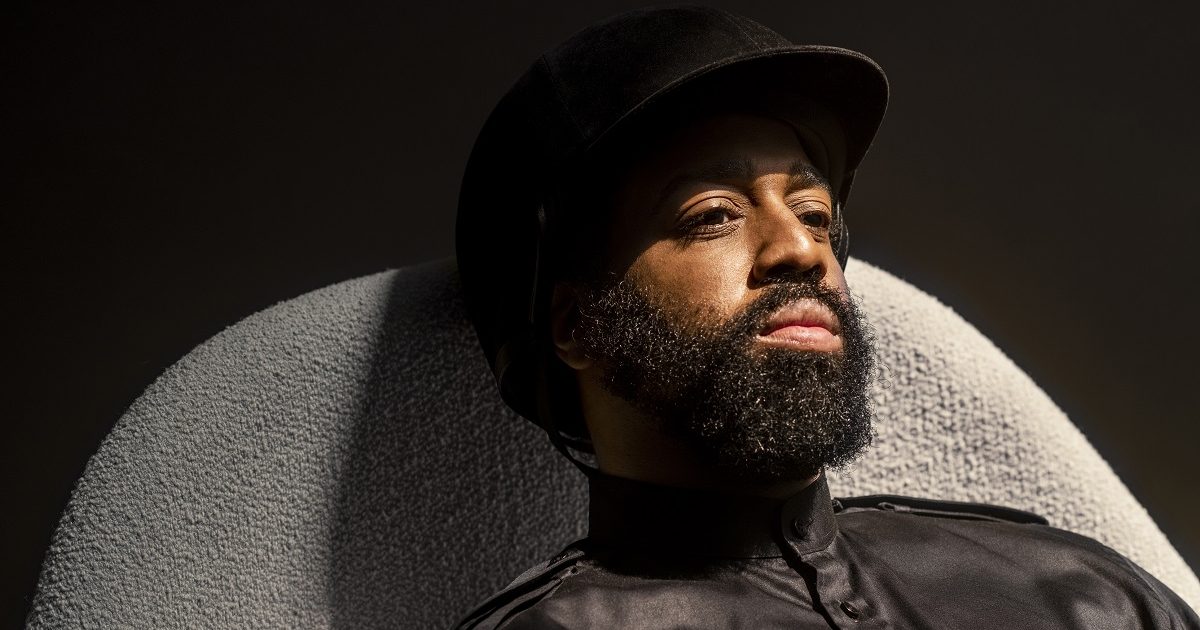
Photo courtesy of the artist.

BGS 5+5: AHI

Artist: AHI
Hometown: Brampton, Ontario, Canada
Latest Album: Prospect, out November 5, 2021
Rejected band names: UrbanPeasant (high school rap name) and Back To Now (University band name)

What was the first moment that you knew you wanted to be a musician?

Before I left home to backpack across Ethiopia, I gave away, sold or just plain threw away hundreds of CDs — the only thing I kept was my Bob Marley stuff. I felt like nothing contemporary was speaking to me the way The Wailers did, even though this was music from before I was born. So I said to myself, if there’s no contemporary music that gets me through life the way Bob Marley does, then I’ll teach myself how to play guitar and sing, and I’ll make the music that I need to hear. Because if I need it, I know someone else out there does too.

Which elements of nature do you spend the most time with and how do those impact your work?

The crescent moon is probably the most captivating thing in nature to me. The moon in general. For some reason the moon makes me feel less alone and less on the outside of everything. We’re all looking at the same moon and it connects me to something bigger than myself. I want my music to connect us to each other and give people the reassurance that they’re not alone.

What other art forms — literature, film, dance, painting, etc — inform your music?

Life is an art form. And I try to draw everything from real life. My own life, people I know, my family, my friends. There’s art in struggle, hardships, and triumphs of life.

What’s the toughest time you ever had writing a song?

The song “Until You” went through more changes than any song I’ve ever written, before ultimately becoming the first single off my upcoming album Prospect. I had a base melody that I knew was special, but just couldn’t figure out where on earth the song was trying to go. The first conception of the song was written in 2017 and it took me over three years to get it to a place where I was happy with it. I have at least three or four completely different versions of that song on my computer, with different titles and everything, but it was worth the struggle.

If you had to write a mission statement for your career, what would it be?

I found my voice through music, so I write songs to help you find yours.


Photo courtesy of ShoreFire

LISTEN: Mike Younger, “Killing Time”

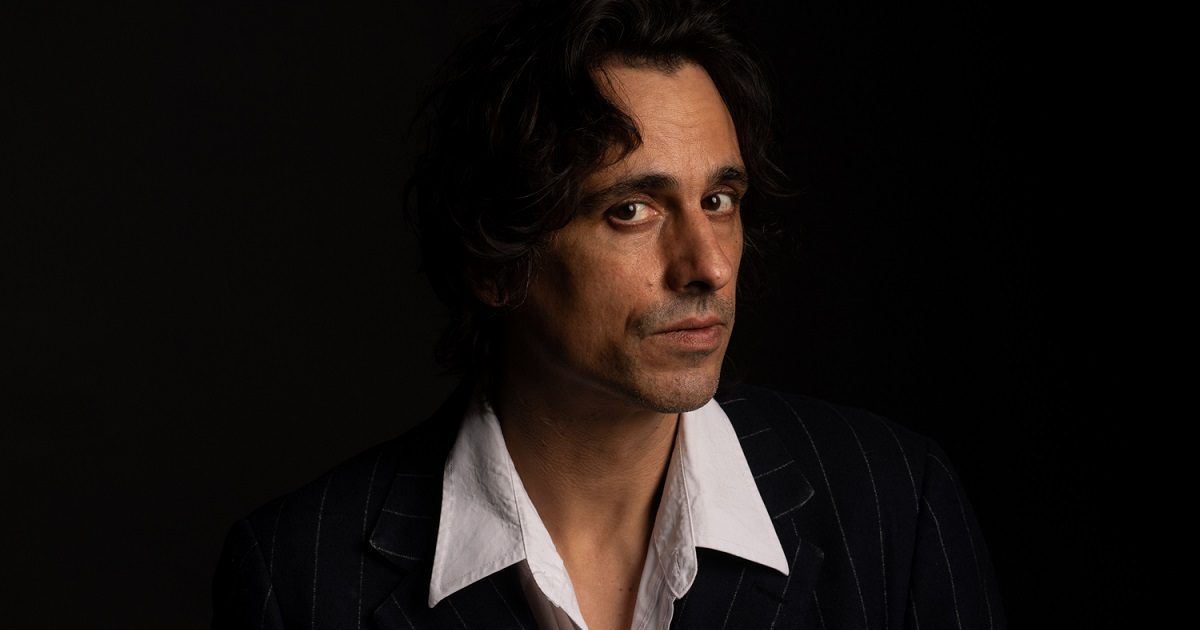
Artist: Mike Younger
Hometown: Halifax, Canada/Nashville, Tennessee
Song: “Killing Time”
Album: Burning the Bigtop Down
Release Date: August 27, 2021

In Their Words: “‘Killing Time’ is a sideways glance at another time and the dreams and people of that time. I had survived the Hall Of Horrors which was the street/squatter experience in New York City in 1992/1993 — and I’d lost more than a few pals along the way. The lyrics take comfort in the remembrance of past friendships forged in the fire of struggle, but swept apart like grains of sand. … I’ve always been deeply affected by the struggles faced by our disenfranchised communities. I greatly admire those writers and creative people in general, who, through their work, have lent their voices to the struggle for equity in our society, like John Lennon, Woody Guthrie, Bob Dylan, Joni Mitchell, Nina Simone, Marvin Gaye, Bob Marley, and others. Artists have nothing to lose by speaking their truth, and doing so unapologetically, especially these days. That’s what I strive for in my work. There are enough great songs about pickup trucks already.” — Mike Younger


Photo credit: Michael Weintraub

MIXTAPE: Fruition’s Songs About Time

“I put together this playlist with a theme of ‘time.’ This theme is wide open, so it has the potential to be vastly vague, or momentarily specific. I’ve chosen some of the former and the latter; seasons changing, or that one chapter of a changing relationship. I’m drawn to songs that lyrically take me not just to a certain space, but a certain time that I understand.” — Mimi Naja, Fruition

Bahamas – “All The Time”

A deep, honest, smooth breath of fresh air. Of presence. I end up using this song to get into a sort of meditation sometimes, when things are moving too fast and I can’t keep up. “I’ve got all the time in the world…”

Erykah Badu – “Next Lifetime”

Anyone that’s been in a committed relationship, met someone new, felt that spark and stayed true understands this theme.

Elephant Revival – “Season Song”

Paints a gentle and weighted picture of the clock ticking and the seasons changing.

Fruition – “Turn Your Love”

This one paints a few different pictures in the verses, but the chorus comes back to the same idea. We have the power to take the time to direct our energy where we choose. “Turn your love to the ones you ain’t had time to take time to think of.”

Bob Marley – “Waiting In Vain”

This is a familiar position — the push and pull of romantic endeavors, being willing to be patient but also wanting to make sure things are moving forward. Waiting in vain. Spot-on.

The Frightnrs – “Gonna Make Time”

When you recognize that being busy had you overlooking the love you’ve already got.

Simon & Garfunkel – “April Come She Will”

Evokes some tender reflection. Seasons turning can always do this. This is one of the most well-known songs of this nature, and it’s incredibly short, which is impressive.

Sade – “In Another Time

A very subtle consolation to a woman’s overlooked feelings that imply hope that her dude might eventually figure it out…

Erykah Badu – “Time’s A Wastin”

An anthem of acknowledging the endless mystery and it being a given to be your best, just because.


Photo credit: Dustin Chambers

BGS 5+5: AHI

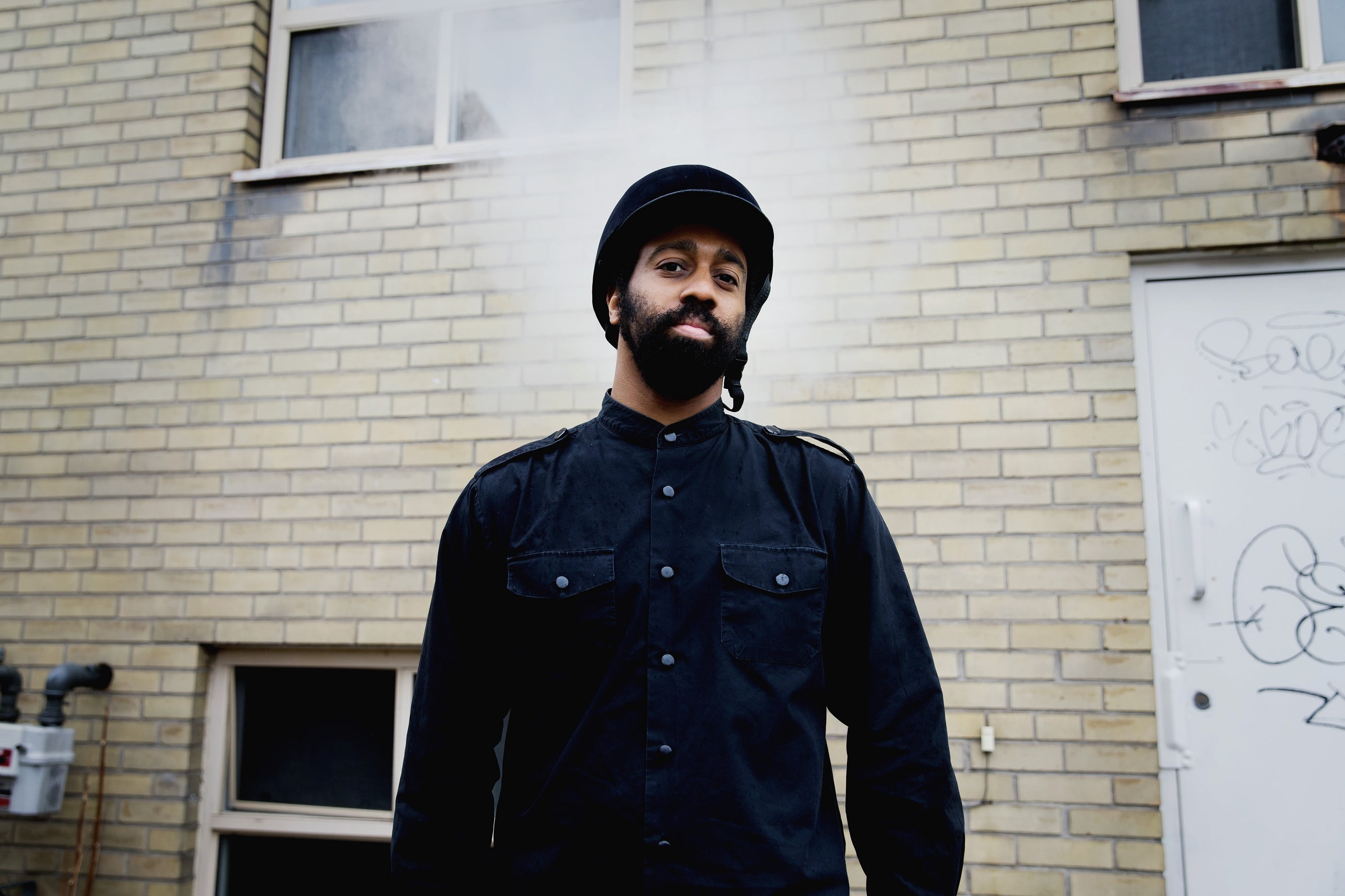
Artist: AHI (pronounced “Eye”)
Hometown: Brampton, Canada
Latest album: In Our Time
Personal nicknames (or rejected band names): Alleycat

Which artist has influenced you the most … and how?

Bob Marley has by far been my greatest influence. Coming from a Caribbean background (Jamaican/Trinidadian) there’s an obvious cultural connection, but for me it goes a little deeper than just music. I don’t sound like Bob, and I don’t try to, but there was a time in my life when I felt no music was satisfying in the way Bob Marley and the Wailers made me feel, so I decided that if it didn’t exist then I would create it. Bob Marley for me is like a messenger of good and an uplifting revolutionary.

What was the first moment that you knew you wanted to be a musician?

Music is something I’ve always enjoyed and I’ve wanted to be a musician as far back as I can remember. But there really weren’t any musicians in my family so becoming a musician wasn’t really an option in my house. I come from a family of educators and I was probably going to end up being a teacher or professor myself. Writing was a big part of my childhood and my teen years so I naturally gravitated to poetry and rapping, but nothing musical other than my off-key belting as I ran through the hallways of my school.

It wasn’t until my early 20s that I decided to really focus on singing and learning how to play the guitar. Then came the moment I truly knew I was going to be a musician, while I was backpacking across Ontario and I met a kind stranger just outside of Thunder Bay who helped me realign my life and purpose. But even then I really didn’t decide to make music a serious profession until my first child turned 1, about 8 years ago. That first year of fatherhood put a lot into perspective for me, and it gave me the drive to establish myself as a credible artist.

What’s the toughest time you ever had writing a song?

I try to stay away from tough songs to write. Any song that has been really tough to write was probably scrapped and will never see the light of day. I don’t think writing a song should be a tough process; if it’s not flowing or you don’t feel like you’re making progress, then put it down.

However, of all the songs that have landed on any of my projects, I will say that “Just Pray” may have gone through the most revision. A lot of folks are going to assume the song is autobiographical, but I much rather say it’s “autobio-fictional.” I spent a lot of time with the lyrics on that one because I really wanted to draw on as much of my life as possible, so that I could sing it with a conviction and passion, but I didn’t want it to become a verbatim retelling of my childhood. So finding the right balance took a lot of edits and rewrites.

If you had to write a mission statement for your career, what would it be?

My career mission statement would be “When you’re walking in your purpose, the Heavens bow down to honour your footsteps.” My music career is very closely attached to my faith, values and lifestyle. A great part of my life has been focused on uncovering my purpose and that comes out in my music. What I’ve learned is that when you are working towards your goals and you’re really zoned in on your purpose, people will feel that energy coming off you and they’ll want to help you accomplish more. The coolest look in the world is when you see someone who you know is doing what they are meant to do.

How often do you hide behind a character in a song or use “you” when it’s actually “me”?

I hope I never feel like I have to hide behind a character in a song. Whatever I write, even if it’s not about me, I want to be able to empathize with the story so much that the listen thinks I’m singing my own song. My music is the opposite of hiding behind a character. I would sooner jump into the skin of a character and try to express what they may be feeling. I want people to believe every word I say, even if I’m speaking on behalf of someone else.


Photo credit: Jess Baumung

Won’t You Be a Neighbor? (Op-ed)

It all started in the Hague. I was backstage getting ready for the first night of tour with the Mastersons when the Dutch venue crew turned on a live broadcast of the inauguration. I’d hoped that touring Europe during the early days of the new administration would offer a bit of relief from the constant media bombardment that I’d been experiencing in America, but it turned out that the opposite was true. American politics are world politics, and so the rest of the trip was spent responding to questions about current events that had no good answers.

There was a sense of dread every time I connected to a hotel WiFi network. What executive order had been signed since the last time I had Internet access? Who was the president attacking now? What progress was being undone? Dressing room conversations often centered around feelings of frustration and helplessness at being so far away from home during such a tumultuous time. My friends were back in the States protesting, but outside of attending the Women’s March in Amsterdam, there seemed to be little I could do to participate. That changed after a backstage chat with Shovels & Rope in Gothenburg, Sweden, though. I left the venue that night feeling fired up and reinvigorated about the power of music and what I could do as an artist to make my voice count, and I decided the minute I got home, I would start work on the Won’t You Be My Neighbor? EP.

This group of songs is my attempt at channeling all of the anxiety and energy and negativity of 2017 into something productive and positive. I wanted to bring together a diverse group of artists I admired and create a collection of political music for a cause I believe in, but I also wanted to push on the idea of what exactly makes a song political. The tracks here are a mix of covers and originals reimagined for a year in which kindness and empathy have become their own form of political statements. I remember lying in a hotel bed in London watching the Super Bowl and reading about the uproar from conservative outlets about commercials that advocated for treating immigrants and the poor with civility and respect. Displays of human decency were being treated as attacks on Trump. (How that doesn’t give his supporters pause to consider which side of history they’re on, I may never understand.)

The collection opens with “This Land Is Your Land,” which includes background vocals contributed by Josh Ritter, but it’s perhaps not the version you’re used to hearing. I peppered it with samples of American political speeches from George Wallace to Donald Trump to highlight that the struggle for equality — whether it be in regard to race, religion, sexual orientation, nationality, etc — is an ongoing one, not simply a part of our past. I also used Woody Guthrie’s full 1940 lyrics, in which he denounces walls and bears witness to the struggle of the poor. “As they stood hungry, I stood there wondering if this land was made for you and me,” he pondered. We don’t teach those verses in school, but I think they’re important. Being patriotic means holding the country you love accountable to its own ideals and asking the tough questions.

The song feels even more prescient in light of the president’s decision to withdraw from the Paris climate accord. Guthrie’s not just singing about the concept of “America” here; he’s very literally singing about the trees and the air and the water. If these things do, indeed, belong to all of us, then it’s our duty to be responsible stewards of them. This land doesn’t just belong to us; it belongs to the countless generations yet to come.

Some of the songs I covered surprised me as I dug into them. Bob Marley’s “One Love,” for instance, revealed itself to be entirely devoid of rhyme. Separated from the music, the lyrics felt like a prayer or recitation (in no small part because some of them are lifted from the Bible), so I decided to recast them over a very solemn, hymn-like arrangement. I’d always been a fan of Tom Petty’s “I Won’t Back Down,” but with a professional bully in the Oval Office, the urgency of those verse lyrics hit me harder than I expected. And I’m not sure “Won’t You Be My Neighbor?” has ever served as a protest anthem, but in these days of refugee bans, ICE raids, and border walls, I can’t hear it as anything else.

All profits from sales of this collection will be donated to the International Rescue Committee to help fund their efforts aiding refugees around the world. Everything was recorded at no cost in bedrooms and home studios around the country, and all the guests contributed their time and talent out of the goodness of their hearts. Even the packaging is made with recycled cardboard and is handpainted at home in Brooklyn. I hope that folks enjoy the collection and think about what the songs have to say, and I hope that the money we raise with it can do some real good for people who are in desperate need around the world. I know a project like this is a small gesture in the grand scheme of things, but I truly believe that every little bit counts in the fight for what’s right.

See you around the neighborhood,
Anthony D’Amato

For the Won’t You Be My Neighbor? charity EP, Anthony D’Amato created a stripped-down collection of reimagined political music to benefit the International Rescue Committee’s refugee aid efforts. Musical pals — including Josh Ritter, Sean Watkins, Israel Nash, Michaela Anne, the Mastersons, Lizzie No, and MiWi La Lupa — contributed background vocals. Donate to the cause and pick up a handprinted copy of the EP here.


Photo credit: tinto via Foter.com / CC BY

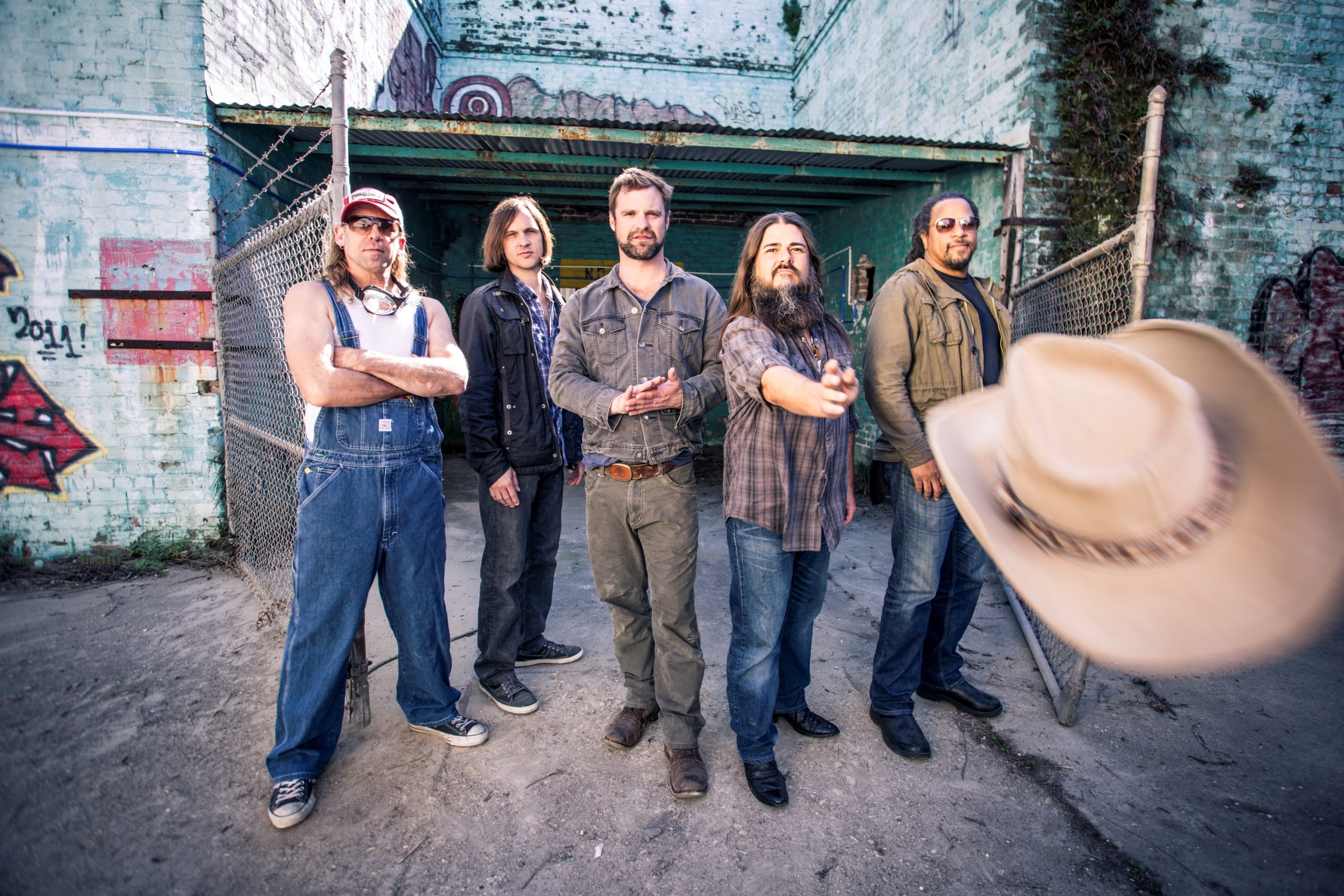
3×3: Honey Island Swamp Band on Spice Girls, Night Owls, and the Best Sanders

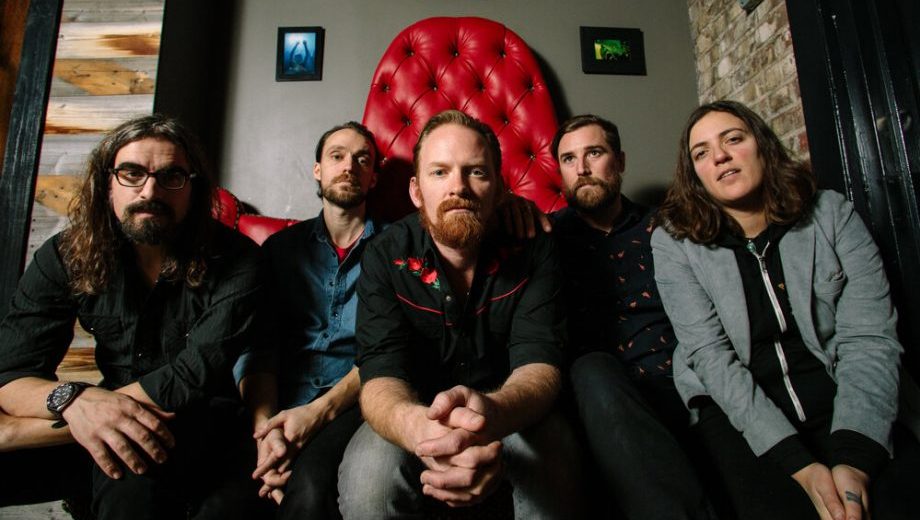
Artist: Honey Island Swamp Band
Hometown: New Orleans, LA
Latest Album: Demolition Day
Rejected Band Names: Honey Island Swamp Bitches

Who would play you in the Lifetime movie of your life?
The Rolling Stones

If money were no object, where would you live and what would you do?
Where wouldn't I live? What would't I do?

If the After-Life exists, what song will be playing when you arrive?
Depends on whether it's heaven or hell. Marley, if it's heaven. Spice Girls, if it's hell.

How often do you do laundry?
What's this "L" word?

What was the last movie that you really loved?
I'd watch the new Star Wars a second time.

What's your favorite TV show?
Seinfeld. We're old school.

Morning person or night owl?
Definitely night owl.

Who is your favorite Sanders — Bernie or Colonel?
We're Popeye's men. Bernie.

Coffee or tea?
Coffee. Clearly.

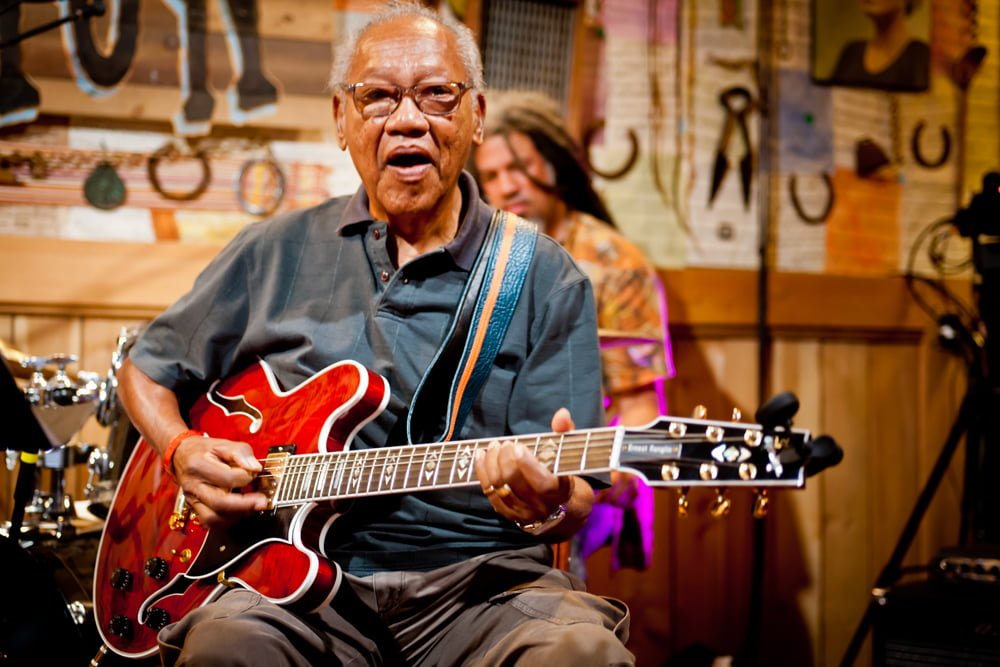
LIVE AT LUCKY BARN: Ernest Ranglin, ‘Congoman Chant’

We've teamed up with the good people at Pickathon to present a season's worth of archival — and incredible — videos from the Pacific Northwest festival's Lucky Barn Series. Tune in every fourth Tuesday of the month to catch a new clip.

The first installment for the Spring season of the Lucky Barn Series comes from Jamaican guitarist Ernest Ranglin. Known for his work with reggae legends like Bob Marley and Jimmy Cliff, Ranglin steps out with his own band of hotshots — horns and all! — for "Congoman." At the 3:45 mark, he tosses his pick and starts … well, see for yourself.

Pickathon comes back to the Pendarvis Farm in Happy Valley, Oregon, from August 5-7, 2016. Recent additions to the festival lineup include Mac DeMarco, King Sunny Ade, Thao & the Get Down Stay Down, Joseph, Ry X, Cory Henry, Promised Land Sound, Town Mountain, Myke Bogan, Blossom, Caleb Klauder & Reeb Willms, Open Mike Eagle, and Chanti Darling. Tickets and the full lineup are available now.

Click here for more, and stay tuned for another wonderful season of Lucky Barn videos. 


Photo credit: Tobin Copeland Turner