Lucinda Williams: A Folk Singer’s Heart and A Rock Star’s Swagger

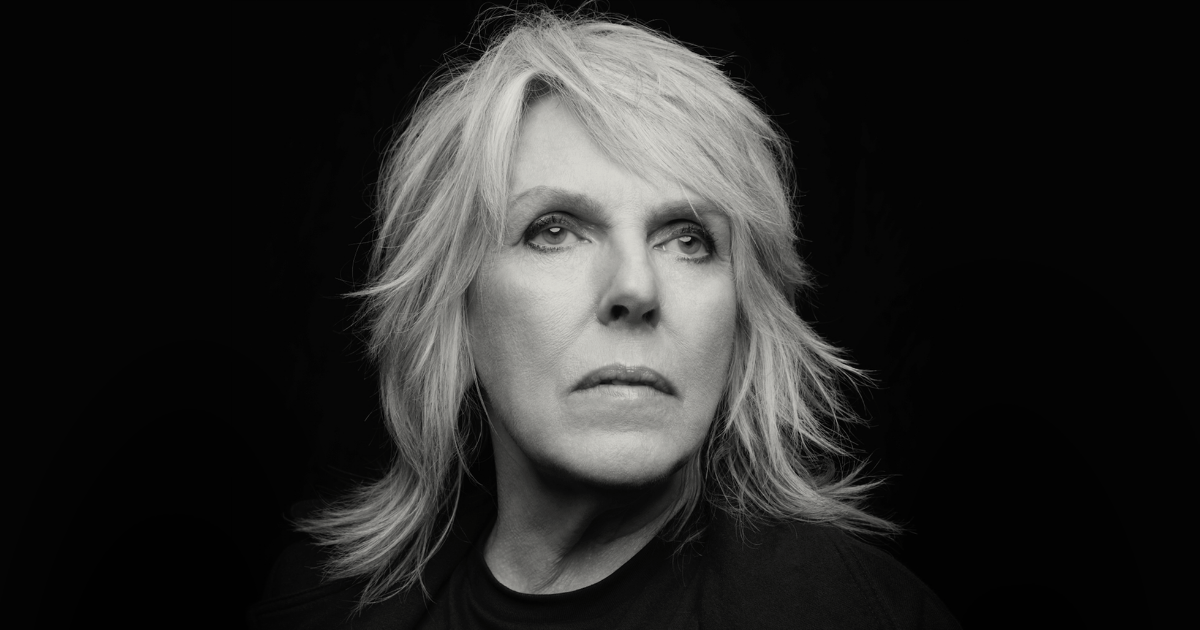
With a folk singer’s heart and a rock star’s swagger, Lucinda Williams gets it right on World’s Gone Wrong. Produced by Ray Kennedy and Tom Overby and released January 23, 2026, the topical album shows no love for the current president; instead, Williams turns to the musicians in her band, R&B legend Mavis Staples, and even a Bob Marley classic to put her own beliefs front and center.

As protesters take to the streets across America, Williams is reaching people where they live by maintaining an impressive tour schedule, just as she’s done for the last four or five decades.

BGS caught up with Williams for an Artist of the Month interview by phone, in motion and outspoken.

First off, I just want to say I love the electric guitar on this record.

Lucinda Williams: Yeah, I’ve got two of the best in my band, Doug Pettibone and Marc Ford. Marc was in the Black Crowes before and Doug’s been with me for a while. The two of them just play off of each other. They’re really great when you see the band live.

Thanks for saying that. I’ll pass that on! I’ve always managed to find really good guitar players to work with me. It’s important to me, having a good guitar sound in the band, both live and on the record.

This record’s got that live energy, which is hard to capture on an album. What were the sessions like putting this album together?

Wow! You’ve said all the right stuff that I want to hear! I love you! [Laughs] But like you said, it’s hard to get the recording to reflect that. That’s why I’m so excited that came across, but I always record live for the most part. … We’re all situated in that part of the studio where we’re recording, but the vocals are isolated, just for the sake of convenience, so we don’t have to worry about the [tracking band] bleeding in, in case there’s a mistake. But it has that live feel, because we’re not putting down certain things and then coming in later. The drummer is not coming in separately and putting the drum track down, that kind of thing. We’re putting down the basic track all at the same time, together.

I would be playing guitar normally, but since I had my stroke about five years ago, I’m struggling with it. That hasn’t come back all the way yet, unfortunately. Which makes it even more challenging, because normally I would set up the vibe and the feel on acoustic rhythm guitar, and then the guys would follow me and fall in behind me. So, now one of the other guitar players has to fill in for me. And even though they’re both great guitar players, nobody’s going to do a rhythm thing exactly like I do. That’s a little bit of a challenge right now, but we managed to pull it off somehow.

You’ve had so many musicians that have worked with you over the years. When it’s time to hire somebody in the studio or in your band, what qualities are you looking for?

Probably just being aware of different styles of music. I can’t read or write music, so for me to have to discuss something to another musician, I usually use a reference of another artist. And I might say, “I want to play this song kind of like Clifton Chenier,” like a zydeco thing. And if they don’t know who that is, it’s hard for me to describe it musically. So, the easiest and best way is just [bringing up] the sound of another style of music and using an artist to describe that.

What was on your mind as you were writing the song, “The World’s Gone Wrong”?

Well, what do you think? What’s going on right now, every single damn day. There’s some other crazy piece of news surrounding the so-called King of the United States. Or he wants to be king. He wants to name the Kennedy Center after himself. That stuff builds up in your mind, and after a while it’s therapeutic to sit down and write a song about it. Just get it out of your system. … I just remember, every single day there’d be something on the news, in the newspaper, on TV or somewhere online. You couldn’t get away from it. It was pervasive. It was just on my mind a lot, of course, and still is.

This might be venturing out a little bit, but it seemed like a love song too, because these two people in the song are leaning on each other.

Yeah, I’m glad you brought that up. I’m glad you saw that in there. I think it’s an interesting way of dealing with the political unrest, by painting a picture of a regular, everyday couple and what they’re going through. So you can express it that way.

I’ll shift it over to “Low Life,” because I feel like I’m sitting at that bar with you when I listen to that song. And I also like those bars where you can be anonymous and no one really knows you. When you’re out on tour, do you look for places like that?

Yeah, the guys and me will look for a cool little place to maybe go hang out after the show. It’s hard to find one, though, where they won’t know who we are, because then they’ll want to come up and talk and stuff. A lot of times the guys will go somewhere and I’ll be like, “I want to go! Take me! Take me!” And they’ll go, “Lu, you’re not going to want to go, because it’s going to be swamped with fans and everybody’s going to want to talk to you,” and all that. Then I get all disappointed because I can’t go. [Laughs] So I’d just stay on the bus.

We end up hanging out on the bus more often than not. That becomes our little bar. I like to fraternize with the band guys after we do a show. I like to bond with them a little bit on the tour bus.

I noticed you’re going on the road with the band Heart in March. When that offer came through, what made you think, “Yeah, I’ll do that.”

Well, turns out they were fans of my music, which I wasn’t aware of, and I guess their people reached out to my people… or my person [laughs] and wanted to take me out with them. Ann and Nancy Wilson are just two of the nicest people ever, real down to earth. We went out and already did some shows with them not too long ago. It seemed like with their fans and my fans, there was kind of an overlap there. It seemed to work musically as a bill.

I don’t think enough has been said about Nancy’s playing. I caught a documentary a while back on the music scene in Seattle back in the day, and with Heart a lot of people don’t realize they were there then, right when Nirvana was around. They were a little bit different, but I hadn’t realized how proficient Nancy was on the electric guitar and I was just sitting there watching it like, “Oh my God!” And Ann’s voice – they’ve got what it takes, that’s for sure.

You’re back out on the road, you’ve got this new album, and I’m sure there are a lot of other things in the works. What are you enjoying most about this stage of your career?

Being able to go out and do shows with artists like Heart. I got to go out and do shows with a tour featuring Bob Dylan and Van Morrison. I got to go out and do shows with the Allman Brothers. I’ve met so many fantastic, legendary artists over the years who like my music. And some might be a surprise. I was surprised, actually.

Like, Joey Ramone was a fan. David Byrne is a fan. Robert Plant is a big fan and I’ve done quite a few shows with him. So that’s been a big boost. Those probably have been the highlights of my career, being able to connect with those kinds of artists. The people I listened to when I was starting out and looked up to.

It was interesting to hear you include “So Much Trouble in the World” on this record. What did you like most about Bob Marley’s original version of that song?

First of all, I feel like that song was ahead of his time and it still rings true today. It’s still so fresh and could have been written yesterday. It’s still relevant. People still love the song. It’s got a great melody. Nobody can do it like Bob Marley did, though. I was a little self-conscious about that when we cut that song, because I was thinking, “What are people going to think? Me covering a Bob Marley song?” Like, “What does she think she’s doing?” But it’s a great song to play live. And like I said, it’s so much about what’s going on right now.

Having Mavis Staples on that recording is such a treat. What did she bring to the track?

She just added a whole extra level of soul, and thought, and everything. And we didn’t tell her what to sing or how to do anything. We didn’t give her parts to do or anything like that. We just showed her where the vocal booth was. You know, “Here’s the microphone,” turn it on, and she just let it rip. We’re so grateful to have her on there. And every single person I’ve done an interview with has mentioned her. Like, “What’s this about Mavis Staples on the record? How did you get her in the studio?” and all this. Everybody’s so excited to hear her on there.

I also wanted to ask you about “Too Far to Turn Around.” It feels like something we could sing at a protest march, but it’s kind of like a meditation, too.

Yeah. Thank you so much. I love hearing you say that, because that’s what I had in mind when I was writing it. Exactly that. I was thinking about songs like “We Shall Overcome” and everybody singing it together and holding hands. Because I experienced that myself back in the ‘60s. When I was a teenager, I used to go to all these marches and demonstrations. And music was the thing that kind of brought people together back then.

Those kinds of songs like “We Shall Overcome” were being sung and Bob Dylan was writing all those amazing protest songs like “Masters of War,” which I used to sing. I’d get my guitar, go to these things, and sometimes they’d ask me to sing. I’d do those kinds of songs, like Joan Baez and all. I mean, there was just a gamut of great folk singers. That’s what they used to call us! I kind of wish that would come back. Just call it folk music. The people’s music.


Continue exploring our Artist of the Month coverage of Lucinda Williams here.

Photo Credit: Mark Seliger
Jackson and the Janks Celebrate “Garage Gospel Jank”

Jackson and the Janks, we started in a living room in New Orleans. Piano and guitar playing old gospel songs and trying to make a dance band. First there were two, then a third came in to use the bathroom – he was living in his van out front at the time. He sat down and played along after nature’s call. Over a year it grew from there, adding bass, saxophone, and steel guitar. We started playing shows in New Orleans, sweaty dance shows, and we didn’t have a name other than “the garage gospel band” (officially, Sam Doores’ Garage Gospel Band). We’ve branched out now and adopted New York janks into the family.

The Janks as a name came up, describing all things Janky. An old time, do-it-yourself way of playing, inspired by New Orleans R&B, rock and roll, honky tonk, and of course the sacred songs.

This playlist is a mix of sounds that influence the sentiments of Jackson and the Janks. Rollicking dance music, garage band approach, songs of love and lost love, sweet and sour, irreverent. – Jackson Lynch, Jackson and the Janks

“My Journey To The Sky” – Sister Rosetta Tharpe

There’s something wrong if Sister Rosetta is not in the conversation. True muse and queen progenitor of rock and roll, she kills me with her gospel.

“Rockin’ Bicycle” – Fats Domino

The great Fats Domino. I picked this because it inspires an approach to songwriting that gets overlooked. Have fun with the lyrical content and make fun music.

“Unchained Melody” – The Fleetwoods

I don’t take baths, but listening to this tempts me to try it out. The harmonies do it to me. My favorite version of this song.

“No More Tear Stained Makeup” – Martha & the Vandellas

This one has that lyricism and rhyme that I love. Taking a simple theme and so cleverly making it heartbreaking, don’t see it coming. Smokey Robinson at his best.

“Young Boy Blues” – Snooks Eaglin

New Orleans for real songster Snooks Eaglin played everything. Country blues, jazz, and pop songs of his day. That’s the job: play what people want to hear, do it good, and make it your own.

“Let’s Leave Here” – Jackson and the Janks

It’s about trying to not be the last one at a party that’s going under. Nothing’s happening, but you gotta leave before something does. “Gates are dropped, the service stopped, at the shop on the corner…”

“I Got Loaded” – Keith Frank & the Soileau Zydeco Band

This is a great zydeco version of a swamp-pop party song. Keith Frank (son of the famed Preston Frank) and his whole family make some of the best music I’ve ever had the privilege to dance to.

“Sweet Nothin’s” – Brenda Lee

Sugar, spice, everything nice.

“Sitting on my front porch, well do I love you? Of course,” Brenda growls and tucks me in.

“Who Will The Next Fool Be” – Charlie Rich

This speaks for itself. Just listen to how Charlie Rich sings the word “Who.”

“Life Is Too Short” – Benny Spellman

A great ballad deep cut from the man who gave us that deep voice on “Mother In Law.” Operatic. ”

We do big things in a hurry/ Let’s do what’s right to live…”

“Immigration Blues” – Duke Ellington

This secular hymn is my favorite shit. Early Duke’s orchestrated pieces like this make me regret and hope, sad and happy.


Photos courtesy of Jalopy Records.

MIXTAPE: Will Holshouser on the Accordion in Country, Bluegrass, and Roots Music

The accordion is like a cousin you don’t see very often, but who is an integral, colorful member of the family. In country, folk, bluegrass and related roots music from the U.S., the accordion has always been there, more of a presence than you might think. It’s central to styles such as zydeco, Cajun, and conjunto music, but also many foundational bluegrass and country artists – such as Bill Monroe and the Carter Family – used accordion in their music at times. The accordion was in the environment, part of the sound world of mid-20th-century popular music, adding a special touch to bands of all kinds. Although it did not continue to flourish as a central bluegrass or country instrument, there’s no musical reason for that absence: it fits right into the sound. Whether playing rhythm or lead, it can be versatile, punchy, and expressive.

If country music is our unifying theme here, the accordion makes a great lens for viewing the vast diversity of the genre and its extensive family tree: Tejano-conjunto accordion playing, with its polka and Spanish origins and its two-beat and waltz rhythms, is a natural fit with country; zydeco and Cajun music overlap with it seamlessly; Western Swing bands, which merged jazz and country, often included accordionists from the Midwest with Central or Eastern European backgrounds. Of course, the impact of African American blues, swing, and jazz is so strong in all these styles that it’s more than just an “influence” – really a foundation. Jewish klezmer music is also a branch of the “roots music” tree; it came from Europe and developed in the U.S., absorbing many of the same influences as the other genres while making great use of the accordion. – Will Holshouser

“Together Again” – Steve Jordan

The incredible Esteban “Steve” Jordan grew up playing conjunto music in Texas and expanded his repertoire to include country, Latin music, rock, zydeco and more. He was known as “El Parche” for the patch he wore over his blind eye and also as the “Jimi Hendrix of the accordion,” since he played through an effects pedal (flanger or phaser). On his version of this Buck Owens tune, he plays many roles brilliantly: lead vocals, accordion solo, fills and accompaniment.

“J’ai Eté-Z-Au Bal” – Steve Riley & the Mamou Playboys

Steve Riley is one of the finest Cajun accordionists working today; this blistering version of a classic Cajun tune (“I Went to the Dance”) shows his virtuosity, the Cajun (diatonic) accordion in a lead role, and his band’s deep groove.

“Tennessee Waltz” – Pee Wee King & His Golden West Cowboys

Pee Wee King was born Julius Frank Anthony Kuczynski to a Polish-American family in Wisconsin. He learned accordion from his father, who played in a polka band, and went on to become a famous Western Swing bandleader and write the music for this country classic. His beautiful, single-reed accordion fills and moving thirds sound totally country, while revealing a Slavic touch.

“Blues de Basile” – Amédé Ardoin

Amédé Ardoin made some of the very first accordion records in Louisiana and is a common musical ancestor of all zydeco and Cajun accordion playing. His innovative, rhythmic, virtuosic accordion style and haunting vocals won him a great reputation both inside and outside his Afro-Creole community. He often played dances and made records with his close musical partner, Cajun fiddler Dennis McGee, including “Blues de Basile” in 1930. His life ended tragically when he was beaten by white vigilantes.

“Hard to Love Someone” – Clifton Chenier

Known as the King of the Bayous, Chenier brought together southwestern Louisiana zydeco rhythms and Delta blues. On this slow blues tune recorded in 1970, his fluid improvising and support of his own singing is nothing short of glorious. His brother Cleveland Chenier plays the rubboard.

“Bluegrass Special” – Bill Monroe (with Sally Ann Forrester)

Most people know that Bill Monroe defined the classic bluegrass sound. Some may not know that an early version of his band, The Blue Grass Boys, included a Blue Grass Girl, Wilene “Sally Ann” Forrester, on accordion. Her solid rhythm playing and all-too-short accordion break add warmth to this early instrumental, a 12-bar blues. If things had worked out just a little differently, maybe every bluegrass band today would include an accordion! (Hey, it’s not too late, folks.)

“Root, Hog or Die” – Mother Maybelle & The Carter Sisters (with Helen Carter)

Later in her life, Mother Maybelle Carter of the iconic Carter Family had a long performing career with her daughters. The group featured Helen Carter playing great accordion and often Chet Atkins on guitar. Here, too, the influence of swing and blues is readily apparent. “Root, hog, or die” is an old expression that means “you’re on your own.”

“Alon Kouri Laba” – Corey Ledet Zydeco

Corey Ledet, one of today’s most exciting zydeco accordionists, plays beautifully and sings in Louisiana Creole on this high-energy tune from his album Médikamen (2023).

“American Without Tears” – Elvis Costello (with Jo-El Sonnier)

Accordionist Jo-El Sonnier brings his sensitive touch and gorgeous Cajun waltz style to this song from Elvis Costello’s album King of America. (Rock producers and engineers, please take note: this is where an accordion should be in the mix – loud enough that it can breathe dynamically and find its place among the other instruments.)

“Shouting Song” – Will Holshouser

Here’s a tune from my new album, The Lone Wild Bird. I wrote “Shouting Song” with the sound of shape note singing in mind. This is a choral tradition in the rural U.S., mostly in the South, with a unique sound: shape note composers ignored (or just didn’t know about) many European harmonic rules which disallowed features like parallel fifths and chords with only two notes. Along with influences from various folk traditions and camp meeting spirituals, that stark approach to harmony gives the style its sound, which I use here as a point of departure.

“Un Mojado Sin Licensia” – Flaco Jimenez

The creative genius of the great Flaco Jimenez is on full display in this conjunto song about the hardships faced by a Mexican immigrant in Texas. His rhythmic drive, melodic inventiveness, and roller-coaster chromatic runs are thrilling to the ears.

“Streets of Bakersfield” – Dwight Yoakam (with Flaco Jimenez)

Here’s Flaco again, on a recording that went to the top of the country charts in 1988. This song was written by Homer Joy, first recorded by Buck Owens in 1972, and re-done here by Dwight Yoakam with both Buck and Flaco as guest stars.

“Spadella” – Spade Cooley (with Pedro DePaul)

Accordionist and arranger Larry “Pedro” DePaul grew up in Cleveland, Ohio, where he studied music at the Hungarian Conservatory. Spade Cooley, originally from Oklahoma, was a popular Western Swing bandleader in the LA area. There’s a grisly tale behind this tune: Cooley wrote it for his wife Ella, who he was convicted of murdering in 1961.

“Second Avenue Square Dance” – Dave Tarras with the Abe Ellstein Orchestra

Any discussion of the accordion in American roots music should include klezmer, Eastern European Jewish music that came to the U.S. and absorbed influences such as the drum kit, certain jazz band formats, etc. On this tune the great clarinetist Dave Tarras plays the lead, but the anonymous accordionist is heard prominently, playing beautiful fills and rhythm, harmonizing with the melody, and using rich chords to blend with the horns. Second Avenue in Manhattan was the epicenter of the Yiddish theater scene, which had a huge impact on Broadway. The title could be just a lark, or a nod to the musical kinship between klezmer and country music!

“Atlantic City” – The Band (with Garth Hudson)

Garth Hudson’s adventurous playing with The Band carved out a role for the accordion in that kind of rock music. (He also played the horizontal keyboards: organ, etc.) I had the thrill of meeting him when we both played on Martha Wainwright’s live Edith Piaf tribute album (Sans Fusils, Ni Souliers à Paris). Unfortunately, the producers had us playing on different tunes, not at the same time! On this cover of a Bruce Springsteen song, recorded in 1993, Garth creates a fantasy using multi-tracked layers of accordion and organ.


Photo Credit: Erika Kapin

A Minute in New Orleans with Sarah Quintana and Michael Doucet

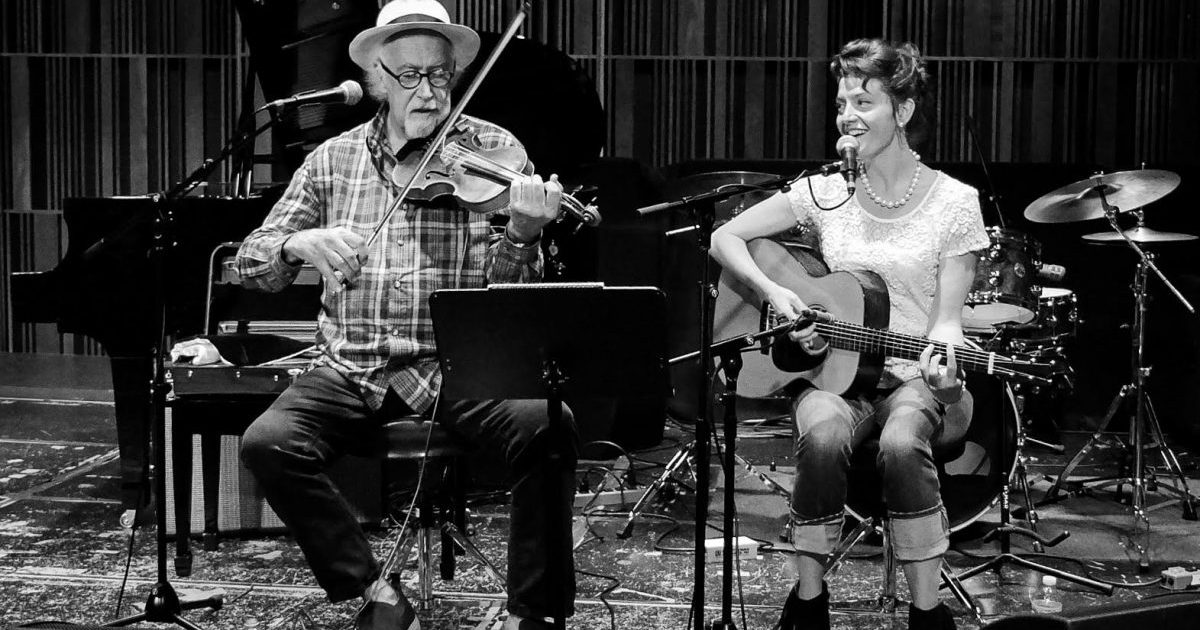
This is Sarah Quintana, singer/guitarist in Michael Doucet’s new solo project, Lâcher-Prise, and I love being a tourist in my own hometown, New Orleans. Michael and I met one Mardi Gras day, following a brass band through the French Quarter. Music is everywhere! Cajun and zydeco dancing, good Creole cooking and historic scenes. Here are some of our favourite places to perform, shop and eat!

Michael loves to go to Cane and Table on Decatur for his favourite Cuban cocktail, the Hotel Nacionale. Marjie’s Grill on N. Broad is one of his favourite places to eat. I sing for the Sunday Brunches at Emeril’s Delmonico. The atmosphere, the menu and the live music make this one of the best dining experiences in New Orleans.

https://www.instagram.com/p/B8RvvybFMHj/

One of our favourite clubs to play at and go dancing is d.b.a. on Frenchman Street. They have a wood floor series in the early evening that is acoustic and magic, dance lessons, lots of craft beer and rocking late-night shows. Need a coffee fix? Spitfire Coffee in the French Quarter is Michael’s favourite espresso bar.

https://www.instagram.com/p/B9KB0eIl9_8/

Water here, Water there! My favourite neighborhood is Bayou St. John in Mid-City. Get your tour of frontier New Orleans by boat! Book a Kayak tour from Kayakitiyat! If you go on a gallery art walk down Royal Street in the French Quarter, stop by Antieau Gallery to see the artist who created our cover art for our album.

https://www.instagram.com/p/B8jtZ0qFQ81/


Photo credit: Daniel Kadar

Yep Roc Records Partners with Southern Folklife Collection for New Series of Releases

Record Store Day is right around the corner, which means the vinyl geeks among us are getting ready for what might as well be called Christmas in April. New releases, exclusive LPs, free swag … Record Store Day has it all, and we want it all.

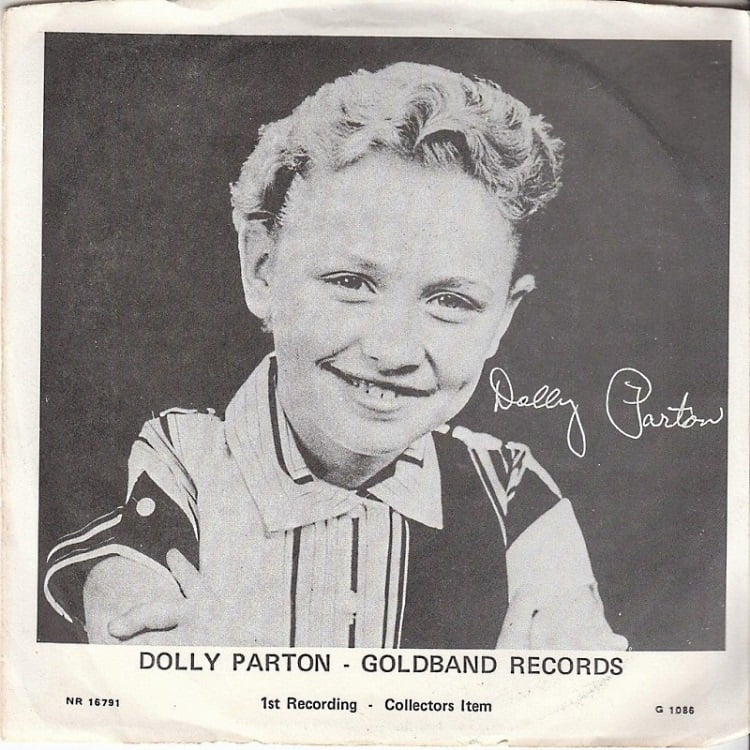
One of the cooler releases on that April 22 holiday is a special Dolly Parton 45 rpm featuring “Puppy Love,” the first song the country legend ever recorded at the young age of 13. Paired with another Parton rarity, “Girl Left Alone,” the “Puppy Love” single is the first release from a new partnership between Yep Roc Records and the Southern Folklife Collection. 

An endeavor nearly four years in the making, the project will make some of the Southern Folklife Collection’s available in both physical and digital form, with production and distribution handled by Yep Roc. The music is culled from Southern Folklife’s massive archives, housed at the organization’s home base of the University of North Carolina at Chapel Hill. 

“We were putting on a tribute to Reverend Gary Davis, and Glen and Billy from Yep Roc came to the event,” Steven Weiss, curator of the Southern Folklife Collection, explained. “We started talking about the possibility of doing something, and it grew from there.”

As Weiss explained, there are over 250,000 sound recordings currently housed in the collection’s archives. So far, Southern Folklife and Yep Roc have plans for three releases from those thousands, and left it up to Weiss to choose which pieces would make the final cut. In addition to the first release from Parton, the partnership will release a Cajun/zydeco compilation called Swampland Jewels on September 22 and a live album from Doc Watson either late this year or early in 2018.

“Some of them are things that have been in the back of our minds, in terms of projects that we’ve wanted to do for a number of years, that seemed like they would have commercial appeal,” Weiss says of the Yep Roc albums. “Two of the records are from Goldband Records, which is a record company whose collection is here. That’s a small, independent record company out of Lake Charles, Louisiana, that started after World War II. They were the first ones to record Dolly Parton. They recorded her when she was 13 years old, a song called ‘Puppy Love.’ That was her first single.”

While the Dolly Parton single is about to hit stores, Weiss is still at work on Swampland Jewels, the songs for which he is curating himself. Songs by Boozoo Chavis, Cleveland Crochet, Iry LeJune, Jr., and Jo-El Sonnier will be part of that package. “It’s like a greatest hits compilation of Cajun and zydeco musicians who recorded for the label,” Weiss says. “Those range from the 1960s probably into the ‘80s.”

The final offering in the first trio of albums from the partnership is a special one — a live performance by Doc Watson recorded at Club 47 in Cambridge, Masschusetts, in 1963. Several of the songs included on the album are otherwise unreleased.

“That just came to my attention within the last year,” Weiss says of the Watson record. “It was donated to the collection. It’s just so exceptional that we thought there was an audience for it, and that it fills a particular niche, as well as being a really nice addition to Doc’s catalog.”

So far, those three albums are the only projects with firm release schedules, though Weiss does note that there will be more albums coming from the partnership in the future, including an album by little known string band the Bluegrass Champs. “Some of the Stonemen family were in that group,” Weiss says. “They were basically teenage kids playing on the bluegrass circuit, playing small country music parks. This is a live performance from one of those parks. It’s just a really nice performance. They were a really high-powered group, and I don’t think there are too many recordings of them.”

LISTEN: Shinyribs, ‘Don’t Leave It a Lie’

Artist: Shinyribs
Hometown: Austin, TX
Song: “Don’t Leave It a Lie”
Album: I Got Your Medicine
Release Date: February 24, 2017

In Their Words: “The only rule one ever really needs is the Golden Rule. We all lie to ourselves and each other. That’s alright, as long as you don’t leave it that way. Be you, but be true. Always come back to love and honesty.” — Kevin Russell


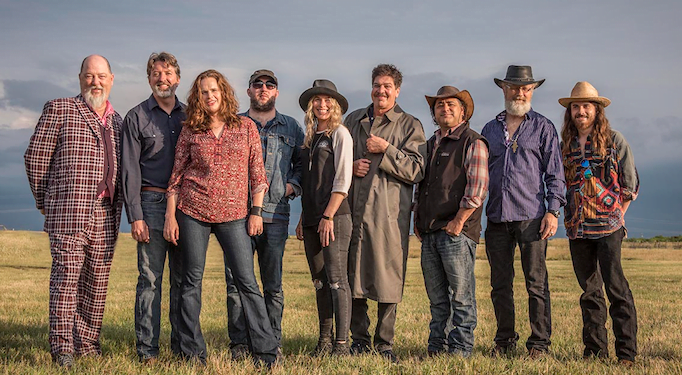
Photo credit: Wyatt McSpadden