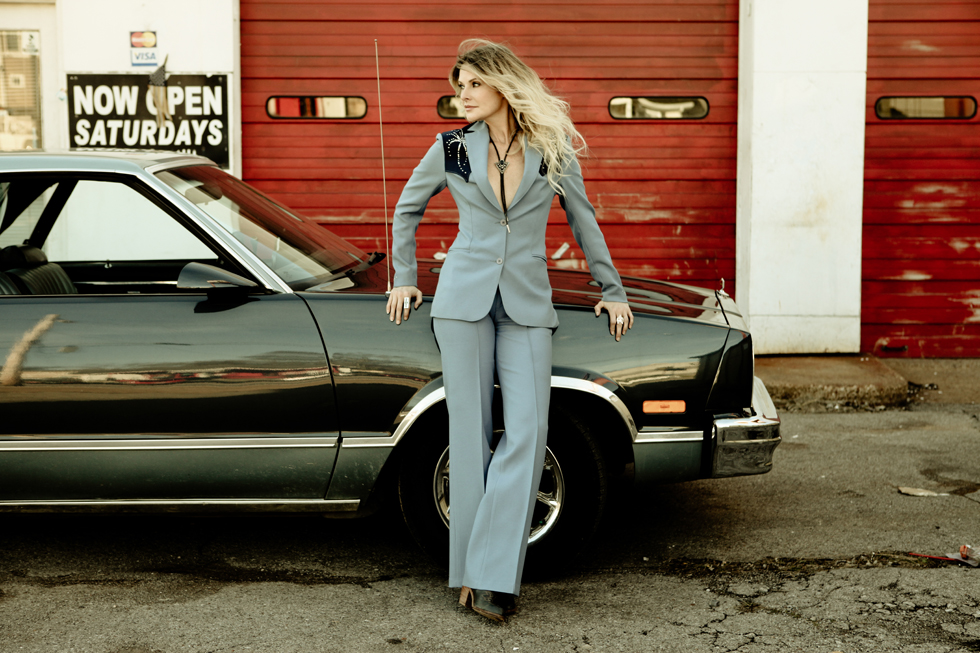
3×3: Anna Elizabeth Laube on the Woods, the Biebs, and the 1960s

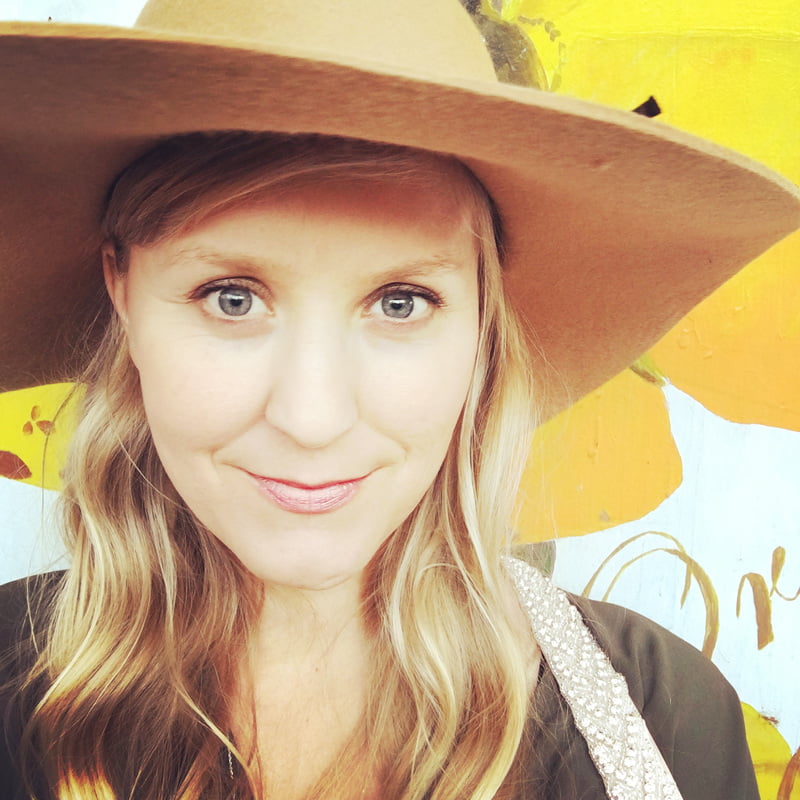
Artist: Anna Elizabeth Laube
Hometown: Seattle, WA
Latest Album: Tree
Personal Nicknames: Anna Banana

Which decade do you think of as the "golden age" of music?
'60s

If you could have a superpower, what would you choose?
I would be magic, hands down.

If you were in a high school marching band, which instrument would you want to play?
Drums, but I'd probably wear earplugs.

What's your go-to road food? 
Chipotle all the way

Who was the best teacher you ever had — and why?
I have a few teachers right now I'm pretty amazed by … Jumana Sophia and Cathy Heller come to mind — they are masters of their domains.

What's your favorite TV show?
Girls

Boots or sneakers?
Both, but not at the same time.

Which brothers do you prefer — Avett, Wood, Landreth, or Osborne?
Wood! I was on my way to see them once in Nashville and my car got totaled by a semi right where highways 40 and 24 merge. I walked away almost totally unscathed, miraculously!

Canada or Mexico?
Canada — I mean, if not for Canada, we wouldn't have the Biebs.

3×3: Chelle Rose on Bougie Hillbillies, Midnight Rambles, and Snow-Capped Smokies

Artist: Chelle Rose (pronounced like "Shelly")
Hometown: Relocating to my native East Tennessee as we speak, Nashville resident since ‘96
Latest Album: Blue Ridge Blood
Personal Nicknames: Chelle is actually short for Rachelle. Friends call me Chel. The Rose side of the family have always called me Rachelle.


A photo posted by Chelle Rose (@chellerose31) on

If you had to live the life of a character in a song, which song would you choose?
"Feel Alright" by Steve Earle. So many barricades on this journey. I've been singing this one pretty loud lately. Nobody gets to dictate my life to me … but they keep trying. I love it … fires me up every time.

Where would you most like to live or visit that you haven't yet? 
Scotland was amazing, but I really wanted to play or at least visit Ireland when we toured the UK. Hopefully we can make that happen next time. I plan to live out the rest of my life in East Tennessee. I wanna be able to see the snow-capped Smokies often and swim in a cold, mountain swimming hole.

What was the last thing that made you really mad?
Showing up for a music video shoot where you’ve paid a pretty penny to secure the room and it’s hotter than dammit on a popsicle stick! Me and my boys look good wet, but getting overheated can put me on the bench pretty fast due to health issues. Then I remembered current world events and rearranged my attitude.   


A photo posted by Chelle Rose (@chellerose31) on

What's the best concert you've ever attended?
Hands down, the Black Crowes at the Ryman in 2005. One of my besties since second grade, Amylou, and I still suspect someone must've put "shroom vapors" in the fog machine. When the show came to an end, everyone just sat there stunned. Nobody wanted to move, much less leave. I’ve searched for a bootleg of that show for years. As far as I know, there isn’t one? Someone tell me different.

Who is your favorite Clinton: Hillary, Bill, or George?
With apologies to the humans, Socks, the First Cat because Socks didn’t take any shit!

What are you reading right now? 
I wish! I’ll throw a book in my bag when traveling, but they come right back home with me without so much as a page turned. However, I have had Keith Richards' audiobook
in the car … and Jack Kerouac's On the Road.


A photo posted by Chelle Rose (@chellerose31) on

Whiskey, water, or wine?
People assume I’m a whiskey girl because of my voice I suppose. But I love red wines, prosecco, and champagne. I’m a bougie hillbilly I guess.

North or South?
South … but fell in love with Woodstock and the Catskills when we went to the Midnight Ramble at Levon’s.

Steve Carell or Ricky Gervais?
Had to crawl out of my rabbit hole and look up those names. Now I understand the question, but still can’t answer. Can I have “Dylan or Townes”? TVZ all day long.


Photo credit: Scarlett Eli

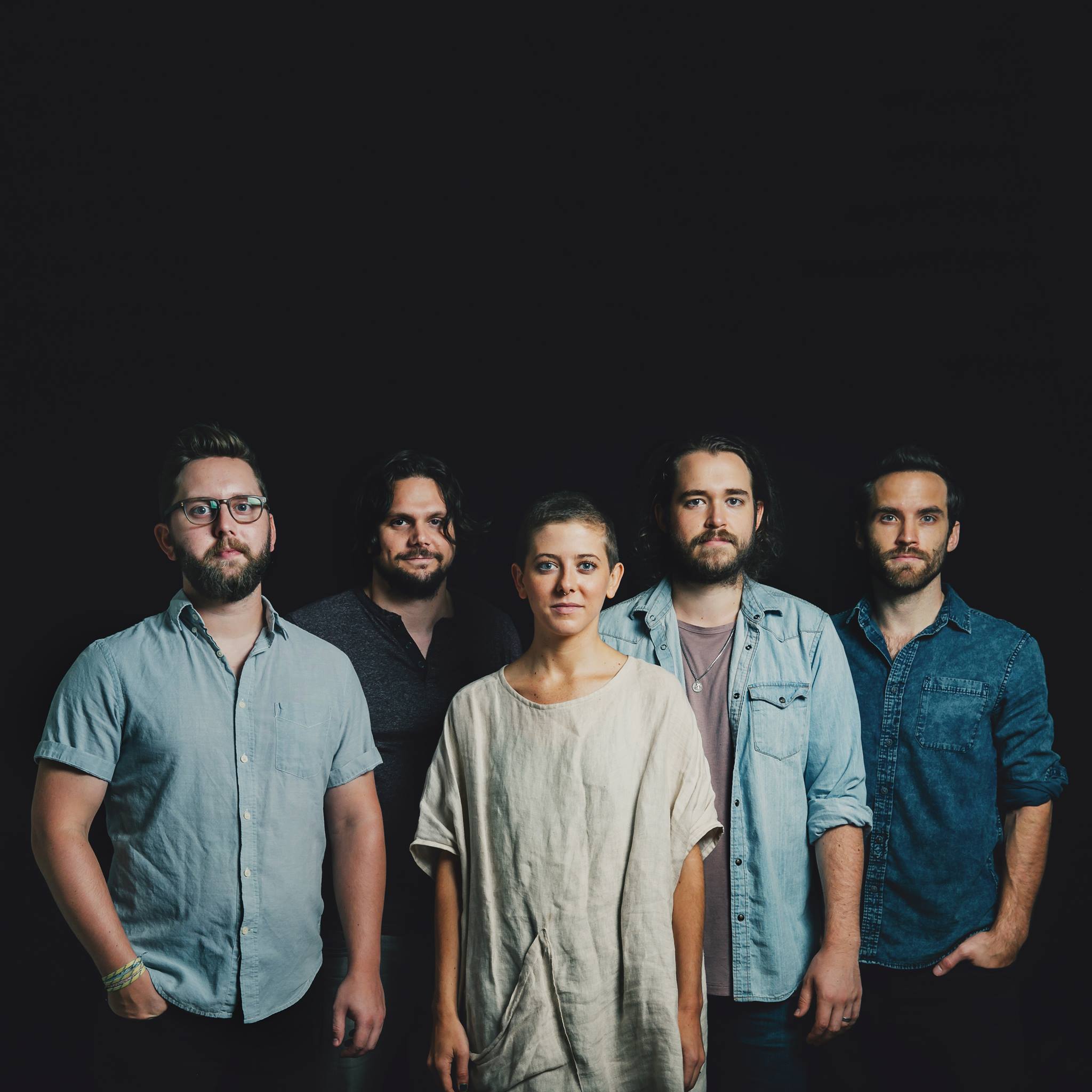
3×3: Birdtalker on Marching Drums, Cool Canadians, and Cats in Boots

Artist: Birdtalker
Hometown: Nashville, TN
Latest Album: Just This EP
Personal Nicknames: Lil’ Coop (Dani), Pizza Loser (Zack), Big Sounds Guy (Jesse), Bagelman (Bry-guy), Andyana Jones (Andy)


A photo posted by Birdtalker (@birdtalkermusic) on

Which decade do you think of as the "golden age" of music?
The 1990s.

If you could have a superpower, what would you choose?
Either to be sleeping all the time while simultaneously awake, or to never have to sleep at all.

If you were in a high school marching band, which instrument would you want to play?
Dani: bass drum
Zack: snare drum.


A photo posted by Birdtalker (@birdtalkermusic) on

What's your go-to road food?
Since we haven’t been on the road yet, probably tacos or pizza (the usual).

Who was the best teacher you ever had — and why?
Life, because it teaches you the real stuff. 

What's your favorite TV show?
Currently Parks and Recreation — we’re late getting on the TV train — but for all time forever, The West Wing.


A photo posted by Birdtalker (@birdtalkermusic) on

Boots or sneakers?
Boooooooooooots, with cats in them preferably.

Which brothers do you prefer — Avett, Wood, Landreth, or Osborne?
Tough to choose between Wood and Avett, but because the Avett Brothers’ music is woven into Zack’s and my love story, I’ll have to go with them.  

Canada or Mexico?
Though I disagree with the dualistic premise of the question, we’d have to say CANADA! For Brian. He’s Canadian. And we love him. 


Photo credit: Gavin Nutt 

7 of the Best Independent Bookstores in the U.S. of A.

It's back to school season already, so your Summer reading days may be behind you, but there's still time to get some good reads in … even if they are for class. If you aren't into supporting Amazon, independent bookstores are a great way to find new reading material while supporting local businesses. Plus, the actual humans who work in those stores probably give better recommendations than some algorithm, anyway. Here are seven of our favorite independent bookstores in the U.S.

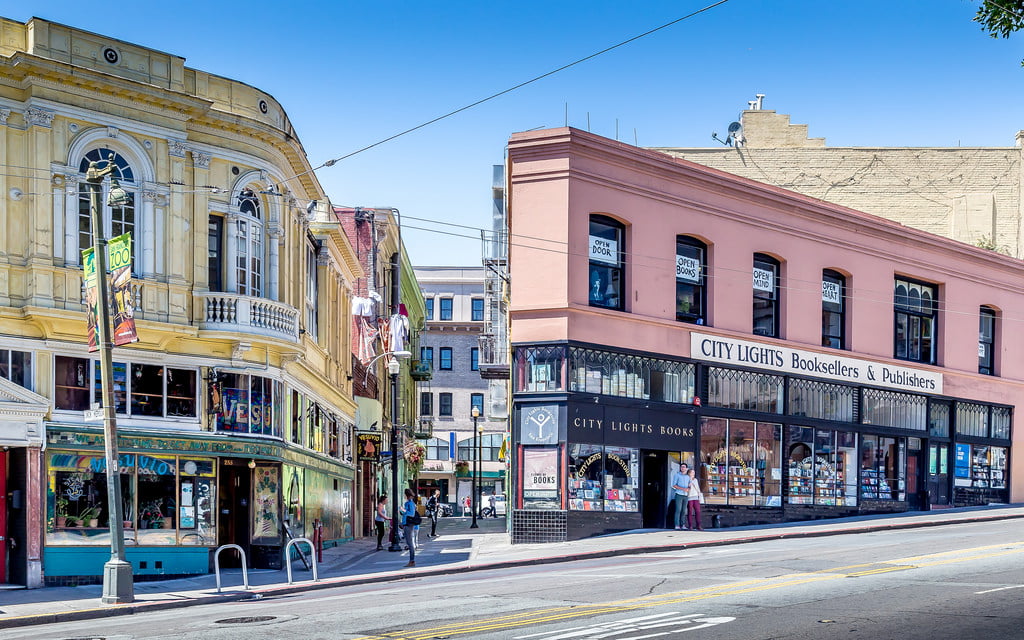
City Lights Books — San Francisco, CA

Photo credit: Mobilus In Mobili via Foter.com / CC BY

Beat Generation figure and poet Lawrence Ferlinghetti founded this bookshop, which is known for its progressivism as much as it is its poetry section, in 1953. You'll also find the most extensive selection of Beat literature and poetry around.

Faulkner House Books — New Orleans, LA

Photo via Facebook

Oxford may have Rowan Oak, but New Orelans has Faulkner House Books, an indie bookstore housed in — you guessed it — a former home of William Faulkner's. Located right in the French Quarter, this shop is a welcome breather from some of New Orleans' less book-centric activities.

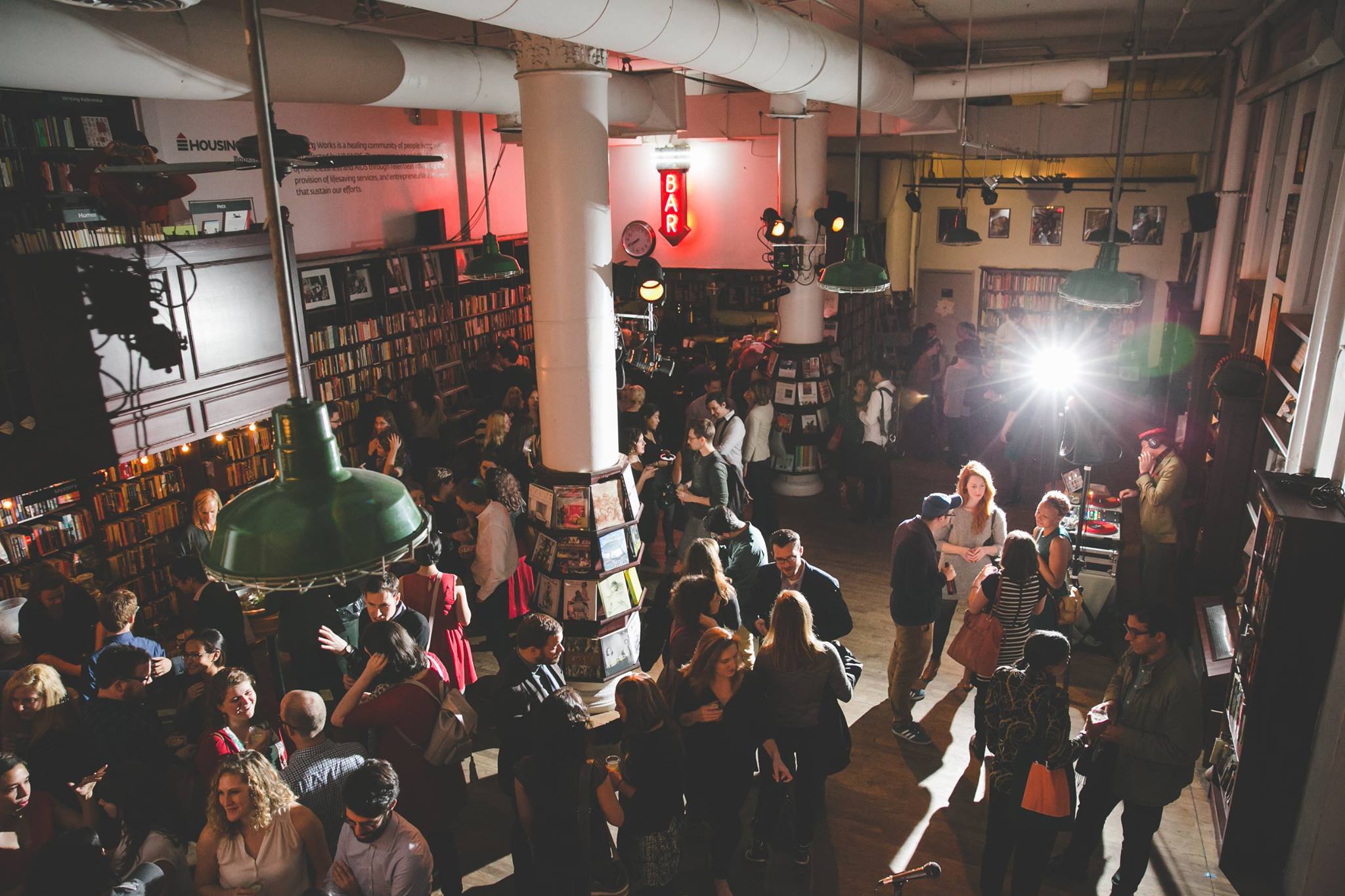
Housing Works Bookstore Café — New York, NY

Photo via Facebook

Housing Works Bookstore Café is connected to Housing Works, a non-profit fighting both homelessness and HIV/AIDS. All of the profits from their bookstore benefits their mission. Books and a good cause? Sign us up.

Powell's — Portland, OR

Photo credit: dog97209 via Foter.com / CC BY-NC-ND

Nicknamed the "City of Books," Powell's is the ultimate indie bookstore, offering used and new books by the thousands. If you can't find it at Powell's, you probably can't find it anywhere.

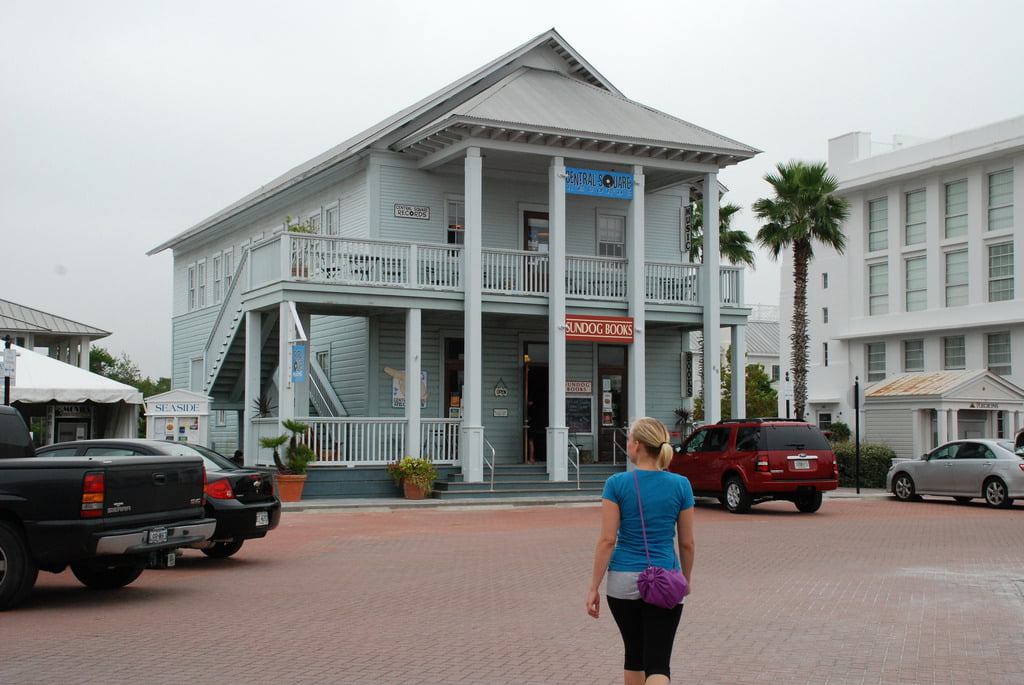
Sundog Books — Seaside, FL

Photo credit: Aprile C via Foter.com / CC BY-NC-ND

Is there anything that sounds better than a walk on the beach followed by a trip to the bookstore? How about a trip to a bookstore situated directly below a record shop? Yep, that's what you'll find at Sundog Books, and it's pretty darn hard to beat.

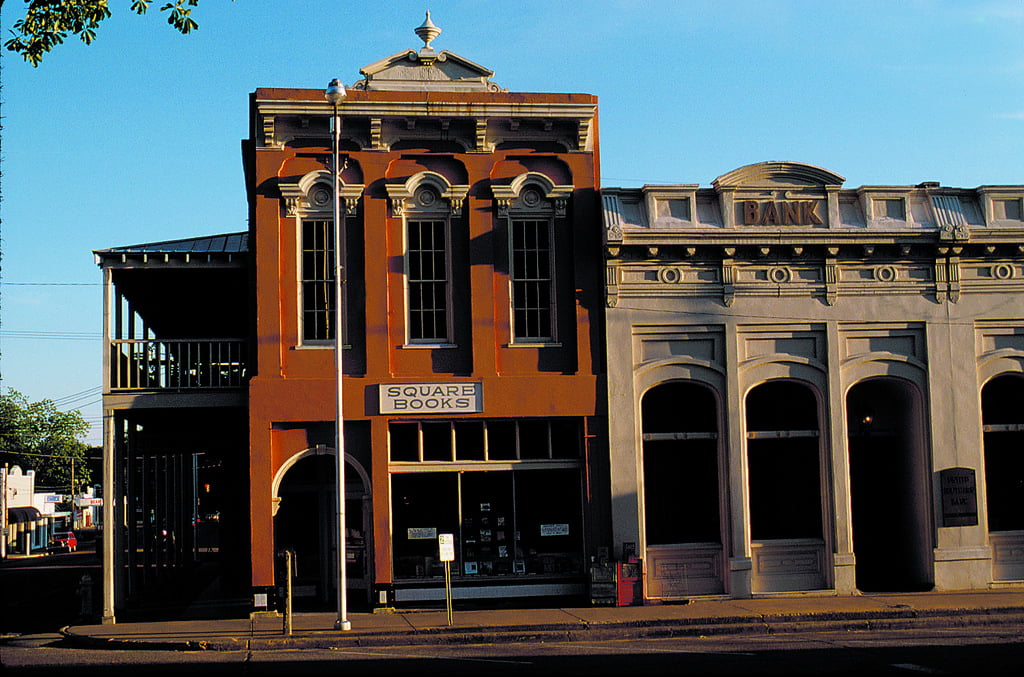
Square Books — Oxford, MS

Oxford's Square Books has been around since 1979, a mainstay on the main drag of Faulkner's hometown, with a Faulkner section to prove it. Look for offshoots Square Books Jr. and Off the Square, both just short walks from the original, three-story location.

Parnassus Books — Nashville, TN

Photo via Facebook

Nashville's literary scene got a much-needed kick in the pants when renowned author Ann Patchett opened Parnassus in 2011. Five years later, the store itself has expanded, with the city's literary community following suit. Parnassus is your one-stop shop for books, author events, and, most importantly, shop dogs.


Because we know you also love music, check out our favorite indie record stores.


Lede photo credit: visitmississippi via Foter.com / CC BY-ND

Salemtown Board Co.: Finding Empathy through Proximity

When Will Anderson decided to start a business with his friend Jacob Henley in 2012, he, like most people, hoped to do work he was passionate about. Lucky for him, he was passionate about a lot of things: woodworking, surfing, skating, being outside. "My brother and I grew up on boards," he says. "Whether it was surfboards or skateboards, we were always outside. We had parents who didn’t allow us to sit around the television and we never had game systems growing up. We were outside all the time, year-round."

None of those passions, however, rivaled what he felt for Salemtown — his small, low-income neighborhood just outside of downtown Nashville — and his neighbors. He wanted to find a way to use his passions to contribute to the well-being of his neighborhood, beyond just playing basketball at the local community center. After a little planning and a lot of help from friends, Salemtown Board Co. was born.

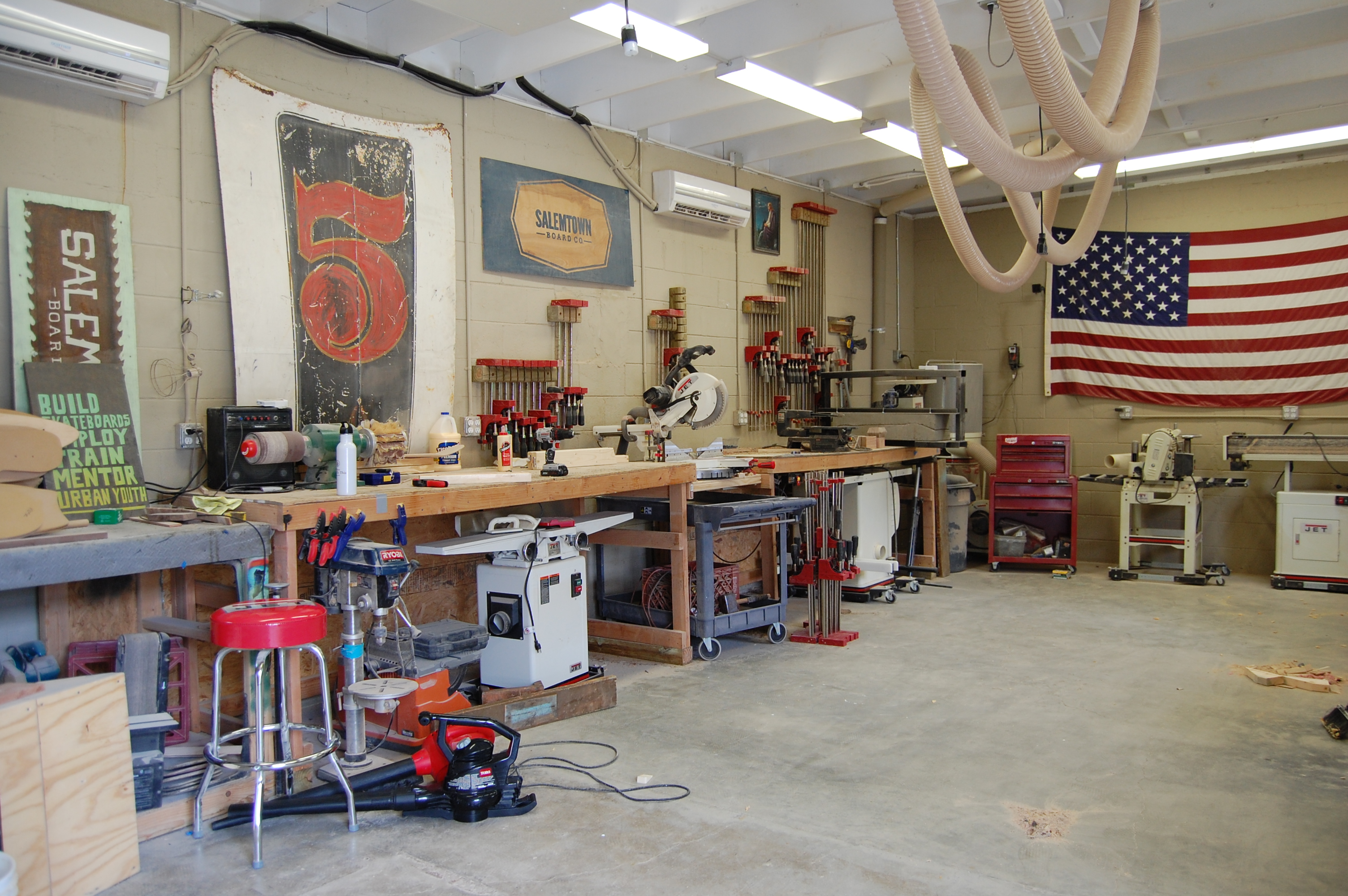
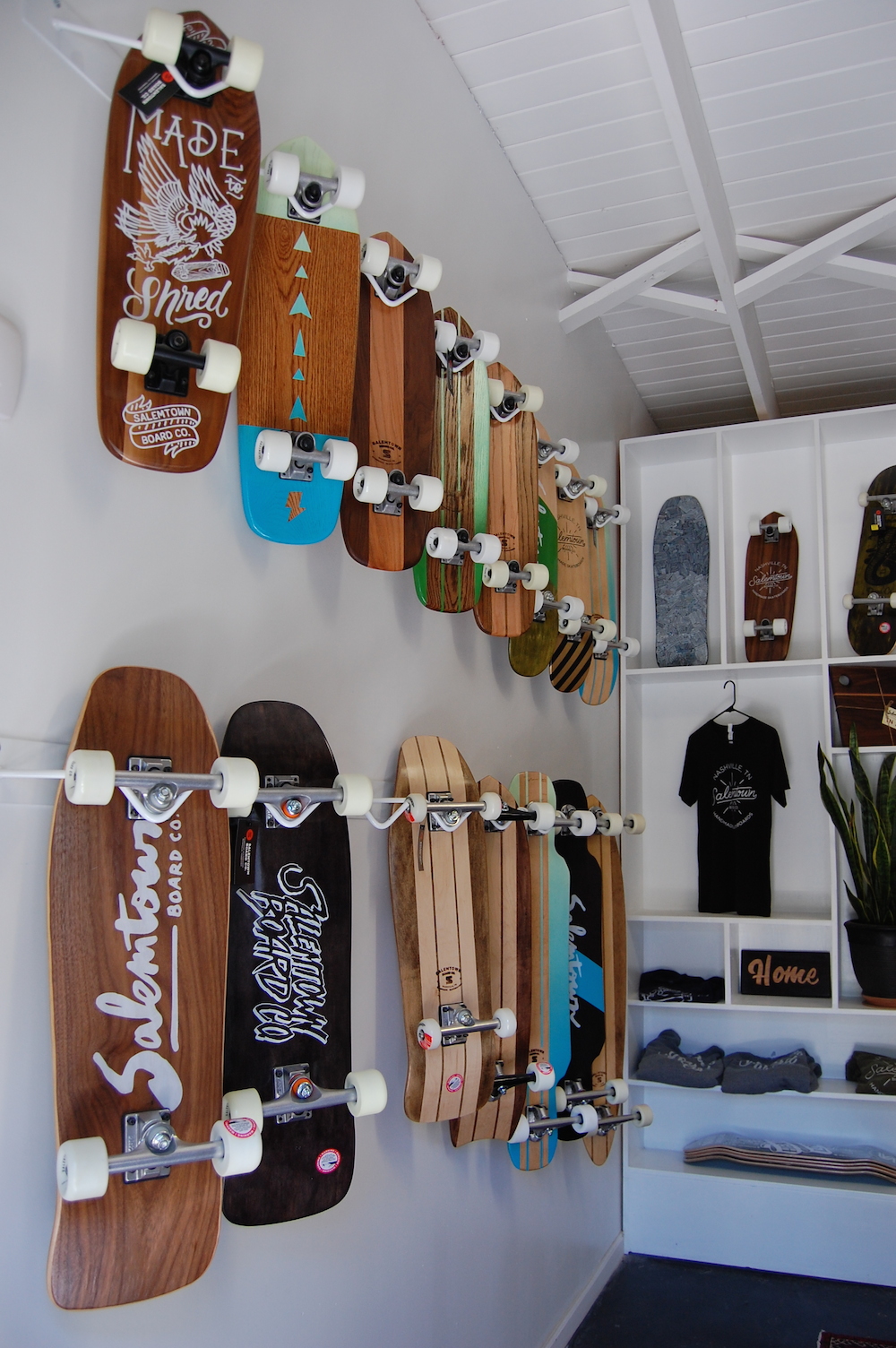
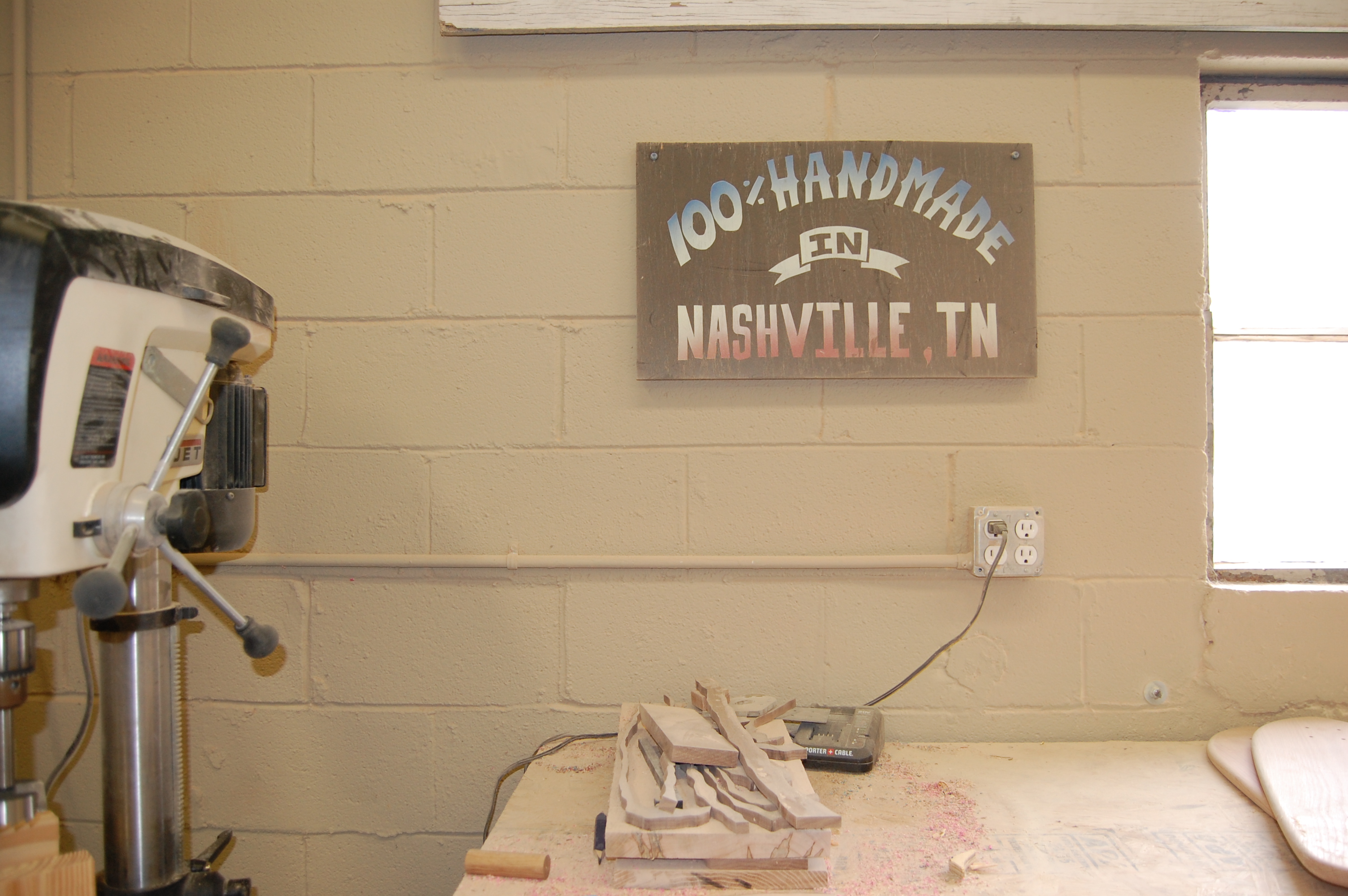
Salemtown Board Co. makes and sells handmade skateboards in North Nashville. The boards themselves look like art pieces, hand-cut and sanded maple decks painstakingly screenprinted and veneered in the small woodshop at the front of the company's property. Since opening, the company has also grown to sell apparel, accessories, and home goods, including handmade cutting boards. A glance at their online store shows a wide variety of boards, many of which celebrate the company's home neighborhood of Salemtown. 

Anderson and his brother Schuyler, who now run the company together, keep Salemtown at the heart of all of they do. While the company was partially founded with the goal of creating beautiful skateboards that would, as Anderson puts it, "get people outside," its primary mission was more local: employing young men from the Salemtown neighborhood. "I had a background in social work and really felt the tension between how to see, specifically, young men go from being the recipients to being the primary drivers in their own success," Anderson explains. "I just felt like the best way I could be of help to my neighborhood was to start a business that intentionally created employment for young men who needed it. There was definitely, ‘How can we impact and invest in the community?’ Also, especially as an outsider to the community — as someone who moved in as opposed to someone who was raised there — part of it was figuring out what are ways in which I can be involved."

The company had humble beginnings, operating in its infancy out of a borrowed woodshop and growing through word of mouth. "Initially, when we got started, we painted boards in our front yard and carports and drove about an hour-and-a-half outside the city to go to a borrowed woodshop to make boards," Anderson explains. "With the young men, they were just guys we knew from the neighborhood. There has never been any secret to finding people. It was just living in the community and hiring people that we knew that needed jobs."

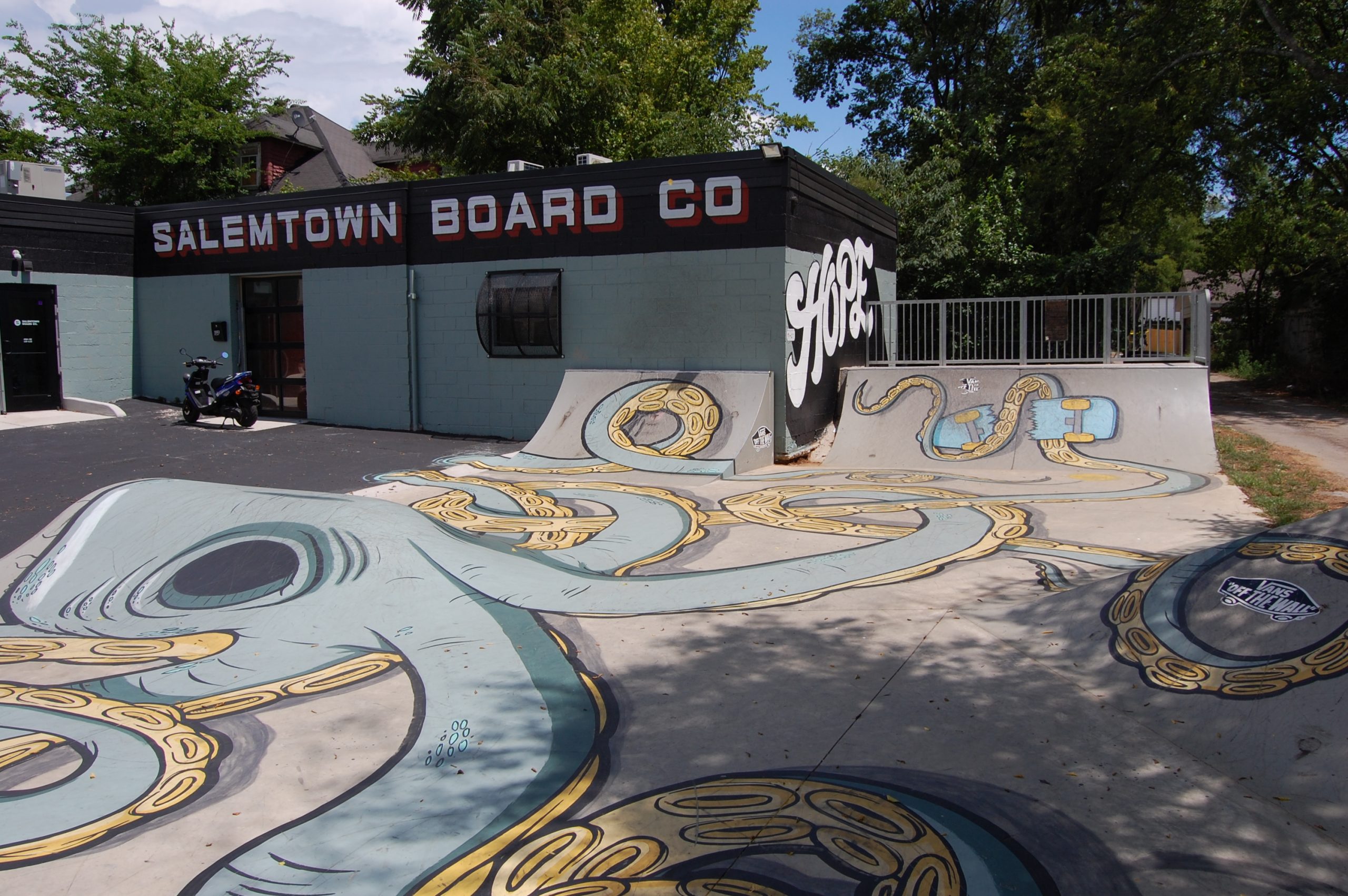
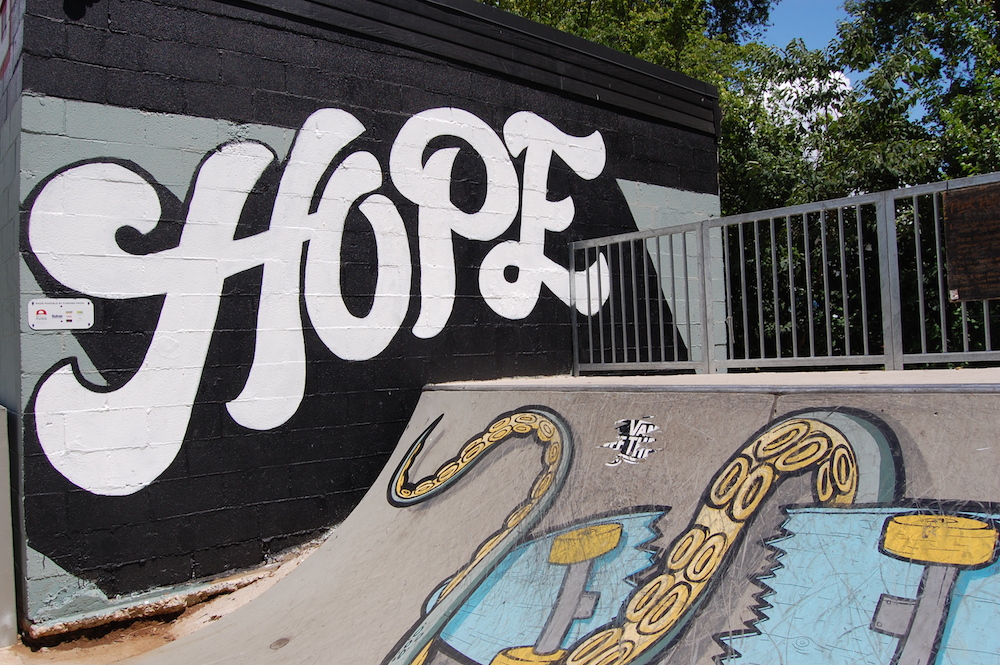
For the next three years, the company continued to grow, with its home city of Nashville growing right along with it. The landscape of the city changed, and Salemtown Board Co. felt those changes acutely. Last year, Salemtown Board Co. made the move from its namesake Salemtown to North Nashville's Buchanan Street, where several other local businesses were also setting up shop. Anderson and his team felt that the neighborhood surrounding their new North Nashville storefront, workshop, and skate park (which was donated by country star Kip Moore) was better suited to the company's mission. "Part of it was the growth of the company, but also a big part of it was, with what we set out to do, there was just no longer a need for the type of employment that we were providing in Salemtown," he explains. "As a result of gentrification, the young men that we started the company to create employment for no longer lived in that area. So there was the need to relocate."

Like many other Nashville neighborhoods, Salemtown was hit hard by the city's growing pains, with long-time residents getting forced out of their homes to make way for new construction. For the residents who managed to stay in their homes, new neighbors often meant new problems. "The final kick in the butt was when we had an employee arrested in that neighborhood for a crime that he did not commit," Anderson says. "He generally fit the description of the person who had committed the crime. It was a really traumatic experience for everyone involved. He ended up spending three weeks in jail before they were able to prove that he couldn’t have been there with Wal-Mart security camera footage. That experience still haunts him. There were news stations that just refused to take the story. This is a kid who is not a felon. He’s not a bad kid. But for the rest of his life, when you Google his name there’s going to be a picture that pops up of his mugshot. His public defender didn’t even believe him."

Since the incident, Anderson's employee has decided to move not just out of Salemtown, but out of the state of Tennessee, planning to go to Texas soon. Like many other residents of his neighborhood, he no longer felt welcome in the place he used to call home.

"A cultural shift happened," Anderson says. "Those who have lived there their entire lives or those who had grown up there were now seen as threats and as dangerous and as suspicious by those who were coming in because they were lower income. We felt the need to be in a neighborhood where our employees were comfortable and, as much of a bummer as it is to say, where the neighborhood would be comfortable with our employees. So that’s what brought us over into North Nashville. We wanted to be back in a place where there was a need for us — there was a desire for us — and we could limit as many barriers to employment as possible. Distance is one of those barriers. We want to be in the backyards of people we want to employ."

Proximity is at the heart of Anderson's mission — for his business, for himself, and for his family. Having spent his early life in what he describes as a "broadly white, upper-middle class" neighborhood in Nashville where there were "just enough people of color to allow [him] to think that everything was okay," he's grown to understand how deeply affected his city — and our larger society — is by racial inequality, and recognizes the place of privilege that the system affords him. 

"I’m the fruit of a system that separated and segregated for hundreds of years for no other reason than because I’m white. I think, by and large, what people need to realize is that we live in a world that is still … especially in the South, we live in a world that is very intentionally segregated," he says. "It’s tough and heartbreaking, but I think that there is such a culture and knowledge gap and a worldview gap within our culture. Within America today, there’s such a broad difference of understanding how things are. It’s interesting in that, in my neighborhood, the way that people understand the world to work is completely different than the neighborhood that I grew up in. We’re striving to stay in the middle, as a business. I’m trying to be a good example of what it looks like to engage these things, but in a compelling way. Something that we’re trying to live out as a company is we are trying to address generational poverty that is tied to a history of systematic racism."

His belief, which fuels his work at Salemtown Board Co., is that "empathy and understanding, for the vast majority of us, those things will follow proximity." He takes steps every day to, as he describes it, "desegregate [his] life," and advocates for others to do the same.

"When we can move racial equality out of the realm of a hypothetical thing that should matter to us, to, ‘My friend is negatively affected by the system,’ that’s when we care," he says. "I can sit and have coffee and argue about higher level economics and whether we should elect Bernie Sanders or whether we should elect Rand Paul and not lose any sleep over it. But when I start talking about the systematic inequality in education, I can get teary really quickly because I’m not talking about a hypothetical thing. I can put names to these issues. I can see how these very real systems are affecting very real people in negative ways."

While Salemtown Board Co. has had its struggles, Anderson and his team are passionate about the work they do and the difference they've made in their own backyards.

"I get up every day because I love what I do. I don’t employ my employees because I feel guilty and feel bad for them," he says. "I only employ people that I feel excited about investing in and are excited about their futures. In the context of what we’re doing, we’re chasing what we’re really excited about. We get to take something that’s a hobby, turn it into a career and then use the things that we love — creating and skateboarding — and use them in such a way to provide opportunities for young men that otherwise might have had the opportunities."


Read more about a changing Nashville.

SaveSaveSaveSaveSaveSave

SaveSave

Get Off Your Ass: August Is Upon Us

Melaena Cadiz // Hotel Café // August 2

The Wood Brothers // Fig at 7th // August 5

Alabama Shakes // Greek Theatre // August 9-10

Robert Ellis // Standard Hotel // August 10

Indigo Girls // The Fonda // August 11

Gregory Alan Isakov // The Fonda // August 12

Hard Working Americans // El Rey Theatre // August 13

Mavis Staples // Santa Monica Pier // August 18

Mary Gauthier & Dave Alvin // McCabe's Guitar Shop // August 19

Chris Pureka // Bootleg Theater // August 26

Claire Lynch Band // Ford Amphitheatre // August 28

The Hillbenders // The Mint // August 31

Charlie Worsham // The Basement East // August 1

Buddy Guy // Ascend Amphitheater // August 3

Patterson Hood // City Winery // August 4

Sam Lewis // The Basement East // August 4

case/lang/veirs // Ryman Auditorium // August 6

Kim Richey // City Winery // August 6

McCrary Sisters // 3rd & Lindsley // August 10

Elise Davis & Becca Mancari // Tomato Arts Festival in Five Points // August 12

Dixie Chicks // Bridgestone Arena // August 17

Tim McNary // The High Watt // August 18

Cale Tyson // The Basement // August 26

Uncle Earl // City Winery // August 29

Mark O'Connor Band // Joe's Pub // August 2

Anais Mitchell // City Winery // August 3

Aaron Neville // Apollo Theater // August 4

Lori McKenna // City Winery // August 4

Buddy Miller, Lucinda Williams, Patty Griffin, Mary Gauthier, & Dr. John // Lincoln Center Out of Doors // August 6

Elizabeth Cook // Bowery Ballroom // August 9

Junior Brown // City Winery // August 11

The Avett Brothers // The Amphitheater at Coney Island Boardwalk // August 13

Jon Stickley Trio // Joe's Pub // August 17 & 25

Buffy Sainte-Marie // Highline Ballroom // August 21

Carrie Rodriguez // Joe's Pub // August 24

Benjamin Booker // Commodore Barry Park // August 27

A Conversation with Jamaal B. Sheats, Director of Fisk University’s Art Galleries

If you've never visited Nashville's Fisk University, it's a beautiful campus rich with history. Located north of downtown Nashville, Fisk — a private, historically Black university — was founded in 1866, just a few months after the end of the Civil War. The university was home to a number of important moments during the Civil Rights Movement of the mid-20th century and counts Marion Barry, Diane Nash, W. E. B. Du Bois, and Ida B. Wells among its many notable alumni.

Fisk is also home to an incredible collection of visual art. While Nashville boasts art institutions like the Frist Center for the Visual Arts and Cheekwood, one of the city's most impressive collections of artwork — which includes works by Georgia O'Keeffe, Aaron Douglas, Pablo Picasso, Paul Cezanne, and many other renowned artists — is housed in a number of locations on Fisk's campus. 

Rhiannon Giddens filmed her video on the Fisk campus

Jamaal B. Sheats is the Director and Curator of Fisk's art galleries, as well as an assistant professor of art at the university. A 2002 graduate of Fisk himself, Sheats has held the position of Director and Curator for 10 months and enjoys being back on campus. "It’s really an incredible experience," he says. "Every day holds a new and exciting opportunity and a new and exciting challenge. I love it. It’s interesting to come back and look at it from a different perspective. I studied the collection and, when I look at it now, I can look at a Florine Stettheimer portrait and know that it influenced my work today. It’s very rewarding, to say the least."

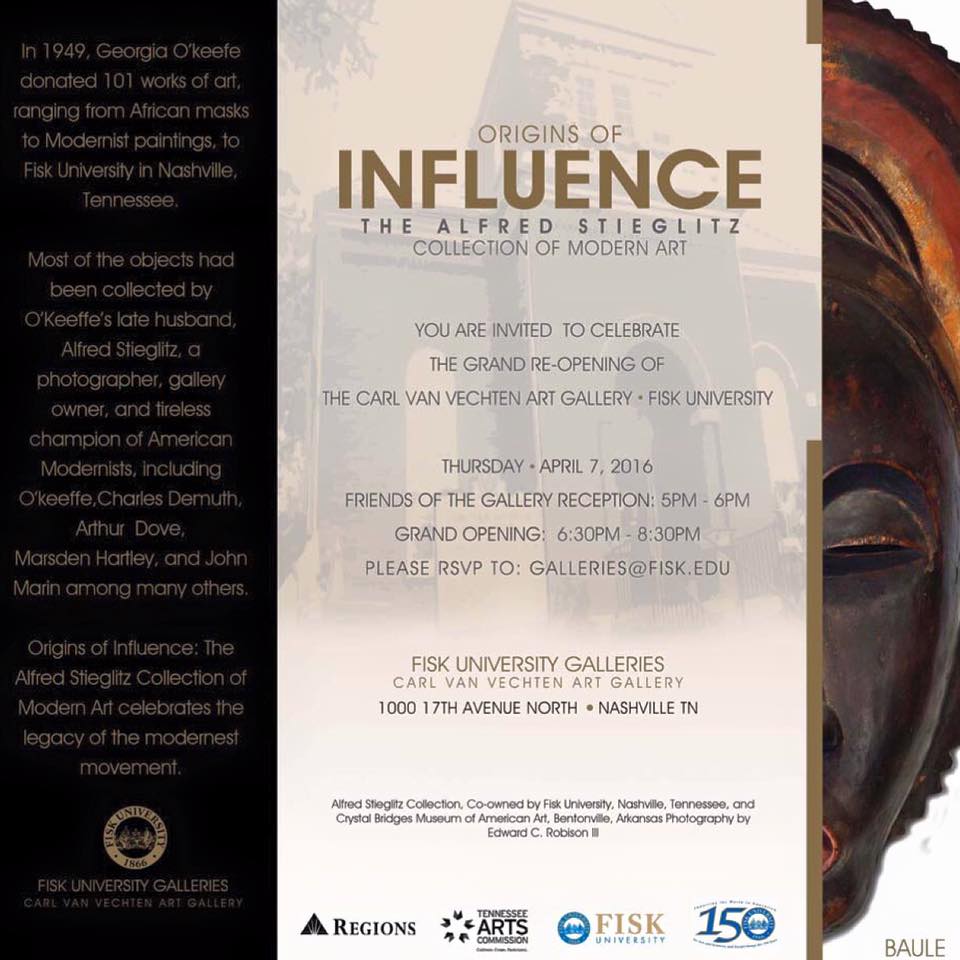
While Sheats spent his early years at Fisk studying technique — he's an artist himself, a painter and sculptor involved in Nashville's broader arts community — he now enjoys the opportunity to use Fisk's immense collection to tell important stories. "For example, we have the Alfred Stieglitz collection, that’s back. And the exhibition title is 'Orders of Influence,'" he says. "I’m looking at Alfred Stieglitz in his pioneering role as a gallery owner, a photographer, a writer, and so many other things, with his introduction of European modernism to Americans, and those European modernists, in turn, influencing our American modernists. Or Stieglitz really taking photography from documentary purposes to raising it to an art form. For Stieglitz, one of the first people to exhibit African objects in the gallery and really acknowledging that European modernists were looking at those and thinking about non-representational objects and being influenced by that work. It’s definitely a different lens than looking at it as a student." 

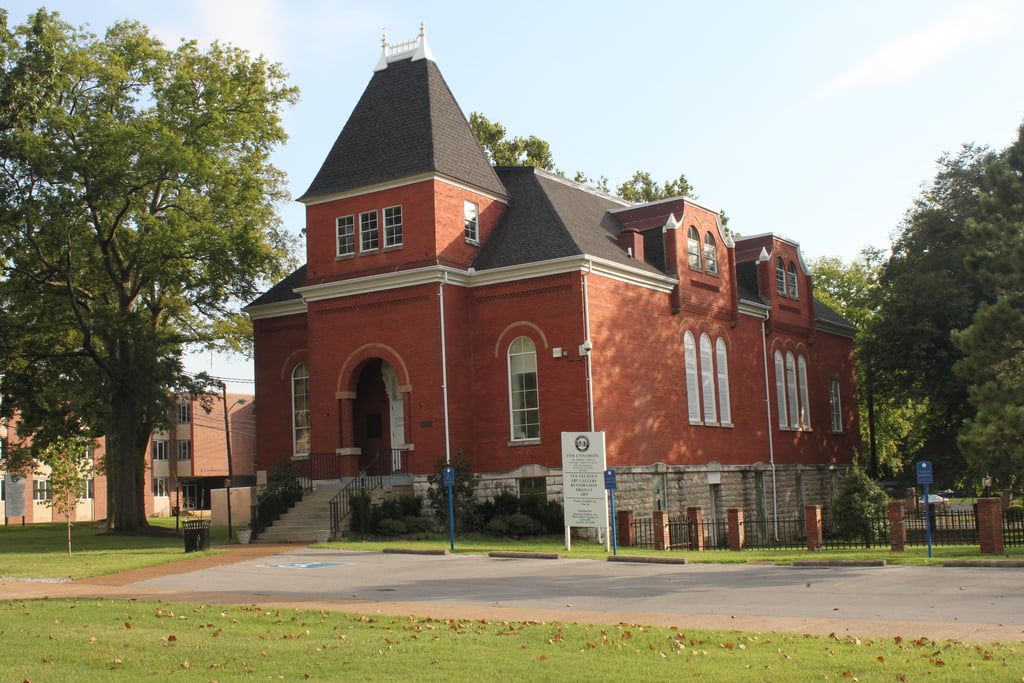
Perhaps the most famous collection in Fisk's possession is that particular set of artwork, which was gifted to the university by Georgia O'Keeffe in 1949 in honor of Stieglitz, her husband. The collection is housed in the Carl Van Vechten Gallery, a former gymnasium that O'Keeffe hand selected when she made the donation. "It was a church, and W. E. B. Du Bois organized a group of students to purchase the building," Sheats explains. "In 1889, it became a gymnasium for calisthenics. Du Bois believed you needed to be intellectually and physically fit. Then Georgia O’ Keeffe selected the building in 1949 to become to first permanent gallery on campus."

Van Vechten, the gallery's namesake, was a famed photographer himself, with 400 of his photos as part of Fisk's permanent collection. He was a personal friend of Charles S. Johnson, a sociologist involved heavily in the Harlem Renaissance and Fisk University's first Black president, and was integral in connecting O'Keeffe to the school. "[Johnson] believed that, through the arts you could change the heart and mind of a nation," Sheats says. "He was an architect of the Harlem Renaissance. When he’s talking about art, he’s talking about visual arts, performing arts, poetry, music, literature — all of that. With that, he was good friends with Carl Van Vechten, and Carl Van Vechten is the one that made the ask to Georgia O’Keeffe. He was also instrumental in bringing Aaron Douglas to the campus to later go on and found the art department."

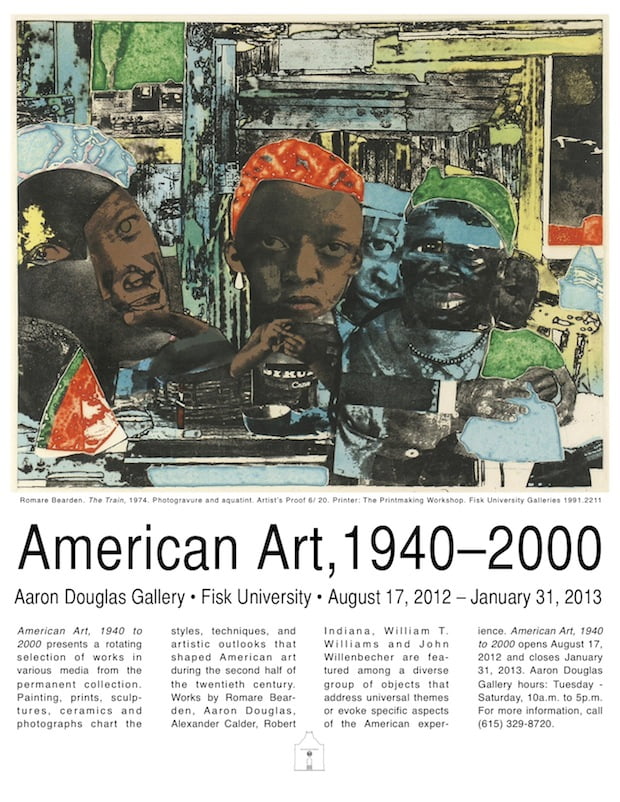
There are a number of works by Douglas, another central figure in the Harlem Renaissance, on Fisk's campus in the Aaron Douglas Gallery, established within the John Hope and Aurelia Franklin Library in 1994. The university also has vast collections of African and African-American art, including traditional African artifacts and works by artists like Hale Woodruff and James Porter. Many Fisk alumni and faculty have works in Fisk's permanent collection, as well. The university has been collecting art and artifacts since the 1870s.

The Stieglitz collection, which features Picasso, O'Keeffe, and others, remains Fisk's biggest draw, however, with the gallery notching over 2,500 visitors from 10 countries since re-opening (after a contentious two-year stint at Arkansas's Crystal Bridges Museum of American Art following a legal battle with O'Keeffe's estate) in April of this year. Sheats does not see that absence, which will recur every two years, as a detriment to his art students or to campus visitors, as the university has such a large collection outside of O'Keeffe's donation. "The Stieglitz Collection is only 101 works out of 4,000," he says. "When the collection leaves, it gives us the opportunity to show some of the other work in our collection. We have a strong foundation in African-American art. We have a strong foundation in work that was produced during the Harlem Renaissance. There was an article that came out maybe two months ago in the New York Times that talked about African-American artists marching to the museums, and they talked about Normal Rockwell, Alma Thomas, and so many others. And these are artists that are part of our collection, because there was a point in time in American history when they could only show at an institution like Fisk."

That history is, to Sheats, just as important as the technique on display in the pieces, and honoring it is at the heart of his work as both a curator and a professor. "It’s interesting because I talked about the collection from the perspective of our art majors," he explains. "But I had a faculty member ask me to pull work from two areas: the Civil Rights Movement and to look at more contemporary artists around Black Lives Matter to see what they were doing — to parallel those two periods of time. When there’s a place where there are no words, when you can’t accurately describe how you feel, I believe that art fills that void. It’s a way to tell a story when you can’t actually say the story. I think it’s very important at this time."  

During a Summer of peaceful protests held in response to police violence against unarmed black men, Sheats sees art as an important tool to document the important work being done, both as a way to honor those fighting for equality and to educate generations to come. "When you talk about protest, this is something that is not just for African-Americans or for minorities," he says. "It is a perennial thing that’s happened over and over throughout history, and this is visual documentation of that."


Lede photo credit: joseph a via Source / CC BY-NC-SA

How to Have It Both Ways: Darrell Scott in Conversation with Elizabeth Cook

If you’d happened into the bars where a young Elizabeth Cook and Darrell Scott and various members of their families played hardcore honky-tonk music for working people some decades ago — she in small-town Florida, he wherever his dad had most recently decided they should try to make a go of it — you would have witnessed their immersive education in earthy expression. All these years later, the bodies of work they’ve each built up as singer/songwriters command the respect of a different sort of crowd — theater- and festival-goers attracted to literary sensibilities and more elevated notions of artistry. Scott and Cook, though, have found ways to work the full range of their musical experiences into what they do, including their latest albums, her Exodus of Venus and his Couchville Sessions. They got on the phone with us to compare notes.

I’ve done several of these three-way interviews, and usually the two interviewees haven’t met and I’ll have to make the introductions, but I figured that wouldn’t be necessary in this case.

Darrell Scott: That’s true.

Elizabeth Cook: We go back to the Raffi days. Was it a Raffi track we did? It was some children’s project.

DS: Yeah, I think it was Raffi.

EC: And then you played on the Hey Y’all album [her debut on Warner Bros. Nashville].

DS: Yeah, I think it was one of your first records in town or something, back in the day.

EC: Yeah, 2002.

So this was a country tribute to Raffi?

EC: Yes! It’s been a thousand years. Let me think of what the song was. Did we do “This Little Light of Mine”?

DS: Yeah, that was it. You’ve got a good memory.

The last time I saw you, we were doing a round with Guy Clark, Buddy Miller, and me and you over at the Country Music Hall of Fame.

Darrell Scott

Darrell, I’ve heard the album that you produced for your dad, Wayne Scott, some years back, who really bore a strong sonic resemblance to Hank Williams, and Elizabeth, I’ve heard songs that your mom wrote for you when you were singing as a little girl, that old chestnut “Does My Daddy Love the Bottle?” being one of them. You both spent your formative years in down-home music but eventually found your ways into serious-minded singer/songwriter scenes. How do those seemingly disparate musical worlds and aesthetic values add up in what you do?

EC: Hmm, Darrell?

DS: Well, for me, I kinda feel I’m a giant sponge. I certainly grew up on country music to the full tilt. That’s all that was gonna be on the radio if you’re in the cab of the truck with my dad or my mom. My mom leaned toward, let’s say, Tammy Wynette and Marty Robbins, where my dad was more Hank and Johnny. They met at Merle Haggard, it seemed like. But that was where I started. And then church music gets in there, and it’s Southern Baptist stuff. And my family’s from Kentucky, so it’s got some of that. And then I’ve had the singer/songwriter periods of Joni Mitchell and Jackson Browne and Leonard Cohen and all that stuff, so all that gets thrown in. And I had a jazz-fusion period. And then I went to school and got an English degree.

To me, it’s all game in order to write a song that might want to go more bluesy or more honky-tonk or more confessional. Because I’ve loved so much stuff, it all shows up when it’s time to write something that’s leaning one way or another.

EC: I think that, like Darrell, coming up and hearing the hardcore honky-tonk music, that certainly established the ground base of what would be the rudiments of how I created — the chords that I knew and how they went together. So there’s that part. I didn’t re-emerge into the church scene until I was about 12 years old and we had stopped singing around the bars and stuff as much, and my dad was going through the initial phases of recovery from alcoholism. The Church of God songs were almost rockabilly. It felt like rock ‘n’ roll compared to the honky-tonk music. It was very lively — drums and organs and a lot of rolling around and tambourines. And then I think it took just growing up to realize that I was surrounded by this rich cast of characters and they were all storytellers verbally. None of ‘em wrote songs, but daddy did like to tell stories, and he was a character. And 10 half-siblings and all the people that came in and out of our lives.

After college and being torn over whether to pursue an English lit path or the mathematical business path — and choosing the mathematical business path in a rebellion period — that was almost like a sabbatical from music for me. And I was really trying to establish a different kind of life. But once I got out of that and came to Nashville is when I started learning that there was a Lucinda Williams and getting into deeper catalog Rodney Crowell and Nanci Griffith and Guy Clark, and finding out who Townes Van Zandt was, and hearing Steve Earle. And it was like, “Oh, there’s a sense of poetry that can be applied to this.” So there were the remnants of the musical style and then the sort of observation period, trying to learn and develop the poetry skill set and the storytelling skill set and marry all those things. And that’s still where I feel like I am now, on that path.

Elizabeth Cook

I wonder if either of you have ever found yourself challenging the way people define sophisticated and unsophisticated songwriting, since you’ve been intimately acquainted with this whole range of “highbrow” and “lowbrow” sensibilities and don’t view it as simplistically as some other folks might.

DS: Well, to me, that distinction comes down to the song. If there’s a song that’s tapped on my shoulder that wants to be absolutely simple, wants to speak from a character who has an eighth grade education, I figure my job is to facilitate, so to speak, or just let that song come to life the best I can with what started in the first place, as opposed to me sitting there saying, “Hey, I can’t write this song with that language. I’m gonna have to shift it over somewhere else.” That’s not my job. My job is to follow through with the initial inspiration and, if that inspiration wants to be coming from a farmer or an auto mechanic or a steel mill worker or something like that — and those are folks and characters I know, absolutely — then I’m gonna follow through with that. And the next song might be more poetic or more worldly or something, then my job on that one is to be that way. So I feel the songs sorta tell us what to do, as far as whether it’s sophisticated or a little more jazzy or a little more dark or a little more gospel or a little more anything.

EC: I think so, too. Music can do so many different things, you know? There’s music to boogie to, music to party to. There’s music that’s engaging on a more sophisticated level, and that’s where, to me, the more intricate lyric and storytelling and the more original way that you can say something [come in], even if it’s from a character that maybe you’ve heard speak before. For me, I guess I’m just saying it totally depends.

I’ve really enjoyed lately getting more into trying to find different jumping off points. If I’m wanting to write a song like this song “Evacuation” that’s on the new record about a lady in New Orleans … I decided to just immerse myself in learning about voodoo culture, and in [learning] that terminology and ideas, the story gets a little bit richer. So the process of digging deeper is what’s been exciting to me and a way to try and grow my writing.

As I listened to Exodus of Venus and Couchville Sessions and revisited some of your previous albums, I was thinking about the introspective approach that I’ve heard from other contemporary singer/songwriters, who tend to be up in their heads and disengaged from their bodies. That’s not at all what I get from your work. You can each get really expansive with the stories you tell or the experiences and settings you describe, but always also acknowledge physicality. Is that something that either of you are conscious of?

DS: You go ahead, Elizabeth.

EC: No, you go. We’ve got a little groove going.

DS: I’m conscious, and it’s not really while I’m doing it, but afterward. I look at my work and see that it’s sort of what you described there. Another way of putting it, for me, is linear — I feel like a lot of my writing is linear. I wish I weren’t so literal, to tell you the truth. I see that quality show up a lot in my writing.

You were describing some other type of singer/songwriter — folks who seem more disconnected. I’d love to be more disconnected sometimes. I just don’t get to get there. Not ‘cause I don’t want to. When a song like that does come along, I’m like, “Hallelujah. I got one, at least.” You know? There’s a slight different between a groove and a rut. I appreciate that linear quality in my writing, when the song’s appropriate, but I’d sure like to bust out and find the songs that allow me to not feel like I’m repeating a version of myself. I’d hate to think that I’m repeating myself, but I do see that linear quality in my writing and I’d like to bust it up. If you guys have any ideas how I could do that, let me know.

[All Laugh]

EC: Immerse yourself in voodoo culture.

No, I certainly don’t know. I’ve gone through phases of ideas and theories about it where I’m like, “Well, that’s kind of a cop-out just to write about the moon and the river, because you can totally bullshit your way through that.” I want to write rich stories and make them rhyme. I think that feels more challenging; it feels more interesting. If you can learn to do that well, I almost think it’s more rare than any other. So I follow that path and try to master that and, in doing that, sometimes I feel like, “Well, this is trite, and I wish I had something original to say about the moon and the river.” I think I’m also, like Darrell, trying to figure out how to crack that nut, how to maybe be sometimes a little more metaphorical or whatever you want to call it, and still be original and interesting and sophisticated and all those things that I feel like we’re challenged to do.

Darrell, it’s really interesting to hear you describe your sense of how your writing unfolds as “linear.” I don’t think I would’ve chosen that word. What I’m trying to get at is that your songs often operate on multiple different layers — you make the listener aware of what’s right in front of them, what can be seen with the eye, but also all these subtexts, stuff that’s felt and not said. For example, when I listen to “Waiting For the Clothes to Get Clean,” I see the people in the laundromat, their physicality, but I also feel the complex emotions they’re mired in. What does it take to work all of that in there?

DS: Well, that one came in a number of ways. One was just trying to describe that couple in that song. They obviously have major problems, you know? The whole thing is about a conflict. And they’ve just gone to the laundromat, so it’s an hour-and-a-half, but the shit they throw on each other just in something as simple as washing your clothes, it tells everything about how they don’t have it together. They just live in different worlds, but they’re in the same car, the same laundromat, and share the same bed. So that one, to me, was kind of a character study. Sometimes I’ve been embarrassingly too much like the male in that song, which I despise that part of me. But men … sometimes it takes them a long time to get out of whatever they’ve seen their parents do or whatever their male bravado crap is.

When I say linear, I mean, for example, that songs goes from the beginning of the laundromat experience to them driving back. Literally, it goes from unloading the clothes to now they’re driving back home after the hour-and-a-half or so at the laundromat. So that’s what I mean by linear: This happens, then that happens, then he said that, then she said that.

EC: Sort of like chronologically in time.

DS: That’s right. Yeah.

What goes on in that song, it points to all the psychological stuff between the two characters. So I hear what you’re saying. To me, the linear in that song is that it’s a real crisp timeline.

Elizabeth, you mentioned that you’ve been trying to find different starting points for your songwriting. You’ve always painted really evocative, detailed pictures in your lyrics, but I do pick up on some new elements in this batch of songs. In songs like “Exodus of Venus” and “Slow Pain,” it’s like you’ve pared down your lyric writing to this intense sensory stuff with dark blues shadings. That’s my description of it, but I wonder how you’ve experienced it and what got you there.

EC: You always get that cliché question, “Which comes first, the music or the lyrics?” Those were examples of ones that were initially music-driven out of the gate and the lyrics followed. When I’m writing to an emotion that’s already established in a sound, it’ a little more freeing. There’s a little bit less responsibility on the lyric, if that makes sense. I didn’t have that before, and a lot of that is because of writing with the producer for the record, Dexter Green, who’s a great guitarist and way into tones and pedals and all this stuff. So it’s been a different jumping off point instead of some sort of dense narrative coming out of my journal.

As you’ve been performing this material live, how have you seen people respond to hearing different stuff from you?

EC: I tell you what, I’m really encouraged and relieved, so far. And it’s still early, but we’re pretty much running the board. It’s been very positive. I was worried that it would be, “Well, this isn’t as country. This isn’t as sunshine-y.” But everybody’s been enjoying the exploration of the darker side and what I hope is an evolution to the writing. So far, so good. Only a couple people said, “You’re keeping it country, aren’t ya?” And I’m like, “Well, not really.” I love country music. I love it. But I don’t care if something I’m writing is country or not when I’m writing it. I just don’t care.

I feel like that’s probably a perspective on writing that you could identify with, Darrell.

DS: Yeah, very much. When it’s time to write, it all gets set aside. If we’re doing it right, all the attention goes to this song, this inspiration sitting in front of us. Fantastic, if it’s country. Fantastic, if it doesn’t rhyme. Again, I’m really trying to do what the song is telling me to do. And that may sound a little, you know, like it’s not exactly me writing it; I’m certainly there, but I’m paying attention to the song. Wherever the song is going, I hope to bring whatever I got to the table to help it to come to life. My country music background can sit at the side, if it doesn’t need any of those skills. I don’t feel like I have to interject anything.

Something else I appreciate about each of your music is that you have ways of drawing together the sensual and the spiritual. You have songs that explore the power of physical connection, that don’t beat around the bush about sexual tension. Darrell, your song “Come into This Room” comes to mind. Elizabeth, I heard that kind of power in “Straightjacket Love” or, on the more playful side, in “Yes to Booty.” You each also have a way of grounding bits of spirituality in the body. Through that blurring of lines, are you sort of letting us in on the way you experience the world?

DS: Well, for me, it’s part of that quality of telling the truth in the songs. If we’re sensual beings and if we’re sensual-minded as we walk around the planet — and I am — that has to enter in. So does the spiritual, because that’s how I walk around the world, too. So I try not to be ashamed of that. Depending on our background, you can be taught to hide that, and it’s scary, and you’re sure as hell not supposed to write a song about it. But, to me, that’s just part of the deal of breaking away from the stuff that didn’t work from childhood. Country music worked; I’ll take that. And maybe the Southern Baptist stuff didn’t work so well, or didn’t stick. So I can leave that one behind, but take away the general community of my church background or the general idea of the great gospel songs or the energy of people all feeling it together. To me, I walk around with the sensuality and the spiritual, and it would be no wonder how it would show up in songs. They’re part of what I carry around.

EC: I sort of think it’s inherent, for me, in music period. It’s like music taps into all those things, and that’s why I relate to it. It taps into sensuality. It taps into spirituality. That’s why it’s almost like an awakening when you connect with it. So I think it’s inherent in making music that those things would be present, if you’re truly succeeding in being connected to it. Those things would hopefully, naturally show up. I think that’s probably why.

That’s my best guess.

That’s a good guess.


Illustration by Abby McMillen. Elizabeth Cook photo by Jim McGuire. Darrell Scott photo courtesy of the artist.
Music City Roots Launches Live Album Series

Since its inception eight years ago, Music City Roots has become an institution — for Nashvillians, it's one of the best places in town to catch amazing live music; for the United States, it's perhaps the only way to enjoy the best and brightest roots musicians from the comfort of home, whether online or, since 2013, on PBS. Now the famed show is bringing you yet another way to enjoy great roots music: their new live album series.

Kicked off in June with a release from Johnson City, Tennessee, band Bill and the Belles, the series brings listeners a handful of songs recorded at a recent Music City Roots broadcast. The inaugural release features seven songs and is available across a variety of digital platforms, including Spotify and iTunes. 

According to Music City Roots associate producer Ashlee-Jean Trott, whose background prior to joining the Music City Roots team in 2010 was in artist management and music festivals, the idea came to life after she attended DelFest and saw fans' excitement over getting to purchase live festival recordings shortly after they happened. "We have so much content every week, and we have a very large fan base that comes to the shows every week and watches online," Trott explains. "They always want to hear the music afterward." 

Trott and her team decided that the series would be selective, with a goal to release one album every two months instead of releasing recordings from each week's show. She hopes that frequency can increase to once a month in 2017.

"I book the bands for the show, so usually I know what all the bands sound like before," she says. "Usually, the bands that blow me away or blow our crew away at the show are the ones that we choose. So, this first band that we did — Bill and the Belles — I had heard them at IBMA and I really liked their music and I booked them on the show. But when they played at the show, it was one of those moments that I’ll never forget. It was just so good and the audience gave them a standing ovation. Those are the kind of bands we want to do a live album on, some kind of special moment we had on the show. "

The process for artists selected for live albums is simple enough, with Music City Roots and each artist splitting revenue from digital streaming and sales 50-50, after the cost of mixing is taken into account. "The cost is very low because we’re already recording it at the show, so that isn’t a cost," Trott says. "It’s just mixing. Once that cost is covered, we split the money down the middle with the artist for digital sales. We also give the artist the option to print the album physically for free. If they want to print it, they have to pay for the printing, but we don’t take any money from that."

Currently, the Music City Roots team doesn't plan to release physical versions of the albums themselves. They're hush-hush about which artists they plan to tap for future live albums, but Trott assures they're exciting picks. And with the hundreds of submissions Trott receives from hopeful artists on a monthly basis, there's no shortage of material to cull from. She cites the live album series as being "all about artists and making their careers explode," a feat they've already accomplished numerous times through their regular weekly shows and broadcasts.

"I saw St. Paul & the Broken Bones in Birmingham," Trott says. "I grew up in the same town as Paul Janeway, so I already knew the band, but I didn’t know the music. I saw them at a club called the Bottletree Café in Birmingham before anybody knew who they were. There were maybe 30 people in there. I went up to the bass player and said, ‘Y’all need to come play Music City Roots.’ And he said, ‘No, no, we aren’t ready.’ I booked them on the show a couple months later and I invited a bunch of people out and they ended up getting signed on that show with Traci at 30 Tigers. They were opening for John Mayer a couple months later."

So keep an eye out for the next live release from Music City Roots … it just might be the next great album from the next big thing. 

SaveSaveSaveSave

WATCH: Henry Wagons, ‘Head or Heart’

Artist: Henry Wagons
Hometown: Melbourne, Australia
Song: "Head or Heart"
Album: After What I Did Last Night …

In Their Words: "Nashville is a town full of some of the finest in music and booze. A musician's paradise! Its the perfect storm for getting in a real mess. 'Head or Heart' is a song about that time of the night when it becomes difficult to decide between your rational mind, or what's below the belt. The head or the heart." — Henry Wagons


Photo credit: Taylor Wong