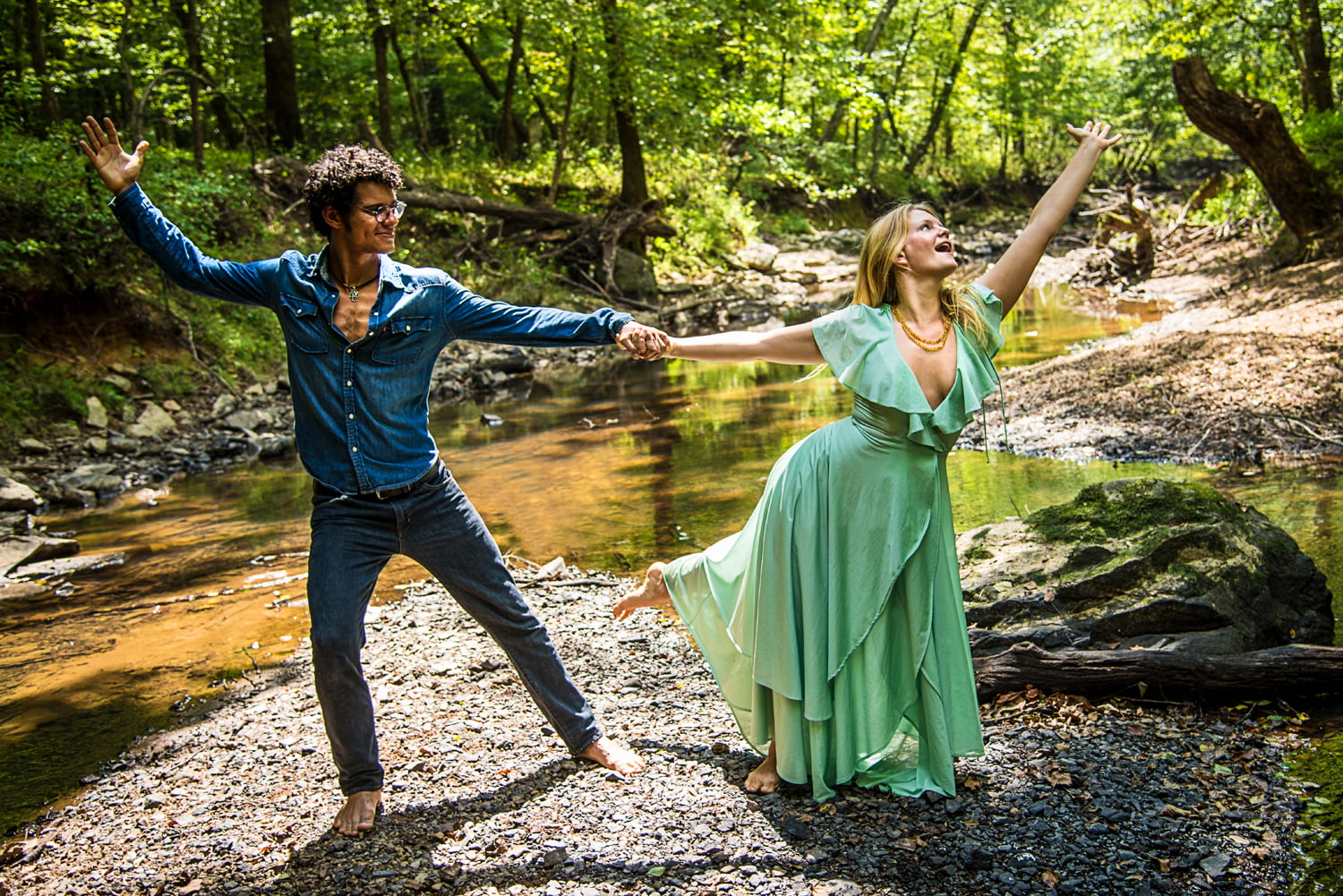
3×3: Violet Bell on Prince, Prince, and Prince

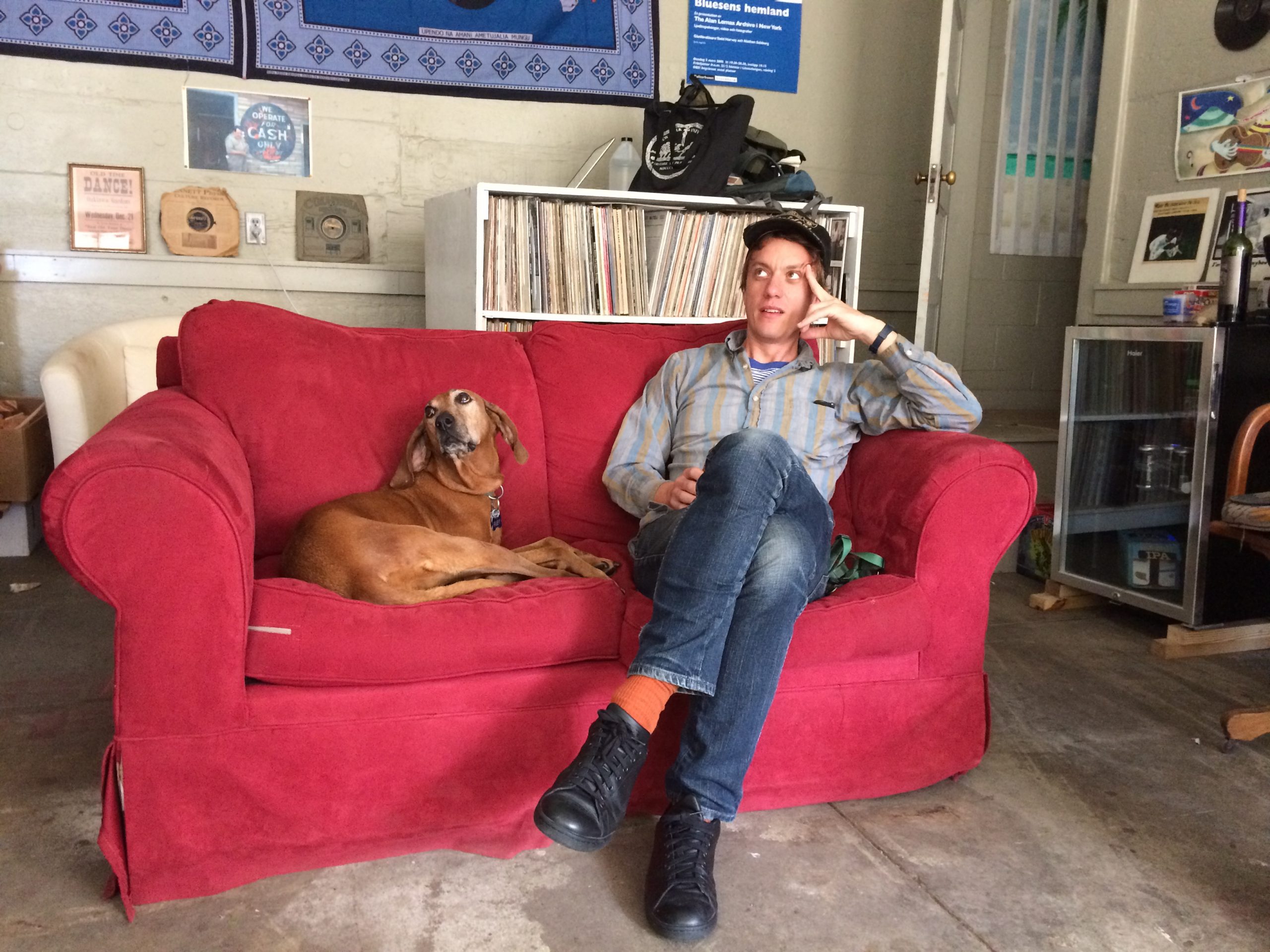
Artist: Violet Bell
Latest Album: Dream the Wheel
Personal Nicknames: “Omar” is ripe for situation-specific nicknames — Showmar on stage, Promar when we’re practicing, Gomar when we’re on the road … the list goes on. Omar’s been introducing Lizzy on stage as the boss with the sauce, Lizzy Ross. Sometimes she also has floss.

rain day

A post shared by Lizzy Ross (@lizzyross) on

What song do you wish you had written?

Omar: “7” by Prince and the NPG, or “Agua” by Jarabe de Palo

Lizzy: This is a tough question. Today, the answer is … “I Was an Oak Tree” by Jonathan Byrd. Omar played with JByrd for a few years, and we both admire his catalog of gorgeous, soulful songs.

Who would be in your dream songwriter round?

Neil Young, Debussy, Nina Simone, JJ Cale, Fela Kuti, Gillian Welch, Lou Reed, Béla Fleck … how many songwriters can we have? The list goes on! Prince! Dolly!

If you could only listen to one artist’s discography for the rest of your life, whose would you choose?

Prince, Prince, Prince. So many different flavors, concepts, and motivations. We love that man’s willingness to go out there into uncharted musical and conceptual territories and bring back some light. Or Béla Fleck. His discography runs the gamut of styles and he’s got music for every emotion.

220 miles to Boyton Beach! Playing at the Living Room tonight, 8-10

A post shared by Lizzy Ross (@lizzyross) on

How often do you do laundry?

We’ve gotten better about it! About once a week now for the both of us! Any longer and the car can get …gnarly. Folding it is the real challenge. As we tour more, what’s the point of having more clothes than we can fit in a duffel bag?

What was the last movie that you really loved?

We both loved Secret of Kells — spectacular Irish music, faeries, ancient secrets buried in dusty old books? Yes, please. Omar loved Hateful Eight. Tarantino films are always full of surprises and nuggets.

If you could re-live one year of your life, which would it be and why?

Lizzy: Maybe next year? I’m excited to find out. It seems the best is yet to come. I have loved being alive, so far, and I’m excited to be here and now. Life keeps unfolding before us, and I wouldn’t change where it has brought me so far!

Omar: Pass.

What’s your go-to comfort food?

We LOVE Pho. On the road, however, all those noodles can make us sleepy behind the wheel. Green curry is a serious contender. On tour, we sometimes eat it every day… sometimes more than once a day! We like the spice. We’re beginning to wonder if we need a green curry intervention.

Kombucha — love it or hate it?

Love it! Fizzy mushroom tea?? Count us in! Before we got so busy touring, we used to make it at home!

Mustard or mayo?

Both! They’re like us: complementary.

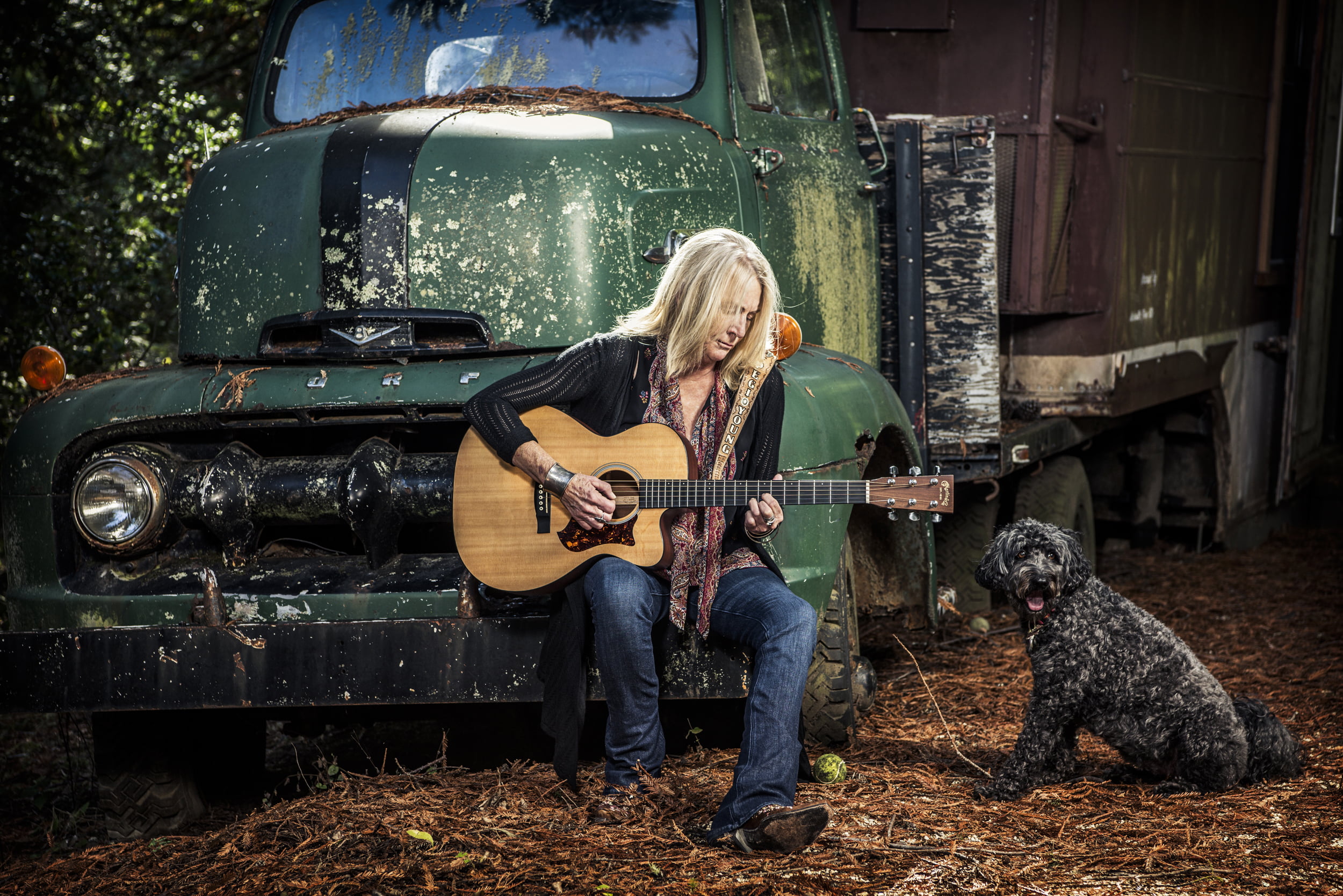
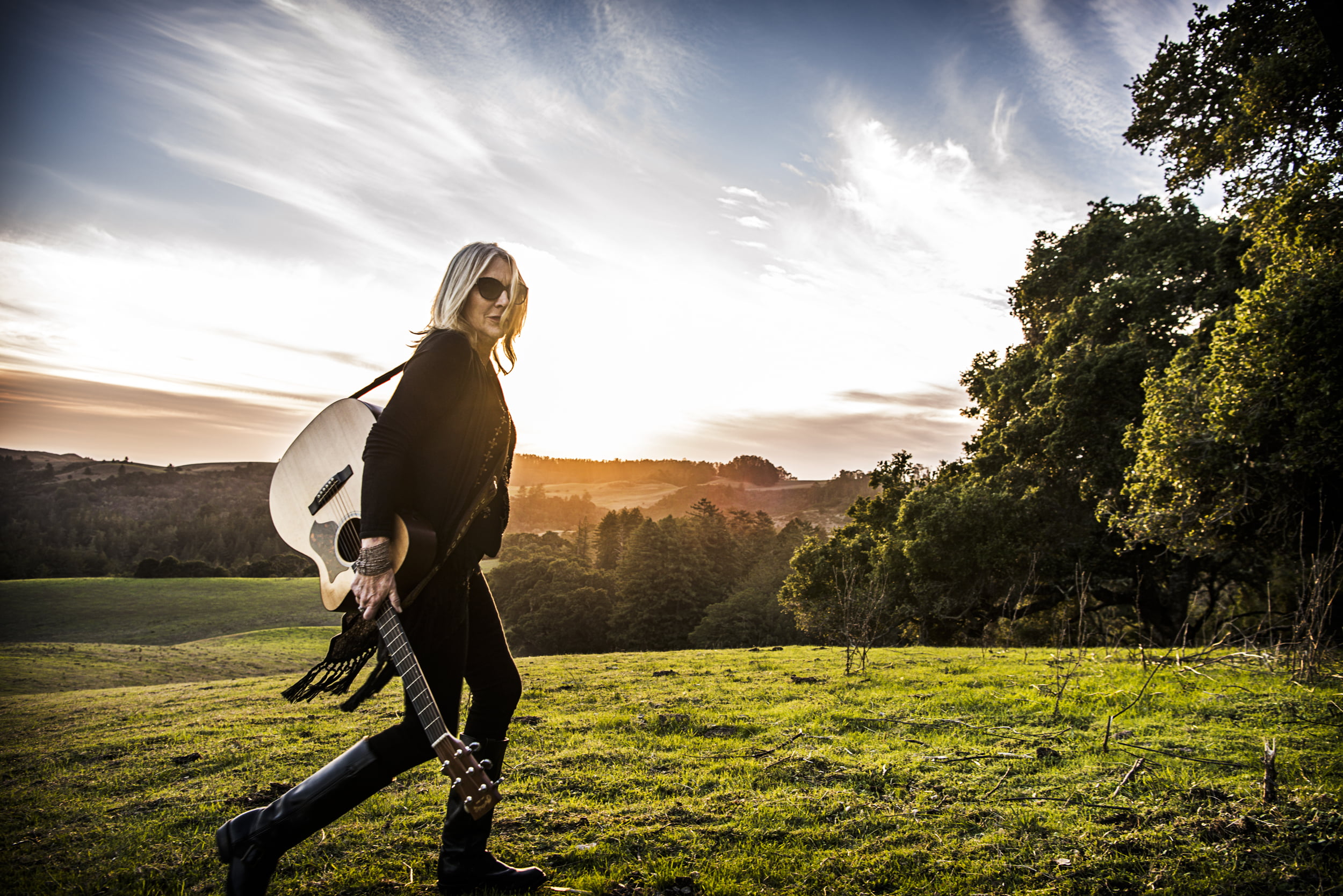
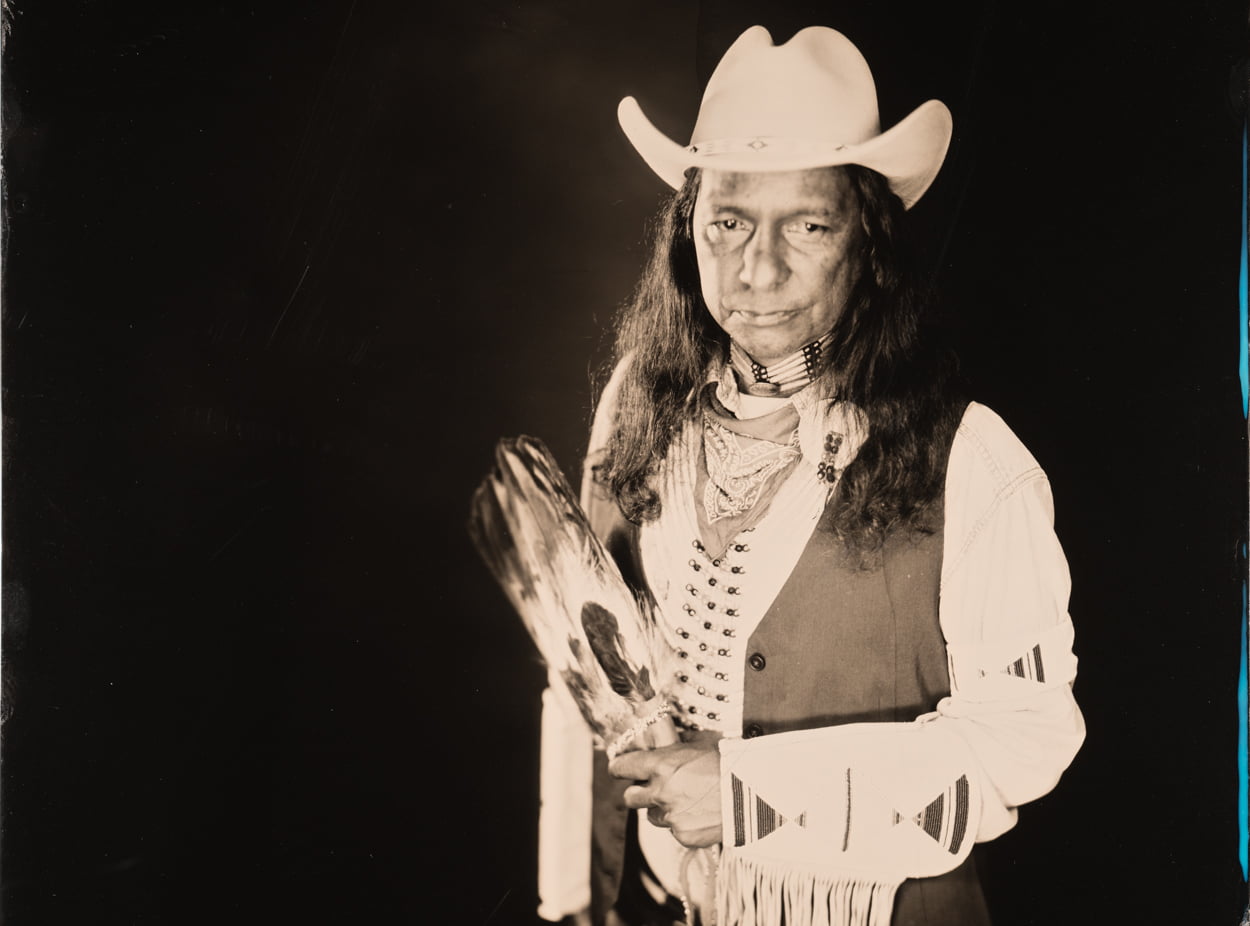
Counsel of Elders: Pegi Young

There’s no more apt summary for Pegi Young’s newest album, Raw, than the title itself. An honest songwriter through and through, she didn’t pull any punches when she faced grief head-on following the life-altering news she received in 2014: Her husband Neil was filing for divorce. The 12 songs that resulted from that kind of hurt — recorded with her band, the Survivors — move from the accusatory “Why’d You Have to Ruin My Life?” to the bare “A Thousand Years.” An electric blues guitar accentuating the latter reflects her bruise, still purple and tender, while she tries to parse out what reasons might exist for this change of heart. “Took a sip of her leftover tea. Thought about her new reality. He’s in her children’s faces. He’s in her heart and soul,” she sings, her voice edging near despondency.

But while Young allows herself to linger in the hurt, anger, and shock that defines the first half of the album, she doesn’t stay there. This is no bitter pill, but a reflection gazing outward and inward. And for all the clichés about strength that follow from such tragedies, there’s something to be said about finding the fortitude to simply get up, get out of bed, and begin the act of self-discovery once again. On “You Won’t Take My Laugh from Me,” the way Young pronounces “laugh” comes close to making a larger proclamation: “You won’t take my life from me.” While 2014 left her with different endings than she anticipated, she’s found ways to forge new beginnings. Raw ends with two covers, Nancy Sinatra’s “These Boots Were Made for Walking” and Don Henley’s “Heart of the Matter,” notes of independence and forgiveness, both of which Young applies to herself, as well as to her situation. There’s a reason she runs with a band called Survivors and, with her newest work, listeners can see why.

When did you realize you needed to write your way through this hurt?

I’ve always written, so I started writing pretty quickly. That was about all I could do for a while. I was pretty frozen. Thank goodness I had that — and have that — as an outlet.

But, from a creative standpoint, tragedy can affect output since our drive to create is so often so tied energy, motivation, etc.

I didn’t have songs per se, but I had loads of words. We went on a little tour, and then we lost our bass player, Rick Rosas. A lot of losses in 2014; it was pretty rough. Spooner Oldham and Kelvin Holly and I went back to L.A., and we holed up in a hotel room. That was in early 2014, and that’s when my words started to take the shape of songs. It was a real collaborative process. I’d never done that specifically before. I usually came into the studio to present what I wanted to try, but I’d have a skeleton of a melody. In this case, I didn’t have anything. I just had these words. I didn’t play a note on this record. I went into a depression so I didn’t play — I didn’t do a lot of things that I previously enjoyed doing — I had to climb my way out of a pretty significant depression.

That actually reminds me of what British folk singer Shirley Collins experienced after her husband left her — she lost her voice. Have you managed to find your way back to your instruments again?

I have. Yeah. We just came off a tour, and I played guitar on some songs. I have a couple of pianos here in my house. I took piano as a little girl, so I understand the keyboard in ways that I don’t really understand the guitar neck, even still. I know chords, but if I don’t know, I fish around and find something that sounds good, and bring it to Kelvin and say, “I don’t know what this is …” and he translates it for the rest of the band. My chords are a little odd, you know. [Laughs]

How lovely that you have a translator!

Oh, he’s terrific. He, in many ways, is our bandleader. Everybody’s got their niche. Our newest Survivor is Shonna Tucker.

I was so excited to hear you’d brought her into the mix.

A dynamic bass player, just really cool. Rick Rosas left some really big shoes to fill, and she stepped in, and I think he would be pleased. Plus, she’s got a beautiful voice, so her harmony vocals with me are just terrific.

What has it been like playing these songs live? Has it felt empowering?

I cherry-picked which ones I do live. Some of them are dated to me now. I liken the record to the stages of grief, but I didn’t think about that when I was writing. It takes you through — at least I believe, and I hope it translates that way to others — the journey with me. And it’s not just my journey. A lot of people go through loss and grief, whether it be from divorce or death. It’s part of the human condition; the Buddha says suffering is the first noble truth. It starts off with what may appear to be an angry song, but I look at anger as a very secondary emotion to deep hurt, so that’s where that one came from, and we don’t do that one live anymore. That feeling has gone so far into the past that I have trouble conjuring that one up. We stick with some of the other ones on the record that are more reflective. I think the record ends on a note of forgiveness.

When you talk about some of the earlier songs being angry, were you ever concerned or aware about playing into the stereotype of the scorned woman?

Well, I think that goes back to what other people think about me as being none of my business. It’s music, you know? I can’t control how people receive what I put out. I just put out what feels honest and true to me, and then how people interpret that is completely out of my control.

And the album title so perfectly summarizes your perspective anyway.

Yeah, we were pushing around for a title, and hadn’t come up with one yet. I was listening to the work we had done on a drive today — I love to listen to music in my car — and it just came to me. This record is very raw. There’s no sugar coating how I feel in this record.

I appreciate that you don’t shy away from being candid.

It took over a year to make the record. Luckily, when I was stuck and in the depression that I talked about earlier, it didn’t last. Ultimately, I believe — for me — I had to get up out of bed. I had to stop saying, as soon as I opened my eyes, “Oh, when will this day be over?”

How did you begin discovering your own strength again?
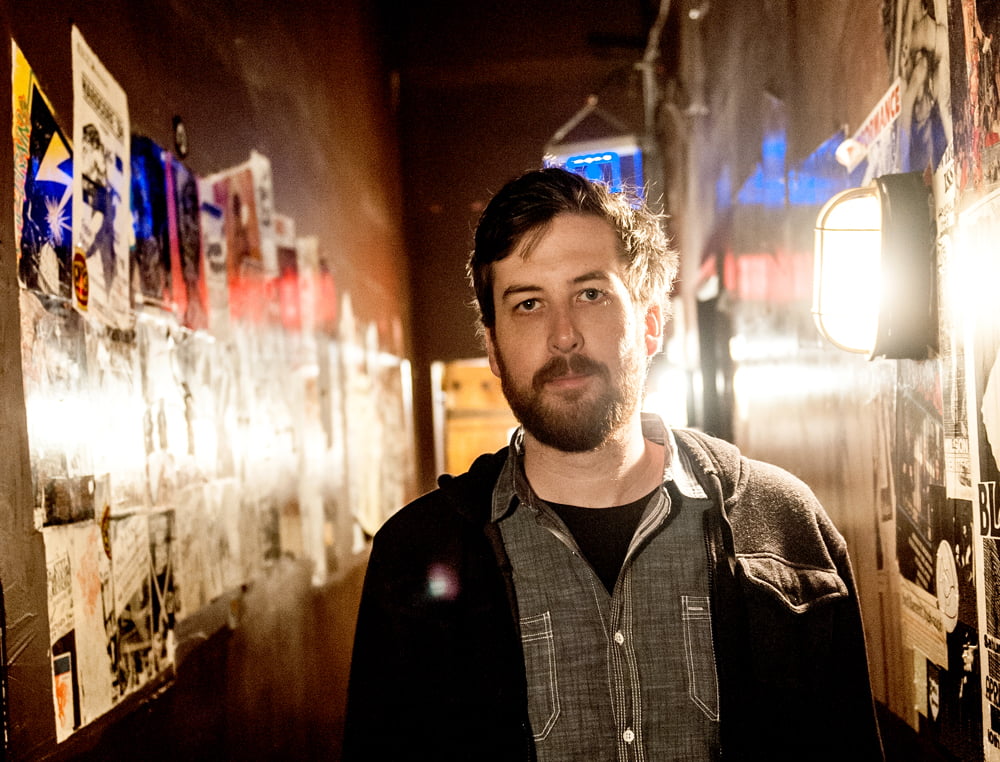
We are in control of our own happiness. Ultimately, with the help of my family, my kids, my professional support team, my friends, my siblings, everybody was there rooting for me and that really helped a lot. I had to get back up and start putting one foot in front of the other and get on with it, and ultimately accept what’s happened. Maybe not understand why … or understand fully why, I should say. In a long-term marriage, there’s always bumps. I was looking at this couple, they were in their 90s (it was an online thing), and it was “What’s the secret to your long marriage?” The man said, “A sense of humor,” which I’ve heard many many times and I agree with that, and forgiveness.

I know, but this is something no one expects to have to forgive when they get married.

Well, look, I’ve focused on forgiving myself, because there are always two parts. It’s never one person’s fault that a marriage doesn’t make it. There are things that happen in the course of a marriage, and there’s equal opportunity to take responsibility for not making it. Well, we made it to a finish line. I’m not blameless. I have to work on my own part and, in doing so, I think by forgiving myself it will definitely help in general with forgiveness all around.

It reminds me of a line you have in “Obsession” off your last album, Lonely in a Crowded Room: “It takes patience with yourself.” I’ve always appreciated that sentiment.

Yeah, that’s something I’m learning still. [Laughs]

Does it get easier?

It might be a life-long work in progress. We can all be kinda hard on ourselves. I know I tend to be really hard on myself. I strive for perfection, perhaps, but I know I’m just a human being, and we make mistakes, and we try to correct the course, and we try to do better, and that’s all we can ask of ourselves, I think.

Absolutely. You have to be kind to yourself because there’s so much expected of everyone.

And maybe women more than men, I’m not sure, because I’ve only inhabited a woman’s body, but I think maybe it’s just part of societal expectations. I’m almost in my mid-60s, and there were certain expectations placed on us. My daughter, for instance, I think she’s fairly representative of this newer generation — she’s in her early 30s — and there’s not the same expectations placed on her, in terms of roles and who does what, and how we’re supposed to be the nurturers and the caretakers. That’s a lot of work trying to take care of everybody else’s happiness! [Laughs] We really have no control over it.

Right, mothers tend to sacrifice their happiness for the sake of others.

Yeah. And not worrying about pursuing your own dreams, in terms of that being selfish. The happier a person I am, the better I am for everybody around me.

No kidding. Well, on that note, thank you for what you’ve shared on this latest album.

Thank you. I’ve been receiving really positive comments from people, when we were out playing shows. The primary feedback I was getting was that, rather than the victim or the woman scorned or whatever, it was more a message of empowerment. That’s all I could hope for: to be able to share with others my journey and that you can survive it. Speaking of: The Survivors! What a name. Who knew?

You picked it before it became necessary.

We are indeed Survivors.

LISTEN: Bern Kelly, ‘Last Day of Spring’

Artist: Bern Kelly
Hometown: Nashville, TN
Song: “Last Day of Spring”
Album: Lost Films
Release Date: June 23, 2017
Label: Underpass Records

In Their Words: “‘Last Day of Spring’ finds a character visiting the fresh grave of someone they knew very intensely, yet for only a very short time. The character is trying to make sense out of their death and the subsequent instructions for delivering roses and money to her family members.

I saw Bert Jansch open for Neil Young a few months before Bert passed away. I always marveled at his acoustic playing. Instead of using a 12-string guitar, I just stacked multiple parts on top of each other to simulate that feel. Lyrically, it’s very sparse yet direct. I wanted to set the scene, but let the listener fill in their own details.” — Bern Kelly


Photo credit: Michael Butcher

Blitzen Trapper Head All Across This Land

Since they came on the scene 15 years ago, Blitzen Trapper have made music that blends country and folk ideas with an arena rock attitude. Their newest album, All Across This Land, cuts a broad musical swath through American music, from Springsteen's Jersey to Michael Stanley's Midwest (with even a bit of Jolly Old England in the mix, too). 

You and the band are on road as we speak, right? Somewhere between Austin and Alabama?

Yep, that’s right.

Is it still fun being on the road?

Yeah, the shows are fun.

People are reacting enthusiastically?

Yeah, definitely.

I guess you could say you’re all across this land to promote All Across This Land. [Laughs]

Yeah, pretty much. [Laughs]

Did some of these songs get worked out on the road before they were recorded?

No, no. I wrote them all during a spell when we weren’t touring at all. I’m always trying to write songs, here and there. This is just the kind of group that I came up with, I liked, and they all kind of went together. It just kind of seemed like a record.

Are there bands that have influenced you over the years that were in the back of your mind when you were writing the songs?

I guess I wanted to give more of a kind of classic Americana approach. Older Americana, like Springsteen and Neil Young. Just kind of that eclectic guitar, rock, folk mixture.

“Let the Cards Fall” reminds me of Wilco. Tell me how that song came about.

That one is sort of hard to remember, honestly. I think I had the chorus first. That one has a very personal creative ethos to it. The chorus is kind of just me talking, you know? The verses are images from Oregon — all the wildness. The whole song just kind of came one day.

That one has images of Oregon, but it feels like you’re headed down the road somewhere in this lush, green part of Tennessee or something. That’s the way it sounds to me.

Lyrically, that whole first verse is about a forest fire coming your way.

I love the guitar and vocal textures in “Mystery and Wonder.” Tell me about that one, from a recording standpoint. How was it put together?

That one was initially acoustic guitar, bass, and drums. Then we layered on other guitars. The guitars in that one are pretty ambient. It’s straightforward, as far as that goes. There are keyboards and piano that comes in here and there. It wanted it to sound really lush and full.

I think the whole second side of the record has that sort of feel to it. The first side has got some nice textures; it kind of teases you. The second side gets real big and wall-of-sound-ish. “Nights Were Made for Love” reminds me of listening to the radio when I was a kid. Kid Leo on WMMS used to play Michael Stanley all the time, it kind of reminds me of that sort of thing.

Yeah, for sure.

The title cut has a glam-rock-ish edge to it. It reminds me a little bit of Edgar Winter during the 1970s, when he was really, really popular. [Laughs] How does that sound to you?

That one is more Thin Lizzy.

Thin Lizzy?

The guitar on it, yeah. The riffs and guitar on that are pretty great. I think that Joe Walsh was a big influence on that one.

Well, if you put Thin Lizzy and Joe Walsh together, you kind of have Edgar Winter. [Laughs]

Right, yeah.

At least when he was doing “Frankenstein” and when he was a popular artist, as opposed to when he was doing “Tobacco Road” and [Edgar Winter’s] White Trash and all that sort of business. Which songs, of the new ones, are the most fun to play on the road right now and why?

I think “Cadillac Road” and “Love Grow Cold” are pretty great live. And “Nights Were Made for Love,” those three are probably my favorites to play live.

Are you working in a lot of the older stuff with the newer stuff?

Oh, yeah.

Well, you’re coming to Portland at the end of November. Is that kind of a homecoming show for you?

Yeah, that’s the last show of the tour.

Are you going to go back out in the Spring and hit up other parts of the country?

Yeah, I think we’re going overseas in the Spring. We might do some smaller market stuff in the Spring, as well.


Photo by Jason Quigley

The Essential Crosby, Stills, and Nash (and sometimes Young) Playlist

At the heart of the matter lays this question: What of the venerable CSN (and sometimes Y) catalog can't be considered essential? They revolutionized the way contemporary music was presented — verifiably the first supergroup in a long line of supergroups (many of which, these days, aren't so super). They provided the soundtrack to free love and fervent revolution. They created the template for pretty much every songwriter who's ever gotten his folk on (especially those who like to use alternate tunings). The entire Déjà Vu album could be included in an essential playlist and no one would bark about it (so we pretty much did). How to choose?

Here's how: Grab the true essentials we can't live without ("Ohio," "Suite: Judy Blue Eyes"), add in the now immovable elements of the pop canon ("Teach Your Children," "Our House"), sprinkle in a few personal favorites (because we can), and argue about the rest ("You included 'Wasted on the Way' but not 'Pre-Road Dawns'?!" "You're an idiot: 'Just a Song Before I Go' is not essential.") We even threw in a tune we figure will piss off even the most passing of passing fans. You're gonna have to guess about that one.

Agree or disagree, we say this is the Essential Crosby, Stills, and Nash (and Sometimes Young) Playlist.


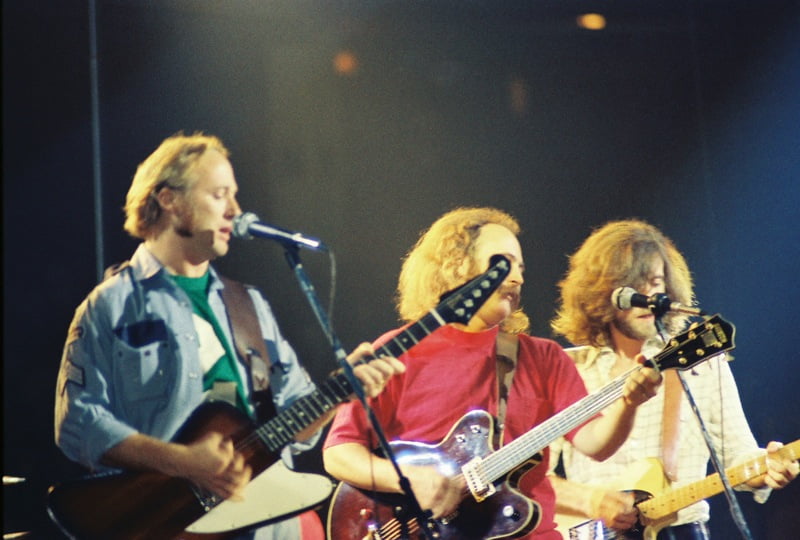
Photo of CSNY in concert (August '74) by Tony Morelli. Licensed under CC BY 2.0 via Wikimedia Commons.

Neil Young, ‘My New Robot’

Anyone ask for an Amazon Echo for Christmas this year? A Google Home for Chanukah? Some sort of talking toddler gadget that demands more batteries than the brain cells it burns? There was a time — long ago, maybe — where toys required imagination to walk around the room, and we opened a paper to find the movie section, not asked a speaker-like thing on the counter what time Rogue One is playing at the local theater. It's the age of automation, where Siri is a friend, friends are just on Facebook, and time — despite all these convincers that are supposed to help us reclaim it — never seems to allow us to spend any with our actual human, real-life friends.

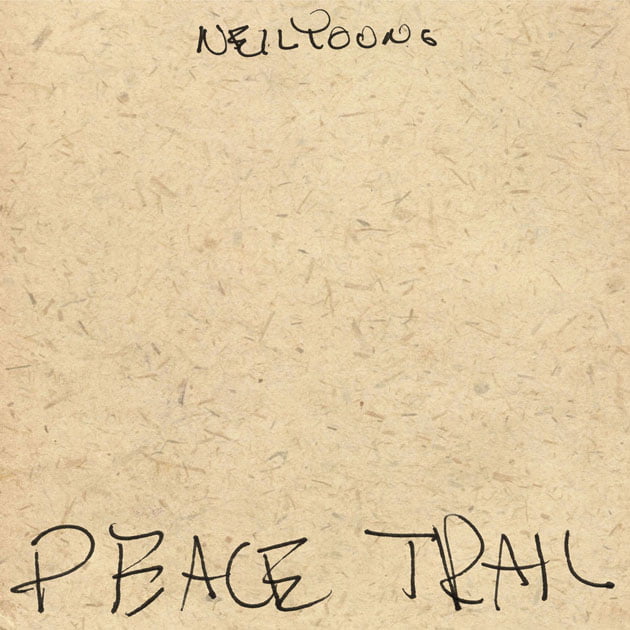
"My life has been so lucky, the package is arrived," sings Neil Young on "My New Robot," off his Peace Trail LP. "I got my new robot, from Amazon dot com." The song starts as Young tends to do — with analog harmonica — and ends with computer chatter a la Radiohead's "Fitter Happier": There's a love story somewhere, but perhaps more with an object than a person. The line, these days, is surely thin. Peace Trail, written primarily in reaction to the Dakota Access Pipeline protests, is full of seething political rage. But "My New Robot," the last song of the collection, is almost silly in Young standards — it's about misguided attention, the emptiness of a programmable world, and a generation who no longer knows how to use their hands for anything but swiping and clicking. Before you "power on" this holiday, think twice about letting a computer dictate your own wishes. With 37 albums down, Young's advice is worth heeding. Real mothers are just as good as motherboards, afterall.

Squared Roots: Jane Siberry in Praise of Leonard Cohen

True songwriting heroes are a rare breed and, in roots music, a few names take up more space than all the others combined — names like Hank Williams, Woody Guthrie, Townes Van Zandt, Dolly Parton, Bob Dylan, Joni Mitchell, and John Prine. For artists on the darker end of the spectrum, from Jeff Buckley to Amanda Shires, Leonard Cohen would also make that list, if not top it, because of how Cohen's incredibly mystical and oddly majestic way with a pen burrowed its way deep into the souls of his listeners. For proof of how the song is often bigger than the singer, look no further than the power and proliferation of "Hallelujah," his best-known composition which has been covered by dozens of singers over the past few decades. Tenderness and thoughtfulness pervade Cohen's work, winding their way around and through his sometimes eccentric, always captivating perspectives.

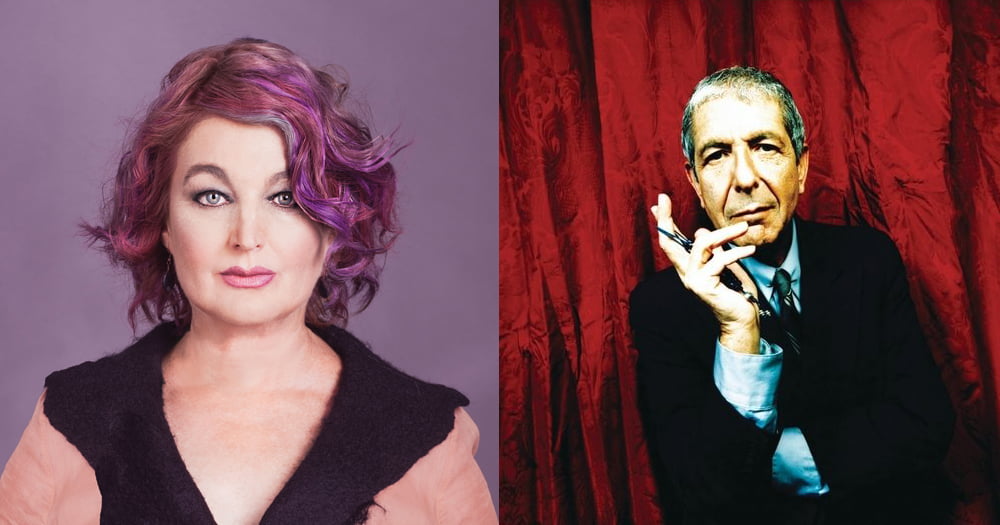
One of the singer/songwriters who came up in the wake of Cohen is Jane Siberry. A fellow Canadian, Siberry has also blazed her own artistic trail littered with mysticism. Reaching back to songs like "Bound by the Beauty," "Love Is Everything," and "Calling All Angels" all the way through to her latest release, Angels Bend Closer, Siberry never shies away from life's big questions and contemplations. Rather, like Cohen, she pours herself into them, exploring every nook and cranny through song and serving as a docent for those willing to follow.

As folks have reminisced about him since his passing, it seems like almost everyone has a Leonard-related tale to tell … either a personal encounter or a meaningful musical moment. You taught yourself guitar with his songs, right?

Yes. When I was 16, I moved away from home. I had played piano up til then. So I bought a cheap guitar and started learning from my sister's guitar songbooks. She had Leonard Cohen's, which had a very clear tablature. It even showed the rhythm of the finger-picking, which was fantastic and easy, so I learned to play his songs. The only songs I learned were from Songs of Leonard Cohen — “Sisters of Mercy” and “Suzanne” and all of those.

Did you have any interactions with him as you were coming up in music?

No, I didn't really. I just always really respected him, when I'd hear him speak in public. I think we met once or twice.

What do you think it was that made him not just so great, but also so special?

What's the difference?

Well, I think there are great artists, but there are also ones who are really special in terms of who they are and how they affect people. To me, it seems like many of the ones we've lost this year — David Bowie, Prince, Sharon Jones, and Leonard Cohen — they were all both great and special. And I think their passings have hit people especially hard. Does that make sense?

Yeah. I think it's pretty simple. It's not just about being great. We love them. We love ourselves through them.

In addition to both being Canadian, you are both more than just musicians. Authors, poets, performance artists … was he a bit of a role model for you?

I've never liked the term “performance artist,” but “entertainer” …

Got it.

A role model, as a musician, yes. I really thought he was underrated as a musician. I found his chord changes really beautiful and his phrasing beautiful. I think there's a similarity in what we draw from in the musical atmosphere, in that some people say he used a lot of “church chord changes.” That really isn't what it is. It's that there's a completion at the end of the song or at the end of choruses, like Irish folk songs. Like “The Water's Wide,” I think a lot of people would call it “churchy” in the way that the chorus lifts and the way you're allowed to draw out the end like a soft touch on a cheek when you say goodbye to someone.

There's also the similarity in that you both explore deeper emotional and spiritual themes in your songs. Neither of you are afraid of those. So, even a simple-sounding song isn't necessarily simple-minded. It feels like, to me, with both of you, that music is always sacred or has the potential to be. Is that maybe part of that church-sounding potential?

Most of the world, other than the First World, uses music as a way to pray. I think it's natural and organic. Drawn up from our primal selves. I consider music as one of the few ways to connect in a way that's meaningful to so many people. If it works on a lot of levels, it's generous and people can draw more from it — as much or as little as they want because it works on a lot of levels. To me, a good song should sound good, even if you don't know what it's about. It should feel good, whether it's the chording or the rhythm that you tap your fingers to. But, if you look deeper, it's also … I guess I'm saying that a song can be as rich as life is or humans are, if you want it to be. That's multi-purpose, so I guess that's why I said “generous,” if you're offering something in that way. I also consider humor as sacred. Those are the only two places where I go slightly bonkers. Humor and music are sacred to me.

Thinking of those layers of what a song can do … “Hallelujah” feels a perfect song. And not just due to its technical structure or melodic beauty, but also because it can be interpreted so differently depending on who is singing and who is listening.

Yeah. The first time I heard it, I loved that he was describing what he was doing musically — “the fourth, the fifth.” I thought, “Oh, yeah, that's how they do that. Amazing!” [Laughs] Then I started listening to the words … I remember being in Belfast and the opening guest was a choir from Belfast and they sang “Hallelujah.” They all had smiles on their faces. After I said, and I didn't mean to make people feel embarrassed, but I said, “That's the best version I've heard of a song about erotic requests and orgasm and its manifestation.” Because it is about that. And it's like, “WOW. You sing 'hallelujah' and it becomes” … [Laughs] He must have had a good laugh about that, too. Maybe people in the choir knew that and were having their own laugh about it, too. But it's very funny, I think, to hear a choir sing it with a smile on their face. [Laughs]

[Laughs] It was interesting to read up on the song. Different people who've done it have different interpretations of what it means to them. Jeff Buckley agrees with you, but k.d. lang has a slightly different take. But, I mean, he wrote more than 80 verses for the damn thing.

Did he?!

Yeah! Different people have picked different verses to sing and I think maybe the Jeff Buckley version has become a bit of a standard model.

That makes so much sense. I think that's the real way to operate as a musician. You offer different verses to different people and they make it their own. I think that's great. People get so precious about the right words. That's so cool.

I feel like your “Calling All Angels” is also a perfect song.

Someone took the publishing rights to “Suzanne,” so he never got money from it. But, later, his understanding was that that wasn't the kind of song he should ever benefit from monetarily. I see “Calling All Angels” the same way. But, every now and then, when it's in a film, I benefit from it, which I really like. [Laughs] But everything I make goes into more music.

I do feel like there's a constellation of musicians wherein our stars are a bit closer. And I feel that about me and Leonard Cohen and the people who influenced me when I was young, like Joni Mitchell and Neil Young — people I really trusted when they spoke to my 15-year-old ears. I trusted them. There was a connection.

I do connect with Leonard Cohen in that way. I know he talks about how everyone's “in service.” The first temptation is sort of getting the word “service” clear. It's not, “I'm gonna go out and fix the world.” It's more like, “I think I need to clean up my own backyard before I ever use the word 'service.'” I feel so lucky in my life. I always feel rich and that I need to give back. I want to spread the wealth, so to speak.


Jane Siberry photo by Sophia Canales. Leonard Cohen photo courtesy of the artist.

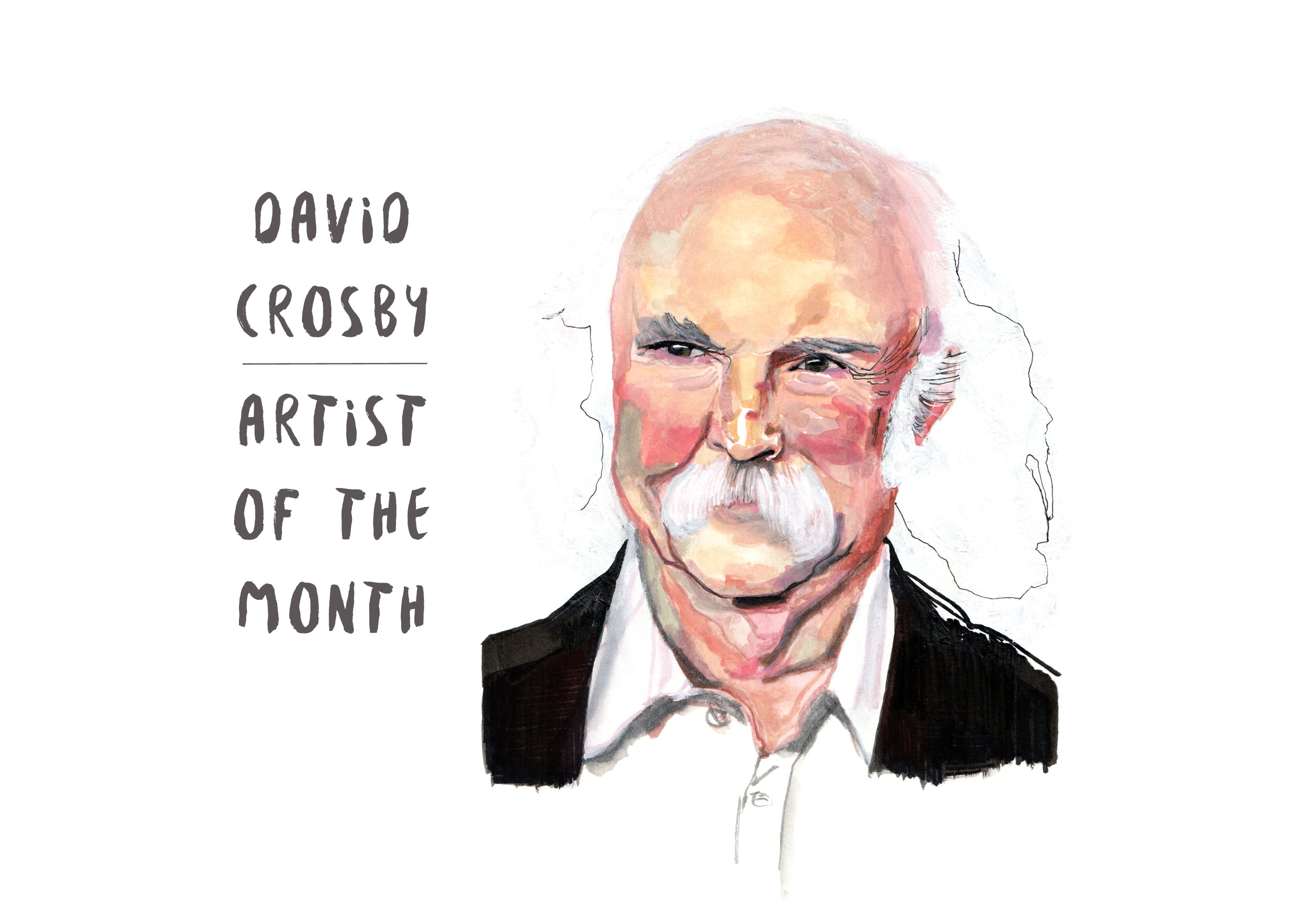
David Crosby: On Opening the Doors to the Muse

Throughout most of his time in the music industry, David Crosby’s name has usually been followed by at least two others, Stephen Stills and Graham Nash, and occasionally a third, Neil Young. Though the majority of his work has been with groups — be it CSN, CSNY, or even the Byrds — Crosby has ventured into solo territory on more than a few occasions. While his last solo effort, Croz (2014), had a full band backing the prolific songwriter, he returned in October with something markedly different, something that highlights what he’s capable of creating when all production falls away and it’s just a man and a microphone.

Crosby’s new Lighthouse harkens back to his first solo album, If Only I Could Remember My Name (1971), which is exactly what producer and collaborator Michael League (of GRAMMY Award-winning pop/jazz ensemble Snarky Puppy fame) thought they could achieve with this latest project. Recounting first approaching League, Crosby says with a calm, centered voice that becomes gravelly now and then, “I thought I would ask him to produce the record, and it would be like hiring a master craftsmen with a gigantic toolbox, namely his band, which are an unbelievable bunch of players.” But League had another idea. “I said that to him, and he said, ‘Well, no, actually. I really loved your first solo album, and the direction I’d really love to go is acoustic guitar and bass and vocals. I think we can make that kind of record.’ And I said, ‘Well, that’s right in my wheelhouse. I would love to do that. That sounds terrific.’”

It’s funny how life always has other plans in mind. John Lennon, perhaps, said it best in that regard.

Whereas If Only I Could Remember My Name exhibits a folk sound distinctly pinned to its time period — with bright guitar, meandering rhythms, and introspective lyrics engaged with the political activity of the 1970s — Lighthouse has a much different feel, even while it borrows from its predecessor. It’s as sparse as it is meditative. Built largely around Crosby’s voice and guitar, the instrumentation doesn’t get fluffy and the arrangements remain stripped down to the essentials. If a song need be loud in order to be visceral, Lighthouse instead proves the opposite to be true. Even though they are arguably quieter because of the soft melodic phrasing he builds around his contemplative thoughts, Crosby’s songwriting still resonates physically. Listening to them, one can’t help but feel a pang in the chest or a pull at the heartstrings, to borrow a worn phrase, even though that kind of reaction tends to follow from louder or more thickly arranged music.

Then there’s Crosby’s reflective songwriting — the ace he’s always held no matter for whom he’s writing — which oscillates between his family-first mindset to current events like the Syrian refugee crisis. The album begins with a love song directed toward Crosby’s wife Jan, “Things We Do For Love.” It’s a sentimental reflection about how deeply Crosby feels for her. Of course, having written about love in many different ways over the years, it’s naturally shifted with each passing album. How exactly? “There was at least one snotty egotistical answer there, but maybe I should try,” he chuckles, trying to answer the question seriously when his inclination is to be lighthearted. “I’ve gotten better at it, that’s what I was going to make a joke out of,” he continues. “It started out, when I wrote about love, I was writing about romantic love. And now, when I write about love, it’s family. Family gets to be really big for you later on in life. It really gets to be wonderful.” But he doesn’t draw a sharp line in the sand between romantic and familial love. “That particular song is romantic love, too,” Crosby adds, “because it’s to my wife and I feel very romantic about my wife.” So romantic, in fact, that his wedding ring served as the song’s primary percussive instrument, and took on a greater symbolic role as a result.

For a man who has experienced his share of personal and professional drama, ranging from health issues to a contentious public falling out with Graham Nash, Crosby understands family’s importance more than ever. “My wife and I have been together 40 years, and that’s an amazing thing in our world. Two of my ex-partners got into huge divorces last year in their 70s for Christ's sake, and I’m so glad I’m not driven to do that kind of thing,” he says, avoiding naming names and moving right back into his own matrimonial bliss. “It’s a joy, and it’s the only thing that’s as important as my music: my family.”

Besides singing about his personal life and the moments of joy he’s discovered there of late, Crosby’s political nature again arises on Lighthouse. He once said songwriters have a responsibility to play the part of town criers, those willing to call attention to something untoward going on in the greater social fabric. But getting people to pay attention when there’s so very much to pay attention to remains the larger question. “It’s very tough,” he admits. “Here’s the thing: You do feel the urge to do that town crier part of the job, but you can’t have that be all you do because your job is — even more than that — to make people boogie, and to make people feel stuff: Make ‘em wanna dance, make ‘em feel emotions, make ‘em feel the blues, make ‘em feel love, make ‘em feel triumph. And then, every once in a while, you can say, ‘Oh by the way, it’s 11:30 and all’s well, ‘ or ‘Oh by the way, it’s 11:30 and you’re electing that son of a bitch to be president?’ But if you do it all the time, then you turn yourself into a preacher, and nobody listens to preachers.”

Crosby doesn’t get preachy on Lighthouse, but the social activist does include two tracks focusing on contemporary affairs. “Somebody Other Than You” chastises politicians sending people off to war while protecting their own children, while “Look in Their Eyes” focuses on the Syrian refugee crisis. For a man as outspoken as Crosby has been on Republican presidential candidate Donald Trump, it seems like a missed opportunity to avoid taking aim, even obliquely, at a man exposing the racist underbelly still rampant in the U.S. It’s something he doesn’t remain silent about for long. “I’m surprised and very disturbed by it,” Crosby says of Trump’s popularity, not mincing his words about those who support him. “It’s an aberration, but it reveals how many people there are who are really almost illiterate or essentially quite stupid. Or they would not buy this guy. This guy can’t even control his face, let along his mouth. You can read everything he thinks right on his face. It’s very disturbing that there is that much ignorance and that much stupidity out there, that they can have a party of a whole candidate’s worth of people who don’t get it. It’s kind of shocking.”

Perhaps some kind of song about Trump will make it into his next album, which he’s working on with his son, James Raymond. “James and I are just about to finish it. It’s called Home Free, and we have it just about down.” That project will follow closely in Croz’s footsteps and include a full backing band.

At 75 years old and with over 50 years in the music industry, songwriting still brings the brightest color to Crosby’s world. “I don’t know how I got to here,” he admits, when discussing how the muse continues to choose him after all this time. He likens the moment to leaving all the doors and windows in a house open to catch a breeze. By remaining open to creativity, Crosby finds it continues to stop by for a chat, and he’s more than ready to listen. “I know that the music comes to me, and that it is a joyous process for me to make songs. I just love writing songs,” he says. “These are very visceral forces to me. I don’t really understand how come they’re so strong, but they’re there and I have to pay attention to them because it’s a gift I’ve been given and I don’t want to not use it.”


For another side of the coin, read Amanda's Artist of the Month feature on Graham Nash.


Lede illustration by Cat Ferraz.

3×3: Steve Gunn on Science Fiction, Favorite Clintons, and His Top Five Concerts

Artist: Steve Gunn
Hometown: New York via Lansdowne
Latest Album: Eyes on the Lines


Last day of EU run Nimes, France today. picby@swindler86

A photo posted by Steve Gunn (@stevegunnstevegunn) on

If you had to live the life of a character in a song, which song would you choose?
I’d have to go with "Ancient Jules" because I can see myself living in a basement one day. I’ll Invite the youngsters to come over to listen to some records and play guitars into the night, offering them somewhat far-fetched but sound advice.

Where would you most like to live or visit that you haven’t yet?
Japan

What was the last thing that made you really mad?
Losing my camera


time for a new set list I think :::::::: Hamburg::::::::::

A photo posted by Steve Gunn (@stevegunnstevegunn) on

What’s the best concert you’ve ever attended?
Hmm that’s hard. Here are five. Neil Young & Crazy Horse in Philadelphia a few years ago. Sun Ra Arkestra & Pharaoh Sanders just a few weeks ago in Brooklyn. Fugazi in the '90s. Bert Jansch in New York City, 2010. (I got to meet him also.) Jack Rose, everytime.

Who is your favorite Clinton — Hillary, Bill, or George?
George Clinton by a mile.

What are you reading right now?
Neuromancer by William Gibson — my first science fiction read.

Whiskey, Water, or Wine?
Wine

North or South?
North

Pizza or Tacos?
Pizza


Photo credit: Nathan Salsburg

3×3: Dead Winter Carpenters on Kentucky Cabins, Diverse Cultures, and the Perfection of Neil Young

Artist: Jenni Charles (of Dead Winter Carpenters)
Hometown: Tahoe City, CA
Latest Album: Washoe
Rejected Band Names: Sandpaper Mitten


Thank you Reno Airport for being kind to @dainesly #freerubdowns #feelinit #firstflytour #dwctour

A photo posted by Dead Winter Carpenters (@deadwintercarpenters) on

If you had to live the life of a character in a song, which song would you choose?
“My Rose of Old Kentucky” by Bill Monroe. It’s the perfect love song, in the perfect setting — a cabin on the hill somewhere in the hills of gorgeous Kentucky and forever love! Doesn’t everyone want that?

Where would you most like to live or visit that you haven't yet?
I’ve traveled almost every bit of the U.S. with Dead Winter Carpenters and it has been one of the most rewarding experiences in my life. Going from places like Montana to New Orleans really gives you a special insight into the diverse cultures, lifestyles, and landscapes that this country has to offer. The more I travel, the more I fall in love with new areas. Two of my favorites that I could see living in would be the Blue Ridge Mountains or New England. The next place I want to visit is India.

What was the last thing that made you really mad?
I can’t remember! Forget and move on!


Almost to @terrapinxroads after a beautiful drive up #highway1 #california #bayarea #californiacoast

A photo posted by Dead Winter Carpenters (@deadwintercarpenters) on

What's the best concert you've ever attended?
Neil Young with Promise of the Real at the Greek Theatre in Berkeley, California. It was my first show at that venue and my second time seeing Neil Young. The other time was in Montreal, Quebec, and that was holding the “all time” before this one.

What was your favorite grade in school?
First Grade! Mrs. Bronzini was the absolute best teacher ever.

What are you reading right now?
Massacre on the Merrimack. I’m related to Hannah Duston, and this book is about her story, and I figured I should probably read up on my ancestor’s history.

Whiskey, water, or wine?
Whiskey

North or South?
North Lake Tahoe!

Pizza or tacos?
Tacos. Hot sauce. Yum.