Hiss Golden Messenger: Hope, Joy, and ‘Terms of Surrender’

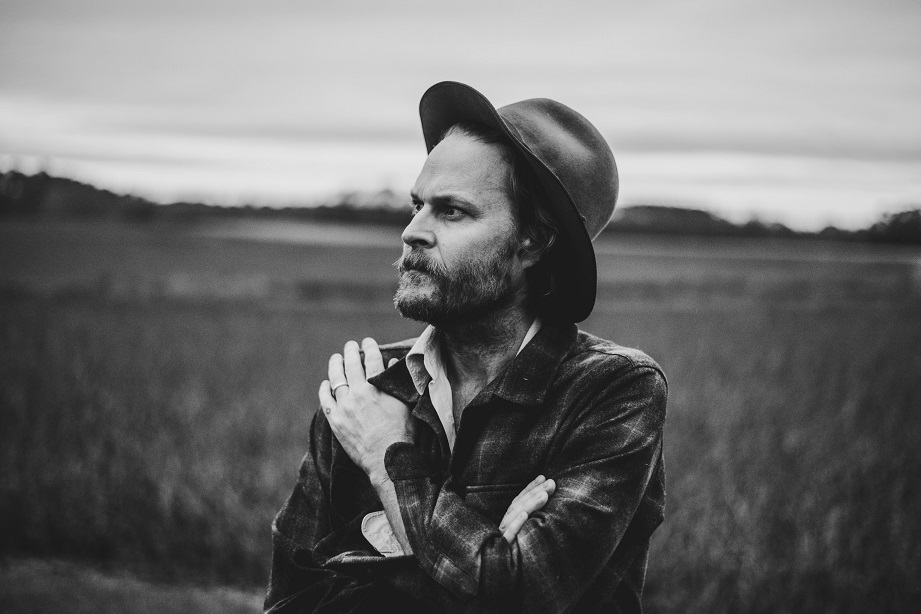
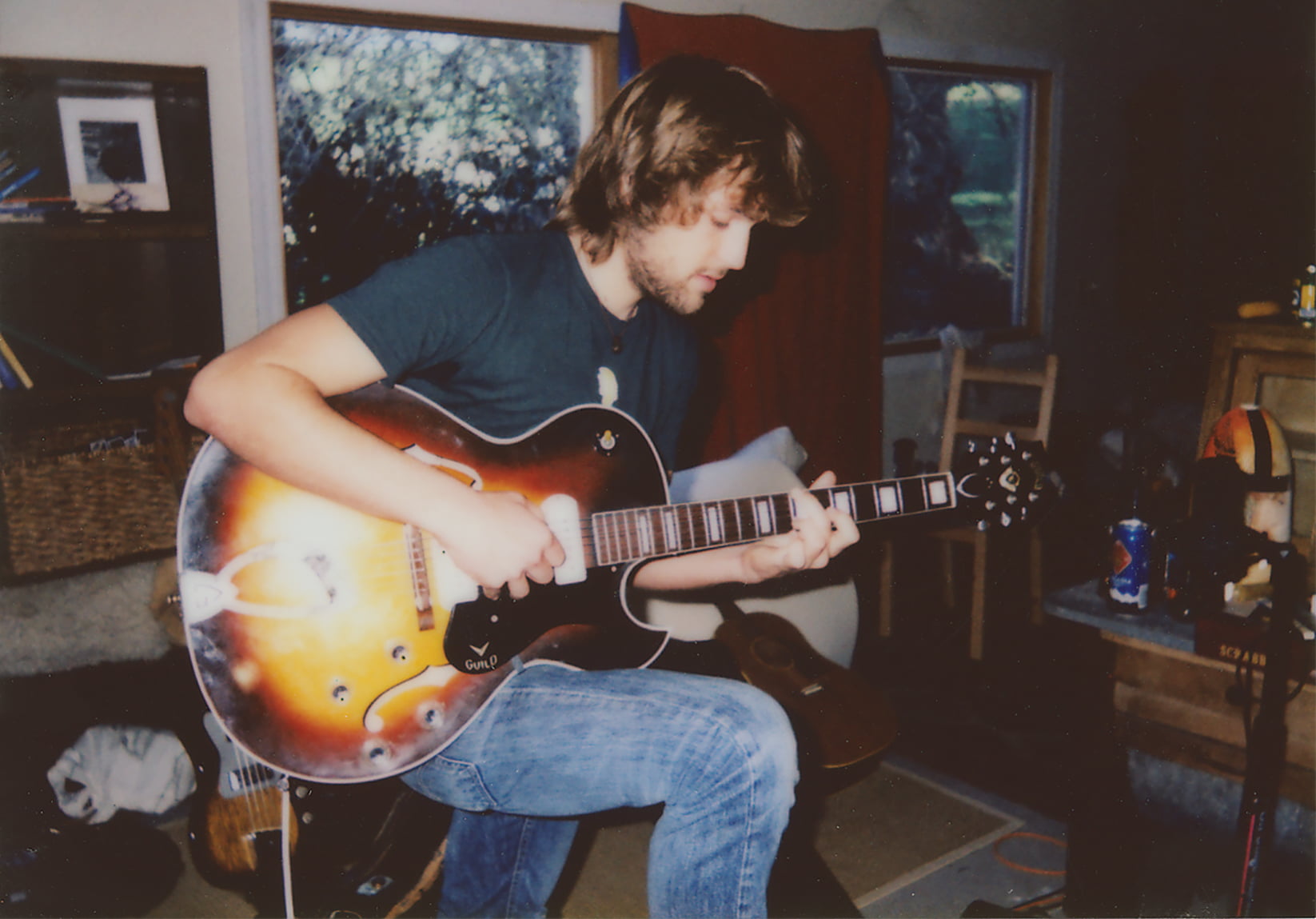
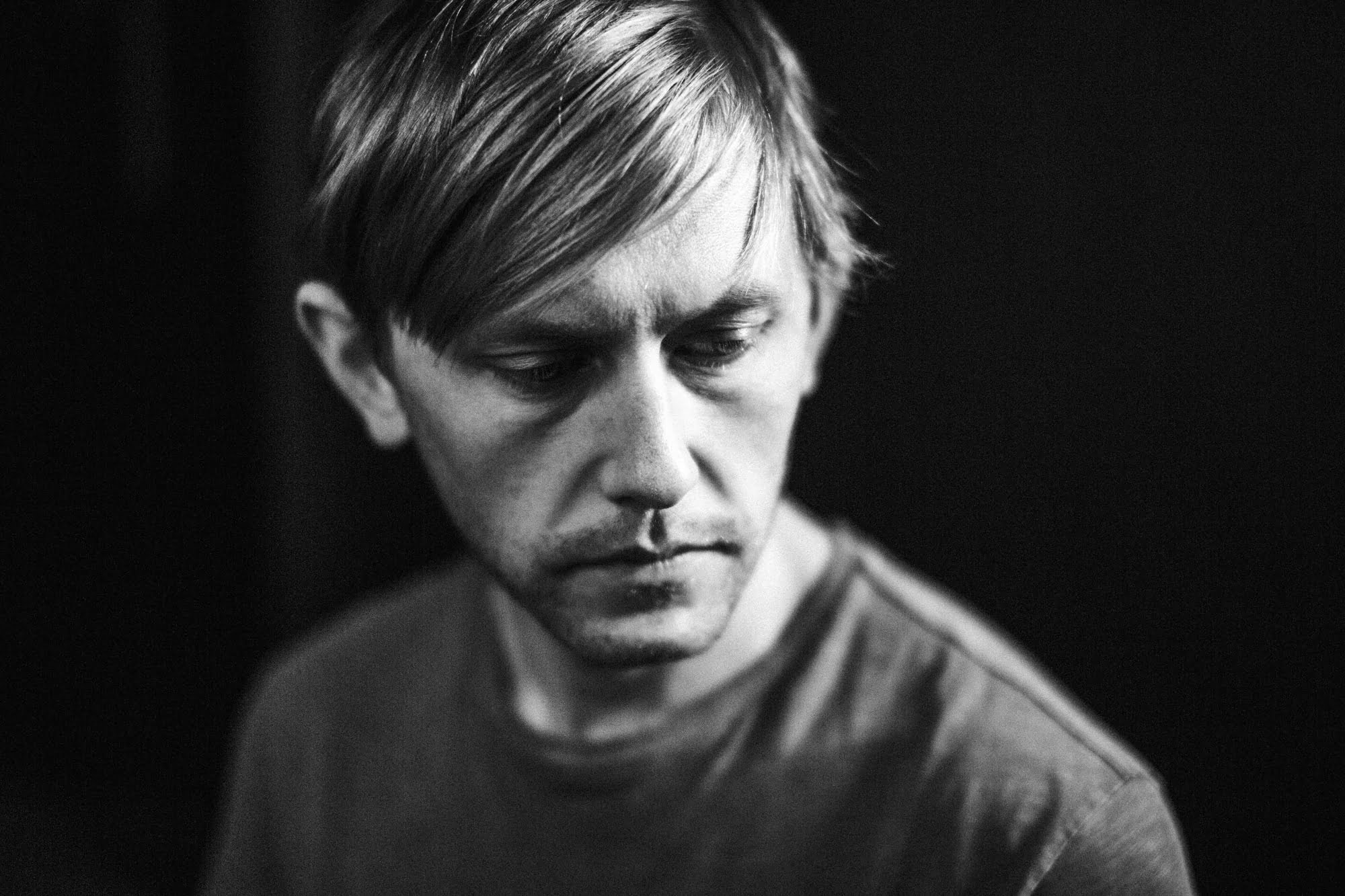
To make his eighth proper album as Hiss Golden Messenger, M.C. Taylor left his adopted hometown of Durham, North Carolina, and went… everywhere? He booked studio time in Nashville, tracked songs in New Orleans, and headed north to upstate New York, where he recorded at the studio owned by The National’s Aaron Dessner. There might have been even more cities in that list, but logistics and time cut his traveling sessions short.

“I wanted to make a record anywhere other than Durham,” he says. “I felt like I needed a change, and it felt like the songs were asking for a change. This is a wandering record. It just felt like the songs were wandering around a little bit. So I felt like maybe I should, too.”

Travel is a major theme of his music, both as inspiration and consequence. Working as a musician means touring; providing for his family means leaving them. Out on the road, however, he finds new reasons to make music. Taylor peppers Hiss Golden Messenger songs with place names, references to home and elsewhere. For Terms of Surrender he decided he needed to make that part of the creative process, which meant recording wherever he landed.

Taylor’s wanderlust extends to the music, too, which draws from a range of roots traditions: psychedelic folk and rural funk, southern soul and classic rock, American primitive guitar and ‘60s frat rock, J.J. Cale and the Staple Singers, Neil Young and composer Harry Partch. The result is a sober but hardly somber album that surveys America at the end of the 2010s, during a moment that is — to say the very least — tumultuous.

BGS: Place always feels so important to your music, so it made me wonder if getting away from a place was as important as getting to a place. Could you have made this record back home in Durham?

Taylor: Yeah, I could have made it in Durham. Definitely. But it would have a very different character. I try not to think of the records as the final form of the songs. I think of them as snapshots of the songs, snapshots in time — a documentation of the tunes as they exist among a certain group of people on a certain day in a certain city. So this particular version of Terms of Surrender is a document of that particular time in my life.

Given that these are wandering songs, and given that you’ve talked about the album coming out of a very hard year, how did that inform the music?

The trials and tribulations I was experiencing are obviously threaded through the songs. Some of that is maybe obvious lyrically, and some of it is a little more coded. It’s something that is obvious only to me. I was dealing with those issues in the composition of the songs, but the making of the record was pretty joyous. Actually, the writing was, too, because it’s always a cathartic experience.

So I can’t really say that I went into the writing of the songs in a tortured place and came out with all the answers. The songs were just a way for me to speak about that stuff, to process it in a way that made me feel like I was evolving emotionally. Not that I was solving my problems, but I was at least beginning to understand what they were. We don’t find an answer in an instant, but we can identify the issue and over time find ways to address it.

To what degree can you talk about the events that informed this album?

It’s a tricky question, because it was something that was part of the fabric of my life for the last year or two. It’s something that comes up in the one-sheet because every record has to have a story, but then when it comes time to talk about it, it’s tough. You never know how much you want to reveal, you know what I mean? I’m a pretty open person but there’s this curtain between all of the stuff that I make public and all the stuff that I keep private.

So I’ll just say that I had some personal problems with someone that I worked very closely with. It felt like over the years they had become an emotionally abusive person. I couldn’t even put a name to the things I was feeling because of that relationship. I thought I had lost my way a little bit. Over time I came to understand what was going on and was able to extricate myself from that relationship. That was important. And then to have all that against the backdrop of the way our country feels right now… it was a lot. I’m a sensitive guy, I guess.

That definitely seems like something that informs these songs, but it’s not a political record. It’s more about living at a certain time when these things are encroaching on your mental health.

And I want to be clear: I’m one of the fortunate ones. I’m a white man in this country. I’m living on Easy Street compared to people of color, queer people, women. But that was a question that came up on the last record, Hallelujah Anyhow. That wasn’t really a political record either, unless you realize that everything is political. The personal is political; the emotional is political. But that record and the new one were made a different times, so the relationship to hope is different.

That’s something I picked up on: this sense of optimism as well as something like joy. That’s not necessarily a word that I associate with this time in history, but it comes through on a lot of these songs.

On Hallelujah Anyhow joy and hope seemed like these bright, sharp things, a nice glinting in the sunlight. They could cut through just about anything. But they work differently on this record, I think, because you realize that we have to work at them every day. If we don’t, they’ll become dull and unwieldy.

And hope and joy are things that I have to work at. Some of these songs are reminders to myself to work at these things that bring me hope and joy. You have to keep that bright thing sharp. It’s like marriage: If you stay in a marriage long enough, you realize that it takes a lot of hard work to keep it going. I’m pretty sure that that’s the way forward for me if I want to survive.

Is it difficult to get into that mindset when you’re writing, to remind yourself of these larger goals?

There are days when I wake up and think, I don’t want to make this music anymore. I don’t want to make any music anymore. This isn’t something that’s making me happy anymore. There’s too much competition, too much saber-rattling, which is all so superfluous to what we all actually do. I guess I’m interested in people who have been making music for a long time, because I want to be in this for the long haul. How does their language change over time? How do they adapt to survive in the world?

You mentioned that you wrote these songs as reminders to yourself. Does that change how you relate to them on the road, when you have to perform them night after night?

That’s why I try to approach records as snapshots. I know the songs are going to change every night, because of the emotional content in them. That changes the phrasing of how I sing certain things. Part of that comes from my emotional understanding of the songs, you know? The other part of that is that my favorite songs are the one I write without totally understanding. Usually I’m not very satisfied with them when I get them down on paper, but eventually I realize that if I live with that dissatisfaction, it’ll becomes something different.

It’s like there’s a hand that is guiding this stuff. It’s not God-like; it’s more an unconscious feeling that it’s okay to feel that way. It’s OK to feel like, “OK, this is as good as I can do right now. I don’t have the time or the emotional capacity right now to make this any better.” And then you just leave it. It’s like planting a seed. It grows even though the words on the page don’t change.

Is there a particular song in your catalog that changed or grown like that?

I would say most of the songs that are in live rotation remain in the set list because there is that element of discovery from day to day or week to week. “Blue Country Mystic” [from 2012’s Poor Moon] is a good one. And there’s one on the new record called “Down at the Uptown,” which is about this dive bar where we all used to hang out in the Mission District in San Francisco. This was many years ago, late ‘90s. It was a formative place for many of us.

I knew that I wanted to write about that time in my life, and I did the best I could. But it felt clunky. I thought, I’m just going to leave these words here and hope that if something better does come along, it’ll be better than what’s on the page now. But the process of singing it in rehearsals has made me realize that no, this is really good. Not a great song, but for me it’s good. It does the thing that I needed it to do.

That one did stand out because it seemed like a very specific reference to a very specific place. I thought it might be in North Carolina, but I was on the wrong side of the country.

I don’t even know if the Uptown is still there. When my friends and I moved to San Francisco in the late ‘90s, we found this bar on the corner of 17th and Capp in the Mission District. It was pretty scuzzy, you know. But the Uptown was this little hidden waystation where all of us learned to drink. There were a lot of promises made at that place, some of which we kept and some of which we didn’t. It was a clubhouse. And the jukebox was very educational. Lots of stuff on there was way above my pay grade. That’s where I heard Patti Smith’s “Horses” for the first time. I’d be lying if I said I loved it immediately. But all of my favorite music is not something that’s immediate.

I was an adult, but I was still a child in a lot of ways. I was out of the punk rock phase of my life — at least musically, not spiritually. I wanted more, but I didn’t know how to do it. It was a time when I was discovering all of the music that has continued to inform my life. So Patti Smith, but also the Silver Jews, Johnny Paycheck, Merle Haggard. All of that stuff was coming into my life at that time, and it was overwhelming in the most beautiful way.

That discovery of oneself is thrilling. It’s exhilarating to find a formative record one day and the very next day it’s another record that brings a similar emotional resonance. It happens less now because I’ve heard more. But every time I have that feeling, it’s wonderful.

That gets at something I’ve been thinking about regarding Hiss Golden Messenger. You’ve got eight albums in ten years, which is very prolific. How do you manage to keep things fresh for yourself?

Just trying to remember why I started doing this in the first place is usually the best way. I try to make sure what I’m doing feels vulnerable and genuine. Whether or not it feels fresh to other people? I don’t know if that’s something that I necessarily feel I should concern myself with. I hope people continue to find things in my music that moves them, because I’m still discovering new things in the music.


Photo credit: Graham Tolbert
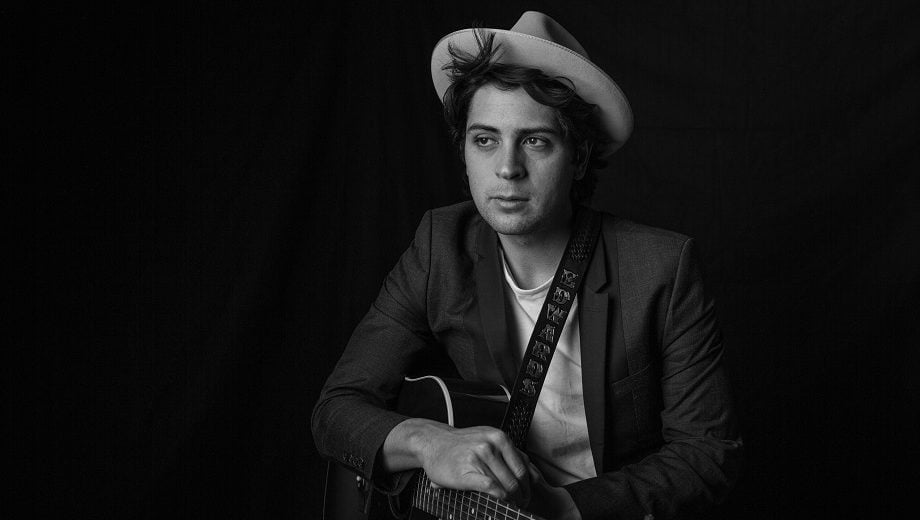
LISTEN: L.A. Edwards, “Reign Over Me”

Artist: L.A. Edwards
Hometown: Los Angeles, California
Song: “Reign Over Me”
Release Date: June 24, 2019

In Their Words: “‘Reign Over Me’ is the follow-up single after our debut record, True Blue. Ron Blair from The Heartbreakers was at the helm producing again, so it definitely models itself after many of the classic Petty records with a fresh take. We wanted to abstain from any sort of modern overproduction and really emphasize lyrical strength and Americana grit, taking inspiration from Petty’s Wildflowers, Neil Young’s Harvest, and Jackson Browne’s Running on Empty. It’s an honest recount of times spent in the Southeast touring during hurricane season with my brothers. We always have a good time singing this one.” — L.A. Edwards


Photo credit: Mike Bresnen

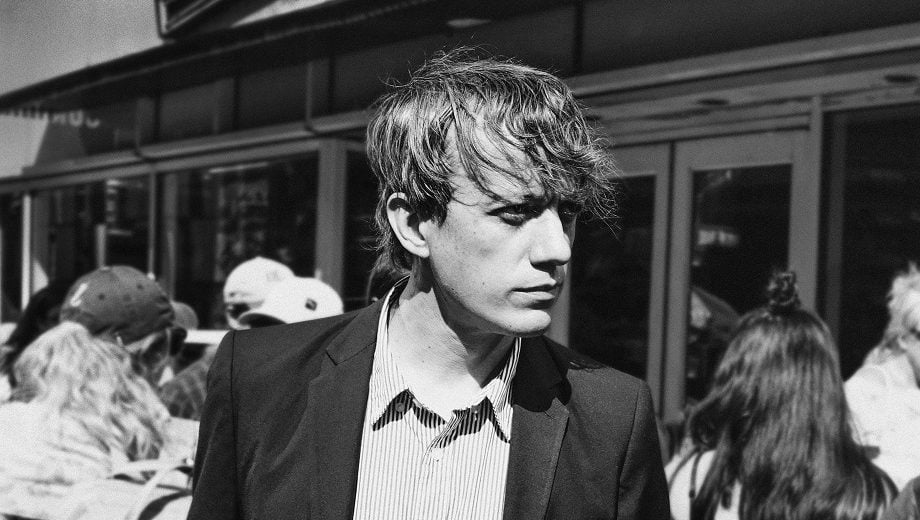
BGS 5+5: Steve Gunn

Artist: Steve Gunn
Hometown: Landsdown, Pennsylvania; currently Brooklyn, New York
Latest album: The Unseen in Between

Which artist has influenced you the most … and how?

One guitar player that has influenced me over the years has been guitarist Jack Rose. Sadly, Jack passed away too young, nine years ago, and I still think about him on a daily basis.

I first met Jack in Philadelphia in the late 1990s. I was just out of high school and getting serious about playing guitar. We both worked at place called the Reading Terminal Market, with Jack working at the coffee shop, and me at the ice cream stand. I would always walk over to the coffee shop when I had a break, and we would talk at length about various records and all things guitar related. I really looked up to Jack, and he was super generous with his knowledge of music to my young ears. I learned so much from those conversations.

He lost his job at the coffee shop suddenly for apparently not giving a cop a free cup of coffee, and immediately after that he started practicing acoustic guitar about five to eight hours a day. I witnessed the results of his woodshedding at a house show in Philadelphia shortly after that, and was completely astonished and inspired by his playing. Seeing his hard work pay off — and his demand for respect as a performer — was revelatory. Jack taught me how to practice. His willingness to share his guitar ideas, work ethic, and encouragement with my own playing has stayed with me.

What was the first moment that you knew you wanted to be a musician?

I think the first moment I wanted to be a musician is when I saw Prince play guitar in the film, Purple Rain. When I was young I was very enamored with pop music. I loved Michael Jackson, Madonna, Def Leppard, etc. I watched a lot of MTV and listened to a lot of radio. Music was always on in the house, car, basement, or garage. My parents played a lot of records from the ‘60s, and they also liked the ‘80s stuff a bit. At a pretty tender young age, I somehow was allowed to watch Purple Rain, or maybe I watched it at a friend’s house — I can’t remember. I do remember being astonished by this pop musician who could absolutely destroy on guitar. He also looked cool as hell and drove a purple motorcycle. It can’t be denied that he was the best. He’s still one of my favorites of any era.

What’s the toughest time you ever had writing a song?

I knew that I wanted to write a song as a tribute to my father, but it was hard to summon one during a pretty fragile and delicate time in my life. “Stonehurst Cowboy” from my new album, was emotionally exhausting to play and sing. The song is the deepest I’ve reflected on my own emotions since I started making records. It was a difficult, sentimental, but also very cathartic time to write.

The words came to me pretty quickly, but I had trouble singing it when it was first written. It’s an extremely personal song. I had to let my guard down for this one, it was almost as if I didn’t have a choice. It was a hard one to write, but I know I had to, and ultimately I’m very proud of it. My family and friends that knew him seem to really appreciate the tribute, which means a lot me.

What rituals do you have, either in the studio or before a show?

Trying to remain calm is important! Nerves can be the worst deterrent in performing and recording for me. I’ve been figuring out ways of dealing with this for years, and in many respects I have learned the hard way. For a performance, I do a few stretches and breathing exercises to calm down a bit. Often times, especially with performing, I like to have glass of wine before I go on stage. Warming up on the guitar itself really helps also. Strumming whatever random few chords allows me to connect myself to the instrument a bit better. For me it’s important to connect with my mind, telling my body that it’s time to get it together.

Since food and music go so well together, what is your dream pairing of a meal and a musician?

I’d like to grill some fish, eat oysters, and drink wine with Neil Young. We could have a few bottles of really nice wine, a bunch of salads, a few different types of fish and oysters. This meal would ideally be outside, just me and him. Maybe a few dogs. I’m thinking this could be somewhere in coastal California, obviously, right along some rocky ridge somewhere. We’d light a fire after the meal, I’d listen to his stories, and later strum some old 1930s Martins together. Sounds good, right?


Photo credit: Clay Benskin

BGS 5+5: Kari Arnett

Artist: Kari Arnett
Hometown: Minneapolis, Minnesota
Latest Album: When The Dust Settles
Personal nicknames: Kari Anne

Which artist has influenced you the most … and how?

It’s hard to answer with only one artist but some inspiring artists I’ve been listening to are: Caroline Spence, Lori McKenna, First Aid Kit, Margo Price, Neil Young, and one artist I always go back to is Tom Petty. All the good vibes right there.

Which elements of nature do you spend the most time with and how do those impact your work?

When I’m not writing or touring, I am usually out near a lake somewhere. The flow of the water is like the ebb and flow of life… it’s a good meditative area to sit and reflect on what’s to come or what might have been.

What rituals do you have, either in the studio or before a show?

Usually, I have to spend some quiet time alone before a show to ground myself for what’s to about to happen. Silence can be a powerful tool. Also making sure I’m well-hydrated is important.

What was the first moment that you knew you wanted to be a musician?

I think it was when I was little and I would watch shows that had live music, like Austin City Limits. It was inspiring to watch and growing up in a musical household, I had a feeling I would always have something to do with music.

What other art forms — literature, film, dance, painting, etc — inform your music?

I read a lot of poetry and that imagery that I get, can set the tone for song, as well as movie scores–anything that moves you in that creative way can get thoughts moving to inspire the next song.

https://open.spotify.com/user/124052670/playlist/1H7R5qYsX0rvCwaxtmeGV4?si=YoMdyOeoS9mi0Q8kZf2c0Q

BGS 5+5: Simon Patrick Kerr

Artist: Simon Patrick Kerr
Hometown: Nashville, Tennessee
Latest album: Doldrums
Personal nicknames (or rejected band names): The Potato King. I love all potato dishes. Mainly french fries. My friend’s always give me a hard time over my love for potatoes. It’s an Irish thing I guess?

Which artist has influenced you the most … and how?

Neil Young. I’ve always loved how diverse his music was. He could go from cranking up his Fender tweeds until they’re about to blow or he could bring it down to just him & an acoustic. Harvest was my first introduction to Neil. My 14-year-old mind was blown when I heard The Needle and the Damage Done. That record made me want to write songs.

What other art forms — literature, film, dance, painting, etc — inform your music?

I’ve always loved literature. Dylan Thomas, Oscar Wilde, Seamus Heaney. More recently, I’ve started diving into a lot of American authors. In particular, Charles Bukowski. His one-liners are incredible, but the thing I love about his style is that it’s so conversational. I’ve always tried to approach my songwriting in a conversational manor. Sometimes I achieve it. Sometimes I don’t. That’s writing for ya! You never know what you’re going to get when you sit down to write. I used to wait for inspiration, but I’ve quickly realized that it’s more dedication than inspiration. You’ve gotta be dedicated to your craft & put the time in. It’s a grind, man.

What was the first moment that you knew you wanted to be a musician?

I’d have to say watching my Dad open a run of show’s for John Prine in Ireland. I was only 6 or 7, but I still remember it vividly. The music bug definitely rubbed off on me since I’ve been around it my entire life. Once you catch the music bug it never let’s go.

Which elements of nature do you spend the most time with and how do those impact your work?

There’s a park in Nashville called Radnor Lake that I like to go to, and it’s walking distance from my house. Usually when I’m stuck on a song I’ll walk around Radnor to clear my mind. It seems to help most of the time. It’s an oasis in the middle of a congested city. My dog, Dylan, loves it too.

Since food and music go so well together, what is your dream pairing of a meal and a musician?

I would have loved to have eaten lunch with Elliott Smith at Taj, which is my favorite Indian restaurant in Nashville. I like to think of him as the modern Neil Young. His songs were so well-crafted. Lyrically dark & beautiful. In my eyes (and ears), Elliott’s album XO is the perfect record. Also, the Bhindi Masala at Taj will blow your socks off.

I’m going to break the rules here a little & choose a second musician. I’d like to share a plate of Prince’s Hot Chicken with Alex Turner of the Arctic Monkeys. He is one of the sharpest lyricists in the game at the moment & I’ll defend that statement until the cows come home. Listen to how clean the lyrics are on the newest record, Tranquility Base Hotel & Casino. In particular, the title track. If you’re reading this Alex – let’s write a song!


Photo by Laura E. Partain

BGS 5+5: Carolina Story

Artist: Carolina Story
Hometown: Nashville, Tennessee
Latest album: Lay Your Head Down
Personal nicknames: Emily (Sweetheart of the Rodeo, Emmy, Merly); Ben (Kingfish, Burly)

Which artist has influenced you the most … and how?

Ben: Neil Young. When I was a boy, my dad and I would ride the backroads in the country outside of my hometown of Pine Bluff, Arkansas. I remember hearing CSNY’s 4 Way Street live album and being completely mesmerized by the sounds of the acoustic guitars and the harmonies. Once I heard Neil doing “Cowgirl in the Sand,” that was it. Then, as I began to discover more of his work, I became fixated on his harmonica playing, chord structures, his songwriting and his unique voice.

Emily: Brandi Carlile. I first heard Brandi’s voice over ten years ago and the moment I did I became enamored of her. It was The Story album and every song, the melodies, the harmonies and the specific tone of her voice that struck me. She was one of the first artists for me that you can hear her emotion as she sings. She’s never just singing the words. She’s feeling them and because of that you feel it too!

Which elements of nature do you spend the most time with and how do those impact your work?

If we’re not writing, touring or working you can usually find us out in Kingston Springs, Tennessee, at Harpeth Moon Farm (the family farm run by Ben’s sister). When we’re not lending a hand in the fields, we are usually in a canoe on the Harpeth River. An underlying theme in a lot of our songs is to keep going against the odds and to never stop growing. The influence and imagery of the river coupled with sowing actual seeds and seeing them blossom into their final form inspires our writing.

Since food and music go so well together, what is your dream pairing of a meal and a musician?

Ben: My dream would be to have been able to spend all day fishing with fellow Arkansan and hero, Levon Helm. After we caught all the fish we could stand, we would have a big fish fry, drink ice cold beer and tell stories while laughing a whole lot.

Emily: I am all about breakfast. Any kind of breakfast. I have to eat something breakfast-related before I can move on to lunch. I also would like it accompanied by a strong cup of coffee and Emmylou Harris. She is an artist that I wish would not only want to chat about her and the Gram Parsons days but also give me some harmony pointers. She picks the most unique harmonies.

What was the first moment that you knew you wanted to be a musician?

Ben: It was the summer of 1997. I was 11 years old. Third Eye Blind’s self-titled album impacted me in a big way during those months. I probably started three or four “bands” that summer without any of us knowing how to play a lick. Once I heard “Smells Like Teen Spirit” by Nirvana just before 6th grade started that year, I talked my parents into getting me a guitar and the rest is history. I started my first actual band in 7th grade and never really looked back.

Emily: I have several tape cassettes of me at around 9 years old pretending to be a radio announcer and singing songs on my pretend radio station. They are pretty classic when you go back and hear them! But it was 5th grade, a year later, when my vocal teacher during class had each of us take turns singing a solo. She was taken aback and gave me my first concert solo. It was a song about Amelia Earhart. I still remember all the words. It was then that I realized that I wanted to take it more seriously.

What’s your favorite memory from being on stage?

In June 2014, we made our Grand Ole Opry debut. Emily was 7 months pregnant with our son, Wilder at the time. To be able to stand in that sacred circle surrounded by family and friends where our heroes once stood is something that we will never forget.


Photo credit: Laura E. Partain

BGS 5+5: The Teskey Brothers

Band Name: Sam Teskey (of the Teskey Brothers)
Hometown: Warrandyte, AUS
Latest Album: Half Mile Harvest
Personal Nicknames: Sammy

Which artist has influenced you the most … and how?

I’ve gone through a lot of stages that different artists have influenced me more, but I would have to say B.B King has always been there, and I’ve always come back to his work.

I feel there are two elements to great music — the song and the soul behind it. The marriage of the two really is something special. For example, take the Beatles song “With a Little Help trom My Friends” and give it to Joe Cocker … say no more. B.B does this with ease in his music — simple, but great songs played in just the right way with so much soul behind it.

What was the first moment that you knew you wanted to be a musician?

Well, firstly, I saw a Jimi Hendrix DVD, and I was sold then. But also, I think growing up around St. Andrews pub (near where we grew up) got me very interested. Seeing working musicians come through every weekend showed me that it was possible if I worked at it.

What rituals do you have, either in the studio or before a show?

When we are recording, I usually get to the studio early, before the band arrives, so I can get the tape machine warmed up and aligned. It takes the length of a record to get it ready, so I choose one for the morning to also align my head and ears. Most commonly Traffic or Neil Young’s Harvest.

Which elements of nature do you spend the most time with and how do those impact your work?

We have our studio upstream of Melbourne on the Yarra River in a beautiful town called Warrandyte. This is where we all grew up, among the trees, swimming and jamming by the river. It is a very refreshing place to write music and share song ideas. There seems to be a lot of musos making music out there. Must be something in the water, or just a great space to make music. Whatever it is, we feel at home there.

What’s the weirdest, hardest, nerdiest, or other superlative thing about songwriting that most non-writers wouldn’t know?

The strangest thing about songs for me is, where do they come from? I imagine them to be something that is always floating around us like microscopic dust. Learning to write a song is like trying to catch them all and fitting them together like a puzzle. Once you’ve completed one puzzle, you don’t know how you are going to find the next one … but they always seem to find you. You just have to be open to finding them or letting them find you.

BGS 5+5: Simon Linsteadt

Artist: Simon Linsteadt
Hometown: Inverness, CA
Latest Album: February
Personal Nicknames: Slime

Which artist has influenced you the most … and how?

Neil Young has always been on the top of my list. I started playing guitar in fifth grade when my dad used to play the album Rust Never Sleeps. The first riff I learned was “My My, Hey Hey,” and the song “Thrasher” is one of my favorites.

What’s your favorite memory from being on stage?

Playing at the Fillmore with my band Steep Ravine was electrifying. The room sounds amazing, and you get taken up a few stories on a big fork lift from an alleyway to the stage. I was thinking of all the legends who have been carried up on that lift.

How do other art forms — literature, film, dance, painting, etc — inform your music?

I love the pairing of music and film. Ennio Morricone and Gustavo Santaolalla are some of my favorite film composers I’ve heard. Morricone’s music is so evocative and eccentric, I get the sense that there’s a wild man behind it all. I especially love the electric guitar motifs and all of the unexpected soundscapes he throws in. Of course it’s as famous as it gets, but nothing beats that final scene in The Good, the Bad and the Ugly.

Santaolalla writes these gorgeous, hypnotic instrumental pieces. I heard his score in The Motorcycle Diaries, and then found his album Ronrocco, which is stunningly beautiful. A surf film called The Seedling by Thomas Campbell blew me away when I was younger. He used a 16mm camera to capture this really haunting footage of longboard surfing, paired with some great instrumental music. I’ve been working on several music videos for my new album using a Canon Super 8 camera, and I have to credit The Seedling for inspiring me to shoot with film. Not being able to see what I’ve filmed until I get the reel processed is exciting and adds an element of restraint and wonder to the whole thing, even though it is a bit of a hassle.

Since food and music go so well together, what would be your dream pairing of a meal and a musician?

Fried eggs on toast with avocado and hot sauce and big cup of coffee, while listening to Hi Fi Snock Uptown by Michael Hurley. This was a typical breakfast at my place for some time, and I eventually found out that the record was recorded just a stones throw away from where I live! Literally down the road.

Which elements of nature do you spend the most time with and how do those impact your work?

Water has a big impact on my work. I like to film it or just watch it. The way light hits it and the way it moves can always take me out of my head a bit and offer some ancient wisdom.

BGS 5+5: Van William

Artist: Van William
Hometown: Kodiak Island, Alaska
Latest Album: Countries
Personal Nicknames: My friends call me GOV (Good Ol’ Vanny)

Which artist has influenced you the most … and how?

It’s almost impossible to pick a single artist that stands above the rest as all the influences swirl around my brain like some amalgam of swirling colors and sound that I draw from involuntarily and without knowing the source. But, if I were forced to answer the question: Neil Young. He’s been a source of inspiration to me for so many years and has taken so many forms — his melodic instincts, his raw commitment to always trying new shit, his unapologetic pride in what he is currently doing. I met him years ago, and we smoked a joint together after a show I played with his ex-wife, Pegi, in Redwood City, California. In person, his spirit matched the quality of his work in a way that I will never forget.

What’s your favorite memory from being on stage?

Again, picking one singular moment is not really possible. My feet to the flames: When my old band, Port O’Brien, was on tour in Australia, we were playing the Laneway Festival and invited the crowd on stage for the last song “I Woke Up Today.” In hindsight, it was a ridiculously stupid idea, as so many people came up that the stage nearly collapsed, someone stole my acoustic guitar, and we almost got kicked off the festival tour. But during the song, I just remember being surrounded by that mess of people screaming along the lyrics, and jumping, and thought that was essentially the apex of performing.

If you could spend 10 minutes with John Lennon, Dolly Parton, Hank Williams, Joni Mitchell, Sister Rosetta, or Merle Haggard how would it go?

In my dream, John Lennon and I would smoke a joint and listen to all my favorite records that came out after he died, and he would tell me what he thinks about them. I’ve always wondered what he would think of Lil Wayne’s Tha Carter III and Nirvana’s In Utero.

What rituals do you have, either in the studio or before a show?

Coffee is an important ritual. There’s nothing better than a cup of good, clean Four Barrel black coffee from my Chemex. I’m constantly brewing and serving to the band and crew in the studio. It’s the one thing in my life that is both meditative and stimulating at the same time.

Which elements of nature do you spend the most time with and how do those impact your work?

The sea has been at the center of my entire life. Having spent years up on Kodiak Island in Alaska working on my father’s commercial fishing boat, the sea has become a powerful force of centering for me. I wouldn’t say nature directly impacts my work, but it’s incredibly important for my general well-being which, of course, is related to my productivity.


Photo credit: Silvia Grav

Cary Morin Picks His Piece

“Let there be no question of who’s wrong and who’s right. There should be no compromise. We all stand up and fight in the dawn’s early light,” Cary Morin sings on “Dawn’s Early Light,” written in support of the Standing Rock Sioux Tribe during last year’s protest of the Dakota Access Pipeline.

“A friend of mine was doing a show [at Standing Rock with the Indigo Girls] and she had asked me, just in passing, if I would write a song for the Standing Rock movement,” Morin explains. “I felt like there were a lot of people writing songs about that, at that time, and I wanted this one to be a little different and stand out a little bit, so it was really more concentrated on the activism, in general, and not so much Standing Rock, but just the whole idea of people coming together to promote clean water.”

“Dawn’s Early Light” is one of the poignant original songs featured on Morin’s latest album, Cradle to the Grave. In order to lend his perspective, Morin tapped into his experience growing up as a Crow tribal member near the Missouri River in Montana.

“When you think about roots music in America, it’s a culmination of so many things. It’s all the stuff blended together, much like the culture in this country is people from all over the world that end up here and create a unique situation,” Morin explains. “With my Native heritage, I could say that I’m really the only finger-style Crow guy on the entire planet. That’s unique. But we all can say that, to some degree. We all have unique things that make us who we are, and I’m really thankful to have grown up in the area that I did, surrounded by the people that I did.”

Morin came to the guitar by way of the piano, which he first began playing around the age of 10. When he picked up a guitar a couple years later, he was enamored. He played by ear, emulating the sounds he loved from his parents’ and brother’s record collection: Chet Atkins, James Taylor, Cat Stevens and Neil Young.

“I grew up in the ‘70s so, at that time, [there was] no Internet, there was very little TV, mostly radio. And the local music scene was really pretty folky and a lot of bluegrass, so I really grew up in the pursuit of flat-picking and [was influenced by] popular bluegrass bands at the time — David Bromberg, Norman Blake, Tony Rice,” says Morin. “I had really fantastic examples of what the music should be, but then I kind of mashed everything up into a combination of bluegrass and finger-style stuff, mostly from Leo Kottke, which turned into this thing that I do now.”

Morin moved to Colorado just out of high school and formed the Atoll, a world-beat band that he toured with for more than 20 years. “I played electric guitar [in the band], but I continued to mess around with the acoustic guitar,” he says. “Once I stopped doing [the band], my focus was really just acoustic guitar and a lot of practicing — just hours and hours of sitting around and playing. To this day, I try to play quite a lot. I’ve been introduced to open-D tuning by a friend of mine, and it took me about a year to get it going and figure out just the basics of it. But then, once I got it going, I just found it to be really fascinating, and I continue to learn new stuff all the time with that tuning. I just love the way it sounds. There’s a fullness and richness to it that I can’t seem to get out of standard tuning.”

Morin’s reconnection with the acoustic guitar led to the release of his most recent string of solo acoustic albums. Cradle to the Grave is the fourth in the series showcasing his adept fingerpicking style and warm, inviting vocals. An amalgamation of bluegrass, country, rock ’n’ roll, and blues, the album features eight original tunes and three cover songs: Willie Brown’s “Mississippi Blues” and, perhaps more surprisingly, Prince’s “Nothing Compares 2 U” and Phish’s “Back on the Train.”

“Phish is one of my favorite bands … I think that Trey’s playing has just really been inspiring and just the whole feel of the band and the approach they take. There’s so much freedom in what they do, and I used that as an example with my band, when I was rolling around playing clubs and festivals,” Morin explains. “A lot of times we’d play five songs without stopping. We’d just roll from tune to tune, and the whole point of that band was really dance music, just to provide an outlet for people to go out and have fun and dance.”

Morin uses the same ethos in his current performances touring behind his solo efforts.

“As a solo player, I can do whatever I want. I can play in whatever key. I can speed things up or slow it down, or just kind of make things up as I go along. And I really dig that freedom to just do whatever I want on stage,” he says. “Sometimes I’ll try stuff and sometimes it works, sometimes it doesn’t. But when it does, it’s a great feeling, and then it’s gone forever.”

While solo spontaneity on stage leads to such ephemeral moments, Morin has a solidified team off-stage that serves as his backbone — and they’re not going anywhere. From recording to promotion, it’s an organic, family affair.

“What I like about these four records [is that] the recordings are all done live in the studio with no headphones. I’ll sit and play these songs, and just play and play and play them, and a friend of mine has recorded all these albums,” Morin explains. “We’ve gotten together, I think, a pretty successful team with Maple Street Music and [my wife] promoting the live shows and the recordings, and Rich [Werdes] recording them, and we have the same person that’s been mastering and mixing the CDs, too. It’s just like the perfect combination of people and I like to think that I promote one guy, one guitar. People still are interested in such a thing … I just really enjoy being able to stand on stage by myself being able to do what I do.”


Photo credit: Timothy Duffy