FARHOF’s Roots That Built the Hall Playlist

Located inside the historic Wang Theatre and founded by the Boch Center, the Folk Americana Roots Hall of Fame is Boston’s premier cultural and educational initiative dedicated to celebrating America’s rich musical heritage. Since its launch in 2019, FARHOF has honored the artists, songs, and movements that have shaped folk, Americana, and roots music while creating immersive exhibits, educational programming, and live experiences that connect audiences to the stories behind the sound. Guided by iconic artists and industry leaders, the Hall exists to honor the past, celebrate the present, and nurture the future of these genres.

On March 24, 2026, FARHOF will host its 2026 Induction Celebration at the Wang Theatre, an unforgettable evening recognizing the artists and industry leaders who helped build the foundation of folk, Americana, and roots music. This year’s honorees, whose collective achievements include 30 GRAMMY Awards and countless other accolades, represent the influence and ongoing evolution of the genres we preserve.

Our playlist theme, Roots That Built the Hall, celebrates the legacy and influence of this year’s inductees. Each song reflects the innovation and cultural impact of the artists who shaped Folk and Roots music, reminding us why this music endures and continues to inspire. – Denise Arellano, The Boch Center

“(I’m Your) Hoochie Coochie Man” – Muddy Waters

Muddy Waters electrified the Delta blues and carried it into the urban North, shaping the sound of modern roots music. This track demonstrates that blues roots continue to inspire folk and Americana, exemplifying the music and legacy the Folk Americana Roots Hall of Fame celebrates.

“Chain of Fools” – Aretha Franklin

Aretha’s voice bridges gospel, soul, and rhythm & blues, reminding us that roots music is inseparable from the Black musical traditions that shaped America. Her artistry embodies FARHOF’s mission to celebrate music as both cultural expression and social force.

“Suzanne” – Leonard Cohen

With poetic lyricism and folk instrumentation, Cohen represents the storytelling tradition central to folk music. His work highlights how intimate songwriting can shape national culture and influence generations to come.

“Make Me A Pallet On Your Floor” – Mississippi John Hurt

Hurt’s fingerpicking style and oral storytelling roots in this country blues standard echo the preserved histories and rare artifacts celebrated within FARHOF’s exhibits.

“My Journey To The Sky” – Sister Rosetta Tharpe

Blending gospel and the electric guitar, Sister Rosetta Tharpe helped lay the groundwork for rock ‘n’ roll. Her inclusion reflects FARHOF’s commitment to honoring artists whose innovations continue to ripple across genres.

“Running on Empty” – Jackson Browne

A pillar of folk and Americana, Browne captures the restless spirit of life on the road. His songs blend roots traditions with raw, lived experience, shaping the sound and soul of a generation.

“Both Sides Now” – Judy Collins

A defining voice of the 1960s folk revival, Collins helped bring reflective and socially aware songwriting to the mainstream. Her work showcases the genre’s power to spark dialogue and deepen cultural understanding.

“Harvest Moon” – Neil Young

Young’s blending of folk intimacy and country influence illustrates the fluid evolution of roots music. Songs like this show how tradition can feel timeless while still speaking to contemporary audiences.

“The Last Thing on My Mind” – Tom Paxton

Paxton’s songwriting embodies the heart of the folk process, simple melodies carrying profound emotional truth. His legacy reinforces FARHOF’s mission to preserve the craft of storytelling through song.

“Urge for Going” – Tom Rush

Rush played a pivotal role in championing emerging songwriters and expanding the Boston folk scene. His work connects directly to FARHOF’s educational spirit by nurturing future generations while honoring those who paved the way.

“Go Down Sunshine” – Odetta

Odetta’s commanding voice became a soundtrack to the Civil Rights Movement, proving music’s power to inspire social change. Her artistry ties directly to FARHOF’s belief that folk and roots music are not just entertainment, but vessels for justice, unity, and cultural preservation.

“All I Want” – Joni Mitchell

Joni Mitchell’s intricate songwriting and emotional clarity helped redefine the possibilities of folk music in the 1970s. “All I Want” is built upon the deeply personal storytelling that continues to influence generations of artists, embodying FARHOF’s commitment to honoring innovation within tradition.

“Tear the Fascists Down” – Woody Guthrie

Woody Guthrie stands as one of the foundational voices of American folk music, using song as a vehicle for social conscience and collective resilience. This track underscores how roots music has amplified the voices of working people and movements for justice, a legacy FARHOF preserves.

“Black Betty” – Lead Belly

Lead Belly’s recordings carried traditional work songs and prison chants into the American mainstream, ensuring these stories were not lost to time. “Black Betty” represents the oral traditions and lived histories that form the foundation of roots music and the cultural preservation FARHOF continues to strive for.

“It Ain’t Me Babe” – Joan Baez

Joan Baez helped bring folk music into the national spotlight during a pivotal era of cultural change. Her interpretation of this song reflects the genre’s spirit of independence and social awareness, qualities that continue to shape the folk and Americana traditions celebrated within the Hall.


Graphics courtesy of the Folk Americana Roots Hall of Fame.
Artist of the Month: Lucinda Williams

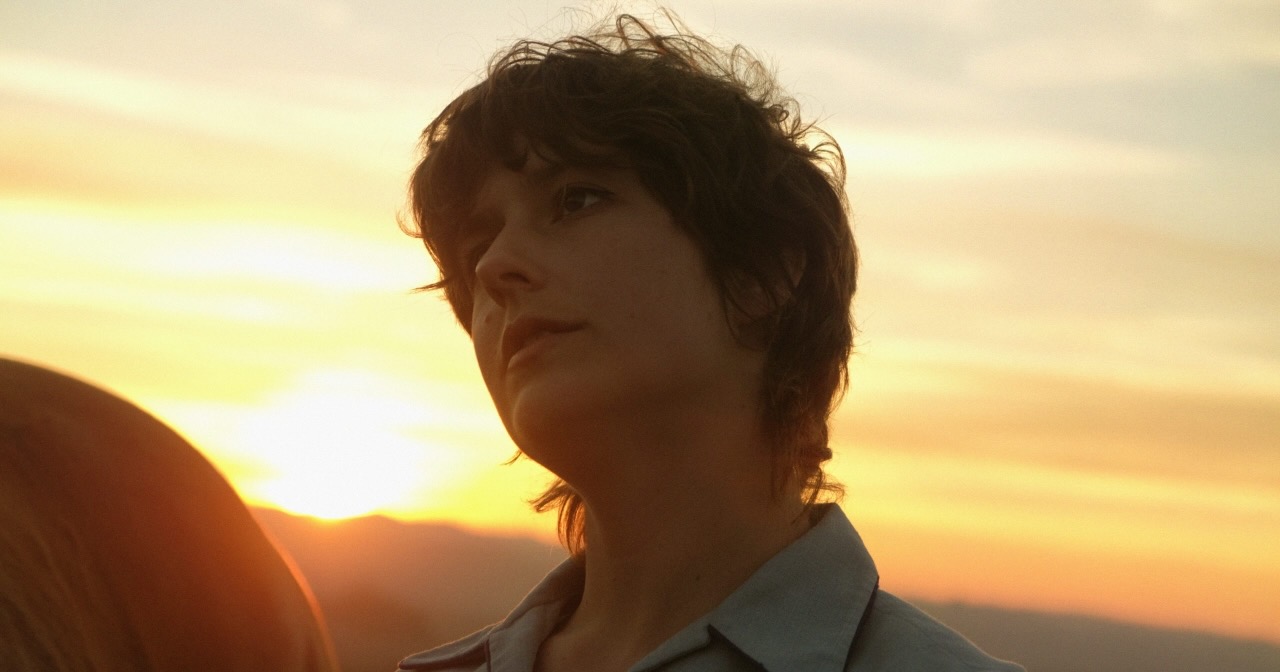
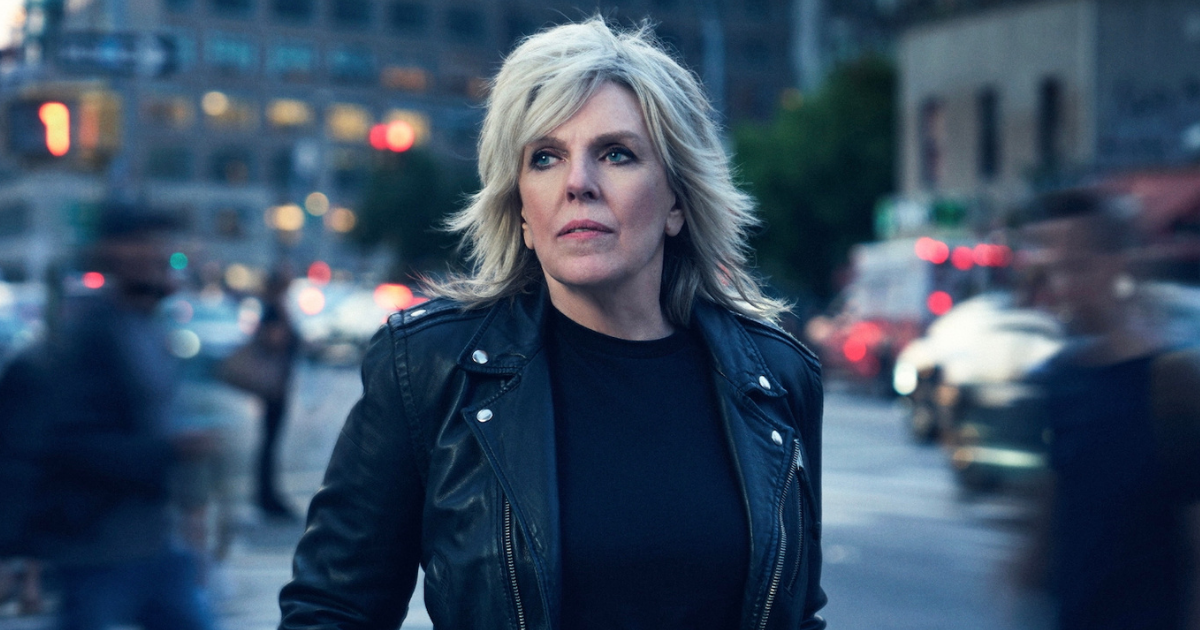
Among the 78 bands performing for thousands of fans at San Francisco’s 25th annual Hardly Strictly Bluegrass, our nation’s foremost Americana festival, in October of 2025, one of the largest audiences had gathered for Lucinda Williams. She took the main stage in the afternoon clad in a leather suit, studs on the hem of her pants. The groove from the band and her lyrics landed with resonant pounding, like the drop of a heavy set of books on a table. After more than 50 years of performing, her sound still hits.

Lucinda Williams grasped brilliance in 1998 with Car Wheels On A Gravel Road, but this was not some isolated incident. She has pursued the craft of album-making expertly for her entire career, and fans flock to her because there is always something more to scratch up. The singularity of her writing rings at a higher frequency today in our shallow digitized world. I see her current position in our culture to be similar to that of poet-songwriter Leonard Cohen in his final chapter. When she sings, we listeners get to grasp at something real, and we crave what Lucinda offers; intimate corporeal love, the palette of Southern backroads alongside broken-down juke joints, honest bewilderment at the state of the world while still loving it.

When I was 26, I set out on a road trip to trace Lucinda’s origins. Being a songwriter, I wanted to determine what I could do to strive and bloom, like she did. So I left California driving my 1995 Ford F-250. From Texas to Tennessee, I dug up characters from Lucinda’s early days. I was most interested in finding people who had worked with her in the beginning of her career.

In Jackson, Mississippi, I spent a day at Malaco Studios where Lucinda made her first record Ramblin’ On My Mind. While listening to outtakes, I happened upon the first-ever originals she recorded but never released. In those reel-to-reel tapes that had been sitting untouched in a concrete vault, I heard a voice from four decades ago that was clear and bold. Wolf Stephenson was the engineer from that session and he told me that in 1978 Lucinda was a resolute and present woman: “[In] day-to-day life, she was just as footloose and like she was on stage. And really there wasn’t much difference in sitting here talking [with her] or being on stage, very natural.”

In Austin, Texas, I was shocked to learn that well-known guitarist Charlie Sexton had played with Lucinda when he was just 11 and she was 26. At the Hole in the Wall where a booker once cancelled Lucinda’s gig because there were “too many girl singers that month,” Charlie and I discussed how he has learned from Lucinda as a writer. He reflected on his early impressions of her and told me, “…There’s no doubt that Lucinda was always going to be unique… I mean, she’s like a regional writer in a way… she’s the Flannery O’Connor of that era of singer-songwriter.”

Lucinda’s parents raised her in an extraordinary community. Her father Miller Williams was a professor, a translator, and a poet. He and his wife were descendants of humble traveling Methodist ministers with meager finances, but by the time their first daughter Lucinda was a teen, the family sat in the company of Nobel Prize-winning authors. Miller’s genuine passion for literature gave him the conviction to invite figures like Charles Bukowski and indeed Flannery O’Connor into his circle of friends and acquaintances. He hosted literary parties in the family’s Arkansas home. After drinks were served, Miller read some of his new poems out loud, and a young Lucinda sat and strummed her latest songs. Writers of the highest caliber listened at attention. Some of these writers gave Lucinda feedback. Perhaps just as important was that these writers also imparted genuine encouragement to Lucinda and told her that in spite of all of the suffering and uncertainties involved in being an artist, it was still a worthwhile pursuit in life.

Along my road trip I also discovered how committed Lucinda has been to her art over the decades. I spoke at length with some of the musicians and engineers that worked on Car Wheels On A Gravel Road. I learned from Lucinda’s recollections that when you have that itching worry that a sound just isn’t right on an album, you have to wrestle with the process to find the right timbre, the right soundscape that will thrill you. I found that a songwriter has to embrace change, even if they’re unsure of the career consequences. I found that artists can’t just make the same album over and over again. Well… they can, but they probably shouldn’t. A songwriter has to keep seeking out that sound, that story that pulls at their soul’s musical corners, like Lucinda did.

Lucinda’s latest release, World’s Gone Wrong, is a continuation of the directness I’ve known her for. She conveys her truth with her language of simplicity. So often in our era, bathed in a slurry of news and trends, opinions from artists can feel glued-on. But that’s not the case with Lucinda. She conveys her frustrations with the state of the world from a genuine and honest place and, when she sings, I believe her. As with so much of her writing, in her latest album I feel like I’m reading a book, inhabiting the imagined place of the viewer and the subject.

The characters in Lucinda’s songs are alive, bleeding, imperfect, and desirously wanting. We benefit from the chance to continue paying attention to the words she writes.

If you’d like to learn all about how I retraced the roots of Lucinda Williams, check out Finding Lucinda, my podcast released in partnership with the BGS Podcast Network. You can also watch the documentary film Finding Lucinda on AppleTV, Youtube and more.

Stay tuned as BGS and Good Country celebrate Lucinda Williams as Artist of the Month throughout March. Enjoy our Essential Lucinda Williams playlist below and check out an exclusive interview with Williams here. Plus, we’ll be diving into the BGS archives for all things Lu and exploring our favorite covers of her songs by other artists, too. Follow along right here on BGS and on social media for more.


Photo Credit: Mark Seliger

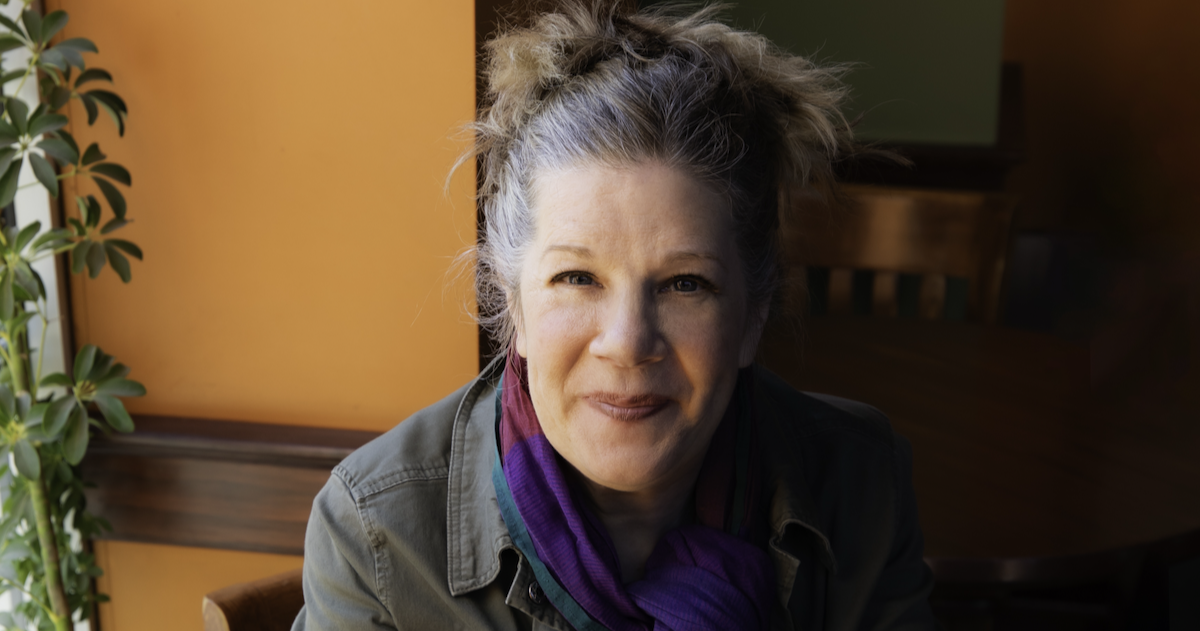
Dar Williams Follows the Hummingbird Highway

Dar Williams toured a spice farm in Belize amid pristine jungles and primordial Mayan ruins. At a bumpy junction, the driver told the passengers that there were three possible options: steering east, veering west, or sticking to the middle road, which he called the Hummingbird Highway. The instant wholly seized Williams’ attention. Something about the trail choices resonated, especially the enticing description of the middle one, striking her as a vivid metaphor of human life.

Williams, one of folk music’s most cherished gifts, titled her newest LP Hummingbird Highway (her 11th album). It’s an homage to the interdependence of boundless getaway and eternal return and another impressive offering from someone whose heart first journeyed to music long ago and whose emotional vigilance and poetic vigor seems to only intensify with age.

Indeed, the more Williams thought about the variety of roads, the more similarities she hit upon between herself and the hummingbird. “Hummingbirds have these fantastic migrations and hummingbirds need constant fueling,” said Williams.

Shortly after her Belize trip, Williams met a woman who had a matching hummingbird tattoo with her daughter, which the woman described as symbolic of distance and closeness, departure and arrival, the desire to fly in each and every direction with an understanding that the lucky ones can always ground again at home. Williams treasured the richness of all of this imagery. Once again, she contemplated the hummingbird, finding scores of analogies to the human experience and extracting her own correlations.

“Curiosity, love, longing, we’ve got all of these ways of getting around,” she said. “And it’s not always going forward. Like an artist, the hummingbird goes upside down and goes inside out… Flexibility, creativity, fastness, travel – they all make for a complicated person and parent. Hummingbird Highway was written from the perspective of a child, one with a peripatetic, depressed – perhaps bipolar – frenetic, creative, generous, loving parent.”

In a recording career that began with a demo tape in 1990 titled I Have No History, Williams has long leaned on songwriting and other forms of writing (she has written several travelogues and non-fiction books) to cast off and expose her blood and beauty to the world. Her creative journey was nurtured early in childhood bolstered by the support of parents who, as she said, “leaned into the commons culturally.” Born and raised in Westchester County, New York, music was always in the air at home. So, too, was love and praise.

Her mother was a preschool teacher who believed in letting her students and children choose their instruments first and then take lessons to learn how to play them, not the other way around. Her parents always backed their community’s arts programs, on one occasion selling grapefruit to raise funds for the local orchestra.

“I think that that influenced my love of working with coffeehouses,” said Williams. “It has influenced my love of things like art spaces that somehow figured out how to run a complex sound system, places that were community crowdfunded by a bunch of people who retrofitted it themselves from an old shoe store.”

Most of the music shaping Williams’ preferences she first heard long ago in her parents’ vinyl collection. At age 17, home from school one afternoon, she pulled out a couple of Judy Collins’ records. She fell in love with Collins’ Wildflowers (1967), which featured powerful orchestral arrangements by Joshua Rifkin and included her nourishing tone on songs by Joni Mitchell and Leonard Cohen. She remembers lines to “Sons Of,” a track from the 1970 album Whales & Nightingales as if she had just heard them moments ago.

“On these two albums by Judy, there were songs about lost sons and going to war and never coming back and brilliant, classical arrangements by Rikfin. There was poetry, peace. Pete Seeger, Leonard Cohen, Jacques Brel. A song with whales in it… Music made around that time, the musicians literally considered themselves to be turning the wheels of life and death, of culture and civilization. I wanted to be a part of that fabric.”

Williams treasured the pomp and flaming fire of Marvin Gaye, his charged, sexualized characteristics, and his Motown expression, as well as his connection to the wider world of society and humanity. Because of him, music became more to her than just what was present in her home and town. Music could represent the fullness of the planet. She was no longer merely listening to voices and sounds, but comprehending human dignity. Simon & Garfunkel were key early influences, too.

“Paul Simon’s iconography of urban life and ordinary things, buildings, people, and food, influences me to this day,” she said. “The idea of trying to create a sacred landscape from our daily lives comes directly from Simon & Garfunkel.”

Hummingbird Highway is classic Williams, a fresh supply of drink from the ever-flowing spring, exemplifying all of the strong points that make her music enjoyable. Spot-on humility supplies the nourishment of every song. Some express gladness, some are heavy, some are weightless, and others reflect her attempt to reconcile everything in her person. Breadth and beauty reside in all of them, displaying and epitomizing a songwriting mantra that Williams has practiced for a while, which is to allow each song the latitude to grow and shine on its own terms.

“My personal motto is to stick to writing the song that you are writing,” said Williams. “You shouldn’t just bat away a perfectly delightful song about a dragonfly landing on your shoulder, right? You can get to the bottom of a song whether it is a lighthearted or not-so-lighthearted song. Just keep yourself in the shoes of the characters, and find out what’s really happening. Songwriting is committing to the world that you find yourself in.

“We go to music that makes us cry, helps us laugh, helps us bang our heads around and makes us forget things, or makes us be in the ecstatic moment and escape from the murky depths. Feel that first inspiration and keep on going. It ends up being deeper than you thought anyway, even if it’s a flaky song. It’s a way into your inner blueprint and there is a reason it surfaced at that moment. Who are we to say what’s deep and what’s not deep?”

Williams doesn’t journal or write every single day. She does, however, seek to be inspired daily, constantly looking for something surprising or special in the ordinary flashes of day-to-day life, a need that she can satisfy sitting at a museum or on a park bench.

“That’s part of the honest struggle between pedestrian things and poetic things,” she said. “The artist decides all of that on a personal level and decides what in their life it is that they would like to turn into poetry.”

The deeper that she dips into her career, the more that Williams realizes that there is a holy motion guiding each and every recording, pushed forward by an intention that’s both specific and accumulated.

“Music is like archeology, where there are a lot of layers,” she explained. “And each album is a layer and an album is an eon of my life. Looking back, I can pinpoint times of my life, depending on what album I was writing or touring with, and what issues were coming up. Like archeology, it all sort of seems to make sense in its own world, even though it doesn’t at the time [the album] comes out. There is a certain palate, a certain feel, a certain personality, and a certain neuroses attached to each album. It is another way to keep a chronicle of a life and another way to gauge a life.”

Many of the songs on Hummingbird Highway were written during the pandemic and hold numerous references to birds, indicative of a point when Williams spent hours alone staring at and refilling the bird feeder in the garden. There’s also “Tu Sais Le Printemps,” a French bossa nova tune, and “All Is Come Undone,” a piece of writing which came to Williams as she was breaking up earth in the backyard, attempting to convert an idle plot of dirt into a thriving meadow, listening to Thomas Hardy’s poem “The Later Autumn.” Williams’ stab at modern Americana, “Put the Coins on His Eyes” was inspired by the storied history of early labor unions, movements, and revolutions in the U.S., and all of the agitation, suppression, and violence marking their expansions and downfalls.

The joy of taking a batch of new songs on the road is still compelling to Williams, who approaches every night with an alchemist’s urge for transformation, worship of experimentation, and spiritual curiosity about the core quality of things.

“It is a great thing to walk out and feel the energy of the people,” said Williams. “It’s best when there is no skepticism and no suspicion. But some audiences are tentative. You can feel it within the first couple of songs, like a massage therapist who feels tension; you feel the accretion of awareness for what kind of energy field you are walking into. The goal is to get to another place musically together with the audience.”


Photo Credit: Carly Rae Brunault

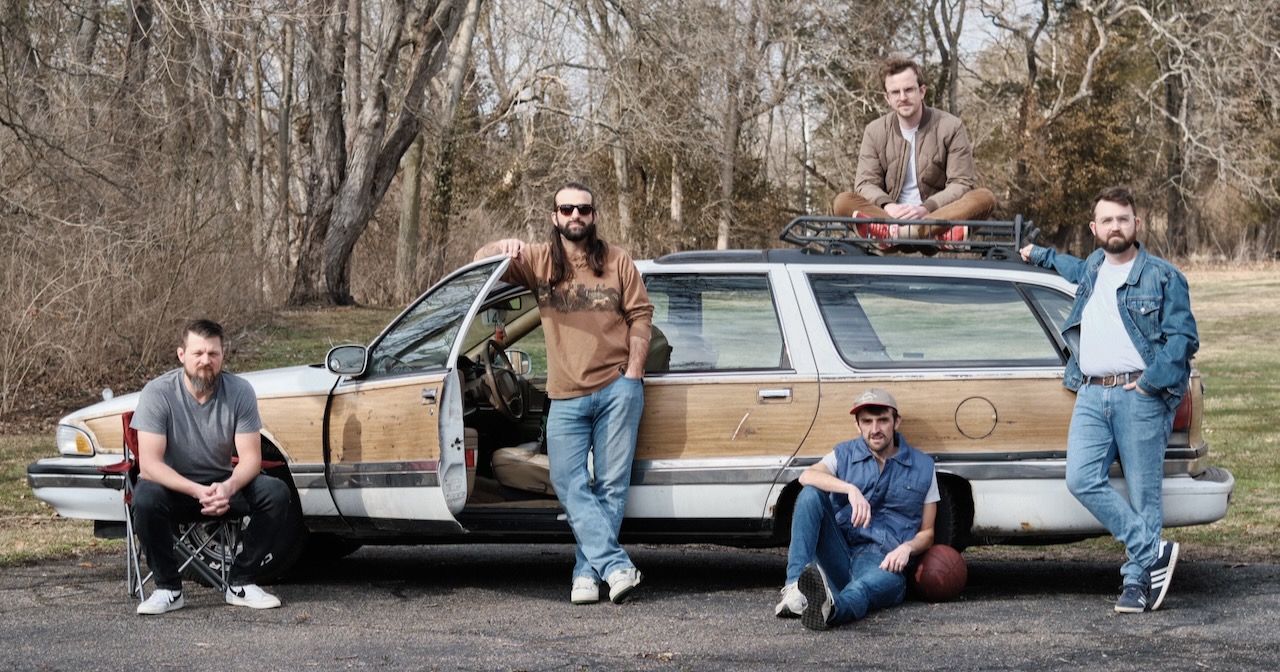
BGS 5+5: My Brother’s Keeper

Artist: My Brother’s Keeper
Hometown: Cincinnati, Ohio
Latest Album: Wartime Cartoons
Personal Nicknames (or rejected band names): Most of the band goes by our given names. Titus, Joshua, Adam, and Benj(amin), but our bass player “Wyatt” has been holding strong to the nickname “Sawmill” and has a “Sawmill” vanity license plate on his Ford Focus to prove it.

Answers provided by Benj Luckhaupt. 

Which artist has influenced you the most – and how?

I’m sure any artist would say “it’s hard to choose” and I’m going to say the same. Brian Wilson, Chris Thile, Alison Krauss, Tony Rice are all so formative to us, but as a songwriter I would say Bruce Springsteen has inspired me above all. His melodies are insanely catchy, his lyrics are gritty and literary. I appreciate his ability to be both subtle and straightforward, sometimes in the same sentence. He tells you the facts and then makes you think about the implications. Bruce also covers such a wide range of the human experience. His music is a great blueprint for the “song first” approach and I really try to incorporate that into my writing, even in the bluegrass medium. I want to write simple songs that make you think. There’s also such a variance in sound (think between Nebraska and Born in the USA) and yet it all works. I could nerd out about this forever.

What other art forms – literature, film, dance, painting, etc. – inform your music?

Definitely film and literature. We look to film often to inspire our visuals. We have a music video that is very Wes Anderson-esque, and the visuals for the album cover of Wartime Cartoons were inspired by the starkness of show Severance. There are certainly a few songs inspired by movies. A song called “The Banshees” on our last album was inspired by the landscape and darkness of a movie called The Banshees of Inisherin.

Literature, song and poetry are all so closely related. Leonard Cohen was a great author outside of songs. Spending a lot of time in books has had major influence on my writing, directly and indirectly. I love to start my day with a book about religion or history and end my day with a book about music or musicians. Sometimes I try to do an audiobook in between. Just taking in all those beautiful words is such a wonderful way to increase your vocabulary and worldview.

Titus and Wyatt are both photographers, and I think that art form opens up creative pathways as well, and of course contributes to the visuals of the band.

What has been the best advice you’ve received in your career so far?

This kid told me to think about what I’m thankful for and write about that. That was great advice. He was like 5 or 6 years old and I do think about thankfulness every time I write. Out of the mouth of babes.

What is a genre, album, artist, musician, or song that you adore that would surprise people?

Most people are pretty surprised when they find out that we love hip-hop and mainstream pop. They’re even more surprised when we tell them that our music is inspired by those genres. I’ve even had people say things to me like, “I like all music except for that rap crap” and I’m always like, “Oh, really? Because I love it!” Some people are even surprised when they hear how much we love The Beach Boys.

Since food and music go so well together, what is your dream pairing of a meal and a musician?

I’d like to sit down with Tony Rice and eat whatever fish he just caught and fried up. I’m sure we wouldn’t talk much, but we’d probably listen to Miles Davis and I’m sure I would learn a lot.


All Photos: Tasha Moehlman

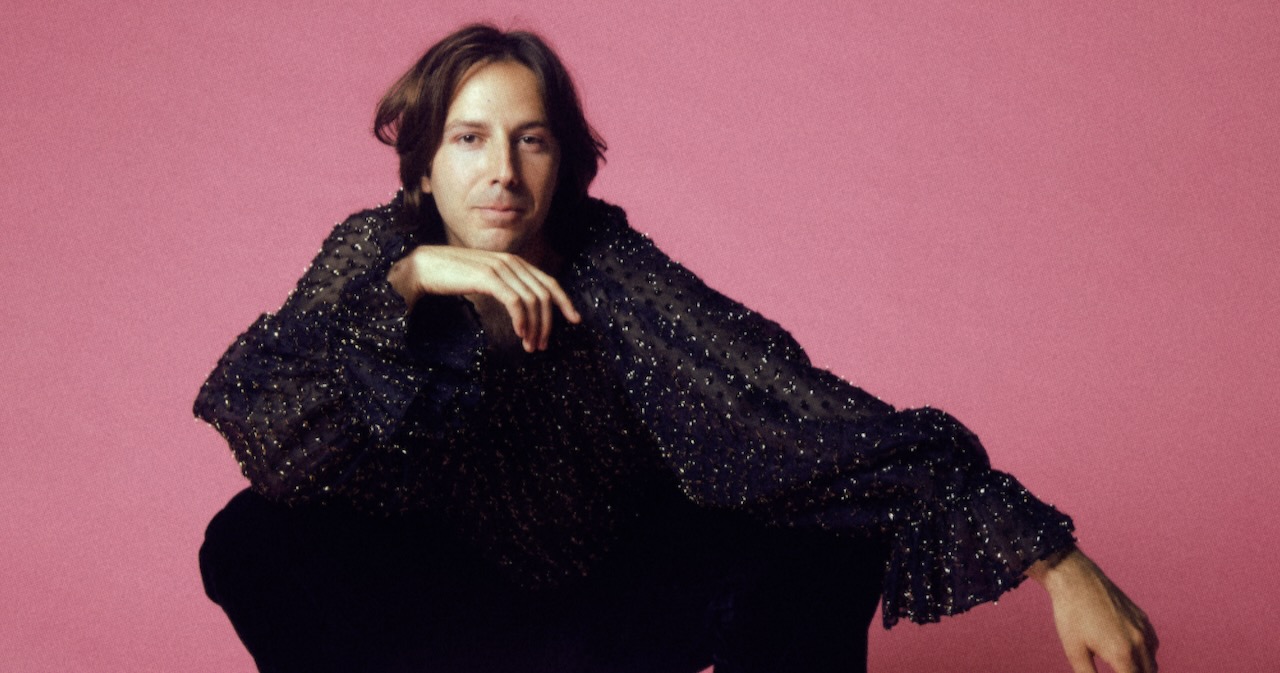
MIXTAPE: Sam Blasucci’s Life Forms in Live Performance

Coming early 2025, I will be releasing a live concert film of my new record, Real Life Thing. The film runs like a play of sorts, including different set changes and moods for each song as we run down the entire track list of the album. To me, live performance is the reason for making music. It’s the best way for me to tap into something deep in myself with those that have come out to do the same. It’s also the way that I make my trade as a human; I think live performance already brings an honest and vulnerable energy since it is our livelihood.

Songs evolve each time they’re performed live and each instrument reflects a current mood. It’s an endless mixed bag of potential outcomes. So much of a performance is pulled from all of the energies involved – the crowd, the band, the venue and the ghosts that live there, the time of year, etc. It’s the most exciting part of music to me and that’s why I decided to make my playlist all live performances of some of my favorite songs. – Sam Blasucci

“If I Was Your Girlfriend” Live In Utrecht (2020 Remaster) – Prince

I could have made this entire playlist just live Prince recordings that blow my mind, but that might only be fun for me. I especially love this version because it’s a song he wrote as his alter ego persona Camilla, who sang it on the album (Prince pitched his voice up to sound higher). But in this version, you just get Prince in Europe with his natural voice and it’s one of my favorite recordings of his ever.

“Hey That’s No Way to Say Goodbye” Live in London – Leonard Cohen

I think this is Leonard Cohen’s best album of any, live or in the studio. He was better and better with age. This is the cute version of Leonard as an old man finally, singing this song in the way it feels like it should have always been sung. Of any live performance on this list, this is the one I would have loved to see most in person.

“LA FAMA” Live en el Palau Sant Jordi – Rosalía

Some live versions I think are better than the studio versions and this is one of those cases, although I love the studio versions of all the MOTOMAMI songs. When Rosalía released this on the deluxe version of the album, it gave the song another side and clicked with me even more.

“Hunter” (Live) – Björk

If the purpose of a live performance is to tap in to something, Björk never missed. She’s the hunter.

“Knock On Wood” Live; 2005 Mix; 2016 Remaster – David Bowie

This is my favorite era of David Bowie (Cracked Actor). I especially love his vocal performance in this version. It’s not easy to cover a classic song like this and have it feel tastefully ramped up, but I think he brought it and crushed it.

“Voices Inside (Everything Is Everything)” – Donny Hathaway

Willie Weeks may be my favorite bass player and his solo section toward the end of this is widely known as one of the coolest bass moments, and with good reason. I suppose it shouldn’t be that hard to tap in when Donny Hathaway is leading the band.

“17 Days” Piano & A Microphone 1983 Version – Prince

When you can strip it all down to a single instrument and a voice and come through with so much power and spirit, that must be the true peak of live performance. When there is nothing else in the pot, all the secret parts of the music come out and make magic.

“Hot Burrito #2” Live at Lafayette’s Music Room – Big Star

I always thought Alex Chilton had some similarities with Gram Parsons. They sort of sing in a similar way and they both show so much emotion in their songs. I think that’s why he could make this version hit so hard. Chilton is at the top of my list of guitar players as well, and this song is a reason why.

“Ventura” Live 2003/The Fillmore, San Francisco – Lucinda Williams

This was recorded on my birthday in 2003. Although I was in 3rd grade and not in attendance for the show, I’d like to think I helped with the vibes. This one sounds like November in SF to me. Another amazing thing about live performance is capturing the energy surrounding the show.

“Woman of Heart and Mind” Live at Universal Amphitheatre, Los Angeles, CA, 8/14-17, 1974 – Joni Mitchell

Another version that I prefer to the studio cut. The sound of the night and the live acoustic guitar; Joni’s semi-confrontational and conversational writing style seem to be designed for an in-person type of listening.

“Angel Eyes” Live In Toronto/1975 – Jim Hall

Jim Hall is another one of my favorite guitar players. I learned about this song years ago on tour in Colorado and it has ever since remained one of my favorites.

“Stay a Little Longer” Live at Harrah’s Casino, Lake Tahoe, NV April 1978 – Willie Nelson

This feels like a good burning ender to this playlist, although it is the very opening of the concert it was taken from. Willie’s recipe is 3x the speed of the original, a couple out of control solos, and likely some exotic mood modifiers.


Photo Credit: Jo Anna Edmison

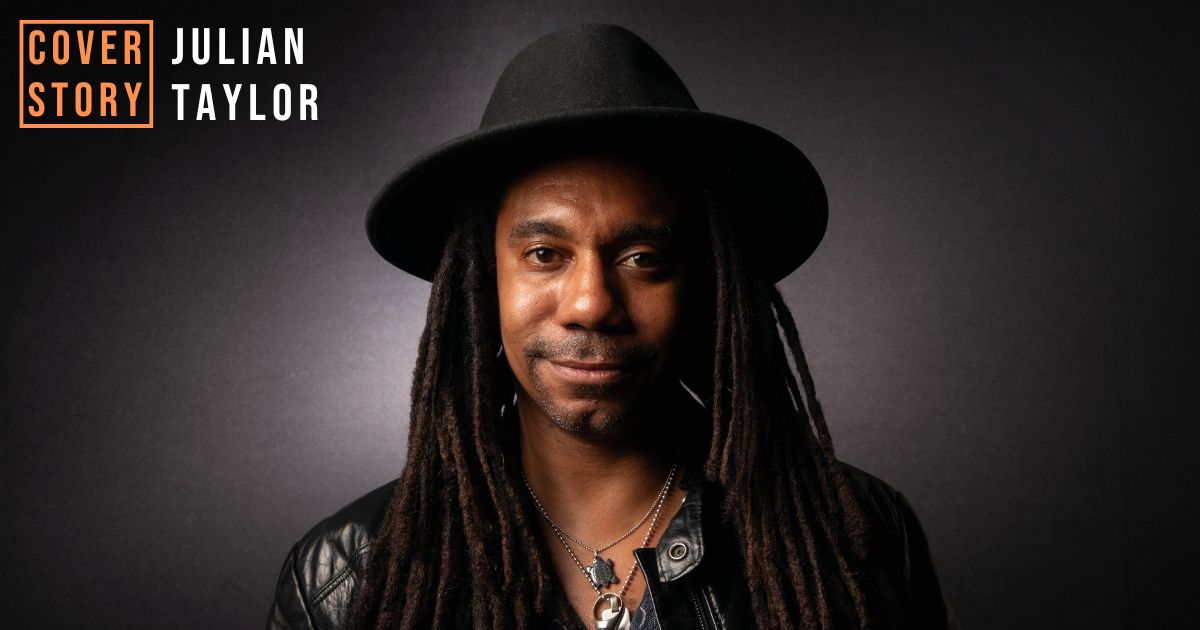
On ‘Pathways,’ Julian Taylor Looks Inward Rather Than Outward

Much like the songs on his latest album Pathways, the sounds swirling around Canadian singer-songwriter Julian Taylor on our recent phone call for BGS were also filled with curiosity, emotion, and the subtle, intrinsic tones of a modern world unfolding.

Walking the streets of his native Toronto, the introspective depths of Taylor’s voice and pure sentiments radiated in conversation were only complemented by the organized chaos of an international city in motion. Honking of taxi cabs at clustered intersections; the thrust of train cars on the underground subway; other conversations of varying degrees of volume in passing. And Taylor himself.

“Don’t the grass look greener on the other side/ but be careful of what you wish for could get left behind,” Taylor weaves through “Ain’t Life Strange.” “I see where I went wrong and all I could have done. There’s a fine line between a broken and beautiful mind.”

Those lyrics in particular speak to the long, arduous, yet bountiful road for Taylor. At 46, he’s spent his entire adult life in pursuit of creative fulfillment and stability in an often haphazard industry. In his tenure, Taylor’s seen the high-water mark and complete collapse of the music business – and then some.

Co-founder of 1990s Canadian alt-rock act Staggered Crossing, Taylor found himself in big meetings with even bigger record label executives. The band was signed by Warner Music Canada and earned some limited success before being dropped by the label not long after their debut album hit the streets.

From there, it became a DIY ethos at the heart of Staggered Crossing. But, after a handful of albums and plateauing popularity, the group split in 2007, ultimately leaving Taylor out on his own. But, he trudged ahead, even if he was unsure of his next move, whether personally or professionally.

Frustrated and burned out by the music industry, Taylor circled back to a beloved bar of his, the Dora Keogh Irish Pub in the Danforth neighborhood of Toronto. There he summoned the courage and energy to start an open mic night. With a stripped-down set of simply Taylor and his guitar, he quickly found this new path of intent and purpose for the music within him.

From there, it’s been this ongoing journey of self and of song for Julian Taylor. What has resulted is this soothing voice of determination and compassion pushing steadfast into this latest chapter of his sound and scope.

I was recently in Toronto for the first time and it felt like one of the most culturally and sonically diverse cities I’ve ever come across.

Julian Taylor: Yeah, definitely. It’s been that way ever since I was a kid. It was a real small town when I was born, but it’s just grown exponentially. The music thing has been extremely positive. People really do support each other and everything. Like, it doesn’t really matter where you’re coming from.

What does it mean to be a songwriter from Ontario and greater Canada? I mean, you have some of the best of the best. Gordon Lightfoot, Gord Downie, Neil Young, Joni Mitchell, Leonard Cohen. The list goes on.

It’s an honor. I’m happy to be from here. You have the rich heritage that I have and the rich musical landscape that we grew up with. A lot of people don’t really know that so many of these artists, like the people that you’ve mentioned, are Canadian. We’ve had such an incredible influence on the world. I think a lot of that has to do with the cultural mosaic and landscape we live in. I mean, it is not easy to tour this country. And we sort of grind our teeth here a lot of the time. So, when you do that, it makes you a little bit more appreciative of any sort of accolades or any sort of impact that you may have on the world.

When I was reading your backstory, you must have been a teenager when you started Staggered Crossing.

Yeah, I was pretty young. When we first got signed, it was at the tail end of, I guess, what you would want to call the high-water mark. We didn’t get to really experience that. We experienced the very last little bit of it. And then the entire industry changed. I’ve seen it change so many times in my career. And I started when I was 16.

What was it that kept you going after Staggered Crossing broke up? Was it just this idea that, “Hell or high water, this is what I’m going to, no matter what”?

Part of that was it. The other part of it was encouragement. The fact that any of my songs resonated with anybody really was the main point. You’re like, “I’m going to do this no matter what, because this is my calling and this is my passion, this is my purpose.” But, when you have those things validated by other people? That’s just a huge gift. The fact that people would continue to book me and play my stuff on the radio or people would come to shows and tell me that my music meant something to them. With that kind of encouragement, it’s really hard to stop going.

With Staggered Crossing being signed and going through the motions of very large corporations, what were some of the things you took away from that experience you applied to your solo career?

I think it all happened afterwards, really. Not during that period of time, because afterwards we had to fend for ourselves. But, it was the first time that the do-it-yourself mentality was put into place. We didn’t even know what DIY was. I just ended up doing it because I wanted to get my music out there. I wanted to keep touring, to continue to create records. So, I did anything and everything I could to keep that happening. I learned a lot about the business, about promotions, marketing, and distribution. Basically, everything a label would do for an artist, I learned how to do it alongside my friends and we kept on pushing ahead. It was hard and also easy at the same time, because it was something I wanted to do. It certainly tired me out at one point in time. I was so disenchanted with music that I stopped and then I came back with a brand-new sort of outlook on it.

What does it mean to be at this juncture of your career and still be just as curious, and always mining for the next song, as ever?

That’s a good question, man. It’s really about the job and the task at hand. And the job is to document the human condition through my experiences. World domination is still on the back burner. [Laughs] As an artist, it’s about putting in the work and that work is really hard to do. It’s emotionally exhausting. It’s physically exhausting. But, at the end of the day, when you look at yourself in the mirror and think about it, “I’ve written these beautiful songs and they’ve brought beauty to people’s lives.” And these performances have brought beauty to both of our lives – not just theirs, but to mine. It’s a two-way street.

Where does that work ethic come from within you?

Maybe it’s the Jamaican side of me. [Laughs] It’s definitely a family thing. My family on both sides have worked so hard. My mom’s side of the family has sacrificed and worked so hard. And my dad’s side, who migrated [to Canada]. On my mom’s side, we were here to begin with. And my dad’s side, they came here with not a lot to go on, and discrimination and things like that. They worked their asses off and always told me I would have to work 150 percent harder than anybody else because of my background.

And have you?

From a very young age.

Do you find they were correct with that assessment?

Yeah, they’re still correct about that. And, I don’t really know how and when that’s going to change. There are more opportunities reported to people now that are minorities, but the reality of having to work that much harder is still a truism. That’s unfortunate. But, you know what? I dare to ask anybody from the minority to say that something hasn’t benefited them from that work ethic.

As you were trying to move forward after Staggered Crossing, you started this open mic at a bar in Danforth. Were you kind of circling back to where it all began and recalibrating things?

Yeah. I used to work at that same Irish pub in the Danforth. I was a bus boy and also a server. One day, some old guy came in and he was just so rude to me, so racist. And I thought to myself, “What am I doing? I’ve got to do something about this.” That was the catalyst that got me back into performing music. The proprietors of that establishment offered the open stage to me on that Monday to help me get going again. They’re some of the greatest friends I’ve got in this world. And it was funny because, after Staggered Crossing, I just couldn’t go on. I had tried so hard to “make it” and it was such an uphill battle. Pushing a boulder up a hill. I gave up and needed some time. And then when the open stage came back, it was a community thing. I rallied around people and they rallied around me. And it’s still a musical community out here in the city. It all comes down to community.

Why did you title the album Pathways?

Pathways felt like a journey. It’s been so long getting here, you know? I’ve got 12 studio records in my name and a couple of live records. I’ve toured extensively for the last 20 years. And this felt like a record that I needed to go inward, rather than outward. Some of my records are very contemplative of the outside world. And this one, I was contemplating my inside world – what was in my head, my heart and soul. Trying to battle through some of the things that go on in everyday life decisions and choices I’ve made. The pressure of the last two records and creating a new record was on me. I was feeling that and decided Pathways was a really good metaphor for where I was headed, where I’ve gone, where I’ve been. I’m not sure where it’s going to take me next, but it just felt like a nice walk in a cool breeze.

Since the 2020 shutdown, there’s been, thankfully, a lot more conversation in the music industry about mental health and physical wellness. Does that play into where you’re at right now?

It does, yeah. I think about it every day. It’s really hard to make it as a musician. And it’s really hard to be a human in this world. I’ll be the first to admit that I go through a lot of stuff in my head. I’ve never been diagnosed with a mental illness, but I wouldn’t be surprised if I have something. I feel it a lot, the pressure to keep making a living, so that I can keep a roof over my head and my family fed. I could walk away from music if I had to, but I don’t want to. I don’t know if that would make me happy or not.

But, when it comes to fiscal responsibility, that’s a lot of stress. And then, there’s the stress social media puts on us, where you get attacked for no reason by people who don’t even know you. Sure, there’s a lot of praise going on, but there’s a lot of the other stuff, too. And now everything’s sort of been put into the musician’s hands. It’s a bit of a mental dilemma. I’ve lost a lot of people this year and that was part of that as well. You know, it’s life. People think people in the public eye or musicians putting themselves out there have rhino skin and they’re superhuman — but we’re not.


Photo Credit: Robert Georgeff

MIXTAPE: Growing Up Hardly Strictly with ISMAY

I consider myself to be amongst the luckiest of music lovers. Growing up, I saw some of the most incredible roots artists from backstage while holding my Jack Russell terrier and playing with my cousins. When I was 8 years old, my grandfather Warren started a free bluegrass festival in San Francisco called Hardly Strictly Bluegrass. These artists shaped me since they were the first ones I watched perform, but the connection went on to become even deeper. When my grandfather passed away in 2011 I started performing music, and the larger community of Hardly Strictly was where I found my encouragers and mentors.

This is a compilation of the artists who I heard from and listened to as a child, and those whose songs I learned when I first became a musician. – ISMAY (AKA Avery Hellman)

“Dark Turn of Mind” – Gillian Welch

Just after high school I spent time working on some small homesteads with a farm labor trade for room and board. This was the same time that The Harrow & the Harvest by Gillian Welch came out – a literary masterpiece. Every time I listen to this record it reminds me of those homesteads and my borrowed car with a faulty battery. It brings me back to the day I arrived late to a new farm in West Virginia while my roommate was still sleeping and how odd it felt to be in a house with a stranger. I got up in the morning to make sourdough toast with an egg wondering what that person who was asleep in the loft of that ’80s wood cabin would think of me.

“Concrete And Barbed Wire” – Lucinda Williams

In the ’90s I was fortunate that my mom had great music taste. She took us around in a magenta suburban car and played Lucinda Williams. She said us kids used to sing along with silly accents to the words “concrete and barbed wire.” It took me another 20 years to fully appreciate Lucinda Williams and the masterful lyricist she is. Over the last four years, I’ve been working on a documentary about her, and it’s been so rewarding, because Lucinda’s music is the kind that gets better the more you know it.

“Dallas” – The Flatlanders

My grandfather was not a professional musician for most of his life, but in the final years he played in a bluegrass band with his friend Jimmie Dale Gilmore. What a kind man Jimmie is, with a voice that reminds me of a dove fluttering away. Because of this relationship he had with my grandfather, I heard about this record Jimmie made with his band The Flatlanders that was lost for 40 years. It was raw and made me feel like I was under a tin roof in Texas. It’s said that this tape helped mark the birth of alt-country.

“The Times They Are A-Changin'” – Odetta

A few years ago I was asked to perform at an event that compared and contrasted Bob Dylan and Leonard Cohen. I’m more of a Cohen person, so I had more trouble finding a Dylan song that felt like it would fit my feel. That was when I came upon this remarkable Odetta cover and I was inspired. She changed the whole feel of the song to make it her own. In 2008, she performed at Hardly Strictly Bluegrass just two months before she passed away, it was one of the final times she ever performed.

“St. James Hospital” – Doc Watson

I know that most people know Doc for his flatpicking, but I’ve always been much more drawn to the fingerpicking style of guitar in general. “St. James Hospital” feels like a fascinating departure from the more well known Doc Watson performances, and I love hearing him playing in a less linear fashion. This shows he can do it all. In the music that I’ve recorded I sometimes feel a bit out-of-the-norm and nowhere-to-belong, but this song feels similar to one I recorded called “A Song in Praise of Sonoma Mountain.” Hearing “St. James Hospital” makes me feel less out-on-a-limb in roots music.

“Permanent” – Kenneth Pattengale & Joey Ryan (The Milk Carton Kids)

As I started playing music I found this record by The Milk Carton Kids before they had that name, and played under Kenneth Pattengale & Joey Ryan. Listening to this song now, it is still unreal that it was all recorded live at a concert. It was deeply inspiring to see artists like Gillian Welch and Dave Rawlings generating a new live sound that was somehow very modern and yet felt like a continuation of original folk music. As if the ’80s and ’90s had never happened! What a gift. Then, seeing The Milk Carton Kids take that torch and carry it on was so exciting for me as a 19 year old.

“Boulder to Birmingham” – Emmylou Harris

I listen to Emmylou every year on Sunday night at Hardly Strictly Bluegrass. Her silver hair and steadiness feel beyond time. I can’t believe she is still here, with that same strong presence since I was just 8 years old. As a performer she has a strong sense of worthiness to the audience, a sense of mutual respect for the relationship between listener and performer. I hope that I can hold just a bit of her steadiness within myself.

“Restless” – Alison Krauss & Union Station

I was in 6th grade and didn’t much enjoy recess out on the playground. I brought my CDs over to an empty classroom, and sat in the back listening to Alison Krauss & Union Station. Sometimes I’d show these CDs to my friends. This was before I figured out that it was cooler to be listening to rock music. But I loved that music, and the songs were amongst the first I tried to learn in singing lessons.

“The Silver Dagger” – Old Crow Medicine Show

Old Crow Medicine Show was playing at Hardly Strictly as they rose up in mainstream culture. I appreciate the edge that this recording preserves. There’s even a moment where it sounds like someone might have dropped something or hit their instrument on another (01:35). I wish more recordings kept imperfections preserved within them.

“Pretty Bird” – Hazel Dickens

Part of the reason that my grandfather started Hardly Strictly Bluegrass was because of his love of Hazel Dickens. They were from very different backgrounds, but they became friends and saw the common humanity in one another through music. She played every year until she died. This is my favorite song of hers. What is beautiful to me about Hazel’s take on bluegrass is the imperfections and raw emotion. She brought her whole self to the song.

“Harlem River Blues” – Justin Townes Earle 

I can still picture Justin on the stage with his impeccably curated suits. Back around 2018, I opened a show for him in Santa Cruz, California. He drove up to the venue in a red convertible, which I thought was the coolest thing ever. Just a guy and his ride. He was very kind to me and I wish I had more chances to see him play again. May his music never fade away.

“Tiniest Lights” – Angel Olsen 

When I was 20, I went into a record shop in Ohio. The guy there said they only really carry more obscure records. No problem, I thought, I was here for Captain Beefheart and PJ Harvey. But when I asked, he said those artists were too well known. He pointed me towards Angel Olsen and I heard something in songwriting I had never heard before. My world opened up, and I knew there was so much more that was possible after listening to “Tiniest Lights.” She performed at Hardly Strictly in 2015 and her voice was as real and penetrating as the recordings.

“If I Needed You” – Lyle Lovett

What’s better than Lyle Lovett playing a Townes Van Zandt song?? We listened to Lyle a bunch when I was a kid. No, I’m not from Texas, but I do love those Texas songwriters.

“Long Ride Home” – Patty Griffin

The first time I performed at Hardly Strictly (although somewhat tangentially) was at an artist after party. I chose this song, because it had a fun fancy guitar line I could play with my beginner fingers. Someone who was performing came up and said they thought I was talented. I think that might have changed my life right there. It was the first time anyone had come up to me and said I was good enough to do this as a job, not to mention amongst professional musicians.

“Are You Sure” – Willie Nelson

Willie played Hardly Strictly in 2003 and I remember that big black bus sitting behind the main stage. I can’t even imagine the thrill of the audience members, his fans are as dedicated as they come. I heard this song at a recently released film that is fantastic called To Leslie.

“Little Bird of Heaven” – Reeltime Travellers

This band was part of that wave of old-time style artists that came at the same time as Hardly Strictly. The vocals are so unexpected, but real and honest. One of their band members became a mentor of mine and helped me get my start in the music business and I am forever grateful.

“Essay Man” and “The Golden Palomino” – ISMAY

These are two songs from my latest release, Desert Pavement, that would never have happened if it weren’t for Hardly Strictly. I am trying to find my way with my own version of folk, and can’t help but be inspired at what a rich trove of artists I have to draw from.


Photo Credit: Aubrey Trinnaman

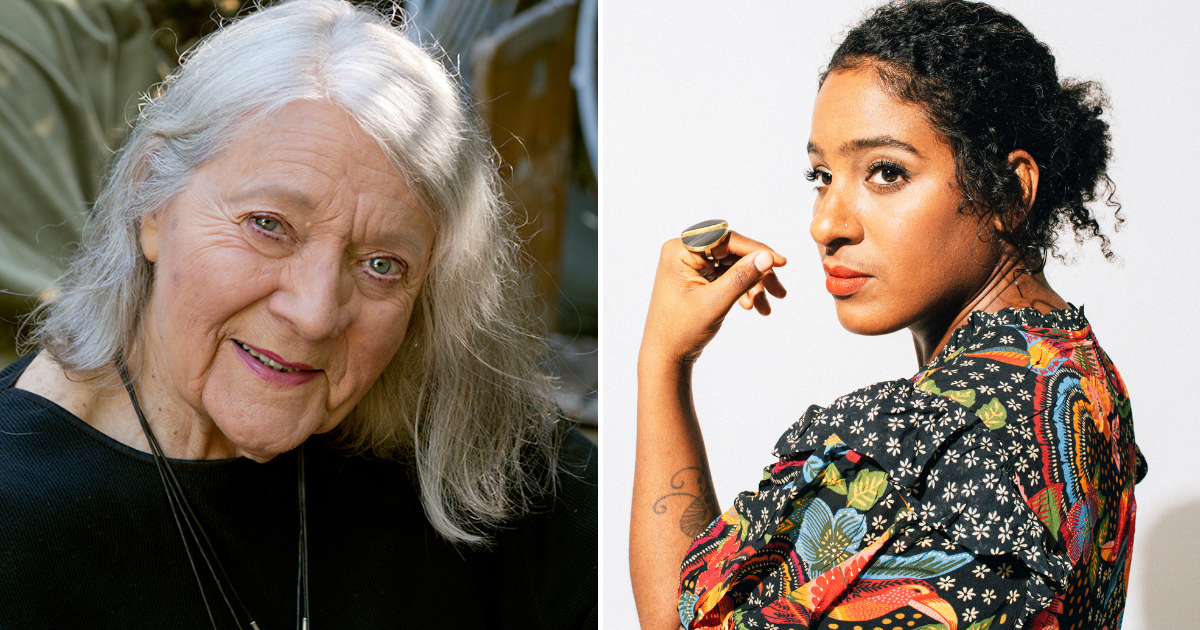
Leyla McCalla in Conversation with Singer-Activist Barbara Dane

(Editor’s Note: Cellist, composer, and creator Leyla McCalla brings us a conversation as guest contributor with singer and community activist Barbara Dane – in celebration of her 96th birthday on May 12.)

I felt an immediate connection to Barbara Dane when I heard her voice. I first learned of Dane while developing music for a FreshScore – a commissioned piece written to a film in the public domain to be performed at the Freshgrass festival back in 2018. I had just given birth to my twins and I found myself researching songs to use in my score. During that time, I came across a civil rights era song called “Freedom Is a Constant Struggle” that Dane had released with a group called the Chambers Brothers in 1966. I fell in love with the recording – the performance was powerful and poignant; the message was so direct. 

Some songs just make you want to learn them. Freedom is a constant struggle. A perfect and ever true statement. It inspired me to write a song I called “Trying to Be Free” that became one of the songs in my FreshScore. I dug further into Barbara Dane’s catalogue and found a song that she had written called “I Hate the Capitalist System.” This felt very in line with the themes in my (at that time) yet-to-be-released third album, The Capitalist Blues. This is the epitome of the “folk process,” a phrase I jokingly use when talking about songwriting. You think you’ve found a unique idea, only to find that the idea has existed since time immemorial. The road that is paved with gold keeps on getting mined, refilled, and recycled and on and on. 

Years ago, a friend suggested that I check out the song “Dodinin” by Atis Indepandan – a group of Haitian artists living in exile in New York City from the brutal Duvalier dictatorship in Haiti. The album is considered a classic within the Haitian diasporic community.  When I was doing research for Breaking the Thermometer – the album I made inspired by Radio Haiti and the legacy of its journalists – I found myself more deeply exploring the songs. I’ve never been more grateful that Smithsonian Folkways has downloadable liner notes on their website! And beyond that, I was grateful that the liner notes were so thorough; it included essays on the political context of the music as well as Kreyol and English Translations of the songs. The songs spoke to the struggles of the times and longing for home of Haitians in exile. It is hands down one of my favorite pieces of art ever made. I knew I had to include Dodinin on the record.  

Fast forward to the release of the album, Barbara Dane’s son, Pablo Menendez, emailed me. He was curious about whether I was aware of his mother’s legacy and if I knew that the album was originally released on Paredon Records, the label that Dane cofounded with her husband, Irwin Silber. Paredon Records was not a typical label; all of their releases highlighted the political struggles of people from all over the world with a mission to uplift movements and voices of opposition to oppression. He also mentioned that I should read her newly released autobiography, This Bell Still Rings, and I immediately ordered it and began to read her fascinating life story. I was even more amazed when I looked at the inner flap of the hardcover and saw that my name was mentioned as one of the inheritors of her legacy! It was a very life affirming surprise. How did I not know?!

I worry that we are living in a time of tragic disconnection. As musicians, we are constantly being pushed towards releasing a steady stream of “content” to get more views and more likes, more money, and more recognition. But, often times that comes at the expense of our health. I mention this because I feel that more people in our musical community should be aware of the music, ideas, and ethos of Barbara Dane. She is someone who has always centered the needs of the community, locally and globally. She doggedly worked to understand the causes behind the stratification of our society and gracefully occupied so many roles to be able to use her creativity for the greatest good for herself, her family, and others. As a mother of three myself, I was very curious about how she did it! Whether you realize it or not, we need Barbara Dane right now – if nothing else, to remind us of our essential power when we center community care.

Reading her memoir and seeing that Dane’s 96th birthday was coming up (it was May 12, 2023), I felt inspired to do something to mark her birthday. I remember thinking to myself, “Let’s celebrate our heroes while they are still here!” I released a cover of her song “Freedom Is a Constant Struggle” alongside a cohort of collaborators from my adopted home of New Orleans. My manager suggested that perhaps we could arrange an email interview and I was ecstatic when Dane graciously replied with a yes. 

I am incredibly pleased to share the interview with you here on BGS and I hope it will inspire you all to think more about the potential we all have to take better care of each other. This bell still rings!

Leyla McCalla: I have been reading your new autobiography, This Bell Still Rings. What does this title mean to you and what do you want readers to understand from it?

Barbara Dane: The title is taken from a lyric by Leonard Cohen which I will quote for you:

Ring the bell that still can ring
Forget your perfect offering
There’s a crack in everything
That’s how the light gets in

What I’d like readers to take from that is that the imperfections in things are what offer possibilities for learning and growth.

How did your early experiences of blending music and activism shape your career? Was there any particular moment where you felt that this would be your life’s work?

I never thought of myself as having a “career,” I guess my professional work grew out of the need to put food on the table. As far as blending music and activism, early on it became clear that my voice was a valuable tool for my community work. I was lucky enough to be exposed to movements like People’s Songs that allowed me to see the possibilities at a young age. The artists that influenced me the most in this regard during my formative years were Paul Robeson and Pete Seeger.

Who do you cite as some of your earliest teachers and/or influences to your musical approach?

Early on I was exposed to the music of Billie Holiday and Louis Jordon and of course the big bands so popular in the 1940s, like Ellington, Basie, and Glenn Miller. Earl Robinson’s famous “Ballad for Americans” was foundational. And definitely such giants as Paul Robeson, Leadbelly, Pete Seeger, and Malvina Reynolds, and later, the blues women of the 1920s and 30s: Bessie Smith, Ida Cox, Ma Rainey, and Sippie Wallace. And of course there was my beloved Mama Yancey.

Your vocal phrasing is incomparably gorgeous; it feels both so natural and so intentional. When did you realize that you had a natural gift and was your craft something that you worked on intentionally, or something that came naturally, or both?

Listening to Louis and Billie taught me that you don’t have to stick to the bar lines. I was more comfortable with the conversational feel of their phrasing. Once you understood the structure of the piece, you can be free within it. So no, I never worked on it and none of it was intentional. My intention has always been to be completely in the song and let its emotions and meanings lead me.

 You opened a music venue in 1961 called Sugar Hill. It sounds awfully stressful to run a music venue while raising small children! Can you share more about how that came to be and that time in your life?

Actually, on the contrary, the whole idea of opening the club in our hometown, was it that it would allow me to spend more time with my family instead of always being out on tour. Running the club was a joy and gave me the opportunity to introduce some of the old timers who had more to give to a new audience that was just beginning to become interested in the blues.

Who were the Chambers Brothers and how did you come to collaborate with them?

They were four talented brothers, recently migrated from Mississippi to LA, who had formed a gospel group and were looking for ways to broaden their audience. I first met them in 1960 when I invited them up to the stage at the Ash Grove to join me in singing some of the songs that were emerging from the civil rights movement.

You were the first U.S. artist to tour in Cuba after its revolution. What was the impact of that experience on your life?

Going to Cuba in 1966 changed my life. I was energized by the optimism of the Cuban people as they engaged in building a new and more equitable way of life. For the first time I felt identified with the direction society was moving in, whereas at home I was always in the opposition.

Paredon Records is the label you founded with your husband Irwin Silber in 1969. What made you want to start a record label and produce albums?

In 1967, I attended Cuba’s Encuentro de Canción Protesta where I met singers from all over the world who were deeply committed to struggles for peace and justice. When I returned home, I felt the urgent need to expose the U.S. public to the significant and timely music I heard there. First I experimented with translating and singing some of the songs myself, but I soon realized it would make more sense to present the original voices. So I decided to launch a record label. Irwin had skills to bring to the table from his years of experience in publishing, and with his support, I produced and curated over 50 LPs of liberation music from the U.S. and around the world. Eventually, to ensure the collection’s availability in perpetuity, we donated it to Smithsonian Folkways.

You’ve toured internationally, including Franco-era Spain, Marcos’ Philippines under martial law, and North Vietnam under the threat of American bombs. What inspired these tours and why did you feel they were important places to bring your music?

With my international work I carried a message of peace and anti-imperialism, representing the sentiments of peace-loving Americans.

I’m also a mother of three and I find myself in awe of how much you were able to accomplish in your life while also raising your three children. How did you balance your musical life, activism and child rearing? Do you have advice for artist parents on how to navigate it all?

Be sure to include your children in all aspects of your life and help them learn to be independent. Trust and respect them. Make sure your partner is willing and able to actively do their share of the parenting.

Sometimes it seems that peace and justice are impossible to achieve. What would you say to people who feel that they do not have the power to make a difference?

As expressed in Beverly Grant’s moving song, “Together, we can move mountains. Alone, we can’t move at all!”


Photos courtesy of Leyla McCalla (by Laura E. Partain) and Barbara Dane.

As the Newest Supergroup in Bluegrass, Mighty Poplar Goes Back to the Classics

At your average live music event on the folk and bluegrass circuit, the stage isn’t the only place where great performances are happening. There’s the campfire and parking lot picking scene at the big outdoor festivals, of course. But a lot of it goes on out of sight backstage, too, when musicians who don’t often see each other come together to play with and for each other. A close approximation to listening in on that is Mighty Poplar (Free Dirt Records), the self-titled first album by the group of the same name.

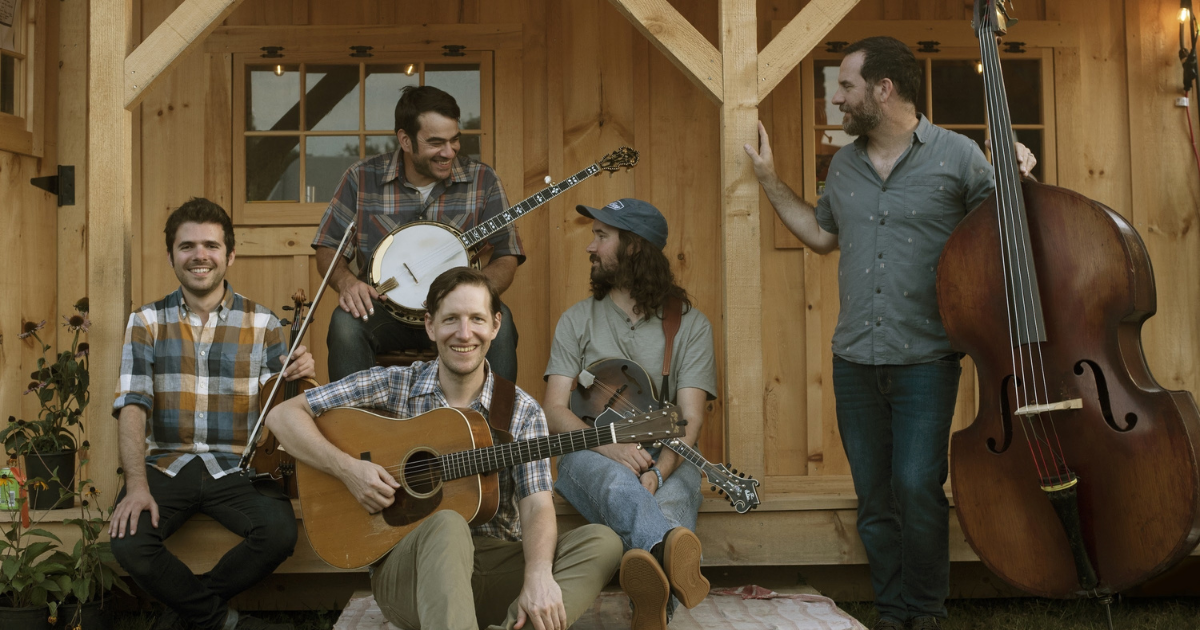
The bluegrass world’s newest supergroup, Mighty Poplar is a five-piece band centered around three virtuoso players from the Punch Brothers orbit — banjo player Noam Pikelny, guitarist Chris “Critter” Eldridge and original Punch Brothers bassist Greg Garrison, currently in the band Leftover Salmon. Out front as primary vocalist is Watchhouse mandolinist Andrew Marlin, with well-traveled fiddler Alex Hargreaves (currently knocking ’em dead in Billy Strings’ touring band) filling out the lineup. Over the years, various subsets of this quintet would cross paths out on the road and jam, generally falling back on the old numbers everyone knew as a common language. That’s how Mighty Poplar began to coalesce.

“There’s a pretty complex web of relationships between all five of us that began with a lot of hanging out,” says Pikelny. “There’s this beautiful thing about bluegrass, the amazing music and all the shared songs. There’s a great social component that can exist with the music if you let it, and it became a reason to get together and have fun.”

While none of Mighty Poplar’s members come from acts you’d really call “bluegrass,” you could say they’re all at least bluegrass-adjacent. And none of them have ever come down as top-dead-center old-school bluegrass as on Mighty Poplar. The album’s 10-song tracklist draws material from A.P. Carter, Bob Dylan, John Hartford and Leonard Cohen, with songs made famous by the likes of Hazel & Alice, Uncle Dave Macon and Bill Monroe fiddler Kenny Baker.

Monroe, the Father of Bluegrass, also figures into the proceedings in terms of inspiration for the ensemble’s name. Proposing Mighty Poplar as a moniker was Marlin, someone who definitely knows his way around names involving wordplay (witness the original name of Watchhouse: Mandolin Orange).

“I was listening to a Bill Monroe and Doc Watson live recording where they were about to kick off ‘What Would You Give in Exchange for Your Soul?’” Marlin recalls. “Bill said he and Charlie recorded it in ’19-and-36’ in Charlotte and it had been ‘mighty poplar down through the Carolinas.’ We had a huge text thread already going about band names, where my phone was always going BING at 2:30 a.m. So many names we considered, but everybody thought Mighty Poplar was a good awning to stand under.”

While Mighty Poplar is only now coming out in the spring of 2023, the album has actually been in the can for a couple of years. It might never have happened without the Coronavirus pandemic shutdown of 2020-21, which took everyone’s regular bands off the road for an extended period of time.

In isolation, everyone felt drawn toward bluegrass as the musical equivalent of comfort food. So they took this on as a pandemic project, convening with engineer Sean Sullivan at Nashville’s Tractor Shed for a brisk three-day session in October of 2020.

“There was a sense that we were getting away with murder, traveling across the country and podding up while everything was closed up,” says Pikelny. “There were logistical hurdles and we had three days, so we had one shot to get it all at once. So we worked out as much as we could ahead of time, even the sequence. The concept, if there was one, was that this was the closest thing to a real-deal, traditional, classic bluegrass project any of us have done in a long time, maybe ever.”

As lead vocalist on six of the album’s 10 songs, Marlin is the primary out-front voice of Mighty Poplar. But he felt like he had to step up his game on the instrumental side, to keep up with his bandmates.

“It was intimidating, but not because those guys are intimidating,” Marlin says. “As a musician, I’ve had to figure out how to feel like I can express myself in front of people I look up to. But that’s on me for projecting my own shit onto them, because they don’t wear that. So ‘Grey Eagle,’ an instrumental fiddle tune Alex brought forth, I was kind of sweating that one in the studio. That kicked off at 150 beats per minute and everybody else is just looking around, casually exploring the nooks and crannies of the tempo while I’m popping a vein and kind of being drug behind the horse. But I managed to keep it together. Ultimately all those guys still love a great song as much as anyone. There’s something about simple songs that leave it up to the player to bring whatever they want. I love it when the song’s not telling you how to play it, and I feel lucky that they were down to explore that approach.”

Song choice was pretty casual, mostly in favor of material from a bit off the beaten path. Even with a Hall of Fame list of songwriters, they focused on less-well-known songs from the repertoire of each — Dylan’s take on the A.P. Carter tune “Blackjack Davy” rather than “Will the Circle Be Unbroken,” or Hartford’s Mark Twang riverboat song “Let Him Go On Mama” rather than “Gentle On My Mind.”

“It all happened pretty organically,” says Eldridge. “In the initial text volley about what to do, there were a lot of songs we would’ve been happy to cut. It’s hard to say why we landed on these particular songs other than that they felt right. I would not say there was an overarching concept beyond good songs that felt right.”

While they considered including some originals, ultimately they decided to stick with covers, mostly of older vintage (the most recent song on it is Montana singer/songwriter Martha Scanlan’s “Up on the Divide,” from 2012). In that way, Pikelny looks at Mighty Poplar as a classic folk record.

“In other genres, people might call this a ‘covers album,’” says Pikelny. “But if you record solo Bach compositions, that’s not ‘Bach covers.’ It’s repertoire, reinterpretations of classics to pass down. It was born of a desire, almost a need for all of us, to gather around a bluegrass project. And it was such a joyous process. It felt like coming home for Thanksgiving or Christmas and being around family you’ve not seen in a while, in the home you grew up in with a turkey in the oven. It was that kind of comfort, the warm fuzzy feelings of gatherings like that.”

It went so well, in fact, that they were in no hurry to get around to the detail work of mixing and mastering the record after they finished tracking. Pikelny says they felt almost paranoid about not wanting to touch it, for fear of messing up a good thing.

“We’ve been sitting on this for so long because it felt like such a special session,” Eldridge says. “So effortless and deeply joyful. Magical, even. We didn’t want to let it go because it felt like all we could do was ruin it. But I kept coming back to it, listening now and then and thinking, ‘I really like this. We have to share it, plus it’s a good excuse for us to get together again.’ It’s ironic that we’ve not actually played it live yet, and we’re already kind of getting the next batch together.”

Indeed, Mighty Poplar’s first real touring commences in May. With Hargreaves busy playing arena-sized venues with Strings for the foreseeable future, John Mailander will stand in for him on the first leg of touring. And all the principles are cautiously optimistic that Mighty Poplar’s first album won’t be its last. Pikelny likens their hoped-for trajectory to Tony Rice and J.D. Crowe’s Bluegrass Album Band, which periodically convened to make albums and tours through the 1980s and into the ’90s.

“Bluegrass Album Band was never a full-time group for any of those guys, it was a very sustainable side project whose records served as homecomings,” says Pikelny. “They’d go off to do whatever else and then come back for another edition. It’s a celebration of our love for bluegrass. As long as it stays as effortless as this felt, I think we’ll keep doing it when we can.”


Photo Credit: Brian Carroll

Basic Folk – Richard Thompson

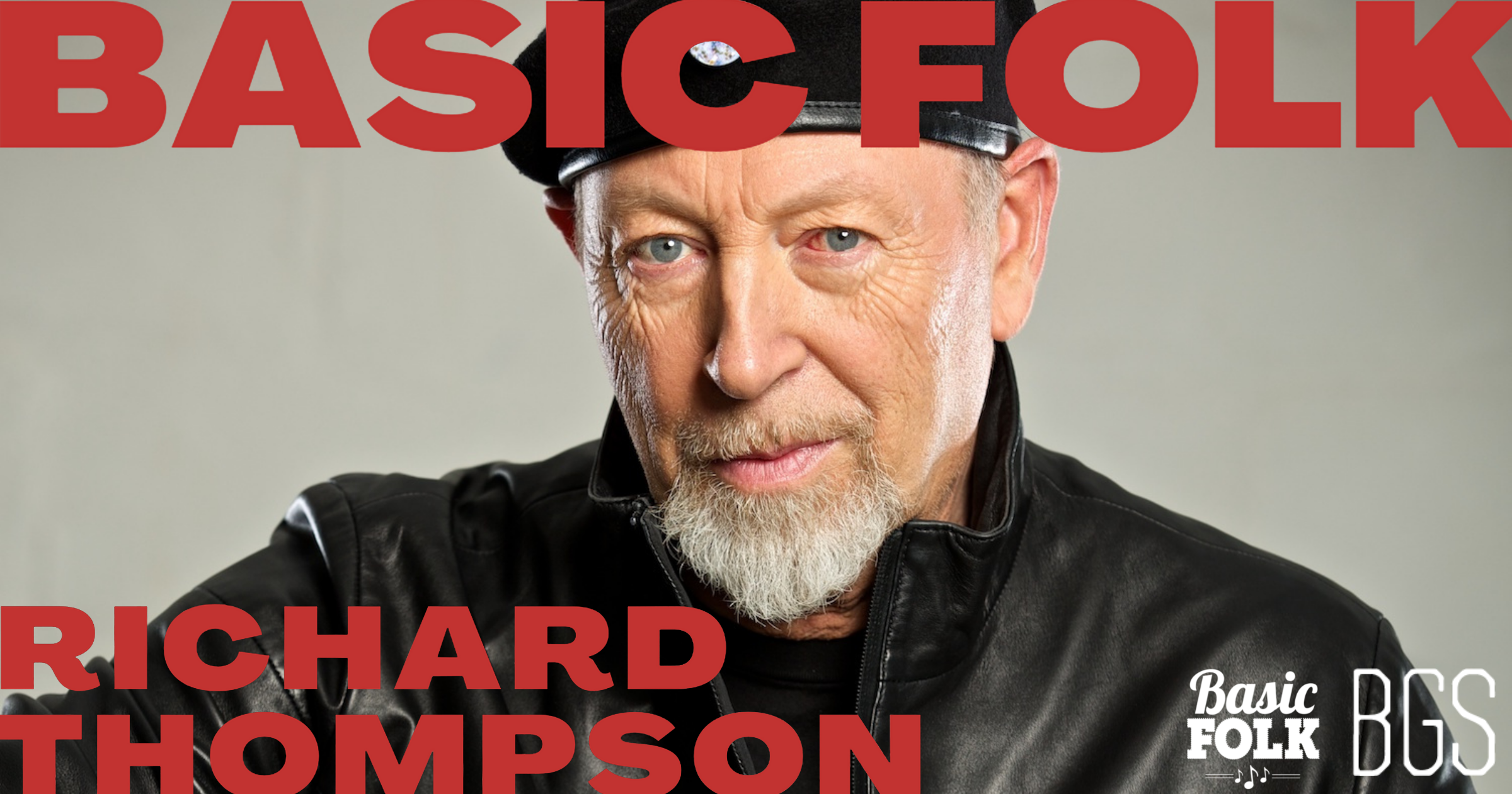
Richard Thompson’s memoir, Beeswing: Losing My Way and Finding My Voice 1967 – 1975 (now out in paperback) is a page-turner of a read about a legend at the dawn of British folk rock. Thompson details his early days with Fairport Convention, one of the most influential folk bands of all time. He writes how they strived to be different and sought out then-unknown songwriters like Joni Mitchell and Leonard Cohen while adapting a modern sound for traditional British folk songs, some that were over 500 years old. He recounts tragedy when the band suffered a huge loss: the 1969 car accident that killed their drummer, Martin Lamble and Richard Thompson’s girlfriend of just two weeks, Jeannie Franklyn. He writes about their first experiences in America: rolling around Los Angeles with the likes of John Bonham and Janis Joplin and their triumphant debut at The Philadelphia Folk Festival.

LISTEN: APPLE • SPOTIFY • STITCHERAMAZON • MP3

RT was game to get into anything I threw at him: talk about experiencing such excruciating grief at a young age, what British fortitude means to him, did he ever really get to know his parents, being outwardly calm and inwardly chaotic. There’s a chapter in the book where he details some session work he did in between the time he left Fairport Convention in 1971 and his solo work and work with his then-wife, Linda Thompson. I had a blast looking up all these albums on YouTube, especially Lal and Mike Waterson’s Bright Phoebus from 1972. Very fun music and fun that RT is playing on it! I highly recommend his memoir and hold out my hopes that there may be a part two in his future. I think there is much left to write: his days after the very public breakup with Linda, establishing himself as a solo act and then coming back to work with his extended family in the group Thompson in 2014 on the album Family. Richard’s got a busy summer ahead of him with a couple of cruises and the tenth anniversary of his writing camp, Frets and Refrains. I’m grateful he was able to make some time for us on Basic Folk!


Photo Credit: David Kaptein