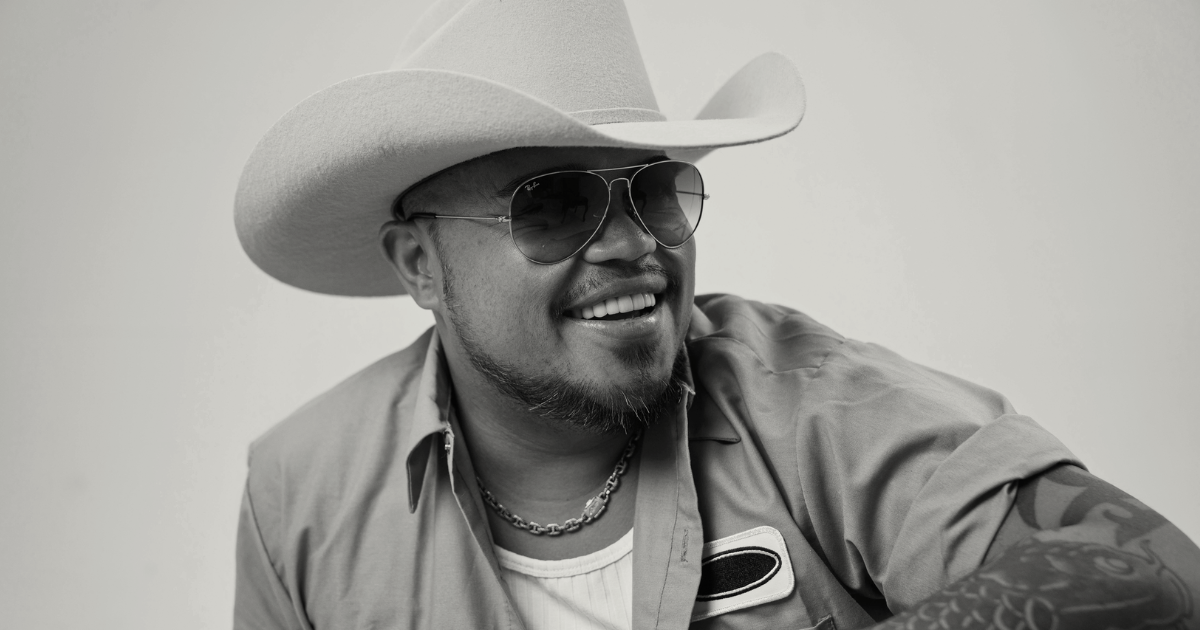
In an era of polarization, social division, and dissent, Glenn Awong, the Hawaiian country reggae star better known as Maoli, believes we’ve all got more in common than not. Awong came to this realization in the late 2010s while he was touring through the US with his band. Show by show, he discovered that life in the American South wasn’t too dissimilar from the cattle ranches and pineapple fields where he grew up on Maui’s North Shore.
Once Awong had those shared realities in mind, he observed that island reggae pop and the soulful sides of country, folk, and bluegrass weren’t that different either. Emboldened, he began to cover popular contemporary country hits like Brett Young’s “Mercy” and “In Case You Didn’t Know,” imbuing their lilting melodies, range-roving rhythms, and plainspoken storytelling with a breezy, coastal shuffle. The results spoke for themselves, catapulting the big-hearted singer into a new tier of success, paving the road towards 2023’s hit-laden Maoli Music Overload album and the innumerable singalong singles that have followed.
Prior to his transformative revelations about island and country, Awong and his band had spent a decade building audiences across Hawaii, the Pacific Islands, and the American West Coast. Once he wholeheartedly embraced his fusion style, the rest of America and locations as far flung as Australia and New Zealand welcomed him with open arms. Since then, it’s been one rodeo after another.
Ultimately, the secret, as Awong has come to understand it, is leaning all the way into his island country upbringing and lifestyle. He didn’t need to disguise himself as someone else. He just needed to be the most unapologetic version of himself.
“I’m really that island guy, but I can go into the country right now and do my rodeo cowboy thing,” he says, grinning from ear to ear on a video call from Maui. “I can hunt, go down to the beach, enjoy a beer, jump in the water and start fishing, all in the same day.”
Several weeks before the release of his latest single, “Runnin’ Me Off” featuring Nashville’s Maddie Font (formerly of Maddie & Tae), Awong spent 45 minutes in conversation with Good Country. Punctuating his thoughts with an infectious laugh, he spoke generously about his musical heroes, island and country life, his experience in Nashville, and the realities of life on the road as an entertainer.
I noticed you follow Aaron Neville on Instagram. What does he mean to your music?
Maoli: Aaron Neville is one of my musical heroes. My grandmother introduced him to me when I was a kid. I was always fascinated by his music. His voice is super unique. He moved me in a way that made me feel like he was the greatest. I used to try to mimic him. You can hear it in my music.
I grew up on his music as well. I was impressed by how effortlessly he could work across genres while always sounding like himself.
I really loved it when he sang a cover of “The Grand Tour” [by George Jones]. I love it more than the original. He’s transcended genre multiple times. He did what I’m trying to do right now. I look up to people who take risks and do things that are not normal. He didn’t limit himself. I love people who take that to heart.
What do you see as the values that underpin your music?
When it comes to country and reggae, it’s really like a lifestyle for me. It’s really who I am. Reggae music comes from Jamaica. Jamaica is an island, but so is Hawaii. We can relate in Hawaii, because we’re both island people. A lot of people don’t get to see this, but in Hawaii, we live country lives as well.
If you weren’t a singer, who do you think you’d be?
I’d probably be some type of farmer or cowboy. I’d probably be cowboying for a living, or I’d be a construction worker, like a lot of people out here. I’d be in some line of labor work.
Which would have probably led you to write songs anyway.
Yeah, that’s true. That’s how songwriting is done. You’re inspired by things that happen around you.
I like how you’ve identified that your music is the outgrowth of a lifestyle.
I see a lot of artists try to copy other people. What they’re missing is that you have to find out who you are. I studied the greats as well, but I always wanted to find my own voice.
What you’re talking about is a durational exercise. It doesn’t happen overnight.
I didn’t find crazy success until five years ago. People don’t understand this, but I was in the game for 15 years before that. I was trying to discover my voice, and it led me back to where it all began, my country lifestyle.
Who are the gold standards for you in country music?
There are so many good country songwriters. Zac Brown is one of them. I love his style, which also comes from that Jimmy Buffett feel. Then Kenny Chesney or George Strait, but I can’t say George was a writer, but I love his songwriters. That type of country. George Jones. I’m an old school guy.
Songwriting, recording, performance. These are all art forms that have to work together. Often, it takes a team.
That’s what I’ve learned in the business. I’ve done covers. I used to get a lot of shit for doing covers. If that’s a crime, you might as well take Whitney Houston and Elvis Presley out of the picture. A lot of your favourite artists do not write their own music.
There’s a process where you find the great songwriters, you find the perfect producer, the perfect engineer, and all that stuff. You gotta create that team. You can’t always do it all yourself. The best of the best have teams.
What are some of your favorite covers to sing, and what did you learn from them?
My favorite cover to play live is “Every Night, Every Morning” [by Maddie & Tae] because that’s the only time I can rest. The crowd sings the whole song. [Laughs] Doing covers helped me as a songwriter. I get to see how these people put these masterpieces together. I don’t just do any cover; it has to move me. The melody and lyrics have to move me.
I thought I was a good songwriter until I went to Nashville and started writing with the best songwriters. They really know what they’re doing. What I learned with them is you gotta have good storytelling, the melodies just gotta come, and all that stuff. It was cool going out there and learning how to write.
What do you think makes a good story?
It has to come from a place of truth. It can’t be fake. I’m not going to name names, but I’ve listened to songs where they’re talking about drinking and partying, and they’ve never touched a beer in their lives. How do you understand that energy if you’ve never partied?
Not everyone will be familiar with the relationship between country music and Hawaii.
People ask me all the time what my shows are like. I always say it’s something you have to experience. It’s the same with our relationship with country music. I’d really have to take you where I’m from so you could see how we live.
Country is country, right?
The country that I love is the songs that really talk about that cowboy life. Hard work, heartbreak, leaving when times are rough, and finding yourself in a bar, drinking your sorrows away. That’s real shit, right there. That’s where the relationship between island and country is very similar in ways. I spent a lot of time in Texas and Nashville. If Polynesians knew how these cowboys really live, they would realize that we’re the same.
If I asked you to name-check some Hawaiian musicians who were combining country and reggae music before you, who would you mention?
I would have to shout out the Kaʻau Crater Boys. They’re the original group that brought country covers and gave them an island reggae feel. I’d also have to say Kapena. Those are the two groups I looked up. They’ve done this stuff longer than I have. I can’t say I created it. They were really popular here. Some people didn’t know their country reggae songs were covers. They became a staple in Hawaii. Even Israel Kamakawiwoʻole, one of our greatest singers, did a cover of “Country Roads” by John Denver. It was one of the biggest songs in Hawaii. People here thought that he wrote it.
At this point, there’s a back-and-forth relationship between American country music and different scenes all over the world.
People don’t always understand. Even for me, when I started going to Nashville, it took me a while to get used to their customs and culture. I would sit in on songwriting sessions with some really incredible songwriters who had written platinum songs and had never heard of me before. I sold 42,000 tickets in Hawaii. I sold out shows in Tahiti and Samoa. I’m not trying to brag, I’m just saying that, for example, I could do all of that, and they still had no idea who I was in Nashville. When they found out who I was and what I could do, they wanted to write with me. If I hadn’t gone there, I wouldn’t have known who they were either.
It’s an interesting situation to be in. When you’re building a career like you have, you might be famous in one country and unknown in another. How do you keep yourself grounded through it all?
I don’t let any of it get to me. I stay neutral. If you tell me I’m the goat, I’ll say thank you. If you tell me I’m a piece of shit, I’ll say thank you. The way I feel is whether I’m selling 42,000 tickets or an unknown in Nashville, I’m the same. You’ve got to be humble in your success. I love going places where they don’t know me, because I can really be myself and not worry about people pulling out their phones to film me.
It seems like a hard thing to navigate in the social media era.
I’ve gotten better at the post-and-ghost thing. When you have a certain level of success, everyone on social media has an opinion. I try to spend as little time as possible on that stuff. There are great things about it as well, but I have a team to handle that stuff. I don’t let it get to me. You can get trapped on social media. Whether what they’re saying is good or bad, you don’t always need to hear it. I don’t want to break my humility. I’m just a regular guy doing my thing.
How important has the West Coast of America been to your growth as an artist?
I think it’s been really important. They were my voice when it came to the States. I started in small little bars with maybe fifty people showing up. I remember playing in venues where I counted 10 people, including security. I just told myself one day I’m gonna sell out arenas. The West Coast really helped me with that. They helped me to cross over to the Midwest and the East Coast, too. The West Coast has always been good to me. I consider them my voice when it comes to the mainland. It all started there.
Those ten people at those shows had a good time, right?
Right! I think the security guards even bought me a couple of drinks. [Laughs]
You must have had some interesting conversations with fans.
People have told me I brought their marriage closer, or I stopped them from committing suicide. There are those people who just come up, say thank you, and tell me they loved the experience. It’s all over the show.
It’s a lot of energy to give out and take in.
It takes a lot of energy to go on stage every night. At the end of the night, I just go back to my bus, green room or hotel, and decompress. It takes a lot, but you get a lot back. I’ve been backstage puking my guts out, or on an IV drip to get hydrated before performing, because I know there is someone in the audience who spent months saving to watch me. I’ve had fans drive 400 miles or fly halfway around the world to see me perform. I don’t take any of that lightly.
Did you watch cowboy movies when you were younger?
I wasn’t really a television guy. We spent a lot of time outdoors. On the weekends, I’d help dad with the pigs and goats, or herding the cows. That was my lifestyle for a long time.
If you could go back, what would you say to that kid?
I would tell that kid to just keep going. Be passionate about what you do, and never give up. They’re going to tell you that you’re crazy, but just keep going. As long as you don’t give up, you’re destined to succeed.
One of the hardest things to master in life is patience. When you’re planting, it takes time. It takes time for the plants to grow and bear fruit. You’re not going to plant the seed and get the fruit tomorrow. You’ve got to water it, let the sun do its thing, and be patient. Everything happens when it’s supposed to happen.
Photo courtesy of the artist.