Tray Wellington: Black Banjo and Hip-hop/Folk Fusion

According to 20th century genius Louis Armstrong, “Man, all music is folk music. You ain’t never heard no horse sing a song, have you?”

Yet it is not universally accepted that hip-hop is folk music. The almost perfectly named folkhop derives from bhangra, not any rap/folk fusion – although DJs are involved. During the 1960s folk revival featured some cherished artists like Richie Havens addressed civil rights and the contemporary scene. As well as Bob Dylan presaging spoken word and folk with “Subterranean Homesick Blues,” while wise men in Black communities were signifyin’ on the streets. The 2000s saw acts Gangstagrass and Nappy Roots pioneer mixing bluegrass or other down-home sounds and themes with hip-hop.

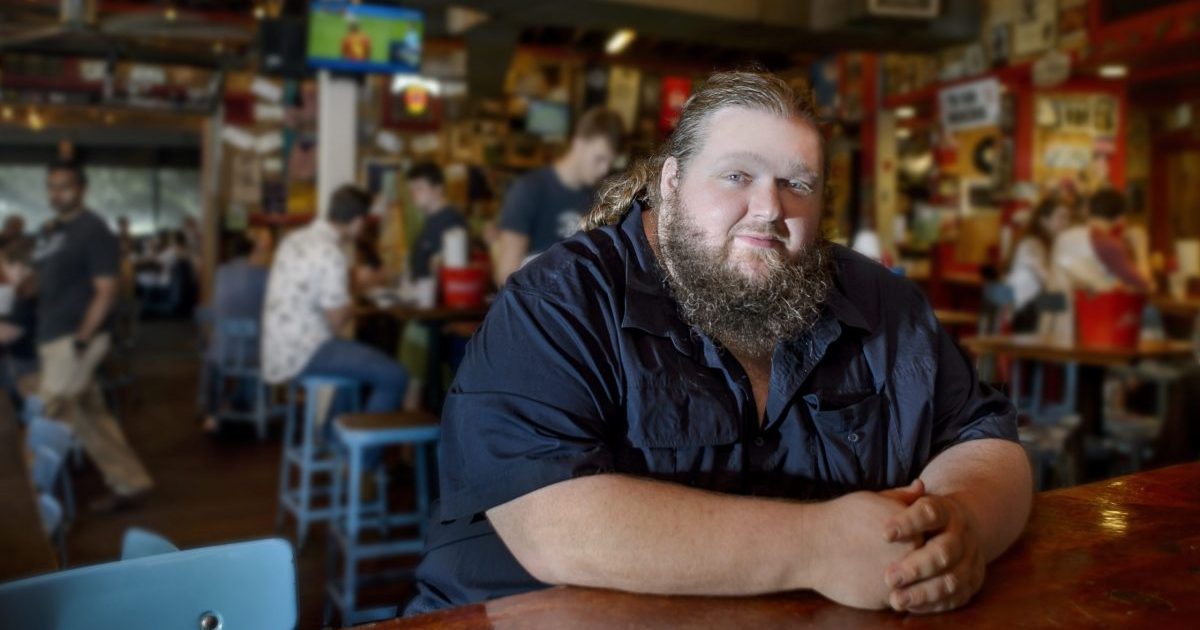
This lineage notably continues in the current decade with Cleo Reed, whose music has been referred to as folk rap, and Greensboro, North Carolina artist/activist Justin “Demeanor” Harrington who combines 1990s hip-hop production and banjo samples, proclaiming, “I learned that it’s not that folk is separate from rap; folk music just means the music of the people. Rap is one of the illest folk music that’s ever existed.”

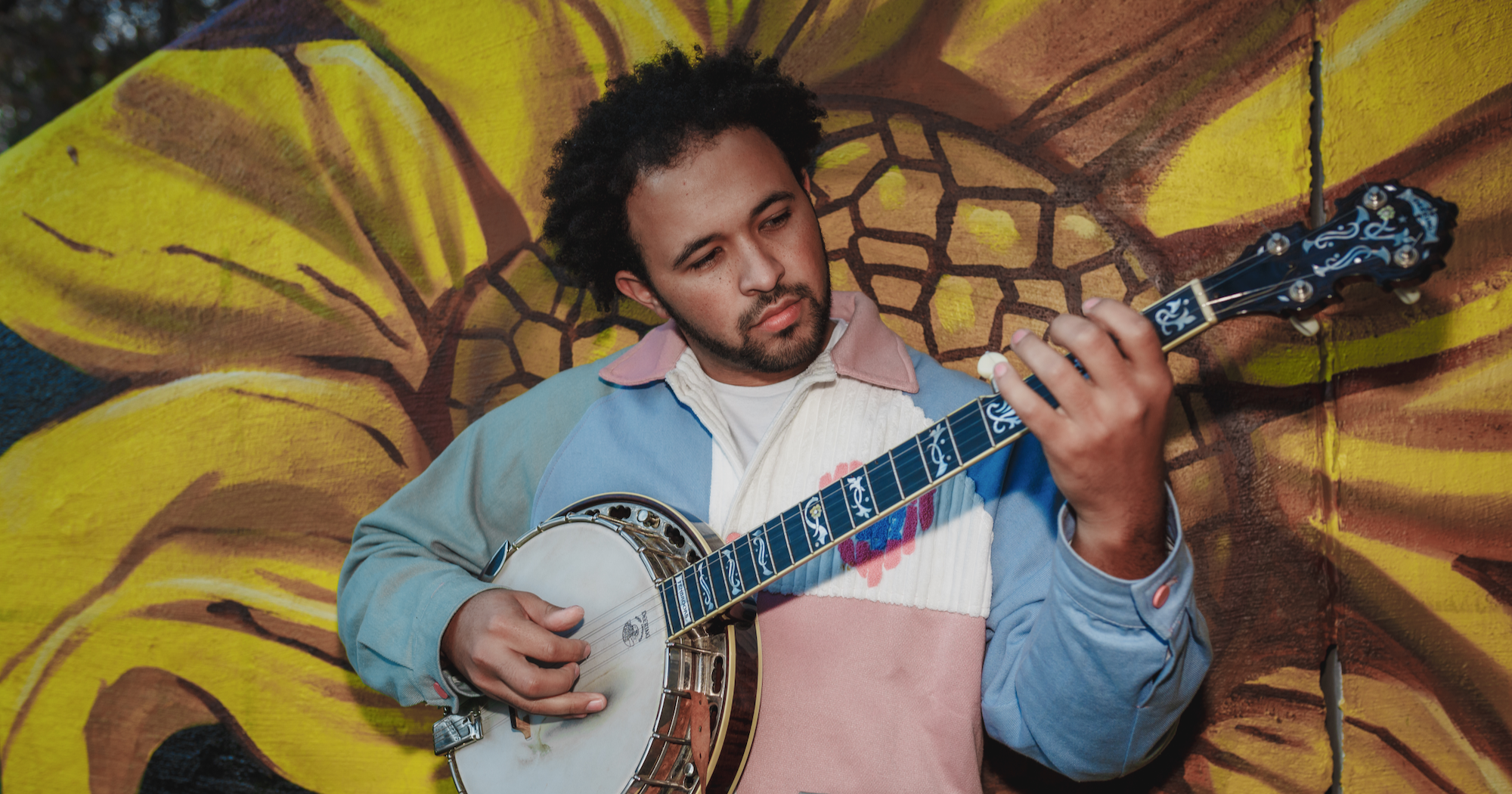
On his new album Heart On The Table, Tray Wellington – also from North Carolina – honors kinship to Harrington in pursuing hip-hop/folk fusion by featuring him on the fourth track “DEMEANOR // I’M WITH IT.” Wellington’s 2022 debut album Black Banjo infused traditional bluegrass with jazz styles while amplifying the Black Southeastern sources of roots music. He had already been lauded with the International Bluegrass Music Association Momentum Award in 2019 for Instrumentalist of the Year, before going on to earn the Steve Martin Banjo Prize in 2024 for innovation in bluegrass and on the five-string. In recent years, Wellington has also served in Black banjo supergroup and string band New Dangerfield (now on indefinite hiatus) alongside prominent roots artists Kaia Kater, Jake Blount, and Nelson Williams, taking the roots festival orbit by storm.

Wellington is a standout in the Black banjo movement of the past 20 years that seeks to reclaim the African-derived instrument and the lost world of Black American roots music created in the South at the crossroads of Scottish, Irish, and Indigenous styles. He has long been taking runs at bluegrass boundaries, covering songs like his reworking of Kid Cudi’s “Pursuit of Happiness.” New songs “INTERLUDE,” which features Sierra Hull, and title track “<3 On The Table,” featuring A.G. Sully, are the greatest on the new album.

BGS spoke to Wellington about his challenging journey.

What is it about North Carolina? Why do so many legendary musicians – from George Clinton and Chuck Brown to Elizabeth Cotten and Roberta Flack – hail from there?

Tray Wellington: You know, I think North Carolina, as a state, it’s just really cool, because it has so many different cultural identities. I think there’s so many different regions of the state that have their own unique musical identity, as well as personal identity and cultural identity. I think, because of that, where you have such a wide array of people in this one state, it just creates a bunch of natural vibrancy, you know, for the arts. And I think a lot of people just grasp onto that, and it just produces a lot of really amazing artists, because like, John Coltrane’s from there.

I used to live in Charlotte; moved there right after the original Black Banjo Gathering in Boone and met and got to know the embryonic Carolina Chocolate Drops and the legendary Joe Thompson. Where are you from in NC?

I’m originally from Ashe County, North Carolina, which is really close to Boone – 15 minutes away.

How did your journey with the banjo begin?

I was originally playing electric guitar for about a year, and when I was going through my grandpa’s CD collection one day I found a CD of Doc Watson. I remember when I found this CD, I remember listening to it. Doc Watson is a musician from Deep Gap, North Carolina. I was listening to this CD and I just got super invested in the sound of it, and just the overall vibe of the music. There was at the time a club at my middle school called the Mountain Music Club. I joined the Mountain Music Club to learn guitar, so I started doing some flatpicking there and in that class was when I heard banjo in person for the first time. It drew me in and I was like, “Whoa! What is this?” I just kind of became enamored with it.

I always loved banjo because I grew up watching Hee Haw. I’m likely much older than you.

What was it like winning the Steve Martin Banjo Prize?

That was super cool, I was super honored. I remember when I was like 14, 15 years old, when I was looking at my life goals, you know, one of the things I remember hearing about is the Steve Martin Prize. So, it happening was like a childhood dream come true, and I just think it was one of those moments that it’s so cool to be recognized by all these heroes of mine for my work. At first, I did the classic Southern thing like, “I don’t deserve it.” But I think I bring a unique perspective to the instrument and I was honored to have been recognized in that way.

To talk about the new album, Heart On The Table, what made you pursue bridging the gap between hip-hop and bluegrass?

Yeah, I think for me my biggest thing was when I was talking about storytelling. I looked at what my favorite storytelling was, it was hip-hop music. When I was first kind of conceptualizing this album, I didn’t even know what it was gonna be at first. I made all these tracks at home, because I’ve been doing hip-hop production for a few years now, too, and then also playing banjo. I remember I was making all these tracks with hip-hop stuff and I wasn’t putting banjo on it. I was hanging out with one of my friends and he was like, “Why don’t you add banjo to that?” And I was like, “What do you mean?” I had never thought of that. I never thought about mixing it. And then when I started doing it, I slowly started coming up with this collection of songs. “False Idols” was the first song on the album and I remember that was one of the early songs I did in that style. I found a way to make the banjo fit perfectly in there.

You’ve obviously been working with Kaia Kater, but how did you select the other artists feature on the new album?

Yeah, there’s a couple different ways. Some of them were old friends of mine, like Elora Dash, who was on “False Idols,” for instance. She was my vocal teacher in Raleigh when I was there and I’ve known her for a long time. I really, really respect her music. And then Demeanor, who’s on track [4]. I’ve worked with him before, we’ve done tracks. We have a release event together, we’ve done a few tracks together at his studio in Greensboro, and I was like, “He has to be on it.” And Lizzie No was a first-time collaborator for me.

The most riveting song of the collection is the title track featuring A.G. Sully. With its jazzy blend it reminds me of my brotha Gil Scott-Heron. What is the source of the song?

That was another song that I had made before we even recorded the album. And we didn’t know it was going to be the title track, actually. Then, when we were thinking about the new band, we were like, “How do we put this together?” I actually rewrote my verses for it after we re-recorded it, because I was like, “I need something that fits this vibe better.”

I remember the first thing I heard:

Is your heart on the table?
Did it fall?
How could I let you know?
Who could have seen the call?
Nothing to do at all.

It just kind of came to me naturally, and I remember I wrote it all down. When A.G. got it, I sent her all the lyrics and I was like, “I think this is kind of the vibe.” And she knocked it out of the park on the hook.

Since the Library of Congress Black Banjo Renaissance event featuring Demeanor is happening in July in D.C., do you see your work and his as parallel?

Yeah, I mean, for me, I have a lot of respect for what the brother does and I think we have two different approaches to [fusing folk and rap]. It was one of those things where definitely he’s an inspiration to me and we’ve been friends for a while now. I wouldn’t say we, either one of us, necessarily did it first or maybe around the same time, [we] just kind of naturally did it. I know he really likes my stuff, too, so it’s cool.

I am in the Black Banjo Reclamation Project NYC chapter. What would you like those folks coming up to know?

I would just say, don’t limit yourself. I think it’s the main thing I always tell people, because I think sometimes we can get caught up in people trying to sway our narrative. And as a community, the most important thing we can do is cultivate individuality. Ultimately, that should be the main message on the flight.

How do you challenge the consistent limitations for Black roots artists? Since we’re coming out of Black Music Month [June] and I noted that the War & Treaty were on the BET Awards as this lone roots outlier…

You look at the country music artists, for instance. You look at Morgan Wallen. He says the N-word, gets canceled, and then ends up becoming one of the best-selling artists of all time, because he said the N-word. And because all of his fans rallied around him and were defending him. Then he immediately took it back and said, “Well actually, I can be this controversial, because my fans will still buy my music.” White artists are gonna get away with a lot more.

I feel like the judgment is so much higher, you know? I feel like if you’re a Black artist and you release one bad song, people are gonna be [upset]. But a white artist could release a whole album of bad songs and people would still listen and not be as critical. I think sometimes, too, there can be an expectation of Black artists to always have to discuss certain issues. When ultimately you can talk about anything, and you should be allowed to talk about anything, and if you’re not touching on this one thing right now, it doesn’t mean you don’t like it. You know what I’m trying to say? Does that make sense?

A big thing I try to challenge is we shouldn’t have to always talk about racial issues in the world on every single song to be able to get traction, but sometimes that’s how it feels like it is.

What do you think accounts for the attraction of new Black players to roots music now?

I think one of the cool things we’ve seen in the last couple years is there’s been a big resurgence of it, and I think the Beyoncé album, surprisingly, was a big thing. There’s a whole lot of debate around that, because ultimately people can argue if it was country or not – that’s not my place to say. I remember there was a really good article that said don’t forget all the other people who have been putting in work for 20-plus years to try to get people [interested in Black roots music].

And all these artists who have been doing the work for the past 20 years should get that same recognition, Black people in roots music. That one of the biggest artists in the world that can highlight this thing that for so long made a lot of people feel like, “I don’t belong in this.” If they can help people jump over that barrier and see that all people do belong in this; it’s done a lot for the movement, that I’ve seen.


Photo courtesy of the artist.

This content brought to you in partnership with Preston Thompson Guitars.
MIXTAPE: Chris Pierce on the Healing Powers of Music

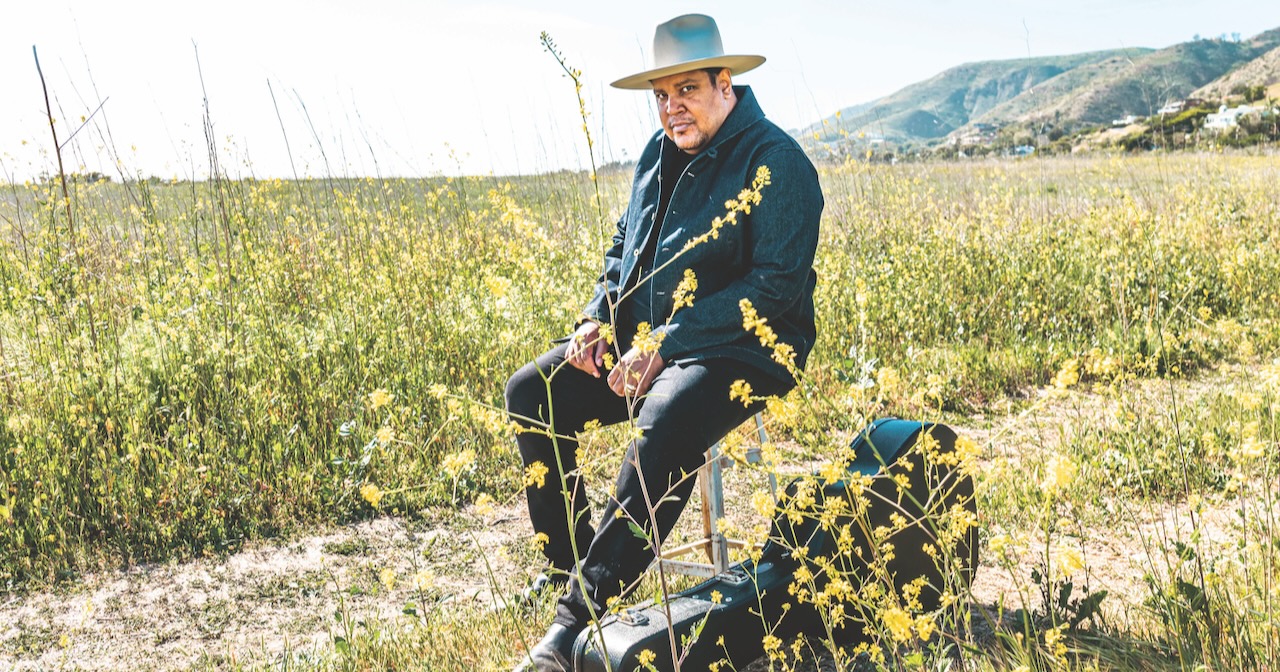
Hello Folks! My name is Chris Pierce. I’m a musician, songwriter and storyteller. My new album, Let All Who Will, was created to offer a message of resilience and empowerment – and to remind those who have been pressed to never give up the good fight for justice and equality. The songs are there for folks to hear, dissect and discuss. They also offer suggestions of ways to speak up and move together from a place of common ground. I believe that compassion is the only way forward. I fight with compassion. I sing with compassion. For this Mixtape, let’s explore a theme of the healing powers of music. Songs of liberation, pain, encouragement, empowerment and togetherness. – Chris Pierce

Reverend Gary Davis – “Let Us Get Together Right Down Here”

Starting with a song from Rev. Gary Davis – also known as Blind Gary Davis (born on April 30, 1896) – a blues and gospel singer who was also proficient on the banjo, guitar, and harmonica. Born in Laurens, South Carolina, and blind since infancy, Davis first performed professionally in the Piedmont blues scene of Durham, North Carolina, in the 1930s. After relocating to New York in the 1940s, Davis experienced a career rebirth as part of the American folk music revival that peaked through the 1960s. I’ve always been particularly moved by this song by Rev. Davis as it draws the listener in right away and encourages us all to “get together” as part of the great congregation of humanity.

Nina Simone – “Backlash Blues”

Growing up, my mother was an English teacher and I was fortunate enough to have access to books by some of the greatest writers of our time. I gravitated towards studying Langston Hughes from the time I was around 10 years old and the inspiration from reading his profound works is one of the reasons that I became a songwriter. “Backlash Blues” is one of his poems that was given a melody and was sung by the high priestess of soul, Nina Simone. It was written as a sign of hope for Black people during times of segregation.

Chris Pierce – “It’s Been Burning for a While”

This song is a response to the furor surrounding the tragic death of George Floyd in 2020. It was beyond puzzling to see how surprised many voices were, in the media and beyond, at the anger people felt. My co-writer and I collaborated on this song in an effort to point out that while all these stories have been making the headlines a lot recently, repression of the marginalized is nothing new.

Richie Havens – “Handsome Johnny”

Richie Havens’ music has elements of folk, soul and rhythm and blues. He had an intense and rhythmic guitar style and often played in open tunings. A lot of folks know him from Woodstock, but he continued on playing concerts right up until his passing in 2013.

I’ve been deeply inspired by Richie Havens in my own songwriting and growing up hearing songs like “Handsome Johnny” inspired me to expand my writing. To me, “Handsome Johnny” testifies about the sacrifices and inner struggles of the soldier and describes soldiers of all kinds going off to fight for what they believe in.

Lead Belly – “In the Pines” / “Black Girl” / “Where Did You Sleep Last Night?”

I’ve studied Lead Belly’s songs throughout my journey as a songwriter. His songs covered a wide range of genres and topics including gospel music; love, loss, liquor, prison life and racism; and folk songs about cowboys, prison, work, sailors, cattle herding and dancing. His version of “In The Pines” is one of the most widely known.

“In the Pines” is an American folk song originating from two songs, “In the Pines” and “The Longest Train,” both of whose authorship is unknown and date back to at least the 1870s. The songs originated in the Southern Appalachian area of the United States. Historians have said this song was probably born from African Americans living along or east of the Appalachian Mountains around the turn of the 20th century. Huddie Ledbetter, better known as Lead Belly, recorded over half-a-dozen versions between 1944 and 1948, most often under the title “Black Girl” or “Black Gal.” His first rendition, recorded for Musicraft Records in New York City in February 1944, is arguably his most familiar.

Odetta – “Got My Mind on Freedom”

Odetta Holmes, known as Odetta, is an inspiration to all. Born in Birmingham, Alabama on December 31, 1930, her voice has inspired hearts all over the world and she is often referred to as “The Voice of the Civil Rights Movement.” Odetta truly embodied a voice that inspired change. Martin Luther King Jr. called her the queen of American folk music. 

Terry Callier – “Spin, Spin, Spin”

Terry Callier was born in the North Side of Chicago. He was a childhood friend of Curtis Mayfield, Major Lance and Jerry Butler and he sang in doo-wop groups in his teens. In 1964 he recorded his debut album on Prestige Records. The album wasn’t released until 1968 as The New Folk Sound of Terry Callier. A dear musician friend of mine gifted me a copy of the album around 20 years ago and it’s been in steady rotation in my house ever since. My opinion, widely shared, is that Terry Callier didn’t get the popular recognition his varied talents deserved. Nonetheless, he released a string of enduring and influential albums.

Josh White – “Southern Exposure”

When I was in the 6th grade, I wrote a book report on the music of Josh White. I remember heading to the library in Claremont, California, and finding a treasure chest of literature and recordings by White. I dove in and was deeply inspired by the man, the songwriter, guitarist and civil rights activist that he was. White grew up in the South during the 1920s and 1930s. He released a prolific output of recordings in genres including Piedmont blues, country blues, gospel music and social protest songs. His music went on to influence several generations of artists, including yours truly. White’s album, Southern Exposure, is known as a political blues album and dealt with issues of Jim Crow. The album as a whole, to me, is a protest album of protest albums.    

Bob Dylan – “Only a Pawn in Their Game”

Bob Dylan sang a stirring solo performance of “Only a Pawn In Their Game,” at The March on Washington, a retelling of the murder of civil rights activist Medgar Evers. The lyrics attribute blame for the killing and other racial violence to the rich white politicians and authorities who manipulated poor whites into directing their anger and hatred at Black people. The song suggests that Evers’ killer does not deserve to be remembered by name, unlike the man he murdered (“They lowered him down as a king”), because he was “only a pawn in their game.”

Chris Pierce – “Mr. McMartin”

My song, “Mr. McMartin” from my new album, Let All Who Will, is about a street sweeper who has seen a lot of what human beings are capable of in the past 40 years on the job. He sweeps after celebrations, uprisings, political rallies, parades, holidays and catastrophes. As he sweeps on through the years, he wonders if we are capable of real change or just broken promises and broken prayer.


Photo Credit: Mathieu Bitton

BGS 5+5: Matt Andersen

Artist: Matt Andersen
Hometown: Perth-Andover, New Brunswick, Canada
Latest Album: House to House
Nicknames or Rejected Band Names: No nicknames, none that I’m aware of anyway… No real rejected band names either. The first band I was in was called Stubbyfingers. Loved that name and loved the people I played with.

What’s your favorite memory from being on stage?

It was my second tour with Stuart McLean and The Vinyl Cafe. We were making our way across Canada playing all of our largest cities as part of his annual Christmas tour. As the tour was coming to an end, I was lamenting to Stuart how I really wished that my parents would be able to catch the show, but didn’t see it happening as my dad had never been in a plane, and wasn’t keen to ever be in one. We had two shows coming up in Ottawa at the National Arts Centre, a venue that holds around 2,500 people. After passing the phone to Stuart during a call home to my folks one night before a show, he convinced my dad to get on the flight and come see me play. On show day at soundcheck, we got my mum up on stage to sing a song with the band. After seeing that, Stuart decided he’d surprise mum and get her up to sing during the show. Standing beside my mum in that room in front of a sold-out crowd was, and still is one of my favourite moments. It was a beautiful melding of where I came from and where I was.

What rituals do you have, either in the studio or before a show?

Not so much of a ritual, but more of a headspace I like to get in. I love having a quiet room to myself a good 15 or 20 minutes before a show. No distractions or decisions, just a space of time before I hit the stage. If there is an opener on the bill I’ll pop out to check out a song and see if I can get a sense for the energy in the room. If I’m the opener I’ll stick my head out and have a listen to the crowd as they come in. I can often get a feel for them just by listening to the bustle as they get themselves situated. Other than that, I change my strings before every show. More of a necessity than a ritual, but I sometimes feel like that’s my equivalent of a morning coffee before stepping into the office.

Since food and music go so well together, what is your dream pairing of a meal and a musician?

If I try to enjoy a meal and a performance at the same time I find it takes away from both experiences for me. I’m too caught up in the music to really focus on the food that has been prepared and I end up missing the subtle nuances of a song when my head is down searching for the best approach to my plate. For me, the best pairing would be Bonnie Raitt with just her voice and a guitar in a room that is just slightly too warm and small enough that I could hear her voice as much off the stage as I could through the speakers. A generous pour of a peaty scotch would be the perfect accompaniment. After the show… steak and eggs.

What has been the best advice you’ve received in your career so far?

“Always be the worst musician in your band.” A friend/bandmate told me this years ago when I first started going out on my own. I’m not sure if it’s something that he learned himself, or if it’s a wisdom that was passed down to him. I’ve always surrounded myself with musicians that I have to work to keep up with, musicians that inspire and challenge me. It’s a comfort to be on a stage and know that the only person I need to worry about making a mistake is myself.

What was the first moment that you knew you wanted to be a musician?

Music was something I just grew up with. My grandfather was a big influence, as well as my mother. Many other family members played and folks in the community. Whenever there was a gathering at the house, there was music. It was something I did more to fit in and be a part of the family than anything. I never really thought about being a musician. Music has always been there for me. I do recall however the day that I decided to take a swing playing music full time. I’d been gigging on weekends while working through the week at a factory making frozen dinners and fruit pies. One day they called me into the office and gave me the option of putting on a beard net or shaving my sideburns. I gave them my two weeks’ notice.


Photo Credit: Scott Doubt

MIXTAPE: John Craigie’s “Can We Learn From History?” Playlist

When I was a kid I was obsessed with music. From as far back as I have memories I loved every aspect of it. However, it wasn’t until I started watching older movies and TV shows and becoming educated that I became aware of music as a historical record. Shows like The Wonder Years and Forrest Gump (and others) made me realize that music was telling me a story of what had happened in the past and how we could learn from it. As much as I wanted to be a musician to heal people individually from their darkness, I also wanted to become a musician to inspire large-scale change like my heroes Nina Simone, Pete Seeger, Ani DiFranco and other countless heroes that used their voice to echo what many musicians have been saying since the dawn of human connection I assume.

Here are some of my favorite songs in that vein. — John Craigie

Nina Simone – “The Backlash Blues”

I seriously could have picked any one of her amazing performances, but this one always stood out to me. So direct and in your face. So powerful and moving. It put so much in perspective for my young ears and mind.

John Lennon and Yoko Ono – “Power to the People”

I was always a serious Beatles fan as a kid, but it took me a while to discover John’s solo work outside of “Imagine” and “Instant Karma!” As soon as I got interested in protest music I kept finding such great songs from him and this one has always been a favorite.

Curtis Mayfield – “Move on Up”

When I was in my first band in college I got interested in Curtis Mayfield after hearing the whole album Superfly and falling in love with the bass lines. Taken from his debut album as a solo artist after the Impressions, I’ve included the single version for easy digestion. However, if you can’t get enough I suggest checking out the nine-minute album version.

Buffalo Springfield – “For What It’s Worth”

Most people know this song as the beautiful anthem that it is, and surely still stands the test of time. However, a lot of people forget that this is Stephen Stills and Neil Young before they were in CSNY. I always loved the peaceful and soothing nature of the guitars and harmonics while the lyrics spoke of what was happening all around and begging us to not ignore it.

Richie Havens – “Freedom (Live)”

Legend has it that this song was created on the spot at the Woodstock festival in August of 1969. Richie was slated to go first, and since the promoters weren’t ready with the second band (not to mention many other things) they kept making him go back out after he had finished his set. After several encores he didn’t know what to play so he freestyled this beautiful song. You can feel everything that is going on in the state of the world through his passionate delivery of these simple lyrics.

Bob Dylan – “The Times They Are A-Changin’”

I admit it does feel a bit cliché to add this to the mix but I’ve always felt it was a huge inspiration to me and catalyst for my songwriting. Embarrassingly enough, I first heard this on The Wonder Years when I was about 11 years old. I had no idea what it was but I felt like it had been written that day for exactly what I was going through and seeing in my community of Los Angeles at that time. When I got a guitar a few years later, it was one of the first songs I wanted to learn.

Marvin Gaye – “What’s Going On”

Like most people, I associated Marvin Gaye early on as smooth, sexy date music. Something to put on in the dorm room when your girlfriend was coming by. But I remember getting a little pamphlet from my local record store of “essential landmark albums.” Having never heard of What’s Going On but trusting Marvin I got that album and it has been a favorite ever since. This is the first track on side 1 and it says everything about injustice so beautifully.

Crosby, Stills, Nash and Young – “Ohio”

I’ve read that Neil heard about the Kent State shootings and was so emotionally affected that he wrote this song immediately and soon after they went in the studio to record it. The shootings happened on May 4, 1970 and the single was out just a couple weeks later on May 21. It’s hard to listen to right now with the state of the world as it is, and was probably hard to listen to then. Yet a moment in time we should never forget and never stop learning from.

Aretha Franklin – “Think”

I truly wish Aretha was still with and screaming “freedom” like she does on this track. This track, along with “Respect,” were some of the first songs I heard from her as a young man and felt so inspired by her voice and passion. As tumultuous as 1968 must have been, 2020 feels right in line and this song speaks volumes to the lessons we can learn from our past.

Bruce Springsteen – “Born in the U.S.A.” (Demo Version)

To be honest, for the longest time I didn’t like this song. I grew up with the popular album version of this song blaring out of every dad’s speakers and even though I liked Bruce I just felt this song was so cheesy. It also seemed blindly patriotic and I never bothered to listen to the lyrics. It wasn’t until much later that I was digging through some demos that they had released that I heard this version. Once you sit and hear the lyrics against this minor chord backdrop it stands out as a great protest song.

Sam Cooke – “A Change is Gonna Come”

Closing out the playlist with a bit of optimism coming from the eternal Sam Cooke. Written as a response to the many instances of racism he was privy to, specifically when he and his band were turned away from a whites-only motel in Louisiana. This song will always work as a soundtrack to a revolution whose work seems like it’s never done. But hopefully we can learn from history and see how far we’ve come and have hope that we can keep going farther.


Photo credit: Bradley Cox