FARHOF’s Roots That Built the Hall Playlist

Located inside the historic Wang Theatre and founded by the Boch Center, the Folk Americana Roots Hall of Fame is Boston’s premier cultural and educational initiative dedicated to celebrating America’s rich musical heritage. Since its launch in 2019, FARHOF has honored the artists, songs, and movements that have shaped folk, Americana, and roots music while creating immersive exhibits, educational programming, and live experiences that connect audiences to the stories behind the sound. Guided by iconic artists and industry leaders, the Hall exists to honor the past, celebrate the present, and nurture the future of these genres.

On March 24, 2026, FARHOF will host its 2026 Induction Celebration at the Wang Theatre, an unforgettable evening recognizing the artists and industry leaders who helped build the foundation of folk, Americana, and roots music. This year’s honorees, whose collective achievements include 30 GRAMMY Awards and countless other accolades, represent the influence and ongoing evolution of the genres we preserve.

Our playlist theme, Roots That Built the Hall, celebrates the legacy and influence of this year’s inductees. Each song reflects the innovation and cultural impact of the artists who shaped Folk and Roots music, reminding us why this music endures and continues to inspire. – Denise Arellano, The Boch Center

“(I’m Your) Hoochie Coochie Man” – Muddy Waters

Muddy Waters electrified the Delta blues and carried it into the urban North, shaping the sound of modern roots music. This track demonstrates that blues roots continue to inspire folk and Americana, exemplifying the music and legacy the Folk Americana Roots Hall of Fame celebrates.

“Chain of Fools” – Aretha Franklin

Aretha’s voice bridges gospel, soul, and rhythm & blues, reminding us that roots music is inseparable from the Black musical traditions that shaped America. Her artistry embodies FARHOF’s mission to celebrate music as both cultural expression and social force.

“Suzanne” – Leonard Cohen

With poetic lyricism and folk instrumentation, Cohen represents the storytelling tradition central to folk music. His work highlights how intimate songwriting can shape national culture and influence generations to come.

“Make Me A Pallet On Your Floor” – Mississippi John Hurt

Hurt’s fingerpicking style and oral storytelling roots in this country blues standard echo the preserved histories and rare artifacts celebrated within FARHOF’s exhibits.

“My Journey To The Sky” – Sister Rosetta Tharpe

Blending gospel and the electric guitar, Sister Rosetta Tharpe helped lay the groundwork for rock ‘n’ roll. Her inclusion reflects FARHOF’s commitment to honoring artists whose innovations continue to ripple across genres.

“Running on Empty” – Jackson Browne

A pillar of folk and Americana, Browne captures the restless spirit of life on the road. His songs blend roots traditions with raw, lived experience, shaping the sound and soul of a generation.

“Both Sides Now” – Judy Collins

A defining voice of the 1960s folk revival, Collins helped bring reflective and socially aware songwriting to the mainstream. Her work showcases the genre’s power to spark dialogue and deepen cultural understanding.

“Harvest Moon” – Neil Young

Young’s blending of folk intimacy and country influence illustrates the fluid evolution of roots music. Songs like this show how tradition can feel timeless while still speaking to contemporary audiences.

“The Last Thing on My Mind” – Tom Paxton

Paxton’s songwriting embodies the heart of the folk process, simple melodies carrying profound emotional truth. His legacy reinforces FARHOF’s mission to preserve the craft of storytelling through song.

“Urge for Going” – Tom Rush

Rush played a pivotal role in championing emerging songwriters and expanding the Boston folk scene. His work connects directly to FARHOF’s educational spirit by nurturing future generations while honoring those who paved the way.

“Go Down Sunshine” – Odetta

Odetta’s commanding voice became a soundtrack to the Civil Rights Movement, proving music’s power to inspire social change. Her artistry ties directly to FARHOF’s belief that folk and roots music are not just entertainment, but vessels for justice, unity, and cultural preservation.

“All I Want” – Joni Mitchell

Joni Mitchell’s intricate songwriting and emotional clarity helped redefine the possibilities of folk music in the 1970s. “All I Want” is built upon the deeply personal storytelling that continues to influence generations of artists, embodying FARHOF’s commitment to honoring innovation within tradition.

“Tear the Fascists Down” – Woody Guthrie

Woody Guthrie stands as one of the foundational voices of American folk music, using song as a vehicle for social conscience and collective resilience. This track underscores how roots music has amplified the voices of working people and movements for justice, a legacy FARHOF preserves.

“Black Betty” – Lead Belly

Lead Belly’s recordings carried traditional work songs and prison chants into the American mainstream, ensuring these stories were not lost to time. “Black Betty” represents the oral traditions and lived histories that form the foundation of roots music and the cultural preservation FARHOF continues to strive for.

“It Ain’t Me Babe” – Joan Baez

Joan Baez helped bring folk music into the national spotlight during a pivotal era of cultural change. Her interpretation of this song reflects the genre’s spirit of independence and social awareness, qualities that continue to shape the folk and Americana traditions celebrated within the Hall.


Graphics courtesy of the Folk Americana Roots Hall of Fame.

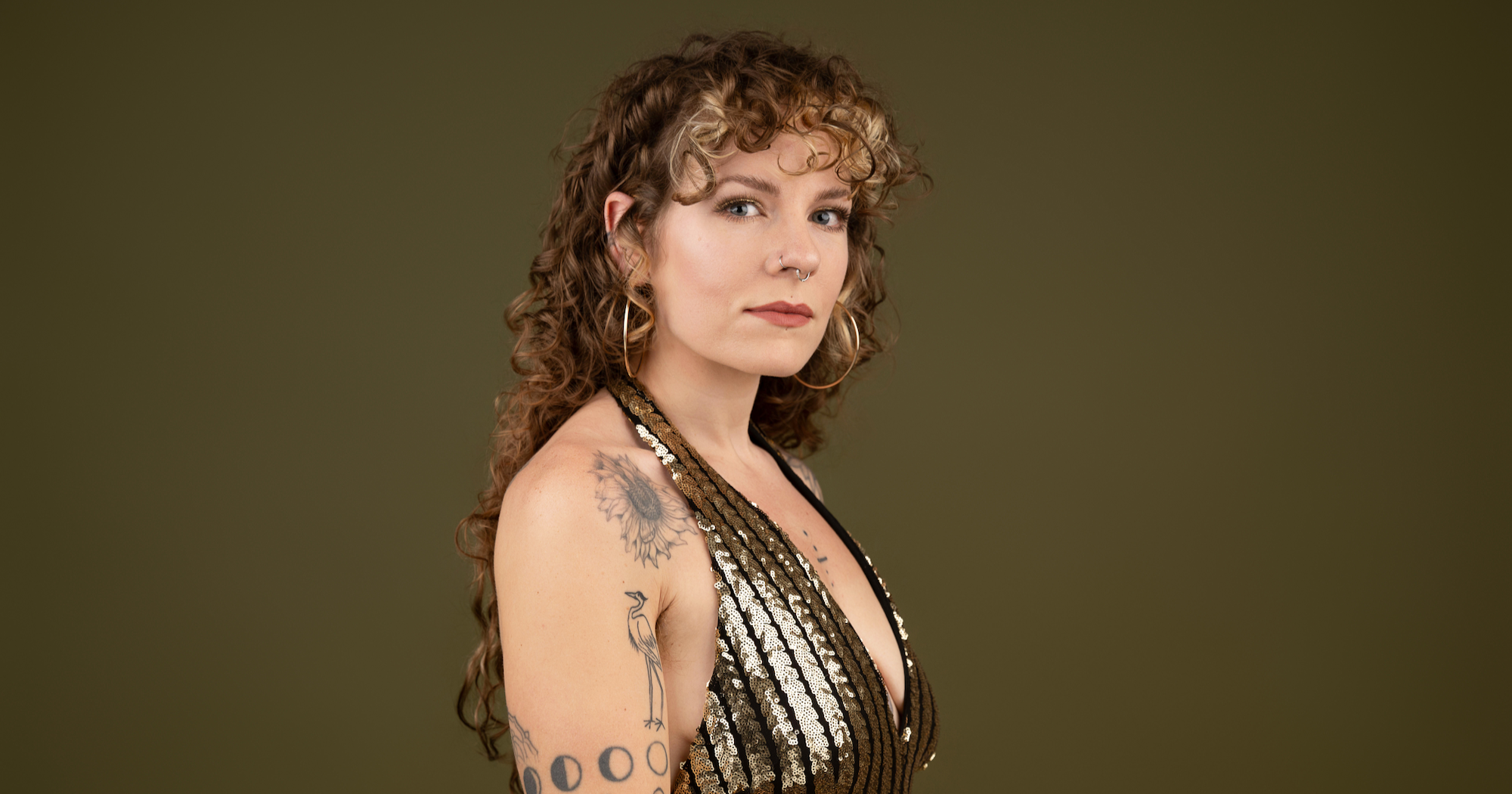
Heather Aubrey Lloyd’s Guide to Murder Ballad Survival

As you might guess, there’s tens of dollars to be made working in folk music. One of the more macabre ways I’ve made a living is… um… off the dead, performing educational programs on gender inequality in murder ballads for more than a decade with my band, ilyAIMY (i love you And I Miss You).

Maybe I was just born spooky (Halloween birthday!), but I’ve made the most of my curiosity for folk music’s unnerving and often misogynistic underbelly. All while collecting a few outliers that turn the old tales on their heads.

First found in Europe in the 1600s, murder ballad poems and songs have since become heavily associated with traditional American music. A mainstay in country and folk – whether it’s Polly or Omie falling prey to poor choices, or “Stagger Lee” (a staple since 1897), or Brokeneck Girls: The Murder Ballad Musical selling out its 2023 run – we’re still pressing play on cautionary tales of love inextricably woven with violence and remorseless outlaws. But we’re also starting to look back at the facts, wondering more at why the women of murder ballads are voiceless victims and rarely vigilantes.

I’ve kept the body count relatively low on my new album, Panic Room with a View, but there are a few graves. It is October after all. So, witches, black widows, and wanton women – who makes it out from this Mixtape alive? – Heather Aubrey Lloyd

“Bang, Bang” – Nancy Sinatra

This one might be a metaphor, but the messaging sure isn’t. Love is interlaced with violence right from childhood: “He would always win the fight,” and she should have known better. P.S. Sinatra may be singing it, but this lament from the “female perspective” was written by Sonny Bono.

“Come All Ye Fair And Tender Ladies” – Odetta

In rare cases, it’s not a man’s voice behind the mask, but women warning one another to “lock their hearts” against lying lovers. Cause of death here will eventually be sorrow, but don’t worry – we’re getting to the grisly bits and what happens when you don’t heed the warnings.

“Pretty Polly” – Coon Creek Girls

Appalachian, music academic, or horror movie fan, we all know the rules: the girl getting “busy” is the first body to drop. This song has roots in 1750s English ballads, where the pregnant and unwed victim at least sometimes gets revenge as a ghost. Not so with most American versions of Polly, or North Carolina’s Omie Wise, where the vague-but-violent tale is told with little remorse or consequence.

This is the blueprint of the classic American murder ballad. He’s dug the grave in advance or brought her to the river (no obvious sin-cleansing symbolism here) and “her blood, it did flow.” In some versions of “The Knoxville Girl,” his friends still try to bail him out of jail. Though countless renditions exist (The Byrds, Béla Fleck & Abigail Washburn, etc.), this stark presentation by the Coon Creek Girls has always been my favorite.

“Barbara Allen” – Joan Baez

Controversial opinion alert! I’ve always had a huge problem with the claim of “the world’s most-collected English-language folk ballad.”

Barbara Allen doesn’t die because she loves a man, but because she simply doesn’t. When women refuse there are still consequences, and “hard-hearted” Barb’ry follows “sweet” William to his grave, where he entwines with her in death. Ew. Still, it’s hard to argue with Baez’s perfectly mournful vocal take on this tune.

“The Dreadful End of Marianna for Sorcery” – Malinky

Or, if she says no and doesn’t die of sorrow, you can always cry “witch” and get her burned at the stake. Happy Halloween! You might think it’s a traditional, but this modern murder ballad from the year 2000 has a feminist twist; Marianna gets to tell on the men who wronged her, their hypocrisy revealed, her virtue extolled. This is a significant evolution from the third-person narrator (or male murderer’s perspective) pervasive in classic murder ballads.

“Frankie and Johnny” – Pete Seeger

Let’s get to a murderess. What if I told you Pete Seeger was singing you a lie? Did Frankie shoot her cheatin’ man? Yup, on October 14, 1899, Frankie Baker did. Was she sentenced to the electric chair for it? No. Songwriters didn’t bother waiting on the verdict. Besides, what ideas might women get if they thought they might get away with it?

Just days after the shooting, the streets of St. Louis were already singing. Frankie’s philandering beau, Allen, became “Albert” then “Johnny.” And Frankie, who unsuccessfully sued once a movie was made, was hounded by hundreds of renditions before she died in 1952.

“The Valley Is Ours” – Heather Aubrey Lloyd

Does a folk singer owe listeners absolute truth, or do we use bits and pieces of honesty to shed light on greater truths? As a songwriter and a former journalist, I’ve spent a while reconciling that question. This song from my freshly released album is a perfect example. I weave true stories from various eras of flood-ravaged Ellicott City, Maryland – a news article about a drowning victim, my time sanitizing debris from my friend’s submerged apartment – into a fictional family, unifying the experiences for the greater story representing all those who brave disaster and rebuild.

“Independence Day” – Martina McBride

If you’re an ’80s baby like me, this 1995 CMA Song of the Year (and one of Rolling Stone’s 100 Greatest Country Songs of All Time) was probably the first murder ballad you heard on the radio. Domestic violence, the standard trope, drives the battered wife to finally burn down the house with them both in it, leaving their surviving daughter to wonder, “I ain’t sayin’ it’s right or it’s wrong/ But maybe it’s the only way.”

I’ve spent years thinking about just how many other ways there should be for that woman. And maybe that’s the point of a great line like that. (I was too nervous to ask Gretchen Peters, the song’s writer, when I opened for her in 2022.)

“Silent Little Bells” – ilyAIMY

We all start by mimicking the art we loved growing up. So, it’s no wonder that in 2010 when it came time to write a murder ballad for my own band, ilyAIMY, I couldn’t seem to let the murderess get away with it, either. But my questions were starting. How do I reconcile my love of murder ballads with their problematic or outdated ideas? Can the women get more say in their stories?

“Can it be a sin/ For a woman done wrong to do the man done it/ Do that man right in?”

“Country Death Song” – The Violent Femmes

And I probably threw my fictional characters down a well, because I subconsciously remembered it from this song. We are all the culmination of everything we’ve ever heard and only think we’ve forgotten. This song’s presentation is so deadpan it’s almost parody, like a scary Halloween costume. An innocent daughter falls victim to a father’s starvation and madness. And when the victim is a woman child, at least, the murderer can’t live with the guilt and punishes himself.

“Delia’s Gone” – Johnny Cash

You can’t have a murder ballad Mixtape without Johnny Cash. The man in black – also a kind of persona/costume – put plenty of women in the ground through song, with a vocal delivery that’s dead serious. We know little about Delia’s actual “trifling” offenses, and as with early American murder ballads, much is left to the imagination.

“So if your woman’s devilish/ You can let her run/ Or you can bring her down and do her/ Like Delia got done…” references the old trope that men are somewhat justified killing sinful women, be it 1762 or 1962.

“Church Bells” – Carrie Underwood

Between 2000 and 2016 women got a lot of mixed messages about spousal abuse and murder ballads. The Chicks’ infamous “Goodbye Earl” was met with 14% of Radio & Records reporting stations refusing to play it with accusations the song “advocated premeditated murder.” Um … “Folsom Prison” much?!? Why not the same uproar for 2007’s “Gunpowder & Lead” wherein Miranda Lambert shows she’s willing, but we never get the actual trigger pull, or Underwood’s similar poisoning of an abusive husband in 2016?

Answer: It’s all about the aftermath and the attitude. The Chicks were too undeniably happy. “Church Bells,” meanwhile, walks the line that the bells toll for her in remorse and damnation, or that she finds absolution in the church.

“Pocket of God” – Cory Branan

When asked how the genre is evolving, I can’t hit play fast enough on this tune, featured on BGS in 2022. It has all the vicious, remorseless teeth I want in my bloody ballads – along with a surprising respect for its female victim. “Pocket” is reminiscent of a narcocorrido (Mexican drug ballad), narrated by a dealer who falls for a woman that becomes “a punch” he “couldn’t counter” and someone he “admired” for her intelligence. It’s only when she double-crosses him in business that he’s forced to kill her, like any other rogue henchman, as an example. But she haunts him.

“Oh (Field Recording)” – Laurel Hells Ramblers

Young artists keeping old Appalachian song traditions alive might be killing off a new kind of character – their former selves. Trans songstress Clover-Lynn follows up this boy’s murder by asking her father, “Oh, tell me daddy/ Can you ever forgive/ The death of your son/ So your daughter can live?”

“The Ballad of Yvonne Johnson” – Eliza Gilkyson

Trigger warning: this one’s a hard listen, but the truth always is. Instead of exploiting “Stagger Lee” as a Black anti-hero powerful enough to usurp the devil, or fetishizing Frankie in her kimono, we get the thorough, unflinching story of a Canadian Cree woman’s childhood abuse and the murder it drove her to, told in her words (Johnson shares a writing credit) through Gilkyson. All so that listeners can “awaken to themselves and to all people of this world.” When it comes to the fate of women in murder ballads, we’re starting to make room for greater complexity.

“Sisterly” – Jean Rohe

I’m skeptical that a song can change the world, but this song definitely changed me. When Rohe witnesses an assault on a woman from her window, she hesitates to get involved “in the name of it wasn’t me.”

“I’m not known for being sisterly/ Let the strong girls win and cut the weak ones free/ The boys lie, they say the boys are mean / Said I better get myself a spot on the boys’ team.”

We’re left uncertain of the girl’s fate, but mine was revealed. I was Rohe at the window, who didn’t like women I viewed as weak. I’d learned the rules to survive and they hadn’t. After I couldn’t look away from that part of myself, I started performing with more women, looking harder at where I stand in life and in the songs I love.


Photo Credit: Rob Hinkal

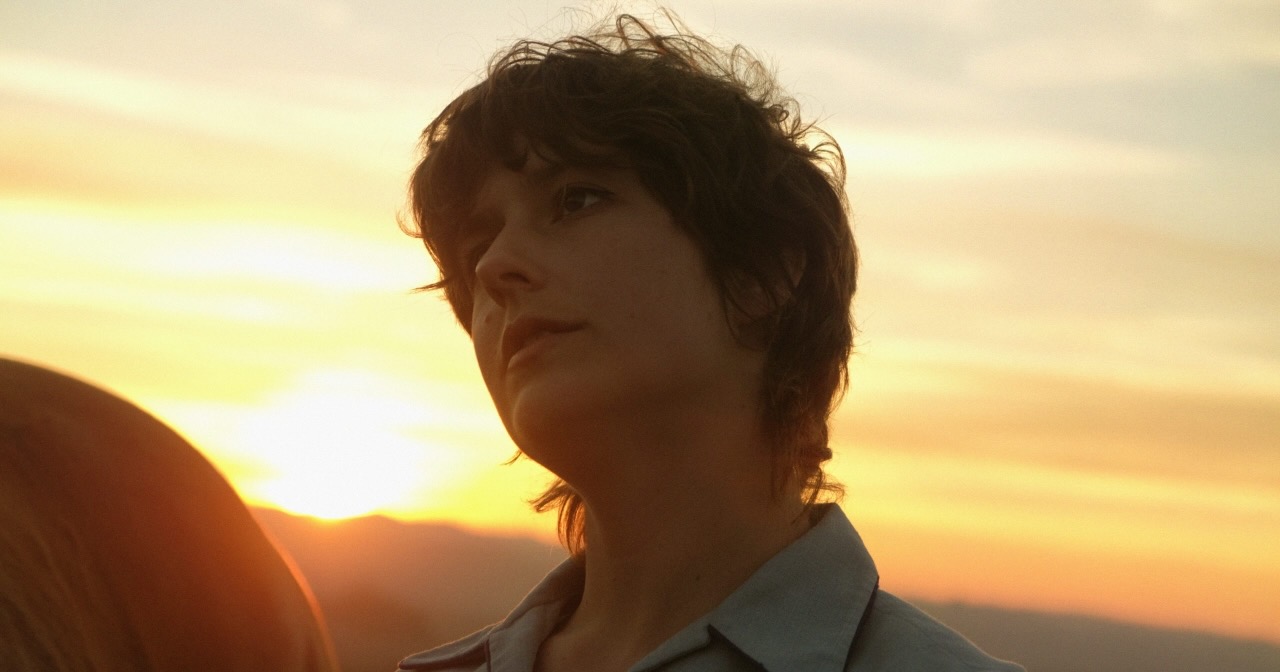
BGS 5+5: Meredith Moon

Artist: Meredith Moon
Hometown: Toronto, Ontario, Canada
Latest Album: From Here to the Sea (released September 12, 2025)

Which artist has influenced you the most – and how?

I’m a bit of a deep-dive Dylan archivist. I’m one of those people who knows every bootleg series and can never get enough of the intricacies and nuances surrounding the various versions of his works. So while I know I’m not unique in this answer, I’d have to say Bob Dylan.

Which elements of nature do you spend the most time with and how do they impact your work?

I spend most of my time outside in an attempt to maintain my humanity, but I’m pretty sure I’ve spent the majority of my most meaningful/intentional time in nature up in the lake country of Ontario, canoeing in places like Algonquin Park, The Kawartha Highlands, Northwestern Ontario, etc. I’ve gone on quite a few trips that are generally about a week or two in duration; I did one solo trip (with my dog) in Southern Algonquin Park that lasted five nights and six days. When you’re out there, you know exactly why you’re there and everything you need just comes to you. If you know you know! My belief is that when we put ourselves in vulnerable positions we can access something way back in our DNA that sort of guides us on how to survive. So I like doing that every once in a while, just to remind myself that I’m still connected to that.

What’s the most difficult creative transformation you’ve ever undertaken?

Getting sober, hands down. It took me months after quitting drinking to remember that I was still a musician and that I could still craft songs. I think part of that is the sort of “biopic culture” that follows you around as a musician. That we all have to be drunk cowboys in bars in order to have validity within the Americana scene.

However, as soon as I got sober and actually talked openly about it, it turned out that the majority of musicians I looked up to in the scene were actually sober, too, all along. It came back to me eventually, but there was definitely a period of reinvention before I could get anything out.

What is a genre, album, artist, musician, or song that you adore that would surprise people?

I was real big on ’90s grunge as a teenager. Some may be surprised that there’s actually a pretty strong connection between that stuff and traditional American folk tunes – the structure, some of the changes, etc. When I was a kid, I would have songs by Hole next to songs by Odetta and Doc Watson on the same playlist. I just like songs that have a strong melody and focused lyrics. And if you look at the song that way, there isn’t much difference.

If you didn’t work in music, what would you do instead?

My first love was painting and probably always will be. I’ve done photography professionally as well through the years, as well as other crafts. So I suppose if the music weren’t around, I’d just switch to the visual arts.


Photo Credit: Someari Benson-Jaja

MIXTAPE: Growing Up Hardly Strictly with ISMAY

I consider myself to be amongst the luckiest of music lovers. Growing up, I saw some of the most incredible roots artists from backstage while holding my Jack Russell terrier and playing with my cousins. When I was 8 years old, my grandfather Warren started a free bluegrass festival in San Francisco called Hardly Strictly Bluegrass. These artists shaped me since they were the first ones I watched perform, but the connection went on to become even deeper. When my grandfather passed away in 2011 I started performing music, and the larger community of Hardly Strictly was where I found my encouragers and mentors.

This is a compilation of the artists who I heard from and listened to as a child, and those whose songs I learned when I first became a musician. – ISMAY (AKA Avery Hellman)

“Dark Turn of Mind” – Gillian Welch

Just after high school I spent time working on some small homesteads with a farm labor trade for room and board. This was the same time that The Harrow & the Harvest by Gillian Welch came out – a literary masterpiece. Every time I listen to this record it reminds me of those homesteads and my borrowed car with a faulty battery. It brings me back to the day I arrived late to a new farm in West Virginia while my roommate was still sleeping and how odd it felt to be in a house with a stranger. I got up in the morning to make sourdough toast with an egg wondering what that person who was asleep in the loft of that ’80s wood cabin would think of me.

“Concrete And Barbed Wire” – Lucinda Williams

In the ’90s I was fortunate that my mom had great music taste. She took us around in a magenta suburban car and played Lucinda Williams. She said us kids used to sing along with silly accents to the words “concrete and barbed wire.” It took me another 20 years to fully appreciate Lucinda Williams and the masterful lyricist she is. Over the last four years, I’ve been working on a documentary about her, and it’s been so rewarding, because Lucinda’s music is the kind that gets better the more you know it.

“Dallas” – The Flatlanders

My grandfather was not a professional musician for most of his life, but in the final years he played in a bluegrass band with his friend Jimmie Dale Gilmore. What a kind man Jimmie is, with a voice that reminds me of a dove fluttering away. Because of this relationship he had with my grandfather, I heard about this record Jimmie made with his band The Flatlanders that was lost for 40 years. It was raw and made me feel like I was under a tin roof in Texas. It’s said that this tape helped mark the birth of alt-country.

“The Times They Are A-Changin'” – Odetta

A few years ago I was asked to perform at an event that compared and contrasted Bob Dylan and Leonard Cohen. I’m more of a Cohen person, so I had more trouble finding a Dylan song that felt like it would fit my feel. That was when I came upon this remarkable Odetta cover and I was inspired. She changed the whole feel of the song to make it her own. In 2008, she performed at Hardly Strictly Bluegrass just two months before she passed away, it was one of the final times she ever performed.

“St. James Hospital” – Doc Watson

I know that most people know Doc for his flatpicking, but I’ve always been much more drawn to the fingerpicking style of guitar in general. “St. James Hospital” feels like a fascinating departure from the more well known Doc Watson performances, and I love hearing him playing in a less linear fashion. This shows he can do it all. In the music that I’ve recorded I sometimes feel a bit out-of-the-norm and nowhere-to-belong, but this song feels similar to one I recorded called “A Song in Praise of Sonoma Mountain.” Hearing “St. James Hospital” makes me feel less out-on-a-limb in roots music.

“Permanent” – Kenneth Pattengale & Joey Ryan (The Milk Carton Kids)

As I started playing music I found this record by The Milk Carton Kids before they had that name, and played under Kenneth Pattengale & Joey Ryan. Listening to this song now, it is still unreal that it was all recorded live at a concert. It was deeply inspiring to see artists like Gillian Welch and Dave Rawlings generating a new live sound that was somehow very modern and yet felt like a continuation of original folk music. As if the ’80s and ’90s had never happened! What a gift. Then, seeing The Milk Carton Kids take that torch and carry it on was so exciting for me as a 19 year old.

“Boulder to Birmingham” – Emmylou Harris

I listen to Emmylou every year on Sunday night at Hardly Strictly Bluegrass. Her silver hair and steadiness feel beyond time. I can’t believe she is still here, with that same strong presence since I was just 8 years old. As a performer she has a strong sense of worthiness to the audience, a sense of mutual respect for the relationship between listener and performer. I hope that I can hold just a bit of her steadiness within myself.

“Restless” – Alison Krauss & Union Station

I was in 6th grade and didn’t much enjoy recess out on the playground. I brought my CDs over to an empty classroom, and sat in the back listening to Alison Krauss & Union Station. Sometimes I’d show these CDs to my friends. This was before I figured out that it was cooler to be listening to rock music. But I loved that music, and the songs were amongst the first I tried to learn in singing lessons.

“The Silver Dagger” – Old Crow Medicine Show

Old Crow Medicine Show was playing at Hardly Strictly as they rose up in mainstream culture. I appreciate the edge that this recording preserves. There’s even a moment where it sounds like someone might have dropped something or hit their instrument on another (01:35). I wish more recordings kept imperfections preserved within them.

“Pretty Bird” – Hazel Dickens

Part of the reason that my grandfather started Hardly Strictly Bluegrass was because of his love of Hazel Dickens. They were from very different backgrounds, but they became friends and saw the common humanity in one another through music. She played every year until she died. This is my favorite song of hers. What is beautiful to me about Hazel’s take on bluegrass is the imperfections and raw emotion. She brought her whole self to the song.

“Harlem River Blues” – Justin Townes Earle 

I can still picture Justin on the stage with his impeccably curated suits. Back around 2018, I opened a show for him in Santa Cruz, California. He drove up to the venue in a red convertible, which I thought was the coolest thing ever. Just a guy and his ride. He was very kind to me and I wish I had more chances to see him play again. May his music never fade away.

“Tiniest Lights” – Angel Olsen 

When I was 20, I went into a record shop in Ohio. The guy there said they only really carry more obscure records. No problem, I thought, I was here for Captain Beefheart and PJ Harvey. But when I asked, he said those artists were too well known. He pointed me towards Angel Olsen and I heard something in songwriting I had never heard before. My world opened up, and I knew there was so much more that was possible after listening to “Tiniest Lights.” She performed at Hardly Strictly in 2015 and her voice was as real and penetrating as the recordings.

“If I Needed You” – Lyle Lovett

What’s better than Lyle Lovett playing a Townes Van Zandt song?? We listened to Lyle a bunch when I was a kid. No, I’m not from Texas, but I do love those Texas songwriters.

“Long Ride Home” – Patty Griffin

The first time I performed at Hardly Strictly (although somewhat tangentially) was at an artist after party. I chose this song, because it had a fun fancy guitar line I could play with my beginner fingers. Someone who was performing came up and said they thought I was talented. I think that might have changed my life right there. It was the first time anyone had come up to me and said I was good enough to do this as a job, not to mention amongst professional musicians.

“Are You Sure” – Willie Nelson

Willie played Hardly Strictly in 2003 and I remember that big black bus sitting behind the main stage. I can’t even imagine the thrill of the audience members, his fans are as dedicated as they come. I heard this song at a recently released film that is fantastic called To Leslie.

“Little Bird of Heaven” – Reeltime Travellers

This band was part of that wave of old-time style artists that came at the same time as Hardly Strictly. The vocals are so unexpected, but real and honest. One of their band members became a mentor of mine and helped me get my start in the music business and I am forever grateful.

“Essay Man” and “The Golden Palomino” – ISMAY

These are two songs from my latest release, Desert Pavement, that would never have happened if it weren’t for Hardly Strictly. I am trying to find my way with my own version of folk, and can’t help but be inspired at what a rich trove of artists I have to draw from.


Photo Credit: Aubrey Trinnaman

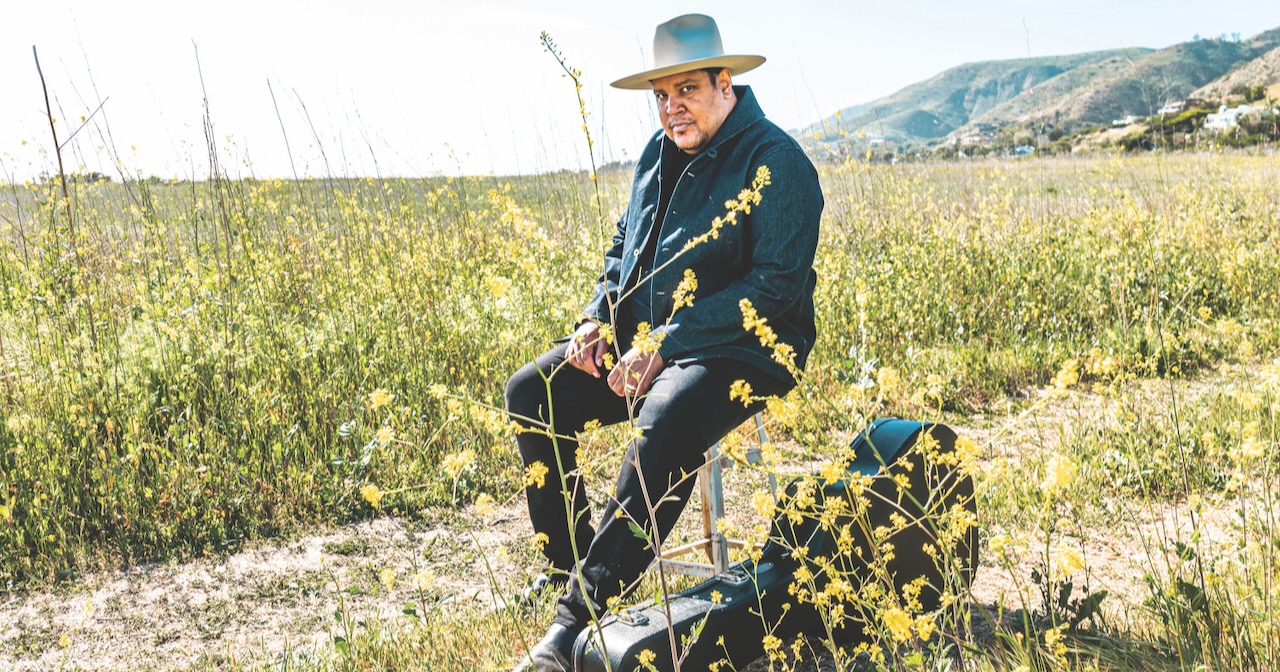
MIXTAPE: Chris Pierce on the Healing Powers of Music

Hello Folks! My name is Chris Pierce. I’m a musician, songwriter and storyteller. My new album, Let All Who Will, was created to offer a message of resilience and empowerment – and to remind those who have been pressed to never give up the good fight for justice and equality. The songs are there for folks to hear, dissect and discuss. They also offer suggestions of ways to speak up and move together from a place of common ground. I believe that compassion is the only way forward. I fight with compassion. I sing with compassion. For this Mixtape, let’s explore a theme of the healing powers of music. Songs of liberation, pain, encouragement, empowerment and togetherness. – Chris Pierce

Reverend Gary Davis – “Let Us Get Together Right Down Here”

Starting with a song from Rev. Gary Davis – also known as Blind Gary Davis (born on April 30, 1896) – a blues and gospel singer who was also proficient on the banjo, guitar, and harmonica. Born in Laurens, South Carolina, and blind since infancy, Davis first performed professionally in the Piedmont blues scene of Durham, North Carolina, in the 1930s. After relocating to New York in the 1940s, Davis experienced a career rebirth as part of the American folk music revival that peaked through the 1960s. I’ve always been particularly moved by this song by Rev. Davis as it draws the listener in right away and encourages us all to “get together” as part of the great congregation of humanity.

Nina Simone – “Backlash Blues”

Growing up, my mother was an English teacher and I was fortunate enough to have access to books by some of the greatest writers of our time. I gravitated towards studying Langston Hughes from the time I was around 10 years old and the inspiration from reading his profound works is one of the reasons that I became a songwriter.Backlash Blues” is one of his poems that was given a melody and was sung by the high priestess of soul, Nina Simone. It was written as a sign of hope for Black people during times of segregation.

Chris Pierce – “It’s Been Burning for a While”

This song is a response to the furor surrounding the tragic death of George Floyd in 2020. It was beyond puzzling to see how surprised many voices were, in the media and beyond, at the anger people felt. My co-writer and I collaborated on this song in an effort to point out that while all these stories have been making the headlines a lot recently, repression of the marginalized is nothing new.

Richie Havens – “Handsome Johnny”

Richie Havens’ music has elements of folk, soul and rhythm and blues. He had an intense and rhythmic guitar style and often played in open tunings. A lot of folks know him from Woodstock, but he continued on playing concerts right up until his passing in 2013.

I’ve been deeply inspired by Richie Havens in my own songwriting and growing up hearing songs like “Handsome Johnny” inspired me to expand my writing. To me, “Handsome Johnny” testifies about the sacrifices and inner struggles of the soldier and describes soldiers of all kinds going off to fight for what they believe in.

Lead Belly – “In the Pines” / “Black Girl” / “Where Did You Sleep Last Night?”

I’ve studied Lead Belly’s songs throughout my journey as a songwriter. His songs covered a wide range of genres and topics including gospel music; love, loss, liquor, prison life and racism; and folk songs about cowboys, prison, work, sailors, cattle herding and dancing. His version of “In The Pines” is one of the most widely known.

“In the Pines” is an American folk song originating from two songs, “In the Pines” and “The Longest Train,” both of whose authorship is unknown and date back to at least the 1870s. The songs originated in the Southern Appalachian area of the United States. Historians have said this song was probably born from African Americans living along or east of the Appalachian Mountains around the turn of the 20th century. Huddie Ledbetter, better known as Lead Belly, recorded over half-a-dozen versions between 1944 and 1948, most often under the title “Black Girl” or “Black Gal.” His first rendition, recorded for Musicraft Records in New York City in February 1944, is arguably his most familiar.

Odetta – “Got My Mind on Freedom”

Odetta Holmes, known as Odetta, is an inspiration to all. Born in Birmingham, Alabama on December 31, 1930, her voice has inspired hearts all over the world and she is often referred to as “The Voice of the Civil Rights Movement.” Odetta truly embodied a voice that inspired change. Martin Luther King Jr. called her the queen of American folk music. 

Terry Callier – “Spin, Spin, Spin”

Terry Callier was born in the North Side of Chicago. He was a childhood friend of Curtis Mayfield, Major Lance and Jerry Butler and he sang in doo-wop groups in his teens. In 1964 he recorded his debut album on Prestige Records. The album wasn’t released until 1968 as The New Folk Sound of Terry Callier. A dear musician friend of mine gifted me a copy of the album around 20 years ago and it’s been in steady rotation in my house ever since. My opinion, widely shared, is that Terry Callier didn’t get the popular recognition his varied talents deserved. Nonetheless, he released a string of enduring and influential albums.

Josh White – “Southern Exposure”

When I was in the 6th grade, I wrote a book report on the music of Josh White. I remember heading to the library in Claremont, California, and finding a treasure chest of literature and recordings by White. I dove in and was deeply inspired by the man, the songwriter, guitarist and civil rights activist that he was. White grew up in the South during the 1920s and 1930s. He released a prolific output of recordings in genres including Piedmont blues, country blues, gospel music and social protest songs. His music went on to influence several generations of artists, including yours truly. White’s album, Southern Exposure, is known as a political blues album and dealt with issues of Jim Crow. The album as a whole, to me, is a protest album of protest albums.    

Bob Dylan – “Only a Pawn in Their Game”

Bob Dylan sang a stirring solo performance of “Only a Pawn In Their Game,” at The March on Washington, a retelling of the murder of civil rights activist Medgar Evers. The lyrics attribute blame for the killing and other racial violence to the rich white politicians and authorities who manipulated poor whites into directing their anger and hatred at Black people. The song suggests that Evers’ killer does not deserve to be remembered by name, unlike the man he murdered (“They lowered him down as a king”), because he was “only a pawn in their game.”

Chris Pierce – “Mr. McMartin”

My song, “Mr. McMartin” from my new album, Let All Who Will, is about a street sweeper who has seen a lot of what human beings are capable of in the past 40 years on the job. He sweeps after celebrations, uprisings, political rallies, parades, holidays and catastrophes. As he sweeps on through the years, he wonders if we are capable of real change or just broken promises and broken prayer.


Photo Credit: Mathieu Bitton

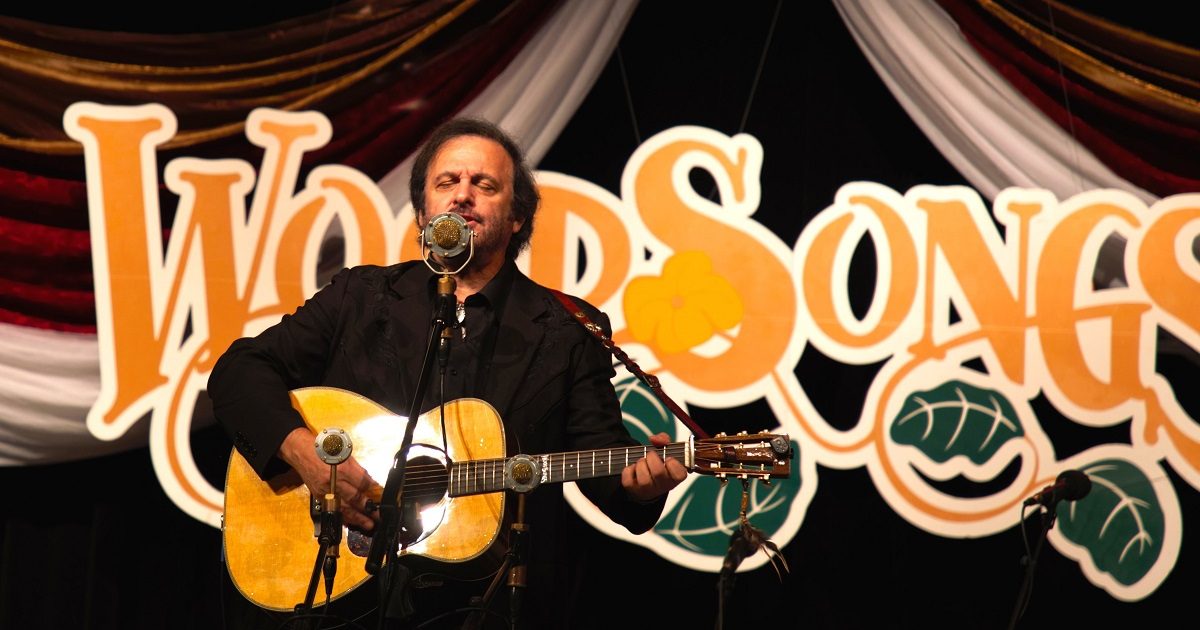
BGS 5+5: Michael Johnathon

Artist: Michael Johnathon, host of Woodsongs Old-Time Radio Hour
Hometown: Upstate New York
Latest Album: Afterburn: Folk at Arena Level

If you had to write a mission statement for your career, what would it be?

To use music to help build a front porch around the world. We need that right now. To help music lovers find a new, defined direction for their music. Music doesn’t have to be your livelihood to be a powerful part of your life. To gather the global community of front porch-minded musicians and help them do good work, bring roots music education into schools free of charge, and enhance communities by redirecting the tremendous energies of local musicians.

What other art forms — literature, film, dance, painting, etc. — inform your music?

All of it, really. I’ve written five books, a children’s book I illustrated myself, I had a published cartoon strip in 17 newspapers, written three movie scripts and, during the pandemic, took up oil painting. Obviously I have a syndicated radio and TV broadcast as well, so it is a tapestry of art. I’ve written plays and even an opera about the day Woody Guthrie wrote “This Land Is Your Land.”

As a musician and artist, what are some of the ways you like to give back to the community?

That’s hard to explain. And I offer this not in the spirit of boasting but to encourage other artists to look past their vision of “stardom” and see instead the value of doing good work with their music. It is better than a hit record. I created the SongFarmers community to help musicians the music business left behind; there are now 89 active chapters across America and Ireland. I created the WoodSongs Artist Gathering to help poets, painters, authors and songwriters find encouragement and feel like their efforts have value; so far 19 events have happened or are being organized. We have over 1,000 WoodSongs broadcasts that I consider an education into America’s front porch, so we attached lesson plans for classrooms and homeschool parents to introduce this rural heritage to their kids, all free.

I’ve performed hundreds of concerts for the homeless, the environment, farm families, battered women and children, concerts about the earth and nature as well as teenage suicide. This year tornados destroyed much of Western Kentucky and I used the WoodSongs community to collect nearly 1,000 instruments to give musicians in the region who lost everything, all for free. A few months later, floods destroyed much of Appalachia and again collected hundreds of guitars, banjos, flutes and more and gave them out free to musicians in the mountains. Recently I launched another volunteer-run project to welcome young musicians to our front porch world called WoodSongs Kids, sort of a Mr. Rogers meets the Grand Ole Opry.

Which artist has influenced you the most … and how?

I think without a doubt Pete Seeger. Perhaps not so much musically; my style is much different from his, but his vision for music, community, using song for a purpose other than “selling” things. He was my neighbor on the mountain along Rt. 9D by the Hudson River in New York, although I really didn’t understand who he was. Just a pleasant fellow who claimed to be a musician … but played the banjo. I gravitated to the musicians in his orbit as well, folks like Harry Chapin, Arlo Guthrie, Roger McGuinn, Odetta, Libby Cotton, Don McLean and others. I found his log cabin life, the rustic lifestyle, and organic thinking very close to my own. Certainly Henry David Thoreau and Vincent van Gogh have been major wellsprings of imagination for me.

What’s the toughest time you ever had writing a song?

As I write this, we are in preproduction for my new Garden of Time album. I approached the project completely backwards. I knew what the album title would be; I even designed the album art. I had everything ready except writing the actual title song. “Garden of Time” was going to be about Vincent van Gogh’s final day in the summer of 1890. But I couldn’t grab the song, it was beyond me. So I got in my car and went to the Detroit Institute of Art to see the 26 original canvases of van Gogh. To stand in front of the actual paintings, in the same space he stood with his brush in hand, was very moving. I got back home to my log cabin, fired up the wood stove, and “Garden of Time” was born in 10 minutes.


Photo Credit: WoodSongs/Larry Neuzel

This Nashville Museum Shows the Vital Role of Black Music in American History

Nashville’s “Music City” nickname has always been broader and more inclusive than the national impression, which largely has been built on two things: the city’s impressive country music legacy and its equal importance as a hub for the general music business, with major emphasis on recording and publishing. But what hasn’t been as well recognized and celebrated, at least by those outside particular communities in Nashville, is its contribution to numerous other idioms and its role in their evolution and development.

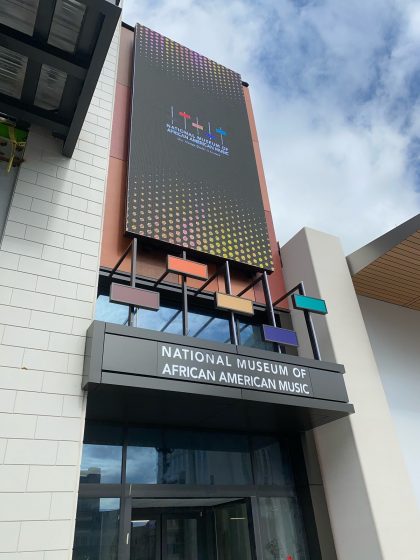
Hopefully that’s going to change with the new National Museum of African American Music (NMAAM), now open across the street from the historic Ryman Auditorium in downtown Nashville. The Fifth and Broadway entrance to NMAAM and its proximity to one of the nation’s music shrines couldn’t be more appropriate, and it is notable that the museum isn’t located in one of the sites better known as a Black music hotbed such as Detroit, New York, Los Angeles or even Memphis. Nashville has always been a major player in the African American music world, from the days of the Fisk Jubilee Singers to radio station WLAC breaking R&B, soul and blues hits, and the Jefferson Street nightclub scene providing both valuable training for emerging artists and a vital showcase for established ones.

However, the museum isn’t focused mainly or wholly on Nashville, nor any single city or musical style. The 56,000-square-foot entity aims to spotlight the entirety of the music made in this nation by Blacks, to demonstrate its impact on the totality of American sounds, and to celebrate its history and multiple influences. As CEO/president Henry Hicks repeatedly told media members who attended tours in January, “We’re showing how music through the prism of the Black experience has played a vital role in the growth of this country and how it’s affected every fabric of the culture.”

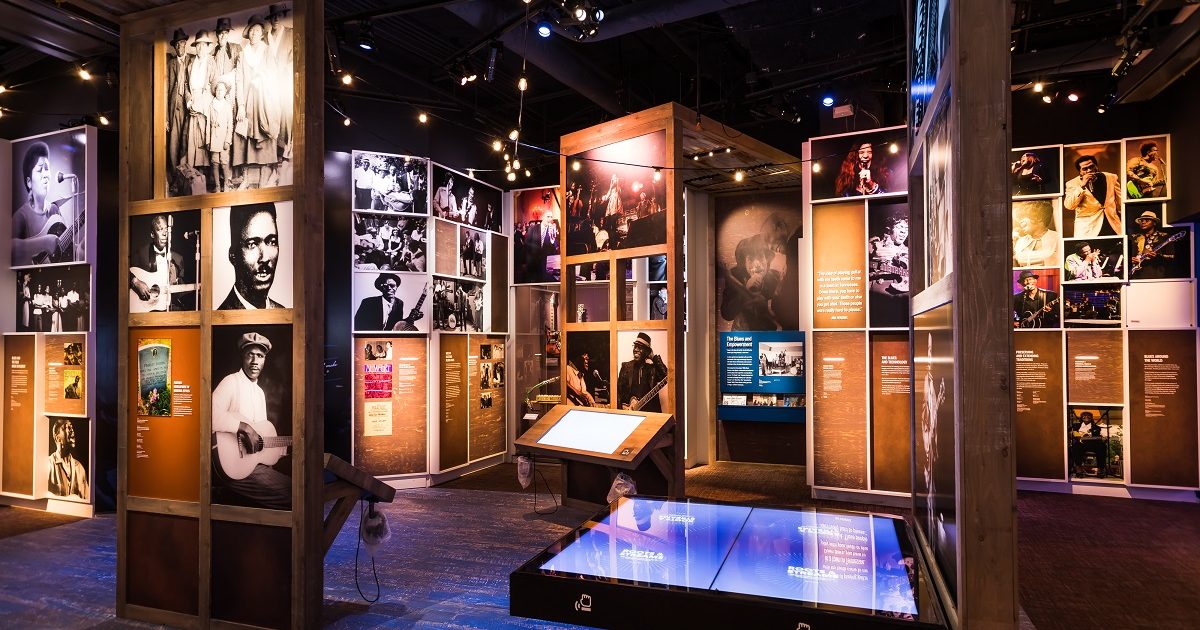
The sleek, architecturally striking building has the same visual splendor and attractiveness as the National Museum of African American History and Culture in Washington D.C. Upon entrance, visitors to NMAAM will be immediately drawn to the central corridor that’s billed as the Rivers of Rhythm. It features touch panel interactive exhibits, something that’s a recurring sight throughout the halls housing exhibits and other items designed to showcase 50 genres and sub-genres of Black music.

The corridor leads into The Roots Theater, which is actually where the museum tour formally begins. There’s an introductory film presentation that provides the African background and heritage of the various exhibits. It also offers a cinematic shorthand of what visitors later see presented in more exacting, visually striking manner: the multiple sounds and styles of notable Black music creators and performers. The theater seats approximately 190, and in later weeks and months will serve as the location for various screenings, lectures, music performances, and concerts.

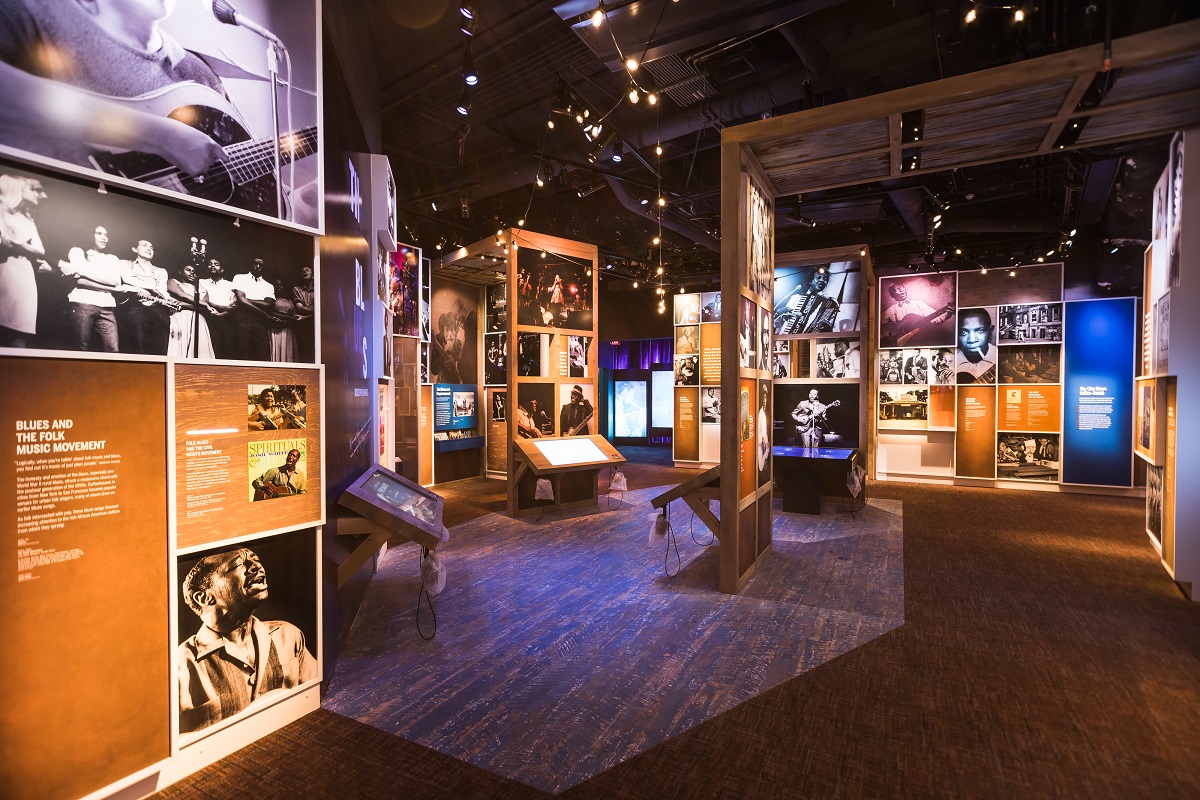
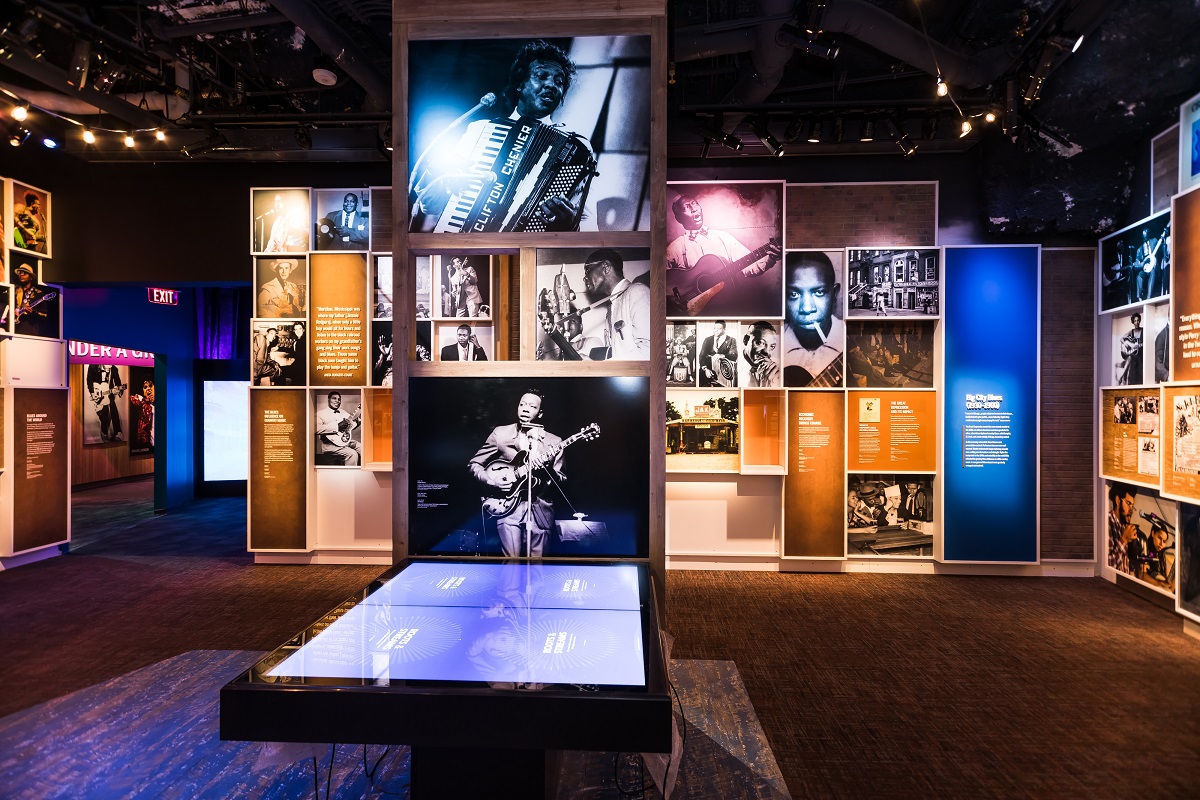
The different genre exhibitions feature everything from more interactive exhibits with timelines to cases containing such items as one of Louis Armstrong’s trumpets, one of B.B. King’s “Lucille” guitars, or costumes worn on key nights by performers like Billie Holiday, Nat “King” Cole, Ella Fitzgerald, Ray Charles, or Aretha Franklin. The museum doesn’t neglect any area of Black music, going from the earliest spirituals to pre-jazz, traditional and modern jazz, blues, R&B/soul, funk, disco, and into contemporary hip-hop and EDM. There’s also a detailed storyboard for every idiom.

The greatest examples of Black music influencing other idioms that are sometimes mistakenly assumed not to have any links with African Americans can be seen in the Crossroads section. It includes an essay that traces how country founding fathers like Jimmie Rodgers and Hank Williams were influenced by the blues, and how the acoustic guitar playing of people like Sister Rosetta Tharpe and the gospel-tinged shouting of Odetta in turn influenced white folkies like Joan Baez and Bob Dylan.

One of Chuck Berry’s biggest hits, “Maybellene,” was a reworked version of Bob Wills’ “Ida Red” with new lyrics, while certainly Elvis Presley, Carl Perkins, Jerry Lee Lewis and other white rock ‘n’ roll and rockabilly types were performing a hybrid of country, blues, and R&B. In both cases, as well as early string band music played by white and Black performers, these artists were hearing and creating a fresh sound based on their love of multiple genres, which the Crossroads section reflects in text and exhibits.

Along the way, depending on your musical preferences, you’re able to become an active part of the experience. There’s a disco dance room that inserts a neon silhouette onto the wall. You can construct your own blues song, improvise within a personal jazz composition, become part of a gospel choir, or craft your own freestyle raps. Any or all of this activity is recorded on a personal RFID wristband and automatically uploaded so that it can be shared online with friends, assuming you really want those efforts heard by others.

But most importantly, the mission, one frequently cited by tour guides and reinforced through the various exhibits, displays, and films, is Black music’s cross-generational links and the way it’s been both a voice of protest and a force for unity across diverse backgrounds. The role music played both in rallying Blacks into the World War II effort and helping inspire and fortify the Civil Rights Movement are just two parts of that underlying joint theme.

Whether it’s “One Nation Under a Groove” or “A Love Supreme,” regardless of spiritual or secular content, Black music has been at the core and forefront of American culture. No single building better exemplifies and reveals that than the National Museum of African American Music. No matter what kind of music you love, or even if you’re tone deaf, this museum will have something of value for you to see, hear and enjoy, as well as valuable lessons to learn and history to remember.


Photo Credit: NMAAM/353 Media Group