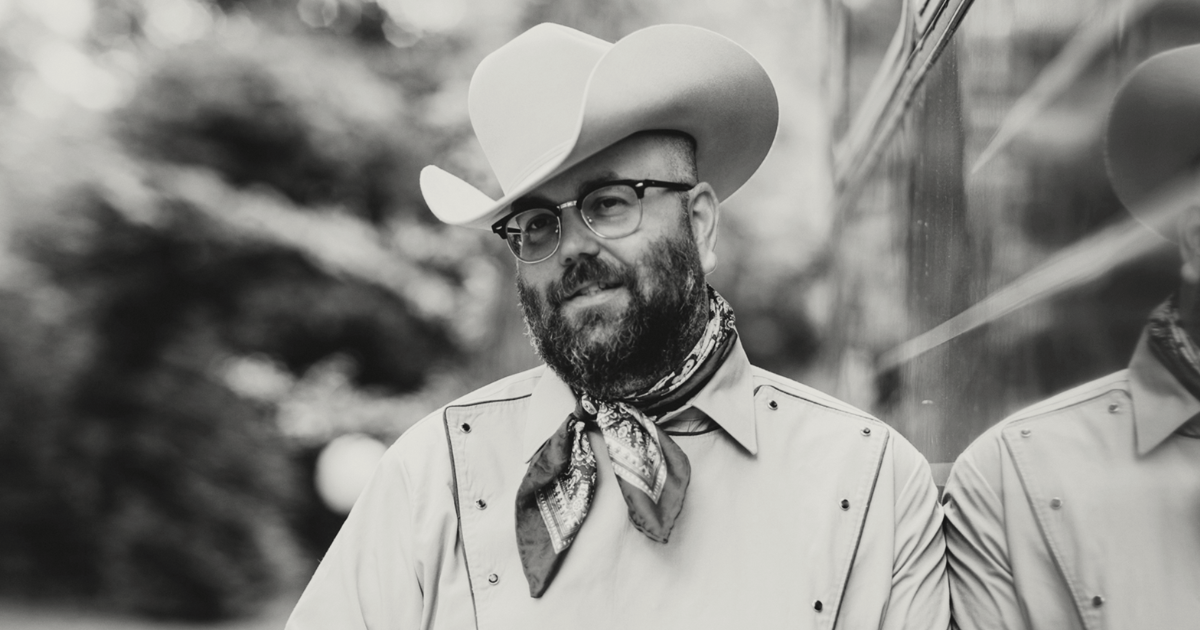
The Latest of Joshua Hedley’s Many Hats

As one of Nashville’s key classic-country connoisseurs, fiddle maestro Joshua Hedley has long been a musician of many hats. In 2018 his first solo album Mr. Jukebox tapped 1960s-style countrypolitan. 2022’s Neon Blue embraced the lush warmth of the ‘90s-era format, and he regularly thrills crowds with cover sets from across time at the famed Nashville honky-tonk, Robert’s Western World. Yet with his new album All Hat, Hedley dons the metaphorical cap he’s long obsessed over – the wide-brimmed stetson of his Western Swing heroes.

A titan of twang and perhaps Broadway’s finest down-home devotee of the traditional arts, All Hat finds the lifelong Bob Wills fan going back to his roots. Produced by Western Swing icon and Asleep at the Wheel founder Ray Benson, the album captures the upbeat joy of an eminently danceable (yet often overlooked) country style, which Hedley has been loving and learning since he was 8 years old.

Over 11 tracks of old-style originals, he celebrates a genre defined by jaunty rhythms and euphoric solos meant to keep a crowd dancing long into the night. With an already-respected resumé, Hedley still calls All Hat his “pièce de resistance,” and feels Western Swing deserves its due in this era of cultural callbacks.

“It’s definitely not seen the renaissance that say bluegrass or the outlaw country sound have,” he laments.

Joshua Hedley spoke with Good Country about the new album, the differences between Western Swing and other country styles, and what it’s like to be produced by one of your heroes. Plus, he explains how “getting stoned and playing country music” is the best cure for creative burnout.

Your new album is called All Hat. But that term is famously used to describe posers – and you don’t fit that bill when it comes to country. So why are you calling it All Hat?

Joshua Hedley: Well some people disagree, man. [Laughs] I don’t know what constitutes “not a poser.” I would think playing country music since you were 8 would take care of that, but apparently not.

Really?

It is what it is. I don’t really give a shit, but it was just kind of poking fun at myself and those criticisms. I just think it’s funny. But honestly, for the album, I was working on a different album. I was writing for something else and I was on the road with Asleep at the Wheel and Brennen Leigh – we were doing a package show tour together – and I was just hanging out with Ray. He was like, “You ought to let me make a record on you.” I’ve been wanting to do another Western Swing album for a long time and I was just like, “This is it.” When Ray Benson wants to make a record on you, you make a fucking Western Swing record.

It came out really great. I’m enjoying it for sure. I wonder, how are you feeling about your craft these days? Like you said you’ve been doing this since… well, your whole life really.

Man, I’m feeling good about it these days. This album in particular has been just a joy all the way around. Writing – it was really fun. Recording – it was really fun. Playing these songs live is super fun, and it’s something I’ve been needing. You get pretty burned out when you do it this much. I come off the road and I go back to playing music just at home. When you play like that, you get burnt out hard – and I was really burnt out. This record is kind of pulling me out of the burnout.

That’s interesting. I’ve been watching you at Robert’s Western World for years and it’s always felt like you had that dialed in. I mean, you’ve earned the respect of everybody in the field, and you could probably be making a more commercial play, but it seems like you’re more inspired to make music with your friends and do small residencies. Is that a more satisfying life?

Definitely. I’ve done a lot of touring and all of that, but when I’m really having fun is when I’m down at Robert’s or Dee’s [Country Cocktail Lounge] or Skinny Dennis. I’ve been playing these solo acoustic shifts at Dee’s, it’s just two hours a week and I just sit there with my guitar and get stoned and play country songs. It’s kind of empty in there, and I get to do whatever I want. I forgot how much fun I have doing that, so I’ve been leaning more towards playing at Robert’s and doing the honky-tonk thing lately, just because at the end of the day, you got to do what makes you happy. If I was going to do something I wasn’t enjoying, then I could get a desk job and probably make a lot more money than I make doing this.

Maybe.

I wonder, do you ever feel like you know a secret that some of your peers are missing? I mean, when you talk about that burnout phase, and being able to sit down and just get stoned and play country music, is that a secret hack of the lifestyle?

I don’t know about a hack or anything like that, but for me, I am having the most fun when I am playing covers and just singing old songs that I really love. You hear a great song on the radio and the feeling that you get from hearing that song? Imagine the feeling you get from singing it. That’s my jam.

You’ve been calling All Hat your “pièce de resistance.” And I cannot speak French, so I can’t say that phrase. But how do you figure?

I love country music in all its forms – well… maybe not all its forms. But most of its forms. Western Swing has always been my very favorite thing to play and sing, and I actually made a tribute to Bob Wills when I was 15 with Buddy Spicher and his band up here in Nashville.

What? Really?

Yeah, it’s all Bob Wills covers, and a lot of ’em, I think probably I learned them from Asleep at the Wheel. … It’s just always been on my mind that I should write one of these instead of just doing Bob Wills songs, and always wanted to do it. And then getting to do it with somebody like Ray and with the players who are on the album – guys I’ve looked up to my whole life. I don’t know, it’s just the vibe was in the room and this record came out better than I could ever imagine.

Tell me a little bit about your songwriting on this one. What do you do differently when you’re writing a Western Swing tune?

Oh yeah. It is actually quite different because a lot of those melodies come out of the pop world. And when I say pop, I mean like ’30s and ’40s pop.

Like the original pop.

The original pop. Big band music and stuff like that. Country’s very structured, at least the classic kind that I do to where you’re verse, chorus, turnaround, chorus, outro, something like that. It’s real regimented and formulaic and it’s a different approach to writing Western Swing. A lot of those songs are just one verse, and then you play a bunch of solos, and then you just repeat that verse and take it home, which is a very jazz standards thing to do.

I guess I never thought of that.

Like on “Fresh Hot Biscuits.” I kind of approached that how Bob and them would approach “Ida Red” or something, which is really just a fiddle tune that he wrote words to. I leaned into borrowing old lines from old blues songs and tried to find some of those old lines. Like in “All Hat” – “I know a gal up over the hill/ She won’t do it, but her sister will.” That line’s as old as time.

Right. So the structure, is that because it’s made for dancing?

Yeah, the vocal is secondary a lot of the time, and the lyrics certainly are. It’s more about dancing and the whole thing evolved out of square dance culture and callers where there weren’t lyrics to the songs. It was just a guy telling you what to do on the dance floor. The lyrics are kind of secondary to the overall vibe, and the musicianship is really a big part of it, too.

I did want to ask you about “Stuck in Texas” because that one’s got Ray on it. It’s got that jumpy beat, and a little bit of yodeling in there, too. Where did that one come from?

I had wrote several songs that had really similar chord progressions at that time. I had written them in a row, and I was trying to get out of that. And I’m also trying to push myself on guitar to write outside of three chords, four chords. I just kind of came up with that. I was thinking about the Sons of the Pioneers when I wrote that song, wanting a real good guy, cowboy-movie cowboy. Thinking about Gene Autry and stuff. Then it was just a no brainer for Ray to step in on. Mr. Texas.

What’s it like to be produced by a guy like Ray Benson? Is it different than playing in his band?

It is different than playing in his band because his band is his brainchild and he knows exactly what he wants it to sound like. I think he recognized that this was my brainchild and we all kind of did it together. Ray, he kind of choreographed a lot of it being like, “We should throw the ensemble part here and twin this,” and “We got to have fiddle on the intro,” that sort of thing. But a lot of it was just a group of guys that play together all the time getting together and playing these songs. And what happened was just natural.

You said somewhere in your bio that you grew up playing fiddle with guys who were in their 50s and 60s, and learning from them. I just wonder, is that what you aspire to be one day?

Yeah, definitely. There’s actually this kid Nash [Grier] that comes down to Robert’s whenever Brazilbilly plays and it’s always a treat. He’s like six or seven years old and he’s a really great fiddle player. He comes up and he sings “Hey, Good Lookin'” and he plays “Orange Blossom Special” behind his back – all the little things I used to do when I was his age. Now that I’m 40 years old, I’m like, “Man, look at that little guy.” It really brings back memories. I was that kid and I love seeing a new generation embracing all this stuff. It’s really special to get to pass it on.

What you hope people take away from this one. I know it’s a labor of love for you and a lot of fun to do, but what do you hope people get from this thing? Do you want to spark a revival?

I don’t know about any revival, but I hope people have fun with it. I hope that they don’t take it too serious. Music can get so heavy these days, and I get it. But I want to remind folks that you can just keep it light and make a great record. Sometimes it’s nice to just dance, to just do some two-stepping, learn how to polka and not be so serious all the time. It’s all fun. That’s why we got into this. So I just want people to remember to enjoy themselves.


Photo Credit: Joshua Black Wilkins
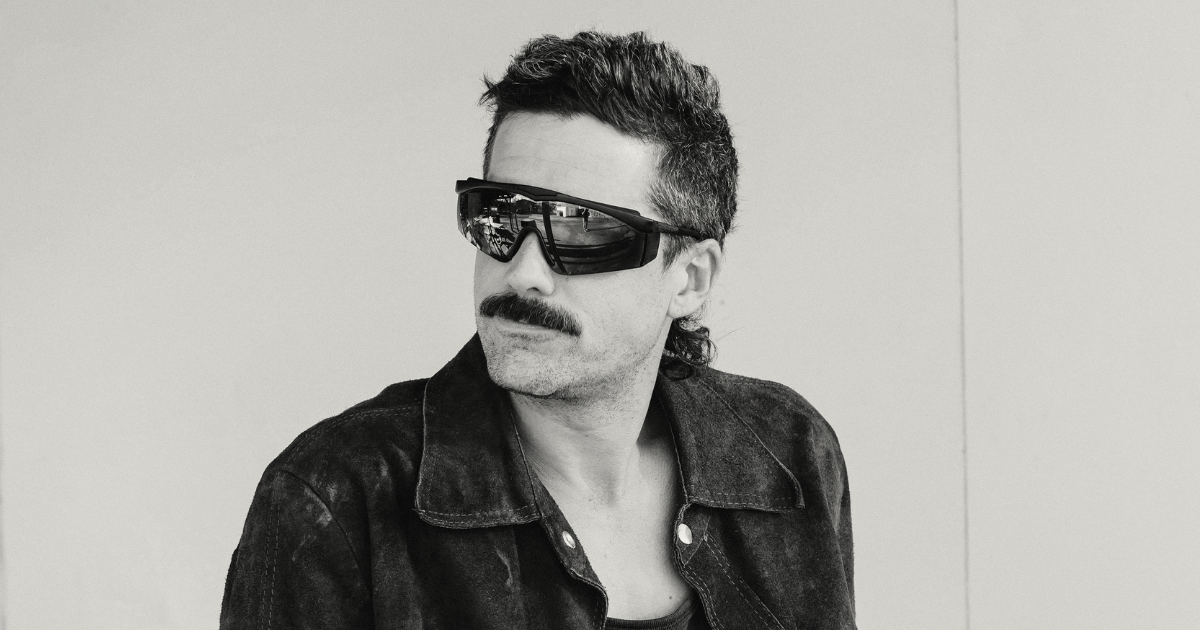
Outlaw Country That’ll Make You Smile

Holding the attention of a roomful of moderately smashed bar-goers is no small feat, let alone with a traditional Irish folksong. But last May, country singer-songwriter Dylan Earl ended his set at Brooklyn’s Skinny Dennis standing on top of the bar and singing an a cappella version of “Wild Mountain Thyme.”

“Will you go, lassie go/ And we’ll all go together/ To pull wild mountain thyme/ All around the blooming heather,” Earl implored in his warm baritone, towering above the room in worn jeans, boots, and a sleeves-cut-off T-shirt from his Arkansas-based label, Gar Hole Records. In spite of all the alcohol collectively consumed by the listeners who packed the venue to its beer-tinged walls that evening, the room was just about as quiet as a divey honky-tonk can be.

By ending his set with the kind of folk song which, passed down through generations, comprises one major lineage of country music – indeed, “Wild Mountain Thyme” is based in a much older Scottish folk song – Earl invoked a deep vernacular tradition and history often left out of modern country. Earl’s music attracts labels like “old-school” and “classic country,” and his voice certainly lends itself to those comparisons, but his own compositions convey a whole lot more. Rejecting the banality of tired Southern stereotypes, Earl writes punk-hearted, poetic music rooted in a love of people and place; music which is both socially and class-conscious and captures wide-ranging cultural unease and indignation with nuance and wit.

On his fourth studio album, Level-Headed Even Smile (released September 19), Earl makes clear that his is not a return to a bygone era so much as a carrying on of a long tradition of speaking truth to power and of imbuing dimension and worth into the lives of overlooked characters and issues too easily reduced to absolutes.

“I’d rather be an outlaw than in with the law/ All this authority worship is the strangest thing I ever saw,” he sings in “Outlaw Country,” a thesis statement of sorts for the album and Earl himself. Earl wrote “Outlaw Country” out of frustration at how many people made assumptions about his beliefs and morals because of his appearance – and because he plays country music with a whole lot of Southern twang. Earl wanted to make it clear where he stands.

“I finished high school in a very rural part of Arkansas; I identify with the Deep South, but I don’t identify with its most prevalent fucking right-wing rhetoric… I still want to remain approachable to those people I completely disagree with, because I think that’s an important part of making art, is creating discourse,” he says. “I want to try to approach these people and try to have that conversation. Be like, ‘Listen here, brother, I’m just like you, but you don’t have to be a racist piece of shit. It’s way more fun in life to be happy and be inclusive. Your soul will be happier because of that.’”

Lately, outlaw country morphed from its subversive roots into a shorthand for wicked good independent country or a slightly more specific alternative to Americana. While both wicked good and independent, Earl’s version also rekindles contempt for the establishment that fueled the original outlaw country movement:

I’d rather be a bootlegger than a bootlicker
A side stepper than a homewrecker
And I don’t get a pick me up
From putting other people down

It’s clear to see by the air I breathe
Working class solidarity
Is the only way
We’re gonna stamp that fascist out

Sardonic and irreverent, “Outlaw Country” is an anthem for anyone who ever believed in love and community over corruption and power. But rather than a callback, Earl’s music is of and for the next generation of ne’er-do-wells and dreamers living on the fringes, hoping for something better.

Earl grew up in Lake Charles, Louisiana, where he split his time between separated parents. Chafing at the craven habits of money and influence that he witnessed from his father, a powerful local lawyer, Earl preferred the warmth and love he felt in the house his mother shared with his grandmother. (Despite a rocky childhood, Earl’s now building a relationship with his dad.)

“I was living in poverty on one side and then I was living in opulence on the other side, and the poverty side is where I wanted to be, because that’s where all the love was,” Earl says. “I’m so lucky to have that, to be able to have identified where love was at a young age and identify where my soul felt good.”

Earl’s mother showed him how to seek joy and adventure, filling life with road trips and camping weekends. When he was just five years old, Earl’s mother plopped a map in his lap and taught him to navigate. Perpetually tight on money and resources and mired in an enduring custody battle with his father, she nonetheless taught him how to get away from it all, instilling in him a curiosity about the world. On the road, they stopped to check out historical markers, explored parks and rivers and the Gulf Coast, and watched giant boats come in while picnicking along the Intracoastal Waterway.

“That developed a sense of wonder and being like, ‘I don’t fucking need money to feel this type of happiness, to feel this sense of joy and adventure and love of life, just life in its purest form,” Earl says, choking up. (He firmly believes more men should cry, and that it helps him be more humane.)

“Her sense of adventure, her true passion for living, it’s amazing to me; it still is amazing to me.”

The album’s title and thematic heart – level-headed even smile – are derived from that approach to living life fully. For Earl, it’s an essential mechanism of coping and connecting. Remain engaged in the world and aware of all its horrors and tragedies, he says, but then, when it gets to be too much, know when and how to take a break:

Some nights I’m crying on the backroads
Rolling my smoke backwards
Trying to keep a level-headed even smile
Don’t you know I might take a while to get there
Just hoping I get anywhere
Trying to keep a little level-headed even smile

“At some point we’ve got to unplug from the fucking screen and just go explore things that are fucking real, like the trees around us, or the grass, or the water, or the sun or the moon, and try to get in touch with that more primal sense of ourselves,” Earl says. “That is where we can really most quickly and most efficiently achieve happiness, it’s getting in touch with the simplest form of ourselves.”

Beside the love from his mother, Earl describes himself as a depressed kid who struggled in school and wanted desperately to escape his hometown and father and stepmother. At 15, he convinced his father to send him to boarding school which, in part because of Hurricane Katrina’s devastation of Louisiana, ended up being in rural Arkansas. At the Subiaco Abbey and Academy, Earl studied with monks who’d taken a vow of poverty and offered rigorous, benevolent study, kindness, and care. Though he’s an atheist, Earl counts the monks, whom he visits regularly, as mentors, connecting with them still through shared spirituality.

“We all fucking showed up pissed off as hell. And we found love and we found love amongst each other; we found love from those monks and found nature,” Earl says, reverently, of his time at Subiaco. “It saved my fucking life. The whole thing; I found joy and happiness for the first time in my life.”

Level-Headed Even Smile is dedicated to Earl’s late friend, William, who was the first to befriend him at Subiaco. “He helped me clear my heart,” Earl says. As he sings of those halcyon days on “Two Kinds of Loner,” “We were two kinds of loner/ A misfit and a wayward son…”

Armed with the sense of wonder his mom taught him, liberated by the fallow morals of youth, and subsumed by the ready escapism afforded by their surroundings, Earl and William learned every back road. They’d steal beer from the back of William’s dad’s Crossroads Tavern and drive for hours exploring the backwoods and levees along the Arkansas River.

“William was the first to show me the country air. Hanging out with him, something about getting in that truck after class, taking off down Lile Ridge Road, cracking a beer, putting on whatever weird music he was listening to at the time, that was the first sense of fucking true freedom I ever had in my life,” Earl says.

Stopping just shy of wistful, “Two Kinds of Loner” is a bittersweet, intimate portrait of the desperately important work of becoming oneself as a teenager – and of the raw beauty in forming kinship through human connection rather than blood relation:

Down where the kudzu meets the bodark
And the darkness first let go of me
High in a cab of a buddy I had
He showed me the county air
I used to not care about nothing
Because no one seemed to care for me

After high school, Earl attended Hendrix College, a liberal arts school which lived up to its name situated in Conway, Arkansas. A few years earlier, Earl borrowed his father’s old guitar – a Yamaha FG 180 Red Tag, which he still plays today – and learned enough chords to make himself useful around a bonfire and impress the local girls. Encouraged by one of the monks at Subiaco, who noticed him straying from lesson plans, Earl started writing his own music.

When he got to college, he landed feet first in a robust DIY music scene. Together with a group of friends – including Gar Hole Records cofounder and label manager Kurt DeLashmet – Earl played a circuit of local house venues: White House, Blue House, Brick House, and occasionally Shit Mansion, where both also lived for a time. To this day, their two-day, 28-band Butt Ranger music festival thrown by friends at the White House remains one of Earl’s favorite shows.

“We were drunk off our fucking asses on plastic bottle whiskey and snorting Adderall and fucking ripping cigs and shit like that. It was fucked up. It was so awesome. It was just blood and piss everywhere,” Earl says. He recalls the floor at White House buckling so deeply that by the end of the night all his gear, including his oversized amp, wound up in a pile in the middle of the floor. Volume was of primary concern, tone and other nuances distinctly secondary. “What a fucking beautiful, carnal, amazing culture to be a part of,” he says.

Two songs on Even Smile come from those early days playing music first in college and, afterwards, in Little Rock, where Earl and his band Swampbird moved. (Earl lived in Little Rock for a few years then moved to Fayetteville, where he still lives.) Both songs are paeans to the chaotic moil of early adulthood rendered heady and hazy by too much booze and too little grounding: “Broken Parts,” which he first recorded with Swampbird, and “Little Rock Bottom,” about his time in Arkansas’ capital city.

“I don’t really quite realize it until I am talking about it, how much of my life and my story is wound up into that album,” Earl, who’s now in his mid-30s, admits. The album feels like a fitting way to process and close that chapter of life. “I do feel like I’ve left it on the table and I’ve left it all out on the field, so to speak.”

In total, Even Smile is a loving, layered depiction of both Arkansas specifically and the south in general. Among his many influences, Earl includes Arkansas gonzo poet Frank Stanford (who also attended Subiaco and whose burial there Lucinda Williams memorialized in her song, “Pineola”). Stanford’s realism and wild abandon creep into Earl’s songwriting sensibilities; they share a love of the South and its complexities and a reverence for and dedication to illuminating those stories.

Alongside a few cheeky disquisitions on life on the fringes – including road dog ode “Get In The Truck” – throughout the album Earl relishes the beauty of his home territory. Perhaps nowhere more so than on “High On The Ouachitas,” an extended soliloquy on the wild beauty of the mountain range, his chosen retreat for a reset and solace:

When I’m high on Ouachita
High as I ever saw the Arkansas
With goldenrod and reindeer lichen
Twist flowers in bloom
There’s just no place
I’d rather waste my afternoons
Than high on Ouachita

“I love it so fucking much, because I know all of the nuance and I know all the beauty that’s deep underneath all of the stereotypes. And just how fascinatingly complex our communities are,” Earl says. “It’s fucking beautiful. You have two and a half million acres of national forest. So we have the cleanest drinking water in America; we have endless amounts of outdoor recreation; the food is fucking kick ass; the people are the sweetest ever.”

Earl rounded out Level-Headed Even Smile with two very on-theme cover songs: beloved Arkansas folksinger Jimmy Driftwood’s “White River Valley,” a love letter to Arkansas’s pastoral beauty, and Utah Phillips’ peripatetic wanderer’s lament, “Rock Me to Sleep,” which concludes the album. Together they bracket the glib “Lawn Chair,” written with Cameron Duddy and Jonathan Terrell.

Earl jokes when playing the song live that it might be the worst song he’s ever written. And superficially it sounds like the kind of redneck anthem that might confirm the uneducated listener’s worst stereotypes about uncouth Arkansans: “It’s a whipass life just being me/ It don’t cost much to be the free/ I got my lawn chair/ And I’m sitting on top of the world.” Yet the song is also a sly rebuke against taking everything too seriously. Convivial in its roughness, it’s a gleeful, carefree reminder of the many ways to keep a level-headed even smile.

“If I’m feeling bogged down and feeling depressed, oftentimes it has nothing to do with the task at hand, it’s just that I’ve been absorbing how terrible the fucking world is and it makes me incapable of interacting and interfacing with my immediate world, because I’m so fucking caught up in that goddamn bullshit… and it is not allowing you to reach your full potential as a biological piece of anatomy that is somehow living on this planet,” Earl says.

“[A level-headed even smile is] an attempt to focus on your humanness and try to reattach yourself to the earth and detach from the problems of the earth; and just go out and find your smile. Go find your joy amongst all the fucking evil.”


Photo Credit: Justin Cook