The Latest of Joshua Hedley’s Many Hats

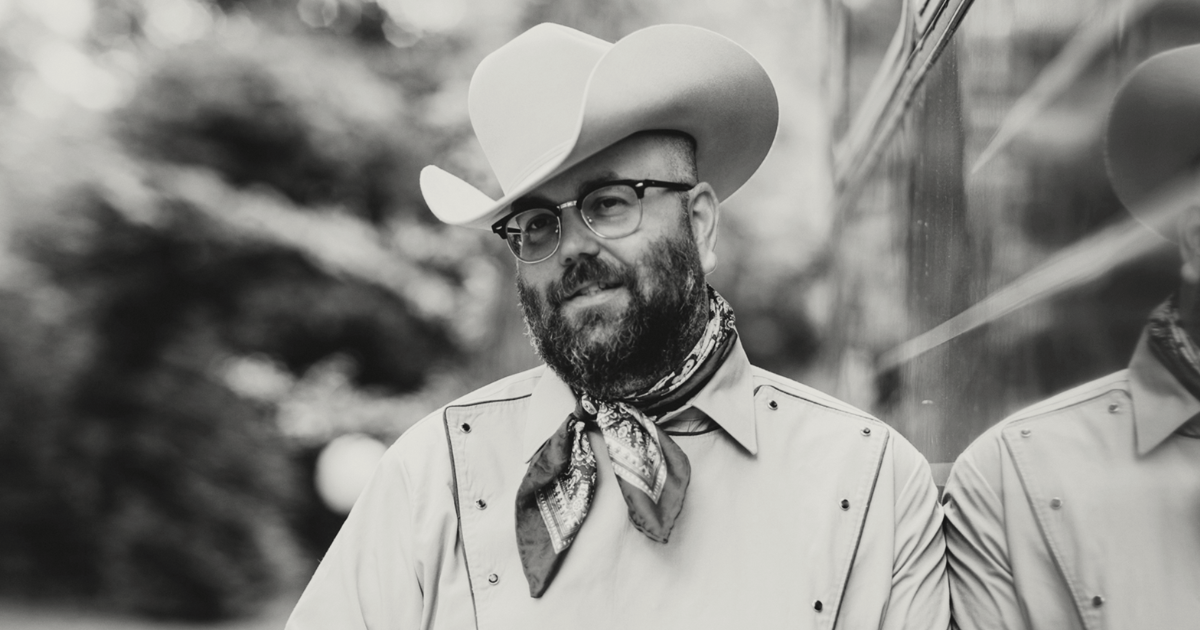
As one of Nashville’s key classic-country connoisseurs, fiddle maestro Joshua Hedley has long been a musician of many hats. In 2018 his first solo album Mr. Jukebox tapped 1960s-style countrypolitan. 2022’s Neon Blue embraced the lush warmth of the ‘90s-era format, and he regularly thrills crowds with cover sets from across time at the famed Nashville honky-tonk, Robert’s Western World. Yet with his new album All Hat, Hedley dons the metaphorical cap he’s long obsessed over – the wide-brimmed stetson of his Western Swing heroes.

A titan of twang and perhaps Broadway’s finest down-home devotee of the traditional arts, All Hat finds the lifelong Bob Wills fan going back to his roots. Produced by Western Swing icon and Asleep at the Wheel founder Ray Benson, the album captures the upbeat joy of an eminently danceable (yet often overlooked) country style, which Hedley has been loving and learning since he was 8 years old.

Over 11 tracks of old-style originals, he celebrates a genre defined by jaunty rhythms and euphoric solos meant to keep a crowd dancing long into the night. With an already-respected resumé, Hedley still calls All Hat his “pièce de resistance,” and feels Western Swing deserves its due in this era of cultural callbacks.

“It’s definitely not seen the renaissance that say bluegrass or the outlaw country sound have,” he laments.

Joshua Hedley spoke with Good Country about the new album, the differences between Western Swing and other country styles, and what it’s like to be produced by one of your heroes. Plus, he explains how “getting stoned and playing country music” is the best cure for creative burnout.

Your new album is called All Hat. But that term is famously used to describe posers – and you don’t fit that bill when it comes to country. So why are you calling it All Hat?

Joshua Hedley: Well some people disagree, man. [Laughs] I don’t know what constitutes “not a poser.” I would think playing country music since you were 8 would take care of that, but apparently not.

Really?

It is what it is. I don’t really give a shit, but it was just kind of poking fun at myself and those criticisms. I just think it’s funny. But honestly, for the album, I was working on a different album. I was writing for something else and I was on the road with Asleep at the Wheel and Brennen Leigh – we were doing a package show tour together – and I was just hanging out with Ray. He was like, “You ought to let me make a record on you.” I’ve been wanting to do another Western Swing album for a long time and I was just like, “This is it.” When Ray Benson wants to make a record on you, you make a fucking Western Swing record.

It came out really great. I’m enjoying it for sure. I wonder, how are you feeling about your craft these days? Like you said you’ve been doing this since… well, your whole life really.

Man, I’m feeling good about it these days. This album in particular has been just a joy all the way around. Writing – it was really fun. Recording – it was really fun. Playing these songs live is super fun, and it’s something I’ve been needing. You get pretty burned out when you do it this much. I come off the road and I go back to playing music just at home. When you play like that, you get burnt out hard – and I was really burnt out. This record is kind of pulling me out of the burnout.

That’s interesting. I’ve been watching you at Robert’s Western World for years and it’s always felt like you had that dialed in. I mean, you’ve earned the respect of everybody in the field, and you could probably be making a more commercial play, but it seems like you’re more inspired to make music with your friends and do small residencies. Is that a more satisfying life?

Definitely. I’ve done a lot of touring and all of that, but when I’m really having fun is when I’m down at Robert’s or Dee’s [Country Cocktail Lounge] or Skinny Dennis. I’ve been playing these solo acoustic shifts at Dee’s, it’s just two hours a week and I just sit there with my guitar and get stoned and play country songs. It’s kind of empty in there, and I get to do whatever I want. I forgot how much fun I have doing that, so I’ve been leaning more towards playing at Robert’s and doing the honky-tonk thing lately, just because at the end of the day, you got to do what makes you happy. If I was going to do something I wasn’t enjoying, then I could get a desk job and probably make a lot more money than I make doing this.

Maybe.

I wonder, do you ever feel like you know a secret that some of your peers are missing? I mean, when you talk about that burnout phase, and being able to sit down and just get stoned and play country music, is that a secret hack of the lifestyle?

I don’t know about a hack or anything like that, but for me, I am having the most fun when I am playing covers and just singing old songs that I really love. You hear a great song on the radio and the feeling that you get from hearing that song? Imagine the feeling you get from singing it. That’s my jam.

You’ve been calling All Hat your “pièce de resistance.” And I cannot speak French, so I can’t say that phrase. But how do you figure?

I love country music in all its forms – well… maybe not all its forms. But most of its forms. Western Swing has always been my very favorite thing to play and sing, and I actually made a tribute to Bob Wills when I was 15 with Buddy Spicher and his band up here in Nashville.

What? Really?

Yeah, it’s all Bob Wills covers, and a lot of ’em, I think probably I learned them from Asleep at the Wheel. … It’s just always been on my mind that I should write one of these instead of just doing Bob Wills songs, and always wanted to do it. And then getting to do it with somebody like Ray and with the players who are on the album – guys I’ve looked up to my whole life. I don’t know, it’s just the vibe was in the room and this record came out better than I could ever imagine.

Tell me a little bit about your songwriting on this one. What do you do differently when you’re writing a Western Swing tune?

Oh yeah. It is actually quite different because a lot of those melodies come out of the pop world. And when I say pop, I mean like ’30s and ’40s pop.

Like the original pop.

The original pop. Big band music and stuff like that. Country’s very structured, at least the classic kind that I do to where you’re verse, chorus, turnaround, chorus, outro, something like that. It’s real regimented and formulaic and it’s a different approach to writing Western Swing. A lot of those songs are just one verse, and then you play a bunch of solos, and then you just repeat that verse and take it home, which is a very jazz standards thing to do.

I guess I never thought of that.

Like on “Fresh Hot Biscuits.” I kind of approached that how Bob and them would approach “Ida Red” or something, which is really just a fiddle tune that he wrote words to. I leaned into borrowing old lines from old blues songs and tried to find some of those old lines. Like in “All Hat” – “I know a gal up over the hill/ She won’t do it, but her sister will.” That line’s as old as time.

Right. So the structure, is that because it’s made for dancing?

Yeah, the vocal is secondary a lot of the time, and the lyrics certainly are. It’s more about dancing and the whole thing evolved out of square dance culture and callers where there weren’t lyrics to the songs. It was just a guy telling you what to do on the dance floor. The lyrics are kind of secondary to the overall vibe, and the musicianship is really a big part of it, too.

I did want to ask you about “Stuck in Texas” because that one’s got Ray on it. It’s got that jumpy beat, and a little bit of yodeling in there, too. Where did that one come from?

I had wrote several songs that had really similar chord progressions at that time. I had written them in a row, and I was trying to get out of that. And I’m also trying to push myself on guitar to write outside of three chords, four chords. I just kind of came up with that. I was thinking about the Sons of the Pioneers when I wrote that song, wanting a real good guy, cowboy-movie cowboy. Thinking about Gene Autry and stuff. Then it was just a no brainer for Ray to step in on. Mr. Texas.

What’s it like to be produced by a guy like Ray Benson? Is it different than playing in his band?

It is different than playing in his band because his band is his brainchild and he knows exactly what he wants it to sound like. I think he recognized that this was my brainchild and we all kind of did it together. Ray, he kind of choreographed a lot of it being like, “We should throw the ensemble part here and twin this,” and “We got to have fiddle on the intro,” that sort of thing. But a lot of it was just a group of guys that play together all the time getting together and playing these songs. And what happened was just natural.

You said somewhere in your bio that you grew up playing fiddle with guys who were in their 50s and 60s, and learning from them. I just wonder, is that what you aspire to be one day?

Yeah, definitely. There’s actually this kid Nash [Grier] that comes down to Robert’s whenever Brazilbilly plays and it’s always a treat. He’s like six or seven years old and he’s a really great fiddle player. He comes up and he sings “Hey, Good Lookin'” and he plays “Orange Blossom Special” behind his back – all the little things I used to do when I was his age. Now that I’m 40 years old, I’m like, “Man, look at that little guy.” It really brings back memories. I was that kid and I love seeing a new generation embracing all this stuff. It’s really special to get to pass it on.

What you hope people take away from this one. I know it’s a labor of love for you and a lot of fun to do, but what do you hope people get from this thing? Do you want to spark a revival?

I don’t know about any revival, but I hope people have fun with it. I hope that they don’t take it too serious. Music can get so heavy these days, and I get it. But I want to remind folks that you can just keep it light and make a great record. Sometimes it’s nice to just dance, to just do some two-stepping, learn how to polka and not be so serious all the time. It’s all fun. That’s why we got into this. So I just want people to remember to enjoy themselves.


Photo Credit: Joshua Black Wilkins
Riders in the Sky: Genuine Songs, the Cowboy Way

It started with Ranger Doug giving “A great big western howdy!”

It ended with Doug and compadre Too Slim harmonizing on “Happy Trails” and calling, “Head ‘em up! Move ‘em out! Hee-yaw!

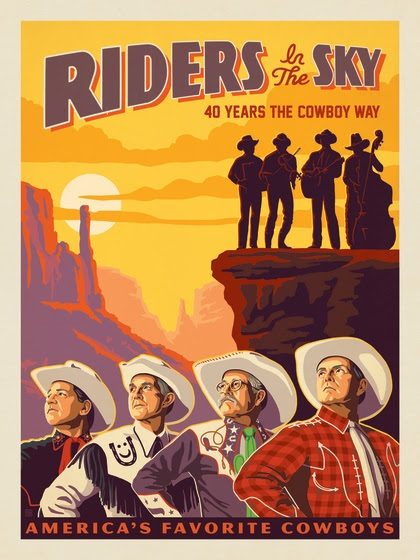
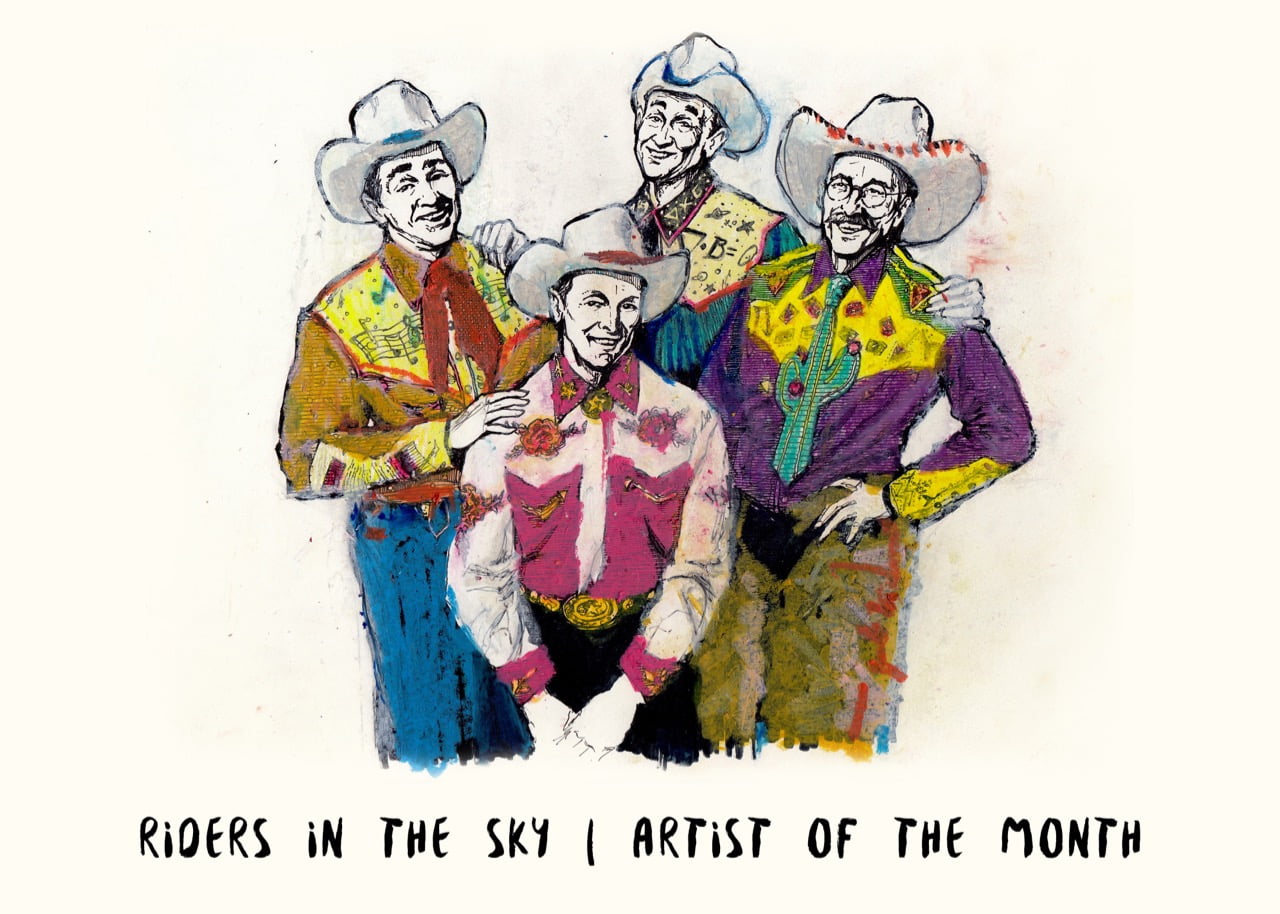
Well, how else would you expect a conversation with the two founding members of Riders in the Sky to be framed? That’s the Riders in a nutshell right there, these troubadours being dedicated to both the preservation and continuation of the rich traditions of cowboy music and celebrating life on the range. It’s a nutshell they’ve honed and inhabited over the course of four decades as the premiere (perhaps the only) purveyors of the form — not to mention the associated comedy schtick (one of those Old West terms) and embroidered, be-chapped and tall-hatted finery.

They are currently celebrating that time span with a new album, 40 Years the Cowboy Way, their 35th full release, a survey of the wide range (pardon the expression, pardner) and extensive history of cowboy music, from paeans to the prairies and rivers, to campfire songs, to jigs and polkas, to gunfighter ballads. There’s also a tour, which will soon bring their total career concert count past a whopping 7,300! It’s a legacy they never dreamed of back on that day in 1977 when guitarist Ranger Doug (known to some as Doug Green) first sat in with a bluegrass band that featured upright bassist Slim (a.k.a. Fred LaBour). Well, best — and most entertaining — to let them tell the tale.

“He was just Deputy Doug then,” Slim recalls. “He’d show up in a hat, play a Bob Nolan tune.”

“‘Song of the Prairie,’” Doug interjects. “You loved it.”

“I said, ‘Where’d that come from,” Slim says. “He said, ‘Bob Nolan.’ I said, ‘Did he write any others?’ He said, ‘Yeah, about 1200.’”

That, Slim says, was his introduction to the music of the Sons of the Pioneers, the Western swing-and-harmony group that featured Nolan and cowboy-star-to-be Roy Rogers. Soon, with the addition of Windy Bill Collins, they dedicated themselves to the traditions of the singing cowboys — Gene Autry, Tex Ritter, Rogers of course — and the Western ideal. Well, at least for one show.
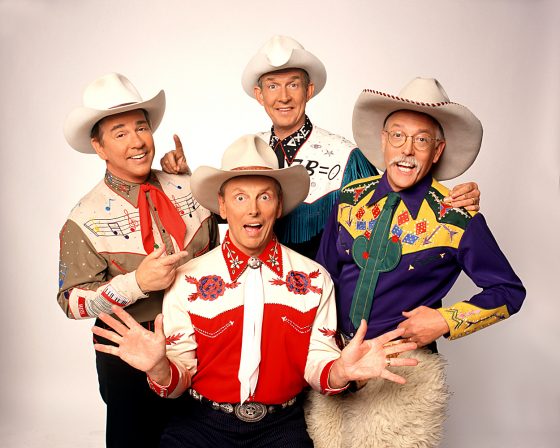
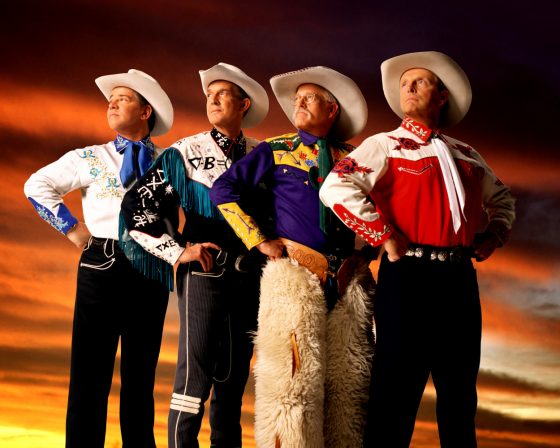
“I famously called Ranger Doug a couple days after our first gig and said, ‘I don’t know what happened back there, but America will pay to see that,’” Slim says. “It was so much fun, and it was music that had kind of gone from the landscape. The Sons of the Pioneers had albums in the cut-out bins and no one was doing what we were doing, so different and weird and entertaining.”

It was from one of those cut-out Sons albums, happened across by Slim, that the group took its name, and there was no looking back. With Collins leaving after a year (and replacement Tumbleweed Tommy Goldsmith staying just a year himself), Western swing fiddler Woody Paul (Paul Chrisman) came on board in 1978. Accordion wizard Joey Miskulin started working with them in 1988, becoming a full-timer soon after, squaring out the quartet we know today. Or as the Riders tell it:

“Woody joined us, bringing more original songs, a great tenor voice and that great fiddle style,” Doug says.

“And he can also fix the bus when it breaks down,” says Slim.

“That’s why we keep him,” adds Doug. “Not for his fiddle.”

“Not for his punctuality,” says Slim.

Doug continues, “Then about 10 years later we saw a guy on the side of the road with a sign that said, ‘Will Squeeze for Food.’ That’s how Joey joined us.”

Slim: “So that’s how we got a couple songwriters, a producer [Miskulin] and great players.”

“And Too Slim is being modest about his comedy skills,” Doug notes.

“I am objectively one of the second-funniest guys in America,” Slim says, with a modest level of modesty.

Soon the accolades, credits and, of course, fans around the world mounted up impressively: They were inducted into the Grand Ole Opry in 1982. They sang “Woody’s Roundup” in Pixar’s Toy Story 2 and contributed to the soundtrack of another Pixar film, Monsters, Inc., while their related albums, Woody’s Roundup: A Rootin’ Tootin’ Collection of Woody’s Favorite Songs and Monsters, Inc. Scream Factory Favorites each won them a Grammy Award for best children’s album. Also in animation, they were portrayed as a robot cowboy band in a 2003 episode of the animated Duck Dodgers, for which they sang the parts. In other media, they had their own Riders Radio Theater show and starred in a 1991 CBS Saturday morning kids show — kind of Pee Wee’s Playhouse on the prairie — which though not a hit, is pretty noteworthy nonetheless.

“About 10 years ago I said, ‘This has been way more,’” Slim says. “Two Grammys, getting to work with Pixar, the great venues and all the things we’ve done.”

Of course, even 40 years ago, this was already music of deep nostalgia. For that matter, when those singing cowboys and frontier heroes were doing it, it was already music evoking a bygone era — “the thrilling days of yesteryear,” as the Lone Ranger’s announcer put it.

How much of what they do is based on real traditions, how much on myth? Is there a core of reality to the music, or is it, in the parlance of pageantry, “folklorico?”

“That’s a complicated question,” Ranger Doug says. “The West had been glamorized and mythologized since the [James] Fenimore Cooper novels [notably The Last of the Mohicans in 1826], or [Owen Wister’s] The Virginian, at the turn of the 20th century. Buffalo Bill’s Wild West Show was created while the West was still wild! There’s a whole tradition of romanticizing the West. Just so happens that it works musically. The great poets like Bob Nolan and Stan Jones and Tim Spencer were able to make it into song. Roy Rogers and his flowery shirts and six-shooter, that was not the real life of the cowboy in 1867.”

But, Slim stresses, “There was music in 1867. Folk music. A lot of Celtic, Appalachian songs to it, the whole blues thing. And when jazz happened it took on that element. So it became a melting pot, a gumbo of music, wouldn’t you say, Ranger Doug?”

“I would,” Doug says. “And the Mexican music, too, not only the songs but in costuming.”

And, Doug adds, “There’s a tradition of singing among working men who are isolated, in the days before they were on their iPhones. Sailor shanties and lumberjack songs and miner songs. These existed. So no surprise that there were genuine cowboy songs as well.”

“Some of these survive, and we do them,” Slim says.

Doug cites a few classics: “The Old Chisholm Trail,” “Red River Valley,” “Streets of Laredo,” “Bury Me Not on the Lone Prairie.”

There’s one, a little more obscure today, featured on 40 Years the Cowboy Way.

“‘The Blue Juanita’ was written in 1844 and was written about a river in Pennsylvania, which was the West to a lot of people then,” Slim says.

“It’s about an Indian maiden, plying her canoe up and down the Blue Juanita,” Doug says.

They do know their stuff.

“I wrote the book,” Doug declares.

“He actually did,” Slim elaborates. “Singing in the Saddle, the whole history from Fenimore Cooper to Riders in the Sky. A lot of emphasis on the Golden Era, the ‘30s and ‘40s when cowboy music was huge.”

The new album covers much of that ground. Surrounding “The Blue Juanita” are some expected, familiar songs (“Cimarron,” “Mule Train,” even Marty Robbins’ 1950s hit gunfighter ballad “El Paso”), some originals evoking classic styles (Green’s “Old New Mexico”) and some corny comedy (“I’ve Cooked Everything,” a food-centric rewrite of the Johnny Cash hit “I’ve Been Everywhere,” sung by craggy camp cook Side Meat, who may or may not be a LaBour alter-ego).

There are also what for some might be unexpected turns, including the jigs medley of “Pigeon on the Gatepost” and “The Colraine Jig” and the spritely “Clarinet Polka,” co-written by Woody Paul and Joey Miskulin, who, by the way, had a long pre-Riders stint with “Polka King” Frankie Yankovic. Oh, and some yodeling. There has to be yodeling.

Then there’s a Too Slim arrangement of the old traditional song “I’ve Got No Use for Women.” Talk about bygone eras. They are highly conscious of the fact that times, and attitudes, have changed, not just from the days of the real Old West but since the days of the Hollywood Old West, neither of which may have cast Native Americans and other non-Caucasian ethnic groups in the best light, not to mention women. It’s a touchy subject.

“Do you want to take that one, Slim?” Ranger Doug asks, gingerly.

“Go ahead, Ranger Doug,” Slim replies.

“At least two of us have some political views,” Doug says. “But we don’t bring them forth on stage unless we slip. We’re there to entertain. As far as the image of the cowboy, some people like John Wayne and Jimmy Stewart and Gene Autry were arch-conservatives, and that stuck. I think of cowboys as environmentalists, people who appreciate good behavior and preserve the beauty of the West.”

“We are of our time,” Slim says. “And what we foster is a good feeling, an escape in a way. But also a reinforcement of timeless values of contentment, sincerity, being true to your word and humor. And I think that’s why people still come back to our shows. They like the feeling we engender on stage. But I’ve got ‘I’ve Got No Use for the Women’ on the album, and it’s an old song and I do it in character. But in the #MeToo generation, I’ll be honest, I’ve thought about it. But it’s a valid song and performance and I think it works great. But we all recognize that there was part of the West that had to do with genocide, the underbelly of American history. We’re aware of that.”

However fine a line they may amble in that regard, however the image of the cowboy and the old times may have changed, whatever the Riders have done has worked for 40 years, people do keep coming to see them — at Bonnaroo, where they just played as part of a special Grand Ole Opry show, something they’d tried to make happen for 15 years, to Tokyo, at a tattoo convention in Maine or in the village of Anaktuvuk Pass, Alaska, well north of the Arctic Circle. Asked about the most memorably strange gig they’ve done, they cite that latter one.

“The whole town came to see the show,” Doug says. “All 40 of them, all Native Americans — Eskimos. They all brought their boom boxes and recorded the show.”

Slim adds, “And after the show we watched the Northern Lights, and I had a bottle of Southern Comfort.”

Whether riding off into New Mexico sunsets or the sitting under the Northern Lights, it’s been some mighty happy trails.

…until we meeeeet… aaaa…. gain.


Illustration: Zachary Johnson

MIXTAPE: Eric Corne’s California Country

California country has deep roots and an enduring influence. It’s given us the Bakersfield Sound, country-rock, cosmic country, cow punk, and much more. I love the more raw/less polished sound and how its artists tend to chart their own course. Nashville was a company town; California was where the mavericks went. I have a strong personal connection to California country, stemming from my work as Dusty Wakeman’s engineer at Mad Dog Studios in Los Angeles. Dusty played bass with Buck Owens, engineered Dwight Yoakam’s seminal albums, and co-produced Lucinda Williams’ first two albums. There’s still a strong core of musicians in L.A. with roots stretching back to these earlier generations, and it’s a thrill and an honor to be writing and producing records with such soulful and beautiful people, many of whom populate the selections below. — Eric Corne

Buck Owens — “Streets of Bakersfield”

Buck Owens is, of course, a pillar of California country and a pioneer of the Bakersfield Sound. An iconic harmony guitar riff provides the instrumental theme, with gorgeous vocal harmonies and pedal steel lifting the choruses. This song really encapsulates what California country represents to me — the desire to be oneself.

Merle Haggard — “Working Man”

This is one of my favorite Merle songs. It’s got a great groove and terrific guitar playing with lyrics that clearly represent the blue-collar ethic he embodied.

Lucinda Williams — “Sweet Ole World”

Lucinda really helped broaden the boundaries of country just by doing her own thing. This song has an angelic vocal melody with beautiful harmony and precise responses from the guitar. Immaculately recorded and co-produced by my mentor Dusty Wakeman.

Dwight Yoakam — “It Only Hurts When I Cry”

Dwight and Pete Anderson were real students of classic country music, especially the Bakersfield Sound, and they were at the center of the cow punk movement, along with X, Lone Justice, and others. This is a great song with witty lyrics, perfect production, and top-notch performances.

Jean Shepard — “If Teardrops Were Silver”

Raised in Bakersfield, Jean Shepard was a pioneer for female country singers and one of its first great stars, following on the heels of Kitty Wells’ breakthrough. She had a really pure voice with a lovely vibrato and a great ability to interpret a song.

Bob Wills — “Bubbles in My Beer”

It could be argued that Bob Wills is the godfather of the Bakersfield Sound. He played there regularly and had a strong influence on both Buck and Merle … something I can really hear in this song.

Sam Morrow — “Skinny Elvis” (Featuring Jaime Wyatt)

I’m really proud to work with these two brilliant, young, California country artists who are getting well-deserved national attention. I wrote this one for Sam’s album, Concrete and Mud. It’s a little reminiscent of the Gram/Emmylou song “Ooh, Las Vegas,” so I thought it’d make a great duet with Jaime. I recruited legendary Gram Parsons/Byrds pedal steel player Jay Dee Maness to play on it, which was quite a thrill, as you can imagine.

Guy Clark — “L.A. Freeway”

Guy Clark wasn’t in L.A. for long, and this song is about leaving, but it’s a beautiful farewell song. The song makes reference to another beloved and iconic figure of California country — “Skinny” Dennis Sanchez who played bass with Clark, and ran in circles with the likes of Townes Van Zandt, Rodney Crowell, and Steve Earle. There’s also a thriving honkytonk in Brooklyn named after him. It’s an incredible performance, very dynamic, with a sympathetic arrangement including Wurlitzer piano, weepy fiddle, moaning harmonica, and gorgeous chorus harmonies.

Jade Jackson — “Motorcycle”

Here’s another great, young country singer coming out of Cali right now. I love this lyric and vocal performance — intimate with a dark, rebellious under current.

Linda Ronstadt — “Silver Threads and Golden Needles”

Her early career country records are really underrated. This is a killer country-rock version of a Dick Reynolds/Jack Rhodes classic song with strong ties to the Flying Burrito Brothers. I think Ronstadt is also important to include here, due to her work with Neil Young, the Eagles, Jackson Browne, and others in the L.A. country scene of the late ’60s and early ’70s.

The Byrds — “Hickory Wind”

No playlist of California country would be complete without a song from the Byrds’ seminal country album Sweetheart of the Rodeo. My first gig in Los Angeles was assisting Dusty Wakeman on the mixes for the Gram Parsons tribute concert at which Keith Richards did a beautiful heartfelt version of this song by his old pal, Gram.

Sam Outlaw — “Jesus Take the Wheel (And Drive Me to a Bar)”

An instant classic by one of the brightest stars of the current generation of California country singers with outstanding production by Ry Cooder and Bo Koster of My Morning Jacket on keys, who also guests on my new record.

The Flying Burrito Brothers — “Hot Burrito #1”

Even though Gram Parsons and Chris Hillman’s importance is already represented here via the Byrds, I wanted to include this achingly beautiful Burrito song, partly because of Gram’s incredible vocal and melody, and partly due to Bernie Leadon and the link he represented as a member of both the Burritos and the Eagles, the latter heavily influenced by the former.

Gene Autry — “Mexicali Rose”

Gene Autry’s singing cowboy films were instrumental in bringing country music to a national audience in the 1940s. I was very fortunate to record Glen Campbell on his version of “Mexicali Rose,” but thought I’d include Autry’s version here.

Crosby, Stills, Nash, & Young — “Helpless”

I think the Laurel Canyon music scene played an important role in California country and Neil Young, in particular — first with Buffalo Springfield, with songs like “Learning to Fly” and “I Am a Child,” and later with his Nashville-recorded classic, Harvest. “Helpless” to me represents the seeds of Harvest.

Eagles — “Tequila Sunrise”

Not much needs to be said about the first two Eagles’ albums and their role in the popularity of country-rock. Not to include them would seem an oversight. This also represents the beginning of the fruitful Glenn Frey/Don Henley songwriting partnership.

Herb Jeffries: The Original ‘Black’ Singing Cowboy

Welcome back to In Memoriam, a monthly series that chronicles Americana musicians. So often, one giant is memorialized in their field while the others are displaced to historical footnotes. In Memoriam spotlights influential musicians who are fading from the collective conscious. This month: controversial Western film star Herb Jeffries.

In the 1930s, the United States was knee-deep in the Great Depression: Unemployment was at an all-time high; the once-fertile Oklahoma basin was awash in dust; and a great migration occurred. California — a supposed promise land full of oranges, stars, and jobs — filled with displaced farmers. It was an abundant state, but its agriculture economy was unprepared for the onslought.

People took solace in Western films and Hollywood began producing low-budget Westerns that glorified our nation’s past. Tough characters from hard-luck lives made good. It was a salve for our wounded country. At the same time, in New York, African-American culture prospered. The Harlem Renaissance was in full swing — as Duke Ellington was revolutionizing modern music, authors like Langston Hughes were redefining poetry and literature. Hollywood decided to try and get all parties on the same boat. Their vision? The Black Singing Cowboy. Enter Herbert Jeffries.

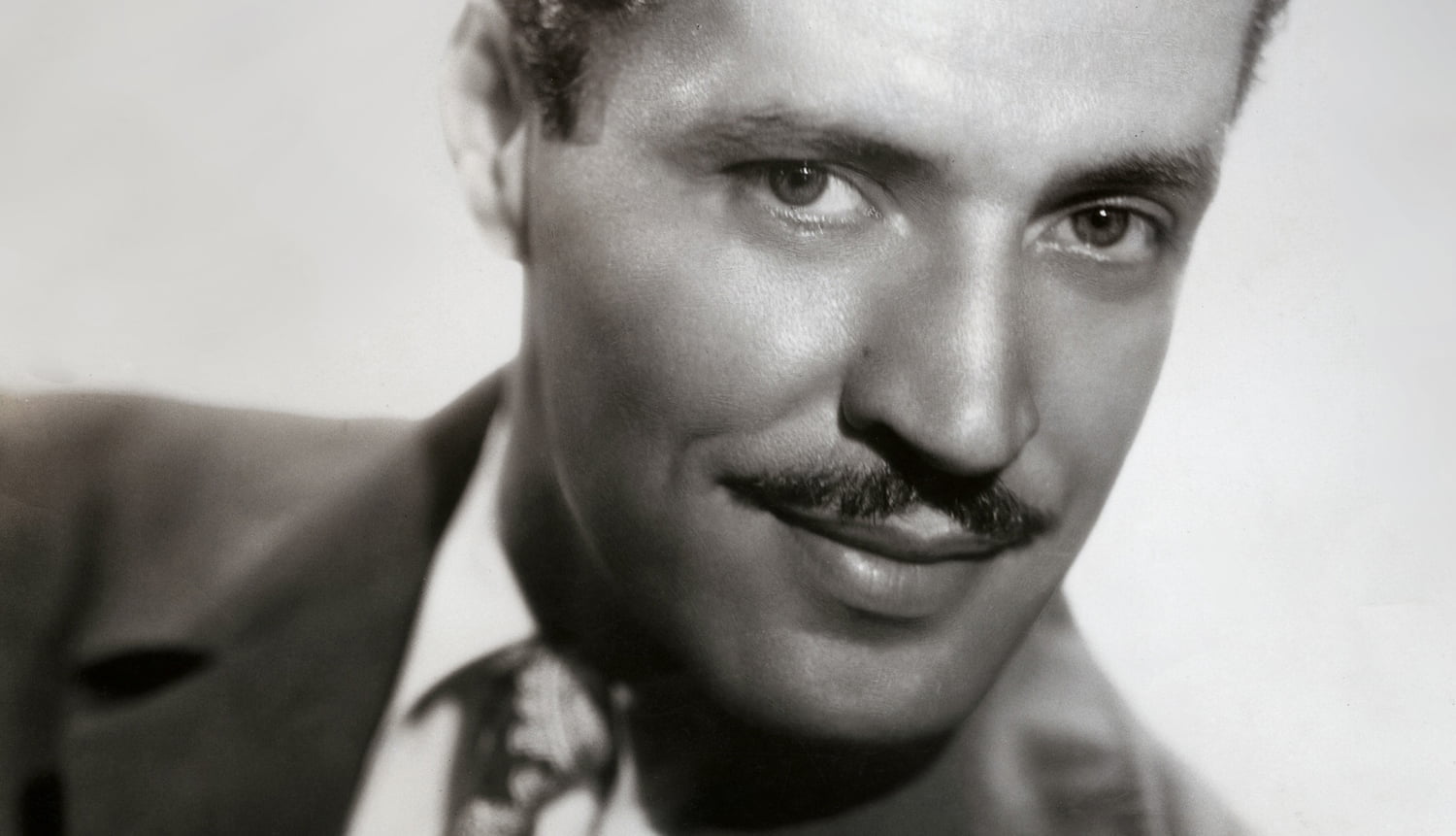
Jeffries was perfect: He sang in a rich baritone voice who was already an accomplished crooner. Louis Armstrong discovered a young Jeffries at 19 and recommended him to the Savoy Ballroom. He sang with Duke Ellington. He was handsome. Hollywood hoped that women would love him, and that the men would want to be him, so they released a series of films starring Jeffries with titles like Harlem on the Prairie, Two Gun Man from Harlem, and Harlem Rides The Range. It was a blatant cash grab and, once movie theaters across the country desegregated, Jeffries's film career stalled.

Still, his story would be fascinating enough, if he only sang for Duke Ellington. It would be all the more interesting because of his film career. But what really takes the cake is that Jeffries wasn’t Black.

Jeffries was born Umberto Valentino to an Irish mother and a Sicilian father. He had a slippery relationship with the truth, but by all accounts, he took his stepfather’s last name — Jeffries. From there, he adopted an African-American identity. At times, he claimed it was to avoid Italian persecution in Capone-era Chicago. At other times, he still maintained his African ancestry. What is known is that he was extremely effective. He darkened his skin with Max Factor makeup and quickly developed a smooth crooner persona.

Catching the ear of Ellington, Jeffries was hired and sang on a number of Ellington’s most popular songs. His rich voice captivated listeners, and his success in New York opened doors in Hollywood leading to his quick recruitment as the face of their latest scheme.

It’s hard to get a handle on Jeffries's past, as it’s full of contradictions. With his passing at 100 in 2014, the full story will never be known, but it’s hard to believe that Hollywood wasn’t aware of his ethnicity. It's quite likely that all the involved parties were aware of the fraudulent claim. Jeffries, for his part, never backed down from it. He concocted an increasingly elaborate family tree.

His sixth wife, Savannah, told the BBC that “there were times that Herb and I would go out and we’d get looks — prejudiced looks.” When the BBC pointed out that they were both white and pressed further, all she would say was that “Herb doesn’t see skin colors.” Perhaps Jeffries feared that his minstrel act would overshadow his other accomplishments, so he stuck to the story. 

Herb Jeffries was not the best-loved nor most well-known of the singing cowboys. He never had the name recognition of Gene Autry or the adoration of Roy Rogers. Some people consider him a master marketer. Others view him as a victim — he was a shade too dark for the whites with no other options. Many Hollywood honchos would prefer Herb Jeffries be forgotten along with this inglorious piece of film and music history … which is all the more reason to remember this complicated man and keep him from being relegated to the dustbins of history.