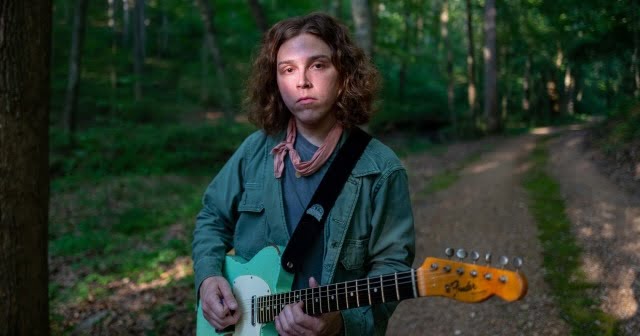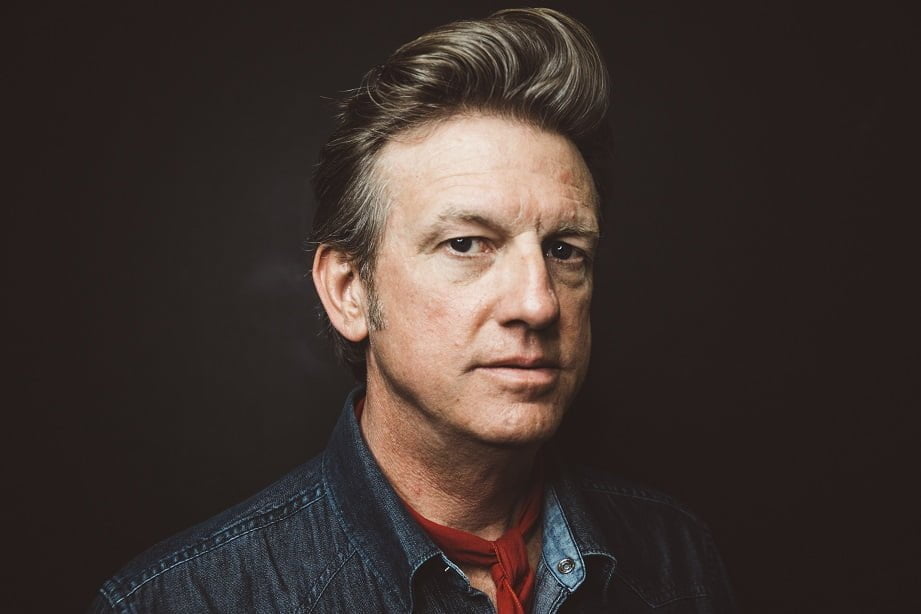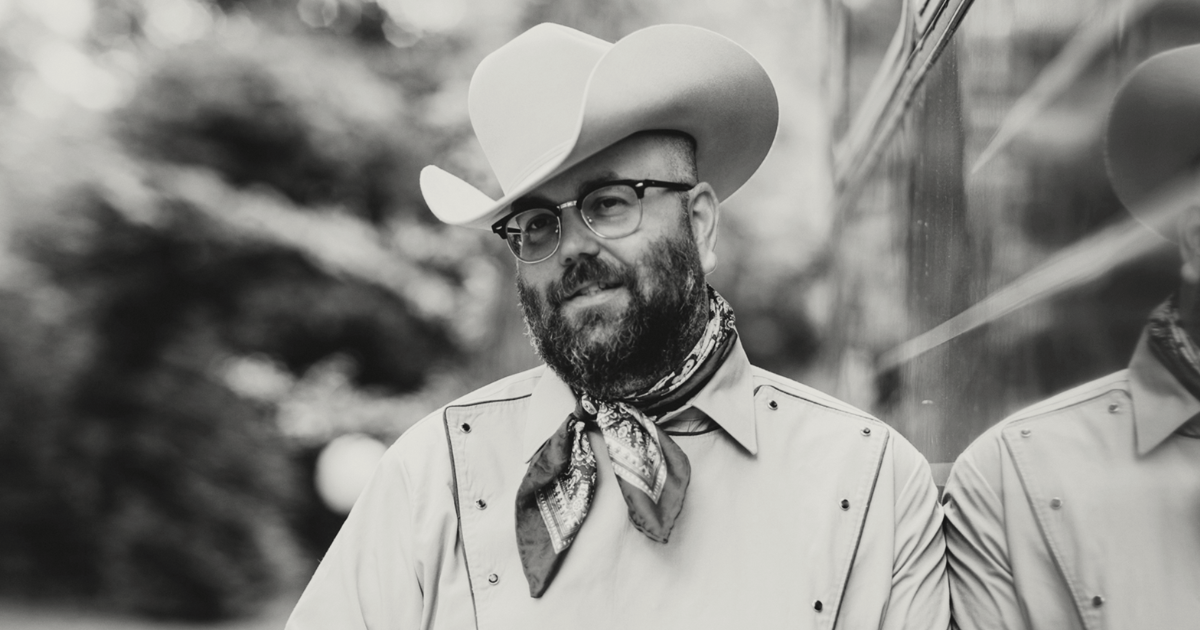
The Latest of Joshua Hedley’s Many Hats

As one of Nashville’s key classic-country connoisseurs, fiddle maestro Joshua Hedley has long been a musician of many hats. In 2018 his first solo album Mr. Jukebox tapped 1960s-style countrypolitan. 2022’s Neon Blue embraced the lush warmth of the ‘90s-era format, and he regularly thrills crowds with cover sets from across time at the famed Nashville honky-tonk, Robert’s Western World. Yet with his new album All Hat, Hedley dons the metaphorical cap he’s long obsessed over – the wide-brimmed stetson of his Western Swing heroes.

A titan of twang and perhaps Broadway’s finest down-home devotee of the traditional arts, All Hat finds the lifelong Bob Wills fan going back to his roots. Produced by Western Swing icon and Asleep at the Wheel founder Ray Benson, the album captures the upbeat joy of an eminently danceable (yet often overlooked) country style, which Hedley has been loving and learning since he was 8 years old.

Over 11 tracks of old-style originals, he celebrates a genre defined by jaunty rhythms and euphoric solos meant to keep a crowd dancing long into the night. With an already-respected resumé, Hedley still calls All Hat his “pièce de resistance,” and feels Western Swing deserves its due in this era of cultural callbacks.

“It’s definitely not seen the renaissance that say bluegrass or the outlaw country sound have,” he laments.

Joshua Hedley spoke with Good Country about the new album, the differences between Western Swing and other country styles, and what it’s like to be produced by one of your heroes. Plus, he explains how “getting stoned and playing country music” is the best cure for creative burnout.

Your new album is called All Hat. But that term is famously used to describe posers – and you don’t fit that bill when it comes to country. So why are you calling it All Hat?

Joshua Hedley: Well some people disagree, man. [Laughs] I don’t know what constitutes “not a poser.” I would think playing country music since you were 8 would take care of that, but apparently not.

Really?

It is what it is. I don’t really give a shit, but it was just kind of poking fun at myself and those criticisms. I just think it’s funny. But honestly, for the album, I was working on a different album. I was writing for something else and I was on the road with Asleep at the Wheel and Brennen Leigh – we were doing a package show tour together – and I was just hanging out with Ray. He was like, “You ought to let me make a record on you.” I’ve been wanting to do another Western Swing album for a long time and I was just like, “This is it.” When Ray Benson wants to make a record on you, you make a fucking Western Swing record.

It came out really great. I’m enjoying it for sure. I wonder, how are you feeling about your craft these days? Like you said you’ve been doing this since… well, your whole life really.

Man, I’m feeling good about it these days. This album in particular has been just a joy all the way around. Writing – it was really fun. Recording – it was really fun. Playing these songs live is super fun, and it’s something I’ve been needing. You get pretty burned out when you do it this much. I come off the road and I go back to playing music just at home. When you play like that, you get burnt out hard – and I was really burnt out. This record is kind of pulling me out of the burnout.

That’s interesting. I’ve been watching you at Robert’s Western World for years and it’s always felt like you had that dialed in. I mean, you’ve earned the respect of everybody in the field, and you could probably be making a more commercial play, but it seems like you’re more inspired to make music with your friends and do small residencies. Is that a more satisfying life?

Definitely. I’ve done a lot of touring and all of that, but when I’m really having fun is when I’m down at Robert’s or Dee’s [Country Cocktail Lounge] or Skinny Dennis. I’ve been playing these solo acoustic shifts at Dee’s, it’s just two hours a week and I just sit there with my guitar and get stoned and play country songs. It’s kind of empty in there, and I get to do whatever I want. I forgot how much fun I have doing that, so I’ve been leaning more towards playing at Robert’s and doing the honky-tonk thing lately, just because at the end of the day, you got to do what makes you happy. If I was going to do something I wasn’t enjoying, then I could get a desk job and probably make a lot more money than I make doing this.

Maybe.

I wonder, do you ever feel like you know a secret that some of your peers are missing? I mean, when you talk about that burnout phase, and being able to sit down and just get stoned and play country music, is that a secret hack of the lifestyle?

I don’t know about a hack or anything like that, but for me, I am having the most fun when I am playing covers and just singing old songs that I really love. You hear a great song on the radio and the feeling that you get from hearing that song? Imagine the feeling you get from singing it. That’s my jam.

You’ve been calling All Hat your “pièce de resistance.” And I cannot speak French, so I can’t say that phrase. But how do you figure?

I love country music in all its forms – well… maybe not all its forms. But most of its forms. Western Swing has always been my very favorite thing to play and sing, and I actually made a tribute to Bob Wills when I was 15 with Buddy Spicher and his band up here in Nashville.

What? Really?

Yeah, it’s all Bob Wills covers, and a lot of ’em, I think probably I learned them from Asleep at the Wheel. … It’s just always been on my mind that I should write one of these instead of just doing Bob Wills songs, and always wanted to do it. And then getting to do it with somebody like Ray and with the players who are on the album – guys I’ve looked up to my whole life. I don’t know, it’s just the vibe was in the room and this record came out better than I could ever imagine.

Tell me a little bit about your songwriting on this one. What do you do differently when you’re writing a Western Swing tune?

Oh yeah. It is actually quite different because a lot of those melodies come out of the pop world. And when I say pop, I mean like ’30s and ’40s pop.

Like the original pop.

The original pop. Big band music and stuff like that. Country’s very structured, at least the classic kind that I do to where you’re verse, chorus, turnaround, chorus, outro, something like that. It’s real regimented and formulaic and it’s a different approach to writing Western Swing. A lot of those songs are just one verse, and then you play a bunch of solos, and then you just repeat that verse and take it home, which is a very jazz standards thing to do.

I guess I never thought of that.

Like on “Fresh Hot Biscuits.” I kind of approached that how Bob and them would approach “Ida Red” or something, which is really just a fiddle tune that he wrote words to. I leaned into borrowing old lines from old blues songs and tried to find some of those old lines. Like in “All Hat” – “I know a gal up over the hill/ She won’t do it, but her sister will.” That line’s as old as time.

Right. So the structure, is that because it’s made for dancing?

Yeah, the vocal is secondary a lot of the time, and the lyrics certainly are. It’s more about dancing and the whole thing evolved out of square dance culture and callers where there weren’t lyrics to the songs. It was just a guy telling you what to do on the dance floor. The lyrics are kind of secondary to the overall vibe, and the musicianship is really a big part of it, too.

I did want to ask you about “Stuck in Texas” because that one’s got Ray on it. It’s got that jumpy beat, and a little bit of yodeling in there, too. Where did that one come from?

I had wrote several songs that had really similar chord progressions at that time. I had written them in a row, and I was trying to get out of that. And I’m also trying to push myself on guitar to write outside of three chords, four chords. I just kind of came up with that. I was thinking about the Sons of the Pioneers when I wrote that song, wanting a real good guy, cowboy-movie cowboy. Thinking about Gene Autry and stuff. Then it was just a no brainer for Ray to step in on. Mr. Texas.

What’s it like to be produced by a guy like Ray Benson? Is it different than playing in his band?

It is different than playing in his band because his band is his brainchild and he knows exactly what he wants it to sound like. I think he recognized that this was my brainchild and we all kind of did it together. Ray, he kind of choreographed a lot of it being like, “We should throw the ensemble part here and twin this,” and “We got to have fiddle on the intro,” that sort of thing. But a lot of it was just a group of guys that play together all the time getting together and playing these songs. And what happened was just natural.

You said somewhere in your bio that you grew up playing fiddle with guys who were in their 50s and 60s, and learning from them. I just wonder, is that what you aspire to be one day?

Yeah, definitely. There’s actually this kid Nash [Grier] that comes down to Robert’s whenever Brazilbilly plays and it’s always a treat. He’s like six or seven years old and he’s a really great fiddle player. He comes up and he sings “Hey, Good Lookin'” and he plays “Orange Blossom Special” behind his back – all the little things I used to do when I was his age. Now that I’m 40 years old, I’m like, “Man, look at that little guy.” It really brings back memories. I was that kid and I love seeing a new generation embracing all this stuff. It’s really special to get to pass it on.

What you hope people take away from this one. I know it’s a labor of love for you and a lot of fun to do, but what do you hope people get from this thing? Do you want to spark a revival?

I don’t know about any revival, but I hope people have fun with it. I hope that they don’t take it too serious. Music can get so heavy these days, and I get it. But I want to remind folks that you can just keep it light and make a great record. Sometimes it’s nice to just dance, to just do some two-stepping, learn how to polka and not be so serious all the time. It’s all fun. That’s why we got into this. So I just want people to remember to enjoy themselves.


Photo Credit: Joshua Black Wilkins
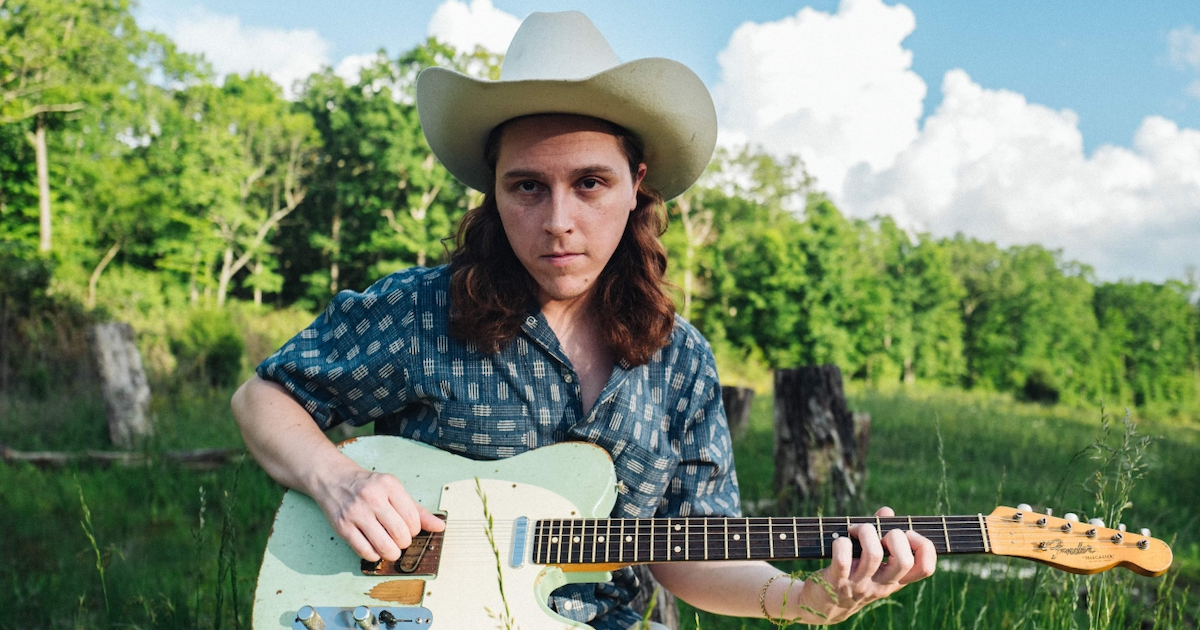
Daniel Donato Has Many Horizons in Sight, Literal and Metaphorical

Although names like Billy Strings and Sturgill Simpson currently corner the market at the intersection of country, jam bands, and bluegrass, rising star Daniel Donato has emerged in recent years with an out-of-this-world sound – and his newest project may be his best yet.

On Horizons (which released in August) the prodigy who as a child honed his skills on Guitar Hero and Nashville’s Lower Broadway turns a new page with an 11-song, hour-long compilation that brings his live and studio sounds together with drawn-out jams conjured up by his longtime bandmates from Cosmic Country – a moniker that describes both the group’s sonic and spiritual ethos.

“I want there to be a Cosmic Country sound where you can hear it right away, you can hear the first eight bars of any song and say, ‘That’s it!'” says Donato.

“Some of it is technical, like using the same microphones and the same studio as the last record. And some of it’s just in the way we approach it – and that’s something we get better at every time.”

Sitting on the back of his month-old tour bus affectionately referred to as “The Snowman” prior to a recent show in Lexington, Kentucky, Donato spoke to BGS about his Lower Broadway roots, creative freedom and restraints, and the catalysts for Cosmic Country.

We already touched upon your similarities with Billy Strings, but what about your parents’ influence – I know they played a big role in your musical foundation as well?

Daniel Donato: Everything when I was younger came from my parents. My father had a certain disposition for great rock and roll music like Pink Floyd, Stevie Ray Vaughan, and Led Zeppelin. But to be honest, I really don’t know where all of it comes from, because if you and I listen to a record we’re both going to hear it in different ways. For that reason I think a lot of this just comes from something that’s already dwelling within us and we’re just expressing from within that place.

For example, when I first heard Marty Robbins, I loved all the great guitar on it. And when I heard the Grateful Dead play “Big River” and make it eight minutes long in a really artistic and authentic way, I love that too. They’re all influences, but they start externally and creep inside you to the point that you take them with you everywhere you go and create from that place of soul, which is a combination of the body, the mind and the spirit.

Ever since I started playing guitar, I’ve always felt like I sounded like me and that “me” is constantly changing and revealing itself more and more. It’s like what Bob Dylan said – “I contain multitudes” – and it’s true. There are multitudes of self that just keep getting revealed through this authentic expression.

Was there a specific moment that served as the catalyst for you picking up the guitar and pursuing a career in music?

There have been many, but arguably the biggest was when I first saw the Don Kelley Band at Robert’s Western World and was in a state of shock – I’m getting goosebumps just thinking about it. That moment of hearing them and seeing how they interacted was amazing and was a big motivator in me wanting to do that too. It was a call to adventure and a reminder to believe I’m capable of anything, which is what ties all of these moments together.

That is not a self-assertive belief, that is a belief grounded in an authentic desire to make something beautiful so I can be of service. It was a big turning point in my life when I first started conceptualizing and receiving that, because then you can give it and then it turns into the cosmic circle of all things.

Some might perceive it as arrogance, but I think there’s a lot to be said for having the confidence to know what you’re doing is worthwhile and constantly chipping away to get better and reach your goals, whether that’s in a musical sense or wherever else life takes you.

I had already tried other forms of expression in my life before it, like sports. I also tried skateboarding and really loved video games like RuneScape, World of Warcraft, and chess. Even so, there were so many things I was bad at and I didn’t have beliefs that I could do them. But with music and the guitar, I could intuitively feel the potential I had with it and immediately locked in.

Artistry nowadays is parasocial on a lot of levels because of this immense amount of connectivity that we have on the various social platforms. [They] make it so anyone can get into the business of needing the world to give them permission to say something or express something real, when in reality the world does not need to give you permission for any of that. I’m not saying you should participate in any of the unspeakable, ungodly things we see happening to humans around the world, but if you want to express something artistically and you feel it’s true to you, then why should you need to get someone else’s approval to do that?

That idea to the mind is [like a] letter to the Pony Express – it needs to be delivered and it needs us to exist in flesh so we can externalize these internal values and expressions. It doesn’t need other people, it needs you, but at the same time it does bring people together – it’s so strange. It’s the thing that comes from most within an individual, but it’s also the thing that is the most unifying to an external community. It’s this weird “as above, so below” reflection that is purely righteous, so as I get older I feel I have more grace in relation to that particular part of existence.

The communal element seems to be a huge driving force behind not only your live show and fans, but this new record as well. Whereas some artists opt for a more straightforward studio approach, what made you want to emulate the energy from a gig on Horizons?

Cosmic Country records, to me, are like movies. The most enduring elements of certain movies that I love are the really long ones that have a very dynamic and rich storyline with a lot of drama and comedy in an attempt to scale the human experience. Like in A Fistful of Dollars, Django Unchained, or The Hateful Eight. The art is asking a lot of you during these three hour-long films, but it’ll give you a lot, too. There’s reciprocity there and our community is always willing to take the trip, which is equal parts liberating and terrifying. [Laughs]

If you were asked to write the score for a film, what would you want it to look like?

It would have to be a very truthful opportunity for me. I have always wanted to do that, even when I was really young. I always wondered where music and movies came from. But for now, we put out our records, and we play a lot of shows.

Speaking of the new album, you’ve been playing most of the songs on it live for a while now. What kept you from holding some or all of these songs back until the project’s official release, which it seems more and more singers are doing nowadays?

I like to look at our music as living music. It’s liberating in potential, but it’s also liberating because it gives you a framework to operate and create within. Every day of your life is different, so why wouldn’t the music that accommodates your life every day be different? These new songs are no different than a young child – they do better when they get to go out and be around people so they can grow spiritually.

That’s why it’s also important to share stories that everyone knows, which is why we incorporate a lot of covers into our shows and even recorded a volume called Cosmic Country & Western Songs in 2021. It gives people context and I love doing that. My favorite part of playing at Robert’s was we only played covers all those years so I’ve always loved making other’s songs my own – because if a song is good enough, you can play it with an original feeling.

But with Horizons every song I had my hand to the pen, even “Hangman’s Reel” – a traditional Celtic fiddle tune that the band and I fit into the Cosmic Country framework.

You’ve mentioned Robert’s Western World a couple times now. A couple weeks ago you returned there after making your headlining debut at the Ryman. What was that like?

We’ve done what’s never been done down on Broadway – going from cutting your teeth on the street corners and at places like Robert’s to topping a bill at the Ryman. It’s a common storyline for folks in Nashville to get their starts down here. Some go on to become songwriters, others become singers on stage and some become session musicians, but it all starts down on Broadway.

What I learned down there led me to getting in the door at Robert’s and leaving my blood and sweat on that floor there – like a dojo – before carrying us all the way to the Ryman. It was incredible getting to do a full headlining set up there and then going back home to where it all began at Robert’s and doing another set of music for their fans. We’re actually planning to release both soon as live recordings, so stay tuned!

With Horizons you placed parameters on how many times you’d go back to record and work on each song. With how open-ended so much of your creative process seems to be, what made you opt to place constraints there?

If your personality has a disposition for conscientiousness and open mindedness, it becomes that individual’s responsibility to see the trends of that because it can help optimize the way you engage with human relationships when creating projects. When we went and did Reflector we spent a lot of time on things we didn’t need to because I didn’t know better at the time.

When it came time to record Horizons I knew we could take half the amount of time to make it because we play it every night and shouldn’t need a bunch of tries to get it right. So I decided we’d just aim for three takes of a song to be more efficient. There’s a liberating faith that comes with knowing that’s good enough. If you know you have seven chances, you’re probably going to take seven – but we’re trying to work to ensure it only takes one.

You were talking earlier about creating living music, and stuff like this seems like it helps to keep what you do in the studio just as fresh as what you’re doing out on the road.

They’re two very different things. One’s a picture of a person and the other one’s a person. A picture can do a lot, but it’s not that person, especially when it comes to thinking about a picture of someone that you love who is no longer alive. Even then it’s not the same as them being in the room with you again to hug you.

For instance, I know that there will be a day where I have a gig and I won’t be able to call my dad to debrief – that’s gonna be a tough one. So the live thing is almost like a conveyor belt trying to make it an exact replica of what’s going on on the albums. There are people I see do that and I really respect how they do it because it’s authentic to them, but it was never for me.

How did your approach to bringing Horizons to life differ from how you tackled Reflector and other projects previously?

We had two years of intense experience constantly working on these songs between albums. It made me a different person on some level because I had a better idea of what to aim for and what not to aim that really allowed us to hit the bullseye this time compared to Reflector. And I’ll probably be saying the same thing again when the next record comes around, which will be a lot different than Horizons.

You just alluded to going a different direction with your next album. Someone else known for that who I know has heavily impacted your musical trajectory is Sturgill Simpson. How’d you get sent down the rabbit hole of his music?

Man, I remember when Sturgill Simpson worked at the Turnip Truck in the Gulch in Nashville, I would always see him there and thought nothing of it until one night when I was at The 5 Spot and heard him on stage singing for the first time. Then when Metamodern Sounds In Country Music came out I was in my friend Harrison’s basement. We had gone to Grimey’s to buy the record, we smoked some weed, turned it on, and listened with headphones on. It was and still is a defining moment in my listening experience of music – that record is so special.

Looking back I can see why Sturgill wanted to make a bunch of 180s, because from SOUND & FURY to Sailor’s Guide each album is its own thing. Most successful artists have one signature piece of work, like Tyler Childers’ Purgatory, Chris Stapleton’s Traveller, Tom Petty’s Wildflowers, the Grateful Dead’s Workingman’s Dead, or Neil Young’s Harvest. Unless you’re someone like Bob Dylan or Willie Nelson where you have over 100 albums out. There’s usually one record where you’re like, “that’s the one.” With cosmic country we don’t have that album yet, but I think Horizons could be it.

What has the process of bringing Horizons to life taught you about yourself?

The concept of a Horizons is two-fold. There’s a literal, geographical, physical, material horizon where the land meets the heavens. Then there’s the metaphorical one, and we’re always pushing the cosmic country horizon. But there’s also a psychological horizon where you’re meeting your potential that the sky is symbolic of.

As Alan Watts would say, “there’s a dance to those things,” and I feel that since we put out Horizons that the band and I are on the verge of new horizons. It truly is the dawn of a new day.


Photo Credit: Jason Stoltzfus

MIXTAPE: Daniel Donato’s Cosmic Country

It is a tale as old as time itself. As above so below. Yin and Yang. The explored and the unexplored. The hero’s journey, any and all of them, are exposed to the eternally enduring dance of chaos and order. We must leave the garden, enter into the forest to find the gold, kill the dragon, and return back to where we began, returning back more harmonized, realized, and higher frequency than we began.

Musically, Cosmic Country takes this pattern and uses it as its sole fuel for the soul and all of its musical fruits. Cosmic Country is an approach that uses simplicity, complexity, and truth to tell stories of life that bring beauty and goodness into reality. This 9-track mixtape I have assembled for your enjoyment and exploration today covers some ground of the far-flung lands of music that is Cosmic Country, where the high frequencies fall like rain and blossom like lilies in the fields that never end nor never began. Let’s get Cosmic. – Daniel Donato

“Honky Tonk Night Time Man” – Merle Haggard

This is a country song. But just like any country, there is more nuance to be discovered and brought to light than meets the eye. This is an archetypal honky-tonk song. A few of these will be on here. Honky-tonk songs cover truthful states of life that apply to all of our brothers and sisters sojourning in space and time together down on this chaotic planet. This song talks about relief from the grind and finally getting around to what is right for the soul when quittin’ time comes around.

“Doggone Cowboy” – Marty Robbins

This is also a country song, but it is also more nuanced than that. This is a cowboy song. The cowboy is one of the great American archetypes. The cowboy embraces a life of service, hard work, endurance, adventure, and most enduringly, faith. It takes faith to stay patient and persistent in pursuing your work through realms of chaos that you must travel through and come out on the other side stronger than you did prior. Marty had a way of personifying sorrow, acceptance, reflection, and hope in his delivery of these transcendant, simple lyrics.

“Mystery Train” – Jerry Reed

It can’t be fully Cosmic Country unless it moves you. Internally, songs move us, but sometimes the pocket and groove move us externally, which is a brilliant expression of personality. What I love about this song is that Jerry Reed always had a vision in his mind that could create a groove for people to dance to and for players to have fun-expression in. Everyone knows “Mystery Train,” but this version can make any club, honky tonk, theatre, or arena dance and move all together. Bonus points for a train song. Everyone loves a train song.

“Everybody’s Talkin’” – Harry Nilsson

The bottomline is that we are on our own trip. It is an individual experience of life, personality, and dynamics that only you experience. No one will ever live your life for you or as you. Songs that find promise and truthful reflection on the truly individualized nature of existence are my favorite. The movie Midnight Cowboy turned me onto this song when I was 16. I’ve never wished I had written another song as much as this American classic.

“I Can’t Help It (If I’m Still In Love With You)” – Hank Williams

The Shakespeare of country music. The man who was able to take the power of the word – through a Western lens of faith, hardship, and hard living – and deliver to us some of the most truthful and beautiful songs composed of themes ranging from love, loss, religious experience, jail time, honky tonkin’, and the universe. This song specifically has a brilliant form to it, just one verse and two B sections, coupled with that classic lap steel signature sound from Don Helms.

“Waiting for a Train” – Jimmie Rodgers

Any storyteller of American songs, country songs, any songs based in truth and experience, must tip their “Slouch Hat” to Jimmie Rodgers in one way or another. A lot of everything country begins with the songbook of Jimmie Rodgers. This song is just a fantastic story through and through. The lyrical furniture, the sophisticated use of actual terms of water tanks, brakemen, boxcar doors, all bring the listener into the simulated reality that this song conjures.

“Long Black Veil” – Lefty Frizzell

Murder songs are a necessity. The reaper takes his toll, and with that, law and order speak their truth. One of the brilliant elements of this song is that the perspective is from the deceased character. That is innately Cosmic, especially given the window of time this song was released. Lefty was one of Merle’s favorite vocalists, and was the band leader with which Roy Nichols and Merle Haggard first played together when Merle was 16.

“You Ain’t Goin’ Nowhere” – The Byrds

Even though Bob Dylan penned this one on the side of the road, in the rain, waiting for a motorcycle fix, The Byrds – with Gram Parsons and Clarence White – deliver to us one of the most archetypal Cosmic Country recordings there will ever be. The instrumentation, the vocal melody, and harmonies on this song alone explain this sentiment, but the lyrical detail is another universe worth noting with great reverence. The olden language of the great folk songs of America inform the meter and colloquialisms in this song, giving it an ability to exist in the past through its roots, the present through its great orchestration and arrangement, and the future through its seeds of truth, beauty, and goodness – the only values in any creation that endow it to persist through the fleeting episodes of space and time.

“Truck Drivin’ Man” – Buck Owens

If I left out truck driving songs, then everybody from my time at Robert’s Western World would be ashamed of me. The truck driver is a minister of the highways, the great vehicle of true exploration and discovery. The eternal, long white line drags on and on, and the road songs of her fruits just keep coming, but some of the great ones came from Capitol Records in L.A. in the early ’60s.

An element of Cosmic Country that this song relates to is the overall “sound.” What is “the sound?” It is ultimately unqualifiable – it cannot be fully explained or qualified by words – especially when The Sound is doing what it can be doing in potential, which is rendering feelings that hit deeper than words can describe. With the Transcendant Twang of Don Rich’s Telecaster, the immensely clean and powerfully compressed sound of Mickey Cantu’s snare drum, along with that Tic-Tac Fender Bass playing, Buck Owen’s vocal and story rests upon a divinely simple and reverberated landscape of country gold. If there ever was a record that “sounds” like a country song, this one certainly qualifies.


Photo Credit: Jason Stoltzfus

A Minute in Nashville with Chuck Mead

“I have a lot of people ask me, ‘Where do I go when I come to Nashville?’ and my answer is always, ‘Well, what are you into? Music? Food? Underground sex scene?’ I don’t know much about that last one there, but there sure is a lot to do in Nashville these days. Top-notch dining, a bunch of clubs and bars, and spectacular musicians of all types.” – Chuck Mead

https://www.instagram.com/p/ByyyGAIpkoN/?utm_source=ig_web_copy_link

Lower Broadway
You have to see Lower Broadway at least once during your visit. This is where honky tonks line both sides of the street and the people and music spill out onto the sidewalks. Robert’s Western World is the must-stop on the street. It’s my old stomping grounds where my old band BR5-49 got our start. Traditional honky tonk played the way it’s supposed to be — with heart. Layla’s next door is an excellent place to be as well.


https://www.instagram.com/p/By0V1Fuga-d/?utm_source=ig_web_copy_link

Ryman Auditorium
These honky tonks are all in the shadow of the Mother Church of Country Music, the Ryman Auditorium — another must-see downtown. And while you’re in that neck of the woods, see The Country Music Hall of Fame and Museum, where you can follow the progression of country music from the beginning right up to today’s stars.


https://www.instagram.com/p/Bxfqe7Njrxm/?utm_source=ig_web_copy_link

Honky Tonk Tuesday at American Legion Post 82
If you’re around on a Tuesday night, go to the American Legion Post 82. Just driving into the parking lot takes you to another world. Make your donation at the door (unless you’re a veteran), grab a nice cold, cheap beer, go dance your ass off to some really fantastic old school country music, and don’t forget to tip the band!


https://www.instagram.com/p/BxGDgXKHDJa/?utm_source=ig_web_copy_link

The Grand Ole Opry
It pretty much goes without saying that if you come to Nashville, a visit to the Grand Ole Opry should be on the itinerary. It’s the show that made country music.


https://www.instagram.com/p/Bmy9wCfgmhe/?utm_source=ig_web_copy_link
Third Man Records
But it’s not all hillbilly music – there’s Jack White’s Third Man Records for a killer record store experience and it’s always great to go see Thee Rock n Roll Residency at the Mercy Lounge whenever they’re in town.


https://www.instagram.com/p/BrnQWU5AT6y/?utm_source=ig_web_copy_link
Bolton’s Spicy Chicken & Fish
Nashville is pretty famous, food-wise, for its hot chicken. There are a few ways to go — Prince’s is the original and is great of course (if you order the hot – you have a stronger constitution than me.) But my favorite hot chicken in town is Bolton’s. I suggest a taste test!


https://www.instagram.com/p/BybYlmwhmn0/?utm_source=ig_web_copy_link
Margot Cafe
If you’re looking for a world-class dining experience, may I suggest Margot Cafe in Five Points in East Nashville. Margot serves up fancy French-type food combined with down-home Southern heart; fresh, local cuisine with a menu that changes all the time, and a terrific bar as well.


https://www.instagram.com/p/Bxsio3xDn7V/?utm_source=ig_web_copy_link
Mas Tacos
Also on the Eastside is Mas Tacos. This is my go-to place for times when I say to myself, “Man, I sure could use some more tacos.” Great food. Great vibe. Groovy courtyard.


https://www.instagram.com/p/Byq_mFsAwYK/?utm_source=ig_web_copy_link

Here are other places I recommend: Grimey’s Record Store (made by record people for record people); The Basement and The Basement East – always a variety of different kinds of great live music both places; Germantown Cafe, fresh and modern American cuisine; First Tennessee Park, right across the street, where you can take in a Nashville Sounds baseball game (if it’s in season, of course); and many others you can look up on your phone yourself. Check out the music listings and see if I’m playing anywhere. If you see me, say “Hey!”


Photo credit: Joshua Black Wilkins