Traveler: Your Guide to San Antonio

San Antonio is a multicultural city with a rich history and vibrant art culture. A museum goer’s dream, the second largest city in Texas is packed with evolving and impressive museums and galleries galore. San Antonio’s music scene attracts outlaws, the art scene attracts Picassos, and the culinary scene attracts Mexican food perfectionists. Plus, who wouldn’t want to go to the city which holds a world record in tamale making?

Getting There
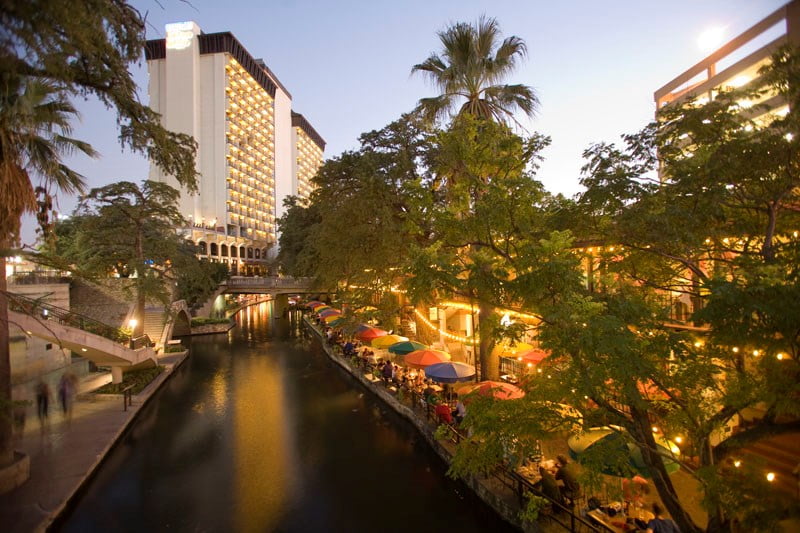
River Walk at Dusk. Photo credit: Tim Thompson

Located in south central Texas, San Antonio is nearly nestled against the Mexican border. San Antonio International Airport (SAT) is located northeast of San Antonio proper, offering plenty of nonstop flights in and out daily. If you want to tack onto a trip to Austin or Houston, San Antonio is a one- or three-hour drive, respectively.

Where to Stay
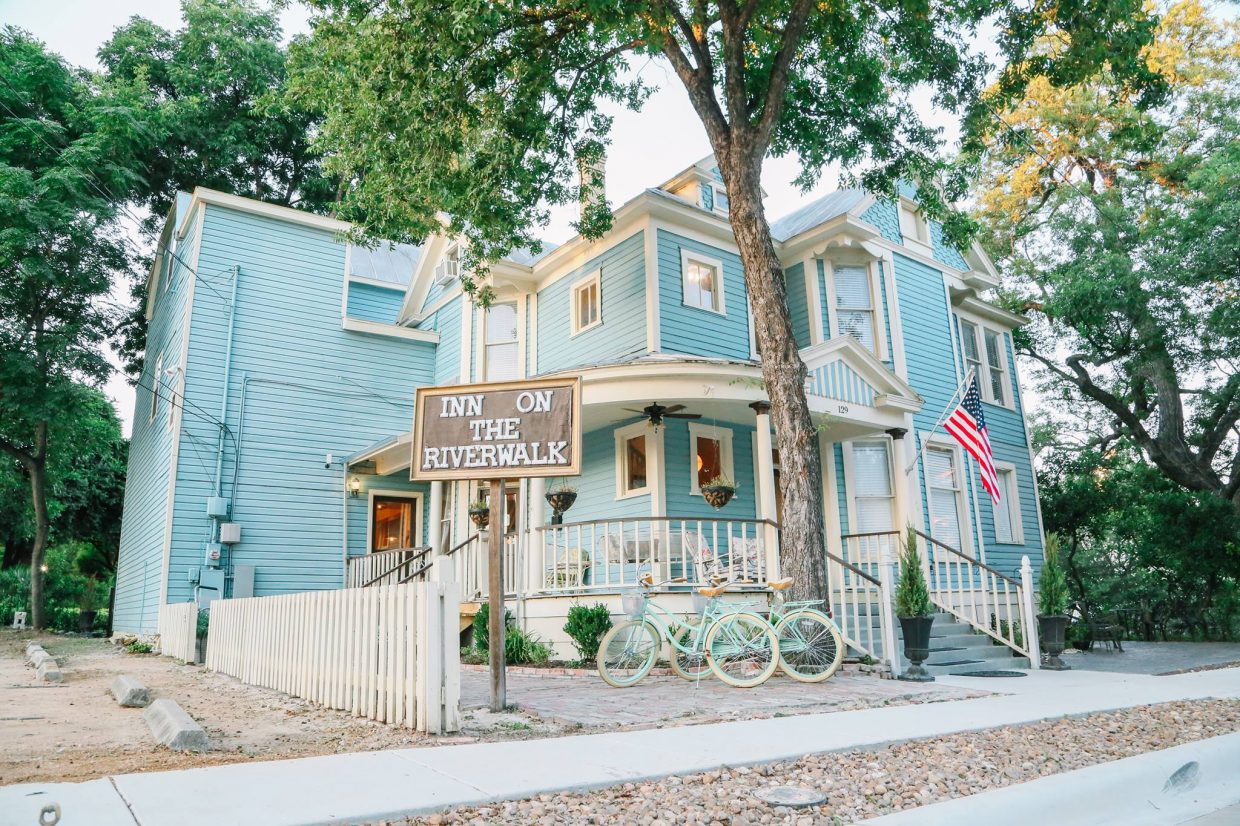
Inn on the River Walk

The Inn on the River Walk is a classic bed & breakfast, sprawling throughout three 1900s homes along the famous River Walk, while Hotel Havana is a boutique hotel overlooking the River Walk with a noteworthy bar called Ocho. There are plenty of affordable Airbnb options, too. Stick to looking in the downtown and River Walk areas, East San Antonio, Alamo Heights, and the King Williams Historic District for staying in lively areas.
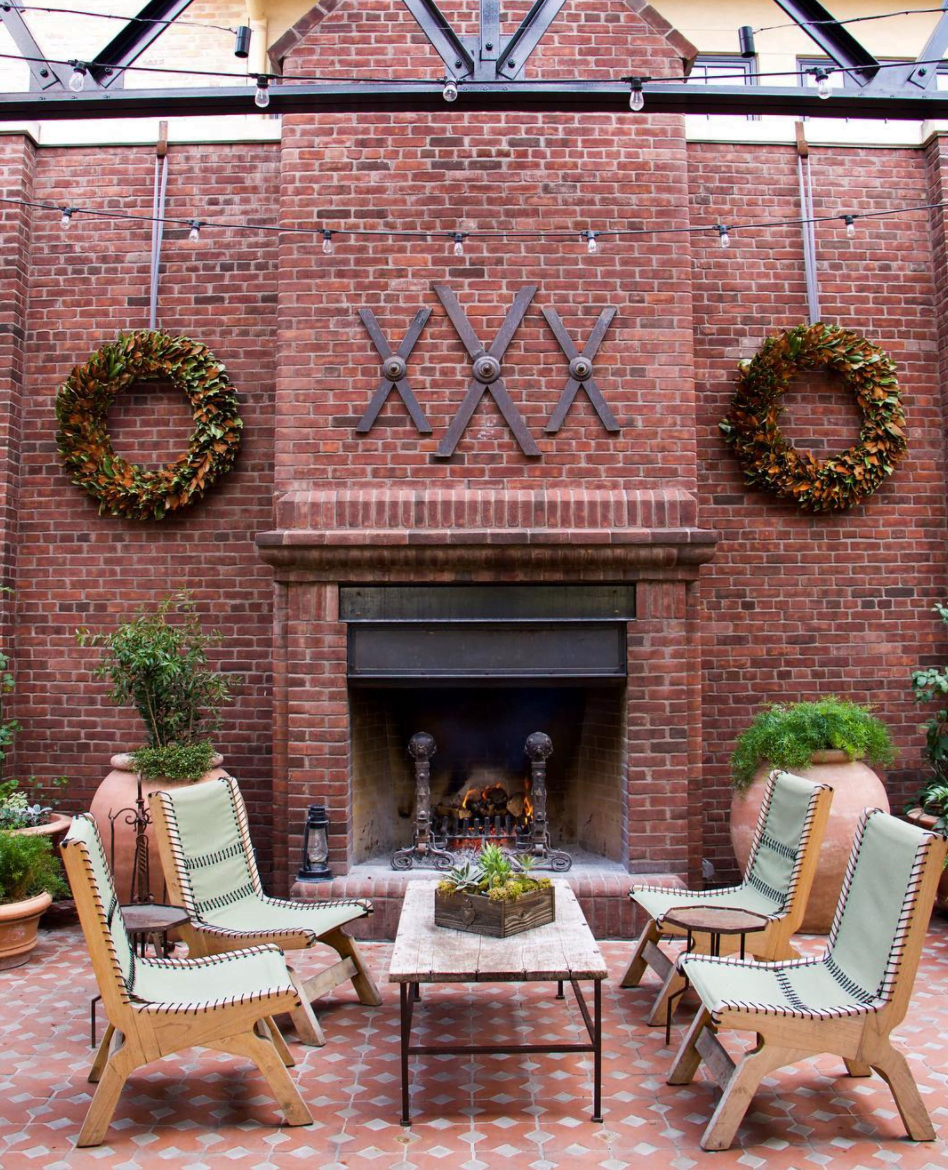
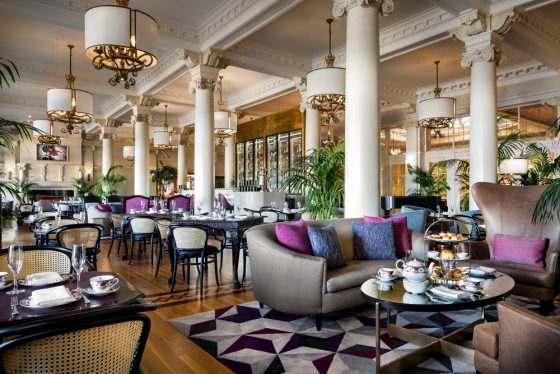
The Hotel Emma

The Hotel Emma is a destination in and of itself because of its unique trappings and in-house upscale restaurants. It’s worth a meal just to peep the decor inside.

What to Do
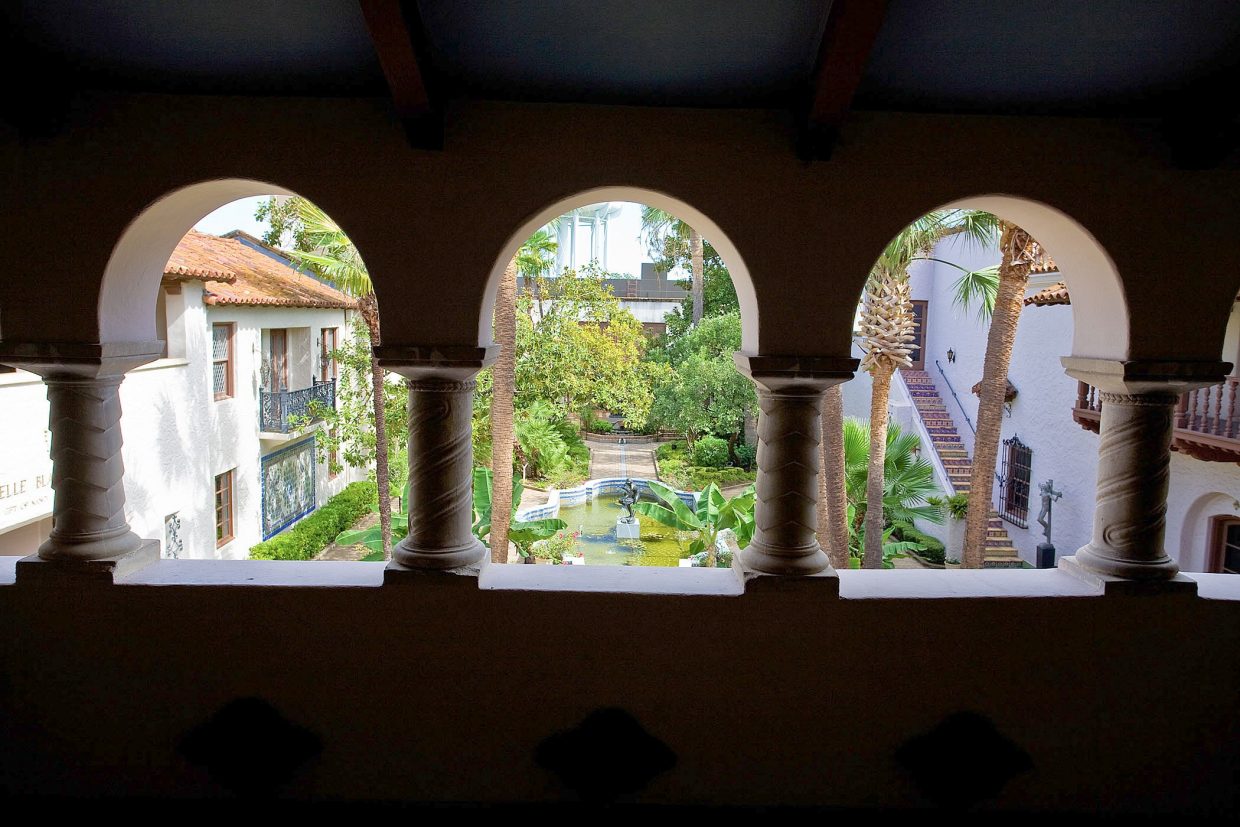
McNay museum. 

San Antonio is museum central. Everything from Picassos to O’Keeffes reside in the McNay, a world-class modern art museum with more than 20,000 works. The Witte Museum is an interactive science-meets-nature-meets-culture experience, and the brand new DoSeum Children’s Museum features STEM-centric, hands-on exhibits for kids like Spy Academy and Sensations Studio.
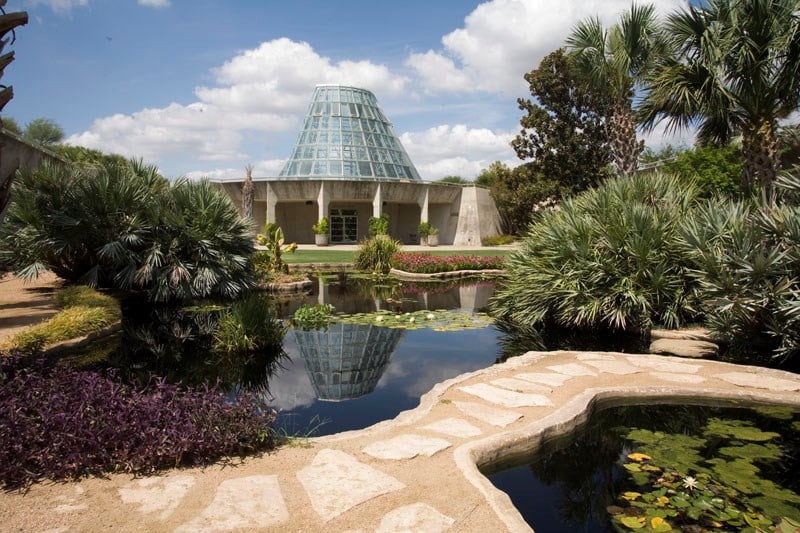
Botanical Garden. Photo credit: visitsanantonio.com

Freshly renovated, the San Antonio Botanical Garden includes a family garden, Texas Native Trail, bird watching opportunities, and a tropics-heavy conservatory.
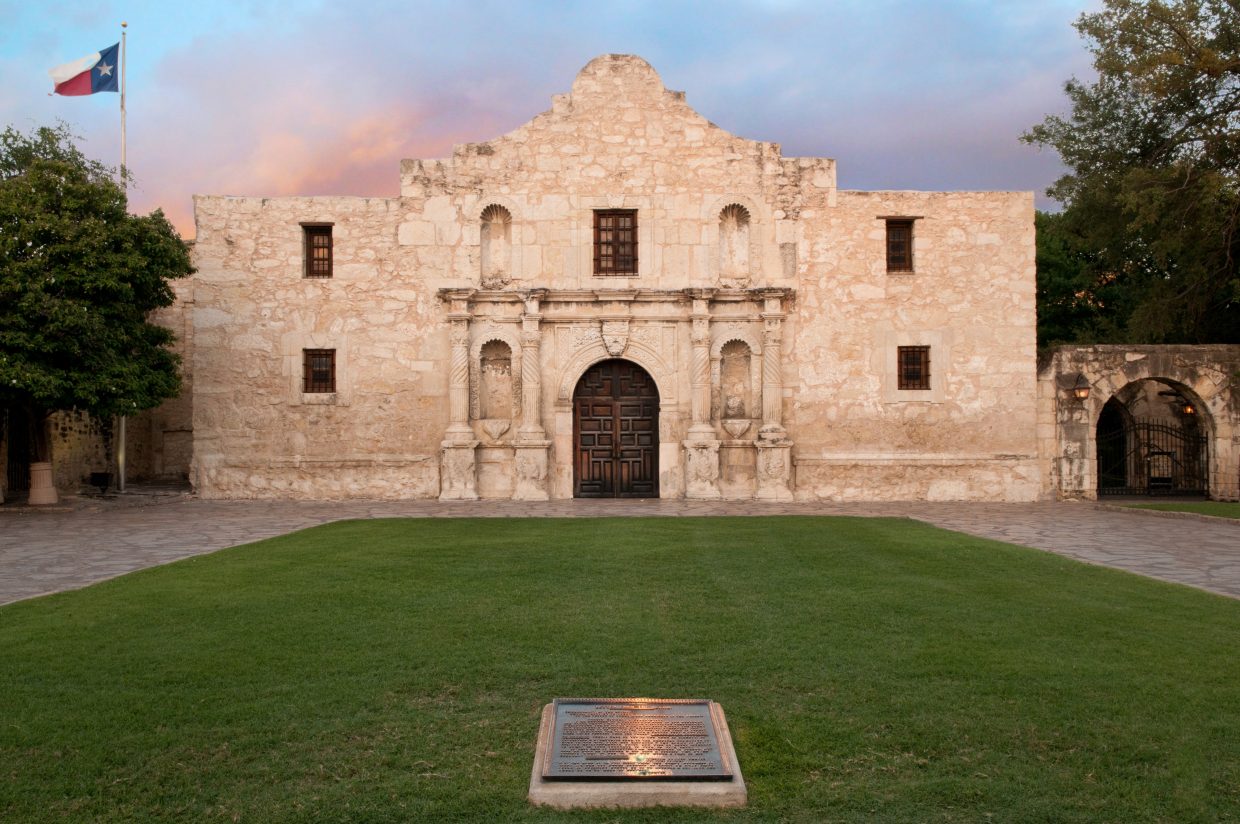
The Alamo. Photo credit: visitsanantonio.com

Though San Antonio is a history nerd’s playground, the Alamo is a given stop on any traveler’s itinerary. Originally established as a one of the early Spanish missions in Texas, the fortress has had many uses and is now preserved as a UNESCO World Heritage Site. It’s free and spans four acres, so it’ll take a few hours to cover the grounds. San Antonio Missions National Historical Park is home to four of the city’s five Spanish missions — outposts that date back to the 17th century.

Under construction and opening in 2019 is Ruby City, a contemporary art center designed by Sir David Adjaye — the same architect who designed the Museum of African-American History and Culture in Washington, DC.

If you like your learning with a side of live music, check out Jazz, TX at Pearl, Paper Tiger, and Willie Nelson’s Luck Reunion fest every March.

Eats & Drinks
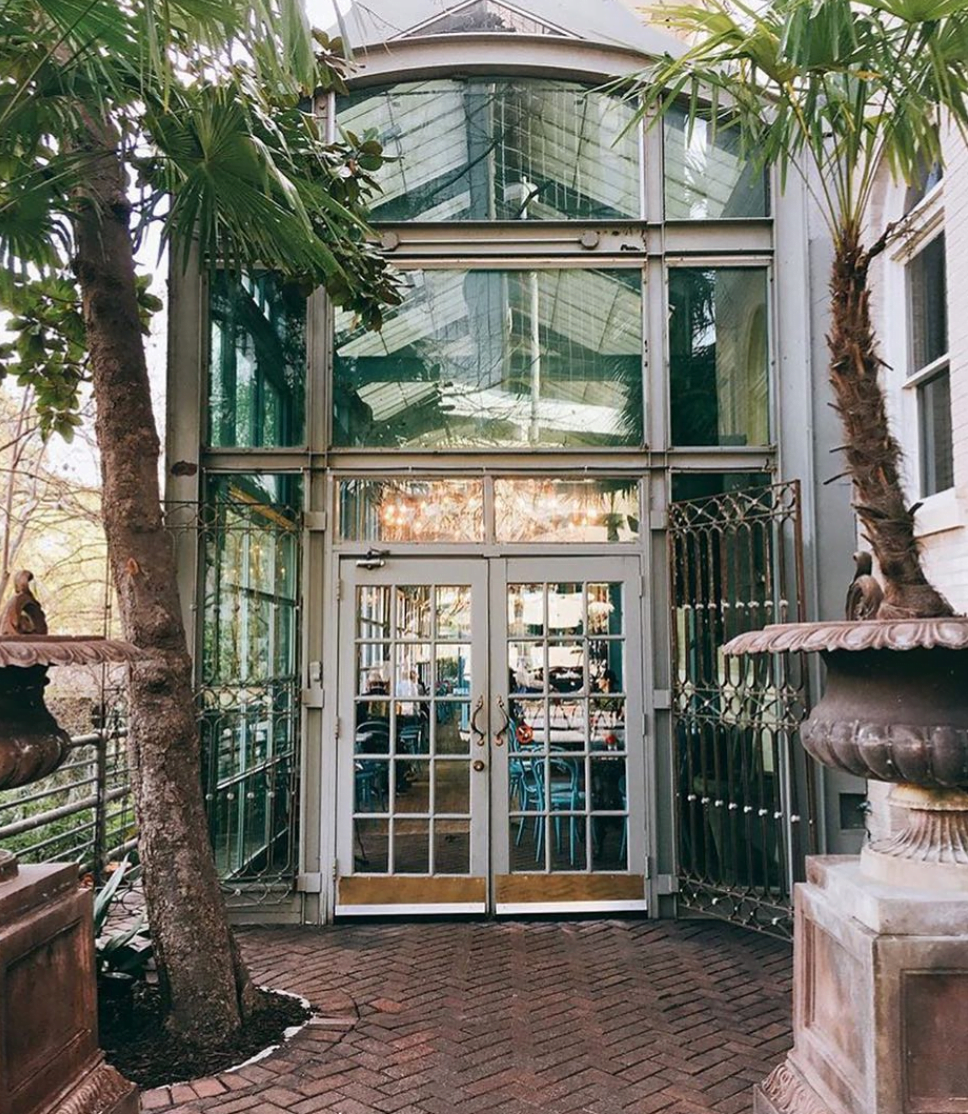
Hotel Havana

With more than 1,000 Mexican restaurants, authentic Texas BBQ, and international cuisine from every corner of the world, San Antonio’s culinary scene is robust. The Pearl District and Southtown are restaurant-rich parts of town where you can point to pretty much any spot on the map and strike gold. Grab a drink at Ocho (in Hotel Havana), and you’ll be situated in a glass conservatory overlooking the River Walk sipping locally inspired cocktails.
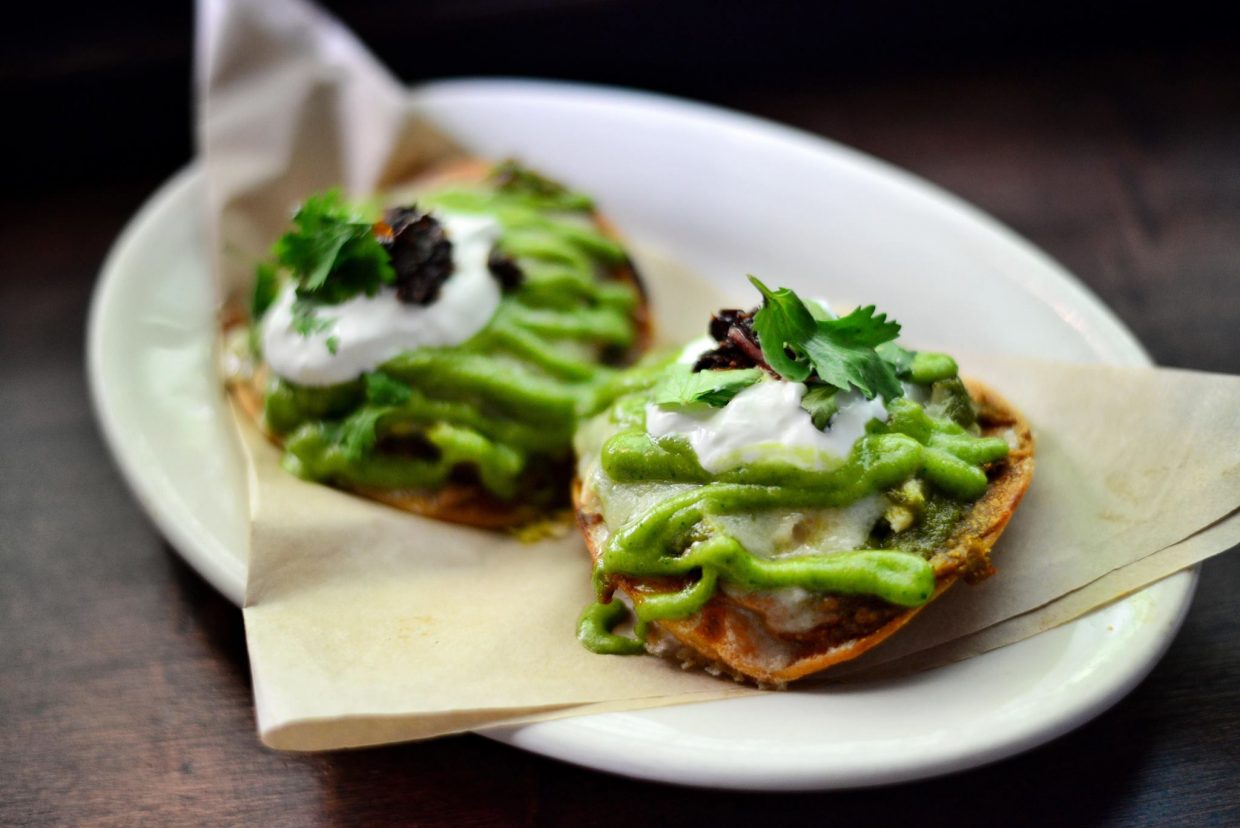
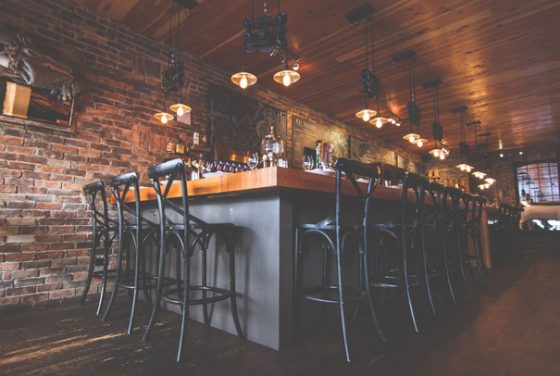
The Esquire Tavern

The Esquire Tavern is a James Beard-nominated bar with the longest wooden bar top in Texas. Its vibe is informed by the year it opened — 1933. Don’t miss their smoky, chimichurri-doused chalupitas.

Breakfast options include Bakery Lorraine, which moved from the San Francisco area to the Pearl in San Antonio and offers renowned tarts and macaroons. Chef Johnny Hernandez is a local celeb and his Frutería-Botanero will prove why. This Southtown gem serves fresh-pressed juices and smoothies by day and transforms into a Mexican-style small plate bar by night. If you’re feeling a good ole’ American meal of BBQ & beer, hit up the Granary.

Luck Reunion Tips
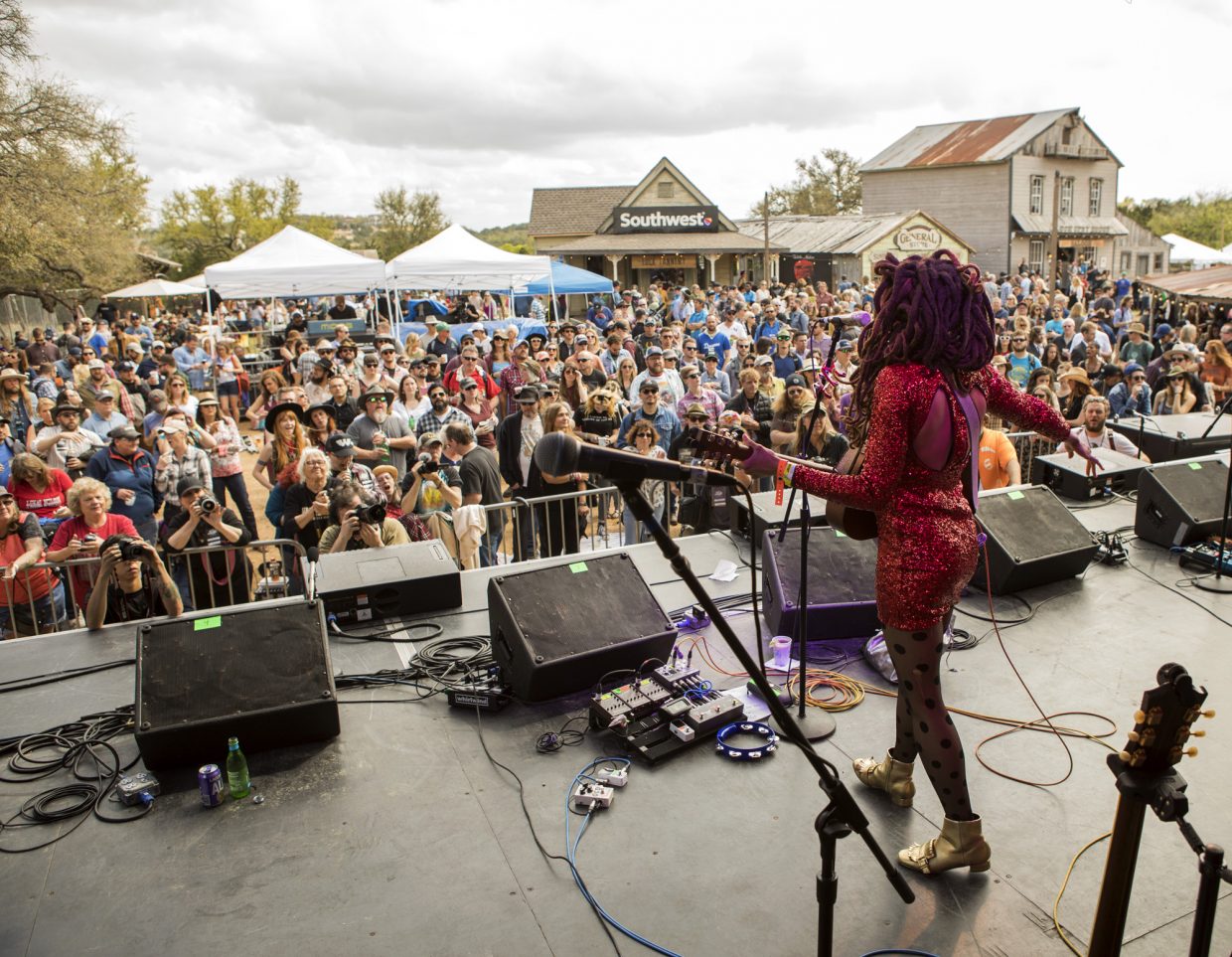
Valerie June at Luck Reunion. Photo credit: Nathan Poppe

An hour-and-a-half north of San Antonio, musical outlaws gather every March among the fading movie set facades for a musical reunion. Luck Reunion was originally Willie Nelson’s brainchild, beginning on his ranch in Luck, Texas.

Sure, the Reunion’s lineup is stacked with big names, but the fest is equally as dedicated to encouraging music fans to experience rising acts who are doing it all on their own terms. The festival organizers program the early slots to be filled with the artists they believe will be the next crop of rogue music legends.

The Nelson family’s cardinal rule is “Don’t be an asshole,” and that rings true during the festival. Don’t take the historic property, the people you’re surrounded by, or the music for granted while you’re (literally) in Luck. And, no, that is not a skunk you smell.
Traveler: Your Guide to Bellevue, WA

Bellevue, Washington, is a quick commute outside of Seattle and a gateway to the beauty of the Puget Sound region. With a compact and walkable downtown, Bellevue is a culture-filled day trip for when you have an extra day in the Seattle area or want to soak up a rich bluegrass fest. The 25-year-old Wintergrass Music Festival is a compelling reason to plan a trip to Bellevue every February, boasting OG bluegrassers like Del McCoury, the Seldom Scene, and Peter Rowan.

Getting There

Just nine miles south of Seattle, Bellevue offers a quick getaway from big city life. Take a half-hour bus ride or drive from Seattle to reach Bellevue. The Seattle-Tacoma airport is a 16-mile drive from Bellevue, making Bellevue and Seattle a convenient two-for-one trip. Once in Bellevue, you won’t need a car much because the city is quite walkable, unless you want to venture to nearby attractions.

Where to Stay

Wintergrass festival-goers will want to stay at the Hyatt Regency Bellevue, since it’s centrally located downtown and close to the music. Silver Cloud Inn Bellevue is also walking distance to the festival and a more budget-friendly basecamp, offering discounts to Wintergrass attendees. For a more boutique hotel experience, the Europe-inspired AC Hotel’s design marries modern with classic, serving a hearty European-style breakfast each morning.

What to Do

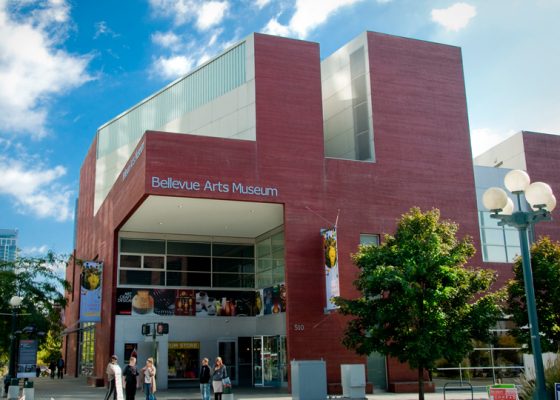
Bellevue Arts Museum. Photo credit: Scott Harder.

The Bellevue Arts Museum is nationally renowned for their art, craft, and design. The museum started from an art fair in the 1940s and has become a staple in the city. During Wintergrass 2018, the museum welcomes a Pakistan-born artist named Humaira Abid, well-known for her symbolically rich wood sculptures and mini paintings.

Woodinville Wine Country. Photo credit: Novelty Hill Januik Winer.

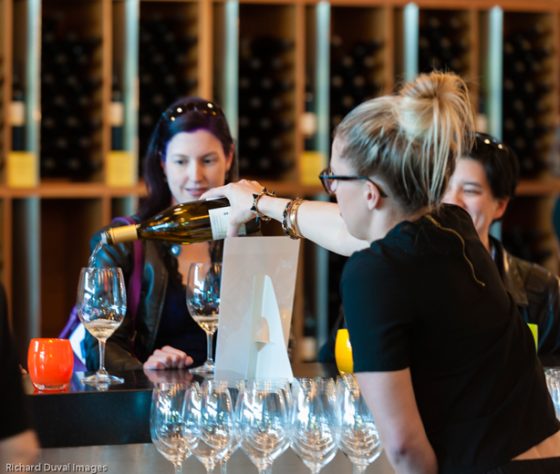
Woodinville Wine Country’s climate is ripe for grapes, boasting more than 115 wineries and tasting rooms. It’s a quick drive from Bellevue into the scenic valley of Woodinville, and it’s not just for wine lovers: Their microbreweries, distilleries, cideries, and robust farm-to-table scene are all impressive.


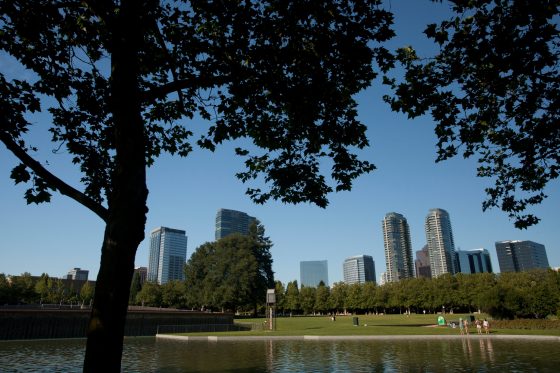
Bellevue Skyline. Photo credit: Visit Bellevue Washington by Merrill Images.

Bellevue Downtown Park is a 21-acre green space in the heart of downtown along with Inspiration Playground. Pit stops at Third Culture Coffee, a globally influenced coffee and tea shop, are encouraged. Try their Mexican or Vietnamese Coffee.

The 36-acre Bellevue Botanical Garden is stunning, featuring a rhododendron glen, Japanese Yao garden, and a stone garden, plus admission is free.

We recommend the punny Puget Sounds record shop and Silver Platters for your vinyl fix. Bake’s Place is Bellevue’s answer to “dinner and a show,” and the Showbox hosts gigs by indie rockers to singer/songwriters to country artists and more.

Eats and Drinks

The Lakehouse Bellevue

Bellevue is quickly becoming a foodie hotspot, drawing award-winning talent to the scene, like James Beard Award winner Chef Jason Wilson’s the Lakehouse. Japonessa fuses Japanese and Latin American flavors and is known for their extensive happy hour and traditional sushi. Locals love Lot No. 3 where the cocktail and spirits program has been recognized as one of the strongest in the Puget Sound. For breakfast goods, head to Belle Pastry on Main Street for exceptional French croissants.

Wintergrass Tips

Wintergrass originated in Tacoma and has made its home Bellevue for nearly 10 years. Home to many IBMA- and Grammy Award-winning artists, the festival takes place in the Hyatt Hotel every February and offers 70+ performances throughout the weekend. Always have your instrument on you for the various, spontaneous jam session which break out at any given moment. Don’t overlook the educational component at this fest, because who knows when you’ll be able to learn to clog at a music festival.

Ballrooms and bars in the Hyatt are turned into venues, making seating at popular shows competitive. Don’t feel pressured to buy food and drinks at bars while watching shows, which has been a point of contention in the past. The festival is laid out nicely indoors — so you barely have to leave — and the surrounding restaurants are easily walkable.


Lede: Lede Photo courtesy of Visit Bellevue Washington, by Merrill Images

A Minute In East Kent with Will Varley

Welcome to “A Minute In …” — a BGS feature that turns our favorite artists into hometown reporters. In our latest column, Will Varley takes us through his hometown of East Kent along the southeastern coast of England.

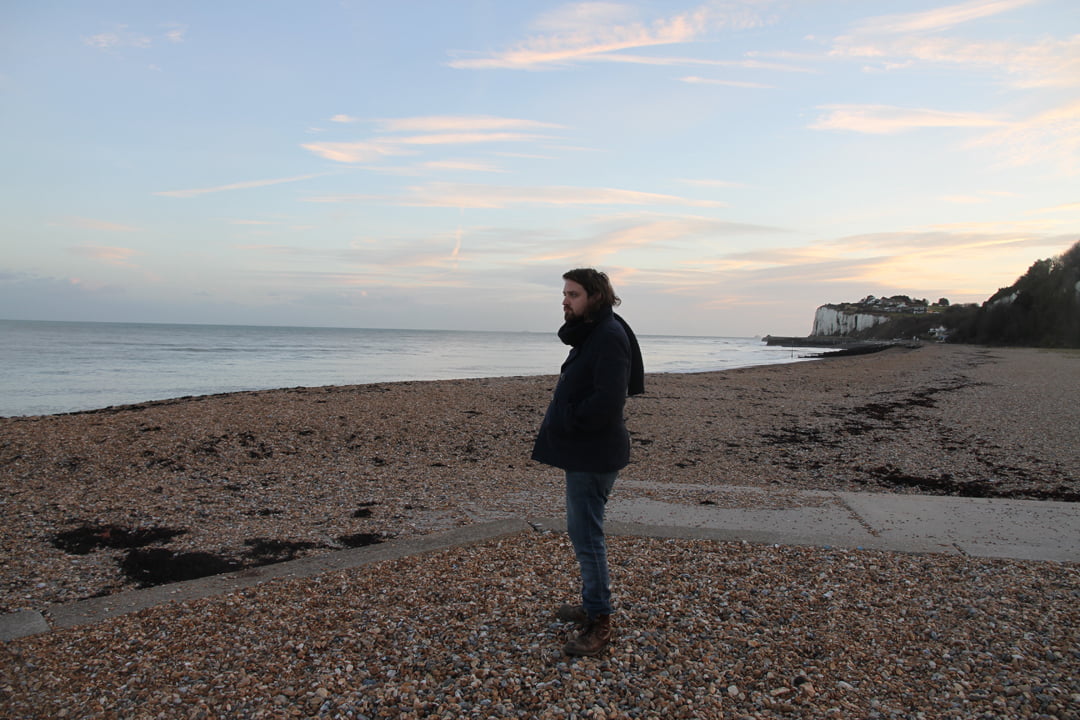
Kingsdown Beach: On the south coast of England, if you follow the white cliffs six or seven miles east from Dover, eventually they come down at Kingsdown Beach — and that’s where I live. It’s usually pretty windswept out there, except for a few days in the summer and, apart from the occasional fisherman, you can often have the whole stretch to yourself. There’s something particular about the light in this part of the world, and for me, there’s nothing better than sitting outside on a blustery day and watching a storm blow in from France over a little glass of Guinness.

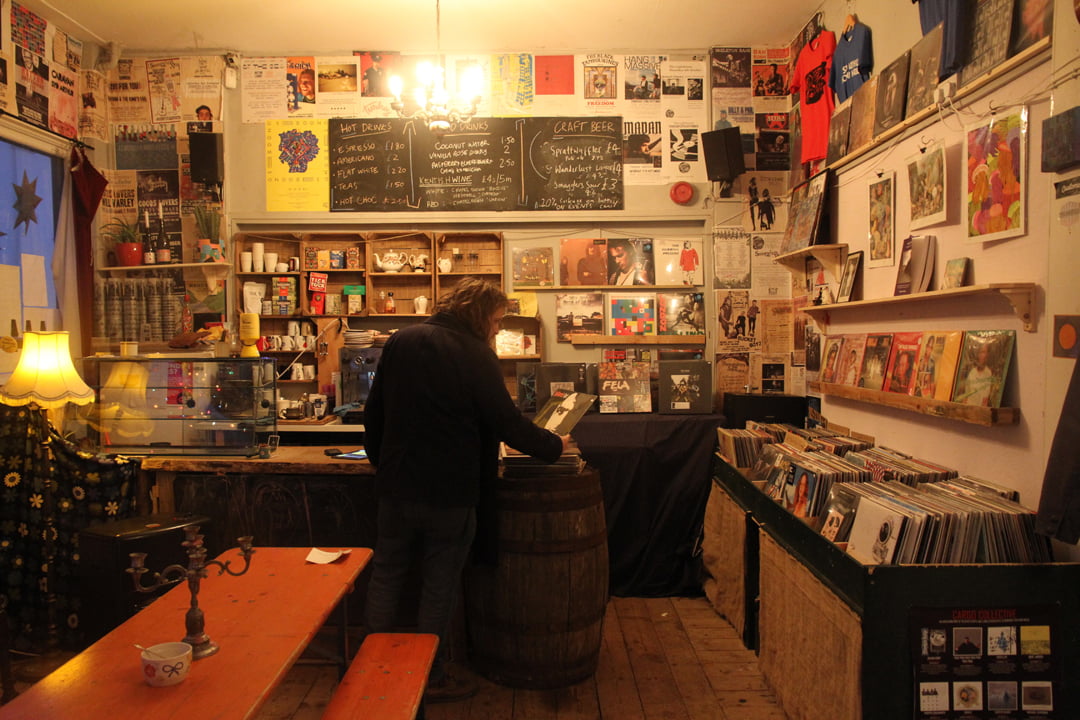
Smugglers Records: Forty minutes walk along the beach is the town of Deal. Despite Charles Dickens once describing it as having “as dull an appearance as any place I ever saw,” I think it’s a handsome place, littered with Georgian cottages and perched right on the coast of the English Channel. Just off the high street, you’ll find Smugglers Records — a fantastic local record store that also has a great selection of tipples and snacks. A mighty fine place to browse some vinyl while sampling a light ale.

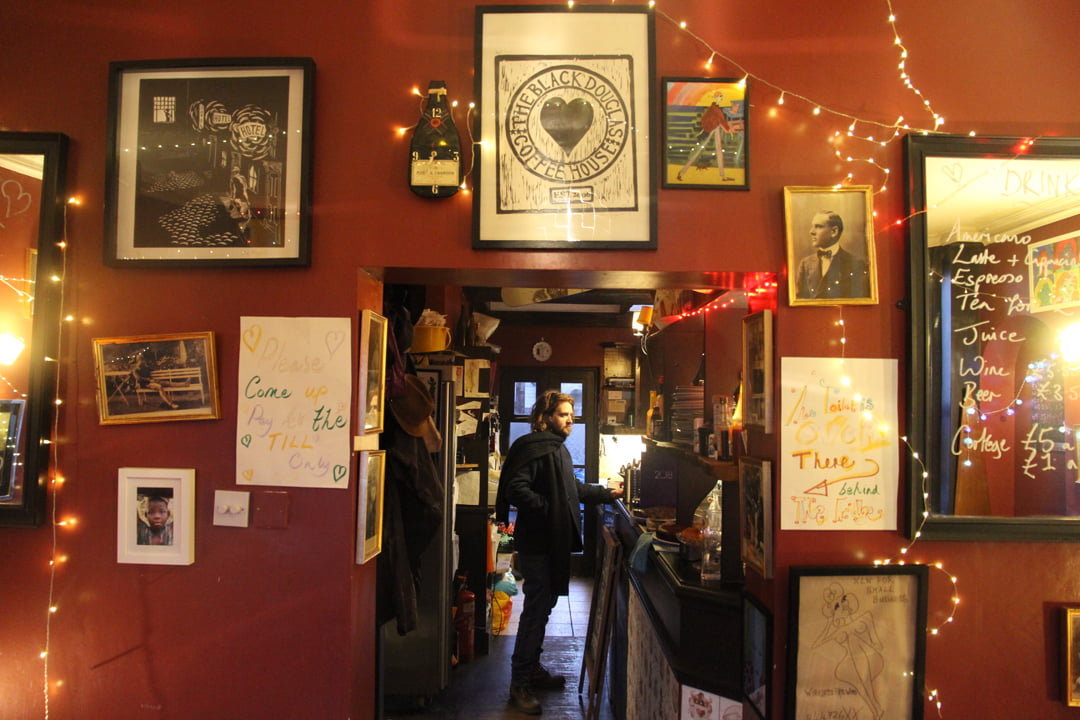
The Black Douglas Coffee House: After picking up a 12-inch or two at the record store, head around the corner to the Black Douglas. It’s a beautiful and fiercely independent café, the perfect place to get lost in a book or eavesdrop on someone else’s conversation with a mug of coffee at your side. There’s a relaxed, lazy vibe that is contagious enough to mean it might well be getting dark by the time you stumble out the door.

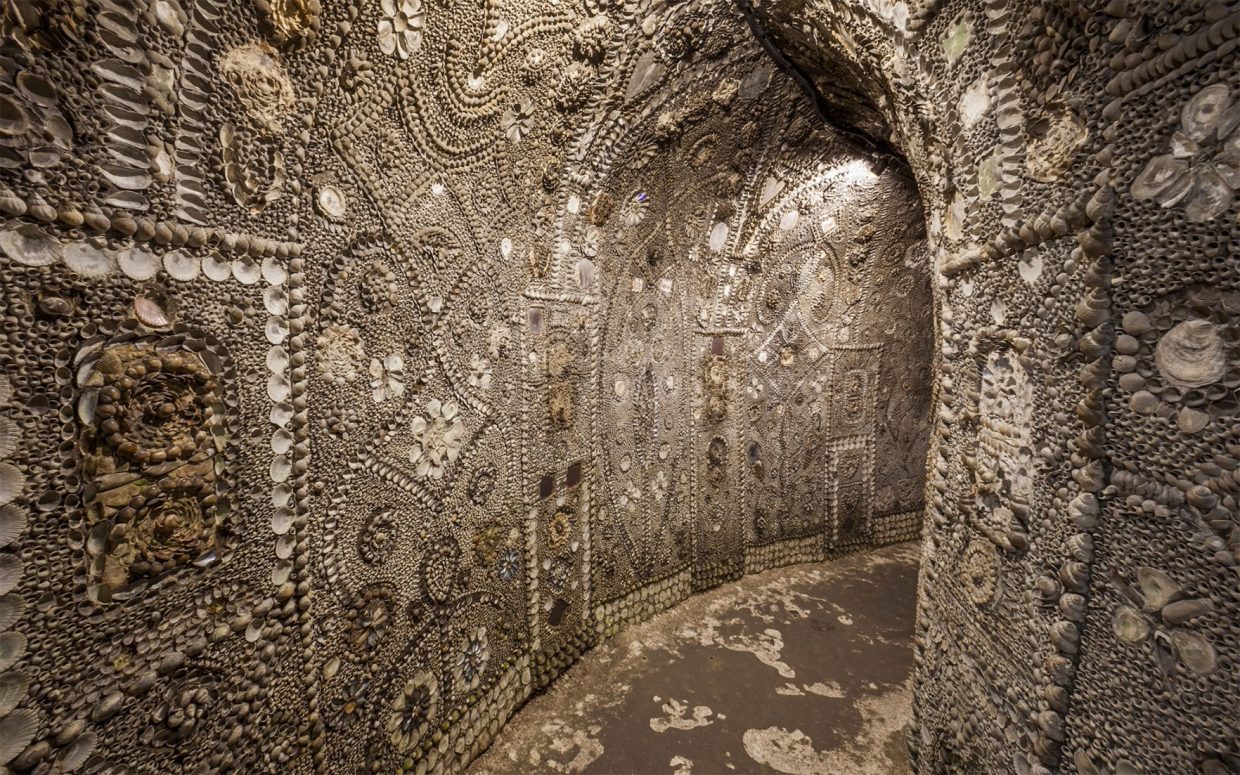
The Shell Grotto: Drive about half-an-hour north along the coast and you’ll get to Margate, home of the Shell Grotto. Supposedly discovered by local children in 1835, the Shell Grotto is a 70-foot long underground passage, the walls of which are adorned with over 4.6 million shells. Nobody knows who built it or why, and some theories claim it to be thousands of years old. It’s an awe-inspiring place to be and, as one travel writer put it in 2007, “Within six months of visiting, unless your soul is utterly dead, you will have a dream set here …”

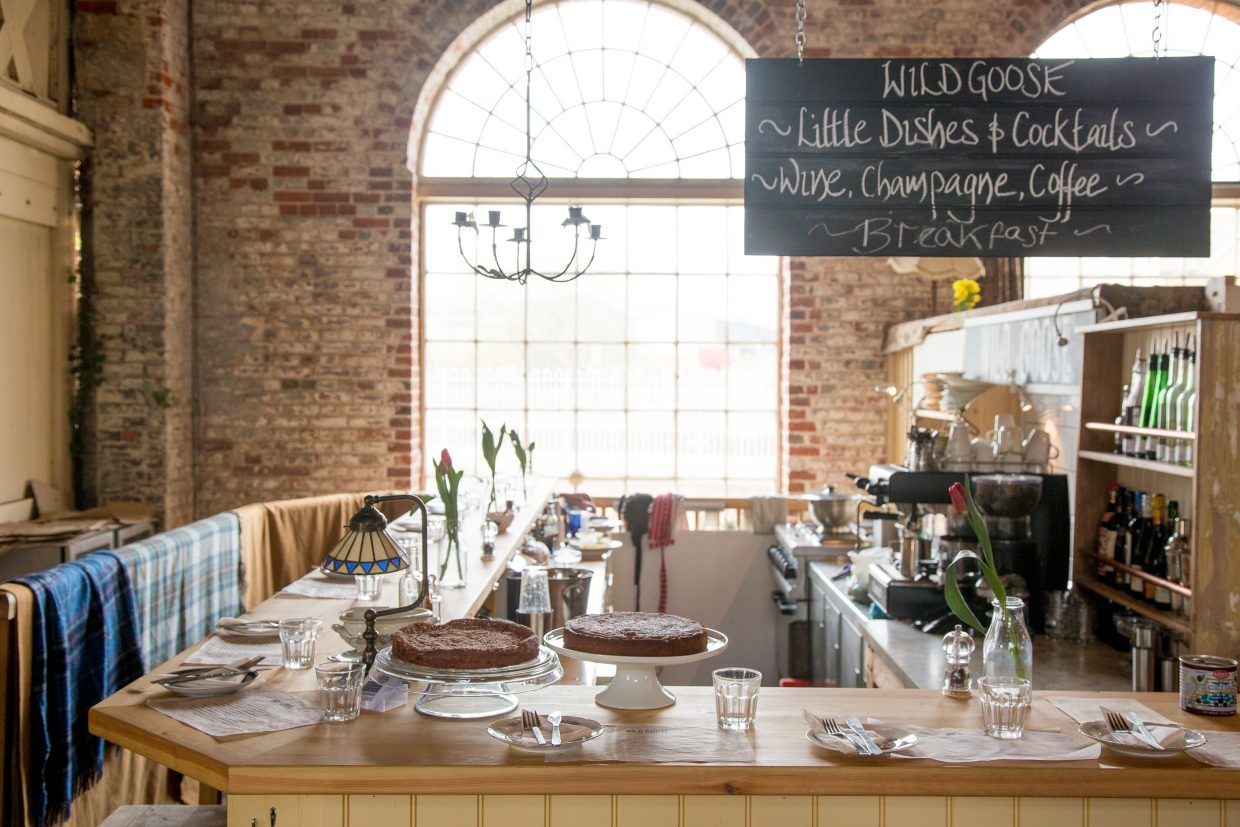
Wild Goose: Head in land from Margate and you will come across the ancient city of Canterbury. For most, it’s a city that’s significant for its picturesque medieval streets and its rich religious history; but for me, Canterbury is the city that is home to my favourite bar. The Wild Goose serves the best cocktails in the world, bespoke original recipes based around the English garden. They also have an ever-changing menu of perfect small plates and English tapas. The kitchen is just behind the bar, so you can watch the chefs prepare your food, as you chat away to the other patrons and sip your Gosling Martini.

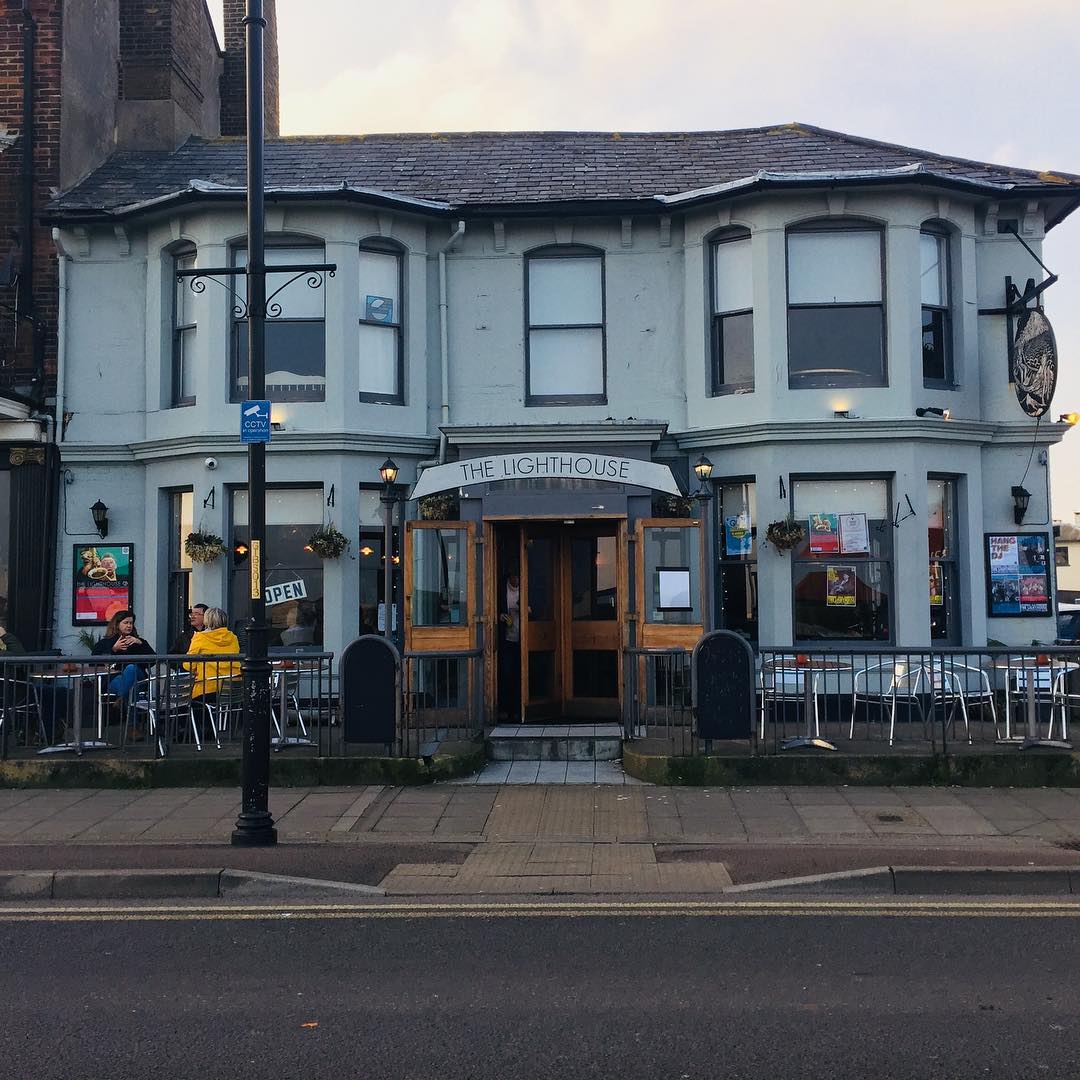
The Lighthouse: After a short drive back to Deal, aim to arrive at the Lighthouse around 9 pm, just as the evening’s band is taking to the stage. When I’m in town, you can find me here most nights watching the music or sat at the bar drinking my fourth or fifth nightcap. They have touring and local acts playing four of five times a week and a whole host of other cool things going on, too. It’s a seriously good pub, run by people who love live music and frequented by the best rabble of locals you could hope to meet. If you’re ever in the area, drop by and sink a half, or two …

Traveler: Your Guide to 30A

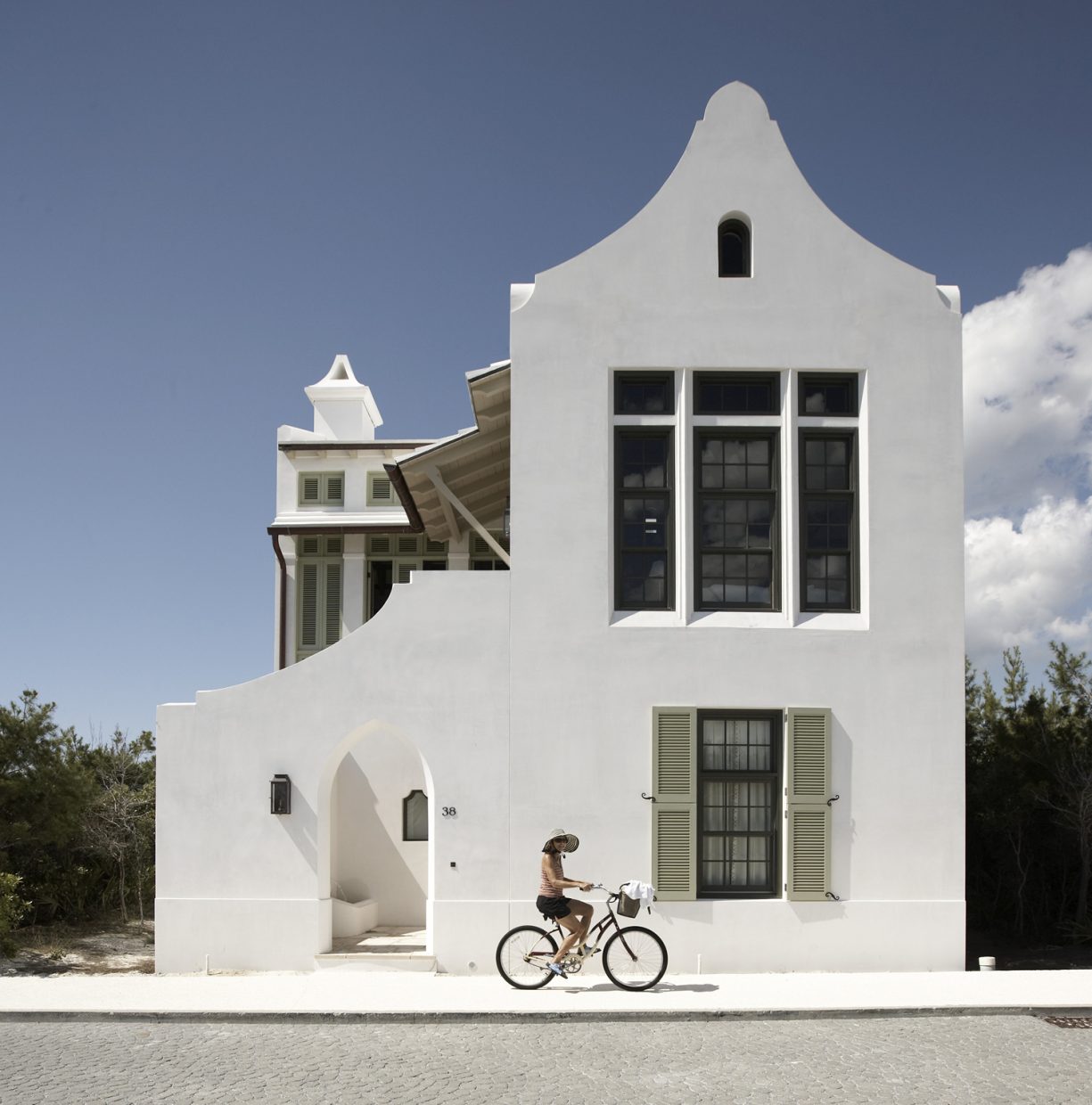
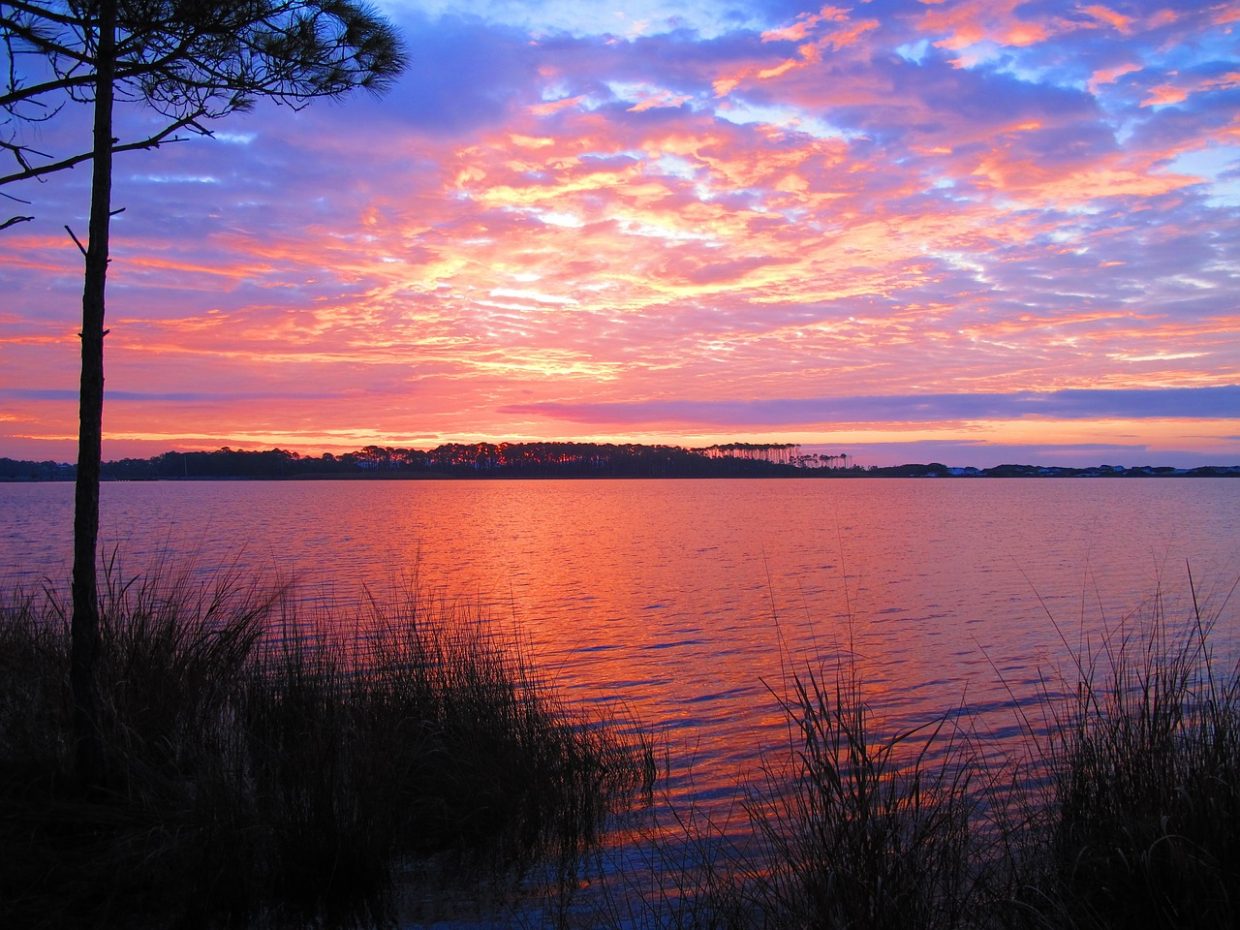
Named for the scenic stretch of highway running through the 16 beach towns in Florida along the Gulf of Mexico, 30A is a curated, Instagram-able beach experience. From the tower in Seaside to the monochromatic white buildings of Alys Beach, each part of 30A has an aesthetic which breaks the beach bum mold. Among them, Santa Rosa Beach is home to the renowned 30A Songwriters Festival every January.

Getting There

Located on the northwest gulf coast of Florida between Destin and Panama City, the 30A region is easy to reach. Between Northwest Florida Beaches International Airport (ECP), Pensacola Gulf Coast Regional Airport (PNS), and Destin/Ft. Walton Beach Airport (VPS), plenty of nonstop flights to big cities are available to the area. While there, navigating by bike is the norm, but Uber and Lyft are available.

Where to Stay

30A stretches 50 miles along the Gulf of Mexico, offering plenty of accommodations — from beachside condos to full-blown resorts to Airbnbs. Resorts abound, but we recommend the Airbnb or VRBO approach. The Songwriters Festival is headquartered in Santa Rosa Beach, but Seaside, Seagrove, Watercolor, Grayton Beach, Rosemary Beach, and Alys Beach are all close by. If you want to spring for the resort life, try the Pearl.

Must Sees

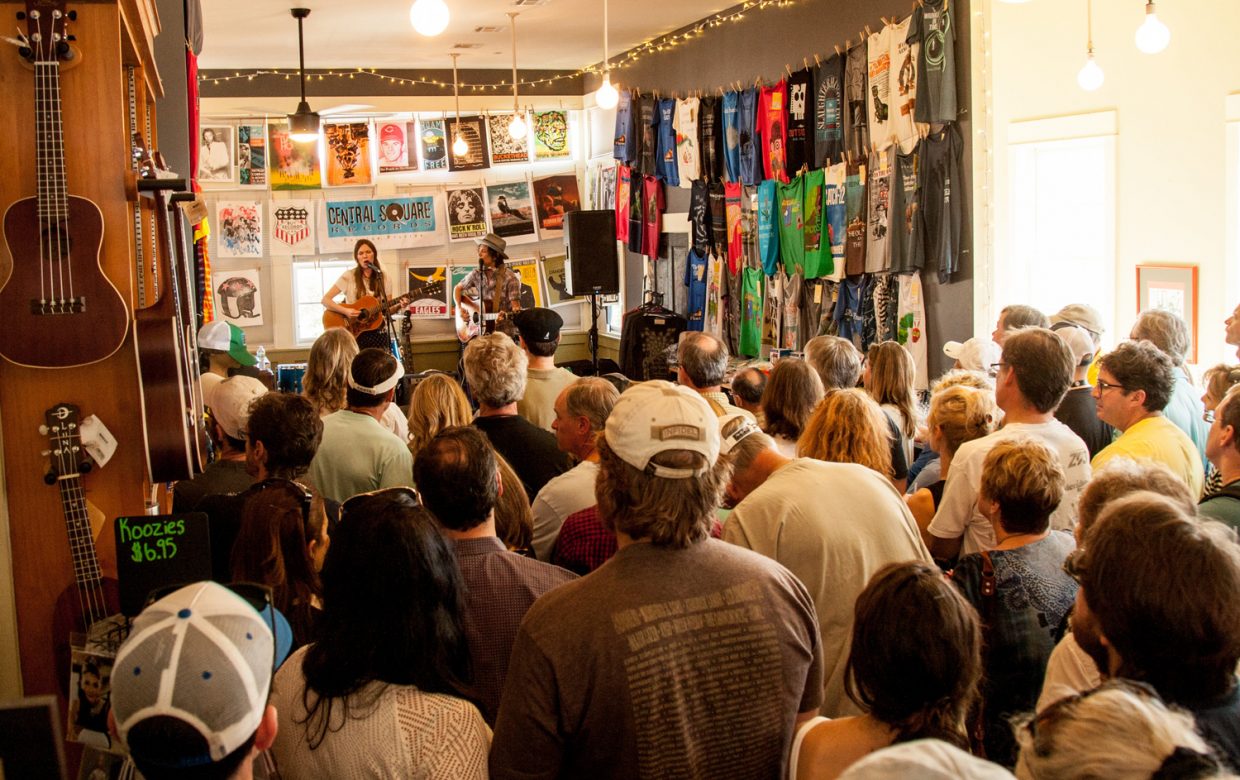
Central Square Records. Photo credit: Dawn Whitty

In addition to beach time, 30A’s laid-back towns have a lot to offer. In Seaside’s Central Square, Sundog Books and Central Square Records are a culture lover’s dream. A book/record store combo with recommendations by staff who have their finger on the pulse. Central Square also hosts in-store performances regularly and during the 30A Songwriters Festival. Seaside is also home to a variety of art galleries behind Central Square on DiBicci Park. Check out Red Bird Gallery and An Apartment in Paris.

Grayton Beach State Park. Photo credit: Pixabay

For the outdoorsy folks, Grayton Beach State Park has cabins to rent, plus a 4.5 mile hiking/biking loop alongside the Gulf of Mexico. The stand up paddleboard craze pretty much originated in this area, so finding a guide company is easy. Paddleboard in the bay, if you’re a first timer, and we recommend renting through YOLO.

Eats & Drinks

Photo credit: 732 Whiskey Bravo

Seaside is centrally located and packed with great restaurants and bars. Modica Market is a locally owned, old-school market with anything from ibuprofen to homemade cakes. Bud & Alley’s is quintessential 30A, where you can mingle with locals — it’s been around since the ’80s and, during sunset every day, restaurant goers guess the exact time the sun will set on a chalkboard and, if you guess the time correctly, you get a drink on the house. Vue on 30A is a fancy, beachfront dining spot in Santa Rosa Beach well known for brunch.

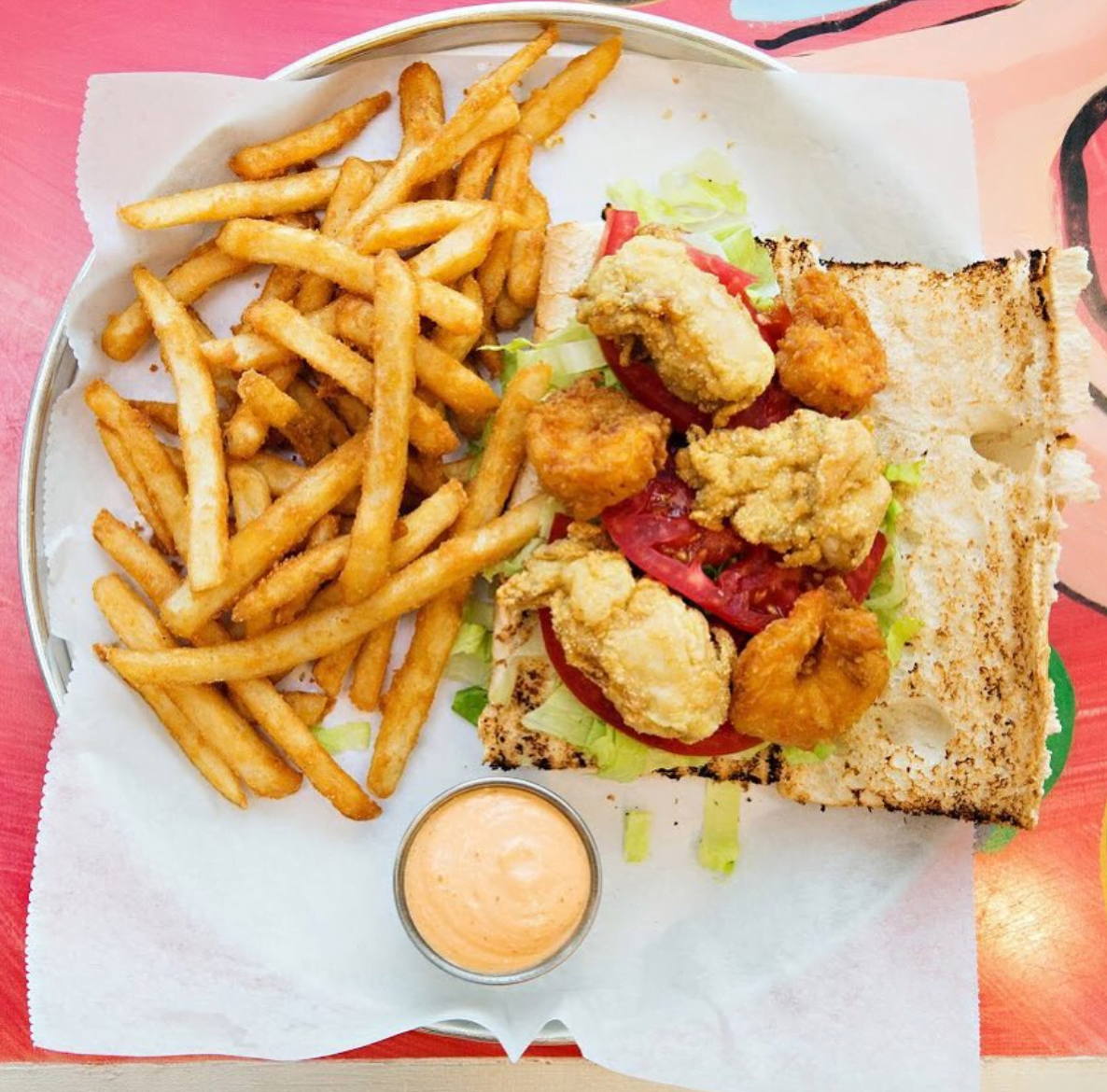
For rooftop drinks and poboys, head to 732 Whiskey Bravo — just off Central Square in Seaside. If you want a drink without having to rinse the sand off your feet, Red Bar is your best bet. They host live music often and serve killer crab claws and Bloody Marys. Trebeache’s illustrious 2-for-1 oyster happy hour is well-loved at this upscale Santa Rosa seafood haven.

30A Songwriters Festival Pro Tips

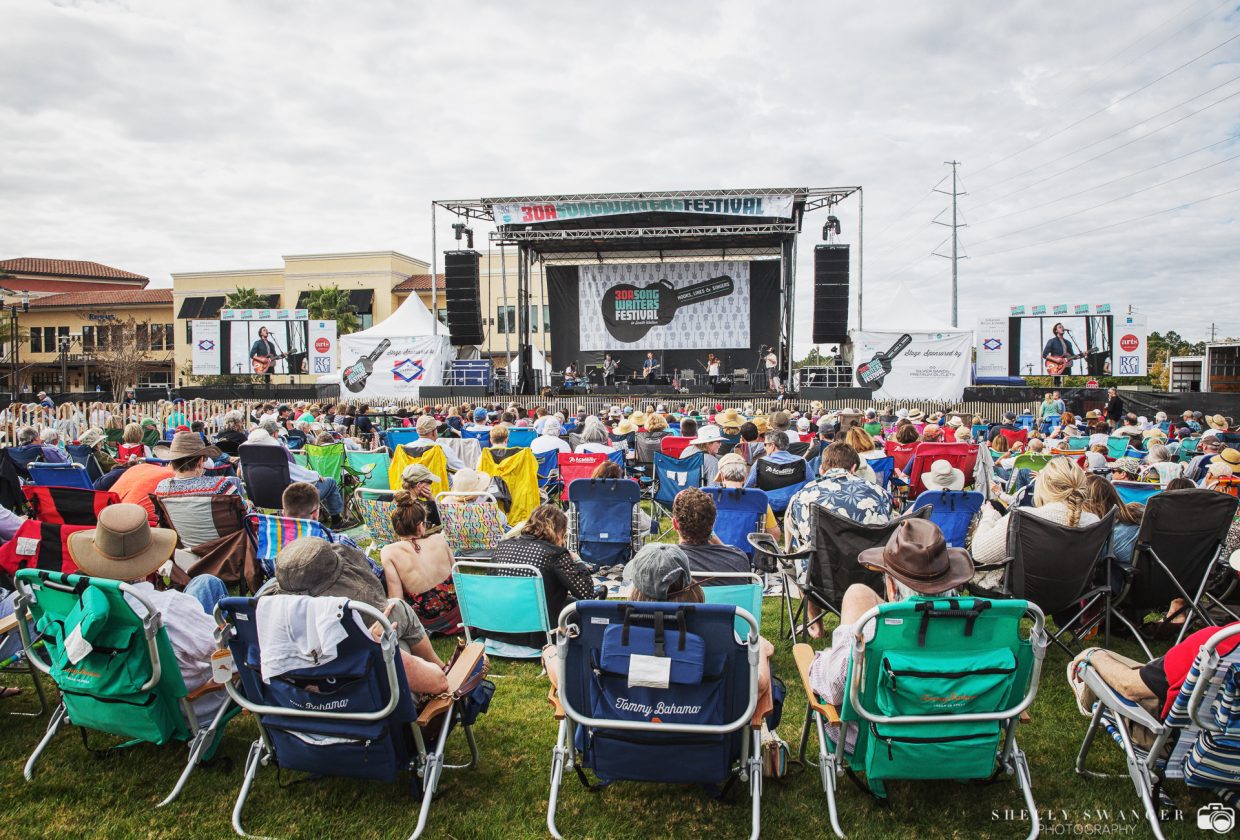
30A Songwriters Festival. Photo credit: Shelly Swanger

The 30A Songwriters Festival is a decentralized, discovery festival taking place up and down 30A in more than 25 venues, from intimate theaters to funky bars. It’s the type of festival where you might find Zac Brown wandering into a small restaurant to hop on stage for a few songs … unannounced. Shows take place in intimate venues which make you feel like your uncle is singing you tunes while explaining what inspired him to write them. Since there are more than 225 performances, strategies are encouraged.

Grand Boulevard Stage. Photo credit: Shelly Swanger

Familiarize yourself with the schedule and prioritize your top artists because lines can be long to get into popular shows. Get to smaller venues early for artists you’re dead-set on seeing. There are free shuttles running constantly to get you from venue to venue, which are helpful and reliable. For the bigger shows at Grand Boulevard, bring lawn chairs. It’s an outdoor/indoor festival in Florida in January, so the weather can be a crapshoot. Check the forecast, but concert goers are usually fine in shorts during the fest — a perk of Florida.


Lede photo credit: Visit South Walton

A Minute In Santa Cruz with the Coffis Brothers

Welcome to “A Minute In …” — a BGS feature that turns our favorite artists into hometown reporters. In our latest column, the Coffis Brothers take us on a tour of Santa Cruz, California.

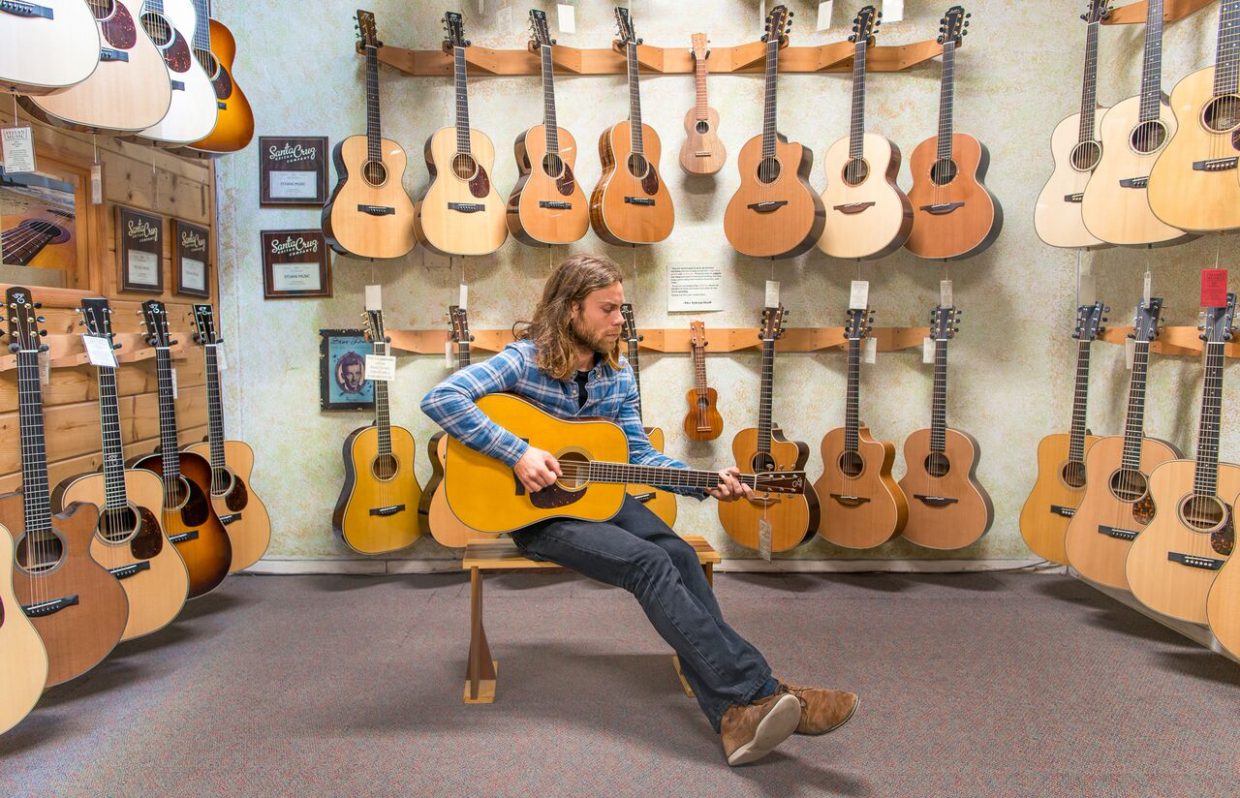
Sylvan Music: On the west side of Santa Cruz, at the corner of Mission and Bay, is Sylvan Music. Focusing primarily on stringed instruments, Sylvan Music is as good of a music store we’ve come across anywhere. As well as being a dealer of Fender, Martin, Taylor, and Duesenberg, among others, Sylvan has two vintage rooms that are a must-see for any musician coming through Santa Cruz. Sylvan also is the biggest show room for the locally made and internationally regarded Santa Cruz Guitar Company guitars. If that wasn’t enough, our bandmate, Aidan Collins — as well as our musician BFF, McCoy Tyler — are among the staff at Sylvan.

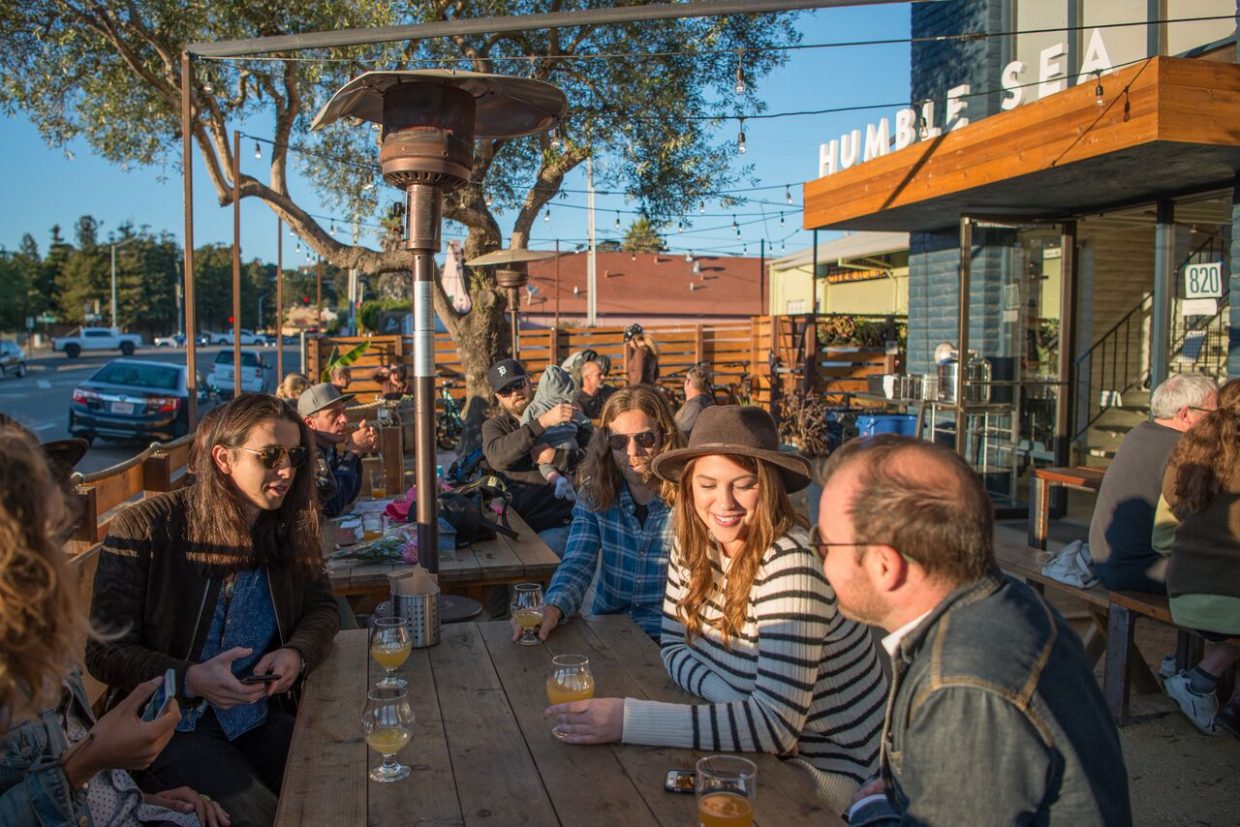
Humble Sea: In March of 2017, on the west side of Santa Cruz, Humble Sea Brewing Company opened and joined the burgeoning micro brew scene here in Santa Cruz. Between their often rotating and interesting tap list, friendly staff, and sunbathed outdoor beer garden, it has become our favorite brewery and weekend hang spot rather quickly. Humble Sea served beer for the first time in 2016 at a local show of ours and, since then, we have partnered with them on several occasions for special events. Enjoy a beer and the Santa Cruz sun at Humble Sea.

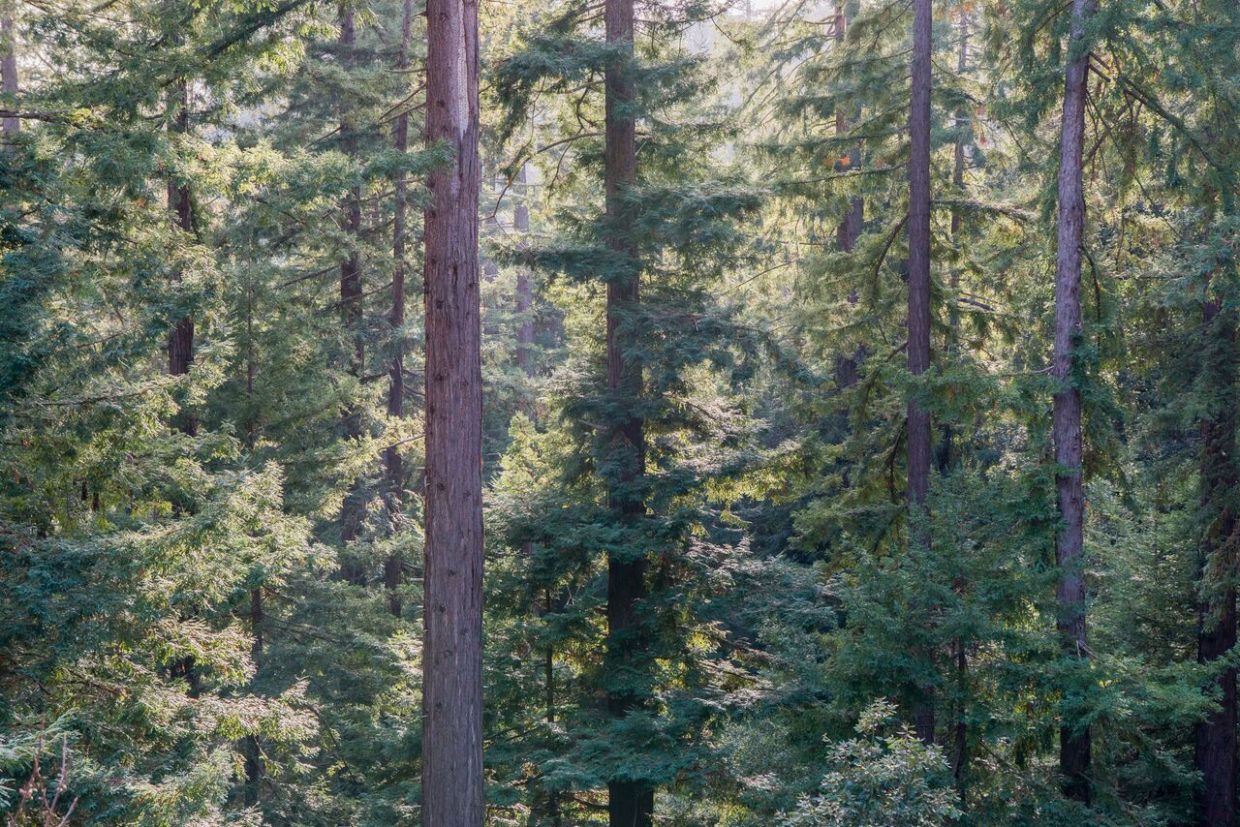
San Lorenzo Valley: You can’t explore Santa Cruz without exploring our redwood forest. In our hometown of Ben Lomond, we are surrounded by redwoods. We’d recommend taking the 10-minute drive from Santa Cruz into the San Lorenzo Valley and hang out amongst the redwoods. If you’re looking for a hike or a run, Fall Creek, Big Basin, or Henry Cowell have some of the nicest trails you can find anywhere. If that seems like a lot of work to you, then perhaps a drive through the San Lorenzo Valley on Highway 9 might be more your thing.

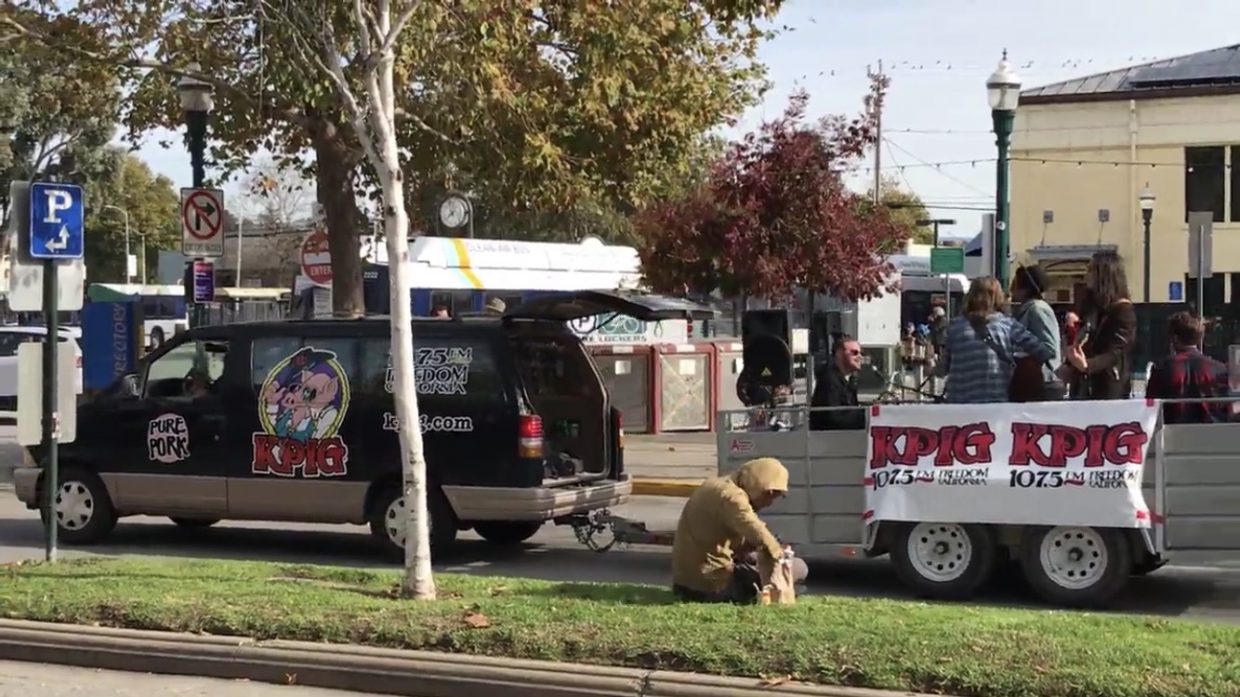
KPIG Radio: It’s the greatest radio station in the world, man — 107 oink 5 KPIG is a Santa Cruz institution. Located in Freedom, California, at the south end of the Santa Cruz County, KPIG is one of those rare radio stations that you don’t find everywhere. Sometimes KPIG takes their show on the road, even. Just recently we hopped in their pig pen and drove through downtown Santa Cruz playing music. Tune into KPIG when you’re in Santa Cruz. You might even hear one of their newest DJs, our very own Jamie Coffis.

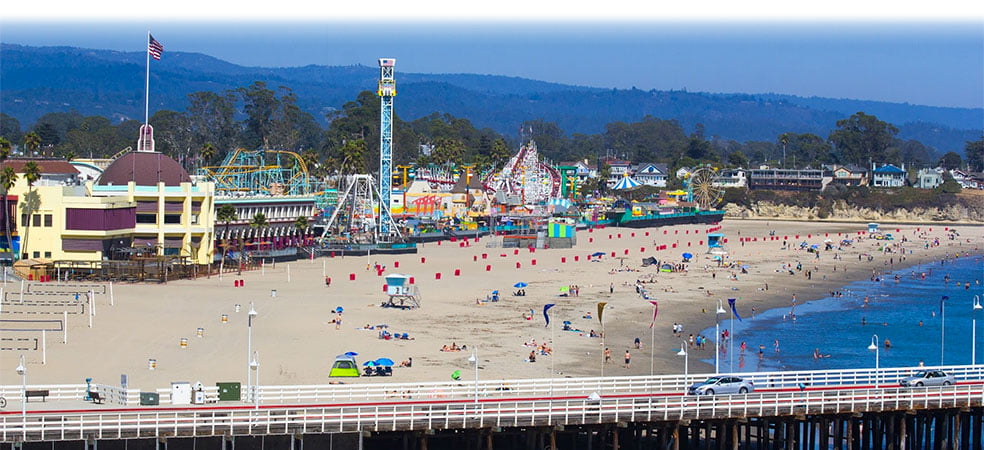
Santa Cruz Beach Boardwalk: Sometimes you just gotta be a tourist, and there is no better place to feel like one than at the Santa Cruz Beach Boardwalk. Just east of the Wharf and West Cliff is one of California’s oldest and only beachside amusement parks. It is home to the famous wooden roller coaster, the Giant Dipper, and also hosts free summer concerts. Speaking of concerts … we recently got to set up on the beach and play facing the boardwalk to celebrate the 150th anniversary of Santa Cruz. There’s always something fun happening at the boardwalk.

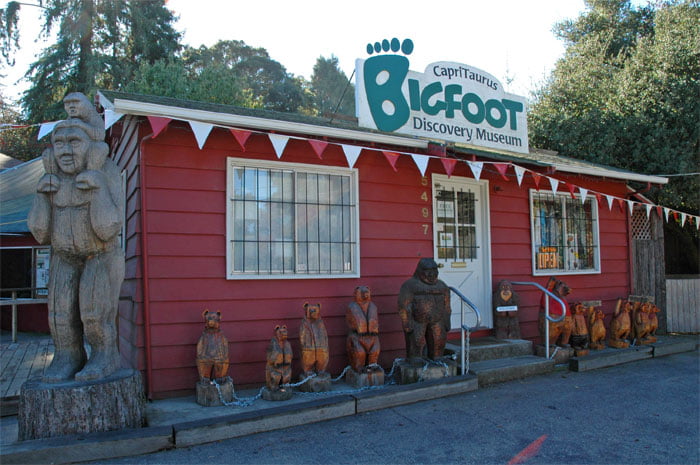
Big Foot Museum: The Santa Cruz Mountains are home to many different creatures: deer, mountain lions, hippies, but maybe most notable are sasquatches. So, naturally, located in Felton, in the Santa Cruz Mountains, you can visit the Bigfoot Discovery Museum. After you finish a hike in Henry Cowell State Park, cross Highway 9 and walk inside the Bigfoot Museum. Check out more Bigfoot-related paraphernalia than you ever knew existed and be ready hear about countless stories of actual “sightings” in the area. We have our own affinity toward sasquatches, and we keep a stuffed sasquatch named Sally on stage with us every show.


Photo credit: Connor Quinto

Traveler: Your Guide to Jackson Hole

Jackson Hole, Wyoming, is quite literally a hole in the the Teton Mountain Range, created be a 50-mile long, flat valley. This small town, with about 9,500 permanent residents, is the type of place where you pull on your fanciest cowboy boots for a night out drinking whiskey. Found in the northwest corner of Wyoming, Jackson Hole is 6,237 feet high and 2.9 square miles in size. The Western nostalgia and Native American influences are pervasive throughout, making themselves known from statues to studded saddles. Jackson Hole is a city where the most recognizable neon sign in the “skyline” reads “Cowboy Bar,” but the culinary, art, and resort influences give the town a more debonair feel.

Getting There

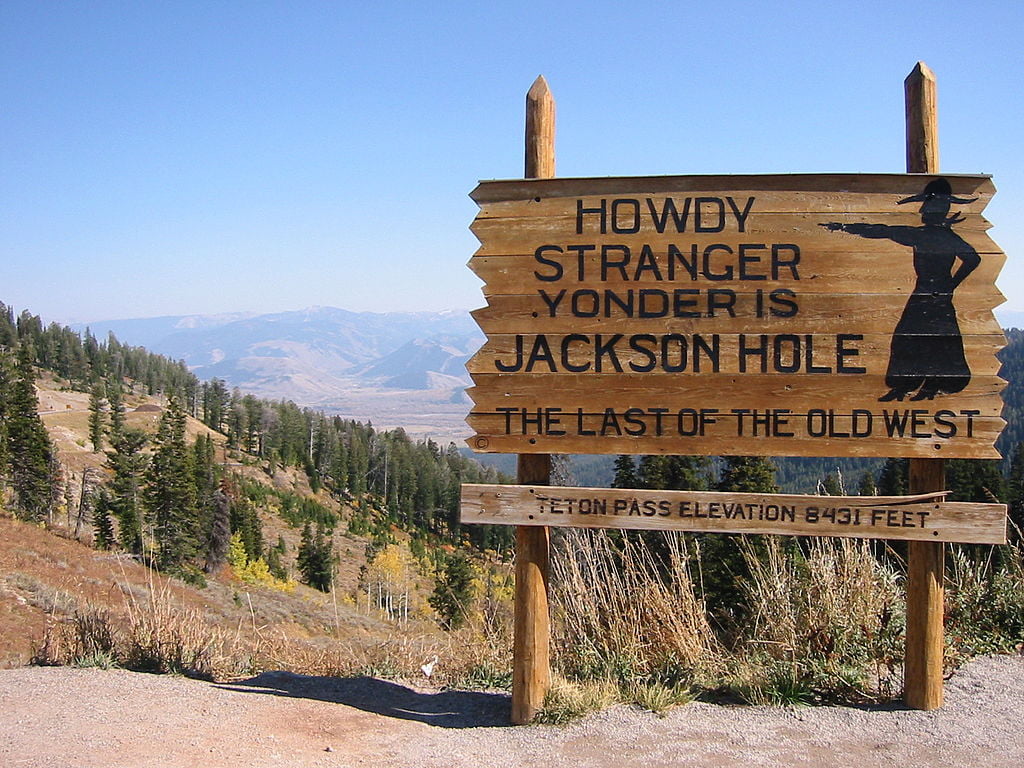
Yonder Is Jackson Hole. Photo credit: Dhtrible via Wikimedia

United, Delta, and American service Jackson Hole Airport (JAC), the only commercial airport in the U.S. within a national park. The town is 36 miles from the airport, 15 miles from the Idaho border, and 12 miles south of Teton Village. Within Jackson Hole, the public bus system, called START, is so efficient and easy to use you won’t need a car.

Stay

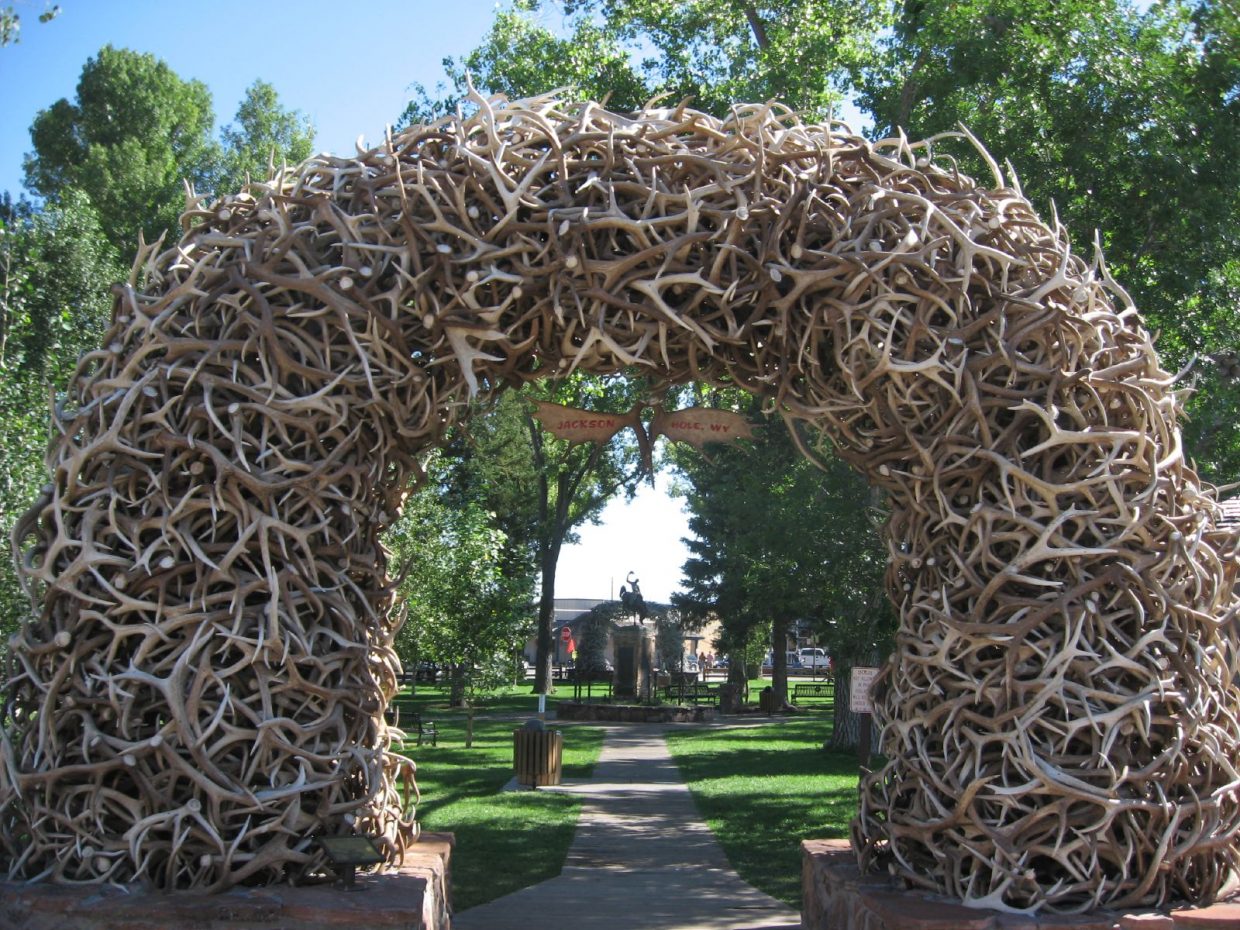
Antler Arch. Photo credit: Ken Lund via Wikimedia

Whether you’re looking for an opulent mountainside villa or a campsite with compost toilets, Jackson Hole has a manifold of accommodations. Alpine House’s European-style, certified eco-friendly lodge serves breakfast prepared by in-house chefs each morning. The Wort — pronounced “The Wirt” in local lingo — is a boutique hotel nearly 80 years in the making, offering quintessentially Western suites and the town’s most hoppin’ music venue, the Silver Dollar Showroom. If you’re rolling in it, Amangani’s rooms have expansive views of the Tetons, plus a ski-in lodge. On the opposite side of the ammenity spectrum, campgrounds abound. Try the Jackson Hole/Snake River Koa, Curtis Canyon Campground or the Hoback Campground.

Eat & Drink

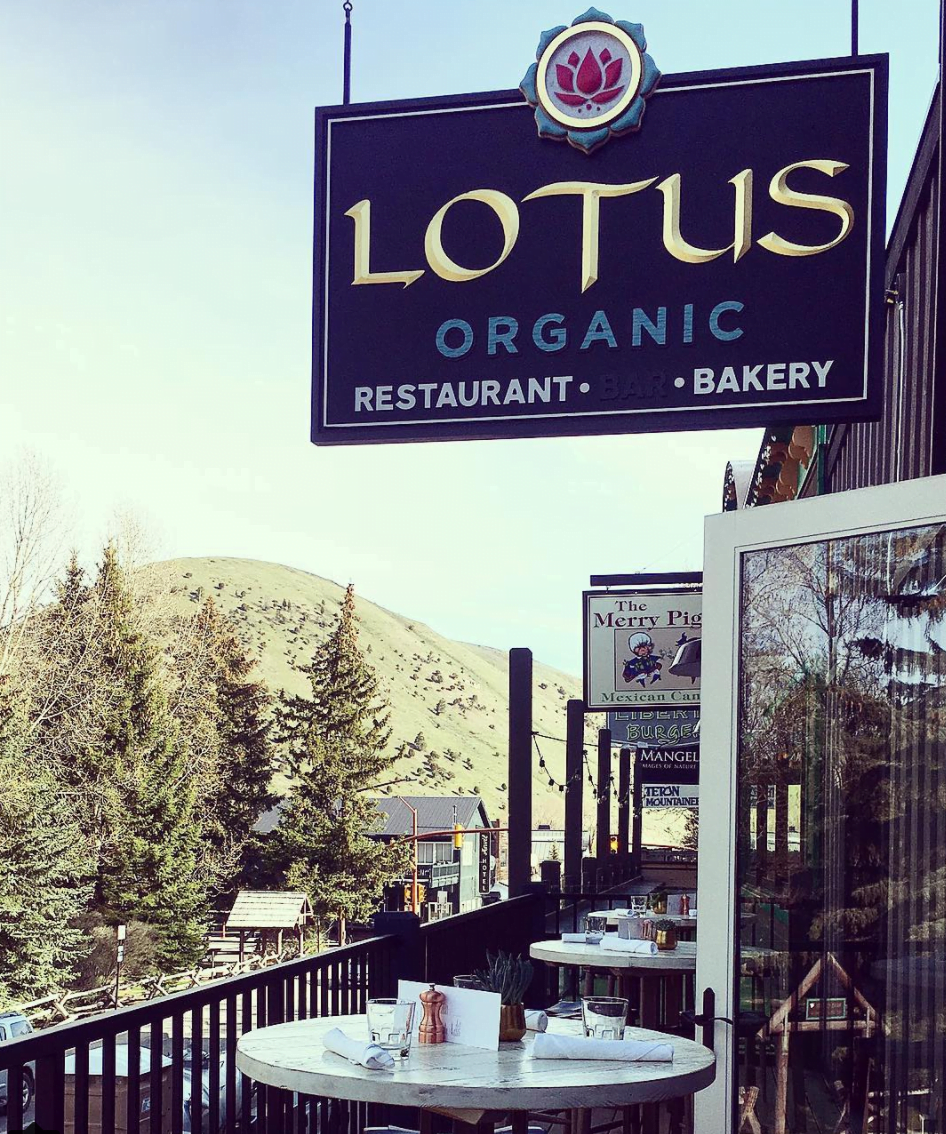
Lotus. Photo credit: @organiclotusjh on Instagram

From classic spots with speakeasy Western vibes like the White Buffalo Room’s house-aged steaks to Lotus’s raw pad Thai made with turnip noodles, this tiny town’s food scene runs the gamut.

Persephone is a popular French-style bakery offering breakfast and lunch options. Pro tip: Order the squash and ricotta toast, featuring creamy butternut squash and ricotta spread with crunchy pumpkin seeds and espresso salt. Their sister restaurant, Picnic, offers the same core baked goods, plus not-so-average breakfast items like biscuits & gravy with Dijon maple creme and goat cheese bacon crumbles. Pinky G’s is the late-night spot of choice, going on five years voted as Jackson Hole’s “Best Pizza.”

For a night out, start with drinks at the Handle Bar, where you can roast s’mores at your table while you sip whiskey neat. Then, head to the Coach for a night of dancing to the renowned Stagecoach Band, who also plays a weekly “Sunday Church” show on Sunday nights.

Adventure

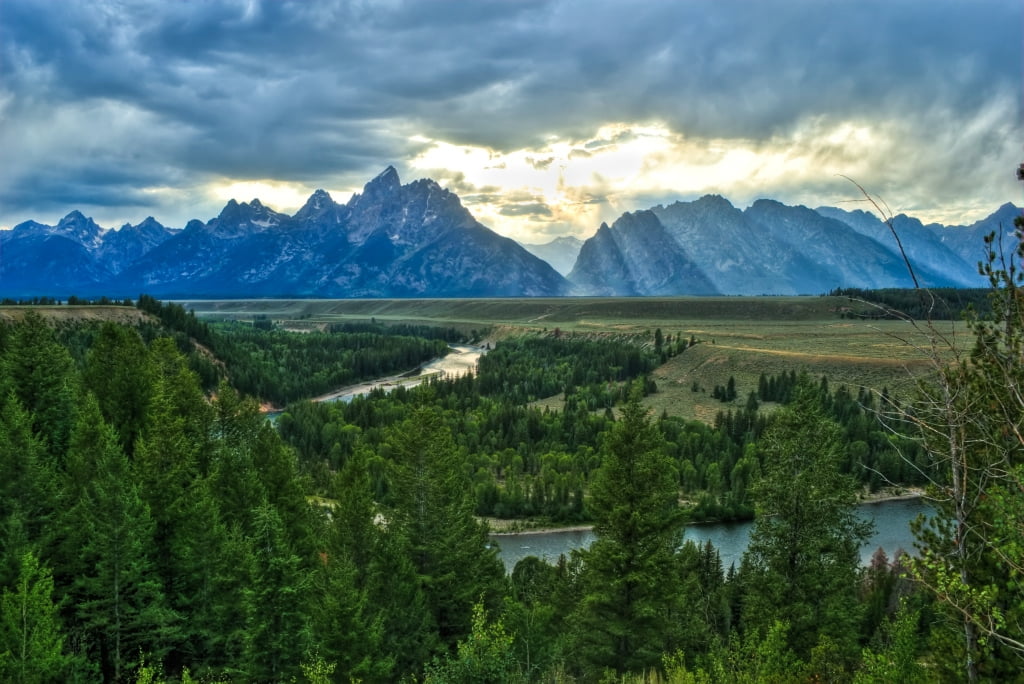
Grand Tetons National Park. Photo credit: Hawthorne Ave via Wikimedia

With two national parks, a national refuge, and myriad public parks situated in Jackson Hole, less than three percent of the land is privately owned. The other 97 percent is state or federal government-owned. All year, outdoorsy tourists roam Jackson Hole. Summer months are full of hiking, fly-fishing, and mountain biking, while winter is for skiing and snowboarding, and spring is the most active time for wildlife viewing.

The sheer grandeur of Grand Teton National Park is right in the name. You can’t go wrong meandering within the park, but don’t miss Cascade Canyon, Granite Canyon, and Amphitheater Lake. The park is a magnet for photographers and technical mountain climbers because of the size and breadth of the mountain range. The entrance fee is $30 per vehicle.

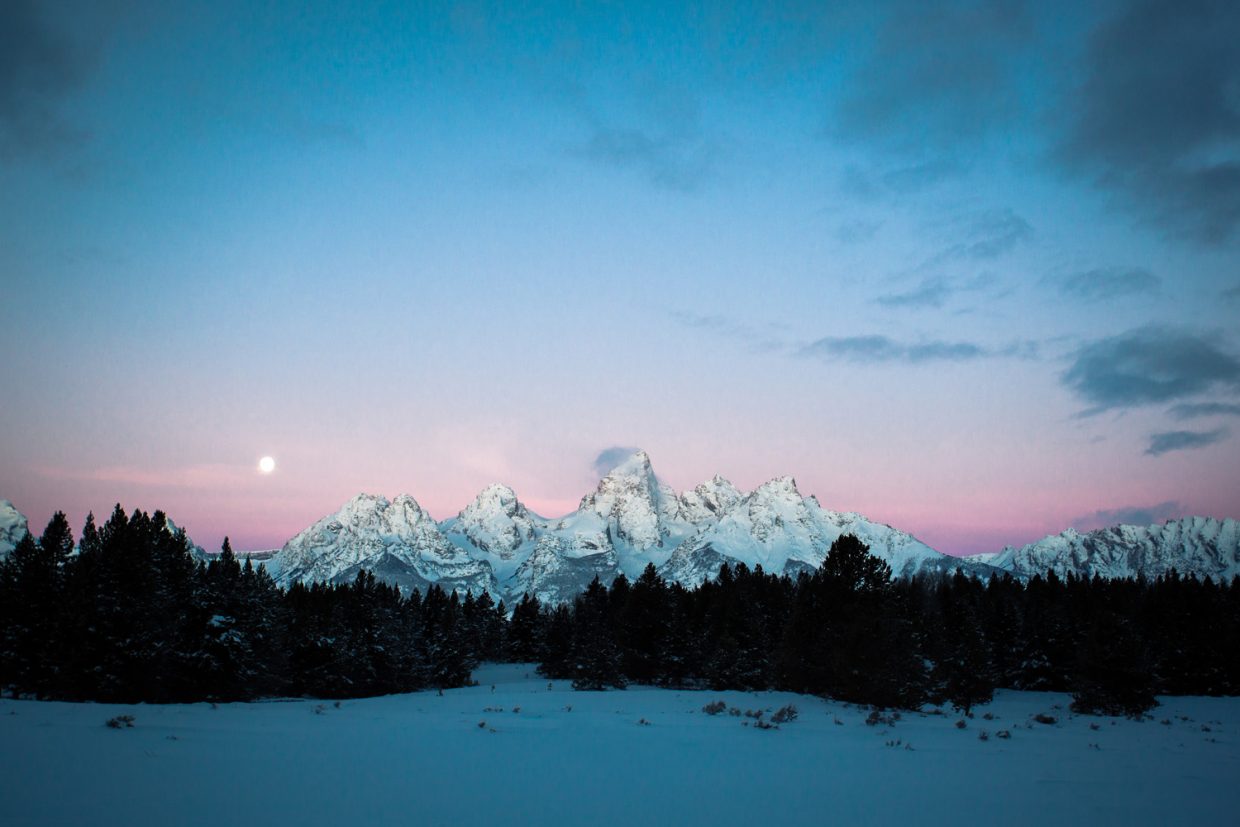
Grand Tetons. Photo credit: Jackson Hole Mountain Resort

Yellowstone National Park’s south entrance is 90 miles north of Jackson Hole, covering 3,500 square miles of land in Wyoming. It is the oldest national park, gaining status after photographers, painters, and sketchers captured and showed the wonders of the Tetons to Congress in 1872. The park sits on top of an ancient super-volcano and has more than 1,000 of miles of backcountry hiking. Also noteworthy is the National Elk Refuge with thousands of elk making the spot their home for the winter and spring. For the best chance of catching a glimpse of elk, head out with binoculars in the spring.

Of course Jackson Hole is predominantly a ski town, with several resorts close by like the challenging Snow King and the cornerstone of ski resorts in town, Jackson Hole Mountain Resort.

Art

National Museum of Wildlife Art. Photo credit: Daniel Mayer via Wikimedia

The art scene in Jackson Hole is distinctively Western and home to world-class organizations. From ornately decorated handmade leather saddles to scenes of buffalo upon canvas to jewelry adorned with large hunks of turquoise, strolling the galleries in Jackson Town Square won’t let you forget you’re in equestrian country. We recommend the Congressionally designated National Museum of Wildlife Art, RARE Gallery of Fine Arts, Astoria Fine Art, and Trailside Galleries. 

As for the musical arts, the Pink Garter Theatre hosts a variety of roots artists we love like Elephant Revival and the Lil Smokies. The Silver Dollar Show Room has a bluegrass show every Tuesday night featuring their house band, One Ton Pig, and the Mangy Moose is a solid choice for drinks and live music apres skiing. Our roots music brethren gather in Grand Targhee Resort for the Targhee Bluegrass Festival. Catch classics like Sam Bush, Tim O’Brien, Railroad Earth, and Greensky Bluegrass at this fest recurring yearly since 1988.

Traveler: Your Guide to Victoria, BC

From manicured gardens to western hemlocks towering above the mildest climate in Canada, Victoria, BC, may be the most agreeable stamp in your passport. The “City of Gardens” lives up to its name, blooming year round. Hanging baskets and window boxes overflow with green vines, vibrant flowers, and ornamental shrubs lining every walkway. The oldest city in the Pacific Northwest delights travelers with its storied town squares, alleyways, and soundtrack of seagulls squawking overhead.

Getting There

Being on an island makes getting there part of the adventure. Victoria and Vancouver Island are well serviced by ferries, float planes, helicopters, and a self-proclaimed “friendly” airport. Be sure to check ferry booking sites for hidden fees to avoid things like a $16 charge for not booking 24 hours in advance. On the ride in, you get to see views of the immensity of Mount Baker. Getting around this walkable city is doable without a rental car, but taking a drive across the island does afford adventurous mobility.

Stay

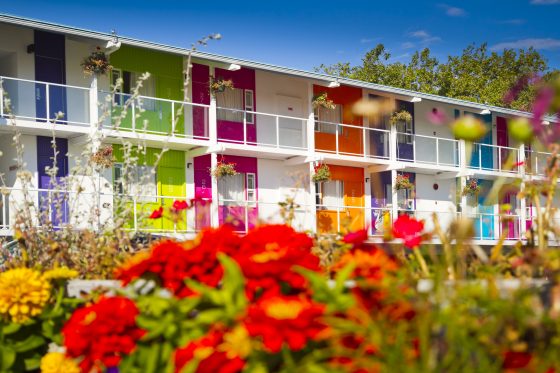
Hotel Zed

On brand with its charismatic vibe, this bed & breakfast-laden town boasts plenty of temporary abodes. Skip the big box brand hotels and stay at local B&Bs, like the century-old Gatsby Mansion, clad with lush wandering paths, gardens, and fountains on the grounds. For waterfront views, a booking at the Inn at Laurel Point is unparalleled with rooms overlooking the Inner Harbour. Eat your Regal Croissants like an Englishman at the Victorian-inspired Albion Manor Bed & Breakfast. If you’re in it for the ‘gram, Hotel Zed was recently named one of the most Instagram-able hotels by Trip Advisor.

See & Do

The Butchart Gardens

Victoria’s mild, coastal climate lends itself well to growing nearly year-round. Blooms often start in February, when most of Canada is covered in snow, and the city welcomes summer with a tradition of abundant floral hanging baskets. The Butchart Gardens are particularly lush, boasting dinner plate dahlias, Japanese maple trees, and a spectacular rose garden. Much of the island is covered with parks and natural preserves. Sooke Potholes State Park is a natural wonder — its crystal clear water affording you sights of perfectly smoothed rock pools and potholes carved by mother nature. Pacific Rim National Park Preserve is not your typical sandy beach, but closer to a botanical wonderland. Choose from walking along sandy beaches, pebble beaches, or through the mossy forest of huge ferns and spruces.

For those seeking marine adventure, Victoria’s many whale watching tour companies are knowledgeable about the region’s orcas and will help you maximize your chance of seeing one in the flesh. We recommend BC Whale Tours or Eagle Wing Tours, but expect chilly temperatures, use binoculars, and put the camera down to enjoy the moment. (Spoiler: Your friends don’t want to see blurry pictures of whales.)

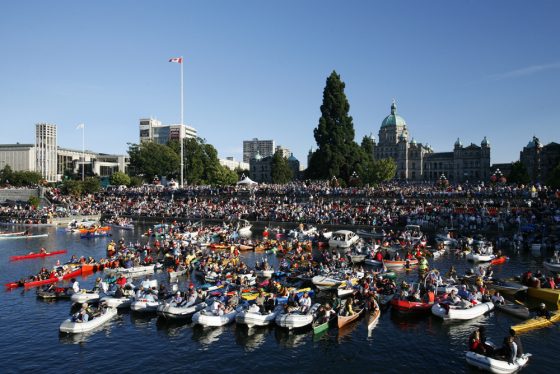
Symphony Splash (by Deddeda Stemler)

The music scene is sparse, but diverse. A few recommendations include yearly spectacles like the Sooke River Bluegrass Festival and the Symphony Splash — a floating concert by Victoria Symphony in the Inner Harbour.

Eat & Drink

Fairmont Empress Lobby

Eat an indulgent breakfast of eggs benedict with house-made, real butter hollandaise at John’s Place. Their “Mile High Apple Pie” is topped with crumbles of apple crisp and renowned for a reason. Drink an impeccably foamed cappuccino at Shirley Delicious Café paired with their breakfast burrito, if you’re out west around the Shirley area. Nautical Nellies has the seafood you’ll undoubtedly crave while staying on the coast. Try their oysters and one of their 200 wines on the sundeck while enjoying harbour views.

You’ll feel the British Columbia influence with a reservation at Fairmont Empress for high tea. Their fresh baked scones, clotted cream, and fine tea blends will transport you across the pond. Get your fancy fix at Vis a Vis, a charcuterie and wine bar with a quaint and cozy atmosphere.

Vis a Vis

Victoria is the craft beer capital of British Columbia, but their cideries, wineries, and distilleries equally permeate the drinking scene. Sip cider on an apple farm at Sea Cider Farm & Ciderhouse, try a Northwest hops-brewed Blue Buck Ale at Phillips Brewing and Malt Co., drink a Somenos pinot noir while overlooking the city on 40 acres of Averill Creek Winery, and try Victoria Distillers’ award-winning Victoria gin at their newly opened Sydney waterfront distillery.

Lede photo credit: Chris Johnstone via Wikimedia. Other photos credit: Tourism Victoria

A Minute in Columbus with Lydia Loveless

Welcome to “A Minute In …” — a BGS feature that turns our favorite artists into hometown reporters. In our latest column, Lydia Loveless takes us through her favorite hangs of her former hometown, Columbus, Ohio.

I moved to Columbus, Ohio, when I was 14. A lot has changed since then, but I won’t go on an old man “get off my lawn” rant about it. The 13 years I spent there were certainly varied and formative, and many of the places that shaped who I am are gone. Towards the end of living there (I recently moved to North Carolina), I was a bit of a shut in, but I did have my regular haunts. These are the ones I’m willing to share and that will appeal to people who don’t live there, in this hillbilly’s humble opinion.

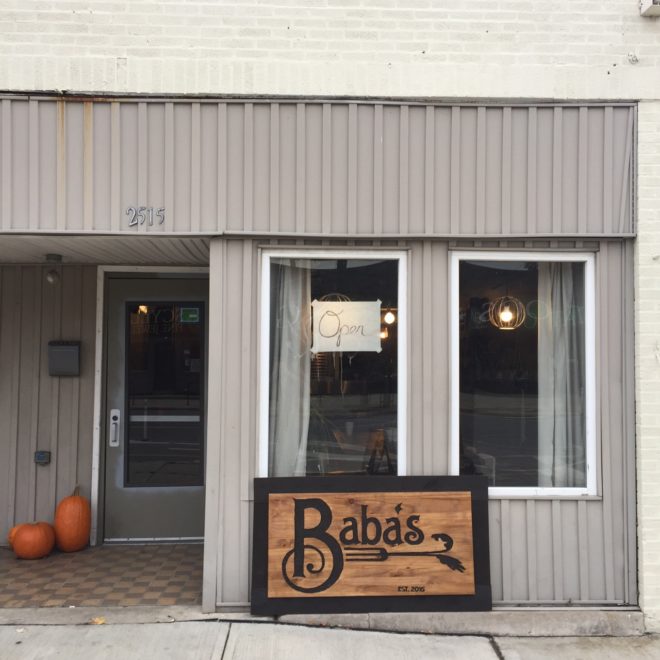
Photo credit: Breakfast with Nick

Baba’s: Situated right behind my last apartment in Columbus, I was in this place at least every other day, since it opened not too long ago. Everything is made in-house and local. (If I’m wrong, I can’t be too wrong about that.) I don’t know how many calories in Griddle Muffins — a hot, pillowy egg and cheese and protein or shredded veggie sandwich — I consumed, and I don’t really care. It was all worth it. Add the absolutely kind and warm owners, and I can’t imagine a place I’d rather dump all my money into.

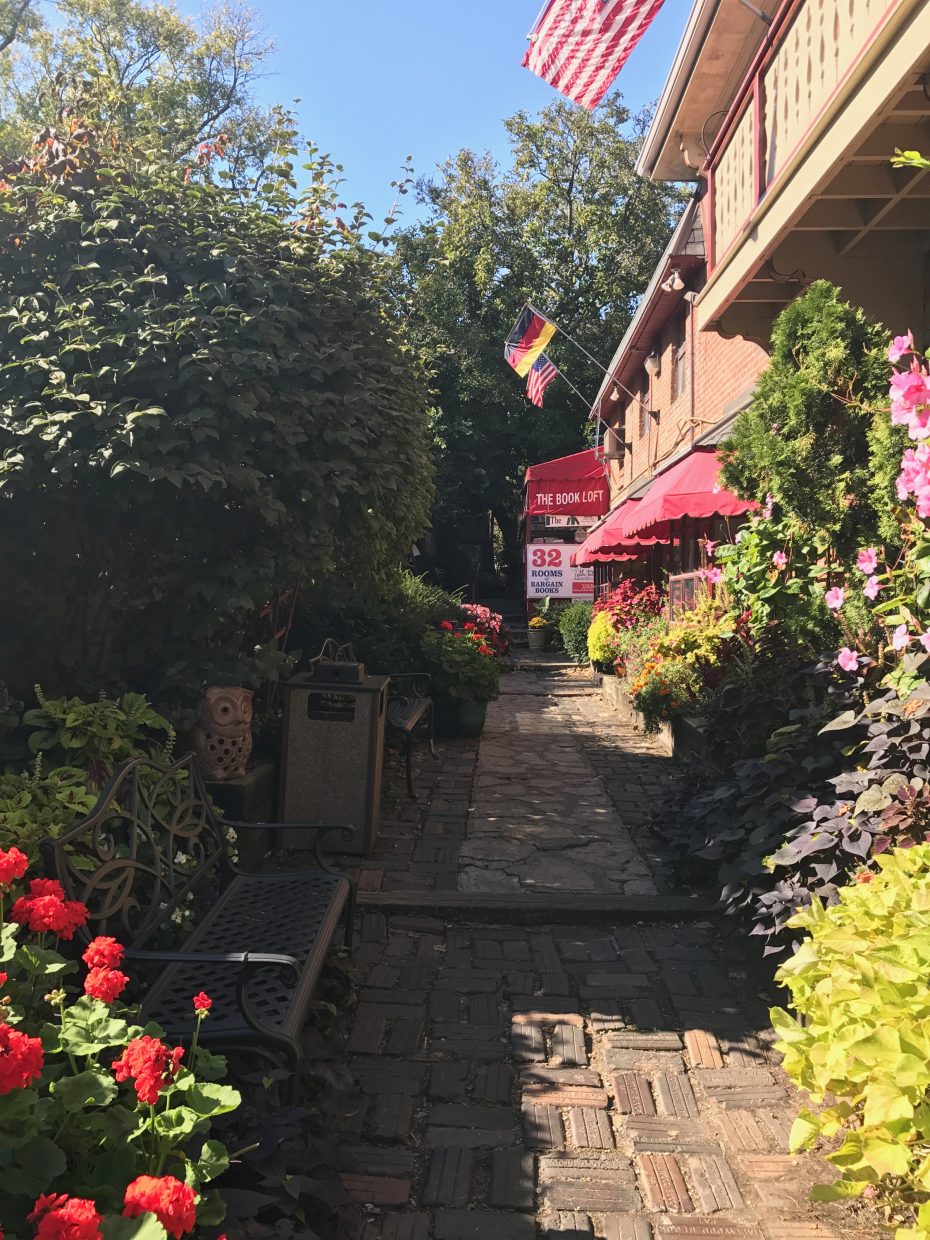
Photo credit: Eleanor Sinacola

The Book Loft: I have an unhealthy obsession with books. I love nothing more than the safety of a bookstore or library. Columbus has an astounding library system, but you don’t live there, presumably, so go here instead. It’s 32 rooms — a city block long. I always feel incredibly peaceful there in spite of the various soundtracks serenading you from room to room. I like to grab a lavender latte from Stauf’s next door beforehand, if I’m feeling fancy, and just get lost.

Photo credit: Michael Casey

Pins: After the Book Loft, this is the #2 place I take people who don’t live there. A very un-claustrophobic place that you wouldn’t expect to be as it’s full of people playing — gulp — GAMES. I love to go with a few people, drink fruity cocktails (even of the non-alcoholic variety), and Duckpin Bowl (bowling with a smaller ball and pins and far more restraint and skill than the typical variety) for a couple hours. They have a sizable patio for smoking and people watching, if you’re interested in either of those things, and I’ve never had bad service there. I’ve also never witnessed a frustrated weight lifter break the duckpin bowling screens, but I’ve often hoped I would. Maybe you will.

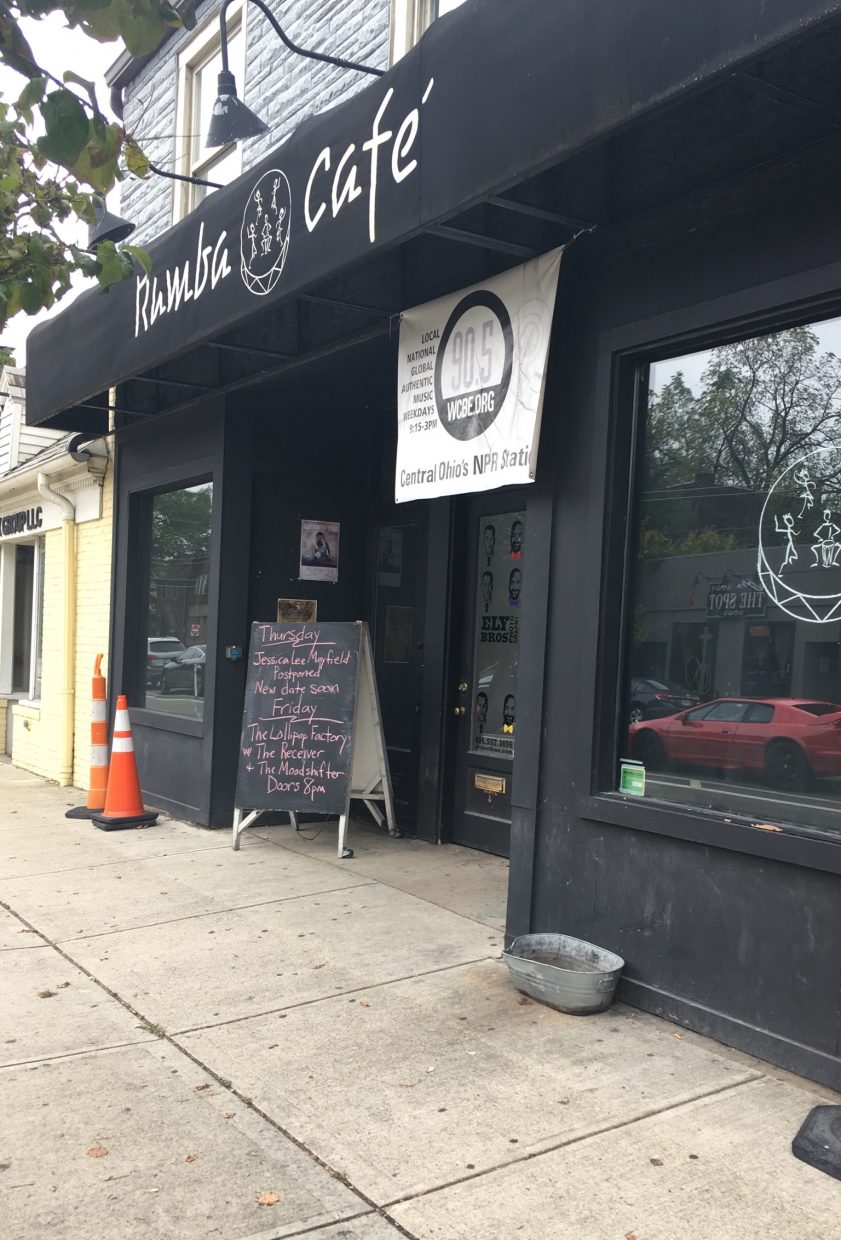
Rumba: I’ve been playing here for 10 years, so I may be biased, but I very rarely go here and don’t enjoy myself. There’s such a wide variety of music going on there these days, it’s easy to pop in and find at least one act you enjoy, from folk to punk to pop. Yes, it’s tiny, but fairly recent updates have made the band onstage far easier to see in crowded situations, so even if you’re the claustrophobic type, it has more of a cozy than holy-shit-save-me vibe.

Old Skool: I never spoke of this place to anyone but my sister and guitar player — my sister, because I wanted her there, and my guitar player, because he hates chicken wings. But Old Skool has the best chicken wings I’ve ever put in my mouth. They’re smoked and slightly sticky but fall right off the bone. There’s no prehistoric wrangling of the meat, no deep fried bullshit to get through. Plus, they’re half-off on Mondays. Ask for the sauce on the side. I would go every couple days to watch baseball, drink a couple Coors banquets, and eat WINGS. I kept it a secret for fear of running into obsessive exes or whatever else Columbus has to offer, but I don’t live there anymore, so I pass it on.


Lede photo credit: Cowtown Chad.

Traveler: Your Guide to Moab, Utah

Moab, Utah, is a playground. Seemingly built to climb rocks and rappel down rock faces, this rugged town is surrounded by two national parks and countless state parks. It’s the chaco-wearing, Jeep-driving, Clif Bar-eating crowd’s Mecca. In a valley of red rock, the otherworldly colors and shapes are a reminder of how powerful water and ice can be in shaping a landscape. Rock-peeping tourists, tour guides, local business owners — plus the plants and animals who can survive in the harsh climate — are the occupants of this adventure lovers’ town.

Getting There

About an hour from the Colorado border, Moab isn’t exactly centrally located. The two closest major (read: cheapest) airports are in Salt Lake City and Denver at four hours and five-and-a-half hours away, respectively. Moab is right off Interstate 70, which makes for a long but scenic drive through the mountains from Denver. Grand Junction, Colorado, is an hour-and-a-half away and has a regional airport.

Where to Stay

CloudHouse

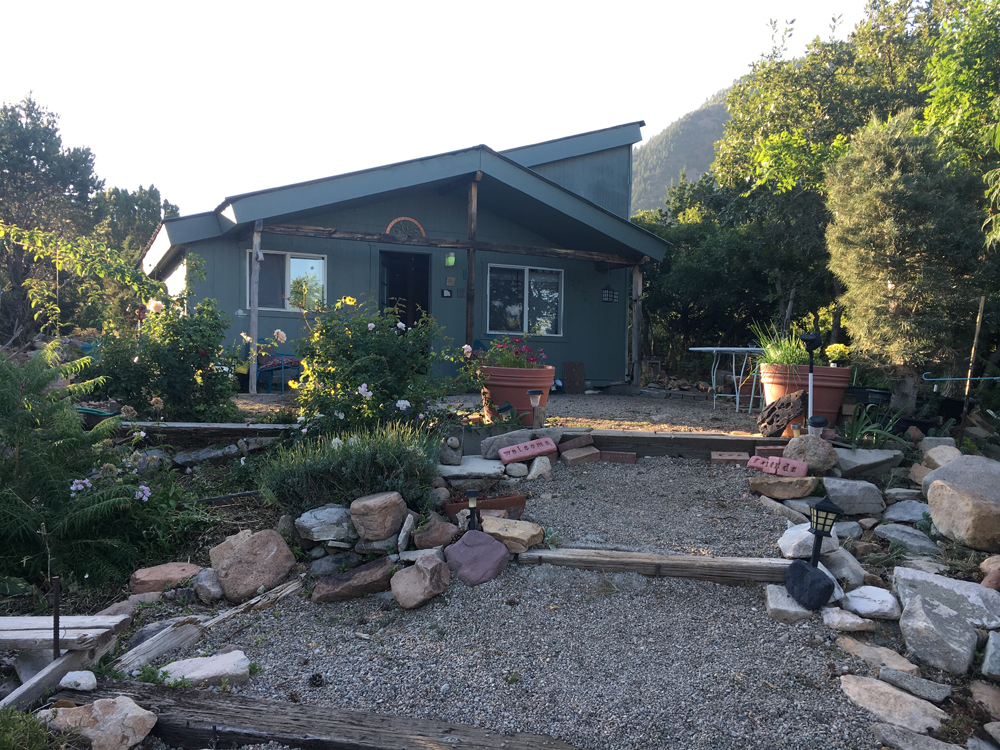
Kitschy hotels and “resorts” abound in Moab, but we recommend convening with nature. With campgrounds a-plenty, camping is one of your best bets. Try the Big Bend campground, located on a scenic road right on the Colorado River just a few miles from downtown Moab. Of the resorts, Red Cliffs Lodge stands out as one of the best with large rooms right on the Colorado River and views for days. Airbnb options range from tiny cabins right in town, like Sunny Acres, to plenty of yurts and teepees, which are a popular option. We also recommend staying in the La Sal Mountains outside of town in the “CloudHouse.

The Outdoors

Tower Arch

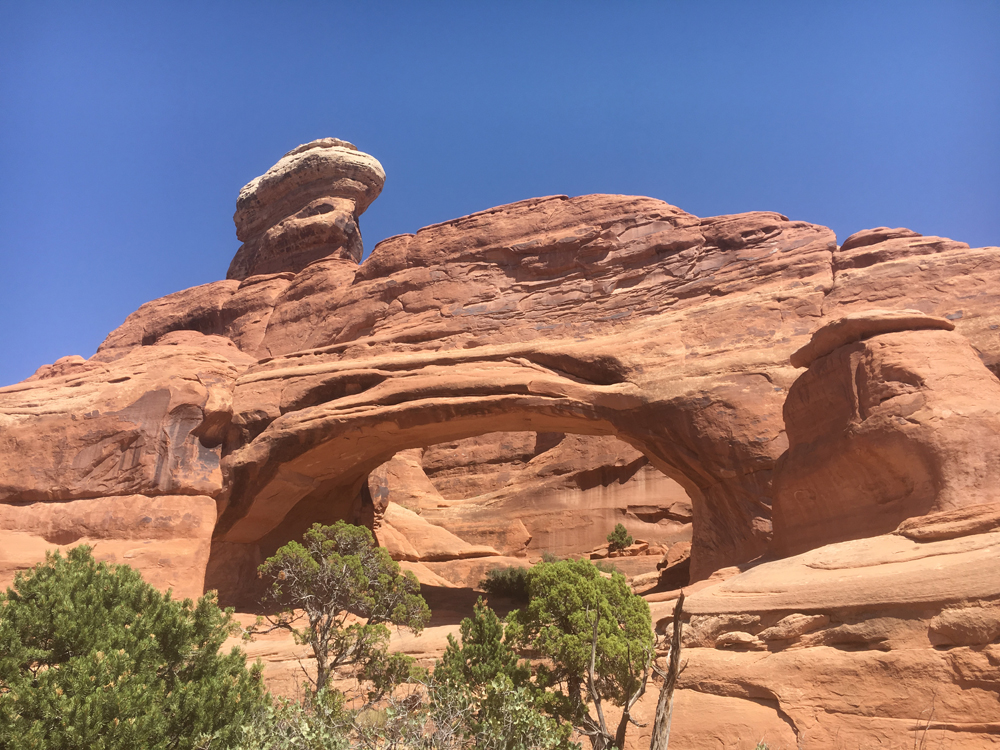
The two national parks — Arches and Canyonlands — get most of the condign glory in the area. Arches National Park has plenty of rock formations to go around, and most are viewable from the scenic drive which intersects the park. The park offers hikes for every level, from a mere quarter-mile climb leading to the impressive Double Arch, to longer hikes across the primitive landscape involving rock scrambles and sand trekking to the Tower Arch and Devil’s Garden. Heat strategies are encouraged for the summer months, like getting hikes in before noon and toting a liter of water per person at all times.

Canyonlands: Island in the Sky

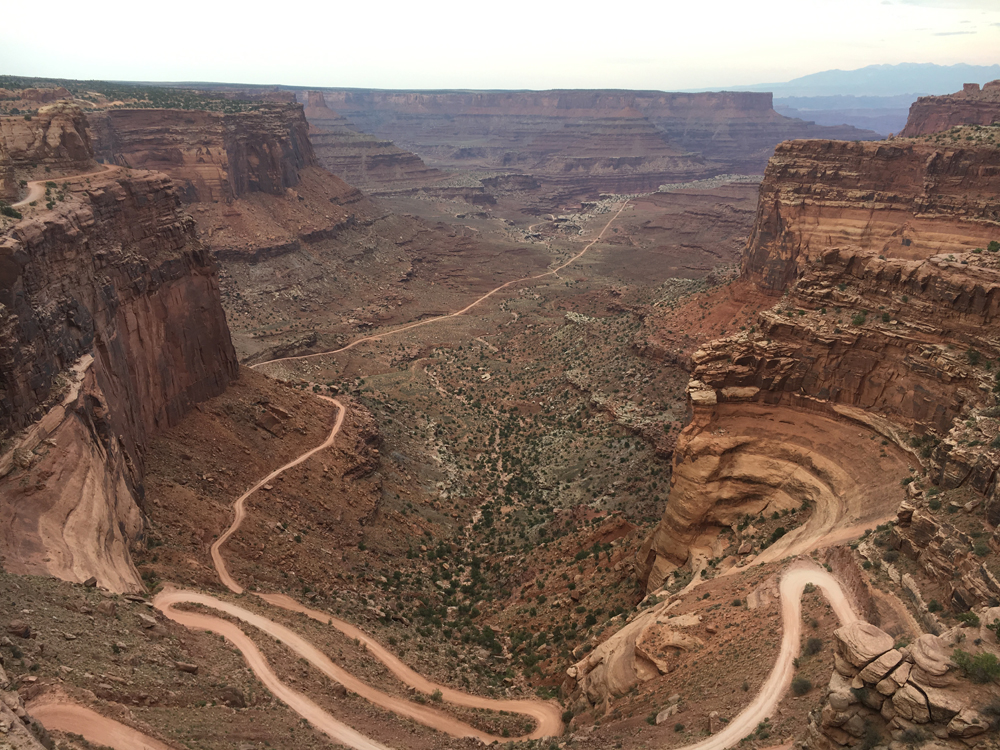
After visiting Arches, it seems impossible for nearby parks to be any different from the steep, reddish-pink rocks visible for miles, dotted with the grey-green cacti and sagebrush. However, Canyonlands National Park’s immensity and landscape is a stark contrast from Arches. It’s huge and split into four sections with sprawling, steep rock formations. The Needles is a particularly stunning spot to explore for longer trips, and Island in the Sky is a great lookout point for passers-through.

A departure from the desert climate of both Arches and Canyonlands, climbing into the Manti-La Sal National Forest offers a green, lush heat respite and is peppered with archeological sites like dinosaur footprints, giving us Land Before Time throwbacks.

After taking in the scenery by foot, Moab’s thriving adventure tourism scene will prompt you to explore via plane, rope, boat, or 4WD vehicle. We recommend canyoneering with Red River Adventures or flying over Arches in Redtail Air Adventures’ $99 flight. Mill Creek Waterfall provides a much needed place to take a cool dip in the middle of the desert and, if you’re feeling hungry, head to Potato Salad Hill to drive ATVs over the boulders and well-trafficked 4WD trails.

Food & Drink

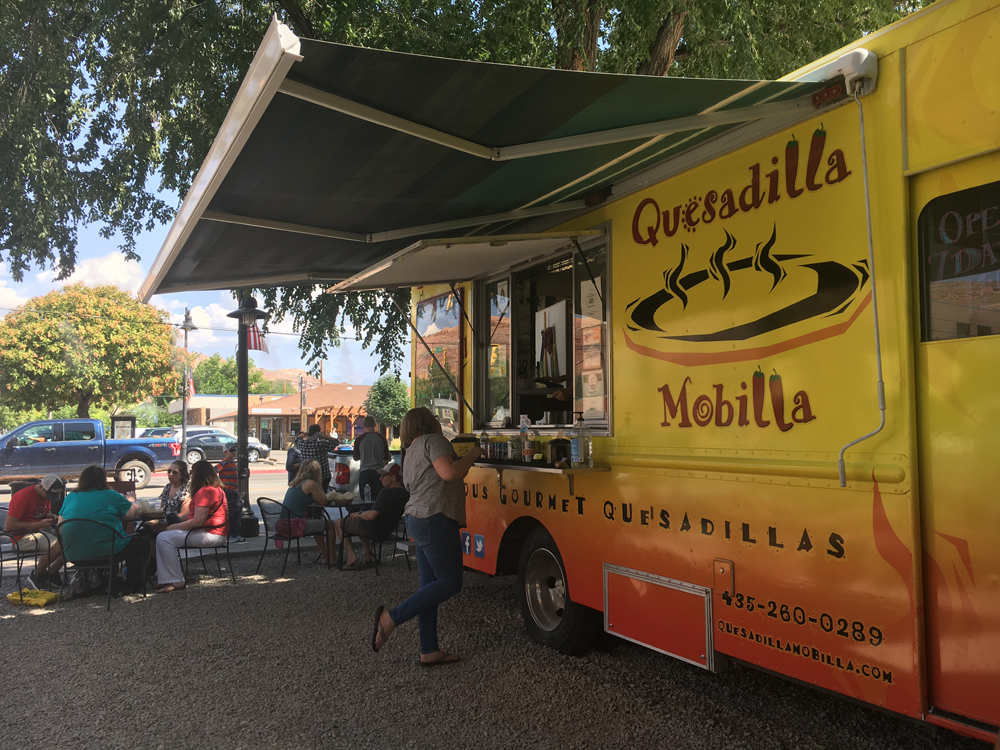
Quesadilla Mobilla

Admittedly Moab isn’t a foodie town, which makes finding post-adventure grub a bit tougher. Quesadilla Mobilla has flavorful, cheap quesadillas with chipotle sour cream and spicy salsa, plus a courtyard full of water misters to cool you down while their food heats you up. We may have eaten at this downtown food truck three times in five days. Groceries and quick food options are available at Moonflower Community Co-op, a classic organic grocery located in downtown.

There’s no other brewery option in Moab, which makes the choice clear to head to Moab Brewery for post-hike brews. Love Muffin is a breakfast and lunch spot with plenty of veggie options, breakfast sandwiches, plus deliciously strong cold brew. Moab Garage Co. serves nitro ice cream by the friendliest husband and wife entrepreneur duo and offers local art.

The Arts

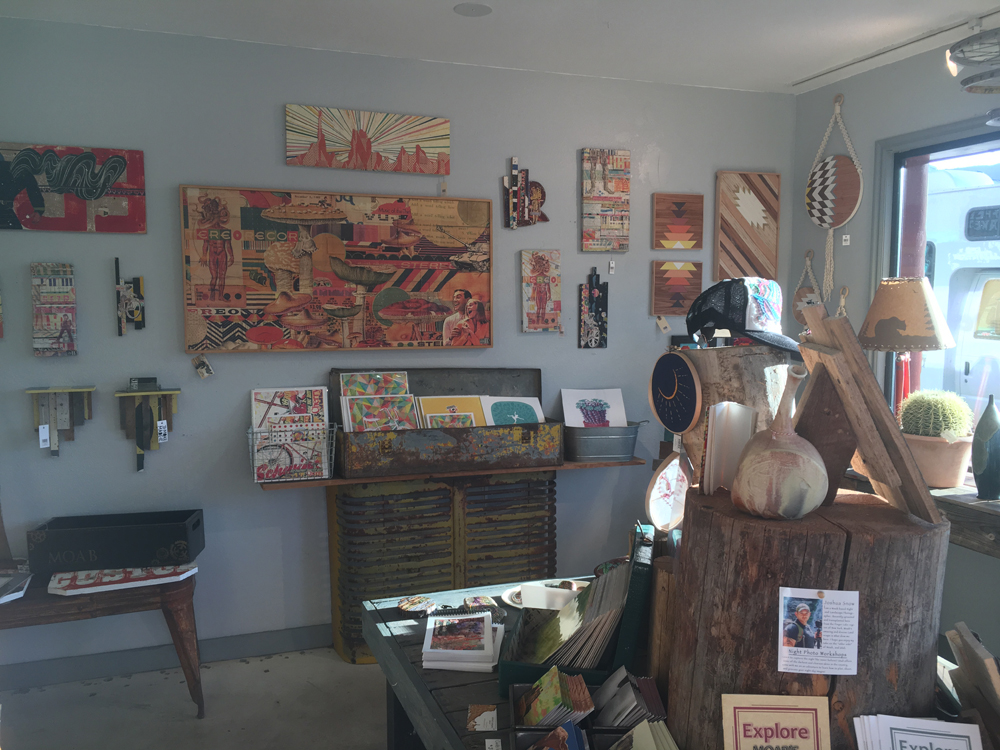
Moab Made

Certainly inspired by the landscape, local artists — and those just passing through — have created a robust art gallery scene along the main strip. Moab Made features rotating local artists, many of them using recycled materials for their artistry, like a local who makes jewelry from re-tire-d bike tires.

Moab Music Festival pairs musicians with the landscape every summer, offering musical hikes, musical raft trips, and concerts at the edge of the Colorado River. We were lucky enough to see BGS faves Béla Fleck & Abigail Washburn do their witty, endearing, magical thing at the Red Cliffs Lodge.

Local Flair

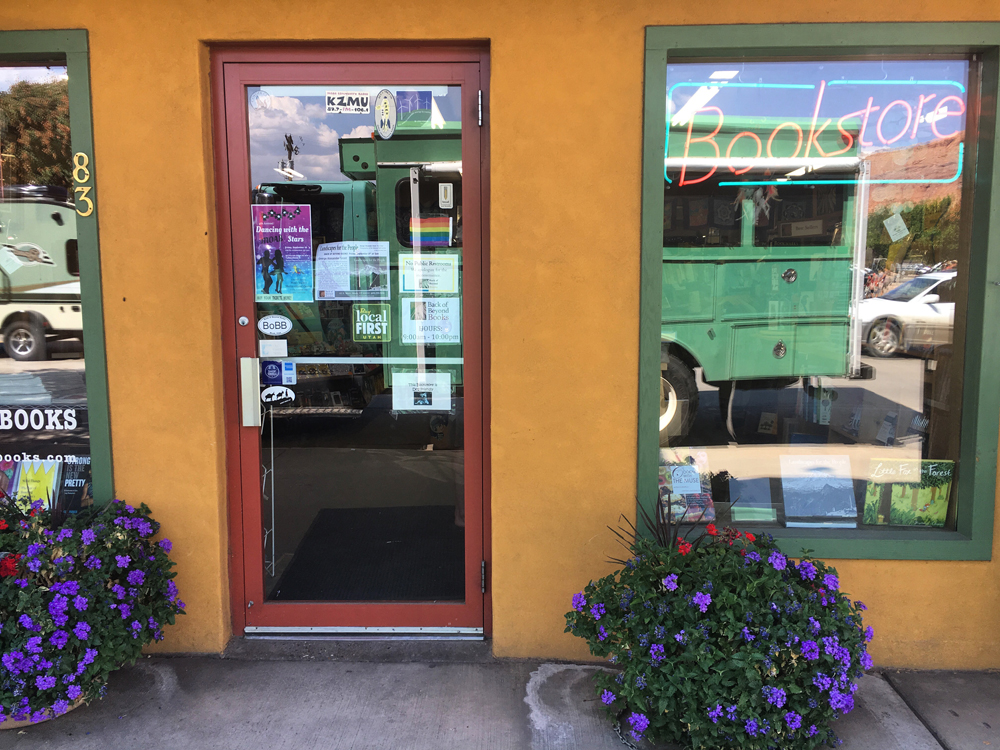
Back of Beyond Books

Indigo Alley is a well-curated local clothing shop offering men’s and women’s clothing, like leggings patterned with cacti to blend in with your surroundings. Back of Beyond Books has a great selection of regionally specific books for deeper dives into the Utah area and an impressive selection of antique copies of classic literature.

If you’d like to take a bit of the landscape with you, Moab Rock Shop is your souvenir shop. It’s not one of those cheeky rock shops, instead offering pieces from Utah to the Himalayas with rock nerds there to tell you the origin and benefits of each piece.


Lede photo credit: Anthony Quintano via Foter.com / CC BY. All other photos by Josephine Wood.

A Minute In Wilkesboro with the Kruger Brothers

Welcome to “A Minute In …” — a BGS feature that turns our favorite artists into hometown reporters. In our latest column, the Kruger Brothers take us on a tour of Wilkesboro, North Carolina, from a courthouse to a courtyard.

We make our home in Wilkesboro, the county seat of Wilkes County, North Carolina. This county is known as “the heart of American folk music.” Wilkes County lies the northern area of the Yadkin Valley, on the eastern slope of the Blue Ridge Mountains. We were drawn here by the music, and then fell in love with the people and the beautiful landscape.

Blue Ridge Parkway. Photo credit: RD Hill Photography

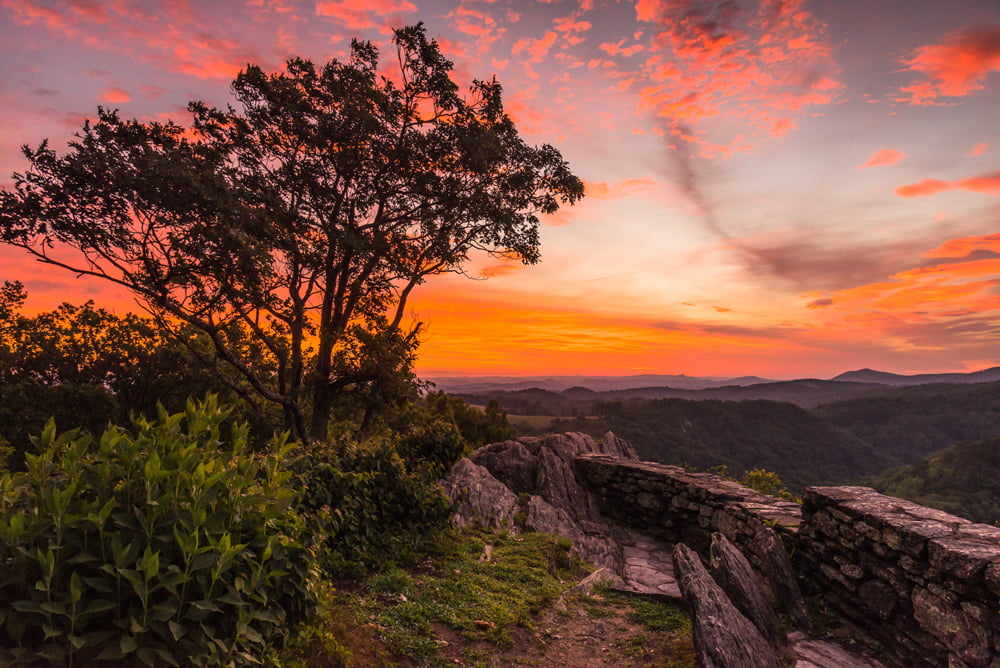
BLUE RIDGE PARKWAY: This is a very diverse region of the Blue Ridge. Of course, we love the sounds of roots music and the many festivals in the area. When we’re not playing music, we enjoy the apple orchards and vineyards in the area. There are so many recreational opportunities, such as W. Kerr Scott Reservoir’s camping, boating, bird watching, hiking, and mountain biking trails. The Yadkin River runs between the towns of Wilkesboro and North Wilkesboro, offering miles of rippling water for kayaking and canoeing. This area is also popular for trout fishing.

Carolina in the Fall. Photo credit: Wilkes Chamber of Commerce

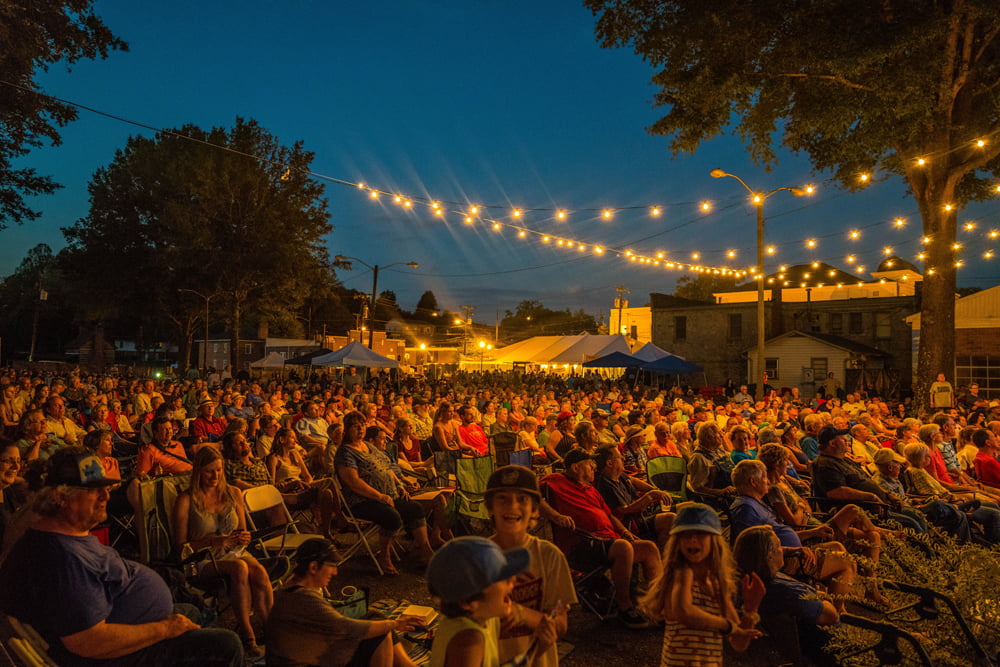
CAROLINA IN THE FALL MUSIC AND FOOD FESTIVAL: We are proud to host this annual event which features some of the world’s best folk, bluegrass, and roots artists. As Uwe sings in his song, “… in the hills of Carolina, folks have opened up the door and, for the first time in my life, I’m not a stranger anymore.” There are no strangers here as we get together for two days of food, music, and more. Food trucks from around the region bring their unique offerings and compete for the Food Truck Championship trophy. Regional vineyards and craft breweries provide a taste of the area’s best beverages. Also included are the North Carolina Banjo Championship (a favorite for Jens, of course), the Chad Lovetts Memorial Trail Run and Ride which supports the American Cancer Society, and a silent auction supporting an afterschool music program. The festival also includes Contra and clogging dance classes, artist workshops, and nightly jam sessions at the Yadkin Valley Event Center.

Doc Watson Mural. Photo credit: Kruger Brothers

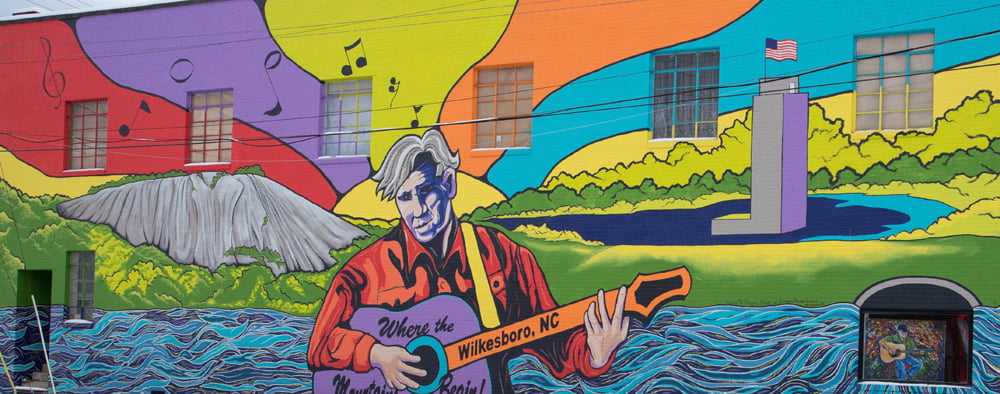
DOC WATSON MURAL: When Doc Watson passed unexpectedly in 2012, the world lost an amazing and inspiring talent, our community lost a hero, and we lost a treasured personal friend. We were pleased when students in the Wilkes Art Gallery’s annual Summer Honors Art Program participated in the creation of this mural depicting Doc along with Stone Mountain, the Yadkin River, and W. Kerr Scott Lake. Doc would’ve loved this program which pairs professional artists with talented, local high school students to create works of public art. The brightly colored mural was designed by local artist Wes Gregory and covers the entire east façade of Royall Custom Framing, a building located at the corner of Main and Bridge Streets.

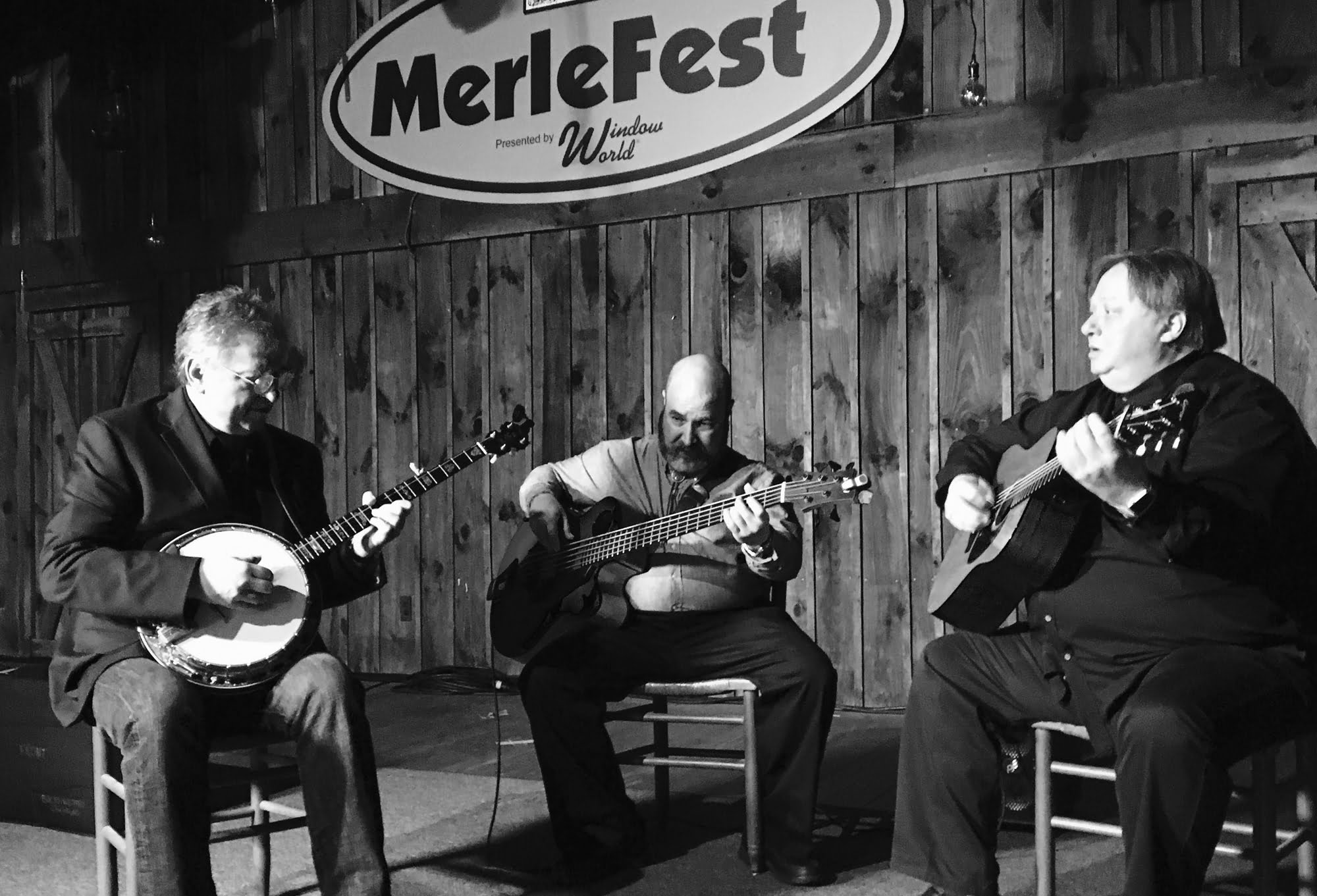
Early morning MerleFest main stage. Photo credit: Kruger Brothers

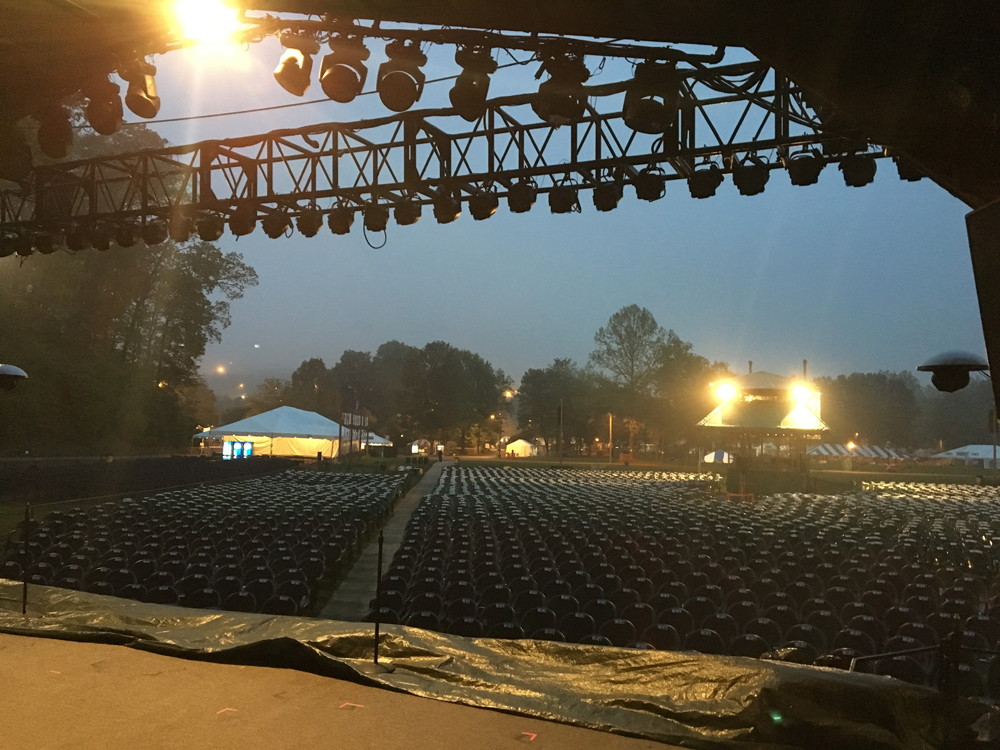
MERLEFEST: And speaking of Doc … ! Our friend continues to be honored annually on the last weekend of April at the festival created to remember Doc’s son, Merle. The four-day MerleFest, on the campus of Wilkes Community College, features music from all over the world, and we are always honored to play this special festival. It was, after all, playing MerleFest that first introduced us to this town that we now so proudly call home. The history of performers since 1988 reads like a “who’s who” of the entire world of music. Uwe took the early morning photo on the first day of MerleFest this year, hours before the gates opened. There was an air of anticipation in the misty morning light, with rows of chairs so neatly placed in expectation of the crowds to come. It is one of the premier music festivals in the country, yet MerleFest still retains that special feeling of a family reunion for fans and for those of us who perform.

Wilkes Heritage Museum. Photo credit: Kruger Brothers

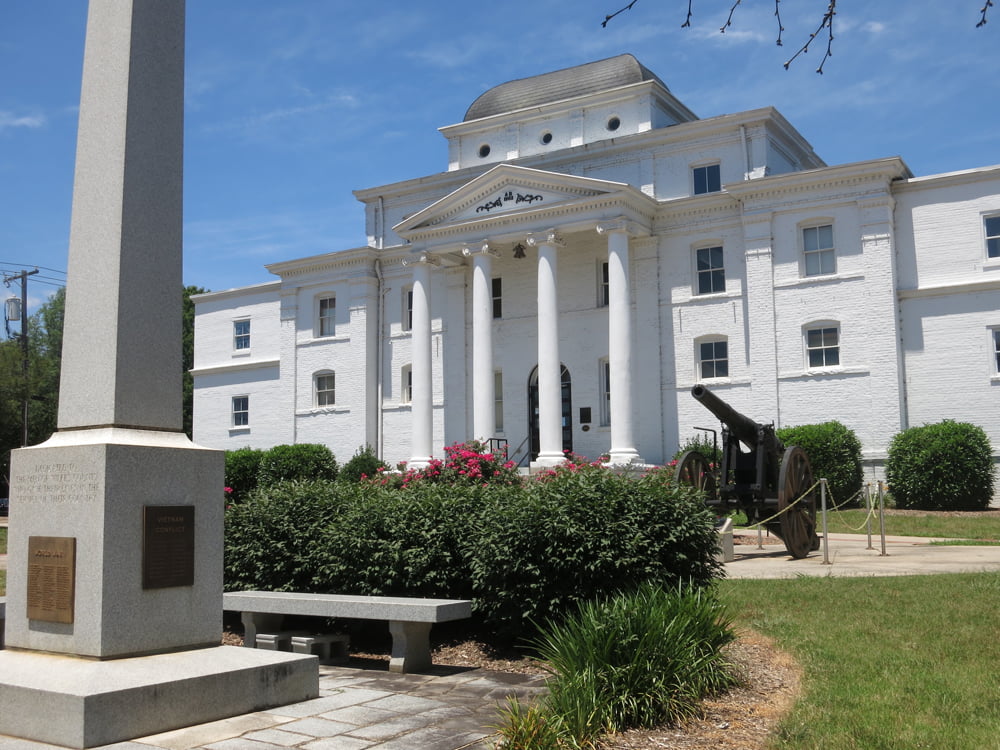
WILKES HERITAGE MUSEUM: The Old Wilkes County Courthouse, built in 1902, has been restored and houses the Heritage Museum for Wilkes County History. It is a beautiful example of classical revival structures. Inside is a rare collection of artifacts and images that tell stories of early settlers, military history, industry, agriculture, and so much more about the history of our town and county. Behind this building is the old Wilkes County Jail, now a museum, as well. It is one of the few remaining mid-19th century jails. One of its inmates was Tom Dula or Dooley, famous for the 1866 murder of Laura Foster, and made more famous by the old North Carolina folk song “Tom Dooley.”
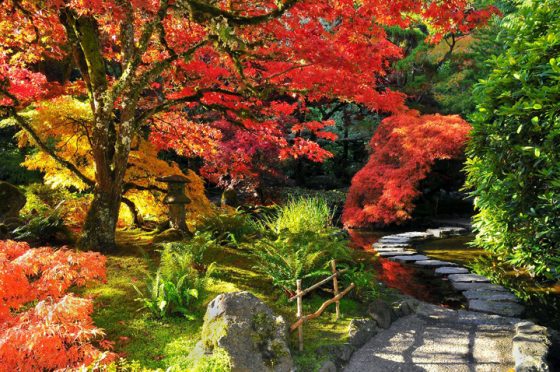
Open air market. Photo credit: Kruger Brothers

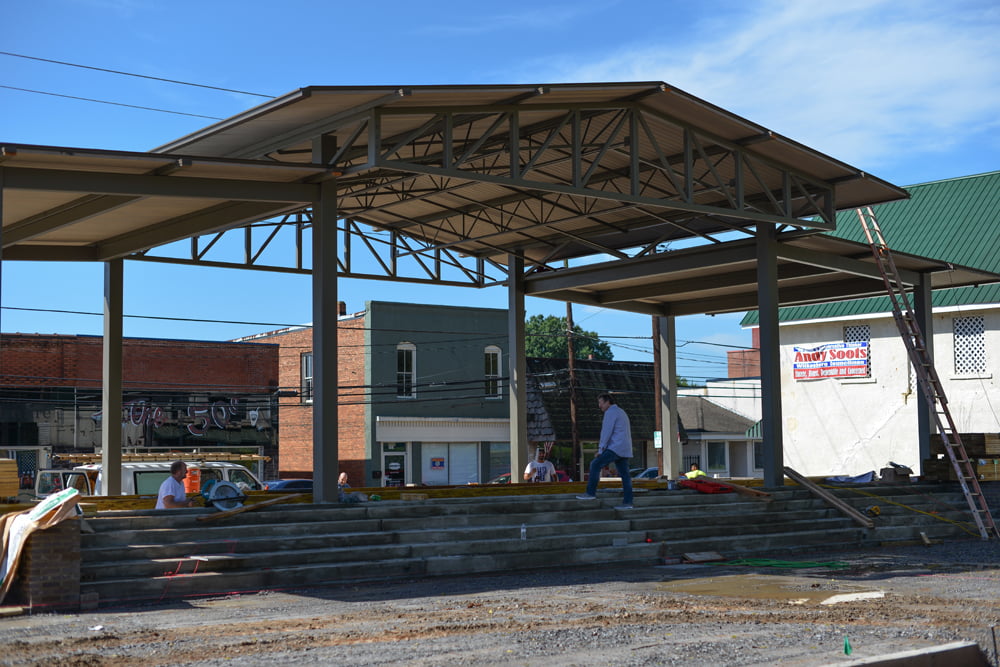
OPEN AIR MARKET: Downtown Wilkesboro is enjoying a revitalization project that includes a new performance stage in the Open Air Market. The Wilkesboro Open Air Market is held on Fridays, from May through September, providing local and regional farmers and artisans the opportunity to sell fresh farm products and handcrafted items. There is also live music throughout the market season. The stage will be used for many of the festivals and events in town, and we’re looking forward to playing here.

Raffaldini Vineyards. Photo credit: Wilkes Chamber of Commerce

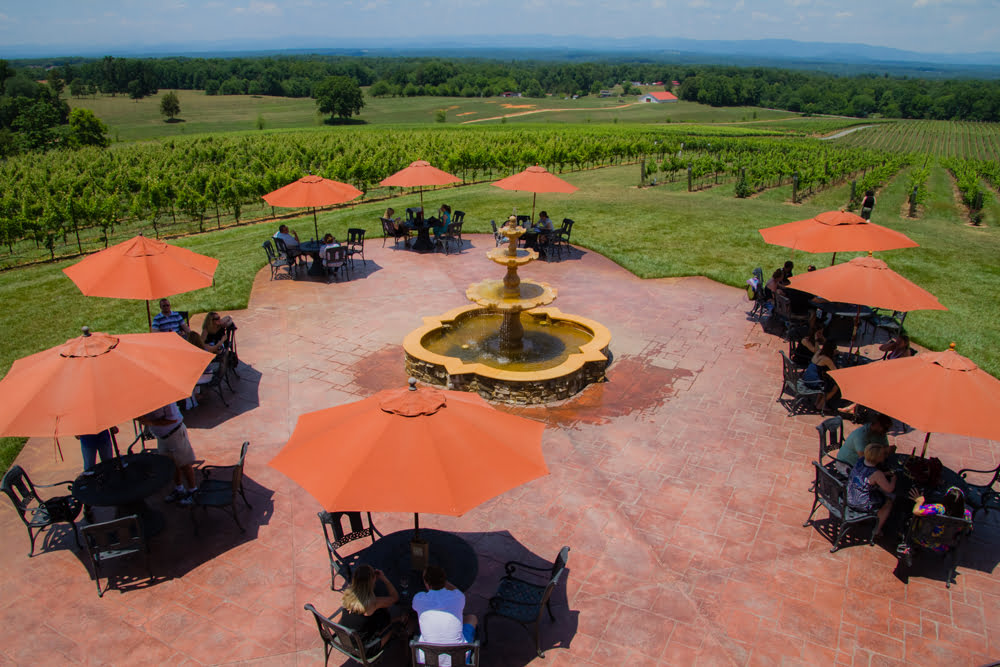
RAFFALDINI VINEYARDS: This is a favorite escape just outside of Wilkesboro in Rondo, North Carolina. Raffaldini Vineyards & Winery is a surprising winery that will make you feel as if you’ve stepped out of the Yadkin Valley and right into Tuscany. They have delicious wines made from authentic Italian varietals. The 102-acre estate is surrounded by the serenity of the Yadkin Valley and the Blue Ridge Mountains. The patio is a perfect place to enjoy lunch, a glass of wine, and the picturesque countryside. It is also an ideal place to relax and reconnect with our lovely wives when we are not on the road.