Old Spot’s Transatlantic Old-Time Playlist

(Editor’s Note: Below, United Kingdom-based old-time duo Old Spot – Rowan Piggott and Joe Danks – curate a Mixtape for BGS celebrating old-time music of the UK and Ireland. In order to include as many tracks as possible representing the vibrant string band scene in the UK, some selections are shared via Spotify and others via Bandcamp, depending on availability. We hope you enjoy listening and learning about transatlantic old-time – and that you support all roots musicians directly whenever possible.)

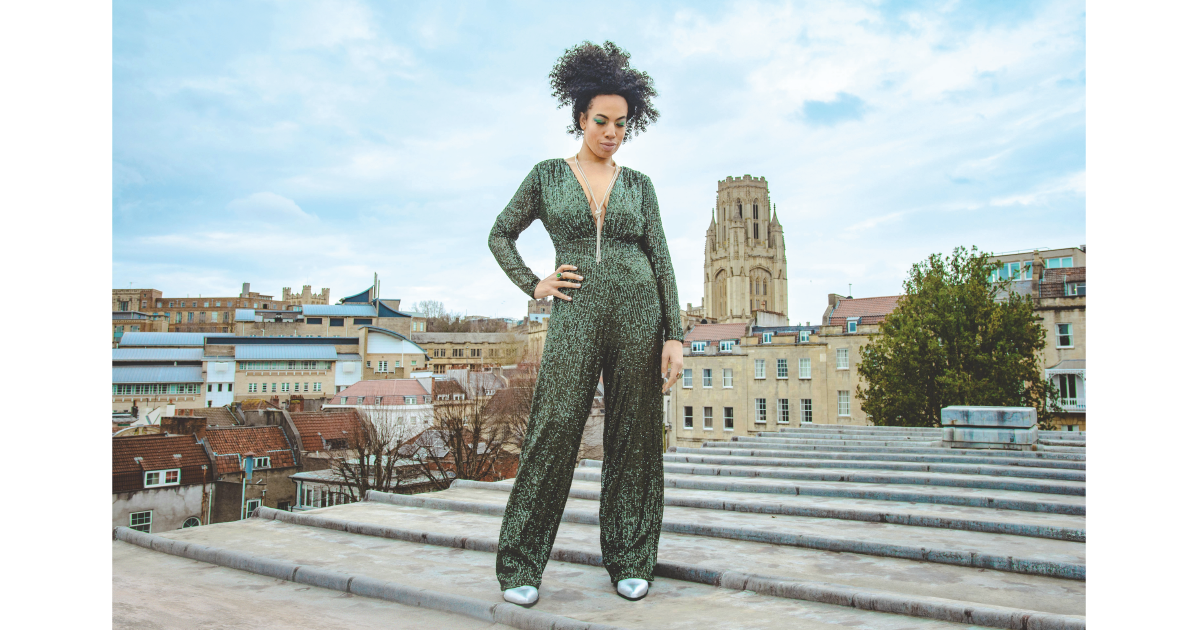
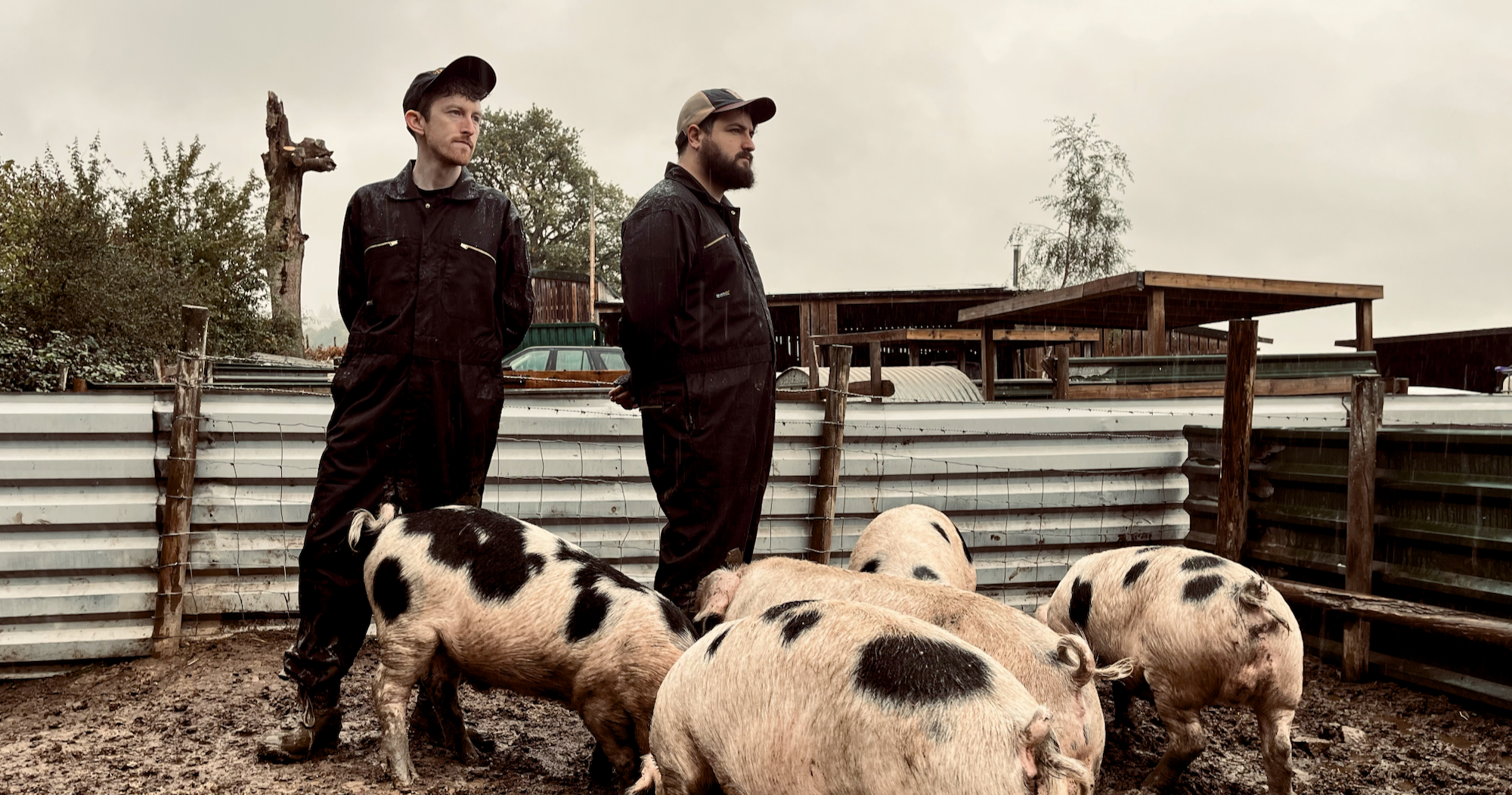
This is a Mixtape designed to highlight some of the amazing old-time string band music coming out of the UK and Ireland at the moment. Old Spot is a product of a vibrant scene, with the fiddlers and bands around us just as influential to us as their American counterparts.

This playlist looks to reflect some of the musicians performing string band music today, whilst shining a light on lesser-known gems. In compiling it, we’ve realized how much of the music we love on the old-time scene here isn’t on Spotify – if you love any of this music, buy it from the artists who made it! Anyway… less jawin’ more sawin’… – Old Spot

“Elzick’s Farewell” – Rattle On The Stovepipe

Rattle On The Stovepipe formed in 2003 and have played up and down the UK spreading old-time with band stalwarts Pete Cooper and Dave Arthur joined later by Dan Stewart – probably our favorite banjo player in the UK. This groovy version of “Elzick’s Farewell” is from their first album with Dan, No Use In Cryin’.

“Maggie Mead” – Follywren

Follywren is the brainchild of Bristol musician Kai Carter. We love lots of stuff that Kai does – his old-time trio is great and his original music (Kai & Hollis) is also a tour car staple. We have a real soft spot though for this amazing Follywren album, described as a kind of New Orleans-inspired electric string band. The tuba and electric banjo actually end up landing you somewhere between Clyde Davenport, Ghanaian Highlife, and Captain Beefheart’s Shiny Beast era… a good place to be.

“Rainbow” – Cath & Phil Tyler

Cath & Phil Tyler straddle the traditional and experimental music scenes in the UK and run the Newcastle sacred harp singers. Their albums are a treasure trove of ballads, with Phil’s mesmeric guitar and banjo playing supporting Cath’s one-of-a-kind, transportive voice. In some ways though, they are at their best a cappella where their background in shape note style really shines.

“Shanghai Skyline” – Jeri Foreman & Ruth Eliza

Jeri Foreman & Ruth Eliza are a powerhouse fiddle and banjo duo and you always want to see them on a festival lineup. Where these guys go, good tunes follow and their debut album shows off their musical connection beautifully. Recorded live, we’ve chosen one of Jeri’s tunes to highlight here.

“Chicken & Dumplings” – Ben McManus

Welsh musician Ben McManus is a multi-instrumentalist and promoter of old-time music in the UK. He’s schooled in the history of old-time and has done a number of interesting projects exploring the connections between Wales and Appalachia. He’s also interned at the Smithsonian – absolute dude. This is a laid-back clawhammer guitar and cello version of “Chicken & Dumplings,” a favorite of UK sessions. This record makes us miss Ben, and not just because he makes a mean Negroni.

“Dormae” – Hannah Read

Hannah Read’s first Fungi Sessions album is one of our favorite ever records as a band. We loved the sonics of it so much that we travelled to the studio in Scotland where it was recorded to make our new album. Hannah is now based in the US, but hails from Scotland and comes over frequently to collaborate with the incredible Michael Starkey. Hannah has collaborated with indie royalty Big Thief, Julien Baker, and Lucy Dacus, and you can hear this broader sonic palette across her output. But the real star of these Fungi Sessions albums is her incredible composition and the subtle magic of her bow arm.

“Wolves A’ Howlin'” – Kieran Towers & Charlotte Carrivick

Kieran Towers & Charlotte Carrivick can most often be found in the bluegrass scene in the UK, but came together for this one-off old-time album of absolute rippers. Charlotte, one of the best flatpickers in the UK, reveals herself to be one of the finest clawhammer players, and Kieran, best known for shredding bluegrass solos, turns into prime Bruce Molsky. Being able to just casually drop this album as a side project is outrageous. A frustratingly brilliant album from two undeniable musical geniuses.

“Glory In The Meeting House” – Ben Paley & Tab Hunter

In our opinion, Ben Paley is the jewel in the crown of British old-time music. He’s performed in loads of different lineups with musicians from the South of England – probably most notably The Long Hill Ramblers and with his dad Tom Paley of The New Lost City Ramblers. His fiddling is just as good as it gets, full of character, groove, and skill. On this record from 1999, he’s backed by Tab Hunter who is an old-time backer with taste, power, and pocket.

“Pterodactyl” – One Night Stringband (Old Spot, Jeri Foreman, Ruth Eliza)

We recorded this collaborative album with Jeri Foreman and Ruth Eliza over the course of one night and a bottle of whisky. We put it out the following day after some hungover mixing and now we perform sporadically as The One Night Stringband for square dances and concerts. We’ve got our seventh and eighth gigs together this summer!

There’s a kind of exploratory madness in these recordings and we all chose tunes we couldn’t get to hang quite right in our duos. There’s a raging version of Rhys Jones’ “I’ll Reap What I’ve Sown,” a version of “Josie-O,” and this, Ruth’s prog-y old-time wig-out “Pterodactyl.”

“Benton’s Dream” – High Strung Trio

From Cork, Ireland, this is one of our favorite old-time records of the last few years. From ex-members of the Grits & Gravy Stringband comes a new trio record of uncompromising ragers. Fiddle player (and luthier) Ian is an absolute machine on this record, laying down danceable bangers like it’s nothing. A great record to pick up new tunes or to power a long car journey, we can’t stop listening.

 “Two Little Sisters” – Sugarwell Hill

Sugarwell Hill is a trio from Leeds in Yorkshire. This is a new record from them that the scene has been anticipating for a while. Recorded confidently and simply, it’s a great snapshot of what is so magical about this laid-back band. “Two Little Sisters” features Simon’s relaxed vocal delivery and groovy banjo playing set against Mick’s gritty fiddle playing. We’re so lucky to have these three in the scene over here, and can’t think of a bad time to stick this beautiful new record on.

“Walk Me Round” – Rhona Dalling

Rhona is another Bristol-based fiddler, singer, and banjo player. This record is, so far, her only recorded output, but like so many of the best trad musicians, her best music happens in sessions and muddy fields. She has an incredible fiddle style, full of poise and effortless technique, and a beautiful voice. This quietly beloved record features a great waltz and her tune “Balfour Road,” which is played in trad sessions up and down the country and has really transcended the old-time scene, thanks to a recording by bal folk band Topette!. Perfect for a rainy day.

“Bear Creek” – Lankum

Whilst most of their repertoire is drawn from Irish folk, experimental trad behemoths Lankum often close their sets with this old-time tune. We couldn’t not include it after watching 20,000 people bouncing up and down to it at Glastonbury!

“Bowling Green” – Joe Mansfield & The Temperance Two

Bristol-based Joe Mansfield is another person you love to see walk through the door at a jam. He’s got an amazing repertoire and is a great hang. He’s got a new duo called The Low Line (watch that space), but he gigs out all the time with the Temperance Two. This is a great version of “Bowling Green.”

“The Roustabout Song” – Old Spot

We heard “The Roustabout Song” sung at a Morris Dance festival singing session. The song sounded distinctly American – a bit of digging led us to English folklorist Sandy Paton and, in turn, the songwriter Dillon Bustin. The song was written at Pinewoods Camp and according to Paton presented both a cappella and with a “lazy river” banjo accompaniment. We’ve done a new joyful fiddle-singing version, bringing out the song’s subtle political undertones. Unfortunately the parasols are twirling faster than ever.

“June Apple” – The Firecrackers

The Firecrackers are five of the UK old-time scene’s stalwarts, and they whip up a frenzy wherever they go. This album of field recordings is a good snapshot of them doing their thing and Benton Flippen’s “June Apple” is their signature tune.

One of the band’s fiddle players, Dave Proctor, edits Old Time News, the quarterly old-time magazine published by FOAOTMAD (Friends of American Old Time Music and Dance), a grassroots organization that has supported the growth of old-time in the UK so much over many years.


Photo courtesy of the artist.

Love More, Care Less: Martin Kerr’s Songs of Hope for Dark Times

I left home (a sleepy market town in middle England) the day after high school finished and traveled around the world with just a guitar and a backpack. I paid my way by teaching English and singing songs in cafes. Five years, 36 countries, and two unfinished degrees later, I moved to Canada to marry a girl I’d once met at a party in Beijing and started my new career as a street performer.

Since then, I’ve played about 3000 gigs, from street corners to stadiums, successfully avoided getting a real job, and raised three amazing ginger kids. I love meeting and singing with people of all walks of life, especially the ordinary, humble folks who are often overlooked. I’m not really interested in finding a niche or a scene – I’m much more keen on finding ways to bridge the gaps between them.

One thing we all have in common is hard times and a need to hold on to hope through our grief and disappointment. Songs have always helped me, and do that, and I feel that I’m not alone. These tunes have inspired and comforted me over the years, and a couple of my own can do the same for you. – Martin Kerr

“Love More, Care Less” – Martin Kerr

I recorded this live in one take, because it’s a song about honesty and acceptance, and because there’s already enough airbrushing and auto-tuning in the world. ‘Love more, care less’ is how I’m trying to live my life now.

“Better, Still” – 100 mile house

This gem of a song beautifully encapsulates the feeling of being a young couple trying to find your place in a senseless world. 100 mile house have disbanded now, and they never got the recognition they deserved, but to me this song is timeless.

“Sometimes” – James

I still remember the first time I heard this song, wedged into the middle seat of an old car with new friends on a dark country road in northern England as the rain poured down. It’s an ecstatic, defiant celebration of song, storms, death, and the meaning of life.

“Big Bird In A Small Cage” – Patrick Watson

The softness of this song’s beginning is so inviting. It grows, line by line, with new instruments and harmonies, the song spreading its wings like the bird in the title. I love a song that grows and lifts and takes you on an unexpected journey. Plus, it’s my wife’s favorite, so I always get extra points for playing it.

“Re: Stacks” – Bon Iver

Usually I favor narrative songwriting with a clear story. But this abstract work of genius somehow immerses me in a world, a heart, and a feeling without making any outward sense. It’s the perfect end to a mind-blowing album, carrying the listener from anguish through acceptance to a new day.

“Feather On The Clyde” – Passenger

Passenger was a street performer when he made this record, busking on the streets of Sydney to pay for the recording and sleeping on the studio couch at night. I love the vulnerability and honesty in this simple song with its intricate fingerpicking that ebbs and flows like the titular river. I remember listening to this 20 times in a row on a long flight home and resolving to allow myself to be carried by the flow of life like the feather he sings about.

“A Case of You” – Joni Mitchell

Possibly the greatest vocal performance on any record ever. I’ve always wanted to cover this song, but never felt I could do it justice. Joni paints vivid pictures of heartbreak with her words and illuminates them with the glow of her perfect voice over a lonely dulcimer. The peak of confessional singer-songwriting. I listened to it endlessly in my first apartment in Beijing when I owned nothing but a sofa, a Discman, and a handful of pirated CDs bought from the street market.

“Fast Car” – Tracy Chapman

I love that this song was rediscovered by a new generation recently, but the original version can never be beaten. As a 5-year-old hearing this for the first time, I’m not sure I understood the whole story at first, but I pored over the lyrics on the back of the vinyl dust-cover in my sister’s room until I knew every word and every note of this young woman’s story from half the world away. The lift into the chorus captures the bittersweet exhilaration of escaping something that was once beautiful, but now has turned dark and needs to be left behind.

“Can’t Unsee It” – Martin Kerr

Unspeakable things are happening in the world at the moment and we’re told to look the other way, to pretend it’s not happening. I made this song to try and express the grief in my heart at witnessing the genocide in Gaza, while being powerless to stop it. The melody is inspired by “Here Comes The Sun,” in the hope that there could yet be some light at the end of this long darkness for the children of war.

“Guiding Light” – Foy Vance

My parents used to sing me to sleep with old Scots lullabies that I only half understood. Foy Vance manages to bridge the gap between Gaelic traditions and the modern world in his music and this song gives me a timeless feeling of home and belonging.

“Innocence and Sadness” – Dermot Kennedy

Hearing Dermot sing this solo for a whole stadium every night was magical. I got to open for him on his cross-Canada tour last year and it was unforgettable. His songs are so nostalgic and so fresh at the same time, ancient and modern, so personal yet universal. I try to reach for that in my own songwriting and performing.

“Farewell And Goodnight” – Smashing Pumpkins

I used to fall asleep to this song every night when I was 16 and 17, when I was trying to figure out who I was, where I belonged, and why the girls I fell for never fell for me. Listening now I can hear it starts with a brush on a snare drum, but I always thought it was the waves lapping on the shore. The song is a calm and wistful end to a chaotic album full of angst and confusion (Mellon Collie And The Infinite Sadness). I think it taught me the value of simplicity and comfort, of contrast and context. I can still hear the click of the stop mechanism that would almost wake me up as the tape ended on my cheap plastic boombox.


Photo Credit: Shaun Scade

BGS 5+5: Rose Betts

Artist: Rose Betts
Hometown: London, United Kingdom
Latest Album: There Is No Ship (released March 7)

What has been the best advice you’ve received in your career so far?

When I lived in London, my parents would often come to my shows. Right before I’d go on, my mother would say, “Tell me a story.” It seems so simple to put it that way, but really it was such a wonderful gem of advice, a steady light, a root to hold onto. It’s easy to get caught up in other things, when I’m playing live I have to fight against the problems of not hearing myself, the lights, raucous crowds. When I’m singing a song to my phone to share on TikTok I’m thinking about the lighting, or whether its engaging enough. Even when I’m in a room with executives and they’re trying to figure out if I’m worth investing in – keeping that line of “tell me a story” in my head and my heart ties me to the old and beautiful tradition of what songwriting is and, when you take all the egos and the money out of it, what everybody wants to be a part of. We are born storytellers, all of us, and that is the thing that ties us together and helps us grow.

What other art forms – literature, film, dance, painting, etc. – inform your music?

I actually turn to other art forms for inspiration much more than I turn to music. Literature has always been important to me and totally informs more songwriting. Melody is a gift from the air, it isn’t something I overthink, but words, and everything that can be poured into a melody through them, are so magical to me. Authors like Tolstoy, Turgenev, Austen, and Emily Brontë, poets like Keats, Philip Larkin, Seamus Heaney – they all inspire me in different ways to become a better songwriter. I love the challenge of finding new ways to say old things. It offers me and also the listener a chance to look afresh at the world and at themselves.

Which elements of nature do you spend the most time with and how do those impact your work?

Nature is my church, it is where I go to free my mind. Living in LA, I’ve become acquainted with a different kind of nature and I’m not sure it suits me. England is lush, the greens are abundant, the air is rich and full of moisture, it weighs the sky down, bringing it nearly within touching distance. None of this is in LA. So my favourite thing to do here is to drive to San Bernardino, up into the mountains, to Crestline. Being around those trees fills me up, I can feel it nourishing something in me.

Nature roots me to the simplicity of what it is to be alive. It is passive and without pity – a witness. I feel like songs need what human beings need: air and light and water. But everyone has feet that touch the earth, so all songs need to have a part of themselves in contact with the ground, the roots, the stone.

If you didn’t work in music, what would you do instead?

I’d like to think I’d have some quiet job somewhere which gave me lots of time to read, maybe as a librarian or a translator of foreign literature. Or perhaps something in costume or fashion – I love making clothes and I love film costume, so being someone who brought the world of film to life through costume would be pretty wonderful.

Does pineapple really belong on pizza?

Surely trying to police pizza is like trying to say that a violin only belongs in an orchestra and you can’t have pancakes for dinner. Think about all the wonderful things we’ve made because we broke the rules. I love when cultures mix together and make something new and unexpected, it happens all the time, and should be celebrated. That said I don’t have pineapple on my pizza.


Photo Credit: Catie Laffoon

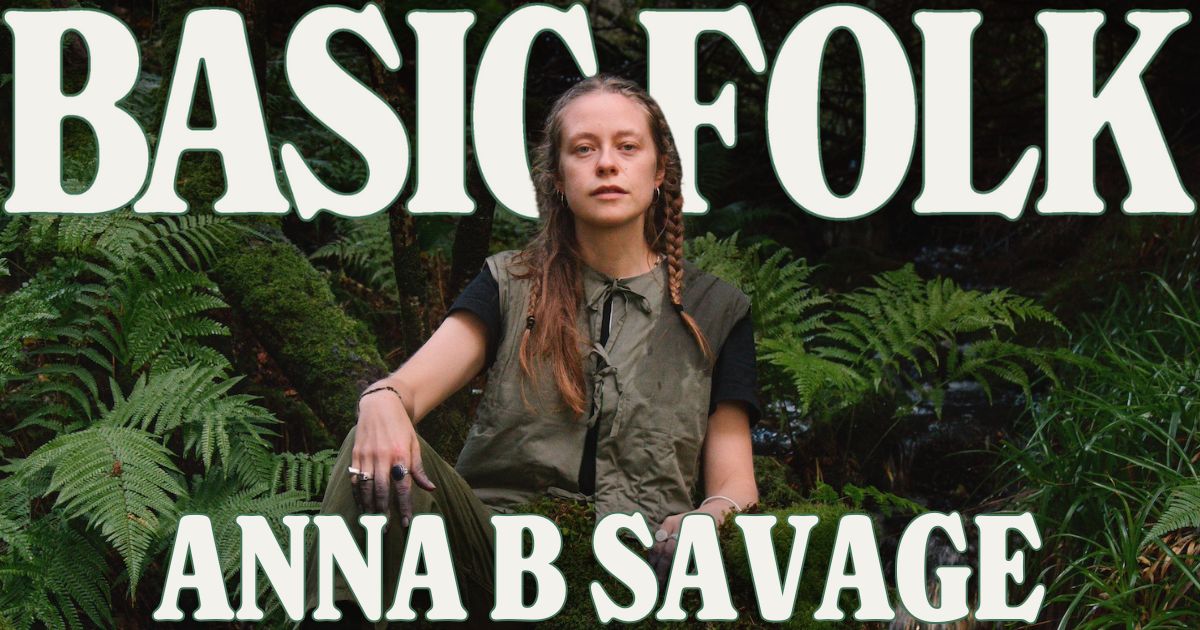
Basic Folk: Anna B Savage

Anna B Savage is down-to-earth and witchy as hell at the same time. Over her three albums, she’s cultivated a mesmerizing sound and epic image – like David Bowie, Björk, Kate Bush, etc. – that’s gained her a godlike reputation. A reputation which preceded the actual human being behind the art, leaving some to wonder what it would be like to speak to her. Turns out, she’s a grounded, kind of goofy, and perfectly normal person. In our Basic Folk conversation, we explore the duality of her persona – Anna Savage versus her stage name of Anna B Savage – and how her new album, You & i are Earth, reflects a blending of these identities with a focus on nature and love.

LISTEN: APPLE • SPOTIFY • AMAZON • MP3

In this episode, Anna reflects on the realization of her parents’ unusual musical paths (they are both opera singers) and how it influenced her own creative pursuits. We delve into her songwriting journey, her love for birds, and the evolution of her unique singing voice, which blends classical influences with a jazz singer’s sensibility. Anna also opens up about her stage fright and the progression of her confidence as a performer. She touches on the complexities of being an English person living in Ireland and the importance of understanding the historical context of her new home.

As we navigate the themes of You & i are Earth, Anna reveals the inspiration behind the track “Agnes” and the mysterious allure of the 17th-century plate that inspired the album’s title. With a lighthearted lightning round, we learn about her favorite birthday tea, her ideal stage outfit, and her witchiest recent activity, too.


Photo Credit: Katie Silvester

WATCH: The Wandering Hearts, “Still Waters”

Artist: The Wandering Hearts
Hometown: England
Song: “Still Waters”
Release Date: October 26, 2023
Label: Chrysalis Records

In Their Words: “‘Still Waters’ is a conversation between the head and the heart and the separate choices we make on behalf of them. We try to see clearly enough to make a firm decision either way, only to discover that there is a rippling series of consequences whatever the outcome. Writing and recording this song, we gave the rhythm a feel of lapping waves to capture the sense of the push and pull of the tides, to mirror the push and pull of the inner conflict.” – The Wandering Hearts


Photo Credit: Stewart Baxter

LISTEN: Ags Connolly, “Overwhelmed”

Artist: Ags Connolly
Hometown: Oxfordshire, England
Song: “Overwhelmed”
Album: Siempre
Release Date: June 16, 2023
Label: Finstock Music

In Their Words: “As the album Siempre is partly a celebration of Texas music I wanted there to be at least one ‘barroom’ waltz on it. The title and hook for ‘Overwhelmed’ had both been in my head for a long time and a slower waltz groove seemed natural with them. The word itself is quite easily stretched out over a melody — I couldn’t think of many other songs where it’s been featured prominently.

“The origin of the title was looking back on a situation that had gone before at what seemed a safe distance to afford me some clarity on it: what I found was I was still as immersed in and confused by it then as I had been in the past. ‘Overwhelmed’ was the apt word. The players are what bring this song to life: Rob Updegraff has an incredible guitar tone and Billy Contreras creates magic with the fiddle. I’m lucky to have had them involved.” — Ags Connolly


Photo Credit: Kev Lloyd

WATCH: Misty River, “Walk Me to the River”

Artist: Misty River
Hometown: London, England
Song: “Walk Me to the River”
Album: Promises
Release Date: October 1, 2021
Label: The Workshop

In Their Words: “Sometimes I think the desire for fundamental change is very like a river; at times its hardly there at all, yet at other times when it’s in full flow it can take your breath away with its ferocity and speed, promising new adventures and transformation. I wrote this song at a time of great change in my personal life. I was questioning if I was to take a leap, who would come along and who would be left behind. I’m a great believer in the power and strength of community and how that helps us to be become more resilient, even during times of great adversity. I am so grateful for the amazing people and new friends I have made on this new musical journey.” — Carmen Phelan, Misty River


Photo credit: Arthur René Walwin
This video is presented by British Underground, filmed at Real World studios by Northern Cowboys Films

WATCH: Lady Nade, “Willing”

Artist: Lady Nade
Hometown: Bristol, UK
Song: “Willing”
Album: Willing
Release Date: June 18, 2021

In Their Words: “I wrote ‘Willing’ as a message of acceptance, loyalty and friendship. I’ve often tried to fit in, which has meant I lost myself for a while, I’ve been working really hard in the last couple of years to be aware of that. Realising being individual is what being human means, these feelings are particularly poignant for everyone after this prolonged period of separation we’ve all been through. The video was filmed in my hometown in Bristol along the route of the BLM protests last summer. I end the video at the base of the statue of Slave Master Edward Colston, which was dismantled during those protests. The way the video and song came together portray the message of self, as well as community.” — Lady Nade


Photo credit: Arthur René Walwin

True to Her Activist Roots, Folk Legend Peggy Seeger Still Longs for Peace (Part 2 of 2)

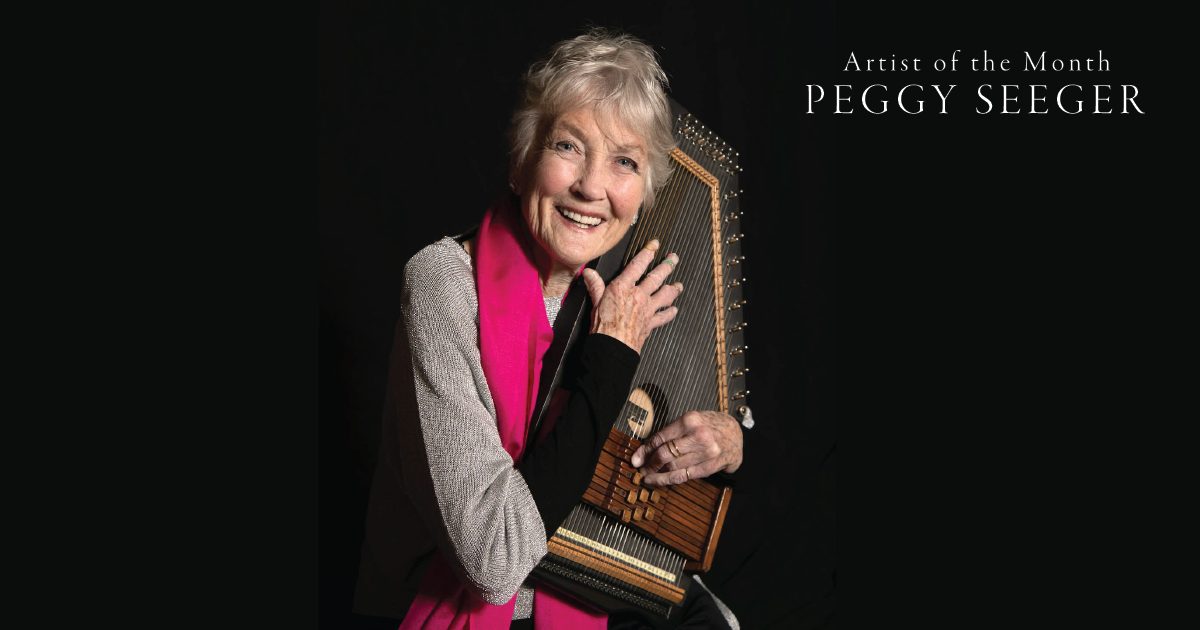
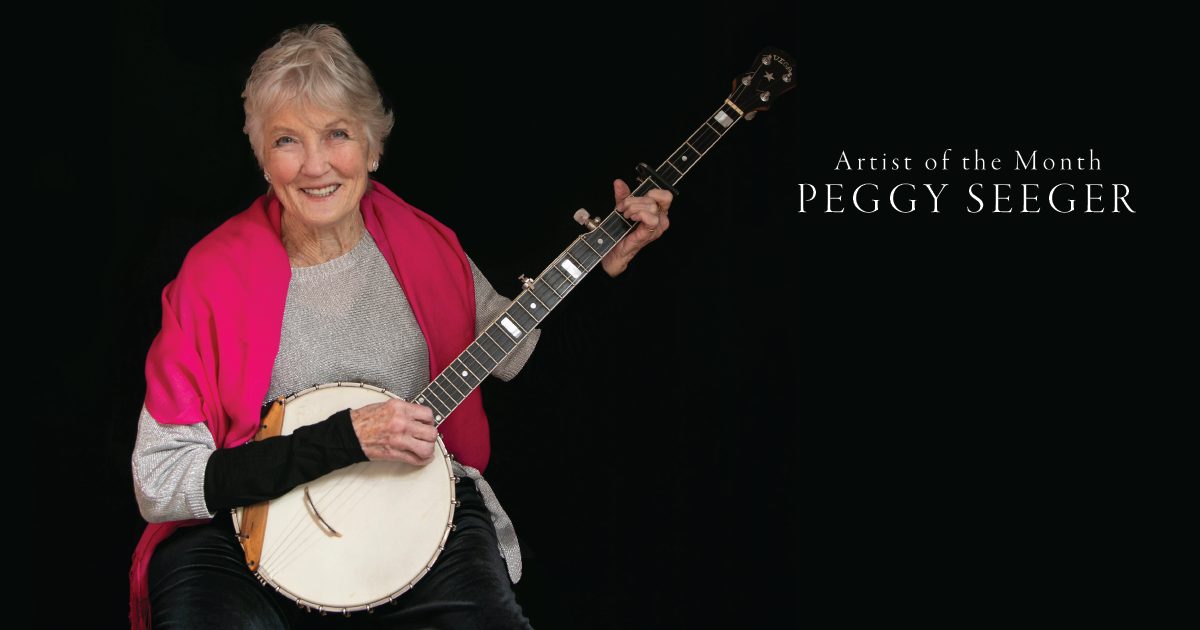
At 85 years old, Peggy Seeger stands as one of the most accomplished figures in folk music. She has recorded 25 solo albums, plus dozens more with her late husband, Ewan MacColl, along with collaborations with her siblings and generations of other folk musicians. She is a multi-instrumentalist who has edited and compiled folk music anthologies, and she ran a well-known magazine featuring contemporary songs for 20 years. All that while touring, writing more than 200 songs, raising three children and serving as an immoveable force for peace and human rights. And hers was the face that inspired MacColl to write “The First Time Ever I Saw Your Face.”

From her home in England, Seeger spoke to BGS about her new album, First Farewell, and what that title really means.

(Editor’s Note: Read the first of our two-part Artist of the Month interview with Peggy Seeger.)

BGS: You wrote “How I Long for Peace” 20 years ago, but it’s really appropriate now. Can you talk about it?

When we decided to make a new CD, my son Calum had me sing to him any song that I hadn’t recorded. Because I lived in the United States for 16 years and wasn’t touring England, I wrote quite a number of songs that my kids never heard. “How I Long for Peace” was one of those. And when Calum heard it, he loved it. So, it went on the album, and so many people are commenting on it. It’s kind of like a hymn, and it has a very singable chorus, and it ties up nations and politics with climate change and the plunder of the planet. When I sing it, I feel such a longing in my heart. I feel the violence of the world. We’ve just had a horrendous murder here. In this country, a young girl who was walking home by herself disappeared. She was found two counties away in a woods. And there’s been a tremendous uprising here on the part of women. But it’s not until men uprise against this that it’ll ever be changed.

Can you talk about the project’s title, First Farewell?

I remember my brother Mike, who was with New Lost City Ramblers — once they broke up they had an annual farewell concert every year. I thought that was marvelously funny. So, I thought First Farewell will make people think. But it’s based on the two farewells that you give at the airport. You know, if you stay to wave goodbye to the person at our airport, you hug, and then they go through where only passengers are allowed. And they walk about 40 yards away, and then they turn to the right. So, the first farewell is the hug, and there is a second farewell where they wave goodbye just before they turn that corner.

In lots of ways at my age, I’m saying farewell to a lot of things, almost daily. When you’re my age, you see your body doing this, doing that, and you feel you’re slowly decaying. And it gives you a new feeling of togetherness with nature. I really have more of an attachment to nature and the birds and the daffodils and the trees than ever I did before. And I’m doing a lot of listening to books about nature. I’m beginning to feel that humanity is this very, very powerful paper-thin sandwich filling between what happens above the earth and below the earth, and we are just this kind of bacteria that is sitting along the edge of the earth. [Laughs]

Because I do feel that nature is calling us. Nature realizes that we are a danger. The same way as we’re trying to get rid of COVID, nature’s trying to get rid of us. And power to her if that’s her best way of teaching us anything, because we don’t learn at all. We just repeat everything that we’ve done before. But the first farewell is the recognition that I am near the goalpost. And within sight of the goalpost. I’ve been running like hell. But I run more slowly now.

Why did you move back to the United States in 2006, and then why did you return to Great Britain?

A tumultuous love affair brought me here permanently in 1959. I became a British subject in 1959 and settled down here. After Ewan MacColl died, 30 years ago, I had a new partner, a woman, my best friend, the only person that I’ve been head over heels in love with. And after four or five years, I had an incredible urge to go to America to find out who I had been before I came here – because I was a child when I moved here. And I immediately became totally involved in England. I grew up in England from age 24 and 54. That’s when I really became an adult. (I shouldn’t say that, because I’m not an adult yet.)

In 1994, I got this terrific urge to go back to America. I wanted my partner to come with me, but she couldn’t. So, I said, I’ll go and see what it’s like. It was the first time I’d lived on my own ever in my life. I toured America endlessly for 16 years. Then I began to realize that I really, really, really missed my kids. So, I just felt that urge to come back here. And now that I’m back here, I’m so glad I came back.

My children live in three corners of London. I can reach any of them in two hours. We talk on the phone, and I’m part of my family that I created again. My American family is very big, but very scattered. And the ones that I was really attached to are all gone. So, what made me move back was a gut feeling of where I belonged. And it’s so wonderful that my children are helping. They’re making it possible for me to keep going.

What do you see as the bright spots in today’s political and social movements? What gives you hope?

On all of the really big issues, what’s happening is small grassroots groups. People who want something done, want something changed, want something different are realizing that the government says it will take care of it — but it doesn’t. So, small groups are forming everywhere, saying, “We have to do this ourselves because our government is not doing it.” I’m part of a group like that here where I live, near the edge of Oxford. And Oxford has just spread and spread and spread and spread until it has incorporated one beautiful old village and then another old village. Then they become surrounded with new housing. And they have taken away the green land, taken away the beauty of the old villages.

I live in an old village called Iffley. Its church was built in the 1100s. And since 1964, 16 of its green spaces have been sequestered for housing. Plunk, they put 20 houses here; plunk, they put 50 houses there. Well, there are four acres left, two ancient fields that have not been touched for 1000 years. And our council wants to put 50 houses on them. I’m part of a group that is acting out of incandescent rage at this. If the housing is put in, it will be the end of our village – the end of it. I’ve always tried to be part of a small group that does something locally.

Parting words?

I’d like to thank you for the attention you gave to Laurie Lewis, because she is so good. She’s wonderful. I love that kind of music. I really, really do. And it’s something that I really miss over here, joining in on the radio with all of that wonderful singing that you can sing along with. I do miss the whole American scene, I do. But I’m a Gemini and I’ve chosen one of my twins, so I live here.

What I would like to say is that I have been very privileged in my life, extremely privileged, unlike a lot of people who need to struggle to make their names recognized. My name was recognizable due to my brother Pete, and my mother, my father. And I came at the end of other musicians who had smoothed the path out for me. I have had every possible advantage: two wonderful life partners, both of whom contributed to my career, and who have pushed me on and helped me. And children who don’t hate me! [Laughs] And a country that I kind of understand.

And enough money that I’m not in need in my old age. “First Time Ever I Saw Your Face” brings in a reasonable amount of income. People still hear it all over the place with some very funny covers. Oh, my god, it’s been covered over 400 times that we know of. There’s a rap version. There’s a country and western version. There’s a gospel version. There’s what I call a barbeque quartets version. There’s one with Scruggs banjo on it. I am just so fortunate, and I’m thankful that I’m being given an old age that makes me visible and worthwhile.

(Editor’s Note: Read the first of our two-part Artist of the Month interview with Peggy Seeger.)


Photo credit: Vicki Sharp

Peggy Seeger Gathers Her Created Family for ‘First Farewell’ (Part 1 of 2)

Peggy Seeger began her life surrounded by brilliant and groundbreaking musicians: a mother who was an internationally known composer; an ethnomusicologist father; half-brother Pete, legendary for both his songs and his political courage; brother Mike, musician and song-catcher. In the latter years of her career, she is making music with what she calls her “created” family — her three children who share her delight in songwriting and performing.

Like Pete, Peggy was an outspoken leftist who was blacklisted in the 1950s, and she has never stopped speaking her mind through lectures, interviews, and her music. On the occasion of her newest release, First Farewell, we were honored to speak with her from her present home near Oxford, England. Here is the first of our two-part interview with BGS Artist of the Month, Peggy Seeger. You can read part two here.

BGS: Listening to your new recording, I was struck by how beautiful your voice is. Do you have to work at keeping it that way?

Seeger: I don’t feel it’s beautiful. It’s so reduced from what it used to be. What’s happened is I’ve moved down into the lower ranges where it’s more vibrant. And there I can, for some reason, feel more emotionally connected. I practice every day. I actually sit down and sing as if I’m giving a concert every day. It’s like any muscle: if you keep it to keep it working, you won’t lose it. And I walk every day. And I walk quite fast, so sometimes I get out of breath. You need to build your lung capacity. I’m pleased that you think it’s beautiful. I never thought it was.

What prompted you to create this new album?

My children have realized that there’s nothing else that I enjoy as much as singing. I don’t have any other way of expressing myself. I don’t cook well. I do make sourdough bread. … Five years ago, they asked me what I wanted for my 80th birthday, and I said I want to tour with my two sons. They said they would do a week of touring – and it worked out to be 16 days. But they said we needed an album to tour with. So that was when we recorded my previous album called Everything Changes, and I realized how strong it is, working with an entire family network.

Everyone in my created family one generation down is involved: my two sons, my daughter and two daughters-in-law perform all that I need: a manager, a minder, accompaniment, co-writing, graphics. It’s all there, including doing the recording. If you’re a singer for a living you need to put out a new recording periodically. And so that’s what we did [with this new project]. We took a couple of songs that were quite old. “The Tree of Love” I made up about 10 years ago; “How I Long for Peace” I made up 20 years ago and never recorded. “Gotta Get Home by Midnight,” that was created strictly to be an encore. Now, that’s about the most egotistical reason! We had about 20 songs, and we just chose what was best for this album.

Can you talk about the song “The Invisible Woman”?

That was written with my son Neill. When he came to work with me on a song, we just looked at each other and said, “What should we write about?” And neither of us jumped at anything. So, then we started talking about our joint lives. He’s 61. And he said, “You know, Mum, I’m beginning to feel invisible.” It worked out that young women weren’t interested in him anymore. You know, in actual fact, they are. It’s just that he doesn’t necessarily sense it. So, I said, “Try being an 85-year-old woman, if you want to be invisible.” Because, you know, as older women, the baby factory is shut. We’re redundant as far as productive units are concerned. So, what have we got to offer? We’re not looked on as wise. We’re shunted off, and we have been ever since we’ve been living under a patriarchal system.

Do you visualize any specific incidents from your life when you think about that song?

Well, of course, I am both visible and invisible. I’m visible in in my career, although folk music is a fringe music. It’s not way up there like classical music, and it’s not so broad or in-your-face as pop music. So, I am visible in that field. But the minute I walk out in the city, or when I’m just a member of the public, I’m invisible. Occasionally a nice man will ask if I want help crossing the street. I became aware of this once when I was walking with my daughter. She was absolutely dressed to the nines. She would have been 20 or 25, so I would have been in my 60s. And we kept passing men who would do this: They’d look at me and they’d see my hair and then they’d look immediately to her and go like that [rolls her head up and down and up]. Their eyes were on her. They were not on me. Yeah, I’m very grateful for that. I’m tired of being under male scrutiny. From age 15 to about the age of 45, I put up with the groping and being pushed up against a wall. And I’ve had it! They don’t do that anymore. I’m an old woman and I don’t mind at all.

I imagined folk music as being, in a way, above gender discrimination.

Folk music is no way free of gender discrimination. It is packed with it. Full of it, hugely full of it. In the music, women are dismissed. We are victims. In some of the folk songs we were sent off for nagging our husbands. We were battered and beaten in some of the songs. Women were left with children in their arms. We were endless victims. I have a three-hour lecture on the position of women in folk songs. And it is despairing. And some of it is so outright misogynistic.

There was a song Pete used to sing, and he thought it was funny. At one point, before I became a feminist, I thought it was funny.

Oh, I had a wife and got no good of her,
Here is how I easy got rid of her,
Took her out and chopped the head off her
Early in the morning.

Seeing as how there was no evidence
For the sheriff or his reverence
They had to call it an act of Providence
Early in the morning.

So, if you have a wife and get no good of her
Here is how you easy get rid of her
Take her out and chop the head off her
Early in the morning.

It was so vicious that it was funny. You couldn’t believe that anybody would sing about this. So, if we really look at a lot of the content of the songs, women are just handed from man to man and were killed by a lot of the men. And a lot of the folk songs actually document real murders, like “Ellen Smith” and “Omie Wise” and “Pretty Polly,” and the other ones like Laura Foster in “Tom Dooley.” Endless murders — especially after we get pregnant. I still love the songs unfortunately. To me, they’re historic pieces. And they talk about what we’re battling now.

Your album sounds like you’re acknowledging loss, and at the same time, acknowledging contentment. Is that a fair characterization?

Well, people in my family who lived to the age of 85 generally live into our 90s. So, I’m looking at maybe another, hopefully, 10 or 15 years of life. And the recognition and acceptance of that makes a whole new frame of life. You live differently with that. I have mental snapshots of my past. I have oceans of them. So, the pictures in my head and what I’ve learned and experienced just flow back and forth with the tides.

That’s where songs like “Dandelion and Clover” come from. I didn’t set out to make a song about memory with “Dandelion and Clover.” All of a sudden, the thought of a little boy coming to our kitchen door just flew into my head. He died when he was 8. He had a seizure on the schoolroom floor. He and I used to sit out in the field — there was a four-leaf clover field. We’d sit out there and talk about marriage and having babies when we were 8. And then the tragedy of him dying … but I didn’t feel it was a tragedy because I knew he was going to come back and marry me because I was told that’s what he would do.

In writing we try to marry up opposites or marry up correlated subjects, as in the song “Lubrication.” Or marry up diverging thoughts as in “How I Long for Peace,” contrasting peace with acts of violence and profit and greed. And to put those into a quiet, peaceful song.

What has it meant for you to be, as you say, in lockdown?

Nothing, because I’m a hermit anyway. I miss going into town, I miss going to the hairdresser. I miss going shopping, because other people shop for me, although now I’ve had two vaccine shots. So, I think I’m going to start shopping for myself again. But I’ve always been a hermit, I’m happy with my own company. My partner lives in New Zealand and I haven’t seen her for two years, because of COVID. And we’re not compatible for living together. So, I live on my own. I take care of myself. I keep busy. My god, I keep busy. There’s so much to do. And I talk to nice people like you.

(Editor’s Note: Read part two of our Artist of the Month interview here.)


Photo credit: Vicki Sharp