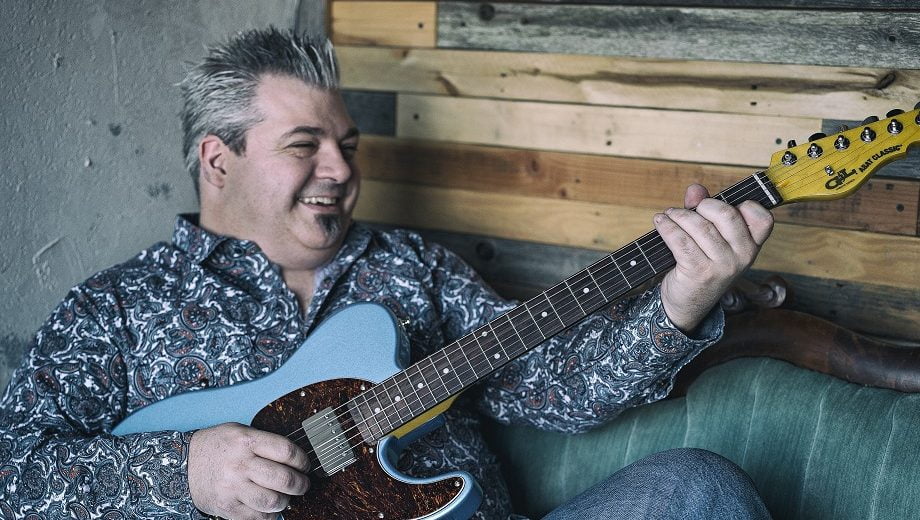
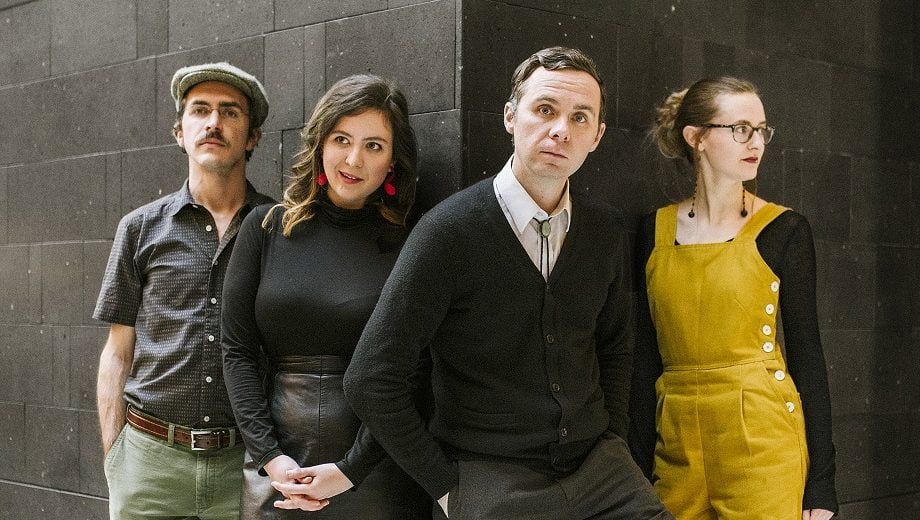
LISTEN: Buffalo Wabs & The Price Hill Hustle, “The Wind”

Artist: Buffalo Wabs & The Price Hill Hustle
Hometown: Cincinnati, Ohio
Song: “The Wind”
Album: Stranger in the Alps
Release Date: March 15, 2019

In Their Words: “‘The Wind’ came quickly as a natural co-writing situation, with Bill Baldock (bass) supplying lyrics and Matt Wabnitz (guitar) on music and arrangement. It’s an introspective departure from some of the high-octane numbers we do. The 12/8 time makes this a lilting waltz, something not akin to anything in our catalog. Scott Risner stretches his chops on the archtop guitar, departing from the bevy of instruments he’s already incorporated into the group, to deliver beautiful counter-melodies.” –Buffalo Wabs & Price Hill Hustle


Photo credit: Kenny Dunn

Caleb Elliott Combines ’70s Soul, Strings, and Sad Songs on ‘Forever to Fade’

Caleb Elliott’s Forever to Fade is a truly unique artistic statement, one that combines cinematic string arrangements with Muscle Shoals-inspired grooves. It’s a musical hodgepodge in which you can hear everything from hints of ’70s soul (“Makes Me Wonder”) to what Elliott calls “my little Harry Nilsson moment” (“Try,” a forbidden love song that features some cheeky whistling).

But those sounds weren’t ones he grew up listening to. His parents were followers of The Message, the teachings of evangelical faith healer William Branham, whose 1961 Armageddon prophecy reportedly inspired cult leader Jim Jones to set up his Jonestown settlement the following decade. This strict religious upbringing meant there was no TV in their house and secular music was strongly discouraged.

“I would venture to say no, I was not allowed [to listen to secular music], but the technically right answer was I could do what I want, it was just very frowned upon,” Elliott explains. “And especially like the churches we were going to, it was very frowned upon. We were guided towards the contemporary Christian realm, which was as rock ‘n’ roll as it got for us. Switchfoot was my Beatles, you know, in high school.” He laughs. “Sad to say. I probably shouldn’t be telling you that. I didn’t really get exposed to the good stuff until a little later.”

Raised in Louisiana, Elliott started playing the cello in third grade and “it sort of became my little kid identity because no one else played the cello, and I wasn’t bad at it,” he explains. But his real exposure to pop and rock music didn’t happen until much later in life.

“I remember going off to college and my taste in music was still very, very underdeveloped,” he continues. “I was on a long arc of discovery. I don’t feel like I started listening to really, really good stuff until I was in my twenties, even after college. I mean, I delved a little bit into the Beatles but I dove more into like Neil Young and Bob Dylan when I got more towards my mid-twenties—really when I started hanging out with better songwriters and that’s who they were listening to. And I was like, ‘Wow!’ I started to get it.”

For the past seven years or so, Elliott has made his living as a sideman, touring with the likes of Nicole Atkins, Dylan LeBlanc, and Travis Meadows and becoming a string-section staple at Single Lock Records, the Alabama-based label and studio co-founded by The Civil Wars’ John Paul White and Alabama Shakes’ Ben Tanner, recording with White, Lera Lynn, Donnie Fritts, and more.

Being surrounded by songwriters and spending time with them on the road and in the studio not only helped shape his musical tastes — Elliott says it also informed his own songwriting style.

“I don’t think there’s any way for it not to,” he says. “People ask about influences a lot. It’s a really common question, but I think for some folks, your greatest influences are the people you spend time with, and I think that’s been the case for me. The way I approach songwriting and just everything has changed a ton since I’ve had the opportunity to tour. And then touring led to more studio opportunities, and I’ve been able to be around people who have been doing this at a high level for a long time. And it’s had a huge impact on me in a lot of ways. I don’t think there’s any substitute for it. I’ve always been envious of the cats that grow up in this, you know. It’s a level of understanding of the whole thing that’s innate for them. For the rest of us, we’ve gotta go out there and figure it out.”

One spin of Forever to Fade and you’ll be able to tell he’s already got it figured out. And while the arrangements may be what came to him first (“I’m always thinking about a string line,” he says. “Always.”), the album’s lyrics are equally important to Elliott.

“Get Me Out of Here” tells the story of a love triangle, each of its three verses centered around one of the three characters involved. The title track deals with the feeling of being trapped or stuck in a bad relationship. And while he notes that these situations aren’t necessarily autobiographical, Elliott says much of the record is inspired by unhealthy relationships he’s witnessed.

“A lot of these songs on the record are inspired by dysfunctional relationships or needing to push through to a better place in your life and making hard choices, like whether or not you want to move forward or keep dealing with it,” he explains. “I think the title itself lends itself really well to that because for people who are caught up in those unhealthy relationships, it feels like they’re gonna be there forever and there’s nothing they can do to get out cleanly.”

Ultimately, he hopes that people going through a similar situation in their own lives will be able to hear Forever to Fade and feel understood.

“Recently I did a house concert and I got on this little spiel about how sad songs are better,” he says. “Happy songs are great, but you can’t commiserate with a happy song. There’s just more depth of emotion on the other side of things I think with sad songs, and whenever you find something like that that you can latch onto, it can help you get through what you’re going through a lot better than a happy song could. And so hopefully maybe somebody out there is going through something in their life that this helps them get through.”

He adds, “Dysfunctional relationships can be tough, you know. Letting go of people that you loved, or that it hasn’t been a healthy thing, or standing your ground on things in your life. Coming to terms in those ways can be very difficult, and maybe somebody will be able to find some hope in here. That would be really nice if it helps them get through a hard time.”

Working with Single Lock on the record was always Elliott’s top choice, he says, but he never presumed that a deal with them was a foregone conclusion.

“It was never a given on that level,” he says. “However, I’ve worked with Ben a lot over the past several years as a cellist. I’ve kind of been his go-to guy for the strings, and so when it came time for me to pick someone to record my songs with, he’s always been my favorite engineer and producer to work with, and I feel like he’s one of the best I’ve ever worked with. So that was the obvious choice for me, to ask him if he wanted to help me record my record. Down the line, after we got it kind of going, apparently there was a conversation between a couple of the guys at Single Lock about basically asking Ben what he’s been up to. They had a sit-down listen and they kept coming back to a couple of my songs. That’s when they sat me down and said, ‘Hey, we really like what you’ve been doing. We’d be interested in helping you put this out.’ It was sort of an organic thing.”

Elliott says that connection to his music on that level is his ultimate goal, but for now, he’s focused on getting it out there and in the ears of as many people as possible.

“More than anything my personal goal is to tour my butt off as much as possible,” he says. “I’m hoping this thing gets going. It’d be really cool. I’m a lifer, you know? This is what I do. And I’ve been very fortunate that I play the cello and that’s been able to lead to a lot of sideman work. I’ve played cello and guitar and background harmonies for people, but it’s such a treat to be able to sing my own songs.”


Photo credit: Joshua Black Wilkins

WATCH: Eddie Heinzelman, “Wherever You Go” (Feat. Radney Foster)

Artist: Eddie Heinzelman
Hometown: Brookville, Indiana (currently lives in Nashville)
Song: “Wherever You Go” (Feat. Radney Foster)
Album: Wherever You Go
Label: One Louder

In Their Words: “This song idea was initially inspired by my daughters as they were graduating high school and preparing to go to college and pursue their future. I took the idea to Radney who loved the idea and as we began writing, it took on a broader meaning. It’s a message to anyone who chases a dream or is looking at what lies ahead. I end my shows each night with this song to let everyone know they are never alone and that like my daughters, they can take my love with them wherever they go.” –Eddie Heinzelman


Photo credit: Barbara Potter Photography

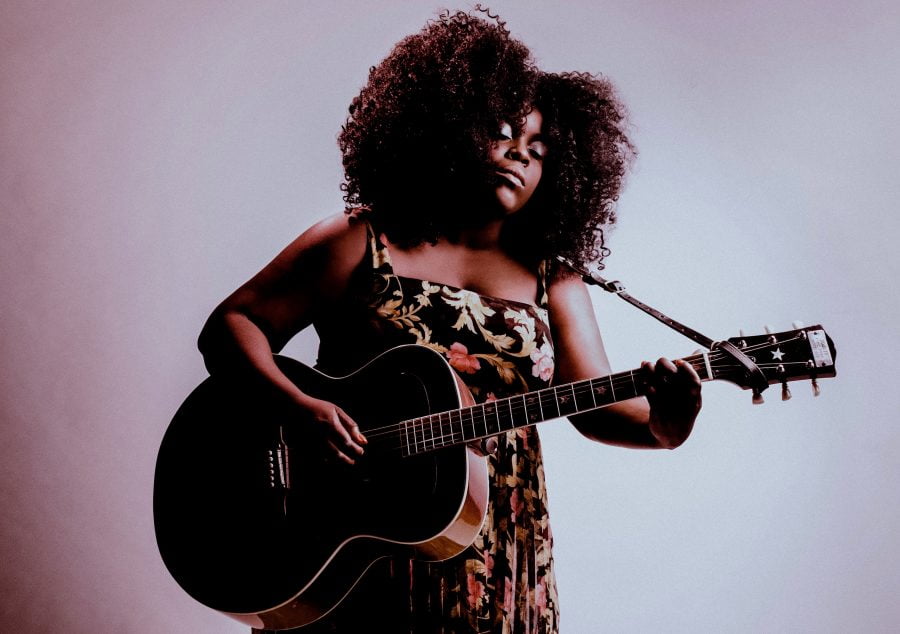
Britain’s Yola Blends Soul, Country, and ’60s Pop on Astonishing Debut

If you’ve ever had the good fortune of being in the audience for one of Yola’s live shows, you will have been utterly blown away not only by the power of the British singer/songwriter’s voice and the intensity of her songs’ arrangements, but also by the bedlam her audiences devolve into in the presence of such a commanding, charming, visibly strong black woman. Yola owns each of these unabashed facets of her identity with bright-eyed self-awareness and unbridled joy, all of which pour forth from her astonishing debut album, Walk Through Fire.

This grandiose power that Yola possesses is deliberately not the focal point of the album, though. She and her collaborator/producer Dan Auerbach have artfully balanced the wildness of Yola’s experiences in myriad genres (pop, electronic, and rock among them) with the subtlety and nuance that her deft songwriting demands. It’s not just an album sung by a “strong black woman,” it’s not just country-soul, it’s not just a late ’60s/early ’70s pop throwback, it’s not just a collection of heart-wrenching, impossibly visceral love songs — it’s effortlessly and masterfully all of the above.

We sat down with Yola during her release week press gambit in Nashville and began our conversation recapping this year’s Grammy Awards.

BGS: In one of her Grammy acceptance speeches this year Brandi Carlile called Americana  “An island of misfits.” I wonder if you agree — and what do you feel like you bring to this island of misfits?

Yola: I do agree. I think Brandi Carlile is on point by saying that. It feels as though people have congregated in Americana, maybe even running from other genres. It’s a place where we are celebrating eclecticism and being open and we’re at least seeking to be diverse — and trying to understand that diversity, instead of having fingers in the ears. There’s a little bit more to the scene. It allows people like Brandi Carlile to rise to the top, and rightfully so, because of their talent!

I have found, for me, that after being associated with a lot of different genres over the years, I’ve had to fight to just be me. I’ve had to do as much fighting in this particular scene, because everyone’s crossing something with something or being more unexpected than other genres. Doing shows at AmericanaFest and in this particular scene has given me a chance to develop. Full stop. And to get started.

When I first started I was pretty terrified to do what I was doing. Americana allows me to be like, “Hi, okay, I’m the black British woman with the afro — no, not the other one, the one called Yola.” [Laughs] And I can go, “Okay, I’m going to mix some soul with some country, but not in the way you think I’m going to do that.” Yes there’s going to be a ’60s pop sound in there, but again, probably not in the way you think I’m going to do that, either. Maybe it is my Britishness that is giving me the angle from which I approach each thing.

I feel like the album is decidedly country-soul, and it’s interesting to me because we’re in this community — Americana with a capital A — that is majority-white.

Mhmm. Heck yeah!

We’re working on diversity, like you said, but we’re a work in progress. So I wonder how you feel your blackness is part of that country-soul designation and how much of that is not connected to your blackness, as well. I feel like so many people, especially in the audience for your shows, see you step up on stage and they’re ready to scream and holler because there’s a “strong black woman” presence on stage–

Yes.

So I wonder do you feel a differentiation between what you’re establishing as country-soul for country-soul’s sake, and how much comes from your identity as a black woman?

Well, I think it starts with identity, because everything starts from within and from where you think you fit. Where do I fit? I think my entire musical journey has been based on where the frick I fit.

An island of misfits.

Yes, exactly. I found a bunch of weirdos that were as weird as I was and was like, “This is great!” [Laughs] That’s what has led me where I want to go, musically. It’s about finding what my voice wants to do. It’s all about the physicality of my voice, it’s got a soft side, almost choral, that then flips to this big, yelly, slightly more Tina [Turner] side. I can move very smoothly from one to the other. My voice is a seesaw in that situation. I need to be able to be the fullness of myself, so that’s kind of where the country-soul comes from — from within.

That’s at least physically what it is, as well as growing up listening to that music, listening to people who were already doing what I’m doing. I’m by no means inventing the wheel or even reinventing it, for that matter. It’s something that’s just been done. Ray Charles has done it. Mavis is doing it. Maybe the way I’m doing it, with this retro pop kind of angle, is something that others haven’t done, necessarily. But that is narrow in comparison to the vast eclecticism of my musical taste. It’s out of control how broad a day’s playlist can sound.

We’ve talked about this, because I want you to make a bluegrass record!

[Laughs] You’re like, “Are you ready to do that?” And I’m like, “Hey, I’ve got so many genres to get through right now!”

Add it to the list.

Just tack it on, you know? I don’t know if I’m going to go all the way like, Beck levels of breadth. He’s covered some ground, it’s impressive. But I’m enjoying this kind of freedom right now. As fun as it is knowing that country and soul are always going to come out, it’s nice to be able to be free enough to explore gospel and blues and rock and roll and pop. You can hear from the record there are probably four comfortable genres within it and they all move completely seamlessly from one to the next. That’s what I love about music. I love how close it all is.

Going back to the physicality of your voice for a moment, one of the things that struck me about the album is that it feels like you’re laying back–

Mmmm. You know me!

It feels like you’re being reserved, your signature Yola-dialed-up-to-eleven isn’t there all of the time. Talk me through that less-is-more decision making process.

Certainly, the songs kind of spoke for themselves. When you finish writing a song you can decide whether you’re going to tack a big ol’ outro on the end of it and then whether you’re going to freaking scream to the heights of the ceiling on that outro. But I thought, I don’t know whether I listen to albums where the singer is going hell-for-leather, top to bottom, all the way through. I like to listen to albums top to bottom and I like a bit of a gradient. So as the songs come, one by one, I kind of have a look and think, “Okay, I don’t think the song needs this.” It’s about trying to respect the song and the will of the song. Sometimes the song really needs it, like “It Ain’t Easier.” I’m going to go there! [Laughs] I was purposefully selective and I think it was each song that led me.

The songs do feel like they’re all related, but they’re all distinct. For instance, “Still Gone” and “Keep Me Here” back to back feel like the same story told from slightly different perspectives.

They are! “Still Gone,” in my mind is about being in a relationship. You met someone, they were amazing, then whoever the heck that person was, they fucked off and the person you end up with is your consolation prize. You’re looking over your shoulder thinking, “Oh, still gone!” It’s like chasing the dragon, but it’s the person you were dating. That first hit, that’s the one. Everything else after just pales in comparison. It’s very much that moment of realization, that moment before you start checking out of the new relationship, when you start staring off into the distance.

That faraway look in your eye!

That faraway look in your eye! It’s all tied together. That’s the precursor feeling. It’s the “You’re literally everywhere, but you’re not here” situation.

So “Keep Me Here” turns that same idea on its ear.

It does! Because you haven’t got the guts to be alone. You’re being a chicken. You’re being fed, again, chasing the dragon. Like, “That first hit was good, can’t we just have that bit?” No, you can’t. You have to have the full wonderful person — especially when they’re not wonderful, that’s challenging. You’re just hoping for those little moments, those little glimpses that keep you hooked in. In my situation, I was working with my ex, my partner at the time, and so it was very much like being totally hooked, and musically hooked, and socially hooked, and all of these hooks become something that keep you holding on in light of glaringly horrible interactions in every part of your life. I think it takes a lot of self esteem to grow up enough to realize you need to move on. The twenties are not really the time when self esteem is at its full!

It’s funny that we begin that “chasing the dragon” when we’re in our twenties when we have no idea what that thing actually is.

[Laughs] Exactly! We have no idea! But we’re just desperately going for the thing. It felt good that one time, maybe it will happen again. It’s about as well-advised as taking smack, you know? It shouldn’t be like a hit, though. It should be consistent. But you don’t learn about the healthy ways of doing life until you have the experience.


Photo credit: Alysse Gafkjen

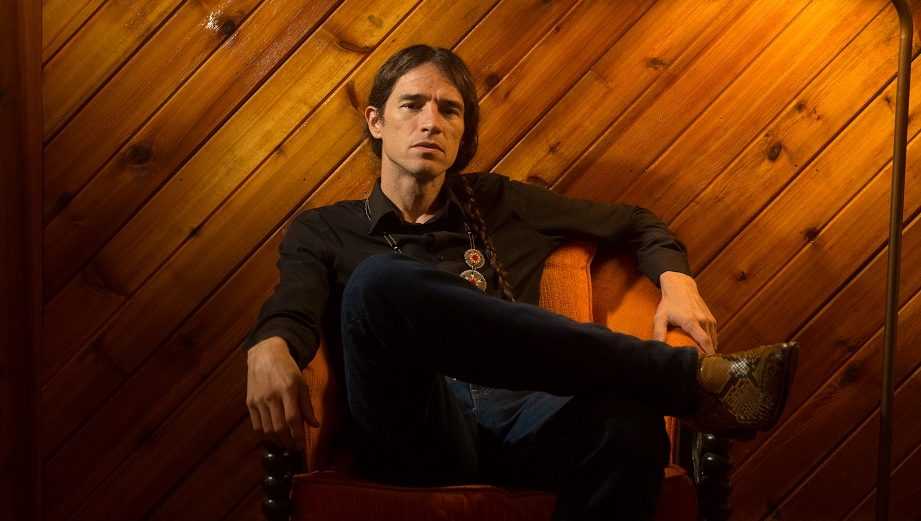
LISTEN: Leo Rondeau, “On And Off Again”

Artist: Leo Rondeau
Hometown: Dunseith, North Dakota
Song: “On And Off Again”
Album: Right on Time
Release Date: March 8, 2019

In Their Words: “I came up with the idea several years ago after watching a friend break up and get back together with his partner multiple times. After going through something similar, I came back to it and was able to finish it fairly quickly. While we were recording it wasn’t clear to me what kind of background vocals we were going to do when Alexis (Saski) and Margo (Price) showed up, but apparently everyone else was on the same page because from the first take they were dialed in and I thought, ‘Damn.’ Combine that with Gary Newcomb’s steel solo, which gives me pause every time I hear it, then you’re hit with the death blow if you were still hanging on.” –Leo Rondeau


Photo credit: William Aubrey Reynolds

Discovery of Townes Van Zandt Continues With ‘Sky Blue’

“I have a big gun safe next to my desk….”

When a tale starts with those words, you know it’s going to be interesting. But it’s not what you might first think. This safe didn’t contain the weapon for a hunt. It held the prey.

Let’s let the speaker continue:

“…where I keep all the CDs people give me, but can’t listen to them all.”

That’s Jeanene Van Zandt, who was married to the late Texas singer-songwriter Townes Van Zandt. Inside that gun safe in her Nashville home was also a disc containing “lost” recordings Townes made in a friend’s basement studio in the early 1970s. And on that disc were two songs for which she had been hunting around the world for years — as well as what may be the first recorded versions of Townes’ most famous song, the ballad “Pancho and Lefty,” and another favorite, “Rex’s Blues.”

Now 11 songs from that disc, including those four, have been put together for the album Sky Blue, the title coming from one of the previously unheard selections. On March 7, the set was released on his family’s TVZ Records via Fat Possum, on the 75th anniversary of Townes’ birth. And it comes at a time when a new generation — the fourth, by Jeanene’s calculations — is coming to discover Van Zandt’s music, even if some don’t know that he died in 1997 after years of issues with substances and mental health.

“I still get letters from people who have no idea he’s dead,” says Jeanene, who is also executor of Townes’ literary estate. “Things like, ‘We’re working on this tour and heard your music.’ I have to say, ‘Sorry to inform you that he died 22 years ago.’”

Since Townes died, Jeanene has spent a lot of time and effort tracking down recordings he’d made and never-released songs in his rather itinerant life. It’s been a dedicated effort of tracing rumors, following document trails, seeking out his friends and acquaintances, and/or just going with intuition, sometimes paying off, but often finding dead ends.

The current discovery was made by Will Van Zandt, her son with Townes, who took it upon himself to go through the stored material. One of them was a disc simply labeled “1973,” given to Jeanene a while back by Van Zandt’s longtime friend, Atlanta-based journalist Bill Hedgepeth, who had a little studio in the basement of his home where the singer would sometimes record things on which he was working.

“Will came and took some of the discs and had a box of them in his closet and kept telling me about some of the recordings and I said, ‘Bring ‘em!’” she says. “There have been certain missing songs I had looked for for years. Townes would say, ‘I know they’re out there! Find them!’ Over the years I’d stumble across lost songs here and there. And there are two on this one! Two songs I’d scoured the world for.”

“Sky Blue” and “All I Need,” the other missing song, are prime examples of the mix of sorrow and sharp character portrayals plied with starkly economic language that stand as Van Zandt’s artistic signatures. But there’s much more to be treasured on this set, including what may be the first recording he made of “Pancho and Lefty.” That song was made familiar to many when Emmylou Harris recorded it in 1977, and to many more in 1983 when a duet by Willie Nelson and Merle Haggard took it to No. 1 on the country charts, cementing Van Zandt’s stature as a premiere folk songwriter of that era. Townes himself has a cameo in the pair’s video.

Among the others on the album are deeply caring versions of the folk song “Blue Ridge Mountain Blues” and the murder ballad “Hills of Roane County,” plus tributes to fellow songwriters Richard Dobson with “Forever For Always For Certain” and Tom Paxton with a gorgeous “The Last Thing on My Mind,” which is a perfect closer for the new collection.

That there have been so many songs and recordings to be tracked down is a reflection of Van Zandt’s scattered life. The actual dates of these recordings may have come over the course of several years in the early ’70s, a time when he was living variously in Texas, Colorado, and Tennessee, at least when he settled down at all from his wanderlust. He released six albums in that time and had some tentative success, but nothing solid.

Hedgepeth’s home studio, though, was a refuge for Van Zandt, where he felt free to try out songs.

“They were very good friends and he was a very nice man,” Jeanene says. “When Townes would play Hot ‘Lanta he would stay with Bill. Listening to the tapes I’d hear Townes saying, ‘I want this here or that on here.’ So he was working on some project of some sort. Don’t know if this was one sitting or different trips.”

There’s enough variation of sound from song to song that it’s reasonable to assume that it was not all done at one time, but what ties them together is a sense of freedom to express, to try out songs, to sing some things he loved and see how they worked.

“There were 27 tracks, some were repeats, one with a dog barking in the middle, another with the phone ringing,” Jeanene says. “Once we whittled them down we thought, ‘This sounds like a family of songs.’”

A little cleaning up was needed, but the raw unguardedness shines with Van Zandt’s masterful songwriting, guitar playing and singing, connecting the dots between his own spare style and the traditions he revered.

Townes’ own legacy is secure, with dozens of notable artists having recorded his songs and been inspired by his writing, prominently Steve Earle, who not only made a whole album of Van Zandt songs in 2009, but named his son Justin Townes Earle. Others are finding their way to Townes’ music with other new avenues of exposure. Recently Charlie Sexton played him in the movie Blaze, about mercurial singer-songwriter Blaze Foley, a close friend/running partner of Van Zandt and even more of a cult figure.

“[Sexton] was so nervous when they were filming that,” she says. “He knew I’d be there. I came up to him and said, ‘You did fabulous!’”

Townes also figures in the Foley episode of the animated Tales From the Tour Bus series from 2017, in which Jeanene appears sharing her reminiscences of some, uh, colorful exploits.

Katie Belle Van Zandt, daughter of Jeanene and Townes, has found many big fans among her contemporaries.

“I have quite a few friends of the same type of lifestyle that he was living at that age,” says Katie Belle, who is not a musician herself. “There are a lot of musicians around my age, in their 20s, hopping trains and traveling, busking on the road and such, making real folk music.”

A few weeks ago she had the opportunity to play the new release for her friends Benjamin Tod and Ashley Mae of the Lost Dog Street Band and another musician, Matt Heckler, who often travels with them.

“They were the first people I played this to,” she says. “They loved it. They thought it was beautiful. Ben said it reminded him of what songwriting’s about.”

For Katie Belle, the sorrow is what comes through most strongly, but also a sense of life in him that she largely missed, as she didn’t get much time with him.

“The very end of ‘Sky Blue,’ the first time I heard it, where he talks about how he longs to be the sun and longs to be the moon, made me tear up,” she says. “It’s beautiful. When my dad passed away I was really young, and when I get new music I hadn’t heard by him, it’s like wearing another piece of him.”

Jeanene Van Zandt is gratified, but not at all surprised, that her ongoing efforts to get her husband’s music to the world, both old releases and new discoveries, is having impact.

“I don’t think there’s going to be a human who can’t identify with these songs, whether 50 years from now or yesterday,” she says. “He was a master of the English language, studied people — in fact a little naughty doing it. He would push buttons and see what reactions he could get out of people and a lot of times they’d be jumping up and down and trying to kill each other and he would giggle and think it was funny as hell.”

And if some people hear him for the first time with this new release, that’s great too, she says.

“He’s not shrinking away,” she says. “I’m pretty sure there will be a fifth, sixth, seventh generation who will try to get ahold of him to go on tour with them.”
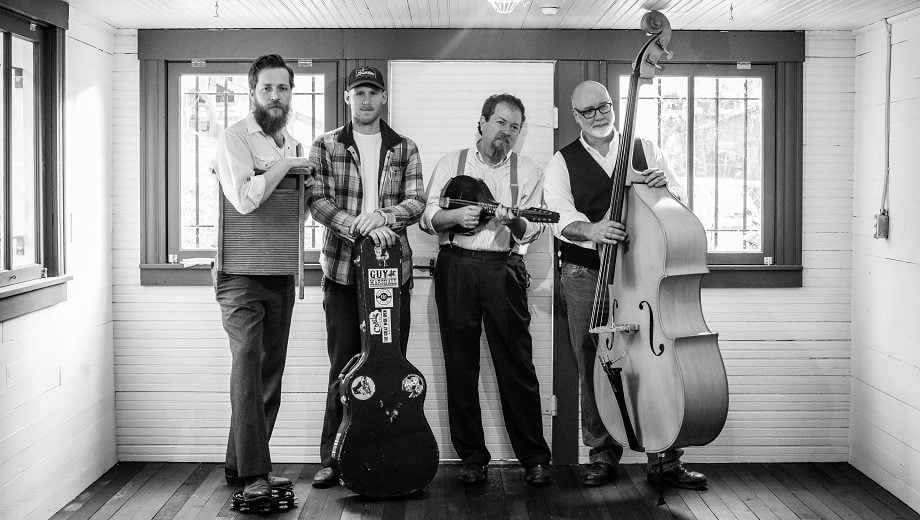
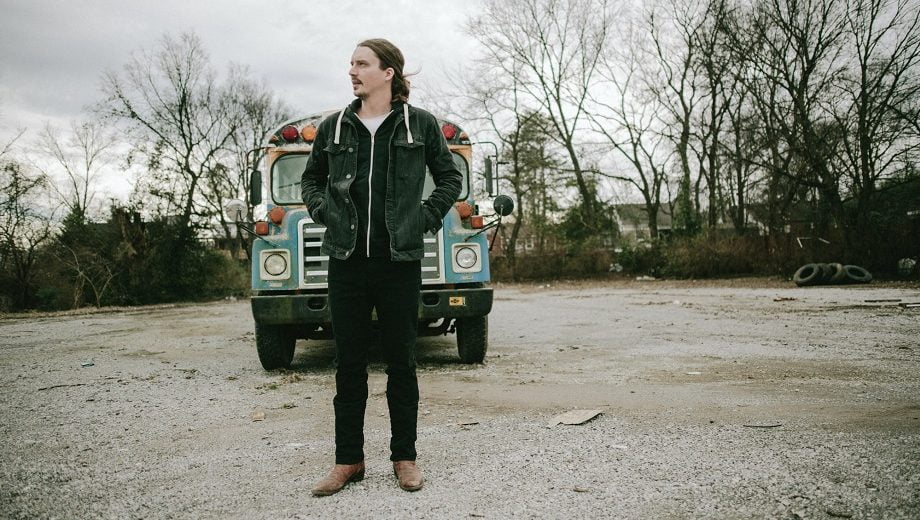
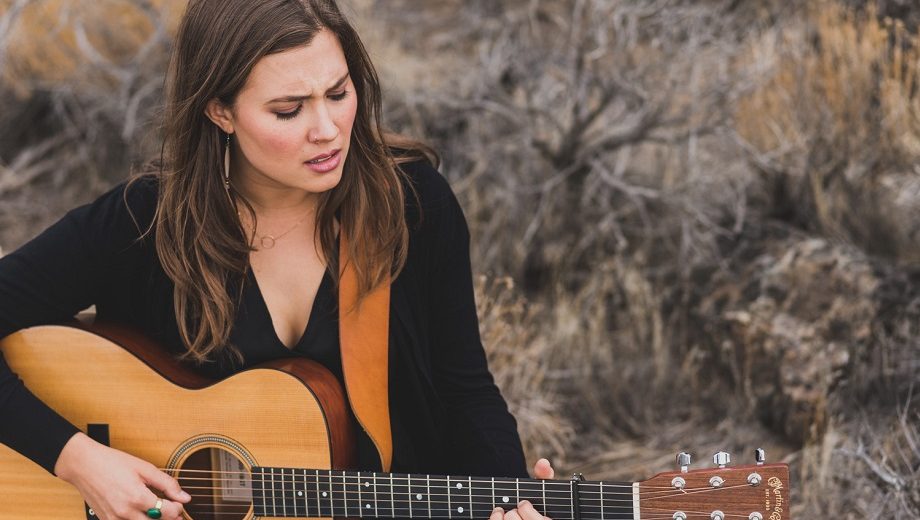
LISTEN: Clara Baker, “Moving On”

Artist: Clara Baker
Hometown: Portland, Oregon
Song: “Moving On”
Album: Things to Burn
Release Date: March 8, 2019

In Their Words: “This song is bittersweet reflection on how hard but important it is to notice that it’s time to move on. It could be about love, but this is a song I wrote on my second retreat at the Shotpouch Cabin in the Burnt Woods. I had been living in Corvallis for 4 years and loved living there so much, but I was at a crossroads in my career and I realized that I needed to be in a bigger city in order to seriously pursue my career goals. When we recorded this song, at the very end, I looked up from the microphone and over at Zach Hickman (on bass) who gave me a knowing nod, that kind of said ‘Hell yeah. Good work.’ I immediately burst into tears. Recording all together in the same room, no headphones, and no separation, we all felt in the moment and it just felt so special to be able to be playing music together, and capturing one specific moment in time, rather than cutting and pasting it all together digitally.” — Clara Baker


Photo credit: Amanda Long

Gig Bag: Maggie Rose

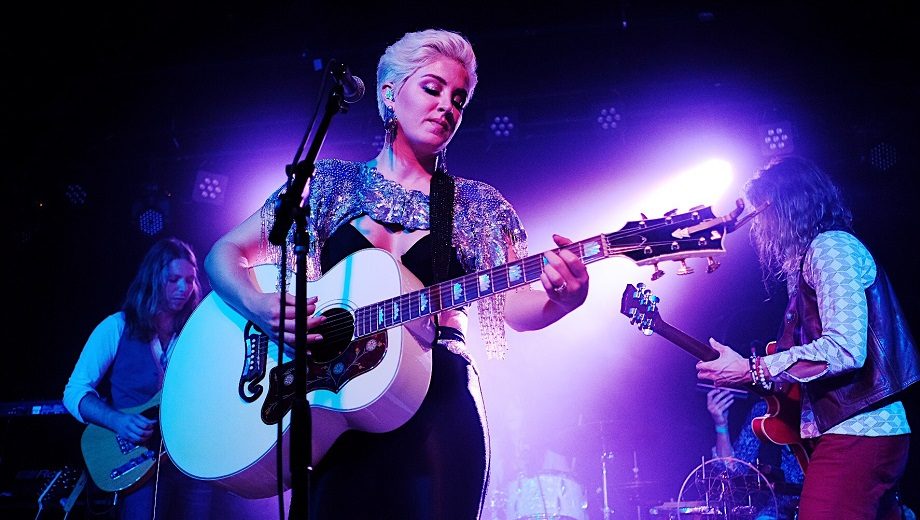
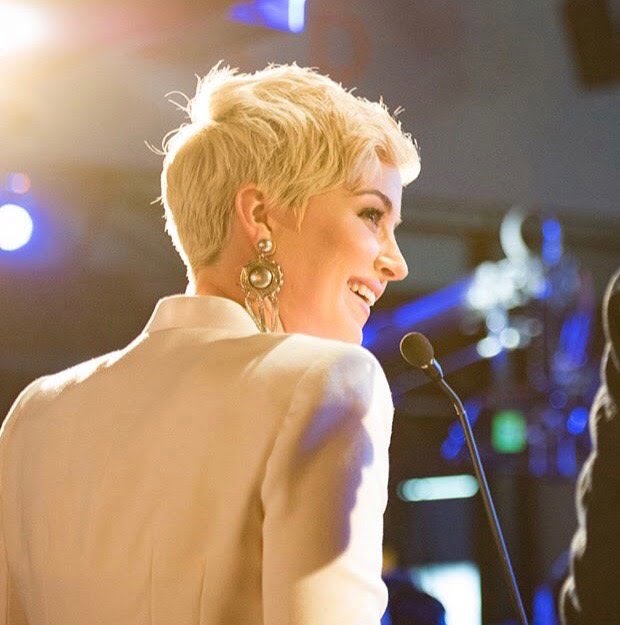
Welcome to Gig Bag, a BGS feature that peeks into the touring essentials of some of our favorite artists. This time around, singer/songwriter Maggie Rose gives us a glimpse at the staple items she always has at the ready while out on the road. 

With my new album Change The Whole Thing, I wanted to capture all the elements of my live shows that my fans are drawn to, so we simply recreated that energy in the studio. I assembled a band made up of a bunch of my talented friends and touring bandmates and we tracked the album live in the studio in one take. It turned out that together, we created this special blend of soul, roots, funk and Ppop music that we love playing and is authentic to us. I’m so thankful that I get to bring that same energy out on the road on Kelly Clarkson’s Meaning of Life Tour and on my own headlining Change The Whole Thing Tour with an ensemble made up of the same people with whom I made this record. I’ve never felt more in love with the music or the people I’m making it with than I do now.

My UE 18+ in-ear monitors with Swarovski crystal detail (as seen above) sound phenomenal. Even when I am offstage and listening to different records, they provide a listening experience that is pretty stellar. I have been using various models of these in-ears over the years and they protect my hearing onstage while letting me hear everything in the mix.


I love these Dannijo earrings. My mother-in-law gave them to me for Christmas one year and I wear them all the time. They have this beautiful, vintage western vibe that goes with almost everything I wear and they provide enough drama and movement without being distracting onstage.


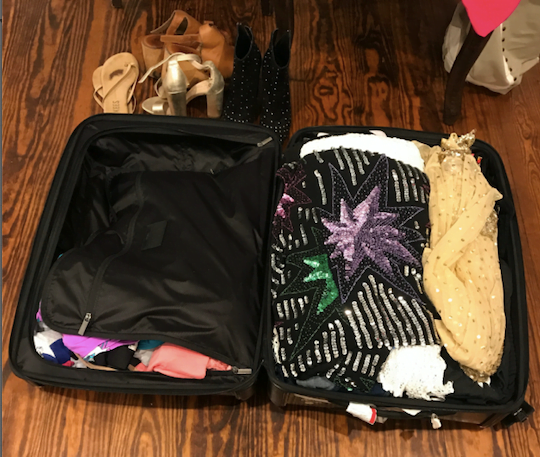
My trusty Tumi suitcase (sparkles not included). It was a wedding present we received a few years ago and I’ve put it through the ringer and it still gets the job done. I’ve seen it thrown onto the belt with impressive force so many times in all sorts of weather and it hasn’t failed me yet.


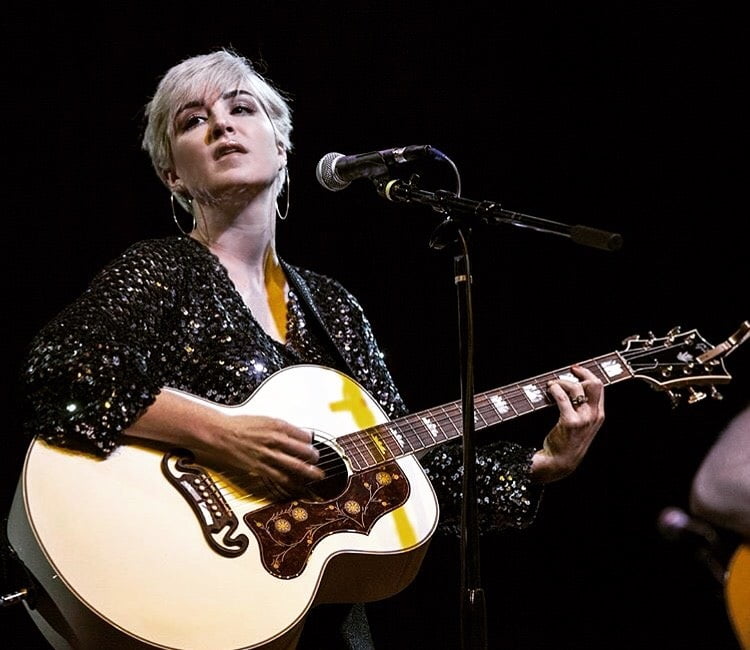
My pearl white Gibson J-200 goes with me most everywhere. She looks and sounds beautiful and has only improved in both arenas with age. I always loved watching Emmylou play her model of this guitar over the years because the body is a little bigger than most, especially for someone of her stature, but she always has had such a command over it, so I am trying to live up to that standard.


My American Apparel disco pants. Without fail, these babies make any outfit pop, even when paired with a vintage tee shirt. They are super sleek with a high rise waist. I’ll admit I have them in multiple colors and I’ve even had my stylist customize a few pairs for me to make them a little unique.


Finally, there is my vintage Levi’s red label denim jacket. If you ever see me in the airport I’ll probably be wearing it. I like the Canadian tuxedo look so I truly wear it with anything. It has a nice convenient pocket on the inside for easy access to my phone and passport. It always looks classic.


All photos courtesy of Maggie Rose

WATCH: Bill and the Belles, “That’ll Be Just Fine”

Artist name: Bill and the Belles
Hometown: Johnson City, Tennessee
Song: “That’ll Be Just Fine”

In Their Words: “We’re excited to share a new side of Bill and the Belles, a bigger, moodier, more decade-ambiguous sound! We wanted to nod toward early R&B and girl group pop vocals (think early Sam Phillips-era Sun Records, the Shangri-Las), while growing our instrumental backdrop with the introduction of stride piano and drums. Working with Bristol’s Big Tone Records was a thrill: we’re no strangers to vintage recording methods, and we think the warmth and depth of recording to tape really suits us. In the glow of fluorescent lights in an unmarked building in Southwest Virginia, the Big Tone studio accomplishes something remarkable: each microphone, each piece of furniture, even the clock on the wall carries a story, and with ‘That’ll Be Just Fine,’ we’re working to carry that narrative forward.” –Bill and the Belles


Photo credit: Nico LaRoche-Humby

WATCH: Runner of the Woods, “Acadiana Girls”

Artist: Runner of the Woods
Hometown: Nashville, Tennessee
Song: “Acadiana Girls”
Release Date: March 5, 2019
Label: Twinpost Music

In Their Words: “Who doesn’t love watching a bunch of accordions being smashed to bits? I wanted to celebrate the release of our new single, ‘Acadiana Girls,’ with a video depicting the chaos that ensues when children discover a stash of prized instruments. Acadiana is the Cajun region of Louisiana and the home of the song’s narrator. With its rich musical heritage, cuisine, and close family ties, it’s a place he loves deep down but needs to leave for now. This need to escape from Lafayette, Louisiana, ties in with the video’s theme of accordions being destroyed. I can definitely relate to this as an accordionist who loves Cajun music but also writes tunes for different genres. I feel that same push-pull between the urge to write original songs and the need to perform traditional music that never fails to pack a dance floor. That said, smashing these instruments with my two sons is probably the most fun I’ve ever had!” — Nicolas Beaudoing, Runner of the Woods


Photo credit: Michael Ernst