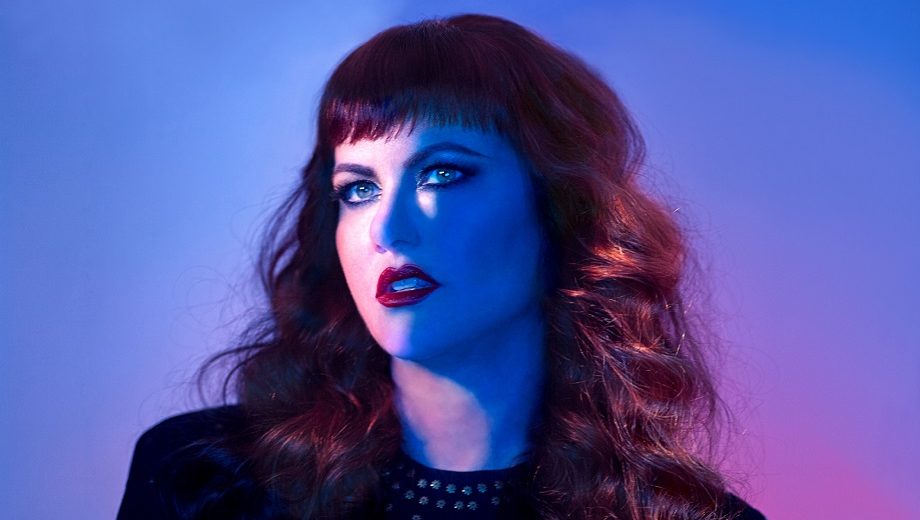
WATCH: Abigail Lapell, “Down by the Water”

Artist: Abigail Lapell
Hometown: Toronto, Canada
Song: “Down by the Water”
Album: Getaway
Release Date: February 1, 2019
Label: Coax Records

In Their Words: “‘Down by the Water’ is a springtime song, so there’s a lot of imagery of renewal or redemption, and even some biblical symbolism, suggesting an escape to a better place — whether literal or metaphorical. The song evokes the idea of getting away somewhere isolated, away from the world, in order to rediscover your voice or calling — something that ultimately deepens your sense of connection to the world. Like a songwriting retreat!

“I love singing with Dana Sipos, who’s featured on this song and is an amazing songwriter — and people often tell us we sound like sisters, which is a bonkers compliment to me because she has one of my favourite voices of all time. We’ve toured together a bunch (including by bike and canoe) so we’ve had a good amount of practice singing on each other’s songs. For this tune we recorded live-off-the-floor in the studio, in a room together; no headphones or isolation, just a guitar and our two voices. So it’s one of the simplest arrangements on the album.

“This was my first time making a music video, and it was a really fun and surprisingly time-intensive process. It was filmed by Brittany Farhat at Union Sound Studios in Toronto, which is such a beautiful (and photogenic!) space, and I edited it very slowly over several months. Also featured in the video is Chris Stringer, my wonderful producer, who was one of a small team that started the studio — they built it literally from the ground up a few years ago. It’s also where I met my fiancé, while working on my last album there. So this video and location are particularly special to me.” — Abigail Lapell


Photo credit: Gaelle Legrand

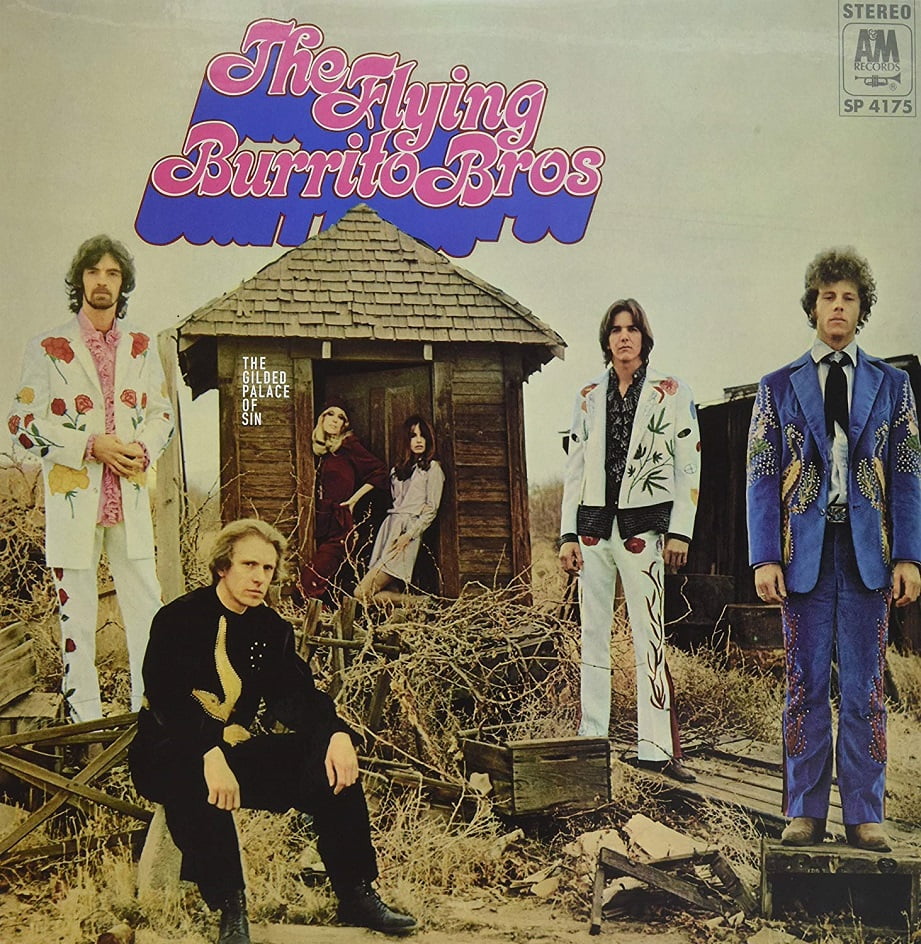
Canon Fodder: The Flying Burrito Brothers, ‘The Gilded Palace of Sin’

A spry country tune driven by Chris Hillman’s hyperactive mandolin and Sneaky Pete Kleinow’s spacy guitar solo, the Flying Burrito Brothers’ “My Uncle” is not a song about family. The uncle they’re harmonizing about is Uncle Sam, who in the late 1960s wanted members of the band to kill others and possibly be killed in Vietnam. Gram Parsons had already secured a somewhat dubious 4-F deferment, making him ineligible for military services for health reasons, but the Army continued its pursuit. “So I’m heading for the nearest foreign border,” Parsons sings, resigning himself to the ignoble fate of a draft dodger.

In the late 1960s, rock and roll was rife with anti-war songs. Some were angry, like Creedence Clearwater Revival’s “Fortunate Son.” Others were riddled with mortal dread, like “Feel Like I’m Fixin’ to Die Rag” by Country Joe & the Fish. But few sounded anything like “My Uncle,” an album cut from The Gilded Palace of Sin. For one thing, as the Flying Burrito Brothers ponder what they owe their country, they sound more melancholy than outraged, as though they’re singing a breakup song with America.

For another thing, they dressed their anti-war sentiments up in the threads of country music, which was already viewed as both musically and politically conservative: a counter to the counterculture, representing the moral/silent majority that finally put Nixon in the White House in 1968. “Okie From Muskogee” was the defining country hit of the era, a song that tsk-tsks the hippies, roustabouts, and even the conscientious objectors burning their draft cards. Merle Haggard may have written it to gently puncture the sanctimonies of an older generation, but listeners heard no irony or distance in lyrics about wearing boots instead of sandals and respecting the college dean.

Given the canonization of Parsons over the last few decades, as well as the gradual breakdown of genres and styles over time, it’s easy to forget just how contrarian it would have been for a West Coast rock band to embrace country and bluegrass. The Flying Burrito Brothers had risen from the ashes of the Byrds, a group which earlier in the decade had included Gram Parsons for just one album, Sweetheart of the Rodeo. A relative flop upon release, it nevertheless invented country rock with a set of twangy originals and covers of songs by Cindy Walker, Haggard, and the Louvin Brothers. Aside from Dylan, who was covered by everybody in the late 60s, these weren’t especially hip influences at the time.

Draft dodging may have been anathema to country music, but “My Uncle” is at its heart about more than just protest. “A sad old soldier once told me a story about a battlefield that he was on,” Parsons and Hillman harmonize. “He said a man should never fight for glory, he must know what is right and what is wrong.” The Flying Burrito Brothers plumb that stark moral divide on “My Uncle” and every other song on their debut, parsing temptation from salvation, wickedness from righteousness, and painting a picture of an America where you might easily confuse one for the other. Country music becomes the ideal vehicle to explore ideas about violence, consumerism, free love, and more broadly, the notion of sin.

The idea of sin illuminates every song on The Gilded Palace of Sin. The rollicking “Christine’s Theme” opens the album with a woman bearing false witness: “She’s a devil in disguise, she’s telling dirty lies.” “Juanita” imagines an angel rescuing the band from booze and pills. “Hot Burrito #2” invokes Jesus Christ by name — not cussin’ but praying. “Do Right Woman,” a Dan Penn/Chips Moman number popularized by Aretha Franklin, is transformed from a lover’s plea into a preacher’s wagging finger. “Dark End of the Street,” by the same Memphis songwriting duo, is about coveting your neighbor’s wife: “It’s a sin and we know that we’re wrong.” When the Flying Brothers get to the bridge, “They’re gonna find us,” they might as well be talking about angels and demons.

“Sin City,” the album’s centerpiece, is the band’s version of Jonathan Edwards’ “Sinners in the Hands of an Angry God,” which mixes Biblical imagery with twangy country harmonies to create a startlingly dire depiction of Los Angeles as both Sodom and Gomorrah. It’s a place where avarice rules all, leaving even the determined and upright struggling for footing. “That ol’ earthquake’s gonna leave me in the poorhouse,” the Brothers sing, echoing Edwards’ assertion that all humans as sinners are “exposed to sudden unexpected destruction.” Wealth won’t buy redemption or avert damnation: “On the thirty-first floor, that gold-plated door won’t keep out the Lord’s burning rain.” (That’s likely a sly reference to Larry Spector, the Byrds’ former manager, who lived on the thirty-first floor of a luxury LA high-rise).

Jesus shows up for a verse of “Sin City,” and he may or may not reappear in the close “Hippie Boy,” a spoken-word homily in the style of Hank Williams’ moralizing alter ego Luke the Drifter. Hillman tells the story of a boy caught up in the violence between the right and the left. In his 33 1/3 book on Gilded Palace of Sin, Bob Proehl suggests the band might have been inspired by the riots at the Democratic National Convention the year before. “The so-called riots in Chicago were actually more of a police action,” he writes, “a beatdown instigated by the gestapo tactics of Mayor Daley’s police force right in front of the delegates’ hotels.” Even before the song concludes with a rousing chorus of the old hymn “Peace in the Valley,” the song is a damning attack on anyone who would employ violence in the name of morality.

While they are using country music to interrogate the genre’s own high moral standards, the Flying Burrito Brothers don’t come across as scolds. Instead, they’re doing something more ambitious yet far more personal: They’re trying to find their own way in this sinful America, trying to find the moral high ground in shifting sands. On “My Uncle” they sing about dodging the draft with guilt and sadness, but they understand it is a moral predicament. “Heading for the nearest foreign border” is preferable to enlisting and killing. That makes The Gilded Palace of Sin unsettlingly prophetic fifty years after its release, maybe even inspiring in its spirit of dissent and moral defiance.

None of the Brothers would ever sound quite so political or quite so driven by moral inquisition on subsequent albums. Their follow-up, 1970’s Burrito Deluxe, sounds good but has little of the brimstone determination of their debut. Parsons left the group shortly after its release, and his pair of solo albums drive the roads of a murky, mythological America.

However, less than a year after the release of The Gilded Palace of Sin, the Brothers witnessed Biblical calamity firsthand when they played the Altamont Free Concert. Billed as a West Coast alternative to Woodstock, it included San Francisco bands Santana and the Jefferson Airplane, with the Rolling Stones headlining. The crowd of 300,000 was already agitated when the Brothers played their early set, and by the time the Stones took the stage, they were volatile, and hostile. During a performance of “Under My Thumb,” one of the Hell’s Angels working security stabbed and killed a black man named Meredith Hunter, stopping the show and casting a pallor over the event, if not the entire decade. It was intended as a show of countercultural unity, but it must have seemed like God smiting the hippie generation: the end of the 6os in great and gory conflagration.
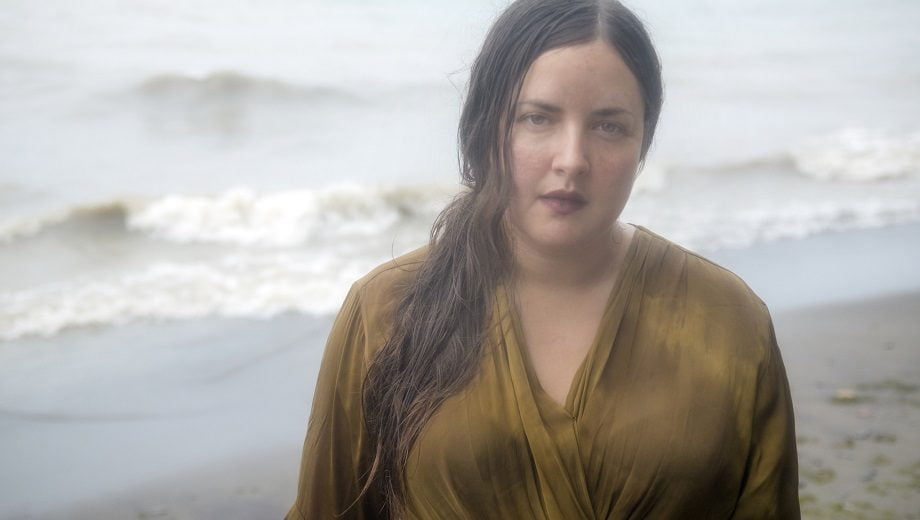
LISTEN: Lindi Ortega, “Liberty” (from ‘Liberty: Piano Songbook’)

Artist: Lindi Ortega
Hometown: Toronto, Ontario
Song: “Liberty”
Album: Liberty: Piano Songbook
Release Date: January 25, 2019
Label: Shadowbox Music

In Their Words: “What I love about the Piano Songbook version of ‘Liberty’ is how it still has this vintage vibe to it. I immediately picture this tune being played on an old Western saloon piano. I think the sense of triumph is still captured in the chorus but new elements reveal themselves in the melody, and in the bridge of the song that allows it to take a new shape. It’s been extremely interesting for me to get a real sense of the melodies without vocals. Piano has always been an instrument I truly respect and love the sound of; to be honest, I don’t think a full instrumental would work properly with any single instrument other than piano. Piano has body, richness and fullness all on its own. ‘Liberty’ was one of the more produced songs on the original record, and for it to still carry itself with piano is really cool.” — Lindi Ortega


Photo credit: Kate Nutt

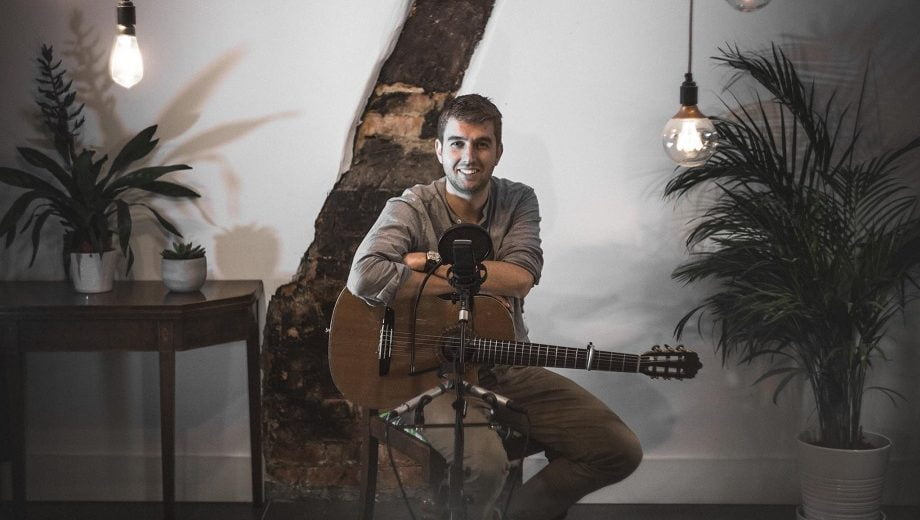
WATCH: Si Cliff, “Run”

Artist: Si Cliff
Hometown: London, UK
Song: “Run”
Release Date: January 15, 2019

In Their Words: “The track ‘Run’ started out as two separate voice recordings of the chorus melody and bass line. An idea that I arranged on guitar later that week turned into what you hear now. The starting groove of the verse came to me when practicing and it fit so well. The lyrics are about having lots of chances not to face up to things these days, with many apps and endless media sources to preoccupy us. We can find excuses to put real life and decisions on hold when the time to do them is now.” — Si Cliff


Photo credit: John Powell

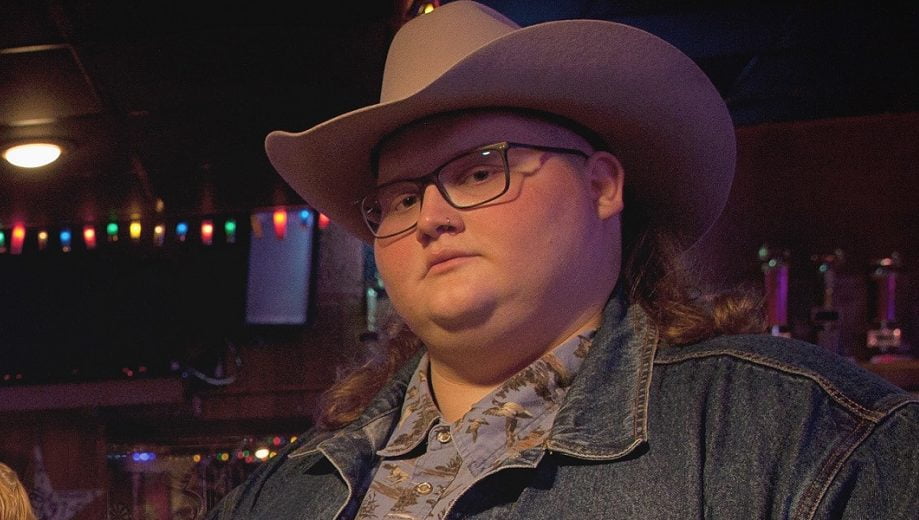
LISTEN: Joshua Ray Walker, “Burn It”

Artist: Joshua Ray Walker
Hometown: Dallas, Texas
Song: “Burn It”
Album: Wish You Were Here
Release Date: January 25, 2019
Label: State Fair Records

In Their Words: “Listeners probably won’t notice right away, because of the quick tempo and boisterous production, but ‘Burn It’ is the most autobiographical song on the record that paints me in an unflattering light. It’s about losing control, being overwhelmed with emotion in a way that only results in self-destruction, self-defamation, and self-medication. A song with this sort of emotion couldn’t be a lamentation or sound melancholic; it needed to be angry.” — Joshua Ray Walker


Photo credit: Josh David Jordan

STREAM: Neyla Pekarek, ‘Rattlesnake’

Artist: Neyla Pekarek
Hometown: Denver, Colorado
Album: Rattlesnake
Release Date: January 18, 2019
Label: S-Curve Records/BMG

In Their Words: “The idea of writing Rattlesnake honestly began as a joke. I didn’t know if I was capable of writing songs that anyone else wanted to hear. But in writing an album inspired by Rattlesnake Kate (a 1920s Colorado trailblazer who became notorious for a death-defying encounter with a rattlesnake migration, where, in order to protect her 3-year-old son, she proceeded to bludgeon 140 snakes), a woman who lived her life on her own terms, and with little care for other people’s opinions of her, I found strength and courage to stop joking (at least, in terms of writing an album), and wrote a record for myself with songs that were weird and vulnerable and funny to me. Writing an album about someone else’s life was a really liberating because I could write through this mask, taking the parts of Kate’s life that were significant and inspiring to me, and write about my own baggage through those events.

“I made the stubborn decision that I only wanted one person to produce this record, and that was one of my musical heroes, Matt Ward (M. Ward, She & Him). Keeping my fingers crossed that a few poorly recorded demos from my living room would be enough to convince him to produce my record, I was able to make this album sound exactly the way I envisioned it. I feel very lucky to have had the validating experience of working with Matt, as well as our audio engineer Adam Selzer, and am so grateful for all of their contributions on making this record with me.” — Neyla Pekarek


Photo credit: Liza Nelson

LISTEN: Southern Pine, “Standing Still”

Artist: Southern Pine
Hometown: Asheville, North Carolina
Song: “Standing Still”
Album: Standing Still
Release Date: January 11, 2019

In Their Words: “I wrote the majority ‘Standing Still’ in a small park in North Hollywood. At the time I was nearing the end of my first several-month national tour and it seemed to burst out of me as a reflection of all that had transpired — a meditation on how the places we go and the things we see transform the people we are. The song sat for a long time, present in my mind, but feeling unfinished. I was ready to give up on it, when I met my friend Meryll Davis. I played her what I had and she instinctively came up with the final verse (my favorite of the song). The song now serves me as a punctuation of sorts, helping to guide from the end of one chapter into the next.” — Zack Kardon


Photo credit: John Shuler

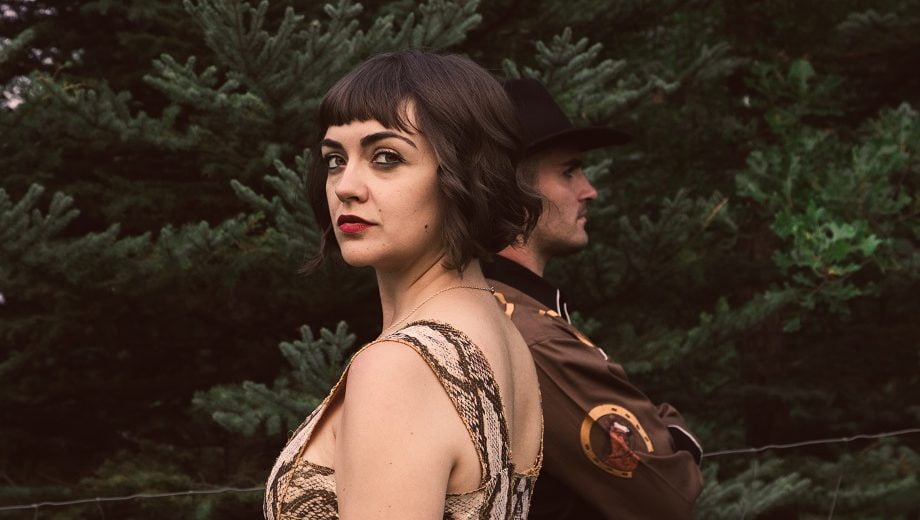
LISTEN: Kim Lenz, “Pine Me”

Artist: Kim Lenz
Hometown: San Diego, California
Song: “Pine Me”
Album: Slowly Speeding
Release Date: February 22, 2019
Label: Blue Star Record Co.

In Their Words: “This song is an answer song to a murder ballad. Murder ballads and answer songs have a long history in American music, both blues and country. I’ve wanted to write a murder ballad for a long time but the storyline is usually quite simple – -the girl gets murdered down by the river. In this song, the girl has indeed been murdered down by the river, and now she is ‘answering’ him. She’s haunting him to come find her, mind her, and do the right thing and take her body to her mother’s house. And in the end, the act he committed will haunt him ’til he dies.” — Kim Lenz


Photo credit: Joseph Cultice

LISTEN: Pierce Pettis, “Your Father’s Son”

Artist: Pierce Pettis
Hometown: Mentone, Alabama
Song: “Your Father’s Son”
Album: Father’s Son
Release Date: January 18, 2019
Label: Compass Records

In His Words: “Pat Walsh & I wrote ‘Your Father’s Son’ several years ago. We were thinking about our dads and dads in general. I always liked the song, but for some reason put it aside and it sort of got lost. Recently, I was going through some old demos and came across it again. I was really moved by the song, but felt it needed something. So I added a little musical hook and it seemed to do the trick. When I played the song out, everybody loved it — especially my producer, Garry. So later when we did the album, it just seemed the natural title song and idea around which to build the whole project.” — Pierce Pettis


Photo credit: Stacie Huckeba

The Best of Sitch Sessions: 13 Must-See Musical Moments

As we enter the new year, we look back on our favorite moments shared with some of our favorite artists in 2018. Check out our top Sitch Sessions, filmed in Los Angeles, Nashville, Philadelphia, and beyond.


“Ain’t That Fine” – I’m With Her

Fresh off the release of their debut full-length album See You Around in February, Sara Watkins, Aoife O’Donovan, and Sarah Jarosz serenaded us among the palms of the Fairmont Park Horticultural Center in Philadelphia.


 “Mal Hombre” – Rhiannon Giddens

Rhiannon Giddens brought Tejano to East Nashville with her powerful version of the legendary Lydia Mendoza’s classic “Mal Hombre.”


 “Long Gone Out West Blues” – Joe Mullins & the Radio Ramblers

Traditional bluegrass proselytes Joe Mullins & the Radio Ramblers joined us in Nashville, gearing up for the return of Huck Finn Jubilee in Southern California last October.


“The Traveling Kind” – Rodney Crowell and Emmylou Harris

Looking back on their 40+ years of friendship and collaboration, with no intention of stopping, Rodney Crowell and Emmylou Harris claim to be members of an “elite group” of those from their generation still traveling, touring, and performing. They laugh, “We’ve traveled so far, it became a song, at last”.


“Islands in the Stream” – Love Canon

How can you not smile from this bluegrass-inspired version of this Kenny Rogers and Dolly Parton classic?


“Rygar” – Julian Lage and Chris Eldridge

The duo gifted us with the building, joyous “Rygar”, off their album Mount Royal, which they describe as being comprised of “experiments” — songs that allowed them to explore their own capabilities and push the boundaries of what can be done on the acoustic guitar.


“The Restless” – The Lone Bellow

With this stunningly stripped-down rendition of “The Restless,” The Lone Bellow reminded us to keep our heads up and our hearts open in the face of adversity, something to hold on to for a fresh start in the new year.


“Alison” – Jamie Drake

Gearing up to release her solo album Everything’s Fine in 2019, alt-folk singer/songwriter Jamie Drake joined us in Los Angeles and regaled us with her immaculate tune “Alison.”


“Different, I Guess” – Lilly Hiatt

Lilly Hiatt, in the way only she can, ponders the dangers and glories of being vulnerable and allowing yourself to fall in love.


 “Coming Down the Mountain” – Mipso

Mipso muses on retreating from the madness of society in this beautiful song, taken from their 2017 album of the same name.


“Took You Up” – Courtney Marie Andrews

Courtney Marie Andrews’ breathtaking vocals stunned us once again in a solo acoustic version of this track from her latest album May Your Kindness Remain.


“Thirty” – The Weather Station

The Weather Station (AKA Tara Lindeman) gave us the haunting and tense, yet fluid, “Thirty” from their self-titled album. They met us to perform the song at BOK, a historic Philadelphia trade school, closed five years ago, now re-purposed for its space to be used by the community for small businesses, job training, non-profits, and more.


“Firestarter” – Andrew Combs

And to close out the year, we have singer/songwriter Andrew Combs with a solo acoustic performance of this captivating, previously unreleased tune.