You Gotta Hear This: Molly Tuttle, Sister Sadie, and More Women in Bluegrass

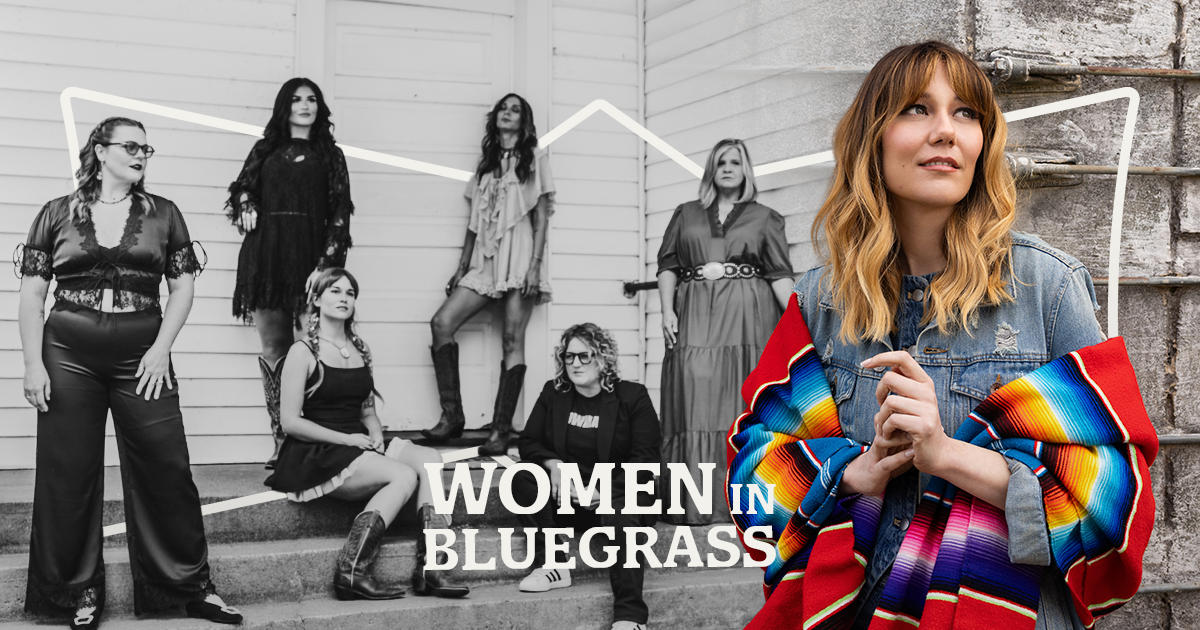
In this week’s edition of You Gotta Hear This, we shine a light on women in bluegrass!

We begin with “Come Alive,” from Darin and Brooke Aldridge. An four-time IBMA Award-winning vocalist, Brooke beautifully delivers this love letter to the mountain life. Meanwhile, Amanda Cook explores a complicated heartbreak in “Let You Go.” Although she’s an understated singer, all of the emotions are evident in her vocal performance. You don’t have to belt it out in bluegrass to get your point across!

Rising talent Farayi joins with Sister Sadie on “May a Love Like This Find Me,” which is a twist on the social media meme: “May a love like this never find me.” If you find ordinary love to be an extraordinary blessing, you’ll enjoy this one. In addition, Heather Mabe of Red Camel Collective is putting thoughts of love into a gospel song in “My Point of View,” a wonderfully encouraging song at a time we need it more than ever.

Meanwhile, few pop songs from the ’80s capture feelings of frustration better than Men at Work’s “Overkill.” It’s equally compelling as sung by Rosine’s Meredith Lane O’Connor with a vocal assist from the songwriter himself, Men at Work’s Colin Hay. We also have a pretty cool, true-to-life road trip song from Sister Sadie called “Marlboros in Muskogee.” And speaking of traveling, the Travelin’ McCourys offer “She Did Break” with harmonies from one of our favorite female vocalists, Garnet Bowman. And finally, you can’t talk about women in bluegrass without mentioning Molly Tuttle, who reimagines “The Highway Knows” acoustically.

As we say every week, You Gotta Hear This!

Darin and Brooke Aldridge, “Come Alive”

Artist: Darin and Brooke Aldridge
Hometown: Cherryville, North Carolina
Song: “Come Alive”
Release Date: September 25, 2026
Label: Billy Blue Records

In Their Words: “With ‘Come Alive,’ we wanted to capture what the mountains we call home have always meant to us and the deep connection we feel to the place, the people and the traditions that shaped who we are. It’s about the music that has been ingrained in our hearts and souls since childhood, the precious time spent with family, the memories made around a kitchen table or on a front porch, and the songs passed down from one generation to the next. Those are the things that become part of your story and stay with you wherever life takes you. The mountains have a way of reminding us what matters most, and music has always been at the center of that for us. It brings people together, carries our history forward and gives a voice to feelings that sometimes words alone can’t express.

“We hope this song takes people back to a special place, brings a familiar memory to the surface or reminds them of the people and moments that have made their lives meaningful. To us, that’s the beauty of this music. It’s more than a sound or a song. It’s a part of who we are, a connection to where we come from and a tradition worth keeping alive. It’s the kind of music that doesn’t just fill the air. It reaches your heart, stirs your soul and makes you come alive.” — Darin and Brooke Aldridge


Amanda Cook, “Let You Go”

Artist: Amanda Cook
Hometown: Fancy Gap, Virginia
Song: “Let You Go”
Album: Love Through Time
Release Date: October 16, 2026
Label: Mountain Fever Records

In Their Words: “Jeff Partin has written songs for several of my records, and once again, he brought us a beautifully written heartbreak song. There’s something really special about the way Jeff tells a story, and I think this one captures that complicated place of knowing a love has run its course but still having a hard time letting go. The band took Jeff’s song and made it our own, giving it our sound and our style. It expresses another side of love that fits perfectly with the theme of Love Through Time. Love isn’t always about the happy endings. Sometimes it’s about the hurt, the letting go, and finding the strength to move forward.” – Amanda Cook


Farayi, “May a Love Like This Find Me” (Ft. Sister Sadie)

Artist: Farayi
Hometown: Rural Idaho
Song: “May a Love Like This Find Me” (Ft. Sister Sadie)
Release Date: October 13, 2026
Label: Down the Road Records

In Their Words: “When I thought of the concept for this song, I initially thought about how daunting and demoralizing it can feel to try and fail at finding that true, romantic love, but once Deanie, Dani, and I got in the room together, it became apparent that the song was more about gratitude. We chose to explore how love manifests within our ordinary lives in ways that are simple, yet so profound, and in relationships that can easily be taken for granted. Sometimes we already have the profound love we’re seeking.” – Farayi

“Writing this one with Farayi was one of my favorite days in a room in a long time. The idea underneath it is that being well loved is usually pretty unremarkable. It doesn’t announce itself, but it’s everything. That’s a harder thing to write than heartbreak, because there’s no drama in it. But we kept chasing it until it felt true. There’s a lot of real life in this song.” — Dani Flowers, Sister Sadie


Red Camel Collective, “My Point of View”

Artist: Red Camel Collective
Hometowns: Walnut Cove, N.C. (Tony and Heather Mabe); Wirtz, Va. (Johnathan Dillon); Oakboro, N.C. (Curt Love)
Song: “My Point of View”
Release Date: October 14, 2026
Album: Finding Your Way Home
Label: Pinecastle Records

In Their Words: “We needed a gospel song for our upcoming record, so I was thumbing through ideas I had saved on my phone. I ran across the lines ‘you’re doing better than you think, and you’re stronger than you know.’ Those words just hit me right in the heart and I instantly knew, this is a gospel song. It came together so quickly. It flowed right from my heart. We are so excited for folks to hear this tune and our upcoming album, Finding Your Way Home, coming early 2027!” – Heather Berry Mabe, Red Camel Collective


Rosine Feat. Colin Hay, “Overkill”

Artist: Rosine Feat. Colin Hay
Hometowns: Nashville, Tennessee (Rosine); Topanga, California (Colin Hay)
Song: “Overkill”
Release Date: October 23, 2026
Label: Compass Records

In Their Words: “Colin has said that when he wrote ‘Overkill’ in the early ’80s, he was trying to make sense of how fast everything was changing around him during the ascent of Men at Work. At a different scale, that feeling hits home for us too: starting Rosine, getting married, and building a life and a band at the same time has been incredibly rewarding and beautiful, but it’s also brought sleepless nights and long stretches of introspection and self-questioning. Having Colin join us on this song reminds us that most of the people we look up to have faced fears similar to ours and have led lives where each day feels like a new adventure.” — Forrest O’Connor and Meredith Lane O’Connor, Rosine

“When I came up with the song ‘Overkill’ some 46 years ago, I had personal struggles. Whenever I sang the song, it helped me. Soothed my soul, so to speak. It lives inside me and has been my constant friend all this time. When I hear Rosine play the song and Meredith sing it, it lifts my spirits, makes me feel useful. It’s become their friend too. It connects us, like an electric current. That’s what music does, there’s nothing like it.” — Colin Hay


Sister Sadie, “Marlboros in Muskogee”

Artist: Sister Sadie
Hometown: Nashville, Tennessee
Song: “Marlboros in Muskogee”
Release Date: October 6, 2026
Label: Down the Road Records/Exceleration Music

In Their Words: “We left Nashville for a tour through Oklahoma, New Mexico, and Arizona honestly kind of dreading it. We knew we were about to drive thousands of miles in three days, and that part of this job feels a little ridiculous sometimes because the travel is most of the work. Then you get up there and play for an hour, maybe 75 minutes, and that’s the part everybody sees. But somewhere along the way, that trip turned into one of those experiences none of us would have missed for the world. We didn’t sit down and decide we were going to write a road song. We went on the road, lived all of these little moments together, and a song came out of it. ‘Marlboros in Muskogee’ feels less like we were trying to make up some glamorous story about life on the road and more like we just paid attention to what was actually happening while we were in it.” — Dani Flowers

“We told our co-writers [Jon Randall Stewart and Jessi Alexander] about the entire trip, and then wrote the song with them. And they got exactly what we were looking for. When we played it for the girls, we were all sobbing because it is exactly what it’s like on the road with us. This song is the story of this band.” — Deanie Richardson


The Travelin’ McCourys, “She Did Break” (Ft. Garnet Bowman)

Artist: The Travelin’ McCourys
Hometown: Nashville, Tennessee
Song: “She Did Break”
Release Date: October 13, 2026
Label: McCoury Music

In Their Words: “I had the idea and title for the song ‘She Did Break.’ I wrote it with Adam Hood and Donnie and Chris Davisson. It was so great to hear where we took the idea and went with it. It’s an age old topic of the wandering of a man in a relationship and the heartbreak it leaves behind. I’m proud of how it turned out and the ‘icing on the cake’ was adding Garnet Bowman’s beautiful voice on it.” — Ronnie McCoury


Molly Tuttle, “The Highway Knows” (Acoustic)

Artist: Molly Tuttle
Hometown: Palo Alto, California; Nashville, Tennessee
Song: “The Highway Knows” (Acoustic)
Album: So Long Little Miss Sunshine (Acoustic EP)
Release Date: September 4, 2026
Label: Nonesuch Records

In Their Words: “I recorded this acoustic version of ‘The Highway Knows’ last fall after having so much fun reworking it with an acoustic trio for a couple shows we did last year. On my album version from So Long Little Miss Sunshine, there are drums, keys and all sorts of other textures which we stripped away for this version. People seemed to respond to hearing these songs done acoustically so I wanted to put out these versions that were a little truer to how the songs first sounded when I wrote them and played them around the house. This version features Mair on mandolin and vocals and Vanessa McGowan on bass and vocals.” — Molly Tuttle


Photo Credit: Joshua Black Wilkins (Sister Sadie); Ebru Yildiz (Molly Tuttle)
Drew Kennedy’s “Head Out West” Playlist

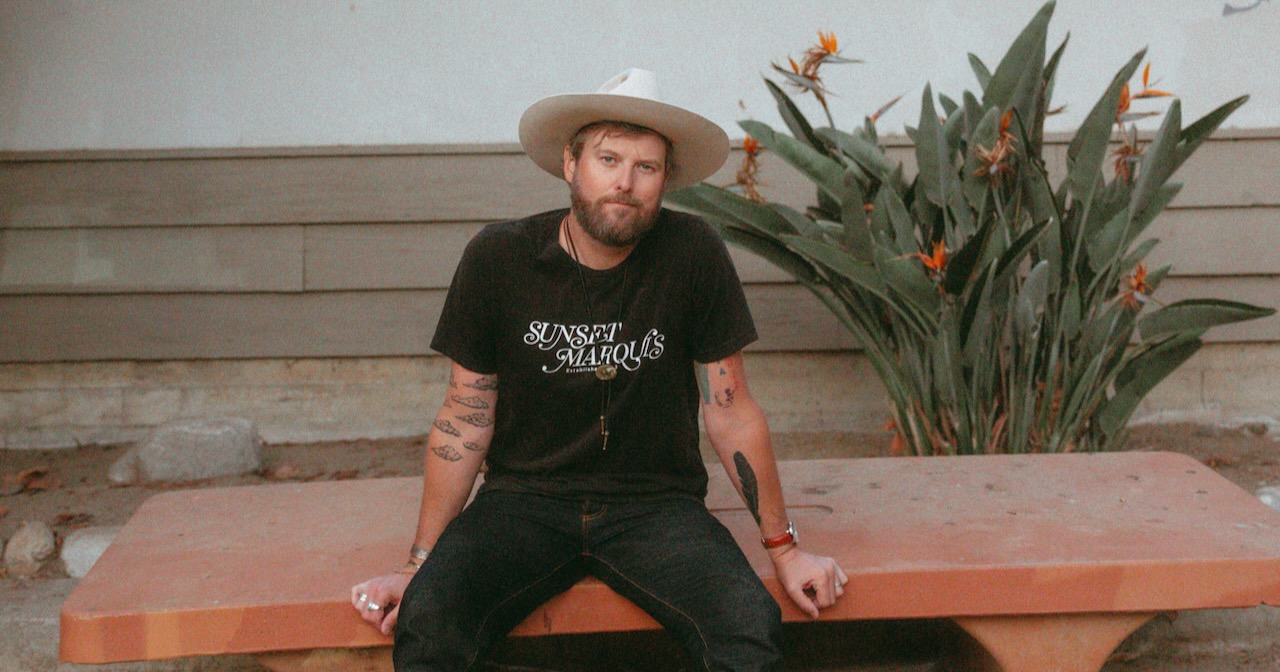
I’ve been enamored by the West since I first set a dusty boot down in Marathon, Texas – a town that would be my spiritual hometown, if such things existed.

I made my last record, Marathon, with my incredibly talented friend Davis Naish in a tiny adobe house in that little town. For the new record, we camped out in his Los Angeles studio, so I figured, “Hey, let me put together a playlist that I think captures the way I feel about the vast stretch of land that lies between Marathon and LA.” Road trip! – Drew Kennedy

“Desperados Waiting For A Train” – Guy Clark

Guy was born in Monahans, Texas, not too far from Marathon, so this feels like a natural starting point. To me, there are few artists who are able to capture the spirit of Far West Texas like Guy Clark. With equal parts romance, unflinching honesty, and those trademark turns of phrase that make him a hero to songwriters who know, Guy can always make me feel like I’m standing beside him in the little movies that are his songs.

“Levelland” – James McMurtry

If you trekked due north and just a little east out of Monahans, eventually those sand hills and mesas play out into plains so flat and wide open it can make the uninitiated feel uncomfortable. A friend once told me a buddy of his said he didn’t like it because “there was no place to hide.” From what or whom didn’t matter. You’re just out there, totally exposed–the only thing breaking the perfect line between land and sky. Those McMurtrys sure know how to tell a good story. Anyway, if we kept going north we’d be getting farther away from California, so let’s hang a left.

“Watch It Shine” – Walt Wilkins

Walt Wilkins is another songwriting hero and I’m lucky to call him a friend, as well. The Poet Laureate of the Hill Country teams up with Owen Temple to take you on a ride following the Rio Grande as it snakes south from Taos towards Santa Fe. It also features one of my favorite lines I’ve ever heard in a song: “They say there’s iron in these mountains, and in bone and skin and mud/ They say that iron only comes from stars, so stars are in my blood.” Goosebumps every time.

“Low Sun” – Hermanos Gutiérrez

Put a ranch water in my hand, fire up this album, and cue a good sunset. The only three ingredients I need to find my favorite places inside my mind no matter where on earth I am. Doubly effective if I’m already in one of my favorite places.

“Don’t Worry” – Marty Robbins (single, 1961)

We’re getting out into the type of landscape most people who’ve never visited the desert picture in their heads when someone mentions it. Saguaros, red rocks. We’re well beyond El Paso now, so we’ll go with this beauty from Marty Robbins. Yes, that is the coolest guitar solo of all time. I’ve heard several different stories about how they got that sound, but however they came by that tone, hell yeah.

“Willin'” – Little Feat

We’ve covered a lot of ground… maybe we’re dragging a little bit after all of those miles. The boys in Little Feat know how we feel, and they’ve got our back.

“Queen of California” – John Mayer

Now that we’re pulling into town we need something we can nod along to with our Wayfarers on and our hair blowing in the sweet California breeze, as we take in the sights. This song is a badass way to kick off a record, too.

“Beautiful World” – Colin Hay

I mean, when we get there one of the first things we’re gonna do is jump into the Pacific, right? I love that Colin Hay sounds like Colin Hay and nobody else and man, do I love the way he writes a song.

“It Never Rains In Southern California” – Trent Summar & The New Row Mob

I love their version of this song. It’s not all sunshine and roses out there, you know.

“California Poppy” – Theo Lawrence

I was shocked when I found out this guy was from France. Sometimes people in Texas are shocked when they find out I’m from Pennsylvania. Point is, if it’s in you, it’s in you. I would believe it if you told me the ghosts of Buck Owens and Don Rich were sprinkling a little of that Bakersfield dust around the studio the day they laid this one down.

“Mama Told Me Not To Come” – Randy Newman

I’ve aged out of today’s version of this kind of party, but that doesn’t mean I don’t expect to see some unexpected things whenever I’m out in LA. Another one-of-one, Randy Newman.

“Texas Time” – Explorer Tapes

And with that, let’s turn this big baby blue Cadillac convertible around and head back home. I assume that’s the kind of ride we’d want for this road trip. Thanks for tagging along.


Photo Credit: Sarah Barlow

LISTEN: Colin Hay, “Now and the Evermore” (Ft. Ringo Starr)

Artist: Colin Hay
Hometown: Los Angeles, California
Song: “Now and the Evermore”
Album: Now and the Evermore
Release Date: March 18, 2022
Label: Lazy Eye/Compass Records

In Their Words: “‘Now And The Evermore’ is a reminder to myself, to make the most of what time I have left walking around on top of the planet. When I listen to it, it transports me back to when I thought I had all the time in the world. It is a song which is unashamedly inspired by the majesty of The Beatles, and the gift they gave us all. Having Ringo Starr play on the track is more than icing on the cake.

“I’m deeply grateful for the life I have, and I think my natural tendency has always been towards optimism and humor. Lately, though, I’ve had to be more intentional about it. I’ve had to actively seek out the positive, to let new rays of hope shine on some seemingly dark situations.” — Colin Hay


Photo Credit: Paul Mobley

LISTEN: Colin Hay, “Wichita Lineman”

Artist: Colin Hay
Hometown: Topanga Canyon, California
Song: “Wichita Lineman”
Album: I Just Don’t Know What To Do With Myself
Release Date: August 6, 2021
Label: Compass Records

In Their Words: “‘Wichita Lineman’ was the first song where I realized the importance of the written song, in and of itself. Before that, I had always put artists and songs together, like Bob Dylan, The Beatles, The Who, The Kinks, and many others, who all primarily wrote and performed their own songs. ‘Wichita Lineman’ spoke of things I could only wonder at. The geographical vastness of the land, the hopes and dreams of the man working the line, and indeed of all people who inhabit this country. And, a love story contained within achingly beautiful music and melody. I can’t think of a better song.” — Colin Hay


Photo credit: Paul Mobley

ANNOUNCING: Two New Ways to Hang & Sang

Last summer, Team BGS noticed that Facebook was really pushing their Live videos. We also saw that our friends Ann Powers and Jewly Hight were doing some casual sessions on Ann’s porch here in Nashville for NPR Music using that medium. So we decided we should give it a whirl. Ani DiFranco was coming to town, and we asked if she’d be our first. We didn’t have a name for it or much of a plan at all, but Ani said yes and City Winery said we could use their lounge. On June 30, 2016, what would become Hangin’ & Sangin’ was born.

Since then, we’ve had Sam Bush, Lori McKenna, Uncle Earl, Indigo Girls, Chely Wright, Colin Hay, Natalie Hemby, Ruby Amanfu, Special Consensus, the Revivalists, Marc Broussard, the McCrary Sisters, Whiskey Myers, Glen Phillips, Mary Gauthier, and a slew of other fantastic artists on the show.

And we’re just getting started.

In the weeks ahead, we’ll be hangin’ with Johnnyswim, Angaleena Presley, Drew Holcomb, John Paul White, Rodney Crowell, Sunny Sweeney, Keb’ Mo’, Gaby Moreno, and so many more of your favorite artists at Hillbilly Central, right off Music Row, in the heart of Nashville. Join us every Friday at 2:30 pm CT on Facebook Live, catch us every Sunday at 6:30 am and Tuesday at 9 pm on WMOT Roots Radio, or listen to the podcast via iTunes any time you like. We’d love to have you hang with us.


Special thanks to Alison Brown, Garry West, Gordon Hammond, and everyone at Compass Records for lending us their historic studio. Additional thanks to Jessie Scott, Val Hoeppner, John Walker, Craig Havighurst, and the whole team at WMOT Roots Radio for giving us some air time. And an extra shout out to Josephine Wood for helping get this thing off the ground to begin with. We couldn’t be happier to partner with all of you.

Following the Songs: A Conversation with Colin Hay

Colin Hay has had one of the most improbable second acts in rock ‘n’ roll. With his band Men at Work, the Scottish-born/Australian-bred singer/songwriter enjoyed a handful of massive hits in the very early 1980s, including the gloriously paranoid “Who Can It Be Now?” and the unofficial Aussie national anthem “Down Under” (which introduced Yanks to the concept of a “vegemite sandwich”).

In 1985, the group disbanded at the height of their success, and Hay quickly established himself as a solo artist. Reviews for his albums were often better than their sales, but they presented a songwriter with a penchant for sharply observed lyrics, graceful melodies, and wry asides. In the 21st century, Hay began attracting some famous fans, including actor/filmmaker Zach Braff who secured Hay an acting gig on Scrubs and a berth on the best-selling Garden State soundtrack. Quickly, he vaulted from cult figure to mainstream artist, and a range of younger musicians have cited him as an influence, including the Lumineers (who were barely walking when “Down Under” was a hit) and Metallica (no, really).

His music has appeared on the soundtracks to countless TV shows and films, which seem to inform Fierce Mercy, his 13th album. Featuring some of his most elaborate and ambitious arrangements to date, songs like “Come Tumblin’ Down” and “Secret Love” marry his sharp lyrics to lush arrangements; while, drawing on old-school Hollywood scores to lend the album a cinematic quality, “Frozen Fields of Snow” is a small movie unto itself. “It’s a soundtrack to a movie that hasn’t been made,” he says, “or something like that.”

Fierce Mercy is a new chapter in a story that began with not wanting to get a real job. “I’ve tried to avoid having a job for a long time. That’s what music was for me: How can I avoid the workforce? I had a band in 1972, I think it was, or 1973, back when I was a teenager, and I thought, ‘This is it. This is going to work out.’ When it didn’t work out, I thought, ‘Oh my God, I’m going to have to go out there in the world.’ But then I discovered that I could go to university. I’ll do that. That’s going to take up three or four years where I don’t have to put on a tie. Men at Work came out of that.”

Men at Work came out of not wanting to be a man at work?

Well, I had nine-to-five jobs. I always worked. I worked when I was 14, because my mother and father made me. When we had school holidays, I didn’t have a school holiday. They made me get a job. I didn’t really think about it at the time, but it was good for me. It was record stores or department stores, only for two or three weeks at a time. It was good having your own money, because you could save up to get a guitar and stuff like that. But having a job for two or three weeks is very different from having a job for 40 years and then getting a gold watch when you retire.

You’ve been doing this for more than 40 years.

I actually started playing in bands in 1968, at school, when I was 14 or 15. I started playing folk clubs in ’69. I wanted to have a band, but I worked by myself until Men at Work. I wanted to play original music, and it seemed easier to play on my own. Then I met Ron Strykert. I’d known Greg [Ham, multi-instrumentalist] for years. But when I met Ron, there was a creative light that went on. He was an inspired musician.

As a solo artist, do you miss being in a band?

I don’t really miss it, but I do miss the immediacy of it. For example, if you get the spark of an idea for a song, you can start playing something in a rehearsal room and people start playing along and, all of a sudden, you have a song. I miss that gang-like spirit, that clubhouse vibe. All for one and all that. I had that, and it went away quite quickly. Or maybe it was never there. I’ve never figured that out, because you have an idea of what something is and you think everyone else has the same idea. But they don’t. Bands are weird like that. But I still like the idea of having a democratic … or I guess you’d call it a socialist band, in the sense that everyone has a say. In the end, Men at Work didn’t work out that way. Well, it worked in that we became immensely successful, but it didn’t really work in the long run. We didn’t go the distance. There wasn’t realty the soul of the band that I thought was there. When that’s not there, there’s not much point.

You’ve been playing with your current backing band for a long time. Does that give you the band dynamic that you need?

Absolutely. This band is great. It’s a different dynamic, though, because it’s an employer/employee situation. There’s still a lot of camaraderie and a lot of great musicianship.

I noticed you co-wrote a lot of the songs on Fierce Mercy with Michael Georgiades, who used to play with Bernie Leadon.

He’s my friend. I met him in 1993. He’s been around since the ’60s, so he’s a bit older than me. I met him in a guitar store called Westwood Music, and we became friends. We didn’t really write songs for many years. We just hung out now and again. He used to come around to my house, and he would pick up whatever guitar was lying around. I played him an idea for a song, and he said we should finish it, so we wrote this song called “Prison Time” a few albums ago [off 2009’s American Sunshine]. Why didn’t we do this before? We wrote a few more together for the next record. He would come around with an idea, and it was always a great musical idea. Or he’d ask what I had on my iPhone, and I would play him something and we’d work on it. It was a very … what’s the word? … synchronistic thing.

Are you thinking about arrangements when you’re writing? Do you have these sounds in your head, when you’re thinking about lyrics and melodies?

Yes and no. Some of these songs are in a C tuning, which Joni Mitchell used a lot. When you have just voice and guitar in a C tuning, it sounds huge. Really full. So when you do an arrangement, you have to be careful about what you put in there, because sometimes you can crowd things in a bit. We would record those songs with just a vocal and a couple of acoustics, and they sounded great that way. And then we would add things to them very carefully. Tempo is very important for me, as well. I always try to get the tempo right before we record the song. I usually lay down a rough guitar and vocal, mainly just as a guide so I have something to play to. Then I’ll bring in the other musicians — drums, bass, keyboards, whatever happens to be there. We cut the tracks live in the studio, so all the rhythm tracks are done in a relatively old-fashioned way.

I did ask Fred Kron, who’s a great musician and a friend of mine, to do some kind of orchestration. We put strings on four tracks, which gives a lot of beauty to the songs — a fullness and a richness to the sound that was not really there at the start. That usually developed as we listened to the songs: “Ah, this would be nice with a string arrangement.” The song was speaking to you. You have to listen to songs and follow them. Sometimes they tell you how they want to be heard, and you respond to that, as opposed to dictating too much. Sometimes you just have to get out of the way and let the song have its own life.

That really gives the songs a cinematic quality.

Well, there are personal things that the songs do. There’s a song called “Frozen Fields of Snow,” about a guy standing in his kitchen. He appeared to me when I was in the studio. He just came into my head when I was working on another song. I had this little piece of music, but I didn’t have anything to go with it. This little phrase “frozen fields of snow” came into my head, and then this elderly gentleman appeared out of nowhere. He was standing in his kitchen looking out into the frozen fields of snow and trying to figure out what to do with this house where he was born and grew up. The specifics change day by day. Sometimes I think he came back to he house reluctantly because there’s no one left in his family. He’s just looking out the kitchen window, and that struck me as a nice image. The song just appeared.

To me, it’s a short film, but also a very simple idea that we all sometimes get to these moments in our lives that we don’t expect, especially with family. You think your parents are always going to be in the driver’s seat and you’re always going to be protected — if you’re lucky enough to have parents to protect you, that is. But then you lose them. On some level, you knew that would happen, but you’re not prepared. That seems to be true with most people. I didn’t think I would cope very well with parents passing and, by God, I was right.

I appreciate the open-endedness of “Frozen Fields of Snow,” which seems like it might still reveals new facets the more you live with it.

Hopefully. I like that idea. James Taylor talks about that: Sometimes it takes years for you to realize what a song actually means. Hopefully it means you have an open mind to what is happening and what can happen to you. I like the idea that they can inform you as time goes on. I like the idea that songs can have secrets and they don’t reveal themselves all at once. Even if you sing songs every night, even if you can get inside the songs, one way of performing them and not making them boring is to get away from thinking, “Oh, I’m singing this song.” With an emphasis on the I. You want to be the medium through which the song speaks, but you can’t input too much of yourself. I find that rewarding because the song can constantly be reborn. It can mean many things, and you’re not turning it into what happened to you that day or what you happen to be feeling. It’s got nothing to do with you. It has to do with the song. It’s a small, enlightening thing just to get out of the way and let the song speak for itself.

Sometimes it can be challenging because even putting the strings on a couple of songs, I was thinking they sound pretty good the way they are. There’s always that desire to put more things on it. “Oh, this is a great idea. That’s a great idea.” But, no, sometimes a song wants to be heard this way or that way. So you have to be a little brutal with your ideas. It’s good to have two or three people you can trust to listen to the songs. I have a couple of people I trust. I’ll play songs for them and they’ll say, “Why did you put all those guitars on there?” “Well, I like them.” “But get rid of them!”

That seems true especially with songs that seem so personal, especially “She Was the Love of Mine,” about your mother.

I was lucky enough to spend quite a lot of time with my mother in the last year of her life. It was a very sad time, because she knew she was not doing well. And yet, she was brilliantly in denial of it. She was almost 90 and she was, in many ways, still a little girl, really. My sound guy, he adored my mother, and she just loved him. I think she wanted to have a little bit of a fling with him. That was not to be, but she was still a flirt at age 90. She was so lovely, like a film star who never did any movies.

I had a great photograph of her and my father on their wedding day in 1944, which had all these people in it. There are probably 100 people, and it’s toward the end of the second World War. During the last year of her life, that photo was the screensaver on my computer. We’d have coffee in the morning in my flat in Melbourne, where you can watch the ships pull out of Port Melbourne, and we would sit there together and I would point to someone in the photo and says, “Who’s this person?” “Oh, that’s Ethel.” And she would tell me this person’s life story: “Ethel had an affair with her sister’s husband.” I treasure those times, and I love knowing who those people were.

“She Was the Love of Mine” really came out of a memory of my mother when she took me to the hospital. I was three years old, and she was wearing a green dress. That’s the first memory I have of her, and she had beautiful red hair and this green dress. I was going to the hospital because I had a hernia, and I remember her being very protective of me that day. She was a very, very important person in my life — and she continues to be. I think mothers are for everyone, to varying degrees. Even though she’s gone, I still feel very protected by her in a very real way.

It seems like you would have to trust the musicians around you to handle a song like that sensitively and honestly.

I never really think, “Can I trust these musicians with this material?” I never really question that trust. I just trust them. I co-wrote the song with a guy named Rich Jacques. He came over to my house and I played him a bit of it. “Oh, that sounds fantastic. Let’s work on that.” Fred played piano on it, and I think Garry West from Compass Records ended up playing bass. And then Fred did the orchestration, which is really beautiful. And then this young lad named Leiser Tito played trombone on it. I thought that would be an interesting instrument to have on the song, because it reminded me of Sunday in Scotland, when we would be walking up by the Salvation Army. It has such a lonely, mournful quality to it.