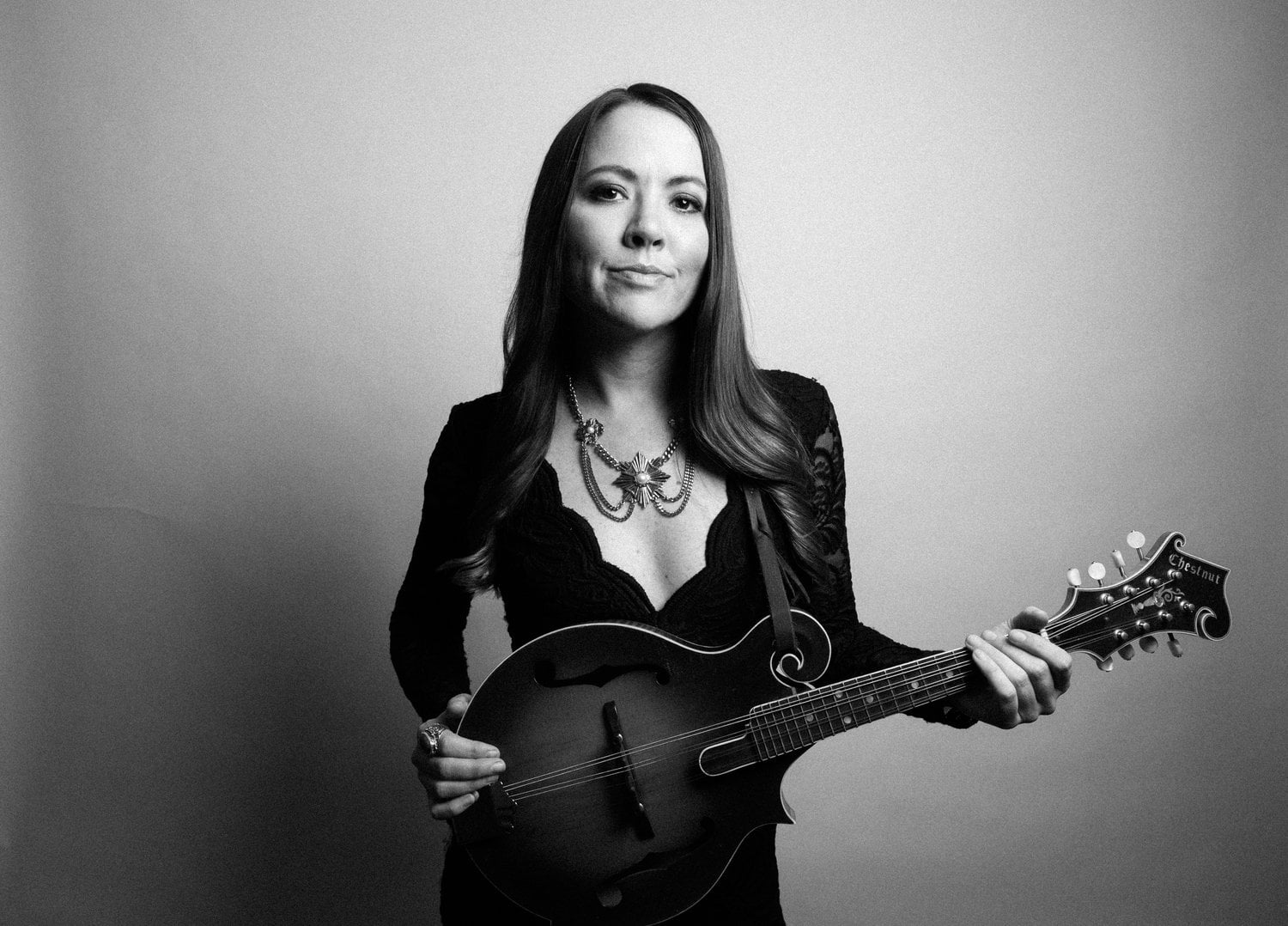
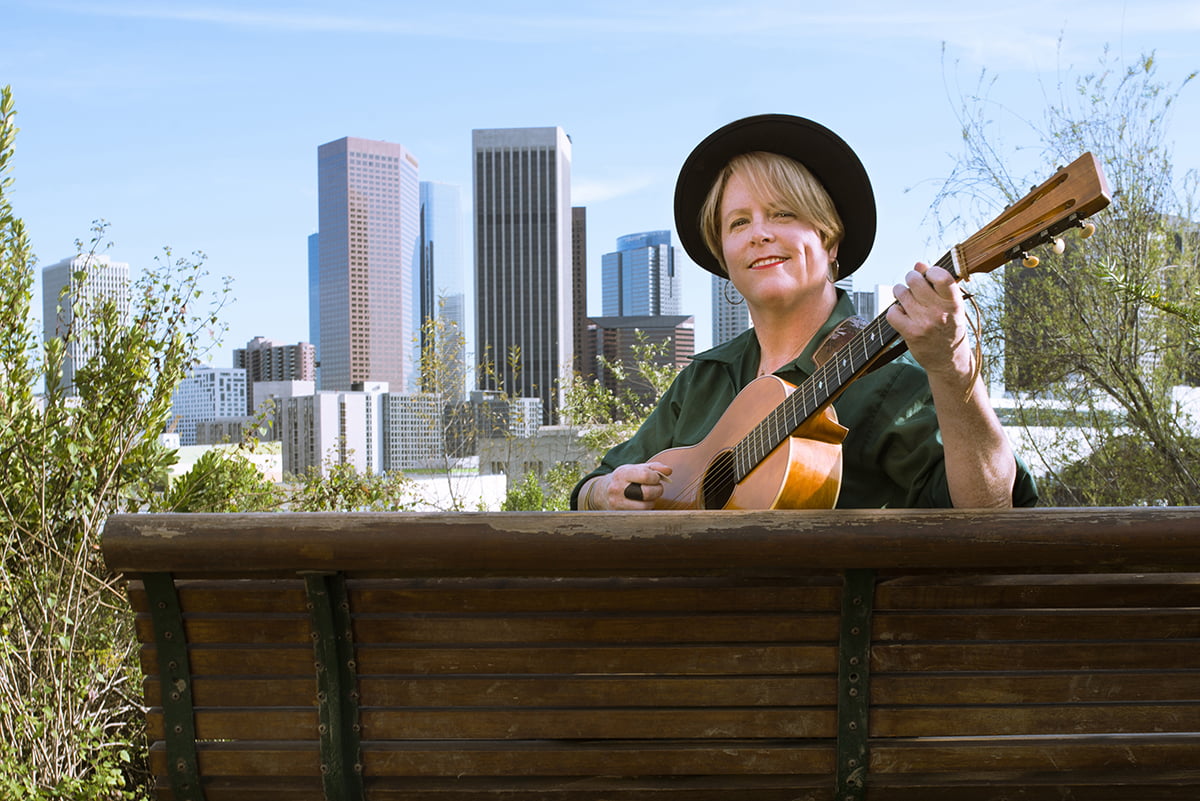
LISTEN: Kelly Marie Martin, ‘Your Rockin’ Bow Don’t Roll No More’

Artist: Kelly Marie Martin
Hometown: Los Angeles, CA
Song: “Your Rockin’ Bow Don’t Roll No More”
Album: The Last Kind Word
Release Date: May 23, 2017
Label: Questionable Records

In Their Words: “This song is from upcoming solo album, The Last Kind Word. The 15 original songs and sound interludes are a reflection of what happens when a broken-hearted girl who used to write songs but has been playing old-time back-up guitar and clawhammer banjo for some years, meets back up with her songwriting and sound design self. A little folky, old-time string trio; a little blue, strange travel sounds and beats; some spoken word; and, like the song here, a good ol’ heartbreak honky-tonk!” — Kelly Marie Martin


Photo credit: Jessie Gentry

WATCH: Jenni Lyn, ‘Are You Ok Alone?’

Artist: Jenni Lyn
Hometown: Nashville, TN
Song: “Are You Ok Alone?”
Album: Burn Another Candle
Release Date: April 7, 2017
Label: Katherine Street Records

In Their Words: “I was watching an episode of Twin Peaks when the idea for the video came to me. There is this scene where a white horse appears in a living room with nothing but a spot light on it. The thought of spotlighting a person alone in a bedroom, trying to get someone off their mind popped in to my head, and I started humming ‘Are You Ok Alone?’ I think most people can relate, especially the ladies. I shared the idea with producer Dycee Wildman and she brought the vision to life.” — Jenni Lyn


Photo credit: Dycee Wildman

The Mile Markers of Music: A Conversation with Ketch Secor

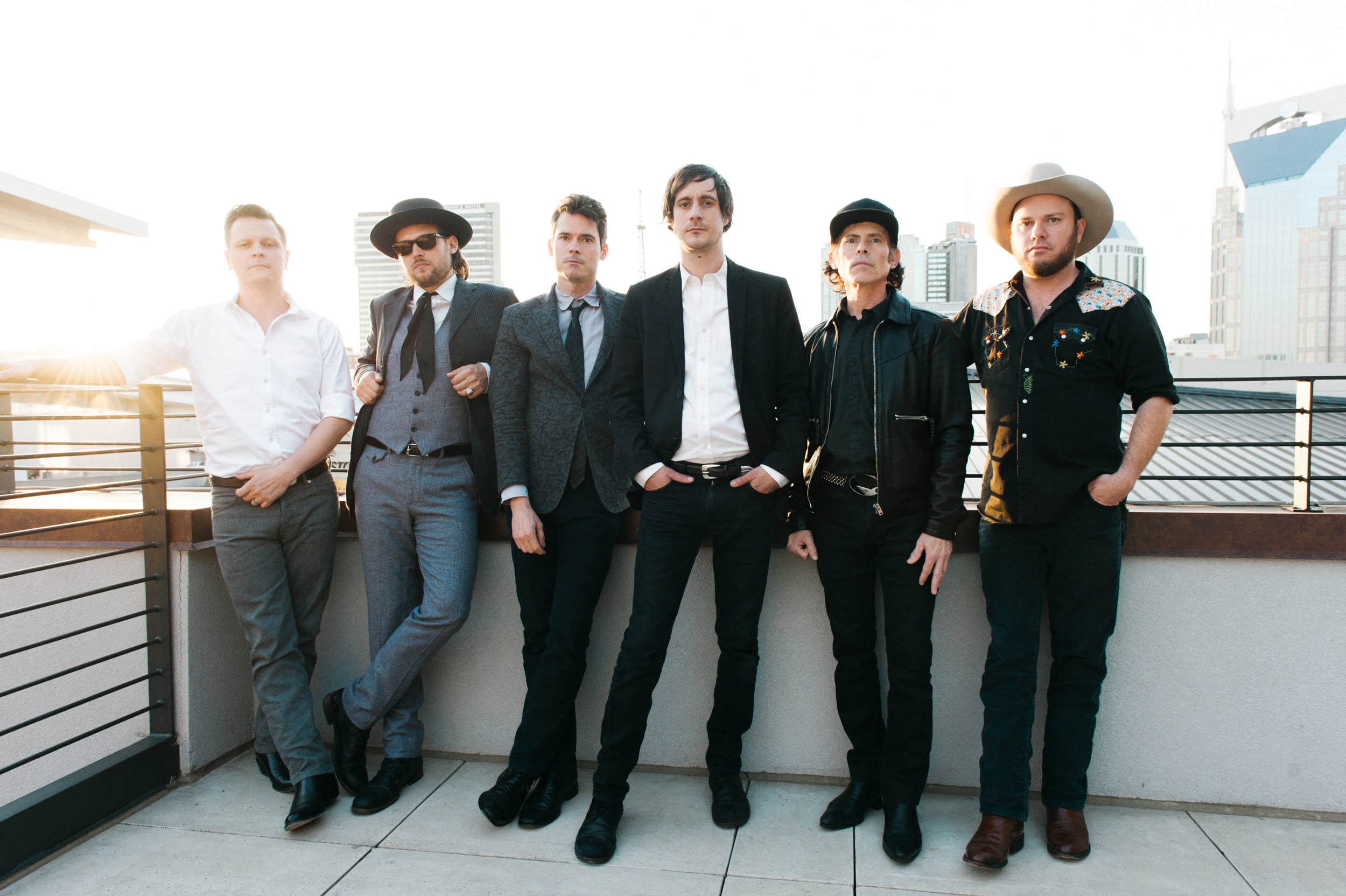
It’s not a stretch to say that Old Crow Medicine Show is intrinsically linked to Bob Dylan. The country-roots band has never shied away from voicing their admiration for the seminal singer/songwriter, and the story behind the infamous “Wagon Wheel” is common musical fodder at this point: Old Crow’s Ketch Secor filled in the verses to an incomplete track titled “Rock Me Mama” from a Bob Dylan bootleg his bandmate Critter Fuqua found during a trip to London. After Darius Rucker’s cover of “Wagon Wheel” hit number one on the Billboard chart in 2013, Dylan’s camp reached out to Old Crow. They offered another song fragment Dylan dreamed up around the same time as “Rock Me Mama,” and wanted to see what Old Crow could do with it. Old Crow cut the track and after incorporating a couple of suggestions from Dylan himself, “Sweet Amarillo” became the first single from the band’s 2014 release, Remedy.

Now, Old Crow Medicine Show is paying homage to Bob Dylan with the release of 50 Years of Blonde on Blonde, celebrating the 50th anniversary of Dylan’s first Nashville record. The live album features Old Crow’s performance of Blonde on Blonde in its entirety, recorded last May at the CMA Theater, located in the Country Music Hall of Fame.

“As somebody with such deep respect for Bob Dylan, I hope that he likes what we did with the songs,” Secor says. “We really tried to go, ‘What if the Memphis Jug Band had come up with “Leopard-Skin Pill-Box Hat?” What if the Mississippi Sheiks had figured out how to write a song like “Visions of Johanna?” And what would it sound like if they did?’”

As Secor puts it, Blonde on Blonde was “the shot heard ‘round the world” – the record that changed the landscape of country music and split Nashville’s sound wide open.

Do you remember the first time you listened to Blonde on Blonde ?

The first time I heard Blonde on Blonde, I was probably 14, 15 years old and I was headed down a sweeping Bob Dylan kick and ingesting as much Bob as I could like it was water or wine.

Dylan has such a vast catalog. What was it about Blonde on Blonde that made the band want to take this particular record on? Why did you pick this record to celebrate for the 50th anniversary?

Well, it’s true we could have picked any of Bob’s records ’cause we’re at that point in a lot of history where we’re at milestone marks for many of the seminal musical efforts of the past 50 years and more. This one made a lot of sense because it was made in Nashville and it’s the first of Bob’s Nashville records. And this was also recorded at a time when Nashville had yet to have a rock ‘n’ roll record. This was kind of the very beginning of the ever-expanding Nashville sound, so it’s a real milestone in that regard and, with it, in the wake of Bob Dylan’s trip to Nashville, everybody from Leonard Cohen to Joan Baez to Ringo Starr and Neil Young were in Nashville in the next five years making their own records.

In recording and releasing this project, what are you hoping to communicate about the Nashville sound? Are you hoping to preserve that Dylan and post-Dylan time? Or how do you see Nashville as changing or staying the same in the last 50 years?

Well, one of the sentiments that seems active here in Nashville right now is this feeling of, “Wow, everything is changing.” You look at the skyline and there’s something new going up every day; it’s full of cranes and boom shafts and towers. So much development, so many people moving to town. So I think it’s easy for Nashvillians to think, “Wow, things sure are getting different.” My argument, with this record, is that 50 years ago is really when things started getting different, and that’s the shot heard ’round the world that the Nashville music community and its spectrum of sound became so much wider beginning with the making of Blonde on Blonde and that it’s very wide today.

Now, with country music, as it’s heard on the radio and viewed upon the charts, that has actually become very, very narrow in its scope. So I think, with a record like this, we’re hoping to kind of shine a light on a time in which that very thing was happening and somebody like Bob Dylan came in and said, “Hey, I belong to country music, too! I’m from a mining town just like Loretta Lynn. I’m the fringe of America, just like Charley Pride. And I’m an outsider.” So to make an outsider record in Nashville at that time was a really powerful turning point for our state.

Can you walk me through the prep for this project? How long did you all work on learning these songs or what did you do with the arrangements to make them your own? What was your approach?

We started this project about two months before we went in and recorded it — maybe two or three months — and just started learning the songs. That was the biggest challenge — getting all the lyrics down. This is probably Bob’s most intensely lyrical album in well over 50 years of record-making. So to be able to recite it was a real challenge. It’s such a kaleidoscopic collection of lyrics, so the real challenge is being able to differentiate at every moment in live performance whether you’re supposed to sing about the “sheet metal memories of Cannery Row” or the “sheet-like metal and the belt-like lace.” You know, it’s all this impressionistic poetry or Beat poetry or whatever it is, post-modernism or something, and trying to be able to find form and meter in it when Bob so deliberately created it to be formless and without meter.

I watched a promo video for this project — it was an interview with you in the studio where Bob recorded this album and you said something I loved: “These songs, Bob wrote them, but they belong to all of us.” I was wondering if you could expand on that sentiment?

Well, I think we all know what folk music is and I think we all know the term public domain or the idea of a statute of limitations by which copyrights run out and they become part of a common vernacular. I think it’s less obvious to apply that to something that’s so clearly Bob Dylan’s. But my argument is that “Will the Circle Be Unbroken” belongs to America, no matter who wrote it. And that’s the same … like Elizabeth Cotten wrote “Freight Train,” but I didn’t learn that song from Elizabeth Cotten. I learned it from my mother. And when music becomes the property of everybody, when it’s on everybody’s tongue and when it’s streaming out of a guitar instead of out of your little pocket telephone, computer, when the folk music muscle takes hold, that’s when songs cease to become so much about their origins and rather about them existing on their own. I really think it’s all folk music, everything — Beyonce’s Lemonade.

I think a better example of how pop music can be everybody’s is, you listen to the opening lines of “Beat It” or “Billie Jean.” “Billie Jean,” I mean, that’s basically “Knoxville Girl” without the murder. It has all the same intensity. Or like on our album, or on Blonde on Blonde, “4th Time Around,” the sort of lover’s duet. These are songs that are archetypal and they belong to whoever the singer is singing ’em. So, when you think about bluegrass music … bluegrass music is always exploring between the public domain or contemporary bluegrass songwriters. You know, Blonde on Blonde makes for pretty good bluegrass music, too.

You all also released a Best Of album earlier this year and, if I’m doing my math right, next year — 2018 — will mark 20 years as a band for Old Crow Medicine Show. What does it feel like to hit that milestone?

You know, it’s been a little while. About half of my life now, I’ve been signed up playing music for the Old Crow Medicine Show. I kind of feel like … well, the Yankees wouldn’t be a good metaphor because I don’t actually like the Yankees. I’m more of a BoSox fan. I kind of feel like Carl Yastrzemski — like a guy that has come to personify the Red Sox as much as the Red Sox themselves. You’ve gotta do things to keep it fresh and that means musical exploration can never cease. You can never get too good. Fortunately, for our band, when we started out, we could barely play our instruments. I mean, I remember when I learned to play the fiddle. I had been playing for two weeks before I was playing on the street corner with the one tune I figured out how to play. And I just played for 10 minutes and then I’d take a break, and play for another 10 minutes.

So the vista for Old Crow has been sort of endless because we started out at the very beginning of the trail. We started on street corners and we weren’t trying to get that much bigger. We were just having a good time doing it, and then the trail just kept unfolding and we just kept hiking up it. So, I think the 20-year mark, it hasn’t really sunk in yet because we’re still very much in 19, but you don’t really think about. When I think about 20 years, that kind of scares me, moreso than celebrates it. I think about this: When Blonde on Blonde was 20 years old, it was 1986, and I was a kid listening to Michael Jackson and was about to discover Bob Dylan about a year later. It’s funny the way that you find yourself being a part of the very time that you would celebrate. You know, 50 years of Bob Dylan’s Blonde on Blonde … that’s about 38 years of my life, too.


Photo credit: Laura E. Partain

3×3: The Harmaleighs on Socks, Nuts, and Avetts

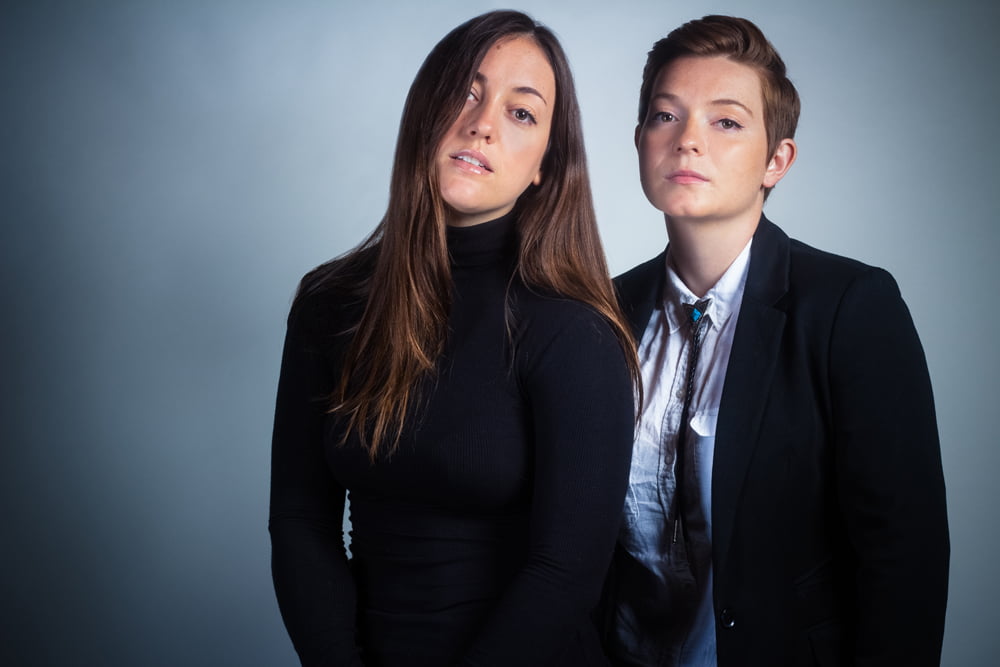
Artist: The Harmaleighs (Haley Grant and Kaylee Jasperson)
Hometown: Carol Stream, IL + Montrose, CO
Latest Album: Hiraeth (out May 5)
Personal Nicknames: Haley sometimes goes by Halez, and Kaylee goes by Shaye, Kay, or Jasperson.

If you could safely have any animal in the world as a pet, which would you choose?

HG: A pug! We have one already.

Do your socks always match?

HG: They never have matched.

If you could have a superpower, what would you choose?

HG: Oh, I would 100 percent choose the ability to fly! I’ve always wished for that every year on my birthday. (Shh don’t tell, otherwise it won’t come true.)

KJ: I would like to have the ability to fly, but only if I could carry the van, as well. Touring would be so much easier.

What’s your go-to road food?

HG: Nuts, rice cakes, or some sort of granola bar.

KJ: Jerky

Who was the best teacher you ever had — and why?

HG: Best teacher I’ve ever had was my songwriting teacher at Belmont — Tom Douglas. He was incredibly passionate about us writers making a difference in art and not just writing music for a cut. He opened up about his struggles with writing more than anyone I’ve ever met. They didn’t make sense to me much then, but they sure do now.

KJ: The best teacher I’ve ever had is without a doubt my substitute band director, Mr. Smith. We were in a weird transition of band directors at my high school, and he came out of retirement and stepped in for a short period of time to help the band program. He had a very successful career as a musician and pushed me to pursue music. I’ll never forget when he asked me what I would want to do with my life if it wasn’t music, and when I literally had no answer he responded with, “Well then, you need to pursue that. It’s a hard industry to be in and, if you could see yourself doing something else, then you should just do that.” That has always stuck with me through the years.

What’s your favorite city?

HG: NASHVILLE, TN! Every time we go on tour, we end up looking up apartments in different cities and then try to imagine our life there. But by the time the run is over, we realize how much we actually do love Nashville.


WE LEAVE 4 TOUR TOMORROW COME HANG

A post shared by The Harmaleighs (@theharmaleighs) on

Boots or sneakers?

HG: Oh, God. Don’t make me choose. Okay okay — boots. JEEZ that was hard. It really depends.

KJ: Boots, for sure. They have a better stomping sound for the stage.

Which brothers do you prefer — Avett, Wood, Stanley, Comatose, or Louvin?

HG: All amazing, but Avett has my vote.

KJ: Ooh, that’s a tough one. I love the Wood Brothers, but I will never forget listening to I and Love and You by the Avett Brothers for the first time and feeling so many feelings all on one record. That was definitely on replay for a solid two months at our house.

Head or heart?

HG: Heart heart heart. Why do you think I’m still making music? 😉

KJ: Heart always. It feels the feelings and literally keeps you alive.


Photo credit: Joe Caliva

LISTEN: David Childers, ‘Collar and Bell’

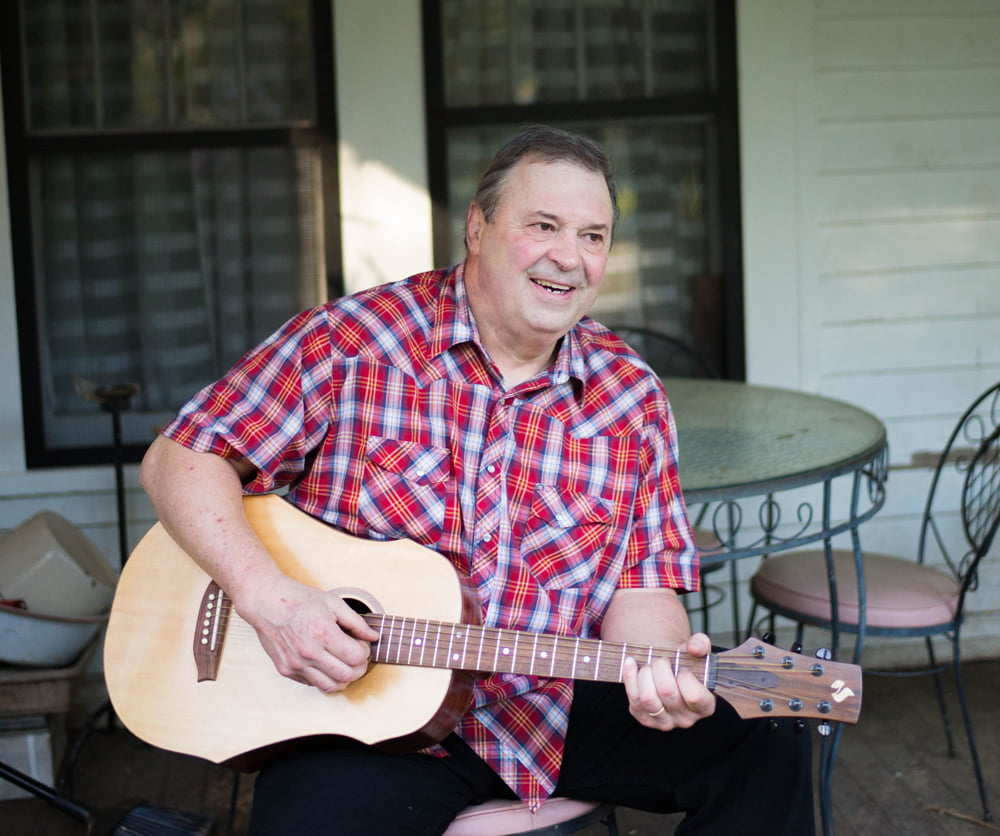
Artist: David Childers
Hometown: Mount Holly, NC
Song: “Collar and Bell”
Album: Run Skelton Run
Street Date: May 5, 2017

In Their Words: “Shannon Mayes, a school teacher from Gallipolis, Ohio, sent me some lyrics he had written a while back — those lyrics pretty much told the story in this song. I had trouble finding a way to convey what I wanted the listener to feel from the story, but after a couple of years of trying different approaches and re-writing a lot of the words, I found an enjoyable way to play and sing it. It’s about a man and a dog going hunting in a deep snow. Shannon is a hunter and he brought elements and details into the story that I would not have known to use.” — David Childers

Squared Roots: Pieta Brown Gets into the Rickie Lee Jones Groove

There are some artists who defy every convention and expectation we attempt to impose upon them. Rickie Lee Jones is one of them. Right out of the gate, she played by her own rules and danced to her own very groovy drum. Her eponymous debut in 1979 — with stunning songs like “The Last Chance Texaco” and “Weasel and the White Boys Cool” — set her apart from and, really, above the fray, and that’s where she has stayed for her entire career which, thankfully, is still going strong all these decades later.

Similarly, Pieta Brown has followed her own artistic instincts to pursue a career in music outside the shadow cast by her father, folk master Greg Brown. With her past few releases, she has focused on a quieter, simpler sound anchored in atmosphere. Her seventh (and most recent) album, Postcards, continues to explore that form as well as the function of collaboration with other artists, including Carrie Rodriguez, Calexico, Mason Jennings, and others.   

What are the characteristics you think of first, when you think of Rickie Lee Jones?

Experimental. And open. And non-linear, I think. I guess those are the first few. Then, really, very individual and unique. Extremely.

Those are all perfect. Adventurous and feisty come to my mind, along with fearless.

Yeah. Fearless. That’s awesome.

That was something Tift Merritt and I talked about in regard to Linda Ronstadt. Is fearlessness just something that women have to have, no matter what they do?

Maybe. Or maybe it’s more that you might be really scared, but you’re willing to cut through that anyway. I was going to say, for sure, in the music industry, but I don’t think it’s particular to that at all, really.

Yeah. I thought about that, too.

It’s a very good question.

We won’t get to the bottom of it today, though. [Laughs]

[Laughs] No.

It struck me in reading up on Rickie Lee that her self-titled debut was released in March of 1979. She was on Saturday Night Live one month later and played Carnegie Hall three months after that.

Wow.

And then came her Grammy wins, six months after that. Success doesn’t get much more overnight than that.

Yeah, she hit it right out of the gate, for sure.

Can you imagine being thrown into the belly of the beast that quickly?

No, I can’t. Speaking of fearlessness … there must be some fearless streak and I’m not sure how deeply it’s hiding in me, but I was so shy that it was like breaking down major walls just to start even doing a show. So, no, I really can’t imagine that.

I do know, from talking to Iris [DeMent], it was a similar thing for her, in terms of her putting out her first album and being rocketed into the light. She said that was pretty wild, on a certain level.

I bet! Another thing that struck me was the fact that a quirky, jazz-tinged singer/songwriter had that kind of success, hit number five on the Billboard album chart. There’s no way that would happen today.

No. It wouldn’t. It’s interesting, isn’t it? I can’t even imagine how that would happen now. I think it could happen, but not to people who are presenting themselves as a singer/songwriter, even if that’s what they really are. It’s in another disguise, these days, it seems like.

Geography, also, for her … she moved around a lot and it seems to add a lot of colors to her palette.

I think that’s maybe something I intrinsically related to without realizing it. I moved around a ton, as a kid. In fact, the reason I was thinking about Rickie Lee Jones, when I got asked to do this … the thing I flashed on was, I think I must have been about 9 or 10 and I had moved around so many times by the age of 10 — I must’ve lived in 12 or 13 different places by the time I was that age. I had moved down to Alabama with my mom, but then for about eight months when I was 9 going on 10, I moved up to the Twin Cities with my dad.

And I’ll just never forget — it’s just burned into my mind as one of the strongest memories of my childhood — I came across a cassette that was in a pile. While we were living in the Twin Cities, I think we moved two or three times, just in that nine months. But, at this particular time, we were living in this upstairs apartment and there was an attic where I could go hang out by myself. I had a Walkman and I put that tape in. It was Rickie Lee Jones. I didn’t know anything about her. Nothing. And I was so mesmerized by her sound. I remember I played the song “Walk Away Renee” for an hour or two. I just sat up in that attic. It was kind of an emotional time for me because my parents were all haywire, and everybody was coming and going so I didn’t know what was going on. I don’t know why that song … I mean, the lyrics are pretty simple, but her sound and those words, it opened up another dimension for me or something. That’s why I chose her.

But, geography-wise, like you were saying, I moved around so much, too. And you can hear that in her music, like you said. So many textures and conversations and layers going on every time she sings. It’s super-cool.

I’m always fascinated by how geography informs an artist’s work For her, she grew up in Chicago, Arizona, and Olympia, then Southern California, New York, San Francisco, Paris, back to L.A., back to Tacoma … I think New Orleans is in there somewhere. You can hear all of those places coming through.

Yeah. It’s super-fascinating. I think another thing, for me at that age, a lot of the music I was hearing was in my family, of course, and the stuff that was on the radio. My mom liked jazz a lot, so I got a lot of early influences like Billie Holiday and stuff like that I heard. But I think hearing Rickie Lee Jones was the kind of thing where it’s like, “Okay, here’s this lady who sounds like no one else I’ve ever heard.” And she had all these different elements, but it didn’t sound confused. It sounded pure and really clear.

Did that bridge a gap for you, between your mom’s love of jazz to what you were hearing on the radio? Was she the in-between?

Yeah, I think so. And that family thing, with my dad being a songwriter, and my great-grandfather played the banjo and my great-grandmother played the pump organ. My grandmother played guitar. It was very rural. We got together pretty big family jams and it was a very rural sound. In fact, I found out later that my great-grandparents used to go down to North Carolina. They lived in southern Iowa. They would go down to North Carolina to jam, and bring that music back. So I always associated that kind of bluegrass sound with southern Iowa because that’s what I would hear and dance around to as a kid with my hat turned upside down. It was like, “Okay. This is what music sounds like.” So there was something about Rickie Lee Jones … I don’t know, just one of those moments in time.

I think, too, because I played piano. That was my first instrument from when I was really little. By that age, I was making up a lot of instrumentals and weird songs on the piano, but it wasn’t something I heard. So, when I heard this woman … I think, too, she has a childlike quality in her voice. So I thought, “Okay. Wow. This means this is possible.”

You’re right. It’s such an interesting juxtaposition between the simplicity and innocence in her voice and the complexity of the arrangements and compositions.

Yeah, right.

Then there’s just the pure creativity racing through her veins, to make a record like The Sermon on Exposition Boulevard in which she improvised her own impressions of various Biblical texts. Who would think of that?

[Laughs] It’s amazing. I got to see her play for the first time last year. It was a great show. The room was elevated. It was all those things. And another big thing for me is, she’s got the groove. She’s got that super-deep groove thing. She picks up her acoustic guitar and the groove is present as soon as she starts playing. So some of that is mixed in there, too. It’s very natural and real. It was great to hear her play live.

What’s your favorite album or era?

I love Traffic from Paradise. There’s a song on there called “Tigers” and I’ve listened to that album so much, in different periods. I went back yesterday and looked at the credits of that because I hadn’t listened to it in a few years. But that was engineered and mixed by a woman.

Julie Last.

Yes. Julie Last. Do you know about her?

I do. I know her, actually.

You know her?! I hope you tell her thank you for me because one of the reasons I love that album is because it sounds so good and so huge. It’s great. It sounds so good. I thought, “Who engineered that? I gotta find out.” I was excited to find out it was a woman. In all my record-making, I haven’t come across a ton of female engineers who are engineering and mixing the albums. And that record sounds so gigantic. It’s just so cool.

LISTEN: Three Legged Fox, ‘Another Year’

Artist: Three Legged Fox
Hometown: Philadelphia, PA
Song: “Another Year”
Album: Watch the World
Release Date: March 31, 2017

In Their Words: “‘Another Year’ was born out of the same questions that most of our songs are: ‘Why are we here?’ and ‘Why is it so hard to remain grounded and simple in what brings us joy?’ So whether it’s our addiction to the smartphone, or the relationships we forge or neglect with each other, we tried to deliver some kind of introspection while keeping the music light and cheery.

As a band, I believe the fundamental message of the song (finding genuine value in our short time here) resonates deeply and equally with all of us.” — Kory Kochersperger


Photo credit: Giorgi Anastasov

Playing to Her Own Beat: A Conversation with Valerie June

It’s impossible to unhear the sound that issues forth once Valerie June opens her mouth to sing. It’s a voice at once ancient — arisen from some sepia-toned past — and startling modern. From its color to its timbre to its texture, there exists something powerfully original about her primary instrument. But if June were just another singer with a distinct set of pipes, this wouldn’t be an article worth reading, and she wouldn’t be an artist worth covering. It’s how she employs her voice, and the fun she has blending and blurring genres that showcases her pioneering talent.

The multi-instrumentalist and Tennessee native returns this month with her sophomore major label release, The Order of Time. Arriving four years after her debut, Pushin’ Against a Stone, saw her perform at the White House, make countless television appearances, and become a festival staple, the album indeed took some time. June didn’t let her success dictate her writing schedule and rush her back into the studio. Instead, she read poetry, danced, cooked, and languished, allowing the music to unfold on its own schedule rather than hemming and hawing about hers. Thanks to that patience, she’s pushed her own boundaries even further.

The Order of Time spans blues, bluegrass, soul, folk, rock, and more, gathering pieces from each to build a kaleidoscope, of sorts, that showcases the long undercurrent of history running through each. Banjo appears in greater measure throughout the album, calling to its African heritage on “Man Done Wrong” and showing off its rhythmic pacing on “Got Soul,” while “Shake Down” borrows a few branches from June’s family tree. She gathered her brothers and father — who passed away in November — in Tennessee to record the raucous and gritty jam. And then there’s the viscerally thrilling “If And,” which layers an array of heavy tones, including bass saxophone, bass clarinet, and harmonium, to create an almost unholy riff. Have fun not getting chills.

So much of this album deals with time and abiding by its rhythms. How do you cultivate patience?

I don’t have any at all.

That’s fair.

It’s pure torture, honestly. I just want it to happen. It’s like getting a new plant: You’ve been to the nursery, you bought this gardenia, but it’s not flowering yet. You put it in the perfect sun and give it the perfect water and all of that, but it’s still not flowering weeks later, and you’re just like, “Oh my God, I really want the gardenia to flower, because it’s the best smell in the world and I love it. That’s why I bought it — for the flower — not for this green plant.” A lot of patience has to happen, but you don’t have it. You’re forced into it. And then, one day, it does flower and you’re really excited about it. That’s what it’s like.

I love that analogy. Building off it, how much of patience is, perhaps, about distraction?

It has to happen that way.

So what do you distract yourself with?

So many things. Life happens, people call and want me to do something, or it’ll be time to eat. [Laughs] I dance a lot. I have routines for distracting myself, and dancing is a big part of it. You have to have systems set up, you know, to keep you from dwelling in frustration. So whatever your things are that you love to do, you have to do those things. It’s almost like you have to be like, “I’m frustrated! Stop everything. Okay, now it’s time to dance. Nothing matters but dancing right now.”

It’s the physicality of it. It seems that when creatives get too caught up in their mental state, it helps to do something physical to calm that animal side of their brain down.

So true and, once every part of the body is moving, your mind is the last thing. You don’t even think about that part. It does take a minute, though, once the dancing starts. First, you’re still thinking, so your body — you’re moving it — you’re thinking, you’re thinking, and then, by the time you work the neck and the legs and the head and get the whole body going, you’re like, “Whoa!’ You’re gone man!” And it just takes one little moment of being gone to shift some ol’ thing.

So are we ever going to get a Valerie June workout video?

I don’t know. That would be really ’80s and fun. I’d have to get some leg warmers, for sure.

And neon.

I love legwarmers. That seems like a good excuse.

What do you dance to?

So many things. I like dancing to Davie Bowie, and Spoon is a really fun band to dance to — it’s so upbeat and insane. And Fever Ray and Fela Kuti, Cass McCombs … so many things. Sometimes I dance to blues music. It just depends on what I need to shake out.

I can see how these all dancing moments influence your music.

It’s all there.

Turning to the album, “Man Done Wrong” brought to mind the personal lamentations you’d hear in Ma Rainey’s and Bessie Smith’s blues. Can you take me through writing that particular song?

It started on the banjo. I was just playing that riff, again and again, for a few days, and then I heard the chanting, and when I first started to hear the chanting, I thought, “Well, this is very tribal to me.” It’s a different way for the banjo to be, for me. In my own mind, I had certain parameters that the banjo was allowed to go — for it to lean toward old time or bluegrass — and the fact that it was getting outside of its lane and it was doing something that seemed African or tribal to me was like, “What the fuck is this?” [Laughs] When I started to receive that, I was like, “Wow, I can’t fight that.” I can’t fight what comes to me in a song; I have to accept it all because, once I start to fight it, I close the door and I shut off these voices. I have to make them all feel welcome in order to receive the entire song, so I just went with it and got into it, and started to hear the actual singing, and I was like, “Well, okay.”

All these ideas I had about the banjo and the way it was supposed to be played and the way it was supposed to be fit into this box, they had to go out the window. It was like, “I guess it is an African instrument.” I learned a lot trying to play that song, about the banjo being as innocent an instrument as any other instrument and it having a voice that can fit with any style of music. It wants to be free; it doesn’t want to fit within any parameter. It just wants to be an instrument and play around in the playground of music and sound. It opened my mind and it opened my thoughts about what it should do in the world, and how I should feel about it when I see somebody get up in front of me with one. Just because you see a trumpet, do you think, “They’re going to play jazz. They’re going to be Miles Davis”? No. When you see a trumpet, it could be marching band, it could be jazz, it could be anything. A banjo is the same.

It has this strong association with bluegrass, but there is that tradition of Black banjo players who were never recorded and so, in many ways, that history has been erased.

It’s true. It’s such a historical instrument. It keeps getting deeper and deeper, as much as you try to see where it’s going. It’s been a vibrant instrument in the past and going into the future.

Do you think these voices in any way are trying to communicate that lost history with you?

They are communicating so many things. I can’t even get my head wrapped around it because, as soon as I get one thing that they were saying, then it starts to change, like a good poem. You read this poem and when you’re younger — and I read Robert Frost’s “Two Roads” when I was younger — it meant one thing, but as I get older, it means something different. The songs are like that. They change like they are living; they live with you and they change the meaning.

What other poets are you currently quite taken with?

I like Wendell Berry a lot. I could read that all day long, and T.S. Eliot and e.e. cummings, but Wendell Berry is really huge. I don’t even know how to describe what he does to me, but by the time I get to the end of one of his poems, I can be in complete tears and gratitude for all of life, for the earth, for everything. And the short stories are the same way.

He’s one of my favorites, too. I’m always so grateful for Wendell or, really, any poet who articulates the experience of living, especially when you haven’t found the words yourself yet.

That’s the shocking part. The ability to articulate it is like, “Wow!” I felt it, but I just couldn’t put it into words. You did it! You did it! [Laughs]

But you’re tasked with that same hurdle as a songwriter.

I don’t really feel like I have any kind of control over these things. I mean, I wish I could. I wish I wrote that way, where I could have a theme in my head and write something that fits the purpose, but the times I try, it doesn’t hit me as much as when I hear the voice and I just follow it. But I do try sometimes. I’d like to learn to write that way. I feel somebody like Toni Morrison or Zora Neale Hurston, they would have these thoughts going on in their minds about the world, about being a Black woman growing up, or things like that that they wanted to put into their writing, and they were able to articulate them through their craft. But, for me, I can’t do that. I don’t write that way.

There are so many different ways to approach it. Every writer has a different way.

I love writing with other writers because, when I do that, then I steal some of their style. I’m like, “Oh, that’s how you tapped into that.” They’re my teachers.

What a great way to learn. Well, lastly, I was curious about the song “Shake Down” and recording it with your family.

My brothers’ and my dad’s vocals were tracked in Tennessee. It was great because my dad’s not really a singer, but he was in the room and I was like, “You gotta sing.” And now he’s gone and so all I have is him singing that part. I have pictures, but I don’t have his voice anymore and I never will again. That really matters to have somebody’s voice after they’re gone. That really is something, so I really feel fortunate for that song.


Photo credit: Danny Clinch
A Peaceful Place: An Interview with Dave Simonett

Some people seek counseling to work through the pain of a divorce, lying prone on a couch while a therapist helps guide them through the evolving course of their own emotions. Others drown themselves in booze, pills, or even the black hole of denial — or sometimes a combination of all three. Trampled by Turtles’ Dave Simonett, however, did something that he didn’t expect in the wake of a breakup: He wrote about it. Though Simonett has always reached deep into his personal experiences to enliven his songwriting, he’d never quite set out to make a concept record — one that charted the dissolution of his 10-year marriage and let the past go up in flames. But Furnace, his second solo LP under the name Dead Man Winter, is a sonic catharsis; a catalog of 10 slow-chugging, heart-tugging folk songs that explore the most gaping wounds left when a romance suddenly fades away.

To write Furnace, the Minneapolis-residing artist decamped to a small cabin in Finland, Minnesota, a remote and tiny town about two hours from the Canadian border. There, songs like “This House Is on Fire” and “Am I Breaking Down” spilled out, devastatingly raw despite the fact that they sometimes rock as hard as they hurt. For those who turned to Trampled by Turtles for their progressive breed of aggressive bluegrass, Furnace is a lush, emotive surprise that trades fast-picking strings for introspective acoustic strums and chugs of organ, all centered in Simonett’s stories that approach his shifting world with a keen sensitivity, but plenty of humility, too. “I’m full of charm, I’m full of whiskey,” he sings on “Red Wing Blue Wing.” “I’m full of shit most of the time.”

The release of this album has effectively put Trampled by Turtles on hiatus. What made you feel comfortable putting things on break?

There are a few different parts to it, but mainly it was creative. We were in a good spot, as a band, and things were going well. But I had wanted to put out a Dead Man Winter or solo project thing for a while, and making the album wasn’t the problem. Fitting it into the Trampled downtime was too much, so it was mainly to clear up space for me. That wasn’t a hard decision, but it also messes up other people’s lives. These are my dear friends, pretty much family members, who count on [the band] as their income. That was the hardest part for me — I’m going to put these guys out of work for almost a year. But it will be good for us; we’ve been touring so hard for almost 15 years, so it’s nice to get a little breathing space.

Is your frame of mind different when you approach songs for your solo work versus with Trampled?

I don’t think I can separate the two. It’s just kind of what was natural at the time and so much of that was caused by my divorce. I don’t write for one project or the other: I just write songs, and any song either band has recorded could have easily switched to the other. It’s just whatever outlet feels right.

Did the material you created for Furnace instantly feel like it lent itself to a solo project?

I think mainly it was how I wanted to make the songs in the studio. My life was in an extremely confusing place, and I was in the spot where I needed to change everything about my life, artistically as well as just needing new shit. It was very chaotic and fast paced. And I think it worked out perfectly.

Was there a moment when you knew that songwriting was going to be a force to help you work through your divorce?

It’s my only place to go. Being in the wilderness is helpful, but as far as actually letting this stuff out of my body, songwriting is, for better or worse, what I have to use. It’s a process I enjoy, and for me it works all right. And I knew that well enough to try and avoid it.

What do you mean by that?

Well, I didn’t want to do a breakup record, per se. But I couldn’t fake it. [Divorce] is not a unique experience, but I hadn’t done it before. It’s a huge transitional experience with a lot of pain and chaos, and it’s the only thing I could focus on, even if I tried to be something else. I kind of just gave in, and said, “Maybe this isn’t healthy for me. I’m a songwriter. I should write songs about what I know.” Once I let that go, it came out pretty easily.

So did you have reservations about being so personal?

I’m kind of a private person generally, but I have come to terms with the fact that it’s probably good for me, as an artist, to just get out of my comfort zone a little bit. It’s not groundbreaking, but for me, it’s a really new direction. It’s almost a gift.

A divorce is undoubtedly a difficult thing to go through. Do you find you write better or find more inspiration when things are in tumult?

I don’t, actually, and that might be a bit of a romantic myth. I think of the Townes Van Zandts of the world — people almost treasure that guy’s pain. For me, when I’m in a bad place, I don’t do anything well. I have to find some kind of peace before I can be creative. I don’t consider the writing on this record to be great. I’m happy with the record. I like the songs. But I didn’t put a lot of thought into the lyrics. Because it’s almost a direct translation, a pressure release valve. It just came out. I thought, “I’m just going to record this picture of my emotional state instead of thinking about it as a creative piece.”

Was it always clear to you that this album would deal in one united concept?

Yeah, it was. But I was kind of mad at myself — like, “You’re making a damn theme record?” I knew it going in, which is a rare thing for me. A lot of times, I’ll go back, and there will be themes running through a record, but I don’t notice it at the time. This is the first time it was a conscious thing from the front.

And you wrote most of the record in a secluded cabin in the woods, one of music’s most beloved tropes. It worked pretty famously for Bon Iver. So what is it about a cabin that is so conducive to songwriting?

It works! It probably depends on the writer, and I know some people where it’s not their vibe, but it is mine. Growing up, [the outdoors] was always my church — just being alone and being away from people, but in a natural setting that is beautiful and quiet and secluded. When I’m in that kind of environment, I feel really good. I got to that physical place and I was in a much better mental place, because it was so peaceful. It allowed me to focus just on the speed of daily life. Because believe it or not, even Minneapolis can feel too fast.


Photo credit: David McClister

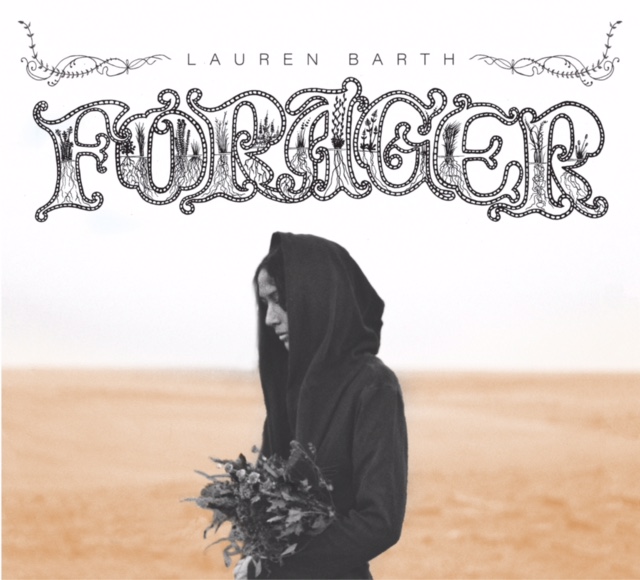
Lauren Barth, ‘Mama Don’t Cry’

“It ain’t easy to be a girl in the USA,” sings Lauren Barth on “Mama Don’t Cry,” the first release off of her debut album Forager, the video for which is premiering exclusively on the BGS. And you know what? It ain’t. As Barth sings on “Mama,” the American story — unless you’re like our president (aka a white man with a big bank account and a bigger ego) — is often a harsh and difficult one, not filled with dogs and dreams but violence and broken hearts. Born in California but now living in Tulsa, Barth drinks from the well that nurtures Oklahoma’s other modern folk treasures, like John Moreland and John Fullbright, who tap easily and steadily into the human condition. For Barth, it’s the musical heroes — “gods inside the radio,” as she sings — who keep us steady in a world that would rather dust the imperfect and uncomfortable under the rug than confront it head on.

Barth tackles a lot of these imperfect and uncomfortable ideas on “Mama Don’t Cry” and in the video that accompanies it with its spiraling, psychedelic twist: far too many guns, one too many funerals, people who belong in their mother’s arms, not jail cells. “Gimme a break,” she sings with the folk steadiness of Lucinda Williams and the slack sly of Liz Phair. We all want a break … from oppression, prejudice, and hate, to name a few. Sometimes, it just feels like it all keeps rising instead of receding. Luckily, folk music is stepping up to the plate not to dry our tears, but to give us hope that at least someone, anyone, is listening to us wail.