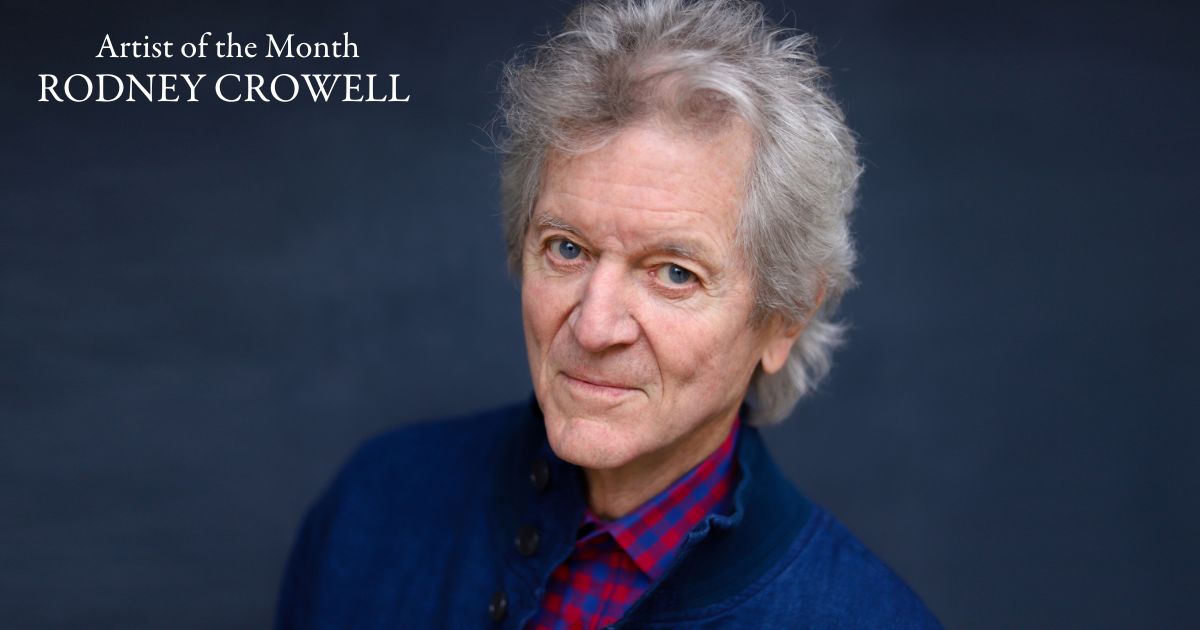
From ‘Heartworn Highways’ to Chicago, Rodney Crowell Keeps Getting Better

There is a crossroads of 1970s folk, blues, and nonconformity in Texas. Ask students of it about Rodney Crowell, and chances are, visions of a lean, baby-faced guitar picker belting out “Bluebird Wine” at Guy and Susanna Clark’s kitchen table flood their brains. It’s a scene from Heartworn Highways that is both wild and tender, captured when Crowell was just 25 years old. Today, that Houston kid is 72. He’s won Grammys, topped charts, pushed the musical and literary boundaries of songwriting, and continued to write and record, as friends and mentors passed away.

Produced by Wilco’s Jeff Tweedy, Crowell’s new album The Chicago Sessions is the latest evidence that Crowell isn’t just continuing: He keeps getting better. The 10-track collection was recorded live in Tweedy’s warehouse studio, perched atop a northwest Chicago building. Crowell had always wanted to record in Chicago. “That would be Chuck Berry, Howlin’ Wolf, Muddy Waters, John Prine, and Steve Goodman who have a lot to do with that,” Crowell says. “The Rolling Stones, as soon as they got to America, said, ‘Let me go to Chicago.’”

The ghosts and recordings that drew Crowell to Chicago did right by him. Surrounded by his own go-to players (guitarist Jedd Hughes, pianist Catherine Marx, and bassist Zachariah Hickman) plus two drummers of Tweedy’s choosing, Crowell sounds smooth, sly, and often downright happy. “It was liberating. I felt no pressure whatsoever,” he says. “If I’m producing myself, I’m wearing one too many hats. I’m helping everybody else and making sure I can make them get to where we’re all going, sometimes to my own detriment. But with a producer like Jeff Tweedy or Joe Henry, hey, I’m freed up. I’ll just play and sing.” He pauses, then adds, “I’m really good when I just play and sing.”

Gratitude and race, self-worth and religion, cynicism and hope: The songs on The Chicago Sessions cover ample ground without feeling disconnected.

A swampy shuffle, “Somebody Loves You” is a master class on cultural commentary and exposing shifty motivations. With subversive conviction on par with Tom Waits, Crowell implicitly questions people in power who shush the disenfranchised with assurances that somebody — in this case, Jesus — loves them.

There’s lead in the water, knees on your neck
Son of your father, born to neglect
Mind your own business, siren gone’ wail
Make one false move brother wind up dead or in jail
It’s been 400 years right down to the day
Somebody loves you, least that’s what they say

“As a writer, I need the stakes to be high,” Crowell says. “I am hard on myself as a singer because I’ve heard Ray Charles, and I’ve heard Don Everly. I’ve heard Aretha Franklin. ‘Look, man,’ I say to myself: ‘You don’t have that voice. But you gotta deliver on what you got.’”

Crowell confesses that really, he didn’t care for his own voice much at all until he was about 50 years old. “I knew I was writing — I developed early as a songwriter,” he says. “But I wasn’t delivering at the level I wanted to deliver when I would record those songs. I stayed with it, and I outgrew it.”

But to the rest of us, Crowell’s voice is and always has been lovely: steady, expressive, and charged, like an electric orb capable of warm light or hot sparks. Another album standout, “Loving You Is the Only Way to Fly,” which Crowell co-wrote with Hughes and Sarah Buxton, is a pining love song, perfectly executed. The sweet keys and strings are timeless. Tweedy’s production throughout the record is exquisite. “Making Lovers Out of Friends,” another track off The Chicago Sessions, is a testament to the power of a great producer and a great song, reminiscent of Billy Sherrill’s work with Charlie Rich, both in sonic texture and achievement.

As a writer, Crowell doesn’t cut himself any slack as a protagonist. Over the years, he’s developed a habit of being hard on himself in lyrics — or perhaps, of seeing himself clearly and confessing self-perceived shortcomings. “Lucky,” a piano-driven song he wrote as a birthday gift for his wife Claudia, plays with a bit of exasperation: “Anyone with eyes could see, I’d had about enough of me.” The record’s sauntering blues track “Oh Miss Claudia” hits similar ideas.

But it’s not just songs written recently. The Chicago Sessions also includes Crowell’s self-penned “You’re Supposed to Be Feeling Good,” originally recorded by Emmylou Harris in 1977. Oscillating between stripped-down acoustic and groovy full-band swells, the song picks up the same self-deprecating themes: “You’re supposed to be in your prime / You’re not supposed to be wasting your time / Feeling like you’re down and out over someone like me.”

Crowell often credits friends or lovers with seeing the best in him or pulling him through tough times. “I know it seems like that, honestly,” Crowell says of being hard on himself, then laughs a little. “They deserve the credit.”

Crowell doles out credit when it comes to his craft, too. “Guy and Townes [Van Zandt] were right there at the beginning of my development,” he says. “Guy was a generous mentor, in a way — the way we talked about writing. Discussed it. Examined it. Townes was around intermittently because he was traveling a lot. When he was around, he was a bit jealous of my relationship with Guy. And rightfully so. He and Guy were tight friends before I ever came around.”

Then, Crowell sets the scene: “Did you ever see Don’t Look Back? Remember Bob Dylan and Donovan in the hotel room? Donovan plays this kind of sappy, folky, flowery song for Bob Dylan, and then Dylan picks up a guitar and sings, ‘It’s All Over Now, Baby Blue.’ He slaughters Donovan’s song with a masterful song. Well, I had that same experience with Townes, just in the privacy of the breakfast table at Guy’s house.”

Crowell pauses, then explains, “‘No Place to Fall’ is exactly what happened. I was sitting there, going on about something, and Townes said, ‘I’m going to play you a song.’ And it just crushed me.”

In a nod to his artistic education and one of the figures who delivered it, Crowell recorded “No Place to Fall” for The Chicago Sessions. “Listen, if Townes had not crushed me with ‘No Place to Fall,’ I wouldn’t have written ‘Till I Gain Control Again,’” Crowell says. “It was like, ‘Oh, that’s what it is. That’s what you aim for. If you don’t aim for that, you’re selling the whole deal short.’”

Crowell pondering where he’d be without Van Zandt’s lyrical gutting spurs a bigger question: Where would roots music be without Crowell? His sheer musicality, instincts, and determination to recognize greatness and then, instead of feeling defeated, aspiring to match it in his own way, has propelled an entire art form forward.

Widespread mainstream success — especially at the high levels Crowell has achieved — can lead to oversights of actual artistic achievement. While Crowell himself often describes his relationship to Van Zandt and Clark as one of student and teachers, over the last five decades, Crowell’s consistently brilliant output has proven he shouldn’t be framed solely as a disciple of songwriting giants, but as their peer.

Clark and Van Zandt were the sons of attorneys. Crowell was the son of a heavy drinking dive bar musician, born on the wrong side of the tracks. He comes from East Houston, historically an industrial sector, marked by factories and proximity to oil refineries. He’s never shied away from his past and people. “Houston, Wayside Drive — Avenue P, where my parents lived when I was born,” Crowell muses. “It always meant something to me.”

After a brief stint in college, Crowell sought knowledge on his own — perpetually. His lilting cadence and thoughtful care with language is like that of a professor, especially when he dissects music or history. His curiosity isn’t just intellectual, but spiritual, too. He explores and sings about acceptance and peace, especially when talking about friends, himself, or even people with whom he disagrees. The Chicago Sessions’ closer, “Ready to Move On,” is a meditation on balance, and Crowell’s pursuit of it.

“I’m sitting out here, listening to the wind go through the trees, thinking, ‘Wow, I live on top of this hill, surrounded by all this green. Man, how did I get here from East Houston?’” Crowell is talking about his home, just outside of Nashville. “The way I got here was, I fell in love with the sound of these songs, from my father singing them to me when I was a wee child. It makes me humble, in a way. God, I have gratitude for that. Whatever my sensibilities are that came through DNA from my parents that made me so attuned to the sounds that were coming at me, all the way through Merle Haggard, the Beatles, anything that moved me. It’s like, ‘Whoa, man. What a lucky break I got.’”


Photo Credit: Claudia Church
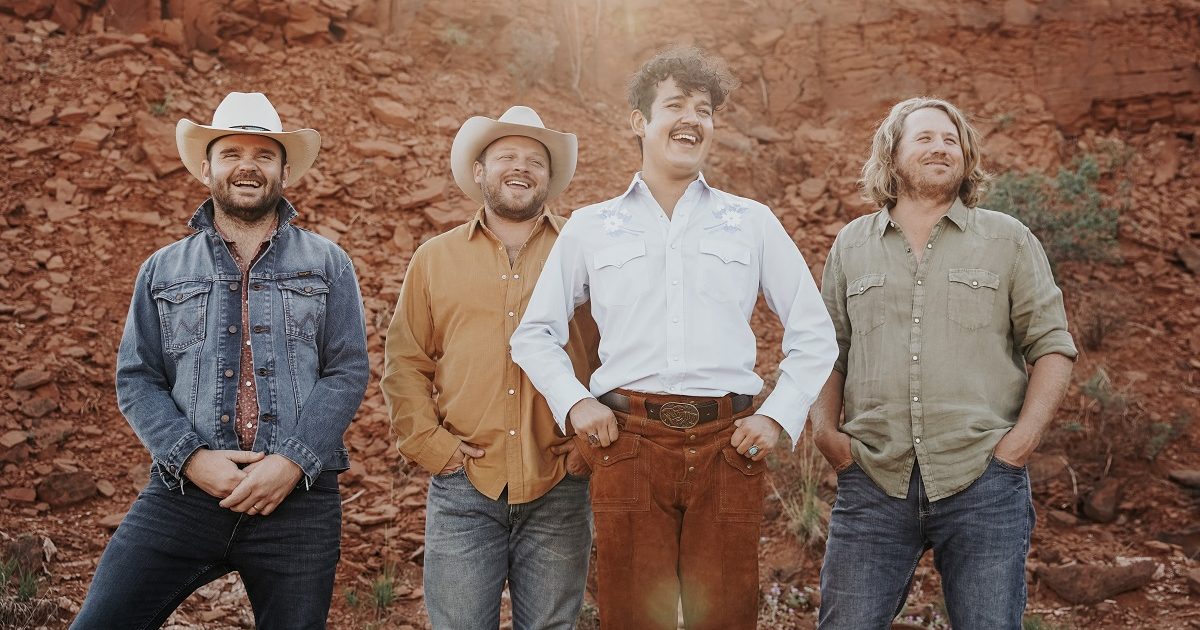
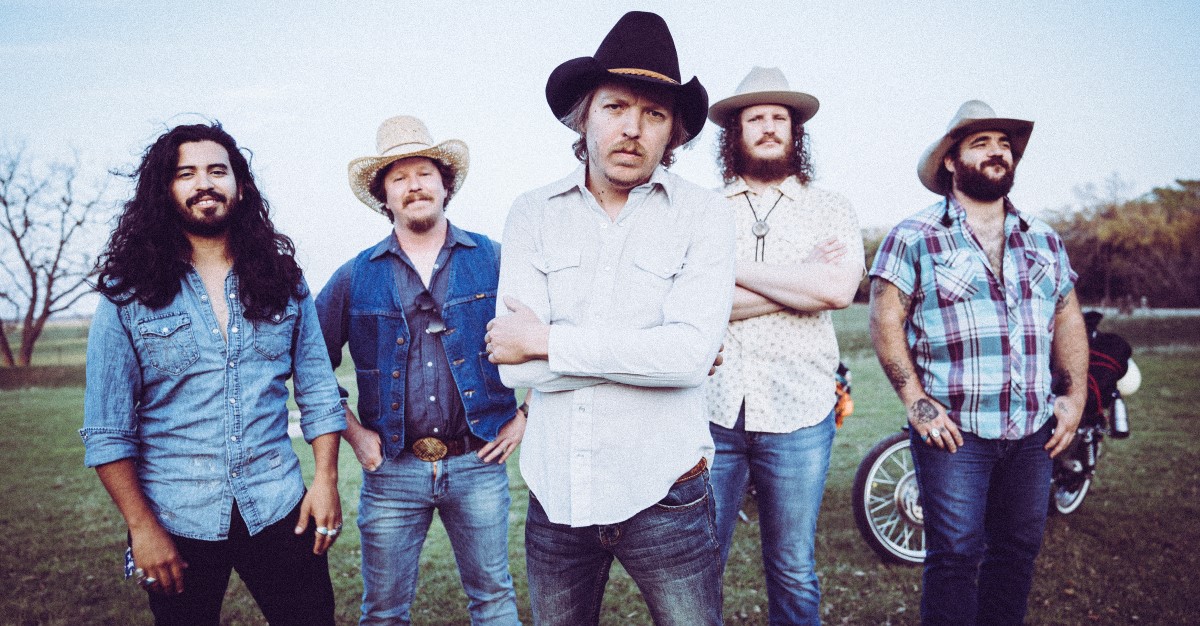
BGS 5+5: The Panhandlers

Artist: The Panhandlers (Josh Abbott, John Baumann, William Clark Green and Cleto Cordero)
Hometown: West Texas
Latest Album: Tough Country
Rejected Band Names: “I’m pretty sure we had a couple we were tossing around, but the second Cleto came up with The Panhandlers, we all knew that was the one! I can’t remember what the other options were.” – Josh Abbott

Which artist has influenced you the most … and how?

I have always been inspired by Willie Nelson. He can sing, write, is a monster of a picker, acts in movies, and last but not least, he seems like a genuine, humble, good-hearted person. – Cleto Cordero

What other art forms — literature, film, dance, painting, etc — inform your music?

As soon as I began reading fiction from some of the “classics,” such as Hemingway and Steinbeck, my writing voice began to flourish and become more colorful. As boring as grammar can be to learn, it is mighty helpful when you’re trying to write out your complete and full thoughts and ideas. – Cleto Cordero

What’s the toughest time you ever had writing a song?

For The Panhandlers, I’d argue it’s “Where Cotton Is King.” We first started that on the bus ride to Marfa for our first writing trip in August 2019. We didn’t finish it until fall 2021, which worked out great for this new album. – Josh Abbott

If you had to write a mission statement for your career, what would it be

To be respected as a good songwriter – William Clark Green

For The Panhandlers, it’s to be a legacy that inspires others decades from now to collaborate for a concept where the sum is even greater than its parts. – Josh Abbott

To create community through music. – Cleto Cordero

Since food and music go so well together, what is your dream pairing of a meal and a musician?

Chicken fried steak & Guy Clark – Josh Abbott


Photo Credit: Mackenzie Ryan Photography

At His Lowest Point, Channing Wilson Turned Things Around With “Trying to Write a Song”

With brutally honest songs soaked in blues, booze and emotional bruising, Channing Wilson is extending the tradition of raw country music with his debut album, Dead Man. Trading in pickup trucks and cut-off jeans for battles with depression, anxiety and addiction, he’s emerging with a style that echoes tormented tunesmiths like Guy Clark and Billy Joe Shaver, among others. But while his Dave Cobb-produced debut marks the first real batch of original tunes, this Georgia native is no newcomer.

Wilson’s been a working songwriter for almost two decades now, even scoring a No. 1 country single with Luke Combs’ “She Got the Best of Me” in 2018. He’s also a writer on Combs’ current chart climber, “Growin’ Up and Gettin’ Old,” and both tunes share an element of hard-truth reflection that’s rare in the country mainstream. But Channing’s own tunes go much further.

With Dead Man alive and kicking, Channing spoke with The Bluegrass Situation about his craft – discovering his songwriting heroes, bringing the blues back to country, and how a “bullshit” song sent him down a new path.

BGS: Can you tell me how you got into this gritty style of country music? It’s not exactly easy to find if you’re not looking for it.

Wilson: Yeah, I grew up in Georgia, and if it wasn’t on the radio, I didn’t know about it, you know? There were no clubs to go see new music or anything, so it took a while for me. I was into my 20s really. But I did have a friend who was one of those music-snob guys, and he’d heard that I was trying to write songs. He made me a mixtape that had Billy Joe Shaver and Guy Clark and Steve Earle and Ray Wylie Hubbard, mixed in with, like, Tom Waits, and it was just full of the best songwriters there were. So, it was literally like, “Where’s this shit been my whole life?”

I bet. That’s funny. You had already been writing by then though, huh?

Yeah. Well, I was trying. My dad was a huge Hank Williams Jr. fan, and I grew up listening to Waylon and Willie – just the stuff that was big, you know? But then the same guy that made me the mixtape, what really kick-started it for me was two particular shows he took me. One was Billy Joe Shaver, in a room with about 40 people with Eddy Shaver on guitar. And then the next week Hank Williams III was in town, and he took me to that show. And right after that, I just quit my job.

You came to Nashville for good around 2009, right? What was it like getting yourself established in the songwriting community?

I mean, I got a publishing deal pretty quick, I ain’t gonna lie. It was within a month or two of being there, I signed a songwriting deal over at EMI Publishing. But honestly, I didn’t even know what a publishing deal was at the time. I had to look it up, and I seen they had Guy Clark on the roster, and I said, “Well, shit. If he’s over here writing songs, then it has to be pretty cool.” I literally based my business decision on the fact that Guy Clark was a songwriter there.

I’ve heard worse ideas … So how did you end up with this raw writing style? You are not afraid to dig into the rougher side of life at all. Does that come from personal struggle?

What changed me was listening to stuff by Guy Clark for the first time, or Townes Van Zandt, and knowing that it was OK to write a song like that. I think when I got turned onto their music, it showed me that there really are no rules to it. And once I had that license to do literally whatever I wanted, what you’re hearing now is what happened.

You’ve talked about things like depression and anxiety, and how in music, that used to be called “the blues.” Do you feel like we need a blues-music revival for this current era?

One hundred percent, man. I mean, when people think about blues music, you think of Mississippi John Hurt, you think of Lightnin’ Hopkins, Howlin’ Wolf. You think of the Mississippi Delta, but the truth of it is, all of what they sang about is still around.

Where did “Drink That Strong” come from? It really sets the stage for what you do.

It actually come from one of these crazy Music Row songwriting sessions I used to do. Mine were always different because I never really cared about writing for country radio, but when you’re in a publishing deal, you know, they want you out writing songs as much as you can. I was with a buddy of mine named Houston Phillips … and in my head, I just I heard the hook, “The weed gets me high / And the cocaine don’t last long / And they don’t make a drink that strong.” It was supposed to be a song about quitting drinking, but it just makes me wanna drink every time I hear it. [laughs]

That’s a really cool line. But yeah, that probably won’t make it on the radio anytime soon.

Yeah. I’m definitely not mad about that either.

What about “Gettin’ Outta My Mind”? It’s in a similar vein, and I love this idea that you’re “done walking the line.” Is that something that you’ve said to yourself before?

Pretty much every day! [laughs] I’ve always been the guy that just wants to have a little more fun, and when you get me and Kendell Marvel both in the same room together, stuff like that happens. We wanted to rock a song just for us. You know, for that honky-tonk kinda thing.

Tell me about “Dead Man Walking.” This one’s got a ton of gospel in it.

I grew up singing in the church, so I’ve definitely got that in me. But it really come from listening to Howlin’ Wolf. It started off as a blues song, but Dave took it and really opened it up.

Maybe people don’t realize how closely related gospel and the blues are?

That’s the thing. Just like the thin line between love and hate, there’s a thin line between church and the bars, you know?

The last song on the record is so telling. It’s called “Trying to Write a Song,” and I love the hook. “I’ve been trying to write a song / Something bold, something real / But there’s a shit pile of denial / In the way of how I feel.” How do you overcome the shit pile?

Writing that song, that saved my life that day, brother. I ain’t gonna lie. … This was 2015 or ‘16, and my phone wasn’t ringing, man. Nobody in Nashville really gave a shit. I knew I could go to any bar for the rest of my life and play music. That’s not a problem. But I wanted to make an impact on country music, something I really, really love, and that’s given me a life. But I was at my wits’ end in this town.

To be honest with you, I had this write coming up with a bigger country artist that had radio hits and stuff, and getting to write with somebody that’s on the radio could change a lot for you. Especially if a song actually makes it to the radio, you know? I was trying to come up with some ideas and [laughs] dude, everything I was saying was bullshit, you know? I had a couple ideas going, and I just tore up and threw the pages away.

So I’m sitting there by myself at my kitchen table, and I just said, like, “What’s the truth right now?” And the truth, I just wrote it down – “I’m trying to write a song.” I sat there and just had a breakthrough moment in my mind, and it was really the moment that changed directions for me and got me back on track, and reminded me why I was doing this to begin with. When it come time to round the album off, I played that song and Dave just stopped me a minute into it, and he just said, “This is it. Let’s record it.”

How did the write with the country singer go?

I canceled it. I couldn’t do it after that. I was just like, “I can’t do this shit.” I knew I’d find a different way.


Photo Credit: David McClister

BGS 5+5: Caleb Caudle

Artist: Caleb Caudle
Hometown: Germanton, North Carolina
Album: Forsythia

Which artist has influenced you the most … and how?

I would say as far as songwriting goes, It would be Guy Clark. I like how plain he can be. It’s very matter of fact. I try to write in my speaking voice and I know Guy did, too. It’s easy to connect to. He always went heavy on the details and I try my best to always do the same. In a time where everything feels as if it’s been written about before, details are sort of the last frontier.

What’s the toughest time you ever had writing a song?

I struggled for about a year and a half with “I Don’t Fit In,” which is the lead track on my new record. I thought it was finished but when I listened back to the demo it felt like I was complaining about not having a place in this world. I didn’t like that. I rewrote the verses from a place of power. I wanted to feel proud about the trail I was blazing. I’m not sure where I land musically and it’s constantly evolving. I think there’s something really special about that.

What has been the best advice you’ve received in your career so far?

I was doing a tour with Ray Wylie Hubbard in California four or five years ago and we were talking about gigs where folks don’t show up and how discouraging that can be and he said “Now Caleb, just remember…never play to the empty seats,” and it changed the way I felt about the audience who was there. I have such a deeper appreciation for those moments now.

Which elements of nature do you spend the most time with and how do those impact your work?

While I love all nature and what it brings to the table, at heart I’m a mountains guy. I love how small they make me feel. I also love the difference between the older mountain ranges like The Smokies, Catskills and Ozarks when compared to the Rockies or Tetons. They are all beautiful in their own way.

Since food and music go so well together, what is your dream pairing of a meal and a musician?

I’d say a plate of Hoppin’ John which is usually meant for New Year’s Day but we make it anytime we want. It’s black-eyed peas, collard greens, cornbread and country ham. I’d pair it with Doc Watson because I’m from Doc Country and I’d be shocked if it wasn’t a meal he loved, too.


Photo Credit: Caleb Caudle

LISTEN: David Quinn, “Cornbread and Chili”

Artist: David Quinn
Hometown: Woodridge, Illinois
Song: “Cornbread and Chili”
Album: Country Fresh
Release Date: April 15, 2022
Label: Downhome Records / Soundly Music

In Their Words: “I had been wanting to write this song for a long time. It’s my version of ‘Homegrown Tomatoes’ by Guy Clark. I spend a lot of time writing about the more serious aspects of life so it was nice to sit down and write about all of my favorite things like comfort food, good music, and listening to the rain. This song is exactly how I spend my free time. Growing up my mom would always say, ‘That’s good eating!’ and it’s something I continue to say today. I knew I wanted the full band on this one in the studio but I was not sure how it was going to work. I am really happy with how it came out and any time I hear it, it brings me right back to the summer I wrote it.” — David Quinn


Photo Credit: Laura E. Partain

How Susanna Clark’s Tapes Shaped a Film on Townes Van Zandt and Guy Clark

“I want every single person in the world to be a Guy Clark fan,” says Tamara Saviano. “When people ask me why I did the tribute album and when people ask me why I did the book and when people ask me why I did the movie, that’s my response. I want everybody on the planet to go down a Guy Clark rabbit hole. Go listen to the music. That’s what I care about.”

It may sound like a lofty goal, but Saviano is making a lot of headway. She has spent more than a decade making sure people hear songs like “L.A. Freeway,” “The Randall Knife,” and “My Favorite Picture of You.” In 2012, after years working as his publicist, she executive-produced the double-album tribute to the Texas singer-songwriter, This One’s for Him, featuring covers by Willie Nelson, Lyle Lovett, Hayes Carll, and Patty Griffin, among many others.

Five years later she published her exhaustive and affectionate biography, Without Getting Killed or Caught, which follows his life from Monahans, Texas, to Nashville, from his early years as a struggling songwriter to his final days as a foundational figure in Americana. Lovingly written and sharply observed even as it affectionately portrays him as a “curmudgeonly old dude,” it’s one of the finest music biographies of the last decade and will finally get a paperback release next month, with a new foreword by Robert Earl Keen.

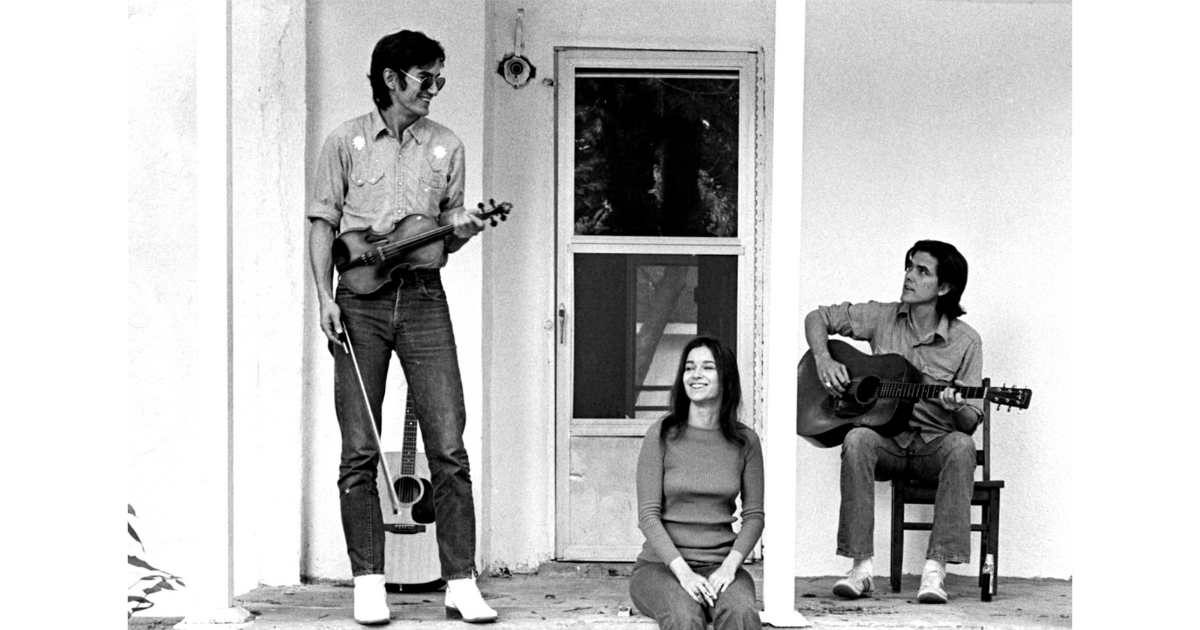
And now comes Without Getting Killed or Caught, the documentary Saviano co-wrote with Bart Knaggs and co-directed with her husband, Paul Whitfield. While the book focused squarely on Guy, the film (which is available for streaming) examines his marriage to Susanna Clark, his friendship with Townes Van Zandt, and how those relationships overlapped over the decades. They all lived together in the 1970s and Susanna often described Townes as her soulmate, but the documentary never resorts to sensationalistic details or soap opera storylines. Instead, it explores the creative lives they led, not just writing songs but forming communities of likeminded artists wherever they went. “They all inspired each other,” says Saviano. “It’s a film about friendship.”

Susanna recorded herself the way other people might write in a diary, amassing stacks and stacks of tapes during her lifetime. Because Saviano and Whitfield rely on those audio journals to tell the story, she emerges as the main character of Without Getting Killed or Caught, a complex and contradictory figure on par with the men in her life. A painter and illustrator, she was never quite as dogged in her songwriting as Guy or Townes, but in the ‘70s and ‘80s she enjoyed more success than either of them. In 1976 a Texas singer named Dottsy had a huge hit with Susanna’s “I’ll Be Your San Antone Rose,” which was later covered by Emmylou Harris and Jerry Jeff Walker.

Each new project—the tribute album, the book, the film—has offered Saviano new insights into Guy’s character and catalog, and she’s likely not done with him. She spoke with the Bluegrass Situation about exploring Guy’s music in different media, creating art while grieving, and making sure everyone is a fan.

What was your entry in Guy’s music?

I grew up in Milwaukee, which is as far away from Texas you can get and not be in Canada. My stepdad had a friend who used to come over every Saturday night and they would listen to records and turn each other on to new music. I would just hang out and listen to them talk about music all night. My stepdad was really into Memphis soul, and his friend Rudy was into country and folk. One Saturday he shows up with Old No. 1. “Rita Ballou” is the first cut on that record, and I remember sitting down with my ear next to the speaker and looking over the liner notes. It said, Words and Music by Guy Clark. I tell you, I was 14 and a real knucklehead, because that was the first time I realized that of course people write songs. They don’t just come out of thin air. People write them! I fell in love with that album, and it sent me off on a journey to find other songwriters. But teenagers are fickle, and I didn’t really stick with him very long. I certainly didn’t buy all of his albums.

Many years later I finally met him. We were at an industry party in Nashville, and we started talking. He asked me where I was from—which is one of his favorite questions. I started talking about Wisconsin and the 15,000 lakes and Lake Michigan on one side and Lake Superior on the other and the Mississippi River and the North Woods. Obviously I love Wisconsin. But I could tell he was getting bored, and he just moved along. I did a story on him later and we hit it off. He was a curmudgeonly old dude, and I happen to love curmudgeonly old dudes.

Did you know writing the book that you would be doing this movie as part of this larger Guy project?

No. I had no idea. I was in the middle of the book, struggling and not sure that I would even finish it, when another filmmaker approached Guy about doing a documentary. Guy said to me, “Look, I’ve been spending all these years with you. I don’t wanna start over with anyone else. Would you be interested in doing a documentary?” I didn’t even think I could finish the book at that point! Guy said he didn’t care if there was a documentary, but he wasn’t going to start over with someone else. So then I felt like I had to do it.

My husband is a video engineer. His day job is with Bruce Springsteen. We met when I was working in television. So I thought, Maybe my husband can do the documentary with me. We know what we’re doing. He knows all about production, and I know how to tell a story from being a magazine editor and writer. I know what a story arc is. I knew it would be hard, especially raising the money, but I felt we had to give it a shot.

When did you start filming?

We started interviewing Guy on camera in 2014, which was way deep into my writing of the book. I turned in my book in the fall of 2015, and we got our final interviews with Guy on camera that fall. And then Guy died in early 2016. My book came out, but then it took us a while to even work on the film. I had no idea what the story was. That’s the hard part—if you’re going to tell a story, you have to know what you’re going after. We didn’t know that when we first got him on camera, and we didn’t really start working on the film until 2017, when Guy had been gone for almost a year.

And I was so overwhelmed. Right after Guy died, my mom died. They’d both been sick for a while. And I was just worthless. I went out on my book tour that fall, driving around Texas in my minivan. I’d be at an event talking about Guy and signing books and taking pictures, then I’d get into my van and would just cry my eyes out. Then I’d go to the next event. That was the whole fall of 2016.

That sounds rough. How did you move on?

My husband went to Australia and New Zealand with Springsteen for a few months, so I decided I would go to Austin. I’m just gonna eat good food and walk the trail and be in sunny weather and try to recuperate from 2016. I met this guy who ended up being my co-writer on the film, Bart Knaggs. Without him I don’t think I would have been able to do it, because I had this 450-page book and didn’t even know where to start. We went to a screenwriting workshop together, and it was Bart’s idea to tell the story from Susanna’s point of view and focus on the trio of her and Guy and Townes.

That gave me my mojo back. Plus, Guy had given me all of Susanna’s audio diaries after she died. I listened to them while writing the book, but frankly a lot of them were just her and Guy and Townes drunk and talking gibberish. When we decided to write the documentary from her point of view, I went back and listened to all those tapes. Thank God I had them, because we used a lot of that. My husband digitized them, and there was a lot of gibberish but there were also these nuggets of gold everywhere. They were truly a gift.

Those tapes really humanize the three of them. Usually you have talking heads in a documentary, but these are the subjects talking.

That was one of our rules: Only the people who were there at the time can tell us what was happening. Early on, when Guy and Susanna were having the salons in Houston, Rodney Crowell was there and Steve Earle was there. Then, when Guy started touring without a band, the way he wanted to do it, Verlon Thompson was there and Terry Allen was there. It felt like we had to say, “Anyone who wasn’t there doesn’t get a voice.” Later, we did add Vince Gill to talk about what was happening in Americana at the time and what was happening in the industry, but he knows all that. We brought him in to be the thread that connects all that stuff.

How did that change your relationship to the book? Were there aspects that you wished you could have gone back and rewritten?

Yes. There was a part of me that was like, “I wish I’d known all this doing the book.” But I had to look at them as two separate projects. The book is an overview of Guy’s life and music, but the film is about Guy’s relationship with Susanna and Townes. They all inspired each other. It’s a film about friendship.

It definitely seemed like a kind of love story, although one born out of grief. I appreciated the restraint of not trying to sensationalize what could have come across as a love triangle.

We were definitely cognizant of that. Guy and I talked a lot about it, and they came up in a time that was more… free love. It’s just a different way of looking at things. People ask me all the time whether Susanna and Townes were having sex, and it doesn’t matter. It really has nothing to do with the story. They all loved each other deeply. That’s what matters.

There’s such an interesting contradiction where Guy and Townes claim they’re not interested in having hit records, yet they’re clearly envious when Susanna has a hit record with “I’ll Be Your San Antone Rose.”

I remember Steve Earle telling me that when Gordon Lightfoot had a hit with “Wreck of the Edmund Fitzgerald,” he (Steve) and Guy got drunk for a week. They just couldn’t believe someone had a hit with that story! They all wanted to write the kind of songs they were writing, but they wanted those songs to be hits. And they weren’t. Susanna could just go off and write from the heart and have a huge hit and make all this money.

Has there ever been a compilation of Susanna Clark’s songs? I couldn’t find any in my research.

There has not. There are a few things I’ve thought about doing with her. She left a lot of half-written songs, so I thought about asking other women songwriters to finish the songs she started and then record them. That is something maybe someday I’ll do, but the problem is finding support money. When I did my other tribute albums, albums used to make money, so there would be a label willing to invest. But now I just don’t know. There isn’t one that I know of, but I’d love to do something with Susanna’s work.

Guy got so much overdue recognition later in life. What was his attitude toward all that attention?

Oh, I think he liked it. Townes died in ’97 and suddenly became this mythical figure, and I think that rubbed Guy the wrong way. Because Guy was still working. I think he was happy that people actually liked his work. Something I found really funny was, he got a Lifetime Achievement Award for Songwriting from ASCAP and a Lifetime Achievement Award for Songwriting from the Americana Music Association, and he was in the Songwriter Hall of Fame. But a couple years before he died, the Academy of Country Music gave him their Poet’s Award. Guy wasn’t even really country music, but that was his favorite because it was called the Poet’s Award.


Photo Credit: Al Clayton

BGS 5+5: Charles Wesley Godwin

Artist: Charles Wesley Godwin
Hometown: Morgantown, West Virginia
Latest Album: How the Mighty Fall
Personal nicknames: Chuck

Which elements of nature do you spend the most time with and how do those impact your work?

I live in the hills of West Virginia. I’m in the woods every day of my life when I’m home. This is the setting for all of my work thus far. This place is a part of everything that I do whether I know it or not. I believe it gives me peace and a different type of rest as well. There’s a type of rest that I believe we all need that has nothing to do with laying down or the amount of sleep that we get. It’s just being out there wherever you may be where the world is still the way it was 10,000 years ago. Phone calls can’t reach you, texts don’t come in and there ain’t nothing to check on except whatever it is that you’re doing or thinking about at that moment. I get that kind of rest when I’m hunting, scouting for deer, fishing, or hiking.

What was the first moment that you knew you wanted to be a musician?

I remember I’d just played my first gig ever for a lingerie fashion show in Tartu, Estonia, while I was studying abroad. I got handed 150 euros after the show was done and I thought to myself, “Oh my God. I’ve figured it all out. This is the best job in the world. This is what I’m going to do.” Drinks were on me that night.

What’s the toughest time you ever had writing a song?

“Coal Country” was a bear for me. The subject matter of that song is such a tender subject that I had to absolutely think through every little piece of every single idea I had about “coal.” I had to make absolutely sure I knew exactly what I felt and why. It was painstaking to write that song. I think it took about two months and I was working on it in some form or fashion just about every day. I believe it improved my songwriting ability considerably going through that one.

What’s your favorite memory from being on stage?

My favorite memory is Kathy Mattea (the queen of West Virginia country music) calling me out onto the Mountain Stage to perform at the Culture Center Theater in Charleston, West Virginia. It was one of the purest feelings of joy in my life. I’ll never forget it and it’ll always be one of the milestones that I’m most proud of.

Since food and music go so well together, what is your dream pairing of a meal and a musician?

Ok, what pops up in my head immediately is a Chris Knight show at The Hamilton in Washington, DC (real fancy spot) and that night on the menu they serve venison backstrap, garden green beans, morel mushrooms, and mashed potatoes with ramps. Bulleit bourbon old fashioneds are the cocktail for the night. I’d go into debt for a show like that.


Photo Credit: Harry Ilyer

BGS 5+5: Noel McKay

Artist: Noel McKay
Hometown: My hometown is really the little Central Texas Hill Country community of Pipe Creek. I currently live in Nashville, Tennessee.
Latest album: Blue, Blue, Blue
Personal Nicknames: I think that in the US, Noel is a sufficiently unusual name that I never really got a nickname. It’s a fairly common name in the UK, as it turns out.

Which artist has influenced you the most… and how?

The artist that influenced me the most is Guy Clark. Guy took a shine to one of my songs when I was a young songwriter. He did a lot of nice things for me and I won’t ever forget it. As I began to dig into his catalog, I realized the depth of his work. Of course, I will never live up to the expectations that come from being spoken about favorably by such an amazing writer but, every day, I try to anyway.

Since food and music go so well together, what is your dream pairing of a meal and a musician?

With the pairing of food and music in mind, I would love to sit and eat Cajun food with Lucinda Williams somewhere in the Atchafalaya Basin. So much of her work has had a huge impact on me.

What was the first moment that you knew you wanted to be a musician?

The moment I knew I wanted to be a performing songwriter was when I was 11 or 12 and hearing Randy Newman’s records Sail Away and Good Old Boys. The very sharp expressions of his worldview really appealed to me and made me feel like it was possible to sing about something besides hedonism. Up to that point, the TV show WKRP in Cincinnati had been showing me a sort of cartoonish example what musicians were supposed to be like.

What rituals do you have, either in the studio or before a show?

I have a few rituals in the recording studio. When cutting basics, I find that it’s best to avoid caffeine for the purposes of keeping a relaxed vibe. When singing, I do lots of breathing and drink tons of water. When in mixing, I like to have books with lots of pictures, i.e., vintage guitars, famous painters’ works, sculpture, archaeology, things that allow me to be partially distracted so that my ear remains engaged, but I don’t micromanage or obsess over a small part of the bigger song picture.

If you had to write a mission statement for your career, what would it be?

If there’s a mission statement for my career, it is this: “You Do It Or You Don’t.” I’ve tried both.


Photo credit: Aisha Golliher

BGS 5+5: Mike and the Moonpies

Artist: Mike and the Moonpies
Hometown: Austin, Texas
Latest Album: One to Grow On
Personal nicknames: The Moonpies

All answers by Mike Harmeier

Which artist has influenced you the most … and how?

It would be impossible for me to narrow it down to just one artist. Early on, I was heavily influenced by George Strait and ’80s/’90s country artists, in general. I really thought that was the path I would take — a very commercial approach to country music. I would later gain a new perspective when I started listening to more songwriters like Guy Clark and John Prine. It was then that I wanted to add more depth and sincerity to my music. When I moved to Austin in 2002, I started to get more into the art of record making and that process was heavily influenced by bands like Wilco and Radiohead. Lately, I’ve kind of melded all that into an approach that’s more along the lines of Jerry Jeff Walker. Freewheeling records with thoughtful lyrics and just having fun playing music with my friends.

What’s your favorite memory from being on stage?

I’ve had countless moments that stick out in my memory from being on stage. Most of them include our artist friends joining us on stage. From the big jams we usually host at Mile 0 Fest in Key West, to our encores with the opening bands joining us for a cover song to end the night. Most recently, Jerry Jeff Walker’s son Django joined us on stage in Alpine, Texas, for our rendition of “London Homesick Blues.” It’s a song written and performed by Gary P. Nunn and made famous on Jerry Jeff’s Viva Terlingua record. We cut it in London at Abbey Road Studios for our Cheap Silver and Solid Country Gold record. That was a very special moment and felt like a culmination of a lot of things for us. You never know who will join you or when, and that excitement always makes for a memorable show.

What other art forms — literature, film, dance, painting, etc. — inform your music?

I’ve always found a lot of inspiration in film. Especially when that film uses the right music for a particular scene. I can’t tell you how many times I’ve hit pause on a movie to write a song. Some songs can take on a whole new meaning when you put them behind the right scene or character and I will sometimes use those character’s emotions to inspire a new subject to write about. I’ve written quite a few songs just off one line I heard in a movie or TV show.

What’s the toughest time you ever had writing a song?

I actually had a lot of tough moments writing songs for this record. I had more time than normal to write and rewrite these songs. There were countless edits and rewrites and versions of the songs that we just scrapped and then started over. While I think these are some of the best songs I’ve written, it really took much longer to get to a place where I was happy with them. I think if you spend too much time on one thought it can be a dangerous game to play. I’m still learning when to put the pen down and be satisfied with what came naturally. It’s a fine line.

How often do you hide behind a character in a song or use “you” when it’s actually “me”?

I think I have subconsciously done this a lot with many songs in our catalogue. Not until this record have I made the conscious decision to write from a character’s perspective. While I was experiencing or have experienced a lot of the feelings and virtues of the character on this album, I tried to take myself out of it as much as I could. I wanted to broaden the scope and viewpoint beyond my own personal experience so I strayed away from talking too much about road life or really much to do with my personal experience with my work as a musician. I wanted to project a world view from the perspective of an everyday nine-to-fiver and play with how that intersected in my own personal experience. While there is a lot of myself in these songs, I think it translates to the everyman in a very relatable and accessible way. At least to anyone that works hard to get where they want to be.


Photo credit: Lyza Renee Photography

BGS 5+5: Sam Filiatreau

Artist: Sam Filiatreau
Hometown: Louisville, Kentucky
Latest Album: Sam Filiatreau

What was the first moment that you knew you wanted to be a musician?

I was around 10 years old sitting in the basement with my dad and brother watching this Bruce Springsteen concert. I remember my dad saying something like, “Look at how much fun he’s having and that’s his job.” I had never really thought about being able to do something you loved and getting paid for it.

What’s your favorite memory from being on stage?

Maybe five years ago we threw a big concert on the day of The Kentucky Derby. My friends, The Nude Party, were on the bill too and we had a few days of debauchery leading into it. For the encore, all the bands got on stage to sing “Dead Flowers” and it was the first time for me where everything felt right.

How often do you hide behind a character in a song or use “you” when it’s actually “me”?

Most of the time when I’m writing songs, they start with me just singing over some chords until a good line sticks out. Most of the time I’m usually writing outside of my own experiences, but there are many moments where I look down and realize that I was accidentally writing about myself.

Which artist has influenced you the most … and how?

John Prine. Aside from being one of the best songwriters ever he’s just been so consistently cool and compassionate throughout his career. I feel like from the moment he started that his success never affected who he was. We didn’t deserve John Prine, but I’m glad we got him.

Which elements of nature do you spend the most time with and how do those impact your work?

I spend a lot of time fishing with friends and on my own. I don’t think it necessarily inspires my music, but there’s something about fishing by yourself and playing music that go hand in hand. It becomes meditative at some point just listening to the water and finding some sort of rhythm. And when you finally catch a fish it’s just as exciting as pulling a lyric out of thin air and holding it close for a moment.


Photo credit: Maggie Halfman