IBMA Reveals Award Nominees, Hall of Fame Inductees, Distinguished Achievement Winners

Five of the top bands in bluegrass earned IBMA Entertainer of the Year nominations from the International Bluegrass Music Association. The ballot was revealed on Wednesday morning in Nashville.

The Entertainer of the Year nominees are Balsam Range, Sam Bush Band, The Earls of Leicester, Del McCoury Band, and Joe Mullins & the Radio Ramblers.

Due to a tie, seven titles will compete for the Song of the Year category. The IBMA Awards will take place Thursday, September 26, at the Duke Energy Performing Arts Center in Raleigh, North Carolina, with hosts Jim Lauderdale and Del McCoury.

Mike Auldridge, Bill Emerson, and the Kentucky Colonels have also been named as inductees into the Bluegrass Hall of Fame.

Distinguished Achievement Award recipients include radio personality Katy Daley, Mountain Home label founder Mickey Gamble, former IBMA executive director Dan Hays, The Lost and Found founder Allen Mills, and Japanese language magazine Moonshiner, now in its 37th year covering bluegrass and acoustic music.

The full ballot is below.

ENTERTAINER OF THE YEAR

Balsam Range
Sam Bush Band
The Earls of Leicester
Del McCoury Band
Joe Mullins & the Radio Ramblers

VOCAL GROUP OF THE YEAR

Balsam Range
I’m With Her
Doyle Lawson & Quicksilver
Russell Moore & IIIrd Tyme Out
Sister Sadie

INSTRUMENTAL GROUP OF THE YEAR

Sam Bush Band
Michael Cleveland & Flamekeeper
The Earls of Leicester
Ricky Skaggs & Kentucky Thunder
The Travelin’ McCourys

NEW ARTIST OF THE YEAR

Appalachian Road Show
Carolina Blue
High Fidelity
Mile Twelve
Billy Strings

SONG OF THE YEAR (7 nominees, due to a tie)

“Dance, Dance, Dance”
Artist: Appalachian Road Show
Writers: Brenda Cooper/Joseph Cooper/Steve Miller
Producers: Barry Abernathy, Darrell Webb, Ben Isaacs
Executive Producer: Dottie Leonard Miller
Label: Billy Blue Records

“The Girl Who Invented the Wheel”
Artist: Balsam Range
Writers: Adam Wright/Shannon Wright
Producer: Balsam Range
Executive Producer: Mickey Gamble
Label: Mountain Home Music Company

“The Guitar Song”
Artist: Joe Mullins & the Radio Ramblers with Del McCoury
Writers: Bill Anderson/Jamey Johnson/Vicky McGehee
Producer: Joe Mullins
Associate Producer: Jerry Salley
Label: Billy Blue Records

“The Light in Carter Stanley’s Eyes”
Artist: Peter Rowan
Writer: Peter Rowan
Producer: Peter Rowan
Associate Producer: Tim O’Brien
Label: Rebel Records

“Next Train South”
Artist: The Po’ Ramblin’ Boys
Writer: Mac Patterson
Producers: The Po’ Ramblin’ Boys, Dave Maggard, Ken Irwin
Label: Rounder Records

“Take the Journey”
Artist: Molly Tuttle
Writers: Molly Tuttle/Sarah Siskind
Producer: Ryan Hewitt
Label: Compass Records

“Thunder Dan”
Artist: Sideline
Writer: Josh Manning
Producer: Tim Surrett
Label: Mountain Home Music Company

ALBUM OF THE YEAR

City on a Hill
Artist: Mile Twelve
Producer: Bryan Sutton
Label: Independent

Del McCoury Still Sings Bluegrass
Artist: Del McCoury Band
Producers: Del and Ronnie McCoury
Label: McCoury Music

For the Record
Artist: Joe Mullins & the Radio Ramblers
Producer: Joe Mullins
Associate Producer: Jerry Salley
Label: Billy Blue Records

I Hear Bluegrass Calling Me
Artist: Carolina Blue
Producers: Bobby Powell, Tim and Lakin Jones
Executive Producers: Lonnie Lassiter and Ethan Burkhardt
Label: Pinecastle Records

Sister Sadie II
Artist: Sister Sadie
Producer: Sister Sadie
Label: Pinecastle Records

GOSPEL RECORDING OF THE YEAR

“Acres of Diamonds”
Artist: Joe Mullins & the Radio Ramblers
Producer: Joe Mullins
Associate Producer: Jerry Salley
Label: Billy Blue Records

“Gonna Sing, Gonna Shout”
Artist: Claire Lynch
Producer: Jerry Salley
Label: Billy Blue Records

“I Am a Pilgrim”
Artist: Roland White and Friends
Producers: Ty Gilpin, Jon Weisberger
Label: Mountain Home Music Company

“I See God”
Artist: Marty Raybon
Producer: Jerry Salley
Label: Billy Blue Records

“Let My Life Be a Light”
Artist: Balsam Range
Producer: Balsam Range
Executive Producer: Mickey Gamble
Label: Mountain Home Music Company

INSTRUMENTAL RECORDING OF THE YEAR

“Cotton Eyed Joe”
Artist: Sideline
Producer: Tim Surrett
Label: Mountain Home Music Company

“Darlin’ Pal(s) of Mine”
Artist: Missy Raines with Alison Brown, Mike Bub, and Todd Phillips
Producer: Alison Brown
Label: Compass Records

“Earl’s Breakdown”
Artist: The Earls of Leicester
Producer: Jerry Douglas
Label: Rounder Records

“Fried Taters and Onions”
Artist: Carolina Blue
Producers: Bobby Powell, Tim and Lakin Jones
Executive Producers: Lonnie Lassiter and Ethan Burkhardt
Label: Pinecastle Records

“Sunrise”
Artist: Sam Bush & Bela Fleck
Producers: Akira Otsuka, Ronnie Freeland
Label: Smithsonian Folkways Records

COLLABORATIVE RECORDING OF THE YEAR

“Burning Georgia Down”
Artist: Balsam Range with Atlanta Pops Orchestra Ensemble
Producer: Balsam Range
Label: Mountain Home Music Company

“Darlin’ Pal(s) of Mine”
Artist: Missy Raines with Alison Brown, Mike Bub, and Todd Phillips
Producer: Alison Brown
Label: Compass Records

“The Guitar Song”
Artist: Joe Mullins & the Radio Ramblers with Del McCoury
Producer: Joe Mullins
Associate Producer: Jerry Salley
Label: Billy Blue Records

“Please”
Artist: Rhonda Vincent and Dolly Parton
Producers: Dave Cobb, John Leventhal, Frank Liddell
Label: MCA Nashville

“Soldier’s Joy/Ragtime Annie”
Artist: Roland White with Justin Hiltner, Jon Weisberger, Patrick McAvinue, and Molly Tuttle
Producers: Ty Gilpin, Jon Weisberger
Label: Mountain Home Music Company

MALE VOCALIST OF THE YEAR

Shawn Camp
Del McCoury
Russell Moore
Tim O’Brien
Danny Paisley

FEMALE VOCALIST

Brooke Aldridge
Dale Ann Bradley
Sierra Hull
Molly Tuttle
Rhonda Vincent

BANJO PLAYER OF THE YEAR

Gina Furtado
Mike Munford
Noam Pikelny
Kristin Scott Benson
Scott Vestal

BASS PLAYER OF THE YEAR

Barry Bales
Mike Bub
Beth Lawrence
Missy Raines
Mark Schatz

FIDDLE PLAYER OF THE YEAR

Hunter Berry
Becky Buller
Jason Carter
Michael Cleveland
Stuart Duncan

RESOPHONIC GUITAR PLAYER OF THE YEAR

Jerry Douglas
Andy Hall
Rob Ickes
Phil Leadbetter
Justin Moses

GUITAR PLAYER OF THE YEAR

Kenny Smith
Billy Strings
Bryan Sutton
Molly Tuttle
Josh Williams

MANDOLIN PLAYER OF THE YEAR

Alan Bibey
Sam Bush
Sierra Hull
Ronnie McCoury
Frank Solivan

Roland White: A Tribute to a Bluegrass Hero

To begin, a disclosure: Roland White is kind of a hero of mine for his perseverance, his originality, his sense of humor, his experience and much more. Also, he’s an employer of mine; I’ve been playing in the Roland White Band on most of its dates for close to 15 years now, and I’ve recorded two albums with him, including his new one, which I also co-produced. Lastly, and maybe most importantly, Roland’s a friend of mine. And he has a great story.

Played with Bill Monroe, the Father of Bluegrass? Check. Played with Lester Flatt? Check. Toured around the world as a member of the Country Gazette and then the Nashville Bluegrass Band? Check. Had a band with Béla Fleck? Check. Helped organize and make Jim Lauderdale’s very first album? Check. Fronted his own band since the turn of the century? Check.

That’s a lot of boxes, and any one of them could be turned into a meaty article. Here, though, I’m going to concentrate on the story of the group whose legacy inspired the new album, Roland White & Friends: A Tribute To The Kentucky Colonels; it’s the starting point for the larger Roland White story, illuminating the way it was for young bluegrass musicians in the 1950s and 60s and how Roland, his brother Clarence, and the rest of the Colonels were able to craft an enduring and influential body of music.

Shortly after he turned 16 in 1954, Roland’s family relocated from Maine to Southern California. He was already playing the mandolin by then, and younger brothers Clarence and Eric were playing guitar and banjo (tenor, not the bluegrass 5-string). They joined their sister, JoAnne, who sang, around the house and at local functions. Soon after moving to Burbank, the boys rather casually entered a talent contest, and in short order found themselves dressed in hillbilly clothes and, as The Three Little Country Boys, performing on a variety of local stages and radios shows — even, if briefly, on television. All of this before any of them had heard a lick of what was just beginning to be called bluegrass.

Roland recalls that it was in a comment from a visiting uncle in the middle of 1955 that he first heard Bill Monroe’s name — and naturally, it was in connection with the instrument they shared. “My uncle Armand asked me if I’d ever heard of Bill Monroe. He said, ‘He plays the mandolin, he’s on the Grand Ole Opry and,’” Roland adds with a grin, “‘he is fast!’” Not surprisingly, that piqued his interest — but to actually get hold of a record was, at the time and under the circumstances, something of a project, involving a walk into town to the music store, perusing a catalog, ordering it, waiting, and then picking up the little 45rpm disc of his choice: “Pike County Breakdown.” (It was actually the B-side of “A Mighty Pretty Waltz,” and yes, it was fast.)

What followed was a “conversion” experience of the kind that was happening around the same time to other people his age, give or take a few years — a cohort that includes the slightly older Mike Seeger and Ralph Rinzler; the slightly younger Del McCoury and Neil Rosenberg (like Roland and Clarence White, all members of the International Bluegrass Music Association’s Hall of Fame); and the slightly younger still Jerry Garcia, David Grisman, and Peter Rowan. What most of them had in common was some distance, geographic and sometimes sociological, from the Southeastern epicenter of the emerging bluegrass sound; what all of them had in common was a profound desire to hear and play more of it.

More records soon made their way into the White household, often mail-ordered from Cincinnati’s Jimmie Skinner Music Center, and so did a five-string banjo, which Roland learned to play in the Scruggs style. Eric moved over to bass, and the band, now just The Country Boys, began studying the picking and singing of Monroe, Flatt & Scruggs, Reno & Smiley, the Stanley Brothers, Jimmy Martin, and more. While they focused on the whole sound, there was room, too, for Clarence to study the lead guitar stylings of Earl Scruggs, Don Reno, and the Stanley Brothers’ George Shuffler, as well as the rhythm guitar playing of Flatt, Martin, and others. And though skilled banjo players were still rare — especially in California — by 1958, they’d met and recruited Arkansas native Billy Ray Lathum for the job, allowing Roland to devote himself once again exclusively to the mandolin.

1959 was a big year for The Country Boys. For one thing, they were joined by Leroy McNees — Leroy Mack, as he’s still known — whom they met first as a fan, but soon persuaded to take up the Dobro. Mack not only rounded out the band’s sound, but quickly became a valuable asset as a songwriter. For another, the band got its first bookings at the Ash Grove in Los Angeles, a key venue in the emerging folk revival, and one that also booked national bluegrass acts as they made their long journey out to the West Coast.

Indeed, the Ash Grove turned out to be an important place where folk audiences and bluegrass musicians could meet one another; as Roland put it, “Playing the Ash Grove opened the way for us to play to a totally new audience — a folk music audience that we had known nothing about. They dressed differently from the Country-Western audience (they were college students, professors, beatniks, doctors, and lawyers) and they paid close attention to the music.”

Not only did the Ash Grove provide the group a new audience, it gave them a different sound; the less raucous, more attentive audience and more sophisticated sound system allowed Clarence White to hear himself better than ever before. Within a matter of weeks, he began to take solos — plenty of practice time at home had allowed him to explore and build on what he’d been hearing on records — and The Country Boys started to build a unique sound that featured lead acoustic guitar in a way that reached well beyond their influences.

By 1961, The Country Boys — now a five-piece band — had built a good circuit for themselves, playing to folk audiences at the Ash Grove and on college campuses around Southern California while maintaining a foothold in the dynamic country music scene. Their prominence gave them an inside track that landed them an appearance on The Andy Griffith Show — just before Roland got his draft notice, a then-common occurrence. While he served for the next two years, the band continued without him, taking a couple of important steps, including the replacement of bass player Eric White with Roger Bush; a name change to The Kentucky Colonels; and recording their first LP in 1962. The project, which featured some of Leroy Mack’s most enduring originals, also debuted Clarence’s distinctive, increasingly powerful lead guitar work. Over in Germany, where he was stationed, Roland admits that “it floored me.”

By the time Roland was discharged from service in the fall of 1963, Mack had left the band, replaced by transplanted Kentucky fiddler Bobby Slone. With Mike Seeger’s then-wife, Marge, acting as their booking agent, the Colonels were booked for their first East Coast tour, playing folk clubs in the Boston area, New York, Washington D.C., Baltimore and beyond. In each, they made connections with local bluegrass musicians, ranging from melodic banjo pioneer Bill Keith to the members of the Country Gentlemen to David Grisman, and when they came east again in 1964 — a trip anchored by an appearance at the Newport Folk Festival — they did more of the same. Interestingly, though, and a sign of the distance that still separated the folk revival circuit from the country music one, they never got even as far south as Nashville; as Roland says, “there was nothing for us there.”

Sadly, while their focus on folk audiences had served to give them broader appreciation than they might have gotten while working in Southern California’s country music scene, it also meant that, as those audiences began turning their attention to more electrified folk-rock and newly emerging rock artists, the Colonels would see harder times. Though they continued playing into 1966, the group eventually disbanded, with Roland soon taking the guitar/lead singer job with Bill Monroe and moving to Nashville, and Clarence turning first to studio work, and then to electric guitar playing with the Byrds.

Even so, the magic that the Colonels had made continued to appeal to both Roland and Clarence, and in 1973, they reformed their original brother trio with Eric. Adding banjo man Herb Pedersen and dubbing themselves the New Kentucky Colonels, they embarked on an April tour of Europe and, though the banjo position remained unstable, they started to make plans for more touring and recording — only to have them come to an end when Clarence was killed by a drunk driver while loading out from a Palmdale, California club.

What did the band leave behind? Not much in the way of recordings, unfortunately. The Kentucky Colonels made hardly any in the studio — the album done while Roland was in the Army and an all-instrumental album, Appalachian Swing!, one of the most influential bluegrass recordings of the 1960s are the sum total — and while enough of their shows were recorded at the Newport Folk Festival, at California venues, and on that final European tour to fill a couple of albums, they’ve often been out of print or hard to find.

Yet it’s clear — and the new record makes the point with its wide-ranging roster of guests, from guitarists like Billy Strings, Molly Tuttle and Jon Stickley to banjoists such as Kristin Scott Benson (Grascals) and Russ Carson (Ricky Skaggs & Kentucky Thunder) and fiddlers like Brittany Haas (Hawktail), Kimber Ludiker (Della Mae) and Jeremy Garrett (The Infamous Stringdusters) — the legacy of the Colonels can’t be measured so simply. From songs like “If You’re Ever Gonna Love Me” and “I Might Take You Back”— both co-written by Leroy Mack, and recorded by scores of bluegrass artists — to guitar showcases like “Listen to the Mockingbird” and “I Am a Pilgrim,” their influence has been carried forward through the bluegrass generations, not only by Roland White, but by Tony Rice, Jerry Garcia, and a host of others who met and heard and jammed with them during those critical years in which they were playing the national folk music circuit.

And for Roland White, for whom those years were just the beginning of a storied career that has taken him, by turns, deeper into the heart of bluegrass and further out to broad-ranging audiences, the opportunity to revisit them in the company of new generations of musicians has been an exciting one. “I really enjoyed playing and singing with all these musicians,” he says. “They appreciate the old music that we made, but they brought their own touch to it, too. It’s good to know that these songs, and these sounds are in good hands.”


Illustration by Zachary Johnson
Photo by Russell Carson, Carson Photoworks

On Life and Lessons: An Interview with the Grascals’ Kristin Scott Benson

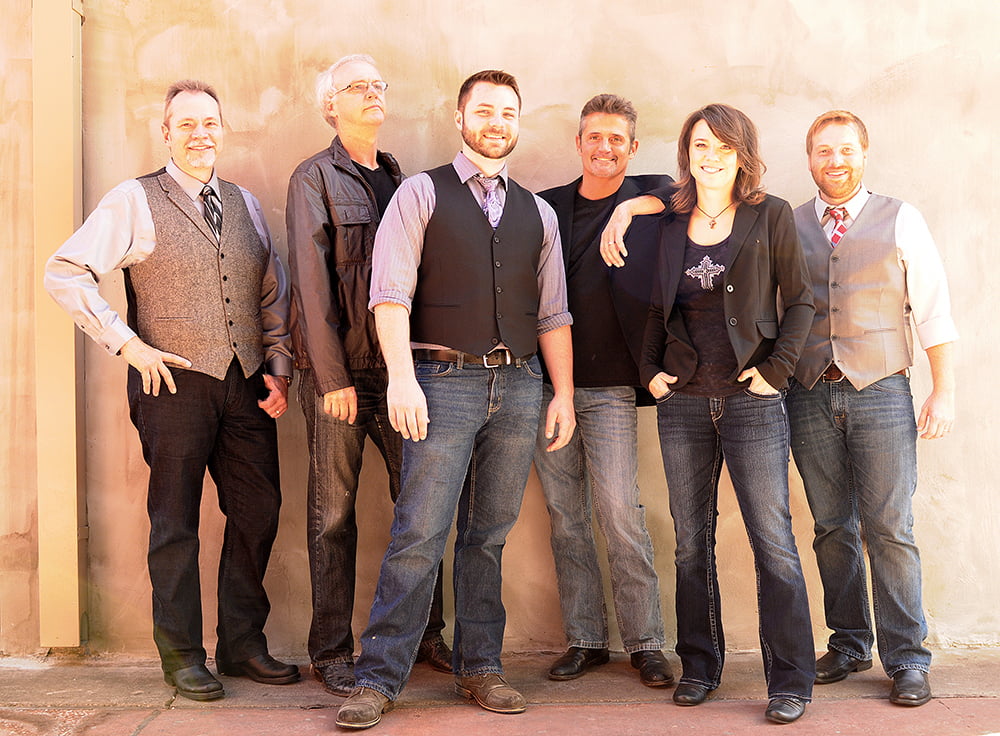
Six-piece bluegrass band the Grascals have been a genre staple since they first formed in 2004. What continues to set the band apart in a landscape overflowing with competition has much to do with the sweetness apparent in their songs, which already overflow with driving rhythms and full-bodied harmonies. It’s a sweetness that original members Danny Roberts, Terry Smith, and Terry Eldredge have built together over time, and which the band’s current banjo player, four-time winner of International Bluegrass Music Association’s Banjo Player of the Year Kristin Scott Benson, has helped underscore since joining them six years ago.

Although the band has undergone changes over the years — most recently by adding fiddler Adam Haynes and vocalist/guitarist John Bryan to the mix — they’ve managed to infuse their modern sound with an exuberant air that refuses to become staid. That much can be seen from their work output. The Grascals released their ninth studio album, and then there’s this…, in early January and will hit the road shortly for a series of shows that will effectively keep them on the road until September.

The Grascals have a pretty lengthy tradition of playing the Grand Ole Opry. What’s it like getting on that stage … even today?

Yeah, I still remember the first time I played it; I was 19 years old. Needless to say, it’s very nerve-wracking. The first time I played it, it was at the Opry House. That’s where it is most of the time, and it’s still got all the elements that you associate with playing the Opry. It’s there at either location, but the Ryman [Auditorium] just happens to be a little special because of the history.

Absolutely. And it’s such a beautiful venue. I imagine the acoustics there are tailor-made for this genre.

I heard when Earl [Scruggs] would play a banjo solo at the Ryman, it would just explode, and you couldn’t hear what was going on because people were so excited about it. It’s easy to envision, and I’ve seen pictures from that era. It’s not an exaggeration. It’s a super special place, and it still has a lot of that charm today.

You hear, especially with some of these older auditoriums, that you can feel a sense of the history about it. Do you feel that weight when you take the stage?

Yeah, I think we do. We’re blessed to have in the band, with Terry Smith and Terry Eldredge, a couple of guys that are part of that history. We could argue at this point, they started playing the Opry in the 70s. They were both very young musicians and they are part of the history now, when we see the pictures, especially backstage. Terry Smith knows everybody in every single picture. And they have stories. I’ve listened to some live shows from the Opry before, and they’ll actually have been there, so it’s even cooler to get to play with some guys who’ve been doing this for a long time now.

Turning to the music, I’m always struck by the sweetness that comes across in the Grascals’ songs. Where does that come from? Does it have to do with each member’s different personality?

The material, oftentimes, is driven by the singers. If you’re doing vocal songs, we can all bring ideas, but the singer has to feel it and believe it. It’s primarily (I think anyway) their decision, because they have to deliver that song night after night. Especially for an emotional singer like Terry Eldredge, it has to be something he believes in because that’s how he sings. I think most of our material is driven by the taste of the vocalist.

I do really agree with what you said about personalities. The band is — it’s clichéd to say — but it’s such a great group of guys. It genuinely is. I’ve been in the band for eight years now, but they were a band for a few years before I came into it. The thing I admired most about the Grascals is they seemed to have such a great time when they played onstage; it felt like they were happy to be there. Now, as a member of the band, I can attest to the validity of that.

That’s such a hard thing to fake.

It is, and I think people can tell when you fake it. People respond to authenticity, whether it’s stage presence or vocal delivery or instrumental execution. No matter what area of music you’re talking about, whether it’s the entertainment side or the music side. They know whether it’s real or not. Sometimes the masses will respond to an extreme musical force — even if it’s not necessarily a mainstream sound — if it’s real and authentic. The Grascals do have a lot of personality. I can say that humbly, because I really don’t contribute to that.

No! How can you say that?

I get to benefit from some of the personalities in the band. They really do have a lot of cool personalities; they’re personable guys, and people can sense that it’s real.

I’m curious how the band continues to push itself creatively in new directions. More and more, you have these different versions of bluegrass popping up. I’m thinking of Punch Brothers and maybe even Greensky Bluegrass. How do you all keep pushing yourselves?

One thing that’s certainly sparked creativity is having two new members. We added Adam Haynes on fiddle a couple of years ago, and a huge transition has been adding John Bryan as one of the lead singers and a tenor singer for the band. Adam, Danny, and I all agree on what an instrumental influence adds in a group, but we also agree that a vocalist — primarily a lead singer — is such a crucial aspect of any band. You’re absolutely going to change and transition when something like that is different. John has brought a lot of energy and youthfulness to the group, and it’s pretty easy to be creative and different when you have a fundamental shift in personnel like that.

As far as the overall style of the Grascals, it’s stayed the same; it’s actually what we just talked about before. You know, Terry Smith and Terry Eldredge are very much oblivious to the bluegrass scene, as a whole … and I say that lovingly. They are not driven by anyone else. They only do what they like and what they want to do. They’re not concerned about trends or what other people like, and it’s not because they’re snooty or disinterested; they just aren’t. The Grascals have always kind of had an identity that reflects what they like in their hearts, which again goes back to authenticity. They aren’t even aware of anyone else enough to care to chase after any other thing.

I, personally, am a fan of the different sects in bluegrass, because we have this huge umbrella of acoustic music, and you take the genius of Chris Thile and the Punch Brothers, and Noam Pikelny, and all these people that I just think … I’m fascinated by them. They’re so amazing. I really think there’s room for everyone, and they’re quite different crowds with each of these circuits that you may play and see, as far as live performances.

It’s nice to know there’s room for growth because a lot of times, with any creative art, you can bump up against egos. It’s nice to hear that that’s not necessarily the case here.

Yeah, and I think everybody has their own opinion, and that’s mine. But I really do welcome it. For one thing, you named the Punch Brothers, and I’m so much a fan of Noam. I think he’s a fantastic guy and an amazing banjo player and musician. I can’t imagine not being proud to be associated with him, even in a minor way, in that we’re both banjo players. Even though we do entirely different things, an association with someone that great? Gosh, I’ll take it!

Building off that idea, then, of this collection of banjo players, you obviously sing with the Grascals. What has the banjo allowed you to express that your voice hasn’t?

Well, I’m certainly in my comfort zone playing the banjo and not singing.

Really?

Oh, yeah. I don’t like to sing. I just like to play the banjo. When I heard a banjo the first time, it was in the context of a bluegrass band. I love the instrument. I like to hear what it can do, and I love its role within a bluegrass group. The first aspect of a bluegrass band that really captured my attention as a kid was seeing Scott Vestal with Doyle Lawson & Quicksilver. This would’ve been mid-'80s. The part of that group that got me more than anything was Scott’s banjo playing. It’s certainly what I’m most comfortable doing.

There’s a heightened sense of visibility when it comes to singing. Is that what becomes intimidating?

I absolutely feel that increased visibility, and I don’t like that. I’m much more content to be on the sidelines and contribute to the band. I certainly would not like to be the center of attention. Thank goodness that there are people the other way, because some people thrive on attention. We all have our places.

I read that you give lessons. How does teaching push you to be a better player?

Well, I could talk a long time about that. It’s done so many things. My husband [Wayne Benson] — he’s a mandolin player with IIIrd Tyme Out — and he teaches, as well. We were actually a bit reluctant to teach. It wasn’t something we envisioned doing, and yet it’s grown and become a huge part of who we are. It’s almost become an entirely separate entity. There’s us when we go play and there’s us when we teach.

One thing it will do is shore up your fundamentals. This is a very specific example, but my pull-offs on the banjo have gotten better because I teach people how to do pull-offs all day and when you do ‘em slow — time after time for people — they are naturally going to get better when you play. It’s also then some more abstract things. For instance, it’s put us back in touch with the general public and put us back in touch with our audience. We do associate with the crowds after the shows and stuff, but you don’t really get to know people. You just see them for a few minutes and then they’re gone. It’s been a healthy reminder to me that people really do come to shows to enjoy themselves and they try to play these instruments to enjoy themselves, and that’s the reason you start playing an instrument. It’s a therapy and it’s an escape, and it’s something that you look forward to doing whether you’re going to come from school or work.

It’s easy to become jaded as a musician because it’s so associated with you’re living; it’s a job. Students help refocus me to the original intent I had when I played the banjo, and it was just to be excited about wherever I was. I see students in their 60s who get through a song, and they’re so excited about it and they’re invigorated. That’s how I used to feel when I was learning and I still feel that way sometimes, but the students reminded us of those super pure parts of music, which haven’t been corrupted by being overworked or being overtired, or having to travel too much, or not traveling enough. These students are such great people, and that’s how you become successful as a teacher. The skillset for that is entirely separate from performing. You really become a better teacher when you get to know your students and care about them and want to help them enjoy their instrument and help them get better. Then you really tap into a fullness where you’re not going to burn out and get tired of teaching, because it becomes personal to each of the students.

What a lovely idea, and it builds into my next question, which is something we kind of touched on earlier. You’re traveling so much; you’re playing show after show every night. In addition to having your students serve as this reminder about what the music can be and the way you can approach it, how do you keep things fresh? I feel that’s always the risk you run when you do a creative endeavor for a job.

That’s absolutely right. Anytime you’re passionate about your job, there are a lot of advantages to that. There are a few disadvantages; it’s hard to detach, if you’re not necessarily happy with something about your job. Whereas, if you just go and mindlessly invest yourself for the paycheck, it’s easier to keep things separate, I think. Because music is art, it becomes very personal. It’s tough to stay fresh and excited when the passion and the creativity of art is drug down by the mundane facts of life, as far as you’re just tired or you’re homesick.

A couple of things that help me personally — one is, there is always this underlying thankfulness I get from playing music. It’s not what I intended to do; I just started playing the banjo and one thing led to another, and I’ve been so blessed to do it, and so thankful for it. That actually doesn’t go away. Even if it’s stale, or we can’t hear each other, or whatever the circumstances may be, that underlying thankfulness is always there and I don’t lose sight of it. Now we have a son — he’s nine years old — and he’s still little, but we are all praying that he can do something for a living that he’s passionate about, because it can greatly determine how you feel about your life.

The other thing is, being in a band with guys that are overall happy guys. Like any other band, we have things going on and it’s a job, and there are things that try to pick away at the creative parts of it, but they’re good guys. We’re all pretty happy; we’re all pretty even-natured. I stand next to Terry Eldredge on stage and he’s always in a good mood. It’s kind of hard to not give it your best, when you’re up there with people who you feel like they’re doing that. It helps you have a right attitude and a right outlook on each and every night. And, then, remembering that the people who came … it’s one of many nights for us, but it’s one of one night for them. You owe it to them to try your best.

Creatively, again, having [Adam and John] come into the band, it totally changes everything. When you have a new fiddle player and singer, everything about the dynamics — personally and musically — everything about it is different. I was the last band change before Adam, so we had about six years, I guess, of complete continuity, and that’s a great thing. But you make the best of things when they happen and you just have to embrace it. We’ve been really blessed to have Adam and John come into the band, and help us move on. Now this is the new version. It’s still the Grascals, but it’s with some new people, and they have something new to bring to it.

It’s an ever fluid, changing process. How exciting.

Yeah, it is. And, when it’s people-driven, you don’t have to force it. It just is.