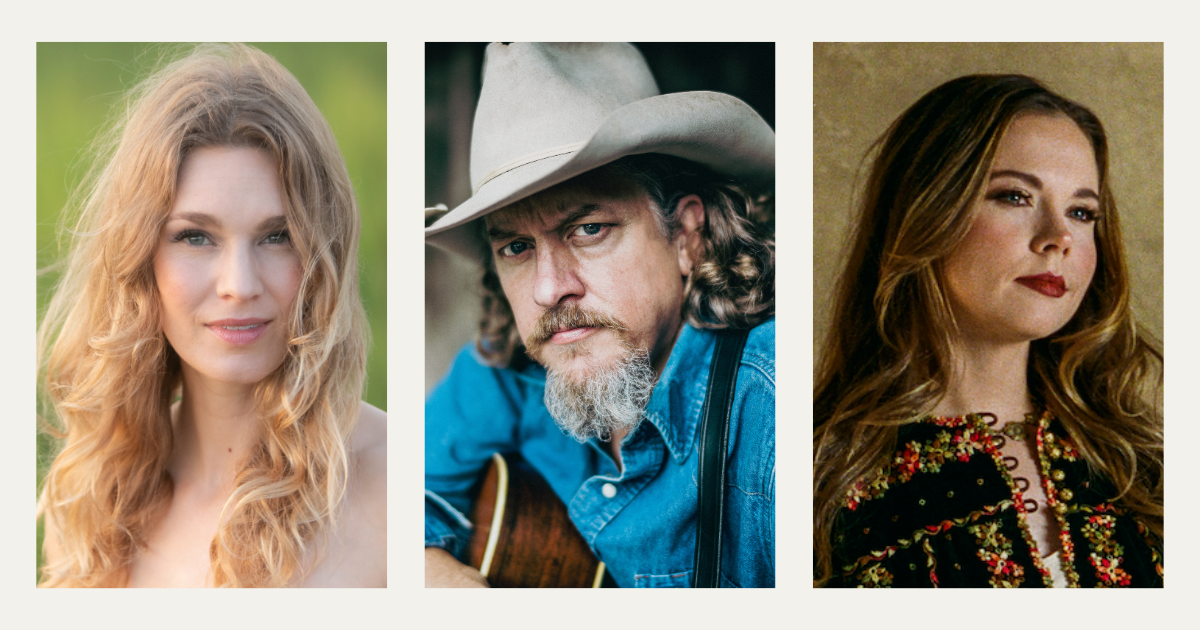
In our eyes and to our ears, there’s no better family of musical genres to usher in the holiday season than roots music. Bluegrass, Americana, old-time, country, blues, and beyond – they’re all perfectly suited for the coziest time of year, for togetherness, for parties and gift-giving and cookie icing. Whether you celebrate Christmas, Hanukkah, Kwanzaa, or Winter Solstice – or even if you feel like opting out of the ruckus altogether – there is roots music for you.
Each year, we like to share our picks for the rootsiest time of the year in BGS Wraps, a weekly collection of songs, videos, albums, shows, tours, and events that celebrate the season. We share a few of our favorites, mostly brand new but often classics and timeless selections, too. Plus, we collect all that we can into a running playlist so you’re ready when the family or party hands you the aux cable.
We hope you enjoy BGS Wraps and tune in the next week as we continue our series celebrating the holiday season. (Catch up on week one here. And check out week two here.)
Merry Happy Whatever, The Doohickeys
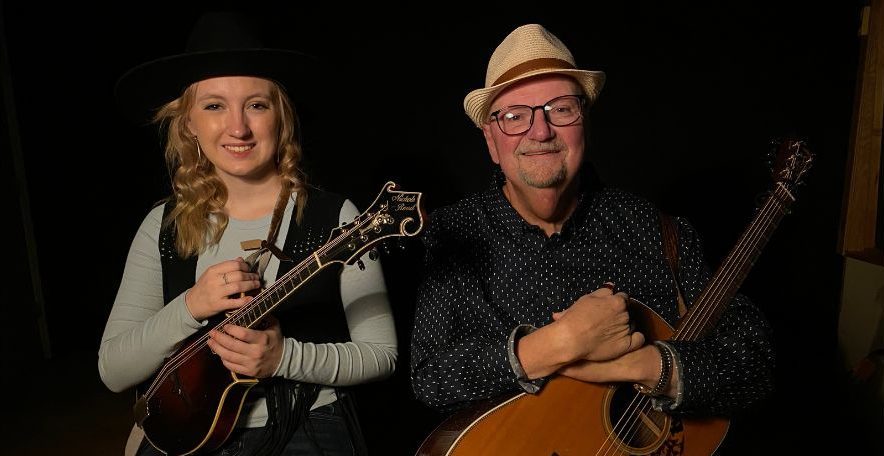
Country duo the Doohickeys go fully original with their brand new Christmas EP, Merry Happy Whatever. Their trademark wit and humor are evident across the project’s five songs – including gut-busters like “Santa Needs A Beer” and “Santa Is A Stoner.” (Does Santa need a breathalyzer, as well?) On the EP’s title track, the delightfully crowd-pleasing and all-encompassing “Merry Happy Whatever,” Haley Spence Brown and Jack Hackett are joined by the Wolves of Glendale, with rich background vocals and holiday winds and brass to accomplish that full-tilt holiday sound. And a merry happy whatever to you, too!
A Cherry Valley Holiday, Carter Faith
A favorite of ours from the mainstream country space, Carter Faith released an excellent A-side/B-side holiday single this season, pairing “Nothin’ For Christmas” (featuring William Beckmann) with “Please Come Home For Christmas.” Packaged as a two-song collection titled A Cherry Valley Holiday, both tracks are perfectly suited for your countriest Christmas playlists. Faith’s duet with Beckmann showcases how both artists keep tradition alive while still looking to the future. You may be reminded of iconic duets like Lee Ann Womack with George Strait or Dolly Parton with Kenny Rogers. The holiday cheer doesn’t stop there, either, Faith recently joined Jimmy Fallon himself on “Ugly Sweater,” a funny seasonal track produced by Dave Cobb that the pair unveiled together on The Tonight Show. Between the Christmas singles and “Ugly Sweater,” there’s a country holiday flavor for everyone. Carter Faith does it all.
“Christmas in Yuma,” Cameron Knowler
One of our favorite albums of the year was released by guitarist, archivist, writer, and composer Cameron Knowler (who sometimes writes for BGS, too). CRK was released in April and, being set in the desert in and around Yuma, Arizona, the project feels properly warm and sunny, painting sonic pictures of red rocks and cactuses and blacktop baking in the sun. If that doesn’t sound properly Christmas-y to you, take a moment to inhabit the album’s lead track, “Christmas in Yuma.” A gorgeous prose poem set to sparse, textural guitar, the text was written by Knowler but is read by his friend and fellow Southwesterner, Jack Kilmer. It’s a truly stunning beginning to the project and we’ve been holding onto it all year for just this occasion. It may not be the most sing-along ready track of the holiday season, but its transportive feelings of nostalgia, grief, longing, and pain at seismic transformations – or at cloying, gluey stagnation, or both – are altogether more than perfect for the holidays.
“Christmas Love Song,” Willie Nelson
If the only present any of us received this year was a “Christmas Love Song” from Willie Nelson, well, that would feel like a pretty complete holiday season, wouldn’t it? With just one simple offering, every “need” could be checked off our wish lists. Written by fellow legend Bill Anderson (with help from Bobby Tomberlin and Marv Green) and produced by fellow legend Buddy Cannon, “Christmas Love Song” includes plenty of Nelson’s signature charm, whether in his languid phrasing or his tasteful nylon-string licks on his trusty guitar, Trigger. In the lyric itself Nelson is remarkably humble about his holiday offering: “It ain’t a lot, but every word of it’s true/ It don’t sparkle or shine/ But it’s one of a kind…” For all of us who’ve received this holiday gift from the legendary Willie Nelson, it feels like more than enough. And we will certainly cherish it.
“Oh, It’s Christmas,” Sage Palser and Prairie Wildfire featuring Danny Paisley
New bluegrass holiday hits are all too rare, so we relish them when we find them. This release from 2024 is a great example, cheery sleigh bells giving way to burning bluegrass that will warm the winter right out of your heart. Sage Palser joined Danny Paisley and the Southern Grass on a recent single that ended up on Paisley’s most recent album, Bluegrass State of Mind, and their knack for collaboration is showcased on “Oh, It’s Christmas,” as well. Paisley and Palser sing in duet while backed up by Palser’s band, Prairie Wildfire. This one has got us in the mood for Dollywood’s Smoky Mountain Christmas. It’s the perfect bluegrass track for some cinnamon bread and roller coasters.
“Office Christmas Party,” Brittany Ann Tranbaugh feat. Carsie Blanton
Ah, at long last, a tribute to everyone’s favorite events of the holiday season – the dreaded office Christmas party. From Brittany Ann Tranbaugh and Carsie Blanton, “Office Christmas Party” is silly and light-hearted, but with a message direct from Ebenezer Scrooge’s counting house employees: Sure, gifts of appreciation from our employer at this time of year are appreciated, but we’d much prefer workers’ rights, collective bargaining, and a living wage. Enjoy the free beer, cookies, and pizza at your corporate party, of course – and commiserating with our coworkers is solidarity, whether they know it or not – but focus on what will really bring the reason for the season into focus. A union! Tranbaugh and Blanton continue to showcase their penchant for making mission-focused music that’s also fun, engaging, and joyous.
“Where My Heart Is,” Randy Travis
Thanks to technology, AI, and contributions from vocalist James DuPré, Randy Travis “got his voice back” last year and began releasing brand new music featuring the low, smoky, dulcet tones for which he was adored. It’s one of the more interesting use-cases of AI in music, leveraged to give an artist their agency back instead of stealing it away forever. Travis’ pair of singles with his new AI-enabled voice are well-executed for what they are, but a newly released from-the-vault track like “Where My Heart Is” still reaffirms the ineffable in his hitmaking voice that we won’t ever get back. Even the best AI just cannot compare. “Where My Heart Is” was recorded prior to Travis’ fateful 2013 stroke that would render him unable to sing. It’s a lovely, heartfelt track that falls in perfect step with his beloved holiday albums An Old Time Christmas and Songs of the Season. We’ll take any/all Randy Travis songs we can get, but this one feels extra special.
Christmas with el Twanguero, Twanguero
Spanish guitarist Diego Garcia is Twanguero, maker of one of the finest holiday collections to be released this year, Christmas with el Twanguero. Recorded entirely to analog tape, the album of instrumental renditions of holiday favorites is tasteful, warm, and cozy. It would fit just perfectly bookended by Vince Guaraldi Trio and Sharon Jones & the Dap Kings. It’s understated in its execution, relying on retro vibes and sounds to do the heavy lifting holiday pomp and bling would normally bring on such a project. For an album centered on the guitar, it never feels like it has to rely on showboating or hot licks, instead leaning into familiarity to bring us something that feels refreshing and new. It’s cinematic and lush, but down to earth and intimate, too. Plus, the album supports El Patojismo, a school of arts and social transformation based in Jocotenango, Guatemala, fostering education and creativity within its community. All around, it’s a lovely holiday discovery.
Peace, Love, and Cowboys (Holiday Edition), Lainey Wilson
Not sure if or when we’ve ever enjoyed such a holiday treat as this! Lainey Wilson returns to “Peace, Love, and Cowboys” from the deluxe release of her 2024 hit album, Whirlwind, to offer us a lovely holiday rewrite of the track. Retooled for the season, the message of the song resonates all the same – we need more hippie cowboys, cowgirls, and cowbabes, this time of year and beyond. The Christmas EP also includes a duet with Bing Crosby himself on “Let it Snow! Let it Snow! Let it Snow!” – Wilson can get anyone on a feature! Plus, she revisits a prior holiday single, “Christmas Cookies;” she also includes instrumental versions of each number, if you happen to have a word-free playlist that needs new transfusions of seasonal songs. We love the way Wilson approaches country music, and this little collection shows the creativity and outside-the-box-thinking she brings to the table.
Lead Image: Randy Travis by Marisa Taylor; Carter Faith by Bree Marie Fish; The Doohickeys by Jesse DeFlorio.
If you’re looking for a definitive, qualitative, and deliberate ranking; a firm and scientific rubric; or an unbiased, sterile reckoning of the best albums made in bluegrass this year, this roundup may not be for you.
Truthfully, as someone who’s worked, been acquainted, and become friends with many of the artists on this list in various capacities – from bio writing to onstage performances to media coverage to pickin’ parties to recordings and beyond – objectivity isn’t something I, personally, could establish anyway. And such year-end or other merit-based lists and collections aren’t all that interesting, are they, if not just to argue with their curation and selections.
I would not even attempt such things, because to me – to many of us – that’s not what bluegrass is about anyway. Bluegrass is about a feeling. It’s about innovation. It’s about virtuosity. It’s about tradition, loving it or retooling it or coaxing it or turning it upside down. It’s about adrenaline and a high pulse – and passing a mason jar around. It’s about feeling downtrodden or alone, shedding tears into that very ‘shine, and wailing along with the high lonesome sound. It’s folk music as much as it’s abject commercial country in “poor people drag.” It’s endlessly interesting and complex, but pretty damn simple, too.
Anyone with even an ounce of sense knows and understands that bluegrass can’t ever be objective. So indeed, why try? Why not acknowledge that bluegrass is always a matter of taste, of preference, of whimsical or capricious or convicted opinion? Bluegrass is always debatable, because, after all, bluegrass is always in the eye of the beholder.
In the eyes – and especially ears – of this particular beholder, these albums released in 2025 were the best, the most memorable, the most engaging. These collections stick to ribs like ham hocks, or stick in your throat like the tastiest clod of emotional peanut butter. They each advance, subvert, perpetuate, or wrinkle our core ideas of what bluegrass is – and what it can be.
Are each and every one of these LPs the best in bluegrass from 2025? Perhaps not… But also definitely yes.
Big Richard, Girl Dinner
In January, we gobbled down a heaping helping of Big Richard energy with the nourishing and nutritious Girl Dinner. The project may have been the band’s album debut, but this Colorado all-women quartet had already been making remarkable waves in the bluegrass, jamgrass, and string band scenes – and each of the members had extensive and glitzy musical resumés before they even convened. With a new album, Pet, on the horizon for February 2026, a signing with Signature Sounds, and an upcoming co-bill tour with fellow femme outfit Della Mae, we can tell this Girl Dinner is set to become an ongoing traveling feast.
Shawn Camp, The Ghost of Sis Draper
I remember attending Station Inn shows in Nashville in the early 2010s and sitting with rapt attention – like Martha’s sister Mary at the feet of Jesus – as Shawn Camp performed his suite of Sis Draper songs with his star-studded bluegrass bands. Often you’d hear just “Magnolia Wind” or just “Sis Draper.” Sometimes he would perform a more complete handful of the tracks he had written, individually and with his hero and mentor Guy Clark, about the mythical roots music figure from his home state of Arkansas. Now, he’s collected the slate of material – what could easily become a musical or multi-disciplinary theatre work of some kind – into one commanding, lovely, and visceral album. These are timeless songs, written and rendered as only Camp could.
Jason Carter & Michael Cleveland, Carter & Cleveland
Every now and again a new collaborative duo album comes along and makes you think, “Oh! This must have been what it felt like when Skaggs & Rice was released.” Or Tone Poems. Or Ralph Stanley and Jimmy Martin’s First Time Together. A monumental occasion, captured for posterity’s sake in the studio. When fiddlers Jason Carter & Michael Cleveland released their duo debut, that was the feeling. History made in the present, a work that will be regarded as seminal ages into the future being enjoyed in real time. Carter and Cleveland have collaborated quite a bit over the decades they’ve known each other, but what a gift to have that musical friendship ensconced forever on this album. We hope there is more to come.
Wes Corbett, Drift
Look, if all modernist banjo players sounded like Béla Fleck and Noam Pikelny, that would certainly be great. But thankfully there are dozens of five-string pickers continuing to expand on the Fleck (and Pikelny and Munde and Keith and Trischka) school of Scruggs-style, each in their own veins. Corbett is one of the best. Though he blends effortlessly into Scott Vestal’s former role in Sam Bush’s band – or into any number of recordings and one-off pick-up bands that boast his playing in newgrass and bluegrass and beyond – Corbett is a true idiosyncratic banjo player and composer. Drift, his latest, often employs traditional techniques as tools for innovation and contemporary tunesmithing. He recalls the great melodic pickers while always sounding first and foremost like himself.
East Nash Grass, All God’s Children
A few years ago, if you had told me the ragamuffin band holding down Monday nights at Dee’s Country Cocktail Lounge in Madison, Tennessee, would in 2025 release an album you’d describe as “heartfelt, contemplative, and intentional,” I would have probably laughed. East Nash Grass were just as jaw-dropping good then as they are now, but with that down-home silliness and clumsy charm all the great bluegrass bands born of indentured residencies have had. All God’s Children finds the band all the way grown up (but not really), and they never forsake their banter-rich, never-know-what-you’re-gonna-get roots. That overlap – of silly and heartfelt and virtuosic and not too serious – is where most (if not all) of the best bluegrass is born, anyway.
Sierra Hull, A Tip Toe High Wire
Every single time Sierra Hull releases a new album, journalists and critics love to talk about how she’s now “found herself” and “found her sound.” This writer, however, disagrees. I first saw Hull perform when we were both in our mid-teens and then as now I knew, wholeheartedly, this is someone who knows who they are. Granted, Hull has done plenty of finding herself along the way, as we all do, but the songs and tunes of A Tip Toe High Wire were obviously not born of someone just locating her voice, musically or otherwise. They don’t feel experimental or out on a limb, they are each solidly in her wheelhouse. They do still push the envelope, though, and they all tell personal stories, draw on individual experiences, and chase those treasured Hull-ian melodies wherever they lead.
I’m With Her, Wild and Clear and Blue
Perhaps all future I’m With Her albums should be made while basking in the “Ancient Light” of a total solar eclipse, given the striking sonic successes of Wild and Clear and Blue. Is that cosmic magic why their second full-length release feels so distinct and metamorphosed from their debut? Is it all the years and personal growth in between recordings? It’s not like they reinvented the wheel, they’re the exact same band – but something feels different here. Whatever the special sauce may be, all of I’m With Her’s offerings over the course of the band’s lifespan have been stellar, but this latest full-length project stands apart. As long as Jarosz, O’Donovan, and Watkins are making music together, we will be unendingly grateful they offer us these recorded windows into their creativity.
Kissing Other ppl, Kissing Other ppl
Bluegrass and old-time birth new projects, bands, and collaborations all the time. Some are purposefully momentary, some are unintentional flashes in the pan, some are such long strings of last names ampersand-ed together you know there’s no future for them. We hope Kissing Other ppl are here to stay. Rachel Baiman and Viv & Riley joined forces on the album – and band – turning mainstream and pop songs into bluegrassy and old-timey string band arrangements that positively vibrate with passion and life. “Sad boi” covers these are not, though you may at times find them subdued or tender or mild. Long may this old-time Americana musical polycule reign.
Cameron Knowler, CRK
If you’ve been craving a contemporary storyteller and poet who utilizes the guitar as their medium – like Norman Blake or Doc Watson or Tony Rice or so many others – I am so pleased to step onto my soapbox to tell you about Cameron Knowler. Also a writer (at times for BGS), archivist, photographer, and visual artist, Knowler’s guitar-centered album, CRK, is almost anything but a “guitar album,” despite each and every composition centering on the instrument. The LP paints vivid and haunting musical portraits of a place Knowler loves, longs for – and despises or begrudges, too – Yuma, Arizona. Knowler wouldn’t even pretend to compare himself to Norman Blake or state that he’s deliberately taking up Blake’s heavy, heavy mantle in the 2020s, but I’m saying he is. Thank goodness.
Bryan McDowell, Bryan McDowell
You may recognize multi-instrumentalist Bryan McDowell from his time performing, recording, and touring with artists like Claire Lynch, Sierra Hull, Molly Tuttle, Alison Brown, and many, many more. He’s an incredibly talented sideman and session player, so when I first received his new self-titled solo album, I imagined the sort of formless instrumental project most pickers with similar resumés create. What a pleasant surprise to find a fully fledged, well-rounded, complete song sequence chocked full of original songs and McDowell’s lovely, honeyed singing voice. (I know Bryan and I didn’t know he sang like this!) It’s on me, really – I shouldn’t have been surprised at all – but McDowell’s skill set is clearly no longer just geared towards backing others up. I am looking forward to seeing what’s next.
Shelby Means, Shelby Means
Speaking of artists ready to step out of the role of sideperson or session musician. Bassist, singer, and songwriter Shelby Means’ debut solo album is fantastic. Since departing Molly Tuttle’s Golden Highway, Means has already built striking momentum as an artist unto herself, and the quick success of her album has played a huge role in that. With originals, tasteful (and surprising) covers, and a star-studded roster of pickers – Tuttle, Ron Block, Michael Cleveland, and more – the project certainly doesn’t feel like a debut. And it shouldn’t, Means has crisscrossed the country and the globe for decades, she’s more than ready to step to the center of the stage. She’s done it before, she’s doing it again – and now a lot more frequently, I’d bet.
The Onlies, You Climb the Mountain
All the best bluegrass is old-time these days. (I say that over and over again, here’s what it means.) While mainstream bluegrass sounds more like ‘90s country played by a bluegrass string band, or jamgrass, or “MASH” – all of which depart greatly from the 1945/1946 sound of its origin – modern old-time becomes more and more of an audio swatch of essential parts of what bluegrass used to sound like and used to include. One album this year that epitomizes this phenomenon is the Onlies’ You Climb the Mountain. Is it phenotypical bluegrass? Oh, no. It’s not. But it also has plenty of textures and tones endemic to original bluegrass that are becoming increasingly rare in its modern forms. I shouldn’t sell the Onlies short, though, they aren’t here because they’re “better bluegrass” than bluegrass, or more authentic, or more “real.” They’re here because this album is excellent, on its own terms.
Danny Paisley, Bluegrass State of Mind
Danny Paisley is celebrating 50 years of bluegrass with his latest album, Bluegrass State of Mind. Still looking for new challenges and trying to add fresh sparkle to his dyed-in-the-wool traditional sound, the new LP includes Dobro (for the first time), drums (sacrilege!), and a bit of an Americana lean. (Don’t you dare call it “grassicana.”) To BGS readers, the project will most likely sound like straight down the middle bluegrass of the highest order. Longtime fans of Paisley & the Southern Grass, though, may notice that very sparkle Danny has been chasing, as he targets new audiences and still sets new goals, five decades into his career as a bluegrass tradesman. It’s the family business.
Missy Raines & Allegheny, Love & Trouble
Missy Raines is one of the winningest musicians in the history of IBMA, amassing 10 Bass Player of the Year trophies over the years and and a handful of honors in other categories, as well. She may have won her biggest prize, though, when she landed on her latest band lineup, Missy Raines & Allegheny, a few years ago now. Her second album with the group, Love & Trouble, continues building upon the chemistry and collaboration that dripped from 2024’s Highlander. They often rise to the occasion of my preferred nickname for them, Mashy Raines & Allegheny, but they remain a consistently dynamic group capable of gritty, barn-burning bluegrass and contemplative and emotive slow burners, just the same.
Red Camel Collective, Red Camel Collective
They began as Junior Sisk’s backing band, and like many of the great “spinoff” bluegrass bands of yore – Quicksilver (Authentic Unlimited), the New South (American Drive), and many more – Red Camel Collective have quickly shown they’ve got the chops to take the same route. Their debut self-titled album was released earlier this year and was made at Sisk’s suggestion – and with his blessing. (He regularly steps off the stage at his own shows to spotlight the Collective and their music, as well.) This band of lifelong pickers have clocked so many miles playing bluegrass and executing the visions of others that, when charting their own course as Red Camel Collective, they’re able to sound exactly like themselves. It’s tough to sound singular in modern, radio-inclined bluegrass. But Red Camel Collective do. Is that why they won New Artist of the Year at the IBMA Awards this fall? It sure ain’t coincidence.
Sister Sadie, All Will Be Well
Sister Sadie’s All Will Be Well is like dropping the needle on a 45-minute bluegrass therapy session. I don’t say it flippantly or sarcastically; it is indeed shocking the level of earnest contemplation, processing, emoting, and growth evident in the songs on this album. At the same time, when you hear the tracks played down at a bustling bluegrass festival or a packed rock club or a subdued listening room, they never feel twee or try-hard or sodden with greeting-card level sentiments. They never feel heavy, actually – this is fun, often hilarious, party-ready music. Dance-along music. Shout-along songs. You’ll laugh, you’ll cry. (At the vocals alone.) These are real human ideas, thoughts, and feelings set to bluegrass. Imagine.
Larry Sparks, Way Back When
How does this album seem like it could have been pulled from any year, any decade of Bluegrass Hall of Famer Larry Spark’s sceptered career? Because it could have been, damnit. He’s Larry Sparks. Way Back When sounds warm and live, like listening to tape or vinyl over earbuds or cell phone speakers. Like being in the room with that resonant, vibrant, and patinated voice. The material is timeless, but never tired or lost in retrospection. Sparks is obviously making bluegrass in the present, as he always has. He just sounds exactly like this. And the way he talks about making music – as he did in a BGS interview set for publish in January 2026 – you can tell, for him, it’s essential to inhabit the present and inhabit the song. Bluegrass really is his calling, and we’re all all the better for it.
Billy Strings & Bryan Sutton, Live At The Legion
One of the best bluegrass albums of the year? Of course. One of the best live shows and tours of the year? Doubly, triply, quadruply of course. You’d think it would be brain-melting to listen to hours of two acoustic guitars and an electric bass pick through bluegrass, fiddle tunes, and Doc Watson classics, but it was divine. Trance-like – not with eyes glazed over, but on the edge of your seat. I wasn’t at that show at the Legion when they tracked the album, but was lucky enough to catch their show this fall at the Ryman in Nashville. If you weren’t so fortunate, don’t worry, ‘cause this isn’t an incredibly exclusive club. This record really does capture all that’s ineffable of being “in the room.” (No one is surprised.) Turns out, you can actually bottle and sell it, if you’re these two. Now if only you could buy the skillset, too…
Thompson the Fox, The Fox in Tiger’s Clothing, vol. 1 & vol. 2
Maybe once a year I trip over or into a new music discovery that gets me so excited I start getting annoyed with myself from having to hear me recommend them over and over again. With Thompson the Fox, it never got annoying (not to me, at least) and the excitement of turning folks onto their music still hasn’t worn off. So here we are, again. If this is your initiation, don’t thank me, thank the people who sent Thompson the Fox my way. Jazz, newgrass, bluegrass, bebop, ragtime, and oh-so-many more styles and textures combine in a completely fresh and distinctive form. I’ve never heard new acoustic music quite like this, yet it’s clearly rooted in that tradition. The simple math of xylophone, banjo, bass, and drums doesn’t quite math, but this group sounds resplendent, rich, and fascinating. Takumi Kodera on banjo is a revelation and Rie Koyama (xylophone), Akihide Teshima (bass), and Tomohito Yoshijima (drums) complete the Tokyo-based ensemble.
Cristina Vane, Hear My Call
Cristina Vane exists at an intersection of roots music that far too few inhabit, because very few can manage there. Vane can. She does blues, bluegrass, old-time, country, and Americana. Sometimes blended, sometimes compartmentalized. She’s got short-form, short-attention-span, vertical-video appeal for days, but her songs are never vapid or playing to any kind of commercial common denominator. Her instrumental skills and the passion for learning and song collection across roots and folk genres that she exhibits bring it all together. I’d not want to subject either woman to the corniness of comparing one to the other, but for folks who love Sierra Ferrell and are looking for more artists in a similar roots-meets-mainstream space, Cristina Vane can do it. She is doing it.
Vickie Vaughn, Travel On
Vickie Vaughn has won IBMA Bass Player of the Year for three years in a row and on the heels of that remarkable accomplishment, she’s released her debut full-length solo album, Travel On. Produced by Deanie Richardson of Sister Sadie, it’s Vaughn’s first recording under her own name released in 10 years. Original songs and covers are packaged in a sound that’s always trad bluegrass, but often infused with a dash of Osborne Brothers from the ‘80s or Jim & Jesse with a drum kit. It’s an Earl Scruggs Revue sort of flair, troubadour-steeped bluegrass-country. And it’s divine.
To conclude this long yet non-exhaustive and surely myopic list of the best bluegrass albums of 2025, let me leave you with this gentle reminder. What’s bluegrass and what’s best are always in the eye – and the ear – of the beholder.
What was your favorite bluegrass album of 2025? Let us know on social media. We hope you discover some new music to love in our BGS Class of 2025 and we can’t wait to make new discoveries with you, too.
BGS Staff contributed to this list.
Photo Credit: Shelby Means by Hunter McRae; Shawn Camp by Neilson Hubbard; Sierra Hull by Spencer Showalter.
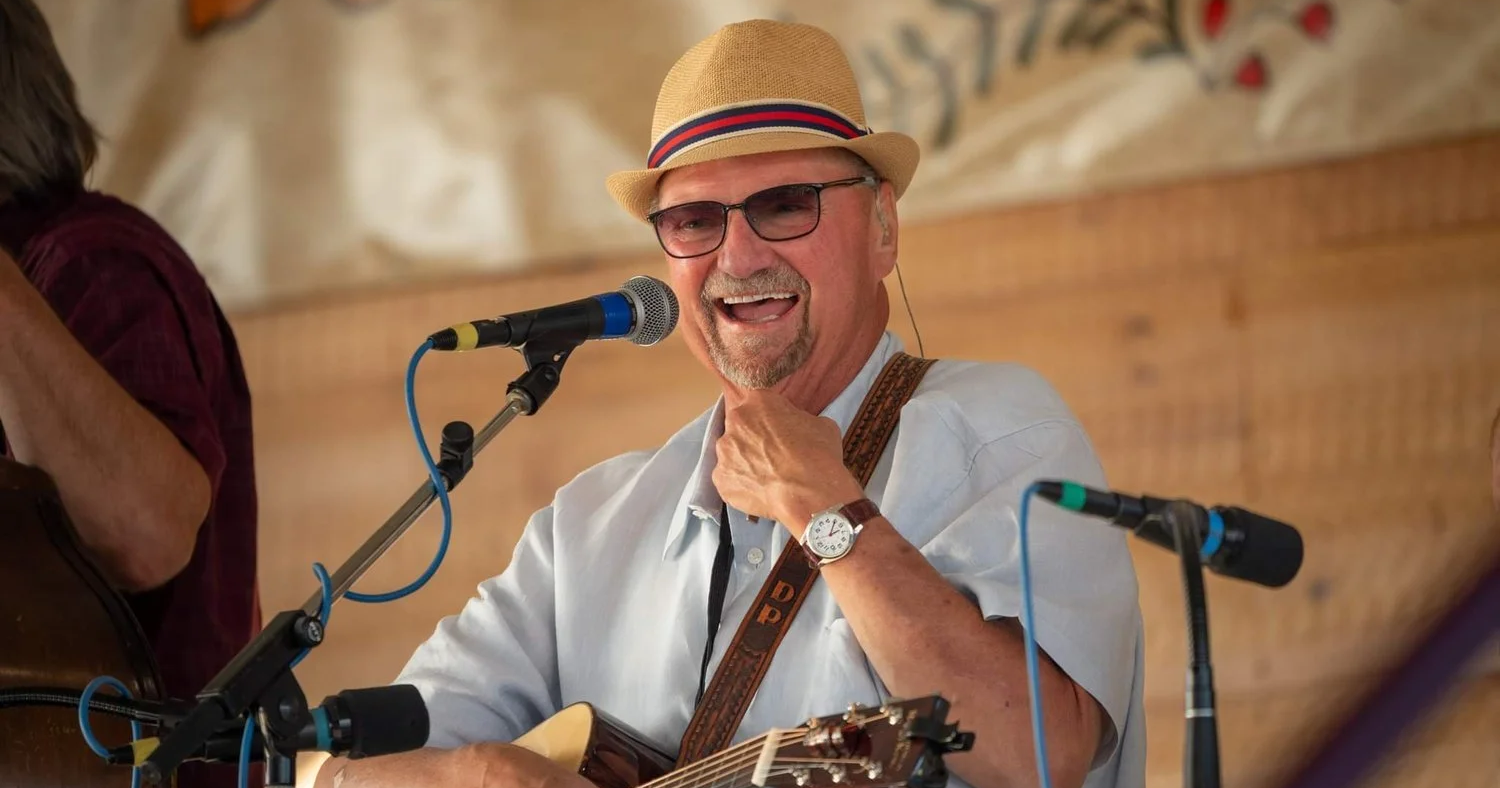
Danny Paisley is a quintessential bluegrass tradesman. He began playing music around the age of 10 and soon after was sneaking into bars and clubs with his dad Bob Paisley, Ted Lundy, and their band, the Southern Grass. Danny was already gigging and touring at the age of 13, and now, five decades later, he’s enjoyed 21 years at the helm of the Southern Grass – with the next generation of Lundys, T.J. and Bobby, and the next generation of Paisleys, his son Ryan, in tow.
Danny learned the bluegrass ropes from his father, crafting and carrying on a traditional sound that draws directly from Bob’s musical foundation but also sounds distinct and personal. When Bob passed away in 2004, Danny had already taken over some of the leadership roles in the band while the elder Paisley had been battling cancer. Danny was determined to continue the group’s legacy, and over the last two decades he’s honored that legacy while consciously expanding it. Along the way, he’s earned four IBMA Awards for Male Vocalist of the Year, while he and the Southern Grass were awarded Song of the Year in 2009 for “Don’t Throw Mama’s Flowers Away.”
His 2025 album, released in May on Pinecastle Records, finds Paisley continuing that expansion, looking for new challenges and focusing in on a fresh sonic sparkle. Bluegrass State of Mind would sound like a straight-ahead traditional bluegrass album to a layperson, but to devoted fans of the Southern Grass, it’s a much more Americana-steeped and forward-looking endeavor. The usual five-piece lineup is augmented by Dobro, snare drum (gasp!), and a healthy dose of “what if we tried… this?” all across the project.
The result is charming, engaging, and downright excellent – it’s one of the finest bluegrass albums of the year, to be sure – showcasing how Paisley’s longevity is built upon a keystone of innovation and looking to the future, rather than being entrenched in the past. For someone who sounds entirely dyed in the wool and is held up by chair-snapping traditionalists as well as jamgrassy rebels, any level of “coloring outside the lines” of the genre would be remarkable. But Paisley isn’t stopping at new challenges and fresh sparkles; he wants to take his Bluegrass State of Mind to as many brand new audiences as he can find.
Fifty years into his career, Paisley is not resting on the assumption that he can keep performing and plying his trade by doing the same ol’ same ol’. No, Danny Paisley & the Southern Grass are still committed to bringing the bluegrass they love and hold dear to anyone and everyone who may enjoy it, by showing folks this kind of music can be for everyone. All the while, he’ll be turning over plenty of new leaves and passing along the family business in real time, too.
We caught up with Paisley at the Industrial Strength Bluegrass Festival in Wilmington, Ohio, between sets, when he and his son Ryan sat down with BGS to chat about his most recent album, what he wants to accomplish next, and the absolute unforgivable sacrilege of including drums on Bluegrass State of Mind.
Right on the album cover for your latest project it says, “Celebrating 50 years of bluegrass music.” To me, you’re a bluegrass tradesman. It’s very clearly your trade, it’s what you’ve done your whole life, and it runs in the family. It began with your father, Bob, and is continuing in the next generation with your son, Ryan. Can you talk a little bit about the meaning that you’re holding right now at 50 years, as you put together this record and were thinking about that anniversary, and that longevity?
Danny Paisley: I didn’t want to do a record rehashing old favorites. I kept hearing different songs and I kept saying, “I want to try this,” just for me to try this new approach. A “new challenge.” We recorded it and some of ’em were not standard Danny Paisley-type songs, but I felt they were awful good songs and I wanted to try it.
So Ryan and I worked it out, and he come up with a different approach for some of the tenor lines I would’ve sang previously. Now Ryan is singing them, so that added a different flavor. We just tried to sparkle the music, just to tweak it.
We added a Dobro for the first time, only ’cause I kept hearing it through so many of the songs. I’m more of a fan of the newer approach to Dobro than the older school. Mike Auldridge was the one that turned me [onto it], the way he was getting tones out of a Dobro.
You’re 50 years into doing this and have such an established sound as your own frontman, your own bandleader. People see you as so solidly traditional, but for you, five decades in, it’s clearly still important for you to turn over new leaves, to find that sparkle you’re describing.
Because I was feeling… maybe I was [feeling] stale, and after my health issues, I felt I really need to do this – for maybe a couple years, now. I regret that I didn’t try it [sooner]. So I tried it and I loved it. Had a great time, had a great producer [Greg Cole] and great help with Ryan and his influence and I think it’s a great CD. Different approach.
You’re still looking for new challenges and you’re looking forward. Obviously, with this record, with the way that you operate as a musician and a creative, you aren’t just somebody that’s like a lot of bluegrass people, with one foot in the past, one foot in the future.
Right.
Looking ahead – ’cause it seems like you’re looking ahead right now – what are the goals you haven’t done yet? Or the bucket list items you haven’t checked off yet?
I want to take our band – and this is a real goal – to reach other audiences. I think there’s a real audience and a real needing, almost, at some of the more jammy festivals. And we’ve done ’em and I’ve realized it really works well, presenting a straight-out, hardcore bluegrass band. We pick out songs that sort of go to that crowd, but we just play ’em in our style and we try to keep it upbeat, just to draw people in for a new audience.
I know the music has gotta move on. I’m a firm believer of it. We revere the past, but we look to the future – and I’m in that category. I look to the future, but I love the past. I don’t want to dishonor it, ’cause it’s the music I love and feel. It’s what’s inside of me. That’s the music I love.
So that’s my goal. I want to bring it out [to new audiences], and I really feel in today’s world, you’ll have to adapt things, but I really wanna make it traditional bluegrass. There’s a real audience for sincere, true bluegrass.
It makes me think of how we have Molly Tuttle, Billy Strings, and Sierra Ferrell–
Exactly.
All who are, at their core, traditionalists. So they’re shining a light on the folks who sound like you. I definitely think there’s space for a band like you in that constellation.
And Billy loves hardcore bluegrass! But he made it an event. People will pay money for an event. He puts it right down in their faces with some straight-out bluegrass, and it’s great.
Our mutual friend Jon Weisberger always talks about how one of the most valuable things you can do as a bluegrass band is to be the most traditional bluegrass band in a non-traditional space. The music can stand out for what it really is and doesn’t fade into the grayness of it all being the same.
There’s so many traditionalists who don’t want any variation, which I respect. We all do. I wanna revere that. But we also gotta realize these people, young folks today, are not coming into the music. With all the outside influences and modern day [stuff], Facebook and all the different Instagrams. [Laughs] They’re not coming into the music the same way. We need to respect that and bring it to them and bring them in.
We can’t expect some young person that’s just getting into music, that’s 18 or 19, to be really drawn in by singing another cabin song. We sing cabin songs, but we can’t [only do that]. And we’ve all had heartbroke and there’s a world of songs about heartbroke. Your lover has passed or left you, boohoo! We have to present it in a fresh way. And meet people where they’re at, for sure. That’s the best line, that’s truly it. And I’m a firm believer in that.
I fully believe in the intrinsic charm of bluegrass. I think everybody’s a fan, they just don’t know it yet. So if you can reach them with music that doesn’t show them or tell them that they’re not allowed to like bluegrass, it happens. Bluegrass can feel exclusive. Or it can feel like, “Oh, that’s music for other people, not for me.”
“Not me,” yeah! Or, “I’m afraid.” “I’m not sure that’s good enough, or that I would be accepted.” Or, “I hear it, but I don’t really want people to know I like it.” Because that stereotype has to go! It has to move on. It’s music for everyone. I don’t care what kind of music you’re in, music is for everyone. And you have to accept that or live in your little corner of the world and think everybody else is wrong.
I’ll probably get in trouble for that. [Laughs]
No, no! But speaking of traditionalism and traditionalists… so, bluegrass drums, huh? [Laughs]
Uh huh! [Laughs]
You’ve got bluegrass drums on the album. And what a lot of people don’t know – maybe our audience on BGS will know – but a lot of people don’t know that bluegrass drums are a traditional bluegrass instrument. I hear the “sparkle” and the difference in these songs, but I also still hear you. It sounds like your personality.
What my approach and my thought is, is I want it to still be me. I’ve had some people criticize it and say they didn’t appreciate that drum. Why? ‘Cause it was listed? [Laughs] It’s there to add some rhythm. And it was only there for a little sparkle, a little snap. And a little rhythm. If you didn’t really know it was there and we didn’t tell you, you probably wouldn’t know it. There’s nothing wrong with that, no. Drums are in a lot of bluegrass.
Exactly. We could list the folks who’ve had drums: Bill Monroe, Jimmy Martin, the Osborne Brothers, J.D. Crowe – the list goes on and on and on.
For you, as a traditionalist, straight-down-the-middle bluegrasser, this album is a few clicks towards Americana. But if you played this album for an Americana audience, it would just sound like traditional bluegrass.
It would be traditional bluegrass, yeah. I’m gonna draw those people in. That’s my goal.
The album sounds so warm and live. You know how bluegrass records nowadays, especially the ones made especially for satellite radio, all sound really compressed. They sound canned and sometimes stale. This album feels really warm and live and fresh.
I think ’cause they all want radio airplay. They have a certain– I don’t know the technical way [to describe it], but sometimes you start compressing the music too tightly. You miss guys like Jimmy Martin who threw his voice real up there and really stood out on a certain line. He popped –I call it popping – he’d pop his voice and stuff. It might have been there, but then they compress it with the recording or the engineering. I try to not let that get too overtaken in the music, even in straight bluegrass, ’cause that adds energy and life.
I do wanna talk about some of the songs on the album. I love these three in the middle: “Diagnosis Broken Heart,” “Two Old Church Pews,” and “Cream in My Coffee.” Let’s start with “Diagnosis Broken Heart,” ’cause that one, I think the sparkle and the challenge you’ve been talking about is there.
We had it recorded and I didn’t really like it. I felt it didn’t really work. So we redid it after we had it all done and mastered, we redid it. That’s a different approach for me. I said, “Let that sink in.” And after it sunk into me, I go, “No, I don’t wanna do it that way. I’m gonna go back and just sing it my way.” And that’s what I did. Then that one, we added the snare. I wanted a little pop – and the groove on that one is great. We brought the tempo up and that one worked.
The most challenging song was “Cream in My Coffee.” David Stewart wrote it along with some other gentlemen and David kept saying, “I want you to do this. I hear this.” And I kept saying, “I do too, but I don’t know if I can.” And so there’s your challenge!
So I did it and it wasn’t right. We’re in the studio and David Stewart’s there and he’s telling me how to do it and I’m not doing it the way I hear it. I’m listening to the way he’s singing it and I go, “I can’t really do it that way.” I’m listening back and forth. Finally, David comes in the studio and he says, “Think of a marching band.” We did a take and next thing I know he’s standing in the [control] room while I’m doing the vocal and he’s in there marching. [Laughs]
More people come and say, “I never thought you would record the song like that,” but I love it. I said that was a challenge, but it was a good challenge.
I also wanted to talk about “Two Old Church Pews.” Can you tell me about where that song came from? That line about how a church is wherever you are, that really resonated.
That was the major part of that song that grabbed me! That song was pitched to me by Brink Brinkman and Daryl Mosley. They sent it and I immediately said, “This is beautiful.” I said, “This wraps up basically how I feel.” You can talk to your deity wherever you are. Some people need to go to church. Some people just go out, have a quiet moment, and sit in the yard or a quiet spot in the house. That’s how I believe. And the two old church pews were [the singer’s] church. He took ’em home and he sat there and he would talk to the Lord in that way.
That’s how I feel and it’s a beautiful song. It rings thanks to Ryan and Greg. It come out excellent. And that’s probably the most traditional feeling, one of the new songs on that CD.
I love the text painting of it. It really feels like you’re seeing the imagery.
That’s what I tried with my singing. Tried to present that way. And the wording of it was excellent. That’s a once in a lifetime song.
Photo Credit: Shot by Rob Wasilewski, courtesy of the artist.
You know what you need? You need a roundup of brand new roots music!
In this edition of our weekly collection, Andy Leftwich kicks us off with a frequent fiddle contest selection, “Tom and Jerry,” giving an appropriate Texas swing treatment to the classic tune. It draws from his childhood growing up performing and competing at contests. A couple of Leftwich’s labelmates on Mountain Home Music are included below, as well. North Carolina’s Unspoken Tradition call on Danny Paisley, Jason Carter, and Bronwyn Keith-Hynes to guest on “I’ll Break Out Again Tonight.” Below, the group’s bassist Sav Sankaran gives us some insight on who inspired their cover of the track and how they chose their special guests. Plus, bassist and singer-songwriter Vickie Vaughn, also on Mountain Home, releases her most vulnerable original track to date, “Mama Took Her Ring Off Yesterday.” Written with Deanie Richardson, who produced Vaughn’s upcoming solo debut, it’s a song about grief, loss, and how life always marches on.
In a similar sonic space to our bluegrass selections, Old Crow Medicine Show have pitched in for John McCutcheon’s upcoming album that pays tribute to the seminal 1925 Mountain City Fiddlers Convention to mark the year of its 100th anniversary. The album, Long Journey Home: a Century After the 1925 Mountain City Fiddlers Convention, was produced by McCutcheon and features an incredible varied roster of artists and pickers rendering songs that pay homage to the important East Tennessee gathering. OCMS perform “Whatcha Gonna Do with the Baby,” which McCutcheon has set to photos from the album’s star-studded recording sessions.
Also below you’ll hear Amanda Pascali combine cultures and sounds from Sicily and the American South on “Amuri,” a brand new song from her upcoming album, Roses and Basil. It’s a delightfully cross-genre track, with touches of cumbia, Latin folk, Texas, Sicily – of course – and beyond. You won’t want to miss new music from Queen Bonobo (AKA Maya Goldblum), either. “Waiting Tables” is the indie-alt-folk artist’s Saturn Return song, about manifesting success and chasing dreams.
It’s a lovely collection of new songs and videos and you know what we’re gonna say… You Gotta Hear This!
Andy Leftwich, “Tom and Jerry”
Artist:Andy Leftwich Hometown: Carthage, Tennessee Song: “Tom and Jerry” Release Date: July 25, 2025 Label: Mountain Home Music Company
In Their Words: “This song brings back so many memories for me. I grew up competing in fiddle contests all around the southern region of the United States where I met some of the best fiddlers of our day and was introduced to the style of Texas fiddling. ‘Tom and Jerry’ is an anthem and you’ll hear it played in just about every fiddling contest and Texas jam session there is. This arrangement is a development of those experiences and pays homage to my upbringing, reminding me of where I started. It’s hard to describe the feeling you get when you play these tunes with those incredible passing chords along with the Texas swing feel. It’s just so much fun!” – Andy Leftwich
Track Credits: Andy Leftwich – Fiddle, mandolin Byron House – Upright bass Cody Kilby – Acoustic guitar
Old Crow Medicine Show, “Whatcha Gonna Do with the Baby”
In Their Words: “Old Crow Medicine Show probably wouldn’t be a band if it weren’t for the time we spent around Johnson County, Tennessee, in the late ’90s. It was there that we learned to love the plain affairs of simple living in the hills, where country music was born. Fiddlers like JB Grayson were an early inspiration to us and the legend of the 1925 Mountain City Fiddlers Convention loomed large, even 75 years later. Now 100 years have passed since this, the first of the big national old-time music conventions, and we are mighty proud to have played a role alongside the great John McCutcheon in bringing this album to fruition.
John first approached me a year ago with the exciting news that he was embarking on a tribute to the Mountain City Fiddlers convention, the event that was so instrumental to the development of the Upper East Tennessee region’s identity as the national headwaters for hillbilly music. I immediately jumped in headfirst, bringing along Old Crow as the first act to sign up for the project. Many of the recordings we helped John make at our own Hartland Studio in East Nashville and now we are honored to finally be able to express our gratitude to Johnson County, Tennessee, an inspirational community for our band.” – Ketch Secor
“I first heard about Mountain City, Tennessee, as a teenager just beginning to play the banjo. I heard the Folkways album Old Time Music at Clarence Ashley’s and it changed the way I thought about the banjo and music as a whole. When I was finally lucky enough to get to Mountain City – doing a concert – I realized how important this little town and its heritage was. When the centenary of the 1925 fiddlers convention was rolling around, I called a bunch of my musical pals and invited them to join me in celebrating this event and, at the same time, benefit the fledgling arts center the town had started. My only request of the musicians was: Don’t make these museum pieces. Own them. I want to hear your fingerprints all over the music. And it turned out way cooler than I ever imagined.” – John McCutcheon
Amanda Pascali, “Amuri”
Artist:Amanda Pascali Hometown: Houston, Texas Song: “Amuri” Album: Roses and Basil Release Date: July 23, 2025 (single); September 12, 2025 (album) Label: Amanda Pascali & the Family/Missing Piece Records
In Their Words: “‘Amuri’ is the first song off my new record, Roses and Basil. The song opens the album with a Leonard Cohen-esque guitar part and a stanza of ancient Sicilian verse: ‘Amuri, amuri, chi m’hai fattu fari? M’hai fattu fari ‘na granni pazzia.’ (‘My love, my love, what have you made me do? You’ve made me go mad.’) These centuries-old lines, interpreted by many artists over time, tell the story of someone so overtaken by love that they forget the way to the church. In my version, that sense of losing the path becomes a metaphor for drifting away from what once felt like absolute truth, all in the name of love.
“The song quickly shifts from that quiet opening into a vibrant cumbia rhythm, inspired by the Latin sounds I grew up with in Texas. A spaghetti western-style electric guitar, 1960s and ’70s Italian lounge piano and vibraphone, and the figure of the priest reimagined as a Southern preacher man all come together to bridge my two worlds: Sicily and the American South.
“Though ‘Amuri’ borrows its opening from the past, the song itself is entirely my own. It sets the tone for the album: anchored in tradition, but reimagined for today. How strange and beautiful that something so old can still feel so relatable.
“The album was recorded at Niles City Sound in Fort Worth, Texas. The day before we recorded this song, my producer Robert Ellis came over to the place where I was staying, with a second-hand nylon string guitar he had bought that very same day. He sat at the table with me at golden hour and as the sun shone through the windows, he played the song in a way that resembled Leonard Cohen’s ‘Master Song.’ The wheels started spinning at that moment.” – Amanda Pascali
In Their Words: “‘Waiting Tables’ is my Saturn Return song. It’s about envisioning how I want my life to be and letting go of all that’s not serving me. I’ve been in the service industry since I was 14 years old and this song is my slightly sassy and soothing way of manifesting success in my music career. We all deserve safety, peace, and for our dreams to be actualized.” – Queen Bonobo
Track Credits: Maya Goldblum – Guitar, vocals, producer Joe Kaplow – Drums, percussion, engineer Joel Ludford – Stand-up bass Kyle Knadinger – Pedal steel Neil Burns – Keys
Unspoken Tradition, “I’ll Break Out Again Tonight” featuring Danny Paisley
Artist:Unspoken Tradition Hometown: Western North Carolina Song: “I’ll Break Out Again Tonight” featuring Danny Paisley Album:Resilience Release Date: July 25, 2025 Label: Mountain Home Music Company
In Their Words: “‘I’ll Break Out Again Tonight’ was one of the first bluegrass songs I ever learned, largely inspired by the captivating rendition of the song by Danny Paisley & The Southern Grass. It has long been one of my favorite old country ballads to sing and to honor my Mid-Atlantic bluegrass roots and collaborate with Danny on this song is a dream come true. Danny is my all-time favorite bluegrass vocalist, and has been an inspiration to me since I was a child. I’m so excited to have Unspoken Tradition’s version of this classic out in the world, and even more excited to share the track with my bluegrass hero!” – Sav Sankaran
Track Credits: Audie McGinnis – Acoustic guitar Sav Sankaran – Bass, lead vocal, harmony vocal Tim Gardner – Fiddle, harmony vocal Zane McGinnis – Banjo Ty Gilpin – Mandolin Danny Paisley – Lead vocal, harmony vocal Jason Carter – Fiddle Bronwyn Keith-Hynes – Fiddle
Vickie Vaughn, “Mama Took Her Ring Off Yesterday”
Artist:Vickie Vaughn Hometown: Nashville, Tennessee Song: “Mama Took Her Ring Off Yesterday” Release Date: July 25, 2025 Label: Mountain Home Music Company
In Their Words: “I was having lunch with Mama at a Mexican restaurant in Paducah, Kentucky, one day about three months after my father’s unexpected passing. In her charming and sneaky lil way, she wiggled the fingers of her left hand past the chips toward me. (She’s always had a soft/sweet way of breaking strange news to me and my brother.) I saw that her wedding ring was off, a final signal to me, my brother, and her that life goes on after tragedy. The whole situation struck me so much that I had to write this song with Deanie Richardson about the day we found out Mama took her ring off.” – Vickie Vaughn
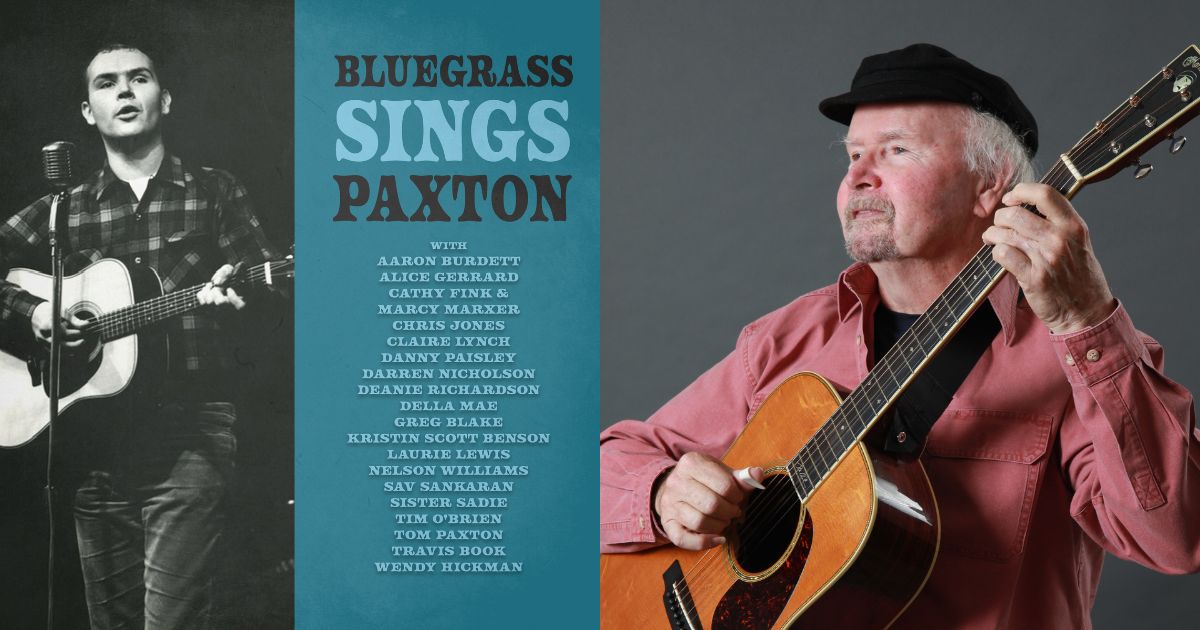
There is no disputing that Tom Paxton is a living music legend. In the early 1960s, he was a major player in the vibrant Greenwich Village folk scene, along with the likes of Bob Dylan, Phil Ochs, and Peter, Paul & Mary. The writer of such classic tunes as “Last Thing On My Mind,” “Bottle Of Wine,” “I Can’t Help To Wonder (Where I’m Bound),” and “Ramblin’ Boy,” Paxton has earned Lifetime Achievement Awards from the GRAMMYs, ASCAP, and the BBC. The beloved songwriter has had his tunes covered by a wide spectrum of acts, ranging from Harry Belafonte and Neil Diamond to the Pogues and Norah Jones. While several fellow singer-songwriters (notably Carolyn Hester and Anne Hills) have devoted entire albums to Paxton music, it took a group of admiring bluegrass musicians to deliver the first multi-artist tribute album of his songs.
Bluegrass Sings Paxton, which came out August 30 on Mountain Home Music Company, offers an impressive lineup of contributors that cuts across several generations of bluegrass musicians. Performers include celebrated acts, such as Alice Gerrard, Claire Lynch, Laurie Lewis, and Tim O’Brien along with younger stars, like Sister Sadie, Della Mae, Steep Canyon Rangers’ singer/guitarist Aaron Burdett, Unspoken Tradition’s Sav Sankaran, and current IBMA Male Vocalist of the Year Greg Blake.
Paxton, speaking to BGS from his home in Virginia, said that he had a mostly hands-off role in the making of Bluegrass Sings Paxton. “I just sat on the sidelines in amazement”; however, he confided, “I was just blown away” after listening to the entire album for the first time. The 86-year-old singer-songwriter was also being a little modest about his own contributions. This collection contains two new Paxton tunes, and he sings on a pair of tracks as well.
The genesis for Bluegrass Sings Paxton started with a conversation that GRAMMY-winning musician/producer Cathy Fink had some years ago with Paxton, who she has worked with since the early 1980s and has known even longer. “I know Tom’s catalog really well and have often thought there was great material there for bluegrass,” she shared with BGS. “I could hear this album before we even began.” The idea further evolved a while later when Fink brought up the idea to award-winning songwriter, producer, and Mountain Home executive Jon Weisberger at IBMA a few years back, and he immediately came aboard.
Several of Paxton’s tunes have been very popular in bluegrass circles over the years. A half century ago, Kentucky Mountain Boys covered “Ramblin Boy” while the Dillards and the Kentucky Colonels were among those who have recorded “The Last Thing On My Mind.” More recently, “I Can’t Help But Wonder (Where I’m Bound)” was a hit for Ashby Frank and “Leavin’ London” is a live staple of Billy Strings’ concerts. However, both Fink and Weisberger thought the project was a terrific way to get Paxton’s deep songbook better known in the bluegrass world. As Weisberger explained, “I had no doubt that there were more [songs] – both already written and yet to be written – that would work well within bluegrass, and that bringing them to light would encourage artists looking for songs to look to his catalog.”
Several acts came into the project with specific songs that they wanted to do. Blake, who fatefully was sitting at the same table with Weisberger and Fink at IBMA, quickly put dibs on “Leaving London.” Danny Paisley, who remembered his dad, ’80s bluegrass star Bob Paisley, taking him to the Philadelphia Folk Festival as a child and seeing Paxton play there, requested “Ramblin’ Boy,” because it was a song his father had performed. “I Can’t Help But Wonder (Where I’m Bound)” was already part of Della Mae’s live repertoire, so doing that tune was a natural fit for them.
When it came to what songs other acts took on, Fink gave the performers a lot of free rein to delve into Paxton’s vast treasury of tunes, a decision that worked out wonderfully. “Each artist made the song their own and it really worked,” she confided. Claire Lynch chose “I Give You The Morning” and Alice Gerrard selected “The Things I Notice Now” from Paxton’s 1969 The Things I Notice Now album. Chris Jones picked “The Last Hobo” from 1986’s And Loving You. Paxton’s 2002 album, Lookin’ for The Moon, was the source for both Aaron Burdett’s selection of and Sav Sankaran’s rendition of the title track. Laurie Lewis, meanwhile, found “Central Square” from 2015’s Redemption Road. In case you haven’t done the math, these songs alone cover nearly 50 years of Paxton’s recordings.
Paxton, too, was thrilled with the selections, proclaiming “I liked every one of the songs that they chose.” While he expected tunes like “Can’t Help But Wonder,” “Ramblin’ Boy,” and “The Last Thing On My Mind” would be part of the set, Paxton said he “was just tickled to death” over the inclusion of such lesser known numbers as “Central Square,” “The Same River Twice,” and “The Last Hobo.”
Chris Jones revealed to BGS that he picked “The Last Hobo” because the tune “felt like a classic Tom Paxton third-person story song, sort of in the spirit of ‘Ramblin’ Boy,’ in a way. It has a kind of tenderness that is so often present in Tom’s songs.”
Jones was also a member of the de facto “house band” that played on the majority of Bluegrass Sings Paxton’s tracks. A secret weapon behind the album, this team of bluegrass all-stars includes IBMA award-winners banjo player Kristin Scott Benson (the Grascals), fiddler Deanie Richardson (Sister Sadie), and Jones on guitar, along with mandolinist Darren Nicholson (formerly of Balsam Range), bassist Nelson Williams (Chris Jones & the Night Drivers, New Dangerfield) and harmony singers Travis Book (The Infamous Stringdusters) and Wendy Hickman.
Jones felt that everyone “clicked well together” and gave the music “a natural sound, which helped give the impression that these were bluegrass songs to begin with, even if they weren’t.” He also credited producers Weisberger and Fink for “coming up with arrangements that really fostered that feeling, too.”
Bluegrass Sings Paxton opens with one of the tunes that Paxton sings on. He was able to join Della Mae on “I Can’t Help But Wonder (Where I’m Bound)” as the band was recording in Maryland, not too far away from Paxton’s home base in Virginia.
“We did it live in the studio. No overdubs or anything,” he revealed. “I had a ball doing that track with them.” Paxton also sang with long-time collaborators Cathy Fink & Marcy Marxer – the three did a double album, All New, together in 2022 – on the up-tempo love tune, “All I Want,” which is also one of the two of new Paxton tunes on the project. The other new number, “You Took Me In” is a co-write with Tim O’Brien and his wife Jan Fabricius. One of the first tunes he wrote with the couple, Paxton said that “it had to be chosen. It’s such a good song.” He described it as “gospel without being gospel,” adding, “I took the literal gospel out of it and kept everything else.”
Fink & Marxer and O’Brien & Fabricius are among the handful of musicians that the still highly-active octogenarian collaborates with via Zoom each week. Folk luminary John McCutcheon, Colorado troubadour Jackson Emmer, and the rising Pittsburgh band Buffalo Rose are also among his regular online songwriting coterie. Paxton says he sometimes writes three to five songs a week. “Lots of folks would retire to the golf course at this point in their lives,” Fink marveled, “but Tom is driven by writing the next song.”
Over the years, Paxton has penned hundreds and hundreds of songs, and more than 60 albums bear his name, beginning with 1962’s I’m the Man That Built the Bridges that was recorded live at New York City’s fabled Gaslight Club. Even from the start, Paxton filled his records predominately with originals, which wasn’t typical at that time. Dylan’s 1962 debut, for example, contained only two originals. Dave Van Ronk, in fact, famously proclaimed in his memoir that it was Paxton who kicked off the folk scene’s “New Song Movement,” not Dylan as often credited.
The best-known songs from his debut, somewhat curiously, are three tunes that might best be described as children’s music: “My Dog Is Bigger Than Your Dog,” “Marvelous Toys,” and “Going To The Zoo.” Writing and performing kids songs was not an isolated occurrence for Paxton, who went on to release several children’s albums, including the GRAMMY-nominated Your Shoes, My Shoes, and to write books for kids. Paxton very much sees himself as continuing the legacy of his heroes, Woody Guthrie, Pete Seeger, and The Weavers – artists who performed all types of songs, from story songs and ballads to children’s tunes and political songs.
“Everything I do is really rooted in traditional music,” Paxton elaborated during his phone interview. “I’m always going back to that well of traditional folk music, Appalachian music, cowboy music. It’s a wonderful tradition – great, great songs, and I just keep trying to write songs that feel the way they felt.”
Paxton cites one specific musician – the late, great Doc Watson – to explains his “best route” to bluegrass music. He saw Watson when Ralph Rinzler first brought him to play in New York City and came away so impressed. “I was very fond of him and adored his music. I think he liked me, too. Doc recorded many of my songs over the years.” He also remembered sharing a bill with Watson once in Tampa and being brought out on stage to perform “Bottle Of Wine.” Paxton was rather intimidated over Watson’s and his guitarist Jack Lawrence’s virtuosity. “Why do I feel like I’m wearing painter’s gloves,” he recalled saying while admitting “it was a lot of fun.”
Weisberger describes Paxton’s place in American music as a unique one. “He was an integral part of the transition from wholly traditional folk music to the more modern conception of the field, with its inclusion of performing songwriters, but where a lot of his contemporaries moved on in one way or another, he went deep rather than broad… I think that’s what makes so many of his songs sound so natural and organic and almost effortless. That is an artistry that is really easy to overlook or under-appreciate, so I’m happy to have put together a collection that will, I hope, bring more attention and appreciation to that still ongoing legacy.”
When asked how his songwriting has changed over the years, Paxton replied that he hopes it’s deeper and more developed, adding rather humbly that “I’m still the same writer I was when I wrote ‘Last Thing On My Mind.’ It’s like a farmer who puts in the same crop every year. It’s the same farmer.”
Photo courtesy of Fleming Artists. Album cover courtesy of Crossroads Label Group.
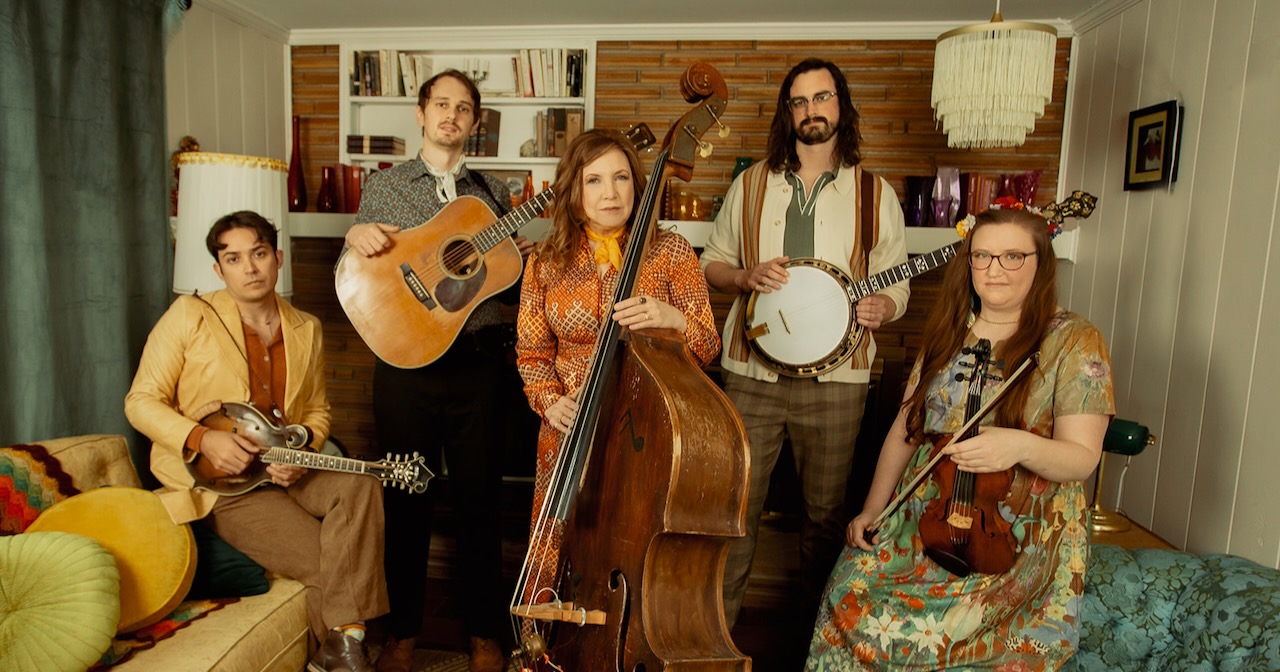
Missy Raines is one of the winningest musicians in the 30+ year history of the International Bluegrass Music Association’s annual awards. She’s a 10-time recipient of the Bass Player of the Year trophy and has taken home a couple of Collaborative Recording of the Year and Instrumental Recording of the Year awards, too. She’s been an omnipresent creative in bluegrass, in Nashville, and in American roots music as a whole for the majority of her life. Even so, many are heralding her new album, Highlander, made with her new band, Allegheny, as a “return to bluegrass.” The thing is, Raines never left.
It’s true that she spent more than a handful of years touring with an experimental, new acoustic-inflected string band, The New Hip, intentionally devoting more than a decade to highlighting her songwriting, her role as front person, and her smoky, patina-ed alto. Throughout that time, no matter how far afield the music may have explored beyond the stone walls and steel bars of bluegrass, Raines always had both feet firmly planted in the genre. While fronting and touring the New Hip, she remained a mainstay at bluegrass and acoustic camps across the country, founded and performed with several bluegrass and old-time supergroups, and “moonlit” as a bassist-for-hire for a laundry list of notable bluegrass, country, and Nashville stars.
So, however exciting it may be – and, it is truly, very exciting – that Raines and Allegheny have intentionally guided her sound back to traditional, straight ahead, mash-tastic bluegrass for her new album, Highlander, it’s important to remind Raines’ audience, the new initiates and diehards alike, that whatever music may emanate from the strings of her upright bass or from her tender and expressive voice, she has always been and will always be bluegrass. And effortlessly so. Highlander isn’t so much a return to the genre as it is a reminder that Missy Raines’ goal in music, first and foremost, is to make great bluegrass music for great bluegrass folks – her kind of folks.
This is your first album with the new band and I wanted to talk about how your creative process and how your collaboration process looks nowadays. I sense a lot of changes in how you’ve approached making music as an ensemble, but I wonder how it has felt to you, on the inside of the sonic and lineup shift from the last album to this new lineup, with Missy Raines & Allegheny?
Missy Raines: The collaboration process we have within this band, Allegheny, and for this album is the collaboration process that I’ve always dreamed of and wanted to have in a band setting. You know, I wanted to have my own band for years and years and then, after I waited a really long time, when I finally did do it in like 2009, I had in my mind that it would be like this, that it would be this collaborative thing and I’d have people who were invested. The short story is that I have that now, and that’s the beauty of it.
In the past, I did have elements of that, for sure. There were definitely folks who came into the different configurations that I had who were invested and collaborative. [That] was definitely there, but I will say, to have a moment in time when you have actually like five people sitting in the room and they’re all equally invested – that is pretty magical.
So yeah, the process for this record was very different than for Royal Traveller, because on Royal Traveller I didn’t really have a band when I started that recording. I was sort of ending the New Hip and I knew that that record wasn’t going to have the sound that the New Hip had, it was going to be very mixed, in terms of styles. There were all these different guests on every single song and there was no one solid backing band, because I actually wasn’t touring at the time. All of the main decisions and stuff were basically made by me and [producer] Alison Brown.
I think part of why this album feels so strongly like a band album is not just because of the Missy Raines & Allegheny rebrand, but also because you’ve been playing with this lineup – Ben Garnett, Eli Gilbert, Ellie Hakanson, and Tristan Scroggins – now for several years. This project feels like it was made by a band. And I think part of that feeling comes from you having worked together for as long as you did before you made the album.
I think it does. I don’t know if it also has anything to do with the fact that me, just by default– yes I’m the leader, but I’m also a bass player and my tendency and my way of thinking about any band is I come into it as a support player, because that’s what I’ve done all my life. This came up the other day online, because we’re getting lots of really great reviews from the record. Like one reviewer called my “backing” band “magnificent.” They are magnificent, but I don’t think of them as a backing band. I told them that and of course, Tristan said, “Well, that’s what we are.” And I was like, “No!” I still don’t think of [the band] that way. I don’t know if it’s just because I’m maybe still a little uncomfortable being out front, or it’s a combination of things.
It’s also just been this bass player mentality that – not that bass players can’t be out front, it’s just like, “No, we’re making this stuff together. We’re making this together.” And so I don’t see it as me standing up there doing something and they’re backing me up. I feel that if I’m not playing with them and they’re not playing with me, then we have nothing.
What was the process like as you sat down with this sequence of songs and were imagining who you wanted to have guest on the album? How did you navigate that with your producer, Alison Brown? This is a stout lineup of special guests appearing with you and Allegheny.
The only thing I knew in the very beginning, before I even talked to Alison about making the record, was that I wanted to do “These Ole Blues” with Danny Paisley. [Laughs] That was already in my head. I had this vision, I heard Loretta Lynn’s version of it and then I also knew that I wanted to change it a bit to make it more bluegrass. And it came out exactly the way I was hoping. I wanted to sing it with Danny Paisley. That was an easy one. Well, all of them were easy, because when we sat down we just listened, thought about the song, and thought who would be the right singer. And, who would also represent what it was that I was trying to say with this record.
Like, Dudley Connell on “Ghost Of A Love.” Of course, he’s playing with the Seldom Scene these days – he’s just so good that he can do anything. And no one loves the Seldom Scene more than me, but what I was looking for was Johnson Mountain Boys Dudley. [The Seldom Scene] was one of the big inspirations to this band, but so were the Johnson Mountain Boys and nobody captures that better than Dudley.
And I did want to say something about Laurie Lewis, too.
I wanted to ask you about “I Would Be a Blackbird,” the track that features Laurie, so yes, please, let’s definitely get into that!
So, Nathan Bell, he’s a friend, a great songwriter, and he wrote “American Crow” [from 2013’s New Frontier]. He wrote “I Would Be a Blackbird.” He’s written several songs with bird themes, but this song, he actually sent to me literally years ago and I loved it, but I couldn’t make it happen before, because it just didn’t fit whatever I was doing at the time. But it found its way to this band and it felt right.
Then again, when we thought about who I should sing with it, I thought of Laurie Lewis and it was perfect. I also really wanted Laurie to be part of this record because she was so much a part of Royal Traveller, she wrote “Swept Away” and it was like the star of that album. Laurie said to me, “You need to record ‘Swept Away,’ you should do that! It would be a great song for you.” So that felt extra special, that she thought of me for that.
When I was just starting out to play, when I was a teenager and stuff, I didn’t really know much about her music, because at that time I was such an east coaster and she was such a west coaster. I didn’t really know much about what was going on out there. But then soon after that, when I started hearing more of her music, got to meet her, and heard Love Chooses You, that was one of the first moments that I had in my mind that made me go, “Oh, you know… I would like to do something like this on my own someday.”
And then she became a really dear friend! Anyway, it was just really important to have her on this record.
I wanted to ask you about “Who Needs A Mine?” Not only because of Kathy Mattea joining you on that track, but also because of your ties to West Virginia and the very ideas behind Highlander. When I first heard you play that song probably a year and a half ago now, I think my jaw hit the floor. It’s such a perfect song and it’s so clearly in this tradition of women songwriters from West Virginia, from Central Appalachia, and the Mid-Atlantic who use folk songs and folk lyrics as a vehicle to speak truth to power. For me, it’s the focal point of the record. I think it’s one of the best socially aware and politically aware bluegrass songs that’s ever been written, in my humble opinion.
Wow. Well, your humble opinion means a lot over here. So, thank you.
I definitely thought of Kathy immediately, because of the West Virginia part, but also because she has championed this drug crisis for a long time. Her own life has been affected by it, personally, with family members. She speaks openly about that and has done a lot of really great things. That resonated with me.
One of the really extra special things that happened the day that Alison brought us together in the studio, I walked in and [Kathy] was there and she looked at me and she said, “I really, really love this song.”
I felt the sincerity in her voice. Like she said, it is really, really meaningful and powerful. I was just overwhelmed with that. Then she also said, “And it’s really nice to hear another alto singer!” [Laughs] I thought, “Well, that’s cool that you would even put me in the same breath as you.” I’ve always been drawn to singers like her, with the range of her voice and stuff. It seemed like a very natural fit for the song.
And as for me wanting to write it, I’ve been thinking about this song for probably the last five, six years or maybe a little bit more. I tried to write this song on my own, right from the beginning, but I realized that I was just way too close to it and I needed to have some perspective. I still wanted to have a bit of control over it, because I knew what I wanted from it. But I realized I also needed somebody to give me some perspective. So, I thought of who I knew that I would like to write with and who would get it and come from that same place, and I very wisely chose Randy Barrett. He was absolutely perfect to help me write that.
Of course, you know I cited Hazel, because she’s such a hero and my ties to West Virginia will be forever. I honestly don’t ever see myself living back there ever again, but on the other hand, I will always cherish all the things precious from my early life there. This issue is just so incredibly important to me and the reasons it happened – that people can Google, as to why this is such a horrific and atrocious thing. And it wasn’t just by accident, [opioid marketing] was actually targeted.
I’m glad you bring up Hazel. I think she is such an important touch point for this song. And I also think of Jean Ritchie, but there’s also this current moment happening where songwriters and roots musicians from rural places are taking up similar issues in their music. I’m thinking of Dori Freeman’s “Soup Beans Milk and Bread,” of Willi Carlisle’s “When the Pills Wear Off.” I think that there’s this really important moment of songwriters telling stories about these regions that are critical and that are seeking justice and a better future, but are also approaching it from love.
There’s something really interesting about “Who Needs A Mine?” because it feels like there’s some sarcasm and sass in it, but I still sense that the song is very, very loving – even in the way that there’s bitterness and anger in it. Do you see that too?
I love that you bring that up, because I was just sitting here thinking that I grew up listening to Hazel and hearing her songs, mostly about poverty and about mining and black lung and all of the travesties that came with the mining industry. While I knew that was part of my state’s history, it really wasn’t part of my own story, because my family weren’t miners. They were farmers and they were railroad men, but they weren’t actually miners.
The part of West Virginia where I grew up had more strip mining than it did deep coal mining. And so there was some level of understanding for me, but at the same time, I was fascinated. When I was a teenager, I used to read all the stories about the mines and unionization – and Mother Jones. I was really into that. And again, one of the reasons that I loved Hazel is because she championed all of that so much. At the same time, it wasn’t my story. When I started becoming emotionally involved with what was happening in the world today, seeing the West Virginia that I knew and the devastation when I go back home to see my family. I hear the stories about the drug infestation and all that. I see the poverty and see the children and all those things. Then I started getting angry and started getting upset about it. I realized this is my story. This is my time. This is what’s happening now. We all thought that the mines were going to be the worst thing that ever happened to us, but we at least kind of lived through that. And in many ways, we triumphed through that. But now, this is more powerful – a pill that makes you feel like nothing, a pill that takes you out of reality is way more powerful than anything else.
I love the joke going around regarding this lineup of your band being “Mashy Raines.” I think it’s hilarious.
[Laughs] Thank you.
I think it’s interesting, because it seems like people use that joke to note how trad this band sounds, because you’ve spent a lot of time dabbling on the fringes of bluegrass. So it’s notable that you’re making bluegrass straight down the middle with this lineup. I think part of why it works so well is because you’re using this really trad aesthetic with such emotionally intelligent songs.
That is exactly what I was trying to go for, to have this hopefully artistically and intellectually interesting subject matter on top of really traditional sounds and aesthetic. That’s the most fun in the world to do, and hopefully you get some messages across without folks even knowing it.
I understand why some people might think this is new for me or something, the mashing thing, but we, of course, know that it’s not. I’ve been doing this for a long time, but it’s just that a lot of the mashy stuff or the real traditional stuff I started out with. I was doing it back then, you know, when not everything that anyone ever did was recorded and put online. There’s so much of that in my history that only the people who were there will remember. When I finally did start to make records and stuff, either on my own or with other people, yeah, it tended to be a lot more explorative, for sure. I had already played a lifetime of traditional bluegrass before I even made my first album.
The New Hip was bluegrass, but I never tried to make it be bluegrass. I just knew that I was bluegrass and I was a bluegrass bass player and I was playing this other kind of music. The entire time, I was thinking of all of it as a bluegrass bass player. In my mind, I never left bluegrass, but I do understand how it was perceived that way by some.
When Highlander started coming out, I started seeing the stuff being written and they were using this “return to bluegrass” thing. I fought it a little bit, at first. But now I’m like, “It’s okay, because you’re right.” This is unique. This band and this sound, it is unique. In that regard, it is a definite return to something that I haven’t done for a long time – with a specific sound that we have now. It’s exactly what I was looking for, but because of the people involved, it’s better than I ever imagined it could be.
Artist:Missy Raines & Allegheny, featuring Danny Paisley with Darol Anger, Shad Cobb, and Ellie Hakansan Hometown: Short Gap, WV Song: “These Ole Blues” Album:Highlander Release Date: Fall 2023 Label: Compass Records
In Their Words: “I found this gem of a tune while taking a deep dive into Loretta Lynn’s catalog. Loretta wrote the perfect bar room country shuffle, but I immediately thought it could be a great bluegrass crooner and I knew exactly who I wanted to sing it with – Danny Paisley! I grew up listening to Danny and his father, Bob Paisley, sing together. Danny’s high lonesome edge defines a lot of what is bluegrass to me. Recording this duet with him was a personal bucket list item checked off and everything about the song fits perfectly into the theme of my new album, Highlander, which should be out later this year.
“The project is about paying homage to the earliest sounds that inspired me and this version of ‘These Ole Blues’ feels both authentic and genuine to my very core. Rounding out the track are the triple fiddles of Darol Anger, Shad Cobb, and Ellie Hakanson as well as the other members of my band, Allegheny: Tristin Scroggins (mandolin), Eli Gilbert (banjo) and Ben Garnett (guitar).” – Missy Raines
Artist:Danny Paisley Hometown: Landenberg, Pennsylvania Song: “What Crosses Your Mind” (Featuring Sage Palser) Release Date: February 23, 2023 Label: Pinecastle Records
In Their Words: “‘What Crosses Your Mind’ is a song I heard last year at IBMA, and immediately fell in love with. Sage Palser and David Stewart both wrote it. I wanted to capture the classic style of Porter and Dolly, Tammy and George, etc. So I wanted Sage to sing it with me. She really knocked it out of the ballpark. I’m just so happy with the way it turned out.” — Danny Paisley
“‘What Crosses Your Mind’ was a huge accomplishment for David Stewart and I to finish. Recording it with Danny Paisley just put the cherry on top! It is such a joy to get to sing with one of the greats in the bluegrass world on this powerful ballad of a love lost!” — Sage Palser
Nominees for the 32nd Annual IBMA Bluegrass Music Awards presented by Yamaha were announced today, with Balsam Range, Billy Strings, Doyle Lawson & Quicksilver, Del McCoury Band, and The Po’ Ramblin’ Boys landing in the top category of Entertainer of the Year. Alison Krauss, Lynn Morris, and the Stoneman Family will be inducted into the Bluegrass Music Hall of Fame during the show as well.
Five people who have made significant contributions to bluegrass music were named as recipients of the IBMA Distinguished Achievement Award: industry leader Nancy Cardwell Webster, broadcaster Lee Michael Demsey, Czech luthier/performer Jaroslav Prucha, musician/performer Cliff Waldron, and Boston Bluegrass Union’s Stan Zdonik.
The IBMA Bluegrass Music Awards on Thursday, September 30, at the Duke Energy Center for the Performing Arts in Raleigh, North Carolina. Awards are voted on by the professional membership of the International Bluegrass Music Association (IBMA), the professional nonprofit association for the bluegrass music industry.
ENTERTAINER OF THE YEAR
Balsam Range Billy Strings Doyle Lawson & Quicksilver The Del McCoury Band The Po’ Ramblin’ Boys
MALE VOCALIST OF THE YEAR
Ronnie Bowman Del McCoury Danny Paisley Junior Sisk Larry Sparks
FEMALE VOCALIST OF THE YEAR
Brooke Aldridge Dale Ann Bradley Sierra Hull Molly Tuttle Rhonda Vincent
VOCAL GROUP OF THE YEAR
Darin & Brooke Aldridge Balsam Range Blue Highway Doyle Lawson & Quicksilver Sister Sadie
INSTRUMENTAL GROUP OF THE YEAR
Appalachian Road Show Billy Strings Michael Cleveland & Flamekeeper The Infamous Stringdusters The Travelin’ McCourys
NEW ARTIST OF THE YEAR sponsored by Ron & Nancy McFarlane
Appalachian Road Show Carolina Blue Gina Furtado Project High Fidelity Merle Monroe
SONG OF THE YEAR
“Banjo Player’s Blues” Artist: High Fidelity Songwriter: Charlie Monroe Producers: Jeremy Stephens, Brad Benge Label: Rebel Records
“Hitchhiking to California” Artist: Alan Bibey & Grasstowne Songwriters: Wes Golding/Alan Bibey/Jerry Salley Producers: Jerry Salley, Ron Stewart, Dottie Leonard Miller Label: Billy Blue Records
“Just Load the Wagon” Artist: Junior Sisk Songwriter: J.R. Satterwhite Producers: Amanda Cook, Junior Sisk, Mark Hodges Label: Mountain Fever Records
“Leaving on Her Mind” Artist: Doyle Lawson & Quicksilver Songwriter: Jack Clement Producer: Rosta Capek Label: Billy Blue Records
“Richest Man” Artist: Balsam Range Songwriters: Jim Beavers/Jimmy Yeary/Connie Harrington Producer: Balsam Range Label: Mountain Home Music Company
ALBUM OF THE YEAR (Tie)
Bluegrass 2020 Artist: Scott Vestal, Patrick McAvinue, Cody Kilby, Dominick Leslie, Curtis Vestal Producers: Scott Vestal, Ethan Burkhardt, Lonnie Lassiter Label: Pinecastle Records
Distance and Time Artist: Becky Buller Producer: Stephen Mougin Label: Dark Shadow Recording
Fall Like Rain Artist: Justin Moses Producer: Justin Moses Label: Mountain Fever Records
Industrial Strength Bluegrass: Southwestern Ohio’s Musical Legacy Artist: Various Artists Producer: Joe Mullins Label: Smithsonian Folkways Recordings
Load the Wagon Artist: Junior Sisk Producers: Amanda Cook, Junior Sisk, Mark Hodges Label: Mountain Fever Records
Still Here Artist: Steve Gulley & Tim Stafford Producers: Steve Gulley, Tim Stafford Label: Mountain Home Music Company
BANJO PLAYER OF THE YEAR
Gena Britt Gina Furtado Rob McCoury Kristin Scott Benson Scott Vestal
BASS PLAYER OF THE YEAR
Mike Bub Todd Phillips Missy Raines Mark Schatz Marshall Wilborn
FIDDLE PLAYER OF THE YEAR
Jason Carter Michael Cleveland Stuart Duncan Bronwyn Keith-Hynes Deanie Richardson
RESOPHONIC GUITAR PLAYER OF THE YEAR
Jerry Douglas Andy Hall Rob Ickes Phil Leadbetter Justin Moses
GUITAR PLAYER OF THE YEAR sponsored by Yamaha
Trey Hensley Billy Strings Bryan Sutton Molly Tuttle Jake Workman
MANDOLIN PLAYER OF THE YEAR
Jesse Brock Sam Bush Sierra Hull Ronnie McCoury Tristan Scroggins
COLLABORATIVE RECORDING OF THE YEAR
“Birmingham Jail” Artists: Barry Abernathy with Vince Gill Songwriter: Traditional Producers: Barry Abernathy, Jim VanCleve, Dottie Leonard Miller Label: Billy Blue Records
“In the Resurrection Morning” Artists: Sacred Reunion featuring Doyle Lawson, Vince Gill, Barry Abernathy, Tim Stafford, Mark Wheeler, Jim VanCleve, Phil Leadbetter, Jason Moore Songwriter: Mark Wheeler Producers: Barry Abernathy, Jim VanCleve, Dottie Leonard Miller Label: Billy Blue Records
“My Baby’s Gone” Artists: Justin Moses with Del McCoury Songwriter: Dennis Linde Producer: Justin Moses Label: Mountain Fever Records
“Tears of Regret” Artists: High Fidelity with Jesse McReynolds Songwriters: Jesse McReynolds/Lucille Hutton Producers: Jeremy Stephens, Corrina Rose Logston, Brad Benge Label: Rebel Records
“White Line Fever” Artists: Bobby Osborne with Tim O’Brien, Trey Hensley, Sierra Hull, Stuart Duncan, Todd Phillips, Alison Brown Songwriters: Merle Haggard/Jeff Tweedy Producers: Alison Brown, Garry West Label: Compass Records
INSTRUMENTAL RECORDING OF THE YEAR
“The Appalachian Road” Artist: Appalachian Road Show Songwriter: Jim VanCleve Producers: Jim VanCleve, Barry Abernathy, Appalachian Road Show, Dottie Leonard Miller Label: Billy Blue Records
“Foggy Mountain Chimes” Artists: Scott Vestal, Patrick McAvinue, Cody Kilby, Dominick Leslie, Curtis Vestal Songwriter: Earl Scruggs Producer: Scott Vestal Label: Pinecastle Records
“Ground Speed” Artists: Kristin Scott Benson, Skip Cherryholmes, Jeremy Garrett, Kevin Kehrberg, Darren Nicholson Songwriter: Earl Scruggs Producer: Jon Weisberger Label: Mountain Home Music Company
“Mountain Strings” Artist: Sierra Hull Songwriters: Frank Wakefield/Red Allen Producer: Joe Mullins Label: Smithsonian Folkways Recordings
“Taxland” Artist: Justin Moses with Sierra Hull Songwriter: Justin Moses Producer: Justin Moses Label: Mountain Fever Records
GOSPEL RECORDING OF THE YEAR
“After Awhile” Artist: Dale Ann Bradley Songwriter: Public Domain Producer: Dale Ann Bradley Label: Pinecastle Records
“Grit and Grace” Artist: Balsam Range Songwriters: Ann Melton/Milan Miller/Beth Husband Producer: Balsam Range Label: Mountain Home Music Company
“Hear Jerusalem Calling” Artist: Joe Mullins & The Radio Ramblers Songwriters: Marty Stuart/Jerry Sullivan Producers: Joe Mullins, Dottie Leonard Miller Label: Billy Blue Records
“In the Resurrection Morning” Artists: Sacred Reunion featuring Doyle Lawson, Vince Gill, Barry Abernathy, Tim Stafford, Mark Wheeler, Jim VanCleve, Phil Leadbetter, Jason Moore Songwriter: Mark Wheeler Producers: Barry Abernathy, Jim VanCleve, Dottie Leonard Miller Label: Billy Blue Records
“When He Calls My Name” Artist: Alan Bibey & Grasstowne Songwriters: Alan Bibey/Ronnie Bowman Producers: Alan Bibey & Grasstowne, Ron Stewart, Jerry Salley, Dottie Leonard Miller Label: Billy Blue Records
Photo of Billy Strings: Jesse Faatz Photo of Alison Krauss: Capitol Records Photo of Molly Tuttle: Zach Pigg & Chelsea Rochelle
Welcome to the BGS Radio Hour! Since 2017, this weekly radio show and podcast has been a recap of all the great music, new and old, featured on the digital pages of BGS. This week, we bring you new music from both our Artist of the Month, Allison Russell, off of her brand new album Outside Child, and from the late Tony Joe White, too — plus much more! Remember to check back every week for a new episode of the BGS Radio Hour.
Moving across the country is stressful enough on its own. At the end of a 21-year marriage, Maia Sharp put her energy directly into working on her new Nashville home — painting one room, then another, and another. She took the idea to her co-writer on “Things to Fix,” relating the things that could have been fixed in her relationship to what she was fixing in the house.
Singer-songwriter Last Year’s Man (Tyler Fortier) explained his new track “Still Be Here” to BGS, relating, “I think we’re all eager for life to get back to what it was in some way or another and this is a love song built out of the idea that it will.”
Casey Driessen’s recent project Otherlands: A Global Music Exploration, is a self-produced travelogue of on-location recordings, short films, and essays that documents collaborations with masters of regional music in Spain, Ireland, Scotland, India, Finland, and Japan, where he recorded this bluegrass standard with his friend and mandolinist Taro Inoue.
Legendary country singer and songwriter Tony Joe White, who penned hits like “Polk Salad Annie” and “Rainy Night in Georgia,” passed away in 2018, leaving behind quite a legacy of music. However, the material didn’t quite stop after he died. His new posthumous record, Smoke From the Chimney, was recorded a year later in 2019, as producer Dan Auerbach built the music around voice and guitar demos that White had left behind.
Carsie Blanton wrote “Mercy” for her husband Jon, who helped her find out that love can be a gentle force that allows us to become more ourselves: “Once I discovered that, I was able to envision a whole world of love; a world that’s less about control and more about compassion.”
“Sowin’ Seeds,” the latest track from Americana singer-songwriter Angela Autumn, explores the could-be life of a musician, one of imagined ease and free from sacrifice.
Up next is Baltimore bluegrass royalty Danny Paisley with a track off of his newest record, Bluegrass Troubadour. Paisley started out performing in the Southern Mountain Boys with his father, Bob Paisley, and Ted Lundy. Years later, Danny formed the Southern Grass and performs with his own son as well as the sons of Ted Lundy. They’re a two-family, three generation band! Paisley is the most recent IBMA Male Vocalist of the Year, an award he’s received more than once. Listening to Bluegrass Troubadour, you can see why.
Singer-songwriter Beth Whitney wrote “I Go” inspired by her family’s tradition of taking backpacking trips and her favorite Wendell Berry poem, “The Peace of the Wild Things.” While she’ll be the first to admit that she doesn’t backpack gracefully, though as blisters and bug bites take hold, “as the wilderness takes me in, it starts to heal me somehow and I come into focus.”
Our current Artist of the Month, Allison Russell, has just released her stunning solo debut, Outside Child, an album that delves deeply into the extreme trauma she experienced in her youth spent in Montreal. We recently spoke with Russell about her experience making the record and the relief that songwriting, music and art can bring.
Mike Barnett, a Nashville-based fiddle player who recently released +1, an album of duets with friends and heroes, had originally slated the album for release in late summer 2020, but was delayed when he suffered a cerebral hemorrhage, putting his career and life on hold. Undergoing extensive rehabilitation, he posted a welcome update in February on his GoFundMe (support here) that a full recovery is still possible and likely! While we’re wishing Mike the best, and supporting his recovery through his GoFundMe, we’re also enjoying a “Piece O’ Shrimp” from his new album, featuring Alex Hargreaves.
UK-based folk duo Christina Alden & Alex Patterson wrote “Hunter” inspired by an unlikely friendship between a grey wolf and a brown bear, as captured by Finnish photographer Lassi Rautiainen.
Country singer-songwriter Charlie Marie recently joined BGS for a 5+5, that is 5 questions and 5 songs. She talks growing up listening to Patsy Cline, meditating before “big” shows, listening to Frank Sinatra at old school Italian restaurants, and more.
Photos: (L to R) Amy Helm by Ebru Yildiz; Allison Russell by Marc Baptiste; Tony Joe White by Leann White
This website uses cookies to improve your experience. We'll assume you're ok with this, but you can opt-out if you wish.AcceptRejectRead More
Privacy & Cookies Policy
Privacy Overview
This website uses cookies to improve your experience while you navigate through the website. Out of these, the cookies that are categorized as necessary are stored on your browser as they are essential for the working of basic functionalities of the website. We also use third-party cookies that help us analyze and understand how you use this website. These cookies will be stored in your browser only with your consent. You also have the option to opt-out of these cookies. But opting out of some of these cookies may affect your browsing experience.
Necessary cookies are absolutely essential for the website to function properly. This category only includes cookies that ensures basic functionalities and security features of the website. These cookies do not store any personal information.
Any cookies that may not be particularly necessary for the website to function and is used specifically to collect user personal data via analytics, ads, other embedded contents are termed as non-necessary cookies. It is mandatory to procure user consent prior to running these cookies on your website.