Old Spot’s Transatlantic Old-Time Playlist

(Editor’s Note: Below, United Kingdom-based old-time duo Old Spot – Rowan Piggott and Joe Danks – curate a Mixtape for BGS celebrating old-time music of the UK and Ireland. In order to include as many tracks as possible representing the vibrant string band scene in the UK, some selections are shared via Spotify and others via Bandcamp, depending on availability. We hope you enjoy listening and learning about transatlantic old-time – and that you support all roots musicians directly whenever possible.)

This is a Mixtape designed to highlight some of the amazing old-time string band music coming out of the UK and Ireland at the moment. Old Spot is a product of a vibrant scene, with the fiddlers and bands around us just as influential to us as their American counterparts.

This playlist looks to reflect some of the musicians performing string band music today, whilst shining a light on lesser-known gems. In compiling it, we’ve realized how much of the music we love on the old-time scene here isn’t on Spotify – if you love any of this music, buy it from the artists who made it! Anyway… less jawin’ more sawin’… – Old Spot

“Elzick’s Farewell” – Rattle On The Stovepipe

Rattle On The Stovepipe formed in 2003 and have played up and down the UK spreading old-time with band stalwarts Pete Cooper and Dave Arthur joined later by Dan Stewart – probably our favorite banjo player in the UK. This groovy version of “Elzick’s Farewell” is from their first album with Dan, No Use In Cryin’.

“Maggie Mead” – Follywren

Follywren is the brainchild of Bristol musician Kai Carter. We love lots of stuff that Kai does – his old-time trio is great and his original music (Kai & Hollis) is also a tour car staple. We have a real soft spot though for this amazing Follywren album, described as a kind of New Orleans-inspired electric string band. The tuba and electric banjo actually end up landing you somewhere between Clyde Davenport, Ghanaian Highlife, and Captain Beefheart’s Shiny Beast era… a good place to be.

“Rainbow” – Cath & Phil Tyler

Cath & Phil Tyler straddle the traditional and experimental music scenes in the UK and run the Newcastle sacred harp singers. Their albums are a treasure trove of ballads, with Phil’s mesmeric guitar and banjo playing supporting Cath’s one-of-a-kind, transportive voice. In some ways though, they are at their best a cappella where their background in shape note style really shines.

“Shanghai Skyline” – Jeri Foreman & Ruth Eliza

Jeri Foreman & Ruth Eliza are a powerhouse fiddle and banjo duo and you always want to see them on a festival lineup. Where these guys go, good tunes follow and their debut album shows off their musical connection beautifully. Recorded live, we’ve chosen one of Jeri’s tunes to highlight here.

“Chicken & Dumplings” – Ben McManus

Welsh musician Ben McManus is a multi-instrumentalist and promoter of old-time music in the UK. He’s schooled in the history of old-time and has done a number of interesting projects exploring the connections between Wales and Appalachia. He’s also interned at the Smithsonian – absolute dude. This is a laid-back clawhammer guitar and cello version of “Chicken & Dumplings,” a favorite of UK sessions. This record makes us miss Ben, and not just because he makes a mean Negroni.

“Dormae” – Hannah Read

Hannah Read’s first Fungi Sessions album is one of our favorite ever records as a band. We loved the sonics of it so much that we travelled to the studio in Scotland where it was recorded to make our new album. Hannah is now based in the US, but hails from Scotland and comes over frequently to collaborate with the incredible Michael Starkey. Hannah has collaborated with indie royalty Big Thief, Julien Baker, and Lucy Dacus, and you can hear this broader sonic palette across her output. But the real star of these Fungi Sessions albums is her incredible composition and the subtle magic of her bow arm.

“Wolves A’ Howlin'” – Kieran Towers & Charlotte Carrivick

Kieran Towers & Charlotte Carrivick can most often be found in the bluegrass scene in the UK, but came together for this one-off old-time album of absolute rippers. Charlotte, one of the best flatpickers in the UK, reveals herself to be one of the finest clawhammer players, and Kieran, best known for shredding bluegrass solos, turns into prime Bruce Molsky. Being able to just casually drop this album as a side project is outrageous. A frustratingly brilliant album from two undeniable musical geniuses.

“Glory In The Meeting House” – Ben Paley & Tab Hunter

In our opinion, Ben Paley is the jewel in the crown of British old-time music. He’s performed in loads of different lineups with musicians from the South of England – probably most notably The Long Hill Ramblers and with his dad Tom Paley of The New Lost City Ramblers. His fiddling is just as good as it gets, full of character, groove, and skill. On this record from 1999, he’s backed by Tab Hunter who is an old-time backer with taste, power, and pocket.

“Pterodactyl” – One Night Stringband (Old Spot, Jeri Foreman, Ruth Eliza)

We recorded this collaborative album with Jeri Foreman and Ruth Eliza over the course of one night and a bottle of whisky. We put it out the following day after some hungover mixing and now we perform sporadically as The One Night Stringband for square dances and concerts. We’ve got our seventh and eighth gigs together this summer!

There’s a kind of exploratory madness in these recordings and we all chose tunes we couldn’t get to hang quite right in our duos. There’s a raging version of Rhys Jones’ “I’ll Reap What I’ve Sown,” a version of “Josie-O,” and this, Ruth’s prog-y old-time wig-out “Pterodactyl.”

“Benton’s Dream” – High Strung Trio

From Cork, Ireland, this is one of our favorite old-time records of the last few years. From ex-members of the Grits & Gravy Stringband comes a new trio record of uncompromising ragers. Fiddle player (and luthier) Ian is an absolute machine on this record, laying down danceable bangers like it’s nothing. A great record to pick up new tunes or to power a long car journey, we can’t stop listening.

 “Two Little Sisters” – Sugarwell Hill

Sugarwell Hill is a trio from Leeds in Yorkshire. This is a new record from them that the scene has been anticipating for a while. Recorded confidently and simply, it’s a great snapshot of what is so magical about this laid-back band. “Two Little Sisters” features Simon’s relaxed vocal delivery and groovy banjo playing set against Mick’s gritty fiddle playing. We’re so lucky to have these three in the scene over here, and can’t think of a bad time to stick this beautiful new record on.

“Walk Me Round” – Rhona Dalling

Rhona is another Bristol-based fiddler, singer, and banjo player. This record is, so far, her only recorded output, but like so many of the best trad musicians, her best music happens in sessions and muddy fields. She has an incredible fiddle style, full of poise and effortless technique, and a beautiful voice. This quietly beloved record features a great waltz and her tune “Balfour Road,” which is played in trad sessions up and down the country and has really transcended the old-time scene, thanks to a recording by bal folk band Topette!. Perfect for a rainy day.

“Bear Creek” – Lankum

Whilst most of their repertoire is drawn from Irish folk, experimental trad behemoths Lankum often close their sets with this old-time tune. We couldn’t not include it after watching 20,000 people bouncing up and down to it at Glastonbury!

“Bowling Green” – Joe Mansfield & The Temperance Two

Bristol-based Joe Mansfield is another person you love to see walk through the door at a jam. He’s got an amazing repertoire and is a great hang. He’s got a new duo called The Low Line (watch that space), but he gigs out all the time with the Temperance Two. This is a great version of “Bowling Green.”

“The Roustabout Song” – Old Spot

We heard “The Roustabout Song” sung at a Morris Dance festival singing session. The song sounded distinctly American – a bit of digging led us to English folklorist Sandy Paton and, in turn, the songwriter Dillon Bustin. The song was written at Pinewoods Camp and according to Paton presented both a cappella and with a “lazy river” banjo accompaniment. We’ve done a new joyful fiddle-singing version, bringing out the song’s subtle political undertones. Unfortunately the parasols are twirling faster than ever.

“June Apple” – The Firecrackers

The Firecrackers are five of the UK old-time scene’s stalwarts, and they whip up a frenzy wherever they go. This album of field recordings is a good snapshot of them doing their thing and Benton Flippen’s “June Apple” is their signature tune.

One of the band’s fiddle players, Dave Proctor, edits Old Time News, the quarterly old-time magazine published by FOAOTMAD (Friends of American Old Time Music and Dance), a grassroots organization that has supported the growth of old-time in the UK so much over many years.


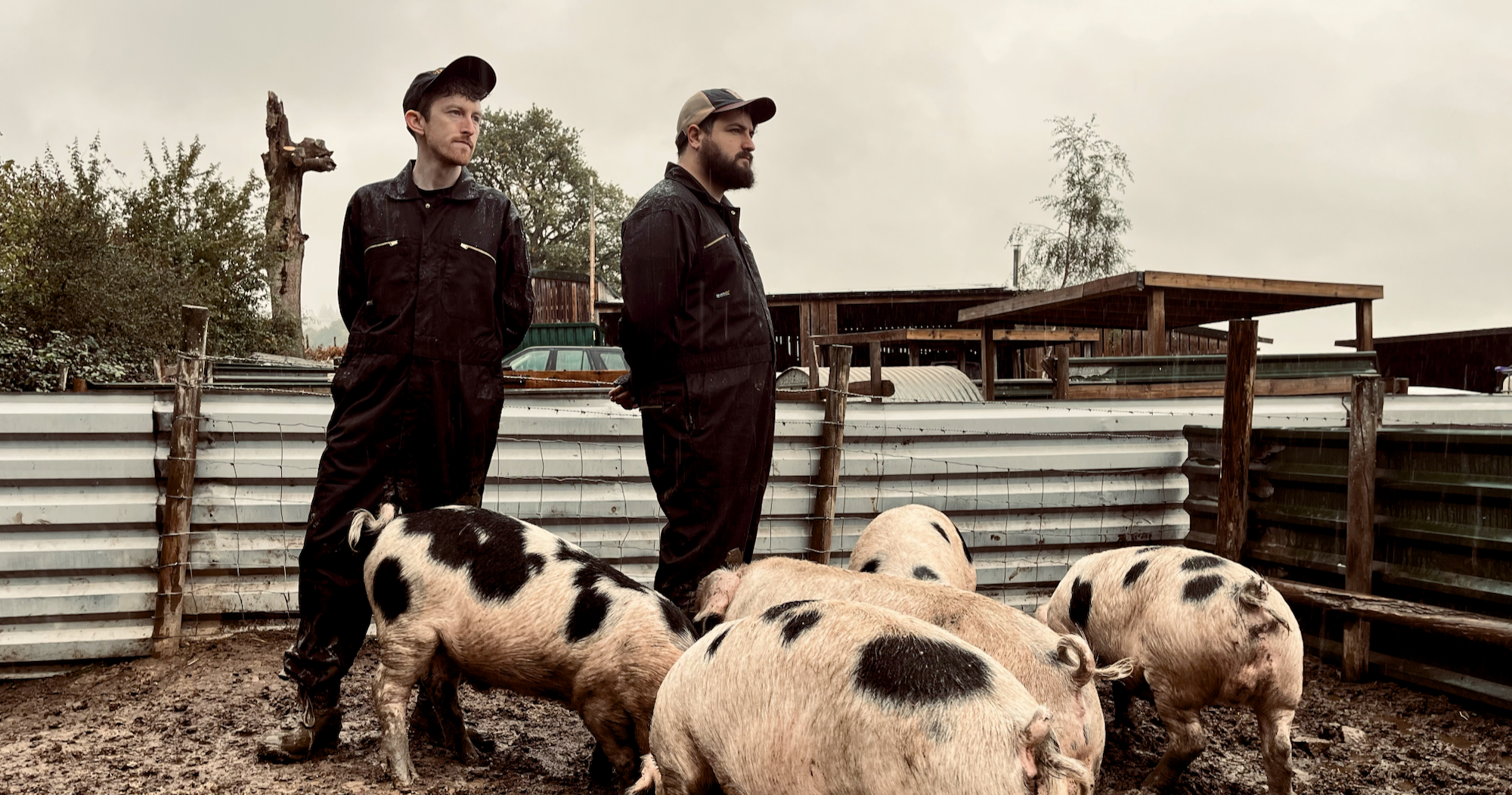
Photo courtesy of the artist.
What Is a Cowboy Ballad?

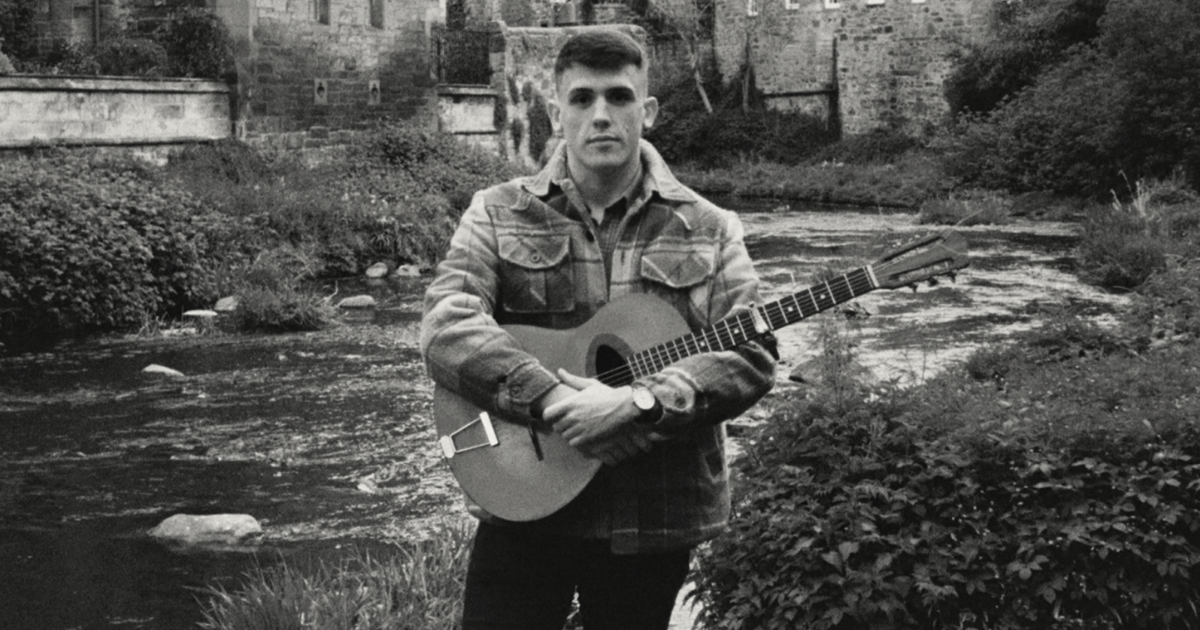
Sam Shackleton is a good example of the successful contemporary songwriter – a Scottish traditional folk singer with some formal education in musicology. He posts excellent, moody clips online; he goes viral enough to open for bands and artists like the Mary Wallopers or Willi Carlisle; and he releases music on Bandcamp. Though he could easily slide into a minor but culturally significant record label, he released his new album Scottish Cowboy Ballads and Early American Folk Songs independently; when a writer emails him, the answers come back on a plain Hotmail account, his avatar a famous 19th century painting of Robbie Burns.

There is something telling in this amalgamation: the 200 years of cowboy songs, the move between America and Scotland, the slightly old-fashioned email address. Even Shackelton’s very contemporary distribution methods envelop other kinds of tradition, the busker as troubadour or a work song floating across oceans. For example, when he sings “The Butcher Boy,” his framing includes that Mary Wallopers’ cover from a couple of years ago, the Sinead O’Connor version before that, and the Tommy Makem version before that. And he also echoes those who sang before them. “The Butcher Boy” is not even a cowboy song, though. When he offers songs like “Chisholm Trail” or “I Ride an Auld Paint,” something shifts in how he sings them.

The cowboy song is muddled – it is the expression of poor, often Black, Hispanic, or Indigenous agricultural workers, telling explicit stories about their lives – but like a shanty, it is also a song that aids labor, in passing the time and moving the livestock along. These dual instincts of work and entertainment gathered into an oral tradition, which was translated into grand public spectacles. These spectacles were later depicted on radio, film, and television, abstracted and cleaned up. When a singer chooses to return to these songs, their versions are always paratextual – they are making choices of interpretation. When Shackleton sings the verses in “Chisholm Trail” about punching bosses or selling cowboy gear, he is foregrounding a kind of economic subtext, which might be less fun and seems more serious.

It reminds me a bit of growing up in Alberta (maybe because on “Roving Cowboy” Shackleton sings about crossing the Rockies and the “cold and distant plains”), or my relations in Calgary, that city mostly named after Scottish figures, romantic still for a set of cultures that doesn’t exist. How much easier it is to consider the romance of the West without considering the isolation of it all. Men would be sent from places like Scotland to the prairies as part of a great colonial project; the rascal sons of minor aristocracy, rampaging across the land. That roving grew into myths of grand cowboy narratives. The big rodeo turned into a banal bacchanal. When Shackleton sings in “Roving Cowboy” about leaving “his good old father” or “his friends and home there,” he refuses the grandeur and returns to the profound isolation. A kind of homecoming in place and in time that may never occur.

Talking to Shackleton via email for Good Country, I learned that an album I first thought was a small jape was really a sophisticated conversation with these traditions, lands, and desires.

I am curious about why cowboy ballads and also how you define a cowboy ballad – some of the songs seem very clearly part of that tradition, but some to be an extension of it. Is “Butcher Boy” a cowboy ballad?

Sam Shackelton: I’ve always been a fan of cowboy music since spending many hours watching old Westerns, when I’d go through and spend the weekends with my dad as a kid in a wee Scottish town called Bridge of Alan. For me, the best part about them was the music, singing, whistling, and yodeling. Even to this day I think it’s pretty hard to find anything cooler than Dean Martin singing “My Rifle, My Pony and Me” in Rio Bravo.

Much of my early musical influences were inspired by my father. I remember vividly the first time he showed me the excellent Woodstock: 3 Days of Peace & Music documentary of the 1969 festival, which first led me down the path of learning to play and wanting to be a musician – though at the time I didn’t think I’d ever be good enough to step on a stage. In regard to the album title, I originally was going to just call the album Scottish Cowboy Ballads, but decided to throw in the “Early American Folk Songs” to allow me to add a broader range of songs to the album such as “The Butcher Boy” or “O Death.”

Could you talk a little bit about the loops of influence which exist in folk music circles. The Scottish ballads which end up in Appalachia, from the 18th century onward, but also the dual folk revivals in the 1950s and 1960s? Where do you see your place in the ebb and flow of these revivals or these conversations?

Mainly through my own research and watching many hours of old music videos and documentaries on YouTube as a teenager, I discovered the American and Scottish folk revivals of the 1950s and ‘60s and knew I’d finally found my musical home, so to speak. I strongly believe that what you put in is what you get out, as a musician, when it comes to inspiration, so I deeply immersed myself in this music for many years. Still to this day only really listen to music from this period or those who can capture a similar sound today. I was deeply inspired by Woody Guthrie and also by his close friend, Cisco Houston, especially his album, Cowboy Ballads, which was a big influence on my latest album and much of my earlier music too.

I’ve always been drawn to less commercially popular musicians, such as Walt Robertson or Alex Campbell, those with incredible talent but whose work went generally under the radar in favor of bigger, more commercialised folk artists. People often talk of Guthrie when referring to the folk revival, but even his songs were greatly aided by Cisco’s harmonies and Sonny Terry’s whooping harmonica, another huge inspiration of mine.

I also had the great privilege of studying at the School of Scottish Studies at the University of Edinburgh for 5 years, where I got both my undergraduate and master’s degrees. The School of Scottish Studies was founded during the Scottish folk revival in the 1950s and was based on a vast collection of field recordings collected primarily by Calum MacLean – brother of the legendary Gaelic poet Sorley MacLean – and renowned ethnomusicologist and poet Hamish Henderson. [Henderson] made many of his early Scottish recordings with Alan Lomax during his time in Scotland in the ‘50s.

I focused primarily on Scottish/Celtic studies, Scots-American emigration and musical traditions, and ethnomusicology, with a specific focus on the work of Alan Lomax – and what I identified as the new “digital folk revival,” which is happening right now on social media. In my masters thesis, I argued that modern online digital communications technologies (such as social media platforms like YouTube) are facilitating multiple new folk revivals. Lomax prophetically identified this in his 1972 paper “Appeal for Cultural Equity,” where he identified both the risk of mass communication technologies to traditional folk cultures, but also their extraordinary ability to preserve and facilitate folk revivals by allowing everyone to share and participate in folk traditions on a vastly more even playing field. All you need now is a mobile phone and you can participate in the digital folk revival, sharing and listening to songs from every corner of the world.

In relation to your original question, it is indeed true that many of the songs that were sung during the folk revival in North America at that time (and throughout American history) also had a very close and deep connection to the mass emigration of people from Scotland, Ireland, England, and Wales during the 18th and 19th centuries and beyond. This is evident in songs such as “Pretty Saro,” which is also on the album. This was a song sung commonly in England but was lost to time, only to be rediscovered being sung in the mountains of Appalachia by early song collectors. And, as such, the song became popular again across the Atlantic. This is a perfect example of how these early folk revivals facilitated this full circle of cross-cultural transfer.

How was this album affected by the large-scale American touring you have done in the last few years?

My time spent touring in the USA and Canada was certainly a big influence on this album. I traveled all over the states, starting in Nashville, where I then traveled through Kentucky and Tennessee with my good friend and director of the YouTube channel GemsOnVHS, Anthony Simpkins – his channel being another great example of the digital folk revival in action. We recorded a bunch of amazing music in the hollers and I met many amazing musicians during my time there, such as Benjamin Tod and Ashley Mae from Lost Dog Street Band.

[They] kindly invited us to spend the night at their house in rural Kentucky along with Jason O’Dea to shoot some guns (my first time doing so in the USA) and play some songs around the campfire. I remember playing Benjamin Tod an old Scottish ballad called “Tramps and Hawkers” on the banjo by the fire, to which he then responded that he was also aware of versions of the same song that had been sung in the American folk tradition. Again, highlighting this close cross-cultural connection between the Scottish and American musical folk traditions. I then toured all across the East and West Coasts of the USA and Canada with my good pals, legendary Irish folk band the Mary Wallopers, before selling out a couple shows of my own on the East Coast.

I noticed that the album’s songs are mostly very short – some under two minutes. Can you talk a little bit about that? Is that related to busking? How else does busking appear in these kinds of recordings? How does busking online relate to busking in person?

Since this is the first ever album I will be releasing on 12” vinyl LPs, I decided to try and fit as many songs on it as possible. Obviously, due to the physical limitations of the vinyl medium, I had to make sure my album was within a certain length of time, hence why some of the songs may seem shorter. Although there are a good few short songs on there, you will indeed find a few longer ones such as “Old Rosin the Bow” or “The Blackest Crow.”

I know that the Mary Wallopers sing “Butcher Boy,” and it is often a touchstone for Irish singers (the Mary Wallopers, Lankum, Lisa O’Neil, Sinead O’Connor, the Clancy Brothers), but also the Irish diaspora. In fact, in a live recording from the Clancys, Tommy Makem calls it, “Well known in America.” What is your relationship to both the song and the people listening to it? How do you make songs thought commonly to be American or Irish to be Scottish?

“The Butcher Boy” is a class wee ballad and you are right in noting that it is indeed popular amongst Irish artists such as The Clancy Brothers, their version being my favorite. However, the history of this ballad and its origins are far more complex, as this ballad is actually derived from multiple old English broadside ballads such as “Sheffield Park,” “The Brisk Young Sailor,” and “The Squire’s Daughter,” to name but a few. Many versions of this song have been collected across England, Ireland, Scotland, and North America. It is perhaps one of the best examples of a cross-cultural folk ballad I can think of.

I had actually stopped singing this song for a long time after what happened with my dad, as the later verses were far too similar to what I had experienced with my father’s suicide. But, despite how hard it was for me to sing again, I felt it absolutely needed to be included on this album. If anything comes from people hearing that song in particular, I hope that they show some love to the people in their lives who may be struggling. It’s not easy being a human on this cruel old rock hurtling through space, so we all need all the love and support we can get.

I noticed that you dedicated this album to your father – what was your relationship to him?

Yes, I dedicated this album to my father, as it’s my first major release since he tragically took his own life in the summer of 2023. We also used to sing many of these songs from the album together when I was younger. As I mentioned at the start, my father has always been a huge influence on my music and I can say for certain that I wouldn’t be a musician today if it weren’t for him. From buying me my first guitar to constantly taking me on stage to perform with him as a child.

My mother and father actually used to be in a band together before I was born called Big Shacks. My mother, Kim, was the singer and my father, Norman, was the lead guitarist. I have many fond memories of busking with my dad on the streets of Edinburgh and Glasgow as a child, too. It was something that brought us very close together over the years. When he died, it really took a huge toll on me. I was actually down in England opening for Willi Carlisle when it happened and I was also in the process of getting my American O-1 visa at the time. I decided to still go ahead with the first American tour a few months later, regardless. However, afterwards I was in a really bad place mentally, so I decided to take a long break from performing until I finally felt ready to return. In that time, I recorded this album and as such I have dedicated it to his memory. I’ve now also returned to touring in the last few months and will be announcing a really big tour of my own in the very near future!

What makes a Scottish Cowboy different than other cowboys?

Scotland has a very long history of cattle droving, going back many hundreds if not thousands of years. There is indeed much to be said on the topic of Scottish cowboys and their influence on the conceptualization of the American cowboy and the Wild West. A good place to start, if you want to research this fascinating topic further, is the fantastic book by Rob Gibson called Highland Cowboys: From the Hills of Scotland to the American Wild West. In it, he details the links between the two cultures, as not only did the thousands of emigrants from the Scottish Highlands and Lowlands bring with them their musical culture and songs to the New World, they also brought with them their unique way of life and cattle-herding culture and practices. Not to mention the practice of cattle rustling, which although not unique to Scotland was a very common yet serious crime throughout Scottish history.

To further emphasise this connection, I included the song “Chisholm Trail,” as this song is sung about the historic cattle trail that runs from Texas to Kansas, which is named after the famous half-Scottish, half-Cherokee cowboy, Jesse Chisholm.


Photo courtesy of the artist.

Natalie Merchant Captures the Ephemera of Love on ‘Keep Your Courage’

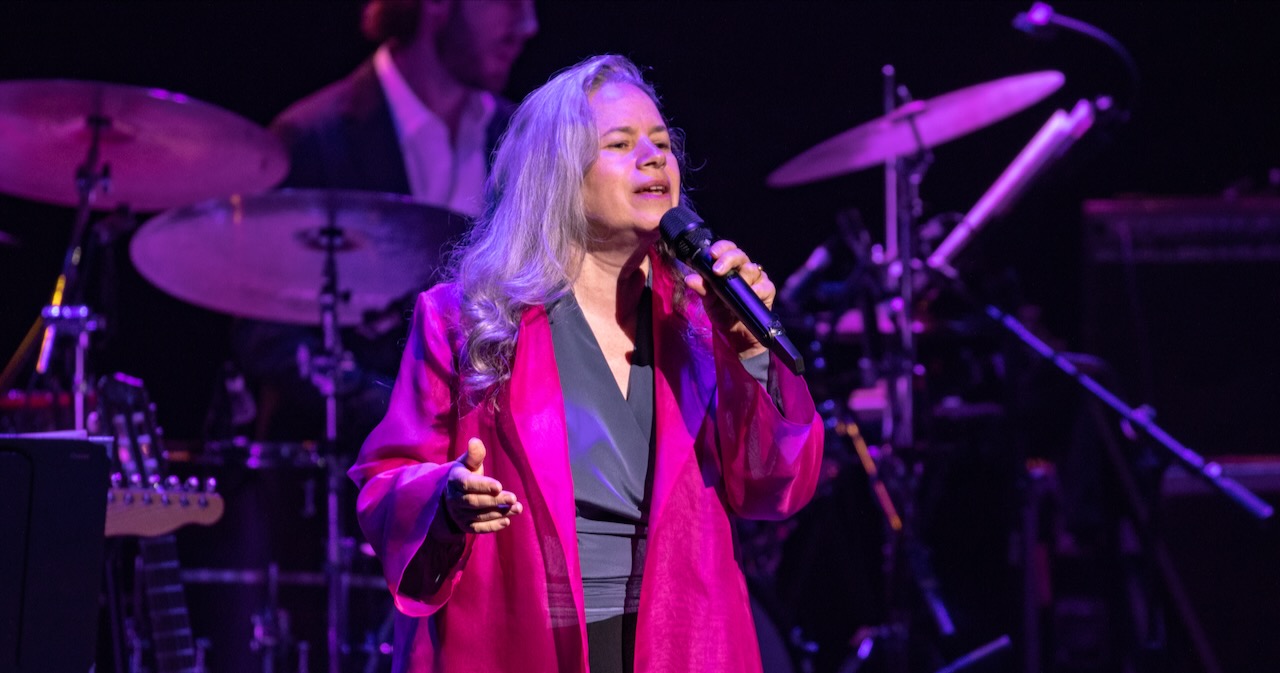
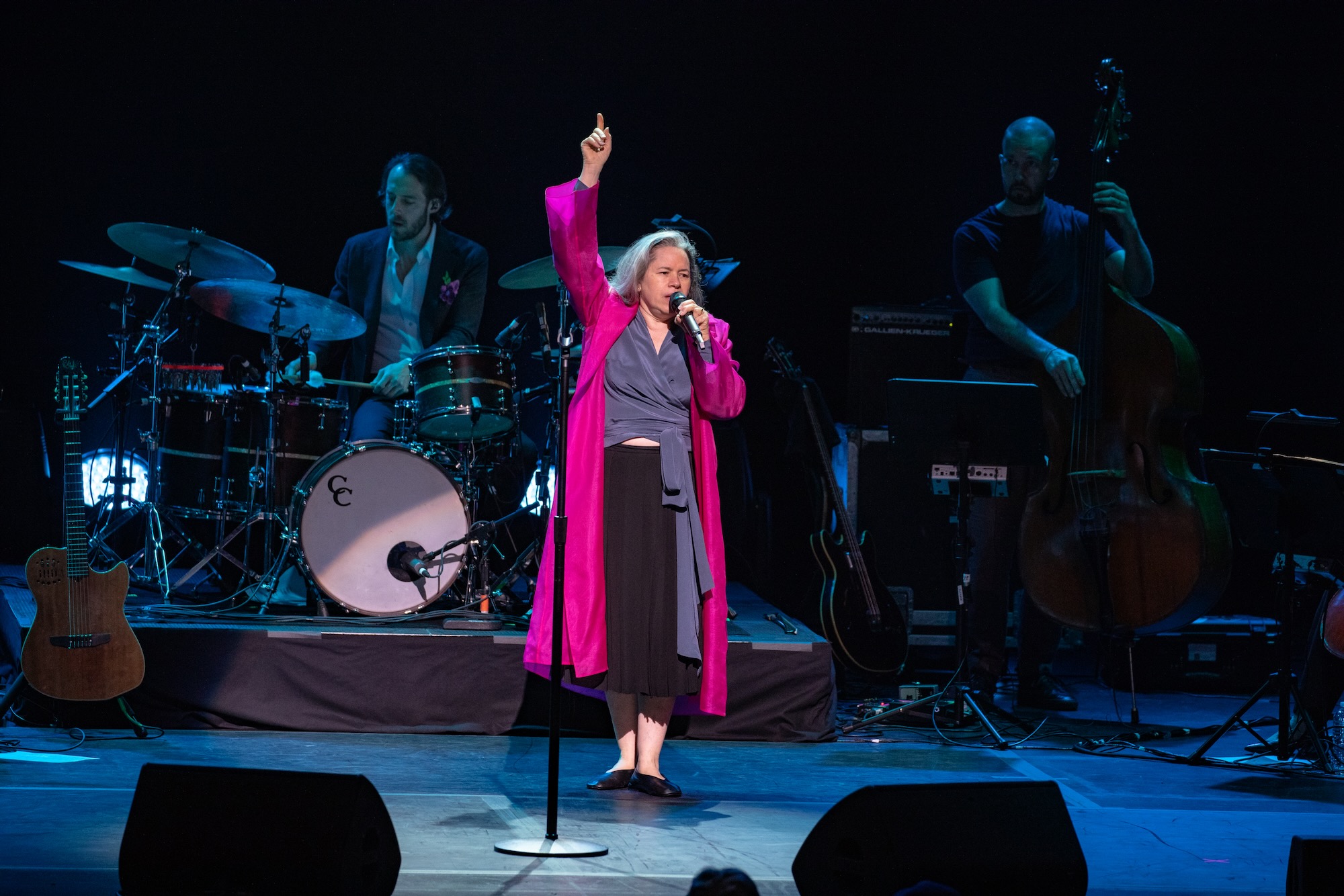
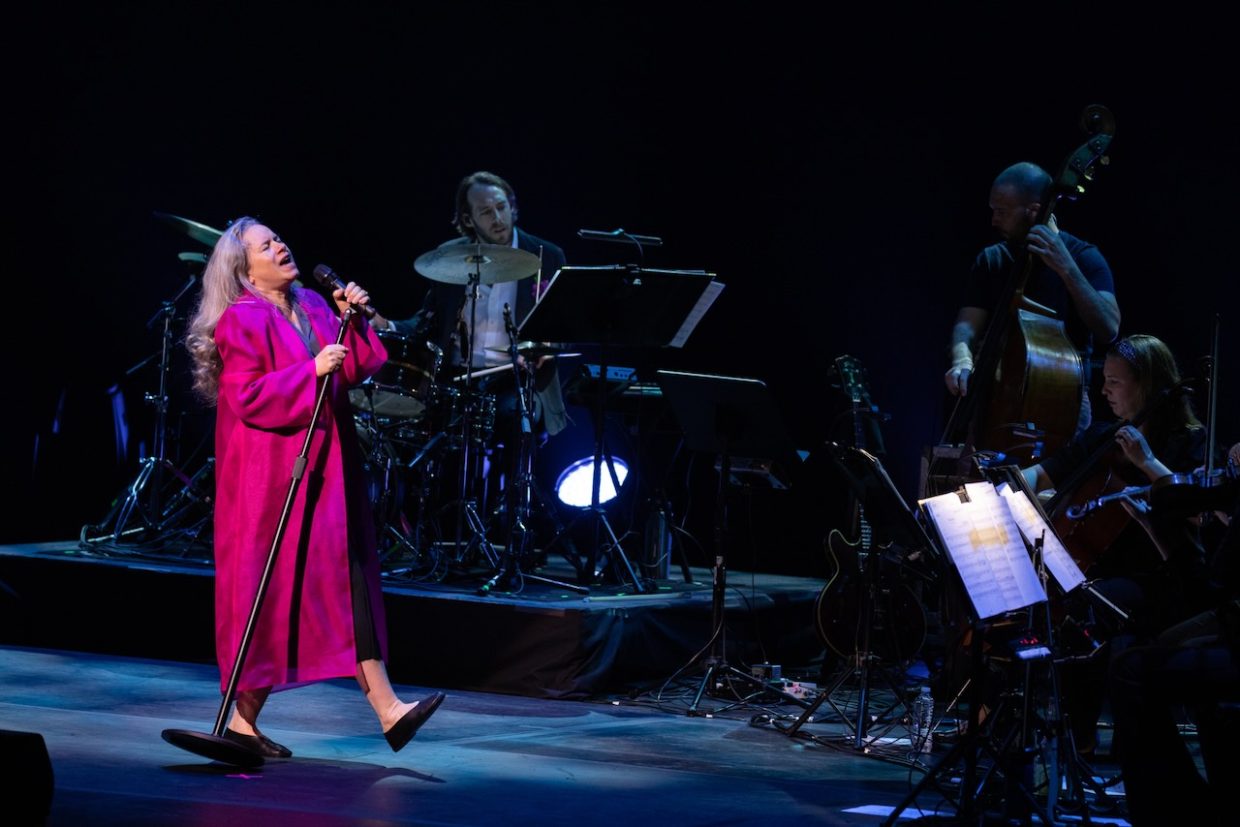
(Editor’s Note: Concert photos by David Iskra.)

From the moment Natalie Merchant gained fame as the lead singer and lyricist for 10,000 Maniacs, it was clear she was no conventional pop star — in fact, during her dozen years with that band and subsequent decades as a solo artist, she has resolutely avoided the entire notion of stardom. Merchant has instead simply followed her muse, whether it has inspired her to create music, step up as a political activist, work with underprivileged children as a Head Start volunteer, or devote herself to raising her daughter, Lucia, now 20. 

Since her multiplatinum solo debut, Tigerlily, came out in 1995, Merchant has released music sparingly; her new album, Keep Your Courage, is her first collection of new material in nine years. Though she has a reputation for writing songs more focused on external issues than her own heart, on this self-produced effort she takes a deep dive into the subject of love, surveying it from multiple angles via thoughtful, engaging lyrics sung in her deftly nuanced, yet strongly sure voice. Weaving rich — yet never overdone — orchestrations around gospel-soul grooves, bits of Bourbon Street, catchy pop and sometimes Celtic-influenced balladry, Merchant crafts a sound imbued with both elegance and earthiness. 

During a long, sometimes quite amusing, dialogue stimulated by her enormous intellectual curiosity and vast range of interests, it becomes clear that “elegant, yet earthy” might describe the woman as well as her art. Surprising tidbits she shared include the fact that she’s named after the late actor Natalie Wood and that she appreciated learning square-dancing in grade school. (“It was so inclusive; everybody got a chance to be someone’s partner.”) She also divulged a penchant for graphically describing the eating habits of avian predators hunting the acres surrounding her home in New York’s Hudson Valley, and confessed that, as a TV-deprived kid seeking thrills in the small upstate-New York enclave of Jamestown, she indulged in all sorts of reckless activity — including hiding near stop signs on icy roads, then leaping out to grab car bumpers and be dragged as far as possible. (“I think it gave us all character,” she says of weathering those risks, though she admits with a laugh, “If I saw my daughter doing that, I would say, ‘Look at yourself. What are you thinking?’”)

BGS: I’m so charmed by this album; the orchestrations are just beautiful. But I want to start with the Joan of Arc image on the cover; you refer to having kept it in your ephemera collection. I love the phrase, and the concept. Can you tell me more about that?

NM: Oh, my ephemera collection — I think I was 14, 13 when I started collecting junk. It’s very well organized. I’m going upstairs to look at it so I can tell you. There is an entire cabinet of glass-plate negatives; tintypes, daguerreotypes … 10 boxes of postcards, catalogs, Victorian parlor photos. I collect real-photo postcards, from the turn of the century to the 1930s; you would have your photographs made into a postcard. … Mentor (magazine) folios, advertiser cards — which I love — studio portraits, childhood images, “Museum of Mankind” — for some reason, I named that box — ethnic costumes, flowers and insects, large photographs, children’s book research, sketches … I started collecting it because I lived in a small town where there wasn’t that much to do. I basically wanted to create my own little museum in a box, so I did. [Laughs] When 10,000 Maniacs started making records and having to make posters and all that, I was responsible for doing a lot of the design work, and I would use my ephemera collection.

That leads to the Library of Congress’ American Folklife Center and your appointment to the Board of Trustees. I understand that you’re passionate about making the archives more accessible for research and education. Can you tell me a bit about how you regard those archives and what you’d like to see happen with them?

Well, my appointment happened at the end of November and had to be passed by Congress, so I didn’t get official word that I could be in the building with credentials until Christmas. I went down in early January just to meet the staff and have a tour, then went back a few weeks later because I was so excited. It’s awe-inspiring. They have millions of articles and artifacts, and it’s not just folk music. For instance, they’re in charge of the AIDS Memorial Quilt and all the objects that were donated with the quilt.

When I first heard of the appointment, all I thought [was] it was the Lomaxes, because that’s what I’m familiar with. I did a little research of my own when I was down there last time, just to see how the archive works, and just to be holding the field notes of John Lomax and see the equipment that they recorded with, and they had a card catalog – I love card catalogs! The quote from one of the people on the staff was, “We’re not just about banjos and quilts.”

Your song “Sister Tilly” is an accounting of a time in history and women who created it; that’s folklife. 

I found a website that had all sorts of feminist posters from the 1970s of International Women’s Day rallies and things like that. That’s folklife — it certainly is.

And your little museum in a box; man, you were destined for this. 

If I hadn’t been a musician, I would have been a librarian or teacher, or a historian. 

Your bio contains the statement, “For the most part, this is an album about the human heart,” and you reference both Aphrodite and Narcissus, two ends of the spectrum. You’re beckoning the goddess of love on one hand and singing about the ultimate rejection on the other. Care to elaborate about those choices?

Well, the album’s about love in so many different forms, whether it’s platonic or romantic, or love for a family member. Or in the case of “Sister Tilly,” it’s expressing love and gratitude toward an entire generation of women — my mother’s generation, who transformed our society; women who came of age in the mid- to late ‘60s and up to the mid ‘70s. I really consider those women responsible for making the society that we took for granted.

And in the romantic love column, there’s the ecstasy of falling in love or wanting to fall in love, or invoking the goddess to bring love into my life. And then, in “Big Girls,” I say love can be deceiving and harmful, but [it’s] also encouraging people who’ve been injured in love, both in “Big Girls” and “The Feast of Saint Valentine,” to persevere, to keep their courage, to keep moving forward. The worst thing that can happen is your feelings get hurt. And the best thing that can happen is that even if you’re injured in love, there’s opportunities to grow. I think most of us will admit the most difficult things we faced in our lives were the experiences that made us grow the most.

Let’s talk about another literary figure in your life, Walt Whitman (the subject of “Song of Himself”). When did you fall in love with him?

Uncle Walt. Maybe 20 years ago. I wanted to write about Walt Whitman because I found a lot of solace in his poetry during the recent times of unrest in our country. He had such an expansive, radical love. All inclusive. In a time when people were really limiting the people who were worthy of loving. And he believed in equality — for women, Native Americans, enslaved people, just everyone. And when he went to Washington — he spent three years in Washington — he originally went because his brother was in a hospital in Washington, but he ended up staying. He got a job working as a clerk, and every day, he would go after work and spend time with the soldiers. He didn’t discriminate between Confederate or Union soldiers. They were just injured young men, or dying young men, oftentimes. He would write letters home for them, as they were dying and after they died, to tell their parents what fine, fine men they were. 

He saw the humanity, not the side of the argument they were on.

Yeah. And when you’re sitting at the bedside of a 15-year-old farm boy from rural Alabama, I don’t think he understood why he was fighting anyway, other than it got to a point where you were fighting to defend your own family. I don’t think there was a lot of ideology involved in the farm boys from villages all over the North and South.

The funny thing is, Walt Whitman being a great American literary figure, our greatest poet, I wanted [the song] to sound very American. But I tried putting fiddle on it three times, I tried putting banjo on it, and it just wanted to be a song about guitar and piano. I just couldn’t fit those other instruments in. Then it occurred to me that Walt was more of a sitting-in-the-parlor-with-the-parlor-piano [type], and he also loved opera; he went to the opera all time, so I thought, this is probably more representative of him anyway.

How does “Hunting the Wren” fit in?

To me, “Hunting the Wren” is loveless love. That was written by an Irishman named Ian Lynch, who’s in a band called Lankum. I thought it was a traditional song, but when I found out that he had written it, I found an interview with him. The wren is just a metaphor for these outcast women who “flock ’round the soldiers in their jackets so red for barrack room favors, pennies and bread,” and I wanted to know the story behind this brutally simple description of prostitution, the redcoats — obviously, the British — and barracks. What I found out from his interview, it was about a group of women who lived in the most abject poverty and privation you can imagine. The local authorities wouldn’t even let them construct shelters. They lived on the outside of these British barracks, on an open plain called the Curragh, and they would dig holes in the ground and cover them with rags and sticks, to live in. They would go into the village to get food and they would be spat on and beaten. Most of these women had lost their families in the famine. Some were common-law wives of the soldiers, but they weren’t allowed to live in the barracks, and some were prostitutes. The act of sex can be called lovemaking, but if it’s bought and sold, then there’s the loveless love. 

So this is an actual story. 

This is Irish history. There’s an amazing account that was written by Charles Dickens. The thing that Dickens points out is they had this mutual protection for each other. Some of the women were old, just homeless women; they had different generations. The older women would take care of the children while the other women went to get food or make money in any way they could. They lived like this, I think, 50 years. It was that or the workhouse, and in the workhouse, there was a good chance you would die of disease or be raped or destroyed by working. It was forced labor. It’s pretty grim, but I really was moved by the song and I wanted to include it. And it wasn’t like I was setting out to write a song cycle about the human heart. But when I was writing the liner notes, that’s when it occurred to me that I had written these songs that had some very close connections, and then some very distant connections, but they were there, and it fit in.


Photo Credit: David Iskra

MIXTAPE: Rising Appalachia’s Love Songs for Blooming Spring

This is a collection of the BEST love songs in my life, the heartbreakers and the heart menders. The ones that make your heart burst and bloom. Because hey, it’s spring, and who doesn’t want a damn good love song or two in their lives? — Leah Song, Rising Appalachia

John Prine – “Angel From Montgomery”

This song brought me to my knees when I heard it live at the Kate Wolf Music Festival years ago. A hardened kind of love song, a love long changed and still just barely holding. But still, even the love between John Prine and Emmylou Harris is precious…

The Roots, Erykah Badu – “You Got Me”

I have listened to this song since my teenage years and it is rich, passionate, and real amid the throes of what life on the road looks like. What longing feels like. How to show up.

Hozier – “Almost (Sweet Music)”

The most joyful and epic lyricist around. And such a bright and catchy melody, this one is contagious.

Keb’ Mo’ – “Kindhearted Woman Blues”

Such a rich treatment of this classic. Got that salty form of simple, front porch, storytelling love.

Arouna & Biko – “Doubabu”

Nothing sings to the heart like the sweetness of this melodic instrumental by our dear friends, Arouna & Biko.

James Blake – “A Case of You”

I mean, this needs no additional telling. It just SLAYS.

Ray LaMontange – “Shelter”

The tamber of LaMontange’s voice is so insane, it’s another delicate one, but it reaches into the pain and pleasure of love.

Lankum – “What Will We Do When We Have No Money?”

A gentle, Irish look at love and the long haul. How to piece it together with your beloved when times are tough.

Beyoncé – “Drunk in Love”

Riddles with unapologetic passion.

Jorge Cafrune – “La atardecida”

Classic heart strings, plus the guitar just makes you swoon.

Rising Applachia – “Novels of Acquaintance”

Our favorite love song.

Polecat Creek – “That I Should Know Your Face”

A traditional Appalachian love ballad. “That I should know your face,” the depths of loyal love.

Maggie Koerner – “Shades of Grey”

Simple, open-hearted love song from the young vulnerability of the road.

Trevor Hall – “Chapter of the Forest”

A love song to the divine.

Hypnotized – “Ani DiFranco”

The classic bass line of this song plus the simplicity of the imagery. Sometimes, you are just brought to your knees by the wafting breathlessness of love.


Photo credit: Savannah Lauren