Laurel Premo’s Songs of Grief and Opening

On Halloween, I released an album of griefwork music. Laments features four compositions for solo fiddle and voice born out of an instinctive and spontaneous draw into lamentation when my body demanded it as part of its healing processes.

In both my vocal and instrumental soundings, the role of a traditional lamenter has long been rooted in my identity and how I seek to be of service as a community member who helps others enter into emotion or move through to the other side of an emotion. That work is not limited to sorrow, but can move joy as well. Music can help to bring more aliveness and connectedness to one previously detached, as I’ve been lucky to experience in my work of being a dance musician or a wedding fiddler.

Since my initial education on the topic of “lament” around age 20 while studying in Helsinki, I have held the possibility of a similar role as a guide into or through feeling at the core of my work. It wasn’t until the middle of the last few years, when I had been writing this music on fiddle and voice, wailing music with few words, that I realized I was working with actual lament and that I had found myself knee deep in a river of tradition. So I am here, coming full circle.

Seventeen years later, I returned to research and to listen to archive sources after I had birthed this work, to begin to understand the context of my path, to grab on to some railings, and to move into whatever comes next. I have since come to understand that performative ritualized mourning is a global phenomenon of traditional cultures. While my record is a performance of prepared arrangements and echos of what I experienced in liminal spaces, as opposed to my live lamentation or ritual, it’s my hope that the music can represent the shallows of what is available inside of the great depths of the tradition. (For more reflections on this work, read on via the extended notes booklet for Laments.)

For this Mixtape, I thought back through time to craft a collection of tracks that have been medicinal to me in seasons of heaviness, in times when I needed assistance to reopen a closed self. The tunes span many genres – please take them with open ears and meet them with what they offer. Through different modes, they all have the power to help bring in a glimpse or a full serving of transformation, whether that’s delivered from the quietest breath of the mechanics inside of a piano or from the wall of supportive pressure that is the embrace of the Scottish smallpipes. Three traditional lament forms are featured (Ireland, Scotland, and Peru) nestled here alongside music that I think works in related ways. It is music that helps us enter ourselves. – Laurel Premo

“Riverside” – Tim Lowly

(Listen on Bandcamp.)

This is the first song that came to my heart for this Mixtape, possibly because it was an early memory of the expansive potential of music as a tool in grief. I heard Tim Lowly sing this song at an intimate house concert in Kalamazoo sometime in the 2010-2015 range and his album traveled with me over many touring miles in America that decade. Tim is a painter and writer, and the central protagonist of much of his work has been his daughter, Temma, who has cerebral palsy with spastic quadriplegia. The melody and lyrics in this piece surrender to “slipping down” until they land on some solid new core.

“Pililiù” – Bridghde Chaimbeul

I’ve been very moved by the sounds from Scottish pipes player Bridghde Chaimbeul, who’s just recently completed her first US tour. I listened to her rendition of “Pililiù” during a high intensity breath practice once and it produced an immediate outpouring of tears. Some deep thread of connection existed there. A few months later, while researching vocal roots and lamentation, I recognized that this melody that she had recorded instrumentally is indeed an example of a traditional keening melody. The melody of this lament is a recreation of birdsong of the Redshank. In Scottish tradition, this coastal bird inhabits the liminal space between solid earth and the vastness of the fluid ocean, between known and unknown eternity.

“Body” – Emma Ruth Rundle

A few winters ago Engine of Hell hit me in a heavy way and seemed to be the exact medicine of resonating my own experience that was needed. When music reflects some color of what we’re feeling, it can vibrate our emotional body into become something bigger than we can see and relate to, converse with, question, and be held by.

“Visit Croatia” – Alabaster DePlume

This nostalgic journey is created from patience, deep listening, and real breath. Alabaster DePlume is an English musician and poet.

“Batonebo – Rachan” – Ensemble Ialoni

This is a pre-Christian healing song from an incredible Georgian women’s ensemble. In traditional Georgian belief, “Batonebi” is the name of spirit beings that are the cause of childhood infectious diseases. Songs like this are sung to these spirits, alongside other ritual, to appease them and ask them to leave the sick child so that they may heal. This whole record contains traditional folk song in complex harmony that work as chants for the singer and listener (including the Batonebi spirit audience!).

“My Friend The Forest” – Nils Frahm

Nils Frahm presents deep texture and intimacy here. The flex and breathing of the piano, akin to the live breath of the forest, takes you on a whispering trail of release. Other tracks that have a similar vibe from this record are “A Place” and “Forever Changeless.”

“Gorm” – Susan McKeown

I was introduced to this recording through the master’s thesis of Michelle Collins who investigated the de-ritualization and re-ritualization of keening in contemporary Ireland. This original song from 1996 is written in the traditional form of Irish lament and sings grief related to emigration and grief caused by AIDS. Listen for the traditional cry of “ochón.”

“Nude” – Radiohead

Bringing in some movement now after our ‘set one’ of still listening. Feel the tilt of this waltz gently push you around while the vocals reach and spin.

“Without The Light” – Kelly Joe Phelps

Kelly brings in some sonic reverence here, reaching upward and swimming through memory. “I can see better without the light.” This relaxing into surrender here, perhaps even some praise for the grief in how this song is presented, is an important point in the process. We throw up our hands at the mystery of it all. We sit in awe of the many threads that connect to our heart from all we’ve lived through, from all those we have shared love with. This expression of love – our grief – is actually nourishment towards those living strands that connect us through worlds.

“Vuela Golondrina” – Coral Rojo

Morning light beams through this tune from Chilean vocal ensemble Coral Rojo. The lyrics here speak (again) of birds, both the swallow and the condor, of water, of revolving and renewing time, and the patterns and daily rituals of the natural world healing and waking us to new days. “Cry your sorrows while the mountain range shines as the day arrives.”

“Acid Rain” – Lorn

I’m including this dark ambient, industrial track from Milwaukee artist Lorn to honestly reflect the variety of tunes that do this work for me, personally. Here, bringing in the big guns of bass and synth grit to massage out angst and sorrow stored deep in the muscle. Sometimes you need to order size large.

“Surrender” – Rotana, Superposition

The tunes on this project from Palestinian/Saudi vocalist Rotana and duo Superposition are truly animated prayers and meditations. By that I mean, breathing life, bringing into life, and making alive old and new words. It takes a lot of experience and intention to keep that devotion in your music. Rotana sings codes of freedom.

“Song of Marriage” – Young girl in Huancavalica, Mountain Music of Peru, Vol. 1 

I found this song very recently while listening through a track that shared five-second samples of all of the music on Voyager’s Golden Record (a project that served as a “message in a bottle” for extraterrestrial life led by Carl Sagan in the 1970s). It stuck out to me, even though it was a sweet young voice, I could tell it was some form of blues. Looking up more information about the track, I learned that it was actually lament. Across cultures, in addition to lamentation being used to accompany death, laments are sung quite often to accompany the journey crossing the threshold of entering marriage, as ritual protection in that liminal space, particularly for the bride leaving her family and entering a different life.

“Oh Aadam, sino essitus” – Anonymous, Heinvaker

This project from an Estonian vocal ensemble featuring folk hymns and runic songs was one I listened to a lot in the first summer of the pandemic. The sound is such a balm. A close friend once remarked that this music gave him such pride and hope in what humans are capable of. The actual singing of it, that we are capable of creating this resonance with each other, shows us that we hold such power to shape our world, that we can be positive citizens in the large environment. On our theme today, let this tune speak to the transformation that we lead ourselves on through the journey of grief. We are capable, and we are deeply belonging to this big web of creation.


Photo Credit: Harpe Star

You Gotta Hear This: Red Camel Collective, Wood Box Heroes, and More

It’s not only the end of the week, it’s the end of the month! And that, to us, is scary enough for October 31. Mark the occasion – whether Halloween, the end of the week, or the end of October – with our new music roundup.

Kicking us off, singer-songwriter Sophie Gault releases the title track from her upcoming album, Unhinged, today looking ahead to her full record release in January 2026. Inspired by a stroke of luck playing cards aboard a cruise ship, Gault leans into trusting your gut and doing what feels true – even if others might call that “unhinged.”

Red Camel Collective, 2025 IBMA Award winners for Best New Artist, have unveiled a new music video today for “In The Mexican Sun,” written by hit bluegrass songwriter Malcolm Pulley. Perfect contrast for the cool, rainy days of fall or the quickly approaching shivery weather of winter, “In The Mexican Sun” wasn’t intended to be a bluegrass number, but the Collective make it feel right at home in the genre.

Meanwhile, contemporary bluegrass (and everything else) guitar great Bryan Sutton has a special posthumous duet with Doc Watson that he’s sharing today. The new single, “Working Man Blues,” includes vocals and guitar by Watson and Sutton shares the story of how the Merle Haggard cover came to be.

Experimental old-time and indie musician Laurel Premo shares her new project today, Laments, a thoughtful and deep exploration of grief from a variety of perspectives. A sort of instrumental text painting, “Grief Of The Angler” listens like an entrancing dreamscape as resonant bow strokes and heart-wrenching vocalizations interweave in evocative and inspiring ways.

Bringing us home, Nashville bluegrass-Americana supergroup Wood Box Heroes pay tribute to K.T. Oslin with a video performance of their cover of “Do Ya.'” With fiddler/vocalist Jenee Fleenor on the mic, it’s a lovely homage to a relatively undersung hero of ’80s and ’90s country music. Of course, the track shines with the Wood Box treatment.

There’s plenty to enjoy in our weekly collection of new music, videos, and premieres. You Gotta Hear This!

Sophie Gault, “Unhinged”

Artist: Sophie Gault
Hometown: Nashville, Tennessee
Song: “Unhinged”
Album: Unhinged
Release Date: October 31, 2025 (single); January 23, 2025 (album)
Label: Torrez Music Group

In Their Words: “I wrote ‘Unhinged’ after going on the Outlaw Country Cruise. I was learning to play blackjack and everyone told me I was crazy for doubling down on a 17 – but I did it anyway, and won. That moment kind of summed up everything for me. The song’s about gambling, but really it’s about trusting your gut and doing what feels true, even when the odds are against you. Sometimes the biggest risk is the one that pays off inside. On the way off the boat, this guy stopped me and said, ‘Hey, you’re that unhinged girl from the blackjack table!’ and I thought, ‘Yup, that’s the spirit of the song right there.'” – Sophie Gault


Laurel Premo, “Grief Of The Angler”

Artist: Laurel Premo
Hometown: Traverse City, Michigan
Song: “Grief Of The Angler”
Album: Laments
Release Date: October 31, 2025

In Their Words: “The four pieces on this record each hold a different-sized relationship. The third track, ‘Grief Of The Angler / I Grieve In The Realization Of The Generosity Of Your Gift,’ is sung from a formed deeper intimacy with the ecosystem that I belong to. In my life, my relationship with a form of hunting has been fishing and this piece sings the shared experience of taking another body for nourishment.

“As every relationship deepens, as the bonds are woven together between individuals, there is the opportunity for those threads to hold beings closer together but also to create tension when one leans back. The ties stay connected in both directions and that reciprocity demanded is an exchange for the gift of being able to be closer in intimacy. This piece sings from the moment of gravity of the fisherperson deciding to keep a catch and the energetic blending of beings therein.” – Laurel Premo


Red Camel Collective, “In The Mexican Sun”

Artist: Red Camel Collective
Hometown: Wirtz, Virginia (Johnathan Dillon); Walnut Cove, North Carolina (Tony and Heather Mabe); Oakboro, North Carolina (Curt Love).
Song: “In The Mexican Sun”
Release Date: October 17, 2025 (single); October 31, 2025 (video)
Label: Pinecastle Records

In Their Words: “This tune comes to us from the pen of our buddy Malcolm Pulley. You may recognize that name as he also wrote the hit song ‘In The Gravel Yard,’ which went on to become a bluegrass jam standard. ‘In The Mexican Sun’ is one of those songs that you’re sure you’ve heard somewhere before. The melody seems familiar somehow. It has all the earmarks of a hit tune. This one wasn’t a bluegrass song from its conception, but I believe it was always destined to become one.” – Heather Berry Mabe

Track Credits:
Heather Berry Mabe – Guitar, vocals
Tony Mabe – Banjo, vocals
Johnathan Dillon – Mandolin
Curt Love – Bass
Stephen Burwell – Fiddle

Video Credit: Laci Mack


Bryan Sutton, “Working Man Blues”

Artist: Bryan Sutton
Hometown: Nashville, Tennessee
Song: “Working Man Blues”
Album: From Roots to Branches
Release Date: October 31, 2025 (single)
Label: Mountain Home Music Company

In Their Words: “On the original 2006 release, I would just show up, set my gear up, and we would record. Even in those sessions I had a general idea but not so much of a design on what exactly I needed to get. Once [Doc] got comfortable, he was just starting to talk and show me some different tunes. … He just launched into ‘Working Man Blues,’ out of nowhere! It felt like, ‘I hope I got all that, I hope the tape didn’t run out.’ Then he said at the end of it (and I kept it on the recordings), ‘I just wanted to hear what you did with it.’

“You never knew what you were going to get with Doc Watson – from Crystal Gayle songs and ‘Nights in White Satin,’ certainly all that Doc-abilly stuff and swing tunes – outside of just fiddle tunes and bluegrass and folk ballads and things like that. Certainly Doc Watson was a fan of Merle Haggard and probably knew more Merle Haggard songs than he ever played for anybody. And I don’t know that I’ve ever heard him play it any other place.” – Bryan Sutton

Track Credits:
Bryan Sutton – Acoustic guitar
Doc Watson – Acoustic guitar, vocal


Wood Box Heroes, “Do Ya'”

Artist: Wood Box Heroes
Hometown: Nashville, Tennessee
Song: “Do Ya'”
Release Date: October 31, 2025 (video)

In Their Words: “I heard K.T. Oslin’s ‘Do Ya” on the radio one day and immediately thought, ‘Now that’s a song I’d love to sing.’ I brought it to the guys and when we worked it up together the crowd response was incredible! K.T. has always inspired me – not just because of her artistry, but because her country career didn’t take off until she was in her 40s. I’ve been so blessed with a successful fiddle career, but I’ll admit, there were times I thought about stepping away from singing and letting that part of me go. Starting Wood Box Heroes reignited that spark and this song, in particular, hit me on so many levels. It’s a joy to perform and I hope we can all take a moment to remember and celebrate the great K.T. Oslin.” – Jenee Fleenor

Track Credits:
Jenee Fleenor – Lead vocal, fiddle
Josh Martin – Vocals, guitar
Barry Bales – Upright bass
Matt Menefee – Banjo
Thomas Cassell – Mandolin

Video Credits: Videography by Barry Rice, Steve Anderson, and Andy Jeffers.


Photo Credit: Red Camel Collective by Ed Rode; Wood Box Heroes by Eric Ahlgrim.

BGS 5+5: Laurel Premo

Artist: Laurel Premo
Hometown: Traverse City, Michigan
Latest Album: Golden Loam

What other art forms — literature, film, dance, painting, etc. — inform your music?

For me dance is such a huge influence. I’ve spent quite a few years as a dance musician for square dances, being a traditional fiddler. That role of being more the motor for the good time, as opposed to being the focal point, has always resonated deeply with me. But beyond that, I know that just my experience as a participant in social dance in both American old-time and Nordic traditions has given my body a vocabulary that comes out in my music. I’ve found a through line in my voice that, no matter the tempo of the music, I always am wanting to make these larger slower pulses, make longer groups of beats, tap my foot at a slower frequency. I’m certain that that longer embodiment of phrases, and the pull, and balance, from dance have played into my nature there.

What was the first moment that you knew you wanted to be a musician?

I have a really early memory, I’m not sure what age, but before I was big enough to hold any instruments. I was in my bedroom, standing next to the door, and I could hear my folks playing music on the other side of the wall in the living room, my mom really tearing it up on some fiddle tune. In that moment, alone, I remember that I started air-fiddling and kind of marching around or dancing in the little corner. I just wanted to be part of whatever was going on there.

What’s the toughest time you ever had writing a song?

I took a while composing this lap steel track, “Father Made of River Mud,” from the new record. For a bit, it was separate pieces, in different tunings, that I didn’t know if I’d be able to fold together as one. It’s a really beautiful moment for the maker of a piece, when some kind of grace math helps everything line up in your head, and then you get to hear the thing for the first time in its full form. That tune is like a circle, it doesn’t really have to end at any one point.

What rituals do you have, either in the studio or before a show?

I try and spend some time ruminating with memory that reflects back at me the elements of my personal experience that I want to embed in the performance, to make more vibrant what I’m laying down there for listeners. It’s almost a way of remembering myself to myself, because there are a lot of possible distractions when you’re recording or performing. Every little step of the setup could be something that takes you away from your body and the meaning you’re trying to imbue in the work. So, I just real quickly try to go into the wilds to try and counteract all of the civilization that I’m traversing through.

Which elements of nature do you spend the most time with and how do those impact your work?

In the last two to three years, my wild haunts have been woods, dunes, and rivers. I grew up in the woods, so shadows and green, what reverb the places with a great amount of life growing have, and the scents of being real close to the ground — those are all deep in me, and as an adult I go back to similar places to find quiet, and to kind of listen beyond that quiet. Walking rivers for the past few years, learning fly fishing, has brought about a whole other set of turns, including just a beautiful sideways weight from the gravity of the river flowing against you. I definitely take gestural impulses from my time spent in the wild, and work to keep all my senses open to what rhythms lay in front of me.


Photo credit: Harpe Star

Laurel Premo, “Polly Put The Kettle On”

If you haven’t been paying close enough attention you may have missed the fact that the absolute cutting edge of American roots music these days — some of the most exciting art to be born out of this latest renaissance in Americana, bluegrass, and folk — is old-time. Artists like Rhiannon Giddens, Allison de Groot & Tatiana Hargreaves, Victor Furtado, Amythyst Kiah, Jontavious Willis, Dom Flemons, and so many more are utilizing this moment to demonstrate that old-time music is expansive. It has relatively low barriers to entry, it’s representative, it’s queer, it’s Black, it’s Indigenous, it demands egalitarianism, it’s woven into the fabric of all genres downstream of it, and most importantly, it’s ceaselessly relevant. In our attention economy, which requires all of this and more from any pastime worth its merit, old-time delivers. 

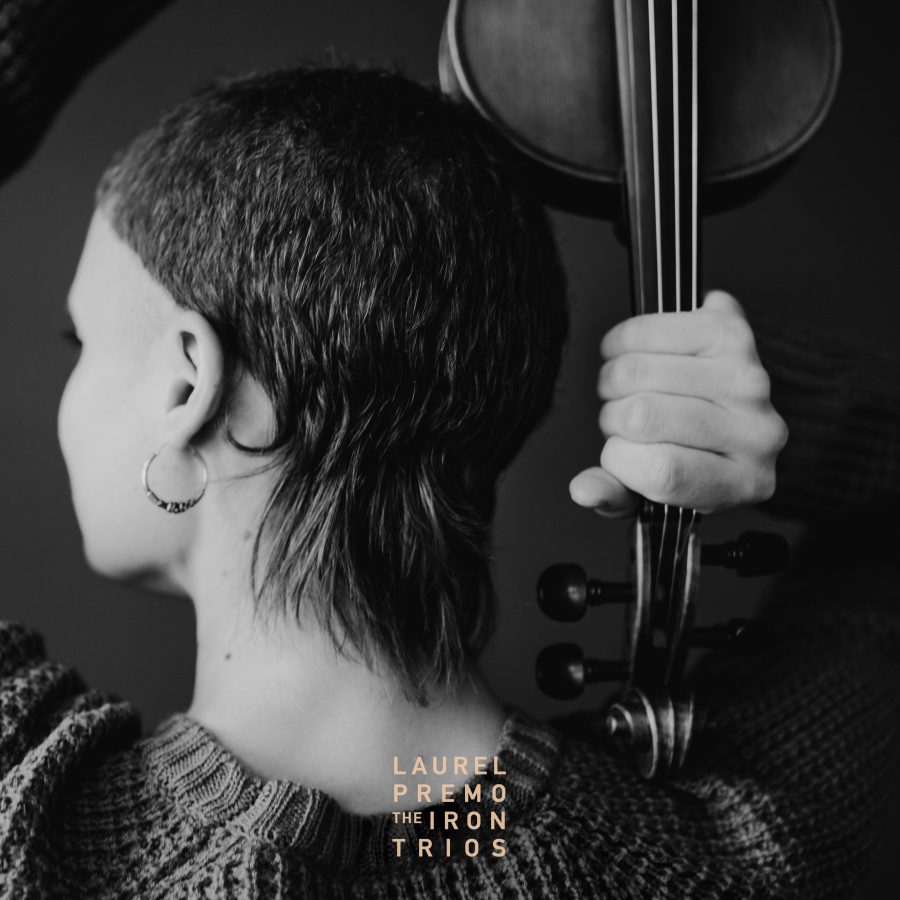
A new album from fiddler, composer, and multi-instrumentalist Laurel Premo perfectly reinforces these points, in content, intention, and certainly execution. The Iron Trios is a collection of nine more or less traditional old-time fiddle tunes and two Premo originals, the majority of which are played by a trio: fiddle, upright bass, and electric guitar. For an album demonstrably unconcerned with even the basic premise of the construct of “authenticity,” it accomplishes that squishy term impeccably and effortlessly. 

Yes, with electric guitar. Tunes such as “Old Time Sally Goodin” and “The Original Grey Eagle” nod to string band settings that beg us to play these games surrounding legitimacy and “authenticity” while turning them all on their ears. With bassist Evan Premo, guitarists Owen Marshall and Joshua Davis, and an appearance here and there by fiddler Aaron Jonah Lewis, Premo takes old-time fiddle, melodies, and rhythms into spaces usually dominated by electronics. 

It’s trance, it’s dreamscape, it’s meditative, it code switches with ease, sometimes sounding like a film score, or a square dance, or public radio at one in the morning (“Echoes” with John Diliberto, anyone?), or modern chamber strings, or the soundbed for an abandoned-warehouse-turned-cooperative-art-space. At the same time, it refuses to be any more complicated than good, old-time fiddle music. And that simple fact is another compelling reason why old-time is truly the most exciting space in the Americana, folk, and bluegrass realms today.